Thursday, December 25, 2025
Home Blog Page 448

US detains second student over pro-Palestinian protests

Protest US Universities

In a news release on Friday, the Department of Homeland Security accused Leqaa Kordia, a Palestinian student at Columbia, of overstaying her F-1 student visa.

The statement explained that agents from Immigration and Customs Enforcement (ICE) detained her for deportation. Another foreign student, Ranjani Srinivasan of India, had her student visa revoked for participating “in activities supporting Hammas”, a misspelling of the Palestinian armed group Hamas.

The Trump administration has repeatedly conflated participation in protests against Israel’s war in Gaza with support for Hamas. It has also accused demonstrators of supporting “terrorists”.

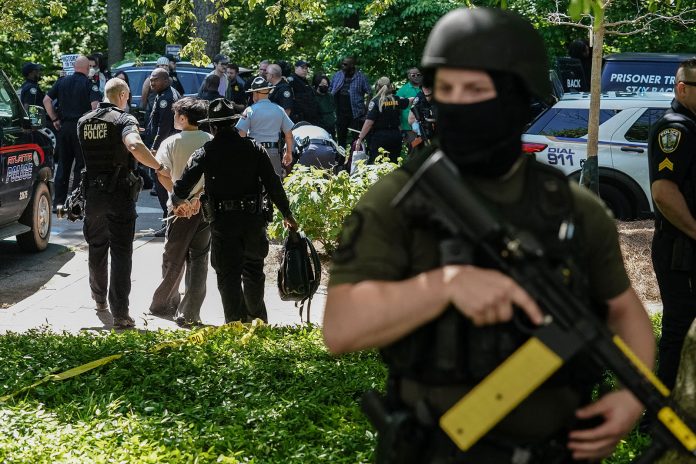
Kordia’s arrest marks the second time in less than a week that a Palestinian student at Columbia University has been taken into ICE custody for deportation. On Saturday, protest spokesperson Mahmoud Khalil likewise was arrested and placed in immigration detention, first in New Jersey and later in Louisiana.

Civil liberty advocates say the arrests are meant to stifle free speech rights, and Khalil’s lawyer this week argued he has not been able to contact his client privately, in violation of his right to legal counsel.

Khalil is a permanent resident of the US, with a green card, and his American wife is eight months pregnant. The Trump administration, however, says it plans to strip him of his green card.

“It is a privilege to be granted a visa to live and study in the United States of America. When you advocate for violence and terrorism that privilege should be revoked, and you should not be in this country,” Homeland Security Secretary Kristi Noem said in the news release.

But the arrests and student visa revocation were not the only strong-armed actions the Trump administration took against Columbia in the last 24 hours.

In a letter issued late on Thursday night, the administration demanded that Columbia’s Department of Middle Eastern, South Asian and African Studies (MESAAS) be placed in an “academic receivership” wherein an outside authority takes control, often as punishment for mismanagement.

The letter specified that the university must come up with a plan to create the academic receivership role no later than March 20.

Failure to comply, the letter warned, would negatively affect “Columbia University’s continued financial relationship with the United States government”.

Setting up a receivership was just one in a list of demands, which included abolishing the university’s judicial board for hearing disciplinary matters, banning masks on campus and adopting a controversial definition of anti-Semitism that some fear could limit legitimate criticisms of Israel.

Columbia University is a private school, one of eight campuses that makes up the much-vaunted Ivy League in the northeast region.

But Trump and other Republicans have repeatedly attacked the university since it became the epicentre of pro-Palestinian protests in 2023 and 2024 as students rallied against the devastation wrought by Israel’s war, which United Nations experts compared to a genocide.

The protests hit a peak last April, after a contentious hearing on Capitol Hill. The university president at the time, Minouche Shafik, appeared before a congressional panel to face scrutiny over allegations that Columbia and other schools had failed to address anti-Semitism on campus.

The very next day, Shafik authorised New York City police to enter an encampment that student protesters had set up on Columbia’s East Lawn, leading to mass arrests.

Tensions escalated from there. Student protesters argued that their free speech rights were being curtailed, and that officials were conflating criticisms of Israel’s war with anti-Semitism. Some occupied a school building, Hamilton Hall, to show defiance against attempts to dismantle the protest movement.

But what happened at Columbia kicked off a series of similar measures across the country, as police were called onto campuses to arrest peaceful protesters. More than 3,000 protesters are estimated to have been arrested between April and July.

Trump campaigned for re-election on the platform that he would seek out and deport foreign students who participated in the protests.

His allies even codified the threats into last year’s Republican Party platform, making it one of 20 pledges: to “deport pro-Hamas radicals and make our college campuses safe and patriotic again”.

Upon taking office for a second term on January 20, Trump immediately issued an executive order calling for the removal of foreigners who bear “hostile attitudes” to US “citizens, culture, government, institutions, or founding principles” or who support “threats to our national security”.

The US has long been an ally of Israel and has supported its campaign in Gaza, which has killed at least 48,500 Palestinians.

In the months since taking office, Trump has directed the Justice Department to “investigate and punish anti-Jewish racism in leftist, anti-American colleges and universities”.

And on social media this month, he warned he would take heavy-handed action against any campus that hosts what he called “illegal protests” — although he failed to define what that category might entail.

“All Federal Funding will STOP for any College, School, or University that allows illegal protests,” Trump wrote.

“Agitators will be imprisoned/or permanently sent back to the country from which they came. American students will be permanently expelled or, depending on on [sic] the crime, arrested,” he added.

Already, on March 7, the Trump administration announced the immediate cancellation of $400m in federal grants and contracts to Columbia University, in what was considered a warning shot against all institutions of higher education to conform with the president’s demands.

Secretary of Education Linda McMahon pointed to increases in reported acts of anti-Semitism after the Hamas-led attacks on southern Israel in October 2023 as a reason for the cancellation.

“Since October 7, Jewish students have faced relentless violence, intimidation, and anti-Semitic harassment on their campuses — only to be ignored by those who are supposed to protect them,” McMahon announced in an accompanying news release.

“Universities must comply with all federal antidiscrimination laws if they are going to receive federal funding.”

According to the Department of Education, Columbia currently receives approximately $5bn in federal grants and contracts. Earlier this week, the school moved to expel or suspend students involved in the antiwar protests.

But some activists have questioned whether the Trump administration is truly motivated to combat hate crimes — or whether anti-Semitism is being used as a smokescreen to further other political aims.

On Thursday, activists with Jewish Voice for Peace and other groups gathered in Trump Tower in New York City to protest Khalil’s arrest, wearing red T-shirts emblazoned with the slogan “Not in our name”.

As reports emerge of Homeland Security officials searching Columbia University dorm rooms, critics fear students’ civil rights may be violated.

“We do believe that if you are here, you shouldn’t get arrested, dragged away, and deported for engaging in protests that all of your classmates were perfectly within their rights to engage in,” Greg Lukianoff, the CEO of the Foundation for Individual Rights and Expression (FIRE), wrote on social media on Friday.

The Trump administration has cited a little-used section of the Immigration and Nationality Act as justification for the planned deportations.

It says the secretary of state has the right to exclude, “under certain circumstances”, foreign nationals whose entry into the US “would have potentially serious adverse foreign policy consequences for the United States”.

But lawyers and advocates point out that the Supreme Court has repeatedly upheld the constitutional right to free speech for immigrants in the US.

“What happened to Mahmoud is nothing short of extraordinary, shocking, and outrageous,” Khalil’s lawyer Ramzi Kassem stated in a recent statement with the American Civil Liberties Union (ACLU).

“It should outrage anyone who believes that speech should be free in the United States of America,” Kassem added.
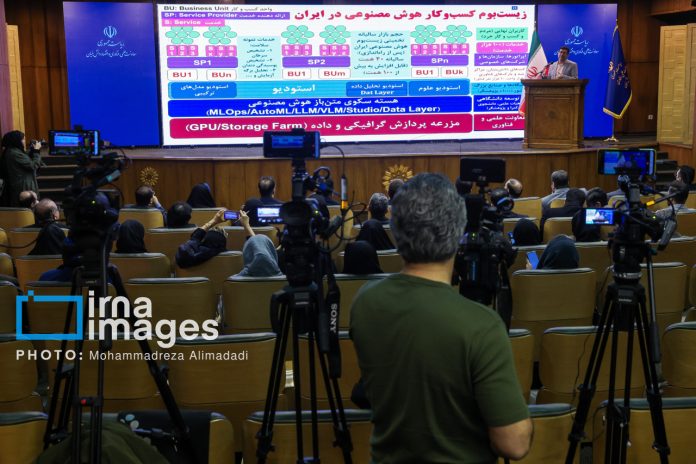
Iran unveils first Artificial Intelligence platform

Establishing a national platform as the main infrastructure for the development of artificial intelligence is one of the most fundamental and essential actions for advancing this technology in the country.

This initiative has been supported by the Iranian Vice Presidency for Science, Technology, and Knowledge-Based Economy, with the help of distinguished university professors and a group of specialists since October 2023.

The progress of this project was previously presented at the “Pioneers of Progress” exhibition in the presence of the Supreme Leader.

Hosseini Asadi, the director of the Rapid Processing Center and representative of Sharif University in this project, highlighted the current state of the country in the field of artificial intelligence, stating that according to academic studies conducted, the number of patents, articles, and active companies in this field has been low over the past decade.

He said the reason for this has been the lack of serious investment in hardware infrastructure and the absence of a platform.

Asadi added that to solve this problem, a market design was created, and the university focused on developing the platform. The role of knowledge-based companies in the development of the platform is also very important.

The representative of Sharif University in the project stated that eight centers, projects, and faculties have simultaneously worked on this project, involving about 100 personnel and utilizing more than 35 technical expertise.

Asadi noted that a stable version of the national artificial intelligence platform in Iran will be released in one year.

Official: Iran moves closer to joining FATF after key approval

FATF

According to a member of the Expediency Council on Saturday, joint commissions within the council have approved the necessary measures for Iran’s accession. The final decision now awaits approval by the full council.

The move comes after years of delays and internal disagreements. Iran’s parliament had previously approved FATF-related bills, but disputes between the parliament and the Guardian Council stalled progress and the issue was subsequently referred to the Expediency Council.

Seyed Mohammad Sadr, a member of the council, emphasized the importance of joining FATF, stating that failure to adopt the Palermo and CFT (Combating the Financing of Terrorism) conventions would imply Iran’s economy operates on illicit foundations.

Experts have long stressed the necessity of FATF membership, warning that delays harm Iran’s financial and trade relations.

Hadi Khani, head of Iran’s Financial Intelligence Center, recently highlighted that postponing accession not only complicates banking and trade but also increases the costs and challenges of future membership.

Proponents argue that joining FATF will facilitate international trade and improve Iran’s economic standing, while critics fear it could undermine the country’s resistance economy.

US received ‘some pretty good news’ on Ukraine-Russia ceasefire: Trump

Following talks with U.S. officials, Kyiv agreed to a temporary ceasefire, as long as Russia also abides by its terms. Washington is now trying to persuade Moscow to accept the deal.

“We’ve had some very good calls today with Russia and with Ukraine,” Trump said during his DOJ speech.

“They’ve agreed for a ceasefire if we can get it with Russia, and it’s not easy. It’s a tough one. But I think we’re doing it. … I think we’ve had some very good results. I haven’t been able to say that to anybody else, I haven’t wanted to say it until just before I came here, I got some pretty good news.”

Trump did not say what the good news was, nor did he provide additional details on the content of the negotiations. Despite his note of optimism, he acknowledged that there is still “a long way to go.”

Earlier in the day, Trump claimed he asked Russian President Vladimir Putin to “spare” Ukrainian troops he said were surrounded by Russian forces in Kursk Oblast — a claim he repeated during his speech. Kyiv has denied reports that its troops are encircled in Kursk.

Trump also repeated his standard talking point on Russia’s full-scale war against Ukraine: namely, that former U.S. President Joe Biden should not have “let” the war happen.

“Biden should have never let this war happen,” he added.

“First of all, you don’t want to pick on someone that’s a lot larger than you, even with the money. That’s a lot of money that we gave them.”

Trump has historically been hesitant to condemn Russia’s onslaught and violations of sovereignty, instead preferring to lay the blame on the Biden administration and Ukraine’s own NATO ambitions.

Putin has stated that Russia was ready to agree to the proposed 30-day ceasefire in Ukraine, but soon followed that up with demands that Ukraine ban mobilizing and training more troops and that the West halt all military aid to Kyiv.

U.S. Secretary of State Marco Rubio has also stressed that the administration was “cautiously optimistic” about progress towards a ceasefire, but added that the situation remains “complex.”

“There is reason to be cautiously optimistic, but by the same token, we continue to recognize this is a difficult and complex situation,” Rubio added.

“It will not be easy. It will not be simple. But we certainly feel like we’re at least some steps closer to ending this war and bringing peace.”

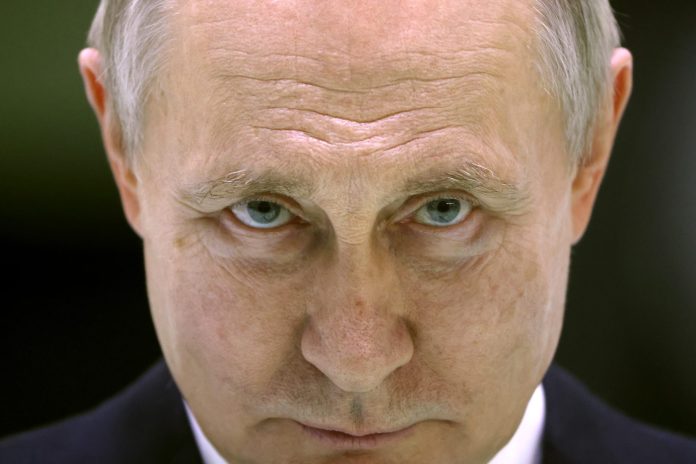
Putin calls on Ukraine to order soldiers in Kursk Region to surrender

Vladimir Putin

Trump had urged Putin to preserve the lives of the “thousands of Ukrainian troops” who are “completely surrounded by the Russian military.”

“This would be a horrible massacre, one not seen since World War II,” he said in a post on Truth Social.

Putin responded that he was aware of Trump’s request, adding that Russia was willing to consider it.

“If they lay down their arms and surrender, [we] will guarantee them their lives and dignified treatment in accordance with international law and Russian legal norms,” the president stated.

The Russian leader pointed out that Kiev’s forces had committed “numerous crimes against civilians” during their incursion into Kursk Region and that the Russian law enforcement authorities were treating their actions as “terrorism.”

For the US president’s call to be “effectively heeded,” Kiev must order its troops to lay down their arms, Putin stated.

Kiev launched a major offensive into the Kursk area in August 2024, capturing the town of Sudzha and dozens of villages. Ukrainian leader Volodymyr Zelensky noted the incursion across the two countries’ internationally recognized border was an attempt to gain leverage for future peace talks.

The Ukrainian advance was quickly halted by the Russian military, which has been gradually reclaiming ground ever since. As of Wednesday evening, Moscow’s forces had liberated 86% of the territory occupied by Ukraine in August 2024, according to the head of the Russian General Staff, General Valery Gerasimov. The remaining Ukrainian units in the area are largely “encircled” and “isolated,” he explained, without providing any specific figures about the number of troops surrounded.

Putin had earlier named the fate of the Ukrainian troops in Kursk Region as one of key issues to address before any deal on a ceasefire between Moscow and Kiev can be reached.

Speaking on Thursday, the president stressed that Russia supports the idea of a 30-day ceasefire proposed by the US but emphasized the need for further discussions with Washington to resolve specific concerns.

Kiev has so far not commented on Putin’s call. Earlier, the Ukrainian General Staff dismissed the reports about Kiev’s troops being surrounded in Kursk Region as “political manipulation” by Russia.

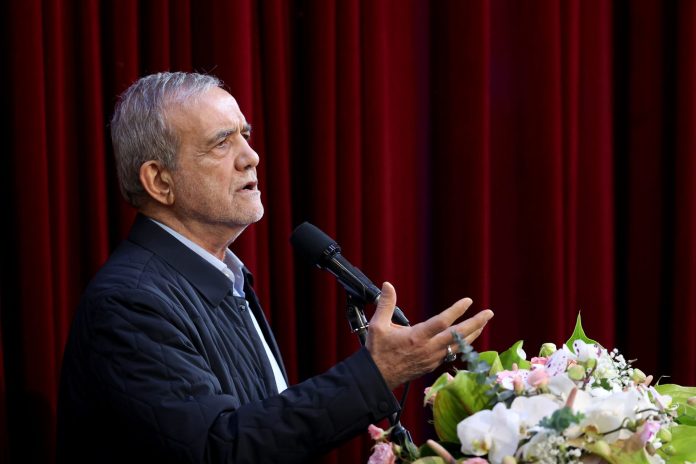
Iranian president emphasizes need for better management, education in Tehran

In a meeting of the Tehran Provincial Planning and Development Council on Saturday, he stressed that despite the challenges, Tehran holds immense potential and opportunities that must be harnessed effectively.

Pezeshkian criticized the current state of education, stating that poor teaching methods have led to a lack of attachment among youth to their homeland.

He noted that many graduates aspire to leave the country, which he attributed to inadequate educational systems.

“We must reform our schools and teaching methods to instill a sense of belonging and pride in our students,” he said.

The president also addressed the severe imbalance in resource distribution, particularly water scarcity, which he described as a looming crisis.

He warned that Tehran’s unsustainable development and overpopulation are exacerbating issues like land subsidence, with some areas sinking up to 36 centimeters annually.

Pezeshkian called for a halt to uncontrolled urban expansion and illegal construction, urging smarter city planning and innovative solutions.

He emphasized the role of universities, industries, and local councils in addressing the challenges, stating, “Tehran has the expertise and resources to solve its problems, but it requires collective will and action.”

Hamas says ready to hand over Israeli American captive and four bodies

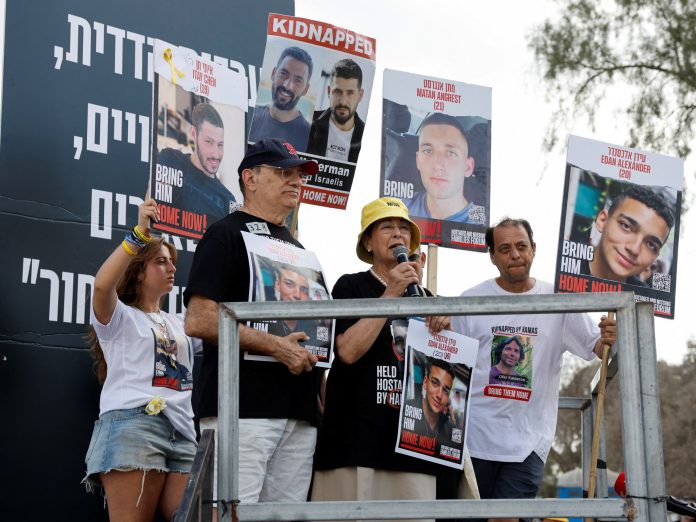
Hamas announced in a statement on Friday that its delegation received a proposal from mediators on Thursday to resume ceasefire negotiations, and the group’s reply “included its agreement to release the Israeli soldier Edan Alexander, who holds American citizenship, along with the remains of four others holding dual citizenship”.

Earlier, Hamas official Husam Badran said the group “is determined to implement the ceasefire agreement in its various stages, and the occupation’s departure from what was agreed will take us back to zero”.

Following the Palestinian group’s statement, Israel accused Hamas of engaging in “psychological warfare”.

“Whereas Israel accepted the Witkoff framework, Hamas remains firm in its refusal and has not budged an inch,” Prime Minister Benjamin Netanyahu’s office said, referring to US Middle East envoy Steve Witkoff, and accusing Hamas of resorting to “manipulation and psychological warfare.”

On Tuesday, a senior Hamas official had announced that a new round of indirect talks through mediators had begun in the Qatari capital Doha. Israel had also sent a team of negotiators.

The first phase of a truce between Hamas and Israel in the Gaza Strip ended on March 1, without agreement on the next stages.

During the initial six-week phase of the ceasefire, Hamas released 33 captives, including eight who were deceased, in exchange for about 1,800 Palestinian prisoners, many held in Israeli prisons without charge.

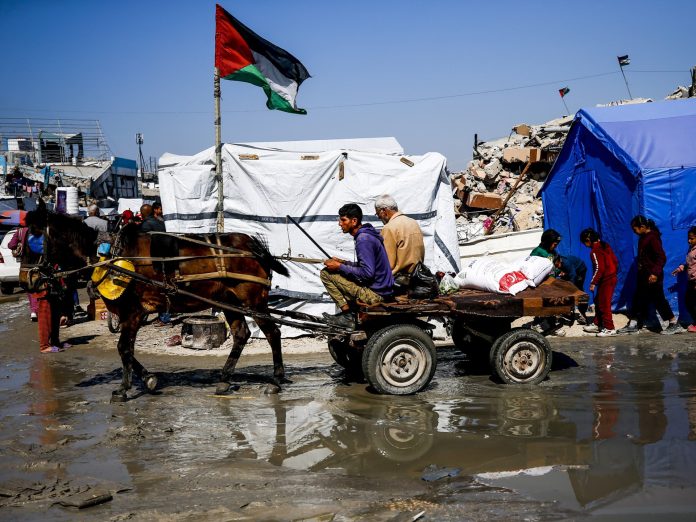
After the truce agreement expired without a new deal, Israel swiftly implemented a total blockade on the besieged Palestinian territory, leaving 2.3 million people on the brink of mass starvation.

Olga Cherevko from the UN Office for the Coordination of Humanitarian Affairs (OCHA) told Al Jazeera that the situation was dire “on multiple levels”.

“The hope that began when the ceasefire started is being replaced with fear, alarm and concern that supplies are running out,” she added.

Cherevko stated food availability “could deteriorate quite rapidly unless the supplies are restored”. Six of the 25 World Food Programme bakeries have been forced to close because there is no fuel to run them.

According to Gaza’s Government Media Office, shortages have worsened with 80 percent of residents losing access to food sources because of the closing of land crossings.

Israel had also severed electricity to a crucial water desalination plant, threatening Gaza’s potable water supply.

“The water and sanitation situation was already dire with most of the facilities destroyed during the months of fighting. This latest [Israeli] decision reduces access to drinking water to about 600,000 people,” Cherevko noted.

Despite the ongoing talks over the next phase of the ceasefire, Israel has continued to bombard Gaza, with attacks on Gaza City and Beit Lahiya killing two children.

Gaza’s Ministry of Health announced at least 48,524 people have been killed and 111,955 wounded in Israel’s war on Gaza.

At least 1,200 people were killed in Israel during the October 7, 2023, Hamas-led attacks and 250 were taken captive.

‘Dangerous’ Daesh leader Abu Khadija killed: Iraq

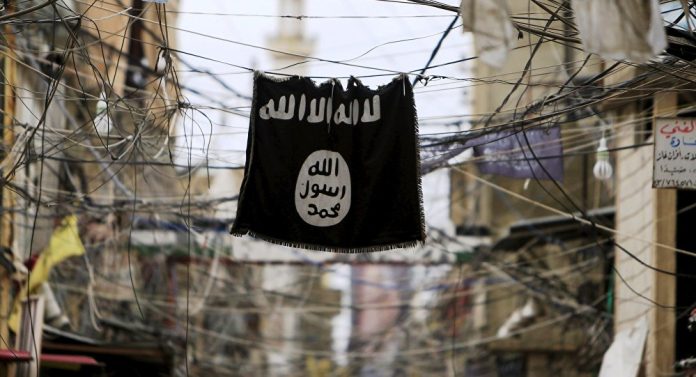
Daesh

Prime Minister Mohammed Shia al-Sudani said on Friday that Abdallah Makki Muslih al-Rufay’i, also known as Abu Khadija, was killed by Iraqi security forces, with the support of the US-led coalition fighting Daesh (ISIS or ISIL).

“The Iraqis continue their impressive victories over the forces of darkness and terrorism,” Sudani wrote in a statement on X, adding that Abu Khadija was “one of the most dangerous terrorists in Iraq and the world.”

In 2017, Iraq declared victory over ISIL by reclaiming all territories the armed group controlled since the summer of 2014, which was estimated to be about a third of the country’s territory.

But the group still maintains sleeper cells in large areas in Iraq and occasionally launches attacks.

Friday’s announcement coincided with Syria’s interim Foreign Minister Asaad al-Shaibani visiting Iraq, where he said his government was ready to “reinforce cooperation” in the fight against remnants of ISIL.

“Security is a shared responsibility,” al-Shaibani told a news conference alongside Iraqi Foreign Minister Fuad Hussein in Baghdad.

“We are ready to reinforce cooperation with Iraq in the fight against Daesh along the whole length of the border. Terrorism knows no borders,” he added

He also stated one aim of Friday’s visit was to enhance trade between the two countries, and reopening the border would be a fundamental step in doing so.

Iraq shut the frontier on security grounds following the lightning opposition offensive that toppled Syrian President Bashar al-Assad in December.

Relations between the neighbours have been complex since the removal of al-Assad, who was a close ally of the government in Baghdad.

While Iraq is a strategic partner of the United States, it is also a key ally of Iran. Some Iraqi armed groups fought to defend al-Assad’s rule during Syria’s 13-year war that began with the security forces’ crackdown on democracy protests in 2011.

Syria’s interim President Ahmed al-Sharaa, who has sought to present a moderate image since coming to power, once fought with al-Qaeda in Iraq against US forces and their allies.

US plans to dispatch upgraded long-range bombs to Ukraine: Reuters

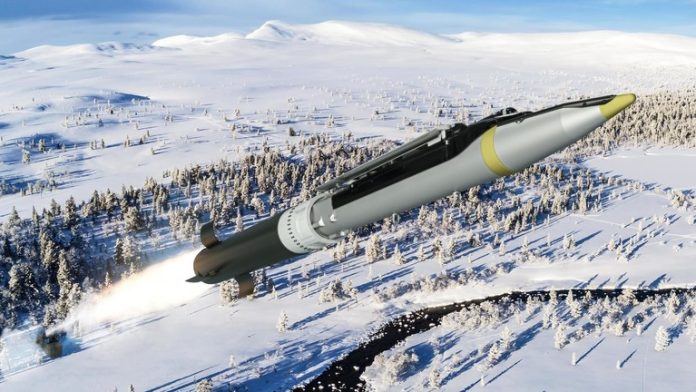
The GLSDB, jointly developed by Boeing and SAAB AB, combines the GBU-39 Small Diameter Bomb with the M26 rocket motor, creating a weapon with a range of approximately 100 miles (161km).

The administration of former President Joe Biden sent an undisclosed number of GLSDBs to Kiev, but it has been months since Ukraine last used them against Russian forces after they proved ineffective last year, sources told Reuters.

Russia’s electronic warfare capabilities rendered precision-guided Western munitions – including GLSDB and GPS-guided Excalibur artillery shells – useless, the Wall Street Journal reported in July. With their guidance systems scrambled, some of these weapons were reportedly retired within weeks of being deployed.

Since then, Boeing has introduced several upgrades, including reinforced internal connections to enhance resistance to jamming. According to Reuters sources, at least 19 GLSDBs were test-fired in recent weeks to assess the effectiveness of the modifications. The US has stockpiled a significant number of these relatively inexpensive bombs in Europe and is “poised” to resume shipments to Kiev within days, the publication reported.

The potential replacement comes amid reports that Ukraine has depleted its stockpile of US-supplied Army Tactical Missile Systems (ATACMS), which have a longer range of 300km.

Kiev began using ATACMS missiles for strikes into internationally recognized Russian territory in autumn 2024, particularly targeting the border regions of Kursk, Bryansk, Belgorod, and Rostov. However, the stockpile was fully exhausted by late January, AP reported on Wednesday.

Moscow has warned the US and its allies against allowing long-range Ukrainian strikes, arguing that this makes NATO a direct participant in the conflict due to Kiev’s reliance on Western-supplied weapons.

In response to Ukraine’s first ATACMS strikes in November last year, Russia launched its new hypersonic Oreshnik intermediate-range ballistic missile at the Yuzhmash military-industrial facility in the Ukrainian city of Dnepr.

US, Israel seeking to displace Palestinians from Gaza to East Africa: AP

Friday’s report said officials from Sudan claimed to have rejected overtures from the US, while officials from Somalia and Somaliland told AP they were unaware of any contacts.

Speaking on condition of anonymity to discuss a secret diplomatic initiative, US and Israeli officials confirmed the contacts with Somalia and Somaliland, while the US officials confirmed Sudan as well. They added it was unclear how much progress the efforts made or at what level the discussions took place.

The development comes more than a month after US President Donald Trump floated the idea of forcibly displacing Palestinians and “taking over” the Gaza Strip. It was roundly rejected by Palestinians and countries in the Middle East, with many describing it as ethnic cleansing.

Separate outreach from the US and Israel to the three potential destinations began last month, days after Trump floated the Gaza plan alongside Prime Minister Benjamin Netanyahu, according to the US officials, who said Israel was taking the lead in the discussions.

There was no immediate reaction to the report from the US or Israel.

But Israeli Finance Minister Bezalel Smotrich, a longtime advocate of what he calls “voluntary” emigration of Palestinians, stated this week that Israel is working to identify countries to take them in. He also added Israel is preparing a “very large emigration department” within its Ministry of Defense.

In exchange for accepting resettled Palestinians, it is thought that a variety of incentives – financial, diplomatic and security – would be offered to the East African governments.

A US official involved in the efforts confirmed to AP that the US was “having a quiet conversation with Somaliland about a range of areas where they can be helpful to the US in exchange for recognition”.

The US could offer the breakaway region of more than 3 million people international recognition, which is a priority for Somaliland’s new President, Abdirahman Mohamed Abdullahi.

Abdirahman Dahir Adan, Somaliland’s Foreign Minister, told the Reuters news agency denied the breakaway region’s authorities having received a proposal.

“I haven’t received such a proposal, and there are no talks with anyone regarding Palestinians,” he added.

It is difficult to understand why Somalia would want to host Palestinians given the country’s strong support for Palestinian self-rule, Sambu Chepkorir, a lawyer and conflict researcher in Nairobi, told AP.

“The realignments keep changing, and so maybe there is a hidden agenda in why Somalia,” Chepkorir said.

Two Sudanese officials, speaking on condition of anonymity to discuss a sensitive diplomatic matter, confirmed the Trump administration has approached the military-led government about accepting Palestinians.

One said the contacts began even before Trump’s inauguration, with offers of military assistance against the RSF paramilitary group, assistance with postwar reconstruction and other incentives.

Both officials stated the Sudanese government rejected the idea.

“This suggestion was immediately rebuffed,” one official noted, adding, “No one opened this matter again.”