Thursday, December 25, 2025
Home Blog Page 447

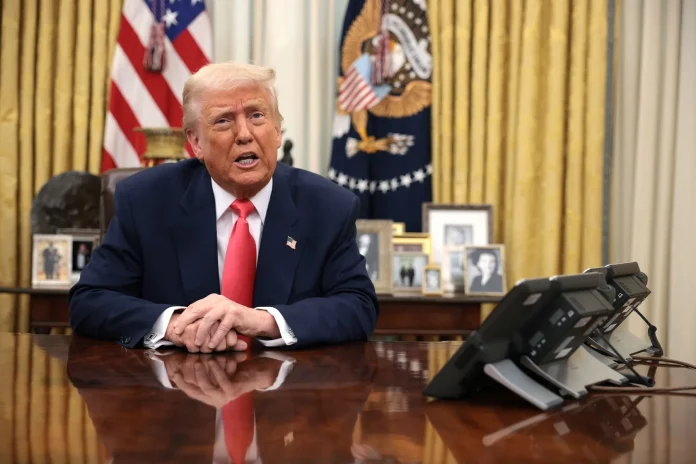
Trump orders air attacks against Yemen’s Houthis, dozens killed

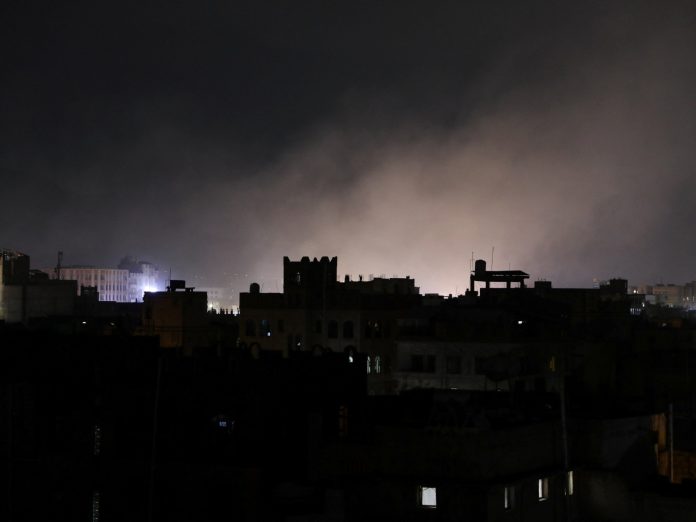
The US strikes, which began on Saturday and continued into the early hours of Sunday, on the Yemeni capital, Sanaa, as well as areas in Saada, al-Bayda and Radaa, killed 31 people and wounded 101, “most of whom were children and women”, spokesperson for Yemen’s Ministry of Health, Anis al-Asbahi, posted on X.

The US raids on Yemen marked the most significant military action of Trump’s second term, to date.

“Your time is up, and your attacks must stop, starting today. If they don’t, hell will rain down upon you like nothing you have ever seen before,” Trump said in a statement on Truth Social, his social media site.

“I have ordered the US military today to launch a decisive and powerful military operation against the Houthi terrorists in Yemen,” he continued, adding that Washington “will use overwhelming lethal force until we have achieved our objective”.

In his Truth Social statement, Trump also told Tehran it needed to immediately stop supporting the Houthis. He stated if Iran threatens the US, “America will hold you fully accountable and, we won’t be nice about it!”

The Houthi group warned that the assault “will not pass without response”. The Houthi website slammed what it called “US-British aggression” and Washington’s “criminal brutality”.

The Houthis, who control much of Yemen, have yet to attack any ships despite threatening to do so last week over Israel’s blockade on all food, fuel and other supplies into the Gaza Strip.

In a statement, a spokesman for the Houthis accused the US of overstating the threat to shipping operations to influence public opinion.

“What the US president claims about a threat to international navigation in the Bab al-Mandeb Strait is false and misleading to international public opinion,” Mohammed Abdul-Salam said.

“The maritime embargo declared by Yemen in support of Gaza is limited only to Israeli navigation until humanitarian aid is delivered to the people of Gaza,  according to the ceasefire agreement between the Palestinian resistance and the enemy entity,” he added.

The Political Bureau of the Houthis also issued a separate statement, describing the attacks as a “war crime” and promised to respond.

“The aggression will not go unanswered,” it said, adding, “Our Yemeni armed forces are fully prepared to respond to escalation with escalation.”

The Houthis have launched more than 100 attacks targeting shipping since November 2023, following Israel’s war on the besieged enclave, disrupting global commerce and setting the US military on a costly campaign to intercept missiles and drones that burned through stocks of US air defences.

The Houthis say the attacks are in solidarity with Palestinians over Israel’s war with Hamas in Gaza.

Earlier this month, the US also designated the Houthi movement, known formally as Ansar Allah, as a “foreign terrorist” organisation.

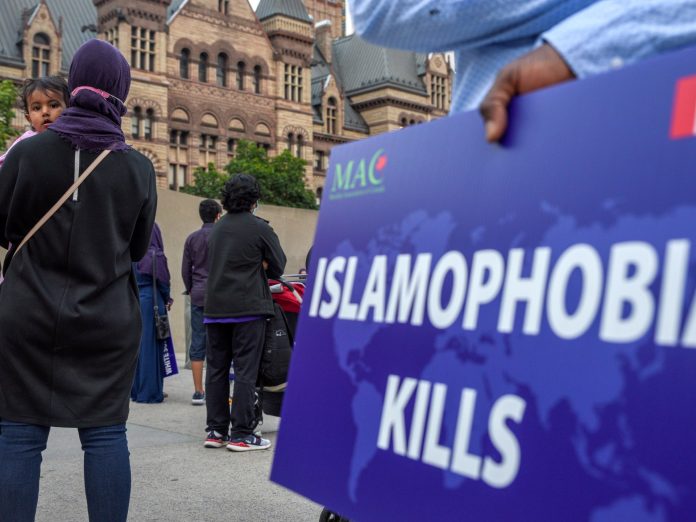
UN chief urges global action against rising ‘anti-Muslim bigotry’

Guterres made the remarks on Saturday to mark the International Day to Combat Islamophobia marked every year on March 15.

Rights groups around the world and the UN have noted a rise in Islamophobia, anti-Arab bias and anti-Semitism since the start of Israel’s 17-month war on Gaza.

“We are witnessing a disturbing rise in anti-Muslim bigotry. From racial profiling and discriminatory policies that violate human rights and dignity, to outright violence against individuals and places of worship,” the UN chief said in a video post on X.

“This is part of a wider scourge of intolerance, extremist ideologies and attacks against religious groups and vulnerable populations.”

He called on governments, without specifying any one nation, to “foster social cohesion and protect religious freedom”.

“Online platforms must curb hate speech and harassment. And we must all speak out against bigotry, xenophobia and discrimination,” he added.

Meanwhile, UN Under-Secretary-General Miguel Angel Moratinos said Muslims were facing “institutional discrimination and socioeconomic restrictions”.

“Such biases are manifested in the stigmatisation and the unwarranted racial profiling of Muslims and are reinforced by biased media representations, and by the anti-Muslim rhetoric and policies of some political leaders,” he stated in a speech to the UN General Assembly.

Rights advocates have for years raised concerns about the stigma faced by Muslims and Arabs because of how some people conflate those communities with armed groups.

At present, many pro-Palestinian activists, including in Western nations such as the United States, have complained and say that their advocacy for Palestinian rights is wrongly labelled by their critics as support for Hamas in Gaza.

In recent weeks, rights watchdogs have published data noting record levels of anti-Muslim hate incidents and hate speeches in countries such as the United Kingdom, the US and India, among others.

A report released by the Council on American-Islamic Relations (CAIR) on Tuesday said that the 8,658 complaints regarding anti-Muslim and anti-Arab incidents last year – representing a 7.4 percent rise year on year – was the highest number since the group began compiling data in 1996.

US weighs travel ban on dozens of countries, including Iran

The memo lists a total of 41 countries divided into three separate groups. The first group of 10 countries, including Afghanistan, Iran, Syria, Cuba and North Korea among others, would be set for a full visa suspension.

In the second group, five countries — Eritrea, Haiti, Laos, Myanmar and South Sudan — would face partial suspensions that would impact tourist and student visas as well as other immigrant visas, with some exceptions.

In the third group, a total of 26 countries that includes Belarus, Pakistan and Turkmenistan among others would be considered for a partial suspension of U.S. visa issuance if their governments “do not make efforts to address deficiencies within 60 days”, the memo said.

A U.S. official speaking on the condition of anonymity cautioned there could be changes on the list and that it was yet to be approved by the administration, including U.S. Secretary of State Marco Rubio.

The move harkens back to President Trump’s first term ban on travelers from seven majority-Muslim nations, a policy that went through several iterations before it was upheld by the Supreme Court in 2018.

Trump issued an executive order on January 20 requiring intensified security vetting of any foreigners seeking admission to the U.S. to detect national security threats.

That order directed several cabinet members to submit by March 21 a list of countries from which travel should be partly or fully suspended because their “vetting and screening information is so deficient.”

Trump’s directive is part of an immigration crackdown that he launched at the start of his second term.

He previewed his plan in an October 2023 speech, pledging to restrict people from the Gaza Strip, Libya, Somalia, Syria, Yemen and “anywhere else that threatens our security.”

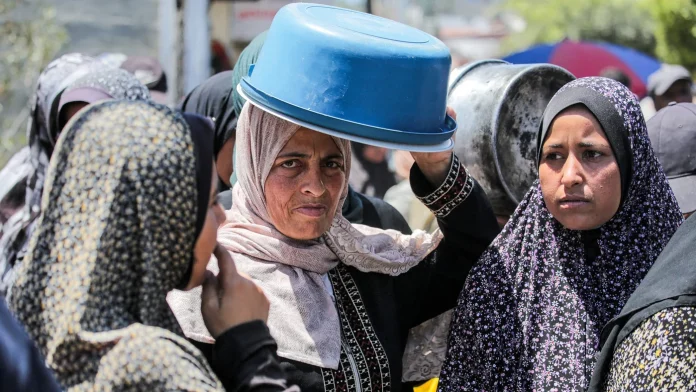
UN report on Israeli sexual abuses against Gazans must lead to prosecutions: Hamas

Gaza War

The UN Independent International Commission of Inquiry on the Occupied Palestinian Territory, including East Jerusalem, and Israel, found that Israel’s systematic destruction of sexual and reproductive healthcare facilities, coupled with restricted medical supplies, resulted in a surge in maternal deaths, and is therefore tantamount to the crime of extermination.

Hamas announced in a statement that the report was a “confirmation of the severity” of Israeli crimes, and showed “the unprecedented violations of international law and humanitarian norms against defenceless civilians”.

The report said that Israel’s direct targeting of women’s healthcare facilities has resulted in “irreversible long-term effects on the mental health and reproductive and fertility prospects of Palestinians as a group”.

This, the commission concluded, amounts to two categories of genocidal acts under the Rome Statute and the Genocide Convention.

They include deliberately inflicting conditions of life calculated to bring about the physical destruction of Palestinians and imposing measures intended to prevent births.

The report also found a “deplorable increase in sexual and gender based violence” employed against Palestinian women, men, girls and boys across occupied Palestine since 7 October 2023 to “terrorise them and perpetuate a system of oppression that undermines their right to self determination”.

It detailed how some acts of sexual gender-based violence, including forced public stripping, form part of the Israeli security forces’ standard operating procedures, while others, including rape and violence to genitals, were committed “under explicit orders or with implicit encouragement” by Israel’s top civilian and military leadership.

Hamas stressed that international community had been in a “state of disregard and negligence” over Israeli violations against Palestinians, and needed to “take practical measures” to put an end to them.

“We call on the International Court of Justice and the International Criminal Court, alongside all international and national judicial bodies around the world, to seriously follow up the findings of this report.”

It added that with the addition of previous UN reports documenting Israeli violations, international bodies must “prosecute the occupation’s leaders as war criminals”.

According to the report, a lack of pain relief medication particularly impacted women who had undergone Caesarean sections, who were forced to endure the procedure without it.

Medical personnel reported that the combined lack of space, medication and equipment was resulting in an increasing number of maternal deaths.

The commission found that the surge in female fatalities in the strip since October – over double the proportion of deaths in the 2008 conflict – is also driven by the increased use of heavy aerial bombardment and the targeting of residential buildings, which disproportionately impacts women.

It noted that the spike could also be due to the Israeli military’s strategy of targeting private homes with the stated aim of killing militants, resulting in entire families killed together.

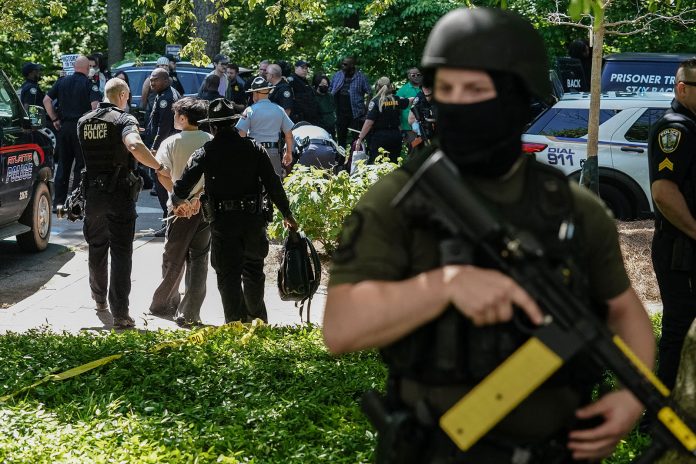
US detains second student over pro-Palestinian protests

Protest US Universities

In a news release on Friday, the Department of Homeland Security accused Leqaa Kordia, a Palestinian student at Columbia, of overstaying her F-1 student visa.

The statement explained that agents from Immigration and Customs Enforcement (ICE) detained her for deportation. Another foreign student, Ranjani Srinivasan of India, had her student visa revoked for participating “in activities supporting Hammas”, a misspelling of the Palestinian armed group Hamas.

The Trump administration has repeatedly conflated participation in protests against Israel’s war in Gaza with support for Hamas. It has also accused demonstrators of supporting “terrorists”.

Kordia’s arrest marks the second time in less than a week that a Palestinian student at Columbia University has been taken into ICE custody for deportation. On Saturday, protest spokesperson Mahmoud Khalil likewise was arrested and placed in immigration detention, first in New Jersey and later in Louisiana.

Civil liberty advocates say the arrests are meant to stifle free speech rights, and Khalil’s lawyer this week argued he has not been able to contact his client privately, in violation of his right to legal counsel.

Khalil is a permanent resident of the US, with a green card, and his American wife is eight months pregnant. The Trump administration, however, says it plans to strip him of his green card.

“It is a privilege to be granted a visa to live and study in the United States of America. When you advocate for violence and terrorism that privilege should be revoked, and you should not be in this country,” Homeland Security Secretary Kristi Noem said in the news release.

But the arrests and student visa revocation were not the only strong-armed actions the Trump administration took against Columbia in the last 24 hours.

In a letter issued late on Thursday night, the administration demanded that Columbia’s Department of Middle Eastern, South Asian and African Studies (MESAAS) be placed in an “academic receivership” wherein an outside authority takes control, often as punishment for mismanagement.

The letter specified that the university must come up with a plan to create the academic receivership role no later than March 20.

Failure to comply, the letter warned, would negatively affect “Columbia University’s continued financial relationship with the United States government”.

Setting up a receivership was just one in a list of demands, which included abolishing the university’s judicial board for hearing disciplinary matters, banning masks on campus and adopting a controversial definition of anti-Semitism that some fear could limit legitimate criticisms of Israel.

Columbia University is a private school, one of eight campuses that makes up the much-vaunted Ivy League in the northeast region.

But Trump and other Republicans have repeatedly attacked the university since it became the epicentre of pro-Palestinian protests in 2023 and 2024 as students rallied against the devastation wrought by Israel’s war, which United Nations experts compared to a genocide.

The protests hit a peak last April, after a contentious hearing on Capitol Hill. The university president at the time, Minouche Shafik, appeared before a congressional panel to face scrutiny over allegations that Columbia and other schools had failed to address anti-Semitism on campus.

The very next day, Shafik authorised New York City police to enter an encampment that student protesters had set up on Columbia’s East Lawn, leading to mass arrests.

Tensions escalated from there. Student protesters argued that their free speech rights were being curtailed, and that officials were conflating criticisms of Israel’s war with anti-Semitism. Some occupied a school building, Hamilton Hall, to show defiance against attempts to dismantle the protest movement.

But what happened at Columbia kicked off a series of similar measures across the country, as police were called onto campuses to arrest peaceful protesters. More than 3,000 protesters are estimated to have been arrested between April and July.

Trump campaigned for re-election on the platform that he would seek out and deport foreign students who participated in the protests.

His allies even codified the threats into last year’s Republican Party platform, making it one of 20 pledges: to “deport pro-Hamas radicals and make our college campuses safe and patriotic again”.

Upon taking office for a second term on January 20, Trump immediately issued an executive order calling for the removal of foreigners who bear “hostile attitudes” to US “citizens, culture, government, institutions, or founding principles” or who support “threats to our national security”.

The US has long been an ally of Israel and has supported its campaign in Gaza, which has killed at least 48,500 Palestinians.

In the months since taking office, Trump has directed the Justice Department to “investigate and punish anti-Jewish racism in leftist, anti-American colleges and universities”.

And on social media this month, he warned he would take heavy-handed action against any campus that hosts what he called “illegal protests” — although he failed to define what that category might entail.

“All Federal Funding will STOP for any College, School, or University that allows illegal protests,” Trump wrote.

“Agitators will be imprisoned/or permanently sent back to the country from which they came. American students will be permanently expelled or, depending on on [sic] the crime, arrested,” he added.

Already, on March 7, the Trump administration announced the immediate cancellation of $400m in federal grants and contracts to Columbia University, in what was considered a warning shot against all institutions of higher education to conform with the president’s demands.

Secretary of Education Linda McMahon pointed to increases in reported acts of anti-Semitism after the Hamas-led attacks on southern Israel in October 2023 as a reason for the cancellation.

“Since October 7, Jewish students have faced relentless violence, intimidation, and anti-Semitic harassment on their campuses — only to be ignored by those who are supposed to protect them,” McMahon announced in an accompanying news release.

“Universities must comply with all federal antidiscrimination laws if they are going to receive federal funding.”

According to the Department of Education, Columbia currently receives approximately $5bn in federal grants and contracts. Earlier this week, the school moved to expel or suspend students involved in the antiwar protests.

But some activists have questioned whether the Trump administration is truly motivated to combat hate crimes — or whether anti-Semitism is being used as a smokescreen to further other political aims.

On Thursday, activists with Jewish Voice for Peace and other groups gathered in Trump Tower in New York City to protest Khalil’s arrest, wearing red T-shirts emblazoned with the slogan “Not in our name”.

As reports emerge of Homeland Security officials searching Columbia University dorm rooms, critics fear students’ civil rights may be violated.

“We do believe that if you are here, you shouldn’t get arrested, dragged away, and deported for engaging in protests that all of your classmates were perfectly within their rights to engage in,” Greg Lukianoff, the CEO of the Foundation for Individual Rights and Expression (FIRE), wrote on social media on Friday.

The Trump administration has cited a little-used section of the Immigration and Nationality Act as justification for the planned deportations.

It says the secretary of state has the right to exclude, “under certain circumstances”, foreign nationals whose entry into the US “would have potentially serious adverse foreign policy consequences for the United States”.

But lawyers and advocates point out that the Supreme Court has repeatedly upheld the constitutional right to free speech for immigrants in the US.

“What happened to Mahmoud is nothing short of extraordinary, shocking, and outrageous,” Khalil’s lawyer Ramzi Kassem stated in a recent statement with the American Civil Liberties Union (ACLU).

“It should outrage anyone who believes that speech should be free in the United States of America,” Kassem added.

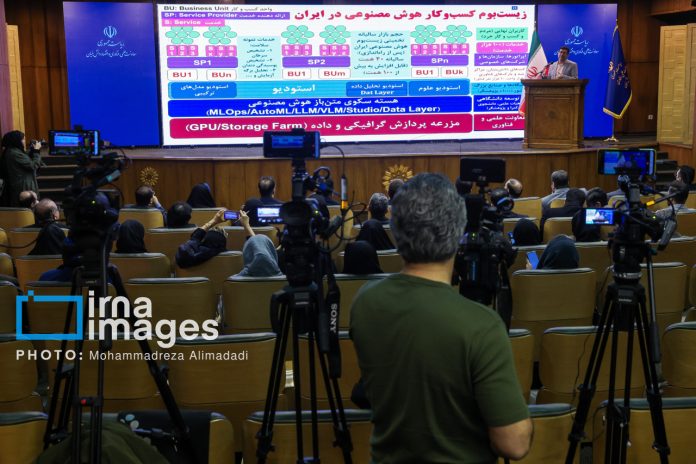
Iran unveils first Artificial Intelligence platform

Establishing a national platform as the main infrastructure for the development of artificial intelligence is one of the most fundamental and essential actions for advancing this technology in the country.

This initiative has been supported by the Iranian Vice Presidency for Science, Technology, and Knowledge-Based Economy, with the help of distinguished university professors and a group of specialists since October 2023.

The progress of this project was previously presented at the “Pioneers of Progress” exhibition in the presence of the Supreme Leader.

Hosseini Asadi, the director of the Rapid Processing Center and representative of Sharif University in this project, highlighted the current state of the country in the field of artificial intelligence, stating that according to academic studies conducted, the number of patents, articles, and active companies in this field has been low over the past decade.

He said the reason for this has been the lack of serious investment in hardware infrastructure and the absence of a platform.

Asadi added that to solve this problem, a market design was created, and the university focused on developing the platform. The role of knowledge-based companies in the development of the platform is also very important.

The representative of Sharif University in the project stated that eight centers, projects, and faculties have simultaneously worked on this project, involving about 100 personnel and utilizing more than 35 technical expertise.

Asadi noted that a stable version of the national artificial intelligence platform in Iran will be released in one year.

Official: Iran moves closer to joining FATF after key approval

FATF

According to a member of the Expediency Council on Saturday, joint commissions within the council have approved the necessary measures for Iran’s accession. The final decision now awaits approval by the full council.

The move comes after years of delays and internal disagreements. Iran’s parliament had previously approved FATF-related bills, but disputes between the parliament and the Guardian Council stalled progress and the issue was subsequently referred to the Expediency Council.

Seyed Mohammad Sadr, a member of the council, emphasized the importance of joining FATF, stating that failure to adopt the Palermo and CFT (Combating the Financing of Terrorism) conventions would imply Iran’s economy operates on illicit foundations.

Experts have long stressed the necessity of FATF membership, warning that delays harm Iran’s financial and trade relations.

Hadi Khani, head of Iran’s Financial Intelligence Center, recently highlighted that postponing accession not only complicates banking and trade but also increases the costs and challenges of future membership.

Proponents argue that joining FATF will facilitate international trade and improve Iran’s economic standing, while critics fear it could undermine the country’s resistance economy.

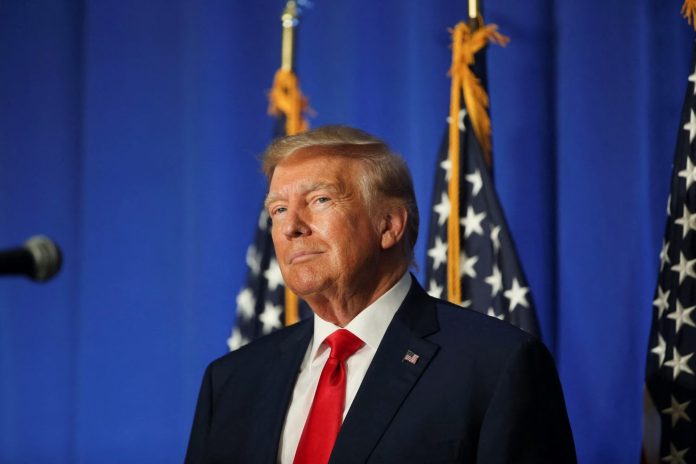
US received ‘some pretty good news’ on Ukraine-Russia ceasefire: Trump

Following talks with U.S. officials, Kyiv agreed to a temporary ceasefire, as long as Russia also abides by its terms. Washington is now trying to persuade Moscow to accept the deal.

“We’ve had some very good calls today with Russia and with Ukraine,” Trump said during his DOJ speech.

“They’ve agreed for a ceasefire if we can get it with Russia, and it’s not easy. It’s a tough one. But I think we’re doing it. … I think we’ve had some very good results. I haven’t been able to say that to anybody else, I haven’t wanted to say it until just before I came here, I got some pretty good news.”

Trump did not say what the good news was, nor did he provide additional details on the content of the negotiations. Despite his note of optimism, he acknowledged that there is still “a long way to go.”

Earlier in the day, Trump claimed he asked Russian President Vladimir Putin to “spare” Ukrainian troops he said were surrounded by Russian forces in Kursk Oblast — a claim he repeated during his speech. Kyiv has denied reports that its troops are encircled in Kursk.

Trump also repeated his standard talking point on Russia’s full-scale war against Ukraine: namely, that former U.S. President Joe Biden should not have “let” the war happen.

“Biden should have never let this war happen,” he added.

“First of all, you don’t want to pick on someone that’s a lot larger than you, even with the money. That’s a lot of money that we gave them.”

Trump has historically been hesitant to condemn Russia’s onslaught and violations of sovereignty, instead preferring to lay the blame on the Biden administration and Ukraine’s own NATO ambitions.

Putin has stated that Russia was ready to agree to the proposed 30-day ceasefire in Ukraine, but soon followed that up with demands that Ukraine ban mobilizing and training more troops and that the West halt all military aid to Kyiv.

U.S. Secretary of State Marco Rubio has also stressed that the administration was “cautiously optimistic” about progress towards a ceasefire, but added that the situation remains “complex.”

“There is reason to be cautiously optimistic, but by the same token, we continue to recognize this is a difficult and complex situation,” Rubio added.

“It will not be easy. It will not be simple. But we certainly feel like we’re at least some steps closer to ending this war and bringing peace.”

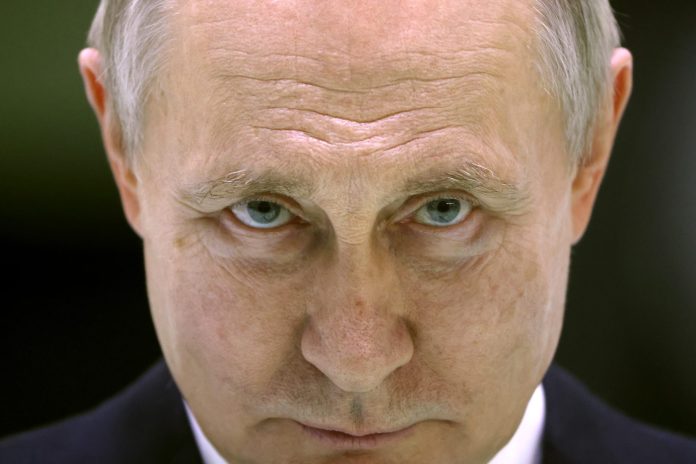
Putin calls on Ukraine to order soldiers in Kursk Region to surrender

Vladimir Putin

Trump had urged Putin to preserve the lives of the “thousands of Ukrainian troops” who are “completely surrounded by the Russian military.”

“This would be a horrible massacre, one not seen since World War II,” he said in a post on Truth Social.

Putin responded that he was aware of Trump’s request, adding that Russia was willing to consider it.

“If they lay down their arms and surrender, [we] will guarantee them their lives and dignified treatment in accordance with international law and Russian legal norms,” the president stated.

The Russian leader pointed out that Kiev’s forces had committed “numerous crimes against civilians” during their incursion into Kursk Region and that the Russian law enforcement authorities were treating their actions as “terrorism.”

For the US president’s call to be “effectively heeded,” Kiev must order its troops to lay down their arms, Putin stated.

Kiev launched a major offensive into the Kursk area in August 2024, capturing the town of Sudzha and dozens of villages. Ukrainian leader Volodymyr Zelensky noted the incursion across the two countries’ internationally recognized border was an attempt to gain leverage for future peace talks.

The Ukrainian advance was quickly halted by the Russian military, which has been gradually reclaiming ground ever since. As of Wednesday evening, Moscow’s forces had liberated 86% of the territory occupied by Ukraine in August 2024, according to the head of the Russian General Staff, General Valery Gerasimov. The remaining Ukrainian units in the area are largely “encircled” and “isolated,” he explained, without providing any specific figures about the number of troops surrounded.

Putin had earlier named the fate of the Ukrainian troops in Kursk Region as one of key issues to address before any deal on a ceasefire between Moscow and Kiev can be reached.

Speaking on Thursday, the president stressed that Russia supports the idea of a 30-day ceasefire proposed by the US but emphasized the need for further discussions with Washington to resolve specific concerns.

Kiev has so far not commented on Putin’s call. Earlier, the Ukrainian General Staff dismissed the reports about Kiev’s troops being surrounded in Kursk Region as “political manipulation” by Russia.

Iranian president emphasizes need for better management, education in Tehran

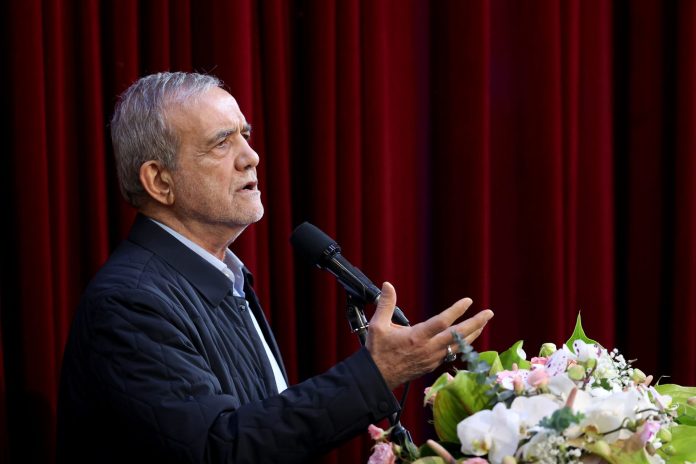
In a meeting of the Tehran Provincial Planning and Development Council on Saturday, he stressed that despite the challenges, Tehran holds immense potential and opportunities that must be harnessed effectively.

Pezeshkian criticized the current state of education, stating that poor teaching methods have led to a lack of attachment among youth to their homeland.

He noted that many graduates aspire to leave the country, which he attributed to inadequate educational systems.

“We must reform our schools and teaching methods to instill a sense of belonging and pride in our students,” he said.

The president also addressed the severe imbalance in resource distribution, particularly water scarcity, which he described as a looming crisis.

He warned that Tehran’s unsustainable development and overpopulation are exacerbating issues like land subsidence, with some areas sinking up to 36 centimeters annually.

Pezeshkian called for a halt to uncontrolled urban expansion and illegal construction, urging smarter city planning and innovative solutions.

He emphasized the role of universities, industries, and local councils in addressing the challenges, stating, “Tehran has the expertise and resources to solve its problems, but it requires collective will and action.”