Tuesday, May 5, 2026
Home Blog Page 448

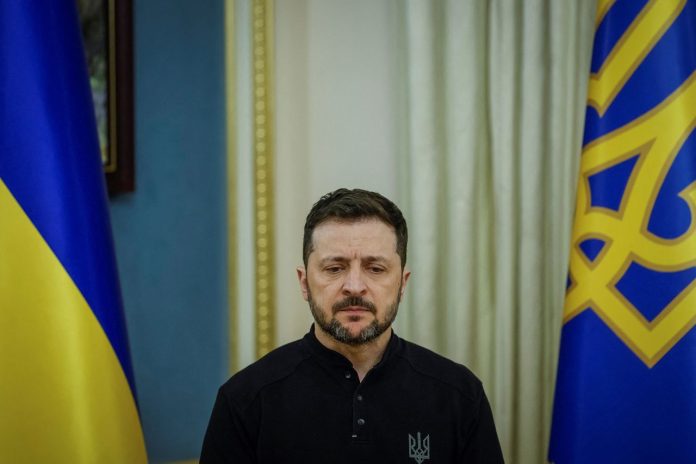
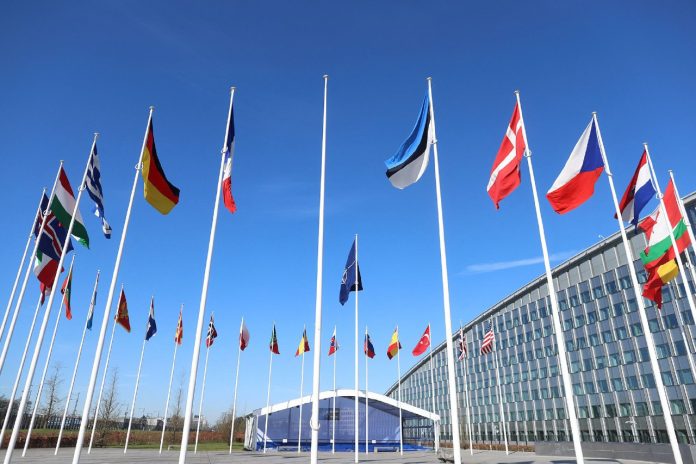
NATO says not part of Ukraine peace negotiations

NATO

During an interview with Ukraine’s New Voice, Rutte was asked if NATO had any “red lines” in the negotiations to end the Ukraine conflict.

“We do not have our own red lines, because we are not part of that,” Rutte said.

“We are not part, as NATO, of those negotiations. They are really driven by the US, together with Ukraine and the Russians. I’m glad that the US has broken the deadlock, that these talks are now ongoing,” he added.

Rutte ruled out NATO itself sending peacekeepers to Ukraine.

“Probably it will not be NATO as such. That’s not very likely,” he stated, while adding that individual member states could dispatch troops on their own.

“That always means that it has an impact on NATO territory. It might have an impact on the defense of NATO territory also, going forward.”

Several NATO members, including France, the UK, and Germany, have floated proposals to deploy peacekeepers after a ceasefire is reached.

Rutte stressed that Ukraine’s aspiration to join the bloc has not been tied to the ongoing talks.

“It has never been promised to Ukraine that NATO membership will be part of a peace deal or a ceasefire,” he continued.

“These are two separate things, a peace deal and the long-term prospect.”

US President Donald Trump reiterated this week that Ukraine will “never be a member of NATO.” Russia has cited NATO’s expansion eastward as one of the core reasons for the conflict, and demanded that Ukraine drop its plans to join the alliance.

Russian Foreign Minister Sergey Lavrov has rejected the deployment of troops from NATO members in Ukraine in any capacity as unacceptable.
Unauthorized Afghan entries into Iran down 50 percent

Afghan Refugee

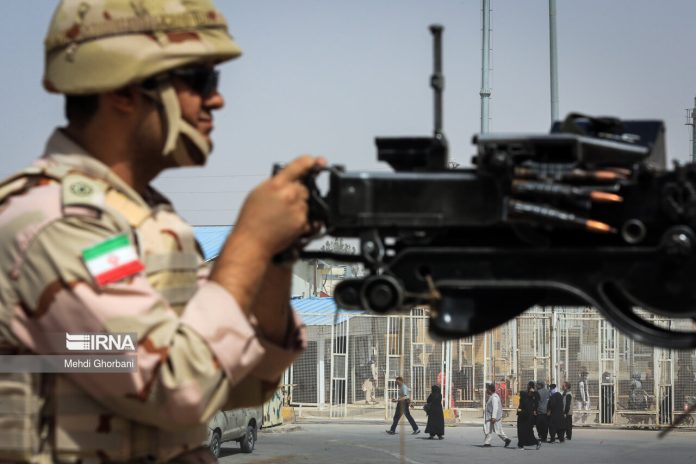
According to Hojjat Sadeghi, Iranian armed forces stationed along the eastern border identified and intercepted 33,582 Afghan nationals before they could cross into Iranian territory via the Taybad border crossing.

He attributed the decline to several key factors, including sustained border security, the strength and presence of military forces, effective legal measures taken by the judiciary, the partial implementation of a major eastern border wall project, and the coordinated efforts of national and provincial agencies.

Sadeghi noted that all identified individuals were processed and repatriated through the Dogharoun international crossing after completing legal formalities.

He further explained that Afghan nationals detained in 11 provinces across Iran are systematically transferred to Dogharoun and handed over to Afghan authorities following legal procedures.

Emphasizing the importance of border security, Sadeghi said Dogharoun remains the primary legal entry and exit point for Afghan citizens and warned that all unauthorized crossings are met with firm legal consequences.

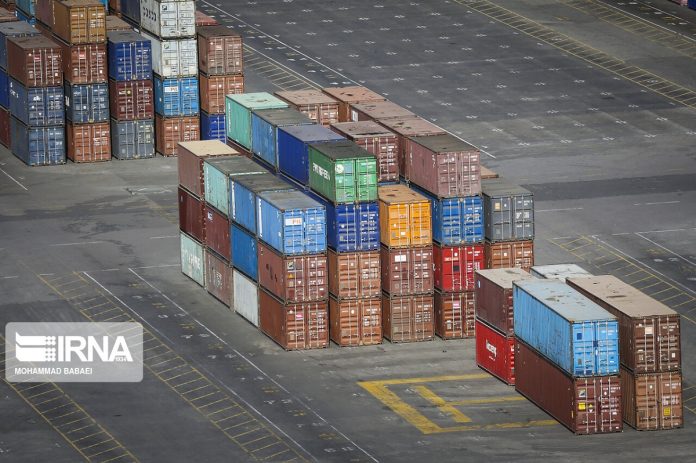
Iran-Afghanistan trade via Dogharoun border exceeds $3 billion annually

Iran Trade

He described Dogharoun as Afghanistan’s most significant economic gateway with Iran, emphasizing that enhancing bilateral trade would boost investor confidence and expand economic activities.

Marhamati noted that Afghan investors have shown increasing interest in areas such as mining, agriculture, and other sectors along the border and in Iran’s Razavi Khorasan Province.

Plans are underway to host a summit aimed at facilitating joint investment, he added.

He further pointed out that simplifying investment procedures and improving infrastructure are key to attracting Afghan investors and ensuring economic sustainability in the border region.

Razavi Khorasan remains Afghanistan’s top export partner, and the Dogharoun crossing is the primary economic hub in eastern Iran. Marhamati concluded that shared cultural ties, regional security, and the quality of Iranian goods continue to enhance Afghanistan’s interest in deepening economic ties with Iran.

Education ministry says over 17,000 Palestinian children killed in Gaza since start of war

Gaza War

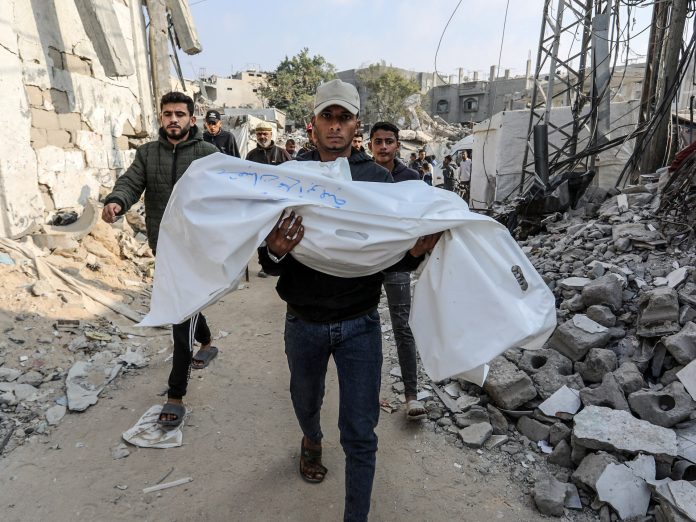
The ministry in a press release marking Palestinian Children’s Day, which is observed annually on April 5, said “education in Palestine, particularly in Gaza, is under direct attack by the Israeli occupation, which continues to destroy schools and prevent children from accessing safe educational environments.”

It noted students in Gaza, Jerusalem, and areas classified as “Area C” in the occupied West Bank face daily challenges due to the ongoing war.

“More than 17,000 children have been martyred in Gaza, a figure that reflects the depth of the tragedy children are enduring, with each number representing a life, memories, and experiences lost,” the ministry added.

Despite these dire conditions, the ministry highlighted the resilience of Gaza’s children, who continue to hold on to their right to education, which they see as the only path to a better future.

The ministry is promoting virtual schools and alternative measures to ensure that education continues despite the challenges.

Since the onset of Israel’s ongoing offensive in Gaza on Oct. 7, 2023, Palestinian children have been subjected to catastrophic conditions, with government reports indicating that women and children now account for more than 60% of the casualties, now over 50,000.

Children under the age of 18 represent 43% of Palestine’s population, 3.4 million in the West Bank and 2.1 million in Gaza, according to the Palestinian Central Bureau of Statistics.

Tehran wants indirect talks with Washington, warns regional countries over attacks against it

Iran US Flags

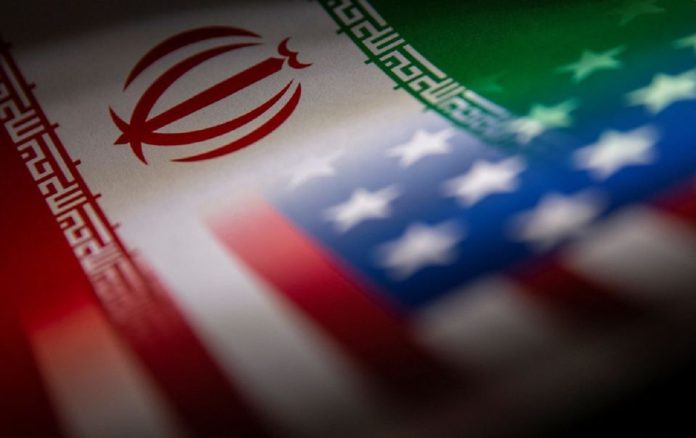
Although Iran has rejected U.S. President Donald Trump’s demand for direct talks, it wants to continue indirect negotiations through Oman, a longtime channel for messages between the rival states, said the official, who spoke to Reuters on condition of anonymity.

“Indirect talks offer a chance to evaluate Washington’s seriousness about a political solution with Iran,” stated the official.

Although that path could be “rocky”, such talks could begin soon if U.S. messaging supported it, the official added.

Iran has issued notices to Iraq, Kuwait, the United Arab Emirates, Qatar, Turkey and Bahrain that any support for a U.S. attack on Iran, including the use of their air space or territory by U.S. military during an attack, would be considered an act of hostility, the official continued.

Such an act “will have severe consequences for them”, the official said, adding that Supreme Leader Ayatollah Seyyed Ali Khamenei had placed Iran’s armed forces on high alert.

Spokespeople for the governments of Iraq, Kuwait, the UAE, Qatar and Bahrain did not immediately respond to requests for comment. Turkey’s Foreign Ministry announced it was not aware of a warning but that such messages could be conveyed by other channels.

Iran’s ally Russia said on Thursday that U.S. threats of military strikes against the Islamic Republic were unacceptable and on Friday called for restraint.

Iran is trying to gain more support from Russia, but is sceptical about Moscow’s commitment to its ally, stated a second Iranian official.

This “depends on the dynamics” of the relationship between Trump and Russian President Vladimir Putin, the official added.

Trump has stated he would prefer a deal over Iran’s nuclear programme to a military confrontation.

The first Iranian official said a first round of indirect talks could involve Omani mediators shuttling between the Iranian and U.S. delegations. Ayatollah Khamenei has authorised Foreign Minister Abbas Araqchi or his deputy, Majid Takht-e Ravanchi, to attend any talks in Muscat.

However, the official believed there was a window of around two months to agree a deal, citing worries that Iran’s long-time foe Israel might launch its own attack if talks took longer, and that it could trigger a so-called “snap back” of all international sanctions on Iran to prevent the country from acquiring a nuclear weapon.

Iran has long denied wanting to develop a nuclear weapon.

Ukraine investigating leaked U.S. minerals agreement: FT

The administration of Ukrainian President Volodymyr Zelensky has directed the security services to find the leakers, the Financial Times reports.

The measures include use of polygraph tests on those with access to the deal across several government ministries, though the Financial Times did not identify them specifically.

The minerals deal is the pet project of U.S. President Donald Trump, who talks about it as a means of securing U.S. engagement with Ukraine via private industry investment. Opponents talk about it as colonial pillaging of Ukraine’s resources.

The actual details of the minerals deal seem to fluctuate regularly, but Ukrainian authorities including Zelensky have assented in general terms to the concept of U.S. miners coming into Ukraine.

An earlier version of the deal did, however, fall apart early in March. Negotiations are, however, very much ongoing. Trump however recently accused Zelensky of “trying to back out” of the minerals deal.

Iran faces 37% rainfall deficit, drought concerns mount

Snow Iran

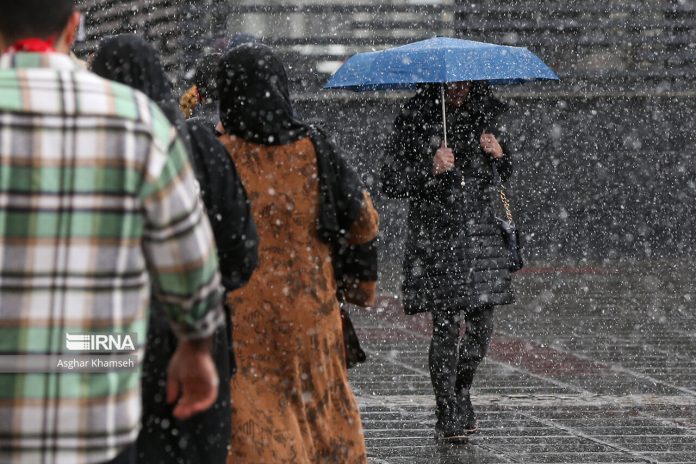
Hormozgan Province recorded the most severe deficit (-75.9%), followed by Sistan-Baluchestan (-75.4%) and East Azerbaijan (-60%)

Mazandaran was the sole province with increased rainfall (+2.2%)

Tehran saw a 41.4% reduction (81mm less than historical average)

The water crisis persists despite marginal improvement from a 37.5% deficit reported in mid-March.

Experts warn the prolonged drought could threaten agricultural output, strain urban water supplies, and exacerbate dust storms in southeastern regions.

Authorities are expected to implement water rationing in affected provinces ahead of peak summer demand.

Ancient Persian inscription of Darius I faces critical deterioration

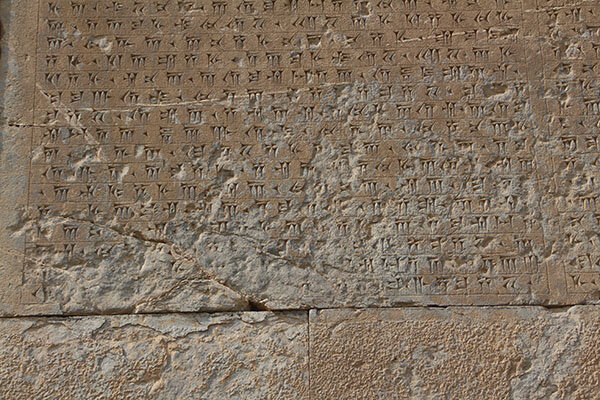
The massive stone tablet, known as “Darius’s First Decree,” has suffered significant erosion and partial collapse in recent years.

Controversial conservation attempts in 2020, when authorities removed protective structures without proper approval or studies, reportedly accelerated the damage.

“This isn’t just any artifact; it’s the founding document of Persepolis itself,” said Siavash Arya, a cultural heritage activist who recently documented the inscription’s condition. “The text reveals Darius’s worldview, his respect for workers, and even early monotheistic beliefs in Persia.”

The limestone inscription contains 22 lines of cuneiform script describing the construction of Persepolis and the empire’s governance. Archaeologists consider it the most valuable written record from the Achaemenid period (550-330 BCE).

Authorities at the Persepolis World Heritage Site announced new restoration efforts this week, but experts remain concerned about irreversible damage. The inscription has become increasingly vulnerable to temperature fluctuations and humidity since its protective canopy was removed over four years ago.

“This was a preventable tragedy,” said Farzad Amiri, an ancient Near Eastern historian at Shiraz University. “The inscription survived millennia only to deteriorate under our watch due to poor decisions.”

Ukraine hits US embassy over ‘surprisingly disappointing’ response to Russian attack

Zelensky, in a lengthy Saturday post on X, accused the U.S. embassy in Ukraine of being afraid to mention Russia when commenting on the Friday attack that killed at least 19 people and injured nearly 70 more.

“Unfortunately, the response from the U.S. Embassy is surprisingly disappointing – such a strong country, such a strong people, and yet such a weak reaction,” Zelensky wrote.

“They are afraid to even say the word ‘Russian’ when speaking about the missile that murdered children.”

Following the deadly Russian attack on Kryvyi Rih, a city in central Ukraine, U.S. Ambassador to Ukraine Bridget Brink said she was “horrified that tonight a ballistic missile struck near a playground and restaurant in Kryvyi Rih. More than 50 people injured and 16 killed, including 6 children. This is why the war must end.”

Zelensky, in the Saturday morning post, agreed that the three-year war in Eastern Europe “must end.”

“But to end it, we must not be afraid to call things by their names. We must not be afraid to pressure the one who continues this war and ignores all the world’s proposals to end it,” Zelensky added.

“We must pressure Russia – the one choosing to kill children instead of choosing a ceasefire. There must be additional sanctions against those who cannot exist without ballistic strikes on their neighboring nation,” Ukraine’s leader continued.

“We must do everything in our capacity to save lives.”

The strike on Kryvyi Rih was condemned by several European leaders, including European Union High Representative Kaja Kallas, who stated on Friday that Russia “continues to destroy Ukraine, no interest in peace.”

“It is critically important not to leave this Russian strike on civilians, on the city – every such strike – without a response from the world. Kryvyi Rih and all of Ukraine have already been supported by many yesterday and today,” Zelensky said.

Russian Defense Ministry announced the Friday attack was a “precision strike with a high-explosive missile” that was aimed at a “restaurant” where “commanders of formations and Western instructors were meeting.”

“As a result of the strike, enemy losses total up to 85 servicemen and officers of foreign countries, as well as up to 20 vehicles,” the ministry wrote on Telegram.

President Donald Trump’s administration has been pushing to secure a ceasefire between the two sides since he came back to office in January. The U.S. announced last week that an agreement was reached between the two Eastern European countries to halt “use of force” in the Black Sea and on energy facilities.

“We count on our agreements with the President of the United States, who promised to help find more Patriots,” Zelensky said on Saturday.

“And we count on the strength of the world to overcome this evil – this war, this Russian aggression,” he added.

Police: Iran deported over 1.12 million undocumented Afghan nationals last year

Afghan Refugee in Iran

General Saeed Montazer-al-Mahdi, the police command’s spokesperson, reported that security forces conducted 1,090 operations nationwide to locate and repatriate illegal immigrants.

“These individuals were identified through systematic border control measures and subsequently returned to their countries of origin,” General Montazer-al-Mahdi stated, referring to Afghan nationals.

The unprecedented deportation figures come amid heightened regional migration pressures and Iran’s ongoing economic challenges and water stress.

According to unofficial figures, Iran hosts over 10 million Afghan refugees, one of the world’s largest refugee population.

Authorities plan to upgrade surveillance technology along eastern border provinces, where most undocumented crossings occur.