Tuesday, December 23, 2025
Home Blog Page 4448

Several War Games Planned for New Iranian Year: Official

Several ground, naval and aerial war games are scheduled to be held in the current Iranian year, whose dates will be announced later, Deputy Chief of Staff of the Iranian Armed Forces Brigadier General Massoud Jazayeri told reporters on Saturday.

Iranian officials have underlined that the country’s missile tests and military exercises will be carried out on schedule, regardless of Western opposition or diplomatic considerations.

Elsewhere in his comments and asked about deployment of advisers from Iran’s Army Ground Force Special Forces to Syria, Jazayeri said that is not something new as various units of the Iranian Armed Forces are already on advisory missions in the region.

Iran, a close ally of Syria, has been supporting the legitimate Syrian government in the fight against terrorists.

Tehran has made it clear that its assistance to Syria is confined to consultation and advisory help.

Syria has been mired in a civil war since 2011, with government forces fighting an assortment of militant groups, including the Daesh (ISIL) terrorists.

Iran missile program not open to negotiations, compromise: FM

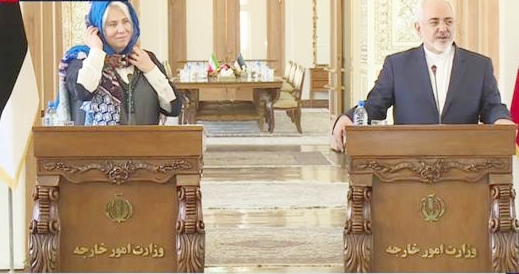
Zarif made the remark in a joint press conference with his Estonian counterpart, Marina Kaljurand, in Tehran on Sunday.

The Iranian top diplomat stressed that the US Secretary of State John Kerry knows well that Iran’s missile capabilities are not open to negotiations.

“If the US administration is really serious about defense issues, it should decrease the sale of weapons, which are killing innocent Yemeni people every day, and should stop [the sale of] weapons which, as admitted by the Zionist regime, are used to attack civilians,” Zarif said.

He added that the US government knows well that Iran’s defense issues are not negotiable and that no deal would be made on such issues.

Zarif emphasized that the issue of Iran’s defense programs have been clearly excluded from the nuclear agreement, known as the Joint Comprehensive Plan of Action (JCPOA), reached between Iran and the P5+1 group of countries on July 14, 2015.

“There would be no JCPOA for defense issues,” Zarif emphasized.

Zarif’s reaction came after the US Secretary of State John Kerry suggested on Thursday that Washington was open to a “new arrangement” with Tehran for peacefully resolving disputes such as its recent ballistic missile tests.

Kerry said the US and its partners were telling Iran that they were “prepared to work on a new arrangement to find a peaceful solution to these issues.”

The Islamic Revolution Guards Corps (IRGC) successfully test-fired two ballistic missiles on March 9 as part of military drills to assess its capabilities. The missiles dubbed Qadr-H and Qadr-F were fired during large-scale drills code-named Eqtedar-e-Velayat.

On March 8, Iran fired another ballistic missile called Qiam from silo-based launchers in different locations across the country.

The US claims that Iran’s missile tests violate the UN Security Council Resolution 2231 that endorsed the JCPOA.

Iran, however, has repeatedly announced that the missile launches are not against the Security Council resolution.

US occupation of Iraq, root cause of terrorism in ME

The Iranian foreign minister also dismissed Kerry’s “baseless” allegations that Tehran is destabilizing the Middle East.

“The risk of terrorism and extremism, which is the main risk threatening the region, is the result of the United States of America’s occupation of Iraq and is a risk that we had predicted before the US attack on Iraq and had officially announced that the occupation of Iraq would lead to extremism and terrorism in the region,” Zarif said.

He warned that the threat of terrorist and extremist groups such as Daesh is spreading in the region by those who only think about their short-term interests and are not concerned about their own long-term security.

Instead of making unfounded accusations against Iran, the US is needed to adopt a more serious approach to regional issues, he said.

The US secretary of state on Thursday accused Iran of conducting “destabilizing actions” in the Middle East.

Speaking in a joint press conference with Bahraini Foreign Minister Sheikh Khalid bin Ahmed Al Khalifa, Kerry said the US calls on Iran to “constructively join in the efforts to make peace … and to work toward a cessation of hostilities.”

Iran to Produce Rare Earth Elements: Nuclear Chief

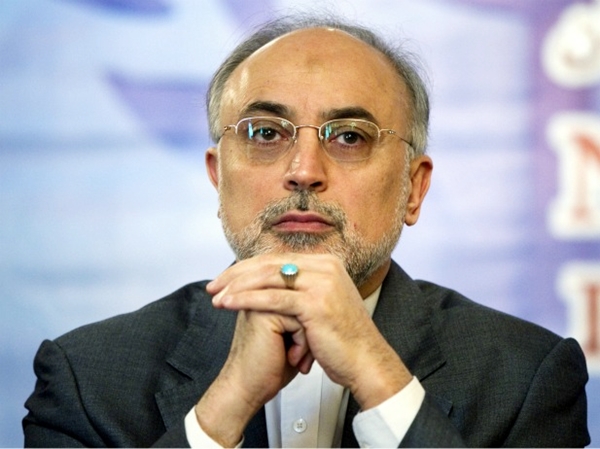
Speaking at a television talk show on Saturday night, Salehi said his organizations has signed contracts with the local industries to produce rare earth elements simultaneous with the extraction of uranium in the mines.

The extraction of rare earth elements, which are very expensive, will reduce the costs of uranium production, he explained.

The production of rare earths in the uranium mines will start in the current Iranian year (which began on March 20), Salehi noted, saying the elements will be used for both domestic consumption and exports.

According to the official, only three counties in the world possess and produce the rare earth elements.

Rare earth elements are a set of seventeen chemical elements in the periodic table, specifically the fifteen lanthanides plus scandium and yttrium. While named rare earths, they are in fact not that rare and are relatively abundant in the Earth’s crust.  What is unusual is to find them in quantities significant enough to support economic mineral development.

China is the dominant consumer of rare earths, which it uses mainly in the manufacture of electronics products for domestic use as well as export. Japan and the US are the world’s second and third largest consumers of rare earths.

The Japanese call REEs “the seeds of technology.”  The US Department of Energy calls them “technology metals.”

Six-thousand-year old village unearthed in Kurdestan

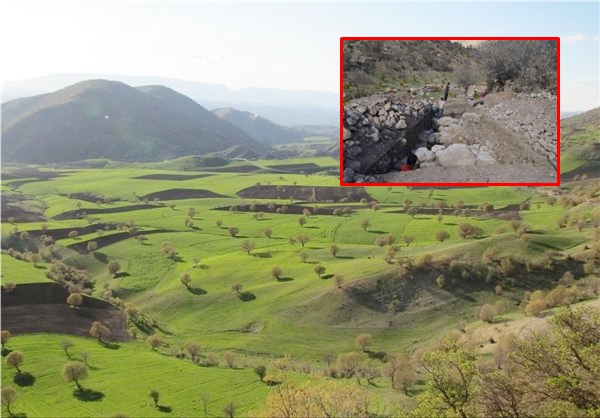
The ancient village was unearthed in the Sarcham archeological site in the vicinity of Rowar Village, Excavation Head of the site Amir Saed Moocheshi was cited as saying on Saturday by the office for public relations of the Research Institute for Cultural Heritage and Tourism.

‘The unearthed village belongs to the Chalcolithic (copper and stone) archeological period,’ Moocheshi said.

He said that excavators have also discovered clay pots, stoneware, stone tools, animal bones and remnants of some architectural structures.

According to the excavators working on the site, the village is the most ancient ever discovered in the region.

Iran Ready to Raise Oil Exports to India

During a meeting with his Indian counterpart Dharmendra Pradhan here in Tehran on Saturday, Zangeneh underlined the long-lasting relationships between Iran and India, adding that the two countries enjoy historic political and cultural ties at the highest levels.

“I am sure, this meeting will facilitate and enhance economic relations between the two countries, especially in energy sector,” said the Iranian official.

He said Iran and India can cooperate in all energy fields including oil, gas and petrochemical industries.

“Besides expanding trade ties in oil and gas sector with India, Iran is interested in attracting investments from Indian companies.”

The Iranian minister of petroleum further said that India is one of Iran’s traditional oil customers, expressing hope that New Delhi will increase its purchase from Iran after removal of sanctions with support from the Indian government.

Regarding development of Farzad B gas field, Zangeneh said he was optimistic that a date will be designated for finalization of the talks between Iran and Indian developers of the field.

He highlighted petrochemical sector as one of the areas that Iran is interested in cooperating with Indian companies. “Indian companies can invest in Iran’s petrochemical sector and Iran is ready to supply them with natural gas.”

Furthermore, Iranian ministry of petroleum is prepared to supply natural gas to any other energy-consuming projects that Indian firms finance in Iran.

EC chief: Iran should help neighboring states overcome insecurities, resolve disputes

Hashemi Rafsanjani
Hashemi Rafsanjani

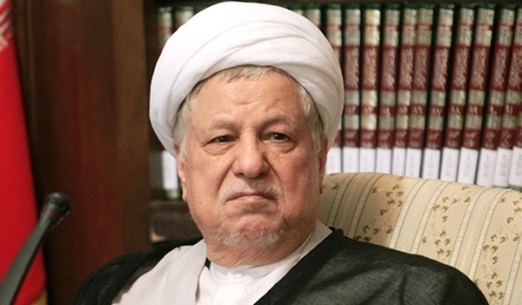
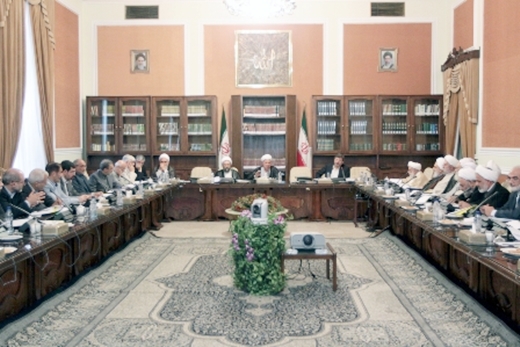
In a meeting with members of Expediency Council, he wished for dignity and prosperity of the Iranian nation as well as settlement of problems in the Muslim world mainly the neighboring states in the new Iranian year.
Referring to the current dissatisfactory situation in the region and waves of unrests, he said the Islamic Republic of Iran should help maintain calmness and unity in the region through promotion of cooperation and interaction.
Iran should also help regional countries maintain their security and resolve their disputes.


82027843-70638000

Tehran, Ankara review ways to widen bilateral ties

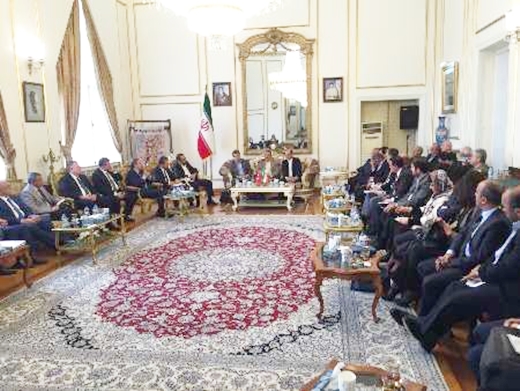
The meeting was held in Ankara with participation of deputy head of Iran’s Cultural Heritage, Handicrafts, and Tourism Organization Morteza Rahmani Movahhed and 50 members of different Turkish corporations.

In the meeting, Rahmani Movahhed said Iran is willing to promote ties with Turkey in the field of tourism.

Members of the Turkish companies, too, expressed willingness to expand relations , tourism cooperation in particular, with Iran.

Rahmani Movahhed is in Turkey for the 25th meeting of Tehran-Ankara joint economic commission.

No New Arrangement for Missile Negotiation with Iran, US Says

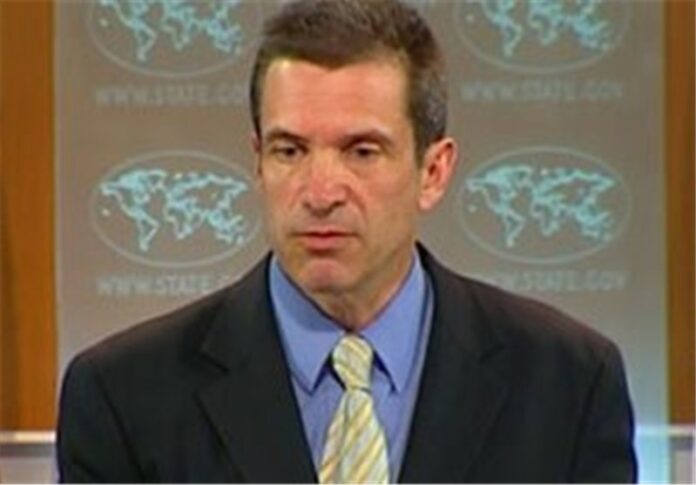
“I don’t think he (John Kerry) was being specific that there’s some kind of new policy to be launched here or new arrangement in the terms of concrete actions. Simply, he was just emphasizing or underscoring the fact that if Iran chooses to act more constructively in the region, then we can have a different kind of relationship with Iran,” Toner said at a daily briefing on Friday, referring to the recent remarks by the US Secretary of State suggesting Washington was open to a “new arrangement” with Iran for resolving the issue.

The spokesman’s remarks came after a top Iranian military official reminded the US to keep its nose out of Tehran’s defense program, stressing that the Iranian Armed Force will not allow any foreign country to set limits for its activities, including progress in the missile industry.

“Iran’s missile power is by no means negotiable and any restriction on it is a red line for the country,” Deputy Chief of Staff of the Iranian Armed Forces Brigadier General Massoud Jazayeri said on Friday.

“Iran will not get permission from anybody to boost its defense capabilities,” he added.

In late March, Leader of the Islamic Revolution Ayatollah Seyed Ali Khamenei had underscored the need for boosting Iran’s defense capabilities, warning that enemies are making use of every tool available to undermine the Islamic Republic.

Ayatollah Khamenei said at the time that if the Islamic establishment seeks technology and negotiations but lacks defense might, it will have to buckle in the face of any weak country that poses threat to it.

In March, the country’s Islamic Revolution Guards Corps (IRGC) forces test-fired two types of Qadr ballistic missiles during the large-scale drills, codenamed “Might of Velayat”.

The two ballistic missiles, Qadr-H and Qadr-F, were launched from the heights of East Alborz Mountains, north of Iran, and hit targets on the Makran coasts, southeast of the country.

According to reports, Qadr-H missile has a range of 1,700 kilometers while Qadr-F missile can destroy targets some 2,000 kilometers away.

Iran to Host 65 International Exhibitions

International Iranplast Exhibition is the first expo scheduled for April, while the last one is the 16th International Environment Exhibition.

The tally shows that Iran will host exhibitions on 288 days this year.

The exhibitions include laboratory material and equipment, oil, gas, refinery and petrochemistry, elevator and related equipment, a seminar on women’s role in sustainable development, telecom industries, mining and mineral industries, electronics, computer and e-commerce, and the environment.

Spring nature of Zanjan

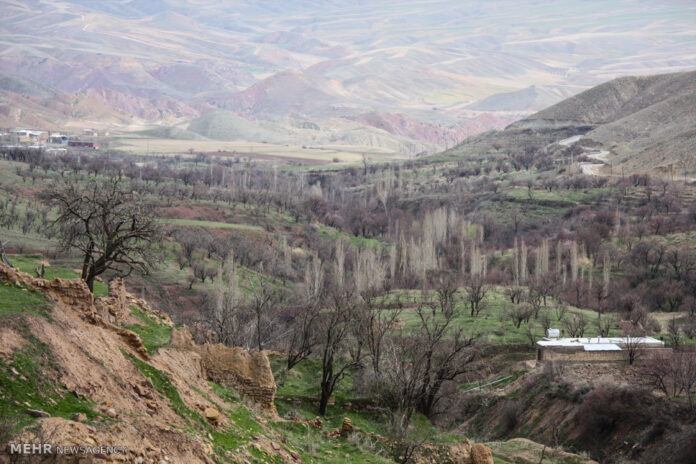
 Beautiful nature of north-western city of Zanjan in the early days of spring.