Saturday, December 27, 2025
Home Blog Page 4365

Iran Reconstructs Sculpture of Ancient Woman Found in Burnt City

Ancient Woman Found in Burnt City

Here is IFP’s translation of a report by Fars:

Shahr-e Sukhteh (The Burnt City), located in the southeastern Iranian province of Sistan and Baluchestan near the border with Afghanistan, has become Iran’s 17th entry on the UNESCO’s World Heritage List.

Ancient Woman Found in Burnt CityThe Burnt City, which has only been partly excavated, was the largest urban settlement in eastern Persia during the Bronze Age. The city brought together two ancient civilizations of Persia and India and was one of the most advanced settlements of the ancient times. Its heyday spanned more than a millennium (3200 BC – 2000 BC).

What lends additional significance to this city is that it is said to be the first place in the world where a brain surgery has been conducted. Residents of the city seem to have perfected shoemaking skills, and the world’s oldest animation drawings on a pottery vessel have been found there.

During a two-day archaeology workshop entitled “Bone and Ivory: From Exploration to Repair”, Maryam Ramezani, an anthropologist and a member of the archaeological team, announced that the sculpture of a woman found in the Burnt City has been successfully reconstructed through teamwork.

“Archaeologists and scientists throughout the world usually apply one of the following three methods for reconstruction: manual two-dimensional reconstruction; manual three-dimensional reconstruction; and computer-based three-dimensional reconstruction techniques. In our case, we used manual three-dimensional reconstruction method,” Ramezani noted.

In order to produce a 3D print, the team had numerous photos and scans from the sculpture, she said, adding, “The most important part was to detect the thickness of the soft tissues that cover the skeleton. We recreate them based on their age, gender, race, staple food and so on.”

Ramezani further explained that they formulated a table based on the accumulated data that represented physical features of a 30-year-old woman with a typical body shape.

Ramezani and her team covered the skull with a soft tissue and reconstructed the skin colour, hair colour, nose shape, among others, with the help of anthropology science.

“For example, the woman’s upper jaw was excessively forward and had a bony shaped nose, which, as you can see, were all reconstructed,” she went on to say.

“People of old times, owing to the food they ate and their living conditions, usually looked older than their real age,” she said, adding that her team had considered the issue in their reconstruction.

According to Ramezani, the colour and material of the clothes they put on the Burnt City woman and even her hairstyle pertains to the accumulated data from the remnants of the city.

“The necklace around her neck has been recreated based on her own necklace found in the site and even the knot on her hair is akin to the sample found in the Burnt City,” she added.

When asked about the reason for the recreation of two dissimilar eyes, Ramezani said, “The archaeology team, after an extensive research, came to realize that the woman’s prosthetic eye used to be white; however, it has turned dark with the passage of time. Therefore, we decided to reconstruct two eyes with two different colours.”

Ramezani emphasized the major role of anthropologists in the project and underlined, “If you deprive artists of the worthy information provided by an anthropologist, in no way can they ever reconstruct a discovered skeleton precisely.”ci

Islamic Human Rights Award 2016 Jointly Goes to Bahrain’s Cleric, IHRC Co-Founder

Sheikh Issa Qassim-Arzu Merali

During a ceremony to commemorate the Islamic Human Rights and Human Dignity Day in Tehran on Wednesday, the third prize of the International Islamic Human Rights Award in 2016 went to Sheikh Issa Qassim for his effective role in “peacefully defending the rights of Muslims” as well as “promoting principles of religious democracy”.

Arzu Merali also received the same award for her constant efforts to “defend Muslims’ rights” and “fight against Islamophobia”.

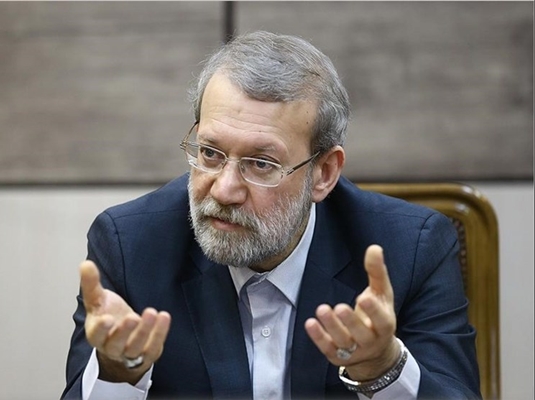
Iranian Judiciary Chief Ayatollah Sadeq Amoli Larijani opened the ceremony with a speech. The event was attended by senior Iranian officials as well as the ambassadors of Islamic countries to Tehran.

A hospital in the Palestinian Gaza Strip and Syrian, Yemeni and Iraqi activists had been presented the first and second prize of the International Islamic Human rights Award in 2014 and 2015, respectively.

Iran’s Judiciary Chief Proposes Debates with Europe on Human Rights
Amoli Larijani

“I suggest that the (Judiciary’s) Human Rights Council, the Foreign Ministry and the Supreme National Security Council pave the way for talks with European countries (on human rights),” Ayatollah Amoli Larijani said in an address to a cultural ceremony in Tehran on Wednesday.
He underlined that the US must be excluded from any such discussions because “Americans are only after deception.”

The top official also stressed that the primary condition for holding such talks should be equal chances for each side to question the other.

“We also have things to say about human rights in Europe. We have questions and views about Europe’s approach toward humans, Islamophobia in Europe, and France’s ban on hijab,” he stressed.

It is surprising that prohibition of hijab is described as being in conformity with human rights, but any comment about the Holocaust would entail imprisonment, the top official pointed out.

Iran will approve of discussing human rights with Europeans if they agree that the debate would be reciprocal and they would be challenged as well, Ayatollah Amoli Larijani went on to say.

Lake Urmia Is Now Stabilized: Top Official

Iran Lake Urmia

In an interview with ISNA, as translated by IFP, Masoumeh Ebtekar appreciated the efforts already made as per the Urmia Lake Restoration Program adopted by the current government.

“The committee made laudable endeavours in building concerted collaboration among different organizations and dealing with the financial issues.”

Ebtekar highlighted the stabilized restoration of Lake Urmia, and noted that the high evaporation and low precipitation during hot seasons are the two environmental factors that contribute to a fall in the lake’s water level.

“We were worried about, yet prepared for, a decrease in water level during the Khordad and Tir months of solar calendar [June and July]; however, it fortunately did not happen,” she added.

Urmia Lake Restoration Program is predicted to pay off over a span of 10 to 15 years, Ebtekar said, adding, “During the first three years, the program was aimed at stabilizing Urmia Lake level, which was successfully achieved thanks to the high rainfall and productive programs and measures.”

She referred to the two chief responsibilities of the Department of Environment, and noted, “First, we should make amendments for more efficient irrigation systems and cultivation; and second, we should support local and rural women entities that educate rural women about environment, efficient irrigation and cultivation and alternative livelihoods.”

Ebtekar added that such measures can help increase the water reserves to be transferred to Lake Urmia.

UN Betrayed Yemeni Children by De-Listing Saudi Arabia: Iran

Gholam-Ali Khoshroo, Iran’s ambassador and to the United Nations (UN) (photo by AFP)

Gholam-Ali Khoshroo, Iran’s ambassador and permanent representative to the UN, made the remarks at a UN Security Council meeting to discuss children and armed conflict on Tuesday, August 2.

Back in June, the UN blacklisted Saudi Arabia after concluding in a report that Riyadh had been responsible for 60 per cent of the 785 deaths of children in the Saudi war on Yemen last year. A few days later, however, the world body announced that Saudi Arabia would be taken off the list pending a joint review with Saudi Arabia.

Khoshroo told the Security Council meeting that the about-face took place under “financial and political pressure.”

The reversal equalled the “betrayal of the rights of the most vulnerable portion of the [Yemeni] civilian population, namely children, for whose very protection the international mechanism has been designed,” he said, referring to the UN.

“Have the airstrikes in Yemen, which have so far killed hundreds of Yemeni children, led to anything other than [prompting] the growth of al-Qaeda and the Daesh?” the Iranian envoy asked.

Yemen has been under relentless military attacks by Saudi Arabia since late March 2015, with internal sources putting the death toll from the aggression at about 10,000.

Khoshroo adduced to the latest report by the UN Secretary General Ban Ki-moon, saying attacks on Yemeni children had, over the last year, reached 1,953 instances, which reflected a six-fold increase.

After deciding to remove Saudi Arabia from the blacklist of countries that kill and maim children, Ban himself admitted that the decision had been made under “undue pressure.”

Speaking at the same Security Council meeting on Tuesday, Ban said he still had “very strong concerns about the protection of Yemeni children” despite a series of measures Saudi Arabia has purported to take to protect children in Yemen.

Riyadh reportedly outlined the measures in a 13-page confidential letter to the UN chief last week.

Ban said the Saudi measures had fallen short of safeguarding the lives of Yemeni children.

Saudi Arabia Asked Abbas to Meet MKO Ringleader, Palestinian Source Says

Mahmoud Abbas - MKO terrorist

The Riyadh regime had asked Abbas to hold talks with Maryam Rajavi in France, the Arabic-language Al-Masdar News quoted the source as saying.

Abbas met with Rajavi in Paris on Saturday. According to reports, they talked about the regional developments, with Rajavi briefing Abbas on the MKO’s recent annual gathering.

The source further pointed to the presence of a Palestinian delegation in a gathering of the MKO members in Paris in early July, saying the Saudi and French governments had asked the Palestinians to attend the gathering.

A number of Saudi officials and supporters of MKO, including Saudi Prince Turki bin Faisal Al Saud, attended the gathering of the terrorists on July 9 and made hostile remarks against Iran.

The MKO – listed as a terrorist organization by much of the international community – fled Iran in 1986 for Iraq and was given a camp by former Iraqi dictator Saddam Hussein.

They fought on the side of Saddam during the Iraqi imposed war on Iran (1980-88). They were also involved in the bloody repression of Shiite Muslims in southern Iraq in 1991 and the massacre of Iraqi Kurds.

The notorious group is also responsible for killing thousands of Iranian civilians and officials after the victory of the Islamic revolution in 1979.

More than 17,000 Iranians, many of them civilians, have been killed at the hands of the MKO in different acts of terrorism including bombings in public places, and targeted killings.

3000-Year-Old Glazed Bricks Discovered in Iran’s Sardasht

Mannaean Glazed Bricks Discovered in Iran’s Sardasht

Here is IFP’s translation of a report by the Public Relations Department of the Research Institute of Iran’s Cultural Heritage, Handcrafts and Tourism Organization (ICHTO):

Reza Heidari, the head of the fifth season of archeological excavations in Rabat hill, said that his team has unearthed ancient pottery, architectural remnants and glazed bricks in the site.

Heidari added that the bricks are embellished with geometric, mythological and human motifs that represent a relationship between neo-Assyrian Empire and art and religion.

“Among the ancient objects found in the site are the glazed bricks. On these bricks, the names of the pagan Gods of Bel and Nebo and Mannaean kings are inscribed in Assyrian cuneiform,” Heidari said, noting that excavations in Sardasht’s Rabat hill started in 2005.

The Mannaeans were ancient people who lived in the present-day north-western Iran, south of Lake Urmia, around the 10th to 7th centuries BCE. At that time, they were neighbours of the empires of Assyria and Urartu, as well as other small buffer states between the two, such as Musasir and Zikirti.

In the Bible (Jeremiah 51:27), the Mannaeans are called Minni. In the Jewish Encyclopaedia (1906), Minni is identified with Armenia.

P5+1 Not Fully Abiding by JCPOA: Rouhani

Rouhani

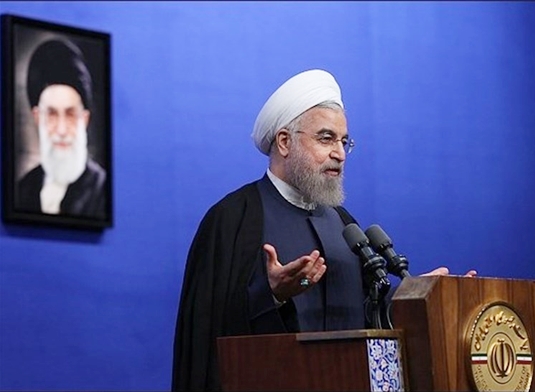
In a live televised interview on Tuesday, Rouhani said the P5+1 has had “some shortcomings” in honoring its side of the Joint Comprehensive Plan of Action (JCPOA).

He, however, said the JCOPA has brought about “a good climate for the country and its economy,” Rouhani said.

“Had the other side preformed well, we would have been in a better condition today, but there are some acts of obstructionism,” Rouhani said.

He added that the Zionist regime of Israel was always against a nuclear deal and threw spanners in the works of the negotiations and some regional countries also used to “childishly oppose the JCPOA and are continuing to create obstacles.” The Iranian president added that the US Congress is also seeking to create problems for the implementation of the JCPOA.

“Had the US implemented the JCPOA in good faith, we may have trusted the opposite side and agreed to enter into negotiations with them on another issue, which would have served the interests of the region, the US, Iran and others; however, they did not score well on their test,” the Iranian president said.   

“The US failed to properly carry out its obligations and missed out on the opportunity for cooperation in other areas,” Rouhani added.

His comments come a day after Leader of the Islamic Revolution Ayatollah Seyyed Ali Khamenei said that Iran’s experience in striking a nuclear agreement with the P5+1 group of countries was a clear example of the enemies’ untrustworthiness.

“Today, even the diplomatic officials and those who were present in the [nuclear] negotiations reiterate the fact that the US is breaching its promises, and while speaking softly and sweetly [to Iran], is busy obstructing and damaging Iran’s economic relations with other countries,” Ayatollah Khamenei said on Monday.

The JCPOA between Iran and the five permanent members of the UN Security Council — the United States, Britain, France, China, Russia — plus Germany envisages Tehran scaling back its nuclear program in return for the lifting of all nuclear-related sanctions on the Islamic Republic.

However, months after the agreement went into effect on January 16, the United States and the European Union continue to maintain some sanctions on Iran, scaring off companies from resuming trade with the country.

European banks have balked at the idea of resuming transaction with Iran, fearing punitive US measures. US Republicans, meanwhile, are pushing through three anti-Iran bills in the Congress.

Rouhani - TV
Iranian President Hassan Rouhani (1st R) attends a live television interview, Tehran, August 2, 2016. (photo by president.ir)

Elsewhere, Rouhani said Iran is a pillar of stability in the region and is influential in the stability of its neighboring countries.

The Iranian president added that he is more optimistic about the economic, social and security condition of the country since the beginning of the Iranian calendar year four months ago.

“Throughout these three years (since Rouhani took office), we have witnessed an unprecedented peace and stability courtesy of the efforts by the [country’s] Armed Forces and nation and this peace and stability will continue and Iran will always remain the focal point of security and stability in the region,” he said.    

Rouhani expressed hope to be able to address the Iranian national on national television at shorter intervals.

Any Attack on Foreign Embassies Is Unjustifiable: Iran

Bahram Ghasemi- FM Spoksman

“Attacking diplomatic sites is illegal, immoral, unacceptable, and rejected, and would not be justified with any excuse,” Qassemi said in reaction to an open letter from the mastermind of a raid on the Saudi embassy in Tehran back in January.

The spokesman also rejected the contents of the letter as unfounded and baseless.

Qassemi expressed Tehran’s discontent at the arbitrary and ignorant move to attack the Saudi embassy, and said the cases of the assailants are still pending in the court.

He further described the attack as a move that served the interests of Iran’s enemies, particularly the Riyadh regime.

Common sense would never approve of any move in the interests of enemies and allies of the “occupying, child-murderer” Zionists, he added, as reported by Tasnim.

KordmihanHis remarks came after the cleric Hassan Kordmihan, the alleged mastermind of the January attack on the Saudi embassy in Tehran, wrote an open letter to President Hassan Rouhani, and pinned the blame on the government.

In his letter, which was released on his Telegram channel, he claimed that the Police had intentionally refused to control the attackers, and “if President Rouhani did not want it”, the attackers could not even get close to the embassy.

“The Law Enforcement could do anything at that night; but an individual or a number of people in the Law Enforcement violated the law and did not allow the forces to fulfil their duties, and caused the country … to suffer such damages,” Kordmihan said, calling for the prosecution of such individuals.

In his open letter, he also urged Rouhani to put the Foreign Ministry on trial because of undermining Iran’s dignity in dealing with Saudi Arabia, which he believes was the reason for such outrage among the attackers.

16-Year-Old Iranian Girl Pulls a Car with Her Teeth

16-8-1-15323057327151

Faezeh Sarlak is a 16-year-old girl from Iran’s southwestern city of Ahvaz. She recently pulled a car using her teeth.
Here are ISNA’s photos of her move: