Saturday, December 27, 2025
Home Blog Page 4355

ISIS Commanders’ Coup against al-Baghdadi in Kirkuk

Abu Bakr al-Baghdadi, the ISIS Leader

According to a report by Al-Alam, as translated by IFP, a source from Iraq’s northern city of Kirkuk said that some senior ISIS leaders in the southwest of Kirkuk have disaffiliated from al-Baghdadi and pledged allegiance with Ayman al-Zawahiri, the current leader of Al Qaeda.

“Alliance with Al Qaeda is a heavy blow to Abu Bakr al-Baghdadi because it will create a gap and sow the seeds of discord among the ISIS terrorists,” the source added.

Following the casualties and heavy losses inflicted upon ISIS in Iraq and also the territorial losses in Salahuddin, al-Anbar, Qayyarah, and al-Shirqat, tensions are rising among ISIS leaders in Iraq’s north-western province of Nineveh inasmuch as they are considering a possibility of replacing al-Baghdadi for his incompetence.

There is a chance of armed clashes between the leaders affiliated to al-Baghdadi and the insubordinate ones who are now allied with al-Zawahiri.

In June 2014, ISIS took hold of the province of Nineveh and west of Kirkuk which used to be the territories of other militants such as Al Qaeda. ISIS members forced them to relinquish weapons and recite the pledge of allegiance to al-Baghdadi; however, this led to exchanges of fire between them.

Commander Warns of Enemy Plot Targeting Iran’s Cultural Roots

Lieutenant Commander of the Islamic Revolution Guards Corps (IRGC) Brigadier General Hossein Salami warned that the Islamic Republic’s adversary has waged a cultural war against the country to make the Establishment passive.

“It would be very naive to think the enemy is not pursuing a dangerous scenario (against the country),” General Salami said on Wednesday, addressing a cultural event in Mashhad, some 900 kilometers east of Tehran.

The enemy seeks to turn the Islamic Establishment into a passive one, he said.

“That is to say, they want to alter the cultural and social roots of our country,”the senior commander observed, stressing the need to counter the scheme.

Leader of the Islamic Revolution Ayatollah Seyed Ali Khamenei has also on many occasions urged vigilance in the face of enemy ploys to gain a political and cultural foothold in Iran, warning that the consequences of such infiltration would be much worse than that of enemy’s economic influence.

“Economic and security infiltration is of course dangerous and has dire consequences, but the enemy’s political and cultural infiltration (into Iran) is a much more serious threat that everyone should be vigilant about,” Ayatollah Khamenei said back in September 2015.

As part of plans for cultural infiltration, the enemy has made heavy investment to gradually change the Iranian people’s beliefs, the Leader explained at the time.

Elsewhere in his Wednesday address in Mashhad, General Salami referred to letters by Ayatollah Khamenei to the youth in the West, stressing that the message of the letters “which presented the true image of Islam” should be promoted through the cyberspace.

The Leader in a letter in January 2015 introduced the true image of Islam to youths in Europe and North America, and elaborated on the reasons behind the West’s attempts to spread Islamophobia.

Ayatollah Khamenei wrote his second letter to the youth in the West on November 29, following a series of terrorist attacks in Paris.

In that letter, the Leader underlined that it is only the “youth , who by learning lessons from today’s hardships, will be able to find new solutions for building the future, and block off-roads which have led the West to this current position.”

Iran Probing into Possible Cyber Attacks on Its Industrial Plants

2164992

Following the speculations about the recent fires at Iranian industrial plants that possible cyber-attacks might be the root cause, Iranian cyber security institutions, in coordination with Iran’s National Centre of Cyberspace, have embarked on thorough investigations.


According to a report by Mehr, as translated by IFP, some believe that the country’s industrial plants, such as Bu Ali and Bandar Imam petrochemical complexes, might have been victims of cyber-attacks.

Iranian President’s Strategic Centre for Exchange of Information Security (AFTA), Iranian Cyber Police (FATA), Passive Defence Organization, and the Coordination Centre of Computer Emergency Response Team are probing into the issue.

In an interview with Mehr, Seyyed Hadi Sajjadi, the Deputy Head of Iran’s Information Technology Organization in Security Affairs, pointed to the recent allegations of cyber-attacks against the country’s industrial plants and said, “Despite all the claims about the possibility of a cyber-attack, there is not a scrap of evidence to prove the allegations.”

He further highlighted the importance of the attempts made by the country’s cyber security institutions and stressed, “The investigations will continue as a matter of caution.”

Iran Expects First Wheat Export in Years

Wheat Fields _283

Iran is expecting a surplus of wheat this year, which it plans to release onto the regional markets, the country’s top body in charge of ensuring food security says.


The government has already purchased more wheat from local farmers than needed for the country’s consumption this year, deputy head of the Government Trading Corporation (GTC) Hassan Abbasi Maroufan said Wednesday.

“That is why we will be looking to export the (surplus) crop to the regional markets,” the Mehr news agency quoted him as saying.

Abbasi Maroufan said state-sponsored purchases of wheat from domestic farmers have hit 10.283 million tonnes so far and are on course to reach 11 million tonnes, a rise of 30% on the year before.

Wheat Fields _618“Total production this year is estimated at 13 million tonnes, which is quite significant and valuable and we should appreciate our wheat growers and farmers,” he said.

Wheat growers keep some of the crop for their own consumption and some other as seeds for the next cultivation season.

Abbasi Maroufan said the production of durum wheat “with good quality and higher global standards has been done in 10 provinces which is ideal for pasta-making.”

Beside the new surplus, the country is believed to be holding a carryover from the previous wheat crop as well as past stocks.

The official said Iran has to step up production of basic and strategic commodities under its “Economy of Resistance” blueprint which Leader of the Islamic Revolution Ayatollah Seyyed Ali Khamenei has proposed.

Wheat Fields _742The plan calls for establishing a knowledge-based economy relying on domestic capacities and cutting dependence on oil revenues in order to protect the country against Western sanctions and stimulate growth.

Abbasi Maroufan also predicted Iran to become self-sufficient in sugar within the next three years.

Iran’s wheat production has experienced a cycle of boom and bust. Largely self-sufficient in wheat a decade ago, the country has turned to one of the world’s biggest importers.

While drought has taken a heavy toll on the Iranian agriculture, years of focus on oil revenues has left the sector underperforming as many farmers have abandoned their fields and moved to cities in search of alternative work.

Many producers, meanwhile, rely on the whims of weather and rudimentary operations for growing their crops. Erratic practices as such have left many of the country’s water tables, formed over hundreds of thousands of years, hitting bottom amid the protracted dry spell.

While Iran’s costly oil industry has siphoned investment away from agriculture, it has been employing few people. The government sees agriculture as a key area to diversify economy and create jobs amid a serious unemployment problem.

Carnival of Happiness in Iran’s Kish Island

Carnival of Happiness-Kish

Every summer, a huge festival is held in the Persian Gulf island of Kish in southern Iran to attract Iranian and foreign tourists. The ‘Carnival of Happiness’ is part of the summer festival this year.

Here are photos from the Island’s official website:


Break of Aleppo Siege, False Hope for Terrorists: Military Expert

General-Amin-Hoteit

General Amin Hoteit, a Lebanese political analyst and military strategy expert, refuted the claim made by Qatari and Saudi media outlets about the break of Aleppo siege, and described it as a desperate attempt to offer terrorists a ray of hope.

In an interview with Al Ahd news channel, Hoteit downplayed the insurgents’ suicidal operations in the area as being militarily worthless.

Here is IFP’s translation of a report by IRNA:


Hoteit said the insurgents had plans to connect Al-Ramouseh District in Syria’s north-western city of Idlib to the areas in the east of Aleppo.

Therefore, he added, they have launched suicidal operations at a distance of 4 to 6 kilometres from Sheikh Saeed to al-Ramouseh and Khan Tuman to Aleppo Artillery School.

“Syria’s military headquarters immediately noticed the danger and changed the area into terrorists’ killzone,” Hoteit stressed, noting that 500 rebels were slain in 12 hours of heavy artillery attacks.

Hoteit underscored that media outlets in Qatar and Saudi Arabia, in a doomed attempt, tried to give hope to the terrorists in Syria by exaggerating their slight advancement in the area.

Such Western media as BBC and CNN had also announced that Syrian rebels have broken the siege of Aleppo.

Commander Highlights IRGC’s Effective Use of Local Residents to Secure Borders

Commander of the Islamic Revolution Guards Corps Major General Mohammad Ali Jafari underlined the positive results of a method the IRGC has devised for sustainable security along Iran’s borders by getting help from local residents and developing anti-poverty strategies.


The IRGC’s plans to engage locals in the process of ensuring security and combating poverty in border areas have proved to be a success, General Jafari said on Wednesday, August 10, in a visit to the IRGC’s operational units in the provinces of Kordestan and West Azerbaijan.

A clear sign of such success is that Iranians in western border provinces enjoy “an acceptable” level of safety despite all attempts by the enemy and the anti-Revolution terrorist groups, he was quoted as saying by Tasnim.

He explained that one of the top priorities of IRGC has been making efforts to involve local residents in the security process, fight poverty and create jobs in border regions.

Back in February, IRGC Ground Force Commander said since 2011, when the Leader of the Islamic Revolution Ayatollah Seyyed Ali Khamenei ordered a plan for sustainable security along the country’s northwestern and southeastern borders, the IRGC forces tightened grip on those areas, constructed many border posts, and forced intruders to stay out of the country.


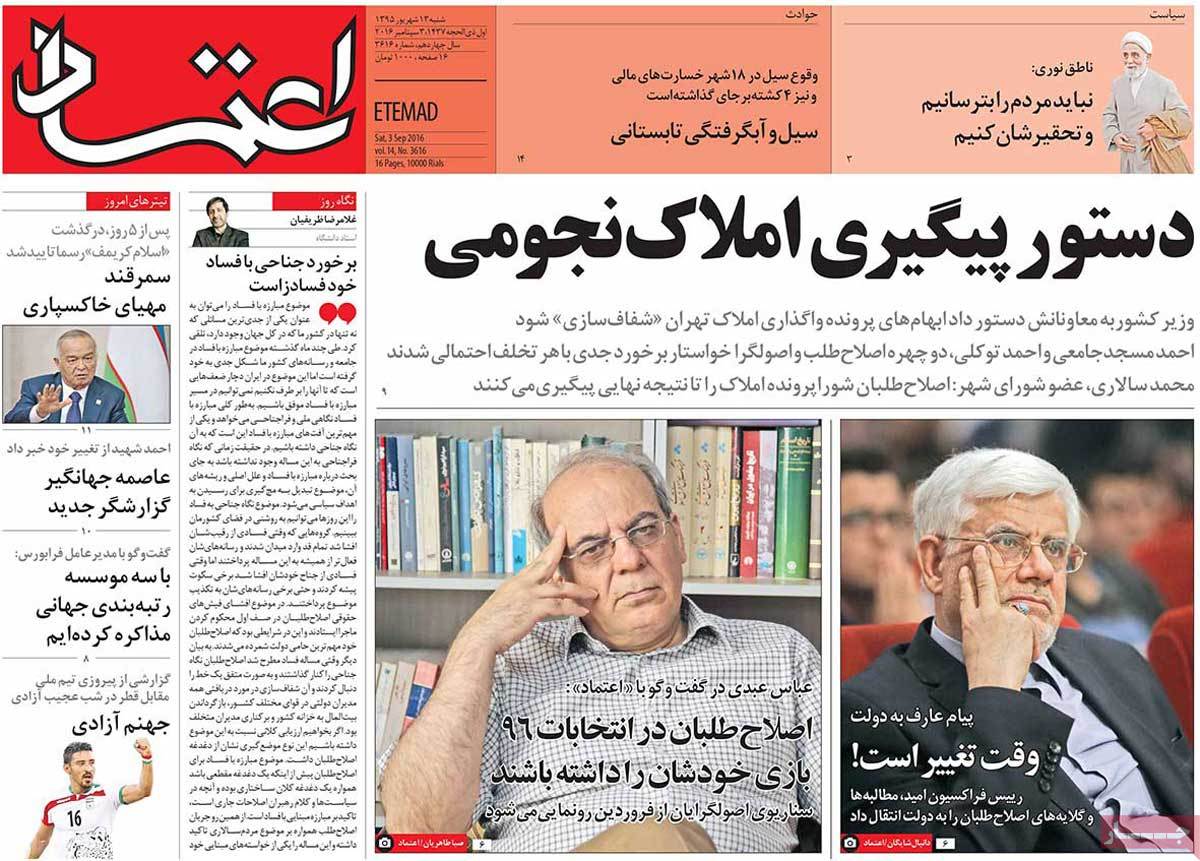
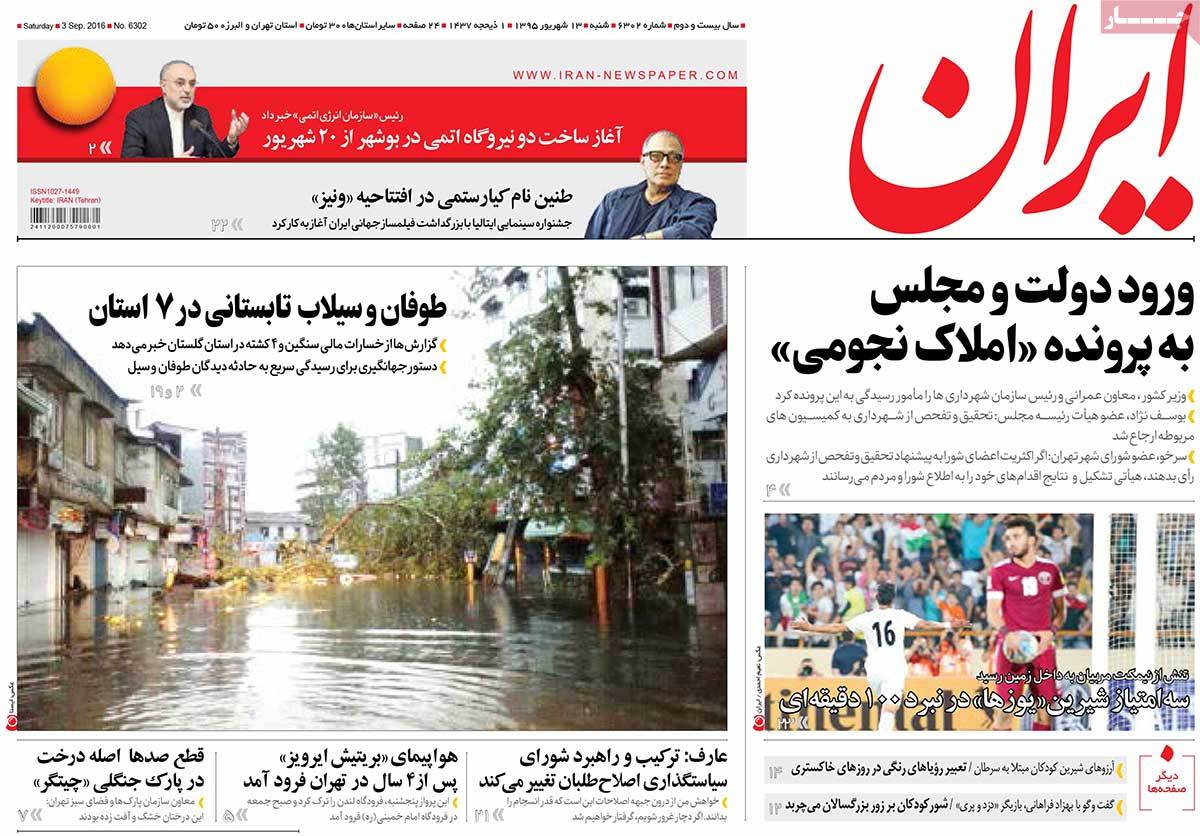
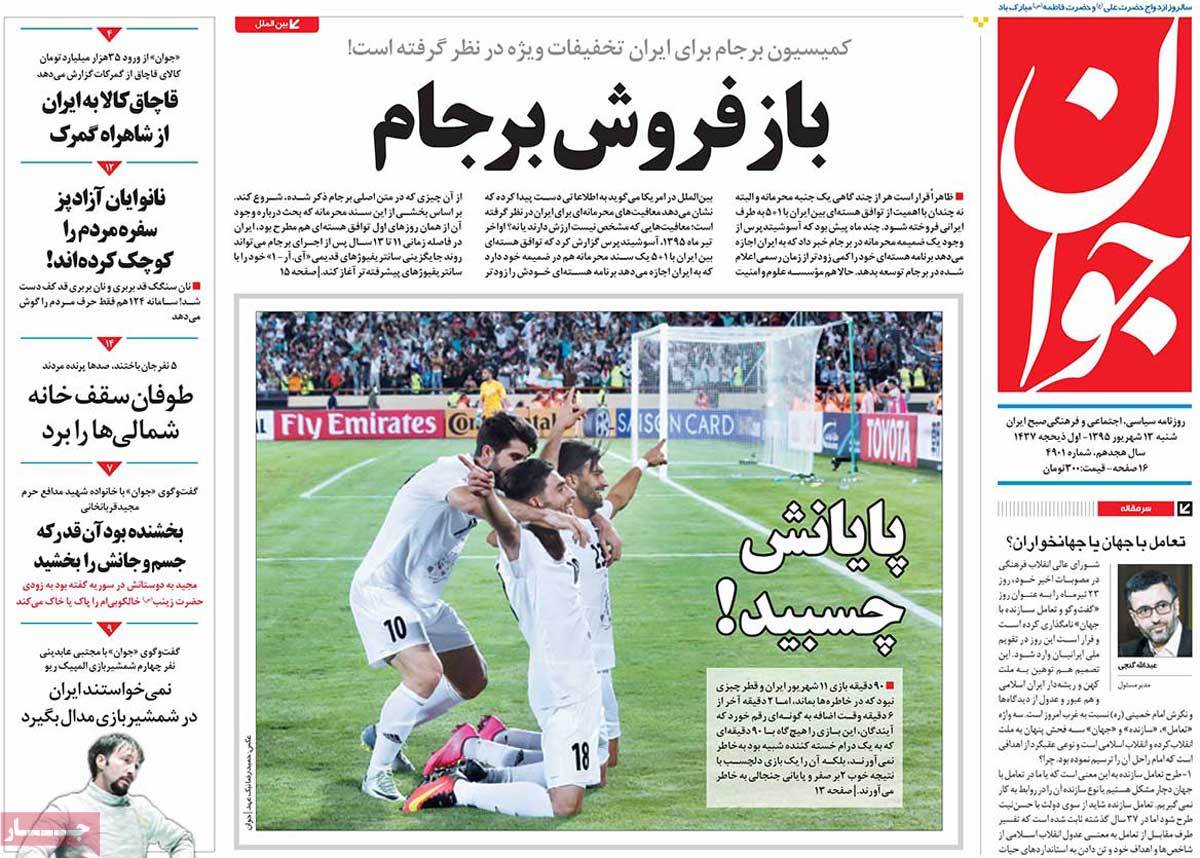
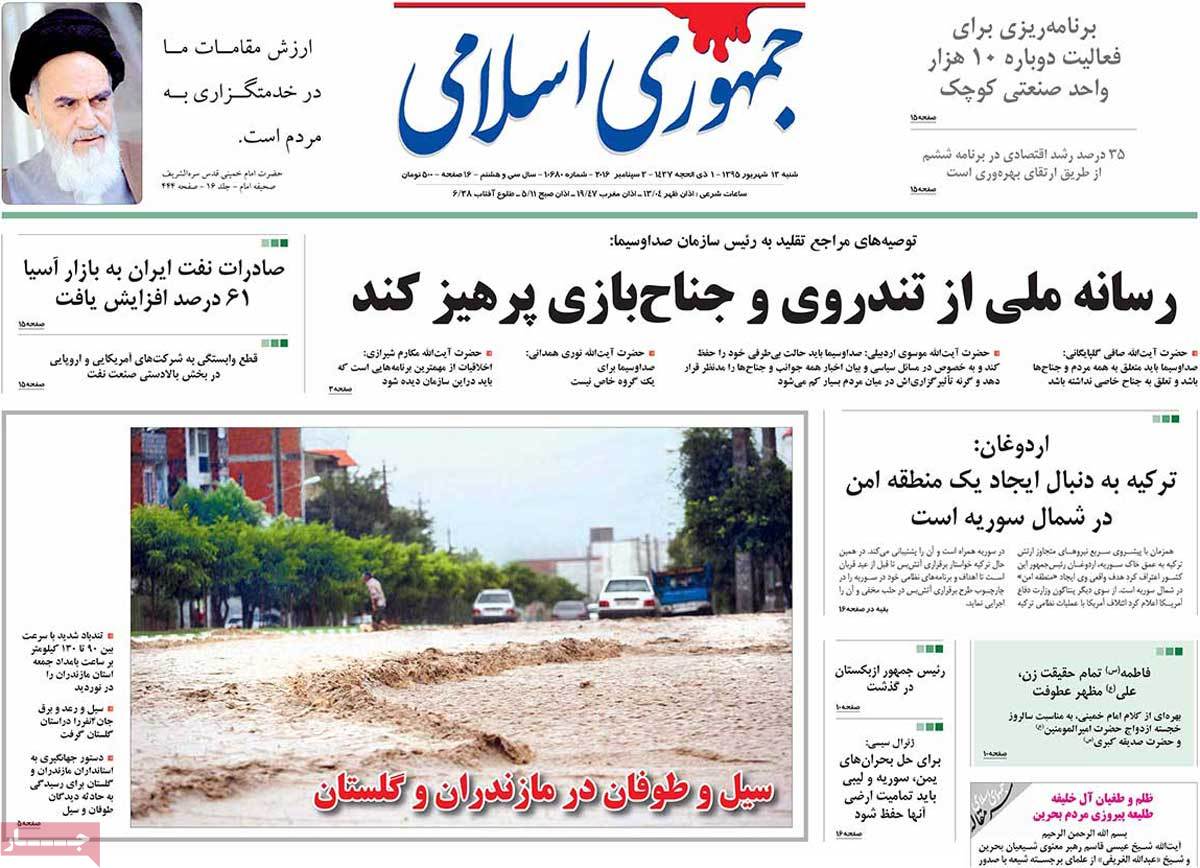
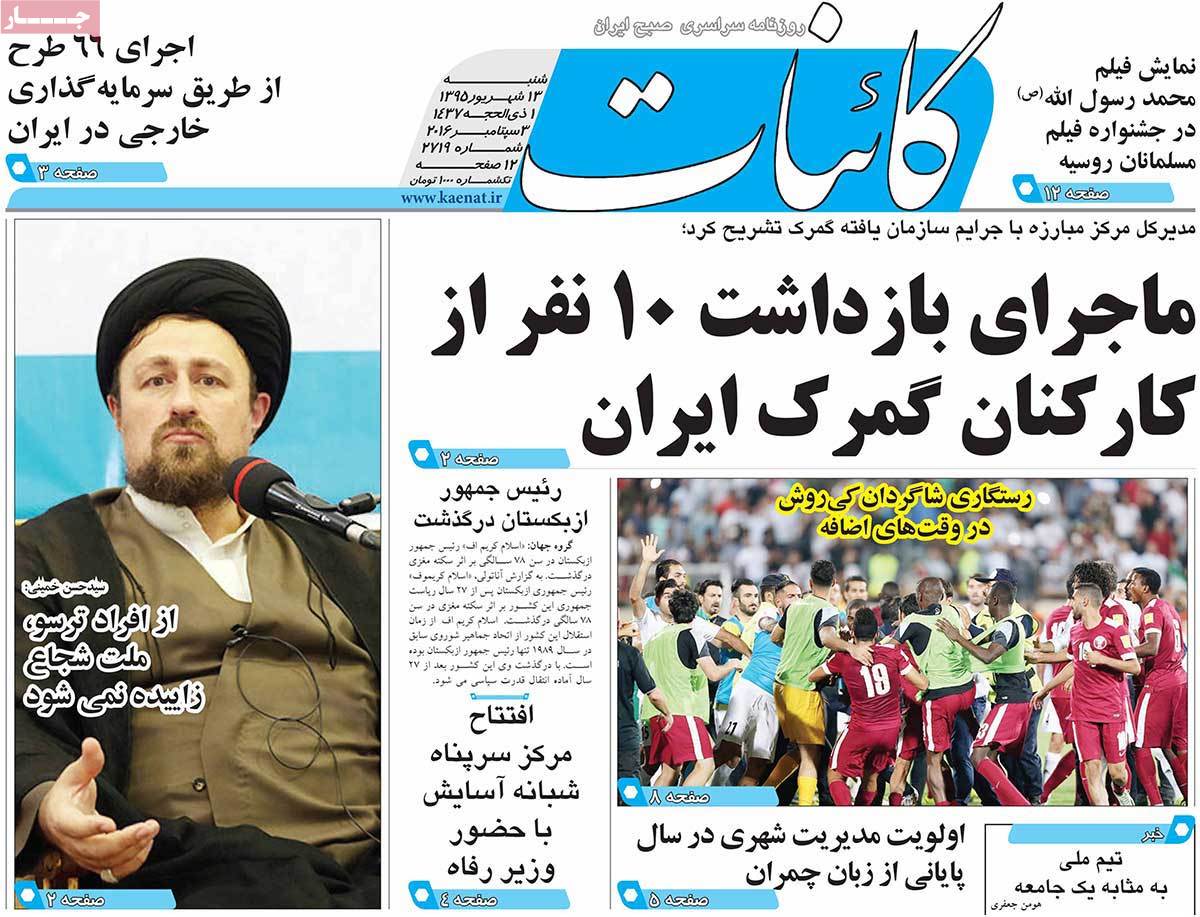
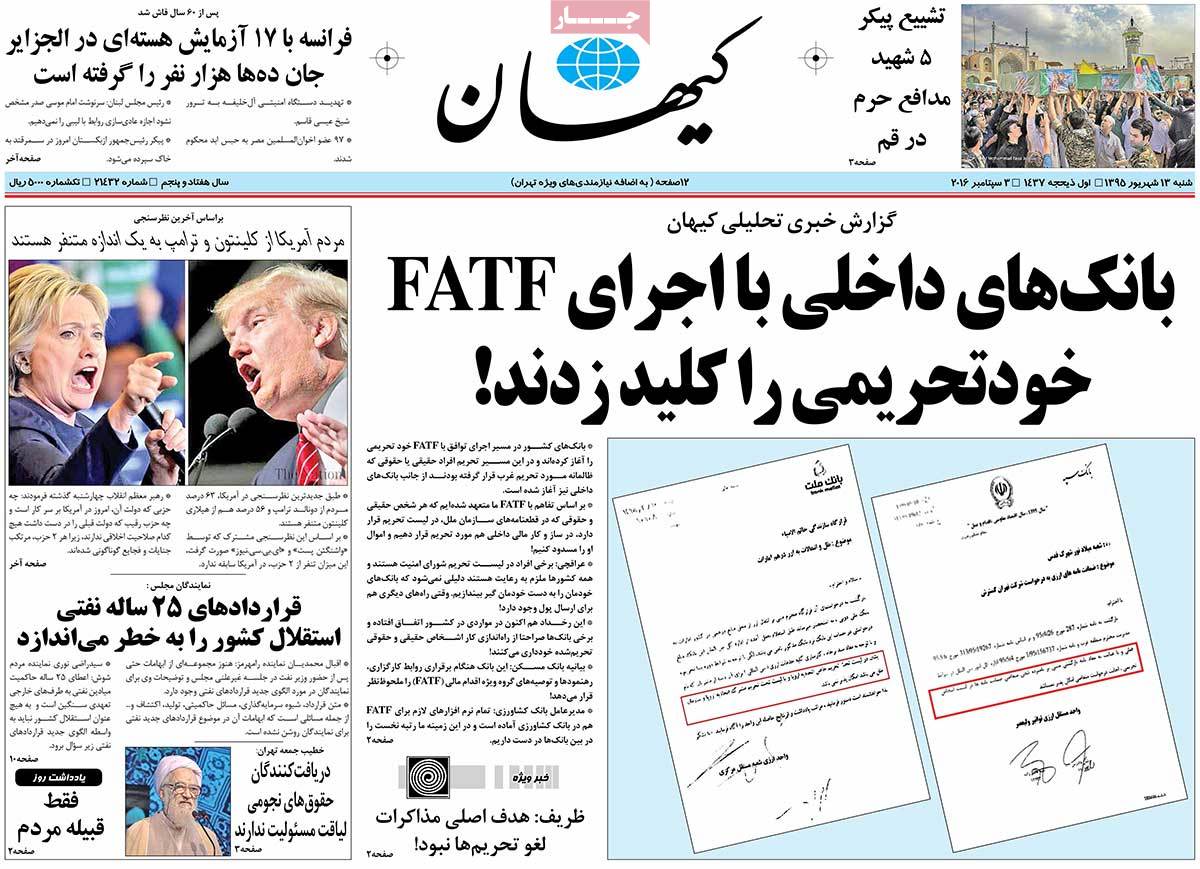
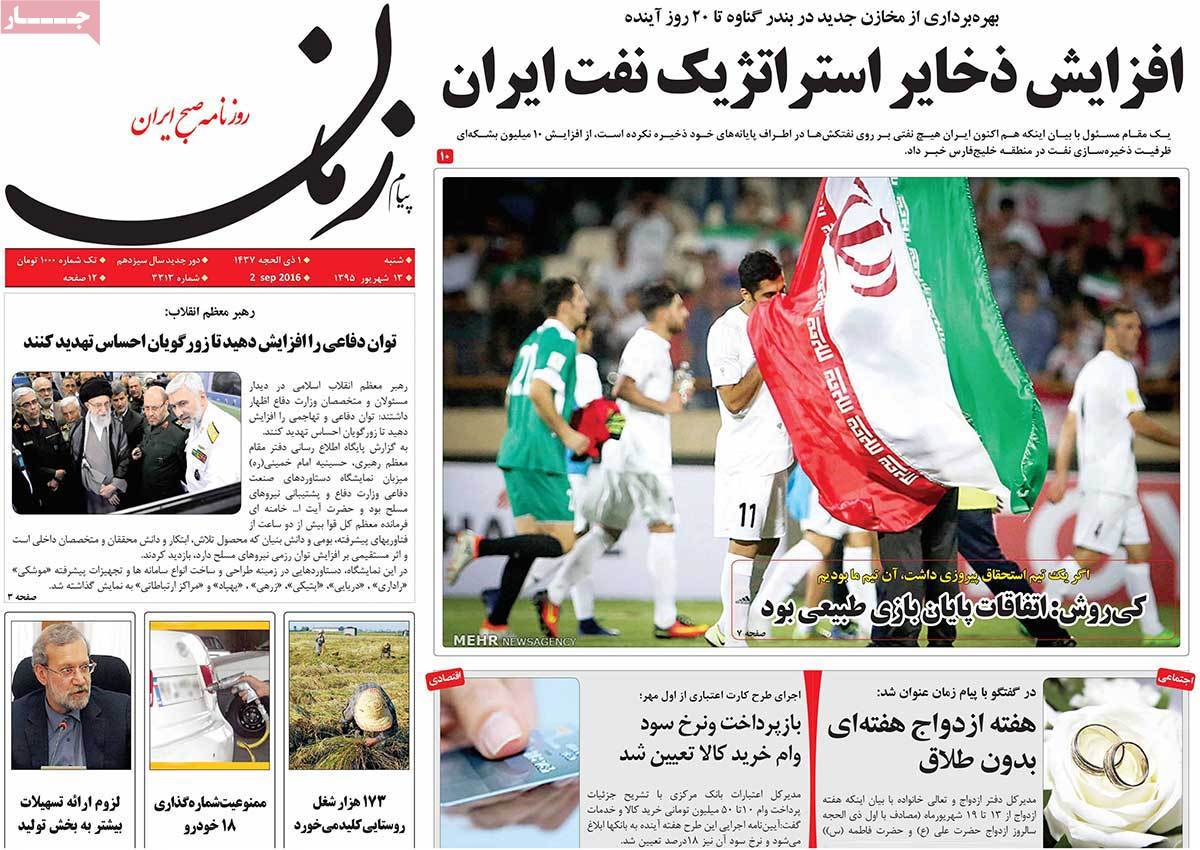
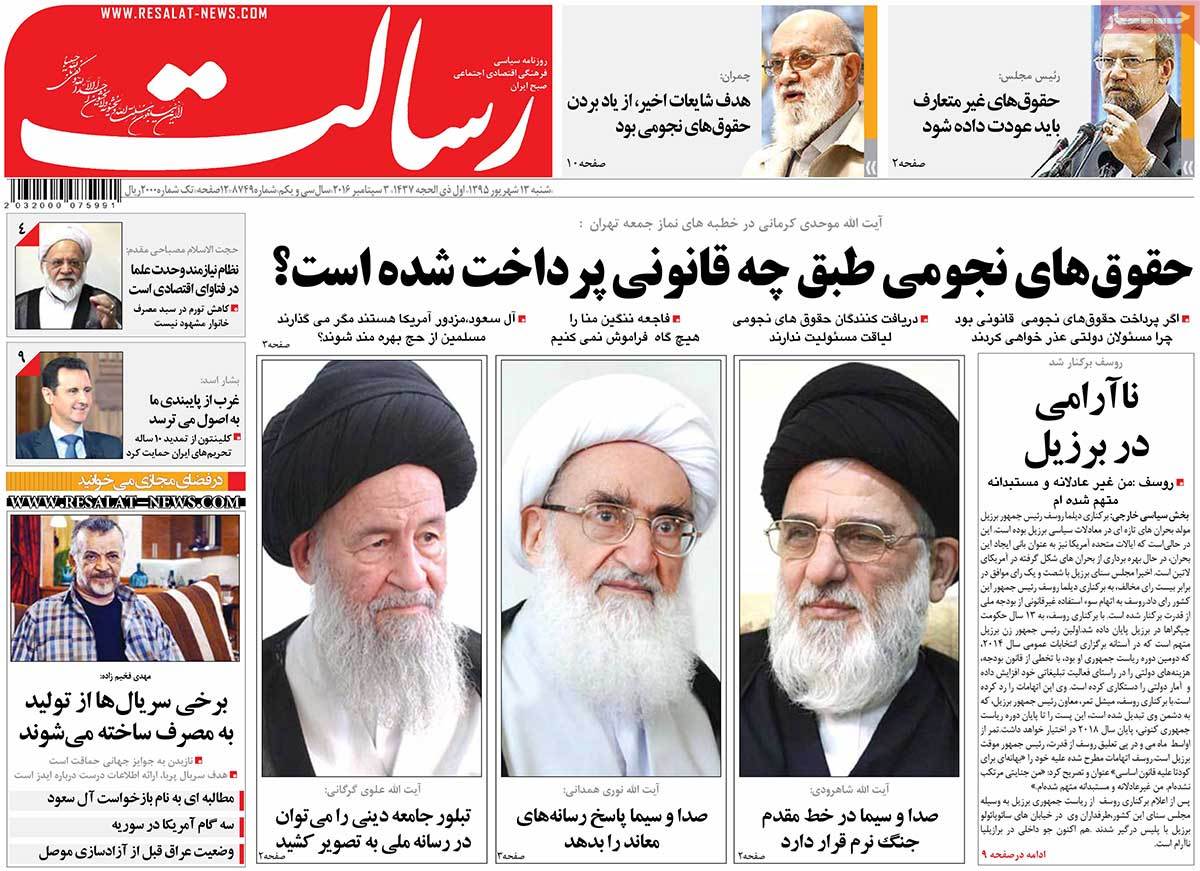
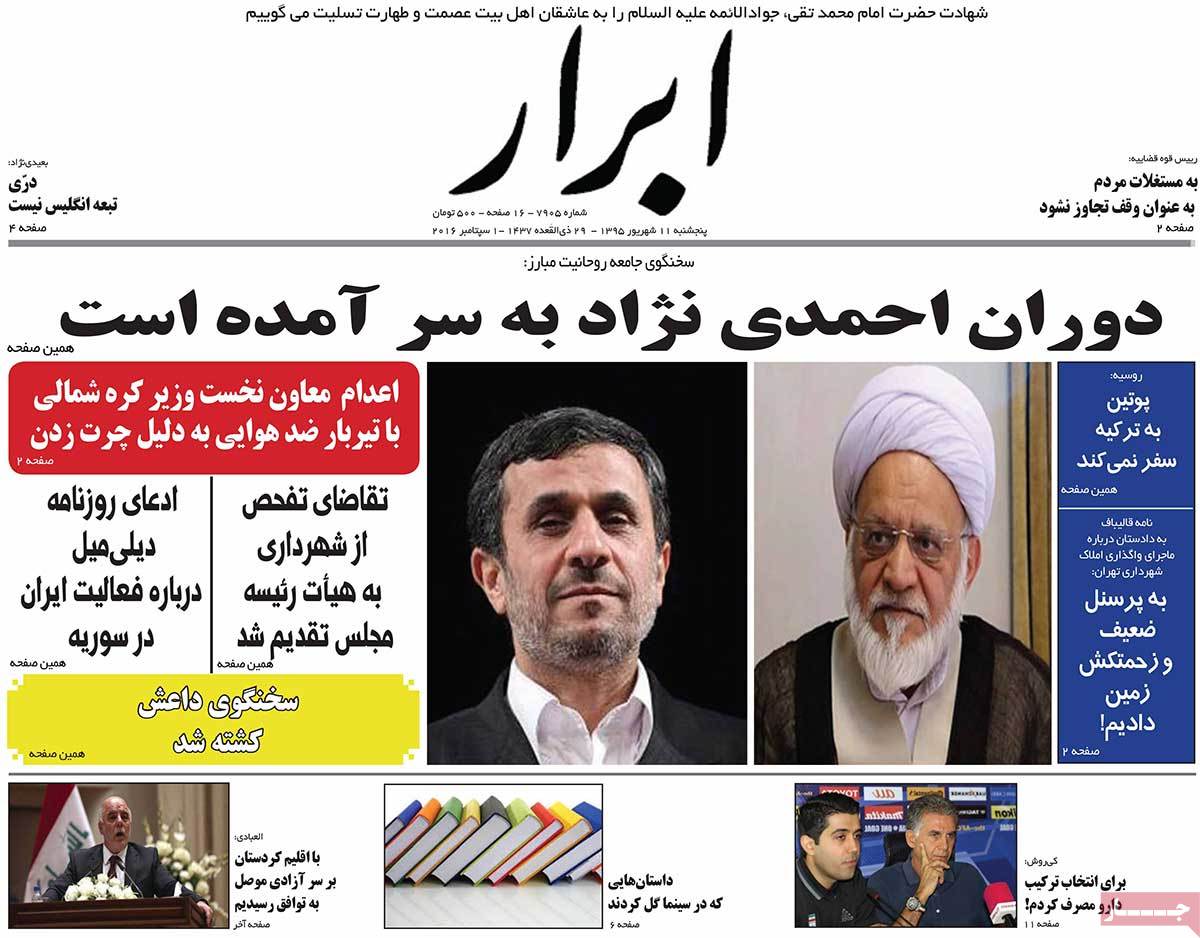
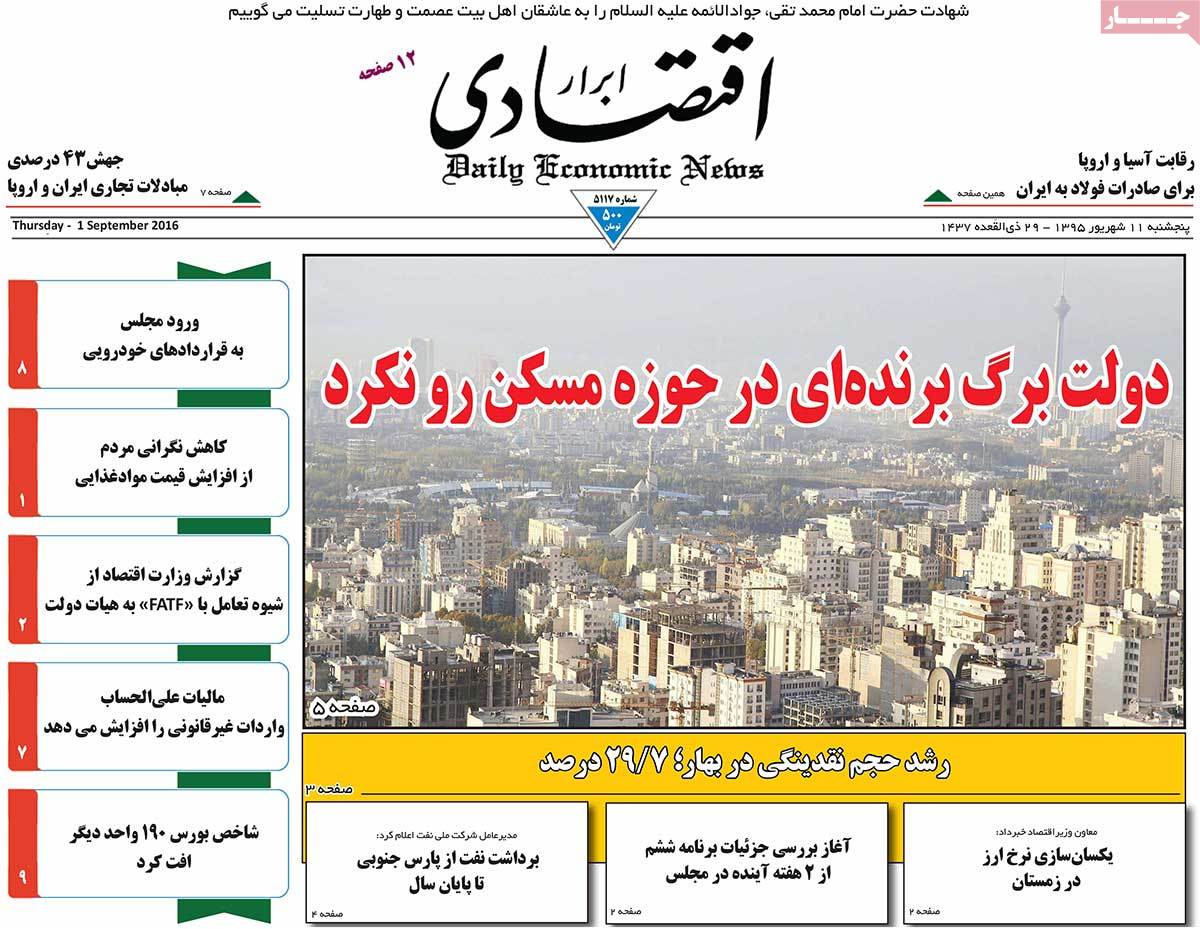
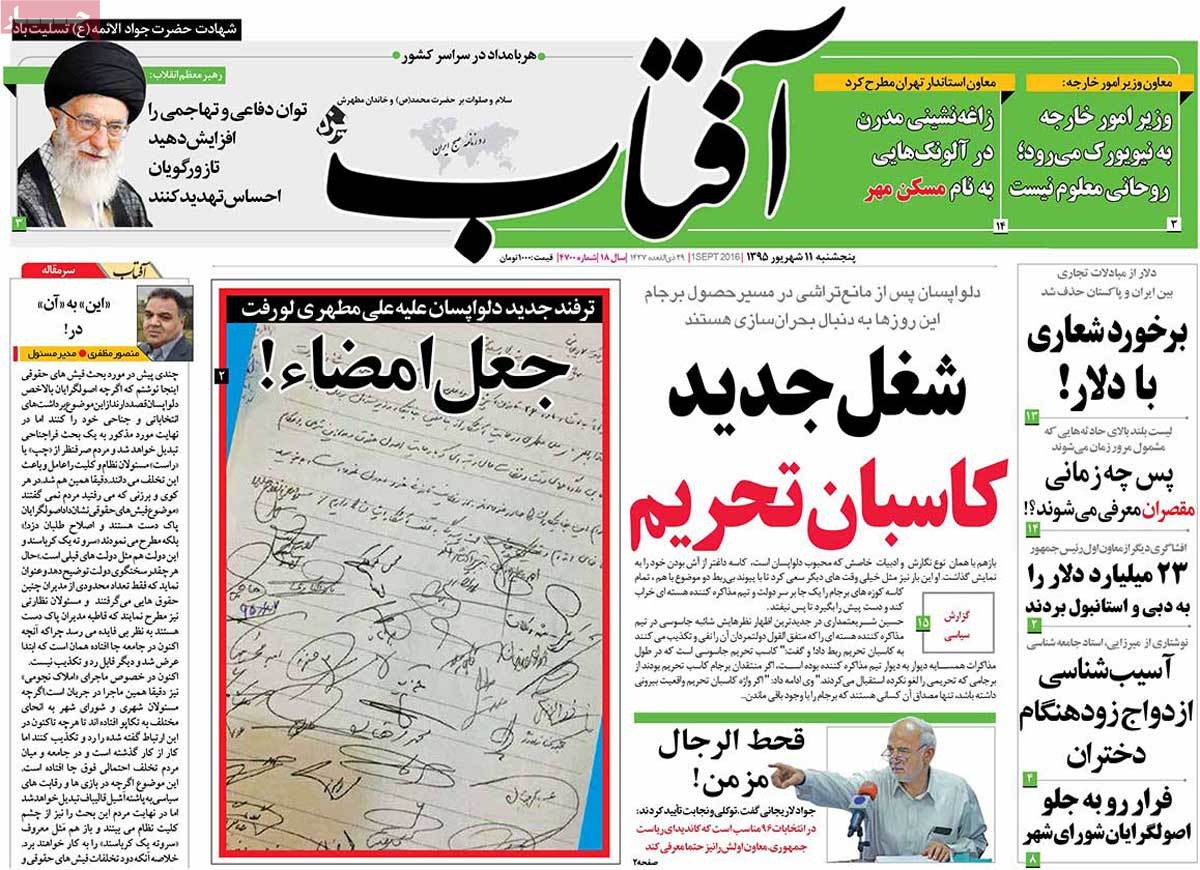
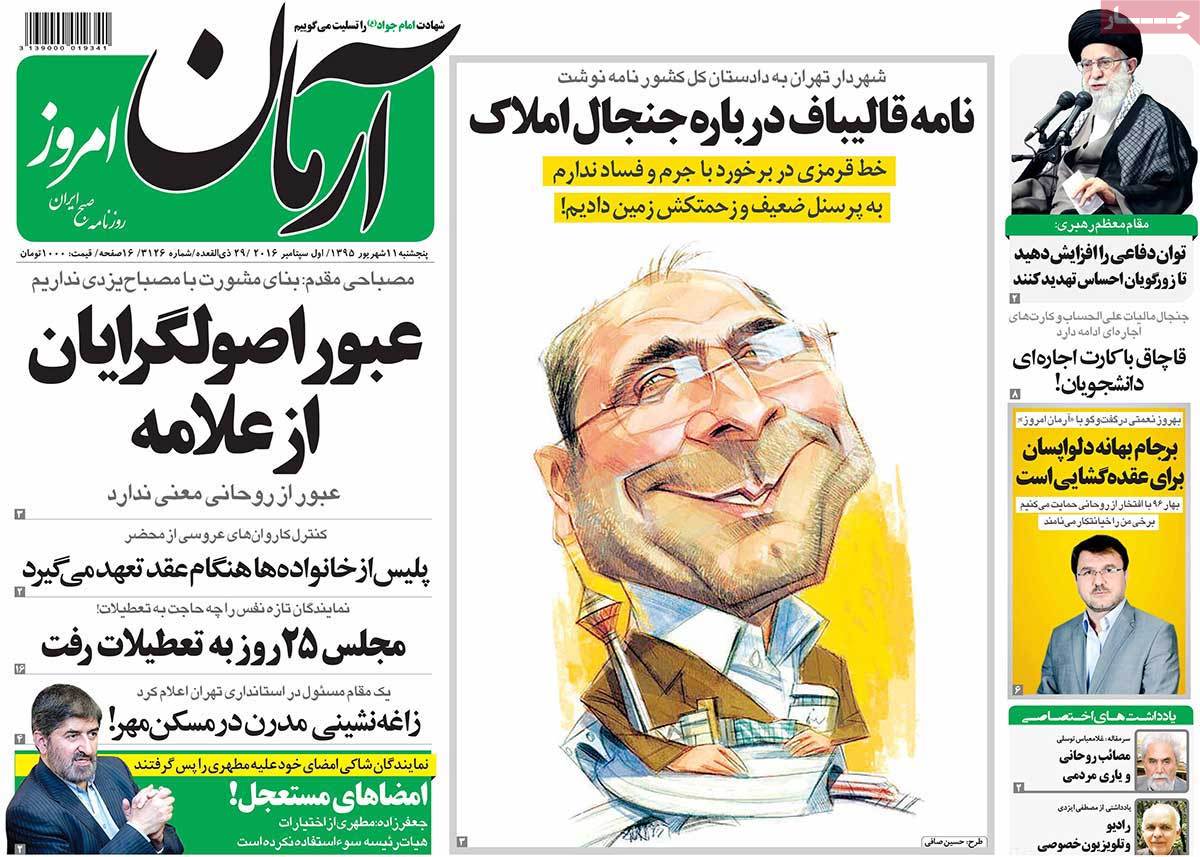
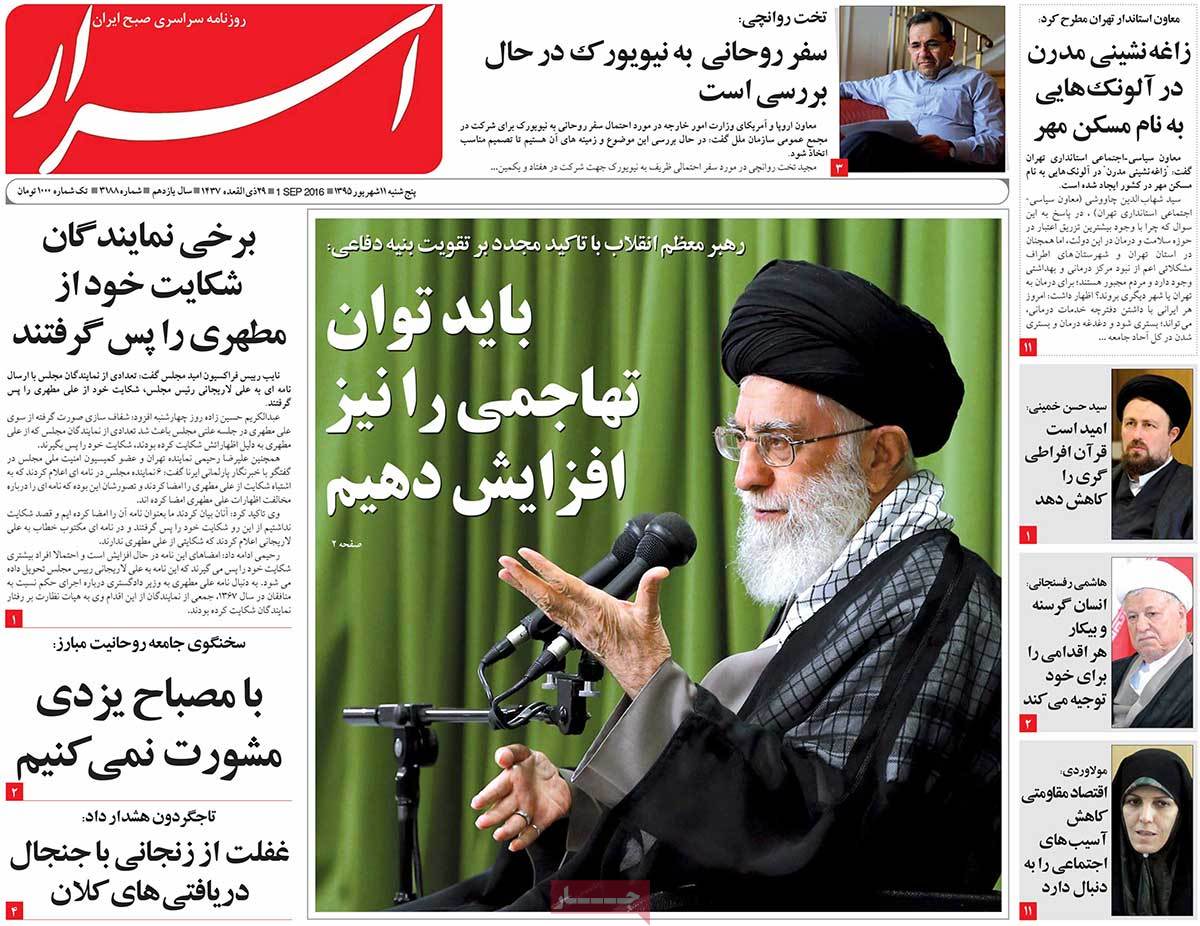
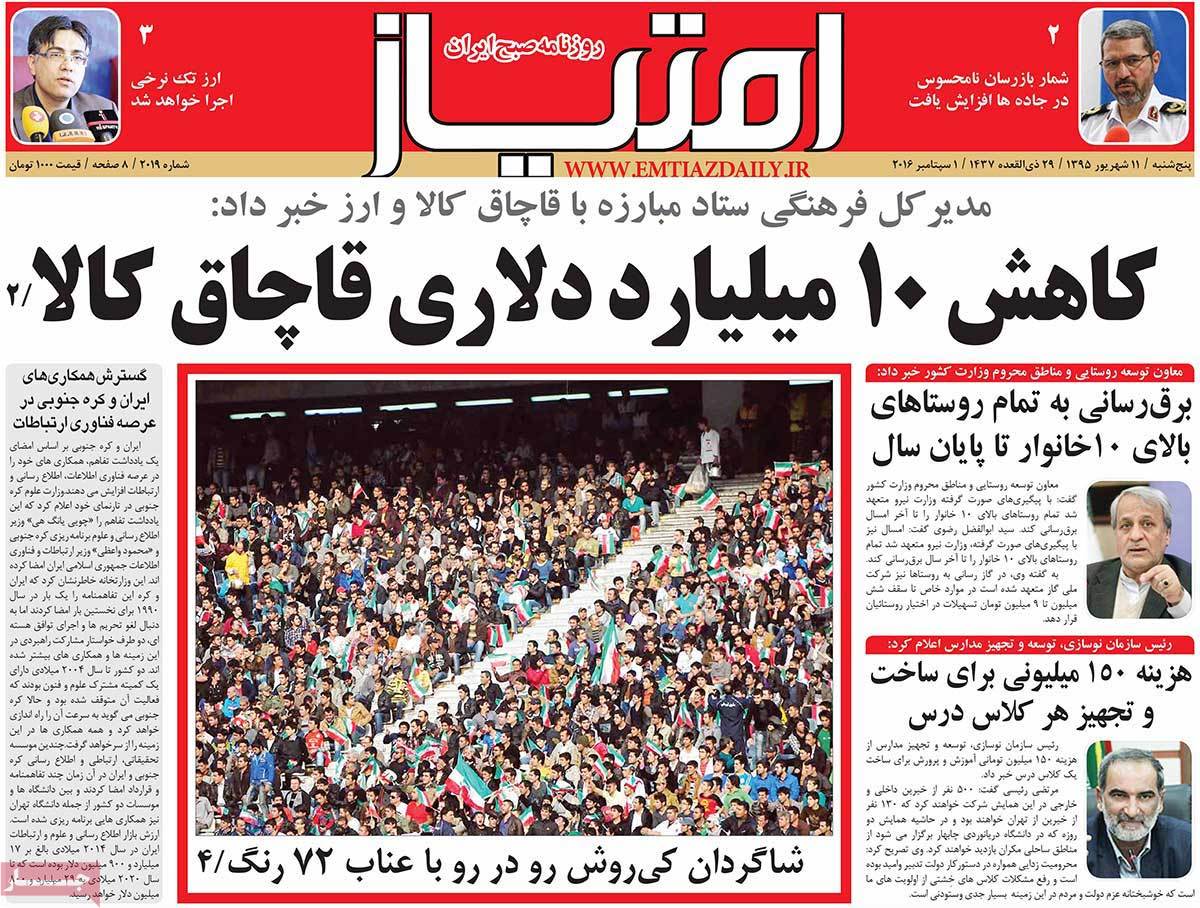
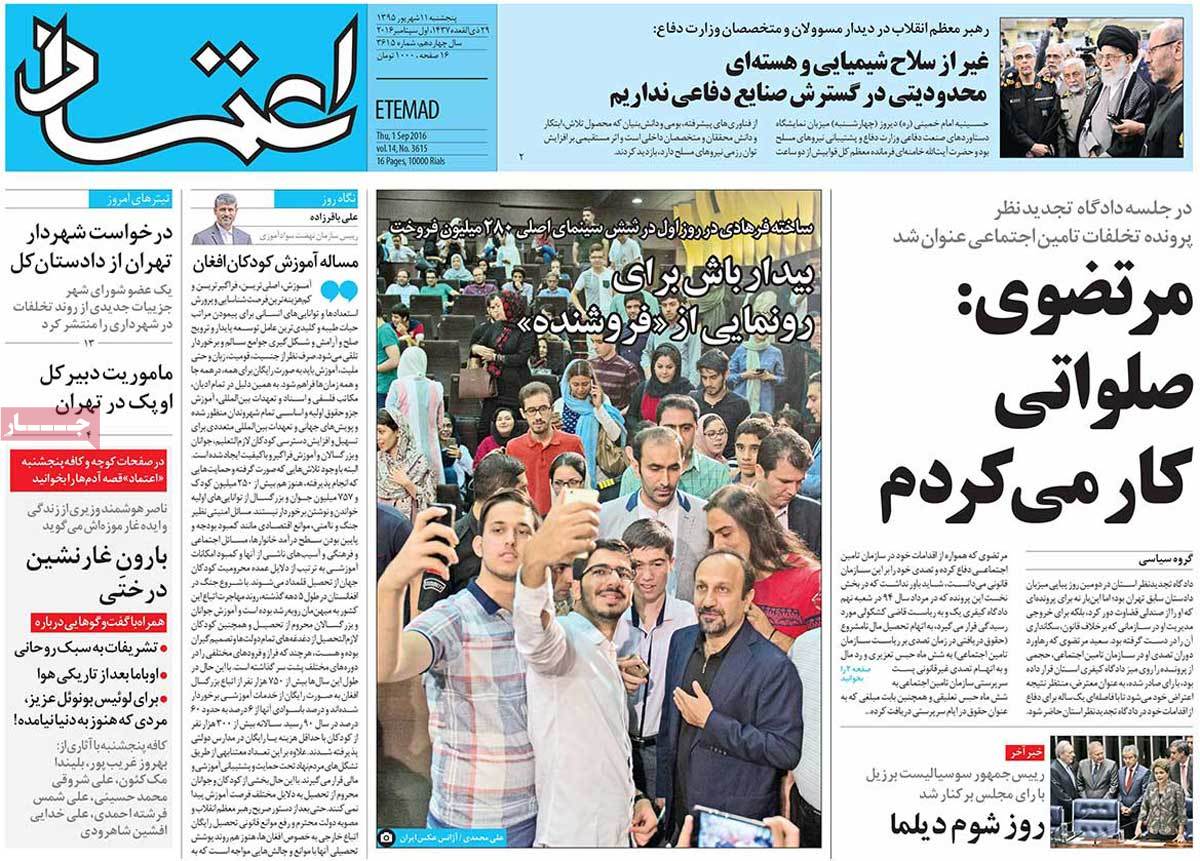
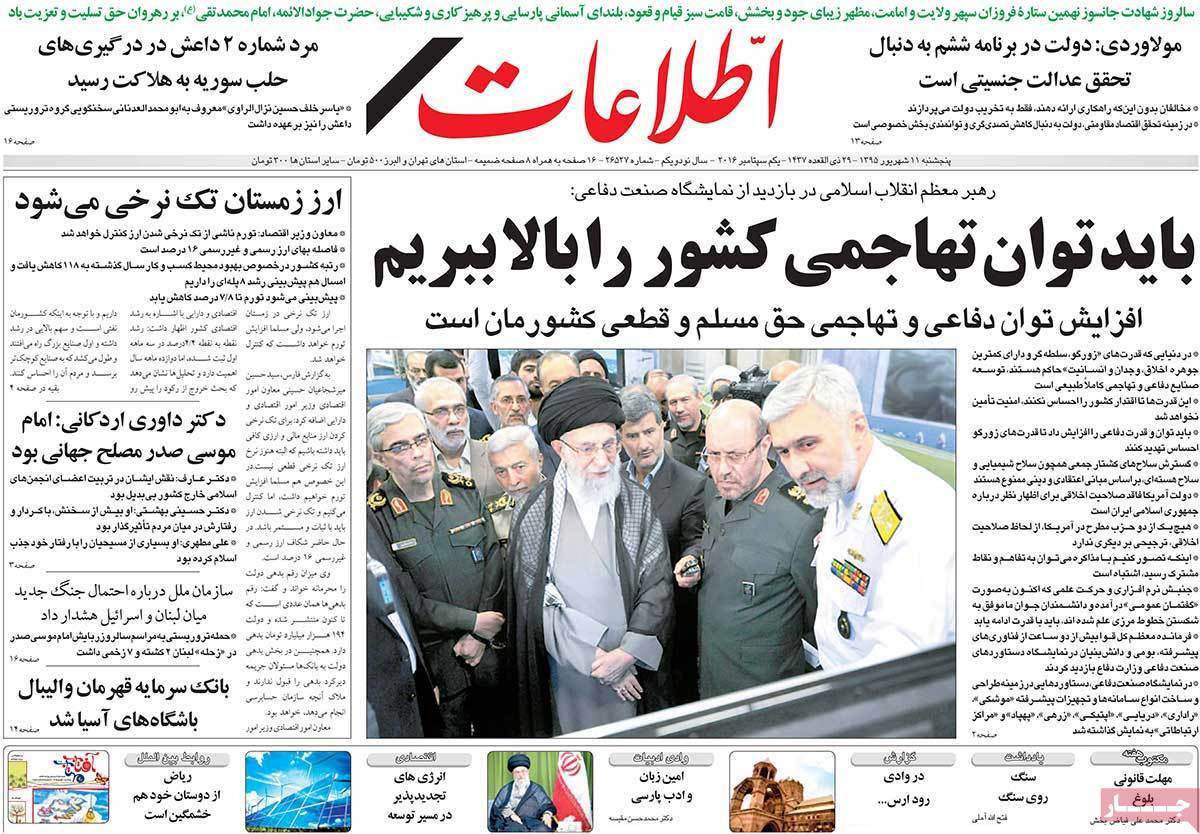
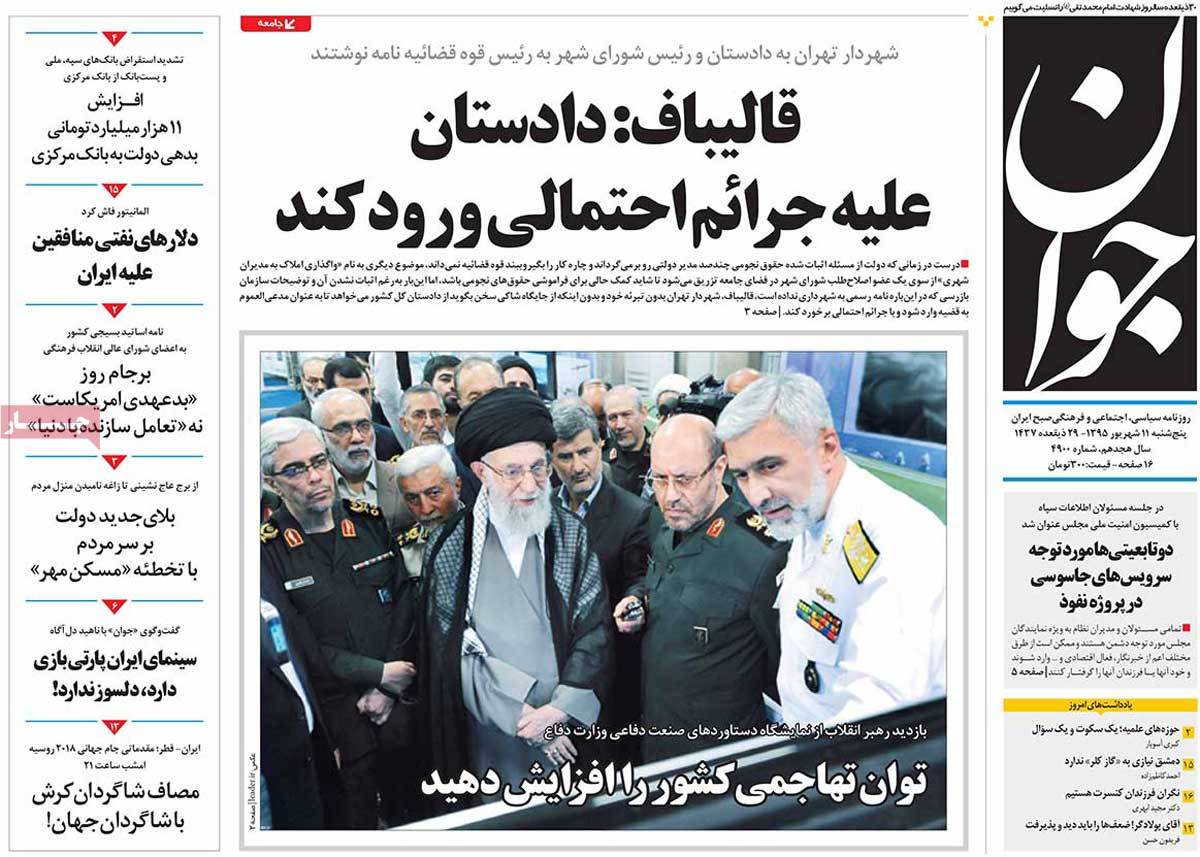
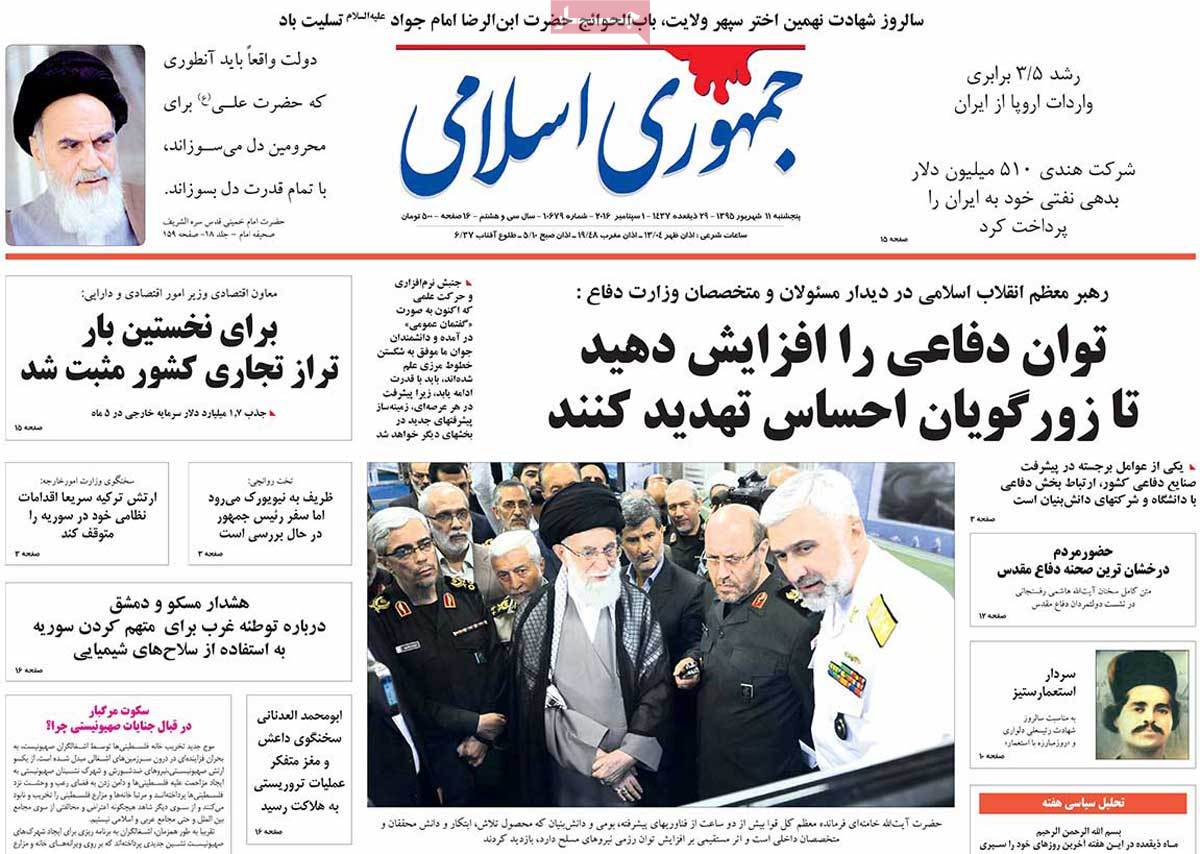
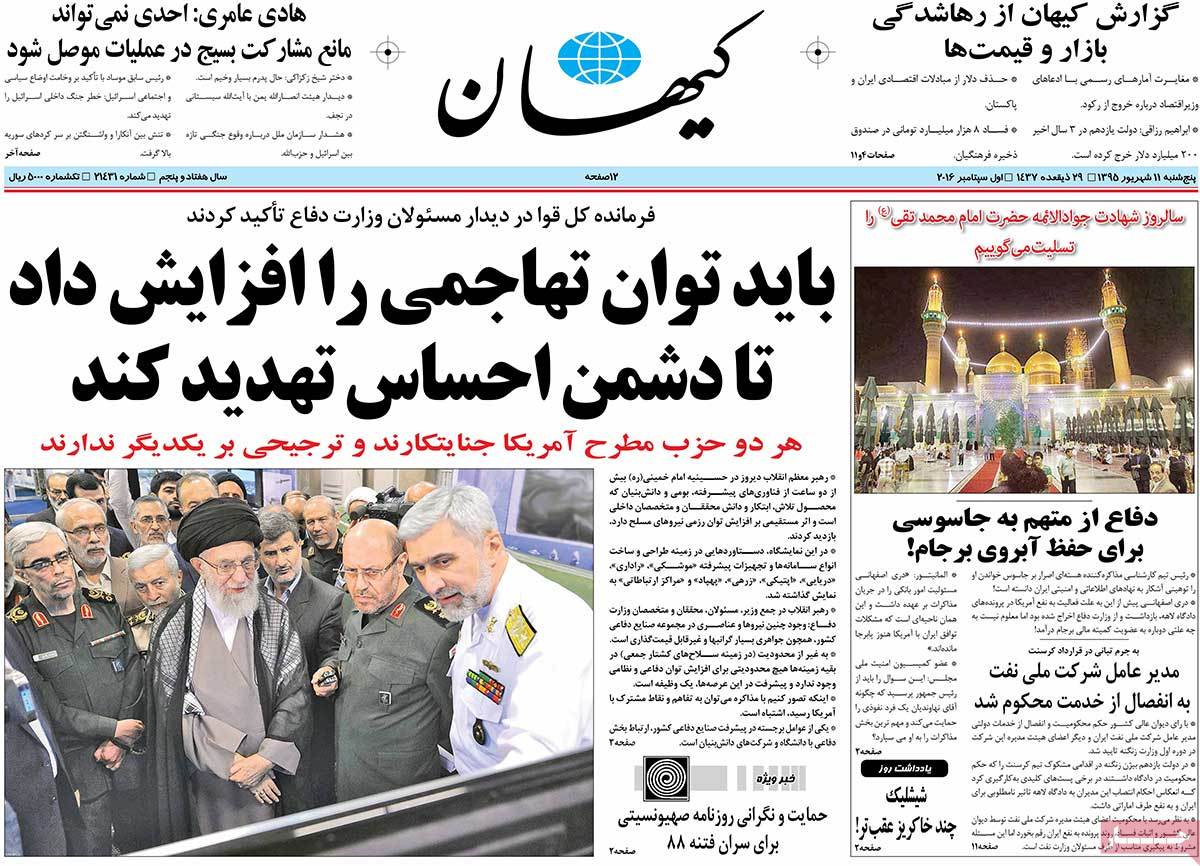
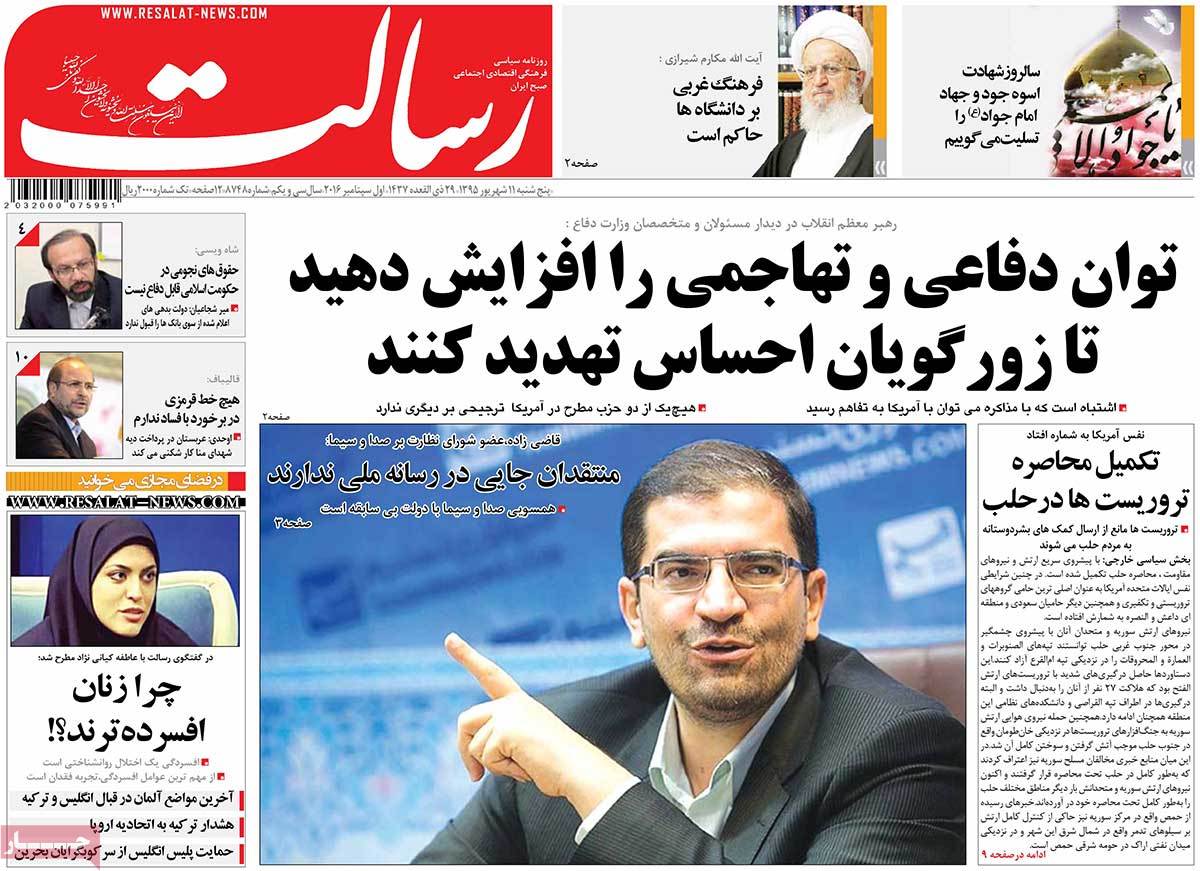
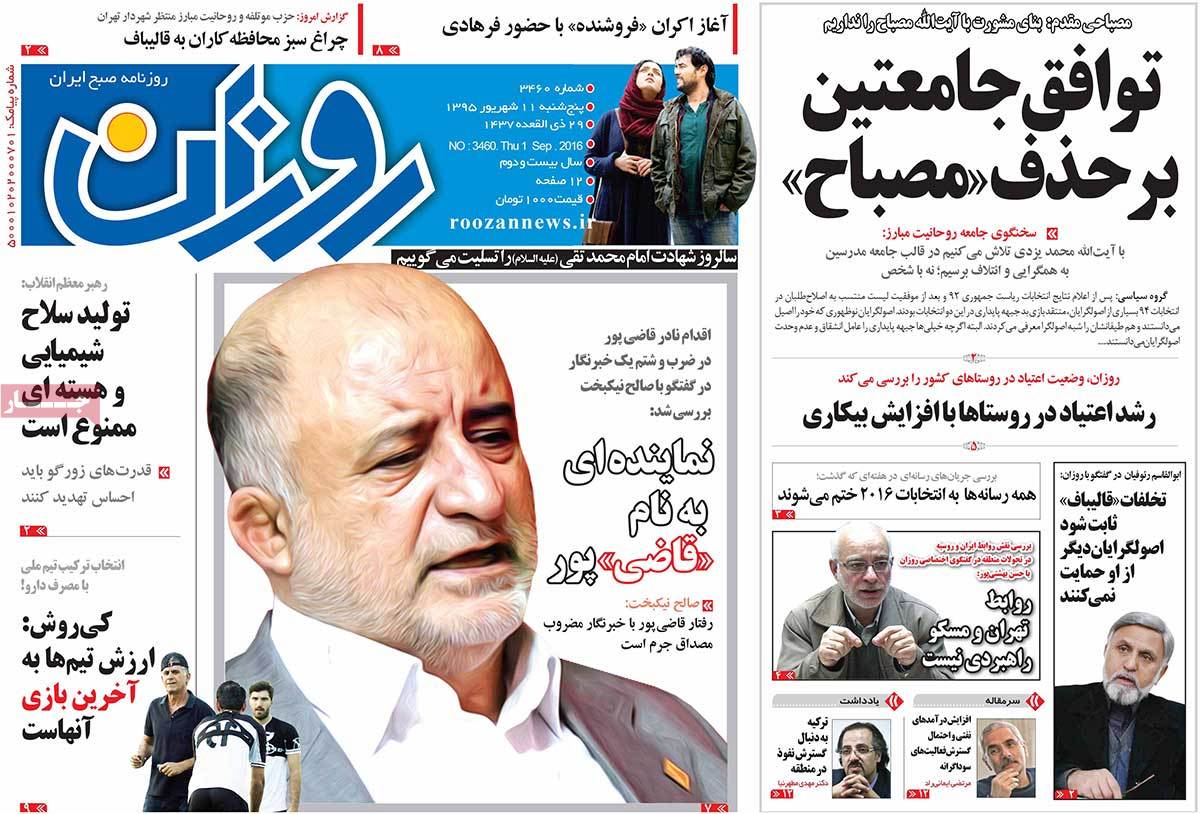
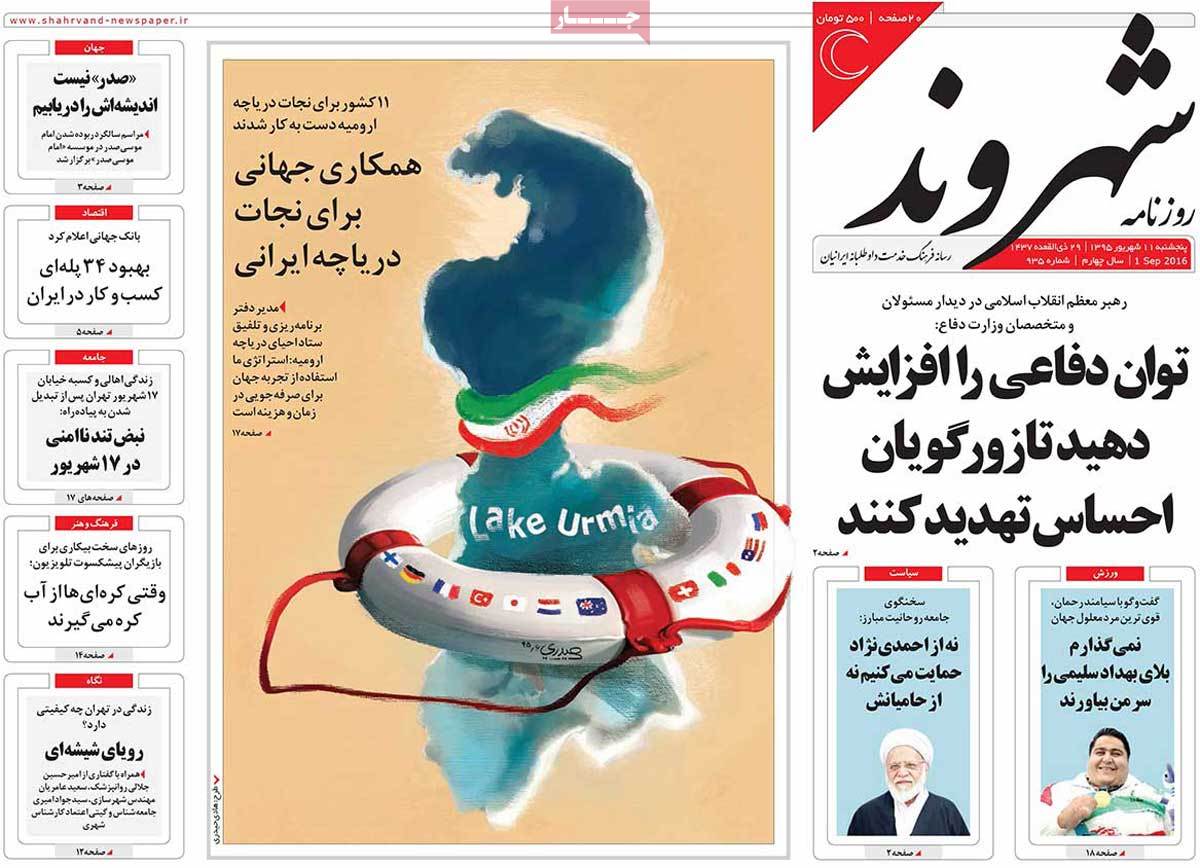
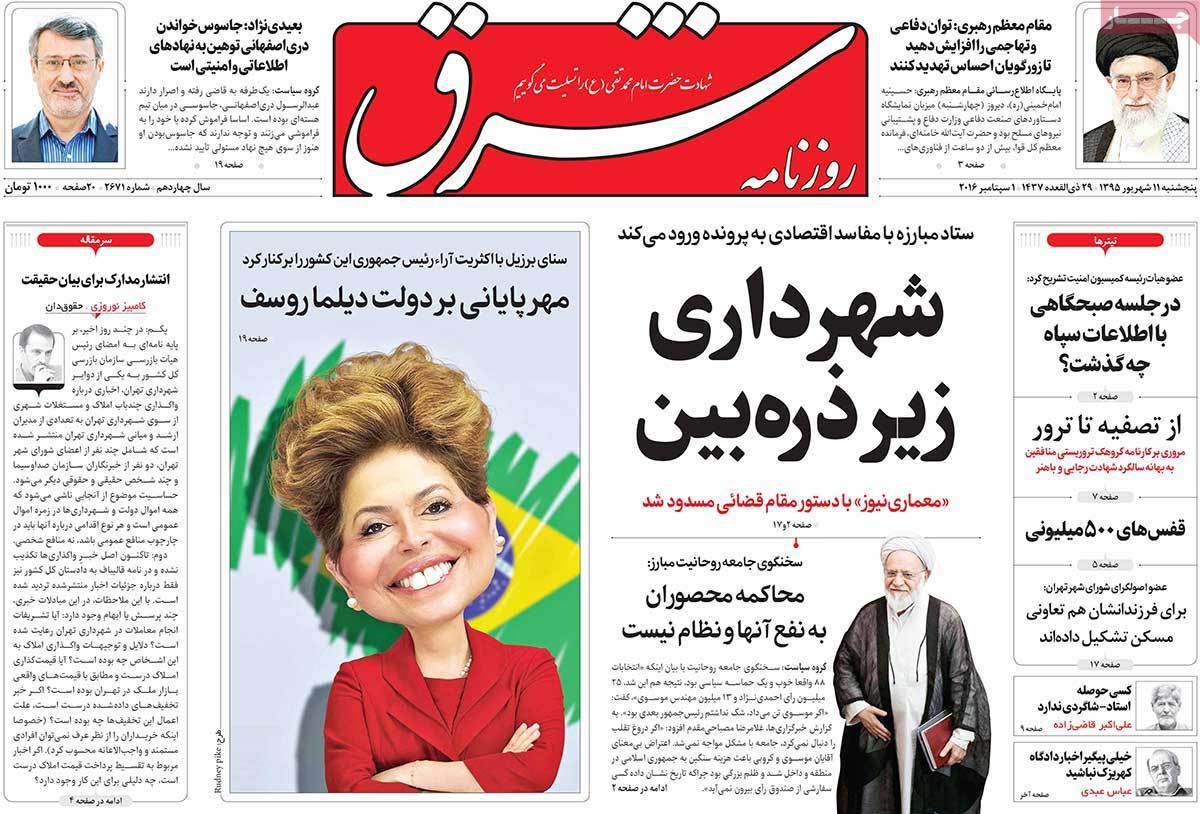
A Look at Iranian Newspaper Front Pages on August 10

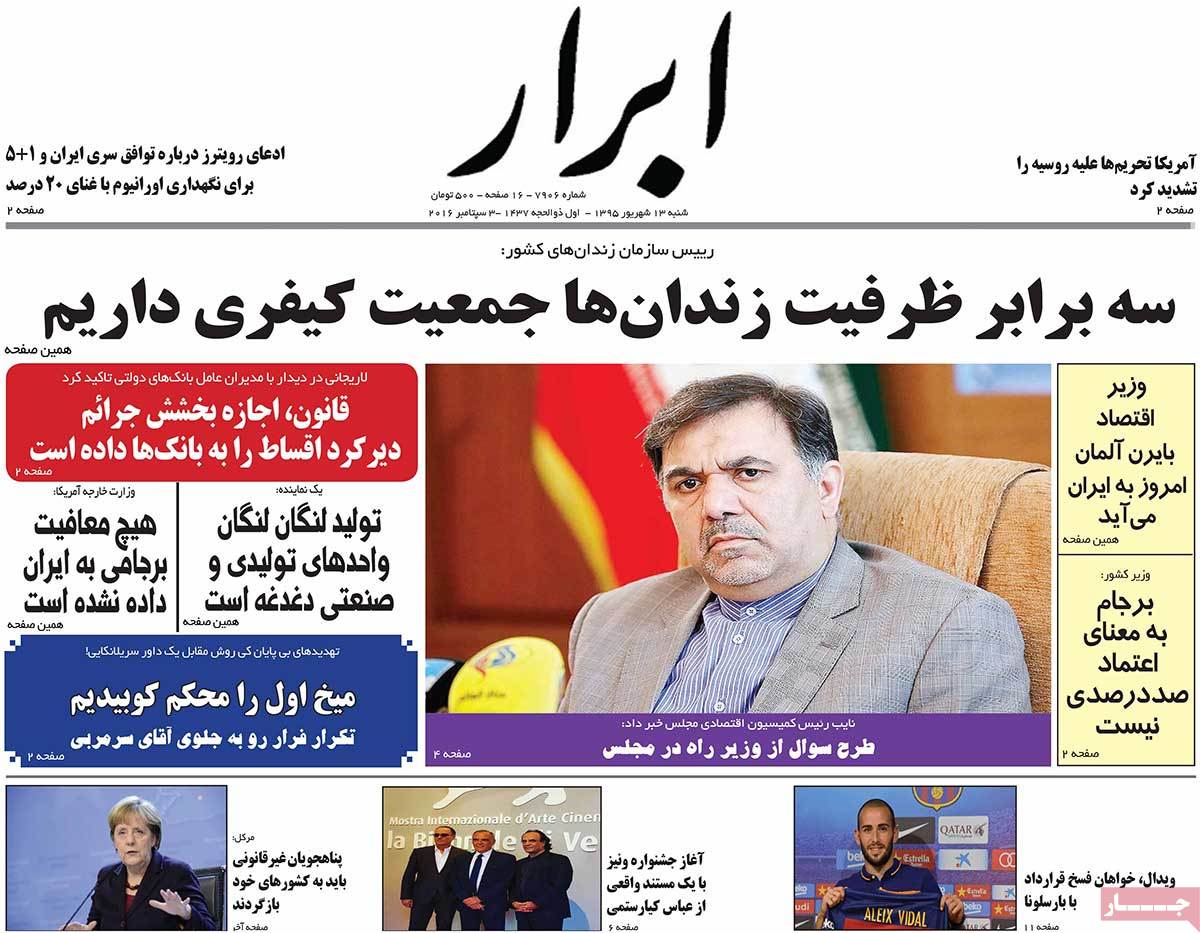
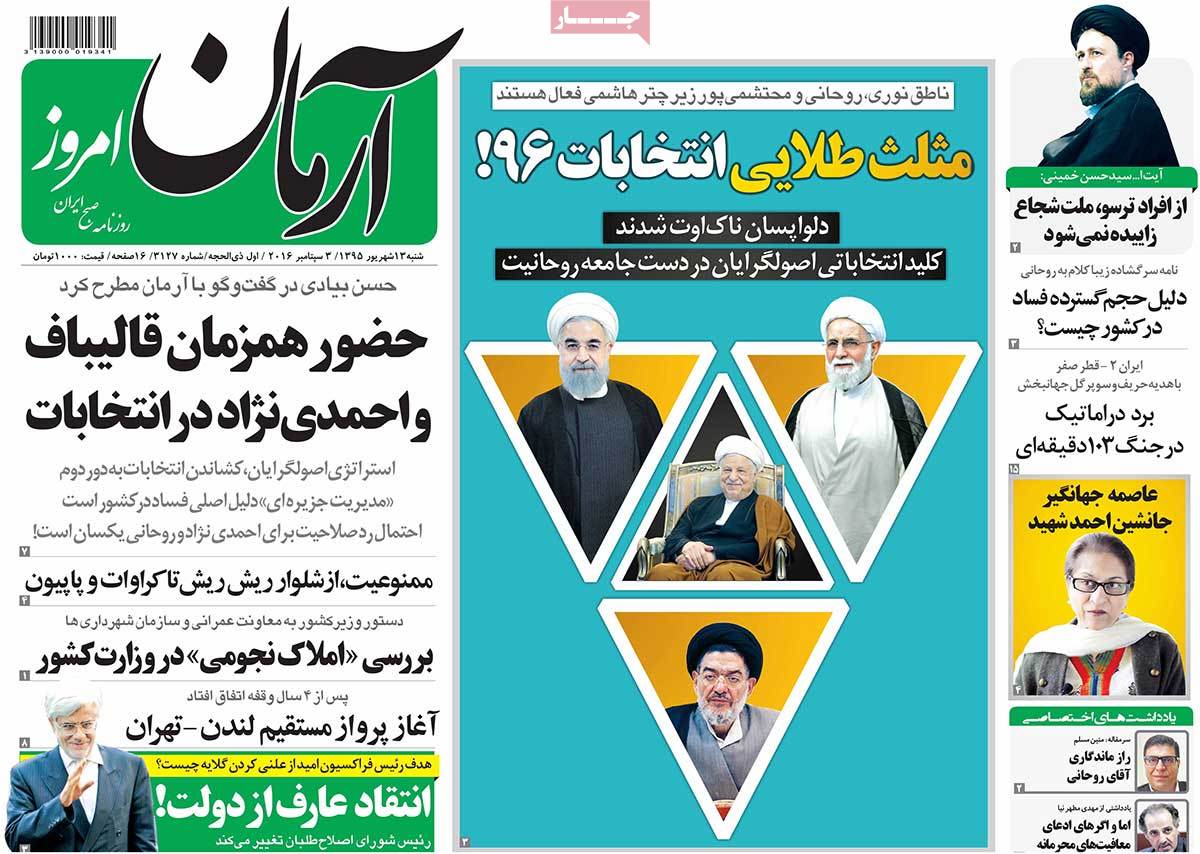
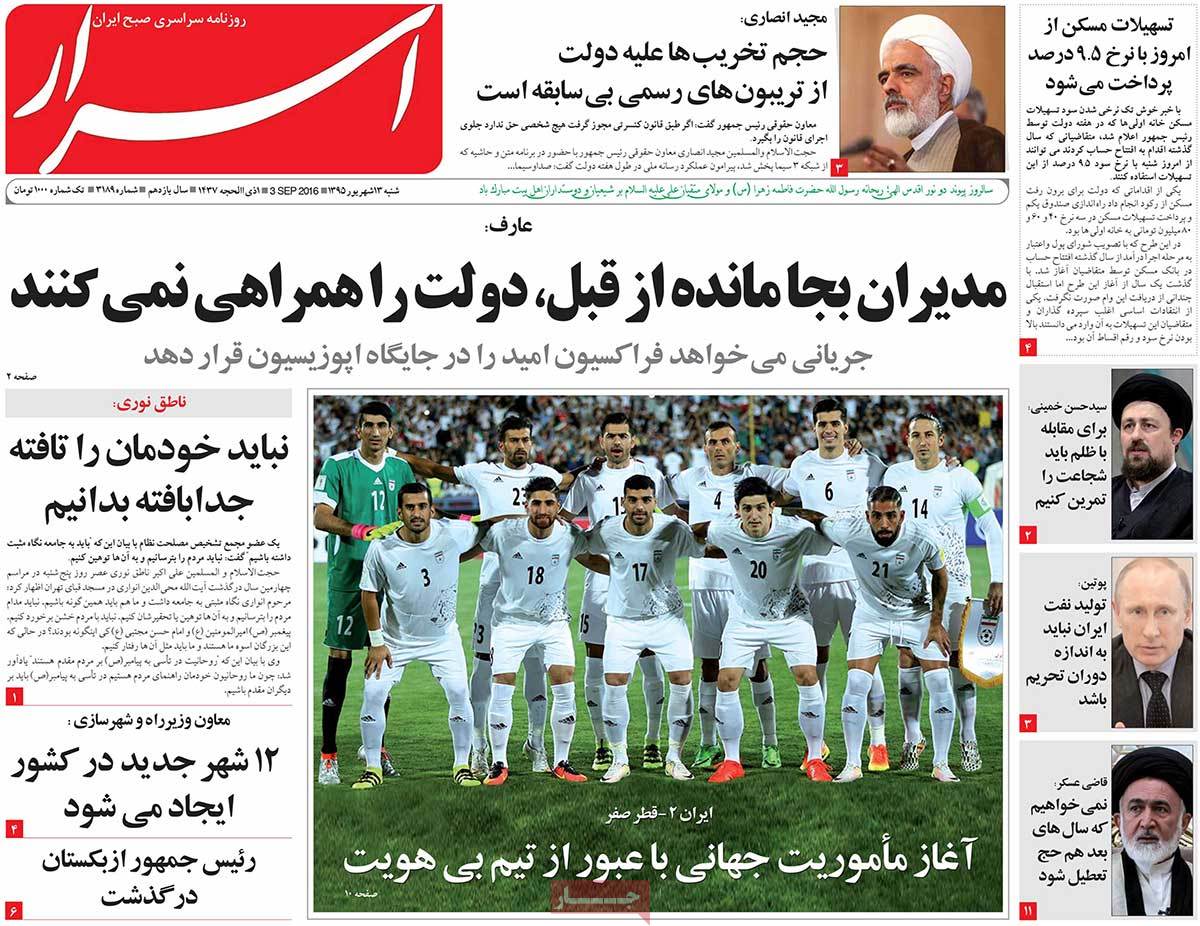
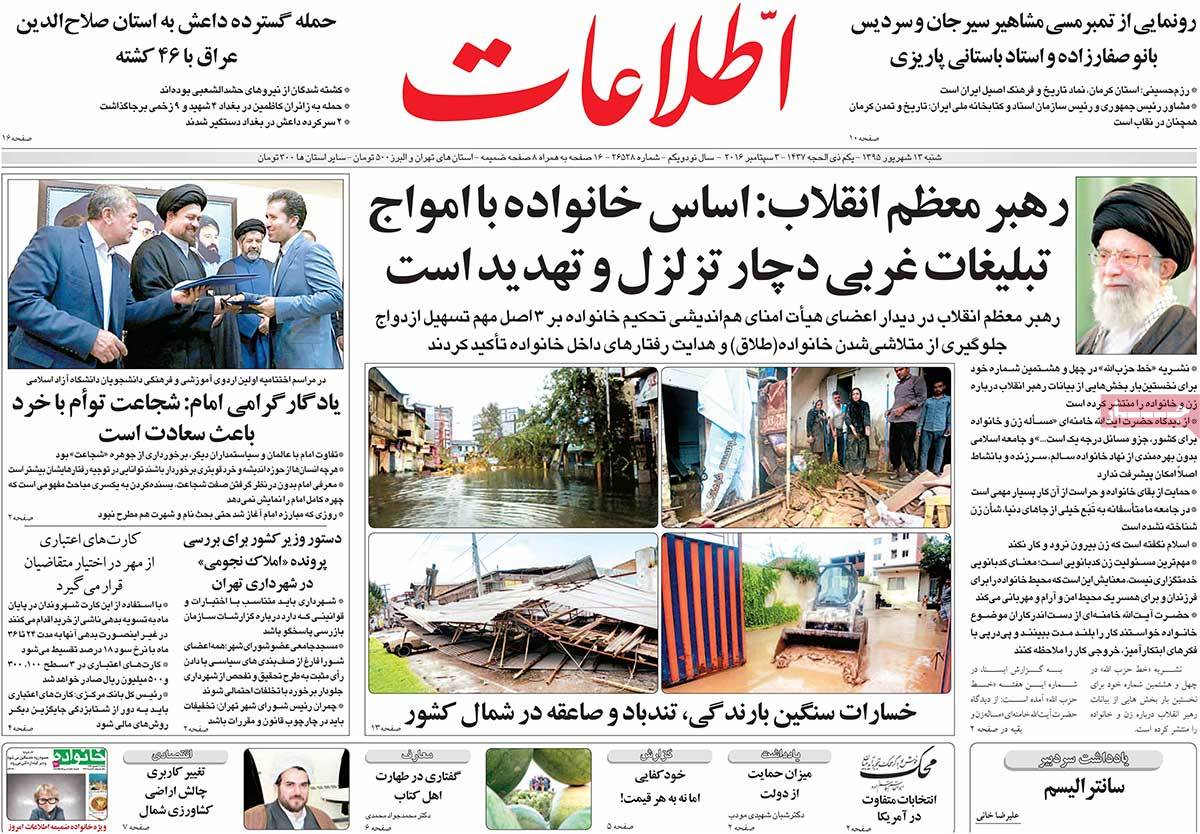
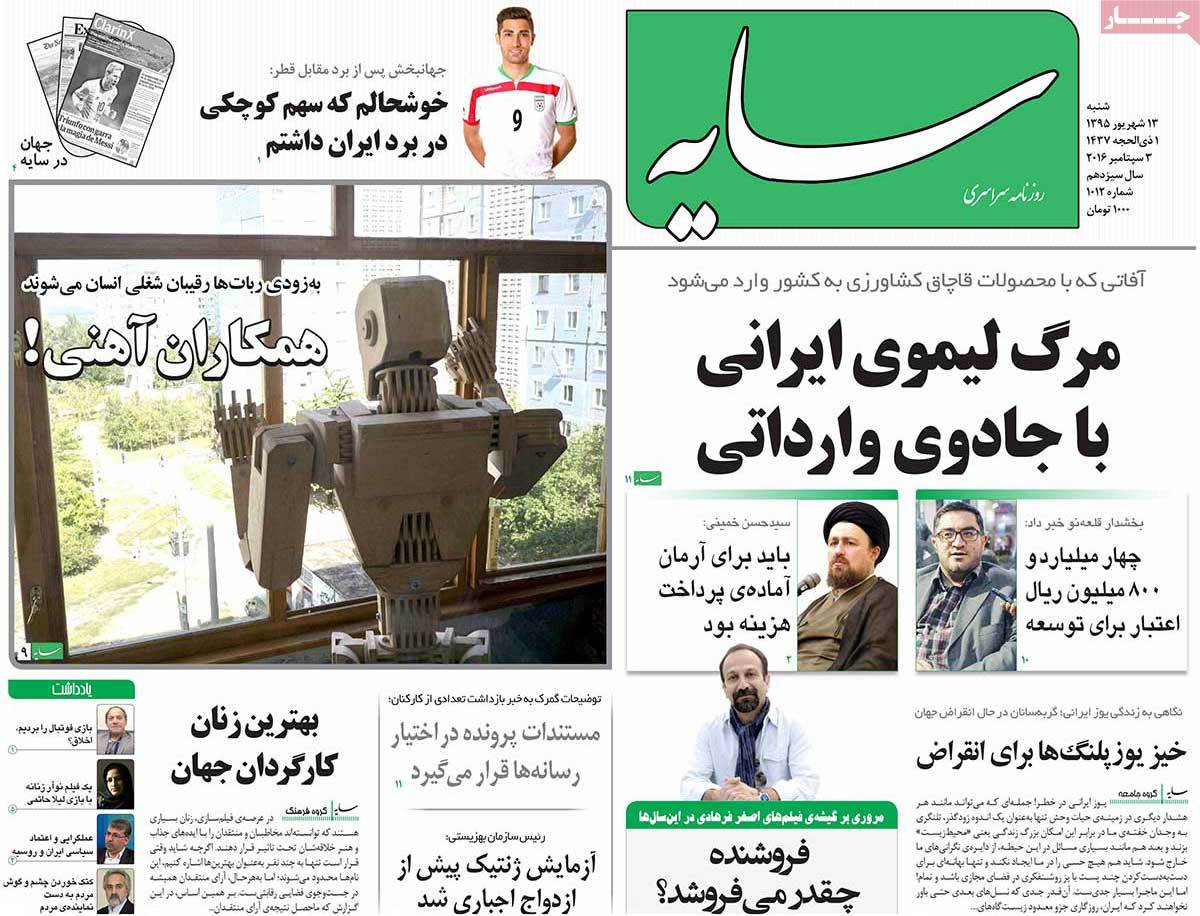
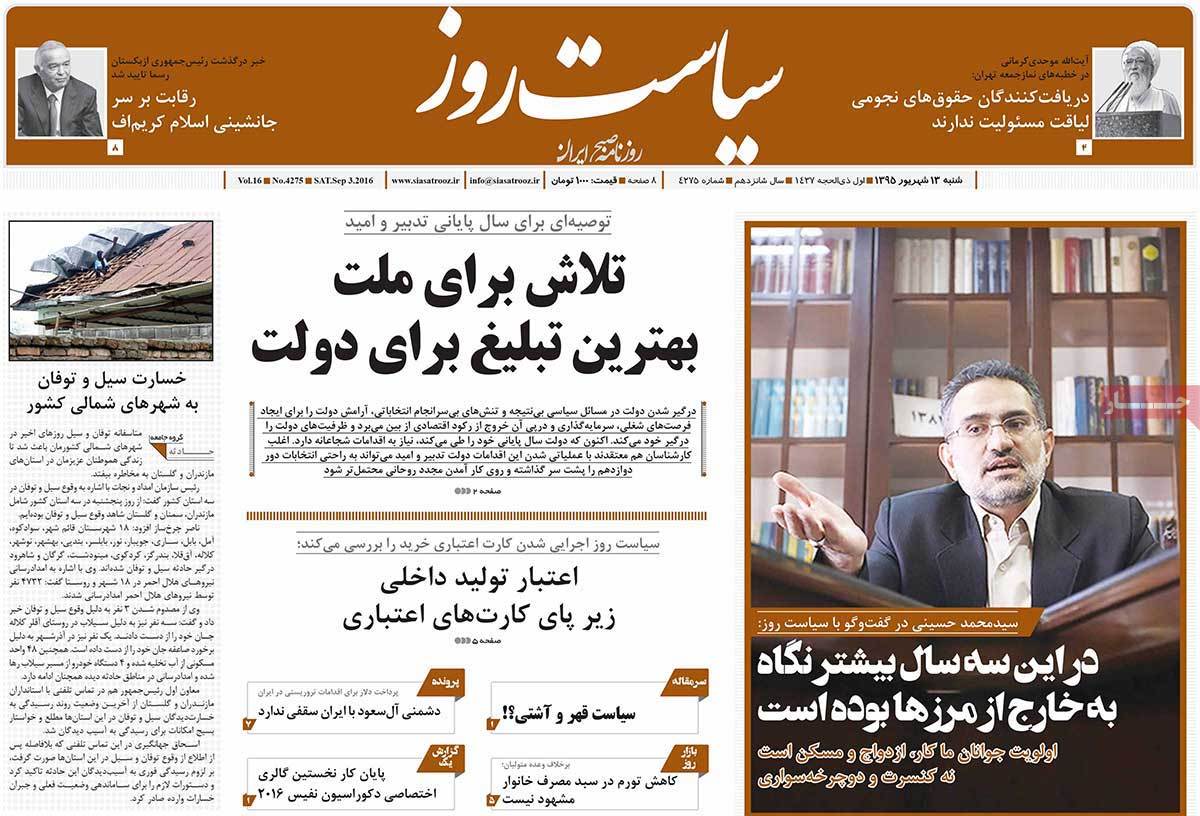
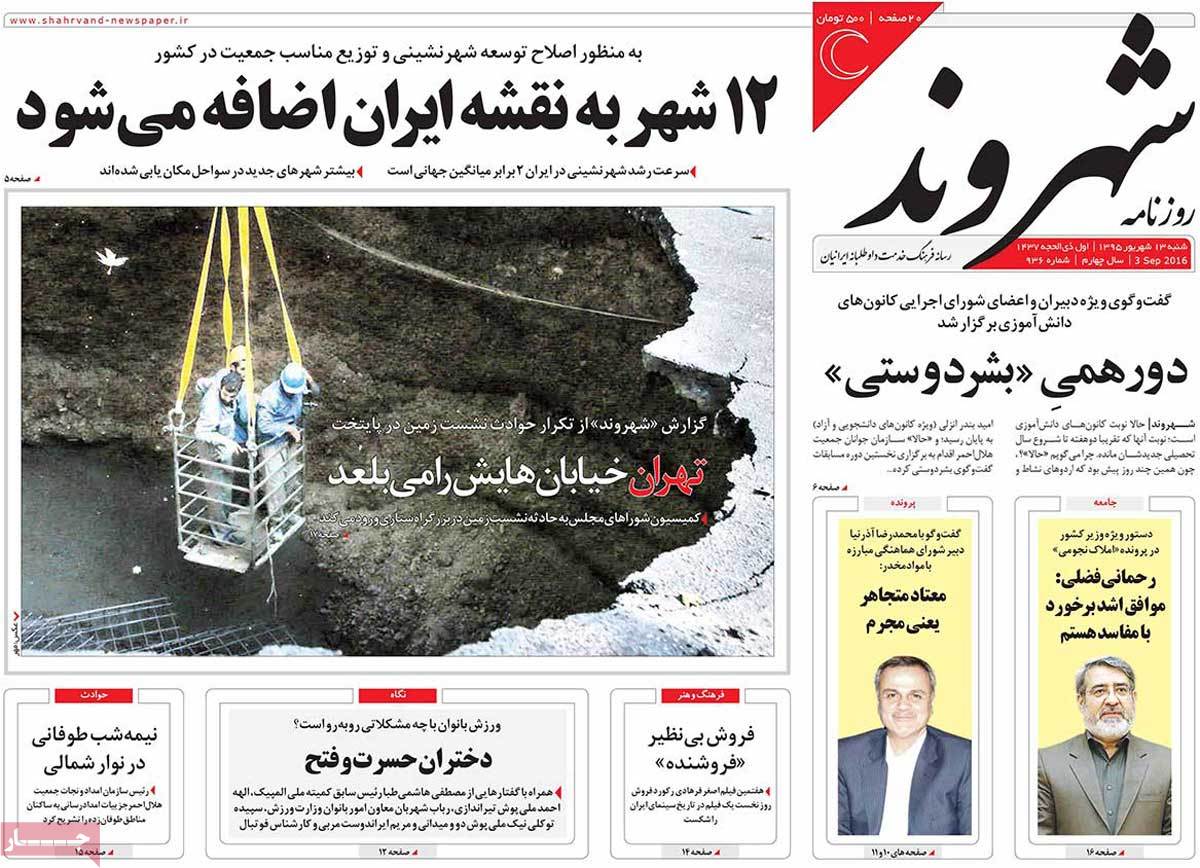
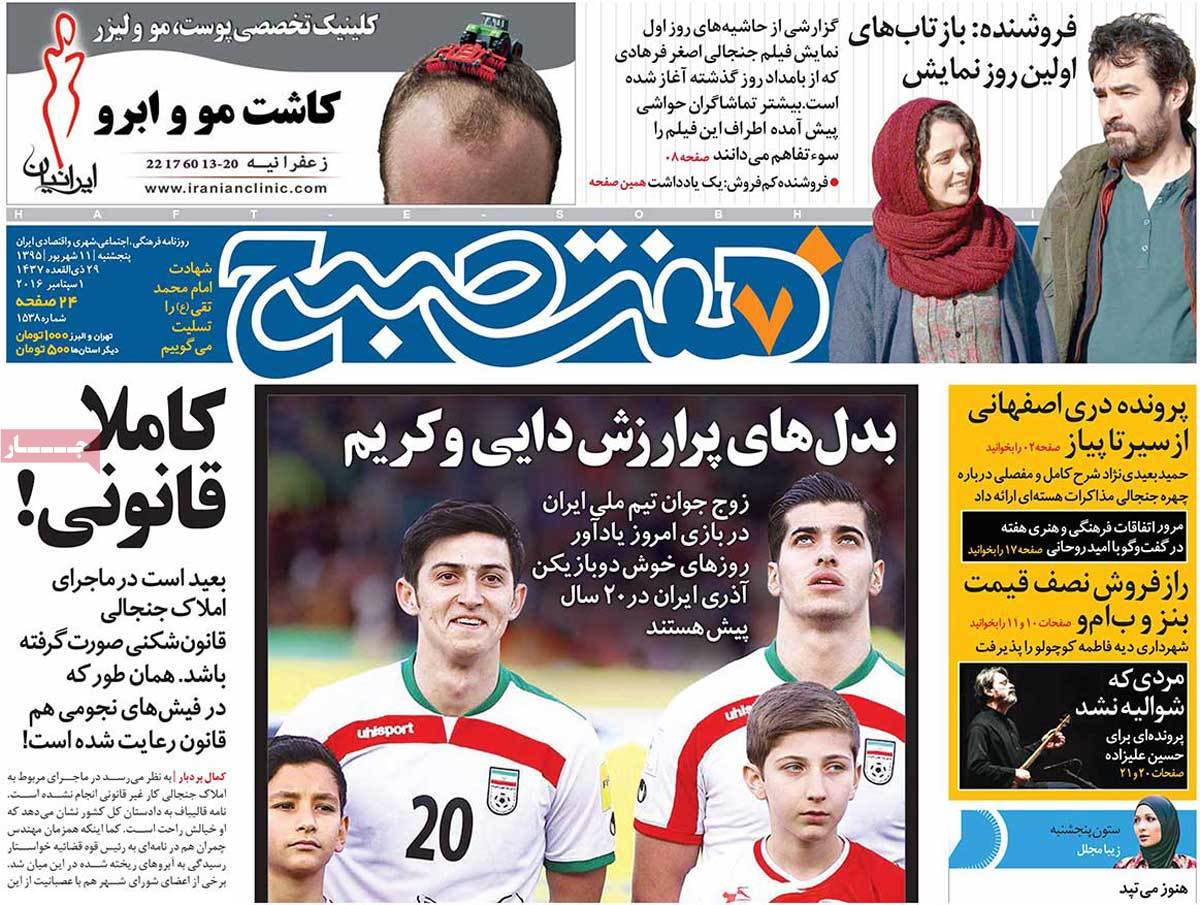
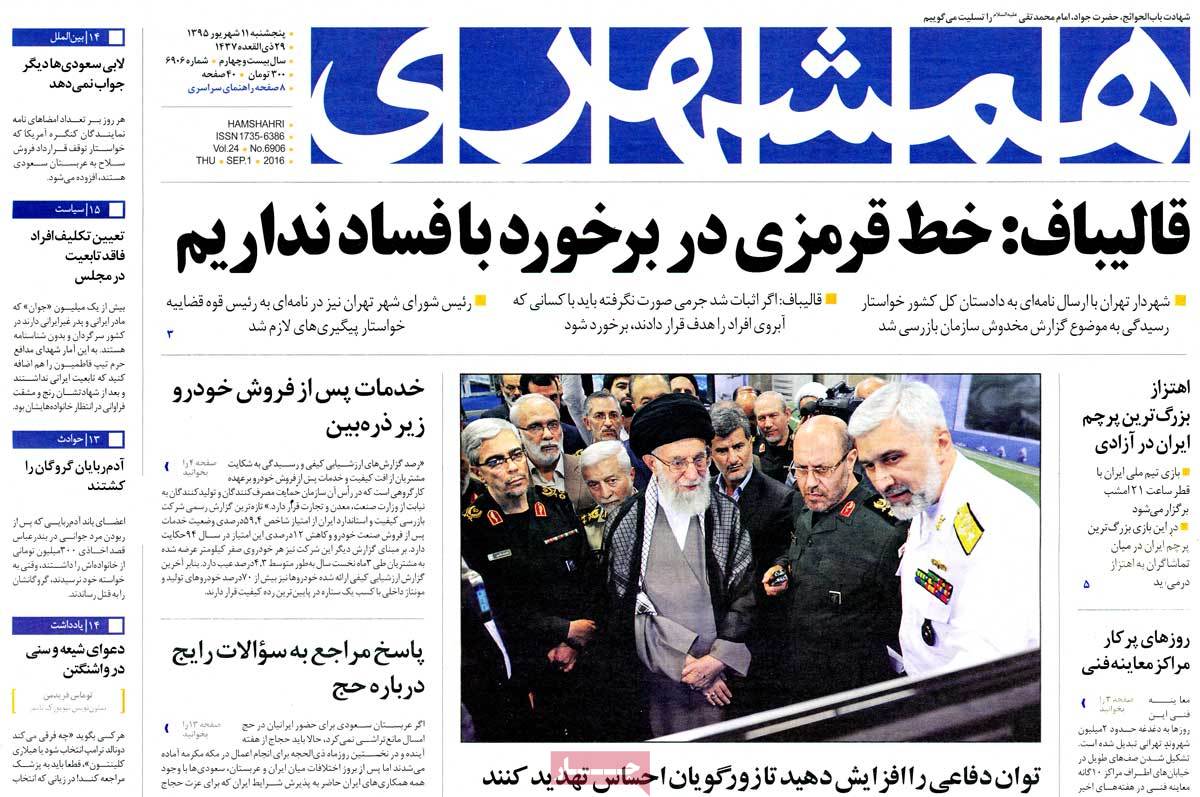
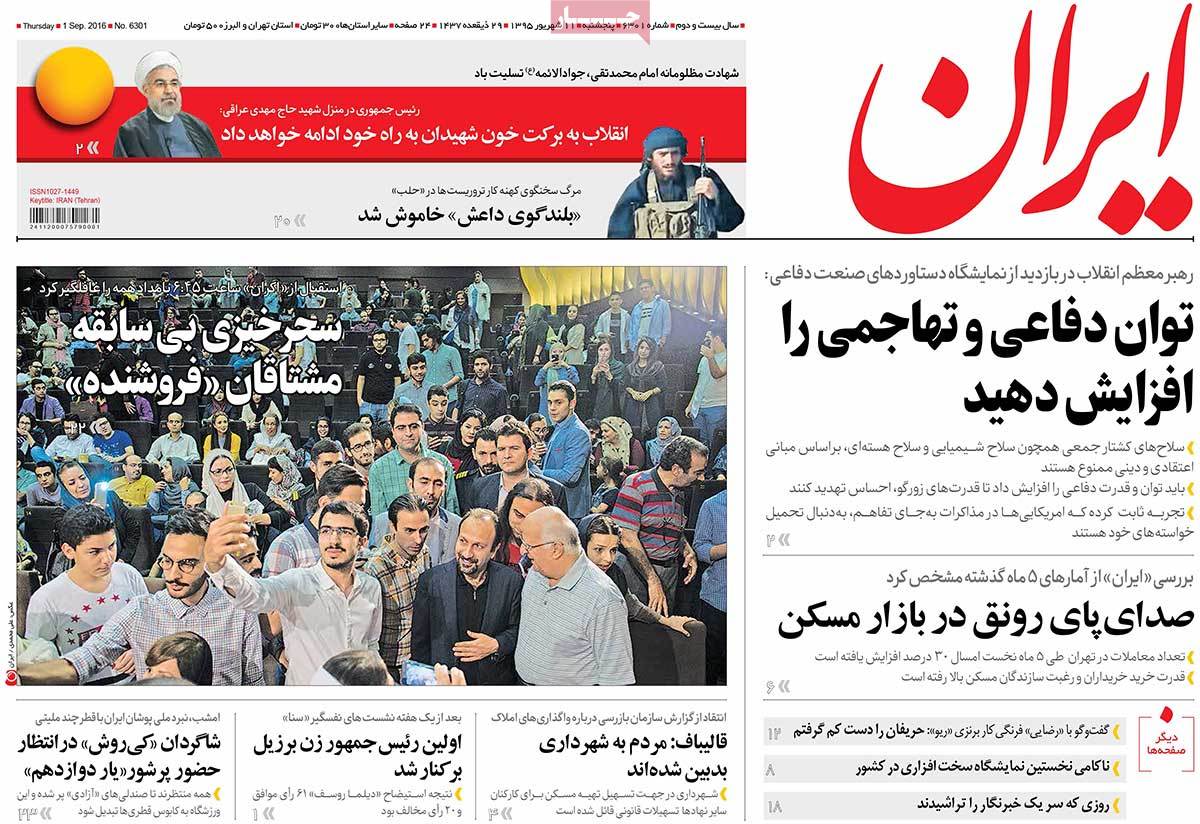
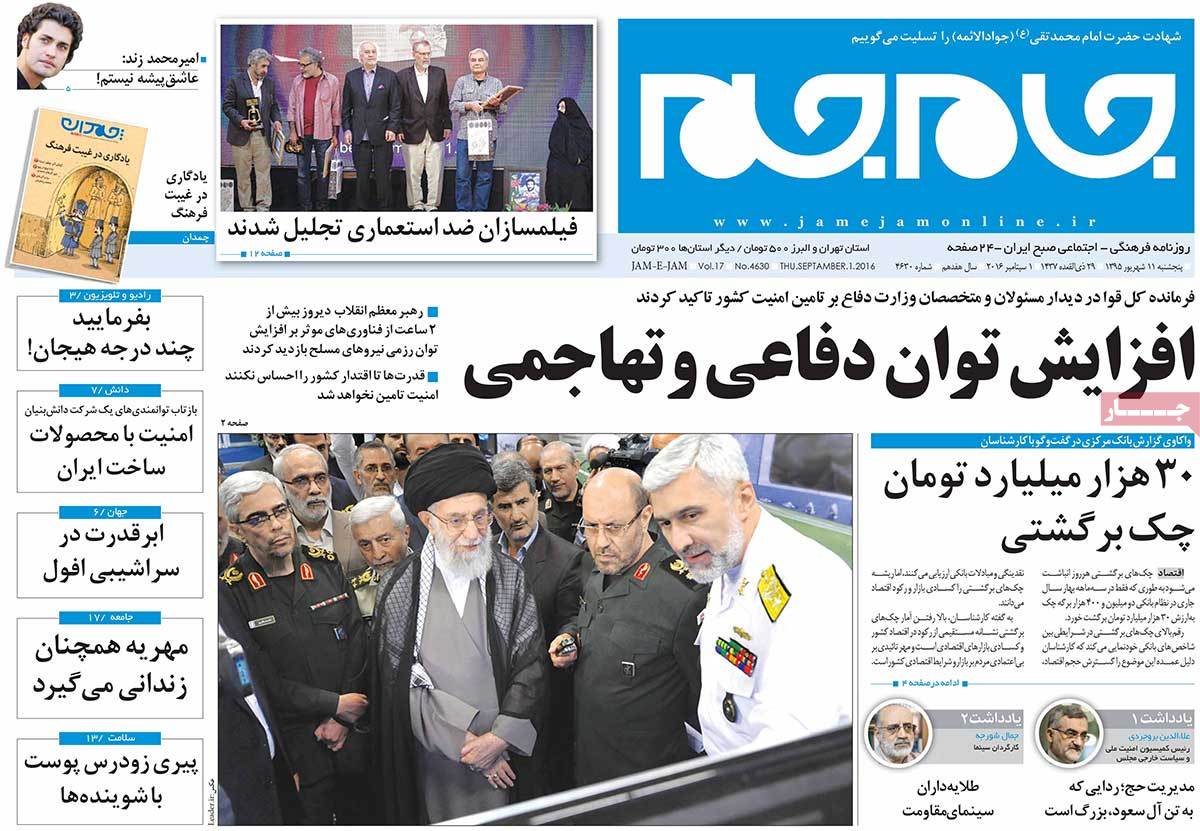
Iran Newspaper front pages

Wednesday newspapers covered the remarks made by the Leader of the Islamic Revolution Ayatollah Seyyed Ali Khamenei in a meeting with Iran’s Intelligence Ministry officials in Tehran.

The first phone call between Iranian President Hassan Rouhani and British Prime Minister Theresa May was also a top story.

The papers also covered the historic meeting between Russian President Vladimir Putin and his Turkish counterpart Recep Tayyip Erdogan in Saint Petersburg. It was the first meeting of the two after the Turkey coup and the tensions between Ankara and Moscow, and is regarded as a turnaround in Erdogan’s stances.

These issues as well as many more are highlighted in the following headlines:


Abrar:

1- Ahmadinejad’s Letter to Obama, and Our Letter to Ahmadinejad

2- Moscow: We’ve Fulfilled Half of Our S-300 Commitments

3- 99% of US Black People to Vote for Clinton

A Look at Iranian Newspaper Front Pages on August 10


Abrar-e Eqtesadi:

1- Purposes behind South Korea’s Willingness to Expand Ties with Iran

2- Talks with Europe and Japan for Enhancement of Safety in Iranian Petchem Complexes

3- Nissan and KIA Motors Restart Cooperation with Iran

4- Iran-Russia Railway to Gain Shares from Suez Canal Market

5- 47% Increase in Iran’s Oil Exports to Asia

A Look at Iranian Newspaper Front Pages on August 10


Afarinesh:

1- Sardar Azmoun on Schalke 04’s Radar

2- Zarif in Meeting with His Estonian Counterpart Gives Top Score to JCPOA

3- Ban on Import of Olive Continues

A Look at Iranian Newspaper Front Pages on August 10


Aftab-e Yazd:

1- Intelligence Ministry Is Vigilant Eye of Islamic Establishment: Leader

2- It Has Nothing to Do with Sanctions that Major European Banks Don’t Cooperate with Iran: Economist

3- First Phone Call between British PM and Iran’s President

4- Parliament Speaker Talks about ‘Complicated’ Situation of Iran’s Nuclear Case before JCPOA

5- Unemployment Rates in Different Countries: 17% in Iran, 20% in Spain

6- Everyone against Trump: 50 Republicans Write Letter, Warning People Not to Vote for Trump

7- Strange Silence of Conservatives over Ahmadinejad’s Letter to Obama

8- Iran’s Economy Is Not Just Controlled by Government: Interior Minister

A Look at Iranian Newspaper Front Pages on August 10


Arman-e Emrooz:

1- Intelligence Ministry Is Hard Shell of the Establishment: Leader

2- Warning against Domestic Cultivation of Marijuana

3- First ‘Political Crime’ Case Opened in Iranian Court: Political Prisoners or Imprisoned Politicians?

A Look at Iranian Newspaper Front Pages on August 10


Asrar:

1- Intelligence Ministry Should Not at All Become Vulnerable: Leader

2- London Calls for All-Out Expansion of Ties with Tehran

3- Some Countries in Region Don’t Want Eradication of ISIS: Shamkhani

4- In Future, We May Make Weekend Trips to Mars: Analyst

A Look at Iranian Newspaper Front Pages on August 10


Etemad:

1- Economic Downturn More Dangerous than War and the US: Economist

2- Repercussions of Close Ties between Two Quasi-Authoritarian Governments [Erdogan and Putin’s]

3- Good Progress to Be Made in Iran-Afghanistan Cooperation: Afghan Official

A Look at Iranian Newspaper Front Pages on August 10


Haft-e Sobh:

1- 25 Major Challenges Faced by Modern Iran: A Report on Most Important Domestic and Foreign Threats Challenging Iran in 4 Different Fields

2- So Where Are Female Students? [The results of Iran’s university exam were announced. This time, unlike previous years when girls were dominant, a considerably more number of boys are among the first 100 ranks.]

3- Rouhani’s View Returns to the East

A Look at Iranian Newspaper Front Pages on August 10


Hemayat:

1- Major Banks Don’t Work with Iran: Nuclear Chief

2- Change in Tehran’s Behaviour Is US Condition for Talks with Iran

3- Concerts Are Cancelled to Prevent Commitment of Crimes: Judiciary Official

A Look at Iranian Newspaper Front Pages on August 10


Iran:

1- Theresa May: London Committed to Accurate and Speedy JCPOA Implementation

2- Republican Security Experts Afraid of Trump Nightmare

3- Nuclear Industry Is Not Shut Down: AEOI Chief

4- Government Has Been Successful in Controlling Inflation: Parliament Speaker

A Look at Iranian Newspaper Front Pages on August 10


Javan:

1- Keep Your Distance from the US: Leader

2- Rouhani Asks for May’s Help for Speedy Implementation of JCPOA

3- Once Again the American Ceasefire Plan in Aleppo

4- Health Ministry Advising People to Prevent Pregnancy!

A Look at Iranian Newspaper Front Pages on August 10


Jomhouri Eslami:

1- Revolutionary Principles and Stances Should Be Fully Maintained in Intelligence Ministry: Leader

2- Iran and Russia Agree on Construction of Railway to Replace Suez Canal

3- Treasonous Role of Al Saud in Supporting Israel against Palestinian Cause

A Look at Iranian Newspaper Front Pages on August 10


Kayhan:

1- Keeping a Distance with the US a Major Principle Set by Imam Khomeini: Leader

2- Rouhani Has Been Informed of His Government’s Violation of Law for Several Times: Prosecutor-General

3- Zarif Gives Top Score to What He Himself Has Created

A Look at Iranian Newspaper Front Pages on August 10


Resalat:

1- Iran’s Economic Growth Rate Is Close to Zero in JCPOA Implementation Year: Chamber of Commerce

2- West Left Us Alone: Erdogan

3- Ambiguous Fate of Europe’s Most Powerful Woman Merkel

A Look at Iranian Newspaper Front Pages on August 10


Roozan:

1- Post-Coup Turnaround of Erdogan

2- War of 72 Nations: Conflicts of Opinion Increase among Conservatives ahead of Presidential Elections in Iran

3- Iran’s Ties with the West Have Become Logical: Analyst

A Look at Iranian Newspaper Front Pages on August 10


Sayeh:

1- Regional Planes Flying All over Iran’s Sky: Predictions Come True

2- Qazvin Declared as Permanent Secretariat of Silk Road

A Look at Iranian Newspaper Front Pages on August 10


Shahrvand:

1- Yearning for Only One Second: Interview with Mahsa Javar, Iran’s Rowing Athlete Who Was Unsuccessful in Rio 2016 Olympic

2- Iranians Who Are Non-Iranians! Iranian Nationals Who Represent Other Countries in Rio Olympics

A Look at Iranian Newspaper Front Pages on August 10


Shargh:

1- Clinton’s Emails Led to Execution of Iranian Scientist: Trump

2- US State Dept. Spokesman: Emails Related to Shahram Amiri Were Not Confidential

3- We All Have a Mohammad Reza Pahlavi [last Shah of Iran] inside Ourselves: Imam Khomeini’s Grandson

A Look at Iranian Newspaper Front Pages on August 10


Siasat-e Rooz:

1- A Harsh Response to the West: Putin and Erdogan Meet in Saint Petersburg after Months of Tension

2- Iran’s Aerial Defence System to Become Stronger

3- Yemen under Fire of Saudi Insanity

A Look at Iranian Newspaper Front Pages on August 10


Sobh-e Now:

1- Stuxnet 2 Activated: Cyber Attacks against Iran, Russia and China

2- Millions Spent on Tanning in Summer

3- Four Reasons that Aleppo Siege Was Broken

A Look at Iranian Newspaper Front Pages on August 10


Vaghaye Ettefaghieh:

1- Nuclear Case Couldn’t Be Resolved without Consensus among All Officials in Iran’s Establishment: Larijani

2- No One in the World Says JCPOA Is against Iran: Zarif

3- Labour Minister Vows to Create 500,000 New Jobs

4- Why Gulenists Are Hostile towards Iran: Gulen Uses Iranophobia as an Instrument

A Look at Iranian Newspaper Front Pages on August 10


Vatan-e Emrooz:

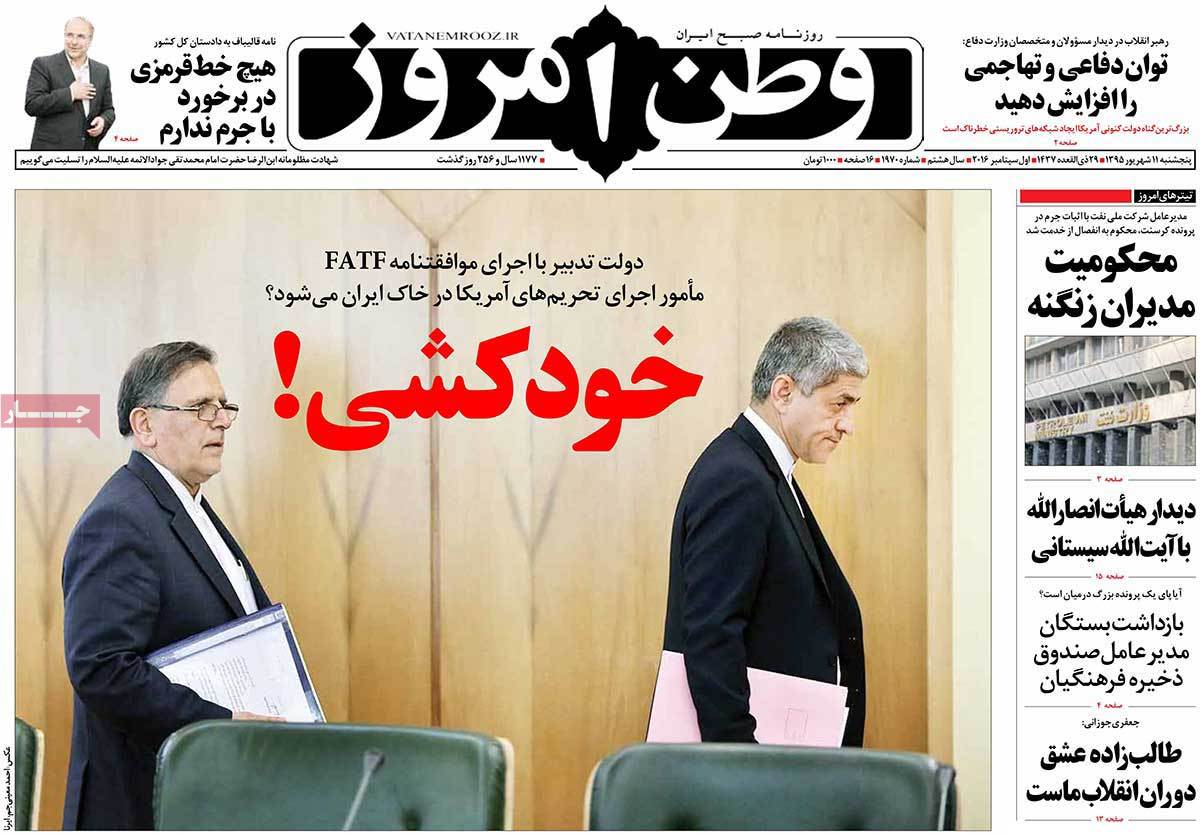
1- Which Banks Are Working with Iran? Only Those from Lilliput

2- Turkey’s Turnaround to the East?

A Look at Iranian Newspaper Front Pages on August 10

Iran’s President, British Premier Discuss Bilateral Ties, JCPOA Implementation

During the conversation on Tuesday evening, President Rouhani hailed development of Tehran-London ties after coming into force of the Joint Comprehensive Plan of Action (JCPOA), a lasting nuclear deal between Iran and the Group 5+1 (Russia, China, the US, Britain, France and Germany).

Highlighting Britain’s role in the achievement of the JCPOA, the Iranian president said the efforts should now be focused on its full implementation.

He also voiced Iran’s readiness to work with Britain in the fight against terrorism, given the escalation of terrorist attacks in the world.

May, for her part, said London is resolved to enhance relations with Tehran in all fields.

She also restated Britain’s commitment to full implementation of the JCPOA, voicing support for the expansion of banking and trade cooperation.

She further voiced London’s preparedness to hold consultations with Tehran to coordinate efforts in battling terrorism.

Theresa May became Britain’s prime minister in July with the task of leading it out of the European Union. Former premier David Cameron stepped down after Britons rejected his entreaties to stay in the EU.

Iran Will Never Compromise on Distance from US: Leader

Leader

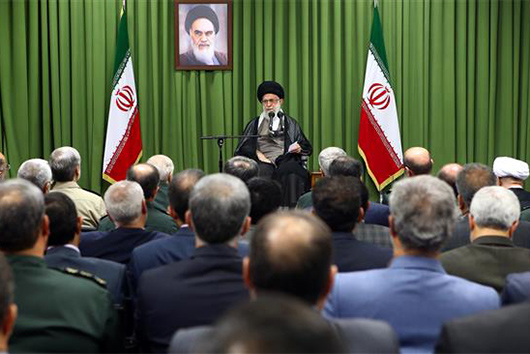
Leader of the Islamic Revolution Ayatollah Seyyed Ali Khamenei says Iran will never back down from distancing itself from the United States.

“Keeping a distance from the head of the arrogant movement, i.e. the US, is one of the most important definitive principles of the great founder of the Islamic Republic (the late Imam Khomeini) and there is no room for any compromise or negligence in this regard,” Ayatollah Khamenei said in a meeting with Iran’s Intelligence Minister Mahmoud Alavi and other senior personnel of the ministry on Tuesday.

Ayatollah Khamenei hailed the relentless efforts of the ministry, describing it as a “very important and crucial bastion” and “the wakeful and observant eye of the Islamic establishment.”

“The Intelligence Ministry is the hard shell of the Islamic establishment and should never become vulnerable,” the Leader added.

The Leader further called for the presence and operation of the ministry anywhere suspected of becoming a hideout for the enemy to deal a blow to the Islamic Republic.

Ayatollah Khamenei also said the survival and victory of the Islamic Revolution are tied to maintaining faith, adding, “The failure of the global arrogance against the Islamic establishment, despite massive and varied plots and methods that they have deployed since the first day against the [Islamic] Revolution, could not have been possible without the support of faith.”

The Leader stated that any move to weaken the faith of the Iranian people and officials would be treason and added, “The defensive force that has sustained the country throughout all these years has been the power of faith and if this strong and efficient weapon is undermined, it will lead to many plights.”

75816452-349b-4ce8-b24e-418d085685f1Elsewhere in the meeting, Ayatollah Khamenei highlighted the role of the ministry in helping the realization of Resistance Economy, saying, “The solution to the country’s problems is Resistance Economy and some works have begun in this field but the result of these works must be seen on the ground.”

The Leader also underscored the Intelligence Ministry’s role in combating and preventing financial corruption.

Prior to Ayatollah Khamenei’s remarks, Alavi provided a comprehensive round-up of the Iranian Intelligence Ministry’s agendas and activities.