“The Saudi government must stop continuing with its divisive policies, disseminating the ideology of hatred and encroaching on the rights of its neighbors and it must shoulder its responsibility with regards to the life and dignity of [Hajj] pilgrims and found its relations on the basis of mutual respect and accepting responsibility towards regional nations” if it seeks a new prospect for its development and the security of the region, Rouhani said.
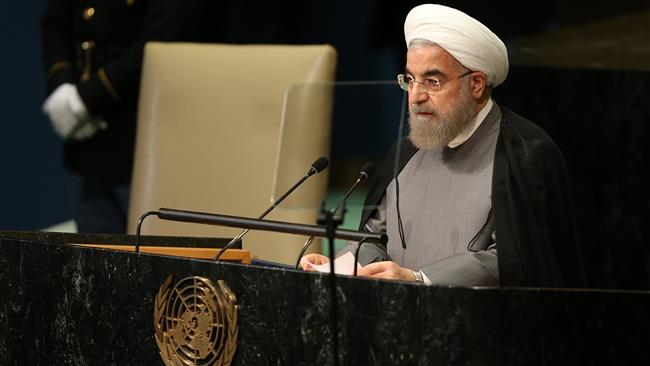
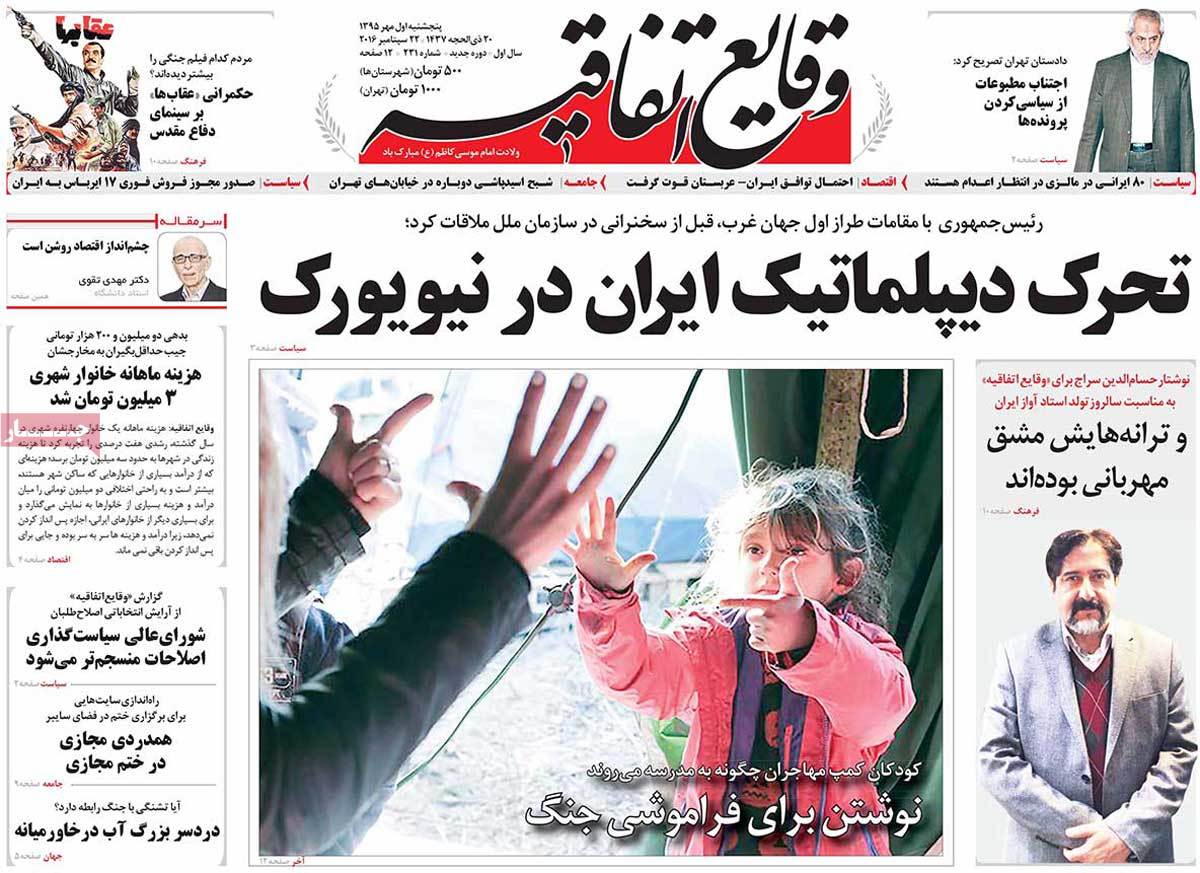
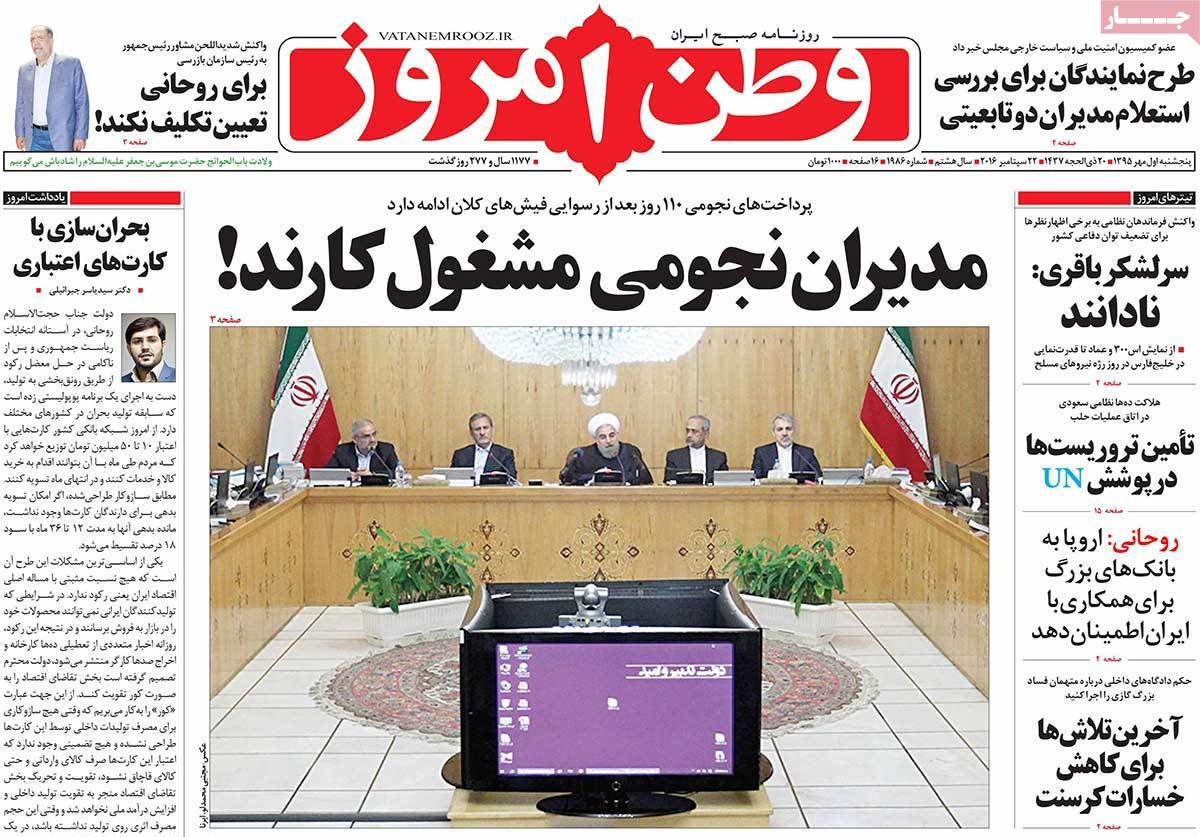
The Iranian president made the remarks during his speech at the 71st UN General Assembly session in New York on Thursday.
For the region to enjoy security and peace, “certain countries in the region must stop bombarding their neighbors and put an end to their support for Takfiri terrorist groups, accept their responsibility and take measures to compensate [for their acts],” the Iranian president added.
Rouhani said countries of the region are well capable of building their future and countering terrorism if they rely on their common grounds, including history and culture.
Pointing to the conflicts gripping regional nations, including the people of Syria, Iraq, Yemen, and the Palestinians, Rouhani warned against the unprecedented rise of violence in the Middle East and North Africa.

He described security as a global issue and said over the past years world powers have been advancing different methods of “repression and military intervention” under the pretext of removing security concerns for their people.
The issue of borderless terrorism and extremism could be blamed on the security strategies adopted by global powers over the past 15 years, Rouhani said, stressing that security in one part of the world could not be provided and guaranteed at the cost of destabilizing other parts of the globe.
Rouhani said Iran pursues the policy of “constructive cooperation” with its neighbors to contribute to regional security, adding that Tehran backs the development of the countries of the region.
Iran is opposed to sectarianism and any attempt aimed at fomenting sectarian rifts, Rouhani said, warning that certain countries seek to turn religious differences into tense confrontations for their own political gains.
Elsewhere in his speech, the Iranian president pointed to the landmark nuclear agreement reached between Iran and the six world powers in July 2015, and described the nuclear negotiations which resulted in the conclusion of the Joint Comprehensive Plan of Action (JCPOA) as an exemplary model of diplomacy.
He said the conclusion of the JCPOA put an end to a “fabricated crisis” about Tehran’s nuclear program and recognized the peaceful nature of the Iranian nuclear program.
“We should never forget that pressures, sanctions and illegal threats which aimed to dismantle all [Iranian] enrichment facilities failed, and today the [UN] Security Council and the International Atomic Energy Agency (IAEA) have officially recognized Iran’s peaceful nuclear program,” Rouhani said.

He warned the United States against reneging on its commitments stipulated in the JCPOA and said any Washington’s delay in implementing the nuclear agreement would further discredit the US in the global arena.
“The US procrastination in fulfilling its commitments over the past months is a strategic mistake which needs to be compensated for immediately,” Rouhani added.
Following is the full text of the Iranian president’s address to the UN General Assembly:
In the name of God, the most Compassionate, the most Merciful
Praise be to Allah, Lord of the two Worlds, and peace be upon our Prophet Mohammad (PBUH) and his family and companions.
Mr. President,
I congratulate you on your election as the president of the 71st Session of the United Nations General Assembly and I hope that the decisions and initiatives taken by this Assembly play an effective role in resolving the problems that our world is currently facing.

Mr. President,
Mr. Secretary-General,
Excellencies,
Ladies and Gentlemen,
15 years have passed since the painful terrorist attack in this city; a disaster whose human dimensions moved the entire world. On that day, no one imagined that this occurrence would lead to larger disasters, resulting in a devastating war in the Middle East and the spread of insecurity across the globe. This war has sown the seeds of borderless terrorism everywhere on earth. Today, the most pressing question as to why we are facing such a situation should be on the agenda of international forums. We need to find out which approaches, policies and erroneous actions paved the way for the spread of insecurity throughout the world. And what would be the picture the world 15 years from now.
Security has become a global problem at a time when major powers are mainly focusing on advancing different methods of repression and military intervention under the pretext of creating a secure environment for their citizens. The genesis of borderless violent extremism and terrorism could be attributed to the security strategies developed by major powers in the past 15 years. The main lesson to learn from the analysis of this trend is that security in one region at the cost of insecurity in others would not only be impossible but it could also lead to more insecurity everywhere.
The terrorists even went as far as claiming to have established States in the Levant, Iraq and Libya. More unfortunately, they hide their nefarious intents behind religious literature, thus turning a compassionate religion into an instrument of violence and terror by spreading extremist and Takfiri propaganda. Regrettably, some powers have provided covert and overt support for these Takfiri groups or condoned their formation. The same powers are now committing atrocities against innocent people and their defenders under the guise of fighting terrorism.
Ladies and Gentlemen,
The century that began with terror and violence in New York should not continue with hostile competitions and expanding conflicts in the Middle East.
Today in fact, the discourse of hatred and violence in the Middle East and North Africa is spreading with an astonishing speed, and this region is stuck in a web of the most savage and destructive policies. Millions of Syrians are stranded in deserts and high seas, and hundreds of thousands of them are subjected to violent deaths. Iraqis of every ethnic group are concerned about their territorial integrity and the future of their homeland. The defenseless people of Yemen are subjected to daily aerial bombardment, and Afghanistan, following decades of occupation and atrocity, is yet to find comfort from suffering, violence and terror. The oppressed Palestinians are still afflicted by a web of apartheid policies and atrocities set by the usurping Zionist regime.
Undoubtedly, if the region is to reverse the current dangerous trend into one towards development and stability, certain countries must stop bombing their neighbors, and abandon supporting Takfiri terrorist groups; and, while accepting responsibility, try to compensate for past mistakes. If the Saudi government is serious about its vision for development and regional security, it must cease and desist from divisive policies, spread of hate ideology and trampling upon the rights of neighbors, accept its responsibility for the protection of the lives and dignity of pilgrims and construct its relations with the nations in the region on the basis of mutual respect and accountability.
The future of our region rests on dealing with fundamental challenges such as security crises, due to the inefficiency and the lack of legitimacy of governments. We won’t be able to combat criminal and terrorist networks without genuine democracy and without a real participatory approach at the national and transnational levels.
We believe that countries in our region can create their shared future through relying on their common history and culture and isolating terrorist groups. We should never allow our region to run once again the risk of a new dismemberment following the one that took place close to a century ago.
Mr. President,
Iran’s principled approach calls for constructive partnership with our neighbors with a view to establishing an enduring order based on shared security and efforts aimed at enhancing the development of the countries in the region and mutually beneficial economic cooperation. To uproot violence in the region, there is no choice but to focus on promoting democracy, citizenship rights and economic development.
Iran opposes any kind of sectarianism and any attempt to promote religious gaps. The Muslim people, be they Shi’as or Sunnis, have and continue to live together for centuries in harmony and mutual respect. Attempts to turn religious dissimilarities into tense confrontations is rooted in vested interests of certain countries, which try to hide their quest for power covered in religious slogans.
Iran considers it imperative to preserve territorial integrity of States, keep national borders intact, enhance peoples’ right to self-determination and uphold the principle of refraining from the threat or use of force. We also reiterate the need to use diplomacy for conflict resolution.
Mr. President,
Excellencies,
Despite today’s difficulties, I have hope in tomorrow. I have no doubt that we can prevail through prudence and wisdom. The experience acquired through dialogue between Iran and the group of 5+1 and the fruition of the Joint Comprehensive Plan of Action (JCPOA) are indicative of the success that we could achieve through moderation, constructive interaction and the promotion of dialogue; a policy that brought a long, complicated and unnecessary crisis to an end by adopting a win-win approach. This deal confirmed the peaceful nature of Iran’s nuclear program through devising confidence-building mechanisms, closing the so-called “possible military dimension” file and reinstating Iran’s right to develop a peaceful nuclear program. This deal also put an end to unfounded concerns and led to the removal of the brutal sanctions against Iran.
Beyond the nuclear file, however, the JCPOA contains important lessons for resolving complicated international problems. This deal is not only a political agreement, it also represents a creative approach and method for constructive interaction with a view to peacefully resolving crises and challenges. To learn lessons from the JCPOA and put them towards improving international relations, we should never forget that pressures, sanctions and illegal threats against the Iranian people, which sought to fully dismantle Iran’s enrichment program, were all defeated. And today, the Security Council and the IAEA have formally accepted Iran’s peaceful nuclear program.
The US is fully aware that JCPOA constitutes a recognized multilateral agreement, and any failure on the part of the United States in implementing it would constitute an international wrongful act and would be objected to by the international community. Any failure in implementing the JCPOA will further erode the credibility of the United States in the world. The lack of compliance with the JCPOA on the part of the United States in the past several months represents a flawed approach that should be rectified forthwith. Unfortunately, such illegal actions are not unprecedented: the latest case in point is the
US Supreme Court ruling to seize billions of dollars of the Iranian people’s assets. This experience demonstrated that the Zionist pressure groups could go as far as having US Congress pass indefensible legislations forcing the highest American judicial institution to violate preemptory norms of international law.
Ladies and Gentlemen,
With God’s help, the Iranian people’s endurance and the increasing participation of Iran ‘s international partners from different regions, only 8 months after the removal of the cruel nuclear-related sanctions, the economy of Iran , as the most secure and most profitable investment destination in the region, is showing clear improvement. Iran ‘s economic growth rate surpassed 4 percent in Spring 2016, the inflation rate dropped to single digits, and Iran has come close to pre-sanction level of oil production and export. All in all, we are witnessing more development in the economic, scientific and technological fields in Iran .
Iran is one of the rare oil-producing countries that could offset the shocking impact of the sharp slide in oil price in 2014. We are intent on strengthening economic stability and consistency, thus encouraging more investment, through economic reforms and fiscal and financial discipline, while preserving our low-inflation achievement. The economic growth is to increase to around 5% by the end of 2016. Currently, based on all domestic and international prediction, Iran is enjoying one the highest growth rates among the oil-producing countries.
Excellencies,
To conclude, let me emphasize that, despite all hardships, I deeply believe that moderation will prevail over extremism, peace will triumph over violence, enlightenment will overcome ignorance, and finally justice will rise above injustice. What is important is that belief, hope and efforts are towards realizing peace and justice and there is no doubt that the Almighty will assist all those who endeavor towards peace, justice and moderation.
Thank You Mr. President

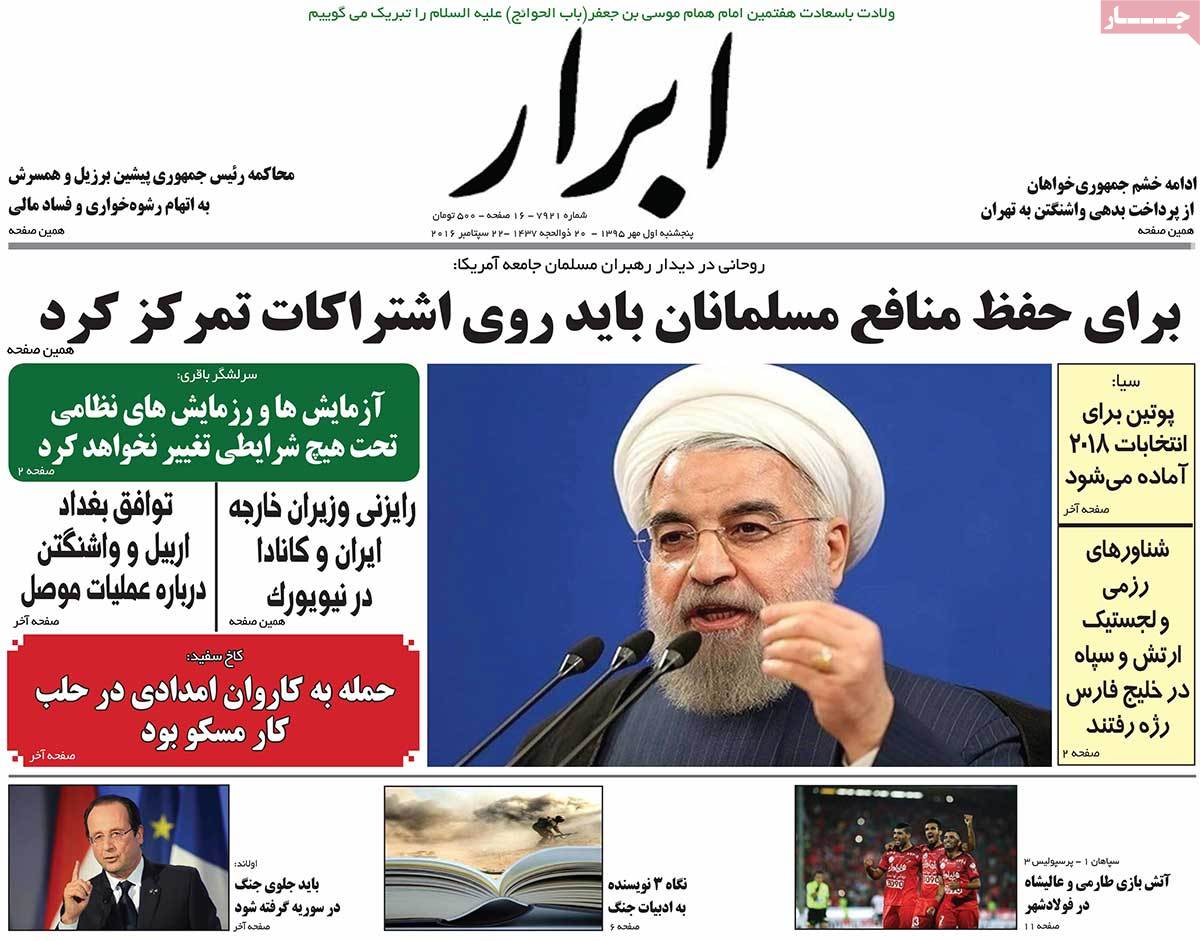
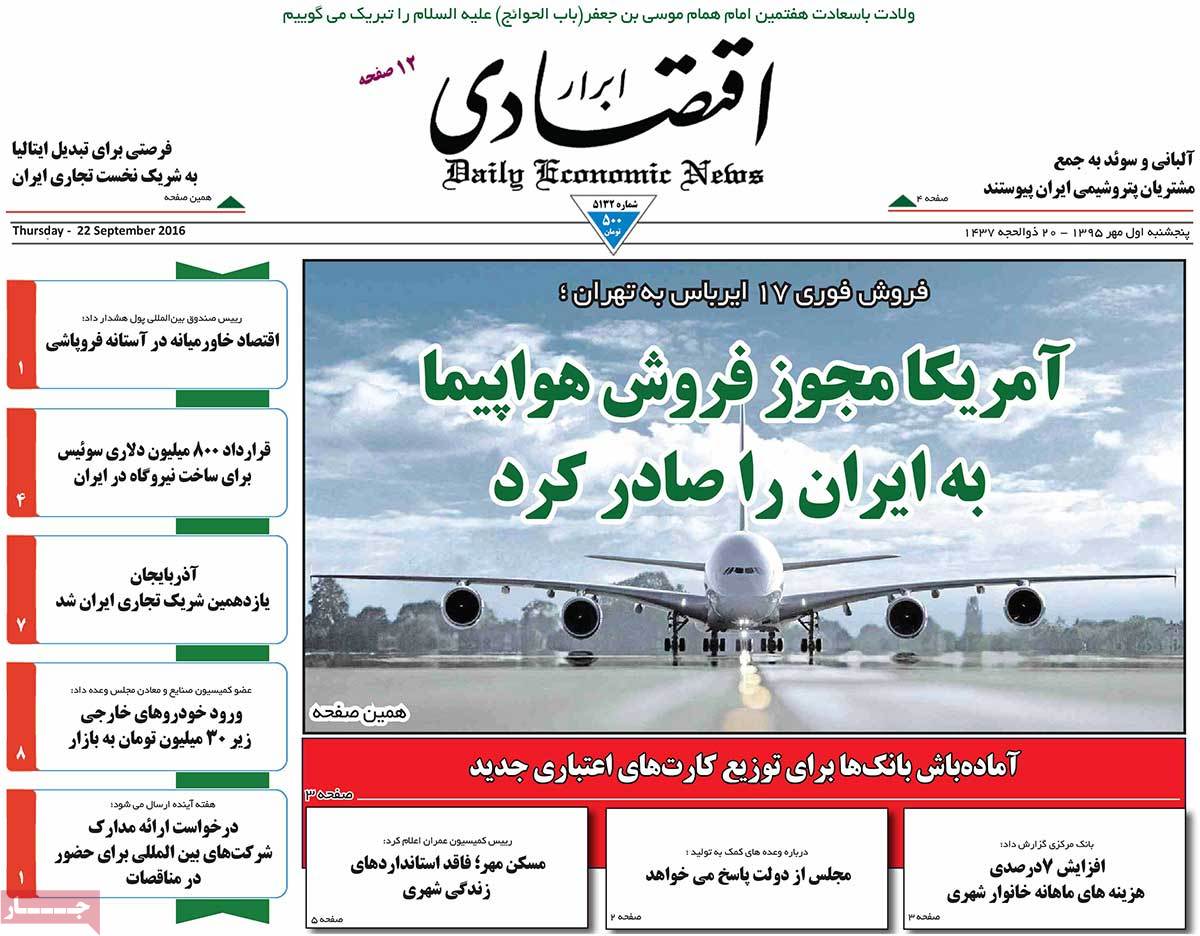
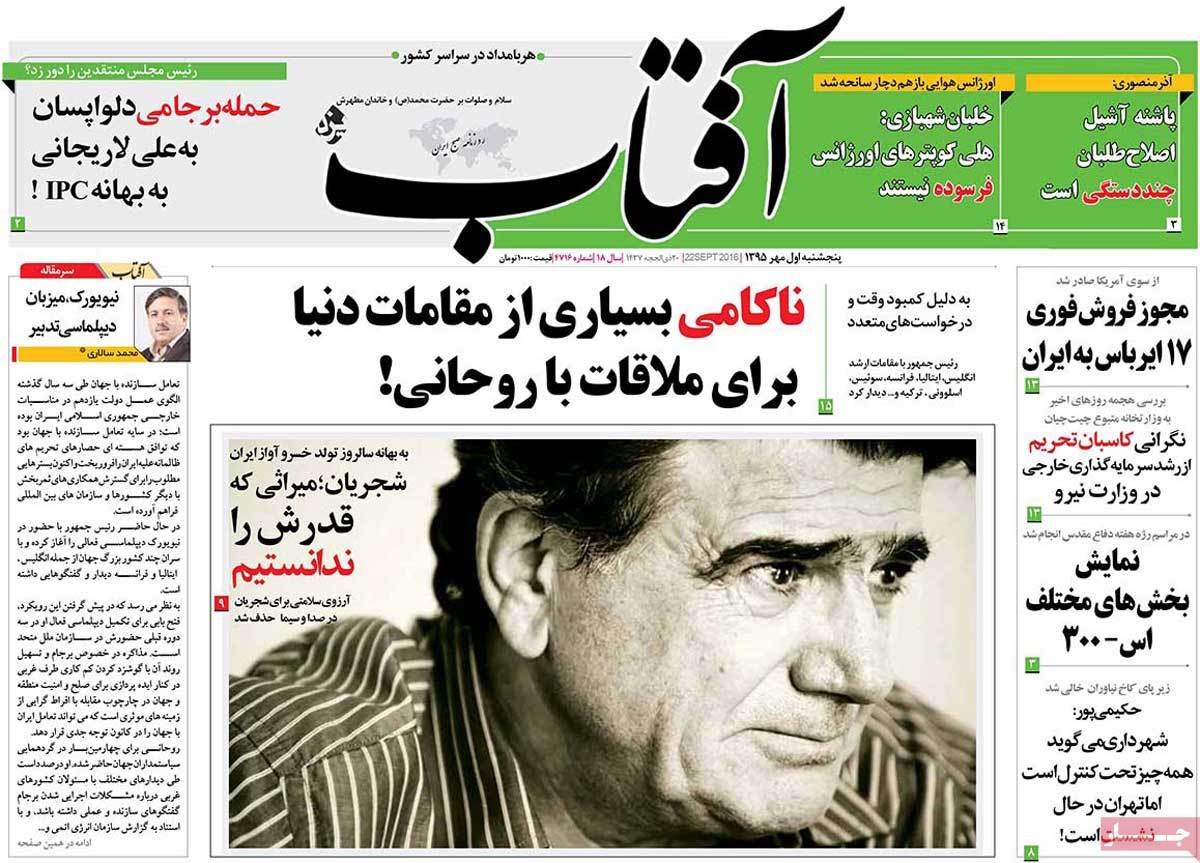
 Photos by Tasnim, Text by Press TV



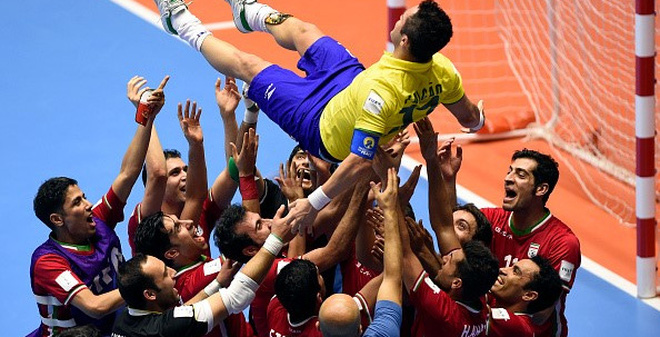
 According to the FIFA’s official Instagram account, “Iran could have run off to their locker room to celebrate with each other but they stopped to celebrate a legend of the game.”