Monday, April 27, 2026
Home Blog Page 4323

Iran Eyes Cooperation with Europe in Train Car Production

train-car

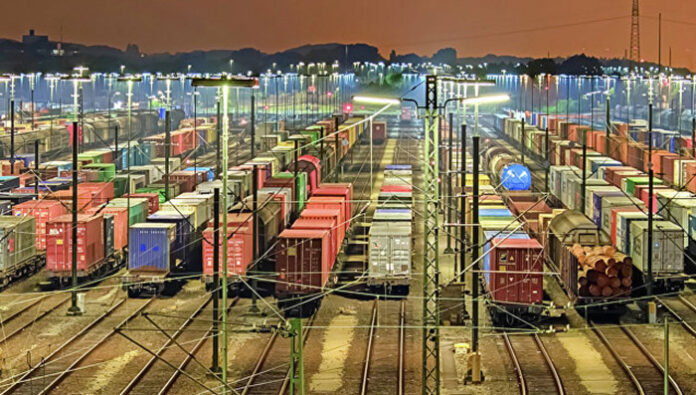
Iran has the capacity for local production of train cars, Deputy Industry Minister Mojtaba Khosrotaj told Tasnim on Saturday, when asked about the latest status of car imports from Russia.

There are grounds for domestic production of train cars in cooperation with European countries, the official added, saying Iran’s private sector companies have held business negotiations with Siemens in Austria to initiate such a plan.

Many foreign companies have shown enthusiasm for investment in Iran after coming into force of the Joint Comprehensive Plan of Action (JCPOA), a lasting nuclear deal between Tehran and the Group 5+1 (Russia, China, the US, Britain, France and Germany).

In July, Iranian Deputy Minister of Road and Urban Development Ali Nourzad and Ukraine’s Minister of Infrastructure Volodymyr Omelyan signed an MoU in Kiev as part of efforts to promote mutual cooperation in the railroad industry.

US Police Brutality Result of Israeli Training: Kevin Barrett

barrett

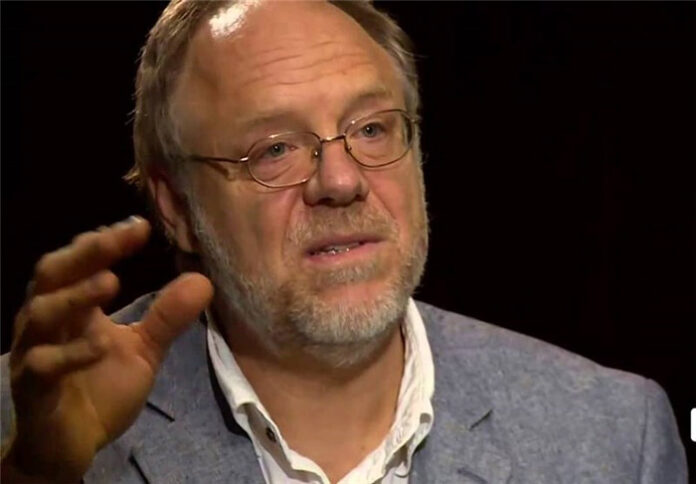
“About one third of the American population lives under virtual police occupation and regards the police as a dangerous, hostile army. This situation has gotten worse as more and more American police are trained in Israel, where they are taught to treat minorities the way the Israelis treat Palestinians,” Kevin Barret told the Tasnim news agency.

Following is the full text of the Barret’s interview.

Tasnim: A new wave of protests has gripped various states in the US after unarmed African American Keith Scott was shot dead by police on September 22, 2016, in Charlotte. As you know the United States has been a self-declared champion of human rights across the globe. However, the recent killings of African-Americans by the US police have raised questions about Washington’s own record. What is your take on the human rights situation in the US?

Barrett: The US has a mixed record at best on human rights. While it ranks highly on free speech – I can write and say anything I want in the alternative media – in other areas the US is a major human rights abuser. For example, the American police are more brutal and violent than their counterparts in other nations, and their brutality disproportionately targets minorities, especially African-Americans. About one third of the American population lives under virtual police occupation and regards the police as a dangerous, hostile army. This situation has gotten worse as more and more American police are trained in Israel, where they are taught to treat minorities the way the Israelis treat Palestinians.

Tasnim: African American communities in the US are increasingly falling victim to violence and discrimination. Why? Do you believe the white-dominant system has waged a war on the blacks?

Barrett: There is plenty of racial tension in the US. But I wouldn’t say the white population as a whole is “waging war” on the black population. Instead, it is a class war. The rich who run the US are crushing the poor and eliminating the middle class. This class war hits African-American communities hardest. The police occupations of black neighborhoods are the result of this class war on ordinary working Americans.

Tasnim: Back in June, the US Senate rejected a series of gun-control measures just days after the Orlando nightclub massacre shooting, including proposals to keep weapons out of the hands of people on terror watch lists. Every year, more than 30,000 people are shot and killed in the United States. What do you think about the Senate move?

Barrett: I will support disarming the American people as long as the military, the police, and private security firms disarm first. These uniformed psychopaths, and their bosses in the corporate boardrooms, are most dangerous criminals in America. Ordinary Americans will need more and better guns, as well as help from patriotic elements of the military, if they are ever to overthrow the corrupt political and financial establishments that have shredded the Constitution and put the US on a fast train to dystopia. So I view gun control, under current conditions in the US, as an impediment to a much-needed Second American Revolution.

Iran JCPOA Commitments Carried Out to the Letter: IAEA

iaea-chief-yukiya-amano

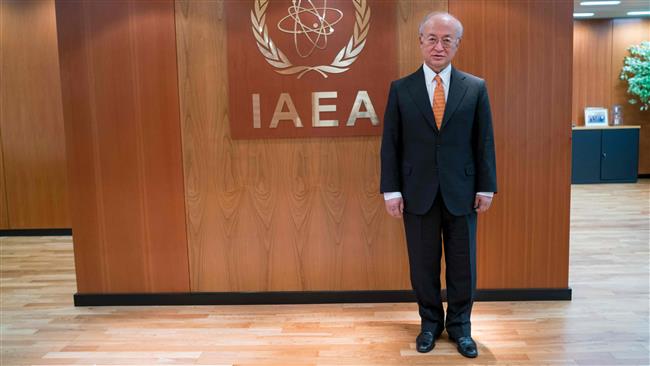
“I can certify that Tehran respects its commitments to the letter. The Iranians are doing what they promised the international community,” said IAEA Director-General Yukiya Amano during an interview with the French daily Le Monde on Saturday.

The July 2015 Joint Comprehensive Plan of Action (JCPOA), struck between Iran and Britain, China, France, Germany, Russia and the United States, envisaged Tehran scaling back its nuclear program in return for the lifting of all nuclear-related sanctions on the Islamic Republic.

“The deal is being implemented since January without any particular problem,” he noted. “There was a small incident in February: the stock of heavy water very slightly exceeded the limit set — 130 tones. But we immediately signaled that to Iran which took all the necessary measures.”

In September, the IAEA once again confirmed Iran’s commitment to the landmark nuclear agreement, with Amano at the time noting that the agency would continue evaluating the absence of undeclared nuclear material and activities in Iran.

In a quarterly report on Iran on September 8, Iran’s commitment to the nuclear agreement was confirmed by the IAEA which is tasked with overseeing the implementation of the JCPOA.

Since January, the IAEA has released regular reports confirming the peaceful nature of Iran’s nuclear activities and Tehran’s commitment to the agreement.

US Trying to Catch Up with Iran in Stealth, Bomber Drone Technology: Commander

IRGC Aerospace Force Commander

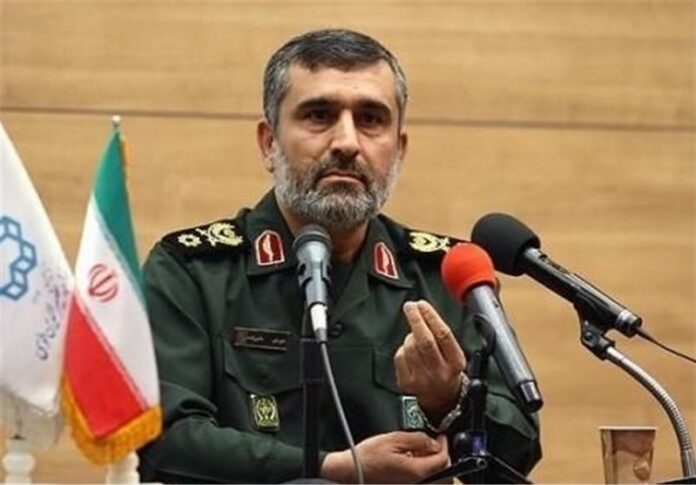
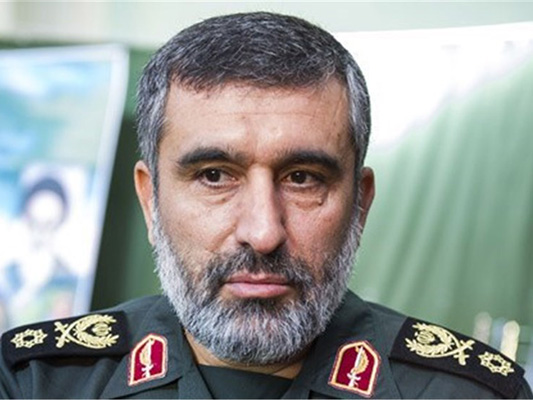
Iran has devised unique methods by combining its expertise in the drone industry with asymmetrical war tactics, IRGC Aerospace Force Commander Brigadier General Amir Ali Hajizadeh said on Saturday.

He made the comments on the sidelines of an exhibition of the IRGC’s advancements in the drone technology.

Highlighting Iran’s great capabilities, the general said even the US is trying to draw level with Iran in making stealth and bomber drones.

Among the products displayed at the exhibition was a new combat drone, dubbed Saeqeh (lightning), which can detonate four different targets with precision-guided bombs.

Saeqeh is the newest model of Simorgh-class UAVs, a homegrown sophisticated aircraft made by reverse engineering of American Lockheed Martin RQ-170 which Iran could capture in its airspace in December 2011.

Iran has now a broad range of UAVs which can be used for both civilian and military purposes.

Iran Comes Third at FIFA Futsal World Cup

iran-futsal-team

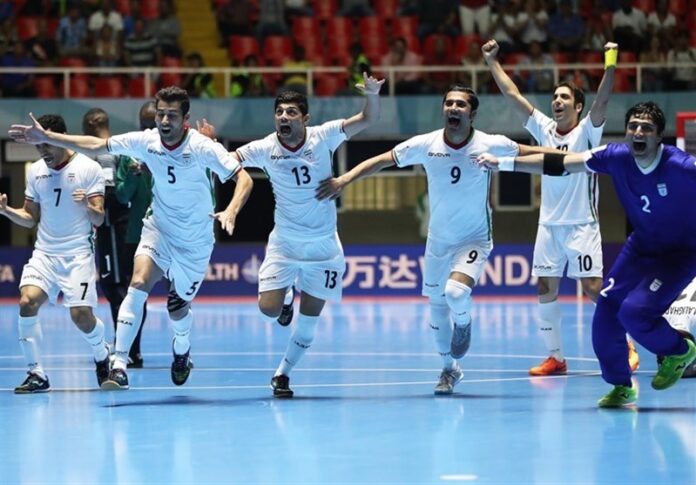
The Iranians came from two goals down to take the third-place match to a dramatic penalty shootout, where six rounds of spot kicks were needed to decide the contest.

Both sides created a good opportunity to open the scoring. Ahmad Esmaeilpour had Iran’s best chance, but his chip over Bebe also sailed over the crossbar. At the other end, Samimi did well to deny Cardinal at close range.

Cardinal scored a quick-fire brace within the first minute of the restart for Portugal.

It required six rounds of penalties to decide this encounter. Iran’s back-up goalkeeper Sepehr Mohammadi made a pair of big saves, but his team-mates twice hit the woodwork with their spot-kick efforts.

Then after Portugal’s Joao Matos hit the post with his sixth-round penalty, Mehdi Javid stepped up to convert his spot-kick and ensure Iran’s best-ever finish to a Futsal World Cup, surpassing its fourth-place accomplishment at Hong Kong 1992.

EU Urged to Stop Repeating Unusual Stances about Iran’s Judiciary

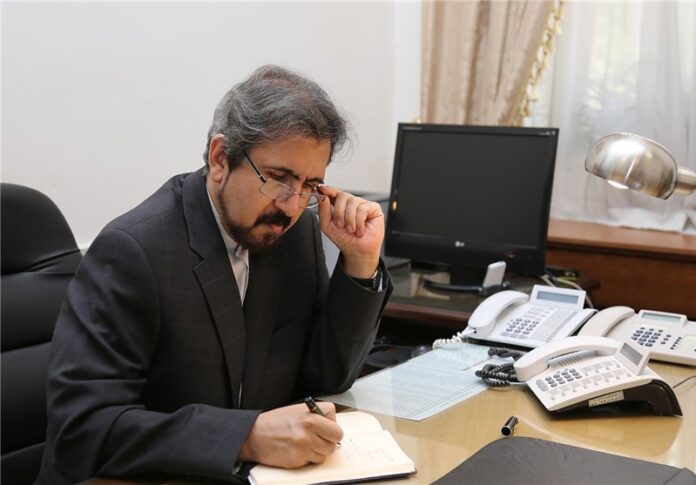
Iranian Foreign Ministry Spokesman Bahram Qassemi referred to a recent statement by the European Union’s External Action Spokesman on the prison sentence of an Iranian national, saying that the EU is required to gain a better understanding of judicial processes in Iran before repeating unusual comments.

He referred to the EU’s statement as an act of interference, and rejected the anti-Iran comments, as reported by Tasnim and translated by IFP.

“Since Iran and Europe are going to start their human rights talks in the near future, making such remarks is considered an unconstructive move,” Qassemi noted.

“Those who released the statement should know that the issue of human rights and its promotion cannot be realized through political statements, and it should not be used as a pretext for meddling in other countries’ internal affairs and making judgment about their actions.”

These affairs, he added, are entirely within the framework of the judiciary system’s responsibilities and authority.

“There is no doubt that any effort to force other communities – with different cultures, customs, and traditions – to accept the particular values of a country or region is an attempt to return to old paradigms in international relations,” Qassemi noted.

“Such claims, which are based on inaccurate assumptions and are made without awareness of the way the Judiciary deals with the issue, cannot be constructive.”

Qassemi urged the EU to gain a better understanding of Iran’s judicial procedures, and refrain from repeating unusual statements.

His remarks came after the European spokesperson announced in a statement that “the recent Court verdict confirming the prison sentence of Narges Mohammadi sends a worrying signal about the human rights situation in the country.”

“Freedom of expression and peaceful advocacy of human rights should be protected and not penalised. The EU reiterates its call on the Iranian authorities to respect its international human rights obligations,” the statement added.

China Is Banned from Buying Donkeys!

139507101317194418809554


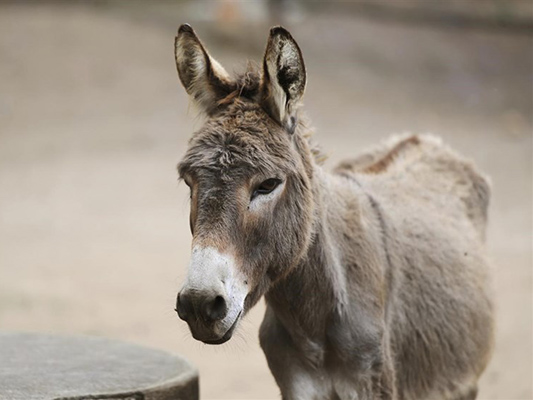
According to a report by CNN, as covered by Tasnim, Gelatin produced from donkey hide is a key ingredient of one of China’s favorite traditional remedies, known as ejiao, which is used to treat a range of ailments from colds to insomnia.

But as the rising power shifts towards advanced industry and away from traditional agriculture, donkeys are in decline. State statistics show the population has fallen from 11 million to six million over the last 20 years.

China is now increasingly looking to Africa to boost its stocks, and imports donkeys from countries across the continent. But flourishing trade has hit several roadblocks.


Donkeys Decimated

Niger recently became the latest African state to ban exports of donkeys, following a surge in sales to China.

Government officials reported that 80,000 animals had been sold in the year to date, compared with 27,000 in 2015, and warned that the donkey population would be “decimated” on current trends.

In August, Burkina Faso took the same step, after 45,000 donkeys were slaughtered in six months from a total population of 1.4 million.

In both cases, the value of donkeys soared and the fledgling industry delivered a valuable stream of foreign currency. But growth came at a cost.


Growing Pains

Beyond the severe damage to donkey populations, the new industry caused environmental and economic problems.

The spread of abattoirs generated a backlash. In the Burkinabe village of Balole, local farmers reportedly attacked and closed a slaughterhouse in protest at blood and offal leaking into their water supplies.

The donkey boom also attracted farmers from other livestock trades, which suffered as a result, and were also affected by inflation.

The exporting countries suffered from a lack of regulation, according to Eric Olander, co-founder of the China Africa Project and host of the China in Africa podcast.

Iran, Pakistan Hold Joint Naval Drill

iran-pakistan

The Iranian Navy’s 43rd flotilla docked at Karachi port on September 27.

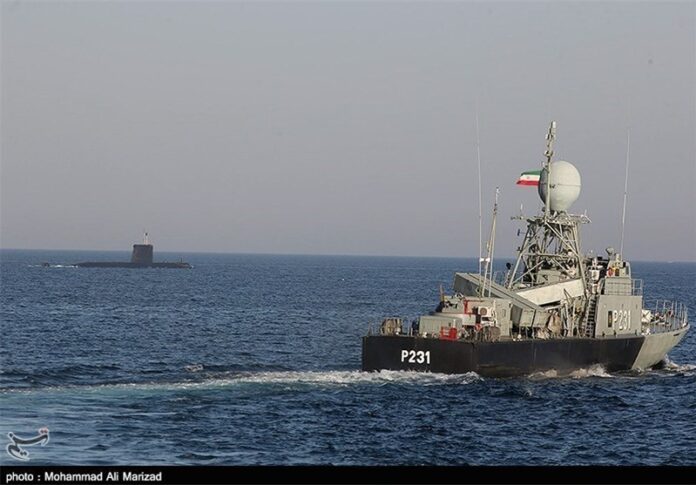
On Saturday, the Iranian flotilla held a joint drill with the Pakistani forces off the coasts of Karachi to practice naval rescue and relief operations.

Four vessels and a helicopter attended the drill on behalf of Iran, including Lavan logistic warship, Falakhan and Khanjar missile-launching vessels and Konarak warship.

Back in April, two warships of the Pakistani Navy docked at Iran’s southern port of Bandar Abbas for four days.

On the final day of their stay in Iran, the Pakistanis held joint naval exercises with Iranian naval forces.

Diplomat: Iran Favors Visa-Free Regime with Iraq

Qashqavi

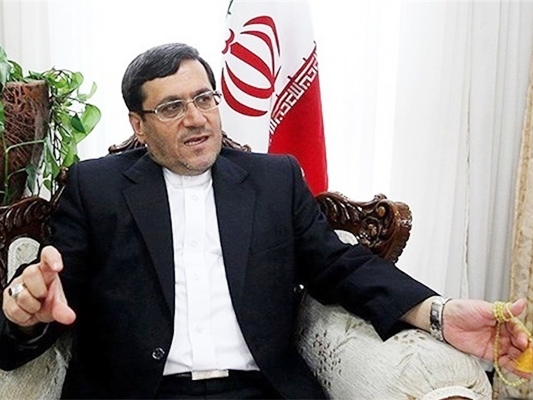
“I have announced in my latest consular trip (to Iraq) that we are willing to remove the visa requirements or take any measure reciprocally,” Iran’s Deputy Foreign Minister for Consular, Parliamentary and Expatriates’ Affairs Hassan Qashqavi told reporters on Saturday.

Iran will abolish visa requirements for Iraqi citizens once Iranian pilgrims are allowed entry into Iraq without having to pay any fee for a visa, he stated.

The deputy foreign minister then emphasized that all Iranian pilgrims planning to visit Iraq this year for the mourning rituals of Arbaeen will still need to apply for a visa, which costs $40.

Arbaeen marks the 40th day after the martyrdom anniversary of the grandson of Prophet Mohammad (PBUH), Imam Hussein (AS), the third Shiite imam.

Each year, millions of pilgrims, mainly from Iraq and Iran, travel long routes on foot to Karbala, where the holy shrine of Imam Hussein (AS) is located.

US Trying to Catch Up with Iran in Stealth, Bomber Drone Technology: Commander

ali-hajizadeh

Iran has devised unique methods by combining its expertise in the drone industry with asymmetrical war tactics, IRGC Aerospace Force Commander Brigadier General Amir Ali Hajizadeh said on Saturday.

He made the comments on the sidelines of an exhibition of the IRGC’s advancements in the drone technology.

Highlighting Iran’s great capabilities, the general said even the US is trying to draw level with Iran in making stealth and bomber drones.

Among the products displayed at the exhibition was a new combat drone, dubbed Saeqeh (lightning), which can detonate four different targets with precision-guided bombs.

Saeqeh is the newest model of Simorgh-class UAVs, a homegrown sophisticated aircraft made by reverse engineering of American Lockheed Martin RQ-170 which Iran could capture in its airspace in December 2011.

Iran has now a broad range of UAVs which can be used for both civilian and military purposes.