Monday, December 22, 2025
Home Blog Page 43

Five killed as Israel pounds Beirut despite ceasefire

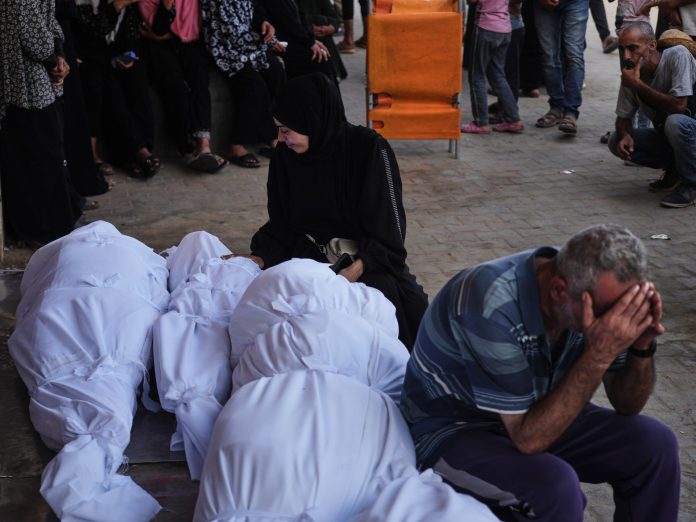
Sunday’s strike on an apartment block in the Hezbollah stronghold of Dahiyeh took place despite a ceasefire that came into effect a year ago to end hostilities that had erupted into a full-blown war.

Israeli Prime Minister Benjamin Netanyahu’s office claimed Hezbollah’s chief of staff Haytham Ali Tabatabai was the target. Israeli media reported it was the military’s third attempt to kill him since last year’s war.

Hezbollah confirmed an Israeli strike on Beirut’s southern suburbs on Sunday targeted a senior commander but did not disclose the person’s identity.

Lebanon’s official National News Agency (NNA) reported that two missiles were fired at the apartment building on al-Arid Street in Haret Hreik neighbourhood of Dahiyeh, and significant damage was inflicted on cars and surrounding buildings.

Ambulances arrived immediately at the scene and transported the injured to nearby hospitals, it said. A large plume of smoke could be seen in the busy neighbourhood, according to the local media.

One video widely circulated on social media showed dozens of people crowded around the area of the strike.

Lebanese President Joseph Aoun called on the international community to intervene firmly to stop the Israeli raids on the country.

In a statement on Sunday, Aoun said Lebanon “reiterates its call to the international community to assume its responsibility and intervene firmly and seriously to stop the attacks on Lebanon and its people”.

Israel assassinated longtime leader Seyyed Hassan Nasrallah in an air attack on southern Beirut just over a year ago.

Israel has been carrying out near-daily strikes on southern Lebanon and has also attacked Beirut several times, but the capital had not been hit in the past several months.


Israel faces ‘mental health tsunami’ after two years of war: Report

Israeli Army

In an extensive report, the news outlet said mental health professionals have raised the alarm over a sharp increase in people requiring support since 7 October 2023.

Meanwhile, there is a severe shortage of therapists and support services, which experts warn could have catastrophic consequences.

Last week, a coalition of eight major mental health organisations issued an urgent warning to the government, describing Israel’s situation as an “outbreak of mental illness unprecedented in its depth and scope”.

The groups called the crisis “catastrophic” and demanded immediate government intervention.

According to the coalition, Israeli society is showing clear signs of widespread psychological distress.

The long period of conflict and trauma has left many people struggling with depression, anxiety, intrusive thoughts and exhaustion.

Families and communities are being severely affected, and the groups warn that the crisis has not yet peaked.

They warn of “deep and prolonged collective trauma” and a growing breakdown in the public’s sense of safety and trust, likely to affect future generations.

“The psychological state and wellbeing of Israeli society are at a low point we have never seen before,” the coalition announced.

Data reported by Yedioth Ahronoth show a sharp increase in mental health problems nationwide.

Diagnoses of depression and anxiety in 2024 were double those recorded in 2013. PTSD diagnoses rose by 70 percent each month from October 2023 to the end of 2024, adding 23,600 new patients.

Nearly half of Israelis now report symptoms of persistent grief. Calls to mental health helplines have increased sixfold, while use of psychiatric medications has doubled. Sleep disorders rose by 19 percent during the war.

A study by Clalit Health Services and the Myers-JDC-Brookdale Institute found that 50 percent of those affected by the 7 October attacks are still struggling today. One in five people in the general population suffers severe functional impairment due to mental health issues.

Israeli Ministry of Health data show a 25 percent increase in therapy sessions since 7 October.

Short-term psychotherapy cases jumped 471 percent, reaching 20,000 in 2024 compared to 3,500 in 2022.

However, these numbers reflect only treatments provided. Coalition organisations say the real situation is far more severe.

Professor Merav Roth of the University of Haifa said clinics report sharp rises in depression, anxiety, addiction, marital problems and regressive behaviour among children.

One in four people is now at risk of addiction, Roth said. In 2018, it was one in ten.

“This increase is terrifying.”

Dr Marina Kupchik, head of the Israeli Psychiatric Association, warned that urgent investment in rehabilitation is needed.

“If we do not invest in the psychological rehabilitation of the country, we will pay a higher price in two or three years – in lost workdays, in family and community stability and in occupational functioning,” Kupchik added.

The Ministry of Health has announced a national rescue plan that includes doubling the number of psychologists, improving salaries, upgrading psychiatric wards and expanding home-based and community services.

The plan is estimated to cost 1.7bn shekels ($517m).

Senior clinicians stress that reforms must be extensive.

Yoram Shliar, educational psychologist and chair of the Israel Psychologists Association, criticised reliance on trainee “mental-health assistants” with only three months of training, compared to eight years for fully qualified clinicians.

Dr Ilana Lach said the system is overwhelmed.

“You cannot put a bandage on a bleeding wound,” she continued, adding, “The mental health system must be rebuilt from the ground up.”


Iran warns of sharp rise in influenza cases, urges public to curb transmission

COVID in Iran

According to the Ministry, all age groups are affected, but children and adolescents account for the highest share of infections.

High fever has been the most common reason for pediatric hospital visits, and in a small number of cases where fever remains uncontrolled, febrile seizures have been observed.

Despite increased transmission, the Ministry emphasized that most cases recorded so far have been mild, and no deaths have been reported among children without underlying conditions.

The pattern of infections in Iran mirrors recent reports from several Southeast Asian countries—including Japan, China and Indonesia—as well as parts of Europe such as the United Kingdom.

In the current wave, influenza A and the H3N2 subtype account for the majority of cases.

Citing international findings, the Ministry noted that while vaccine effectiveness against the circulating subtype may be relatively reduced, influenza vaccines continue to provide strong protection against severe illness and hospitalization.

A thousand shades of autumn in Sheet Village, Iran’s Tarom

From cold mountain slopes to warm, fertile plains, this geographical variety has shaped a region so vibrant that it is often called the “India of Iran”, a reference both to its abundant agricultural output and to its rich palette of colors and life.

Among Tarom’s most picturesque settings is the village of Sheet, a foothill settlement wrapped in dense vegetation and dramatic natural contours.

Each autumn, the village transforms into a living canvas of color, where leaves shift through countless shades and the landscape glows with seasonal light.

The photo collection presented here captures the essence of this transformation.

Houthi court sentences 17 people to death accused of spying for Israel, West

Yemen Houthi

The Specialized Criminal Court in the capital Sanaa handed down the sentences on Saturday in the cases of “espionage cells within a spy network affiliated with American, Israeli, and Saudi intelligence”, according to Houthi-run media.

The court sentenced the 17 men to execution “to be carried out in a public place as a deterrent”, Saba and other outlets reported also publishing a list of names.

A woman and a man were sentenced to 10 years in prison, while another man was acquitted of all charges, bringing the total number of people put on trial in this case to 20.

Houthi-run media added state prosecutors had charged the defendants, who can theoretically appeal the sentences, with “espionage for foreign countries hostile to Yemen” in 2024 and 2025, which also included the United Kingdom.

Israel’s Mossad spying agency reportedly “directed” intelligence officers who were in contact with the accused Yemeni citizens, whose work allegedly “led to the targeting of several military, security, and civilian sites and resulting in the killing of dozens and the destruction of extensive infrastructure”.

The United States and the UK conducted dozens of deadly joint air strikes across Yemen after the start of Israel’s genocidal war on Gaza in October 2023, as the Houthis launched attacks on Israel and international maritime transit through the Red Sea in a stated attempt to support Palestinians under fire.

The Houthis have stopped their attacks since last month’s Gaza ceasefire deal.

Israel has also unleashed huge air attacks on Yemen and its infrastructure, repeatedly hitting fuel tanks, power stations and a critical port city where desperately needed humanitarian aid flows through, killing political leaders and dozens of civilians.

In August, the Houthis confirmed that an Israeli air raid killed the prime minister of their government in Sanaa.

Ahmed al-Rahawi was killed with “several” other ministers, the Houthis said in a statement at the time.

Houthi authorities, who control Sanaa and parts of Yemen to the north after an armed takeover more than a decade ago, made no mention of any links with the United Nations or other international agencies in the cases announced Saturday.

But they have, over the past year, increasingly raided UN and NGO offices, detaining dozens of mostly local but also international staff and confiscating equipment.

Amid condemnation and calls for the release of staff by the UN and international stakeholders, the Houthis have framed the efforts as necessary to stave off Israeli operations.


EU seeking to rewrite US’ Ukraine peace plan: Bloomberg

The US presented Ukraine with its new framework for ending the conflict against Russia this week and is now pressing Kiev to accept it by Thursday.

The 28-point plan includes various provisions which have long been opposed by Kiev and its Western European backers. Ukraine would have to withdraw its forces from the parts of the Donbass region it still controls, downsize its military, and give up its NATO aspirations.

The EU nations are currently trying to “buy Ukraine more time” and postpone the US-outlined deadline, according to Bloomberg. The approach taken by Kiev’s Western European backers essentially amounts to trying to rewrite much of the proposed document while concealing the changes as “constructive updates,” sources familiar with the matter told the outlet.

Washington, however, has signaled it was not ready to drastically amend the peace plan it had drafted. Ukraine’s President Volodymyr Zelensky on Friday stated the country was facing “one of the most difficult moments in our history,” facing a choice between accepting “28 difficult points” or risking losing its “key partner.” According to media reports, Washington has already threatened to cut Kiev off from military aid and intelligence sharing should the plan end up rejected.

Asked about Zelensky’s take on the situation, Trump said the Ukrainian leader “is going to have to accept something.” Ukraine now faces “a cold winter,” while its energy infrastructure sites “have been under attack, to put it mildly,” he pointed out.

“He will have to like it, and if he does not like it, then, you know, they should just keep fighting, I guess,” the US president added.

Russian President Vladimir Putin has confirmed that Moscow has received the American plan, adding that the proposal has not yet been discussed “in detail.” The draft proposal could become “the basis of a final peace settlement,” he stated.


Elections in Ukraine needed: US

“There is this point in the plan, I think is important too, that there’s going to be elections. It says in the plan quite clearly that Ukraine needs to have elections within 100 days. You can probably get there in about 90 days, based on the people I’ve talked to, but it’ll be an interesting process. I think they need to have them that will reassure the people, reassure the free world as well, but that’s one of the stipulations within the plan,” the special envoy said.

The US may push Ukraine to territorial concessions in exchange for security guarantees, Kellogg added.

A new poll has suggested that Ukraine’s President Volodymyr Zelensky would be defeated in a presidential vote by military intelligence chief Kirill Budanov as well as former armed forces commander-in-chief Valery Zaluzhny.

Zelensky has repeatedly ruled out holding elections in the country, citing martial law imposed due to the conflict with Russia.

According to the survey, conducted by the Kiev-based pollster RATE1 among 1,200 respondents in early October, Zelensky’s political viability continues to wane.

In a scenario pitting Zelensky directly against Budanov, 33% of respondents favored the military intelligence chief as opposed to 32.5% for Zelensky.

In a head-to-head between Zelensky and Zaluzhny, 42.6% of voters said they would back the retired general, who is now serving as Ukraine’s ambassador to the UK, while only 26.3% would support the incumbent leader. A direct race between Zaluzhny and Budanov would give the former a decisive lead, with 44.5% to 22%.

In a broader first-round scenario featuring multiple candidates, Zelensky would still lead among decided voters but with less than one-third of total support, the survey indicated.

Zelensky’s presidential term expired last year, but he remains in power under martial law.

The Ukrainian Constitution mandates that presidential authority should transfer to the parliamentary speaker under such circumstances. Russia has announced Zelensky is illegitimate.

Earlier this year, US President Donald Trump called the Ukrainian leader a “dictator without elections”. Speculation in the media suggests that Zelensky’s team is quietly preparing for a potential return to the polls, even though he has suggested he would not seek reelection once the conflict with Russia is over.

Neither Zaluzhny nor Budanov has officially declared political ambitions, maintaining that the conflict with Russia must first be resolved.


Iranian president says BRICS, SCO, EAEU opening major economic opportunities for Tehran

Speaking at an annual conference on Iranian capital market, titled “Resilience, Innovation, Growth,” Pezeshkian referred to Iran’s active presence in BRICS, the SCO, and the EAEU, saying these diplomatic engagements have led to the strengthening of constructive relations with the neighboring countries.

He noted that this process is being reinforced day by day so that Iran can facilitate economic activity and support investors’ work.

A large market is taking shape thanks to diplomatic interactions, and Iran is inviting figures from other countries so that Iranian traders and economic actors can play a targeted role in the country’s economic growth and development, the president said at the conference, held in Tehran on Saturday.

Pezeshkian also emphasized that the administration must take effective steps to facilitate commercial and economic activities, saying the officials are working to improve efficiency and prevent budget deficits.

The president also stressed the need for alignment between government revenue and budget allocations and said that with ongoing economic meetings this year, the cabinet aims to bring spending under control.


Vance claims Ukrainian victory over Russia a ‘fantasy’

On Friday, former Senate Republican leader Mitch McConnell claimed on X that the proposal, which the administration of US President Donald Trump submitted to both Moscow and Kiev earlier this week, was a “capitulation” and “disastrous” to American interests.

Senator Jeanne Shaheen, the most senior Democrat on the Senate Committee on Foreign Relations, told CNN that “this is a [Russian President Vladimir] Putin plan for Ukraine,” insisting that the White House should instead ramp up secondary sanctions against Russia’s trading partners and supply Ukraine with long-range weapons.

Vance wrote in a post on X on Saturday that “every criticism of the peace framework the administration is working on either misunderstands the framework or misstates some critical reality on the ground.”

“There is a fantasy that if we just give more money, more weapons, or more sanctions, victory is at hand,” he wrote.

According to the vice president, peace between Moscow and Kiev could be achieved by “smart people living in the real world,” but not by “failed diplomats or politicians living in a fantasy land.”

The US plan has not been officially disclosed, but media reports have claimed that, among other things, it calls upon Kiev to withdraw troops from the parts of Russia’s Donbass it still controls, downsize its military, and give up on NATO aspirations in exchange for Western security guarantees.

Ukraine’s President Volodymyr Zelensky claimed on Friday that his country is now forced to choose between accepting the “28 difficult points” in the proposal or the risk of losing its key backer, the US.

Trump insisted later that the Ukrainian leader “will have to like” the US plan or face the prospect of fighting Russia through the “cold winter.” According to Financial Times, Washington has issued an ultimatum to Kiev to accept its roadmap by Thursday.

Russian President Vladimir Putin has said that the US plan has not yet been discussed “in detail,” but suggested that it could eventually “form the basis of a final peace settlement.”


No talks with US as long as Washington maintains current attitude: Iran

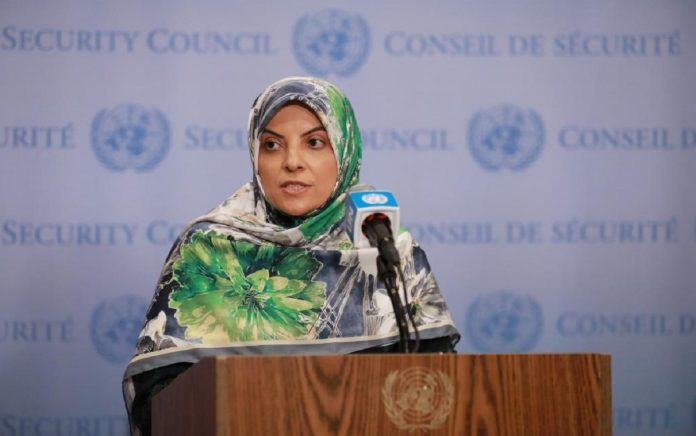
Speaking at his weekly press briefing on Sunday, Baqaei said Washington’s notion of negotiations is driven less by conventional diplomatic give-and-take and more by an attitude of dictation — a stance that makes any talks impossible.

Referring to the continued crimes of the Israeli regime, he said recent reports about the use of banned weapons, including cluster bombs, by Israel in Southern Lebanon demonstrate that the regime recognizes no limits in violating international law.

He added that if Israel’s crimes and its aggressive policies in the region are not contained, their consequences will inevitably spill over into other parts of the world.

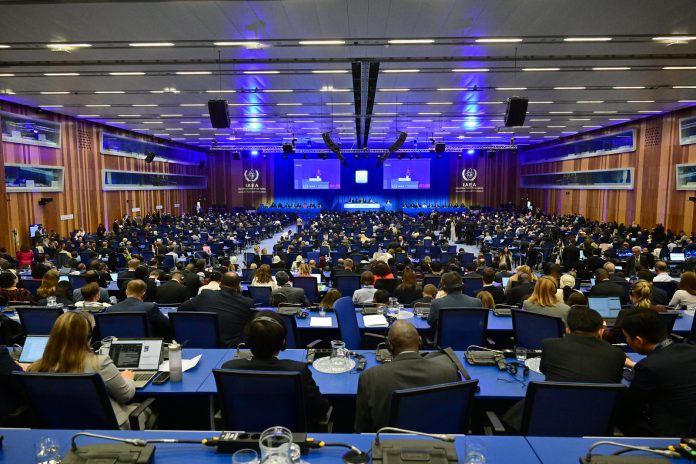
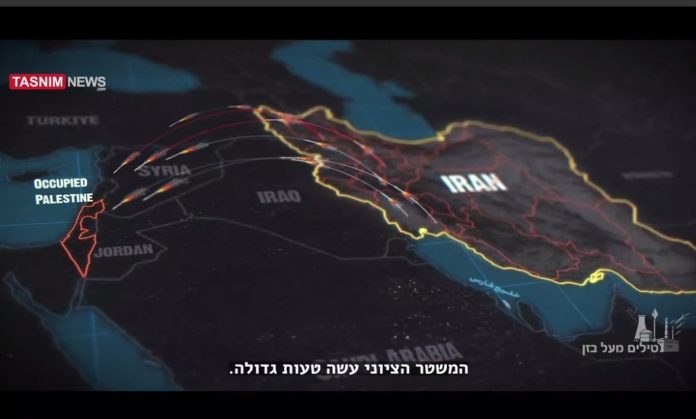
Regarding Iran’s relations with the International Atomic Energy Agency, Baqaei said: “After three rounds of talks, we reached an understanding with the Agency, and the framework for cooperation following the Israeli–US attack had been clearly defined.

Baqaei said unfortunately, the three European countries – Britain, France, and Germany- under US pressure, deprived the Agency of this opportunity. Their actions at the UN Security Council and the United Nations — along with their recent move at the IAEA — disrupted this process.