Monday, April 27, 2026
Home Blog Page 4269

Obama Doubts Trump Will Scrap Iran Deal

barack-obama

Republican Trump, who became US president-elect after defeating his Democratic rival Hillary Clinton in the election last week, had repeatedly promised in his campaign that he would scrap the deal struck between Tehran and the P5+1 – the US, Britain, France, China, Russia and Germany – in July 2015.

The deal, known as the Joint Comprehensive Plan of Action (JCPOA), went into effect on January 16, and resolved a long-running Western dispute over the Iranian nuclear program.

Obama said on Monday that after the deal was reached, there was an argument that Iran might not comply with the agreement, but so far it has been proven otherwise.

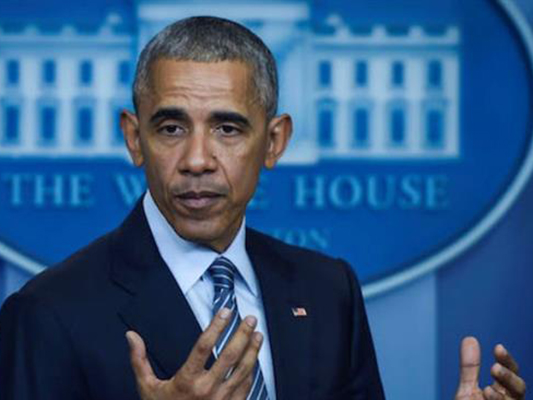
“The main argument against it was that Iran wouldn’t abide by the deal, (but) we now have over a year of evidence that they have abided by the deal,” Obama said at a White House news conference.

“My suspicion is that when the president-elect comes in and is consulting with his fellow Republicans on the Hill, that they will look at the facts,” he said. “To unravel a deal that’s working and preventing Iran from pursuing a nuclear weapon would be hard to explain.”

It is harder to undo “something that is working,” the outgoing president said, noting that “when you’re not responsible for it, I think you can call it a terrible deal…(but) when you are then responsible for the deal and preventing Iran from getting a nuclear weapon, you are more likely to look at the facts.”

On Wednesday, the Iranian ambassador to the International Atomic Energy Agency (IAEA) said the UN agency’s latest report once again confirms Iran’s full commitment to the agreement.

Reza Najafi made the remarks following a report by IAEA Director General Yukiya Amano (pictured below) on Iran’s compliance with the JCPOA.

Obama Doubts Trump Will Scrap Iran Deal

Amano’s report, which was sent to the IAEA Board of Governors and the United Nations Security Council, also noted that Iran had informed the IAEA of its plan to transfer five metric tons of heavy water out of the country.

Under the JCPOA, Tehran agreed to roll back certain aspects of its nuclear program — including the volume of its uranium stockpiles enriched to the 20-percent level — and provided international atomic monitors enhanced access to its nuclear facilities. In return, Iran’s partners agreed to terminate all nuclear-related sanctions.
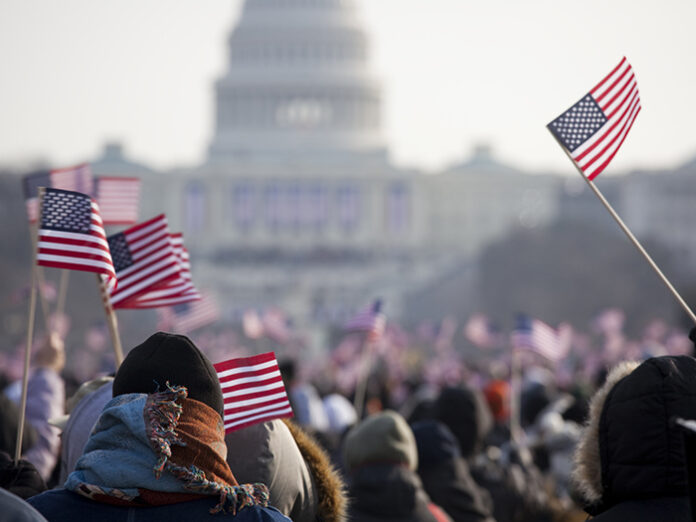
Result of US Elections Was a Big No to American Establishment: Iran’s Judiciary Chief

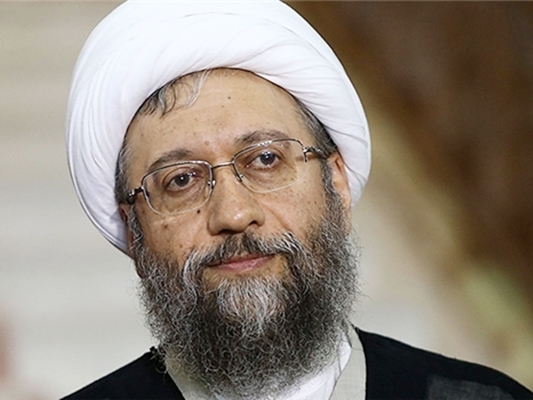
According to a report by IRNA, as translated by IFP, Iranian Judiciary Chief Ayatollah Sadeq Amoli Larijani said the result of recent US elections and the election of Donald Trump was a big shock to the US society and Western countries.

Amoli Larijani“The results were surprising,” he said, adding that American people voted for a man who described the US ruling system as a corrupt one.
Therefore, he added, “the results of US elections were a big no to the American Establishment and its policies.”

Meanwhile, he warned that the US President- Donald Trump’s insistence on the comments he made in his election campaign would inflict a crisis upon the world, including the US itself.

If Trump intends to press on with what he announced before the US presidential election, the world and the US itself will face a crisis, Ayatollah Amoli Larijani said at a meeting of high-ranking judiciary officials in Tehran on Monday.

As regards Trump’s threats to scrap the Joint Comprehensive Plan of Action (JCPOA), a nuclear agreement between Tehran and the Group 5+1 (Russia, China, the US, Britain, France and Germany), Ayatollah Amoli Larijani made it clear that lack of commitment to the deal by the other parties would not have any significant impact on Iran and the country will not face any challenge because the accord has not basically been in favour of Iran.

He also underscored that Iran will continue to carry out its independent policies by relying on the local forces, stressing that election of different people as heads of foreign states will not influence Iran’s conduct.

In March, during a speech to the pro-Israel lobby group AIPAC, Trump, who won a stunning victory in the US presidential election on November 8, said his “number-one priority” would be to “dismantle the disastrous deal with Iran.”

In August 2015, he said he would not “rip up” the nuclear deal, but that he would “police that contract so tough they (Iran) don’t have a chance.”

While many consider the JCPOA a major breakthrough in the improvement of ties between Iran and the West, Leader of the Islamic Revolution Ayatollah Seyyed Ali Khamenei has made it clear that Tehran’s policy toward the US will remain unchanged regardless of the nuclear deal, Tasnim reported.

The accord took effect in January and was supposed to terminate all nuclear-related sanctions against Iran all at once, but its implementation has been hampered mainly due to US policies.

Iranian Adviser Hopes for ‘Noticeable Shift’ in US Policy under Trump

“We hope that the US president-elect would demonstrate a tangible shift on Iran and the region so that the roots of insecurity would be removed from the region,” Major General Yahya Rahim Safavi told reporters in Tehran on Monday.

It is still too early to comment on Trump’s policies, he added, saying experience shows that candidates, everywhere in the world, usually change their approaches when they take the office.

A shift in Trump’s policies is also likely, the general stated.

He also expressed the hope that the next US president’s term would mark the pull-out of American forces from Afghanistan and the region.

Iran Defence might Not Open to Talks, Compromise: Qassemi

qadr-ballistic-missile

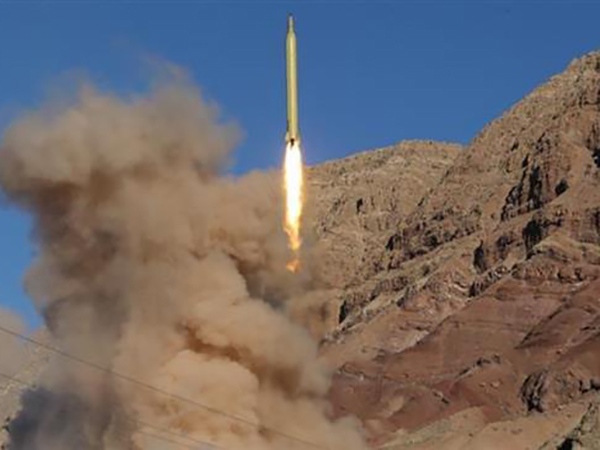
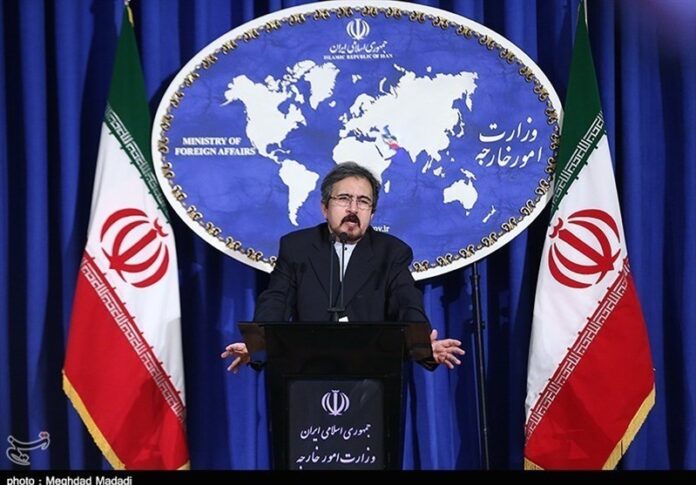
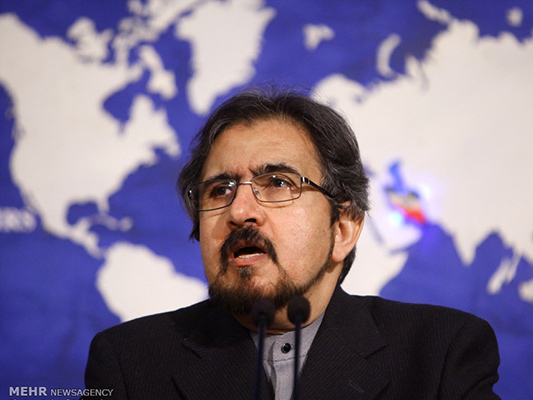
“Iran’s missile tests are carried out within the framework of the country’s defence policies and Iran’s defence capabilities are not open to negotiation or compromise at all,” Bahram Qassemi said on Monday in reaction to a statement issued by the European Union’s foreign ministers in Brussels on Monday.

In their statement, the EU foreign ministers expressed concern over Iran’s missile program and called upon the Islamic Republic to refrain from activities “which may deepen mistrust, such as ballistic missile tests, which they say are inconsistent with” the Security Council Resolution 2231 and the associated statements.

Iran has repeatedly announced that its missile launches are not against the UN Security Council Resolution 2231 that endorsed a nuclear agreement, known as the Joint Comprehensive Plan of Action (JCPOA), reached between Iran and the five permanent members of the UN Security Council plus Germany on July 14, 2015.

Under the JCPOA, which took effect in January, Iran undertook to put limitations on its nuclear program in exchange for the removal of nuclear-related bans imposed against Tehran.

Resolution 2231 (2015) provides for the termination of the provisions of previous Security Council resolutions on the Iranian nuclear program, and calls on Iran not to undertake any activity related to ballistic missiles designed to be capable of delivering nuclear weapons, including launches using such ballistic missile technology.

Elsewhere, Qassemi welcomed EU’s keenness to further expand relations with Iran and the bloc’s reaffirmation of its commitment to the JCPOA but called for the complete removal of banking restrictions.

The EU statement had said it would keep pushing to restore ties with Iran in line with the JCPOA, adding, “The European Union reiterates its resolute commitment to the Joint Comprehensive Plan of Action.”

“The European Union reiterates the need for continued full and effective implementation of the JCPOA throughout the lifetime of the agreement,” the bloc’s foreign ministers said.

“The European Union is committed to support the full and effective implementation of the JCPOA including by the lifting of nuclear related economic and financial sanctions and engaging with the private sector and economic operators, especially banks, to promote growth in trade and investment.”

Also in his comments, Qassemi said the EU should take “practical measures” to advance the processes of Iran joining the World Trade Organization.

He also dismissed allegations leveled by the EU over the human rights situation in Iran and expressed the country’s readiness to hold mutual talks on the issue in a peaceful atmosphere.

The spokesman said Iran has always played a decisive role in establishing stability and security in the region and made great efforts to solve the existing crises in the Middle East through peaceful and political approaches.

Iran Condemns Terrorist Attack in Iraq’s Karbala Province

Bahram Ghasemi

Foreign Ministry Spokesman Bahram Qassemi expressed condolences to the Iraqi government and nation and the families of victims of the attack in Ain al-Tamur District, which is 50 kilometers (30 miles) from the holy city of Karbala, a major pilgrimage destination for Shiite Muslims.

The new assault by Takfiri terrorists against defenseless civilians marks yet another shameful act in the dark record of terrorists in the region, he deplored.

Qassemi further reiterated Iran’s support for Iraq in the fight against terrorism.

Monday’s attack in Ain al-Tamur involved six suicide bombers, some of whom were killed by Iraqi security forces before taking the time to blow themselves up.

Masum al-Tamimi, a member of the Karbala provincial council, said that six suicide bombers armed with light weapons as well as explosives tried to infiltrate Ain al-Tamur early on Monday, but they clashed with security forces before withdrawing to the al-Jihad area and detonating explosives there.

The official put the death toll at eight, a figure confirmed by a doctor.

Iraq’s Interior Ministry issued a statement on the attack, saying five of the bombers were killed by security forces while the sixth detonated explosives inside a house.

There was no immediate claim of responsibility for the attack, but the Daesh (ISIL) terrorist group frequently carries out such suicide bombings in Iraq.

The attack came as hundreds of thousands of Shiite Muslims walk to Karbala in commemoration of Imam Hussein (AS), the grandson of Prophet Mohammed (PBUH).

Each year, millions of Muslims flock to Karbala to mark Arbaeen, which comes 40 days after Ashura, the martyrdom anniversary of Imam Hussein.

This year, Arbaeen falls on November 20.

Iran, Russia to Continue Cooperating until Terrorism Elimination: Rouhani

Rouhani

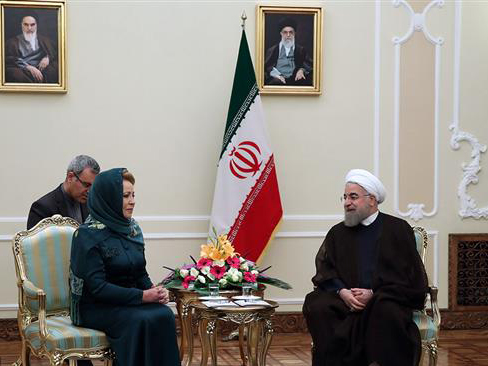
“There is strategic cooperation between Iran and Russia to fight terrorism and such cooperation will continue until the eradication of terrorism in the region,” Rouhani said in a meeting with Russia’s Federation Council Chairperson Valentina Ivanovna Matvienko in Tehran on Monday.

Elsewhere in his remarks, the Iranian president said Russia is an important friend and neighbor of the Islamic Republic and added that the two countries have common interests in the region and the world.

“The Islamic Republic of Iran’s resolve is to expand relations with the Russian Federation in all fields,” Rouhani stated.

He urged Tehran and Moscow to make use of the opportunities created after the implementation of last year’s nuclear agreement, known as the Joint Comprehensive Plan of Action (JCPOA), signed by Iran and the P5+1 group of countries to improve ties in economic, cultural, scientific and technological fields.

He said developing banking and economic cooperation, facilitation of customs-related issues and visa issuance process can speed up trade ties between the two countries.

‘Iran, Russia Share Stance on Terror Fight’

The chairperson of Russia’s Federation Council, for her part, said Tehran and Moscow have a common stance on the fight against terrorism.

She added that Russia calls for the expansion of all-out cooperation with Iran and noted that the JCPOA opened new horizons for cooperation between Tehran and Moscow, particularly in energy and nuclear fields.

Heading a high-ranking political and economic delegation, Matvienko arrived in Tehran on Sunday for an official two-day visit. She attended a joint press conference and held a meeting with Iranian Parliament Speaker Ali Larijani on Sunday and also sat down with Foreign Minister Mohammad Javad Zarif on Monday.

Iran, Russia to Continue Cooperating until Terrorism Elimination: Rouhani

Matvienko’s visit to Tehran comes after Russian President Vladimir Putin traveled to Iran on November 23, 2015 and held separate meetings with Leader of the Islamic Revolution Ayatollah Seyyed Ali Khamenei and President Rouhani. Putin also participated in the third summit of the Gas Exporting Countries Forum (GECF) in Tehran.

Women in Mosul Set Fire on Black Clothes ISIS Forced Them to Wear

Mosul Women

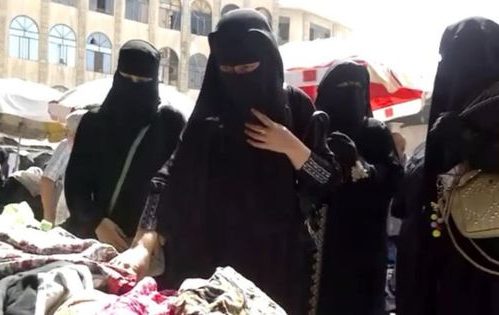
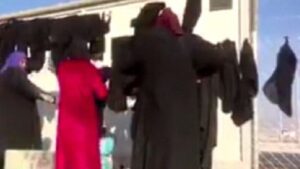
According to a report by ISNA, as translated by IFP, tens of women in Mosul, which is being retaken from ISIS by the Iraqi army, have taken off the black clothes they had to wear under the rule of terrorists.

Mosul WomenAfter setting fire on the black dresses, they are now wearing the very Islamic dresses they used to wear before the ISIS occupation of Mosul in June 2014.
They expressed their joy over the escape of ISIS elements from the liberated regions. They shouted out of happiness in these areas.

Iraqi army and popular forces, backed by the US-led coalition, are recapturing the city that has been in ISIS’ hands since two years ago.

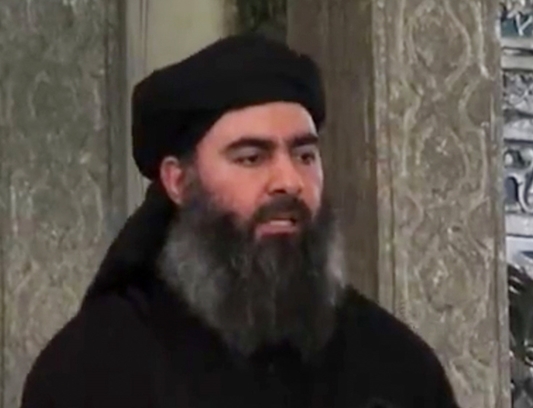
ISIS Leader al-Baghdadi Hiding Somewhere in Iraq

ISIS Leader scaped

“The terrorist, Abu Bakr al-Baghdadi, is in a region between the town of Tal Afar (some 54km North-West of Mosul) and the town of al-Baaj (157km to the South-West of Mosul),” al-Assadi was quoted as saying by Iraq’s al-Ma’louma news agency on Monday.

He also said that the operations of the volunteer forces cover an area 14,000 sq/km around Mosul that includes the towns of al-Hazar, al-Baaj and its surrounding regions towards Tal Afar, as reported by Fars.

Based on an agreement made earlier, the Iraqi popular forces and Peshmarga Kurdish troops will not be part of the invading forces inside the two cities of Tal Afar and Mosul, while they will help tighten and maintain the siege on the rims of the two cities.

Various units of Iraq’s armed forces, including the army, police and anti-terrorism troops, lead the assault.

Iran Pursuing Release of Sailors Abducted by Somalian Pirates

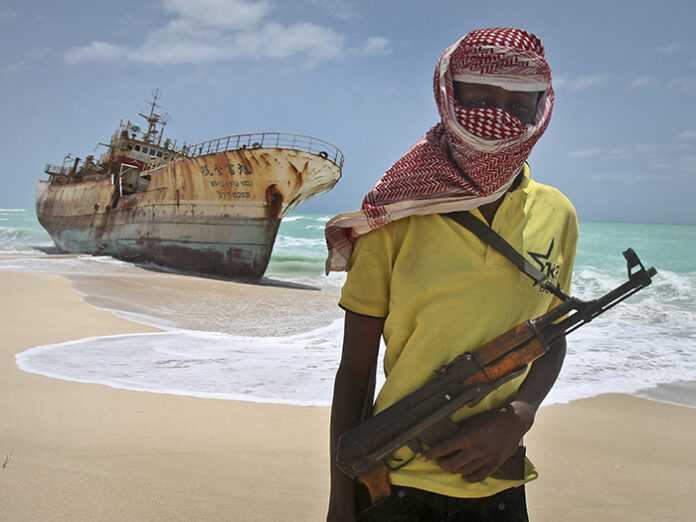
somali pirates

Here is IFP`s translation of a report by Mizan about the moves made to free the Iranian fishermen who have been held captive by Somalian pirates for the past 18 months:

Crew members of Ebrahim Forouzanfar`s fishing vessel left for high seas in February 2015. They knew that it was possible to encounter pirates; however, thanks to the operations carried out by Islamic Revolution Guards Corps (IRGC) and the Iranian Army, pirates didn’t dare to show up as they did before. 21 people were in Forouzanfar`s fishing vessel: the crew, sailors and fishers. Jamalodin Ahwazi and his nephew, Ebrahim Balouchnia, were two of them.

They were returning to Iran after two months of fishing when a group of pirates attacked them. The crew and the captain tried to make the pirates understand that they were running out of fuel, and they had to embark in Chabahar port as soon as possible, just to face the inadvertence of pirates and running out of fuel.

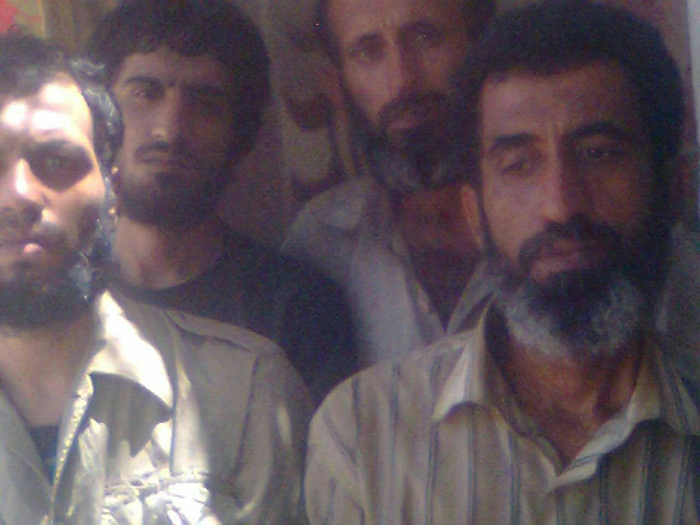
Iranian abducted sailorsOn March 26, 2014 the pirates took hostage 21 crew members along with some valuable properties in the vessel to reach their goals by extortion.
“The last time I talked to my husband was on last Eid al-Fitr. He told me that three crew member had already died, and four people had escaped. The pirates now demand $150,000 to release him and other three people.” said one sailor`s wife.

It is impossible to be physically present in Somalia to pursue the fate of hostages, Hassan Qashqavi, Deputy Foreign Minister of Consular Affairs, said.

“After the 2016 attack on Embassy of Saudi Arabia in Iran, Somalia cut of its diplomatic ties with Tehran, so we have no embassy, consulate or Interest Section office in that country to handle the Iranian hostages’ affairs; however, Iran`s Foreign Ministry will do what is possible to release the abducted Iranians,” Qashqavi added.

“We cannot file a lawsuit against the pirates in courts and international organisations, as they are not attached to any country,” stated Abolfazl Hassanbeigi, Vice-Chairman of Iranian Parliament’s National Security and Foreign Policy Commission.

“Apparently, they are not supported by any country. If they can’t rob, they abduct people and demand money,” he added.

According to Hassanbeigi, some countries` opposition to payment of a large amount of money is a negative point.

“Everyone agrees to pay a reasonable amount, but some, including European countries, believe that if Iran pays a large sum, the pirates will treat other hostages in the same way. So Iran is unable to prepare and pay the money demanded by pirates,” he went on to say.

“It is how the world usually treats Iran; therefore, we should engage our Armed Forces to find the hostages and release them,” he suggested.

The issue of kidnapped sailors has been the centre of attention since their abduction 18 months ago. Social activists have recently started the campaign of “Free Iranian Sailors” in the social media, and many people in Twitter and Instagram have posted the hashtag to raise public awareness about the issue.

Iranian MP Criticizes Foreign Ministry’s Inaction over Abduction of Sailors

A member of Iranian Parliament’s National Security and Foreign Policy Commission has blasted the Iranian government`s inaction toward the sailors’ hostage.

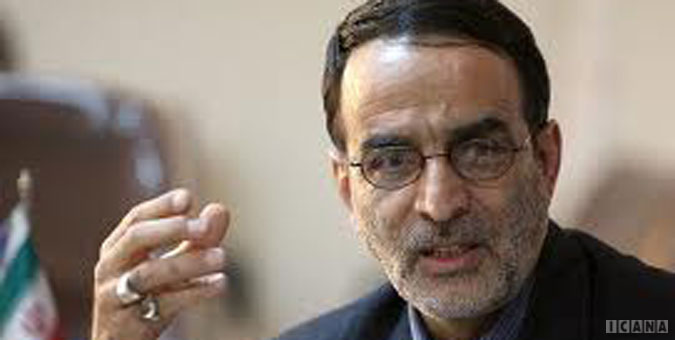
Javad Karimi QoddousiIn an interview with ICANA, Javad Karimi Qoddousi announced that he will summon Iranian Foreign Minister Mohammad Javad Zarif to the Parliament and ask him about the issue.

“My question from Zarif is about the Ministry of Foreign Affair`s action towards the situation of kidnapped sailors, and it will be presented to Parliament`s Board of Directors on November 14.”

“Certainly, the issue of Somalian pirates kidnapping 21 Iranian sailors is a sensitive subject, and inevitably, all Iranian bodies should investigate the case.”

He went on to say, “Unfortunately, the Ministry of Foreign Affairs has not been active enough on investigating the case of kidnapped sailors in Somalia, and the diplomatic apparatus, as in the past, operates according to a certain viewpoint.”

“It is true that Somalian government has no diplomatic relationship with Iran at this moment, but it is clear how we can be influential in the region, and the Ministry could send a protest letter to the UN,” he noted.

“It is very crucial for public opinion to see a transparent action by the Foreign Ministry in order to release Iranian sailors,” he added.

Tehran-Riyadh Differences Not Religious: Iranian Spokesman

bahram qassemi

“Undoubtedly, the tensions between the two countries [Iran and Saudi Arabia] don’t have religious roots since we believe that unity in the Muslim world is basic and therefore, we respect all religions and cults and some small differences provide no good reasons for going towards violence,” Bahram Qassemi said in an interview with Kuwait’s al-Jaridah newspaper on Monday.

Stressing that the root cause of the differences between Tehran and Riyadh should be found, he said, “The Zionist regime [Israel] is earning the most from the current conflicts between Iran and Saudi Arabia.”

Saudi Arabia severed diplomatic relations with Iran on January 3 following demonstrations held in front of its embassy in Tehran and its consulate in Mashhad by angry protesters censuring the Al Saud family for the execution of prominent Shiite cleric Sheikh Nimr al-Nimr in Riyadh on January 2.

Nimr’s execution caused international outrage and sparked anti-Saudi demonstrations in many other countries.

Riyadh has been attempting to rock the boat in relations between Iran and other world states and has spared no efforts to pressure Tehran.

Back in April, Ground Force Commander of the Islamic Revolution Guards Corps (IRGC) Brigadier General Mohammad Pakpour said Saudi Arabia is masterminding terrorist attacks on the Islamic Republic by training and funding terrorist groups along the borders.

Pakpour said Iran has arrested terrorists that have confessed to their affiliation to Saudi Arabia and some other Persian Gulf Arab states.

Pakpour said Riyadh is striving hard to make Iran insecure, and added, “Right now, countries like the United Arab Emirates and Saudi Arabia are engaged in organizing and equipping these groups but the reason why no terrorist act is committed is due to our preparedness.”