Tuesday, December 23, 2025
Home Blog Page 4249

Iran Bans Pilgrims from Visiting Iraq’s Samarra over Security Concerns

saeed-ohadi

After heavy losses in Mosul, the ISIS elements committed a heinous crime in Samarra on Sunday morning, launching two suicide bombings, the first of which occurred in a parking lot in Samarra and the second at the sites pilgrims were traveling to the shrine.

Suicide bombers driving ambulances packed with explosives killed many people, including 9 Iranian pilgrims, and 2 bus drivers in two Iraqi cities of Tikrit and Samarra.

132 pilgrims, including 97 Iranians, were also wounded in the blasts, Ohadi said, as reported by IRNA.

“Immediately after the attacks, the Iranian Red Crescent Society (IRCS) and Hajj pilgrimage and embassy staff rushed to the scene and in coordination with the Iraqi officials, four helicopters transferred the pilgrims to the hospitals in Baghdad and Kadhimiya,” Ohadi noted.

Pointing to the security situation in Samarra on the verge of the 40th day after the martyrdom of Imam Hussein and the restrictions on travel to the city, Ohadi said 9 caravans dispatched to Samarra on behalf of Hajj and Pilgrimage Organization were at the shrine at the time of the blasts.

Considering the arrangements made with the security forces, they were kept at the shrine and were transferred to Baghdad in the afternoon, on Sunday.

Finally, he announced, in coordination with the staff and representative of the Islamic Republic in Baghdad, pilgrims are strictly banned from traveling to Samarra.

Accordingly, Head of Iran’s Emergency Medical Service announced on Monday that 88 injured Iranians are already transferred to 10 hospitals in Iran.

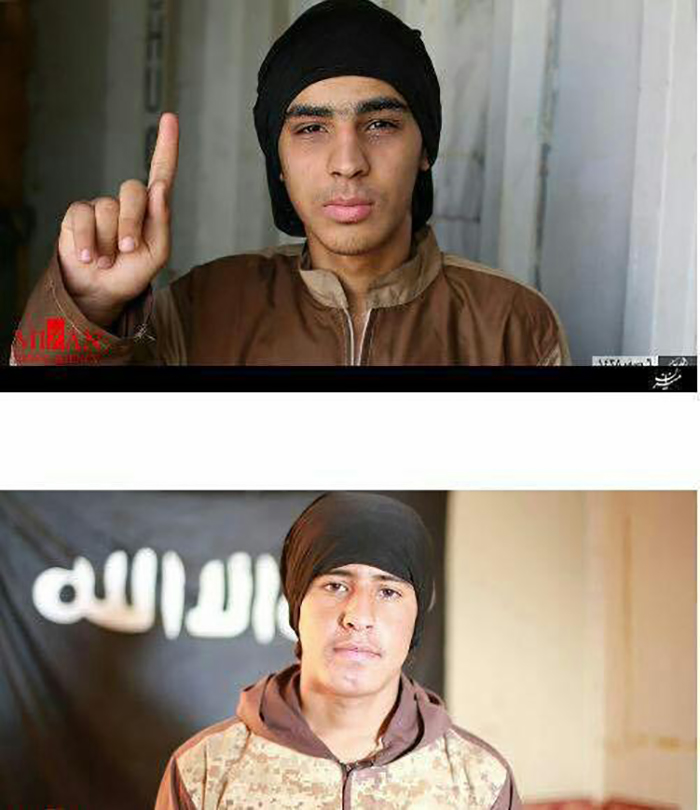
Meanwhile, the ISIS terrorist group, which claimed the responsibility for the attacks, has published the photos of the two suicide attackers. Here are the photos, released by Mizan:

Terrorist

Iran’s Zarif Hold Talks with Swedish Deputy FM in Tehran

zarif

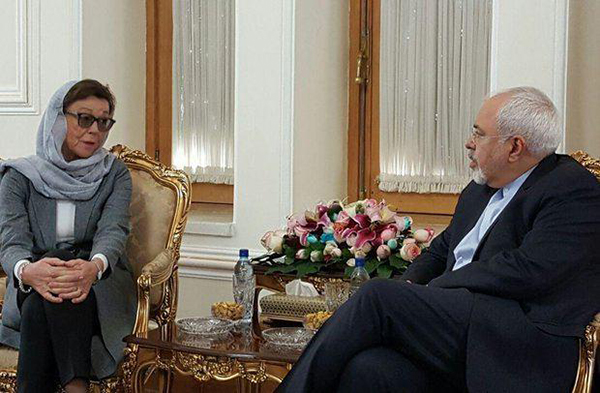
Annika Söder, the State Secretary to Swedish Minister for Foreign Affairs Margot Wallström, is in Tehran at the head of a political delegation.

During her meeting with Foreign Minister Zarif on Monday morning, the two sides highlighted the need for expansion of bilateral ties, and conferred on the most pressing regional and international developments.

The two diplomats further exchanged views on sending humanitarian aid to war-torn countries.

According to Sweden’s Ambassador to Tehran Helena Sångeland, the Scandinavian country will make a ministerial visit to Tehran in December, which includes a business delegation.

A high-level delegation will also travel to Iran at the beginning of next year to discuss bolstering of commercial ties, as reported by Mehr and edited by IFP.

Iran Makes History at FIE Saber World Cup

FIE Saber World Cup

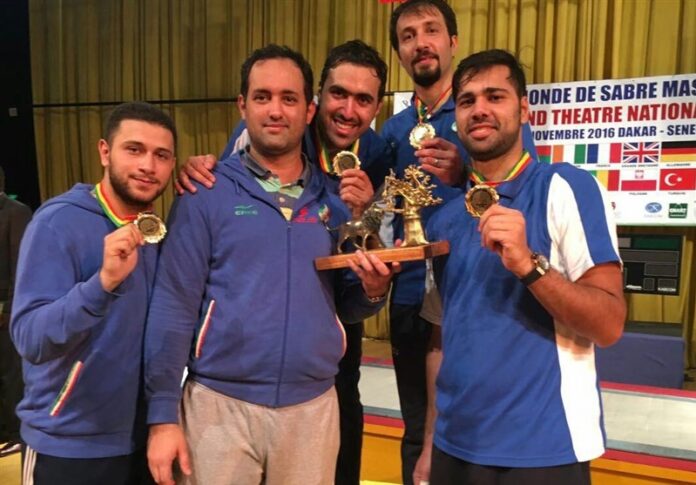
It’s the first time the Persians claimed the title in the competition.

South Korea came third after beating Hungary 45-40 in this competition which began on Friday.

Iran started the campaign with a 45-22 victory over Japan and edged USA 45-44 in Round of Eight.

The Iranian team also defeated South Korea 45-35 in the semi-final.

Twenty teams took part in the World Cup saber at the Grand Theater in Dakar, Senegal.

After the stage of Dakar, the teams will travel to Budapest (Hungary), Padua (Italy), Warsaw (Poland) and Madrid (Spain).

The winning team of the World Cup is named after these five steps, say the organizers.

ISIS Launches Chemical Attack in Iraq’s Mosul

isis

ISIS on Sunday fired mortar shells containing chemicals at positions of Iraqi troops who are advancing against the terrorist group in Mosul, Sky News Arabia said on Sunday, citing Kurdish sources.

The report added that the Takfiri group had also deployed small drones carrying chemical explosives to blow up the government troops.

On Sunday, the commander of Nineveh Liberation Operation, Lieutenant General Abdul Amir Yarallah, said in a press statement on Sunday that the 9th armoured division of the army had recaptured the village of al-Razaqiyah, and raised the national Iraqi flag over a number of buildings there.

Yarallah added that Iraqi government forces inflicted heavy losses on the ISIS forces during heavy clashes with the Takfiri militants.

Iraqi soldiers also established control over the village of Hawijah al-Hassan south of Mosul, located some 400 kilometres north of the capital, Baghdad.

Additionally, ISIS terrorists executed seven fellow extremists in central Mosul on charges of fleeing the battlefield. An informed source, speaking on condition of anonymity, told Arabic-language al-Sumaria television network on Sunday that the ISIS terrorists were decapitated with blunt knives as their hands and legs were cuffed.

The source added that the slain militants were accused of escaping clashes with Iraqi army soldiers and allied fighters from the Popular Mobilization Units in Kokajli district, which lies east of Mosul.

Iraq’s Joint Operations Command also announced in a statement that ISIS official in charge of military affairs, identified as Mohannad Hamed al-Makani but better known by the nom de guerre, Abu Aisha al-Bilawi, and a number of his foreign aides have been killed in an Iraqi Air Force strike against Yaramjah neighbourhood of Mosul.

Moreover, Iraqi army soldiers destroyed three cars rigged with explosives in Awizah village, and cut ISIS supply lines in the al-Sadah district north of Mosul.

The developments came a day after five high-ranking commanders of the ISIS terror network stole millions of dollars from the group and fled to neighbouring Syria.

Al-Sumaria television channel reported that the quintet, among them a militant identified as Abu Bara Kakhtani and responsible for the group’s treasury affairs, has left Mosul for the city of Tal Afar, situated 63 kilometres west of Mosul, and are planning to take refuge in the small town of Ba’aj next and Syria eventually.

The ISIS leadership has ordered a search operation to find the commanders and execute them.

After months of preparation, Iraqi army soldiers, backed by volunteer fighters and Kurdish Peshmerga forces, launched an operation on October 17 to retake the strategic northern city of Mosul from ISIS terrorists.

So far, a large number of villages and districts around the city, located 400 kilometres north of Baghdad, have been purged of the extremists.

Iraqi Prime Minister Haider al-Abadi has vowed that Mosul, once Iraq’s second largest city before ISIS militants overran it in June 2014, will be fully recaptured by year-end.

Egypt Dismisses Reports on Oil Minister’s Visit to Iran

Tarek El Molla

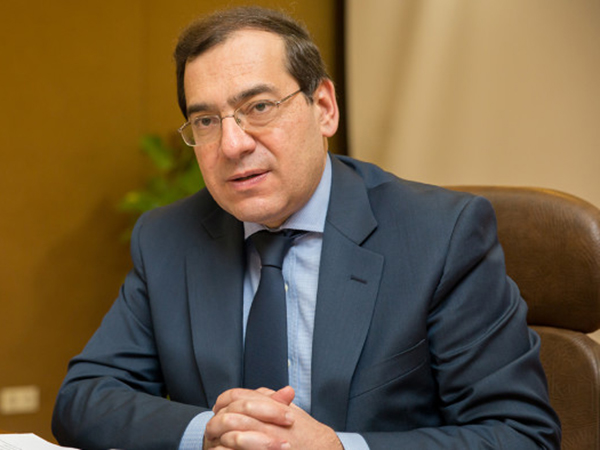
Egypt’s Petroleum Minister Tarek El Molla was reportedly on his way to Iran on Sunday to meet with senior officials and try to secure a new oil agreement, according to Reuters, which cites sources “close to his delegation” and another individual who allegedly accompanied the minister to Cairo International.

This was, however, denied by the ministry’s spokesperson Hamdy Abdel Aziz who told Al Masry Al Youm that El Molla left to attend a two-day energy summit in Abu Dhabi where he is expected to promote investment in the industry. The wire had framed the alleged Iran visit as part of the fallout of Aramco’s delay in October fuel shipments.

On that front, future fuel shipments from Saudi Aramco are still in question, but the agreement has not been cancelled, Abdel Aziz told the newspaper, as reported by Enterprise and covered by IFP.

Another source with whom Al Mal spoke claims it is unlikely that Aramco will deliver the shipment slated for November.

Abdel Aziz said the ministry has contracted sufficient gasoline and diesel shipments to meet domestic demand for November; the ministry should have locked in December supplies by the middle of this month, he said.

Reuters had claimed that El Molla has decided to sign a contract with Iran after Saudi Arabia suspended its oil agreement last month.

After that suspension, Egypt voted in favor of a Russian-backed UN resolution on Syria in October that excluded calls to stop bombing Aleppo, which Saudi Arabia strongly opposed.

Saudi Arabia has showered Egypt with billions of dollars in aid since 2013, when President Abdel Fattah al-Sisi ousted elected Mohammed Mursi of the Muslim Brotherhood and banned the movement, which Riyadh opposes.

The Saudi deal was for 700,000 tonnes of oil products a month for five years under a $23 billion deal between Saudi Aramco and the Egyptian General Petroleum Corporation (EGPC) to be paid off over 15 years.

4th Muslim-Christian Summit Underway in Tehran

Muslim-Christian Summit

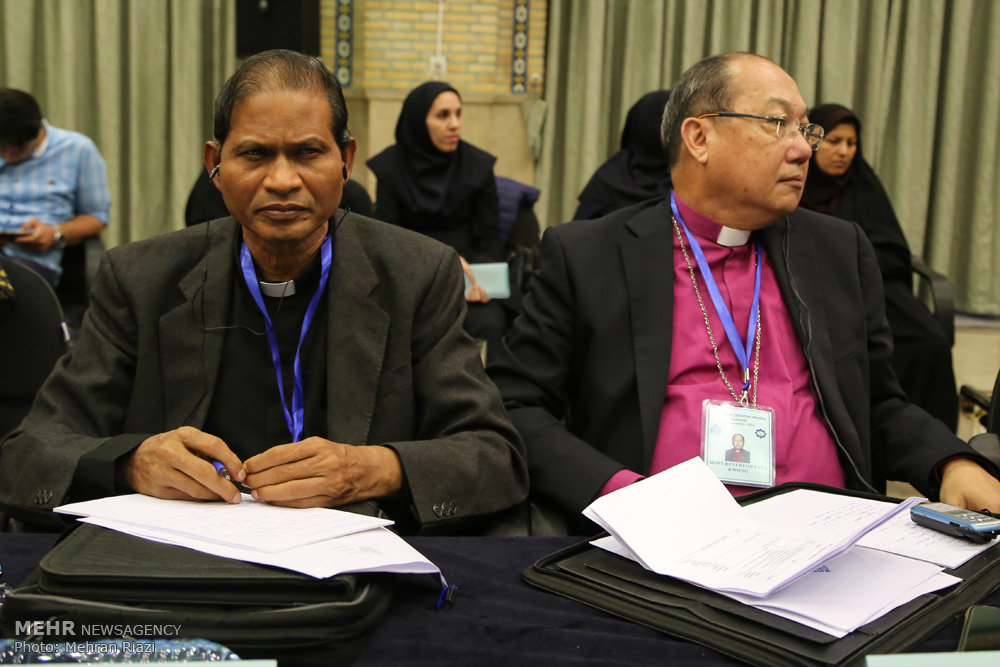
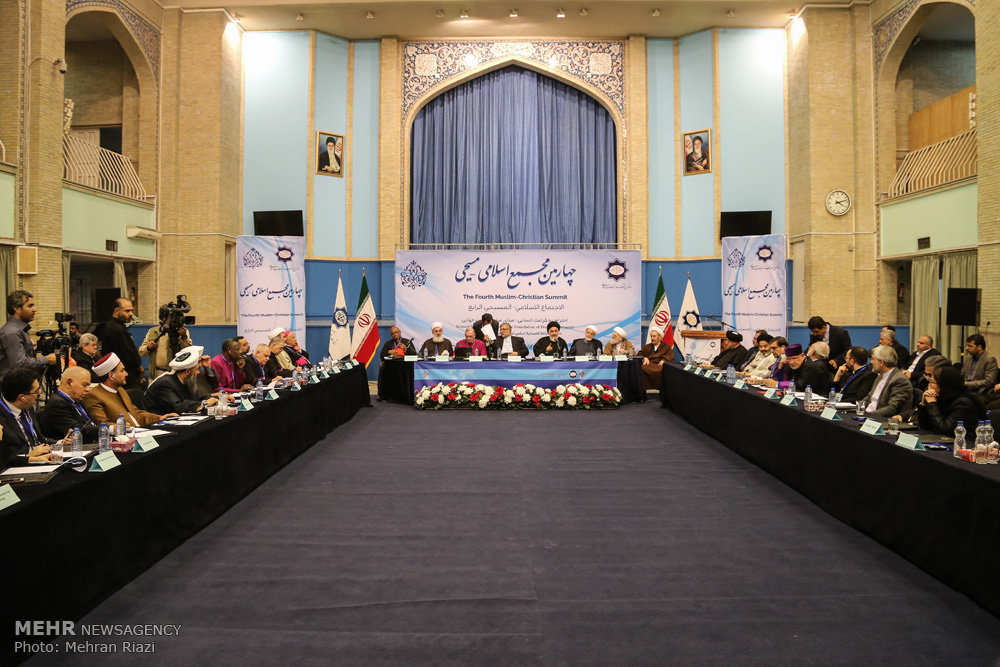
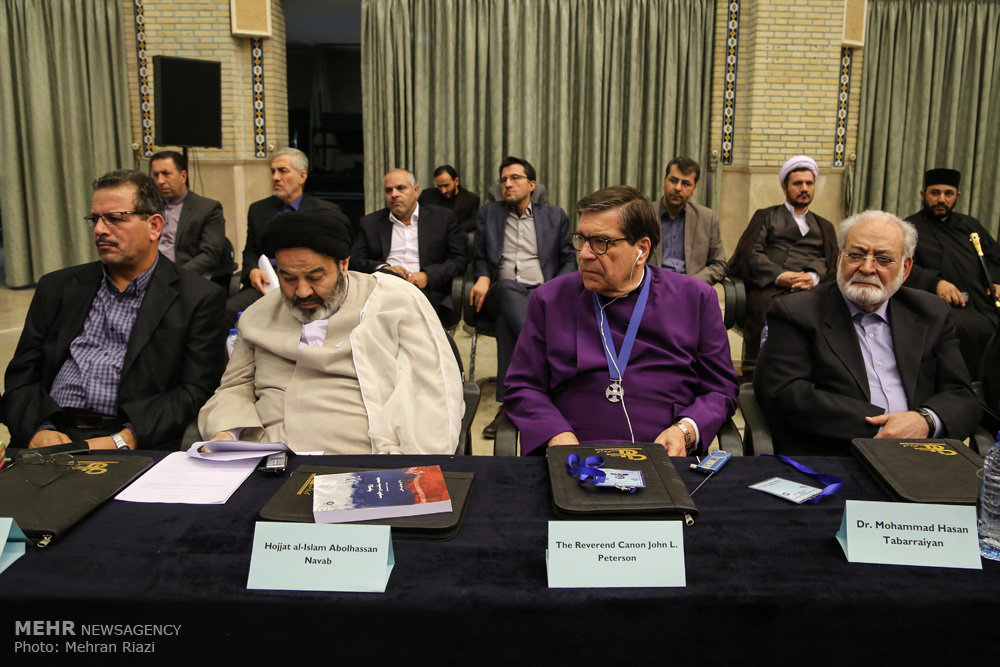
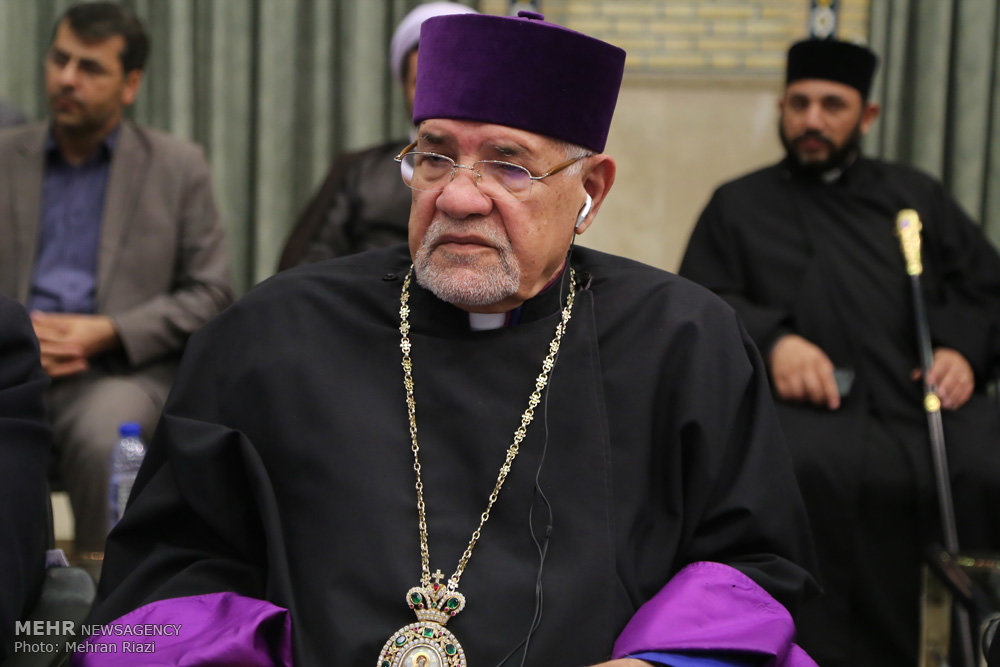
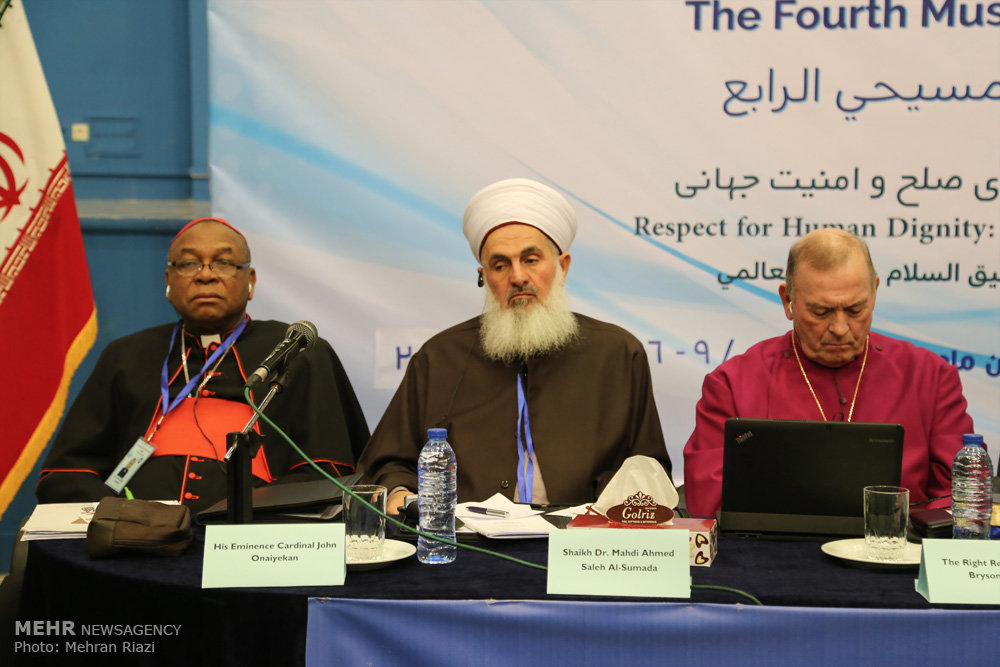
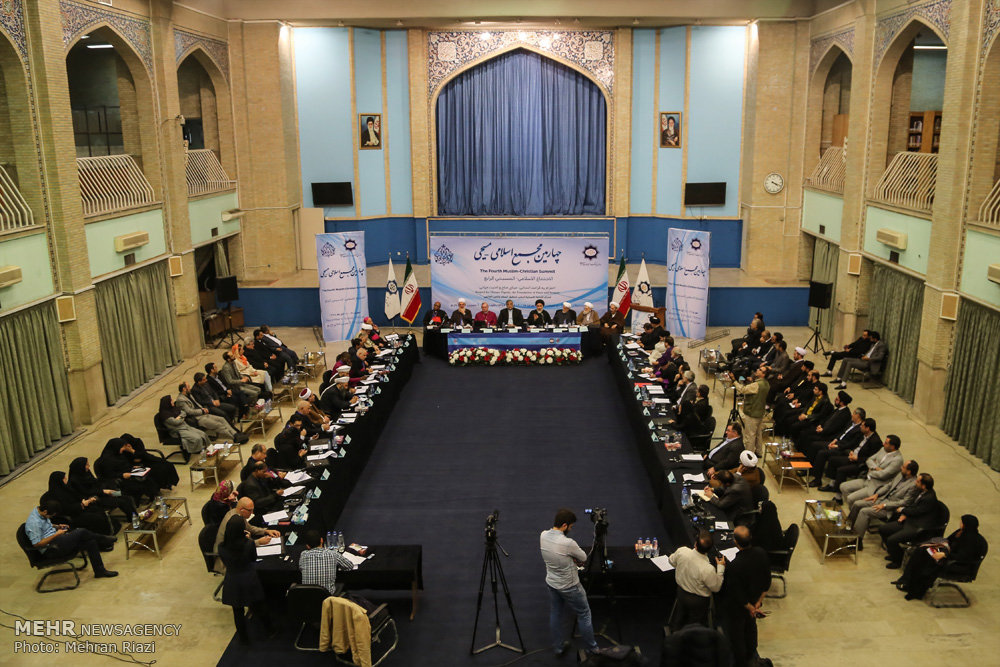
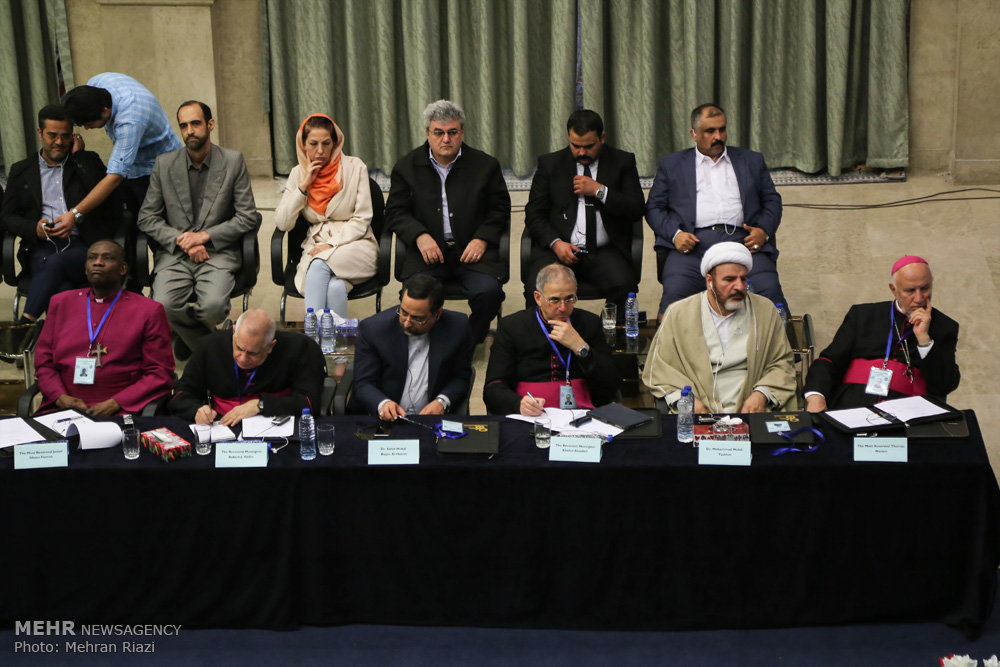
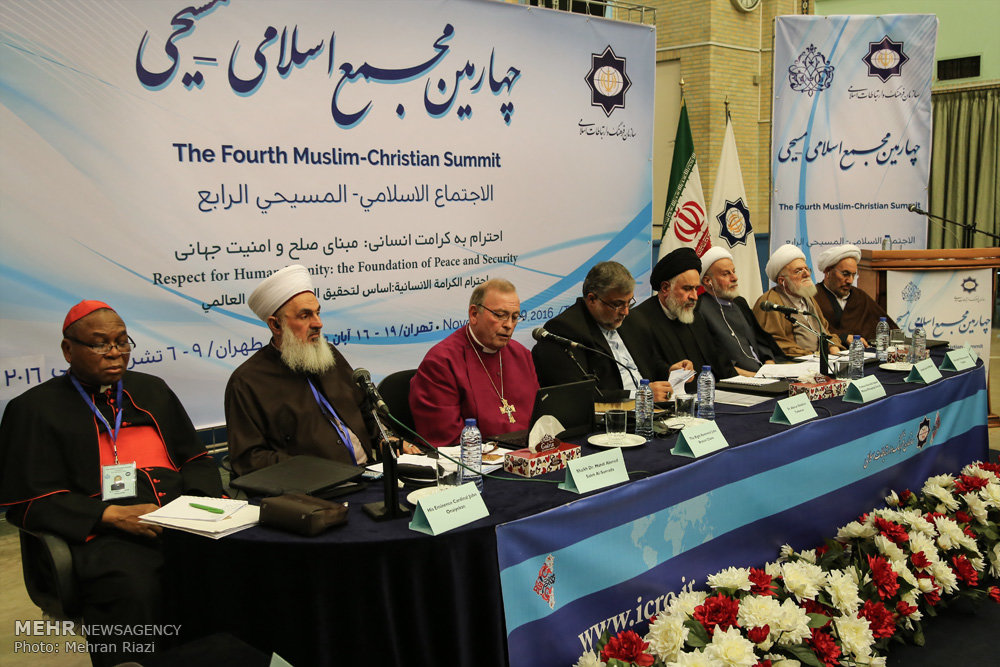
Representatives of Shiite and Sunni Islam as well as Catholic and Anglican Christianity gathered in the 4th Christian-Muslim Summit kicked off on Sunday in Tehran.

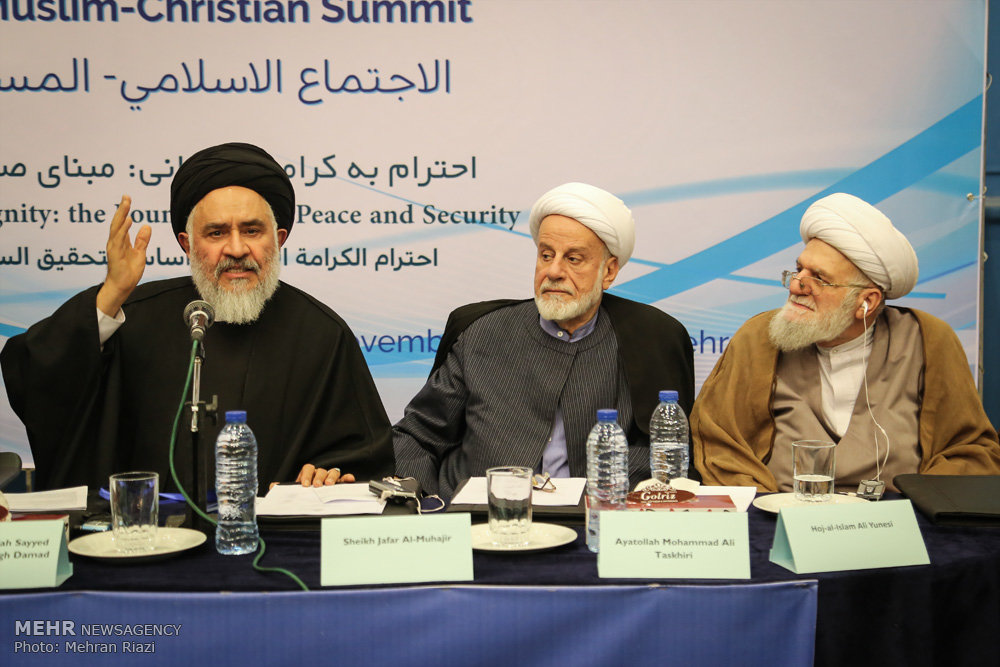
According to a report by the official website of Iran’s Islamic Culture and Communication Organization, the summit started its work with the motto ‘Respect for Human Dignity: the Foundation of Peace and Security’.

The opening ceremony was attended by Ayatollah Taskhiri, an advisor to the Leader of the Islamic Revolution Ayatollah Seyyed Ali Khamenei and Ali Younesi, who is President Hassan Rouhani’s special aide on ethnic groups and minorities’ affairs.

Several thinkers from Iran, Iraq, Lebanon, Nigeria, the US, Switzerland, Vatican, Italy, India, France, Britain, and Hong Kong were also present in the ceremony.

The issues discussed in this summit include “Religious dialogue: A solution to global peace and security”, “Role of family in establishment of peace and security”, “Religions’ solution for countering religiophobia and Islamophobia”, “Role of religions in avoiding violent actions”, “The necessity for cessation of violence in Palestine, Syria, Yemen, Bahrain, and Iraq”, and “The necessity for cessation of support for ISIS, Nusra Front, Al-Qaeda, and other terrorist groups.”

The closing ceremony of the summit will be held on Wednesday, November 9.

The idea of holding Christian-Muslim summits was raised in a 2008 meeting between the Bishop of the Episcopal Diocese of Washington, DC, John Bryson Chane, and the then Iranian president in Tehran.

The first Christian-Muslim summit was held in 2009 in Washington, DC, in the US. The Lebanese capital of Beirut hosted the second summit in 2011 and the third was held in The Vatican in 2014.

Here are Mehr’s photos of the opening ceremony held in Tehran:


Israel spreading terrorism to weaken Muslims: Larijani

e98f3e91-5af2-4836-ba6c-712fc9445af6

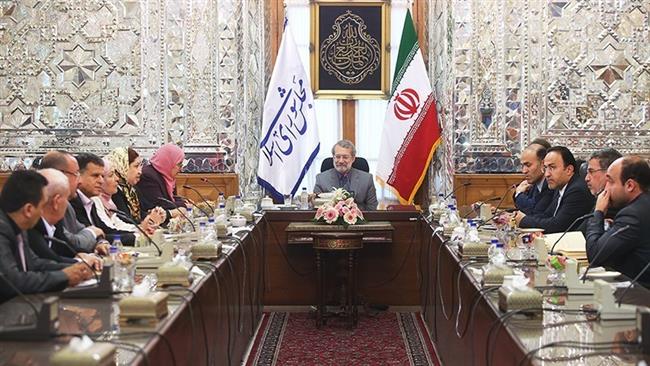
“The prolongation of the existing crises and expansion of terrorist groups are among the policies of the Zionist regime to undermine the might of Muslim nations,” Larijani said in a meeting with a Tunisian parliamentary delegation in Tehran on Sunday.

He added that Muslim countries must remain vigilant against regional crises in order to help put an end to them.

Larijani said the US and Israeli regime are pursuing the policy of sowing discord among Islamic faiths and added that all Shia and Sunni Muslims oppose acts of terror.

“However, a small minority like Wahhabis with international support seek to cause strife and discord among Muslim nations,” the top Iranian parliamentarian said.

Larijani further reiterated that Iran’s policy is based on building consensus among Muslim countries, adding that the “immature mentality of some Muslim states” has prevented unity in the Muslim world.

Elsewhere in his remarks, the Iranian Parliament speaker said the development of cultural and trade relations between Iran and Tunisia can help the two nations become more acquainted with each others’ capacities.

He also stressed the importance of improving parliamentary cooperation between Tehran and Tunis.

Meeting Held in Iran to Discuss Issue of Infiltration

139508111513327989078494

Iranian officials have been repeatedly warned by the Leader of the Islamic Revolution Ayatollah Seyyed Ali Khamenei about the issue of ‘infiltration’.

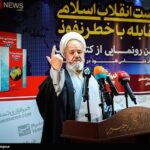
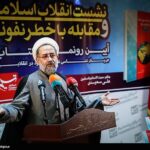
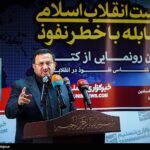
In a meeting entitled “Islamic Revolution and Avoiding the Danger of Infiltration”, several religious and political figures exchanged ideas about the concept of infiltration during the decades after the victory of the Islamic Revolution.

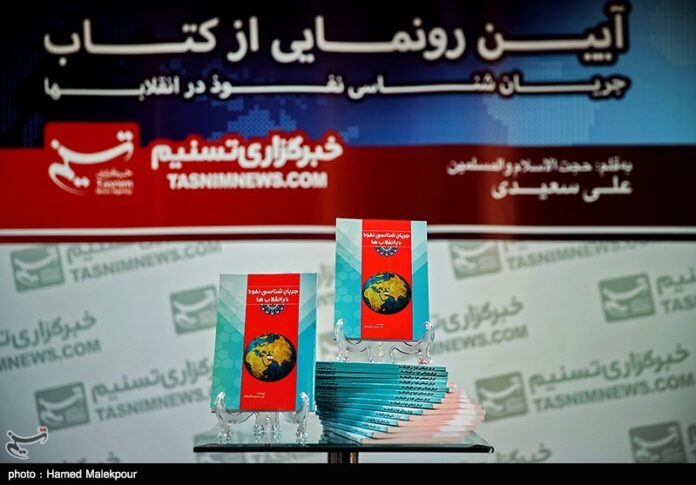
A book titled “A study on the current of infiltration in revolutions” was also unveiled during this meeting, which was held on November 1 in Tehran.

Ali Saeedi, the Leader’s representative in Islamic Revolution Guards Corps (IRGC), is the author of the book unveiled in this meeting.

In the introduction of the book, Saeedi elaborates on the concept of infiltration and its impact on the failure of big revolutions throughout the history.

It starts with a study on the current of infiltration in a number of revolutions including the Revolution of Prophet Moses, that of Prophet Muhammad, the Persian Constitutional Revolution, the National Movement of the Iranian Constitutional Revolution, the Nationalization of Iranian Oil Industry, the Russian Revolution, and the 1979 Islamic Revolution.

The author has tried to raise political issues of the day in a bid to help the reader grasp a better understanding of the current situation and the concept of infiltration.

In another part of the book, Saeedi describes the role of the Leader and Guardianship of the Islamic Jurist [Velayat-e Faqih] in foiling the moves to liberalize the country.

13950811151332799078494Saeedi referred to the infiltration as the most dire threat against the Islamic Revolution.

He stressed that Iran is the most strategic country in the world for the US to transform its culture.

He announced that enemy has made inroads into the country and said, “If we take government officials as indicants of political infiltration and people as indicants of cultural infiltration, we can safely assume that the enemy has made political inroads into the country to some extent.”

Saeedi noted that despite the Leader’s stern stance against the cancerous tumour of the US, some officials have unfortunately brought this tumour within our borders.

He quoted the prominent Egyptian writer Mohamed Hassanein Heikal as saying, “Egyptian nation should learn from Iranians; they stood against the US and today they possess ballistic missile […]. This is the difference between a revolutionary country and a country which was submissive towards America.”

139508111513352359078494Elsewhere in the meeting, Heidar Moslehi, a former minister of intelligence, stressed that the enemy is trying to interfere in the calculations of our nation, elites and officials in an attempt to impose their own views on their enemies.

“The enemy is trying to goad people into making mistakes in their choices in the coming presidential elections,” he warned.

Moslehi referred to some meaningful phrases as part of the infiltration plan and said, “Phrases such as arrogance, the poor and oppression expressed by the late founder of the Islamic Republic of Iran, Imam Khomeini, are the  basis of Islamic Revolution; however, they’ve been replaced by such concepts as great powers, world powers and the United States.”

He further quoted Imam Khomeini’s famous motto that “the US can’t do a damn thing against us, and said, “However, there are some voices saying that the United States is a world power.”

Moslehi also expressed regret over the remarks made by Mohammad Javad Zarif, Iranian Minister of Foreign Affairs, who said the US can destroy our defence equipment at the push of a button.

oghadamfarHamidreza Moqaddamfar, the Media and Cultural Advisor to IRGC Commander, also delivered a speech in the meeting, stressing that, “The risk of infiltration has been threatening us from the beginning of the Revolution to the present day.”

“In the past, we were faced with physical and security types of infiltration which resulted in the bloody bombings of June 28, 1981 and August 30, 1981,” he noted, adding that such infiltration had a tactical aspect with the aim of removing government officials.

Explaining about the concept of infiltration today, he said, “The enemy is now trying to exert soft infiltration in the post-sanctions era; it’s undoubtedly a strategy by the enemy, not a tactic.”

Iran Is the Paradise on Earth: Indian-Japanese Tourist Couple

Tourist Couple

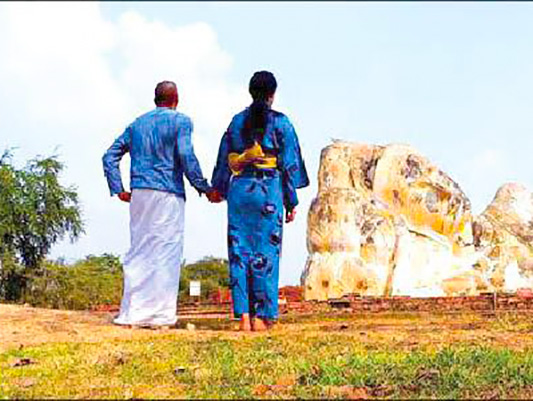
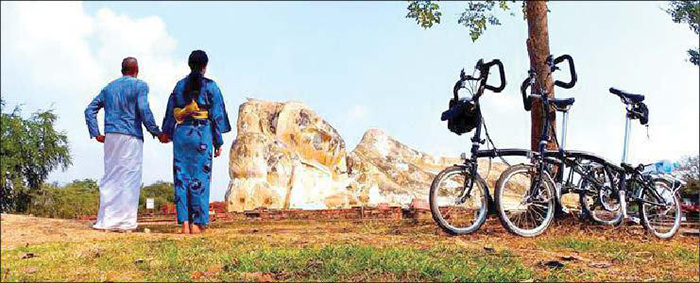
Somewhere out in the heights of Himalaya, they fell in love with each other at first sight and now miles away from that romantic start, they are sitting in the living room of an Iranian host’s house. They are drinking tea and telling stories about their long journey on their bikes. Suniel and Yucca have gained a good reputation on the social media due to their exciting, adventurous travels. On the social media, they have been nicknamed as Sushi and Sambar (two authentic foods of Japan and India). One of them has come from the Far East, Japan, and the other one from the land of elephants, India. Love of travelling is the glue of their marriage and this very love is why they are now in their favourite land, Iran.

Here is IFP’s translation of a report by Khorasan newspaper about their experiences in Iran.

Suniel and Yucca are both educated figures and before embarking on their adventure, they had great jobs in India and Britain. One of them was the project manager of IBM Company and the other one used to teach Japanese literature in Britain. Now they have reached Iran after visiting 13 countries of the world and expressed enthusiasm to live here for some while and even run a business in Iran’s central city of Isfahan. They believe that Iran is the paradise on earth.

Short Honeymoon Turns into a Long Journey
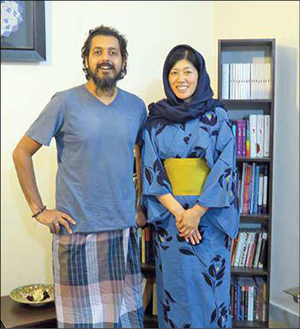
Tourist CoupleSuniel says that travelling on bicycle was part of their honeymoon plan, and soon turned out to be very interesting and exciting to them.

Suniel notes that they would like to know which countries are more hospitable. “We wanted to know if it is possible to trust the roads and cross the borders with the help of people’s kindness and never be forced to look for a place for sleeping or some food.”

He stressed that people have been kind to them in all countries; among all, however, the kindness of Iranians was of a different type.

“Iranians do not wait until you ask them for a favour or direction; they would come to you, share their food and help you willingly,” Suniel said, adding that, “I had this experience for several times that I was on the road and the cars coming from the opposite direction would pull over just to see if they can help us with anything.”

Yucca picks up her husband’s remarks and after mentioning that she has fallen in love with Iranian saffron ice-cream, she goes on to say that, “During our trips, we were repeatedly invited to Iranians’ houses where they would serve what we desired before we mentioned it.”

She stressed that she felt like home in Iran.

Suniel and Yucca have allocated certain amount of money for their travels; something around $5 per day. More on their budget, Suniel says, “We could have specified more money but we wanted to know how further we can travel on account of different nations’ kindness.

In response to a question on why they’ve picked bicycle for travelling the world, he came up with an interesting reply, “On bicycle, you don’t ride too fast to miss the opportunity of enjoying the beauties of your surroundings and neither too slow to become bored.”

“Before I met Yucca, I had ridden around the entire India and Yucca is the only fellow traveller that I can pedal a bike with around the world,” he said.

On bicycle, you don’t ride too fast to miss the opportunity of enjoying the beauties of your surroundings and neither too slow to become bored

A Mixed Image of Iran

I steered the conversation towards their mentality about Iran before they got here. Suniel gave a straightforward answer, “Up until about 15 years ago, my mentality about Iran was the same picture that the media outlets had drawn in my mind; a country, full of chaos, conflict and insecurity.”

He referred to an Iranian Muslim couple who were his guests and said, “This couple changed my preconceptions about Iranians; however, my outlook on Iran changed fundamentally when I felt its people’s kindness with my own senses.”

Yucca, on the other hand, highlights the magnificence of Iranians’ cultural heritage that she had been acquainted with in a museum in London before and said, “I became familiar with your country in a museum in London; hence, I always wanted to see it myself.”

She refers to the works of Iranian renowned filmmakers such as Abbas Kiarostami and Majid Majidi as a major factor in her acquaintance with Iran and added, “They have showcased many cultural commonalities between Iran and Japan.”
tourist-couple

Japan’s Green Tea in Iranian Cuisine

Suniel and Yucca, who have been fascinated by Iran during their two visits, had plans to pass on their experiences to others through several projects. One of these projects is Yucca’s green tea.

She pointed that green tea is the product of the Land of the Rising Sun (Japan) and said, “During my journeys, I would add this tea to the raw materials of the local cuisines of each country and keep record of their tastes.”

“I believe that the cuisine of every country is made in the kitchens by the housewives who make it with passion,” she said, noting that you never find a real cuisine in a restaurant.

Yucca stressed that green tea goes best with Iranian Dolmeh, which is belongs in the family of stuffed vegetable dishes.

Suniel, who specializes in management projects, has gained many experiences as well and says, “During these journeys, I had an opportunity to become familiar with business environment in different countries.”

Every country’s cuisine is made in the kitchens by the housewives who make it with passion. You never find a real cuisine in the restaurant.

Memories of Iranian Hospitality that Never Fade Away

When I ask them to share a beautiful memory, they look at each other and smile. They recall a memory from their travel to Iran’s southwestern city of Yasuj as the most unforgettable one.

“We were near the city that a pickup pulled over and firmly insisted on giving us a free ride and that we should be his guests,” Suniel said.

He said that they accepted the man’s kind offer; however, when they wanted to get on the car they became very surprised to see his pregnant wife and child sitting there.

He went on to say that they lived in a modest, rustic house.

“We noticed that they didn’t even have enough food at home but the man went out immediately and borrowed some food from their neighbours,” he sai.

“At their insistence, we sat at the table; however, they ate less so we have more.”

He said that the next morning for breakfast, they had only one egg left and the man’s pregnant wife even left the house so we had no sense of guilt at breakfast.

They narrated another memory from the hospitable people of Abhar, a city in Iran’s northwest.

“They took us to their house insistently and before long we noticed that the house has become full with around 30 people who had come to welcome us,” he said.

Contentment in Living a Simple Life

Suniel and Yucca have plans to travel to Iran again and said, “Our friends and families can’t wait to visit Iran after we shared our pictures and memories with them.”

“My wife and I have found contentment in living a simple life. Although we have lucrative jobs, we never tried to live an aristocratic life,” Suniel noted, concluding that, “Through these journeys we practiced to acclimatise to living a plain and simple life and we learnt to travel without polluting our environment.”

Iran, Togo Hold Diplomatic Talks in Tehran

iran-togo

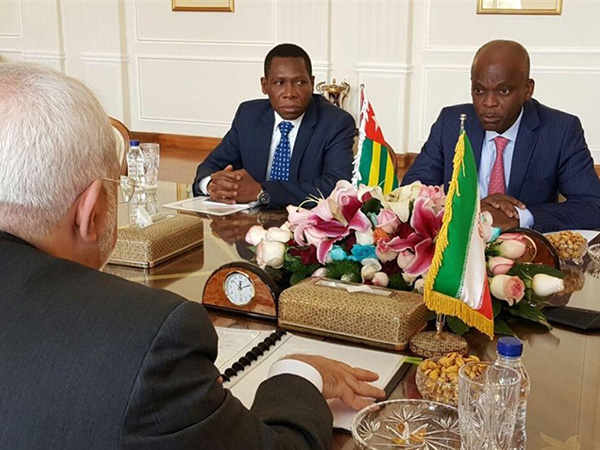
Iranian Foreign Minister Mohammad Javad Zarif and his Togolese counterpart Komlan Edo Robert Dussey held the meeting in Tehran on Sunday.

The two senior diplomats talked about Tehran-Lomé ties, promotion of economic cooperation, the latest regional and international developments, and joint efforts in the fight against terrorism.

In May, Iranian President Hassan Rouhani said Iran attaches great significance to friendly relations with African nations, including Togo.

He also called for closer interaction between Iran and the West African nation in the fight against terrorism and settlement of regional and international conflicts.

Expansion of relations with African nations in all fields is top on the agenda of Iran’s foreign policy.