Wednesday, April 22, 2026
Home Blog Page 4242

Iran and France Sign Biggest Joint Venture Deal on Car Parts Production

Iran and France flags

According to a report by IFP, France’s Faurecia has signed two joint venture agreements with Iranian companies to expand its presence in the local market as projections predict Iran’s car market to expand dramatically as new models enter the market.

Faurecia’s second Iranian joint venture agreement brings the latest emissions controls technology to the country and help curb the worsening air pollution in almost all urban areas due largely to the gasoline, CNG and diesel vehicles.

The joint venture called Faurecia Crouse Advanced Exhaust System (FCAES) was signed on December 2 in Paris between Faurecia and Crouse-MAAD Iran, an Iranian conglomerate.

The FCAES-MAAD Iran deal will develop and produce emissions control systems for the Iranian automotive market and can be sold to local car producers.

The new program will reportedly be a 50-50 split between both companies, Reuters reported.

It will cover both hot end and cold end emissions control systems, based on Euro 5 standard, with first local production scheduled to start at the end of 2017. Total sales are expected to reach $53 million in 2020, representing a 25% market share.

The Euro 5 standard came into effect in the European Union in 2009, but manufacturers had till 2011 to meet the new regulations. The Euro 5 rules further tightened limits on particulate emissions from diesel engines with cars needing new particulate filters.

The Euro 5 standard also adds extra emphasis to petrol engines with injectors that also must have particulate filters fitted to their engines.

Meanwhile, another joint venture signed by the company and Iran’s Azin Khodro, is to help local car companies develop better vehicle interiors.

The 50/50 Faurecia–Azin Khodro joint-venture for vehicle interior systems will develop and manufacture instrument panels, door panels, centre consoles, acoustic and soft trim modules, with production to start in early 2018. The new JV called AFISCO expects its total sales to reach $53 million in 2020.

FAPSCO, the existing Faurecia JV for automotive seating, will expand its full seats, frames and covers activities beyond its current customer, Renault, and extend to Peugeot, Iran Khodro, and other automakers, Financial Tribune reported.

FAPSCO expects to grow its business to 340,000 cars per year and total sales of $159 million in 2020. With this third joint-venture, all three Faurecia business groups will be present in Iran.

Earlier in October, Faurecia CEO Koller had this to say about the Iranian automotive sector: “When you visit the plants in Iran, they clearly have not had the opportunity to make the investments because of sanctions, but these guys are good.”

He insisted Faurecia enjoyed “healthy business relationships” with its partners in Iran and maintained it was “in the interest of the US to have Iran as an ally.”

Faurecia estimates Iran’s auto production to grow from 1 million vehicles in 2015 to 1.8m by 2025, representing an average growth of 6% per year.
Swiss Economy Minister to Visit Iran

swiss

Chairman of Iran-Switzerland Chamber of Commerce Sharif Nezam-Mafi noted that Johann Schneider-Ammann, the Head of Federal Department of Economic Affairs (FDEA) and Switzerland’s Ministry of Economy, will lead a delegation comprising Director of the Swiss State Secretariat for Economic Affairs (SECO) Marie-Gabrielle Ineichen-Fleisch, directors of Swiss National Bank (SNB) and private banks as well as private sector activists of the European country.

The Iranian official underlined that simultaneity of the visit by economy minister of Switzerland, as one of the most important members of the European Union (EU), with the rise of Donald Trump as President of the US could have particular significance.

“Upon election of Trump in US, concerns have emerged on implementation of the nuclear deal and the Joint Comprehensive Plan of Action (JCPOA),” said Nezam-Mafi, according to a report by Mehr, as edited by IFP.

“The upcoming visit will provide economic officials of Iran and Switzerland with the opportunity to discuss venues for expansion of economic, political, cultural cooperation.”

He further referred to banking and financial challenges as the most formidable barriers to development of bilateral ties between the two countries, adding that “the visit of Swiss Economy Minister and SECO director mainly pertains to banking negotiations concerning resolution of banking and financial transactions between the two sides.”

Swiss authorities are slated to meet with officials of the Central Bank of Iran (CBI) as well as heads of private banks in order to conduct extensive talks so that they can reach solutions to existing obstacles, which hinder development of economic relations.

Nezam-Mafi said the Swiss delegation will also visit Mahak Society to Support Children Suffering from Cancer in Tehran and will have a dinner banquet in the charity organization.

“NGO and charitable activities receive great momentous in Switzerland and the Swiss economy minister and his accompanying delegation will therefore visit Mahak Organization, as a successful charity, in order to become familiar with child care activities carried out in the centre.

The official also stated that, during the three-day visit, the Swiss delegation is also scheduled to hold meetings with private sector activists of Iran.

Iran to Firmly Respond to US Senate Vote on Anti-Iran Legislation: Rouhani

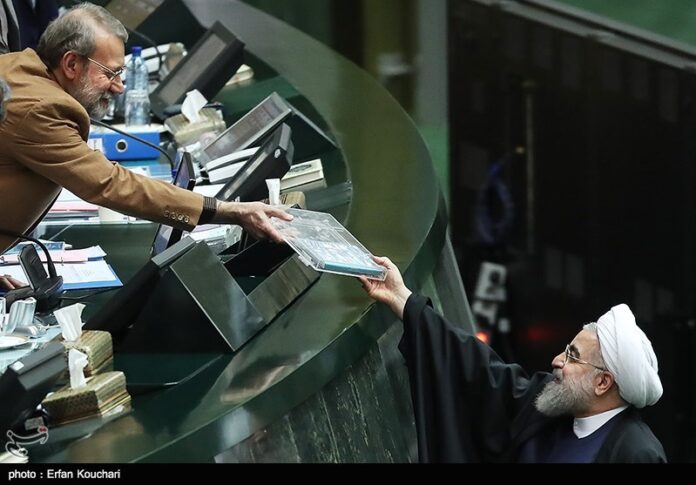
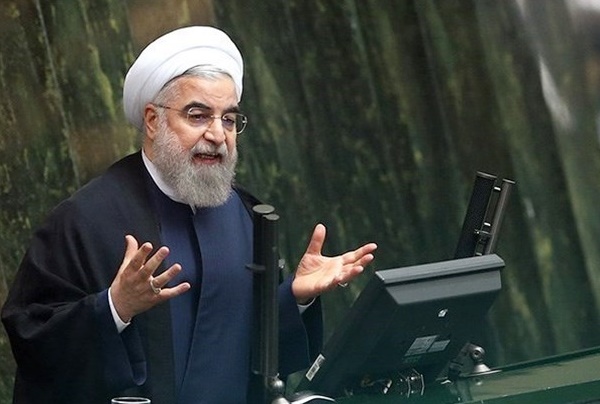
Rouhani in Majlis

President Rouhani made the remarks in the Iranian Parliament (Majlis) on Sunday as he submitted the government’s proposed budget bill for the next Iranian fiscal year, which begins on March 21, to the legislative body.

The Iranian chief executive further said the Islamic Republic would never violate last July’s nuclear deal, known as the Joint Comprehensive Plan of Action (JCPOA), which he described as “a signed and sealed international document.”

Iran “will not tolerate the JCPOA’s violation by any of the P5+1 group of countries,” adding that the US Senate’s vote to extend the Iran Sanctions Act (ISA) for a decade is “in blatant contravention of the JCPOA, and will be followed by Iran’s decisive response.”

The US Senate approved the ISA renewal 99-0 on Thursday after it easily cleared the House of Representatives last month.

The sanctions law, which would authorize the US president to impose sanctions on Iran, was first adopted in 1996 to punish investments in the Islamic Republic over its nuclear program.

The ISA now needs President Barack Obama’s signature to be turned into law.

Iran and the five permanent members of the UN Security Council – the United States, France, Britain, China and Russia – plus Germany started to implement the JCPOA on January 16.

Under the deal, Iran undertook to put limitations on its nuclear program in exchange for the removal of nuclear-related bans imposed against Tehran.

Since January, when the JCPOA took effect, the International Atomic Energy Agency, which monitors the deal’s implementation process, has in numerous reports confirmed Iran’s commitment.

IAEA Director General Yukiya Amano said in April that Iran had even gone beyond its obligations under the JCPOA.

Reacting to the Senate vote on Saturday, Iranian Foreign Minister Mohammad Javad Zarif said the ISA’s extension would have no “executive effect” and would merely be a sign of the US government’s unreliability.

Last month, Leader of the Islamic Revolution Ayatollah Seyyed Ali Khamenei warned that Iran would consider the extension of the ISA a breach of the JCPOA and would respond accordingly.

Elsewhere in his remarks, President Rouhani expressed satisfaction with his administration’s handling of the economy, saying the government is “proud” that it could fulfill its promise of reaching single-digit inflation.

The Iranian government managed to “reduce the above-40-percent inflation to below 10 percent in less than three years,” he added.

Iran’s Nuclear Chief Leaves Tehran for Vienna to Attend IAEA Summit

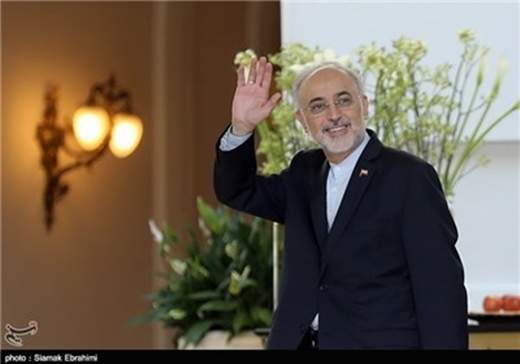
Salehi

According to a report by IFP, Ali Akbar Salehi is heading a delegation in his visit to Vienna to attend “International Conference on Nuclear Security: Commitments and Actions” due to be held from December 5 to 9.

13% Growth in Budget Bill Rouhani Submitted to Parliament

Rouhani - Budget

According to a report by IFP, Rouhani’s proposed budget shows a 13% growth compared with the one he submitted last year.

Iran’s President is obliged to present his drag budget by early December each year.

However, the extremely long delays of former president Mahmoud Ahmadinejad caused Parliament Speaker Ali Larijani to repeatedly appreciate Rouhani’s punctuality and respect for regulations.

Once the parliamentarians endorse the government’s proposed budget bill, it will go to the Guardian Council, the constitutional supervisory body, for ratification before becoming law.

US Congress Authorizes Trump to Arm Syrian Militants with Anti-Aircraft Missiles

Terrorism

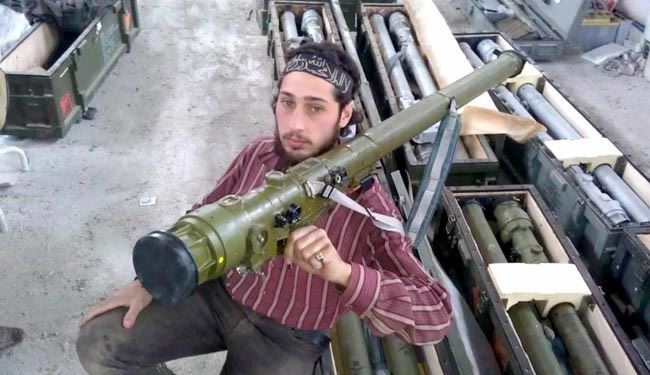
According to a report covered by Mashregh News, the US Senate is expected to pass the bill next week.

Until now, the transfer of man-portable air-defence systems, or MANPADs, had been implicitly authorized in the absence of an outright ban.

The new provision was added in while the House and Senate worked out differences between the bills they passed earlier this year. The original House bill expressly prohibited the transfer of MANPADs to “any entity” in Syria, while the Senate version made no mention of them.

“I am disappointed that the House of Representatives’ explicit prohibition on the transfer of these dangerous weapons into Syria was reversed — behind closed doors — by the conference committee,” Rep. John Conyers, D-Mich., told Al-Monitor in an emailed statement.

“This brazen act shows that some in Congress still hope to further escalate the civil war in Syria. Sending these weapons would only prolong this horrific conflict — and endanger civilian airliners across the region,” he added.

Iran to Continue Helping Afghanistan Move towards Prosperity: Zarif

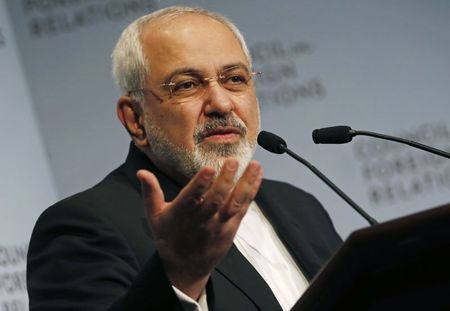
Addressing the 6th Ministerial Conference of Heart of Asia Process in Amritsar, India, Iran’s FM Mohammad Javad Zarif stressed that the stability and security of Afghanistan plays a vital role in regional prosperity.

According to a report by IFP, he also vowed that the Islamic Republic of Iran will continue its all-out support for the National Unity Government of Afghanistan, and help them as they move towards safety and prosperity.


Here is the full text of his speech:
In the name of God, the Compassionate, the Merciful

It is a great pleasure for me to address this important Ministerial Conference of the Heart of Asia Process. Allow me first to express my appreciation to the people and government of India for their gracious hospitality and excellent arrangements for this Conference. I would also like to thank [Afghan] President Ghani and [Indian] Prime Minister Mudi for their inspiring opening statements.

Distinguished Colleagues,

Five years ago, we founded this Process as a platform for regional cooperation by placing Afghanistan at its center, in recognition of the fact that a secure and stable Afghanistan is vital to the prosperity of the Heart of Asia region. We have made some progress; but we have a long way to go. Our region continues to suffer from an alarming surge in extremist violence; and a dramatic increase in drug production is threatening our societies. Afghanistan is most affected by these problems; 2016 has been a very challenging year for the National Unity Government of Afghanistan, as extremist groups such as Daesh [Arabic acronym for ISIS] are expanding their terror inside Afghanistan, even in Kabul.

We continue to fully support the National Unity Government and we stand ready to work with its leaders to help them discharge their responsibilities. We welcome the recent achievement of the government in making peace with Hezbe-e-Eslami [Islamic Party], and we hope that an Afghan-owned and Afghan-led peace process, benefiting from all capacities within the countries of the region, would move towards establishing lasting and comprehensive peace.

Distinguished colleagues,

The challenges facing Afghanistan and our region are interconnected. Recent reports by the UNODC indicate a 43% growth in drugs production last year. Without drug proceeds, terrorists cannot finance their operations. And drug producers need militias and warlords to traffic their deadly commodity. Under-development, low income and lack of economic opportunities provide fertile and abundant recruitment opportunities for terrorist groups and drugs networks.

As a frontline country in the war against narcotics, we have offered alternative cultivation as well as alternative livelihood plans to dissuade Afghan farmers from opium cultivation. But to reverse the current alarming trend of increasing drug production, international cooperation with an integrated strategy for alternative development aiming to turn the war economy into a formal sustainable economy is inevitable.

The trilateral transit agreement between Iran, India and Afghanistan on the development of the port of Chabahar, is one important step in that direction. It makes it possible for Afghanistan to have access to world markets through open seas, making development of Afghanistan’s vast and rich mineral resources economically attractive. We invite interested actors from the region and beyond to consider participating in the development and expansion of Chabahar. The Khaf- Herat Railway project is another key connectivity project that connects Afghanistan to the international railway networks through Iran.

For the past 37 years, we have hosted no less than 3 million Afghan nationals at any given point. They have access to mostly subsidized services available to Iranian nationals, including basic commodities, public transportation, public health, and public education. This year alone, we are providing education to nearly 400 thousand undocumented Afghan students. And we receive almost no burden-sharing assistance from the international community.

As the lead country for the education CBM, we have our bilateral cooperation with Afghanistan within the limits of our national resources, while contribution by supporting countries to this CBM has not been promising. We encourage the donor community to consider contributing to this CBM, to enable implementation of approved programs and activities.

Let me conclude by reaffirming the resolve of the people and government of the Islamic Republic of Iran to continue their support for the fraternal people and government of Afghanistan as they move through this difficult period of their history to a stable, safe and prosperous Afghanistan, contributing to the stability and prosperity of the Heart of Asia.

Music Therapy for the Disabled, for the First Time in Iran

Music therapy

“In music therapy, the therapist interferes in the recovery process based on proven methods, and contributes to the improvement of the patient’s physical and mental condition by using all physical, mental, social, spiritual and aesthetic aspects of music,” said Zahra Noparast, the Director General of State Welfare Organisation’s Office of Daily Rehabilitation.

“We use music therapy for the disabled in such provinces as Hamadan and Kordestan, and will offer it in all provinces in the near future,” she added, according to a report by IRNA, as translated by IFP.

“Last year we had painting therapy for our clients; this year we considered music therapy to promote the use of art therapy in our daily and overnight rehabilitation centres across Iran.”

“We use didactical methodology to serve the disabled,” she said. “Setting up a special room for art therapy and painting has been obligatory in all our mental rehabilitation centres since last year, and we have provided them with some standard tools.”

“In the recovery process, we often use primary musical instruments (such as Orff instruments and harmonica). We train the teacher to realize what method is more effective in his client’s recovery, so not all instruments or music genres are used,” she explained about the use of musical instruments in the process of therapy.

“We choose the genres that make our patients calm.”

“Music therapy is for all patients, but we use painting therapy for our intellectually disabled clients,” she stated.

“In State Welfare Organisation centres, art therapy is often free; however, some families prefer to send their children to private centres,” she noted, adding that within the last year, 403 art teachers have been trained for art therapy.

“Each rehabilitation centre receives nearly $1,300 for all the expenses such as buying educational tools and employing teachers,” she said about the credit allocated for art therapy in welfare centres.

According to studies carried out by State Welfare Organisation, 2% of Iranian population show symptoms that cause them to need rehabilitation; in other words, about 1.5 million people in Iran have above average disabilities. At this moment, almost 1.3 million people are registered as disabled persons in State Welfare Organisation, 36% of which are female and 64% male. This includes 10.5% with visual disabilities, 40% with physical and mobility disabilities, 8% with permanent mental disabilities, 14.5% with hearing disabilities, and 1.5% with speech disorders.

Art therapy includes psychotherapy based on creative activities, using artistic, visual and audio materials and methods. Painting therapy is a branch of art therapy, being used as some form of psychoanalysis. Reducing aggressive behaviour is a result of this method.

Iran’s Response to US Sanctions Will Be Shocking: IRGC General

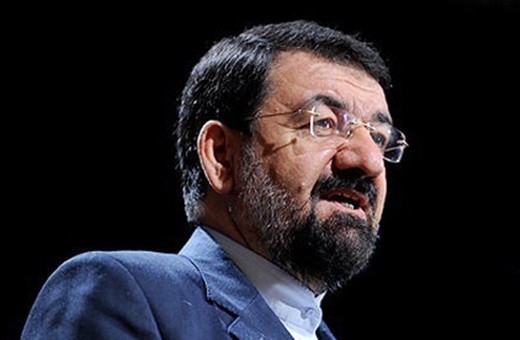
Mohsen Rezai

“The United States will be shocked by Iran’s retaliation if it imposes new sanctions on our country,” wrote Mohsen Rezaei, the Secretary of Iran’s Expediency Council and a senior general in the Islamic Revolution Guards Corps (IRGC), in his Instagram page.

“By imposing new sanctions, the US not only acts against Iran, but also scoffs at Europe, China and Russia. It means that the US disregards the UN Security Council,” he added.

“This enables us to act against Washington. Our counterattack will be more severe and decisive than the initial move,” he went on to say in a post entitled “Iran’s severe response to the extension of sanctions,” as reported by IFP.

Rouhani Calls for Further Measures to Facilitate Lives of Persons with Disabilities

Rouhani and Disability day

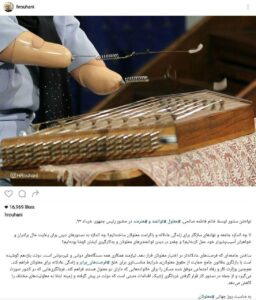
“How much do we have fit out the dear disabled with a suitable society and organizations that provide them with a fairer, more respectful life?” the Iranian President asked in a post on his Instagram page on the occasion of the International Day of Persons with Disabilities, which is annually marked on December 3.

Rouhani and Disability day“How much have we practiced our religious rules that ask us to be more considerate towards our more vulnerable brothers and sisters? How much have we paid attention to the potentials of disabled people and their employment?” he went on to say.

“We need the cooperation of all governmental and non-governmental organizations to form a society that provides more equal opportunities for the disabled and non-disabled,” Rouhani noted in his post, as translated by IFP.

“By revising the comprehensive legislation of protecting the rights of persons with disabilities, the eleventh government [Rouhani’s administration] has endeavoured to create the appropriate conditions to give equal opportunities to the disabled so that they have a fairer life.”

“The Ministry of Cooperatives, Labour, and Social Welfare managed to allocate houses to the families with two disabled members. Screening the disabled persons is one of the other effective measures taken by the government. The government has put genetic screening on its agenda which reduces the risk of different disabilities to a high extent,” the Iranian President added.