Wednesday, April 15, 2026
Home Blog Page 4187

Iraq Mediating between Iran and Saudi Arabia: FM

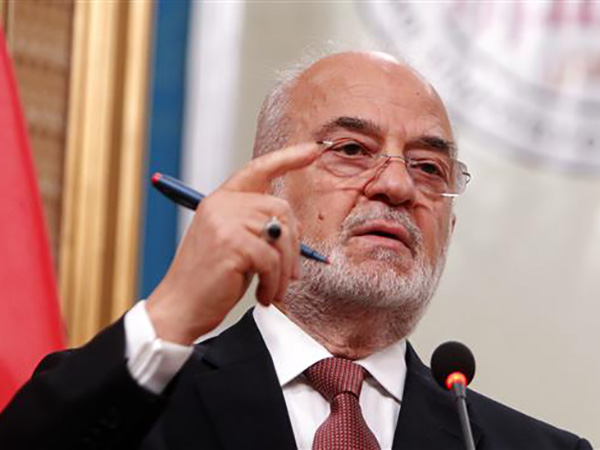
Ibrahim al-Jaafari

Speaking to IRIB in an interview published on Saturday, Jaafari said Iraq continues to work toward the restoration of relations between Tehran and Riyadh.

He added that any crisis in the relations between Iran and Saudi Arabia affects Iraq as well and a rapprochement between the two countries would also benefit Iraq.

The top Iraqi diplomat said he has carried oral messages between Iranian and Saudi officials in the past few months and added that his country would make efforts to bring the positions of Tehran and Riyadh closer.

Relations between Iran and Saudi Arabia worsened after a deadly human crush occurred during Hajj rituals in Mina, near Mecca in September 2015. Days into the incident, Saudi Arabia published a death toll of 770 but refused to update it despite gradually surging fatality figures from individual countries whose nationals had been among the victims of the crush.

Iran said about 4,700 people, including over 465 of its nationals, lost their lives in the incident.

Earlier that same month, a massive construction crane had collapsed into Mecca’s Grand Mosque, killing more than 100 pilgrims, including 11 Iranians, and injuring over 200 others, among them 32 Iranian nationals.

Mutual ties deteriorated further when Riyadh executed prominent Saudi Shia cleric Sheikh Nimr al-Nimr in January 2016. Saudi Arabia unilaterally severed its diplomatic ties with Iran after protests in front of its diplomatic premises in the cities of Tehran and Mashhad against Nimr’s execution.

Media Hype against Iran-Iraq Ties

The Iraqi foreign minister also dismissed the propaganda spread by certain spiteful media outlets targeting the cordial relations between Tehran and Baghdad.

Such media hype is aimed at portraying the friendly Iran-Iraq ties as a ‘Shia threat’ in the region, Jaafari said, adding that cultural and religious commonalities between the two countries as well as their common policies on regional issues have strengthened mutual relations.

The Islamic Republic was the first country that recognized the Iraqi government and supported it in its fight against Daesh terrorists, he said.

He emphasized that Iran is providing advisory military assistance to Iraq against the terrorists at the official request of the Iraqi government.

The northern and western parts of Iraq have been in chaos ever since Daesh started its campaign of terror in early June 2014.

The UN Assistance Mission for Iraq (UNAMI) says a total of 386 Iraqis were killed and another 1,066 injured in acts of terrorism, violence and armed conflict in December 2016.
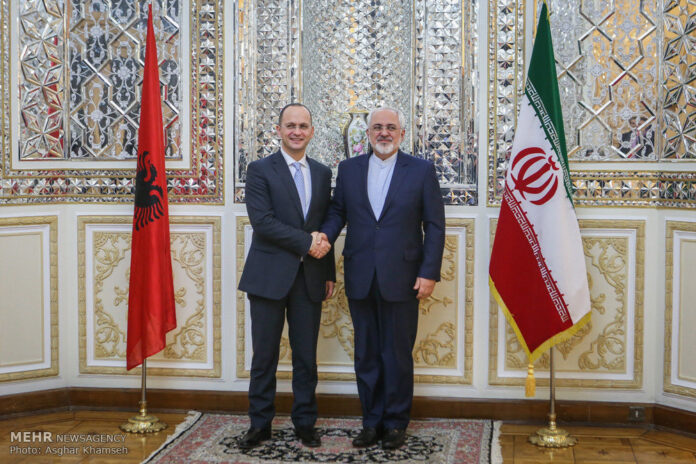
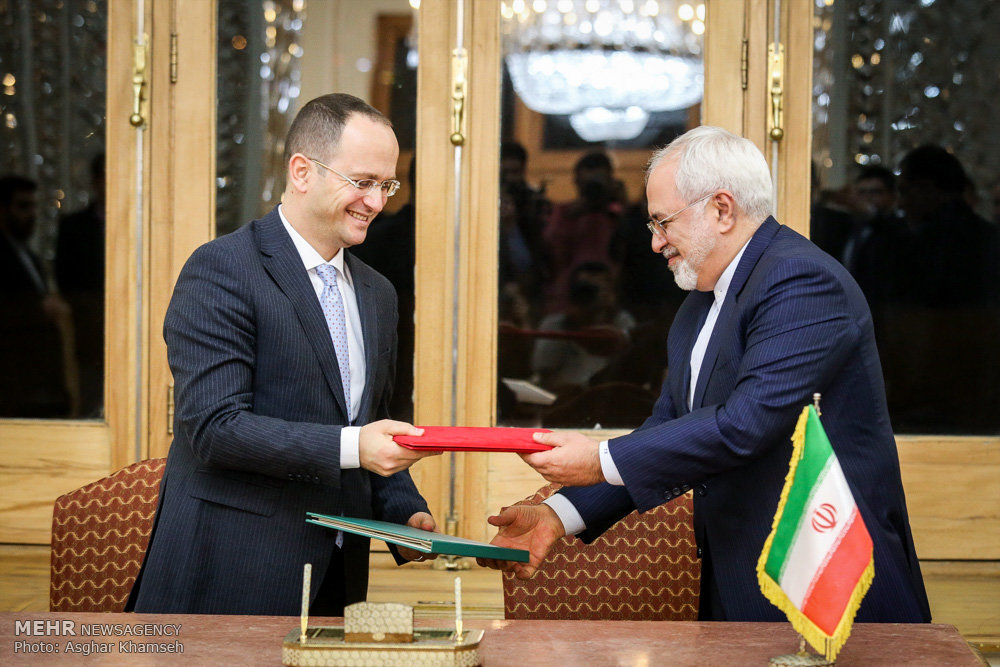
Iranian, Albanian FMs Dicsuss Expansion of Bilateral Ties

“There are many opportunities for developing and bolstering cooperation in the fields of politics, culture, and economy between the two countries,” said Zarif following a meeting with Albanian Foreign Minister Ditmir Bushati in Tehran on Saturday.

He noted that the two countries could have closer cooperation in such areas as education, commercial tourism, energy, and railroad construction.

While noting that European countries are suffering at the hands of terrorism and extremism, Zarif stressed that Iran is willing to help Albania in its battle with this scourge.

In his turn, Bushati offered his condolences over the passing of former Iranian president and chairman of the Expediency Council, Ayatollah Akbar Hashemi Rafsanjani, who suffered a heart attack last week.

“The present conditions are ripe for deepening ties with the Islamic Republic of Iran, thus Albania has decided to establish an embassy in Tehran,” added Bushati.

Mohammad Javad Zarif -Ditmir BushatiHe went on to stress that his country gives priority to enhancement of economic cooperation with Iran, and that Tirana is prepared to sign agreements on joint investment and double taxation avoidance.
At the end of the meeting, both parties signed a memorandum of understanding to hold regular political talks.

Russian Diplomats Learning from Their Iranian Counterparts: Deputy FM

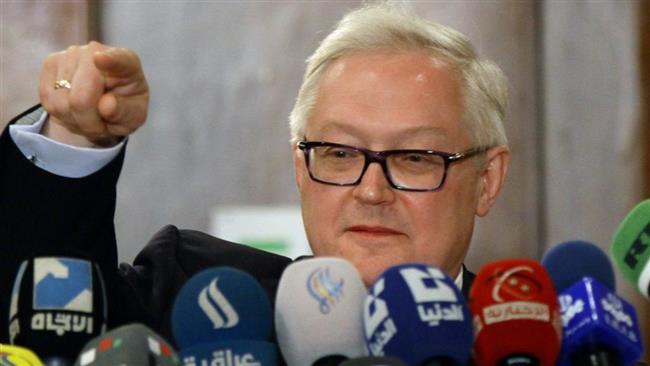
Sergei Ryabkov

Speaking to IRNA on Saturday, Russian Deputy Foreign Minister Sergei Ryabkov referred to Iran’s diplomatic record in negotiating a nuclear deal with the P5+1 group of countries, including Russia itself, and described it as “creative” and “only excellent.”

Negotiators from the administration of Iranian President Hassan Rouhani, with Foreign Minister Mohammad Javad Zarif as the lead negotiator, took on the nuclear file in 2013 and engaged in tough negotiations for some 22 months before reaching the deal with the six world powers in 2015, putting an end to the dispute over the Iranian nuclear program, which had been going on for well over a decade.

Ryabkov, who was Russia’s lead negotiator during the nuclear talks, emphasized the agreement’s role in extricating the Islamic Republic from the “tight grip” of economic sanctions.

As per the accord, which came into force in January 2016, all nuclear-related sanctions against Iran were terminated, and the Islamic Republic agreed to limit certain aspects of its nuclear work in return.

“Now, as Russia, too, has been targeted with illegal sanctions and policies, we are learning from Iranian diplomats how to offset the aftereffects of the bans,” Ryabkov said.

“Those imposing the sanctions should face the reality that they would not be able to achieve their goals by using bans as a tool. History has not been able to teach them yet that the imposition of sanctions has [always] failed,” he said, citing the example of the Islamic Republic as a case in point.

Russia has been facing intensifying economic sanctions by Western countries since 2014, when the Crimean Peninsula, then part of Ukraine, voted in a referendum to join the Russian Federation. Western countries never recognized Crimea’s separation from Ukraine and attempted to contain what they perceived as Russian aggression with sanctions and other means.

Elsewhere in his remarks, Ryabkov said the Iran deal has proven beneficial both for the region and all the parties to it.

He did say, however, that one of the parties to the nuclear accord “lacks the political will” to resolve the obstacles in the way of its unimpeded implementation.

In a highly controversial move, the US Congress voted last December to extend Washington’s sanctions law against Tehran, known as the Iran Sanctions Act (ISA), for another 10 years. The law authorizes the US president to re-impose bans.

Outgoing US President Barack Obama refrained from signing the act, allowing it to be implemented but without his signature.

The Joint Commission monitoring the JCPOA’s implementation convened earlier in January to address Iran’s concerns about the ratification of the ISA.

$11.3bn Foreign Investment Made in Iran after JCPOA

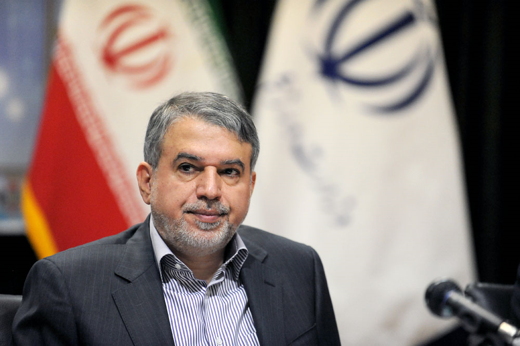
Salehi Amiri

“After the JCPOA, more than 100 foreign delegations have travelled to Iran and made $11.3bn of investment,” announced Reza Salehi Amiri, Iranian Minister of Culture and Islamic Guidance.

“Before, we had to deal with a chain of international sanctions and embargoes. The JCPOA cut the chain.”

“The measures our government took in international arena were of national necessity,” he added, according to a Farsi report by IRNA.

“Iran sought to uphold its rights through negotiations which saved us from serious conflict. Thanks to negotiations, we managed to change the adversary international opinion about Iran.”

Salehi Amiri made the remarks a few days before the first anniversary of the implementation of Joint Comprehensive Plan of Action, the nuclear deal between Iran and the Group 5+1 (Russia, China, the US, Britain, France, and Germany) which was adopted on January 16, 2016.

IRGC General Upbeat about Trump’s Picks for CIA Chief, Defence Secretary

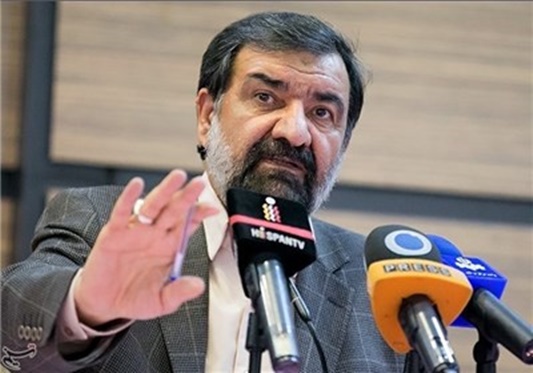
Mohsen Rezaei

Mohsen Rezaei, a former commander of the Islamic Revolution Guards Corps (IRGC), said, “We are not worried about the entry of generals into Trump’s cabinet. They are wiser than a large number of American politicians.”

Rezaei further wrote on his Instagram page that Mike Pompeo and James Mattis, two well-known US generals who are to head the CIA and US Department of Defence, respectively, are two of Trump’s most important and critical Cabinet picks, who despite their violent and confessional statements about the realities [of the world], apparently, have greater political wisdom compared to a large number of American politicians.

He added they avoid illusory and dreamlike thoughts while paying attention to realities.

“I believe a critical stint is about to begin [in relations] between us and the American generals. We know about their background as well as the level of knowledge and perception. One should not be hasty in evaluating their measures and moves. They know very well that Iran is a patient lion and careful tiger to which they should not get close,” Rezaei added.

Iran’s Medical Tourism Revenues Have Doubled in Past Year

Medical Tourism

Speaking to the travel news website Safar, Mohammad Panahi noted that revenues from health tourism were “around $1.2 billion last year”, and this figure is now doubled.

He also stressed that Iran is slowly realizing its potential as a medical tourism hub in the region.

However, Panahi noted that there were no precise data on the number of medical tourists who visited Iran in 2016, which brings into question the source of the reported figure.

Financial Tribune was unable to corroborate the $1.2 billion revenue, but there is little reason to doubt that the country’s annual health tourism revenue is now well over the $400-500 million reported for several years.

By some accounts, the number of tourists travelling to Iran for advanced medical attention has grown by almost 40% in the past five years.

Tourism experts and economists agree that medical tourists spend up to three times more than the average leisure tourist, as healthcare costs more than leisure expenses.

Nonetheless, medical costs are considerably cheaper in Iran than in most other regional countries, which is key to attracting health tourists.

“The other factors are our quality services and state-of-the-art facilities,” Panahi said.

Neglected for years, health tourism was brought into the limelight following the election of President Hassan Rouhani in 2013. Two years later, a council was formed with representatives of the health and foreign ministries, the Medical Council of the Islamic Republic of Iran and Iran’s Cultural Heritage, Handicrafts and Tourism Organization to organize the country’s health tourism sector.

The Health Tourism Strategic Council has been able to instil discipline in the sector by regulating institutions operating in this field.

About 98 hospitals and 14 travel companies have so far been issued health tourism permits across the country.

Furthermore, Iran’s Tourism Development Association has been formed by the council to help attract investment and garner the support of government entities.

The association is also responsible for promoting authorized centres and introducing them to both Iranians and foreigners. It is expected to introduce health tourism service providers through a comprehensive online portal.

Iran’s ultimate goal is to earn around $25 billion a year through tourism by 2025, around $2.5 billion of which will come from medical tourism.

According to a report in 2016 by Big Market Research, the global medical tourism market is expected to reach $143 billion by 2022. It was reported in May that the number of tourists traveling to Iran for advanced medical services has grown by 40% in the past five years.

Russia Denies Reports of Its Ambassador’s Assassination in Yemen

yemen

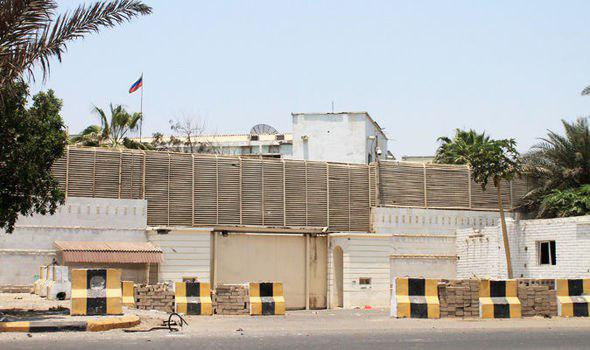
Unconfirmed media reports by Saudi outlets claimed that the Russian ambassador to Yemen has been assassinated after armed gunmen stormed embassy in the capital city.

However, officials denied the claims made by Saudi Arabian media telling NBC News “no-one’s been shot”.

Saudi Arabia’s Barq news agency had  claimed ambassador Vladimir Dedushkin was shot in Sana’a, Yemen’s largest city.

Dedushkin has been ambassador to Yemen since 2013.

Overdue Book Returned to San Francisco Library after 100 Years

book

Webb Johnson was surprised when he found an overdue library book—a selection of short stories, ironically titled Forty Minutes Late—among the possessions of his great-grandmother, Phebe Dickenson Webb.

The book had a century-old due date and had racked up hundreds of dollars in overdue fines. But luckily, the San Francisco Public Library is offering a Fine Forgiveness Program (you can return your super-late books without penalty through Valentine’s Day this year).

Ms. Dickensen Webb’s book was returned to the Park Branch on Friday, January 13. Phebe Dickenson Webb originally checked out the book in early 1917. It appears from the due date form that it was due on April 6, 1917—two weeks after she died.

Iran and Azerbaijan to Launch Joint Pharmaceutical Plant

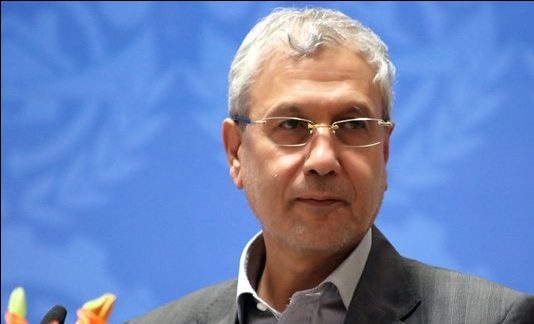
rabiei

Iranian Minister of Cooperatives, Labour and Social Welfare Ali Rabiei is expected to visit Azerbaijan to attend a ceremony due to be held on January 16 to open the joint pharmaceutical plant, AzerNews reported.

Over $30 million will be invested on the construction of the joint venture.

In April 2016, Iran’s Darou Pakhsh Holding Company, the largest pharmaceutical company of Iran, signed a memorandum of understanding with the Azerbaijan Investment Company and Azersun Holding in Baku as part of this project.

The plant, to be located in Pirallahi Industrial Park, is planned to be commissioned within two years and produce dozens of essential drugs for the treatment of heart diseases, contagious diseases and non-communicable diseases, as well as various types of antibiotics and painkillers.

Azerbaijan will import medicines from Iran in the first stage, while Iran will provide the technology needed for the production of drugs in the second stage of the project.

The joint production of medicines will be launched in the third stage.

Azerbaijan sees pharmaceutical production as one of the major areas to diversify the non-oil sector of its economy.

In late 2015, the Azerbaijani government announced that it will create enterprises to produce medicines and end its dependence on import.

Taking into account the profitability of pharmaceutical sector, Baku is keen to cooperate with foreign companies in this direction.

Iraqi Forces One Step Closer to Liberation of Mosul

Mosul

Iraqi forces have also entered the Mosul University complex in the northeast, moving one step closer to the liberation of Mosul.

The imminent capture of Mosul’s second bridge would help parallel advances toward bridges over the Tigris, Financial Tribune reported.

Iraqi forces, which are fighting in eastern Mosul, have now reached two of the bridges and battled their way to the southernmost 4th Bridge several days ago.