Monday, January 12, 2026
Home Blog Page 4143

Trump’s Visa Ban Preventing US Academics from Visiting Iran

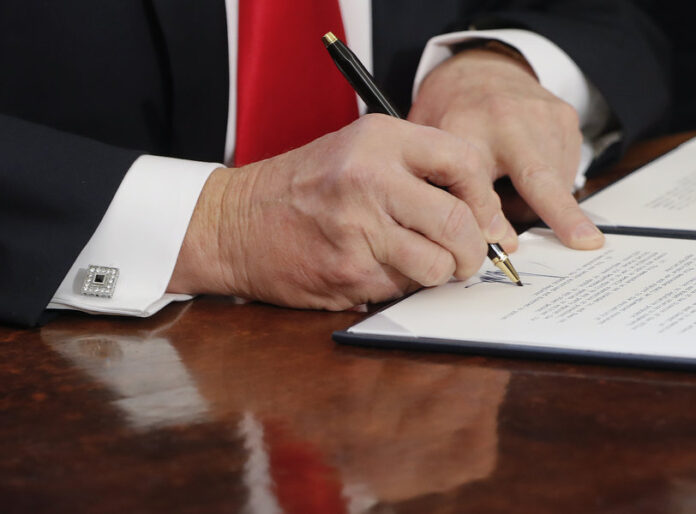
Pablo Martinez Monsivias-AP- Trump
Pablo Martinez Monsivias-AP

Abdolhossein Mokhtabad, a reformist member of Tehran City Council, says the Iranian Foreign Ministry’s move to reciprocate US President Donald Trump’s visa ban has barred American academics and cultural figures from attending Iranian conferences and seminars.

Here is the full text of his Farsi article published in Khabar Online:

If you have followed the latest news over the past few days, you must have read or heard that Iran’s Foreign Ministry reciprocated US President Donald Trump’s decision and issued a visa ban on American nationals travelling to Iran. However, Tehran exempted American wrestlers from the ban and allowed them to travel to Iran to attend Wrestling World Cup due to be held in the Iranian city of Kermanshah.

The eighth Biennial Convention of the Association for the Study of Persianate Societies (ASPS) scheduled to be held in Iran’s Shiraz from 9-13 March was also cancelled due to Trump’s unwise order. Iranologists from 22 countries were to attend the meeting.

A report suggests that organizers of the international event contacted the Iranian Foreign Ministry to discuss the issue, but their talks bore no fruit. At the end, they had to call off the gathering because most of the non-Iranian participants were American researchers. This came as many international researchers had made plans to take part in the conference.

Fortunately, in the case of the wrestlers, the general mood of the Iranian society and efforts by the Iranian Wrestling Federation prompted a decision to allow American wrestlers to travel to Iran. But the Iranian Foreign Ministry could not do anything for American academicians, especially professors of the Persian Language, who are keen on the Iranian culture, and a seminar of such significance was affected by an unwise decision.

It seems the Iranian Foreign Ministry should reverse its reciprocal visa ban on American nationals. We have seen that over the past few days, large numbers of ordinary American citizens as well as academics and artists have staged rallies in different cities in protest at Trump’s decision. Statistics show the presence of Iranians in the United States is of a cultural type. More than 12,000 Iranian university students and renowned professors in the US are making their presence felt in different intellectual, cultural, scientific and other areas, symbolizing Iranians’ potential and capabilities.

So, we recommend that Iranian Foreign Minister Mohammad Javad Zarif and his colleagues at the ministry work out a solution to the problem and turn this threat into an opportunity to promote the Iranian culture.

Israel, Extremists Pose Major Threat to Middle East: Iran’s DM

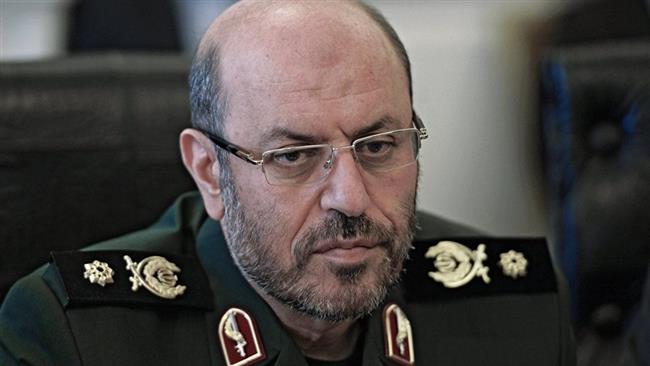
General Dehghan

During a television talk on Tuesday night, the Iranian minister described Israel as the source of insecurity in the Middle East region while warning about Takfiri terrorism.

“Today the immediate threat to the region [is the presence of] Takfiri terrorists created by the Americans, Israelis and certain Arab countries of the region, including Saudi Arabia,” he said.

Dehqan said that Takfiri terrorists were ordered by their masters to create insecurity in the region but warned that they actually posed a threat to the entire world.

He added that the sponsors of terrorists would “rue their acts and turn against them” eventually.

Elsewhere in his remarks, Dehqan also touched on Iran’s military industry and defense doctrine.

He said that the country was actually self-sufficient in manufacturing necessary military equipment.

He also said that Iran would “punish” aggressors while stressing that the country’s doctrine was solely based on deterrence.

Dehqan also underlined the need for boosting Iran’s defense capabilities in proportion to enemy moves.

‘Iran watchful of enemy moves’

Meanwhile, Brigadier General Ahmad Reza Pourdastan, the second-in-command of the Iranian Army, said that Iran monitored all enemy moves.

“The skies of our country at low, medium and high altitudes are all under the watchful eye of [the Iranian] Air Defense and should a move be made [against the country], [our] domestically-manufactured military hardware” would deliver a proportionate response, Pourdastan (pictured below) said.

“The enemy should know that its moves are under our watchful eye and if it intends to make a move, the [Iranian] Defense will repel it,” he added.

Iranian officials have repeatedly stressed the deterrence nature of the country’s defense program, assuring other countries, including neighboring states, that the Islamic Republic’s military might poses no threat to them.

Iran’s Deputy FM Calls for Europe’s More Active Role in JCPOA Implementation

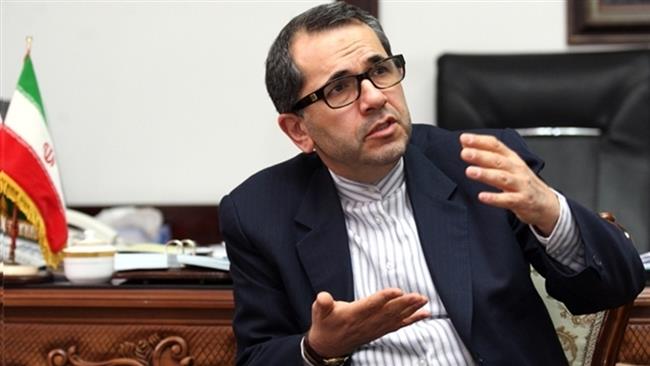
In a speech at the Korber Foundation in Berlin on Tuesday, Takht Ravanchi highlighted the implementation process of the Joint Comprehensive Plan of Action, and the challenges hampering the process, including hurdles to Iran’s banking ties with other countries.

He pointed to the US moves to renege on the JCPOA and called for Europe’s more active cooperation in the implementation of the nuclear deal, particularly in banking fields.

The deputy foreign minister also talked about the latest developments in Iran’s relations with European countries, including Germany.

Iran and the Group 5+1 (Russia, China, the US, Britain, France, and Germany) on July 14, 2015 reached a conclusion over the text of the 159-page deal on Tehran’s nuclear program and started implementing it on January 16, 2016.

The comprehensive nuclear deal terminated all nuclear-related sanctions imposed on Iran.

However, Iranian officials have complained about the failure of the other side, especially the US, to fully implement the accord, as Iran still has problems in its banking transactions with other countries.

Iran Praises Russia’s Role in Enforcement of Nuclear Deal

araghchii

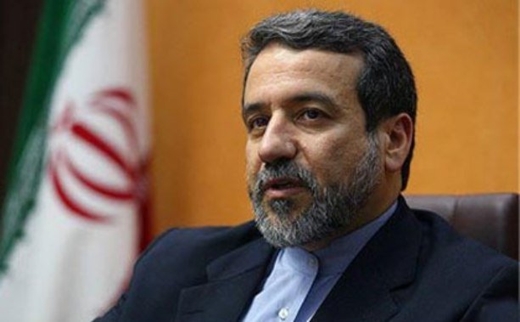
Araqchi, who is in Moscow for an official one-day visit, met with his Russian counterpart Sergey Ryabkov on Wednesday.

During the meeting, also attended by Iranian Ambassador to Russia Mehdi Sanaei, the two sides underlined continuation of mutual cooperation in international issues, including implementation of the Joint Comprehensive Plan of Action (JCPOA), peaceful nuclear collaborations, nuclear disarmament, and the issue of Syria.

They agreed to continue bilateral talks on the JCPOA and disarmament at the expert level.

Ryabkov in this meeting stressed the need for international cooperation to create a nuclear-free Middle East and more coordination between Russia and Arab countries in this regard.

Araqchi, for his part, thanked Moscow for its continued cooperation in enforcing the JCPOA.

Iran and the Group 5+1 (Russia, China, the US, Britain, France and Germany) started implementing the nuclear agreement in January 2016.

Tehran and Moscow work in close cooperation in the nuclear industry, and have increased contacts after coming into force of the JCPOA.

They have also formed a strong alliance in recent years, with both supporting the Syrian government against foreign-backed militancy.

Iran’s Leader Pardons, Commutes Sentences of over 600 Convicts

Iran’s Leader: Abolishment of Israel Not Equal to Abolishment of Jews

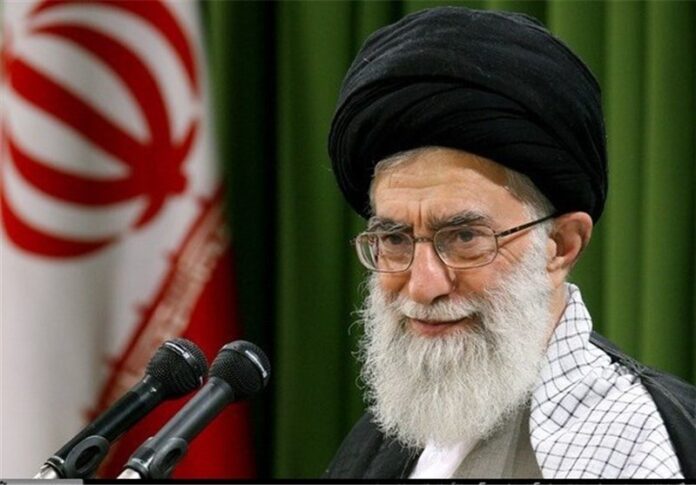
Ayatollah Khamenei on Wednesday granted clemency or eased the sentences of 631 convicts sentenced by various Iranian courts.

Article 110 of the Constitution grants the country’s Leader the right to pardon or reduce the sentences of convicts upon a recommendation from the head of the Judiciary.

The clemency, however, does not apply to all types of convicts, including those who have been sentenced for their role in armed struggle against the country, armed or organized drug trafficking, rape, armed robbery, arms smuggling, abduction, bribery and embezzlement.

Each year in February, when Iran marks the victory anniversary of the 1979 Islamic Revolution, Ayatollah Khamenei grants an amnesty for a number of prisoners.

On Friday, Iran will mark the 38th anniversary of the Islamic Revolution, which put an end to the monarchical rule of the US-backed Pahlavi regime.

US Should Know Threatening Iran Is Pointless: IRGC Commander

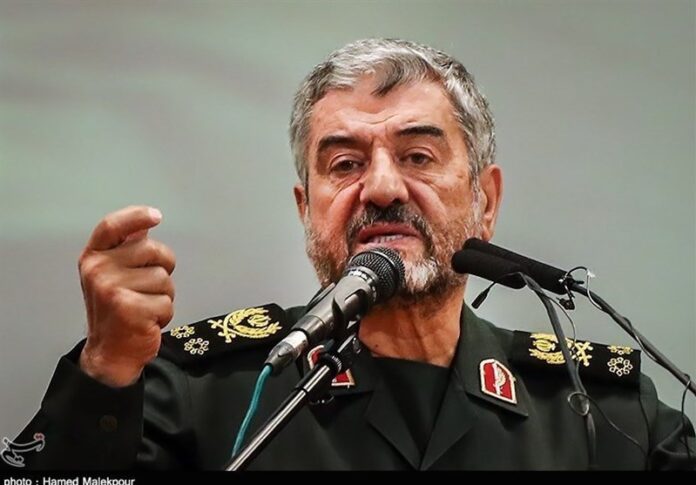
General Mohammad Ali Jafari

“Enemies of the Islamic Revolution in recent years have explicitly acknowledged its glory and might, and we advise the American politicians to consider threatening Iran as useless,” Major General Jafari said on Wednesday, in an address to a cultural event in Iran’s western city of Hamedan.

He then made a reference to American analyses that highlight the “considerable risks” of an encounter with Iran, saying some have even advised Donald Trump to be mindful that Iran is in a position that sees the US as a “paper tiger”, Tasnim reported.

Some other analysts also believe that the US must put aside the notion of being even a half-superpower in the world, the commander added.

Russia Says Iran’s Missile Test Did Not Breach UNSC Resolution

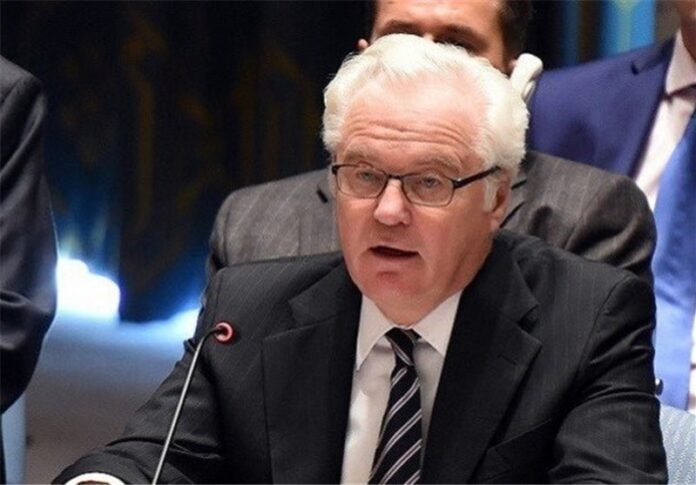
“This outcry about Iran’s ballistic missile launches. I was surprised to hear even American experts speaking on CNN and calling it a violation of bans by the UN Security Council. Those bans were there before, all those bans were lifted,” Churkin told RT in an interview published on Wednesday.

Noting that the resolution only “calls” on Iran not to undertake any activity related to ballistic missiles designed to be capable of delivering nuclear weapons, he said, “So it’s just a call, not a prohibition. Technically or legally you cannot argue that they are violating any kind of a prohibition”.

On February 1, Iran’s Defense Minister Brigadier General Hossein Dehqan confirmed that the country had carried out the missile test, stressing that the Islamic Republic will not allow others to interfere in its defense affairs.

He further underscored that Iran’s missile tests are by no means in contravention of the UNSC Resolution 2231.

Iran, however, maintains that none of its missiles have been designed to be capable of carrying nuclear warheads because nuclear weapons have basically no place in the Islamic Republic’s defense doctrine.

Military Confrontation Not in Line with Trump’s Campaign Promises: Iran’s FM

zarif-mohammad javad

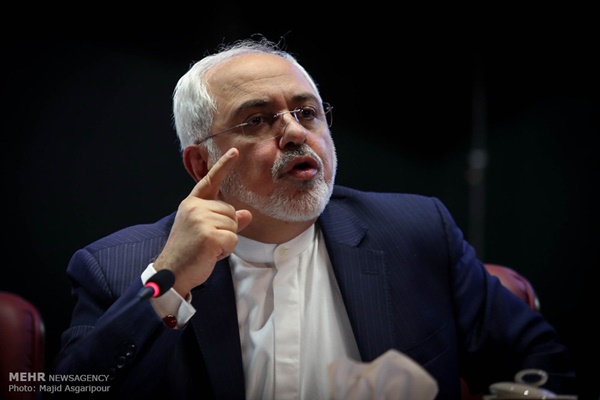
In an interview with Ettela’at daily newspaper on Tuesday, the Iranian Foreign Minister said getting involved in military confrontation without preamble does not seem to be in conformity with the other policies adopted and promises made by Donald Trump.

Here is the full text of the Farsi interview:

What’s your reading of the policies pursued by Donald Trump as new US president?

Mr. Trump is a phenomenon that, in addition to his personal characteristics, represents a nearly global reaction to the globalization trend. Mr. Trump was very distant form the US ruling establishment.

Trump’s victory was predictable. Of course there were a few far-fetched happenings during the course of his triumph. The most important one was that Trump was a person who managed to win the Electoral College vote despite his lack of a political base inside the country and his failure to secure popular vote. A more political figure, like Mrs. Clinton, was expected to be able to reverse the equation. Even for me myself, who has been closely watching US policies for nearly 40 years now, it is a little hard to understand how Mr. Trump could succeed.

Mr. Kissinger has also mentioned that foreign policy is different form a land purchase agreement. This is where many of Trump’s election pledges or others’ promises seem unattainable, given the complexities of, and variables in the international community.

After the first several weeks during which emotions run high, realities begin to set in. Trump has so far been able to impose himself on the system as a broker. The question is how far he will be able to walk along this path. I think at a certain point in time, the US domestic structure, the international relations structure, and international equations will somehow impose themselves on Trump.

Trump’s behaviours have surprised Washington’s European allies and sparked their reaction. What’s your analysis of the 45th US president?

At the same time that Trump entered America’s political arena as the country’s president, a development was unfolding in the UK, and that was Britain’s leaving the European Union known as the Brexit. Now Britain is seeking to find trade partners as well as political partners. Unfortunately, London’s behaviour represented by its unrealistic moves in our region can be seen. This behaviour may, to some extent, draw a line between the UK and other European countries. That could be seen through developments which unfolded some time ago, especially a trip to Washington by British Prime Minister Theresa Mary. Of course, the rest of Europe is leaning toward the right camp, and it remains to be seen what the result of future elections in different European countries, France in particular, will be.

I feel Europe is defying Trump in certain domains, and will agree with him in some other areas. As it could be seen during May’s trip, Trump began to get close to Europe on such issues as NATO. That means bridging differences does not always have to be initiated by Europe. If we want to explain international relations in simple terms, we should say people will either resist Mr. Trump or accept him.

Such broad sentences cannot explain the international situation. We have

been passing through a transition period in the world for more than 26 years now. Politics is passing through a transition period both in Europe and in the US. And the condition for transition is usually very dynamic. In a dynamic situation, everybody tries to exert the most influence. Currently, the Zionist regime [of Israel], and particularly the rightist lobbies in the US, are trying their utmost. Certain Arab states are also trying to do so, because in a dynamic situation nothing is where it should be, so everything is subject to change.

What matters to the French is the climate change summit and the agreement reached in Paris. British Prime Minister Theresa Mary’s most important achievement was that she could prompt Trump to say that NATO plays a key role. The important point for the Israeli regime is also to have an anti-Iran agenda. Given Trump’s inclinations, all these players will try to be as influential as possible. What seems to be a very determining issue here is the personal relationship that Trump seeks to establish with [his Russian counterpart Vladimir] Putin and begin interaction. But the structures and realities which exist regarding US-Russia rivalry can serve as an obstacle in certain cases.

Trump has told American generals to prepare themselves for a world war. Is this behaviour simply the continuation of his campaign moves, or could he really go for adventurism? Will Europe stand by Trump?

Trump made some promises during his election campaign, and had a tendency toward reviving America’s economic situation. He has even enumerated his priorities in that domain. So, as he puts it, he follows a two-pronged objective: improving the country’s economy and ensuring national security.

Another thing that Trump wants to do for the US economy is to promote employment and increase the ease of doing business. Trump’s order to build a wall along the US-Mexico border is in line with his plans to ameliorate the country’s economy. All these issues show Trump is unlikely to go for adventurism.

The same assumption existed regarding Mr. Bush and Mr. Cheney. Cheney became America’s vice-president as an oil tycoon, who was even present in Iran through the Halliburton Company. Nobody would have thought a person who was mostly involved in economic oil-related activities would take actions as such. But the September 11 incident turned Bush into a “war president.”

Bush called himself a “war president.” An incident may change the mood. Mr. Trump and those close to him are prone to such change. Trump has issued orders part of which is compatible with his mentality. But getting involved in military confrontation without preamble does not seem to be in conformity with the other policies he has adopted. Of course, the situation may be imposed on him, or some statesmen within the US ruling elite or even outside players like the Israeli regime may impose such a situation on Trump.

Americans are not used to settling for something less than their demands. They are used to putting forward their demands and hearing the other side accept. In the JCPOA, the US achieved almost none of its demands. Washington didn’t want Iran to have even one centrifuge. But Iran does have centrifuges. After the US accepted Iran with centrifuges, it didn’t want to accept our Research and Development (R&D) activities.

Given Trump’s policies, should we be concerned about the fate of the JCPOA?

The JCPOA is not only an agreement with the US. It is a multilateral deal. I think the JCPOA is a reality. Americans, whether during the Obama era or under Trump, are not interested to help. Things may get more difficult in the coming months. Europe and the rest of the world stress the need to implement the JCPOA. However, US authorities have made certain remarks on that and Trump said recently that the JCPOA is the worst of agreements. Americans are not used to settling for something less than their demands. They are used to putting forward their demands and hearing the other side accept. In the JCPOA, the US achieved almost none of its demands. Washington didn’t want Iran to have even one centrifuge. But Iran does have centrifuges. After the US accepted Iran with centrifuges, it didn’t want to accept our Research and Development (R&D) activities.

Trump may try to renegotiate the deal. It’s pretty obvious that neither Iran nor Europeans will accept a renegotiation of the agreement. The international community won’t accept it, either. So, we are having tough days ahead of us.

Trump may try to renegotiate the deal. It’s pretty obvious that neither Iran nor Europeans will accept a renegotiation of the agreement. The international community won’t accept it, either. So, we are having tough days ahead of us.

What’s your take on Kuwait’s assuming an intermediary role to help settle Iran’s differences with some regional countries, especially Saudi Arabia?

Regional security is part of Iran’s vital interests and we believe regional countries themselves should ensure their security. We have never sought to enter a conflict with regional states. After the nuclear negotiations, and despite unwise policies adopted by certain regional governments to sabotage the talks – and these efforts come to light more and more everyday – the first thing I did was to travel to Kuwait and Qatar at their own suggestion. Unfortunately, the Saudi government didn’t allow its own proposal to come through. Over the past months, we welcomed similar invitations by other countries. But unfortunately Riyadh was after tension rather than seek a solution.

If they change their viewpoint and come to realize that fuelling violence in Syria and Yemen is not in their interest, that stoking extremism won’t benefit them, then we will be ready for dialogue.

See, it’s been nearly two years that defenceless Yemeni people have been bombarded with the most advanced weapons on a daily basis. This will be a permanent stain on the United States, Britain and all countries that provide arms for killing defenceless people. Despite opposition from their own people, including intellectuals and policy-makers, these countries have continued this policy and abetted the crimes.

Whenever they come to understand that such actions will only do them harm, as was the case with the oil issue, then I think a way could open up to have a different kind of relationship in the region. For this to happen, they need to be realistic. Under the Constitution, we reject both “domination” and “submission to domination.” Iran’s policy is based on constructive interaction with all, especially neighbours.

We hope the message sent by the Kuwaiti Emir on behalf of himself and other member states of the Persian Gulf Cooperation Council, in which he expressed readiness [to mediate], is a sign of firm determination; if that is so, Iran will have the same firm determination, too.

 

US Finally Grants Visa to Iranian Archers for Las Vegas World Cup

A couple of days ahead of Las Vegas 2017 Indoor Archery World Cup Stage 4 and Final, the US embassy in Armenia granted visa to 16 members of Iran’s archery delegation.

Mohammad Ali Shojaei, the President of Iran’s Archery Federation, announced on Wednesday that visa has just been issued for all members of Iran’s delegation.

Referring to the short time left to the beginning of Las Vegas World Cup, he said the Federation will do the best it can to send Iranian athletes to the games.

The delay in visa issuance was caused by an executive order by US President Donald Trump that banned citizens of seven Muslim-majority countries, including Iran, from entering the US.

However, the order was temporarily lifted based on a court ruling by a US federal judge.

Following Trump’s order, the Iranian government vowed to reciprocate the move by barring US citizens, including the members of US wrestling team, from entering Iran.

However, following the US court ruling that lifted the US ban, Iranian Foreign Ministry decided to give visa to US wrestlers to attend Iran Wrestling World Cup.

Iranian President Calls for NAM Members’ Unity against Unilateralism

Rouhani

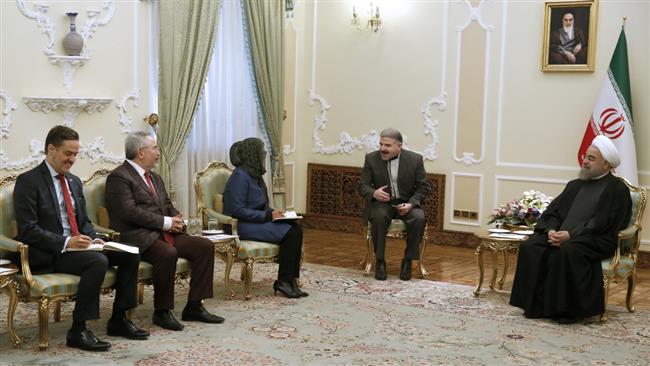
In a Wednesday meeting with Venezuela’s visiting Foreign Minister Delcy Rodriguez and Oil Minister Nelson Martinez, Rouhani said independent states, particularly members of the Non-Aligned Movement (NAM), “should work hand in hand to play a more active role in regional and international affairs.”

He added that the US can no more rally the world’s public opinion behind its own causes, a situation which offers a good chance to NAM members to have a more influential role in current global affairs.

The Iranian chief executive further said that Iran and Venezuela share a common policy of protecting their independence and resisting all countries pursuing unilateralism in the world.

“The circumstances of today’s world require that independent countries, especially NAM member states, act in a more united fashion against unilateralism, extremism, and violence, while protecting [the rights of] their [respective] nations,” the Iranian president stated.

NAM, an international organization with 120 member states and 21 observer countries, represents nearly two-thirds of UN members. It is regarded as not formally aligned with or against any major power bloc.

The movement is currently chaired by Venezuela, which took over the rotating presidency from Iran in September 2016.

Rouhani also hailed the positive steps taken towards stabilizing oil prices at an OPEC meeting in Algeria in September last year, saying the organization’s oil producers should try to consolidate the prices at a level that would be fair for both producers and consumers.

OPEC members agreed at the meeting to limit oil production in an effort to raise the low crude prices.

They decided to cut production by 750,000 barrels a day. The move came after Saudi Arabia created an oil glut in the market, which severely damaged other oil-driven economies across the world.