Thursday, December 25, 2025
Home Blog Page 4139

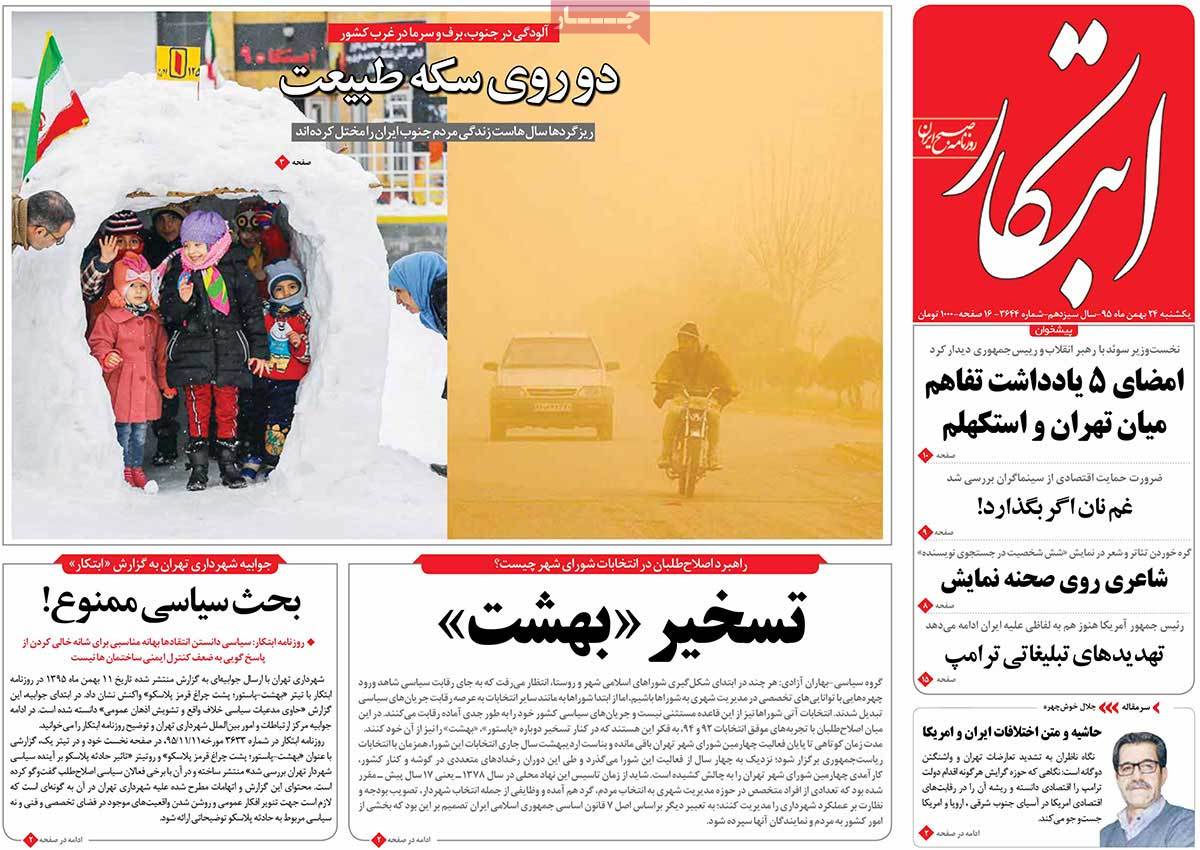
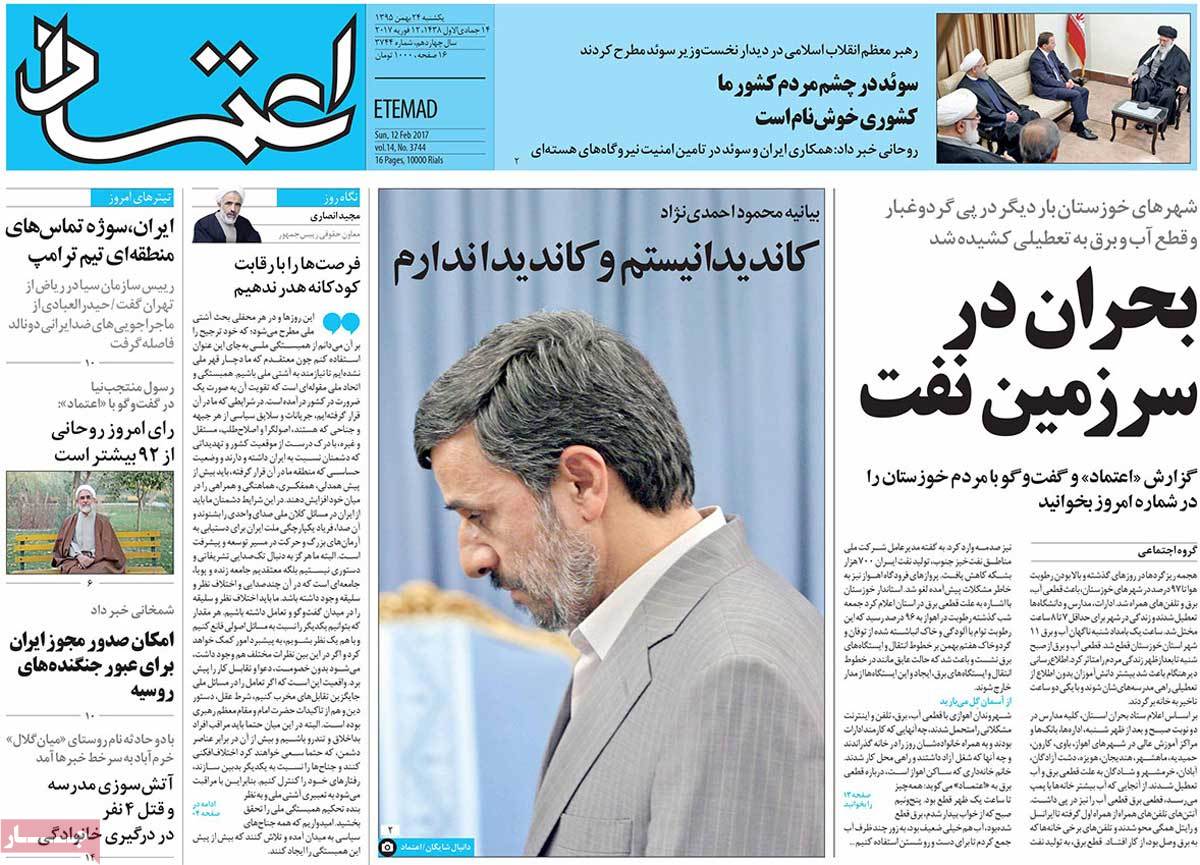
Firefighters Contain Blaze at Tehran’s Oil Refinery

Oil Refinery

Firefighters managed to extinguish a massive fire after four hours. The operation ended early this morning.

A lightning strike set fire to an oil tank and the fuel leaking out made the fire spread through the surrounding area.

This was the second major fire in Tehran in the past two weeks.

On January 19, top stories of the Plasco building in downtown Tehran caught fire in the morning, and the whole building crumpled to the ground four hours later.

More than 20 people, including 16 firefighters, died in the incident.

Another Airbus Plane Painted in Iran Air’s Livery

Iran Air-Airbus a321

“Iran Air’s new A330 has been spotted … Awaits delivery!” reads a late-Friday tweet from Iran Air’s official handle.

Iran Air received an Airbus A321 on January 12, which marked the first delivery from western plane-makers after the nuclear deal.

A background check of the A330 shows the plane was initially built for the Sao Paulo-based Avianca airline, which cancelled its order before delivery.

The delivered A321 was also sold to Iran after it was cancelled by another buyer.

Iran Air says it hopes to receive at least two aircraft in addition to the one it received earlier from Airbus by the end of the current Iranian year (March 20, 2017).

After the nuclear deal was signed, Iran Air ordered 100 airliners from Airbus and 80 from Boeing and is close to a deal to buy 20 turboprop aircraft from Toulouse-based ATR.

Iran’s Tejarat Bank Files Lawsuit against EU for Losses Incurred during Sanctions

tejarat

“Tejarat and many other Iranian banks suffered a great deal of direct and indirect losses followed by the unjust sanctions imposed on Dec. 2011,” Mohammad Ebrahim Moqaddam was also quoted as saying by Banker.ir.

“After Tejarat Bank was vindicated by the European Union’s judicial bodies and the embargo was lifted, the bank sought the help of professional accounting firms in estimating the damage inflicted by EU sanctions within the framework of international standards.”

According to Moqaddam, restrictions on his bank led to its accounts being frozen by EU authorities, resulting in a considerable reduction in the private bank’s foreign exchange revenues.

European Union’s second highest court annulled EU sanctions on Tejarat in January 2015 before the historic nuclear deal was reached between Iran and world powers after it was proved that the bank had no role in financing the Iranian nuclear program.

The court ruling ordered the release of the Tehran-based lender’s assets frozen in the EU and the resumption of its activities there.

The General Court struck down the sanctions, saying the Council of EU governments had failed to prove that the bank had provided support for the nuclear program or had helped others to circumvent sanctions.

It also said the bank was partially privatized in 2009 and the Iranian state was no longer its majority shareholder.

The bank’s CEO said pursuing the action at ECJ required hundreds of hours of meetings with legal advisers and both local and international lawyers, and the translation of thousands of pages of the bank’s papers.

Moqaddam assured shareholders and customers that Tejarat Bank will continue to use its full professional and legal force to protect their interests and pursue the lawsuit for claiming the damages inflicted by the EU sanctions.

Bank Mellat, another major private bank, revealed last March that the UK High Court ruled in favor of his bank and it will receive $4 billion in compensation by late spring.

The bank had made a case against the UK Treasury for being sanctioned without sufficient evidence over claims of its involvement in the country’s nuclear program.

Thousands of Floot-Hit People in Southeastern Iran Receive Relief Aid

sistan

Speaking to Tasnim in the provincial capital of Zahedan, Head of the IRCS in Sistan and Balouchestan Province Rasoul Rashki said a total of 1,126 rescue workers have participated in the relief operations in the province’s flood-hit areas.

He said that during the operations, 10,641 flood victims have received relief aid and 1676 families, including 7,957 people, have been moved to makeshift shelters.

The governor of Sistan and Balouchestan said on Friday that one person has been killed and about 1700 houses have been damaged after floods hit the province.

Thousands of Floot-Hit People in Southeastern Iran Receive Relief Aid

“Our first measure after the rain was to make efforts to save people from drowning in the floods and prevent closure of roads,” Ali Osat Hashemi told Tasnim.

However, he added, 1675 houses have been damaged by the flashfloods in the province mostly because the houses were made of mud-bricks.

The provincial governor further said an old woman lost her life in the floods after her 50-year-old mud-brick house collapsed.

Hashemi said that the downpour was otherwise important in the province, which has been facing severe drought, noting that before the rain, palm trees in the province were dying because of lack of water.

Iran Says It Has Injected UF6 into Its IR8 Centrifuges

nuclear

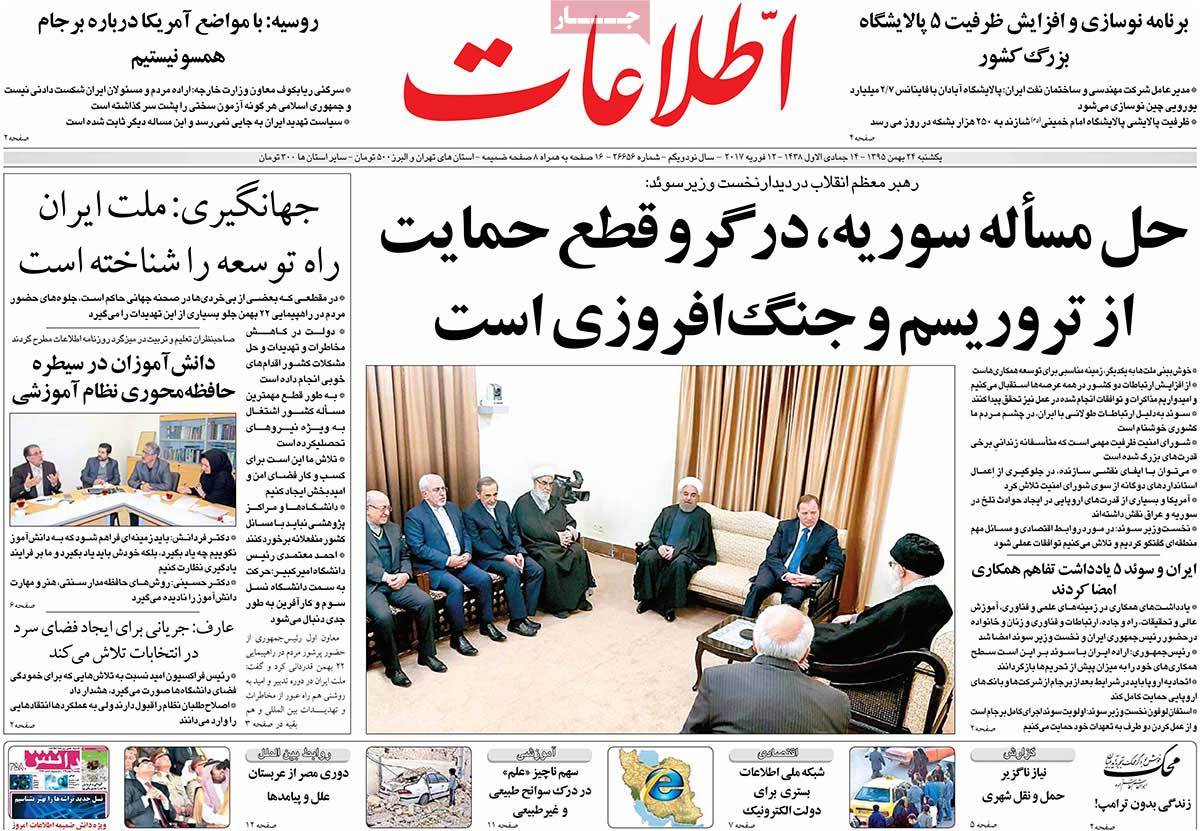
In a statement on Saturday, the AEOI said the injection of UF6 gas into IR8 machines, which are the most advanced and modern centrifuges, has been made in compliance with the terms laid down in the 2015 nuclear deal between Tehran and six world powers.

Iran and the Group 5+1 (Russia, China, the US, Britain, France, and Germany) reached the nuclear deal, known as the Joint Comprehensive Plan of Action (JCPOA) in July 2015 and implemented it in January last year.

With the injection of UF6, which is a gaseous uranium compound, into the machines, a major breakthrough in the country’s peaceful nuclear program on development of IR8 centrifuges has been achieved, the statement added.

The important stage comes in line with the guidelines of Leader of the Islamic Revolution Ayatollah Seyed Ali Khamenei as well as Tehran’s commitments under the Joint Comprehensive Plan of Action (JCPOA), it further said.

Iran has in recent months stepped up its efforts to continue its research and development (R&D) activities in the field of nuclear energy.

Back in December 2016, Iranian President Hassan Rouhani said the country’s program to develop nuclear propulsion systems will begin in the near future.

Rouhani said as he had promised, the IR1 centrifuges, which were the first generation of the kind, have been replaced by IR8 centrifuges, which are the most advanced and modern centrifuges.

He said that the time has come to begin the program on nuclear propulsion system, noting that a directive has already been issued in this regard and that nuclear propulsion devices will soon come into operation.

Trump’s Visa Ban Is a Gift to Extremists: Iranian FM

zarif

“Muslim Ban shows baselessness of US claims of friendship with the Iranian people while only having issues with the government,” Zarif said in a series of posts in his Twitter account in reaction to the visa ban introduced by Trump.

“Collective discrimination aids terrorist recruitment by deepening fault-lines exploited by extremist demagogues to swell their ranks,” he added.

He noted that Iran will be taking suitable reciprocal actions to protect its citizens, while respecting US citizens and differentiating between them and Washington’s hostile policies.

Zarif-Twitter

“Unlike the US, our decision is not retroactive. All with valid Iranian visa will be gladly welcomed,” he added.

He also stressed that the international community requires more dialogue and cooperation in order to cut the roots of violence and extremism in a comprehensive manner.

In a move which sparked widespread censure, US President Donald Trump signed a sweeping executive order on Friday to suspend refugee arrivals and impose tough controls on travelers from Iran, Iraq, Libya, Somalia, Sudan, Syria and Yemen.

Iran Vows to Reciprocate Trump’s ‘Insulting’ Visa Ban

us

“In order to protect the dignity of all the Iranian people inside and outside the country, the government of the Islamic Republic of Iran will scrutinize the short-term and long-term outcomes of the decision by the US government on Iranian nationals and will take appropriate consular, legal and political measures,” the ministry said in a statement on Saturday.

Here is the full text of the Foreign Ministry’s statement:


In the Name of God, the Compassionate, the Merciful


The decision of the Government of the United States to impose restrictions on the travel of Muslims to the United States – though temporarily for three months – is a clear insult to the Islamic world, and especially the great nation of Iran; and despite claims of being made to combat terrorism and protecting the people of the United States, it will be recorded in history as a great gift to extremists and their supporters.

While the international community needs dialogue and cooperation to address the roots of violence and extremism in a comprehensive and inclusive manner, and at a time when the United Nations General Assembly approved by consensus the proposal of the President of the Islamic Republic of Iran for a World Against Violence and Extremism (WAVE), the imprudent decision of the U.S. Government to apply collective discrimination against citizens of Muslim countries will only serve to provide a fertile ground for more terrorist recruitment by deepening the ruptures and fault-lines which have been exploited by extremist demagogues to swell their ranks with disenfranchised and marginalized youth, and further promote their campaign of hatred, violence and extremism. Moreover, with this decision, the reports of U.S. intelligence and security organs and past statements of current US officials which emphasized on the role of the United States and its regional allies in fomenting and expanding extremist groups, including Daesh (ISIS), appear to have been conveniently forgotten.

The decision of the Government of the United States to target the people of Iran and clearly insult all sections of this great nation has put on clear display the baselessness of the U.S. claims of friendship with the Iranian people while only having issues with the Government of Iran. It also shows the rancor and enmity of some in the US government and influential circles both within the United States and abroad towards all Iranians around the world: The Iranian nation who, benefiting from an ancient and rich civilization and religious beliefs founded on humanitarian values, has always promoted the message of constructive engagement, not only resisted domination but also the temptations to dominate others, and fought extremism and violence; a resilient nation which has stood firm in the face of extremist terrorists and which was among the first victims of organized terrorism; a great people which has had no presence in any extremist terrorist operation, but instead in all societies in which it has travelled or resided as scientists, students, entrepreneurs, tourists or immigrants,   has been known as one of the most law abiding, cultured, educated and successful communities, thus representing its Iranian and Islamic culture and civilization in the most dignified and peace-loving manner.

To ensure respect for the dignity of all members of the great Iranian nation at home and abroad, the Government of the Islamic Republic of Iran will engage in a careful assessment of the short and medium-term impact of the decision of the U.S. Government on Iranian nationals, and will take proportionate legal, consular and political action and while respecting the American people and differentiating between them and the hostile policies of the U.S. Government – will take reciprocal measures in order to safeguard the rights of its citizens until the time of the removal of the insulting restrictions of the Government of the United States against Iranian nationals.

In order to monitor the implementation of this decision and adopt appropriate measures commensurate with national interest in specific cases, a mechanism is established in the Ministry of the Foreign Affairs of the Islamic Republic of Iran with the participation of relevant organizations.

Meanwhile, all diplomatic and consular missions of the Islamic Republic of Iran have been instructed to prioritize the provision of consular facilities to all Iranian nationals who due to the illegal step of the Government of the United States have been prevented from returning to their places of residence, work and education.

The decision of the Government of the United States incorporates certain requests that are illegal, illogical and contrary to international law. Considering the absence of relations between the Islamic Republic of Iran and the United States, those requests are not applicable to and cannot be accommodated by the Government of the Islamic Republic of Iran. Any abuse by the United States of this situation to prolong the discriminatory measures and cause any further inconvenience for Iranian nationals is not only illegal but against common sense.

The Islamic Republic of Iran will carefully examine and legally pursue any negligence or violation of the international obligations of the United States under bilateral agreements and multilateral arrangements and reserves the right to respond as deemed necessary.


Fajr Int’l Theatre Festival Underway in Iran

Fajr

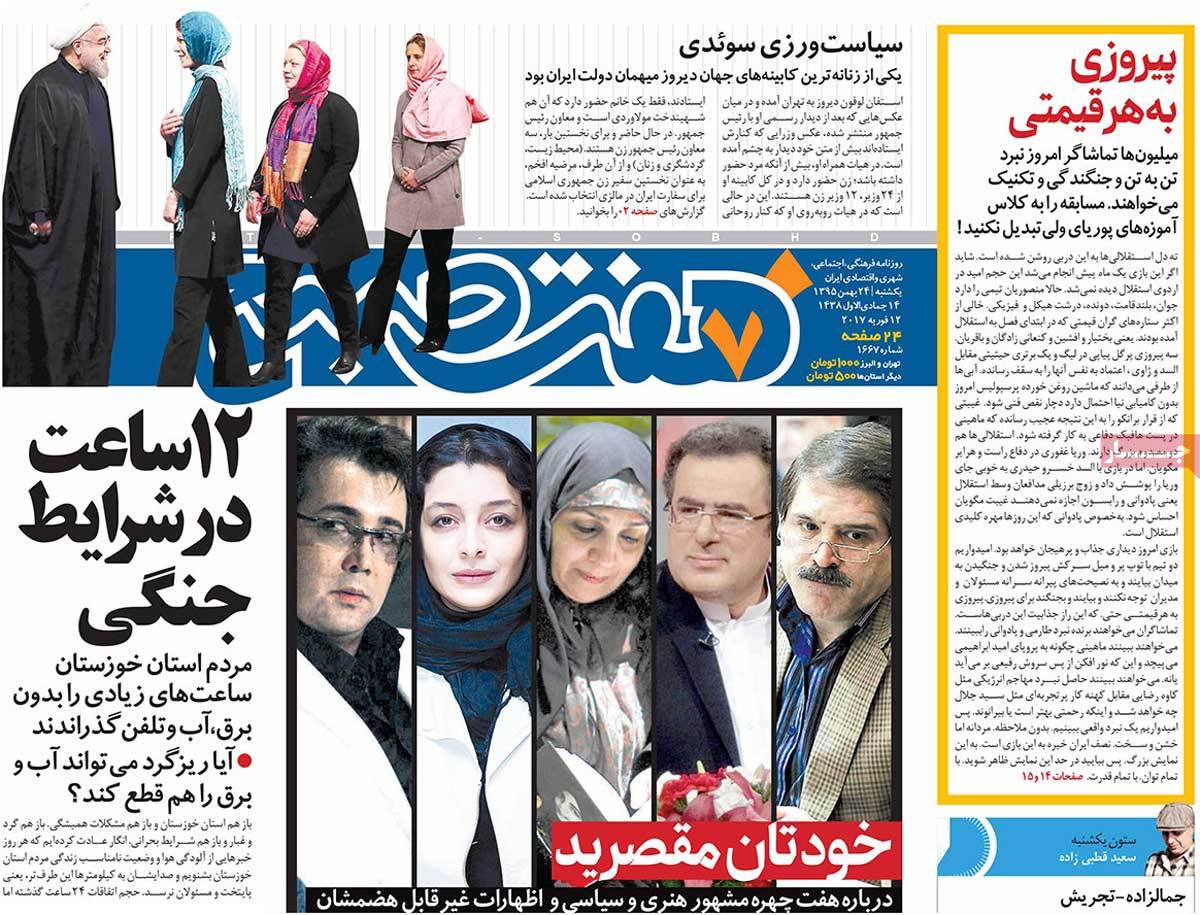
A total of 14 plays were staged on the eighth day of Fajr Int’l Theatre Festival on Friday, January 27, at different locations in Tehran, ISNA reported.

‘Baloon’, a play from the Netherlands directed by Dutch actress-director Boukje Schweigman, was performed at Iranshahr Theatre.

Competing in the Nation’s Theatre section of the festival, the play is a journey exploring boundaries and space and a trip through light and darkness in which Schweigman and two other actors played.

Directed by the Polish actor and theatre director, ‘Chorus of Orphans’ was staged at Hafez Hall.

The play was an abstract, wordless performance of the ordeals suffered by children whose parents have died; and used the situation of an orphanage as metaphor for living in Poland.


Unconventional Swiss Play

An unusual play from Switzerland was performed at Molavi Hall. Tilted ‘Twilight’, it was more like an artistic installation than a real theatrical performance as it had no actor and no story. The set included five benches and lots of lamps which were turned on and off during the one-hour play. The set design was accompanied by music and sound of cars in the street, dogs barking, rain falling, storm and piano melodies among other sounds.

Director of the work, Caristina Galbiati, said lighting and sounds served as the actors in his production and the story unravels in the audience’s mind.

Acclaimed Iranian author, translator and head of ‘Mardom’ (people) Theatre Group, Dariush Moaddabian, also came to the festival with three productions staged at Entezami House Museum in the Fajr+ section which is non-competitive.

In ‘An Adventurous Day for Mr. Falentin’ written by German comedian and author Karl Valentin, Moaddabian has combined 8 short comedies by Valentin which he has translated and performed earlier. The play will be performed on Sunday and Monday.

‘Reading Golestan’, based on tales from the famous book by the classical Persian poet Saadi, will be staged on Saturday. In the work, Moaddabian plays the role of Saadi as the narrator.

‘Postal Order and Gumidan Family’ is another play he staged on Thursday. It was a mix of two short comedies by the late 19th and early 20th century French dramatist, novelist and satirist Georges Courteline.

Here are photos of the ongoing festival released by Honar Online:


The festival will conclude on January 31 by announcing the winners in different sections, Financial Tribune reported.

From early January till mid-February, several festivals are held under the banner of ‘Fajr,’ on the occasion of the 10-Day Dawn (Fajr) Festivities to mark the anniversary of the 1979 revolution in Iran.

Subtle Flavours Used in Iranian Foods

food

Iran’s climate favors the goat, which is known as the “poor man’s cow”, but does not suit keeping fresh milk, so Iranians tend to eat a lot of dry cheeses and rich yogurt. Most families make their own yogurt, which can be used as an ingredient in many dishes or as a cool refreshing drink.

Iranians pride themselves on their skill in preparation of rice, and there are a vast number of varieties of two common dishes, polo and chelo. Polo consists of vegetables or meat cooked and mixed with rice, whereas chelo is prepared over the course of many hours with crustier rice topped with sauces. Some popular polos are polo chirin, which is made with saffron, raisins, almonds and orange; adas polo, made with lentils and meat; and shekar polo, a very sweet dish prepared with honey, sugar almonds and pistachio.

Wheat bread is considered the poor mans alternative to rice, but still comes in many different varieties Lamb is Iran’s favorite meat, but kid, beef and chicken can also be found. Fish is common as well, with swordfish being a famous specialty of the areas near the Caspian Sea. Seafood is very rarely eaten, and pork, like alcohol, is forbidden.

Subtle Flavours Used in Iranian Foods

Iranians enjoy green salads with olive oil, and during the appropriate seasons, eat vast amounts of olives, grapes, pumpkins and all kinds of fruits  either eaten fresh or cooked with meat and rice. There are always plenty of dried fruits like figs, dates, apricots and peaches.

Dolmeh most commonly refers to vine leaves stuffed with a combination of meat and rice, but in fact can be any stuffed fruit or vegetable. Popular varieties include stuffed cabbage leaves, eggplant, tomato, spinach, pepper or apple.

The Iranian sweet tooth must be seen to be believed. Rosewater and orange water are typically used as flavorings, as well as pistachio and honey. Ice cream is popular and there is also a type of candy floss that is very popular. Baklava and halva are commonly eaten on special occasions. Each area has its own method for the preparation of biscuits and candies.

Iranians often drink cold water with meals, but tea is the true national drink. The most common method is to hold a sugar cube between the teeth so that it dissolves as the tea is drunk. A visit to an Iranian teahouse is a great experience for any tourist. Herbal teas such as chamomile, ginger, saffron, rose, violet, and jasmine are often drunk for their medicinal properties.

Subtle Flavours Used in Iranian Foods

Coffee is also a popular beverage, generally taken black and super-strong. In the summer you can find fruit or flower syrups, taken with plenty of ice. Dough, a cold drink made from yogurt and mineral water, is also well worth trying. Alcohol free beer is available in Iran, and rumor has it that some Iranians take this stuff home and ferment it themselves at home to add alcohol. A strong liquor called arrack and tasting of aniseed is also drunk.

Unfortunately for the short term tourist, restaurateurs in Iran often seem unaware of the amazing variety of food their culture has to offer, and often do little beyond kebabs and rice. Most of Iran’s excellent food is confined to the kitchen of the family home. If you are lucky enough to be invited to an Iranian home for dinner, you should without doubt accept. The meal may well be set on the floor, sometimes without utensils.

Subtle Flavours Used in Iranian Foods

Child Soldiers, Most Vulnerable Victims of War

Child-soldiers

“It is estimated that 250,000 children are fighting in wars all over the world. Recruited by force or lured by the false promise of an escape from poverty,” wrote the news website Peace Direct.

According to a Farsi report by Sayeh News, this phenomenon is called “child soldiers”; a term that may be unknown to you.

Another shocking fact is that “it is thought that 40% of child soldiers are girls.”

Child-soldiers“Evidence suggests that child soldiers are active in at least 14 countries: Afghanistan, Burma, Central African Republic, Chad, Colombia, DR Congo, India, Iraq, Philippines, Somalia, South Sudan, Sudan, Thailand and Yemen.” Still, this number doesn’t include the children used by such terrorist groups as ISIS.

“The military use of children takes three distinct forms: children can take direct part in hostilities (child soldiers); they can be used in support roles such as porters, spies, messengers, lookouts; or they can be used for political advantage [either] as human shields and/or in propaganda,” it is written in Wikipedia about the military use of children.

“Those who recruit children for use in armed conflict take advantage of a child’s vulnerability as they are not yet emotionally and physically mature. As such, they can be easily manipulated into committing violence they are too young to understand or even resist,” wrote the news website Vision Launch.

“In one sense, this is not really new. For centuries children have been involved in military campaigns—as child ratings on warships, or as drummer boys on the battlefields of Europe,” wrote the website of UNICEF, the famous organization that fights for children’s rights. “In 1988 alone, they numbered as many as 200,000.”

Child-soldiers

The dangers of military use of children isn’t limited to physical injuries and death, as the informative legal organization of Child Soldiers writes in its website, “Witnessing killing, and especially taking part in it, is particularly harmful to a child, who is still developing psychologically and emotionally. Children associated with military forces also face a higher risk of being sexually abused by adults or other children in their military group. Such traumatic events can disrupt children’s development, staying with them for the rest of their lives.”

During the last 40 years, several laws have been made to protect the children of war.

“In 1977, the Additional Protocols to the 1949 Geneva Conventions prohibited the military recruitment and use of children under the age of 15, which is now recognized as a war crime under the Rome Statute of the International Criminal Court (2002),” wrote Child-Soldiers.org.

Child-soldiers“Combined with issues of poverty, the lack of access to education or training, discrimination, and vulnerability, children are easy targets for recruitment by armed groups. Children who are orphaned, unaccompanied or living in a difficult family environment, see it as a solution to their problems, and taking part in an armed group seems safer than confronting these problems. Revenge, community identity, and ideology can also influence children,” wrote Humanium, the website of an international child sponsorship NGO.