Saturday, April 11, 2026
Home Blog Page 4127

Iran Slams Ontario Court’s ‘Unacceptable’ Ruling

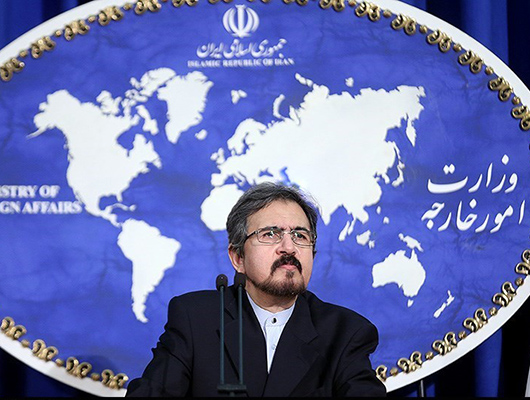
Bahram Qassemi

Qassemi on Sunday denounced the Ontario court ruling as unacceptable, saying it runs counter to “the plain principles of international law on the impunity of states and their assets.”

His comments came after Justice Glenn Hainey ruled that Iran should pay the $300,000 legal bills of the victims who had sought compensation in the Ontario court under the Justice for Victims of Terrorism Act.

The Iranian spokesman deplored the Canadian judge’s decision for neglecting international regulations and equality of states.

Iran has already lodged an official protest against the ruling, Qassemi noted, adding that the country reserves the right to follow up with political and legal measures in this regard.

Spokesman Rejects Turkish FM’s ‘Unconstructive’ Claims against Iran

Bahram Qassemi

“Those who have carried out meddlesome, illegal and illegitimate measures, supported terrorist groups and caused bloodshed and escalation of tensions and instability in the region cannot evade liability for such moves by playing a blame game,” Iranian Foreign Ministry Spokesman Bahram Qassemi said on Sunday.

They cannot free themselves from their self-imposed quagmire by leveling accusations against others, he added.

“The Islamic Republic of Iran’s regional policy has always been and will be based on maintaining the stability and security of all countries and neighbors,” the Iranian spokesperson said.

Qassemi emphasized that many fair governments and nations in the region and across the world have acknowledged such a policy pursued by Iran and welcome it.

Speaking at the Munich Security Conference on Sunday, the Turkish foreign minister criticized what he called an Iranian “sectarian policy” aimed at undermining Bahrain and Saudi Arabia, saying, “Turkey is very much against any kind of division, religious or sectarian.”

Turkish minister’s remarks came despite the fact that his country is widely known as a staunch supporter of militants wreaking havoc in Syria, providing them with money and arms as well as free passage through Turkish soil to Syria.

Iran’s Roads Minister Survives Impeachment

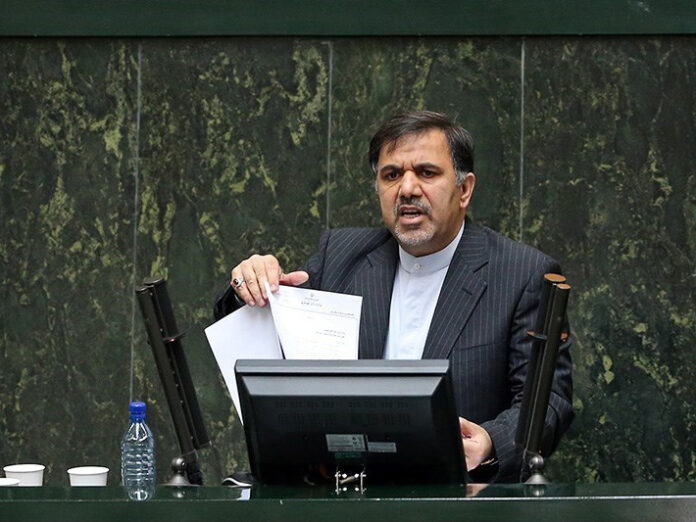
Abbas Akhoundi attended an open session of Iranian Parliament on Sunday for the second time since he took the helm in August 2013. He had already survived an impeachment session in October 2015.

In the Sunday session, Akhoundi secured a vote of confidence as 176 lawmakers out of a total of 255 voted in favour of his reinstatement while 74 voted against and 5 abstained.

The embattled minister was being grilled over a number of issues including a train collision that killed nearly 50 people in north central Iran on November 25, 2016. Some lawmakers blamed Akhoundi’s mismanagement for the deadly crash.

IRGC Ground Force Test-Fires Smart Rockets in Major Drills

IRGC

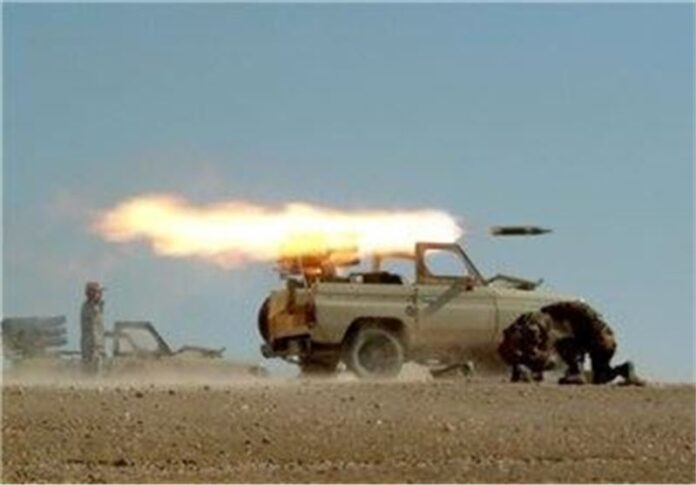
The first phase of the three-day war game codenamed “Payambar-e Azam 11 (The Great Prophet)” kicked off in Dasht-e Kavir on Monday morning under the motto of “Presentation of Power and Sustainable Security”.

Various units of the IRGC Ground Force have participated in the military drills, including the artillery, air defense, drone, infantry and air force units.

In the first phase of the war game, the positions of the mock enemy were hit by advanced and smart rockets with pinpoint accuracy.

Earlier on Saturday, Commander of the IRGC Ground Force Brigadier General Mohammad Pakpour had announced that the military drills will be staged in two phases, adding that advanced rockets will be test-fired during the war game in central parts of the country as well.

The commander also highlighted the importance of unmanned aerial vehicles (UAVs) in the IRGC Ground Force and said drones are now used in all the missions of the force, including reconnaissance, combat and suicide missions.

Iran’s Armed Forces hold routine military exercises throughout the year.

The Islamic Republic has repeatedly assured other nations, especially neighboring states, that its military might poses no threat to other countries, stating that its defense doctrine is based on deterrence.

Iranian FM Offers Dialogue with Arabs on ‘Anxieties’, Violence

zarif

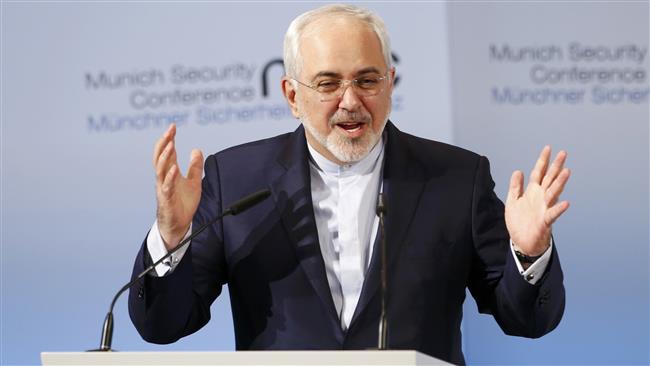
“Countries in the Persian Gulf region need to surmount the current state of division and tension and instead move in the direction of erecting realistic regional arrangements. It can perhaps start with a modest regional dialog forum,” he said on Sunday.

Zarif addressed the Munich Security Conference, an annual gathering of top diplomats and defense officials, urging Arab states to work with Iran to address “anxieties” and violence across the region.

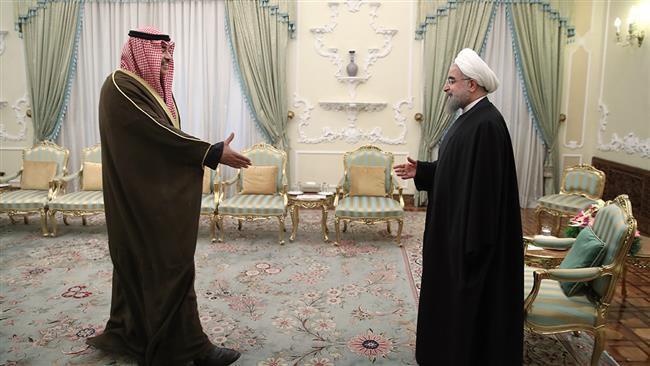
Iranian President Hassan Rouhani last week traveled to Oman and Kuwait to improve ties, his first visit to the Persian Gulf states since taking power in 2013.

“On regional dialog, I’m modest and I’m focusing on the Persian Gulf. We have enough problems in this region so we want to start a dialog with countries we call brothers in Islam,” Zarif said.

“We need to address common problems and perceptions that have given rise to anxieties and the level of violence in the region,” he added, when asked whether Tehran would also consider a region-wide dialog.

Zarif earlier criticized four-decades of well-financed “Takfiri” ideology which has its roots in Saudi Arabia and is followed by extremist groups such as Daesh, al-Qaeda and al-Nusra Front.

Saudi Arabia unilaterally severed ties with Iran last January after protesters in Tehran and Mashhad attacked its diplomatic premises following the kingdom’s execution of prominent Shia cleric Sheikh Nimr al-Nimr. Some of Riyadh’s allies followed suit and cut or downgraded their ties with Iran.

It was choosing regional enmity, Zarif said, that had in part spawned such extremist outfits such as Daesh and al-Nusra Front.

“For nearly four decades, a well-financed global proliferation of Takfiri ideology based on division, hatred and rejection, which everybody would agree has nothing to do with Islam, has been sold as promoting a so-called ‘moderate Islam’ to confront an erroneously-framed ‘radical Iran,” he noted.

The other contributors to the rise of such groups were “the endemic problem of foreign occupation and invasion,” and their arming and financing by some states in the region, Zarif added.

‘War not the answer’

Addressing other crises in the Middle East, the top Iranian diplomat said conflicts in Iraq, Syria, Yemen, and Bahrain “do not have military solutions,” adding “each requires a political solution, where no genuine actor is excluded.”

As a case in point testifying to “the success of diplomacy over coercion” is the 2015 conclusion of a nuclear agreement between Iran and world powers, he said.

The accord, he said, held “an important political lesson: All parties concerned defined the problem in a mutually acceptable way so that they could find a solution in a mutually acceptable way.”

US threats

Zarif brushed aside new pressure from the United States, declaring that his country is “unmoved by threats” but responds well to respect.

President Donald Trump has adopted a harsh language towards Iran, threatening to “tear up” the nuclear deal, calling Iran “terrorist state number one,” and imposing new sanctions against the Islamic Republic.

Zarif said, “Iran doesn’t respond well to threats. We don’t respond well to coercion. We don’t respond well to sanctions, but we respond very well to mutual respect. We respond very well to arrangements to reach mutually acceptable scenarios.”

“Iran is unmoved by threats. Everybody tested us for many years — all threats and coercions were imposed on us,” Zarif added.

The minister once again dismissed any suggestions Iran would ever seek to develop nuclear weapons. He mocked “the concept of crippling sanctions,” which he said merely ended with Iran having acquired thousands more centrifuges, used for enriching uranium.

Iran has always said it has no interest in nuclear weapons. Asked how long it would take to make one if it did decide it wanted such weapons, Zarif replied: “We are not going to produce nuclear weapons, period. So it will take forever for Iran to produce nuclear weapons.”

The Munich event discusses such issues as the future of the US-led military alliance of NATO, world order and security, terrorism, extremism, and various regional matters.

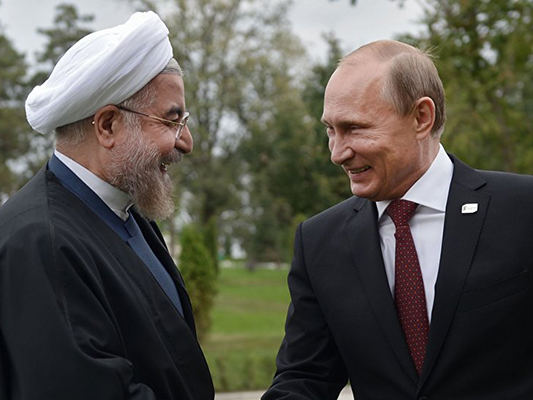
Important Documents to Be Signed in Iran President’s Russia Visit

Rouhani-Putin

Mahdi Sanaei, the Iranian ambassador to Russia, recently met Leonid Slutsky, the Chairman of the new Russian State Duma’s Committee on International Affairs.

During the meeting, the two parties conferred on the expansion of cooperation between Iran and Russia in such areas as parliamentary relations, according to a Farsi report by Fars News.

Following the meeting, Sanaei said, “Within the last three years, Iranian and Russian presidents have met each other for eight times.”

He then pointed to Rouhani’s upcoming visit to Moscow, and said, “Important documents are to be signed during the Iranian president’s official visit to Russia.”

He also referred to the positive changes in the relations between Iran and Russia in many areas such as political and economic fields, highlighting the shared views of the two countries on global and regional issues.

Slutsky, for his part, said, “There is a spirit of cooperation with Iran in the Russian State Duma.”

“Our positions on key international and regional issues, such as Syria and the Middle East problems, will get closer in the near future, after the meeting between the two countries’ parliamentary committees on international affairs,” the Russian MP added.

Elsewhere in the meeting, the two parties also agreed to extend their parliamentary relations, as well as the cooperation between their inter-parliamentary friendship groups.

Talks between Iran, GCC to Benefit Whole Region: MP

Rouhani

In a Farsi interview with ICANA, Iranian Parliament Member Qassem Jassemi said the talks between Iran and the [Persian] Gulf Cooperation Council ([P]GCC) will both benefit the Middle Eastern states and minimize the US presence in the region.

Commenting on Tehran’s decision to clear up misunderstandings between Iran and the six [P]GCC members, Jassemi said the Islamic Republic welcomes such negotiations as its foreign policy has been based on wisdom, honour and prudence since a long time ago.

“In case efforts to establish diplomatic relations with the countries of the region are within the framework of and in accord with the policies of Iran’s Establishment, they will produce more favourable results. The Islamic Republic of Iran is known as an undisputed regional power. Such contacts and relations will lead to minimized interference of the US and its allies in the affairs of the region.”

Stressing that closer dialogue between Iran and the [P]GCC countries is in the interest of the whole region, he said such interactions and negotiations can produce highly desirable outcomes in case the Islamic Republic’s interests and dignity are safeguarded and upheld over their course.

On Saudi Arabia’s willingness to hold talks with Iran, Jassemi added, “Saudis are undoubtedly rueful at present. We have always established our relations with other countries on the basis of mutual trust and honesty. Iran has always adopted the motto of “Peace and Friendship” in its military exercises in the region.”

Saudi Arabia has always adopted Western ideologies, he said, adding the Arab country has, after a long time, realized that Iran’s Establishment is a rightful and legitimate one.

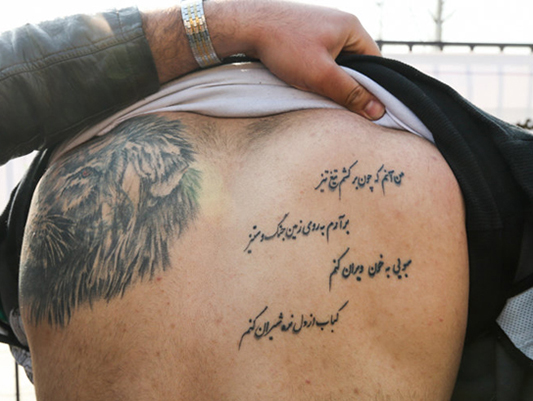
Is Tattooing a Crime in Iran?

Tattoo

Based on their culture and customs, the majority of Iranians regard tattooing as an anti-value act. However, Iran’s law has not devised any punishment for this traditionally indecent behaviour.

According to a Farsi report by Jomhouri Eslami newspaper, the only punishable tattoos are the ones that contain obscene or nasty images on the face or the visible parts of the body such as hands and arms.

Those who have these types of tattoos will be charged of hurting public chastity.

Religiously, the majority of jurists believe that tattooing is forbidden if it physically harms the person, endangers his health or contains obscenities; it is allowable otherwise.

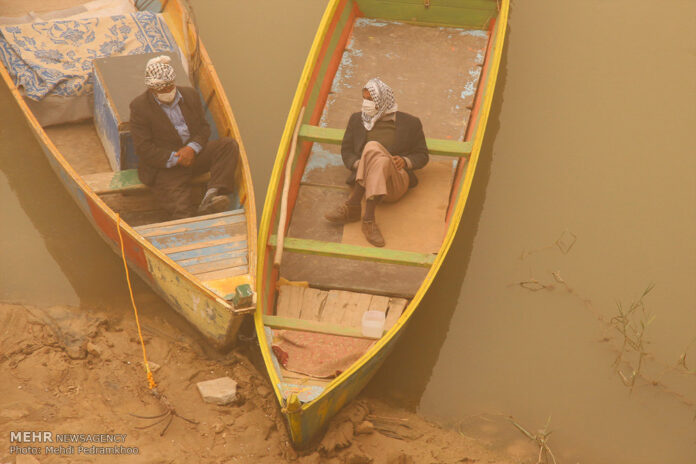
Iran to Host First UN Meeting on Dust Pollution

khuzestan

“The UN’s first international meeting on dust pollution crisis will be held soon in Iran,” announced Masoumeh Ebtekar, the head of Iran’s Department of Environment, according to a Farsi report by Entekhab.

“Regional and international cooperation is very important to cope with the crisis,” she added. “We endeavor to ratify international resolutions at the United Nations General Assembly to avert the dust problem.”

Iran seeks to benefit from the international community’s technical and specialized capacities, she added.

“We are also willing to cooperate with regional countries, as the majority of the dust comes from Iraq and Saudi Arabia. We recently had a meeting with the Iraqi President on this subject. Our Foreign Ministry is following up the negotiations.”

She also declared that all the origins of Khuzestan’s dust are being identified, and plans are devised to defuse the crisis, and ready to be carried out.

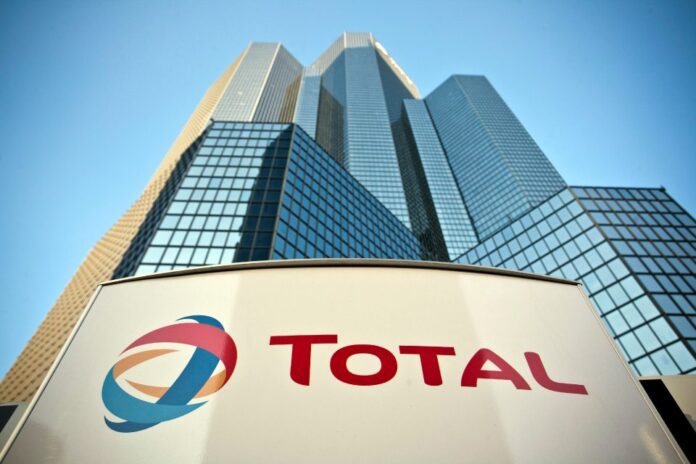
Iran to Probe Allegations about Total’s Information Leak to Qatar

total

Iranian MP Fereydoun Hassanvand says the Iranian Parliament’s Energy Commission and the High Committee of Supervision on Hydrocarbon Resources will be in charge of a probe into allegations concerning France’s energy giant Total leaking confidential information about Iran’s South Pars, in the Southern Iranian province of Bushehr, to Qatar, with which the Islamic Republic shares the world’s biggest gas field.

According to a Farsi report by ICANA, commenting on news about the French company’s passing on of Iran’s secret information to the Qatari side, Hassanvand said, “In case of being true, this will prove that concerns voiced by a number of worried Iranian officials about the flaws of new Iran Petroleum Contract (IPC) were not pointless. They had some complaints, for they were familiar with the nature of certain foreign companies and knew about the IPC’s drawbacks.”

IPC’s shortcomings were evident from Total’s reluctance to participate in Iranian projects prior to getting US President Donald Trump’s green light and the complete removal of Western sanctions on Tehran, he said, expressing satisfaction over the fact that the IPC’s structural problems were identified before sealing any deal.

Total’s refraining from continuing cooperation with Iran in the absence of US consent indicated that there is no guarantee one can obtain compensation from a company withdrawing from a project on the pretext of sanctions [still in place], or sue it for the violation of an agreement in international tribunals, said Hassanvand, who is also the chairman of the Iranian Parliament’s Energy Commission.

He said the Iranian Oil Ministry is required to revise some of its policies and hand over its projects to domestic experts and companies, blaming some Iranian officials for thinking that Total is more trustworthy than domestic firms.

“The officials at the Oil Ministry should acknowledge that they have been wrong about developing partnership with Total and stop being obstinate. The Iranian Parliament’s Energy Commission and the High Committee of Supervision on Hydrocarbon Resources will examine the issue and, in case of identifying any flaws, will follow up the case in the Parliament and Judiciary.”

Total’s move can be sued in International courts, he said, stressing, the domestic economy will sustain massive loss in case confidential information about Iranian plans and projects are made available to the country’s economic rival.