Thursday, April 9, 2026
Home Blog Page 4096

Iran, China to Develop Cultural Cooperation

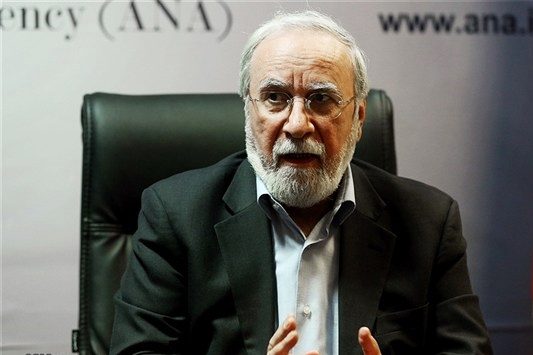
During a meeting between the director of Iran Cultural Fairs Institute (ICFI), Amir Massoud Shahramnia, and Chinese cultural officials, Iran was informed that it has been selected as the guest of honour at the Beijing International Book Fair.

“Being selected as the special guest of honour will provide a good opportunity for Iran to boost cultural ties. It also gives the publishers a chance to exchange information and introduce their latest productions,” Shahramnia said at the meeting, as reported by Tehran Times.

“Iran and China have appropriate capacities for developing joint cultural cooperation. Iran has always respected China and maintained its close ties with Beijing,” he added.

“The two countries enjoy good economic relations and should try more in cultural field,” he added, according to ISNA.

The Beijing International Book Fair will be open to visitors from August 23 to 27 in the Chinese capital.

Israel’s Nukes Main Threat to World: Iran’s FM

zarif

“Israel’s arsenal of nuclear weapons is the main threat to the world,” Zarif told the Lebanon-based al-Mayadeen TV channel on Wednesday.

“The Zionist regime of Israel is the biggest nuclear threat both to the region and the world,” he said.

The Tel Aviv regime, which pursues a policy of so-called deliberate ambiguity about its nuclear bombs, is estimated to have 200 to 400 nuclear warheads in its arsenal.

The regime has refused to allow inspections of its military nuclear facilities or to sign the nuclear Non-Proliferation Treaty, Tasnim reported.

Elsewhere in the interview, Zarif described Turkey as an “important neighbour” of Iran, urging Ankara, nonetheless, to stop arming and funding the terrorist groups operating in the region.

Turkey is said to be among the main supporters of militant groups in Syria and stands accused of training and arming Takfiri elements and facilitating their passage into the country.

Zarif also highlighted the ineffectiveness of US-led sanctions against Tehran, stressing that the US administration will come to realise that implementation of the 2015 nuclear deal is the best option for all sides.

“The US will realize that the best option would be (continued) implementation of the nuclear deal”, he added.

Zarif also described imposing economic sanctions against the Islamic Republic as a “futile” policy.

Iran and the Group 5+1 (Russia, China, the US, Britain, France and Germany) reached the nuclear deal, also known as the Joint Comprehensive Plan of Action (JCPOA), in July 2015 and implemented it in January last year.

Iranian Jewish MP Calls Netanyahu ‘Bloodsucking Criminal’

“The Israeli premier has sunken in the quagmire of crime, and has never played any role beyond poisoning the [international mental] atmosphere, massacring innocent children and women, and tyrannically occupying the lands of Palestinian people,” said the Jewish legislator Siamak Moreh Sedgh.

The parliamentarian, who also directs the Tehran Jewish Committee, an umbrella group of Jewish organizations that represent Iran-based Persian Jews, called the Israeli official “a tyrant,” who would manipulate religious values to enable carnage and occupation, and who had chosen racism as his ideology.

“A person of such characteristics could never function as the spokesperson for a religion, whose most essential motto is ‘love your own kind as you love yourself.’”

Meeting with Russian President Vladimir Putin on Friday, the Israeli premier claimed that ancient Persia had made a failed attempt to destroy the Jewish people some 2,500 years ago, a legend commemorated through the Jewish holiday of Purim, which Israel celebrated last weekend.

Netanyahu has constantly referred to the legend as a basis of his anti-Iran arguments in his meetings with different world leaders.

According to Jewish accounts, Persian King Xerxes I discovered his viceroy Haman the Agagite’s conspiracy to slaughter Jews some 2,500 years ago and had him executed.

Nevertheless, Netanyahu has been selective in his recount of history, ignoring the Hebrew Bible which has repeatedly praised Persian King Cyrus the Great as the patron and deliverer of the Jews who put an end to their Babylonian captivity.

The Iranian MP said the remarks came as no surprise from “such racist and criminal person,” adding that his “nonsensical rant” failed to adversely affect the faith of the devoted Iranian Jews in their homeland.

Netanyahu’s comments have likewise been met with backlashes from senior Iranian officials, including Foreign Minister Mohammad Javad Zarif, and Parliament Speaker Ali Larijani, who have questioned the Israeli official’s knowledge of history and scripture.

In a Sunday tweet, Zarif said the Israeli premier has resorted to fake history and falsifying the Torah to sell lies against Iran.

Trump’s Travel Ban Once Again Blocked

trump

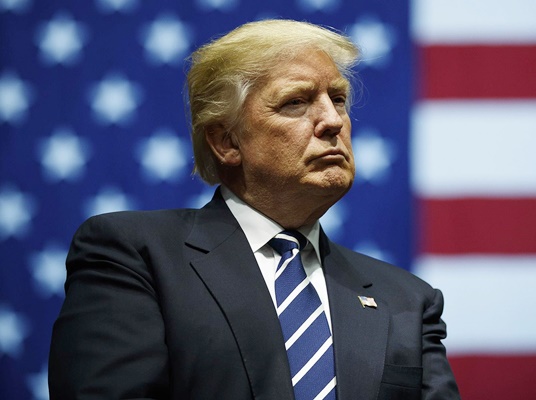
Judge Derrick Watson, a district judge in Honolulu, issued a nationwide temporary restraining order against Trump’s travel ban, which targets visa applicants from six Muslim majority countries and temporarily suspends the US refugee resettlement program.

According to The Guardian, the ruling comes a month after Trump’s first order was blocked by a court in Washington state, prompting the administration to issue a narrower order last week that attempted to navigate some of the complaints made in the first round of legal battles.

Syria Gov’t, Opposition Keen to End Conflict: Analyst

Sabah-Zanganeeh

In an interview with the Omid-e Iran e-paper on Wednesday morning, Iranian political analyst Sabah Zanganeh weighed in on the ongoing negotiations in Astana, Kazakhstan, and the opposition’s flip-flop approach toward the peace talks.

Here are excerpts from his remarks in the Farsi interview:

The Syrian opposition that had attended previous negotiations in the Kazakh capital, Astana, called for the postponement of the third round of talks claiming the Damascus government had breached its commitments in Homs. The opposition’s request was turned down by Iran, Russia and Turkey, which have brokered the Astana talks. As a result, the new round of the negotiations was attended by delegates from Tehran, Moscow and Ankara as well the Syrian President Bashar Assad’s government without the presence of opposition groups.

But the opposition’s non-attendance does not mean a complete breakdown of the talks. Six years on since the outbreak of a bloody war in Syria, now everybody in the country needs a ceasefire. The opposition groups, Syrian people, the Assad government and the Syrian army as well as their allied forces all need a ceasefire. Today, all parties to the conflict have shown that they have the will to end the conflict.

It is natural that parties to any political dialogue will resort to different ploys to gain concessions. The negotiators use horse trading, bargaining, meeting walkouts, delayed attendance and other tactics to secure as many concessions as they can and change the climate of meetings in their own favour. Using such ploys in political and diplomatic negotiations does not mean the talks have completely failed. Moreover, the opposition has not announced that they do not accept the Astana talks in principle.

The opposition’s [initial] refusal to attend the latest round of Astana talks does not mean an end to the current ceasefire brokered by Iran, Russia and Turkey. The indications are that the ceasefire will remain in place and the opposition, by gaining concessions from the Damascus government, will agree to take part in the upcoming rounds of talks again.

The truce in Syria, which has lasted for quite some time now, will be a prelude to later steps aimed at settling the Syria crisis. That would help lift the blockades, send in aid groups and dispatch humanitarian aid to war-battered areas, and expand the ceasefire to areas still gripped by violence.

In the forthcoming talks in Geneva, the delegates will discuss political ways to establish a transitional government, draw up the Constitution and hold nationwide elections.

Both the Syrian government and Syrian opposition have shown in recent months that they are determined to participate in the negotiations and stand ready to attend the talks, be it in Astana or Geneva. Moreover, both sides are willing to implement the decisions that would be made during the meetings.

The Astana talks are necessary to maintain the current ceasefire in Syria. Neither side can advance its plans without taking part in the negotiations. If either side walks out of a meeting today, it will return tomorrow, because they know dialogue is the only way to resolve the Syria issue. This has been proven to all parties to the conflict after six years of death, destruction and bloodshed.

Viral Video Shows How Attempt to Break World Record Leads to Seizure

record of underwater breath

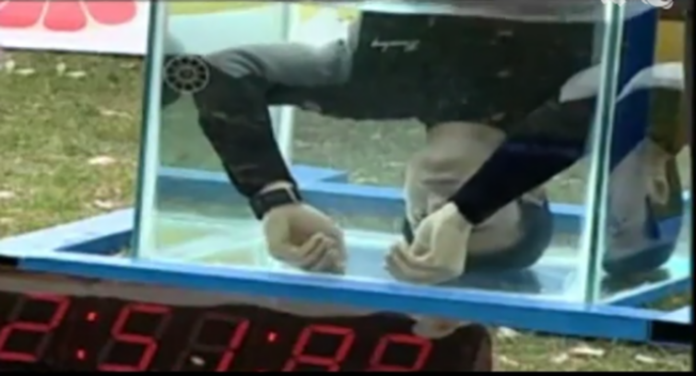
In a viral video that shocked many Iranian people on Wednesday, a man holds his breath in a live TV show in an attempt to break the Guinness World Record, which is somewhere around 24 minutes.

However, after more than two minutes, he has a seizure, which convinces the host to take him out of the water.

The interesting point about him is that he later appeared on the same show and criticized the host for taking him out.

“I was just concentrating. I had enough exercises to break my previous records,” he told Ali Ziya, the host.

Even the show’s producer later said in an interview that he knew the man was concentrating, and the seizure was normal.

Here is the video:

Iranian Researchers Gain Access to ALBA Facilities

The director of the Laboratory Network of Strategic Technologies of Iran’s Vice-Presidency for Science and Technology (VPST), Reza Asadi-Fard, announced that Iran has signed an applicable contract with Spain’s ALBA Synchrotron to provide Iranian researchers and experimentalists with the opportunity to use the facilities of the Spanish lab, observe the experiments conducted there and carry out experiments in its advanced laboratories.

According to a Farsi report by ISTI, ALBA is a third-generation synchrotron Light facility located in Cerdanyola del Vallès, (Barcelona), the newest source in the Mediterranean area.

Asadi-Fard added that, as per the contract, the Iranian researchers and experimentalists will be able to use the lab’s synchrotron radiation to conduct research and experiments in different fields of study including physics, chemistry, materials science, medicine, biology, archaeometry, and natural environment.

He added as stipulated in the contact, signed between ALBA Synchrotron, the VPST and Institute for Research in Fundamental Sciences, the signatories to the deal will secure the fund for the cooperation.

Asadi-Far said a large number of the laboratories, which are members of the Laboratory Network of Strategic Technologies, provide services for Iranian users.

“All these users can perform their advanced experiments, which cannot be conducted in small labs, using a synchrotron accelerator similar to the one available in ALBA lab.”

He said the agreement signed with ALBA allows Iranian researchers and experimentalists to carry out experiments in the Spanish lab for 480 hours (20 days) in 60 working shifts and be able to use synchrotron ray.

“To use this opportunity optimally and in an expert manner, Iranian scientists and researchers, involved in different fields of study, have been invited to work out their proposed plans regarding the ways synchrotron radiation can be used and register them in a special system created for this program,” he noted.

Asadi-Fard said 10 to 15 groups of Iranian researchers and experimentalists are expected to be dispatched to Spain to carry out their experiments.

“A number of Iranian experts will accurately assess the research plans on how to use synchrotron radiation, working as part of the scientific task force of Iran-ALBA Users Program. Also, in addition to the domestic professors and experts, four Iranian users of synchrotron, who are currently working in international labs, have been selected to be of assistance in the process of judging and selecting the plans.”

He added more than 330 member laboratories of the Laboratory Network of Strategic Technologies are currently providing over 1 million types of services to Iranian researchers and experimentalists. The members include university centres, research institutes and knowledge-based companies.

He listed some of the members of the Laboratory Network of Strategic Technologies, which provide services for Iranian university professors, researchers and students, and their numbers as: 41 X-ray fluorescence, 68 X-ray powder diffraction, 16 transmission electron microscopy, 61 scanning electron microscopy, 100 infrared and related technologies and two small angle X-ray scattering laboratories as well as an X-ray photoelectron spectroscopy one.

Asadi-Far stressed that those Iranians who are engaged in the fields of science, research and technology are required to be provided with access to the ALBA facilities, adding, those involved in the country’s steel production, petrochemical, pharmaceutical, energy, food as well as cosmetics and toiletries industries constitute a substantial number of the applicants for using ALBA facilities.

Former Chief of Iran’s State Broadcaster to Run for President

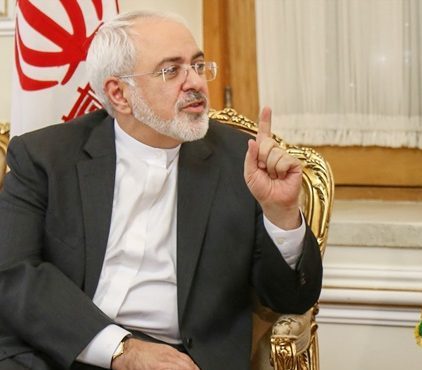
Ending months of speculation, Zarghami said he has finally accepted the calls for standing as a candidate for the 12th presidential election, slated for May 19.

In a short statement, the former IRIB chief said he has felt the responsibility to “fix” the country’s management structure on a macro scale and to solve the people’s problems.

The previous presidential election in Iran was held in June 2013, during which Hassan Rouhani emerged victorious by garnering 50.7 percent of a total of over 36 million votes.

Nearly 50.5 million Iranians were eligible to vote in the 11th presidential election, while the voter turnout in the polls stood at 72.7 percent.

Arabs’ Efforts to Normalise Ties with Israel Doomed to Failure: Iran’s Speaker

Commenting on recent statements made about some Arab countries’ willingness to normalise relations with the Zionist regime of Israel, Iranian Parliament Speaker Ali Larijani said, “Perhaps, some states aim to do that, but their success would be highly unlikely.”

“If you pay attention to the recent talks between the Israeli regime’s Prime Minister Benjamin Netanyahu and Russian President Vladimir Putin, you will realise that they will not let peace be established in the region.”

Addressing a press conference on March 13, he added, “Netanyahu’s remark [that Iran has sought to destroy the Jewish people since 2,500 years ago] shows that there has been an objective behind the adventures followed in the region.”

According to a report by IFP, Larijani slammed efforts made by some states to decide the fate of countries through military moves and measures, saying the Syrian people being able to rule the country is the only scenario which is in the interest of the nation.

Larijani said Iran is absolutely against those countries which seek to impose their ideas on the Syrian people, warning that the same policy is being adopted towards Bahrain.

Asked whether the entry of the US armed forces in Syria has been made in coordination with Iran, the parliament speaker noted that, “I guess that you know the answer. No coordination was made for the move. It is not in their interest to enter the Syrian territory this way.”

Larijani said nobody should expect a country which believes in religious democracy to approve of, for instance, the behaviour which is being shown towards Yemen.

Yemeni Muslims are being bombarded under the baseless pretext that they maintain a negative stance, he noted, adding it is not an appropriate behaviour.

Tajiks Hold ‘Great Feast’ to Mark Persian New Year

en-nowruz-tajik-2412 (13)

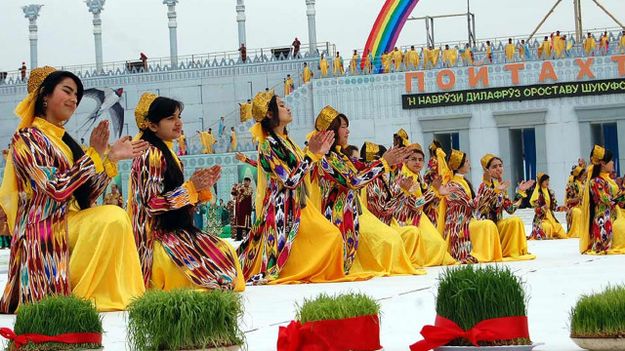
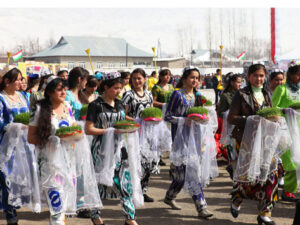
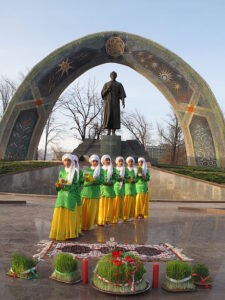
Tajiks mark Nowruz with a ritual named the Great Feast. During the first few days of Nowruz holidays, which start on March 20, all residents of a town or city converge on a place called Nowruzgaah (literally meaning the Place of Nowruz) and celebrate the joyous occasion with different cultural, artistic and sports performances.

Tajiks Hold ‘Great Feast’ to Mark Persian New YearAccording to a report by the IFP’s Cultural Desk, their celebrations are somehow different from those of Iranians who, among other things, set a table with seven items beginning with the Persian /s/ sound, mark the thirteenth day of Nowruz holidays by picnicking and spending the day outdoors as a sign of respect for Mother Nature, and set up bonfires and jump over them on the last Tuesday night of the Iranian calendar year to ward off evil.
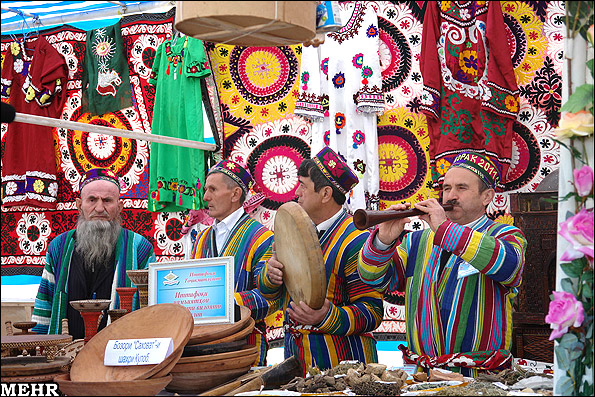
The Nowruzgaah in the Tajik capital, Dushanbe, was constructed seven years ago with a capacity of 20,000 people, and was later refurbished using Iranian cultural symbols. In addition to the capital, each year one location in Tajikistan is introduced as the official host of Nowruz celebrations. However, Nowruz ceremonies are held simultaneously in all towns and villages across the nation.

Tajiks Hold ‘Great Feast’ to Mark Persian New Year

The 4th, 5th, 8th, 11th, 12th, 18th and 19th plus 21st through 26th of March this year have been declared official holidays in Tajikistan. Nine of those days fall on Nowruz holidays.

As a Persian-speaking country, Tajikistan pays due regard to Nowruz traditions. Since two years ago, Tajiks have included Samanu (a kind of pudding made from germinated wheat), Sambousek, Shirberenj (pudding made with milk and rice), candles, fish and Miseh (a kind of mountain herb) in the special tables they set for Nowruz.

The decision to set a special table with seven item beginning with the Persian /m/ sound plus several other items to mark Nowruz was made by the Dushanbe Municipality three years ago in a bid to honour the glorious occasion.

Tajiks Hold ‘Great Feast’ to Mark Persian New YearIt was decided that gold fish, shrimps, musk, May (a kind of local drink), Miseh, bananas and pears be included in the table. The items are traditionally part of the Nowruz celebrations.

Before 1991, the former communist Soviet Union regime, which had, for 80 years, ruled the Central Asia, including Tajikistan, sought to strip the Tajik nation off their Nowruz culture. Nevertheless, Tajik people continued to abide by their ancient traditions and kept Nowruz celebrations alive, according to a Farsi report by IRNA.

Many infants born on the 20th or 21st of March in Tajikistan’s Badakhshan region are named “Nowruz” or “Nowruz-shah” or “Nowruz-gol” as Nowruz celebrations are enormously popular there.

In Tajikistan, the most important food item for Nowruz is Samanou. It is popular nationwide. While cooking Samanou, people recite verses suggesting the popularity of the food.