Sunday, December 21, 2025
Home Blog Page 4085

Formation of Regional Anti-Iran Alliance Unlikely: Diplomat

Alireza-Enayati

Regional developments are unfolding so rapidly that the situation today is different from that of yesterday. Things are no longer changing monthly or weekly, but rather on a daily or hourly basis.
At a certain point in time, it was Iran that sent Arabs a message for dialogue and first proposed to hold consultations with them. But now, it is them that are making overtures and calling for talks with Tehran. In this scenario, Kuwait is the key player. Kuwait’s foreign minister recently travelled to Iran with a message which calls for dialogue with Iran. Then Iran’s president reciprocated the move and visited Kuwait to respond to that confidential letter. Both sides are making efforts to work out common solutions at the regional level.

However, double standards can still be seen in the behaviour of certain Persian Gulf countries. Although logic seems to be telling them it is in their favour to hold talks with Iran, their hearts are leaning toward the White House’s anti-Iran approach and they hope to see tensions with Iran intensified. Therefore, they, off and on, make harsh comments against Iran. Nevertheless, such rhetoric is so repetitive that it is a nonstarter.

In a Farsi interview with Etemad daily newspaper, Iran’s Ambassador to Kuwait Alireza Enayati has weighed in on the [Persian] Gulf Cooperation Council’s message to Iran and the necessity to establish a forum for regional dialogue at this juncture. Here are excerpts from his remarks in the interview.

Iran-Kuwait Historic Bonds
Iran and Kuwait have a common approach toward dialogue and cooperation. Part of that emanates from the nature of Kuwait’s foreign policy and its regional political behaviour. It is also because of Iran’s importance. Iran and Kuwait enjoy age-old bonds historically, geographically, culturally, politically and economically. Tehran, per se, deeply believes in dialogue and is of the conviction that any regional behaviour has a chance of success if coupled with dialogue.

The nature of Iran and Kuwait’s policy and behaviour is based on cooperation. Accordingly, the Kuwaiti foreign minister’s visit to Tehran comes to reiterate the importance of dialogue on regional issues. Iran welcomes whatever approach which is based on talks and collaboration. Iranian President Hassan Rouhani’s trips to two key regional countries were also aimed at stressing Iran’s willingness to work with its neighbours and further reinforce the idea of cooperation.

Mideast Beset by Conflicts

Our region is gripped by crises. The situation in the region is very deplorable. It is rife with terror, violence, war and aggression. The financial, political and ideological roots of terrorism are inside the region as well. The whopping costs of oppressive wars have put the brakes on development and progress in the region. Unfortunately, the Persian Gulf has witnessed four wars in as many decades. The first war was Iraq’s invasion of Iran, and now, the Saudi aggression against Yemen. Aggression is condemned in principle.

GCC’s Message to Iran: A Real Change of Heart?

War and violence are no way to conquer. Any initiator of war will be sorry at last. Instead of banging the drum for war, one had better go for peace and opt for dialogue. Not only has the region paid the price of war, but regional income has dropped by a half compared to previous years and regional countries are facing budget deficits. All these developments may have prompted member states of the [Persian] Gulf Cooperation Council to adopt a new regional approach. It goes without saying that Iran, unlike what is said, is part of the solution. Iran has managed to push back terrorism and Takfirism, and plays a pivotal role in regional peace and stability.

Is Saudi Arabia on Board with Other GCC Members?
A collective effort is required for dialogue to be successful. Saudi Arabia is one of [P]GCC members. If Iran and the council are to cooperate, Saudi Arabia is no exception. From Tehran’s point of view, no country should be excluded. We do not want to exclude Riyadh, either. If Saudi Arabia believes dialogue will be to its detriment, that is what Riyadh thinks. However, we believe all sides will benefit from the talks. Recently, the Italian foreign minister quoted his Saudi counterpart as saying that Riyadh backs the Kuwaiti emir’s letter. We hope this new approach will be supported and followed by all countries. There are a lot of buts and ifs in this issue. But what is important is that we are now facing a different sign which is leading us toward dialogue and we are treading the same path, too.

Region Stuck between Two Opposing Forces: Standoff and Cooperation

We are facing two different climates in the region: The climate of tension and violence, and that of cooperation and dialogue. These two environments each has its own requirements. In the past and, to some extent now, we were and are involved in the first climate. It would be so difficult to have deep political, security, trade, economic, cultural and social cooperation in such an atmosphere. Iranophobia and tribalism are the order of the day and, if care is not taken, sectarianism will grow as well. We are supposed to enter a new environment where we need a new language. Dialogue in a tranquil atmosphere could bring ideas and viewpoints closer together, iron out misunderstandings and boost convergent potentialities. If we want to sit down for talks, we should lay the groundwork for dialogue. Now we should see which environment each country is located in. It is not possible to think of the second climate but favour the kind of language used in the first climate. I believe it is still too early to speak of a forum for regional dialogue as an organized institution. We should kick off and promote negotiations now. Such a forum can be the outcome of fruitful talks, not the starting point for dialogue.

Iran Has Always Favoured Dialogue
Iran cannot be talked out of supporting dialogue. We have always stressed the importance of talks and have been moving on the same path. Some inappropriate comments you might hear are not aimed at making Iran change its mind. But the reason is that some still live in the climate of tension. Although it is time to enter the new environment, it looks like inflammatory remarks are institutionalized in their language.

Dialogue, Cooperation Centrepiece of Iran-Kuwait Talks

Meetings between Iranian and Kuwaiti authorities revolve around cooperation among regional countries as well as holding dialogue to maintain security and stability in the Middle East. Regardless of that, Iran’s positions are crystal clear. We strongly support the Iraqi government and its efforts in fighting terrorism. In Syria, we underline the necessity of finding a political solution to the conflict there and play a key role in settling the crisis. We also support UN-brokered intra-Yemeni talks. Kuwait hosted the negotiations for more than two months. These are our straightforward political stances.

Joint Efforts Needed To Have Successful Talks

Getting engaged in dialogue and cooperation is a shared responsibility. All countries should contribute to efforts to promote cooperation and mutual relations and to push negotiations into success. What is important is to try to enter a new environment based on collaboration. A common viewpoint, joint action and shared responsibility are all required to realize a collective move. These are the pre-requisites for dialogue. We should draw a line between dialogue and conversation.

Kuwait, Oman Seeking to Defuse Tehran-Riyadh Tension?

Kuwait and Oman have conciliatory and mild political points of view on regional issues. The history of the two countries also shows that they seek to ease tension and boost dialogue on regional issues. Iran, too, favours whatever move which would help defuse regional tensions, and is not seeking tension with Saudi Arabia. Iran has always said it extends a hand of friendship to its neighbours. If somebody presses Iran’s hands, they are welcome.


Regional Anti-Iran Alliance Unlikely

It is unlikely that a regional alliance will be formed against Iran. The creation of a regional alliance aimed at stoking tension runs counter to the message of peace and cooperation to regional countries. The region cannot take another crisis. Should a new crisis emerge, it will be detrimental to all. At the moment, regional states cannot ignore the heavy price they have to pay for the crises in the Middle East. Another crisis is out of the question, unless regional states want to commit suicide. Kuwait worked toward reducing tensions even during the previous administration in the United States. Currently, Kuwait is moving in the same direction as well. Kuwait’s efforts to promote dialogue are significant.


Transregional Powers in Middle East

Transregional powers enter the region to serve their own interests, not to ensure security. Regional security should be provided by regional countries without foreign interference. The Persian Gulf has always been among foreign powers’ targets and, hence, faced serious problems. Another point is that NATO has no base in Kuwait, but opened its regional office in the country in line with a program called the “Istanbul Initiative.” The secretary of Kuwait’s Security Council also announced some timed ago that the office is not meant for NATO’s confrontation with Iran.

Iran’s President Congratulates Kuwait on National Day

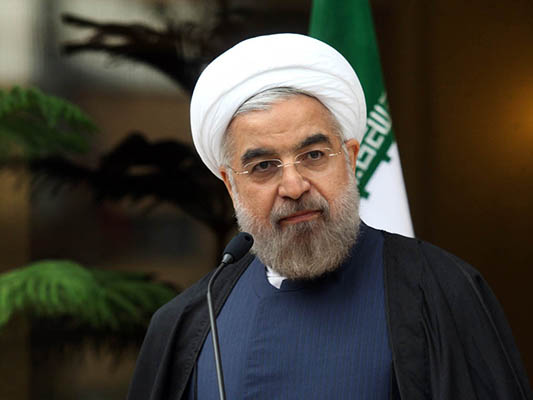
Hassan Rouhani

In a message on Monday, President Rouhani congratulated the Emir of Kuwait and the Kuwaiti government and people on the occasion of Kuwait’s National Day and Liberation Day.

He further expressed confidence that relations between Tehran and Kuwait City will increasingly develop and strengthen in the light of historical and cultural ties between the two countries.

He also hoped for the success, health and happiness of Kuwaiti emir and nation in his message, Mehr reported.

Kuwait National Day is celebrated on February 25. This holiday marks the day when Sheikh Abdullah Al-Salem Al-Sabah ascended to the throne in 1950.

London Mayor, US State Dept. Congratulate Farhadi on Oscar

Trafalgar Square

the salesmanThe US Department of State in a Farsi post in its Twitter account offered its congratulations to Farhadi, the cast and crew of ‘The Salesman’, and the Iranian people for winning the Academy Award for Best Foreign Language film.

The London Mayor Sadiq Khan, who had organized a public screening for Farhadi’s film in Trafalgar Square of London in support for the Iranian filmmaker’s anti-Trump stances, congratulated him on the Oscar he received.

“On behalf of all Londoners, I’d like to offer my warmest congratulations to Asghar Farhadi on his Academy Award for Best Foreign Language Film for The Salesman,” Sadiq Khan noted in a Facebook post.

“Yesterday, people from across London and beyond packed Trafalgar Square to watch a free screening of this gripping drama in a celebration of the capital as an international hub of creativity and as a beacon of diversity.”

“As Mayor, I am so proud to have hosted this special event, showing that London is open to the world, open to creative talent and open to everyone, regardless of their background, nationality or religion,” he went on to say.

oscar-Sadiq Khan

Iran Condemns Terror Attacks in Syria’s Homs

In a statement, Foreign Ministry Spokesman Bahram Qassemi expressed his condolences with the bereaved families of the victims of the “horrible crime”.

“Undoubtedly, the blasts are aimed at disrupting the process of the peace talks and any possible deal,” Qassemi said, asking all sides in Syria to be vigilant about the plot in this sensitive era.

He said in addition to the military measures, firm comprehensive international campaign in political and cultural levels needed to uproot terrorism and extremism in the region and in the world.

Suicide attacks targeting two security centers in Homs killed at least 42 people and wounded 24 others.

Six suicide bombers carried out the attacks. Three of the attackers sneaked into the city’s Ghouta neighborhood and the other three into its Mahatta neighborhood.

The head of Homs’ military intelligence, Gen. Hassan Daaboul, was killed in one of the attacks.

Iran Calls on Azerbaijan, Armenia to Show Self-Restraint

Qassemi stressed the need for pursuing peaceful settlement of disputes through negotiations and dialogue.

Escalation of clashes in Nagorno-Karabakh region between Azerbaijan and Armenia is source of deep concern for the Islamic Republic of Iran, he said, according to Mehr.

“The Islamic Republic of Iran calls on northern neighbours to show restraint,” he added.

The two sides must make all their efforts to restore peace and to settle disputes through negotiation and dialogue in a peaceful way, Qassemi said, expressing the hope that all international bodies and mechanisms responsible for resolving Nagorno-Karabakh disputes fulfil their obligations to end the conflicts and disaster.

Qassemi also voiced Iran’s preparedness to assist and cooperate with the parties to establish peace and security in the region.

Iran’s ‘The Salesman’ Receives Oscar for Best Foreign Language Film

thesalesman-oscar2017

Farhadi had boycotted the Oscars over US President Donald Trump’s executive order banning visitors from seven Muslim countries, and introduced two prominent Iranian-Americans as his representatives: Firouz Naderi, a former NASA executive, and Anousheh Ansari, the first Iranian space tourist.

en-oscars2017-farhadiIn the statement read at the Oscars by Ansari in his name, Farhadi said he was staying away in solidarity as people had been “disrespected” by Trump’s policy, which is currently on hold after a decision by a federal appeals court.

“Dividing the world into the US and ‘our enemies’ categories creates fear — a deceitful justification for aggression and war,” he said in the statement read at the Hollywood gala by the Iranian-born US engineer and astronaut Anousheh Ansari.

“These wars prevent democracy and human rights in countries which have themselves been victims of aggression.”

“Filmmakers can turn their cameras to capture shared human qualities and break stereotypes of various nationalities and religions. They create empathy between us and others — an empathy which we need today more than ever,” he was quoted as saying by AFP.

Before the Oscar ceremony on Sunday, The Salesman, was screened in London’s Trafalgar Square thanks to the request of London Mayor Sadiq Khan who referred to the ban as “cruel” and “shameful.”

thesalesman-Trafalgar Square

According to Khan’s office, around 10,000 people took part in the screening, which was also the film’s UK premiere, Press TV reported.

“Despite our different religions, nationalities and cultures, we are all citizens of the world. I’m very proud to be a member of this global family. I’m sorry not I’m not able to be here with you but I will be there in spirit,” said Farhadi in a recorded message played at the beginning of the film.

On Monday, Iranian Foreign Minister Mohammad Javad Zarif also took to Twitter to praise the cast and crew of The Salesman for choosing not to attend the event in person to protest Trump’s insulting Muslim ban.

zarif-oscars-twitte

The Salesman had earlier won two awards at the 2016 Cannes Film Festival and was also nominated for a Golden Globe and a Critics’ Choice Award among several other nationwide and universal recognitions.

Farhadi won Iran’s first-ever Academy Award with his drama A Separation in the 2012 Oscars.

Iran’s Parliament Passes Bill in Response to Trump’s Travel Ban

Iranian Lawmakers Endorse Anti-Israel Motion ahead of Quds Day

The legislation was approved during the open session of the Parliament on Sunday as 150 lawmakers voted in favor while 19 voted against and six abstained.

Under the article, the legislators urged the government to provide nearly 61.7 million dollars to the Ministry of Science, Research and Technology and the Ministry of Economic Affairs and Finance to recruit and attract investment by Iranian nationals living in the US.

Speaking after the approval of the article, Iranian Parliament Speaker Ali Larijani said the “reciprocal measure” was adopted in response to the new US administration’s move for banning entry into the country of nationals from seven Muslim-majority countries, including Iran.

Meanwhile, lawmaker Mohsen Kouhkan, who had tabled the proposal, also said the Parliament’s move “conveys a clear message” to the world that the Islamic Republic supports every single one of its citizens all over the globe.

US President Donald Trump issued an executive order on January 27 that blocked entry into the United States for 90 days for citizens from Iran, Iraq, Libya, Somalia, Sudan, Syria and Yemen. It also suspended entry of all refugees for 120 days and barred Syrian refugees indefinitely.

US District Judge James Robart in Seattle, Washington, suspended the order nationwide on February 4 after his state challenged its legality. A three-judge panel in the 9th US Circuit Court of Appeals upheld Robart’s ruling.

The White House has vowed to issue a revised travel ban which would still target the same seven Muslim countries.

Iran’s Foreign Ministry on January 28 censured the recent “insulting” decision made by the new US government, vowing that Tehran would respond to the move in kind.

“In order to protect the dignity of all the Iranian people inside and outside the country, the government of the Islamic Republic of Iran will scrutinize the short-term and long-term outcomes of the decision by the US government on Iranian nationals and will take appropriate consular, legal and political measures,” the ministry said in a statement.

It warned that any US move to extend discriminatory measures against the Iranian nationals would be illegal and said the Islamic Republic reserves the right to react to any violation of international law by Washington.

‘The Salesman’ Deserves Academy Award: Jafar Panahi

‘The Salesman’ Deserves Academy Award

Jafar Panahi, a member of the Academy, said in a Farsi article in Iran newspaper that the country’s official submission to the Academy Awards is head and shoulders above numerous other films from around the world which were not nominated for the prestigious awards.

Here is the full text of his Sunday remarks in praise of Farhadi and his film ahead of the Oscars ceremony:

The presence of a national football team in the World Cup is regarded as a credit, per se. This simple explanation could help us realize the importance of Iranian cinematic productions taking part in prestigious international festivals. The presence of Iranian films in different sections of creditable festivals, including the Cannes, Venice, Berlin, Oscar, etc., is very significant in its own right regardless of whether or not the film has won awards. It is a great credit to be chosen from among large numbers of films around the world to take part in international festivals. And the significance of such events will become more evident if the participating films win awards as well.

The Iranian film “The Salesman” has been nominated for the 2017 Academy Awards. This is a great honour for the Iranian cinema. This is a sense of pride by and of itself, and has nothing to do with the political atmosphere in the US. Irrespective of who has assumed power as the US president, Asghar Farhadi’s latest film deserves to receive an Oscar. Of course, there is no denying that the 89th Academy Awards ceremony is held at a time when a restricted climate is taking shape in America in the wake of Trump’s coming to power. So, there is a fear of return to the McCarthy era and experiencing a situation similar to the one at the time.

Under such circumstances, Asghar Farhadi’s wise decision not to attend the Academy Awards event is praiseworthy. First, a firm decision to boycott the ceremony, followed by the introduction of two people representing Iran. The introduction of Anousheh Ansari and Firouz Naderi at the event was a strong show of Iranians’ potential and capabilities. The move has a message, not only to Trump, but to the whole world that Iranians’ true colours are a far cry from what is said about them. It shows rumours flying around against Iranian people are unfounded.

Once again I repeat that Asghar Farhadi’s “The Salesman” deserves a second Oscar award [for him], regardless of whether Trump or somebody else has taken the helm of affairs in the US. We can’t wait to see the moment when the movie wins the award to bring honour upon all those working in Iran’s cinema industry. That would amount to a national celebration.  Of course, the film having advanced to such a stage is an honour per se, irrespective of whether or not it would receive the award.

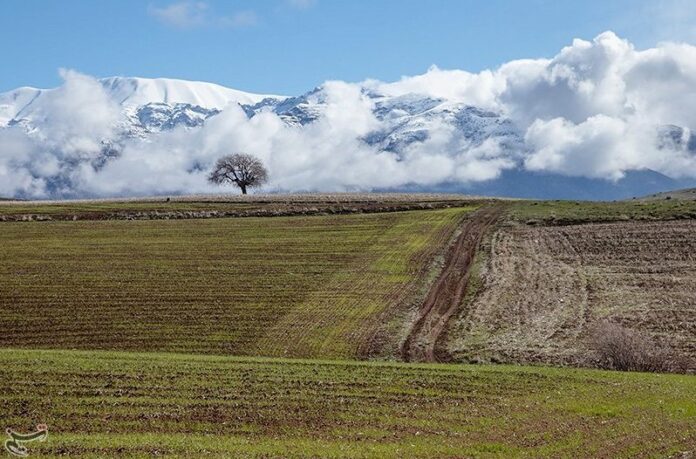
Winter in Iran’s Marivan

Marivan-Winter

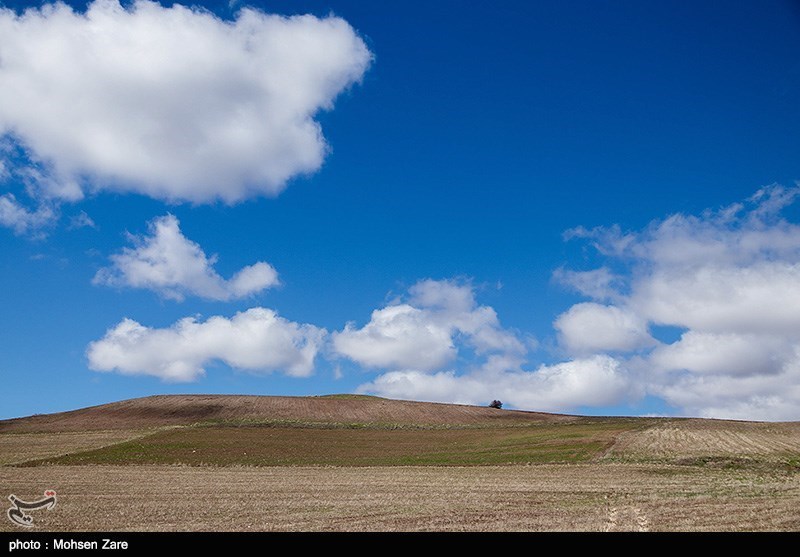
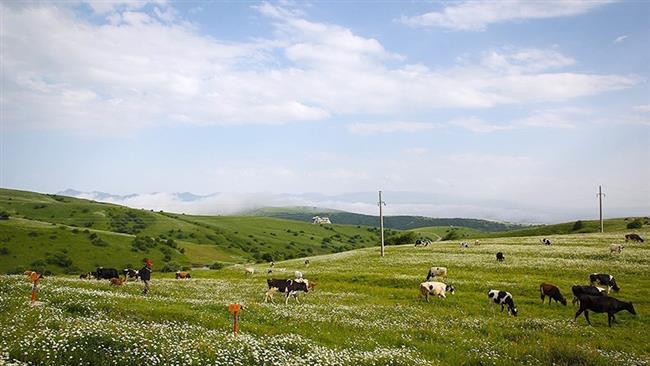
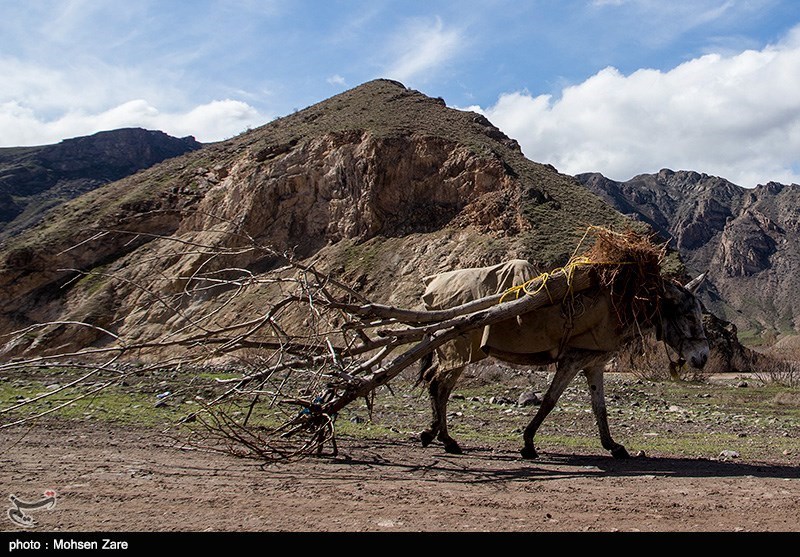
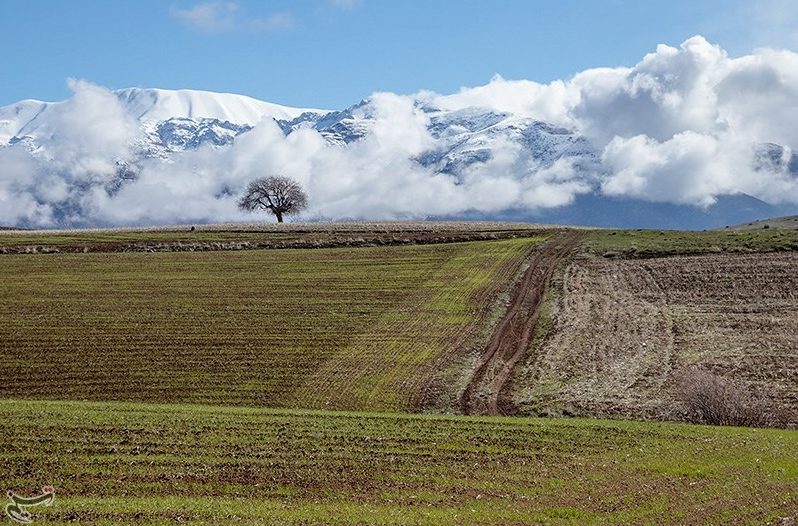
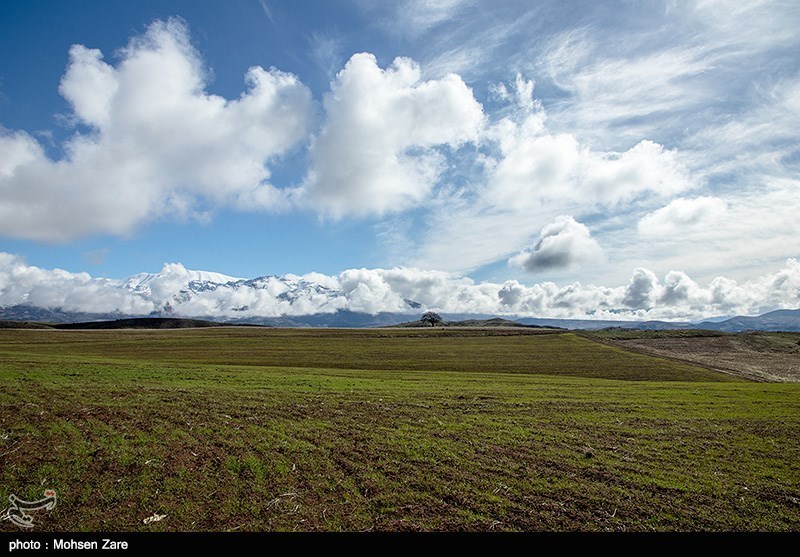
Marivan is one of the numerous cities and villages across Iran which were covered by the recent heavy snow.

IRNA’s photos show the beautiful winter in three parts of Marivan, namely Lake Marivan, Garan Dam, and nearby villages.


Civil War: Northern vs Southern White House

Mar-a-Lago-trump

The clashes within the US have turned to the main focus of international media and given rise to speculations over the possibility of Trump being removed from office.

These days, media reports reveal a growing competition between the centres of power and factions in the White House and the Republican Party in the aftermath of the resignation of Michael Thomas Flynn, Trump’s former national security advisor.

Well-known members of the Trump’s cabinet and the reasonable figures of the Republican Party are sitting on one side of the contest, and the circle of Trump’s advisors, who can be referred to as the members of his cabinet in “The Southern White House” are on the other side of the competition.

Flynn’s resignation as well as a number of other inconsistencies in the Trump administration have intensified speculations about the likeliness of Trump being forced to announce resignation in the near future.

According to a Farsi report by Khorasan newspaper, Trump is spending so much time at his posh Mar-a-Lago resort in Florida which he has started to call “The Southern White House”.

A Spanish phrase meaning ‘sea to lake’, Mar-a-Lago is a huge, old 126-bedroom mansion located in one of the most upscale neighbourhoods of the Palm Beach in Florida. Trump bought the manor in 1985 for $10 million and then turned it into a private club. Since coming into power as the new US president, Trump has spent all his weekends at Mar-a-Lago. However, the members of the club are pleased with being in contact with the US senior statesmen and having direct access to them. Mar-a-Lago or “The Southern White House” is home to part of Trump’s cabinet and a number of his advisors mostly comprising billionaires and his trusted army generals — those who are accused of being more concerned with their own interests than those of the US.


Flynn, First Victim of Clash between Washington Factions

Flynn was the first victim of the skirmish between the factions and centres of power in the Trump administration. Flynn resigned on February 13 over allegations that he had contacts with Russia.

Commenting on Flynn’s resignation, Jefferson Morley, the AlterNet‘s Washington correspondent, wrote in an opinion piece, “In the larger political context, what we are seeing is the clash of Washington factions. Trump is an incipient tyrant, as Yale historian Tim Snyder has pointed out. But Washington’s factions will not surrender their powers without a struggle. The factions are based in the Executive Branch agencies and are led by senior officials and the bureaucratic cadres that support them.”

“In the White House, a much smaller but still powerful faction around Steve Bannon is consolidating power and persisting with Trump’s campaign promises: Barring refugees from Muslim countries, stepping up deportations of undocumented residents and dismantling the NATO alliance.

“Bannonization of National Security Policy Continues”

“Flynn’s conversations with the Russian ambassador were perhaps defensible. Mike McFaul, Obama’s former ambassador to Moscow, said he had pre-inauguration contacts with Russian officials, adding that he didn’t make any deals…” But why Trump did not support Flynn and, instead, fired him.

Morley also wrote, “The winner, for now, is White House chief strategist Steve Bannon,” maintaining that, “Bannon’s next victim is likely to be White House chief-of-staff Reince Priebus.”

Nevertheless, it would not be plausible to think that the opposing side in the body of the Republican Party including figures such as Senator Lindsey Graham, Chairman of the Senate Armed Services Committee Senator John McCain and House Speaker Paul Ryan will sit idle waiting for the secret cabinet’s next move.

In another opinion piece titled “How Can We Get Rid of Trump?” — published by The New York Times on February 18 — Nicholas Kristof reviewed and discussed legal ways to remove Trump from office. Pointing to the Section 4 of the US Constitution’s 25th Amendment, he said there is a clean and quick way to remove Trump which has never been attempted: “It [Section 4 of the 25th Amendment] provides that the cabinet can, by a simple majority vote, strip the president of his powers and immediately hand power to the vice president [Mike Pence].”

The 25th Amendment of the US Constitution, proposed by Congress and ratified by the states in the aftermath of the assassination of the former US president, John F. Kennedy, provides the procedures for replacing the president or vice president in the event of death, removal, resignation, or incapacitation.

Kristof added, “Trump does have one weakness, and it’s parallel to Nixon’s. Republicans in Congress were willing to oust Nixon partly because they vastly preferred his vice president, Gerald Ford — just as congressional Republicans prefer Mike Pence today.”

In an opinion piece published by Newsweek on February 19, Ronald L. Feinman maintained that: “Pence faces now a situation that has some similarity to Gerald Ford under Richard Nixon during a time of trouble and controversy, and the possibility of future Congressional action against Donald Trump if his mental behaviour continues to disturb the top leadership of the Republican Party and the foreign policy establishment.”