Sunday, January 18, 2026
Home Blog Page 4070

Iran, Europe Cooperating on 230 Joint Research Projects

en-mohammadfarhadi

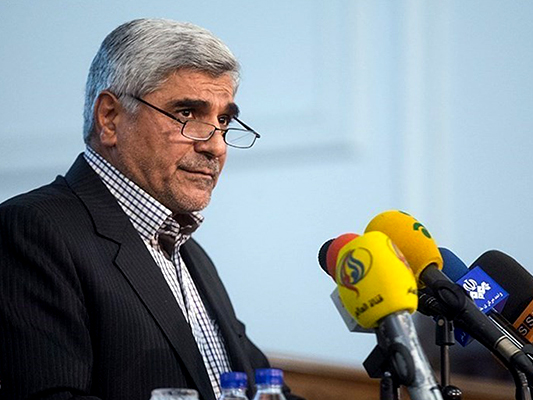
Iranian Minister of Science, Research and Technology Mohammad Farhadi declared 230 joint research project, with an investment of several million euros, are being carried out by Iran and a number of European countries, which is indicative of the breakthrough in Iran’s foreign relations following the signing of the nuclear deal, also known as the Joint Comprehensive Plan of Action (JCPOA), between Iran and the six world powers.

According to a Farsi report by IRNA, Farhadi noted that the projects are in the fields of water crisis management, wastewater treatment, protection of the environment, development of aerospace technologies, generation of renewable energies and cognitive sciences.

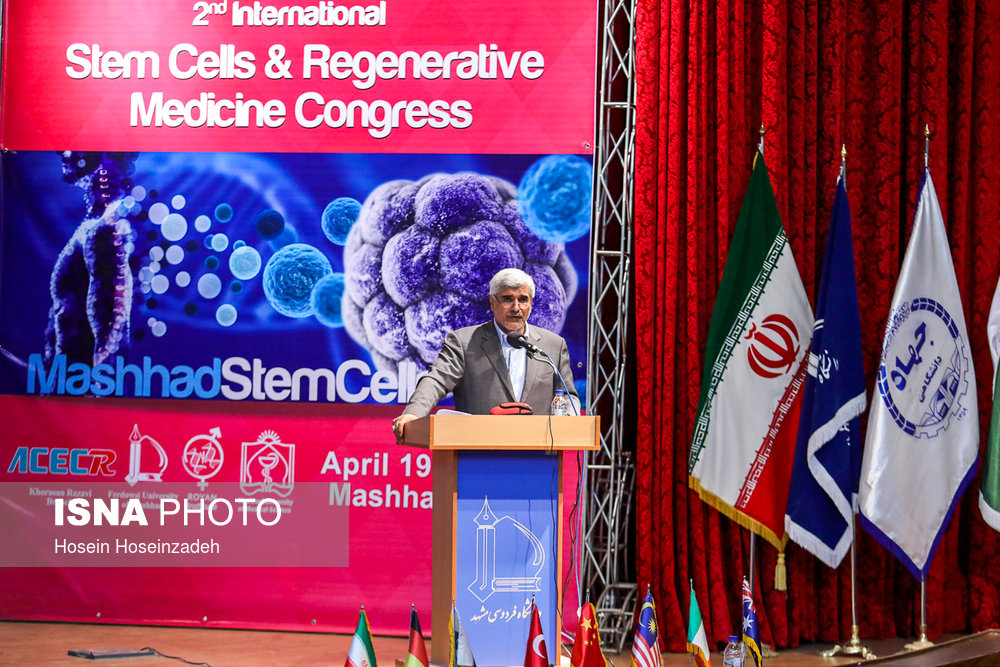
He made the remarks on the sidelines of the closing ceremony of the Second National Festival and International Congress on Stem Cell and Regenerative Medicine (Mashhad Stem Cells – 2017) in Mashhad, northeastern Iran, on Friday (April 21).

He said a number of agreements have also been reached with other countries in the fields of improving education as well as research methods and approaches used in Iranian universities and higher education centres.

He said the field of science and research in Iran has been highly impacted by the breakthroughs in the country’s foreign policies thanks to the efforts by the Iranian President Hassan Rouhani’s administration in the past few years.
Iran, Europe Cooperating on 230 Joint Research Projects


10 Scientific Teams Visit Iran per Week

Currently, Farhadi added, an average of 10 scientific teams from universities and scientific and research centres around the world travel to Iran per week.

“Every week, around 8-10 scientific delegations are dispatched from Iran to other countries as well. Such connections and relations prepare the ground for the increased exchange of knowledge and science and expanded scientific cooperation [between Iran’s and other countries’ science and research communities].”

Farhadi added holding joint education courses is also among the moves and measures made by the incumbent government.

There has also been a growth in the number of research opportunities offered by Iranian universities to foreign students and vice versa in this government, he said.

In the past Iranian calendar year, which ended in mid-March 2017, more than 1,000 Iranian students were sent to other countries to use research opportunities provided by leading international universities, he stressed.

The minister noted that a number of capable foreign knowledge-based companies have established branches in Iranian Science and Technology parks, adding the same move has been made by Iranian knowledge-based companies.

“Such connections will help increase exchange of science, knowledge and technology as well as production of joint products.”

Since the beginning of President Rouhani’s term in office, Iran has also initiated interdisciplinary and multidisciplinary cooperation with South Korean, Dutch, German, French and Austrian universities, which has been fostered, particularly following the going into effect of the JCPOA, he noted.

Commenting on the designation of the new Iranian year (started March 21) as the “Year of Resistance Economy: Production and Employment” by the Leader of the Islamic Revolution Ayatollah Seyyed Ali Khamenei, he said a number of projects are underway to achieve the resistance economy’s targets including establishing a closer connection with domestic industries, increasing the number of and developing entrepreneurial universities and encouraging domestic universities towards becoming more mission-oriented.

He added his ministry will submit the final draft of a project to promote skill-based education to the secretariat of the Headquarters of the Resistance Economy by July 22.

“A number of the country’s nonprofit and nongovernmental institutes have also experienced a significant growth and are now on a par with the country’s universities in terms of scientific level. They have also initiated favourable international scientific collaborations. Some of them have an effective presence in the country’s business incubators and Science and Technology parks. Astan Quds Razavi [an autonomous charitable foundation in Khorasan Razavi province] has done a great job to that end by establishing the country’s biggest science and technology park in the province.”

Currently, he said, 39 science and technology parks are operational in the field of producing knowledge and knowledge-based products in Iran, adding two other parks will soon begin operation.
Iran’s Presidential Debates to Be Broadcast Live: Official

Iran’s Presidential Debates to Be Broadcast Live

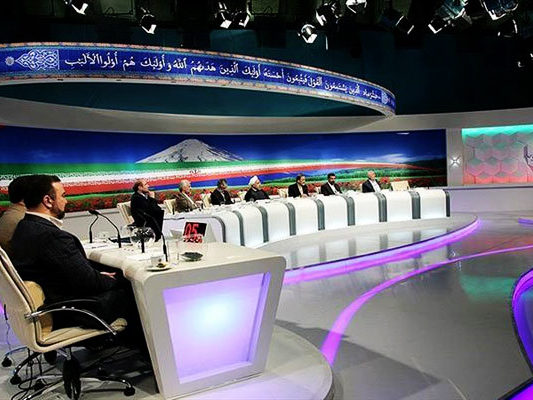
Seyyed Salman Samani, a spokesman for the Interior Ministry, said on Saturday that an earlier decision not to live broadcast the presidential debates has been revised following a consensus by the members of the Election Campaign Monitoring Committee during their meeting, which was convened at the Interior Ministry.

He, however, added that there were certain conditions for live debates, which will be announced later, Press TV reported.

Among those attending the meeting were the country’s Attorney General Ja’afar Montazeri, Interior Minister Abdolreza Rahmani Fazli, Ehsan Qazizadeh, a member of the council supervising the Islamic Republic of Iran Broadcasting (IRIB), head of the Interior Ministry’s Election Office, Ali Asghar Ahmadi, and IRIB Chief Abdol-Ali Ali-Askari.

The meeting followed strong criticism by the presidential candidates as well as the Iranian officials and people of the decision by the committee on Thursday not to air the debates live.

Presidential debates have been held in Iran for the two previous rounds of the elections, both of which were broadcast live on Iranian national television.

The six candidates running for the 12th presidential election are Mostafa Aqa Mir-Salim, Mostafa Hashemi-Taba, Es’haq Jahangiri, Hassan Rouhani, Mohammad-Baqer Qalibaf and Seyyed Ebrahim Raisi.

Iranians will go to the polls on May 19 to elect the country’s next president.

Campaigning for Iran’s 12th presidential election officially started on Friday, a day after the Interior Ministry announced the final list of the candidates vetted by the Guardian Council, the body tasked with overseeing the election.

Iran to Celebrate Self-Sufficiency in Petrol Production: IRGC Commander

general jafari

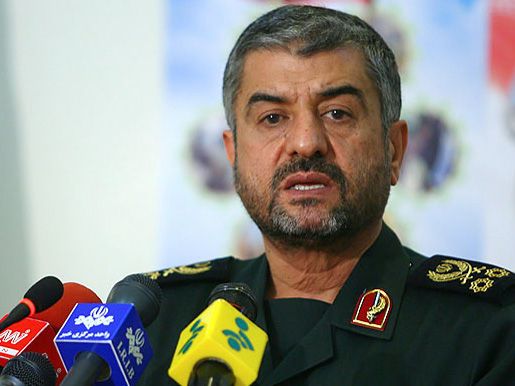
After coming into operation, the ‘Persian Gulf Star’ gas condensate refinery, which is developed by IRGC’s Khatam al-Anbia Construction Base, will make Iran self-sufficient in gasoline production and mark the beginning of exports to foreign countries, Major General Mohammad Ali Jafari said on Saturday.

According to a Farsi report by Sepah News, General Jafari announced that the refinery, which is the largest one in the world in terms of area, will be inaugurated in the coming days.

He made the remarks during a visit to the large refinery near the southern port city of Bandar Abbas.

The input, namely gas condensates, are supplied to the refinery through a pipeline stretching for nearly 400 kilometers from gas refineries in Asalouyeh, located in the neighboring province of Bushehr, the general explained.

According to the senior commander, 80 percent of the equipment in the gas condensate refinery has been manufactured inside the country, Tasnim reported.

Known as the world’s largest refinery in terms of area, the Persian Gulf Star refinery is divided into three phases, built near the old refinery of Bandar Abbas, he added.

The Khatam al-Anbia Construction Base has been involved in several mega-projects in Iran’s energy industry, including the completion of 4 phases of the country’s South Pars gas field and construction of gas and natural gas liquid (NGL) factories.

Iran Can Link Georgia to Persian Gulf, Sea of Oman: President

“Transit [cooperation] in the region currently has special significance and given a rail link between Iran’s [northern city of] Astara and Azerbaijan and good rail and road routes in Georgia, the development of Tehran-Tbilisi cooperation in this field can bring about a transportation in the region,” Rouhani said in a meeting with Georgian Prime Minister Giorgi Kvirikashvili in Tehran on Saturday.

He added that the two countries enjoy deep-rooted and cordial relations and noted that Tehran welcomes further expansion of ties with Tbilisi in all fields.

“Iran and Georgia have broad economic, scientific and cultural capacities and capabilities to strengthen their cooperation but these capabilities have not been utilized well and this trip can lay the appropriate ground for the expansion of mutual relations,” the Iranian president said.

He also urged the two countries to support investors in the private sectors to boost their cooperation.

Rouhani further highlighted the importance of interaction between Iran and Georgia on regional issues, saying, “Today, the region is faced with a big problem named terrorism and we must boost our cooperation to counter and uproot it.”


عکس شماره 1


Georgia Firm on Linking Persian Gulf to Black Sea through Iran

The Georgian prime minister, for his part, said his country is determined to connect the Persian Gulf to the Black Sea through Iran’s roads and railways.

He urged the two countries to strengthen cooperation in the transit of goods and transportation.

Kvirikashvili said Tehran and Tbilisi have been expanding political, economic and trade relations over the recent years and called on the two sides to make use of their capacities to further develop their cooperation, Press TV reported.

MoUs to Bolster Cooperation in Different Sectors

Earlier on Saturday, the two countries also signed several agreements to further expand cooperation in different fields.

Kvirikashvili and Iranian Vice President Es’haq Jahangiri oversaw the signing of the memoranda of understanding (MoUs) on sports and agriculture as well as communications and information technology.

Additionally, Masoumeh Ebtekar, head of Iran’s Department of the Environment, and her Georgian counterpart put their signatures on a joint statement by the organizations under their watch.

Two other MoUs were also inked between the two countries’ private sectors on setting up a refinery complex and a factory meant to produce ceramic and tiles in Georgia.

In a press conference with the Georgian prime minister, the Iranian vice president said the two nations have a wide range of commonalities and enjoy a common stance on many regional and international issues.

“There is fertile ground for boosting economic, political and cultural cooperation between the two countries,” Jahangiri said.

He further underlined the importance of a multi-national transit project, called the International North-South Transport Corridor (INSTC), which connects the Persian Gulf to the Black Sea.

The official also expressed hope that active banking ties between the two countries will work to facilitate bilateral trade.

“The government and high-ranking officials of the two countries have a political will to develop relations in all dimensions without any restrictions,” he added.

president gorgia

Kvirikashvili, for his part, said that his visit to Tehran, which follows Iranian Foreign Minister Mohammad Javad Zarif’s trip to Tbilisi, shows mutual resolve to bolster Iran-Georgia ties.

The premier’s trip to Tehran came few days after Iranian Foreign Minister Mohammad Javad Zarif visited Georgia on the second leg of a three-nation tour of Central Asia and the Caucasus countries which also took him to Turkmenistan and Kyrgyzstan.

Speaking at a meeting on Iran-Georgia economy in Tbilisi on April 18, Zarif stressed the importance of launching a new transport corridor connecting the Persian Gulf to the Black Sea and said it would strengthen relations among regional countries.

“If implemented, the corridor connecting the Persian Gulf to the Black Sea is an opportunity which will bring regional countries closer to each other and decrease transportation costs of commodities,” the Iranian foreign minister said.

During his stay in Tbilisi, the top Iranian diplomat held separate meetings with his Georgian counterpart, Mikheil Janelidze, prime minister, President Giorgi Margvelashvili and Parliament Speaker Irakli Kobakhidze.

Tehran to Host 1st Int’l Conference on Virtual Water

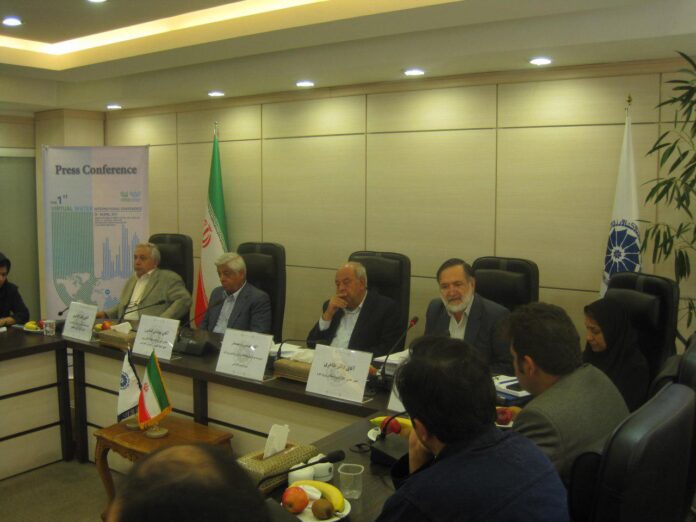
Organized by Iran Chamber of Commerce, Industries, Mines and Agriculture (ICCIMA), the 1st Virtual Water International Conference, scheduled to be held in Tehran on April 29 and 30, aims to take a closer look at the theory of virtual water at the global level and help enhance the management of the countries’ water resources.

Addressing a press meeting on the international conference, the head of the ICCIMA’s National Centre of Strategic Studies of Agriculture and Water said it is not reasonable to achieve self-sufficiency in the production of a particular type of crop at all costs, adding other factors and aspects need to be taken into account when making efforts to that end.

According to a Farsi report by Iran Chamber Newsroom, Mohammad Hossein Shariatmadar added becoming self-sufficient in the production of a crop becomes valuable when the production of a crop is increased by using modern technologies, drawing up precise plans and improving productivity and the growth is sustainable.

Shariatmadar highlighted the need to design an effective strategy to implement the theory of virtual water.

He added the international conference will be an effort to take a look at the theory of virtual water at the global level to improve the management of the countries’ water resources.

“No global consensus has yet been reached on commercializing agro products and putting the theory of virtual water into practice. The theory has only been implemented in a number of countries.”

Shariatmadar said the theory has existed in Iran since the very beginning of agricultural activities, adding, however, it has never had any international dimensions and has never been implemented systematically and legally.

“Since the process of putting the theory into practice can involve a remarkably large number of complexities and details, it is required to carry out a precise and comprehensive study of the likely consequences and outcomes, prior to initiating it.”

He noted that the international conference is an opportunity to create an atmosphere and virtual space, supported by world thinkers, international organizations and countries, in which those interested in the theory of virtual water can find information and seek consultation.

“Effective strategies should be mapped out to avoid probable unwanted political and social dependence and impositions at the stage of putting the theory into practice. Moves and behaviours should be managed and steps should be taken with great care.”

Shariatmadar, who is also the executive secretary of the upcoming international conference, said identifying proper cultivation pattern is among the main bases of the theory. It further seeks to define cultivation pattern in developing farming in each region in proportion to its capacities and potentials.

“For years, we have been speaking of self-sufficiency in wheat production in Iran. Efforts to this end are required to be made on the basis of the cultivation pattern. All Iranian officials unanimously agree that it is of no value to become self-reliant in the production of a crop at all costs. They maintain that this process should be undertaken in proportion to the capacities and with an eye on improving productivity.”

Shariatmadar recalled that in 1989, Iranian farmers produced 300 grams of wheat using one cubic meter of water for irrigation, adding the figure experienced numerous fluctuations over the past years, amounting to 530 grams in 1998 and 630 grams in 2004 and 2005.

“In 2005, we celebrated our self-sufficiency in wheat production. The fluctuations, nevertheless, continued until in 2015 and 2016 wheat harvest using each cubic meters of water reached 750 grams. At present, we are required to sustain this level of production and even raise it.”

Speaking at the same confab, Abbas Keshavarz, the deputy Agricultural Jihad minister and a member of the upcoming conference’s executive and scientific committee, said achieving a national consensus would be the first step in implementing the virtual water theory.

“We are primarily required to identify the theory’s weaknesses, strengths, advantages and shortcomings to be able to put it successfully into practice at a national level.  The conference aims to prepare a logical roadmap for implementing the theory.”

He maintained that only those countries which have managed to bring the prime cost of the crops down, raise water productivity and, thus, generate a high value added in their agro sectors have been successful in effectively putting the theory into practice.

“Currently, the Netherlands, as a developed country in this field, exports science and technology instead of agro products.”

Keshavarz said at present, the world has not managed to reach a consensus on commercializing agro products, as all countries are concerned about food security and attach great importance to it.

Bahram Taheri, an advisor to Energy Minister Hamid Chitchian and the scientific secretary of the upcoming conference, noted that given the climatic changes, it is necessary to use infrastructural methods to manage water resources.

He added using virtual water is an effective mechanism.

In the same conference, Zahraei, a faculty member at the University of Tehran, stressed that engaging in virtual water trade is not a panacea to be prescribed for any country suffering from water crisis.

She added, “We seek to use other countries’ experiences to gain a more precise and comprehensive knowledge of the theory of the virtual water.”

Retired Pakistani General in Riyadh to Lead Saudi Coalition

Amidst concerns about the Saudi-led grouping, Pakistan’s Defence Minister Khawaja Asif said that Gen Sharif had been “given permission to head the [Saudi-led] military alliance after completion of all legal formalities and requirements” by the Pakistan government three days ago.

Media reports suggested that the 60-year-old former chief of army staff was granted approval to serve as head of the alliance, dubbed as Islamic NATO, for three years.

“We have issued the NOC after he completed all formalities including a permission by army headquarters,” he said.

He said Saudi Arabia has approached Pakistan about three months ago to acquire services of General Raheel and Pakistan agreed to allow him to lead the alliance.

Sharif, who has army chief for three years till his retirement on November 29, 2016, left for Riyadh today on a special aircraft and was accompanied by his wife and mother.

The issue of General Raheel was a difficult decision due to the ties between Saudi Arabia and Iran but Pakistan decided to let him join the alliance as its first chief due to close ties with Riyadh.

It was not immediately clear if the government had discussed its decision with opposition parties, which recently expressed serious misgivings regarding the issue in light of the possibility that the alliance may be used against Iran, the Dawn newspaper reported.

Earlier this week, Pakistan army chief Gen Qamar JavedBajwa had assured Iranian Ambassador Mehdi Honardoost that Pak-Iran ties would “remain unaffected by recent developments”.

“Pakistan greatly values historic Pak-Iran relationship and the same shall continue based on mutual trust and respect for each other’s interests,” Gen Bajwa had told Honardoost.

Extraordinary importance was attached to the meeting by diplomatic circles because it was the second between the two in around six weeks, a rare happening in Pakistan-Iran relations given the mutual mistrust, the Dawn said.

Earlier this month, Honardoost had said that Iran had reservations on the appointment of Gen Sharif as the head of the Saudi-led Islamic military alliance, warning that it may “impact” the unity among Muslim countries.

“We are concerned about this issue… that it may impact the unity of Islamic countries,” Honardoost said, adding that Tehran had conveyed its concerns to Islamabad.

Iran FM to Attend Forum of Ancient Civilizations in Athens

Mohammad Javad Zarif

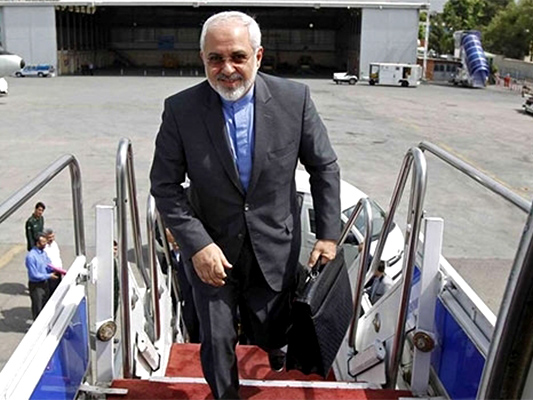
Iranian Foreign Ministry Spokesman Bahram Qassemi announced on Saturday that the Iranian foreign minister will leave Tehran for Athens on Sunday to attend the first International Forum of Ancient Civilizations.

“During the two-day trip, the Iranian Foreign Minister will attend and address the Forum, and will also meet and hold talks with the Greek Prime Minister and Foreign Minister as well as a number of his counterparts on the sidelines of the event,” Qassemi added, according to the Foreign Ministry’s website.


Iran FM to Attend Forum of Ancient Civilizations in Athens

Greece’s foreign ministry will host the Forum on April 24 (Monday) in a bid to promote cultural heritage and cooperation between the 10 participating countries.

The forum is an initiative of Greek Foreign Minister Nikos Kotzias and invitations were sent jointly with Chinese counterpart Wang Yi. Apart from Greece and China, the countries invited are Egypt, Bolivia, India, Iraq, Iran, Italy, Mexico and Peru which represent ancient civilizations such as the Egyptian, the Roman, the Persian, the Chinese, the Mesopotamian, the Mayas, the Incas, and those of the Indus Valley.

The ten countries represent more than 40 percent of the world population and are at the center of international political developments in the Americas, Europe, Asia and Africa.

In the invitation sent by Kotzias and Yi, the ministers stress the common vision to utilize cultural heritage to promote friendly relations, international cooperation, peace, stability and prosperity. The achievements of the past gain increasingly more value, not when one rests on one’s laurels, but when they are utilized to form a better present and a more hopeful tomorrow and this is the aim of the Forum, it was stated.

According to diplomatic sources, this is a very important international project as countries from four continents will meet around the same table for the first time for a cultural initiative, aiming to form a “positive agenda” of cooperation.

The same sources said culture today is associated with soft power which, when rightly used, can highlight a country’s international image and become an important source of economic power.

The forum will be held at Zappion Mansion in central Athens.

Tajikistan Opposed to Iran’s Full SCO Membership

Russian Foreign Minister Sergey Lavrov said Friday he hoped Iran’s SCO membership process would start in June.

“Next in line, many have said this today, is Iran, which as you know has settled the issues related with Security Council sanctions. It now fully meets the criteria for SCO membership,” Sputnik quoted Lavrov as saying.

“We hope that in Astana in June, the heads of state will consider the issue of how to launch the process of including Iran as a full member,” the Russian top diplomat said in Kazakhstan.

That would give Iran formal ties to Russia and China, the two leading powers in an organization often regarded as “a counterbalance to the Western-dominated international institutions that have held sway since the end of the Second World War,” as Newsweek put it.

SCO nations cooperate militarily and economically, although the organization doesn’t guarantee mutual defence the way NATO does.

Russian President Putin’s special envoy to SCO, however, said some other members of the organization oppose Iran’s accession, according to the Russian news agency Tass.

“We stand for this firmly and consistently, and we are open about it,” Bakhtiyer Khakimov said, but added that certain partners have a different stance on the matter, and a consensus is needed for the decision to be made.”

SCOAccording to a report by IFP, Tajikistan is said to be one of the main opponents of Iran’s accession. The two countries have many commonalities, including their ancient Persian culture and language, and used to have the closest and most stable relations.

However, these warm relations took a nosedive in late December 2015 on the issue of the Islamic Movement of Tajikistan. While the Islamic Revival Party (IRP) was considered by the Tajik government as a banned party, its leader Muhiddin Kabiri was invited to an international conference in Tehran, and this outraged the Central Asian state.

That seems to be the reason why Tajikistan declared its opposition to Russia’s proposal to turn the issue of Iran’s status conversion before the plenary summit of heads.

Iran has held an observer status at SCO since 2005. Last June, SCO members failed to reach a consensus on Iran’s accession. But now Tehran is trying to leverage its improved ties with Moscow to become a full member.

The SCO is an intergovernmental economic, political and military alliance composed of China, Russia, Kazakhstan, Uzbekistan, Tajikistan and Kyrgyzstan. Afghanistan, Mongolia and Belarus are also observer members.

It was founded in China in 2001 to foster confidence-building between Central Asian republics to demilitarize borders and enhance cooperation in the fight against militant groups. But it has broadened its mandate beyond counterterrorism and intelligence sharing and also functions as a counterweight to similar Western allied organizations.

The formal process of India and Pakistan joining as full SCO members began last year.

Iran Claims Title in Asian Junior Taekwondo Championships

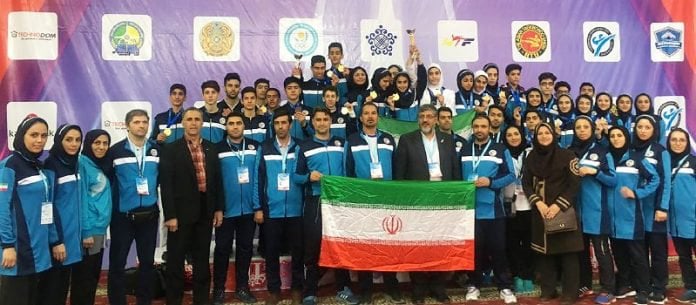
The Iranian squad (13 medals) was followed by South Korea and Thailand which stood second and third, respectively, with 15 (eight golds, four silvers and three bronzes) and six (two golds, two silvers and two bronzes) medals at the end of the three-day tournament which was held with the participation 246 taekwondokas from 22 countries during April 19-21, Tasnim News Agency reported.

Khazakhstan and the Philippines stood fourth and fifth, respectively.

Iran’s medals were snatched by Zahra Shojaei (women’s -63kg), Mobina Shakeri (women’s -55kg), Mobina Nejad (women’s -42kg), Zahra Alizadeh (women’s -46kg), Zahra Pour-Esmaeel (women’s +68kg), Yalda Valinejad (women’s -59kg), Hamed Asghari (men’s -51kg), Hamidreza Hadian (men’s -59kg) and Mohammad-Hossein Yazdani (men’s -73kg).

Mahla Momenzadeh (women’s -44kg), Hamidreza Sadri (men’s -48) and Ahmadreza Mokhtari (men’s -68kg) won the Iranian team’s three silver medals.

Iran’s sole bronze was collected by in the men’s -59kg division.

It was the very first time that Iran women’s team managed to win the title in an Asian junior taekwondo meet.

At the end of the tournament, Iran women’s team head coach Azam Dorosty was selected as the best coach of the tournament.

Iranian Nationals in Britain Reject Rumours of Bank Account Closure

Following the spread of rumours and news in a number of Iranian media outlets, fuelled by The Guardian’s Friday (April 21) report claiming that there has been a continuation in the closure of the Iranian nationals’ accounts in the UK banks since US President Donald Trump assumed office, a wave of astonishment and ambiguity has washed over through the Iranian immigrants living legally in the European state.

According to a Farsi report by IRNA, they have expressed concern over the getting around of such rumours and untrue news, saying that they can create growing distrust towards them and tarnish their reputation.

The Guardian reported on Friday that a UK law firm handling dozens of complaints by Iranian nationals who have had their bank accounts in Britain closed because of their nationality, says closures continue despite the lifting of economic sanctions.

Blackstone Solicitors that represents a number of Iranians has reported a continuation in such closures since US President Donald Trump assumed office on January 20.

Expressing concern over some of Iran’s domestic media publishing such reports, a number of the Iranian nationals residing in Britain rejected the veracity of the news report and said their accounts are active.

On Friday, quoting Rokhsareh Vahid, the head of the Iran desk at Blackstone, The Guardian wrote: “In the past two or three months, more people have come to us to instruct us to act on their behalf because of their bank account closures. In total we have more than 60 cases involving Iranians who have sued banks over racial discrimination.”

Vahid said her firm has secured compensation in most of those cases, often as the result of pre-trial settlements. “I only recall one case which was not successful,” she said. “A lot of such settlements include non-disclosure agreements, so we won’t be able to publicise them.”

The Guardian added an Iranian student in Greater Manchester represented by Blackstone received a five-figure compensation from RBS in July 2016, adding it is not publishing his name to protect his identity.

After Blackstone had been first contacted by the student a week before the scheduled closure of his account, they immediately contacted RBS demanding that their client’s rights are recognised.

The firm said, “We proceeded to file a complaint against the bank and pursued it until our client recovered a total of £31,200 from RBS in July 2016.”

The payment included £15,000 compensation for emotional injury and £16,200 in respect of costs of the claim.

According to The Guardian report, after paying the compensation, the bank’s spokesperson said, “We are unable to comment on specific customers or decisions made in relation to individual accounts. However, in line with our legal and regulatory obligations, we do not close customers’ accounts because of their race and strongly refute any suggestion that we do so.”

IRNA’s report says the UK banks have never closed Iranian accounts due to their nationality and will not make such a move in the future.

If what The Guardian reported is not as serious as it seems, it can be part of a plot to influence the upcoming presidential election due to be held on May 19 in Iran.