Monday, December 22, 2025
Home Blog Page 4053

Analyst Explains What US is Looking for in Syria

US Strike- Syrian

Mohammad Reza Farhadi, a political commentator at Basirat Politcal Centre, believes that the US recent missile attack on a Syrian airbase was in line with Washington’s second strategy, i.e. escalating tensions and launching a war of attrition. The existence of a crisis in Syria means anti-US players such as Iran and Russia will get involved in the crisis.

Here are excerpts from his Farsi article:


US Used Chemical Attack Scenario as Excuse for Strike

The US launched a missile strike on an airbase in the Syrian province of Homs under the pretext that Damascus carried out a chemical attack in Idlib province. Speaking about the attack, US President Donald Trump said he ordered a limited military strike on the airbase from where the chemical attack had been conducted. He said preventing the spread and use of chemical arms would be in line with America’s national interests. This came as US allies such as Saudi Arabia, Britain, France and Israel supported the attack while Iran and Russia condemned it and dismissed the strike as blatant violation of a country’s sovereignty.

The US had been seeking an excuse to intervene in Syria, and finally the Idlib chemical arms incident provoked the White House to conduct the attack. Now the question is what Washington’s policies toward Syria are, and one should examine what the objective behind the recent missile attack was.


US Schemes for Syria

To achieve its ends, Washington has been nursing three major ambitions since the beginning of the Syria crisis:

  1. The ouster of Syrian President Bashar Assad: Since the Syria conflict began, the West has always stressed the necessity of Assad’s removal. The US authorities believe as long as Assad is in power, the situation of Syria will not change that much and the situation in the country will be the same as it was before 2011, and the only difference would be that there will be more inclination toward resistance. Former Saudi intelligence chief Bandar bin Sultan once said, “We seek to topple Assad, even if the price for that is to destroy the entire Syria.”

The key reason behind the West’s animosity toward Assad is that Syria is an ally of Iran and the Lebanese Hezbollah movement. Nevertheless, there are other reasons behind the West’s enmity.

Robert F. Kennedy, an American lawyer and the nephew of former US President John F. Kennedy, says Washington decided to remove Assad from power after he did not support a gas pipeline project belonging to the Qatari government. According to him, the $10-billion plan was first proposed in 2000, and the CIA followed up the issue. Nine years later, he writes, Assad announced he would not back the project that would have given Qatar direct access to Europe’s energy markets through Turkey’s terminals. The pipeline would have also enabled Riyadh to exert more influence on Iran in the region, writes Kennedy. So, Assad is known as a person who supports resistance and opposes the Western-Arab axis. The West is seeking a model similar to Egypt for Syria and wants somebody allied with the West with nationalistic and anti-Islam tendencies to come to power in Syria.

  1. Escalation of the conflict and mounting a war of attrition in Syria: After Washington failed to achieve its first goal, it opted to launch a massive attack on the Syrian government through different terror groups and with the support of the Middle East’s Arab countries such as Saudi Arabia and Qatar. Around 80 thousand terrorists from 96 countries are involved in the Syria war.

Now the key question is why the US is seeking to wage a war of attrition in Syria. The reason is that, first of all, the White House wouldn’t like the war to end at this point in time and does not want any of the players engaged in the Syria war to enjoy a relative balance of power or to emerge victorious. Secondly, the West seeks to wipe out Syria’s economic infrastructure. Before the Syria conflict began, there were nearly 3,000 factories in Idlib province, most of which either were destroyed or stopped operation. If Syria weren’t gripped by conflict, Idlib province might have been recognized as the economic hub of the area which covers the span of land once known as the Levant.

  1. The disintegration of Syria: The United States’ third strategy is to disintegrate Syria. Kissinger has put forward a proposal on that. He says Syria should be divided into three parts: one should be run by Bashar Assad, one by Sunnis and the other by Kurds in the North. He says loud and clear that this northern section is Washington’s key program and that the US can give Kurds in the north independence and, in return, use military airbases in northern Syria and expand its sphere of influence.


Final Analysis

The US missile strike on Syria is simply a response to Syria’s alleged chemical attack in Idlib. The US has come to understand that it is just a marginal player in the Syria crisis. In order to turn into the superior hegemon in Syria on the one hand, and further align its allies on the other, Washington seeks alternative solutions such as short attacks. On the other hand, the recent strike could be regarded as a US tactic to set the stage for the creation of a safe zone in Syria, one which Trump has been seeking since he took office as president.

Ahmadinejad Surprisingly Registers to Run for Iran President

A few months ago, the Leader of Iran’s Islamic Revolution Ayatollah Seyyed Ali Khamenei advised ex-president Ahmadinejad against running for Iran’s presidency.

Following the advice, Ahmadinejad wrote a letter to Ayatollah Khamenei, saying he will not run, and even support anyone for the post.

However, he later expressed his support for his deputy Hamid Baqaei, who was going to run for president.

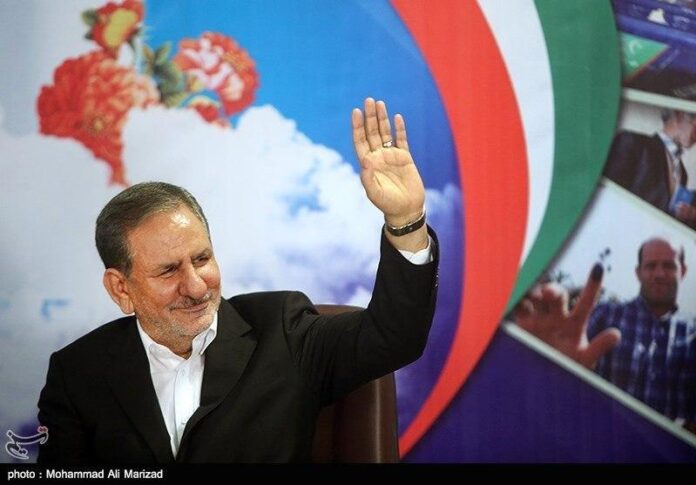
While everyone was expecting Ahmadinejad to accompany Baqaei on Wednesday in declaring his presidential bid, the former president surprisingly signed up his own name and said the Leader had just advised him against running.

“I believe the Leader’s advice was not a ban, it was just a piece of advice,” Ahmadinejad told reporters today, according to media reports.

Not only Ahmadinejad, but also his ally Baqaei applied for presidency.

Iran’s presidential election will be held on May 19.

Ahmadinejad Runs for Iran President

Iranian, Syrian DMs Discuss Joint Fight against Terrorism

Iranian, Syrian DMs Discuss Joint Fight against Terrorism

In a telephone conversation on Tuesday evening, Iran’s Defense Minister Brigadier General Hossein Dehqan and his Syrian counterpart Fahd Jassem al-Freij stressed the need for closer interaction between Tehran and Damascus in the war on terrorism.

They also emphasized the necessity for the formation of a fact-finding committee to shed light on a suspicious chemical attack that the US is blaming on the Damascus government.

The two defense ministers also underlined that the recent US attack on a Syrian military airbase could by no means undermine the resistance front’s determination to fight against the terrorist groups.

On Friday, the US launched a missile attack on the Syrian government’s Shayrat Airfield near Homs with 59 Tomahawk missiles under the pretext that Damascus had launched a chemical attack on the town of Khan Shaykhun in Idlib.

Syria has been gripped by civil war since March 2011 with various terrorist groups, including Daesh (also known as ISIS or ISIL), controlling parts of it.

According to a report by the Syrian Center for Policy Research, the conflict has claimed the lives of over 470,000 people, injured 1.9 million others, and displaced nearly half of the country’s pre-war population of about 23 million within or beyond its borders.

In the meantime, Iran has remained a close ally of Syria and supports its legitimate government in the face of foreign-backed militancy.

Tehran insists that the Syrian nation is the only side that has the right to shape the future of its own country, rejecting foreign intervention with the use of force.

18,000 Women Applicants Register for Iran’s Local Elections

According to a Farsi report by Khabar Online News Agency, the head of Iran’s Elections Headquarters, Ali Asghar Ahmadi, declared that over 18,000 Iranian women have signed up to compete in Iran’s City and Village Councils Elections.

City and Village Councils are local councils elected by public vote in all Iranian cities and villages. Council members in each city or village are elected by direct public vote to a 4-year term. According to Article 7 of the Iranian Constitution, these local councils together with the Iranian Parliament are decision-making and administrative organs of the state.

The councils are in charge of electing mayors, supervising the activities of municipalities, and study the social, cultural, educational, health, economic and welfare requirements of their constituencies.

They also play a significant role in the management of urban affairs and are responsible for the planning and coordination of people’s participation in the implementation of social, economic, constructive, cultural, educational and other welfare affairs.

The need for the greater presence of women in Iran’s City and Village Councils and participation in the urban decision-making processes has heightened over the past few years more than ever. This increased need has led to a wave of efforts in the social media to encourage more women to register for the elections.

This greater interest in the stronger presence of women in Iran’s City and Village Councils was due to the failure of the representatives in the previous terms of Iran’s City and Village Councils to address women’s problems properly.

In the previous terms, women held a very small number of seats in the councils compared to the men. The difference between the number of men and women applicants for competing in the upcoming Iran’s City and Village Councils elections is still quite significant, with men constituting 93.7 percent of the individuals and women 6.3 percent of them.

Nevertheless, women only accounted for 5.4 percent of the applicants in the previous elections. Thus the 0.9-percent increase which is good news.

Iran will simultaneously hold the 12th presidential election and the 5th City and Village Councils Elections on May 19

EU Renews Anti-Iran Sanctions over Human Rights Claims

European Union

In a statement on Tuesday, the EU said it had prolonged until April 13, 2018 its travel ban and asset freeze on 82 Iranian people and one entity as well as a ban on the bloc’s exports of certain equipment to Iran.

It added that the blacklisted names would be published on Wednesday in the EU’s Official Journal.

The EU imposed the restrictions on Iran for the first time in 2011.

The sanctions are unrelated to those over Iran’s nuclear program, which were lifted following the implementation of the nuclear deal, known as the Joint Comprehensive Plan of Action (JCPOA).

After the JCPOA went into effect on January 16, 2016, many senior EU officials, often accompanied by large European business delegations, have been shuttling in and out of Iran.

Iran and several EU states signed many agreements to improve cooperation, particularly in political and economic sectors.

Last August, Iran’s Judiciary chief Ayatollah Sadeq Amoli Larijani dismissed the human rights allegations against the country and proposed that the Islamic Republic and Europe initiate a dialog on human rights.

He said human rights have long been a point of friction between Iran and the West, adding Europe and the US are making an “instrumental use” of the issue.

UCL Game Postponed after Explosions near Dortmund Bus

UCL Game Postponed after Explosions near Dortmund Bus

A statement from local police said, “In the run-up to the Champions League match of BVB [Borussia Dortmund] against AS Monaco, there was an explosion near the BVB team bus shortly after 7pm. The location of the event is Wittbräuckerstraße/Schirrmannweg in Dortmund-Höchsten.”

“According to current knowledge the wheels of the bus (whole or partial) burst and one person was injured. It is not yet possible to say exactly what the explosion was or exactly where something exploded.”

Borussia Dortmund’s Marc Bartra was reportedly injured after explosion near the team bus, The Guardian reported.

UCL Game Postponed after Explosions near Dortmund BusA tweet from the German club’s official Twitter account an hour before kick-off at the Westfalenstadion had first alerted news of an incident. “At our bus departure, an incident has occurred. One person was injured. More information to follow,” it read.

A later tweet read: “A bomb exploded at the team bus next to the hotel. The players are safe. There is no danger at the stadium” before the club confirmed the match has been rearranged for Wednesday, kicking off at 6.45pm local time.

The Spain international Bartra, 26, have been taken to a local hospital with superficial cuts to his arm. According to Bild, three explosive devices were deposited on the street in front of the bus although police have yet to give any more details.

“Trump Policy on Iran More Aggressive than Obama’s”

donald-trump

In an interview with ILNA, senior expert on US affairs Amir-Ali Abolfat’h has weighed in on Tehran-Washington relations and the approach adopted by the new US administration on Iran.

The following are excerpts from his Farsi interview:

Amir-Ali Abolfat’hTrump Wants to Shift Blame for JCPOA Violation onto Iran

Iran should not be swayed by the emotional and propagandist atmosphere created by the US because the Trump administration wants to shift the blame for the violation of the JCPOA onto Iran. Washington-Tehran relations remained roughly unchanged in the year to March 2017 compared to previous years.


Plane Sales Part of US Commitments under JCPOA

One of the major issues for both Iran and the United States last year was the implementation of the JCPOA. The deal began to go into effect in early 2016. Based on reports by the International Atomic Energy Agency (IAEA), the authority responsible for the verification of the peaceful nature of Iran’s nuclear program, Tehran has lived up to all its obligations under the nuclear agreement. Americans have also made good on part of their commitments, among them the US Treasury’s agreement to sell passenger aircraft to Iran. But even regarding this issue, Washington adopted some measures which, in Tehran’s view, amounted to breach of promises under the deal and ran counter to the spirit of the JCPOA.


US Ratchets up Pressure on Iran over Non-Nuclear Issues

Washington began to ramp up pressure on Tehran over different issues. It all started during US President Barack Obama’s presidency and has reached a peak now with Trump at the helm of affairs.


Trump Administration More Aggressive on Iran than Obama’s

The new US administration has adopted numerous measures against Iran. One of the recent cases of Washington piling up pressure on Tehran was the imposition of new sanctions under the pretext of Iran’s missile activities as well as some other issues. Add to that the law which restricts visa issuance and which applies to Iranian nationals as well. The law went into force after Trump came to power. These two examples show the new US administration has adopted a more aggressive behaviour toward Iran than the Obama administration did.


Trump Didn’t Say He’d Tear up JCPOA

The first point to bear in mind is that Trump never said he would tear up the JCPOA; rather, Trump’s opponents during Republican caucus rivalries such as Ted Cruz and Marco Rubio had said they would do so. However, Trump slammed the JCPOA as the worst deal in the US history.


US Opting for Strict Implementation of JCPOA

Trump’s approach toward the JCPOA should be reviewed at three junctures: First, the election campaign during which Trump said the JCPOA had gone down in the US history; second, Trump’s power transition period when some of his advisors spoke of renegotiating some of JCPOA’s terms and conditions, a proposal not accepted by anyone; and third, Trump’s presidency. The White House had remained tight-lipped on the issue until a few weeks ago. However, Washington has begun to reveal its official position on the matter, and that is “strict implementation of the JCPOA.”


Strict Implementation of JCPOA by US is Pointless

The commitments that signatories to the JCPOA have undertaken to fulfil have been stipulated in the agreement. Iran, for its part, has delivered on its commitments. The IAEA, too, is monitoring Iran’s nuclear activities. Under such circumstances, the strict implementation of the nuclear deal would be pointless. Bringing up the issue seems to be a political move to please opponents of the JCPOA, who are among Trump’s supporters.


US Wants to Make Iran Nervous, Frustrated with JCPOA

The Trump administration has ratcheted up the pressure on Iran over non-nuclear issues such as unsubstantiated allegations that Tehran is supporting terrorism as well as Iran’s missile and regional activities. Accordingly, Washington has adopted and implemented more sanctions on Iran, hoping to be able to put Iran on edge and make it disappointed with the JCPOA in order to prompt the country to infringe upon the deal. This way, the US hopes to be able to reinstate previous sanctions, repeal the JCPOA and make Iran pay the price for the abrogation of the nuclear deal.


Trump to Pursue Policy of Containing Iran

The Trump administration seems to be going to follow the policy of containing Iran, an approach the US has been pursuing since the victory of Iran’s 1979 Islamic Revolution.


Iran Should Respond to Any US Move

As for what Policy Iran should adopt vis-à-vis Trump, one should say reciprocation is definitely important in diplomatic calculations. Iran must respond to any US move. If the Americans opt to defuse tension and better manage their relations with Tehran, Iran should respond in kind. But if the White House seeks to fuel tensions with Iran, we should give an appropriate response.


Strong Anti-Iran Current Seeking to Breach JCPOA

It seems that a powerful anti-Iran current in the United States is trying to provoke Iran into contravening the JCPOA. Iran’s response should be proportionate to and consistent with US moves. If they adopt a measure against Iran in the missile arena, Iran should move to boost its missile capabilities. If they violate the JCPOA, Iran should respond in the same context and with similar intensity.

Iranian FM to Attend Friday Trilateral Meeting in Moscow

Mohammad Javad Zarif

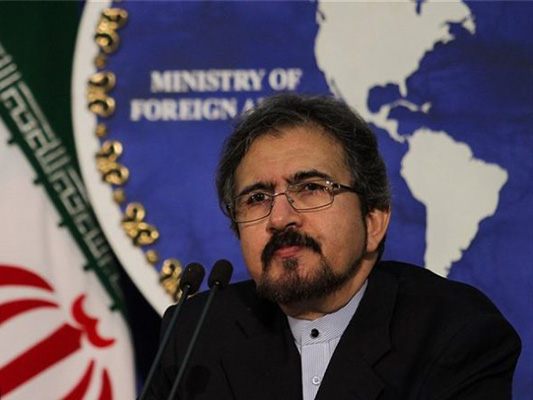
Iranian Foreign Ministry Spokesman Bahram Qassemi confirmed on Tuesday that Foreign Minister Mohammad Javad Zarif will leave Tehran for Moscow on Friday to take part in a trilateral meeting with Russia’s Sergey Lavrov and Syria’s Walid Muallem.

Earlier on Tuesday, Russian Foreign Ministry Spokeswoman Maria Zakharova had declared that at the end of the week three-way talks are planned in Moscow between the Foreign Ministers of Russia, Syria and Iran.

Russian Foreign Minister Lavrov had hosted his Iranian and Syrian counterparts in Moscow late October 2016 to confer on ways to intensify anti-terrorism efforts in the Arab country.

The meeting seems to be in response to the US President Donald Trump’s military order against the Damascus government.

Over 100 Apply for Iran’s Presidency on First Registration Day

Over 100 Register for Iran’s Presidency on First Registration Day

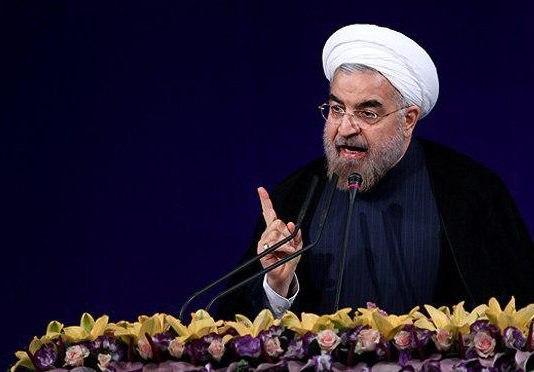
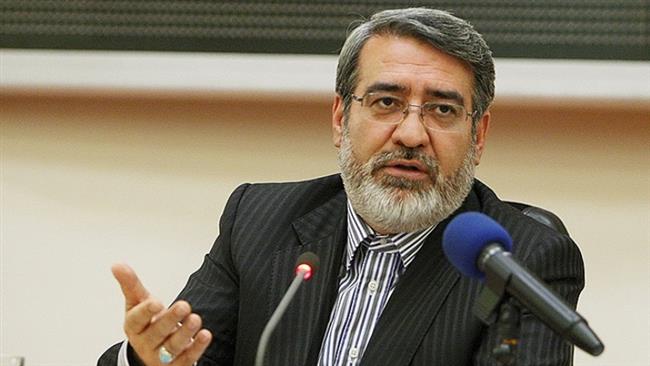
As the process of registration of applicants for candidacy for the post of president kicked off at Iran’s Interior Ministry on Tuesday, dozens of people made applications on the first day, most of whom were ordinary people without the experience of any political activities, according to Tasnim.

The process began at the country’s Election Office, which is located within the Interior Ministry’s premises in Tehran, and will last for the next five days.

The candidates are expected to be political and religious personages who fulfill the fourfold criteria of being of Iranian origin, being a national of the Islamic Republic, being prudent and capable of taking on leadership duties, and being religious and believing in the Islamic Republic’s principles and its official religion.

All hopefuls will be vetted by the Guardian Council, which will announce the names of qualified candidates possibly in late April, Press TV reported.

Here are photos of some of the candidates who signed up today:

Iranians Can Keep up to 10,000 Euros

Based on new regulations set by the Central Bank of Iran (CBI),Iranian people cannot keep more than 10,000 euros or its equivalent in other currencies.

Individuals should provide the officials withthe required documents in order to keep more than the authorized amount, according to media reports.

The CBI’s website reported that the regulations have been devised as per the Law of Campaign against Smuggling of Goods and Foreign Currencies.