Friday, April 10, 2026
Home Blog Page 4006

President Rouhani Praises IRGC’s Timely Attack on ISIS Positions

President Rouhani Praises IRGC's Timely Attack on ISIS Positions

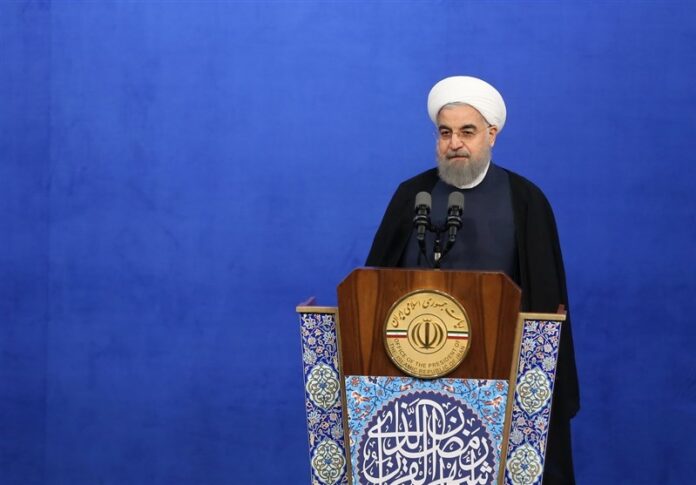
Addressing an iftar ceremony with the presence of clerics in Tehran on Tuesday, President Rouhani hailed the IRGC’s missile attack on Daesh (ISIL) terrorists in Syria’s Deir ez-Zor as an appropriate, timely and necessary reaction.

Noting that Iran’s policy toward the regional and international issues has remained unchanged, the president warned the terrorist groups and the enemies of Iran that any plot to harm the Islamic Republic will receive a crushing response.

He also explained that the IRGC’s plan to fire missiles at the positions of terrorists from inside Iran was not a personal or sectional decision, but the Supreme National Security Council had already devised plans in retaliation for a recent terrorist attack in Tehran claimed by Daesh.

On Sunday night, the IRGC fired six high-precision missiles at positions of the Daesh terrorist group in Syria’s Deir ez-Zor. According to reports, all missiles have hit the targets, wreaking destruction on Daesh sites and killing dozens of terrorists.

Elsewhere in his remarks, President Rouhani said clarifying Islam to the young generation is an essential principle, adding, “The burden of responsibility on the shoulders of clerics and seminaries for clarifying God’s laws and Islamic beliefs to bring the youth closer to religion is harder today compared to yesterday”.

“Topics of monotheism, prophecy, imamate and divine justice are not topics that we need anyone to vote for, these are scientific, theoretical, rational, and reasoning issues,” the president’s official website quoted him as saying.

“The Islamic Republic of Iran will continue its way with more dignity and greatness and we will keep our unity and integrity,” he added.

Iran’s Pistachio Exports on Rise

Iran’s Pistachio Exports on Rise

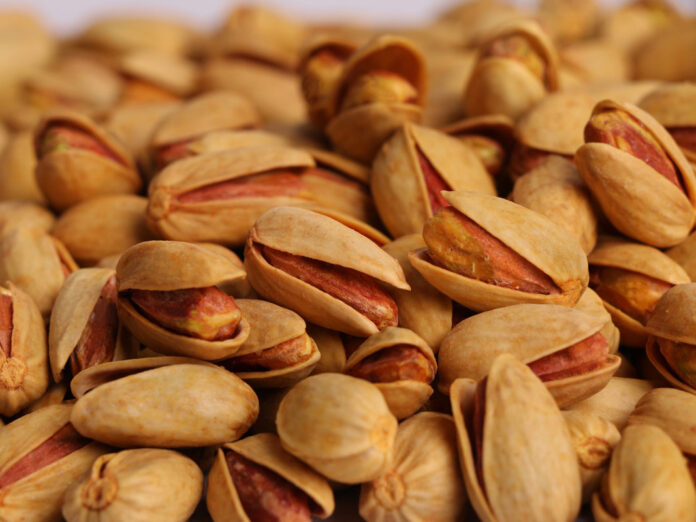
Iran’s Trade Promotion Organization has announced that the country’s pistachio exports have had a growing trend during the past year.

The organization says Iran’s pistachio exports touched $1.24 billion in the 12 months to March 2017, up 3% year on year. The product hit Asian and European markets.

The pistachio is one of the pivots of Iran’s agriculture sector and is regarded as the country’s superior agricultural produce in world markets.

Pistachio exports can be increased by improving its quality, promoting quality control systems, enforcing an efficient management approach in warehousing systems and using modern techniques in production and trade, according to a Farsi report by IRNA.

Iran’s pistachio exports reached $1.202 billion in the year to March 2016, based on figures released by the Iranian Customs Office.

Iran’s pistachios were exported to Hong Kong, Vietnam, the United Arab Emirates (UAE) and Germany last year.

Pistachios accounted for 2.2 percent of Iran’s total exports from March 2014 to March 2017, according to statistics by the Customs.

Well over $700 million worth of pistachios were exported in the year to March 2014. The figure rose to around $780 million the following year. The rock-bottom price for each tonne of pistachios was just more than $8,000 in the year to March 2015.

The total exports hit $976 million in the year to March 2017, when the rock-bottom price was around $8,500 for each tonne.

According to officials, nearly 170 thousand tonnes of pistachios were produced in the year to March 2017, 20% of which was used for domestic consumption and the rest exported.

In the same period, more than 100,000 tonnes of pistachios were exported via the country’s customs checkpoints, which means currently between 40 and 50 thousand tonnes of pistachios are kept in warehouses in the country.

“Radical Ideology to Survive in Mideast Even after ISIS”

Sabah Zanganeh

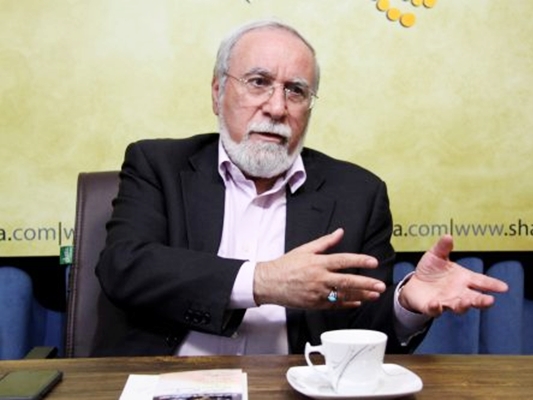
Speaking in a Farsi interview with Khabar Online, senior Iranian expert on Middle East affairs, Sabah Zanganeh, said that despite heavy defeats suffered by the ISIS terror group, the Takfiri [extremist] ideology will survive in the region.

“ISIS is on the verge of total collapse as an entity in Iraq. However it will survive as an ideology and sabotage campaign,” said Zanganeh, a former Iranian envoy to the Organisation of Islamic Cooperation (OIC).

He went on saying that in Iraq’s Mosul the operation for retaking the small areas still controlled by ISIS is going on strongly.

He added the same fate is awaiting ISIS in Syria, saying with the further advance of Syrian army, all the ISIS-held areas in the country would be cleared from the militants in the near future.

He described the current situation in Syria as dangerous and complicated and said there are different groups and states involved in the war in Syria.

“After Trump took office, the US is seeking to play a new role in Syria. This is what the Saudi Arabia and its regional allies are interested in. Syria has turned into a scene of proxy wars between different states. For the time being, Syria is divided into three regions: 40 percent under ISIS, 20 percent under al-Nusra Front and 40 percent under Syrian government,” he said.

Zanganeh referred to the latest deals between the Syrian government and the armed opposition groups to transfer militants and their families to certain areas, and said it was a humanitarian move by Damascus.

“This means that the Syrian government does not intend to eradicate all of dissidents. Rather, it prefers to hold negotiation with them. This is a positive move which can pave the way for political solutions to the war in Syria. But in Iraq the situation is different and we are witnessing the continuation of hit and run attacks by the forces affiliated with the US and its regional allies,” he noted.

Zanganeh described Iraq’s political situation as vulnerable and said the US insistence on postponing parliamentary elections in Iraq threatens the country’s political stability.

The US is postponing Iraqi parliamentary elections as it seeks to have pro-American MPs in the new parliament.

“If the US manages to postpone the elections, this means that there would be no legal government and parliament in Iraq when the terms of the ruling parties’ come to an end.  The Iraqi Constitution has nothing to say about such conditions and this can lead Iraq to anarchy. Washington is looking to have pro-American MPs in the new parliament. To this end, it has been exerting a huge amount of pressure on the Iraqi government to postpone the elections,” he said.

He touched on the growing public dissatisfaction with the corrupt officials in Iraq and said the only way to avoid anarchy is having the Constitution revised.

“If the Constitution is not revised, public dissatisfaction will grow and this puts the country on the verge of unrest. The western media reports always accuse Iran of interfering in Iraq’s affairs, but this is the US which is meddling in Iraq and deciding for the nation,” he said.

The expert warned against divisions among Sunni and Shiite groups in Iraq and said the rifts pave the way for corruption and anarchy.

Western media reports always accuse Iran of interfering in Iraq’s affairs, but this is the US which is meddling in Iraq and deciding for the nation.

He also cited the internal divisions in Kurdistan Region and said the oil companies owned by the US Secretary of State Rex Tillerson signed a number of agreements with the ruling party in the region last year, but faced strong opposition from Baghdad.

“This has created an uncertainty in the region because foreign investors are not sure about the economic stability of the region. To cope with the uncertainty, the regional government of Kurdistan threatens to hold independence referendum,” Zanganeh added.

He said Iraq has still a long way to go to achieve stability, adding “after the overthrowing of Saddam Hussein, many said that the time has finally come to establish a stable government in Iraq, but what we saw was nothing more than instability.”

“To achieve stability, the Iraqis need to revise their policies. Meanwhile, all these changes have to be made by Iraqis themselves instead of foreign powers.”

He said Iraqis drew on Lebanon’s experience to write their Constitution, adding such constitutions don’t pay off when the country is in trouble.

“The problem with constitutions like this is that they can’t help the citizens with a clue as to who is violating the law and who is corrupt,” he said.

He touched upon the latest diplomatic tension in the region between Saudi Arabia and its allies on the one hand and Qatar on the other hand, saying Saudi Arabia cut its ties with Doha by Washington’s order.

“The main issue which deserves further exploration is that Saudi Arabia and its regional allies have already begun new efforts to normalise ties with Iraq. This is a good development for Iraq, but the interference of the Arab countries in Iraq’s internal affairs could threaten the sovereignty of this war-torn country,” he noted.

Zanganeh went on saying the Saudis thought at first that the US could be easily embroiled in any conflict in the region after the two sides signed a lucrative arms deal.

“But they are mistaken as the US president has made it clear to the Saudis that Washington would not get involved in any conflict to support Saudi Arabia,” he said.

According to Zanganeh, Saudi Arabia and its allies have always been trying to portray a negative picture of the Islamic Republic of Iran as a regional threat. “To this end, the Saudis have not had any hesitation in using whatever they have in power against Iran including triggering religious divisions in the region,” he pointed out.

Zanganeh also stated that the recent arms deal between the US and Saudi Arabia can disrupt the balance of power in the region and added, “Today, we see that Saudi Arabia is using the arms that it has bought from the US and UK in its war on the impoverished nation of Yemen.”

The Iranian expert went on to say that with the current diplomatic crisis in the region, many are worried that the Saudis could use the arms against Qatar.

Saudi Arabia will not engage itself in a direct war with Iran as they don’t have the courage and capability to do so.

He said it is unlikely that Saudis could enter a direct war with Iran because they lack the required courage and capabilities to do so. “Therefore, for the near future, we will continue to witness sporadic hit and run attacks by the Saudis against Iran in the neighbouring countries,” he mentioned.

He called on the Iranian officials to explicitly slam the Saudis for their destructive role in the region and said unlike what the Saudis claim Iran has never been a threat to Saudi Arabia.

“The new rulers of Saudi Arabia are following the footsteps of their ancestors in violating international laws and seeking to occupy the neighbouring territories,” he underlined.

Touching on the ways to remove bilateral tensions, he said there would be no improvement in ties until Saudi Arabia shows its commitments to the international law.

He also talked about the safety of Iranian pilgrims during this year’s Hajj rituals and said Iran has to take the issue seriously and have the Saudis make firm commitments to prevent the tragic events like what happened two years ago in Mina.

ISIS Elements Are ‘Corrupters of Earth’ in Iran’s Law

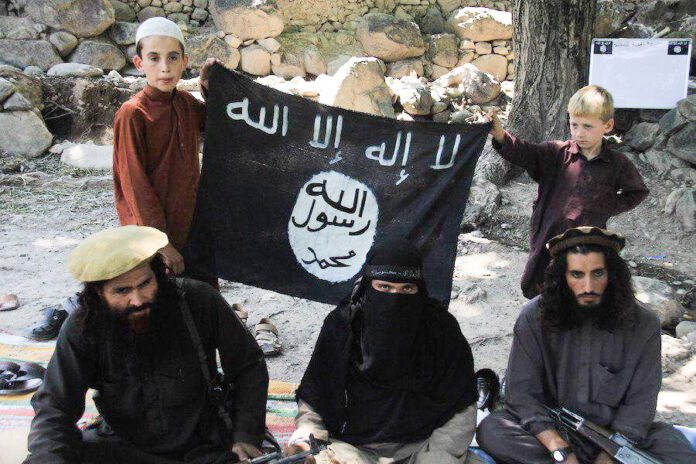
ISIS

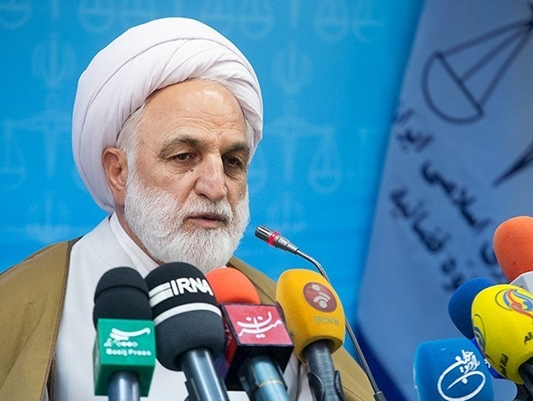
EjeiSpeaking in a press conference on Tuesday, Spokesman for the Iranian Judiciary Gholam-Hossein Mohseni-Eje’i declared that several people have been captured on charges of being in cahoots with the ISIS terror group.

He said those who are referred to, in Iran’s law, as Mohareb (somebody who jeopardizes people’s security) and Corrupter of the Earth (someone who spreads corruption on earth) must, by definition, be armed and organised in groups.

However, he added, all members of such groups are regarded as Mohareb even if they are not armed and they do not kill anyone.

Moharebeh (the act of being a Mohareb) does not just carry the death sentence, said the spokesman. Rather, he added, a Mohareb can be punished with four types of penalties, and the judge is free to choose the type of punishment.

He said the word Corrupter of the Earth was not interpreted in previous laws in Iran, but the current penal code defines the word.

“ISIS members have declared war and conducted acts of terror and are regarded as Mohareb,” he said.

He added it is up to the judge which punishment to choose: the death sentence, banishment or others.

Corrupter of the Earth does not only refer to those acting against security, he said.

“It could be related to economic issues. These cases are handled at the Revolution Court,” he added.

Mideast Terror Attacks Part of Israel’s Agenda: Iran

Rouhani made the remarks at a Tuesday meeting with Iraqi Prime Minister Haider al-Abadi, who is visiting Tehran at the head of a high-ranking delegation.

“Fighting against terrorism should not overshadow the issue of al-Quds and the threat of the Zionist regime (Israel) in the region,” he pointed out.

Elsewhere, Rouhani congratulated the Iraqi government and nation over the liberation of Mosul form Daesh Takfiri terrorists and said, “The liberation of Mosul is a symbol for putting an end to terrorism and it is a victory celebration for Iran, Iraq, Syria and all the regional countries fighting the grave issue of terrorism.”

The president underlined the importance of safeguarding the territorial integrity of all regional countries and denounced any measure aimed at undermining the unity and sovereignty of Iraq as “unacceptable.”

The Iranian chief executive also called for the expansion of Iran-Iraq ties in all areas.

Mideast Terror Attacks Part of Israel's Agenda: Iran

Abadi, for his part, called for the promotion of Tehran-Baghdad relations in all spheres, particularly in fighting terrorism.

He noted that Daesh terrorists know no boundaries and urged all the countries to cooperate in fighting against such a common threat.

Abadi’s one-day visit to Iran came after his visit to Saudi Arabia. The Iraqi premier will then visit Kuwait on the third leg of his regional tour.

The visit comes as Iraqi government forces continue more territorial gains in the militant-held Old City of Mosul as they continue their operations to push Daesh terrorists out of their last urban stronghold in the Arab country.

The Iraqi forces took control of eastern Mosul in January after 100 days of fighting, and launched the battle in the west on February 19.

An estimated 862,000 people have been displaced from Mosul ever since the battle to retake the city began nine months ago. A total of 195,000 civilians have also returned, mainly to the liberated areas of eastern Mosul.

Iran Strongly Denounces London Mosque Attack

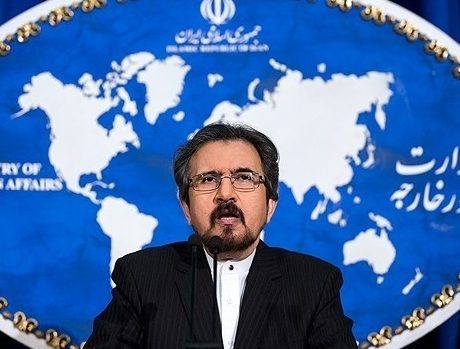
In a statement issued on Tuesday, Qassemi expressed deep sorrow over the “horrible” attack that occurred on Sunday night and offered his condolences to the families of the victims.

“Violence and extremism are condemned and rejected no matter where and with what intention, purpose or means they take place and which group of innocent people are the victims,” the spokesman said.

During the attack on Sunday night, a van plowed into worshippers outside a mosque, killing one person and injuring eleven people in what London’s mayor described as “a horrific terrorist attack”.

Officers arrested one man after they were called shortly after midnight to the incident on Seven Sisters Road, near Finsbury Park station.

British Prime Minister Theresa May said police were treating the van incident “as a potential terrorist attack”.

“I will chair an emergency meeting later this morning. All my thoughts are with the victims, their families and the emergency services on the scene,” she said.

Sadiq Khan, the London mayor, called it a “horrific terrorist”.

Iran Leader to Iraqi PM: Don’t Trust US

Iran Leader to Iraqi PM-Don't Trust US

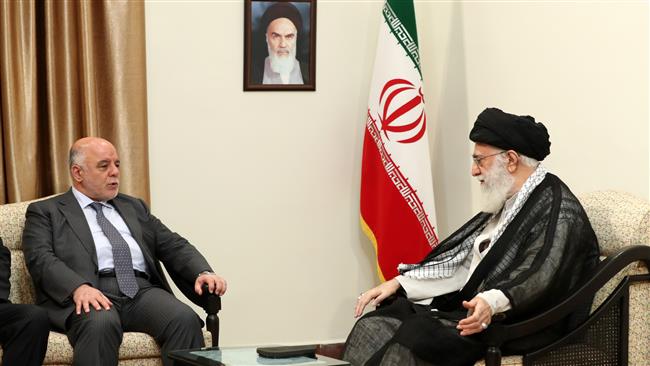
“Vigilance is required against the Americans and they should not be trusted at all because the US and its puppets oppose Iraq’s independence, identity and unity,” Ayatollah Khamenei said in a meeting with Iraqi Prime Minister Haider al-Abadi in Tehran on Tuesday.

The Leader hailed the unity and coherence among all Iraqi political and faith movements in their fight against Daesh terrorists and said the Popular Mobilization Units, commonly known by their Arabic name, Hashd al-Sha’abi, are important and a power element for the country.

Ayatollah Khamenei added that the US is against Hashd al-Sha’abi because “they [Americans] want Iraq to lose its key element of strength.”

“Do not trust the Americans at all because they seek an opportunity to strike their blow,” the Leader stated.

Ayatollah Khamenei warned that any emergence of division and conflict among Iraqis would pave the way for Washington to harm Iraq, stressing the importance of preventing the presence of US forces in Iraq under the pretext of training.

The Leader further emphasized that the US and some of its allies in the region do not seek the destruction and eradication of Daesh as the terrorist group has been created through their support.

They want to prolong the existence of Daesh in Iraq, Ayatollah Khamenei reiterated.

The Leader stressed the importance of safeguarding Iraq’s territorial integrity and said, “As a neighbor, the Islamic Republic of Iran is against certain murmurs about the holding of a referendum for the separation of a section of Iraq.”

Ayatollah Khamenei expressed hope that the Iraqi government would manage to solve the problems it faces and said, “The Iraqi government must be strengthened in every way and all political and faith movements in Iraq are duty-bound to support the sitting government.”

The Leader also said Iran and Iraq must further expand relations in various fields, urging the two sides to remove the obstacles in the way of bolstering their cooperation.

During the meeting, which was also attended by Iranian First Vice-President Es’haq Jahangiri, the Iraqi prime minister commended Iran’s support for his country in the fight against Daesh.

Iran Leader to Iraqi PM: Don't Trust US

Abadi said all Iraqi political and religious groups are united in the battle against Daesh until its full eradication.

He added that Baghdad needs Tehran’s aid during the fight against Daesh and after the elimination of the Takfiris which is a time for Iraq’s stability, peace and construction.

Heading a delegation, Abadi arrived in Tehran on the second leg of a three-nation tour after a key trip to Saudi Arabia. At the end of his day-long stay in Tehran, the Iraqi premier will set off for Kuwait to meet with the country’s senior officials.

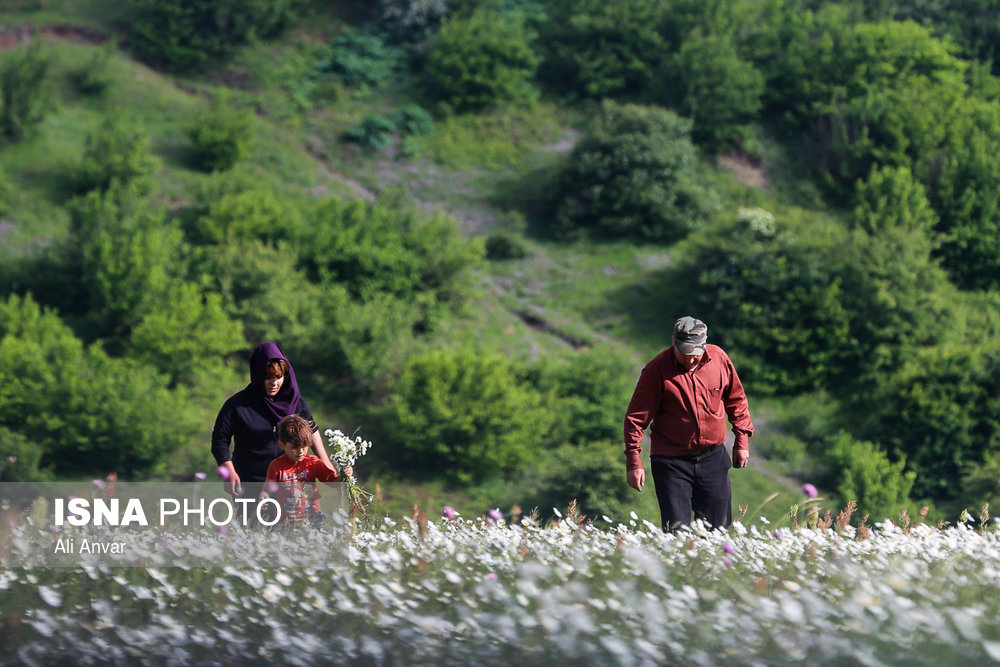
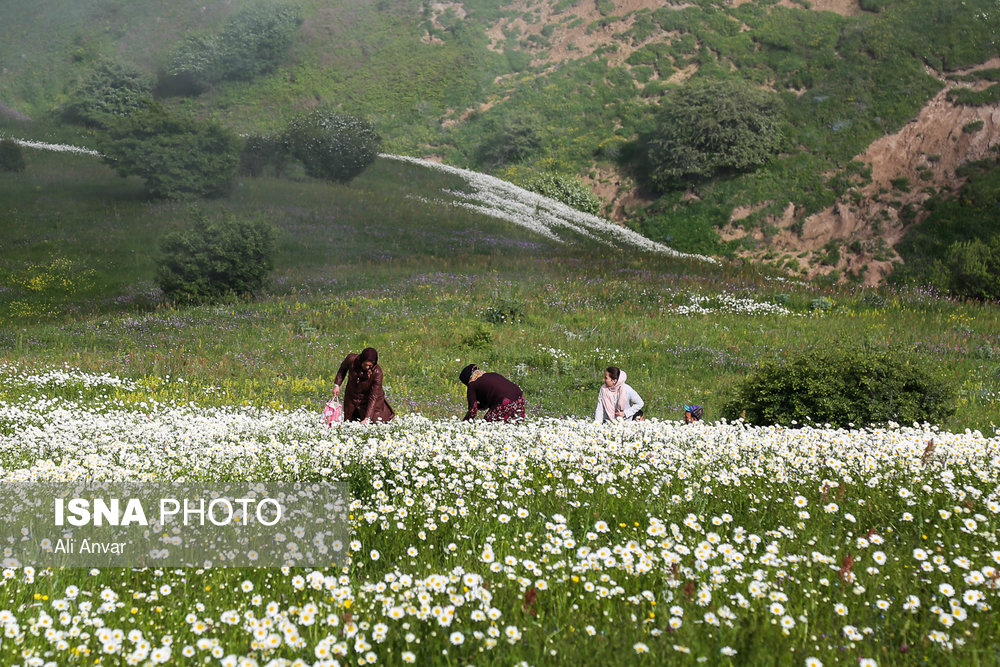
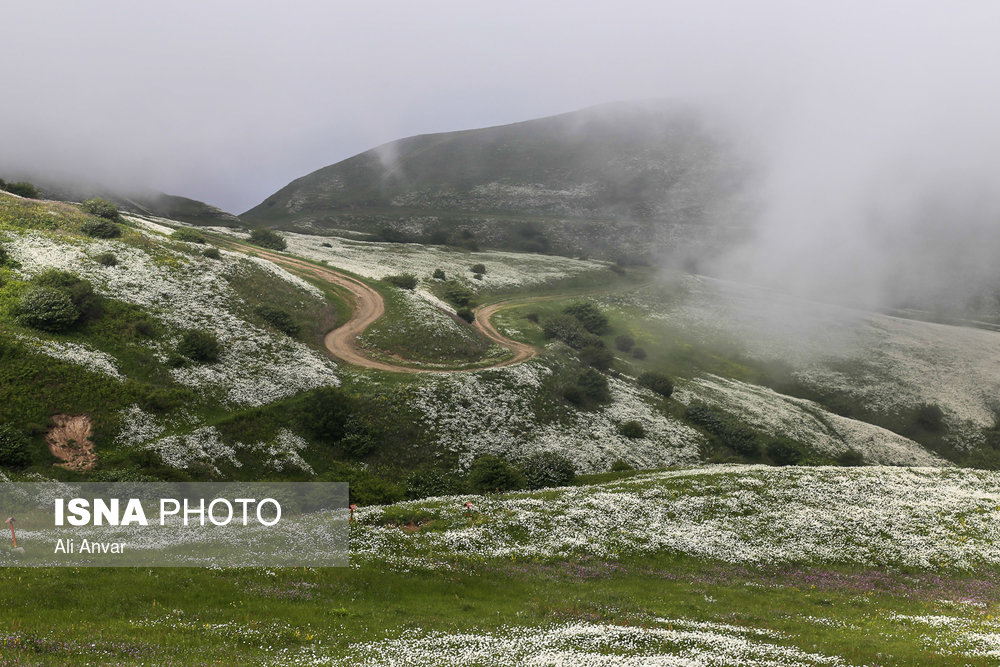
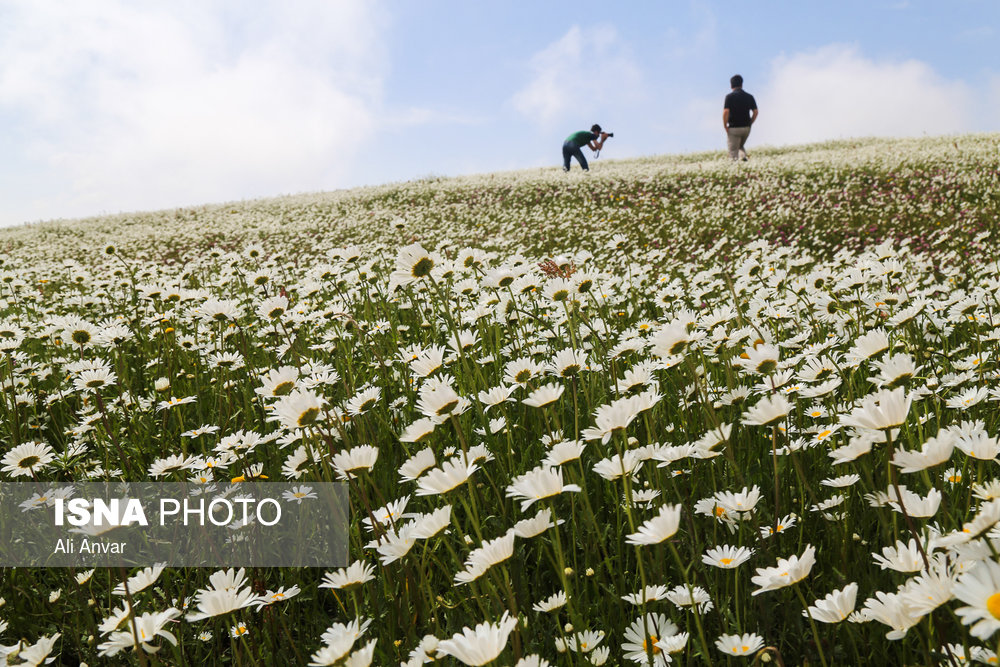
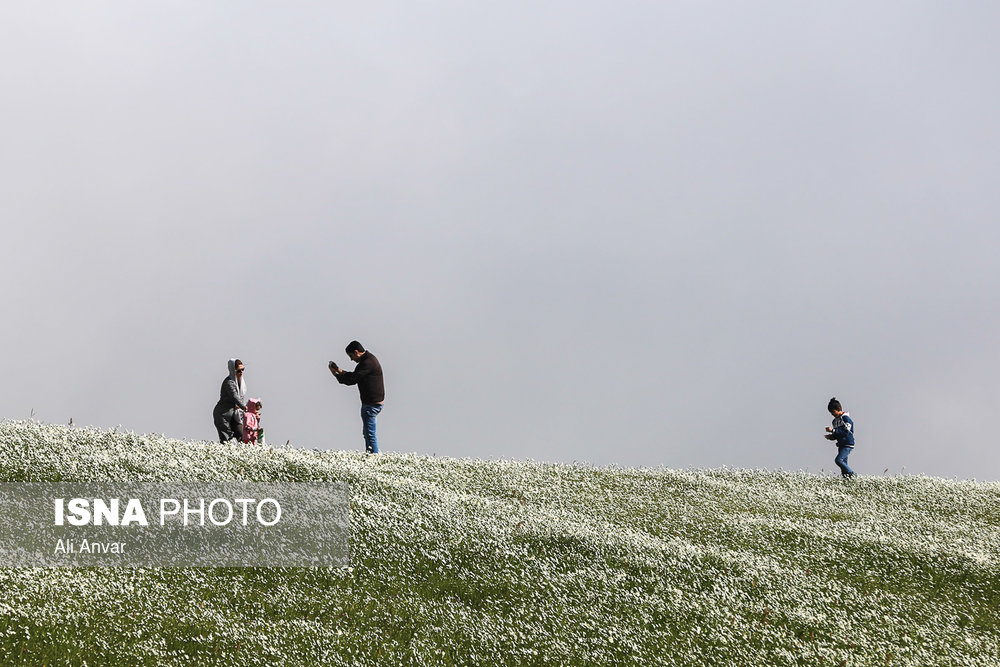
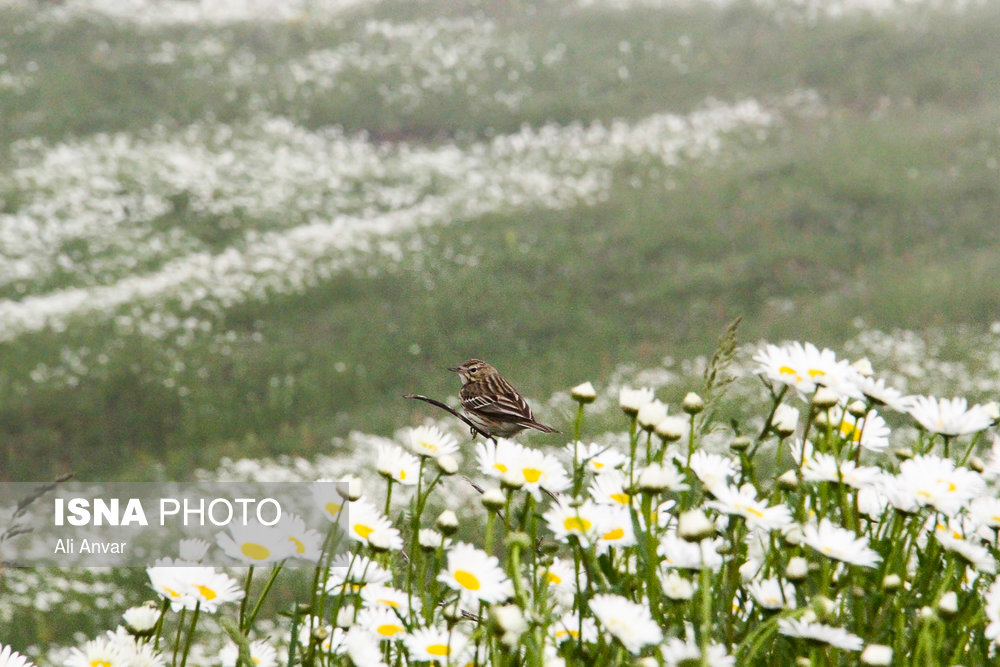
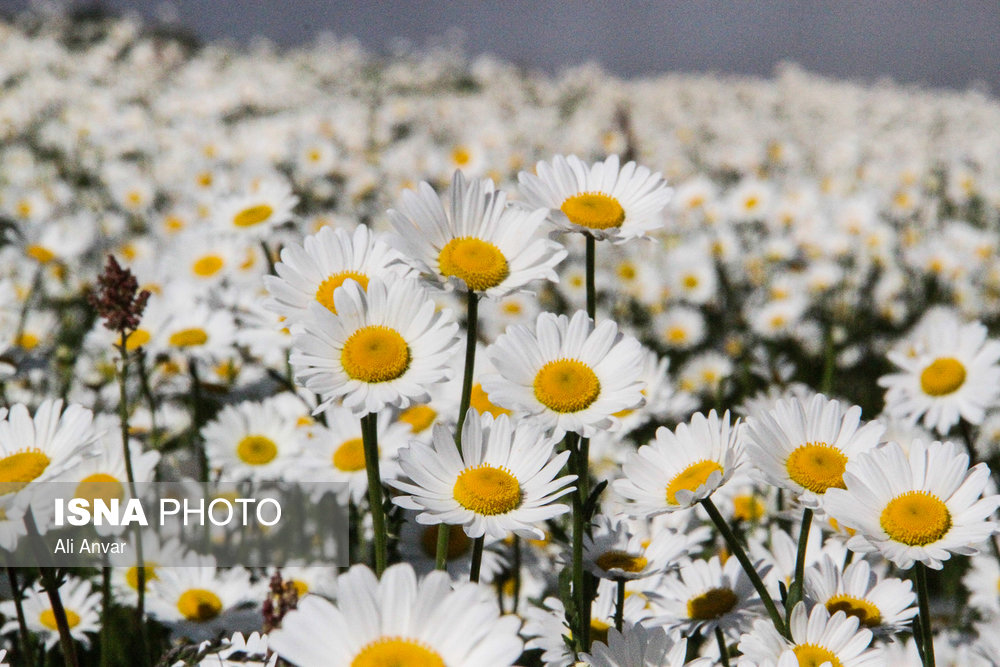
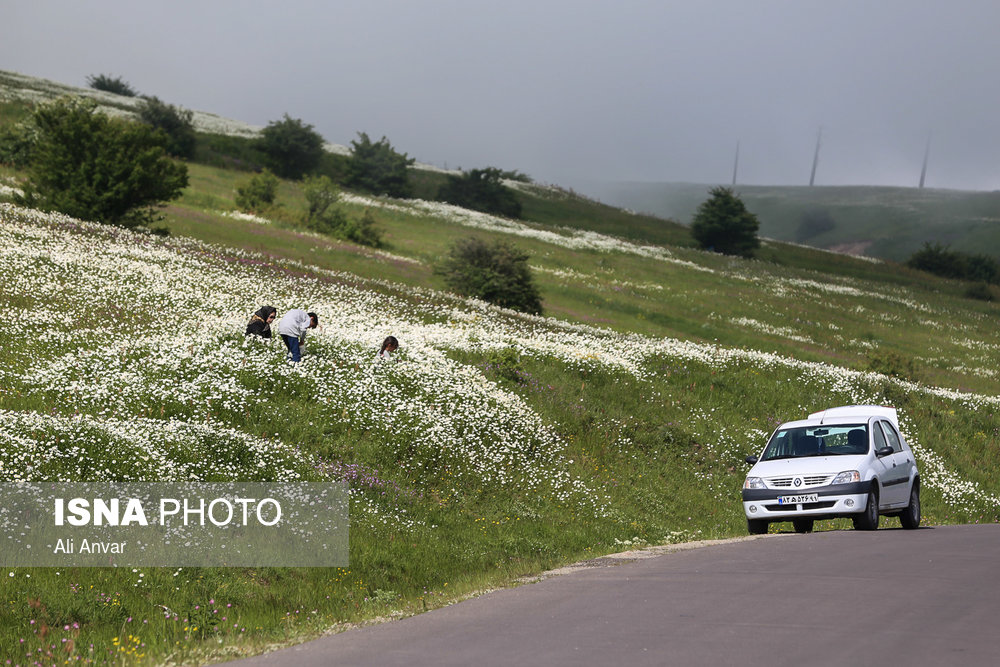
Chamomile Season in Northwestern Iran

Here are ISNA’s photos of the beautiful chamomile flowers growing in Fandoghlou region, near the city of Ardabil in northwestern Iran:

IRGC Releases Details of Its Missile Attacks on ISIS in Syria

IRGC logo

According to a report released by the IRGC Quds Force on Tuesday, the main arms depot of ISIS in the northern city of Deir ez-Zor was totally destroyed in an accurate missile strike by IRGC. The depot was used by the Syrian army’s military base in the past.

Meanwhile the strike destroyed four tanks, two car bombs and a number of long-range missiles. Military sources say at least 6 ISIS elements were killed and ten others injured in the missile attack.

Meanwhile, the ISIS’ military command centre in the east of Deir ez-Zor came under another missile attack. The centre is widely known as one of the main and sensitive command centres of ISIS. At least 15 ISIS terrorists from Kazakhstan, Saudi Arabia and Afghanistan were killed including a senior commander named Sa’d al-Gheibi, also known as Abu Sa’d, from Saudi Arabia.

The ISIS headquarters in Deir ez-Zor was another target of Iran’s missiles. According to the IRGC report, at least 27 ISIS members were killed in this attack. These terrorists including three non-Syrian militants named Mohammad al-Veisi, also known as Abu Assem (The official in charge of financial affairs of Al-Kheir province), Abdol Qader al-Feraghi, also known as Abu Haris (a close friend of Abu Assem), and Yousef bin Mohsen al-Mebru, also known as Abu Hayyan al-Movahed.

A number of others were also wounded in the strike.

The building of a military hospital in al-Mayadin which is controlled by ISIS was another target of Iranian missiles. The attack left at least three vehicles destroyed including an ambulance. Meanwhile, 17 ISIS members were killed including:

1- Mohammad Mehdi al-Sheikhavi known as Abubakr Mohajer from Tunisia

2- Fakher Farah known as Abu Khouleh from Tunisia

3- Hamad Ibrahim Rajab al-Sall’a known as Nasser al-Movahed

4- Abdol Khaliq Shaker al-Ghall’a from Iraq

5- Akram Ra’d al-Khalil from Iraq

6- Hanin al-Sabah, husband of Akram Ra’d

7- Al-Hanouf Saeed al-Hamdan

8- Neinavan known as Abu Zobeir from China

Many other members of the terrorist group were also injured in the attack.

“Iran Attacks on ISIS, Message to Sponsors of Terrorists”

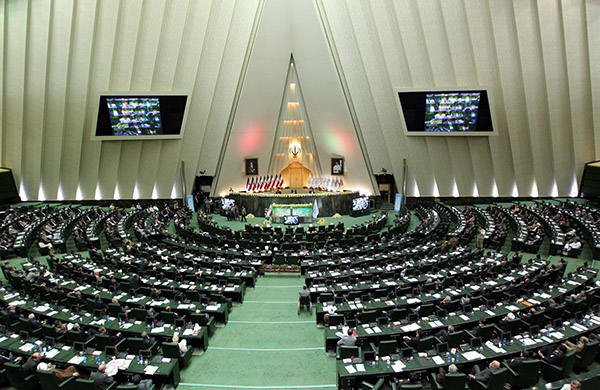
Iran's Parliament

In separate comments, a group of Iranian MPs who survived the recent terrorist incidents in Tehran stressed that the ISIS attacks on Iran’s parliament and the mausoleum of late founder of the Islamic Republic, Imam Khomeini, have not undermined the nation’s determination to fight terror.

Farhad Tajarri, an MP from Kurdish parts of western Iran, said the missile strikes from two Kurdish-populated provinces of Iran on terrorist hideouts in Syria had a clear message to the terrorists that they cannot cast doubt on the loyalty of the Kurdish areas of Iran to the Islamic Republic.

He went on saying that the Kurdish- populated regions in Iran are of significant importance and their people’s will to stand by the Islamic Republic has not been undermined over the past decades.

The representative of Hamedan province in Iran’s parliament, Amir Khojasteh, said the crushing response of Iran to the terrorists will alleviate the nation’s immense sorrow at the martyrdom of innocent victims of Tehran attacks.

He said that the international community has understood the fact that Iran has no hesitation in ensuring its security.

Seyyed Qassem Jassemi from Kermanshah province said the Iranian nation supports the move of the Islamic Revolution Guards Corps to target the terrorists’ positions in Syria.

“Iranians have unanimously expressed their outrage at the terrorist attacks aimed at undermining our security. I hope the unity will be maintained under the guidance of Iran’s Leader Ayatollah Khamenei,” he noted.

Heshmatollah Falahatpisheh from Eslamabad-e Gharb and Dalahu, two other Kurdish-majority cities, said the first message of Iran’s missile attacks was to show the Islamic Republic’s military might to the world.

“The second message of the strikes was directed at the regional masters of terrorists who have been seeking to embroil Iran in the regional crisis. And the third message was for the US and its allies which believe the region is not yet militarily competent enough,” he said.

The lawmakers also said “interestingly enough, the US and its regional allies were taken aback by the missile attacks and comment on them only after 17 hours.”

Mohammad-Reza Tabesh from Ardakan said the strong reaction of IRGC to Tehran terrorist attacks reveals that nothing can undermine Iranians’ will to fight terror.

He also noted that the attacks sent this message to the terrorists and their supporters that destabilisation of Iran will lead to regional destabilisation.

Asadollah Abbasi from Rudsar said Iran used to have only an advisory role in Syria, but the recent terrorist attacks left Iran with no choice but to directly get involved in the military attacks on ISIS in Syria.

He went on saying that the strikes are aimed at thwarting enemies’ plots to attack Iran.

The Iranian MP from Qom, Mojtaba Zonnour, also said ISIS suffered a heavy blow by the attacks adding, this is not going to be the last missile attacks of Iran against the terrorists’ hideouts.