Tuesday, December 23, 2025
Home Blog Page 40

Negotiation means dialogue, not dictation: Iran

“Negotiation means dialogue, not dictation, and we reject anything based on dictates,” the top diplomat said during an interview with France 24 in Paris on Wednesday.

He went on to decry a lack of genuine intent on the American side, blaming it for the absence of any underway negotiation track.

“The reason is clear: There is no will in America for real, fair negotiations,” he said, recalling that Iran had already proven its commitment to diplomacy in earlier years.

The official cited the Islamic Republic’s joining the negotiation process that yielded the 2015 nuclear agreement between Iran and world countries, which was ditched by Donald Trump during the latter’s former tenure.

He also referred to the negotiation process that began earlier this year, but was irreversibly disrupted by an imposed and illegal joint Israeli-American war on Iran.

Despite all this, Araghchi stated, Tehran’s stance does equate rejection of diplomacy, but rejection of negotiation shaped by coercion.

“The day the US government announces that it is ready to set aside imposed and excessive demands and pursue a serious, win-win dialogue based on mutual interests, Iran will never say ‘no,’” he added.

“But we don’t see that readiness now. We’re not rushing. We’re waiting, and we will be patient until the US shows real intent instead of inflated demands,” the foreign minister noted.

The interview also touched on regional diplomacy and recent media claims regarding a letter sent by President Masoud Pezeshkian to Saudi Crown Prince Mohammed bin Salman.

Araghchi roundly dismissed allegations that the communication concerned potential Riyadh-mediated talks between Iran and the United States.

He, however, stated that the Islamic Republic “completely trusts” the kingdom in the nuclear issue, asserting that the bilateral ties and confidence between the two sides have been improving over the past years.

The official, meanwhile, reiterated that the challenge faced by Iran on the nuclear file was not a shortage of mediators, but Washington’s approach to negotiations.

Araghchi went on to address the Islamic Republic’s rejection of the International Atomic Energy Agency (IAEA) Board of Governors’ most recent anti-Iranian resolution, which has demanded rapid and unconditional access to the Iranian nuclear sites hit during the Israeli-American war.

The resolution, he said, has ignored “field realities,” including the attacks and their aftermath.

The official noted that such bombing of civilian nuclear sites was unprecedented, and the agency had no protocol for inspecting bomb-damaged nuclear facilities.

Access to the attacked sites remains dangerous due to unexploded munitions, chemical and radioactive contamination, and the risk of renewed Israeli or US strikes, making a new safety-driven framework essential before inspectors could approach damaged areas, he added.

He called on board members to avoid further escalatory decisions until such new framework was finalized defining the manner of inspection of the affected facilities.

Addressing the issue of the war, Araghchi said the Israeli regime and the United States misread Iran’s level of strength during the war, which saw Iranian missiles strike enemy targets “with rising power and accuracy” in retaliation.

The reprisal, he reminded, forced both Tel Aviv and Washington to request a ceasefire, despite their early demands for Iran’s “unconditional surrender.”

Araghchi also commented on the case featuring French nationals Cécile Kohler and Jacques Paris.

The individuals used to be detained in Iran over espionage charges, but are now at the French Embassy in Tehran awaiting exit permits pending exchange with Iranian academic Mahdieh Esfandiari, who was arrested in France in February over her pro-Palestinian activism.

“This exchange has already been negotiated between Iran and France, and an agreement has been reached. Everything on our side is ready. We are now waiting for the legal and judicial processes in both countries to conclude,” the foreign minister continued.

He added that the exchange timeline, though, depended on French judicial schedules, particularly Esfandiari’s upcoming hearing.

“Her court hearing in France is set for mid-January. Depending on the duration of judicial procedures, the process may conclude within one or two months. But at the very latest, the prisoner swap will take place by mid-January, provided the French court finalizes its process.”


Tehran ranked most polluted city in world

The city’s Air Quality Index (AQI) reached approximately 233, placing it in the “Very Unhealthy” category and making it the most polluted urban center in the world at the time of measurement.

Authorities and health experts report that the dangerous spike is primarily driven by elevated concentrations of PM2.5, ultrafine particulate matter small enough to penetrate deep into the lungs and enter the bloodstream.

Prolonged or repeated exposure to such particles is linked to increased risks of heart attacks, strokes, aggravated asthma, reduced lung function, and other serious health complications.

With pollution levels exceeding the threshold considered hazardous for the general population, officials are urging residents to limit outdoor activities.

People who must leave their homes are advised to wear well-fitted N95 or FFP2 masks to reduce inhalation of fine particles.

Europe bid to be involved in Ukraine negotiations ‘unnecessary’: Russia

Kremlin

“The Europeans meddling in all these affairs is, as I see it, completely unnecessary,” Kremlin aide Yuri Ushakov told a state TV reporter.

Russia has seen the latest copy of a US plan to end the Ukraine war and views some of it positively, but other points require discussion, the Kremlin announced Wednesday.

In comments to a Russian state TV reporter, Ushakov said the new draft required “truly serious analysis” and that Russia had not yet discussed it with anyone.

“Some aspects can be viewed positively, but many require special discussions among experts,” he added.

Washington’s latest plan has not yet been published.

US President Donald Trump announced Tuesday that it was a “fine-tuned” version of an earlier 28-point plan that would have seen Ukraine withdraw from its Donetsk region and cut the size of its army, points that Kyiv had criticised.

Ukraine announced later it had reached an “understanding” with the US and that the two sides had pared back some of the points it disagreed with following talks in Geneva.

US officials will now meet with both sides in the hope of finalising the agreement, Trump stated Tuesday.

The Kremlin confirmed earlier Wednesday that US special envoy Steve Witkoff would visit Moscow next week to meet with Russian President Vladimir Putin.

Israeli military launches new operation in West Bank

Israel Palestine West Bank

The Israeli military and internal security service said in a brief joint statement that they had begun “a broad counter-terrorism operation” in the north of the Palestinian territory.

They added they would “not allow terrorism to take root in the area and are acting proactively to thwart it”, noting further details on the operation would follow at a later stage.

The Israeli army confirmed to AFP that it was a new operation, and not part of the one launched in January 2025 dubbed “Iron Wall”, which primarily targeted Palestinian refugee camps in the northern West Bank.

The operation, which began overnight, was taking place in predominantly agricultural Tubas, the northeasternmost of the 11 governorates in the West Bank.

Ahmed al-Asaad, governor of the Tubas region, told AFP: “This is the first time that the entire governorate is included — the whole governorate is now under Israeli army operations.”

Asaad said Israeli forces raided the towns of Tammun and Tayasir, and the Al-Faraa Palestinian refugee camp.

“The army has closed the city entrances with earth mounds, so there is no movement at all,” he added.

He told AFP that “an Apache helicopter” was involved in the operation, and claimed it had fired in the direction of residential areas.

“This is a political operation, not a security one.”

Hamas and Islamic Jihad condemned the Israeli operation.

Violence in the West Bank has soared since Hamas’s October 2023 attack on Israel triggered the Gaza war, and has not ceased despite the fragile truce between Israel and Hamas came into effect last month.

Israeli troops or settlers have killed more than 1,000 Palestinians in the West Bank since the start of the Gaza war, according to an AFP tally based on Palestinian health ministry figures.


Iranian FM: Recent attacks on nuclear and chemical sites pose cross-border contamination risks

He was speaking on the sidelines of the annual Conference of State Parties to the Chemical Weapons Convention in The Hague.

Araghchi said such strikes threaten human life and the environment and cannot be contained within national boundaries once contaminants are released.

He also criticized several Western countries for their historical role in supplying chemical agents and equipment to Saddam Hussein during the Iran-Iraq War, saying they must be held accountable.

Araghchi noted that some Western states still claim to be “investigating” their companies’ involvement, but Iran has not received any concrete results. Tehran, he said, continues to pursue compensation for chemical-weapon victims in both Iran and Iraq and insists that responsible individuals and entities must face legal consequences.

The foreign minister also condemned US unilateral sanctions, saying the bans have deprived Iranian chemical-attack survivors of essential medicines.

He urged the Organisation for the Prohibition of Chemical Weapons to address this issue.

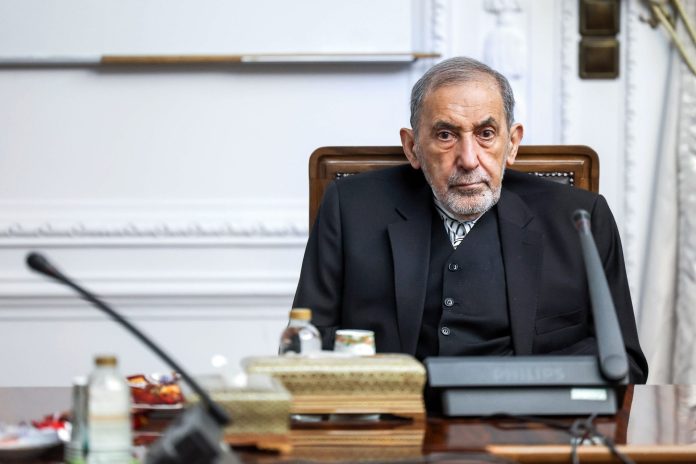
Iran leader’s advisor: Hezbollah “more vital than daily bread” for Lebanon

Hezbollah

Velayati said the group’s presence is “more vital than daily bread” for the Lebanese people.

Velayati strongly condemned the “continuous crimes and aggressions” committed by the Israeli regime against Lebanon.

He argued that, under such conditions, Hezbollah remains the primary defensive shield capable of countering Israeli military pressure and safeguarding Lebanon’s territorial integrity.

He then reiterated Iran’s long-standing policy, saying the Islamic Republic has consistently supported Hezbollah and the wider “axis of resistance,” and will continue to do so. According to him, the ongoing regional tensions highlight the strategic role of resistance movements in confronting Israeli operations and deterring further escalation.

The senior advisor to Iran’s leader stressed that the actions of Hezbollah are not only militarily significant but also politically vital for maintaining balance in Lebanon’s complex internal landscape.

He added that weakening or removing Hezbollah would leave Lebanon vulnerable to foreign intervention and instability.

Velayati noted that Iran views the strengthening of the resistance front as central to ensuring long-term stability and security across the region.

Syrian president meets US congressional delegation to discuss bilateral relations

Ahmed al-Sharaa

Talks between Sharaa and the US delegation, headed by Congressman Darin LaHood, addressed the importance of continuing constructive communication between the two sides in a way that serves mutual interests and contributes to supporting regional stability, the presidency said in a statement.

The two sides also exchanged views on a number of international issues of common interest, the statement added.

The reception of the US delegation in Damascus follows a series of recent high-level meetings between the Syrian president and American officials, including his meeting with US President Donald Trump at the White House on Nov. 10.


Knesset committee approves bill allowing Israelis to own property in occupied West Bank

Israeli Knesset

The bill was submitted by MK Yuli Edelstein of the Likud Party, Likud MK Limor Son Har-Melech of the Otzma Yehudit Party, and Moshe Solon of the Religious Zionism Party.

According to the Knesset press office, four MKs supported the bill with no opposition.

It, however, did not specify the number of committee members present.

In Knesset committees, bills pass with a majority of those present regardless of attendance.

The press office also did not specify when the bill would be brought before the full plenum of the Knesset for a first reading.

Under Israeli law, every bill must pass three readings before becoming law.

The Knesset said the proposal “cancels the Jordanian law regarding leasing and selling property to foreigners, which is currently in force in Judea and Samaria (West Bank), and allows any person to purchase real estate.”

According to the bill’s description, the original Jordanian law was enacted in 1953 to prevent non-Arabs from acquiring property in the West Bank.

There was no immediate comment from the Palestinian Authority or Jordan on the Israeli bill.

Israel was established in May 1948 on occupied Palestinian land after Zionist armed groups carried out massacres and expelled hundreds of thousands of Palestinians from their homes.

Jordan announced the unification of the West and East Banks on April 24, 1950, and formally began its administration of the West Bank in June that year, before Israel occupied the territory in 1967.

On July 31, 1988, late Jordanian King Hussein announced disengagement from the West Bank while maintaining custodianship over Islamic and Christian holy sites in occupied Jerusalem.

As part of efforts aimed at de facto annexation of the West Bank, Israel has intensified its actions there—particularly the displacement of Palestinians and expansion of settlements—since launching its war on Gaza two years ago.

Such annexation would effectively end any possibility of implementing a two-state solution envisioned in multiple UN resolutions.

The Israeli anti-settlement group Peace Now estimates that around 500,000 illegal Israeli settlers currently live in the occupied West Bank.

In a landmark opinion last July, the International Court of Justice declared Israel’s occupation of Palestinian territory illegal and called for the evacuation of all settlements in the West Bank and East Jerusalem.


Iran in Pot 2 in FIFA World Cup 2026 draw

The draw will be held on December 5.

FIFA announced Tuesday the top four teams in the latest men’s rankings will, if they finish top of their respective round-robin groups, avoid each other until the semifinals of the June 11-July 19 tournament being co-hosted by the United States, Canada and Mexico.

Pots:

Pot 1: Canada, Mexico, USA, Spain, Argentina, France, England, Brazil, Portugal, Netherlands, Belgium, Germany

Pot 2: Croatia, Morocco, Colombia, Uruguay, Switzerland, Japan, Senegal, Iran, South Korea, Ecuador, Austria, Australia

Pot 3: Norway, Panama, Egypt, Algeria, Scotland, Paraguay, Tunisia, Ivory Coast, Uzbekistan, Qatar, Saudi Arabia, South Africa

Pot 4: Jordan, Cape Verde, Ghana, Curaçao, Haiti, New Zealand; European Play-Off A, B, C and D; FIFA Play-Off Tournament 1 and 2


Russia confirms upcoming visit by US negotiators

Ushakov, who advises President Vladimir Putin on foreign affairs, mentioned the trip in remarks on a Bloomberg report, which quoted what it claimed were leaked phone calls Ushakov held with Witkoff and senior Russian negotiator Kirill Dmitriev.

The Russian official told journalist Pavel Zarubin he does not comment on confidential communications, declining to either confirm or deny the authenticity of the transcripts. Whoever leaked them apparently aims to harm Russian-US relations, Ushakov added, noting: “Somebody tapped, somebody leaked, but not us.”

Bloomberg claimed the purported discussion between Ushakov and Witkoff was the “genesis” of the 28-point US proposal on ending the Ukraine conflict, which was discussed with representatives from Kiev in Geneva last weekend. Supporters of Ukraine interpreted the transcripts as evidence that the plan was “Russian” and not American.

US President Donald Trump brushed off the allegations, saying Witkoff was engaged in “standard” mediation seeking to “sell” some sort of a compromise to both sides of the hostilities.

Dmitriev dismissed the publication as “fake,” and stated that “warmongers are sad that their sad trick does not work” after Trump’s reaction.

Ukrainian officials claim that they have convinced the US to alter its proposal in a way that respects Kiev’s red lines. A member of President Volodymyr Zelensky’s administration even asserted following the talks in Geneva that the initial plan, which was also leaked to the press, “no longer exists” in its original form.

Russian Foreign Minister Sergey Lavrov has described the “media hype” regarding the discussions as an attempt to derail Trump’s efforts and “distort the plan.” He added that Moscow refused to engage in “megaphone diplomacy” and sought calm discussions of the issue behind closed doors.