Friday, April 24, 2026
Home Blog Page 3991

Iran-Total Gas Deal to Facilitate Transfer of Technology: Rouhani

In a meeting with Total Chairman and Chief Executive Patrick Pouyanne in Tehran on Monday, Rouhani said France enjoys a prominent position in the field of economy and energy technology.

“Signing and implementing this contract will be a positive step toward further expansion of economic and technological cooperation between the two countries,” the Iranian president added.

He noted that his administration sought to sign the landmark nuclear agreement, known as the Joint Comprehensive Plan of Action (JCPOA), with the P5+1 group of countries in order to lay the ground for the enhancement of Iran’s economic cooperation with giant companies.

Iran and the five permanent members of the United Nations Security Council – the United States, France, Britain, Russia and China – plus Germany signed the mammoth agreement in July 2015 and started implementing it in January 2016.

Under the JCPOA, Iran undertook to put limitations on its nuclear program in exchange for the removal of nuclear-related sanctions imposed against Tehran.

“Fortunately, the existence of political will [both] on the Iranian side and among the P5+1 countries led to the agreement with Total,” Rouhani said.

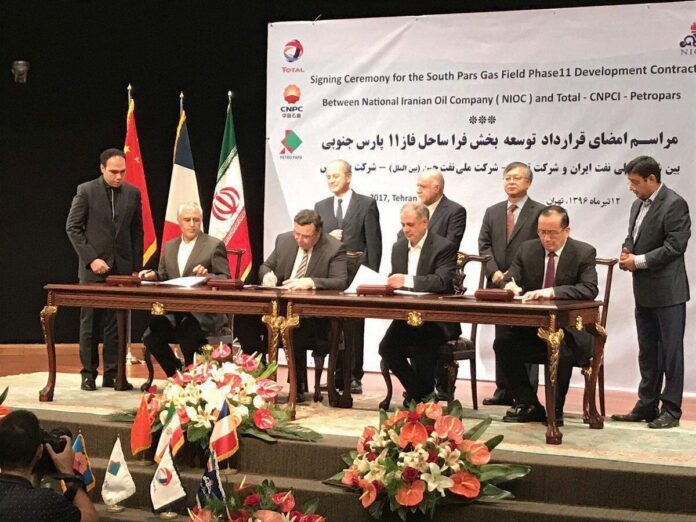
The National Iranian Oil Company (NIOC) and Total signed the contract, the first by a European firm in more than a decade, in Tehran on Monday to develop phase 11 of South Pars field, which is the world’s largest gas field.

According to Total, the project will have a production capacity of 2 billion cubic feet per day or 400,000 barrels of oil equivalent per day including condensate. Total added that the produced gas would supply the Iranian domestic market starting in 2021.

The first phase of the South Pars gas field development will cost around $2 billion, the giant French energy corporation said.

The Iranian president further stated that big foreign companies can invest in projects in Iran’s oil and gas sectors valued at around $200 billion.

Total seeks long-term ties with Iran

Pouyanne, for his part, stressed the importance of making efforts to implement the deal and expressed hope that it would prepare the ground for further cooperation among Iran and other European companies.

He called for bolstering cooperation between Iranian and European companies in various sectors, saying that Total had decided to boost long-term cooperation with Iran in the fields of gas, oil and petrochemicals.

What Happened in MKO’s Annual Gathering in Paris

Iran Blasts US Senator’s Meeting with MKO Terrorists

The MKO gathering was attended by a number of western and Arabic politicians notorious for their anti-Iran stances.

A noteworthy point about this gathering was the presence of some French politicians as well as delegates from French municipalities. France has been hosting the terror group for a long time and refuses to extradite them to Iran to be put on trial for killing over 12 thousands of Iranians.

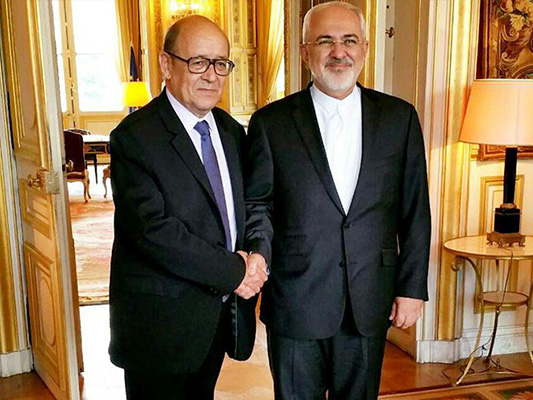
Iran’s Foreign Minister, Mohammad Javad Zarif held talks on Friday with French President and Foreign Minister. Before wrapping up his visit to France, Zarif said it is regrettable that France government allows the terror group to operate freely in the country.

During the talks, the Foreign Minister said the issue of MKO was raised. He said the issue is a moot point in relations between Iran and France and stressed that the French side assured him that there is no connection between France government and the terror group.

He stressed that the terrorist record of the group is no longer a secret and all regional and European states are fully aware of the cult’s terrorist record.

The indifference of French officials to Iran’s repeated warnings has sparked outrageous reactions from Iranian people and officials.

In reaction to the Paris gathering which came just hours after the visit of Iran’s Foreign Minister, the Journalist and the editor in chief of Farsi-language “Iranian Diplomacy” Website, Sergey Barseghian wrote, “This fact that a terror group holds a gathering attended by former officials of certain countries against the legal and official government of a member of United Nations is not only a moot point, but also an explicit violation of international law.”

He called on Iran’s Foreign Ministry as well as Iran’s embassy in Paris to take the issue seriously and said the timing of Zarif’s visit to France is controversial particularly because the gathering had ben planned earlier and Foreign Ministry was aware of it.


What Did MKO’s Friends Say?

One of the main lecturers of the MKO’s gathering was John Bolton, the former US ambassador to the UN who is notorious for his warmongering record across the globe. In an address to the MKO gathering, Bolton stressed that the US President, Donald Trump is against the “regime of Tehran”. He also called for overthrowing the Islamic Republic.

Then Nasser al-Hariri a member of the negotiating team of the Syrian opposition in Geneva took the podium. He voiced his support for the terror group.

Like the MKO, the Syrian opposition have been fighting against their nations over the past decades.

In line with the US, Syrian opposition, as well as some European countries, Head of the MKO or MEK terrorist group Maryam Rajavi called for sanctions on the Islamic Revolution Guards Corps (IRGC).

Back on Friday, the US ambassador to the UN and some European countries denounced the missile capabilities of the IRGC. Last month, the IRGC targeted the positions of ISIS in the Syrian city of Deir ez-Zor.

Rudy Giuliani, the former New York City Mayor and an informal advisor to the US administration on cyber security was another American figure who took the podium.

During his ridiculous statements, Giuliani praised the performance of terrorist group of MKO and said the United States always supports MKO. He went on saying that the US stands by the MKO and its values and remains vigilant against Iran’s threat and will not allow the country to turn into a ruler in the Middle East and a nuclear power.

He also claimed that the slogan of freedom of Iran is tied to the name of Maryam Rajavi and emphasized the time has come for regime change in Iran.

As the gathering was underway in Paris, Iranian internet users published tens of thousands of tweets to express their hatred at the terrorist group.

Newt Gingrich, former member of the US House of Representative who had called for bombarding Iran in the past took the podium and said he is deeply impressed with the MKO as a “movement”.

Then Turki al-Faisal, former Saudi Arabian ambassador to the US called Iran a sponsor of terrorism. Faisal who used to serve as Saudi Arabia’s Head of Intelligence Services went on saying that Iran’s recent presidential election was undemocratic. This comes as his own country is run by tribal and racial mechanisms.

Former US Senator, Joseph Lieberman made similar remarks and called Iran the “Capital of Fundamentalism” in the region.

For his part, former French Foreign Minister, Bernard Kouchner whose country has been hosting the terror group for a long time, called Iran a “base for Islamic extremism”.

Delegates from other European countries as well as Britain and Poland echoed the same anti-Iran remarks.


Financial Support

One of the main points about the MKO’s annual gathering in Paris is the hefty amount of money that the terror group spends to attract people and notorious anti-Iranian figures.

The speakers of the gathering have not yet announced the amount of money they got for their speech. In a report several months ago, the Associated Press published in details the amounts of money that the terror group paid to some of the American officials with close connections with Trump.  According to the report, Rudy Giuliani and Newt Gingrich, close advisors to Trump have received money from the MKO to deliver speech during its previous gathering. Reports say, Elaine Chao, the US Secretary for Transportation has received at least $50,000 to deliver a five-minute speech during last year’s gathering of MKO.

Meanwhile, there are a multitude of reports saying MKO has spent hundreds of thousands of dollars to provide European and African students across the world with the budget of their trips’ to France to take part in its annual gathering.

The group cannot attract the Iranians mainly due to the hatred that Iranians from all walks of life have developed against the terror group for its complicity in the crimes committed by the  nation’s enemies from former dictator of Iraq, Saddam Hussein to the US and Israel.

Iran Strongly Condemns Damascus Terrorist Attack

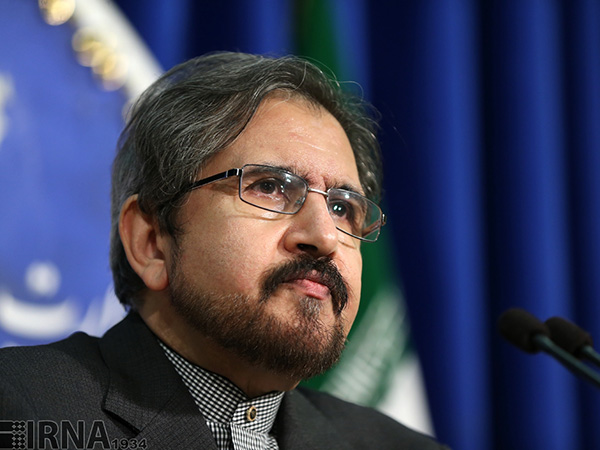
In a statement on Monday, Iranian Foreign Ministry Spokesman Bahram Qassemi condemned the deadly explosion and said, “Whenever the efforts by the friends of Syria succeed in reducing tension and starting negotiations, and on the other hand, Takfiri terrorists are placed in a position of weakness, we see such cowardly acts in which the terrorists take a blind revenge on civilians.”

Qassemi also offered his condolences to the families of the victims and expressed sympathy with the Syrian government and people.

The Iranian official also expressed the hope that terrorism would be eradicated in the region as soon as possible, especially in Syria and Iraq.

At least 20 people were killed and dozens more injured after three cars loaded with explosives went off in Syria’s capital city, Damascus, on Sunday.

US Losing Iran’s Energy Market to European Firms

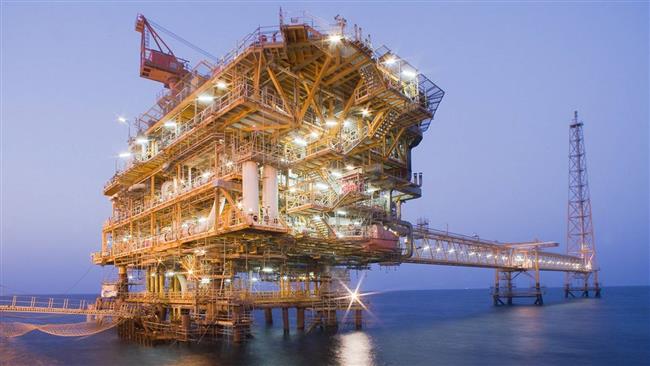
South Pars gas

In a Monday ceremony, the National Iranian Oil Company (NIOC) and France’s Total signed a contract for the development and production of phase 11 of South Pars (SP11), the world’s largest gas field.

On the sidelines of the ceremony, Iranian Oil Minister Bijan Namdar Zanganeh congratulated all involved in the deal, saying it will lead to “more than five billion dollars in foreign investments”.

He also held out a hand to US oil companies, saying his country needs some 200 billion dollars (£153 billion) of investments in its oil industry in the next five years to make up for time lost during sanctions.

Iran hopes to produce six million barrels of crude oil and condensates a day in five years, he said, up from some 3.6 million today.

Zanganeh said, “We do not consider any obstacle for the participation of American companies.”

“The main obstacle is being created by the US government.”

Iran, Total Ink Huge Deal for Gas Field Development

The project will have a production capacity of 2 billion cubic feet per day or 400,000 barrels of oil equivalent per day including condensate. The produced gas will supply the Iranian domestic market starting in 2021.

This contract, which has a 20-year duration, is the first Iranian Petroleum Contract (IPC) and is based on the technical, contractual and commercial terms as per the Heads of Agreement signed on November 8, 2016. Total is the operator of the SP11 project with a 50.1% interest alongside the Chinese state-owned oil and gas company CNPC (30%), and Petropars (19.9%), a wholly owned subsidiary of NIOC.

“This is a major agreement for Total, which officially marks our return to Iran to open a new page in the history of our partnership with the country. We are proud and honored to be the first international company to sign an IPC, which offers an attractive commercial framework, following the 2015 international nuclear accord (JCPOA) and to therefore contribute to the development of relations between Europe and Iran. Total will develop the project in strict compliance with applicable national and international laws”, said Patrick Pouyanné, Chairman & CEO of Total.

“This project is in line with the Group’s strategy to expand its presence in the Middle East and grow its gas portfolio by adding low cost, long plateau assets,” he added, according to the French oil company’s website.

SP11 will be developed in two phases. The first phase, with an estimated cost of around 2 billion dollars equivalent, will consist of 30 wells and 2 wellhead platforms connected to existing onshore treatment facilities by 2 subsea pipelines. At a later stage, once required by reservoir conditions, a second phase will be launched involving the construction of offshore compression facilities, a first on the South Pars field.

Since the November 2016 HoA signature, Total has been conducting engineering studies on behalf of the consortium and initiated calls for tender in order to award the contracts required to develop the project by the end of the year.

Iran FM, Iraq’s Ammar Hakim Meet in Tehran

Iran FM, Iraq’s Ammar Hakim Meet in Tehran

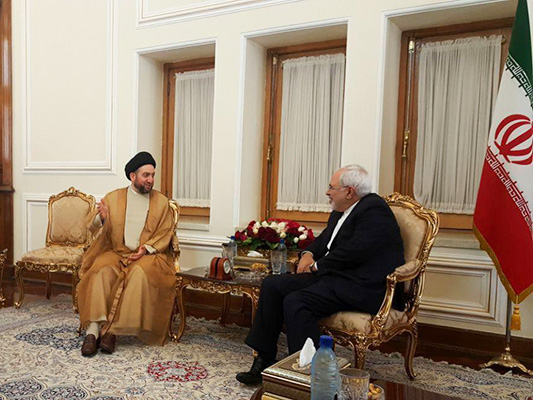
During the Monday meeting held in Tehran, Zarif and Hakim conferred on the most recent political and field developments in Iraq, particularly the fight against ISIS terrorists.

The two sides also exchanged views on bilateral relations between Tehran and Baghdad.

The meeting came as Iraqi forces are on verge of retaking the northern city of Mosul, the self-proclaimed capital of the ISIS terrorist group.

Iran Should Give France Ultimatum for MKO Gathering

Iran Should Give France Ultimatum for MKO Gathering

The editor-in-chief of the Iranian Diplomacy news website has, in an analytical piece, talked about the recent gathering of the terrorist Mojahedin-e-Khalq Organization (MKO or MEK) in the French capital of Paris.

Sergei Barseghian has underlined the need for a redefinition of Tehran-Paris ties given the European side’s support for the anti-Iran terrorist cult.

The following is the full text of article:

The gathering of MKO ringleader Maryam Rajavi’s cult in Paris was a repeat of last year’s show; there were even no new faces among the VIP guests, who included former officials of different countries. In other words, the MKO had failed to attract any new individuals. Turki al-Faisal, Bernard Kouchner, Newton Gingrich, Rudy Giuliani, Joe Lieberman, John Bolton, etc., all have delivered speeches at MKO gatherings before. However, no new member has joined their clan, which means a failure. The presence of former French President Bernard Kouchner at this year’s gathering and his delivering a speech must be strange. However, it was not the first time he made comments about Iran’s political system. He had made similar remarks during Iran’s 2009 post-election unrest when he was foreign minister. Turki al-Faisal’s comments should not be taken seriously, either. This Saudi prince, who claims Iran’s presidential elections are undemocratic, has objected to Riyadh’s handing over the throne to Mohammad bin Salman. The former US officials attending the gathering are the same individuals present in previous events. Bolton, Lieberman and Giuliani are the same people who wrote a letter to US President Donald Trump urging him to cooperate with the MKO against Iran.

The Associated Press and Fox News reported in early 2017 that Newton Gingrich and Rudy Giuliani had benefited from the MKO’s “generosity” for delivering speeches against Iran. Incumbent US Transportation Secretary Elaine Chao has confessed that he received $50,000 for delivering a five-minute speech. Still, Rajavi has failed to entrap any new bribees.

But what is important is that the MKO gathering was held just hours after Iranian Foreign Minister Mohammad Javad Zarif visited Paris. Of course, in reaction to the gathering, Zarif said the MKO get-together was a “moot point in relations” with France, and quoted French officials as saying that Paris has no relations with the MKO. But a terrorist group holding a gathering in another country attended by former officials of some other countries and marked by speeches against the legal and official system of a certain state (Iran) is something beyond a moot point, and is regarded as a “move against” international law, which the Iranian foreign ministry and embassy should not easily ignore. Moreover, the timing of Zarif’s trip is under serious criticism given that the date of the MKO’s gathering had already been announced. And there is some doubt about the French officials’ giving assurances that they have no connection with the MKO, especially at a time when they remain silent in the face of a gathering that the former French foreign minister calls a “family meeting.”

The issue cannot be settled simply by summoning the French ambassador or charge d’affaires in Tehran to the Foreign Ministry. Kouchner has claimed that “You were oppressed in my country, France, and I feel guilty for that.” By “being oppressed” he meant the French government’s attack on the MKO’s headquarters in Auvers-sur-Oise, a commune in the northwestern suburbs of Paris, in mid-2003. Some 300 members of the terror group were arrested in the raid on charges of planning to carry out terrorist operations. But France seems to have changed its approach toward the MKO since 2003, so much so that it hosts the terror group’s annual gathering.

The raid on the MKO’s base came a few days after then Iranian Foreign Minister Kamal Kharrazi hit out at his French counterpart Dominique de Villepin, saying it was unacceptable and not understandable that a terrorist organization was present in France and operating there.

“It seems these terrorists, who have dealt a blow to us in Iran, enjoy a sort of immunity in Auvers-sur-Oise,” Kharazi had noted at the time.

MKO members claim de Villepin had told Kharrazi that “I can tell you that Nicolas Sarkozy is preparing an operation in this regard.” If this admission by MKO terrorists is accepted, then the Iranian diplomacy will assume a much more important role. Perhaps here we should change the diplomatic language from a “moot point” to the “element of accusation”. Governments which have fallen victim to terrorism “enjoy the legitimate right to defend themselves against armed operations conducted by non-governmental dissident groups in a third country.” Under the current circumstances, Iran-France relations need a serious ultimatum and should be redefined, given that Paris has hosted an MKO banquet for former politicians with a past rife with failures. Another point is that not even one election has been held at the MKO while the terror group claims that there should be “elections and freedom” in Iran.

Iran Slams France for Double Standard on Terrorism

The MKO is the most hated terrorist group among Iranians because of its dark history of assassinations and bombings and for siding with former Iraqi dictator Saddam Hussein in his eight-year war against Iran in the 1980s.

One of the MKO’s deadliest terrorist operations was carried out on 28 June 1981 when a powerful bomb went off at the headquarters of the Islamic Republic Party of Iran in Tehran, while a meeting of party leaders was in progress. Over 70 top Iranian officials were killed in the bomb blast.

Out of the nearly 17,000 Iranians killed in terrorist assaults since the victory of Iran’s 1979 Islamic Revolution, about 12,000 have fallen victim to MKO’s acts of terror.

Iran Leader Urges Judiciary to Declare Position on Int’l Affairs

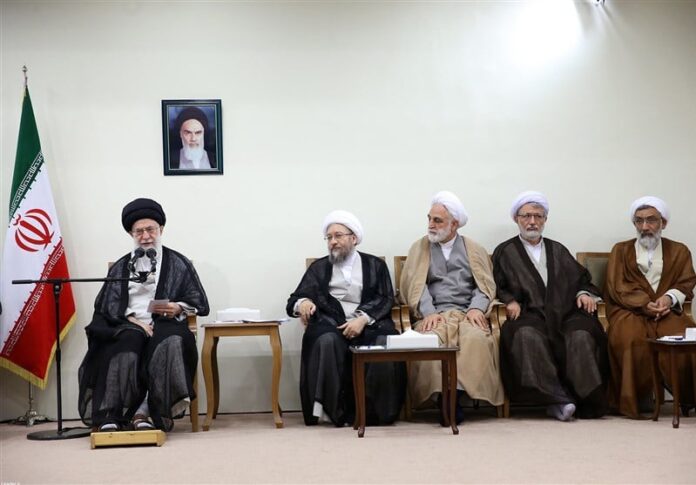
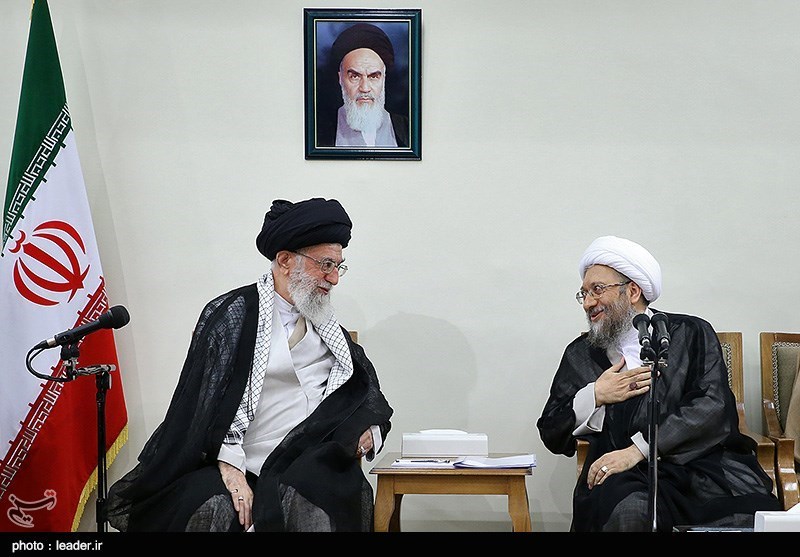
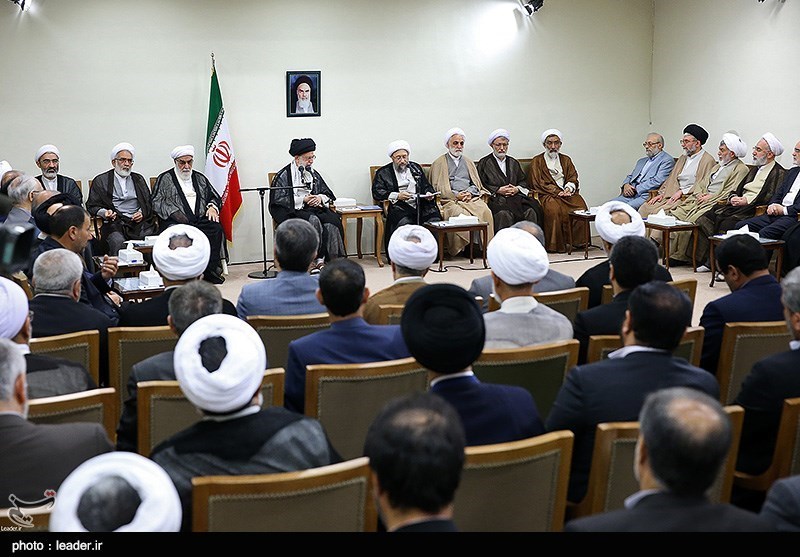
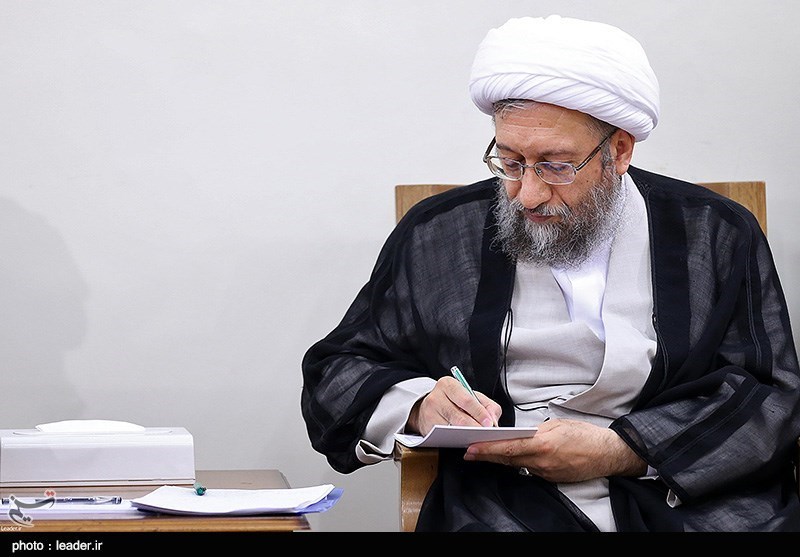
“The Judiciary should act through a legal position on issues such as sanctions, American confiscations (of Iran’s assets), terrorism, or support for the world’s oppressed characters like (Nigerian cleric) Sheikh Zakzaky or support for Muslims in Myanmar and Kashmir,” Ayatollah Khamenei said in a meeting with Judiciary officials in Tehran on Monday.

Iran’s Judiciary should decisively announce its positions in support of or opposition to those foreign issues, the Leader stressed.

Iran Leader Urges Judiciary to Declare Position on Int'l Affairs

Highlighting the Judiciary’s significant status at home, Imam Khamenei said it should vigorously protect the rights of people and take action against lawbreakers.

The Judiciary ought to employ the country’s legal capacities to protect the public rights, advocate legitimate liberties, and counter violators of public rights whoever they are, the Leader underscored.

Iran Leader Urges Judiciary to Declare Position on Int'l Affairs

Iran Leader Urges Judiciary to Declare Position on Int'l Affairs

Every year, the Judiciary chief and authorities meet with Ayatollah Khamenei on the occasion of the Judiciary Day, which commemorates the then chief of the Judiciary Ayatollah Mohammad Beheshti and scores of other senior Iranian officials martyred in a terrorist attack back in 1981.

In 2015, the Leader called on the Judiciary to devise plans for crime prevention, noting that without such plans, “crimes continue to increase and escalate and macromanagement of them will not be possible.”

Ayatollah Khamenei has always highlighted the significance of an “independent” Judiciary system that would not come under the influence of others.

Iran to Send 10 Envoys to Saudi Arabia for This Year’s Hajj

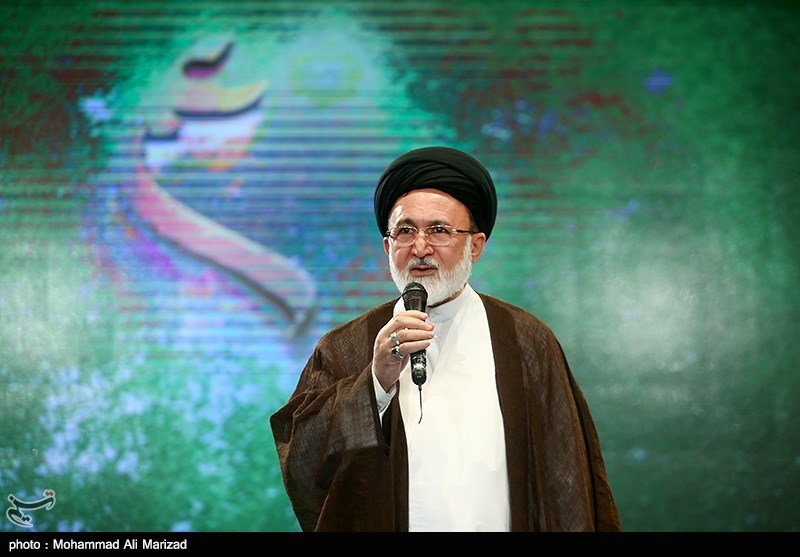
Hojatoleslam Seyed Ali Qazi-Askar, the representative of Leader of the Islamic Revolution in Hajj and pilgrimage affairs, told reporters on Monday that Saudi Arabia has permitted 10 individuals from Iran’s Foreign Ministry to travel to the cities of Jeddah, Mecca and Medina as representatives for consular affairs.

Describing Riyadh’s cooperation with Iran on this year’s Hajj pilgrimage as good, the cleric said the necessary agreements have been achieved with the Saudi officials.

Iran to Send 10 Envoys to Saudi Arabia for This Year's Hajj

“We feel that we are going to see a calm Hajj this year,” he noted.

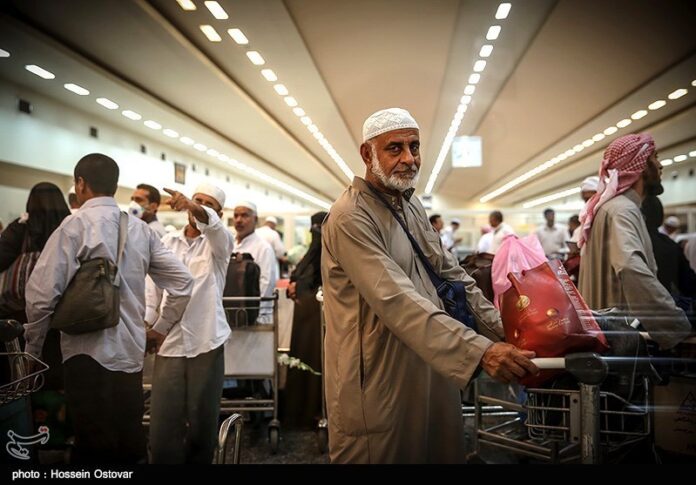
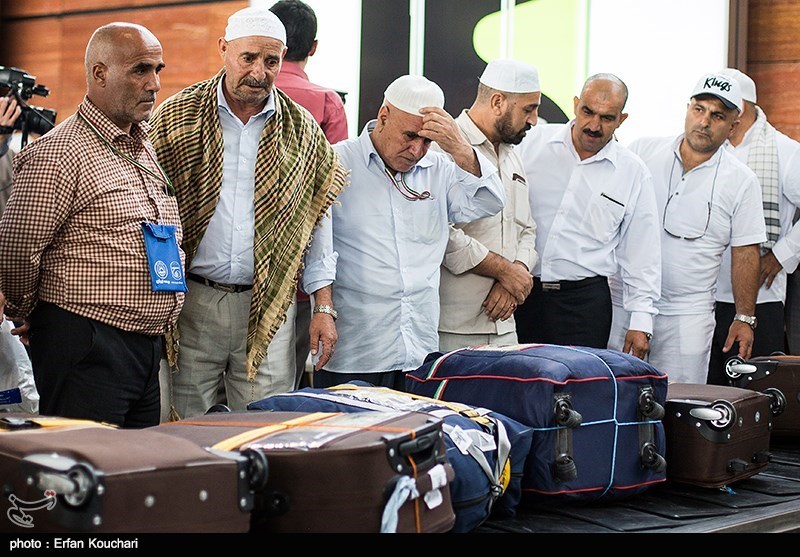
According to Qazi-Askar, the first group of Iranian pilgrims will fly to Saudi Arabia on July 31.

Iran to Send 10 Envoys to Saudi Arabia for This Year's Hajj

Head of Iran’s Hajj and Pilgrimage Organization Hamid Mohammadi had announced earlier that as many as 86,500 Iranian pilgrims would travel to the kingdom this year, saying that Saudi officials have undertaken to ensure the security of Iranian pilgrims during the religious event.

Mohammadi also said that all Iranian travelers would be kitted up with homegrown electronic bracelets that would work as ID cards and contain their personal information.

The wearable device is paired with a mobile application, helping the pilgrims to find their convoys in case of getting lost.

Iran announced in mid-March that applicants can go on Hajj pilgrimage this year following negotiations with Saudi officials after a hiatus in the wake of a diplomatic row with the kingdom.

Iran to Send 10 Envoys to Saudi Arabia for This Year's Hajj

In 2016, more than 1.8 million pilgrims attended Hajj, but Iranians stayed at home after tensions between Riyadh and Tehran boiled over following a deadly crush of people during the 2015 pilgrimage.

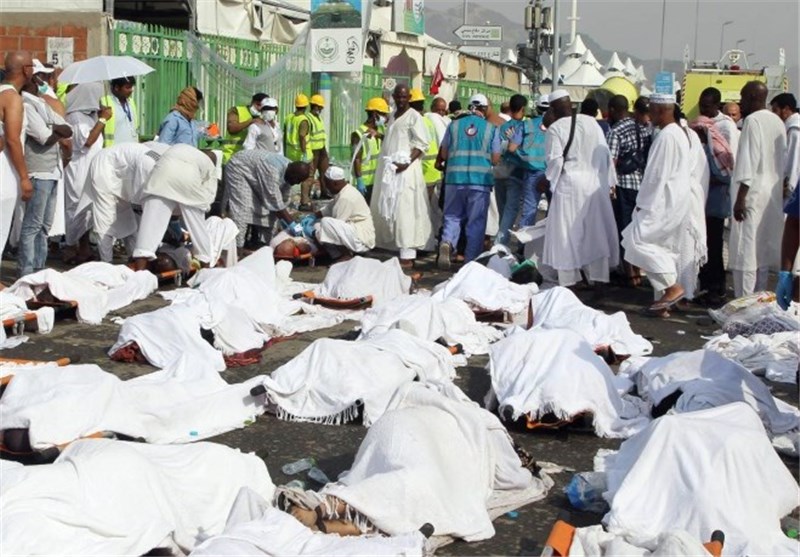
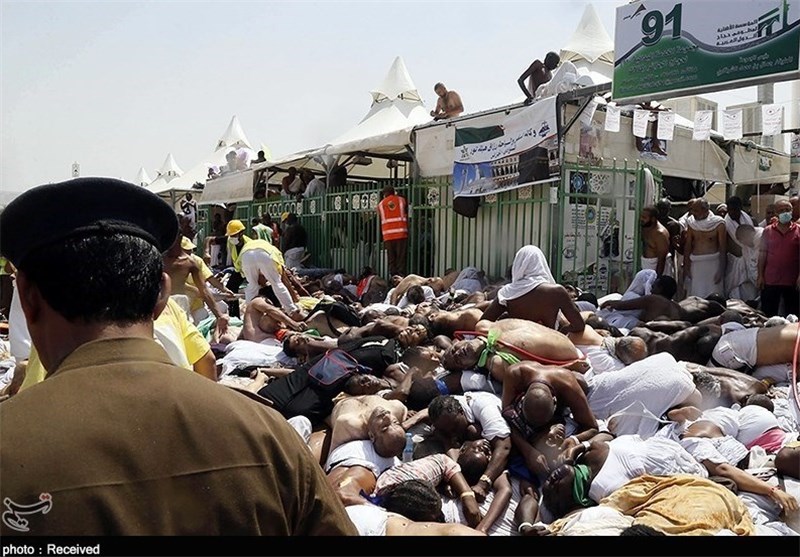
On September 2, 2015, thousands of people lost their lives in the deadly crush after Saudi authorities blocked a road in Mina during a ritual, forcing large crowds of pilgrims to collide.

The crush was the deadliest incident in the history of the pilgrimage. According to an Associated Press count based on official statements from the 36 countries that lost citizens in the disaster, more than 2,400 pilgrims were killed in the incident.

Saudi Arabia claims nearly 770 people were killed, but officials at Iran’s Hajj and Pilgrimage Organization say about 4,700 people, including over 460 Iranian pilgrims, lost their lives.

Iran to Send 10 Envoys to Saudi Arabia for This Year's Hajj

Iran Calls for Regional Cooperation against Environmental Woes

Iranian President Hassan Rouhani

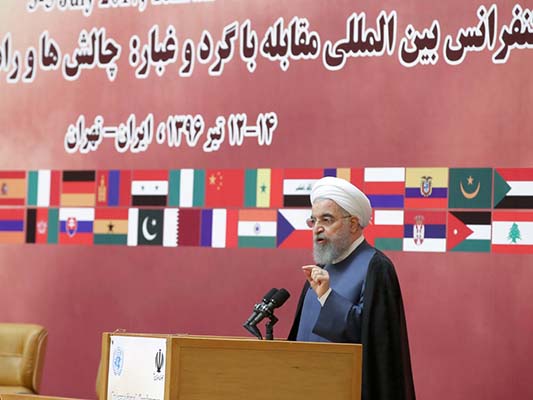
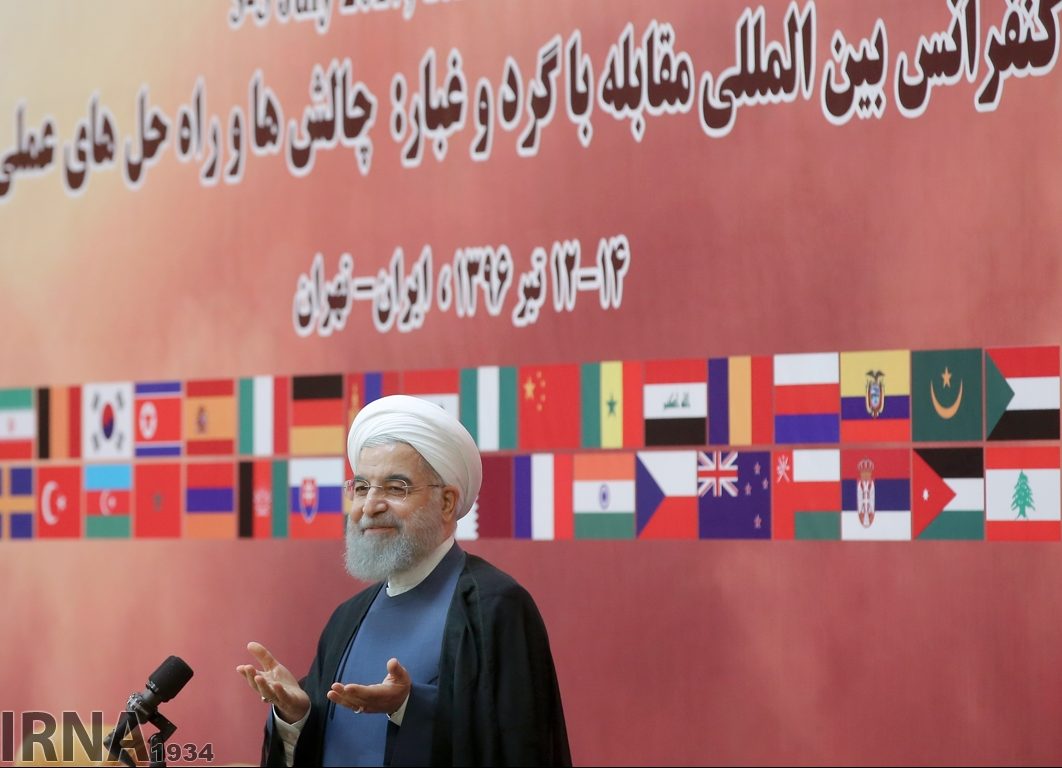
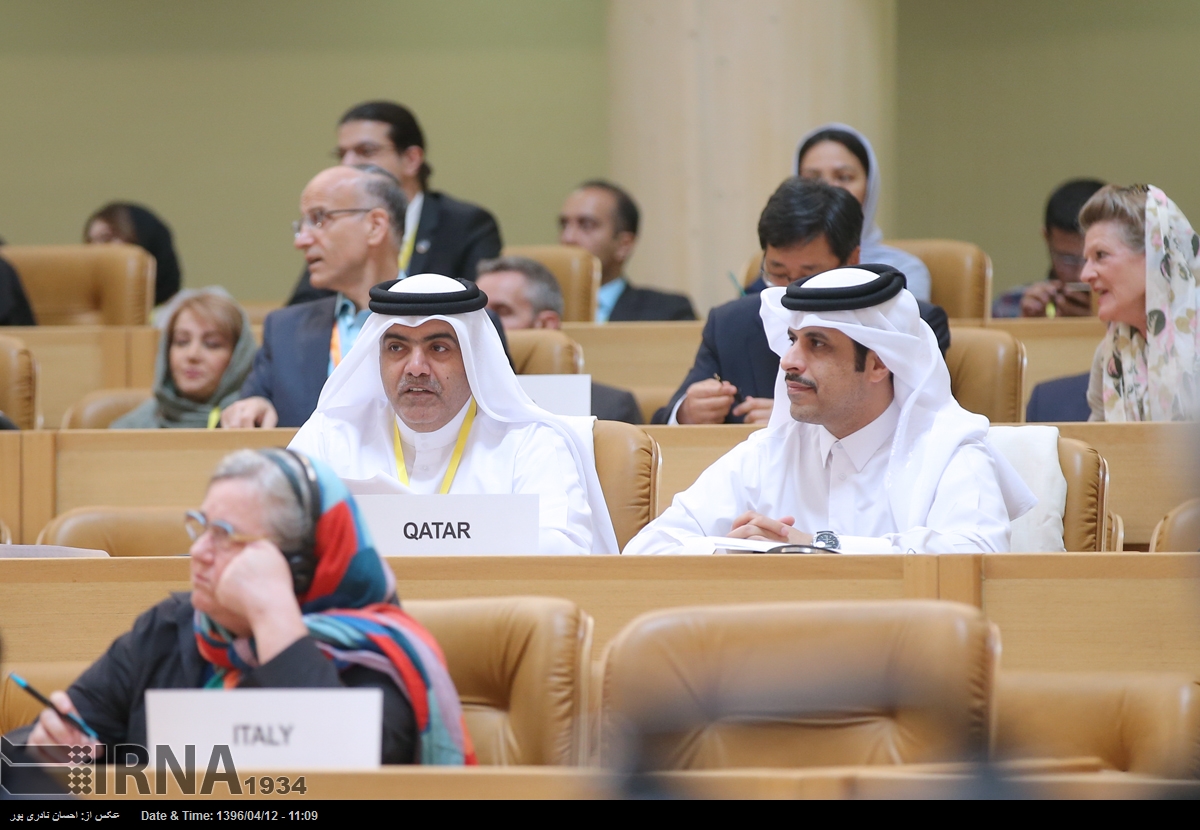
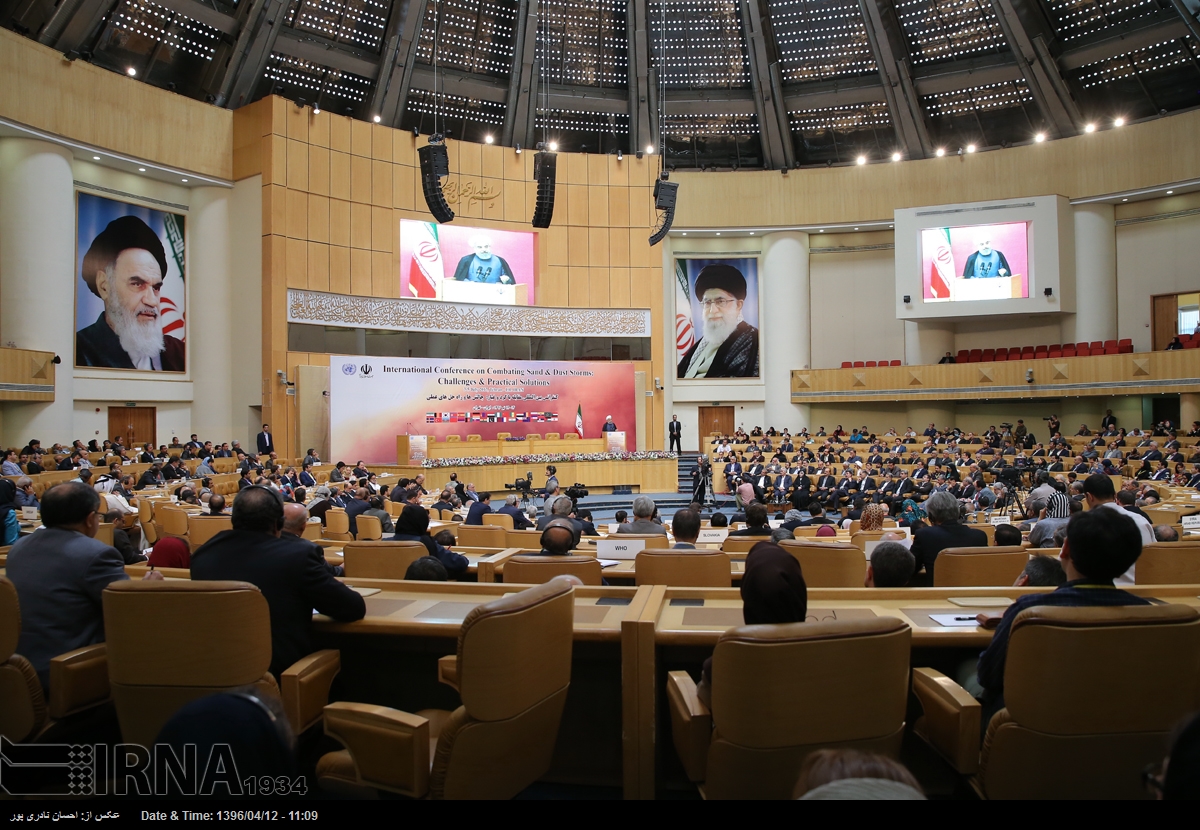
Iran Calls for Regional Cooperation against Environmental WoesIn a Monday address to the “International Conference on Combating Sand and Dust Storms: Challenges and Practical Solutions” in Tehran, Rouhani said the origins of most sand and dust storms hitting Iran are regional.

It goes without saying that there are some local environmental elements behind the storms but their role is limited, he added.

“At most, about 2 million hectares of Iran’s deserts may play a role in triggering the dust and sand storms. But we should look for the main origins outside of the country. In other words, about 20 per cent of the origins are domestic and the remaining 80 per cent are regional,” he said.

The Iranian president went on saying that some regional countries including Iraq, Jordan, Kuwait, Syria, Saudi Arabia, Pakistan, Afghanistan and Turkmenistan are the main sources of sand and dust in the region.

“Sometimes, about eight million cubic square metres of sand and storm enter our country within just 24 hours endangering our life, health, agricultural sector as well as environment,” he noted.

He called the problem a regional one and said today, like many other environmental problems, the sand and dust storms have turned into a regional and sometimes global problem putting in trouble the people from western and eastern Asia to the North Africa.

He pointed out that no country can overcome the problem of dust and sand storms without cooperation with the countries in the region and the world.

Building dams without addressing the environmental and scientific concerns can threaten the future of the region, he said, apparently pointing to Turkey and Afghanistan’s dam building projects.

Therefore, he added, we must stop such projects.
Iran Calls for Regional Cooperation against Environmental Woes“In our region, there is a country which is planning to build 22 dams. Such projects have destructive effects on the Tigris-Euphrates River in Iraq, Iran and a number of other regional states. So, we can’t remain indifferent towards the effects. On the other hand, all the regional states as well as international organizations should step in and shoulder their responsibilities,” he added.

The Iranian president stressed that no state should remain indifferent towards environmental problems and said building a huge number of dams in southern and northern Afghanistan can ruin the environment of Iran’s Khorasan and Sistan-Baluchestan provinces.

“If Hamun Lake is dried up entirely, not only the people in eastern Iran but also the Afghans will suffer the dust and sand storms. And if there is no solution to the environmental problem, the storm-hit population may have to migrate and this will destroy the civilizational hubs of the region, endangering the lives of people,” he added.

All regional and international organizations are thus responsible and should step in to tackle the problem, he said.


Regional States Should Stop Rivalries

Iran’s President said all regional states should strengthen the region instead of turning themselves into the strongest state of the region.
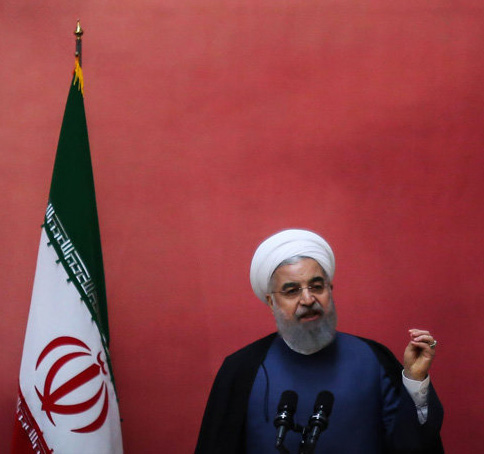
Iran Calls for Regional Cooperation against Environmental Woes“No state should impose itself on others and fan the flames of regional divisions,” he went on to say.

“We are members of a family in the Middle East and Western Asia who can’t survive apart from each other. Members of a family can have a good life only if the family is strong enough and all members are equal in terms of holding power,” he said.

The Iranian president said today the regional states should seek to establish a stronger region by avoiding destructive and undue competitions.

“Waging war and launching regional competitions negatively influence not only the regional politics but also the environment, paving the way for further dust and sand storms.”

Rouhani went on saying that if ISIS and other terror groups in Iraq and Syria continue to destroy buildings and farms, the region will turn into a large desert triggering more sand and dust storms.

He called terrorism a regional plight and stressed that terrorism acts like an infectious microbe engulfing the whole region. “So, any power and superpower thinking that ISIS can be used as a proxy to press ahead their regional and global projects is totally wrong because terrorism will lash back at all states if there is no global cooperation to cope with it,” he said.
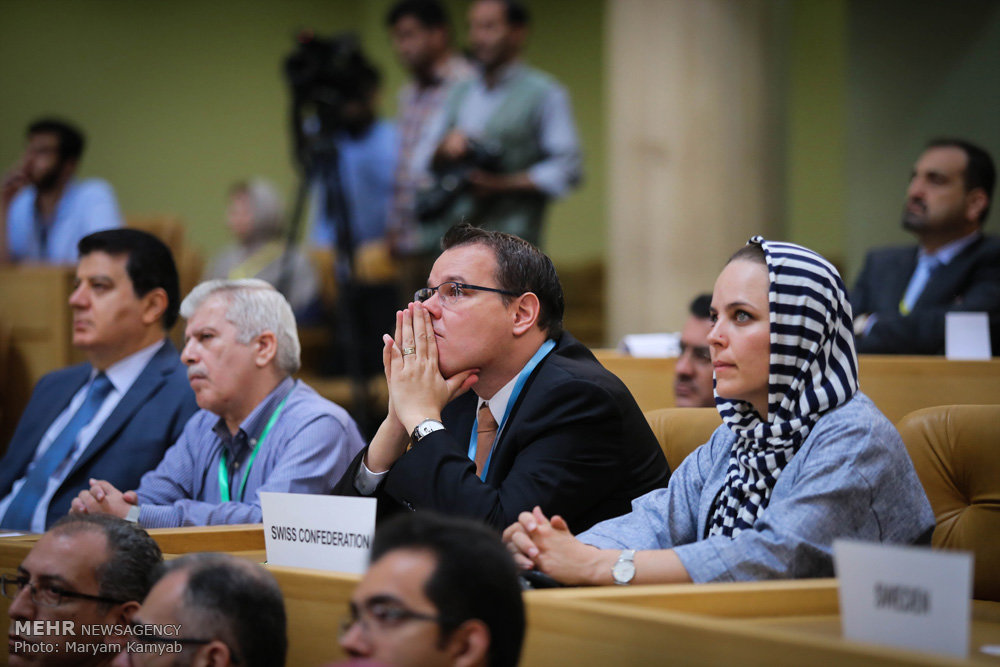
Iran Calls for Regional Cooperation against Environmental Woes“No policy will be more successful in the region than the win-win policy and if there is a country maintaining that it can pursue its own interests at the cost of others’, it is totally wrong,” the president added.

The era of erecting walls in the world has come to an end, the Iranian President noted, regretting that there are still some naïve politicians who are seeking to erect walls.

“Such politicians should be aware that today we should bring people together instead of separating them from each other. Today we should respect others to preserve our own rights. We can’t preserve our rights by threatening others,” he added.

He cited the US and Saudi Arabia as two countries which threaten other nations to preserve their own rights and said these countries are totally wrong.

“I don’t name the Zionist regime because it is totally based on deception, occupation and aggression,” he said.

Elsewhere in his address, Rouhani added the only way to a peaceful life in Western Asia and the whole world is to adopt a win-win policy. Meanwhile, “all regional and international states should take their responsibility,” he said.

“Even in the environmental sector, we need to adopt the win-win policy and take measures which are beneficiary for Iran, Turkey and Iraq. We should not adopt policies which are beneficiary for only one state so that only one country takes control of the region’s water resources, claiming that it is providing a promising future for its own nation,” he added.
Iran Calls for Regional Cooperation against Environmental Woes

We Have No Choice but to Help Each Other

The Iranian president said talks are underway between Iran and its regional neighbours Iraq, Afghanistan and Turkmenistan on environmental issues and added, “Through talks we can come up with joint projects which are in the interests of the whole region.”

“We should see ourselves members of a single family and don’t miss any chance to help each other,” he said.

Rouhani once again stressed that the only solution to the environmental problems is to expand ties and cooperation and said the United Nations should shoulder its responsibility and concentrate its efforts to tackle the problems.

“We can overcome the problems by drawing on the UN’s financial and technical resolutions,” he added.

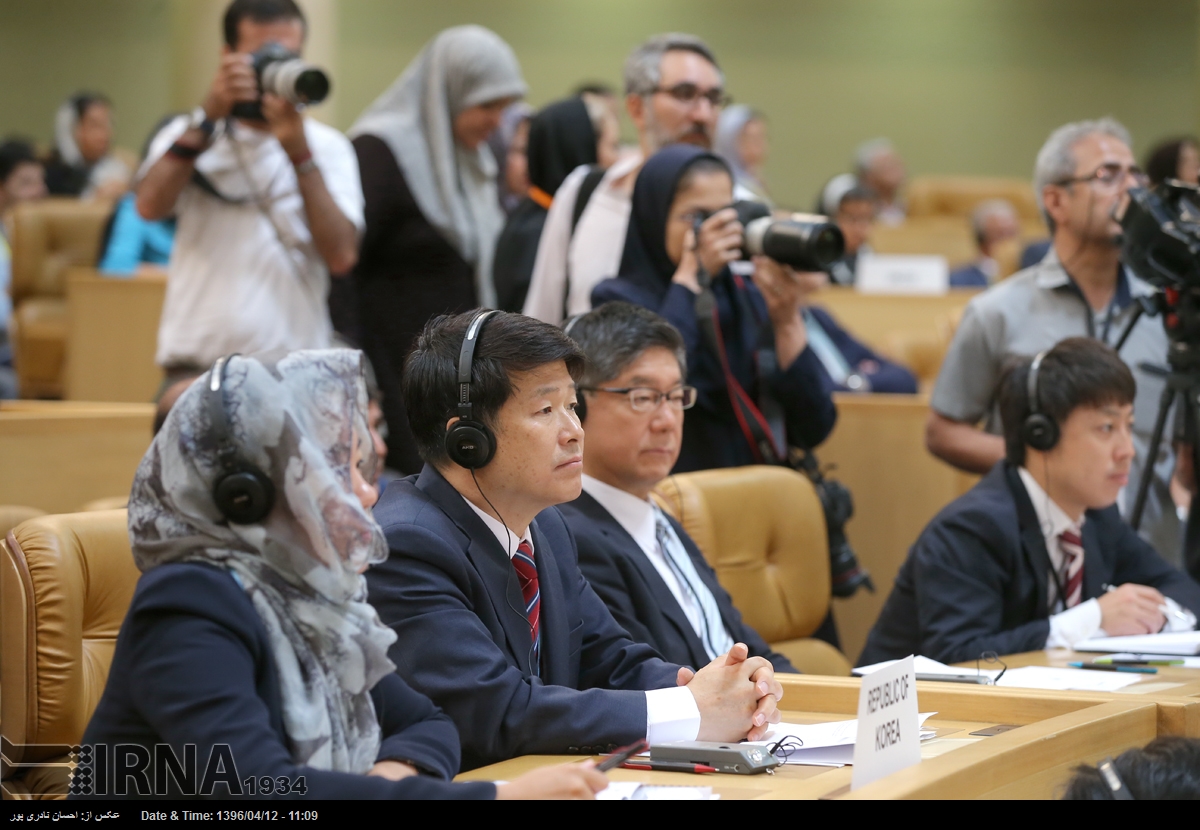
Representatives of 43 countries have attended the International Conference on Combating Sand and Dust Storms, which is being co-hosted by the United Nations (UN) and Iranian Department of Environment.

The international conference is aimed at reviewing the challenges and practical solutions to the dust pollution that has plagued Iran and several other countries in the Middle East.

Iran Calls for Regional Cooperation against Environmental Woes