Saturday, December 27, 2025
Home Blog Page 3987

22 Killed in Blast near Shiite Mosque in Pakistan

The explosion in a remote area bordering Afghanistan came as people gathered for Friday prayers near the women’s entrance of a Shiite mosque in the central bazaar, the latest in a series of attacks across Pakistan this year.
The local political agent, Ikramullah Khan, said the death toll had reached 22, with 70 wounded.
Sajid Hussain, a parliamentarian from Parachinar, said gunfire preceded the blast, which he described as a suicide attack. The city is located in an area with a large Shiite population, Reuters reported.
The terrorist group Tehrik-i-Taliban Pakistan (TTP), often referred to as the Pakistani Taliban, said the blast was part of its operation Ghazi, named after a radical leader killed by Pakistani security forces in 2007.

Iranian DM Urges US to Leave Persian Gulf

Dehghan

Brigadier General Hossein Dehqan made the remarks on Thursday in response to recent hostile comments by US officials against the Islamic Republic.

“What is the US doing in the Persian Gulf? They better leave this region and not harass the regional countries,” Dehqan said, adding, “Is it acceptable that an ignorant armed robber breaks into someone’s house and expects to get red carpet treatment? This is an instance of modern, 21st century barbarism.”

The remarks come at a time of increased belligerence shown against Iran by the administration of President Donald Trump.

On Wednesday, US Army General Joseph Votel, who heads the US Central Command (CENTCOM), said Washington should consider using “military means” against Iran.

Votel described Tehran as “the greatest long-term threat to stability” in the Middle East and accused Iran of “destabilizing” the region through “lethal aid facilitation,” using “surrogate forces” and cyber operations.

Earlier this month, the US Navy claimed that its aircraft carrier George H.W. Bush bad been “harassed” and “threatened” by Iranian vessels while passing through the Strait of Hormuz.

Iran’s chief Armed Forces spokesman, Brigadier General Massoud Jazayeri, dismissed the claim, saying Washington had better look at the movements of its own naval forces in the region.

Iran’s Islamic Revolution Guards Corps (IRGC)’s Navy has on several occasions forced US Navy vessels to change course before wandering into Iranian territorial waters.

The Islamic Republic has repeatedly warned that any act of transgression into its territorial waters would be met with an immediate and befitting response.

Spokesman Rejects Arab League’s Anti-Iran Claims

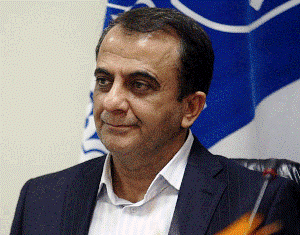
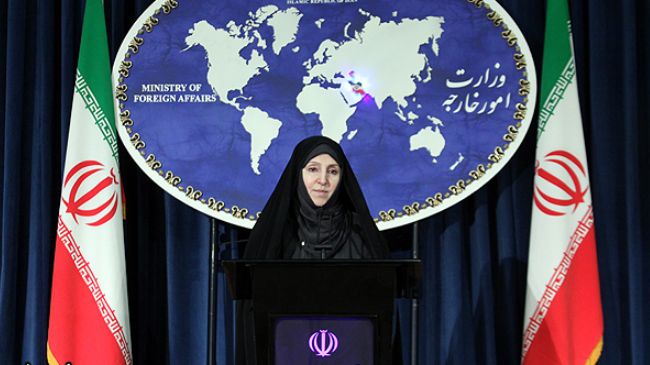
Bahram Qassemi

In comments on Thursday, Iranian Foreign Ministry Spokesman Bahram Qassemi dismissed the anti-Iran allegations raised in a final statement of the Arab League summit, held in Jordan on Wednesday.

He also slammed as “futile and bogus” the accusations that Iran interferes in the internal affairs of the regional countries and the claims that question Iran’s sovereignty over the three Persian Gulf islands of Greater Tunb, Lesser Tunb, and Abu Musa.

“The Islamic Republic of Iran has repeatedly announced that it does not basically feel any need to interfere in the internal affairs of the other countries, and that it is committed to good neighborliness, respect for the sovereignty of states, and non-intervention in the internal affairs of the other countries as the plain principles in accordance with the country’s Constitution and the international norms,” the spokesman underlined.

Qassemi then expressed “deep regret” about the move by leaders of certain Arab and Muslim nations to mistake friends for enemies, either unintentionally or deliberately.

Those Arab leaders are following the wrong path despite all previous experiences and lessons, he added, urging the Arab League to start dealing with the major problems in the region and the Islamic world and counter the common threats to all Muslim nations.

“It’s a pity that some (countries) change the realities and seek to replace the Zionist regime (of Israel) with Islamic Iran as a dummy and fabricated enemy,” the Iranian diplomat deplored.

He finally noted that Iran strongly condemns the attempts to change the facts about Iran’s sovereignty over the three islands in the Persian Gulf, stressing that repetition of such “lies and claims” could not alter the historical realities.

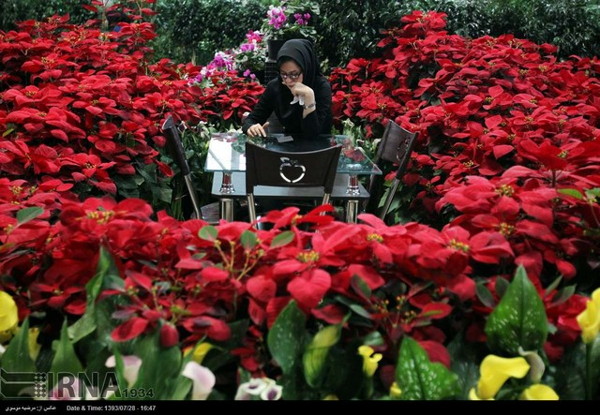
Iran’s Beauties in Photos: Kerman Province

Iran’s Beauties in Photos: Kerman Province-5744193

Kerman is the second largest province of Iran that encompasses nearly 11 percent of the country’s land area. Thanks to its special diversity, Kerman province can meet the needs of tourists with different tastes.

Natural attractions include thermal and mineral springs, recreational areas, verdant spaces, altitudes and peaks, lakes, pools, protected areas and the special desert features for adventure seekers.

Here are IRNA’s photos of Kerman’s beauties:

Greater Cooperation, Realistic Talks to Benefit Tehran, Riyadh  

ali ahani-Greater Cooperation, Realistic Talks to Benefit Tehran, Riyadh

Iran’s Ambassador to France Ali Ahani believes that prudent and realistic bilateral talks and greater cooperation between Iran and Saudi Arabia will benefit the two states and the entire region.

A change in the Saudi government’s attitude and approach towards Iran is a prerequisite to holding negotiations and fostering collaborations, he noted, according to a Farsi report by Mizan.

In response to a question on the competition between Iran and Saudi Arabia in the region, he said, “The Islamic Republic of Iran is against adopting any competitive or hostile approaches towards Saudi Arabia.”

Speaking in a meeting with the M.A. students of the Versailles Saint-Quentin-en-Yvelines University at the Iranian Embassy in France, he added, “Iran believes that to protect their interests and those of the entire region, the two states are required to cooperate with each other and hold talks realistically and prudently. This way they can play a very constructive role in resolving the regional crises.”

He added this requires a different attitude and revised approach by the Saudi government towards Tehran.

Ahani further commented on the impacts of the nuclear deal signed between Iran and P5+1 – also known as the Joint Comprehensive Plan of Action (JCPOA), the signatories’ commitments on implementing the JCPOA and Iran’s latest developments in the post-JCPOA era.

He said as per the nuclear deal, the P5+1 is required to be fully committed to implementing the JCPOA.

This is while, he added, efforts are underway by the US government and Congress to wriggle out of their commitments on the deal and hamper its implementation by forcing Europe into upholding their unilateral sanction against Iran.

“The European Union’s endeavors to find an effective legal solution to be able to counter the US unilaterally passed federal laws, which violate other countries’ internal sovereignty, will properly safeguard its interests.”

Expounding on the latest developments in the relations between Tehran and Paris, he said Iran can offer tremendous investment and cooperation opportunities to French companies.

Commenting on the latest conditions in the Middle East and terrorism, as a regional and international threat, the Iranian ambassador noted that fighting terrorism and extremism, primarily, requires getting at and addressing their ideological root causes.

Later in the meeting, he briefed the attendees on issues such as the nature of Iran’s peaceful nuclear program, nuclear negotiations between Tehran and the six world powers, the JCPOA content and latest developments, obstacles and challenges to implementing the JCPOA, Iran’s investment opportunities, Iranian rules and regulations for supporting foreign investors, latest developments in the relations between Iran and France in the post-JCPOA era and the Islamic Republic’s significant role in establishing peace and achieving stability in the region.

At the end of the meeting, Ahani answered some of the students’ questions on the impacts of the US primary sanctions against Iran on the implementation of the JCPOA, the US government’s new approach towards the nuclear deal and latest developments in the Middle East.

Japanese PM’s Wife Lauds Iranian Women as Capable, Successful   

Akie Abe, Japanese PM’s Wife Lauds Iranian Women as Capable, Successful

Akie Abe, the wife of Japan’s Prime Minister Shinzo Abe, has lauded Iranian women as quite capable and successful [in their social activities], saying that they have the privilege and ability to easily voice their opinions and viewpoints in the society.

According to a Farsi report by the Iran Newspaper’s special edition published on the occasion of Nowruz – the Persian New Year (which started on March 21), she is a calm and decent woman who looks much younger than her age, 54. Although she and Abe got married in 1987, they have no children. As the wife of the incumbent prime minister of a country that has the world’s third largest economy, Akie received a master’s degree in Social Design Studies from the Rikkyo University in March 2011.

Among the reasons she became interested in her university major were contributing to the establishment of schools in Myanmar and making efforts to revive and promote certain food cultures, including managing restaurants that serve organic foods.

Currently, she is involved in different fields such as protecting women’s rights and increasing their role and cooperation in social activities. In early May, she visited Iran to take part in the First Joint Symposium of Iran-Japan on “Women, Peace and Sustainable Development” held in the Institute for Political and International Studies of Tehran.

She commented on Iran and expounded on her take and evaluation on and of the social status and position of Iranian women, in an interview with the Iran Newspaper on the sidelines of the second round of the Joint Symposium of Iran-Japan “Women, Education, and Economic Empowerment” in Tokyo.

Excerpts of the interview follow:


Why did you take part in the First Joint Symposium of Iran-Japan? Did the visit help change your attitude towards the country?

I participated in the First Joint Symposium of Iran-Japan on “Women, Peace and Sustainable Development” in Tehran, just to be present in the important conference. However, I plan to revisit Iran in the future and discuss a number of the country’s historical issues as well as its commonalities with Japan in this regard with Shahindokht Mowlaverdi, Iran’s vice president for women and family affairs.

Naturally, my attitude towards Iran drastically changed during the course of my visit to the country, as I held talks with Iranian officials and witnessed the fruitful activities underway in Tehran.


To what extent do you know Iran and Iranian women? How do you evaluate their characteristics?

During my visit to Iran, I found the country’s women quite capable. They are completely successful in their social activities and easily express their opinions and viewpoints in the society. Iran and Japan have age-old cultures and share many common values, such as attaching great importance to family and striving to maintain and strengthen family ties. Acquiring greater knowledge of Iran will definitely help foster cordial relations between the two countries’ women and increase their interactions in the future. It will also help improve relations between the two nations.


Japan has so far had favorable interactions with Iran in the field of environment among which are efforts to revive Lake Urmia in West Azarbaijan province, and Anzali Lagoon in Gilan province. What goals does Japan pursue by such interactions and cooperation?

I am very interested in environmental issues and will do anything to help preserve the environment. Establishing peace is my sole preoccupation. I believe that complete and permanent peace will be brought about only when all people, particularly women, contribute to the process of protecting the environment and play an effective role to this end. I believe that all of the world’s lakes and seas are connected to each other. The issue [of reviving Lake Urmia and Anzali Lagoon] has global dimensions. Thus, I am very keen to see my country expanding environmental cooperation with Iran.

Iran Defeats China to Get Closer to Russia World Cup

iran-china-football

In front of about 100,000 cheering fans in Tehran’s Azadi Stadium, Iran cemented its place at top of Group A with 17 points, four points ahead of second place South Korea who defeated Syria 1-0 in the group.

China has little chance of qualifying with just five points.

Taremi, who scored Iran’s solitary goal against Qatar in Doha last week, found the back of the net once again in the 46th minute.

His low shot from eight yards out slipped under Chinese goalkeeper Zeng Cheng to give Carlos Queiroz’s side its fifth win in seven games.

Iran could have won with more goals but Team Melli’s strikers missed their chances.

Iran captain Masoud Shojaei was named ‘Man of the Match’.

iran-china-football-tehran

Iranian, Russian Presidents Underline Joint Fight against Terror

en-rouhani-putin-8196

“Relations between Iran and Russia are aimed at promoting regional stability and the two countries’ main objective is to promote regional peace and tranquility,” Rouhani said in a meeting with Russian President Vladimir Putin at the Kremlin, Moscow, on Tuesday.

He added that Tehran-Moscow ties would never be against the interests of any third country.

Rouhani said Iran attached importance to strengthening relations with Russia, adding that the two countries had taken steps to bring about positive developments in mutual ties over the past three and a half years.

rouhani-putin-russia
Iranian President Hassan Rouhani (R) shakes hands with his Russian counterpart, Vladimir Putin, during their meeting at the Kremlin in Moscow on March 28, 2017. (Photo by president.ir)

The Iranian chief executive emphasized that mutual relations had entered “a new phase,” saying, “In this new phase, we can speak about sustainable and long-term ties.”

Rouhani expressed hope that the two sides would manage to take more steps to further deepen ties.

The Russian president, for his part, said Iran was a good neighbor and a stable and reliable partner for his country.

Putin added that Moscow and Tehran worked very effectively together in all areas, including on global issues and the resolution of major and very grave international problems.

hassan rouhani-putin

He also commended major achievements made by the two countries in recent years, particularly in the economic sector, saying that trade volume between Iran and Russia increased 70 percent in 2016 in comparison with the year before.

Iran, Russia sign 14 documents for cooperation

Meanwhile, Iran and Russia signed 14 documents for the expansion of cooperation in various political, economic, judicial, legal, scientific and cultural fields.

The documents were signed by senior Iranian and Russian officials in the presence of Rouhani and Putin following their talks.

Meanwhile, Iranian and Russian economic entrepreneurs and businesspeople held several rounds of talks and signed agreements to boost cooperation between the two countries’ private sectors.

Heading a high-ranking politico-economic delegation, the Iranian president arrived in Moscow Monday evening for a two-day official visit at the invitation of his Russian counterpart.

In a meeting with Russian Prime Minister Dmitry Medvedev on Monday, Rouhani said mutual relations were “growing” and stressed that relations would play an effective role in promoting regional and international stability and security.

Before the current meeting, Rouhani and Putin had held eight meetings over the past four years. Tehran and Moscow enjoy strategic relations with senior delegations from the two countries regularly exchanging visits.

The two presidents have also held several phone conversations and discussed the available avenues for the continuation of bilateral cooperation on the crisis in Syria and the fight against international terrorism.


Rouhani, Putin stress expansion of economic ties in joint presser

Following their meeting in Moscow, the presidents of Iran and Russia took part in a joint press conference.

Addressing the reporters, Putin said in his talks with Rouhani, they had discussed further expansion of joint investment and technology transfer between Tehran and Moscow.

He added that special attention was also paid during their negotiations to the continuation of cooperation on peaceful nuclear energy between the two countries.

rouhani-vladimir putin

The Russian president said the first unit of Bushehr nuclear power plant, in southern Iran, is now operating at full capacity, noting that his country was also planning to build the second and third units at the facility.

He added that Moscow has extended 4.2 billion dollars in loan to Iran for the construction of a thermal power plant and electrification of a railroad connecting the central Iranian city of Semnan to northeastern city of Incheborun.

Putin expressed his country’s readiness to make investment in Iran’s oil and gas sectors.

Pointing to similar stances taken by Iran and Russia on a variety of regional and international issues, Putin said the two sides had reiterated their determination to continue fighting terrorism and extremism in the region.

He noted that the two countries had agreed to press ahead with the campaign against terrorist groups operating in the region, particularly Daesh and al-Nusra front.

The Russian president also stressed the importance of establishment of a lasting ceasefire in Syria through cooperation of Russia, Iran and Turkey, noting that both Tehran and Moscow attached importance to the restoration of security to the crisis-hit country.

Putin also threw his country’s weight behind Iran’s membership at the Shanghai Cooperation Organization.

The Iranian president, for his part, said he had discussed the situation in Syria and Yemen with his Russian counterpart.

vladimir putin-rouhani

Rouhani said the two sides had reviewed ways of improving regional peace and security and establishing close relations among nations and countries in the region.

Iran’s chief executive added that Tehran and Moscow would continue their campaign against terrorism until terrorism is eradicated across the region.

He further hailed Russia’s role in striking and implementing a landmark nuclear agreement, known as the Joint Comprehensive Plan of Action (JCPOA), between Iran and the P5+1 group of countries and said Tehran and Moscow would further bolster cooperation in this regard.

Spokesman Rejects US Veep’s Anti-Iran Claims

Bahram Qassemi

“Unfortunately, the United States’ polices in support of the Zionist regime’s aggressive measures against the people of the region and also daily crimes committed by America’s partners against the defenseless people of Yemen have worsened insecurity in the Middle East,” Qassemi said.

As long as such policies continue, the region and the world will not witness peace and stability, he added.

Addressing the annual meeting of the American Israel Public Affairs Committee (AIPAC) in Washington, DC, on Sunday, US Vice President Mike Pence said America will no longer tolerate what he called “Iran’s efforts to destabilize the region and jeopardize Israel’s security.

“They’ve gone to great lengths to develop nuclear weapons and ballistic missiles,” he said.

Spokesman Rejects US Veep's Anti-Iran Claims

“Under President Donald Trump, the United States of America will not allow Iran to develop a nuclear weapon. This is our solemn promise to you, to Israel, and to the world.”

Qassemi described the remarks as sign of Washington’s continued hostility toward the Iranian nation and government and said while Iran’s nuclear program has been fully transparent and entirely peaceful, as acknowledged in all of the reports issued by the International Atomic Energy Agency (IAEA), US support for Tel Aviv’s military nuclear activities that has led to production of hundreds of nuclear warheads by Israel is a factor that causes insecurity in the region and the world.

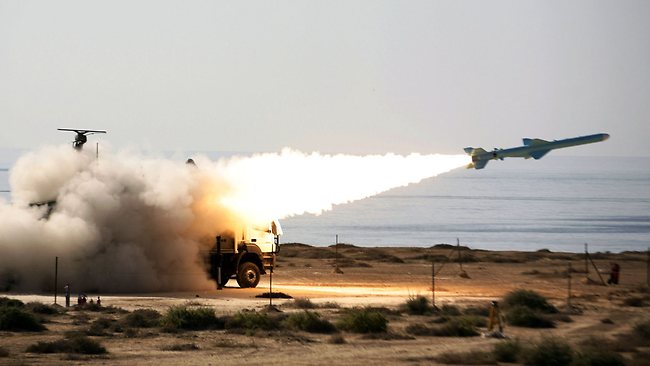
As for Iran’s missile program, the spokesman underlined that the Islamic Republic will continue its legitimate defense activities, which are not against any country but are fully based on deterrence.

“In bolstering our indigenized defense power and defending our country, we will neither accept recommendations from anyone nor will allow others’ interference,” he went on to say.

Iran-Russia Ties Key to Regional Stability: Rouhani

“Undoubtedly, cooperation between the two countries will have positive effects on the regional and international stability and security,” Rouhani said in a meeting with Russian Prime Minister Dmitry Medvedev in Moscow on Monday.

He added that Iran welcomes the expansion of relations with its neighboring countries in the region, particularly Russia.

The Iranian chief executive expressed hope that his visit to Moscow would lead to new developments in Tehran-Moscow cooperation in political, economic and cultural areas and on international issues.

The Russian premier, for his part, said his country was resolved to bolster relations with Iran in all sectors.

He pointed to the favorable relations between Tehran and Moscow and expressed confidence that President Rouhani’s trip would help both sides further deepen their ties.

Iran-Russia Ties Key to Regional Stability: Rouhani

Heading a high-ranking politico-economic delegation, the Iranian president arrived in Moscow Monday evening for a two-day official visit at the invitation of his Russian counterpart, Vladimir Putin.

The Russian president is scheduled to officially welcome his Iranian counterpart at the Kremlin on Tuesday. Rouhani and Putin will then hold talks on regional and international issues and matters of mutual interest.

The two presidents are also expected to issue a statement following their meeting.

Speaking to reporters in Tehran on Monday before setting off for Moscow, Rouhani said the two sides were closely cooperating on regional issues, including fighting against terrorism and promoting stability.

“The two countries are also opposed to any shift in geographical borders in the region,” he said, adding that Iran and Russia have the highest level of cooperation on the crisis in Syria, the campaign against terrorism and the establishment of stability in the Middle East.