Friday, April 24, 2026
Home Blog Page 3985

Europe Source of Dangerous Weed Smuggled into Iran

Head of the Iranian Customs’ Drug Enforcement Department Nematollah Moomvandi has warned against the organized smuggling of a particular type of marijuana into Iran from certain European countries, including Britain.

Marijuana, also known as cannabis and weed, is a narcotic drug made from the leaves of the hemp plant.

Moomvandi said the drug smuggled into the Islamic Republic is, in fact, the seeds from which hemp grows.

He said the seeds have been discovered in such items as toys, tablets, hairbrushes, slippers, decorative items and belts sent in by post.

“The seeds of this dangerous plant have been delivered to the country in postal packages and, of course, discovered by customs agents since June last year. In 2016, 204 cases of hemp seeds stashed in incoming postal packages were registered on the list of the items discovered by the customs, which is a considerable figure.”

He said the drug kept being smuggled into the country in postal packages on a larger scale in the second quarter of 2017, but was intercepted as well.

“Iran has lodged its protest with the European Union via the foreign ministry because these countries don’t control their borders to counter drug trafficking.”

He said hemp seeds seem to be smuggled in an organized manner.

“The [Iranian] Customs has supplied the necessary information to the [country’s] Drug Control HQ, Intelligence Ministry and Police,” he noted.

As for why narco-traffickers have turned to smuggling this particular type of drug, he said the key reasons are that it is a lucrative trade, and the drug can easily be transferred in the form of seeds.

“It is said that every single seed of the plant has a [street] value of around Rls. 10 million [over $250],” he said.

“Another problem with this new drug is that it can easily be planted at home, which makes it difficult for authorities to control its production and distribution.”

Experts have done genetic research work on the plant, whose narcotic content was 6%, and managed to produce a new plant with a 25-percent narcotic content. The new plant can easily be grown in a flower pot.

‘Iran Adopting Realistic Approach toward Social Networks’

Iran’s Minister of Culture and Islamic Guidance Reza Salehi Amiri says the government has adopted a realistic approach vis-à-vis cyberspace.

“The Establishment’s approach toward social networks and virtual space is not a passive and confrontational approach, but a realistic one based on management and production of useful content,” said the minister, according to a Farsi report by Entekhab news website.

He said a confrontational approach is a nonstarter and should be avoided as it will bring about “deviation” and a Western-style way of thinking.

“A passive approach, which prescribes submission in dealing with cyberspace, is not effective, either, and we should not pursue this approach,”

He further noted that the exchange of information is unlimited in today’s world, and added in Iran, for example, there are 47 million internet users.

“Currently, there are 800,000 websites as well as 1.5 million channels operating in the cyberspace in the country,” he said.

He noted that all aspects of people’s lives such as culture, politics, the family and other constituents of society have been influenced by cyberspace and social networks, and added the society has a growing tendency to use social networks.

“At the moment, social networks account for the bulk of people’s cultural consumption, which means people and citizens receive their messages from social networks more than before.”

The National Cyberspace Council is monitoring the full extent of social networks’ influence on the society, the culture minister noted.

During the recent presidential election in Iran, for example, between 2.5 and 3 billion messages were exchanged between Iranians each day, he said.

Family members used to spend two hours a day interacting with each other in the past while the figure dropped to around 20 minutes last year, which means social networks have assumed a special position in families.

“The current information revolution puts two paths before us: Either to drown in this sea of information, or to adopt a clear strategy to manage it, and definitely it would be effective and useful to adopt a clear strategy to manage it,” he underlined.

He said family members used to spend around two hours a day talking and interacting with each other in the past while the figure dropped to around 20 minutes last year, which means social networks have assumed a special position in families.

He then pointed out that computer games are all the rage now among children.

“Last year, for example, around 450 billion Tomans (nearly $120 million) worth of computer games were sold in the country, or in 2016, the Clash of Clans game sold $2 billion across the world.”

He said inappropriate cultural consumption will lead to “cultural malnutrition,” which, in turn, will lead to social maladies and cultural challenges.

The minister underlined that social networks influence and change people’s consumption patterns and behaviours as well as type of clothing and makeup.

“These changes will create a new language in the society, and people will have more craving for diversity and pleasures.”

He then said the high rate of use of social networks by children and young adults shows the importance of producing useful content and transferring it to them via virtual space.

Social networks influence people’s consumption patterns and behaviours as well as type of clothing and makeup. These changes will create a new language in the society, and people will have more craving for diversity and pleasures.

The more virtual space is expanded, he said, the more new borders are created, and “we should properly delineate new borders by producing useful content.”

The minister further underlined that the society is moving toward using mobile phones more and more, so much so that a global survey shows all libraries across the world will provide books to their clients on mobile phones by 2020.

Salehi Amiri then said the business of start-ups is booming in Iran, and added many of their directors range in age from 20 to 25, which shows the youths have secured a considerable share of activities in virtual space.

He said the middleman is cut out in most of these projects, which has resulted in over millions of commodities being delivered to households on a daily basis.

The minister added mosques should turn into bases where content is produced for cyberspace.

“Transferring ethical and educational messages to families requires the cooperation of theology schools and universities, and that’s why the theology school [in the city of Qom] should be active in cyberspace more than ever before.”

He further said direct talk and face-to-face conversation cannot be a suitable method to transfer concepts and messages, so different means such as music, plays, painting and films should be used.

He stated that people seriously need to watch films these days, and added subsidizing film-making in the country could increase viewership of locally-produced movies.

Salahi Amiri underlined his ministry has a duty to counter promiscuity and reactionarism. However, he added, blocking cultural and artistic activities will only increase social vice and problems.

He concluded by saying that effective cultural activities require long-term work, and added, “Regarding the hijab issue, for instance, activities should be goal-oriented, logical and in the right path with a long-term look.”

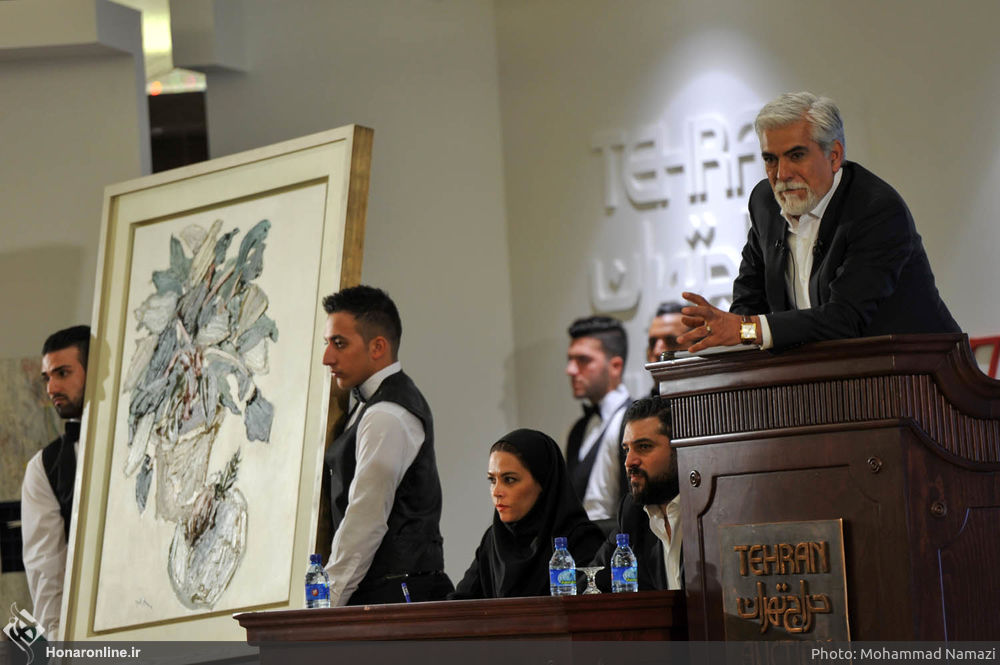
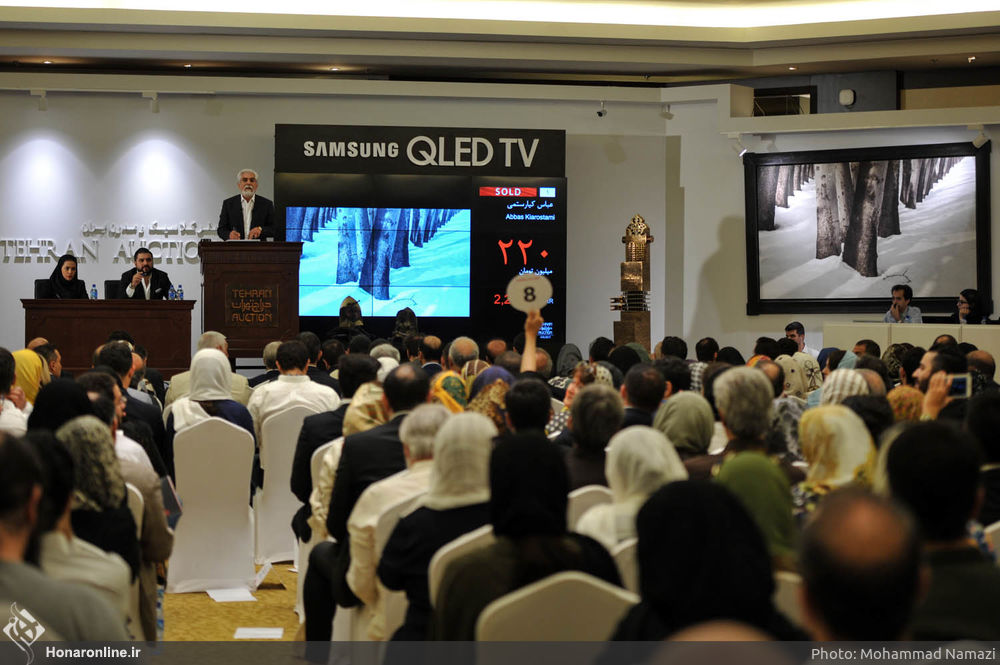
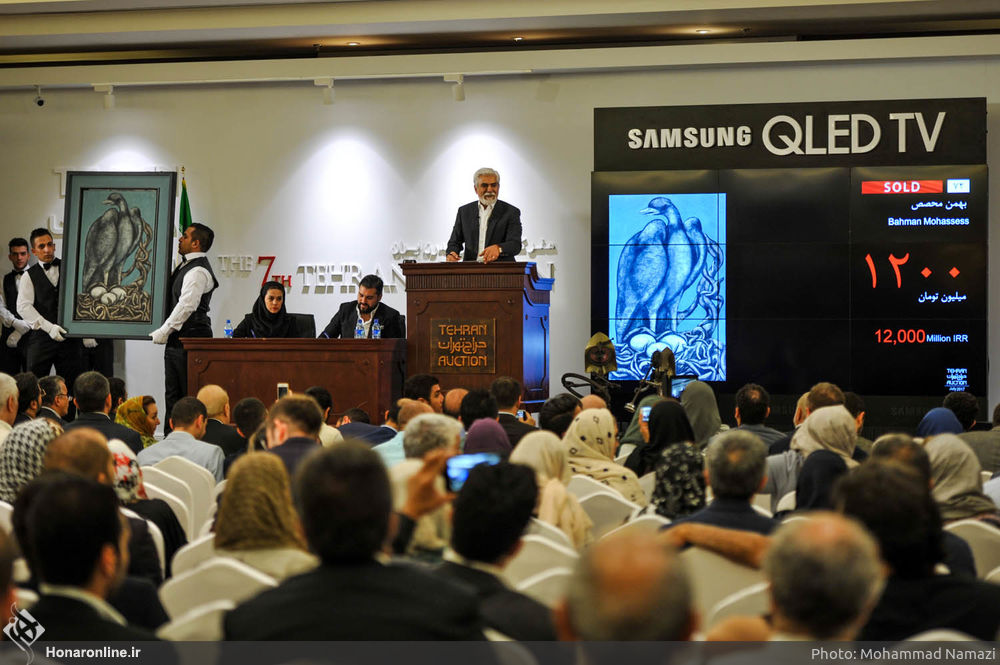
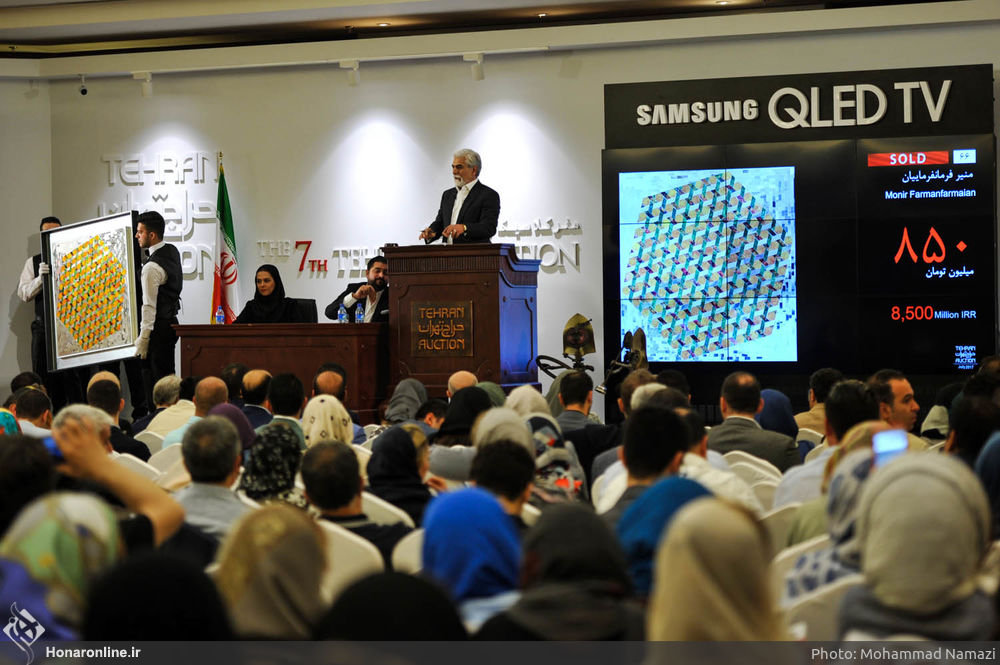
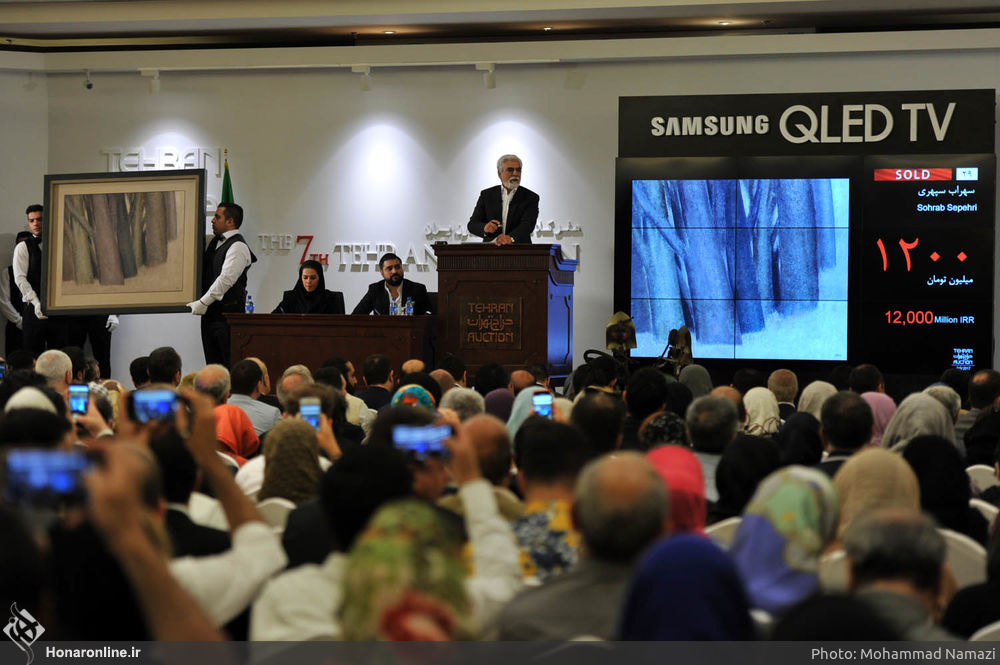
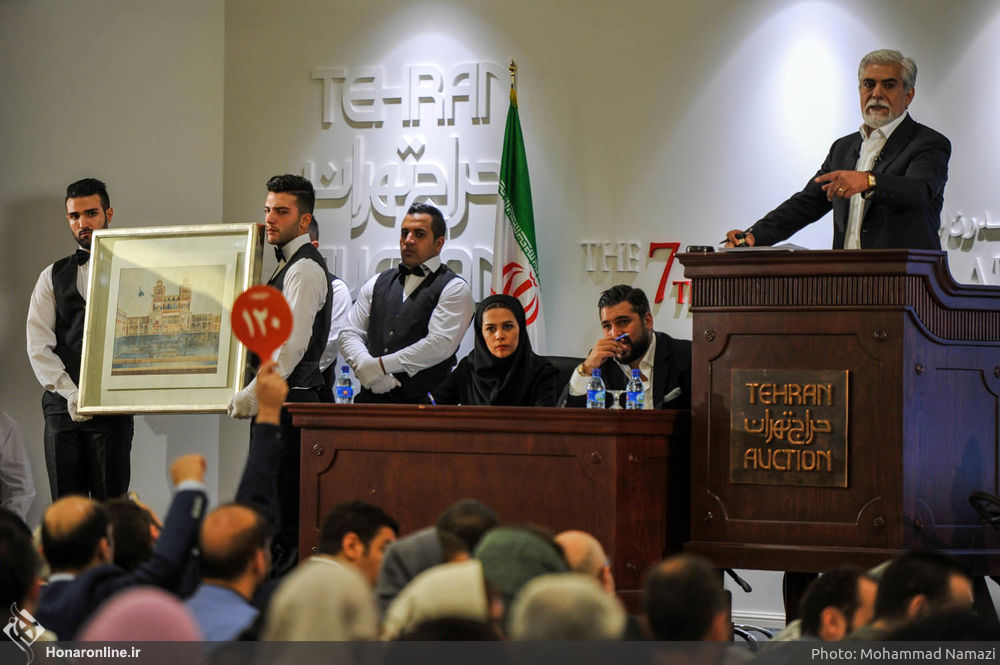
Over 70 Artworks Sold at 7th Tehran Auction for $7m

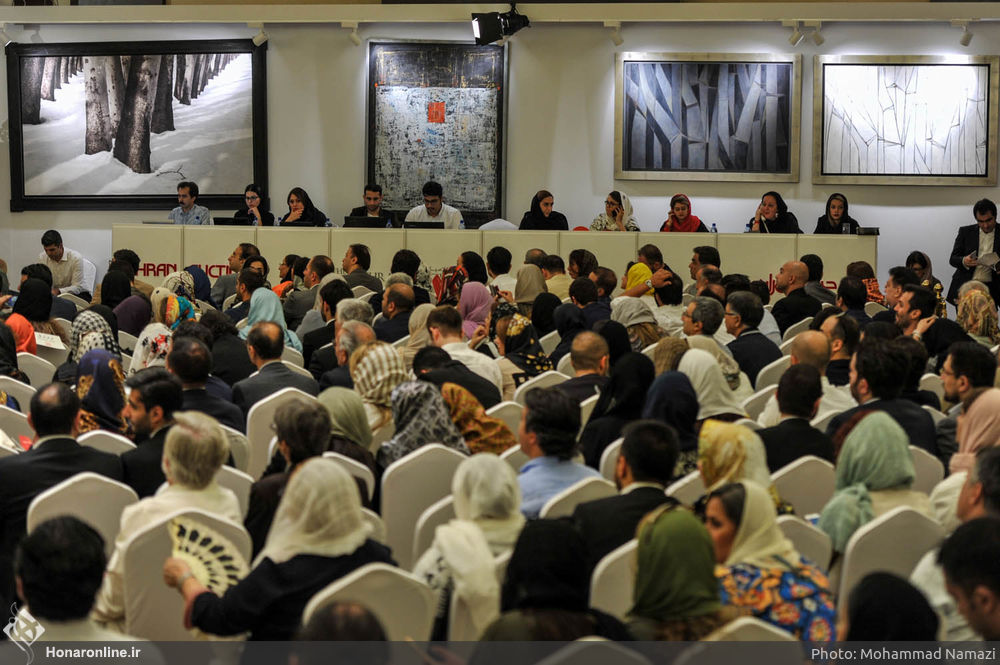
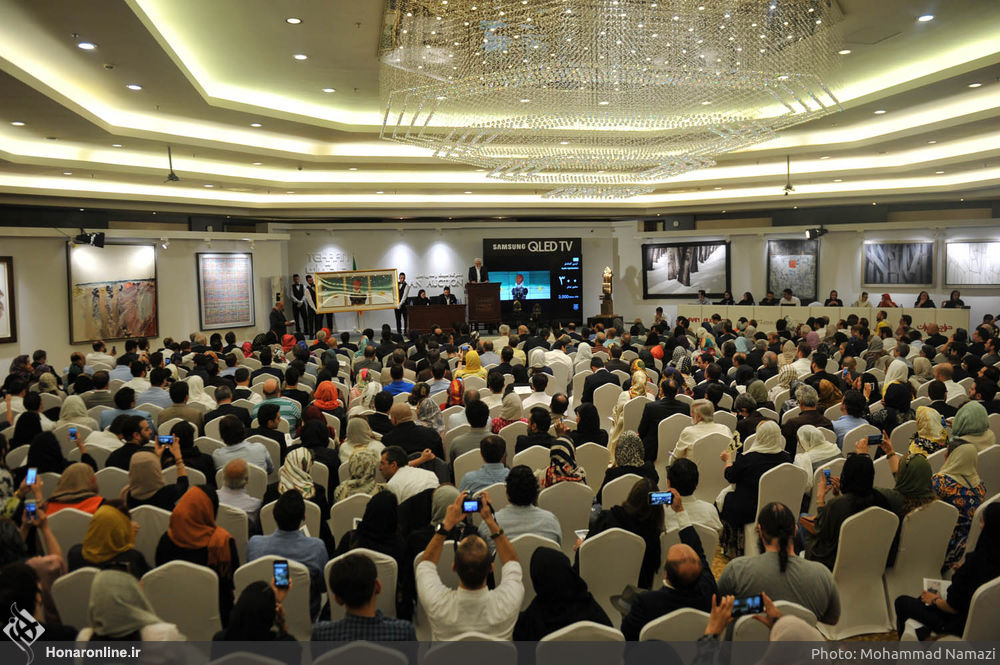
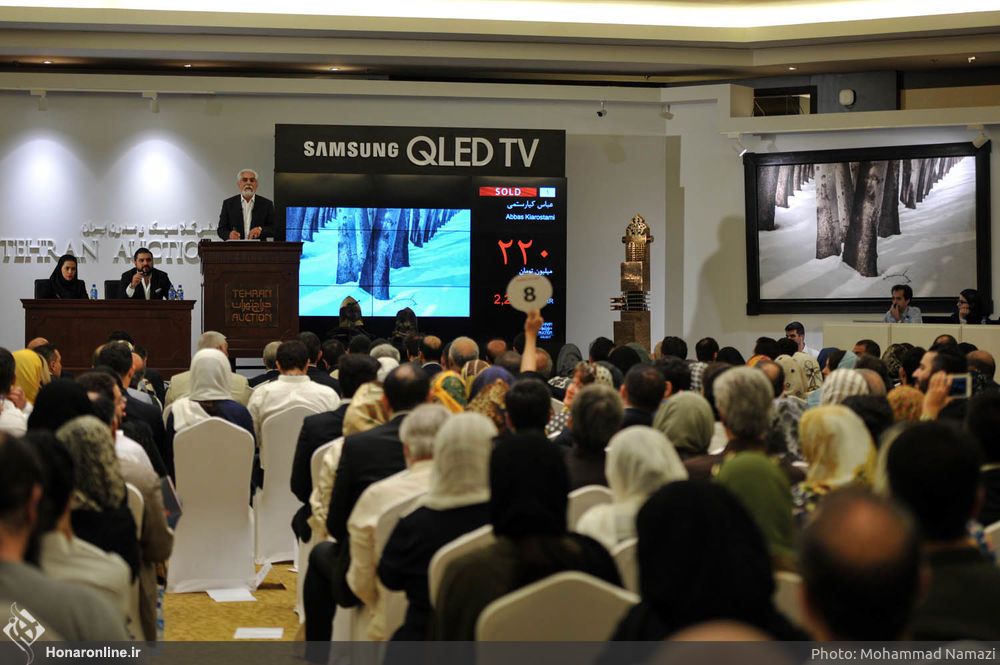
Except one piece, all the 72 pieces, including 13 classic and 59 modern works by Iranian celebrated artists were sold at the event, Honaronline reported.

Although the number of presented works this year reduced compared with the previous two editions, (80 pieces in 2016 and 126 in 2015), the final results showed an increase of $150,000 and $250,000 in comparison with the total sum in 2016 and 2015 respectively.

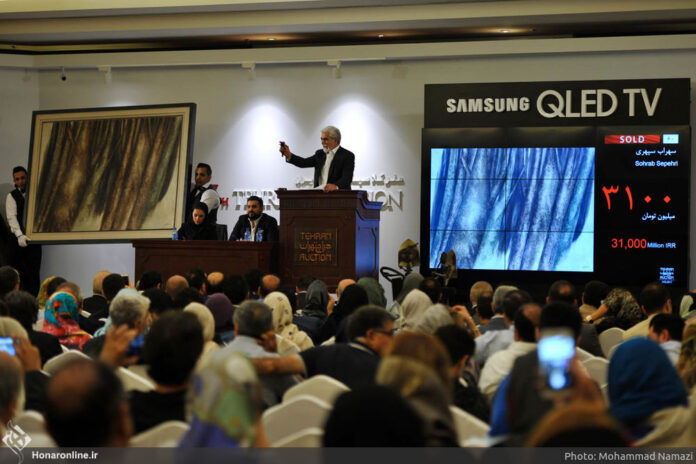
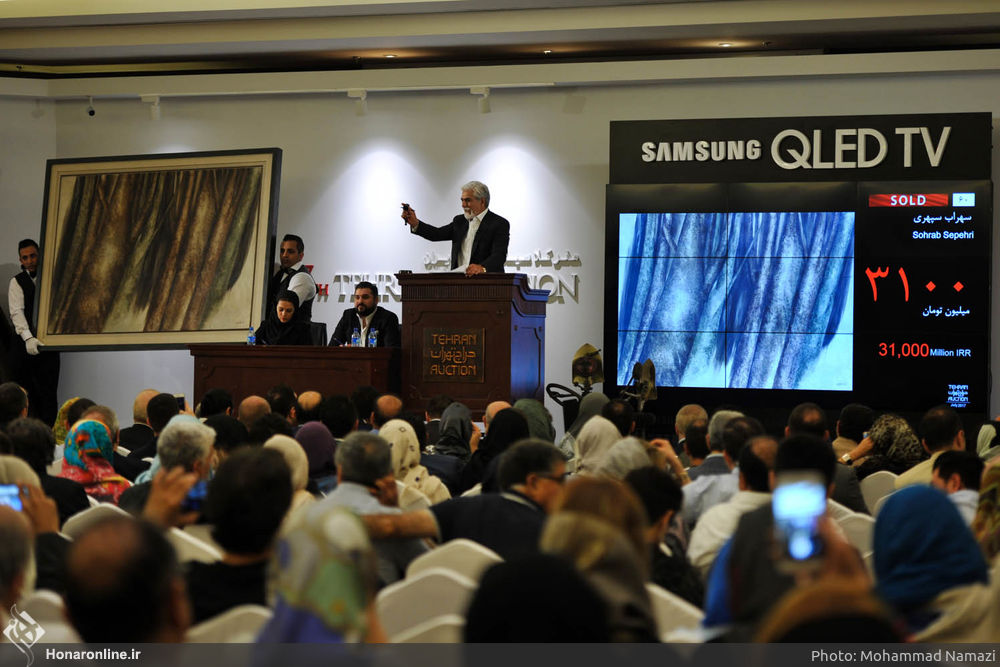
Similar to the past two editions, the top bid was an untitled painting from the ‘Tree Trunk’ series by the legendary poet and painter Sohrab Sepehri (1928-1980). Estimated at $660,000-930,000, it went under the hammer for $825,000, and was named the most expensive painting throughout the Iran’s art history.

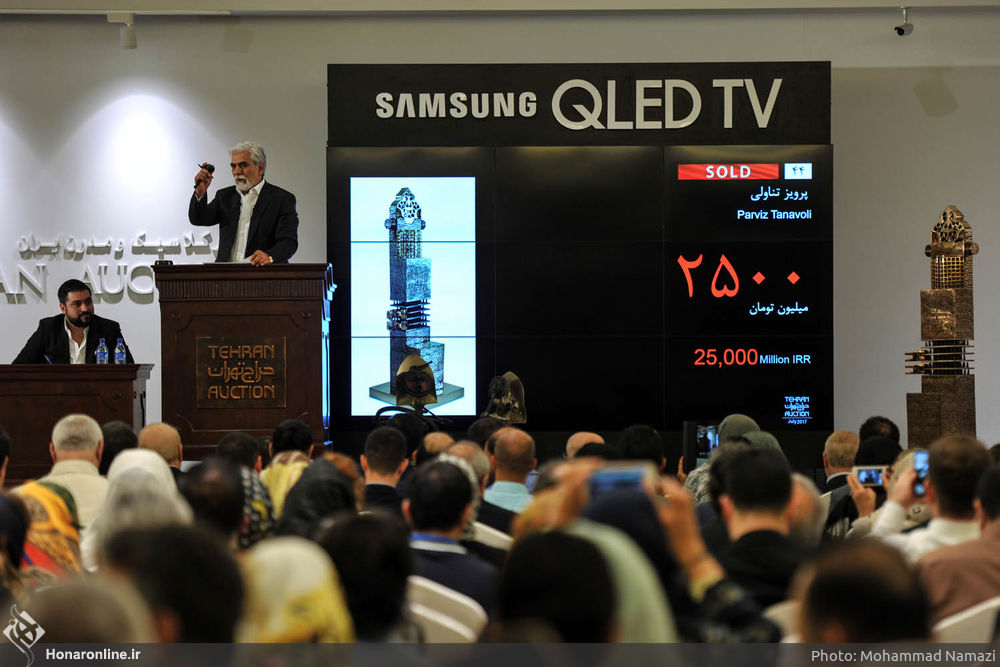
Over 70 Artworks Sold at 7th Tehran Auction for $7mA bronze sculpture titled ‘Poet and Cage’ by the sculptor, painter Parviz Tanavoli, 80, (with the base price of $530,000-$800,000), received the second highest bid and was sold for $665,000.
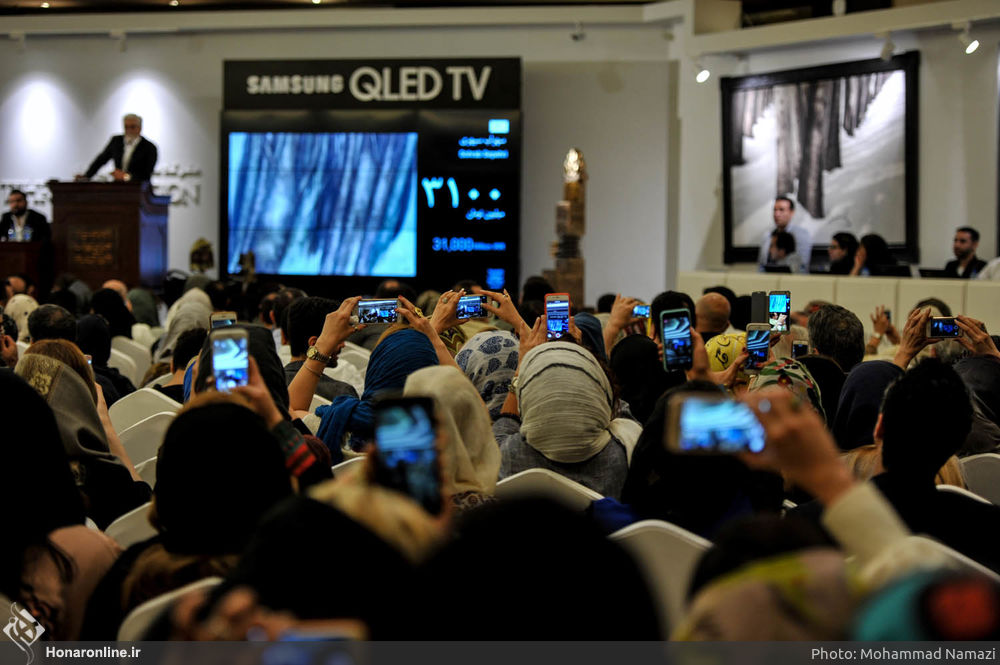
Two works were jointly placed on the third place, both with a final bid of $320,000. They were a painting by painter, sculptor Bahman Mohasses (1931-2010) titled ‘Blind Eagle’ and another oil on canvas work from Sepehri’s ‘tree trunks’ series.

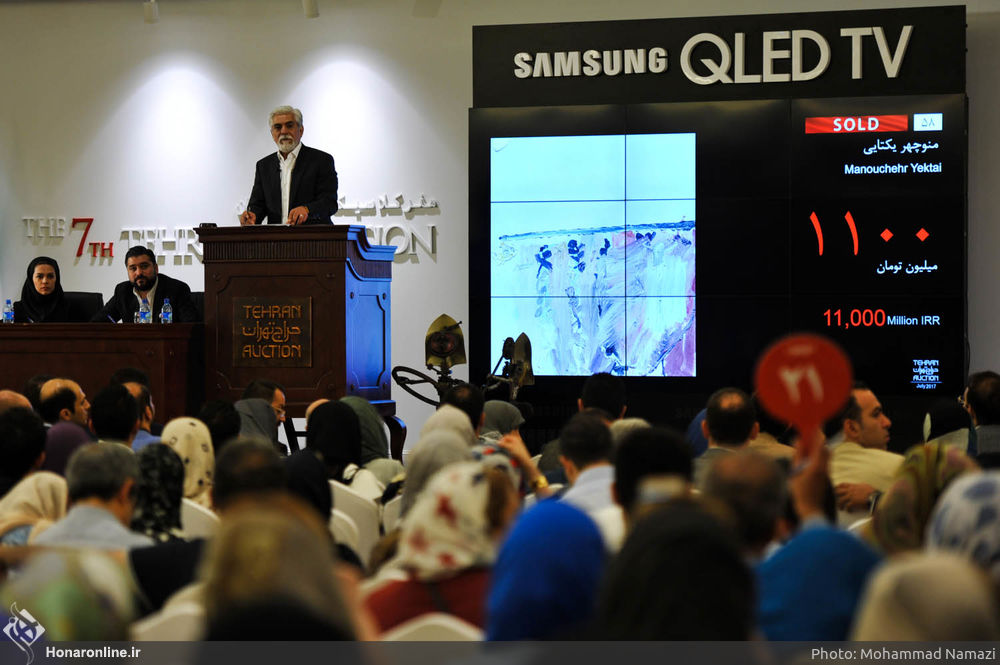
The 6th spot was also shared by two paintings. A 135-year-old painting by the most renowned Persian painter of the late 19th century Mohammad Ghaffari, better known as Kamal-ol-Molk (1859-1940) and a work by abstract expressionist Manouchehr Yektai, 94, both went under the hammer for $305,000.

The rest of the works were sold at prices lower than $265,000 (10 billion rials).

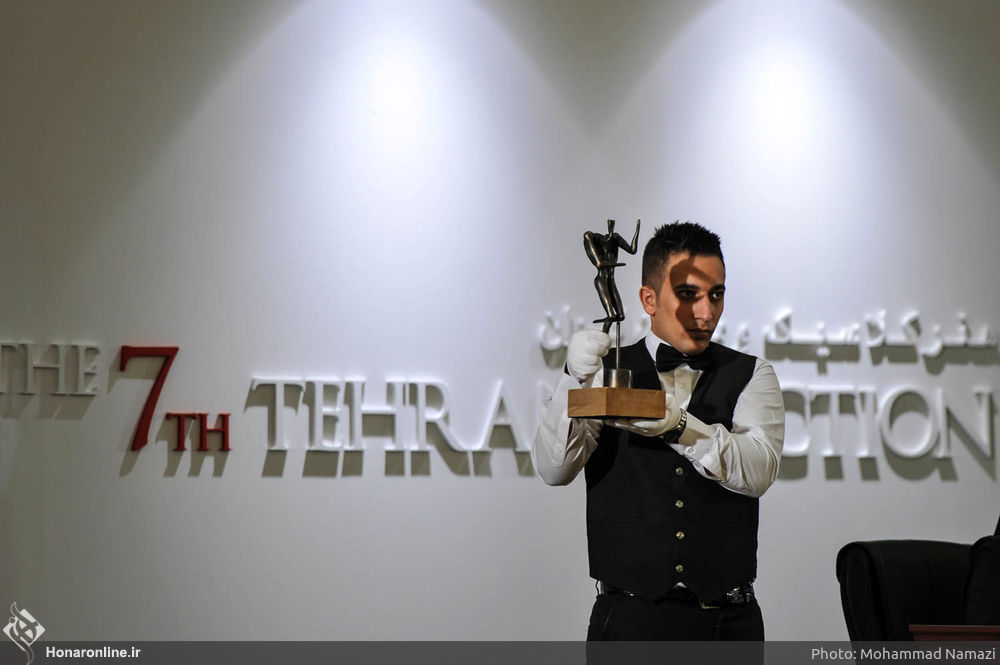
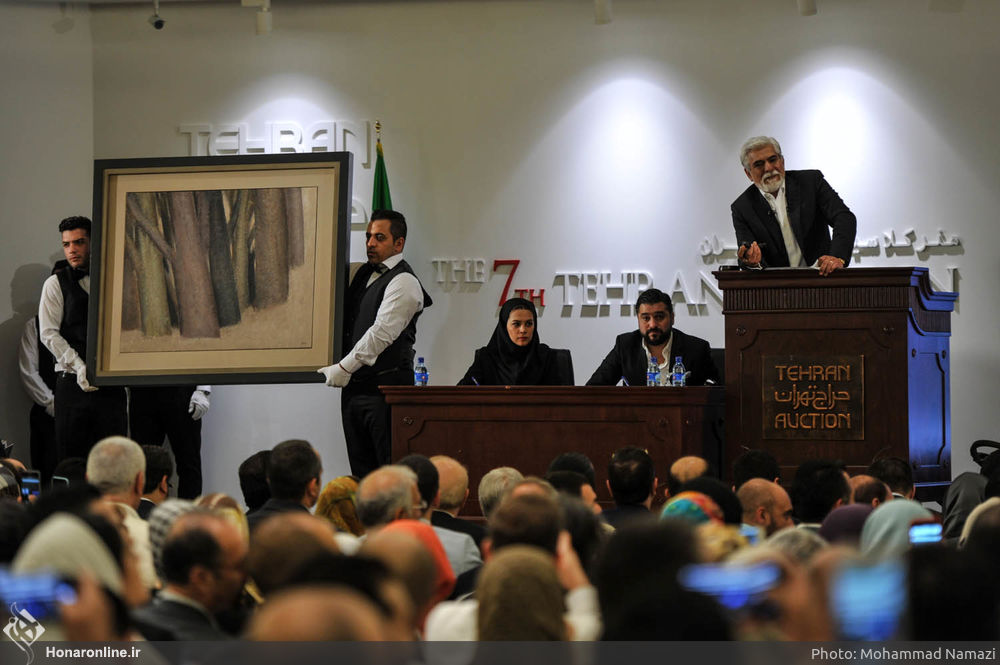
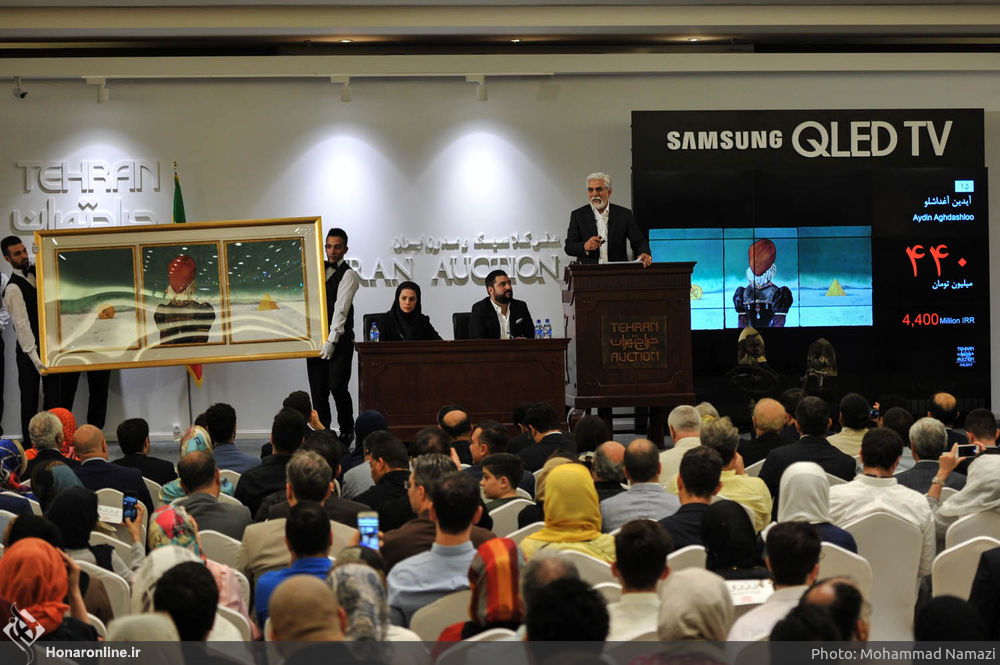
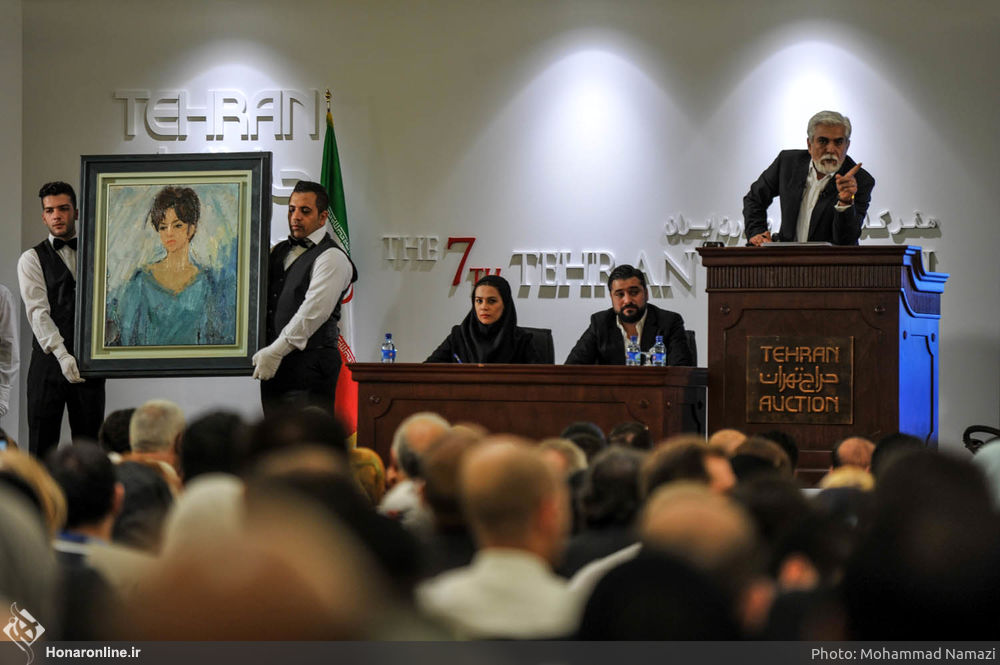
Like last year, actor, screenwriter, director and TV presenter Hossein Pakdel was the auctioneer. A the beginning of the event, he pointed to the first anniversary of the renowned Iranian auteur and photographer Abbas Kiarostami, who passed away last July, and said, “ Kiarostami is always present in Iran’s art, so we start the seventh Tehran Auction with a piece from his photography  collection.

Over 70 Artworks Sold at 7th Tehran Auction for $7mTherefore, Kiarostami’s photo from his ‘Snow White’ series was the first work put on auction. Originally offered for $40,000-55,000, it was eventually sold for $60,000.
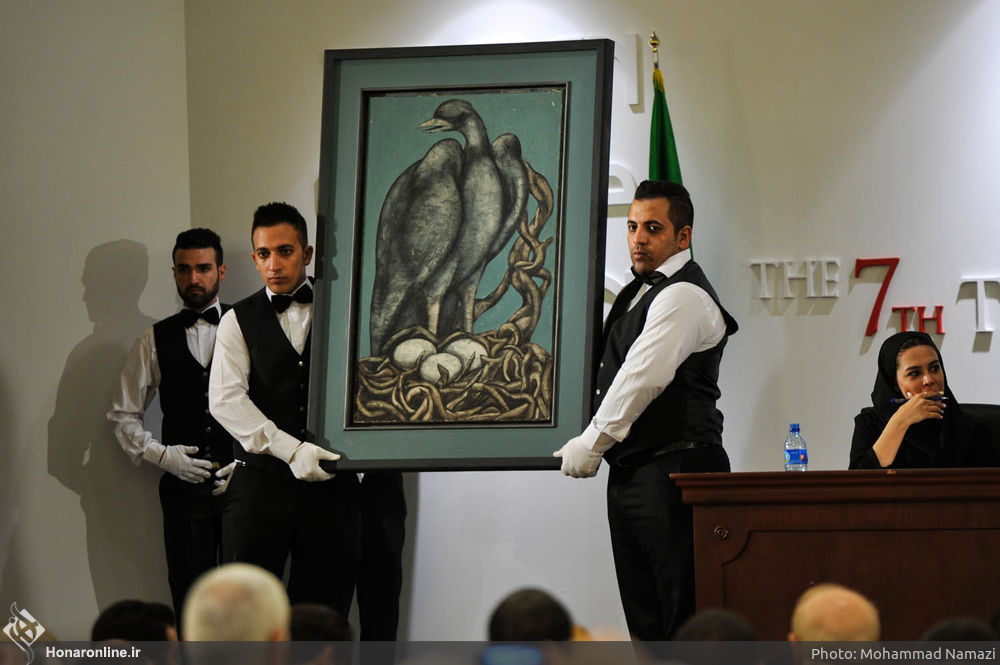
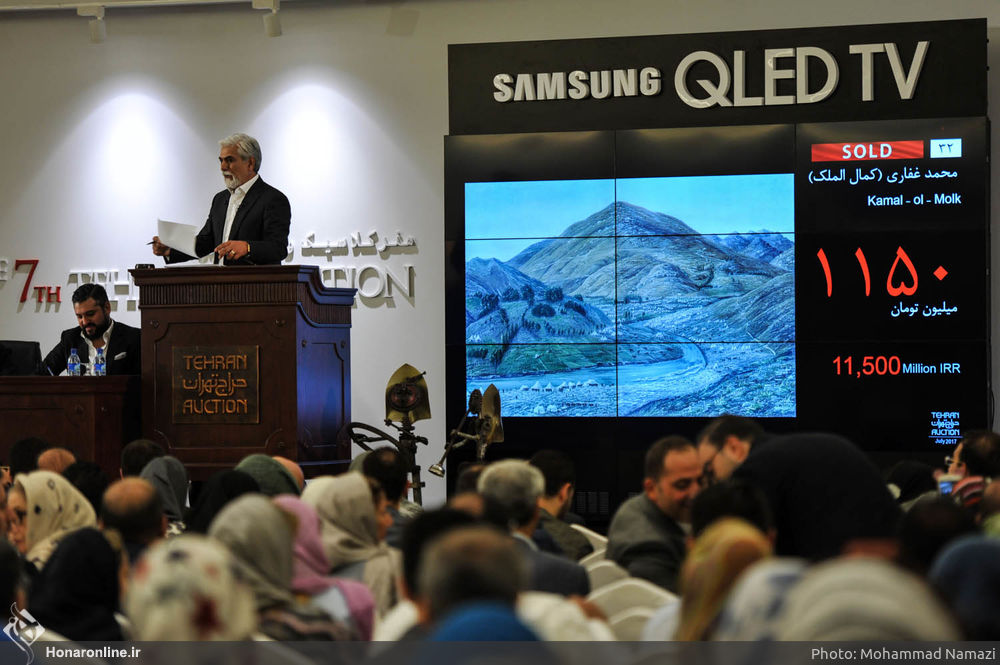
Two works at the event were purchased by the art deputy of the Ministry of Culture and Islamic Guidance. They were Kamal-ol-Molk’s painting and a black-and-white painting by modern art painter Behjat Sadr (1924-2009) which was sold for $70,000.
Attending the auction Ali Moradkhani, the deputy minister, said that the pieces were purchased to be added to the treasured collection of Tehran Museum of Contemporary Art.
The Tehran museum has more than 4,000 items that include 19th and 20th century world-class Iranian, European and American paintings, prints, drawings and sculptures, from almost all artistic periods and movements.

At this year’s edition of the auction, 20 works went under the hammer at a price higher than the maximum value of the basic estimation and the rest received bids within the estimated prices.

Tehran Auction is a national endeavor to address the increasing interest in modern and contemporary Iranian art and facilitate the acquisition of the best quality works in reliable ways.

The first of its kind in Iran, Tehran Auction was launched in 2012 as a private, independent initiative to introduce the best of Iranian art ranging from established and emerging Iranian artists to Iranian art collectors and global buyers.

It also aims to support the domestic art market as a key basis for the international market. Tehran Auction works widely with Iranian art galleries and collectors to ensure a vast and strong selection of paintings, sculptures and photographs.

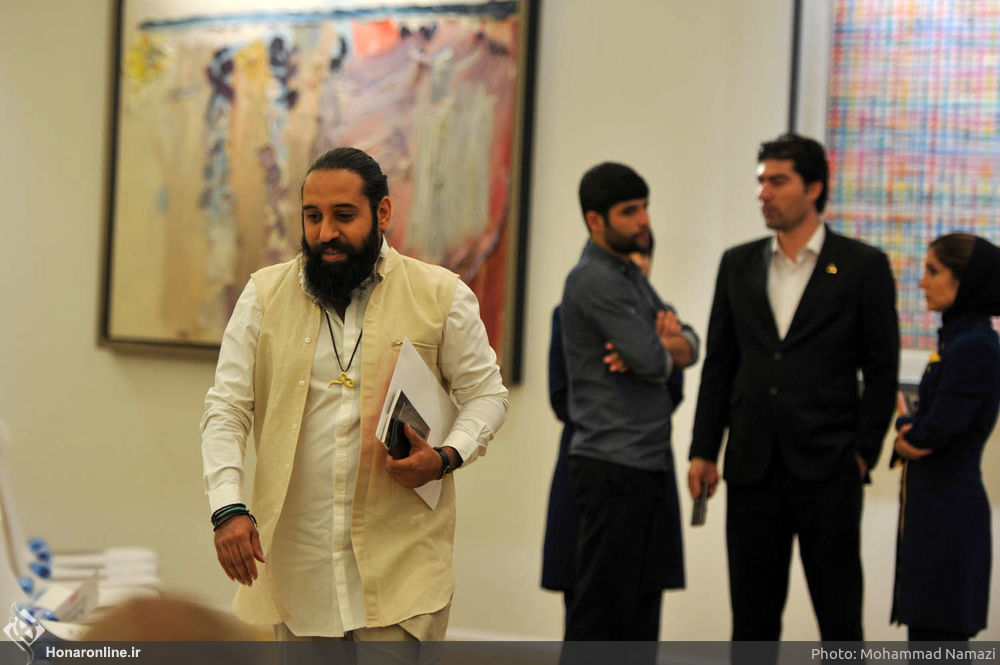
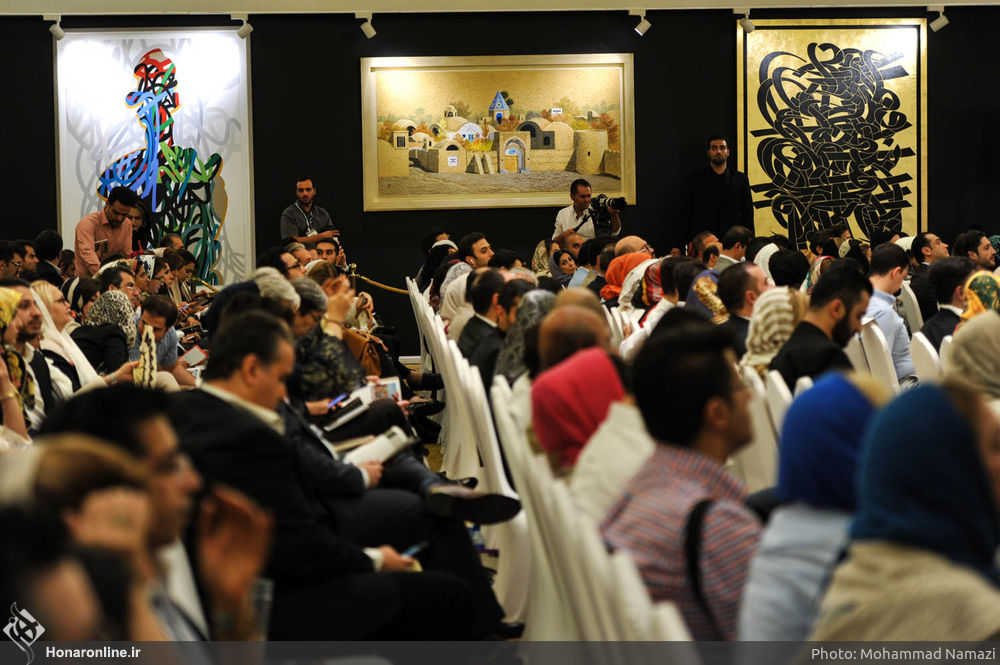
Here are Honar Online’s photos of the auction:

Iran Launches Portal to Promote Freedom of Information (FOI)

Free Access to Info

The portal for dissemination of, and free access to information was inaugurated on July 8 after eight months of research and comparative work on the back of efforts by the Iranian Information Technology Organization (ITO).

The ceremony was attended by Minister of Communications and Information Technology Mahmoud Vaezi as well as Minister of Culture and Islamic Guidance Reza Salehi Amiri, according to a Farsi report by ISNA.

The system became operational after the law on Freedom of Information (FOI) was put into practice. The law on dissemination of, and free access to information was announced in 2009, and its executive directives were drawn up five years later in 2014.

After eight months of research, the portal became operational on a trial basis last month, and was officially unveiled on July 8, 2017.

Organizations and institutions are obliged to provide the information that people need in maximum 10 days via the system.

Iran Launches Portal to Promote Freedom of Information (FOI)
Minister of Communications and Information Technology Mahmoud Vaezi, Minister of Culture and Islamic Guidance Reza Salehi Amiri, and the secretary of the Commission for Publishing and Providing Free Access to Information, Hossein Entezami, in a ceremony on July 8 to launch a portal that gives Iranians free access to information.

“Following the launch of a portal for dissemination of, and free access to information, it’s been 45 days now that people have been able to receive the information they need,” said ICT Minister Vaezi in the unveiling ceremony.

“Different institutions and organizations also must feed their information into this system,” he added.

He said the trial period has helped the ministry detect the system’s weak points and shortcomings.

“Free access to information is a national issue. If a government wants to remain democratic, it should be accountable and have a tool which can establish a bridge between officials and people. This system is one of those instruments.”

The minister said access to information will contribute to transparency and elimination of corruption, saying these features are part of democracy.

“Free access to information is a two-way process, which means not only should institutions provide people with their information, but also people should use that information properly,” said Vaezi.

He then touched upon the limitations which exist in the way of free access to information.

“The first restriction is national interests and security as well as the peace. The second limitation is people’s privacy as well as companies’ trade documents. The third limitation is the information which is effective in decision-making,” he said.

Vaezi went on to say that free access to information is nothing new.

140 countries have laws on free access to information, and another 90 countries are seeking to draw up laws in that regard, he noted.

In the meantime, the secretary of the Commission for Publishing and Providing Free Access to Information, Hossein Entezami, said 34 out of 400 institutions to which the law applies have been connected to the system.

He said the majority of institutions and organizations already linked to the system are executive ones, but a number of judicial and legislative bodies have also joined in.

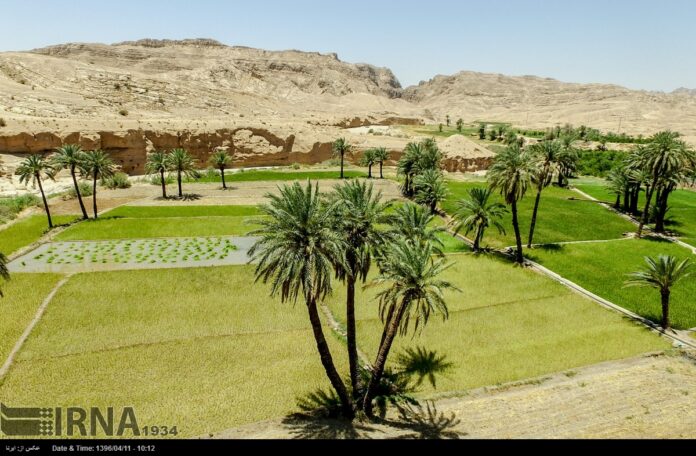
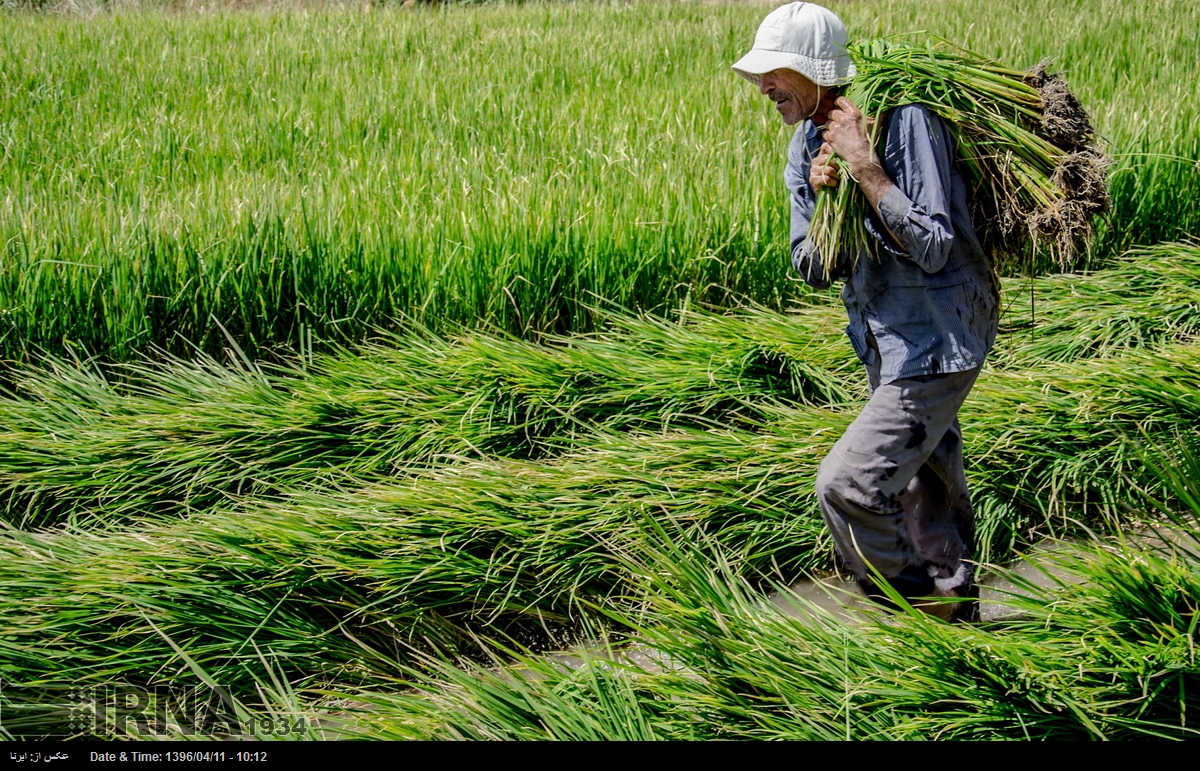
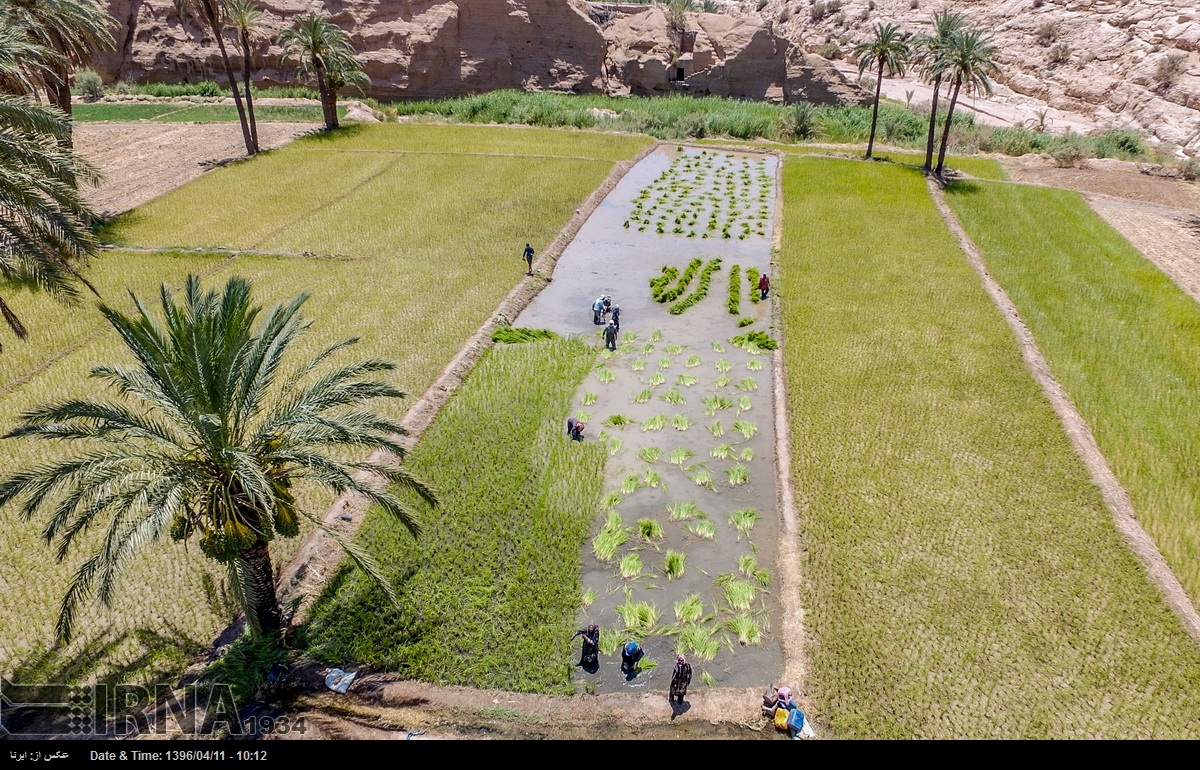
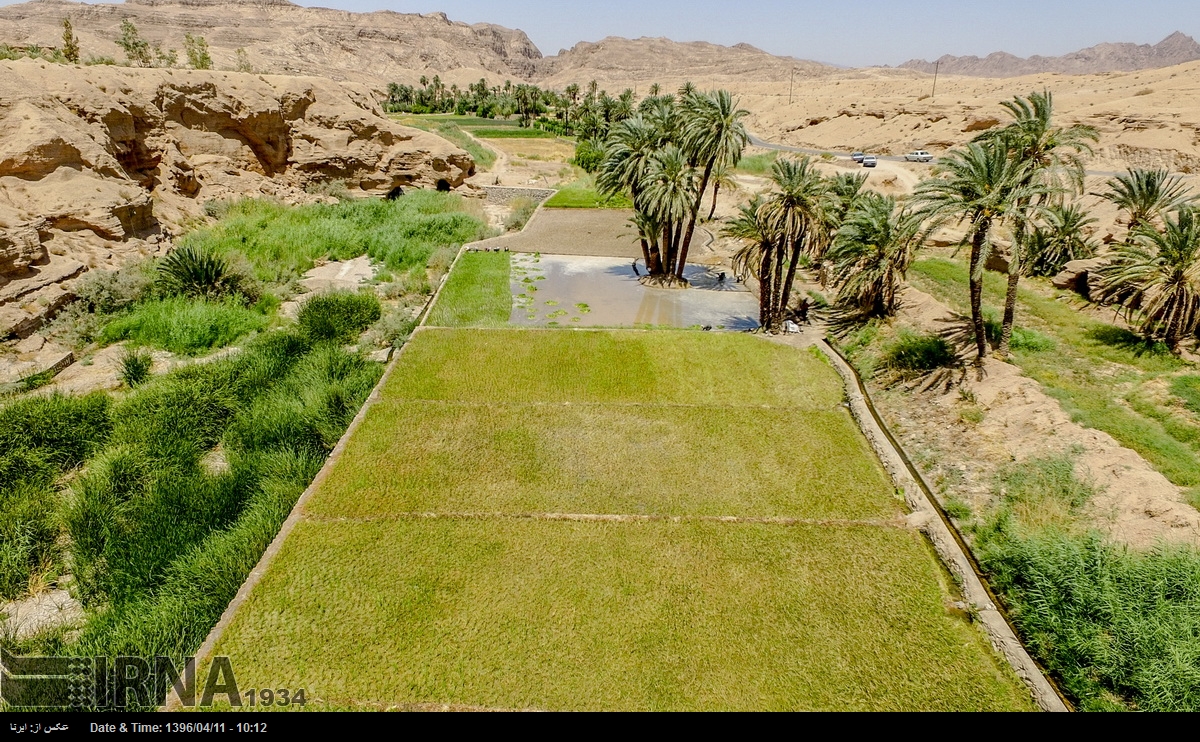
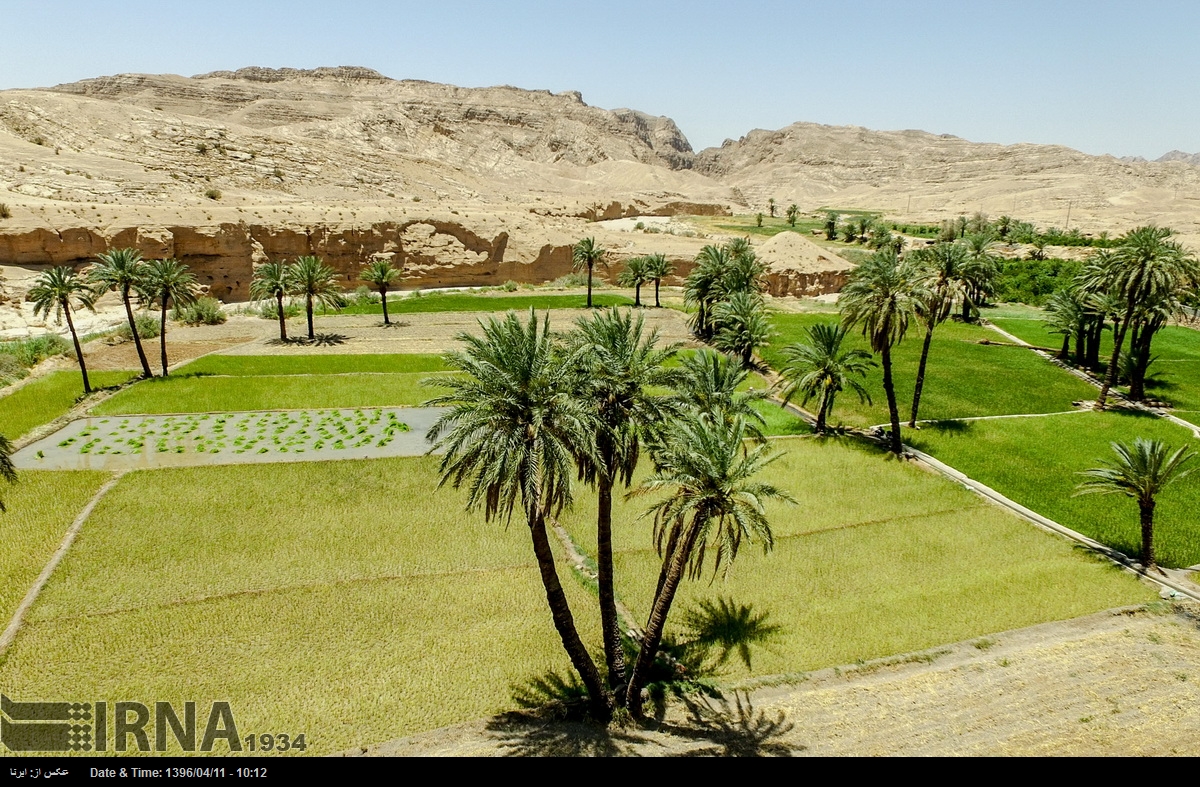
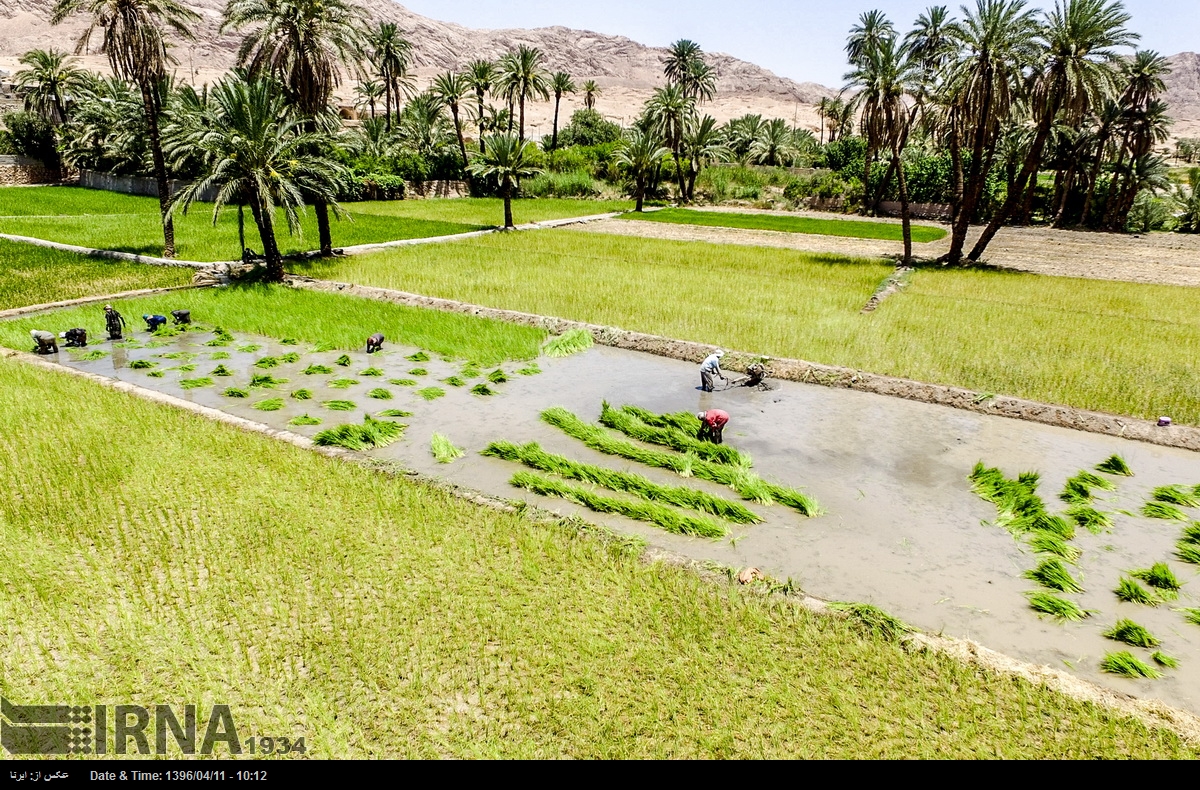
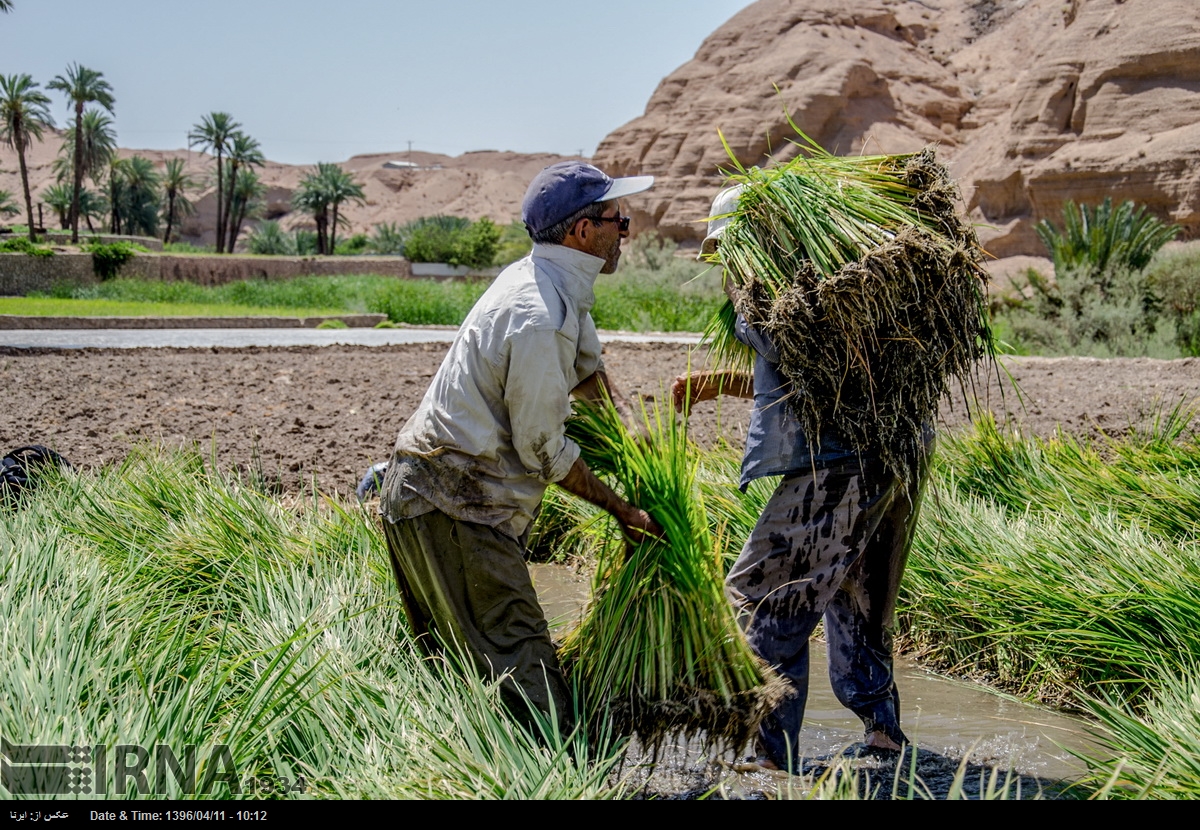
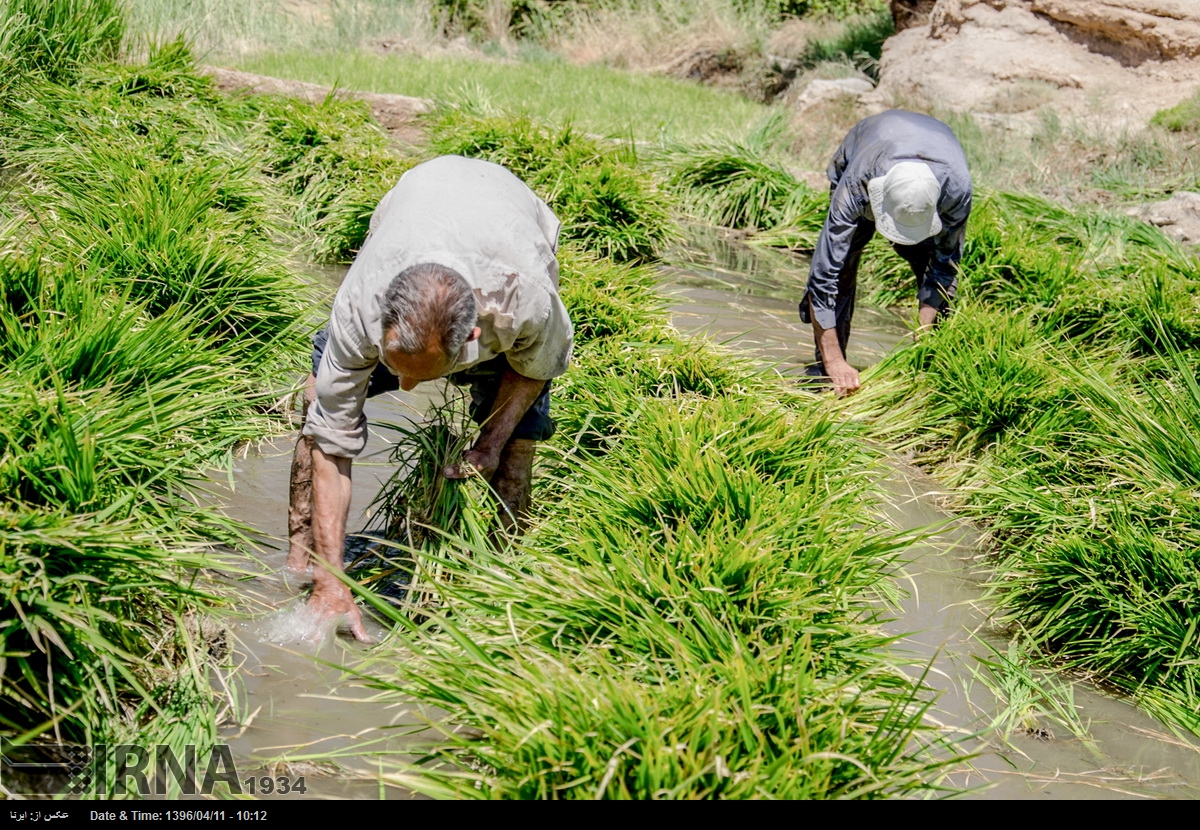
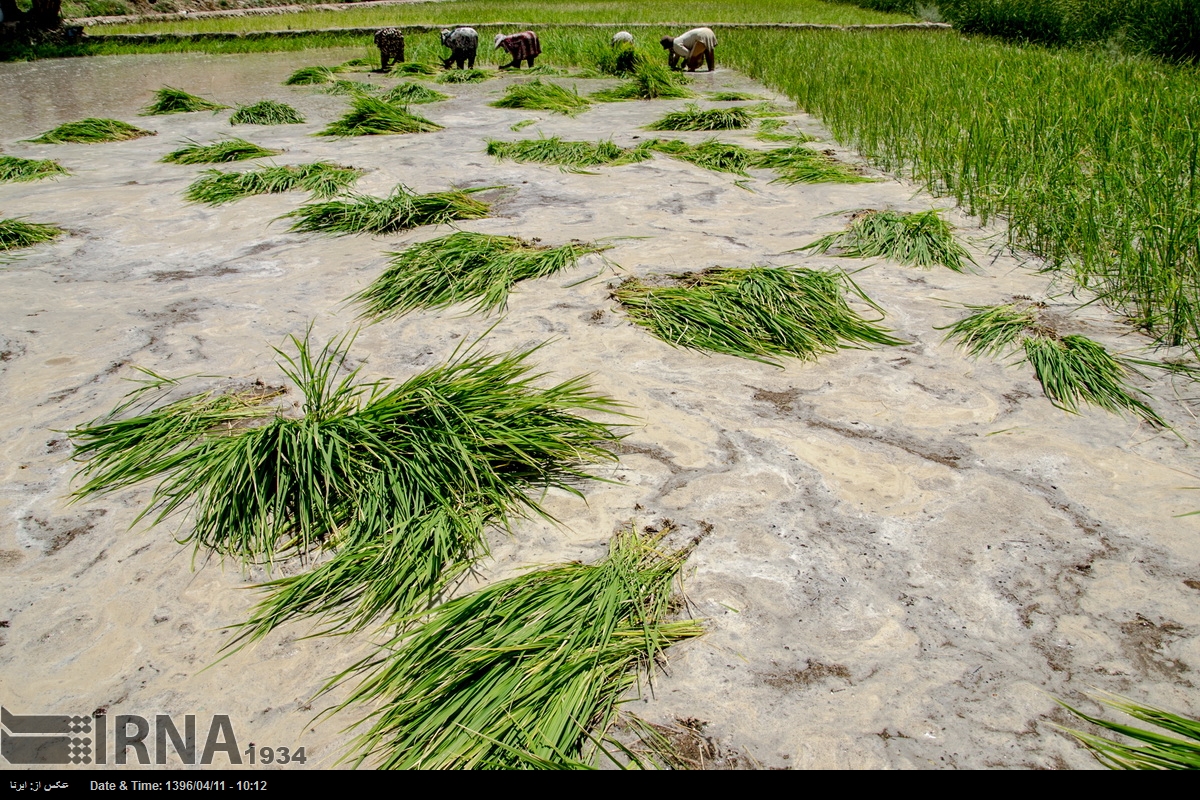
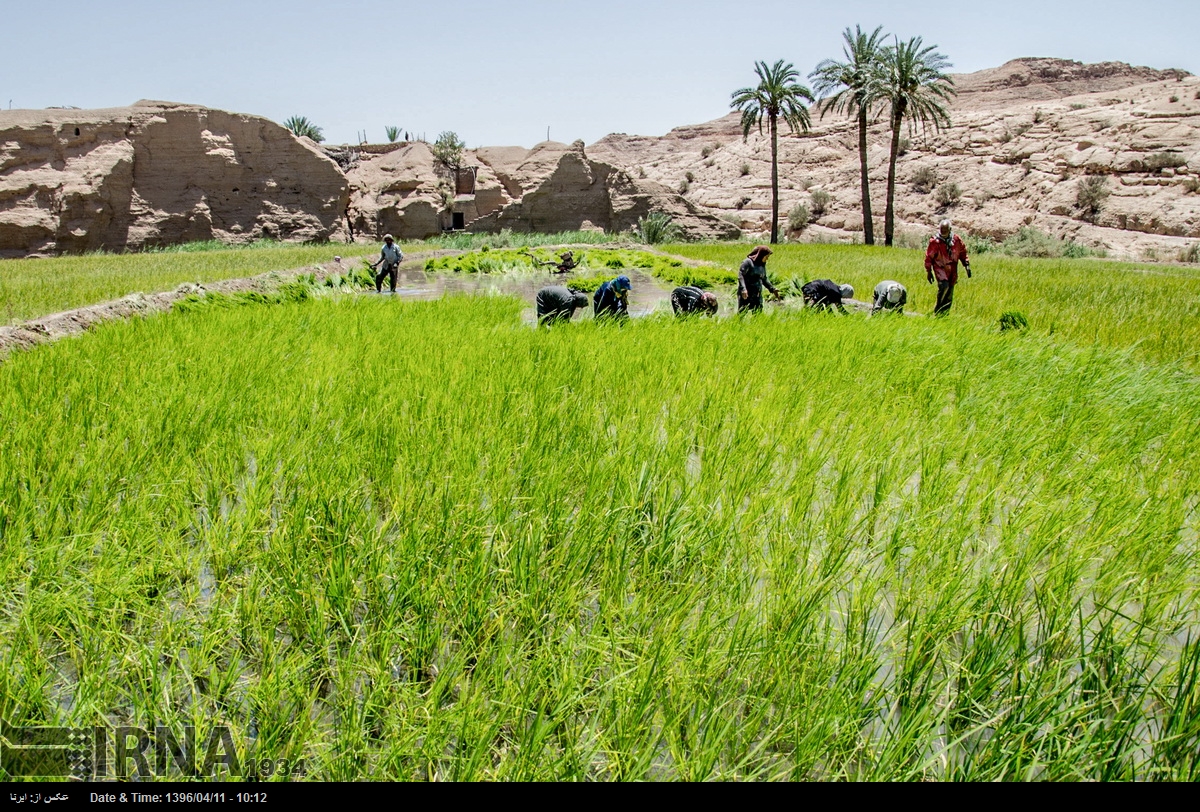
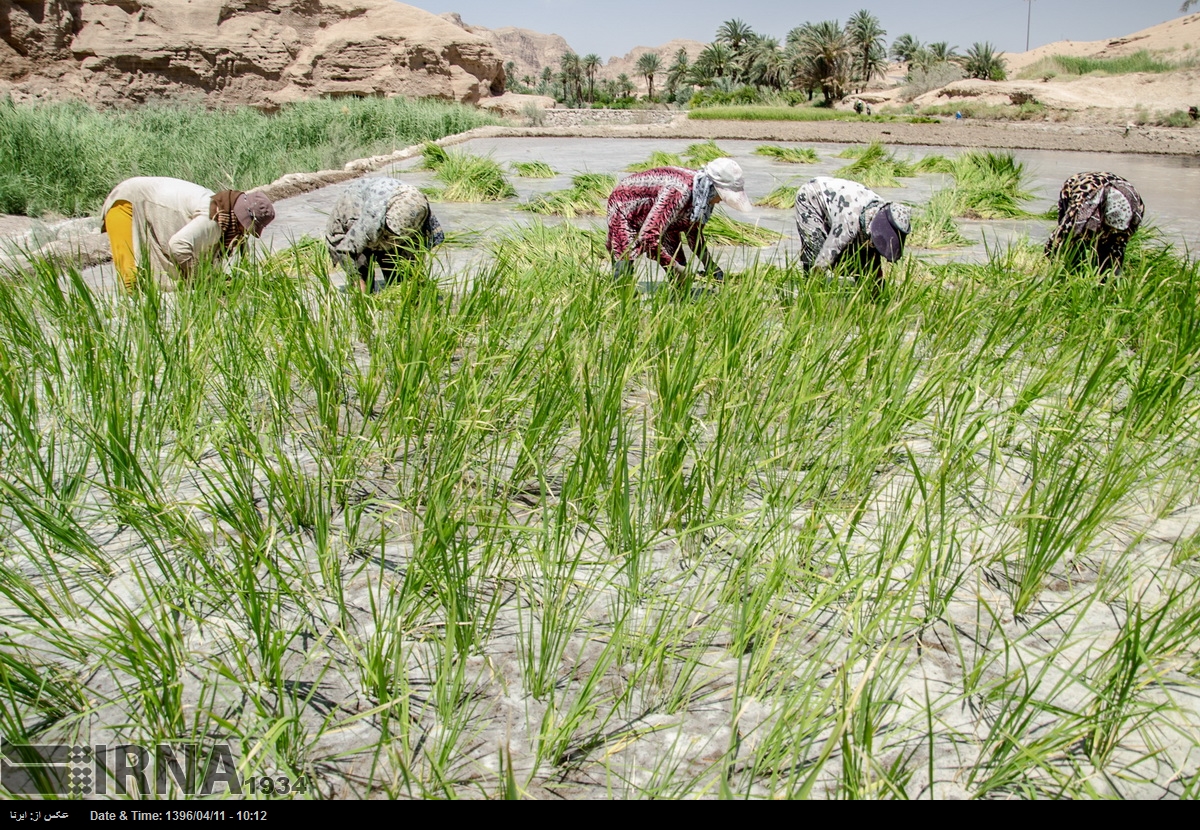
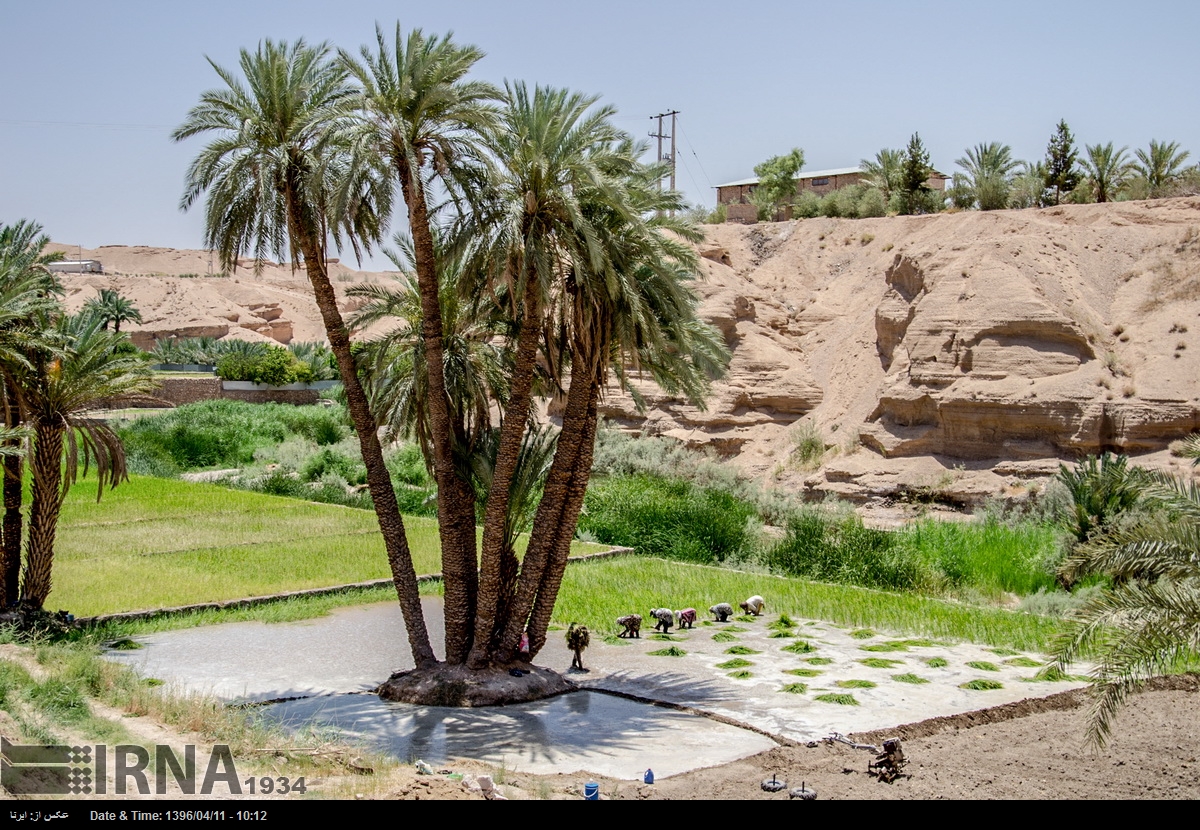
Rice Cultivation in Iran’s Eastern Deserts

Farmers in this arid area produce about 90 tonnes of rice each time. The majority of the rice harvested in Azmighan is used by the villagers.

Here are IRNA’s photos of the fields:

Iran’s Larijani Calls for Investment in Caspian Sea Oil Extraction

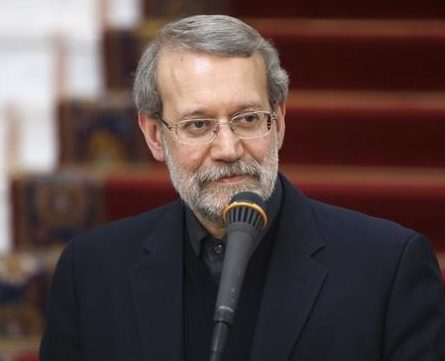
ALi Larijani

In an address to a ceremony in Gilan province, Parliament Speaker Ali Larijani said investing in oil extraction in the Caspian Sea should be started.

“There is no concrete reason to stop the investment. So, we need to take seriously the development of oil industry in the Caspian Sea,” he added.

There are great capacities for improvements in various fields, he noted, according to a Farsi report by YJC.

“I think most of the problems including budget planning and optimization of water resources can be tackled through detailed programmes. Petrochemical industry is one of the most appropriate grounds for investment in Gilan Province which can create lots of jobs. The officials have to attract private sector for further investments in this field. The lawmakers are ready to provide the relative officials in the province with the required credits to press ahead with the projects.”

The parliament speaker also referred to the rainy seasons in the province and said building dams particularly rubber ones on the region’s rivers should be taken seriously.

“Meanwhile, accomplishing the railroad project of the region is highly significant,” he said.

The Iranian senior lawmaker also called for launching other construction projects in various fields in Gilan province including turning rubbish into electricity and said the private sector as well as Iranian and foreign investors can play a key role in the accomplishment of the projects.


Iran Foils Enemy Plots against Its Development

Larijani also referred to the US and its regional allies’ support for terrorism and added the enemies have been seeking to inflict a blow on the Islamic Republic of Iran over the past decades.

“The mentioned countries’ efforts to embroil us into dangerous situations have backfired,” he said.

Pointing out that the enemies are still hatching new plots against the Islamic Republic, he said the officials should not be discouraged because the Islamic Republic has a good strategic plan to overcome the national problems.

Larijani said Iran is closely monitoring the US Senate’s plan for obstructing Iran’s national projects.

“The US officials thought they can throw a wrench in our programs, but all to no avail. We can overcome and foil their plots by accurate planning.”

“We should show the US officials that such moves will cost them much. Today, we, the lawmakers, are working on a plan to give a crushing response to the US inappropriate behaviour towards the Islamic Republic,” he added.


Copyright Bill High on Iran Parliament’s Agenda: Minister

Copyright Bill Top on Iran Parliament’s Agenda: Minister

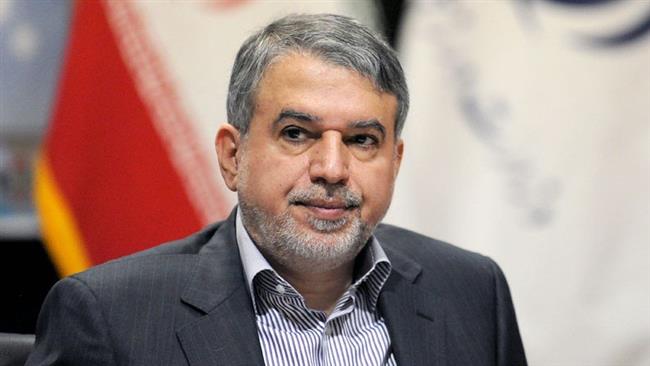
Reza Salehi AmiriIran’s Minister of Culture and Islamic Guidance Reza Salehi Amiri says the lawmakers will put the copyright bill on their list of priorities as part of a larger plan to create more jobs in the computer game industry over the next five years.
Salehi Amiri made the remarks on the sidelines of Tehran Game Convention (TGC) exhibition, according to a Farsi report by ISNA.

The Iranian official said Tehran recently hosted a national conference on the intellectual property and the Culture Ministry had put great efforts into having the copyright bill passed in the parliament.

“Just recently we had a meeting with the members of Legal and Judicial Commission of the parliament. We also asked them to put our proposed bill on the copyright on their list of priorities. They have promised to bring the bill to vote within the current month,” he noted.

He expressed hope that the lawmakers would pass the bill by the end of current Persian calendar year (mid-March), saying Iran’s presence in the international markets in the fields of books, computer games as well as other publishing goods hinges on the approval of the bill.

Copyright Bill High on Iran Parliament’s Agenda: MinisterSalehi Amiri also referred to the tax on foreign computer games saying Iran Computer and Video Games Foundation has just recently drafted a bill on computer games tax. The issue has been studied in details in the Planning Department of the Culture Ministry.
“Now we are going to send the bill to the government. If approved by the government, we will follow it up in the parliament.”

He said the Ministry of Culture and Islamic Guidance is seeking to make the Iranian society more familiar with the computer games.

“Video game is a thriving industry with a huge capacity for job creation and high turnover.”

Copyright Bill High on Iran Parliament’s Agenda: MinisterThe minister also added the industry has a cultural significance as well due to its direct effects on family members.
“Our main policy is to provide the Iranian youths with direct legal and financial support to gain further shares of Iran’s domestic market,” he underpinned.

Salehi Amiri went on saying that to achieve the goal, the relevant organizations need to adopt three main measures: 1) Providing the youths with legal and financial support, 2) Establishing an appropriate ground for further production and job creation inside Iran, and 3) Organizing international competitions with the aim of holding a contest between Iranian computer game developers and their well-known international counterparts.

“Today most shares of our market are controlled by the foreign developers. Today, Iranians have only between 10 to 15 percent of the market shares. To make a change, we need to take control of at least half of the market’s shares within the next five years,” he said.

He once again urged further support for young Iranian developers, saying one of the main aims of TGC Exhibition is to hold fair competitions between Iranian and foreign companies.

“Today, our youths have already gained some shares of foreign markets. Now, we should pave the way for their further progress in the markets,” he added.

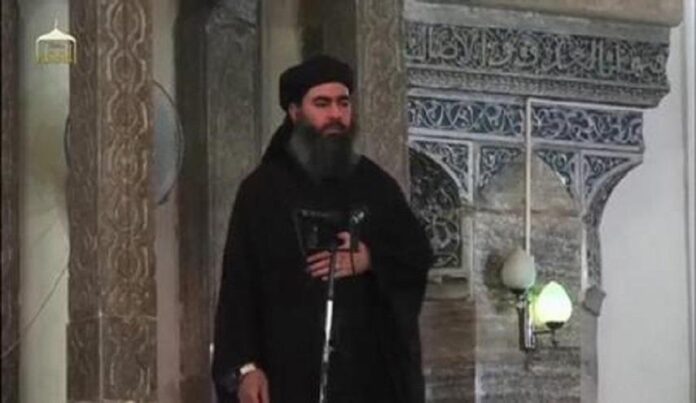
Mosul Liberated 3 Years after Al-Baghdadi Proclaimed ‘Caliphate’

Baghdadi

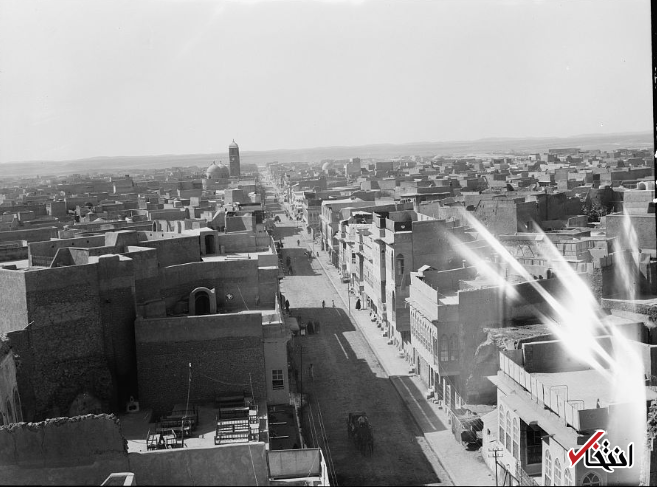
After over 1,000 days of incessant fight, on July 8 Iraqi forces managed to fully liberate Mosul following the destruction of the ISIS’ last few remaining strongholds in the northern Iraqi town’s Old City, and clearing the area of the terrorist group’s last few hundred elements.

Almost on the same day three years ago, the ISIS leader al-Baghdadi, who is now reported to be dead by some media sources, declared himself “caliph” or leader of all Muslims, in his only public appearance in the Great Mosque of al-Nuri.

Mosul Liberated 3 Years after Al-Baghdadi Proclaimed 'Caliphate'In June 2017, the mosque, one of Islam’s most venerated sites, along with al-Hadba minaret, was destroyed by explosions as Iraqi forces battled the ISIS terrorists who had holed up nearby.
Last week, the Iraqi Prime Minister, Haider al-Abadi, in a message on the occasion of retaking the Great Mosque of al-Nuri and al-Hadba minaret from the terrorists, said the ISIS’ bombing of the mosque and minaret, two of their spiritual symbols, had been a formal declaration of their defeat in the fight for Iraq’s second-largest city.

This came as a number of the city’s streets and alleys, then, had still been under the ISIS’ control which were fully liberated later during operations by the Iraqi forces on July 6 and 7. The armed conflicts in Mosul have now completely come to an end.

Following the Iraqi capital of Baghdad, Mosul is the country’s most populated city located in the northern province of Nineveh. It is the economic centre in northern Iraq.

The city was under the ISIS control from June 2014 to July 2017.

The degree of destruction in Mosul is not comparable to that in any other Iraqi region. Earlier, a top UN official for Iraq’s affairs said more than $1 billion would be needed to reconstruct the city following its liberation.

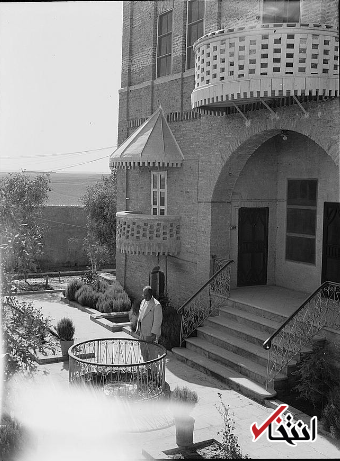
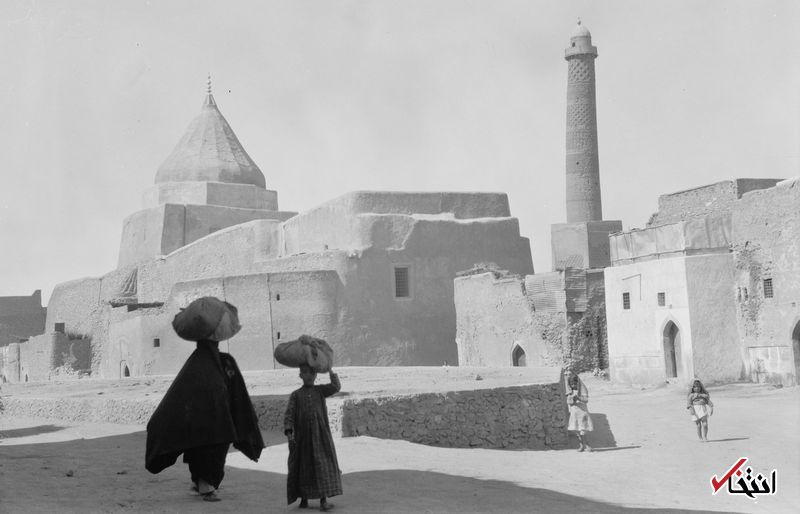
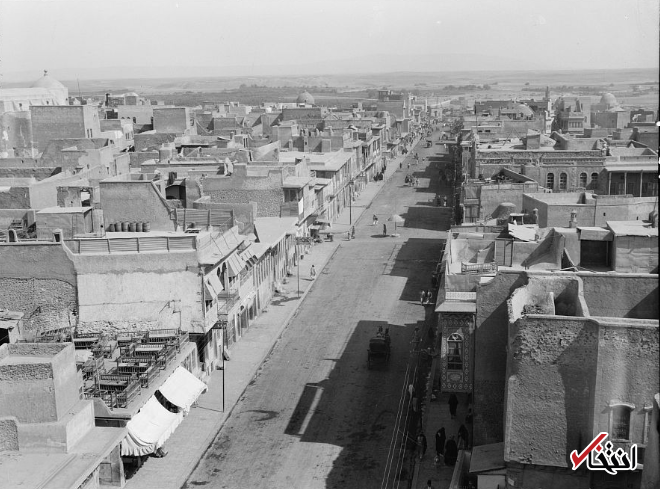
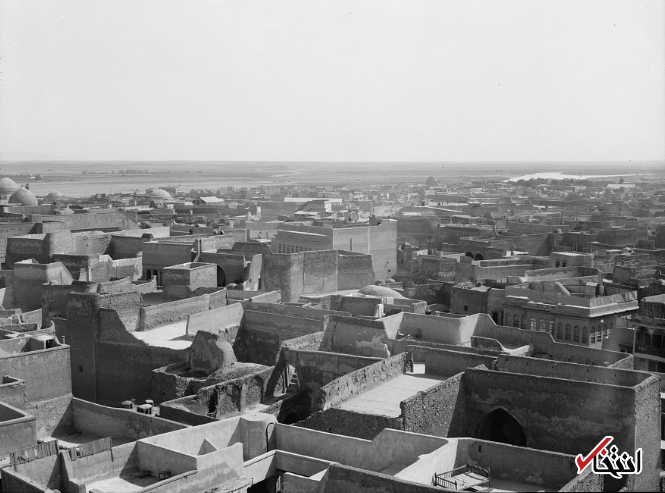
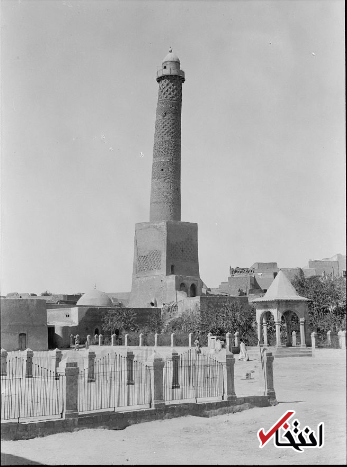
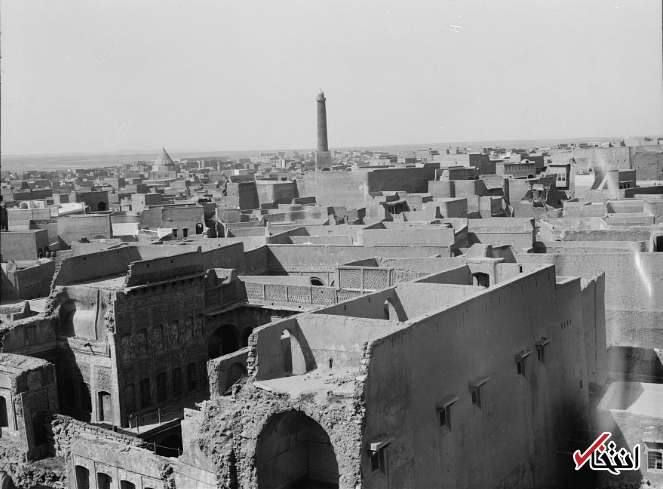
Constructed some 900 years ago, the Great Mosque of al-Nuri and al-Hadba minaret, the oldest of its kind in Iraq, were recently destroyed by ISIS elements.

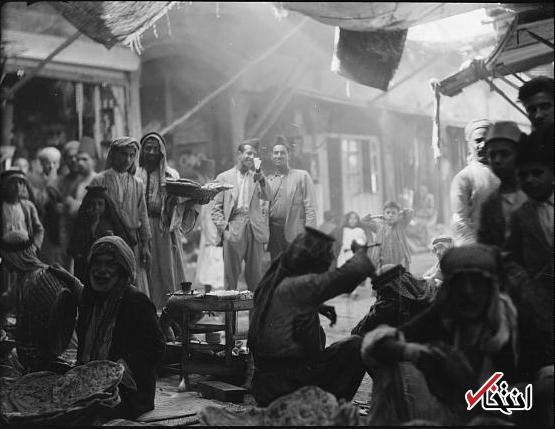
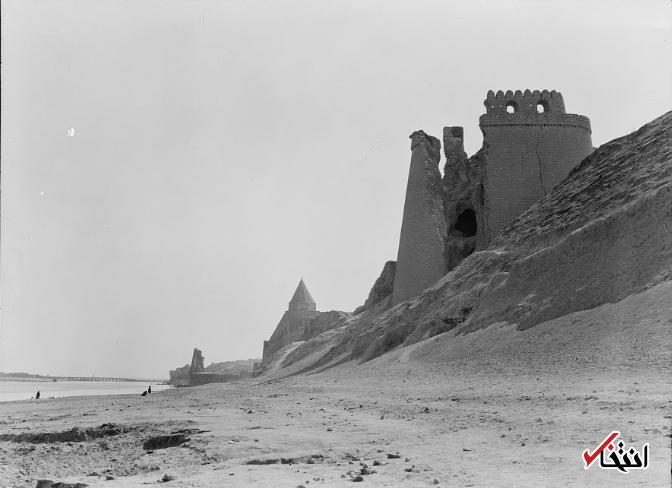
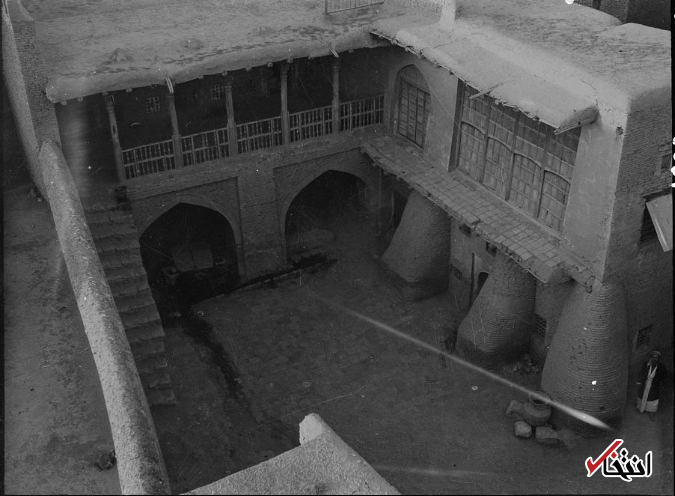
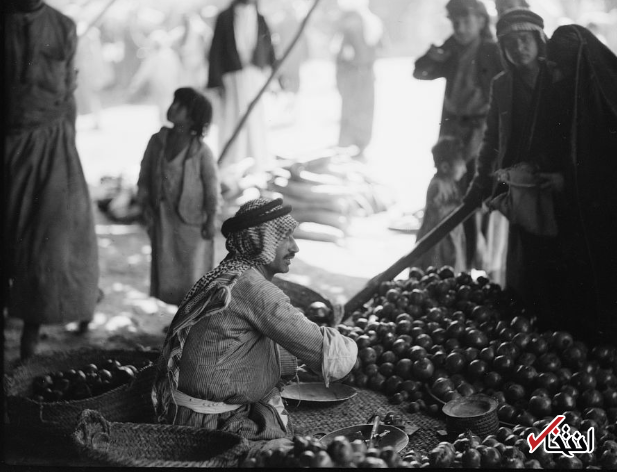
The following photos by the Entekhab news website show the mosque and minaret when they were still in place 85 years ago:

Iranian Artist Turns Milan Drug Hub into Gallery

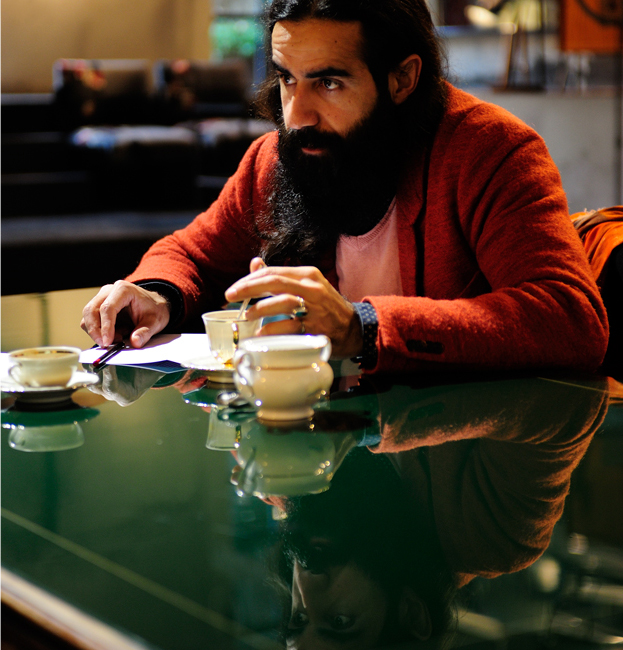
Iranian Artist Turns Milan Drug Hub into GalleryAfter leaving Iran, Mahmoud Saleh Mohammadi began to major in Contemporary Arts in Brera Academy of fine arts in Milan.
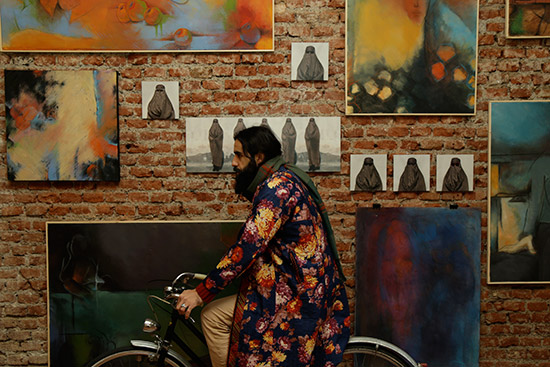
“I chose Milan because I was interested in the contemporary arts. In Iran, I couldn’t study the contemporary arts in depth for various reasons. So, about six or seven years ago, I decided to take up my studies in Milan because it is one of the world’s main cultural cities,” he said.

Throughout his studies, Saleh put his focus on Iranian contemporary arts. “I’m an Iranian who has developed roots in Italy. In contemporary arts, the artists have to get back to their roots. Each artist has his/her own roots.”

He referred to his calligraphy carpets saying his works have been warmly welcomed in Italy. “Most of my students are graphic designers as well as visual artists who are interested in the Iranian culture. The main theme of my class is calligraphy statistics.”

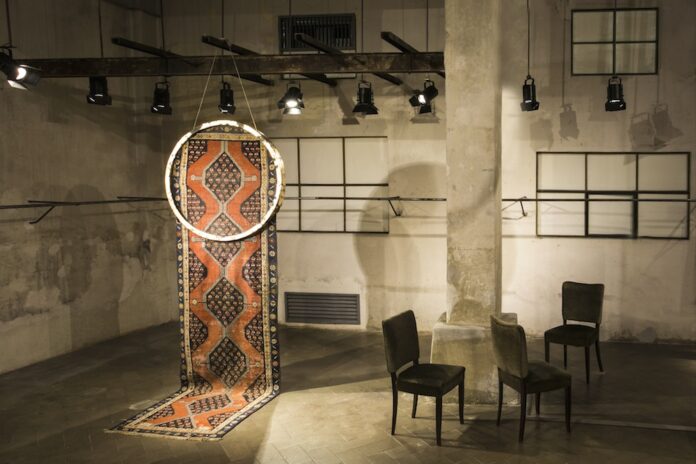
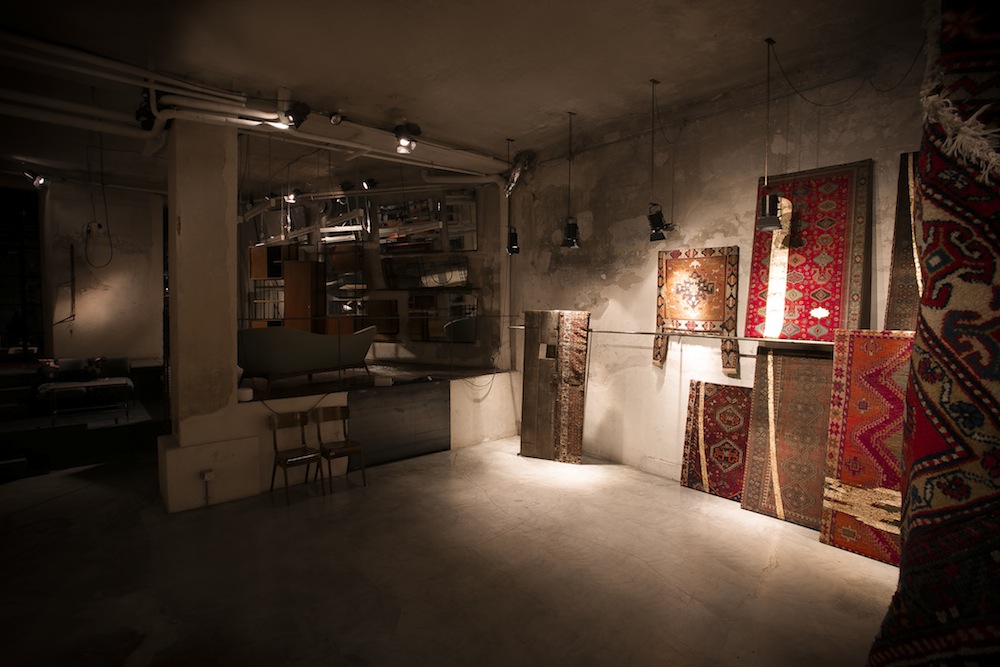
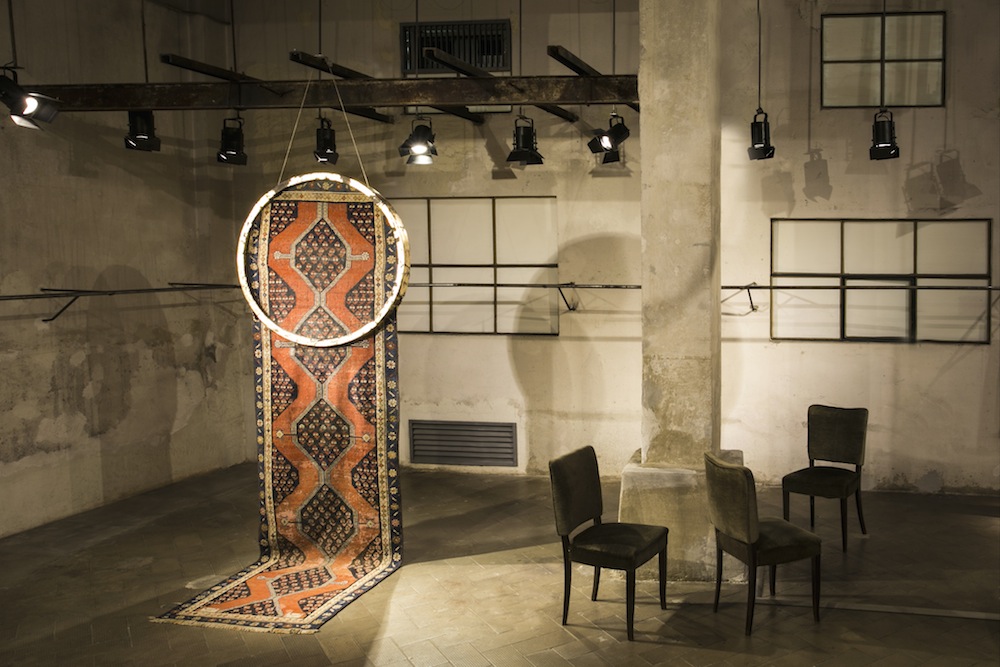
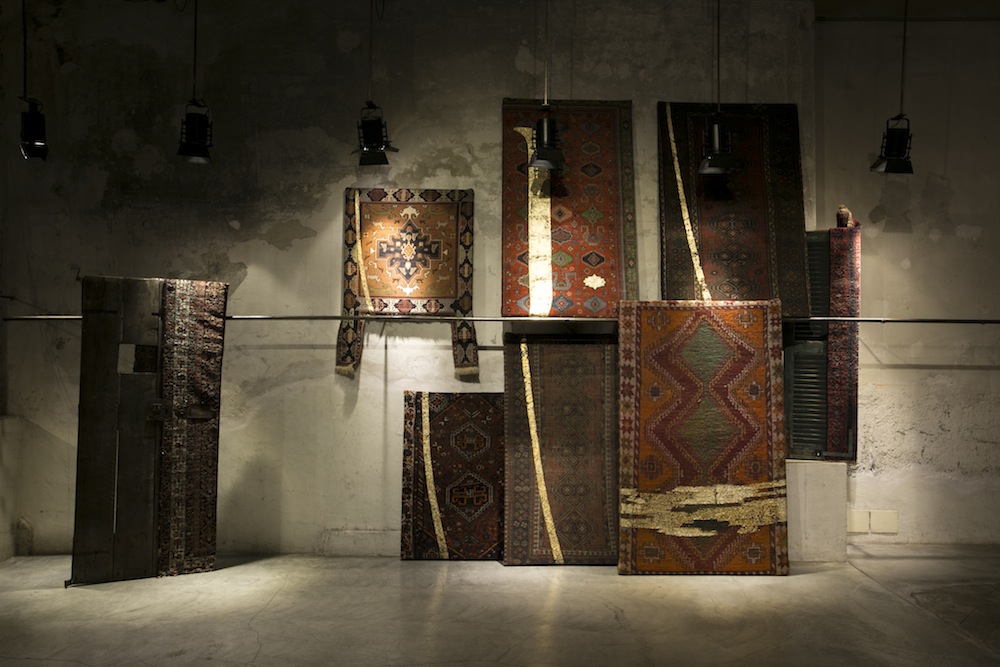
Iranian Artist Turns Milan Drug Hub into GalleryNow carpet calligraphy has distinguished Mohammadi’s ‘Spazio Nour Gallery’ from similar centres in the Italian city.
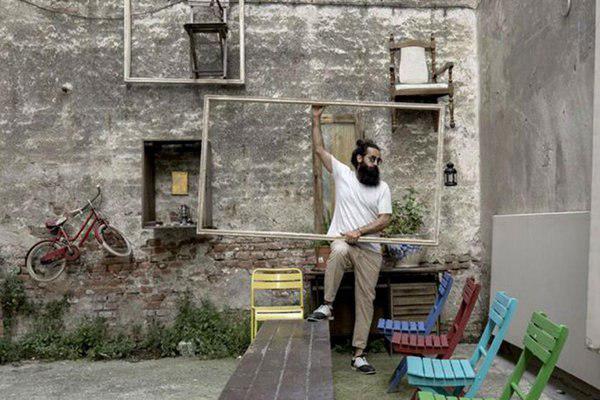
“In Italy, Spazio means space. I’ve used two Iranian and Italian words in the name of my gallery. This is mainly because my works are deeply rooted in both countries,” he said, according to a Farsi report by Mehr.

The gallery is set up in an old area in central Milan. The building in which the gallery is established used to be a drug hub for years. Known as Dark Hole, the building was also used as a hideout for al-Qaeda militants for a while, he added.

“It used to be a horrific building and even the police didn’t dare to enter it. When an ambulance was called in by the residents, the driver didn’t dare to drive into the compound. I saw the rental ad of an apartment in the building on the internet. The annual rent of the apartment was too low.”

Iranian Artist Turns Milan Drug Hub into Gallery“When I arrived in Milan, I had grown beards. At that time, Mahmoud Ahmadinejad was in power in Iran and some of the residents of the building loved him very much. My first name also happened to be Mahmoud,” he added.
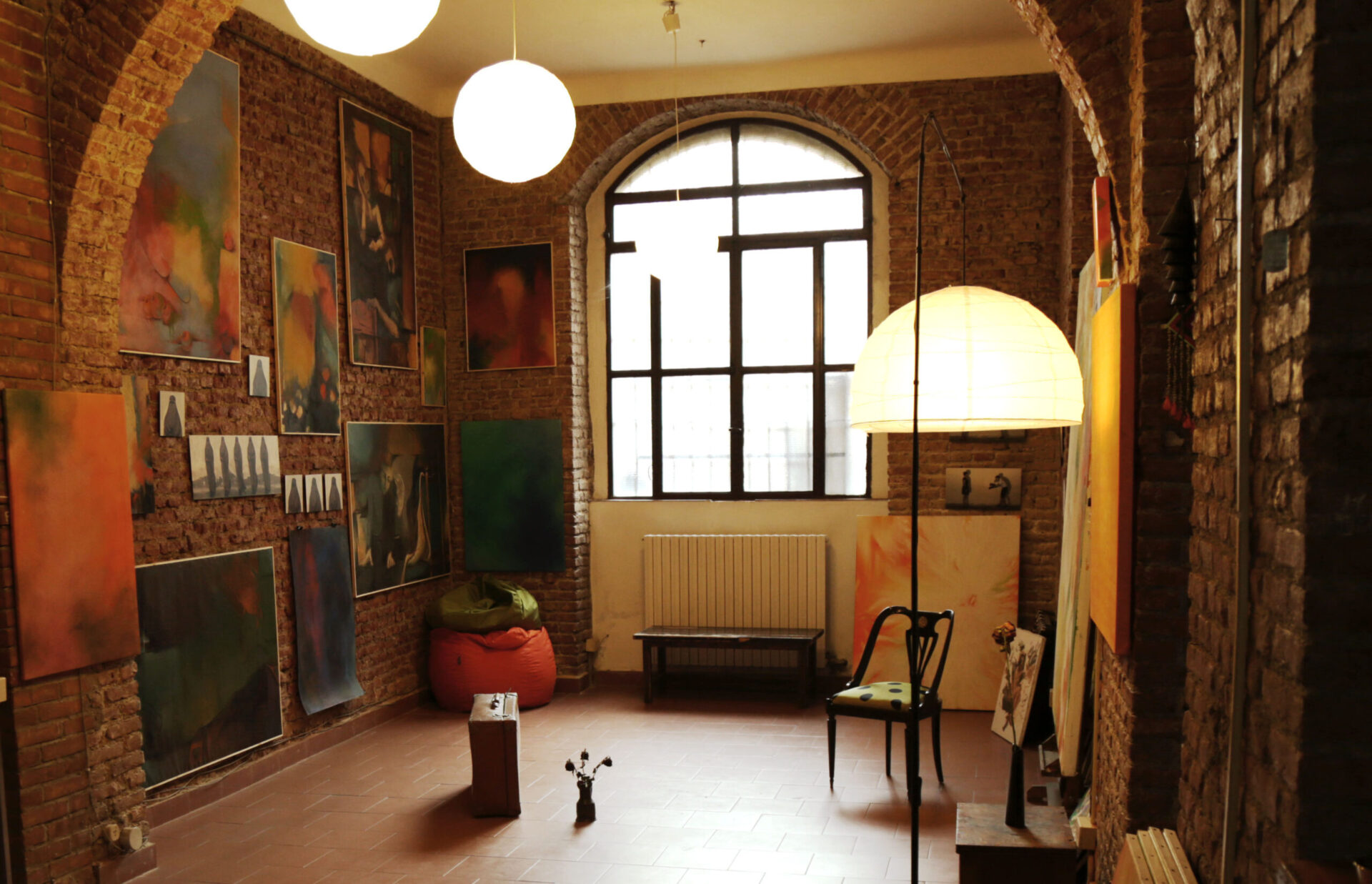
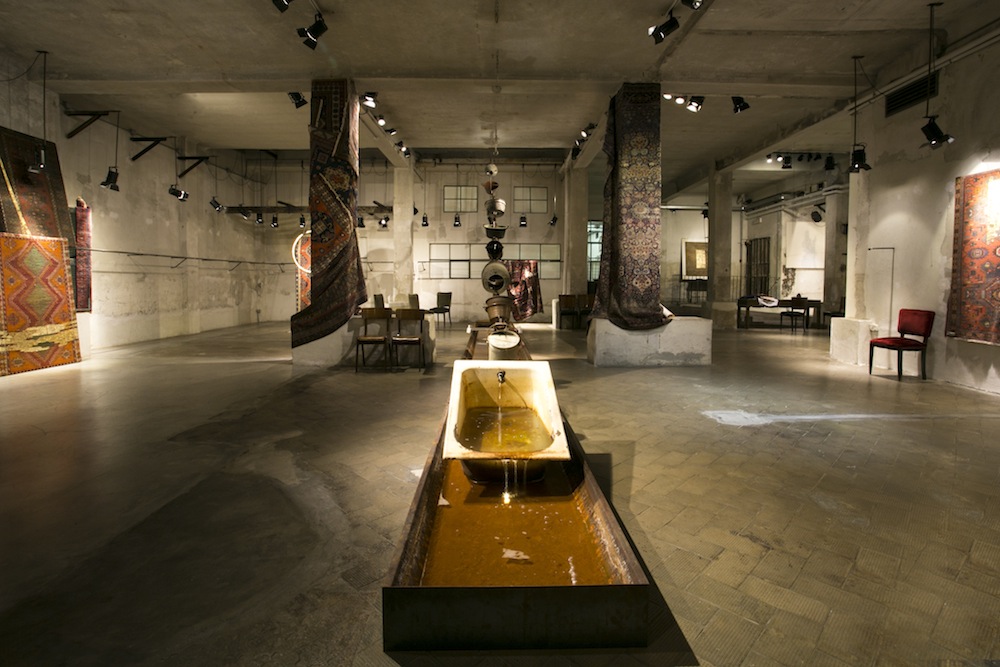
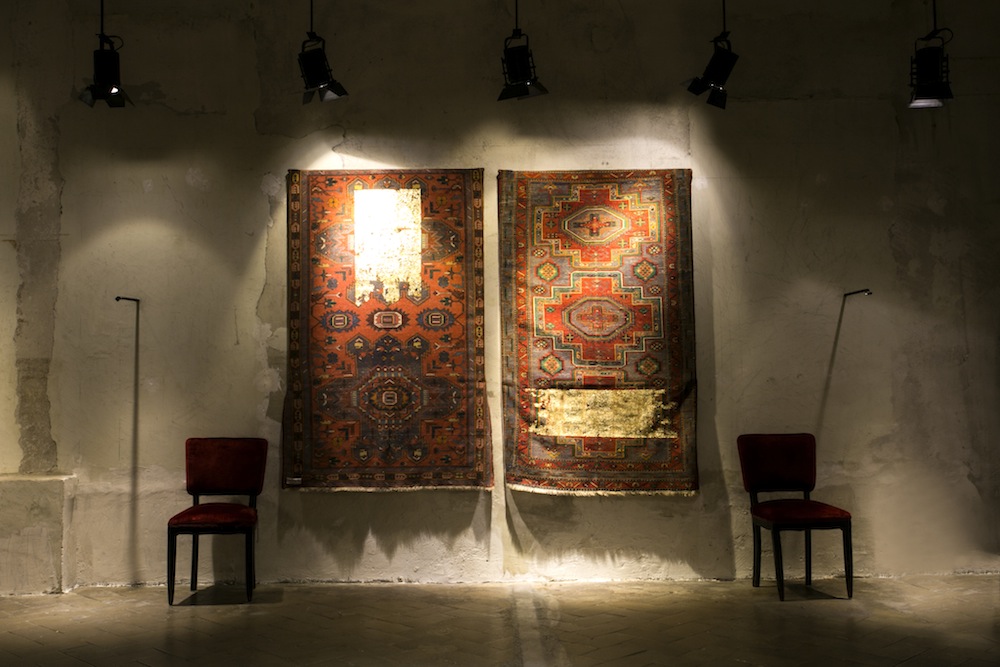
Saleh said several years ago he decided to hold a photo exhibition in the building. Many warned him against holding the exhibition, but he did not pay attention to the warnings.

“I invited a photographer from Vienna who took photos of all the residents over a period of two weeks. After a while, they became interested in the project and the atmosphere began to change in the building. Today the children play in the yard without any concern,” he concluded.

“No State Pays Heed to Riyadh’s Call to Confront Iran”

Abdul-Qader Fayez
Head of Al Jazeera’s Office in Tehran, Abdul-Qader Fayez

Abd al-Kader Faeez, the chief of the Qatari media wing’s bureau in Tehran, stressed that differences with Iran can be resolved simply through negotiations.

He referred to the latest attempts by Saudi Arabia to normalize ties with Israel and added, “Now the Saudis are trying to create a new enemy instead of Israel and Iran is their choice.”

In a Farsi interview with the daily newspaper E’temad, Fayez talked about different reginal issues from the diplomatic crisis between Saudi Arabia and Qatar to Iran’s growing role in the region. Here are highlights of his interview:


* Qatar will not accept any foreign interference in its relations with Iran

* Saudi Arabia is not strong enough to play the leading role in the Arab World

* The decisions by Saudi Arabia have cast doubt on the concept behind the Persian Gulf Cooperation Council

* Saudi Arabia and its allies want to turn Qatar into a second Bahrain

* Qatar’s foreign policy is not racial. For example, we don’t say that Qatar will not make coalition with Iran because we are Arab and they are not or we are Sunnites and they are Shiites.

* By adopting certain measures, Saudi Arabia and the UAE paved the way for failure of Arab Spring in the region so that today we are witnessing the return of former generals and dictators to power.

* Saudi Arabia and its allies’ next step is to raise economic and political siege on Qatar to prolong the current diplomatic crisis.

* The Persian Gulf Cooperation Council [P](GCC) is not capable enough to confront Iran. It does not have executive power.

* Saudi Arabia and its regional allies shout hollow slogans against Iran, but in reality none of them is capable enough to confront the country. Meanwhile, they do not have any plan to unite Arab states against Iran.

* Qatar siege is part of a larger plan to normalize ties with Israel and introduce Iran as the main enemy of the Arab states.

* Over the past six years, Saudi Arabia has failed to take advantage of the Arab Spring. So, it has begun to adopt anti-Iran measures. It is deeply concerned with Iran’s growing role in the region. To cope with Iran’s role, Saudi Arabia tried to make a coalition with Turkey, but the coalition collapsed after one month.

* As two regional neighbours, Iran and Qatar have had good relations with each other for a long time. Doha maintains that Iran can play a role in resolving regional conflicts. Though Qatar has problems with some of Iran’s policies, it argues that the differences can be resolved through political talks. Meanwhile, the Arab states have not yet reached consensus on a unified position towards Iran.

* There is no doubt that the White House has assured Saudi Arabia and the UAE that it would not back Qatar in the recent dispute. On the other hand, the two countries know that the US considers any military action against Qatar as a red-line.

* Without US interference, resolving the current diplomatic crisis between Saudi Arabia and Qatar seems far away. The US will not do anything to resolve the crisis in the near future. Riyadh Conference was held with the aim of holding a unified stance against Iran. Qatar realized that a new balance is set to be created in the region with the US waging a proxy war against Iran. Qatar does not like to be part of any war against Iran. That’s why the country has come under such a huge pressure.

* Saudi Arabia and its allies accuse Qatar of establishing secret ties with Iran and call on the country to cut the relations. But why they don’t make a similar request from Oman? Meanwhile, 90 percent of Iran’s whole trade volume with the Arab states of the Persian Gulf is with the UAE. So, the main question is why Qatar has come under such a huge pressure to cut ties with Iran.