Sunday, April 12, 2026
Home Blog Page 3966

A Look at Iranian Newspaper Front Pages on July 24

Media speculations about the line-up of President Hassan Rouhani’s next cabinet remained a top story in Iranian newspapers today. The latest development was the news of Rouhani’s private meeting with the ex-president and leader of Iranian reformists Seyyed Mohammad Khatami.

The water dispute between Iran and Afghanistan and the ongoing efforts to resolve it also received great coverage.

The meetings between Iranian and Iraqi officials and an agreement on military cooperation between the two sides were also a top story.

The above issues, as well as many more, are highlighted in the following headlines and top stories:


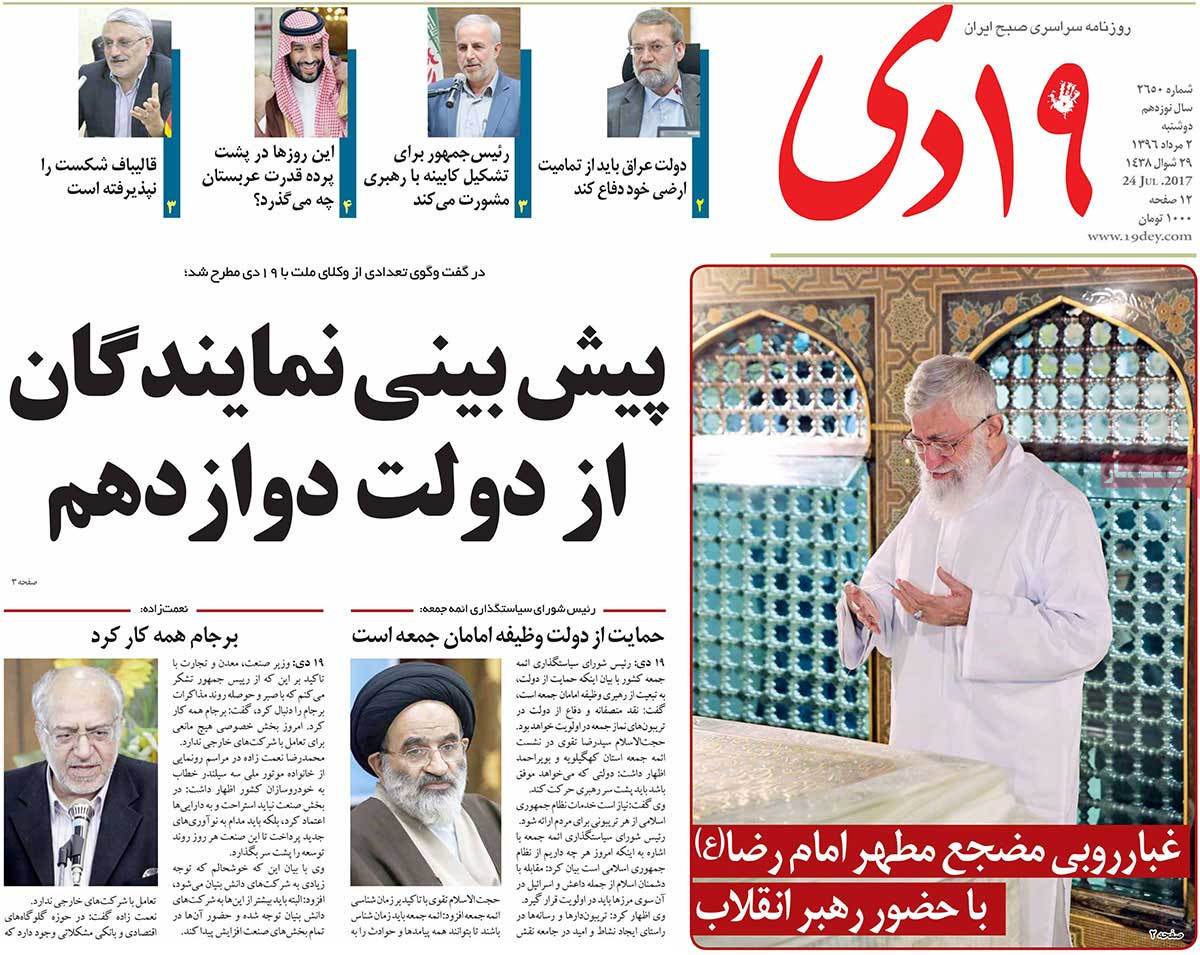
19 Dey:

1- Imam Reza’s Mausoleum Cleaned in Religious Ceremony Attended by Iran Leader
A Look at Iranian Newspaper Front Pages on July 24 - 19dey


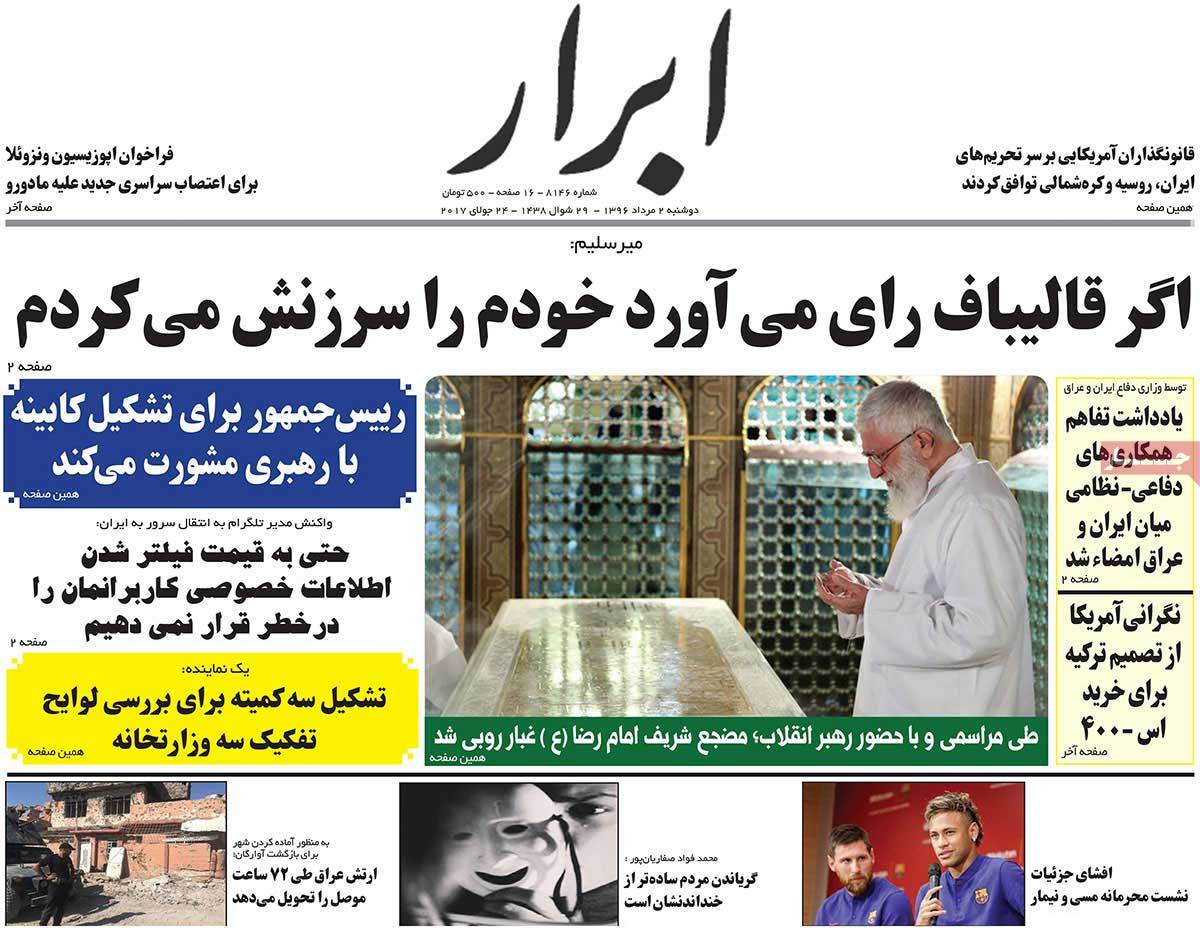
Abrar:

1- Rouhani Consults Leader about Formation of His Cabinet

2- US Lawmakers Agree on Sanctions against Iran, Russia, North Korea

3- US Concerned by Turkey’s Decision to Buy S-400 Missile Defence System
A Look at Iranian Newspaper Front Pages on July 24 - abrar


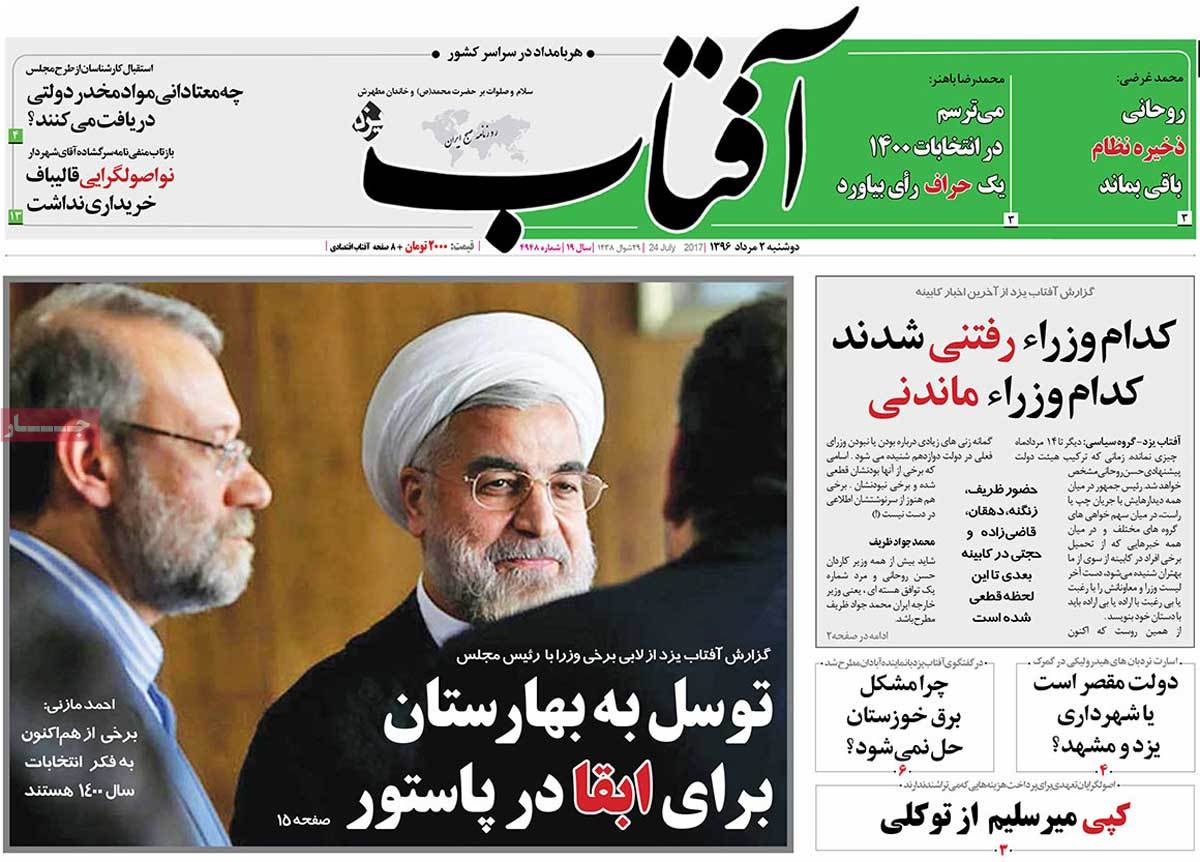
Aftab-e Yazd:

1- Some Ministers Lobbying in Parliament for Their Continued Presence in Cabinet

2- Experts Welcome Parliament’s Plan to Allow Gov’t to Distribute Drugs

3- Negative Reactions to Qalibaf’s Open Letter: No One Buys Tehran Mayor’s Neo-Conservatism
A Look at Iranian Newspaper Front Pages on July 24 - aftab


Arman-e Emrooz:

1- Hajj: From Visa Issuance to Troubles for Flights

  • Iranian Pilgrims to Depart for Saudi Arabia Next Week

2- Impact of People’s Votes on Rouhani’s Attitude

  • President’s Private Meeting with Reformist Leader Khatami

3- Rouhani Not the Only Person Who Decides about His Cabinet: Analyst
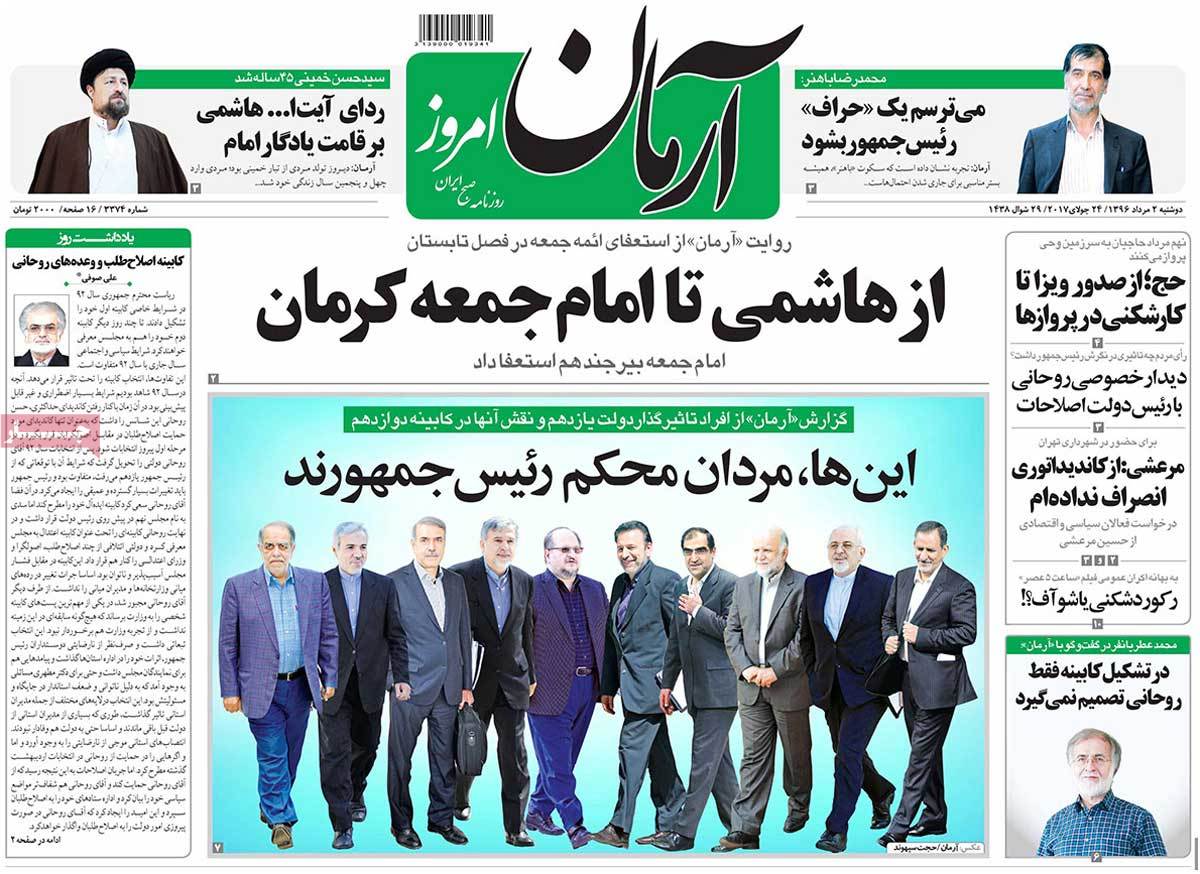
A Look at Iranian Newspaper Front Pages on July 24 - arman


Asrar:

1- Iranian Filmmaker Bani Etemad, Jury Member of Venice Film Festival
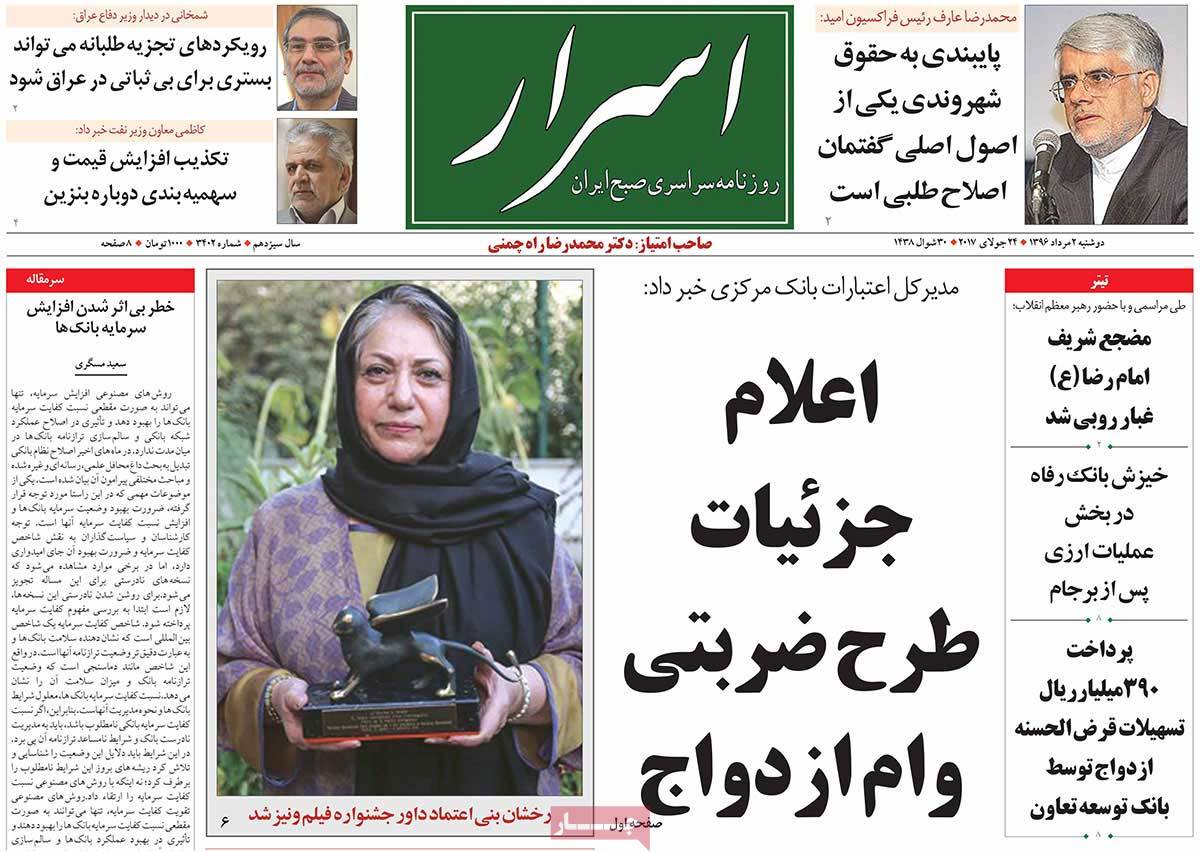
A Look at Iranian Newspaper Front Pages on July 24 - asrar


Ebtekar:

1- Will Hamun Lake Smile Again?

  • Tehran, Kabul Start Talks on Water Dispute

2- Taliban’s Revival after ISIS’ Defeats

  • A Report on Fall of Two Afghan Cities to Taliban

3- Analysts Discuss Clash of Conservatives with Conservatives
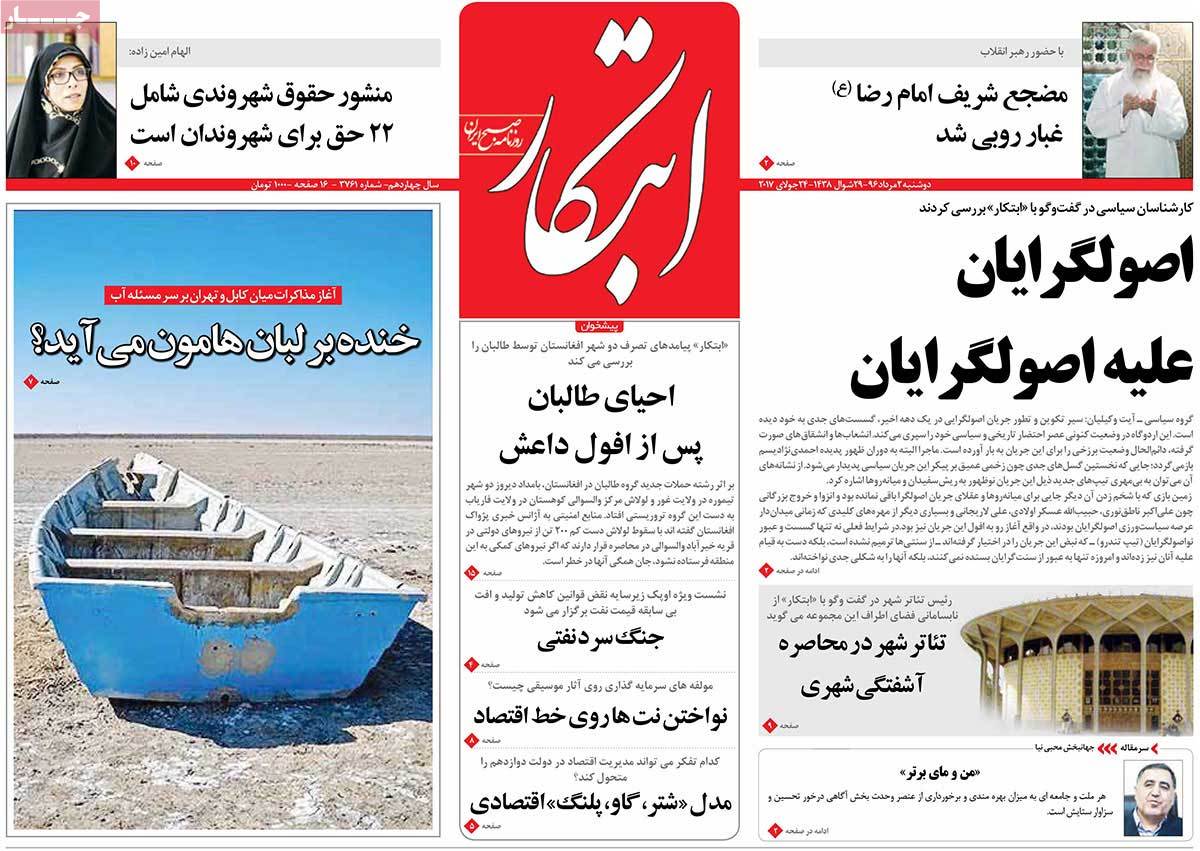
A Look at Iranian Newspaper Front Pages on July 24 - ebtekar


Etemad:

1- Difficulty of Being ‘Rouhani’: Troubles Faced by President in Cabinet Formation

2- Tens of People Fall Victim to Fake Alcoholic Drinks

3- How Many Lives Do Tehran Streets Owe to Us?

  • Lives of Workers Who Live with Spectre of Death
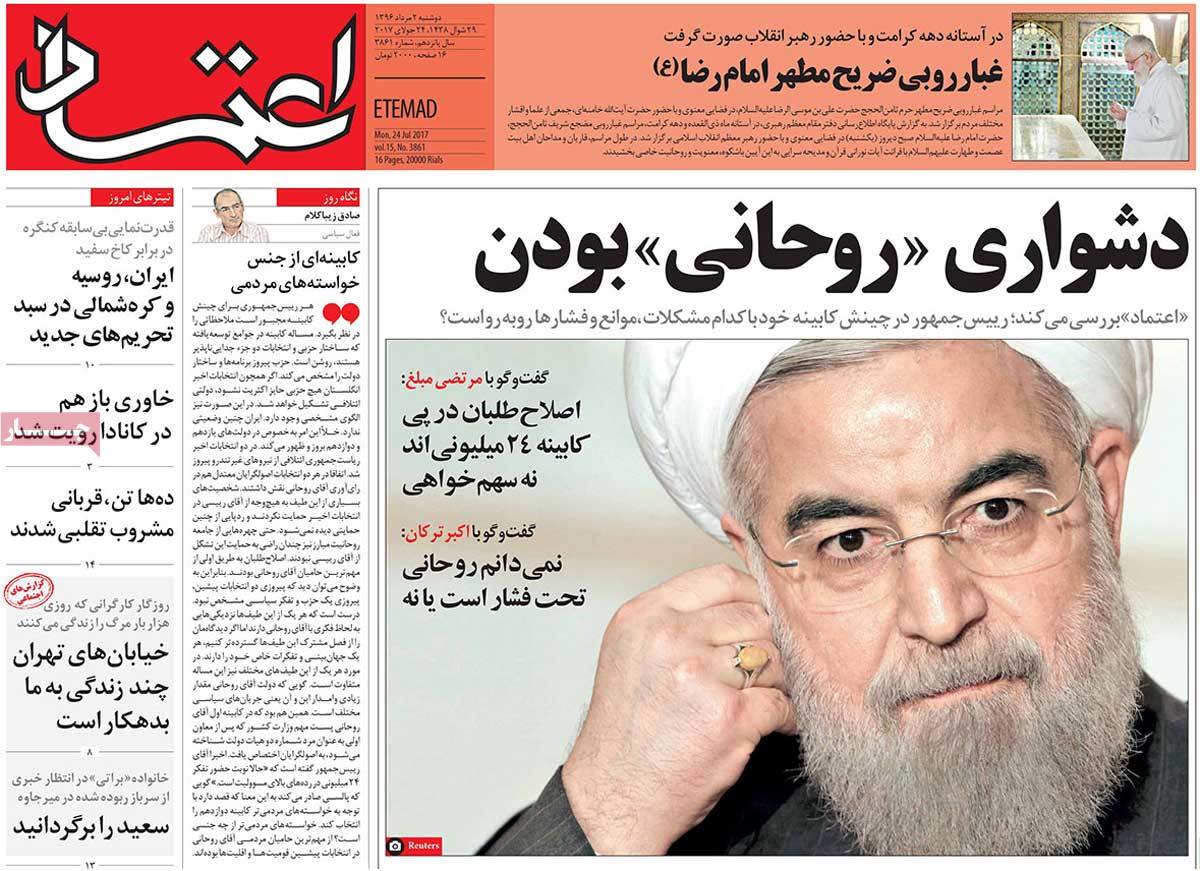
A Look at Iranian Newspaper Front Pages on July 24 - etemad


Ettela’at:

1- UNSC’s Extraordinary Meeting to Discuss Aqsa Mosque Crisis

2- Iran, Iraq Sign MoU on Military Cooperation

3- Russia Opposed to US New Plan on Iran Sanctions
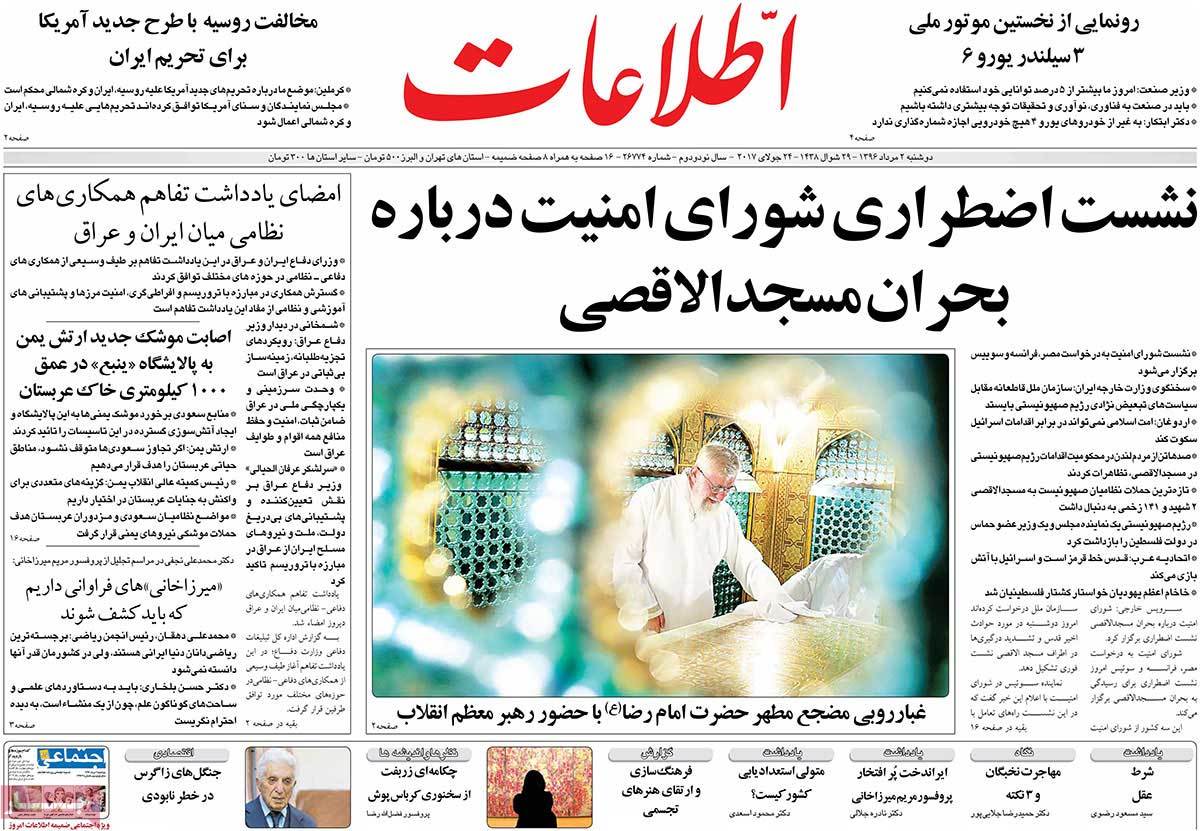
A Look at Iranian Newspaper Front Pages on July 24 - etelaat


Iran:

1- Iraqi FM: Without Iran, Iraq Would Have Been Destroyed

2- Iran Unveils First 3-Cylinder Engine
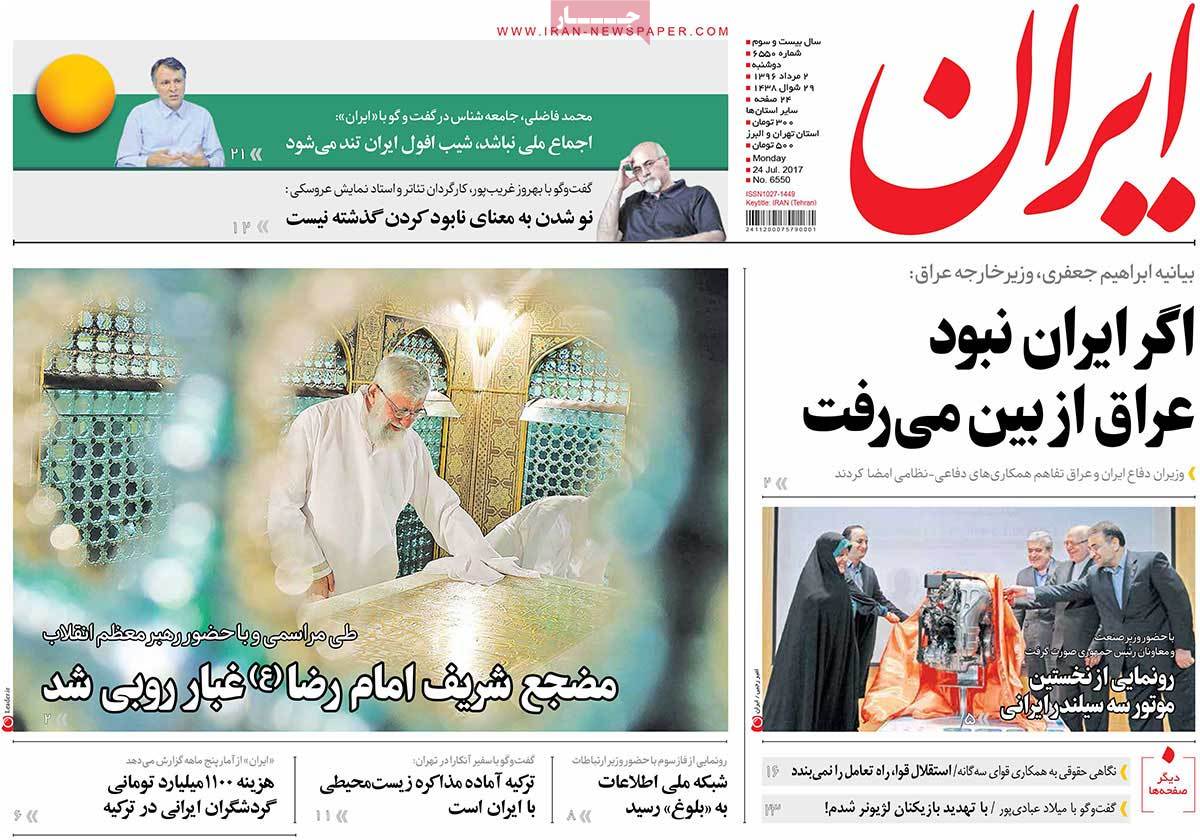
A Look at Iranian Newspaper Front Pages on July 24 - iran


Jame Jam:

1- Turkey’s Gradual Infiltration into Iran’s Market
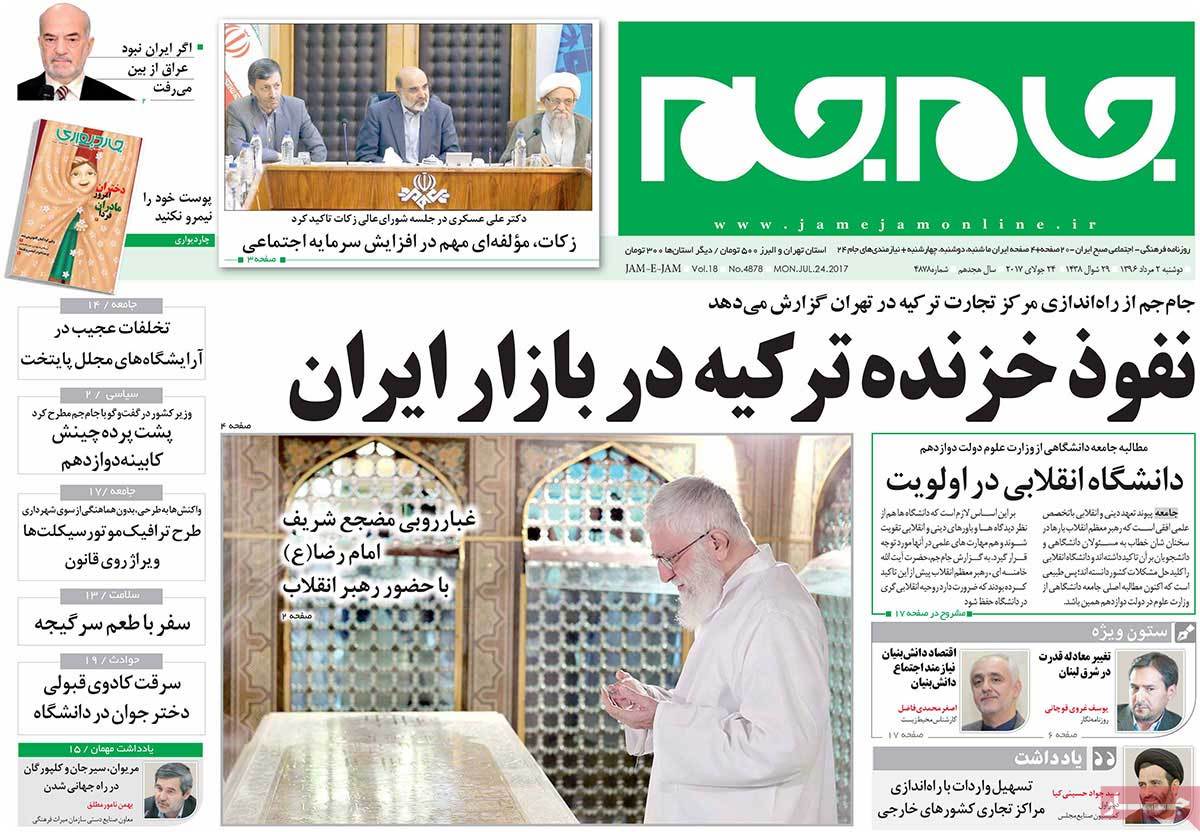
A Look at Iranian Newspaper Front Pages on July 24 - jamejam


Javan:

1- New York Times: US Has Violated JCPOA’s Article 29

2– US, Russia Agree on Resistance Front’s Presence 30km Away from Israel Borders
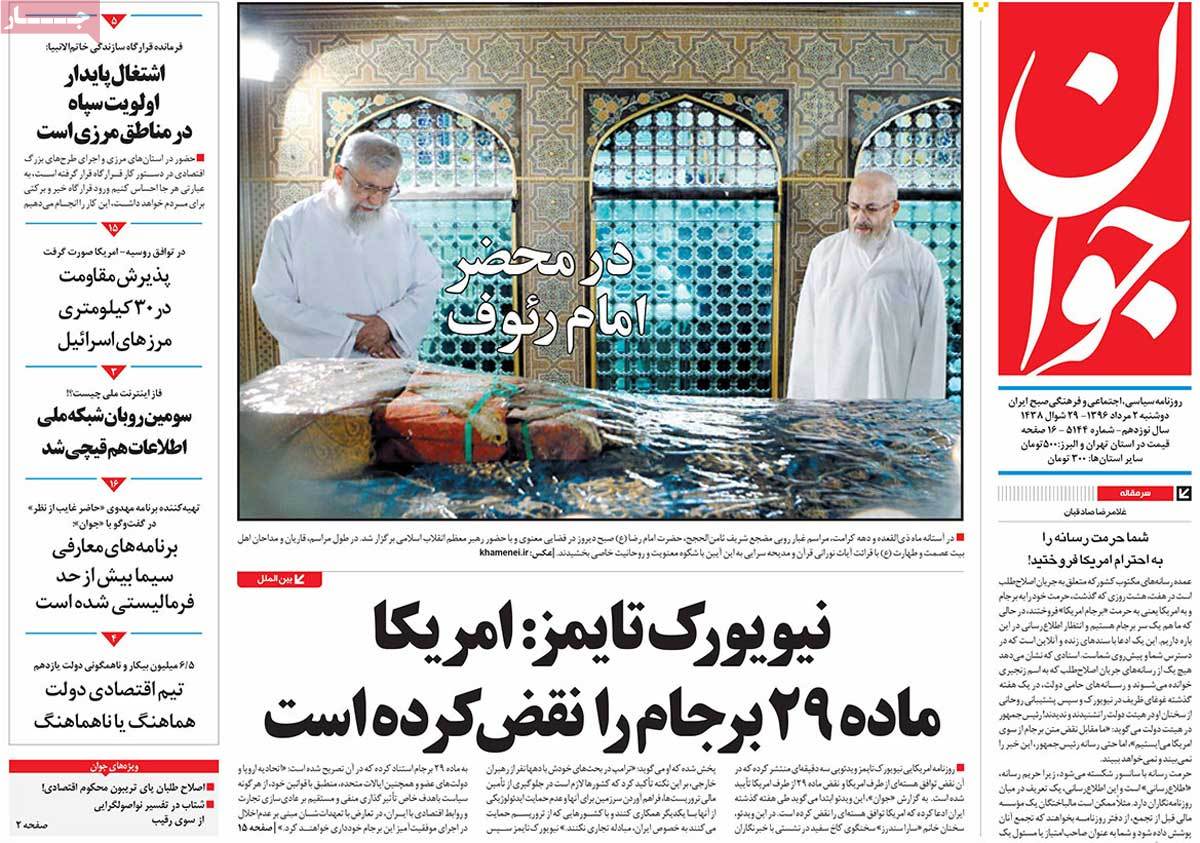
A Look at Iranian Newspaper Front Pages on July 24 - javan


Jomhouri Eslami:

1- EU Warns US against Increasing Russia Sanctions

2- Iran’s Shamkhani: Divisive Approaches May Lead to Iraq Enemies’ Excessive Demands
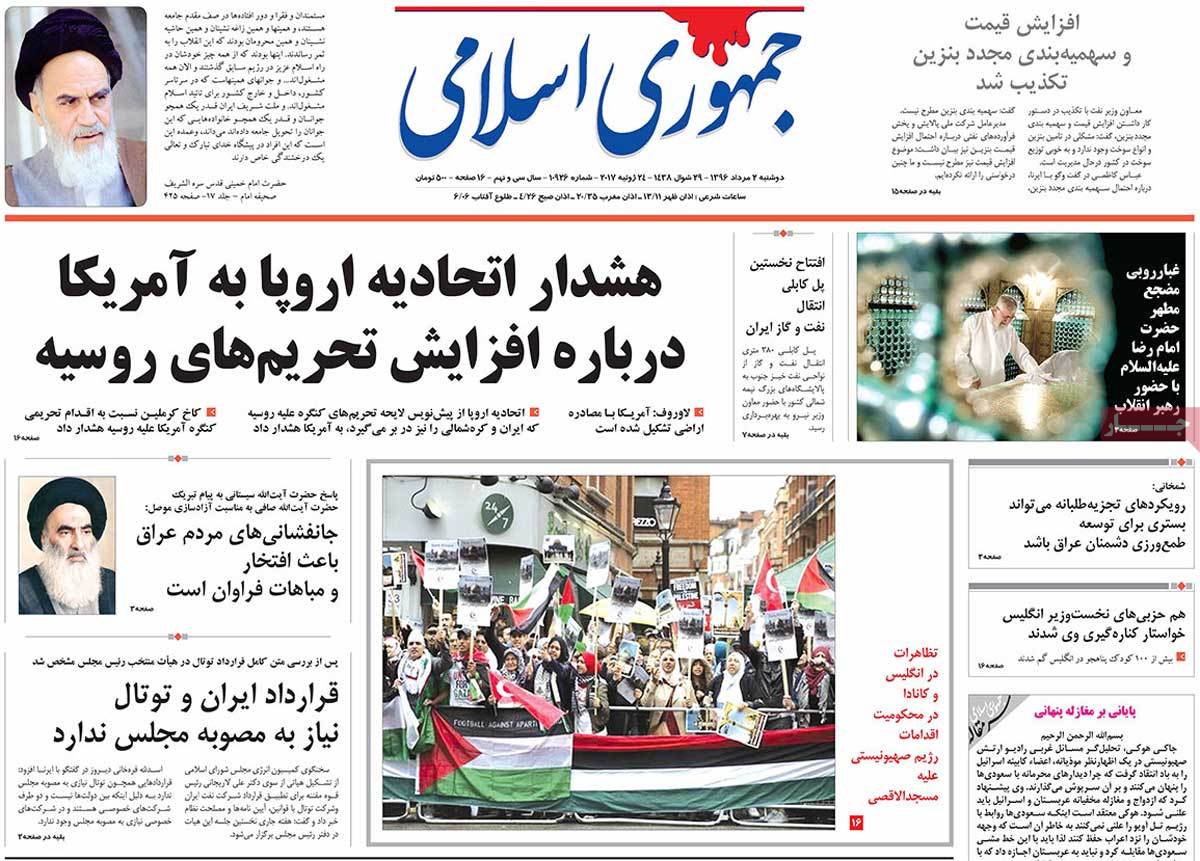
A Look at Iranian Newspaper Front Pages on July 24 - jomhori


Kayhan:

1- Reformists Resort to [Notorious] Shahram Jazayeri for Resolving Economic Woes!
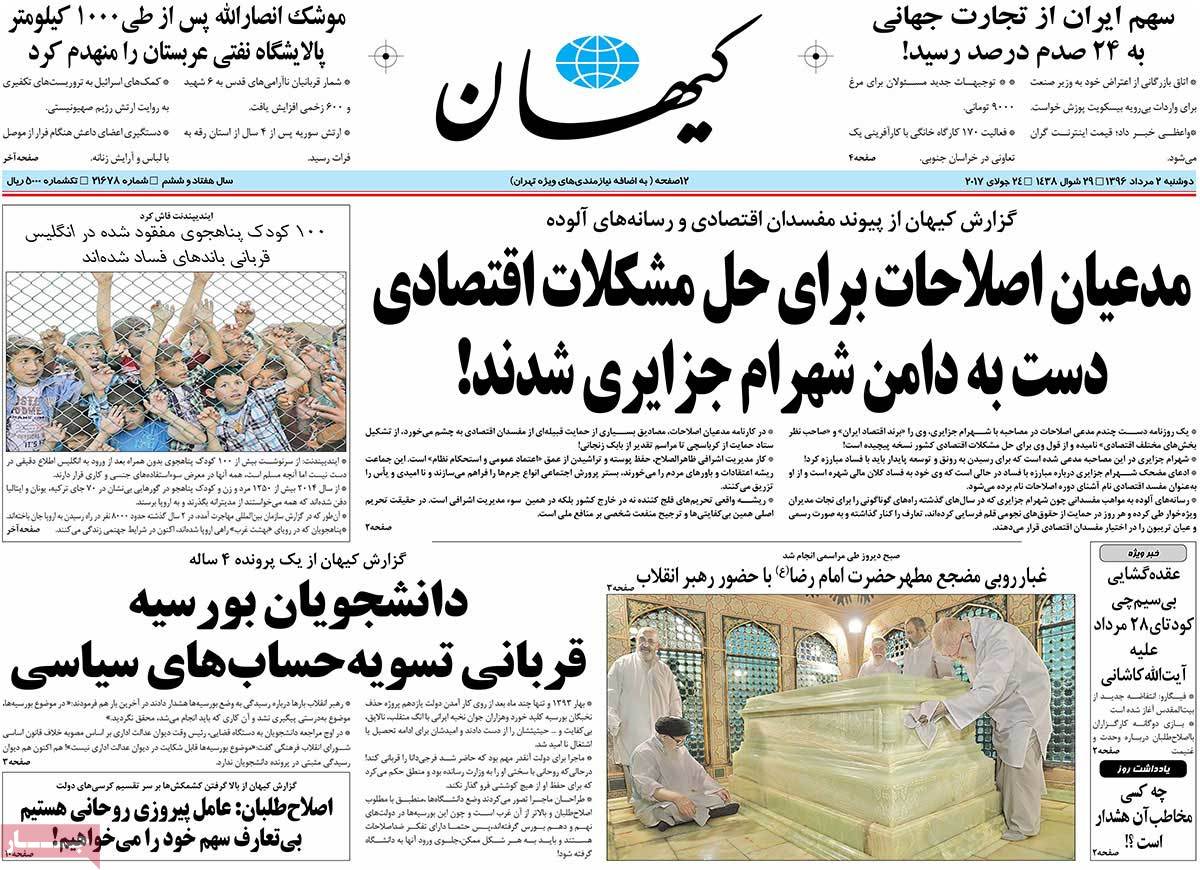
A Look at Iranian Newspaper Front Pages on July 24 - kayhan


Khorasan:

1- Parliament Seeks to Revise Foreign Ministry’s Statute
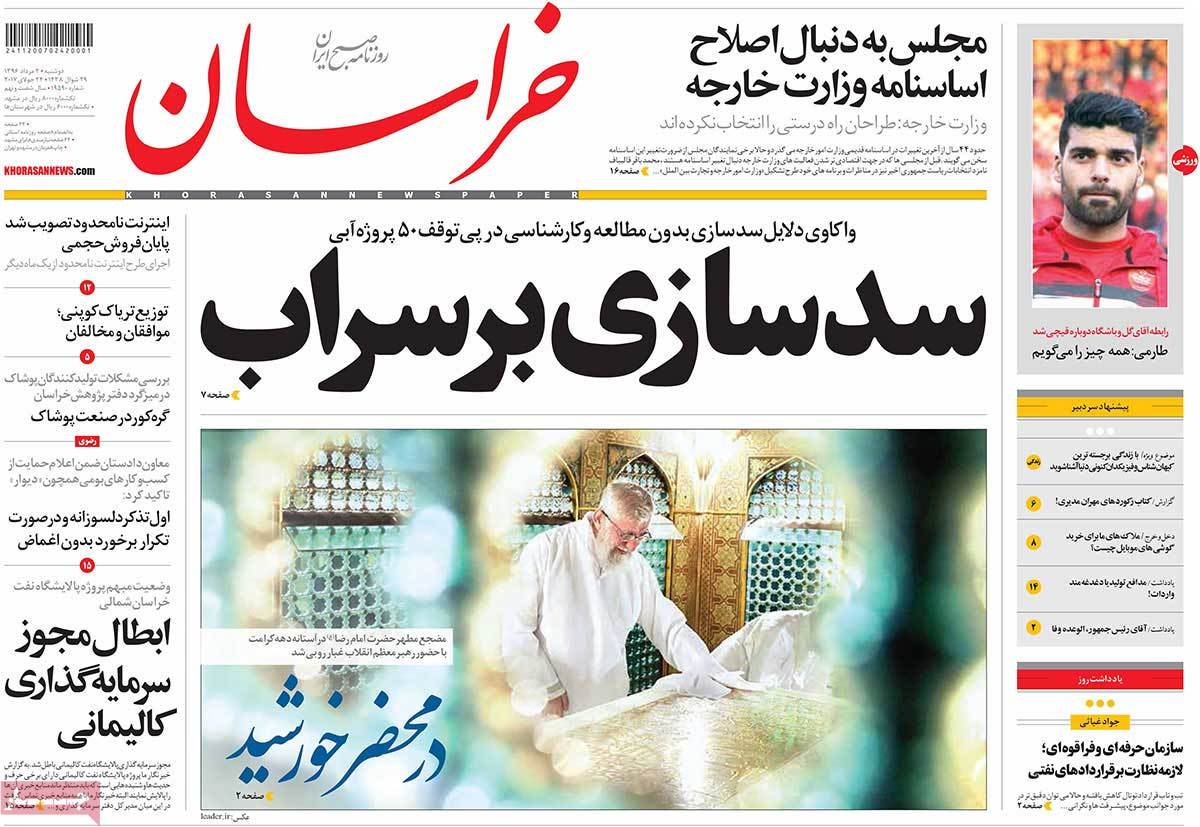
A Look at Iranian Newspaper Front Pages on July 24 - khorasan


Setareh Sobh:

1- Vicious Coalition: Democrats Joins GOP in Countering Iran

2- Analyst: Iran Nuclear Deal Decreases Danger
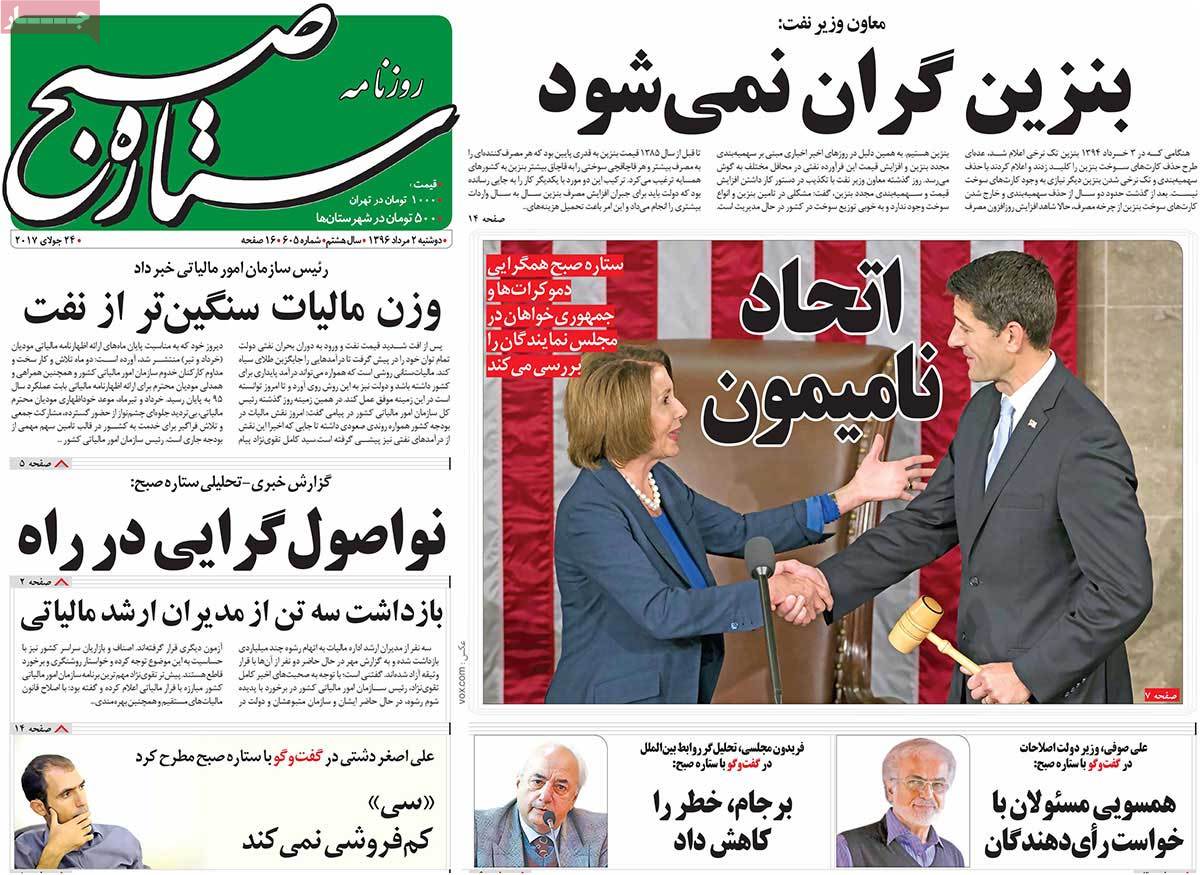
A Look at Iranian Newspaper Front Pages on July 24 - setaresobh


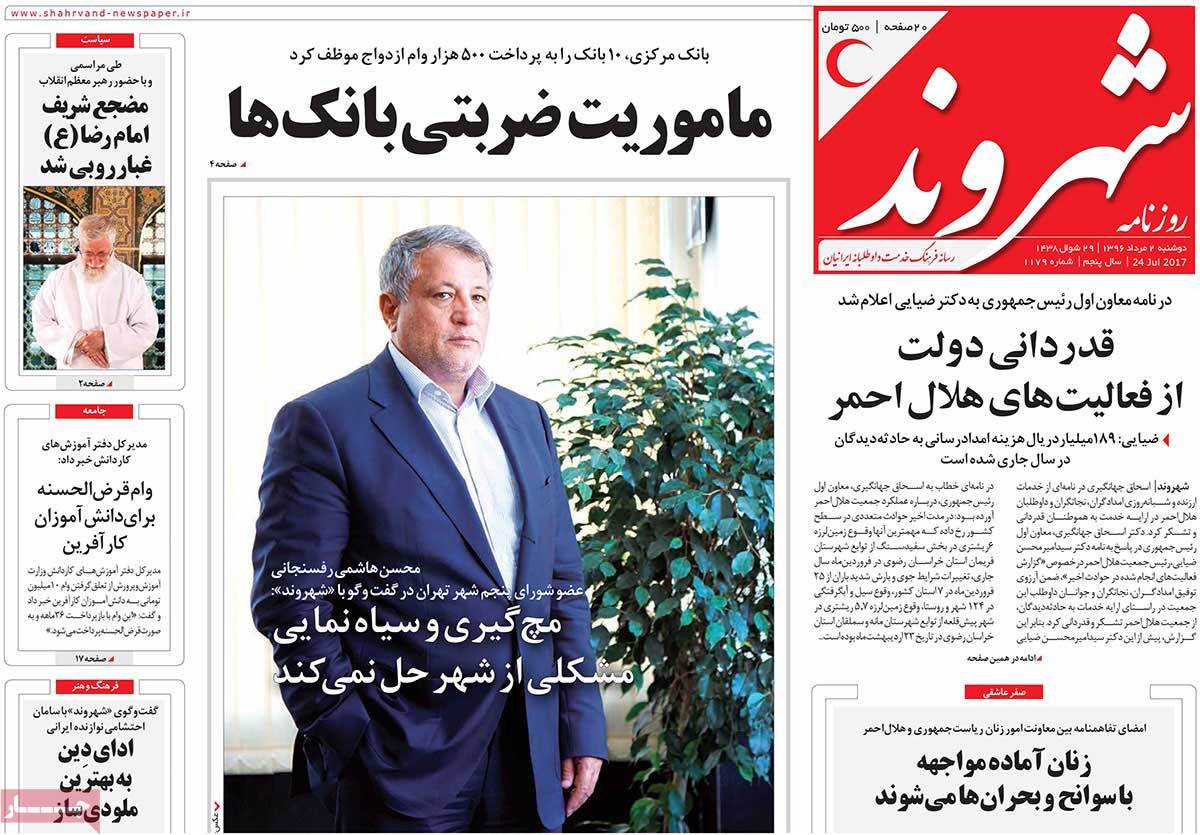
Shahrvand:

1- 10 Banks Ordered to Pay 500,000 Loans to Newlyweds
A Look at Iranian Newspaper Front Pages on July 24 - shahrvand


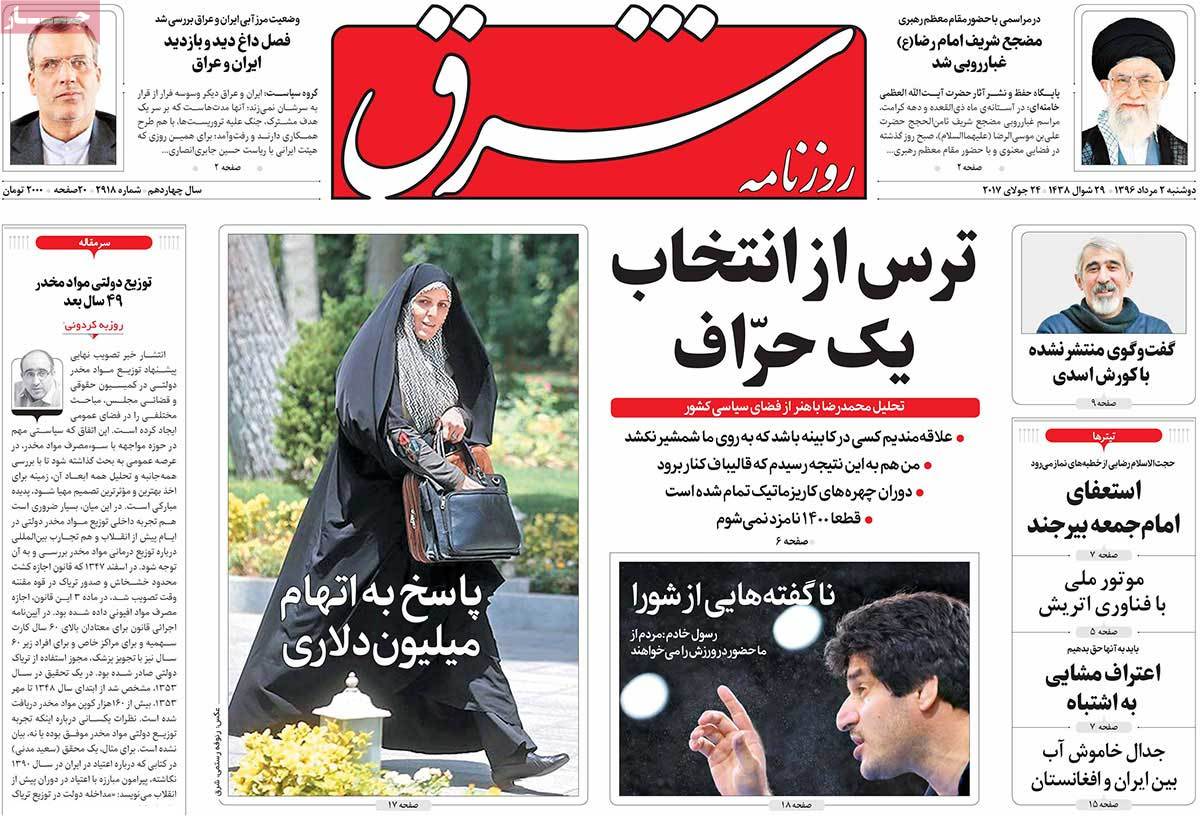
Shargh:

1- Hot Season of Iran-Iraq Reciprocal Visits: Latest Border Situation Reviewed

2- National Engine with Austrian Technology Unveiled

3- Silent Water Dispute between Iran, Afghanistan
A Look at Iranian Newspaper Front Pages on July 24 - shargh


US Isolated in Efforts to Undermine Iran Nuclear Deal

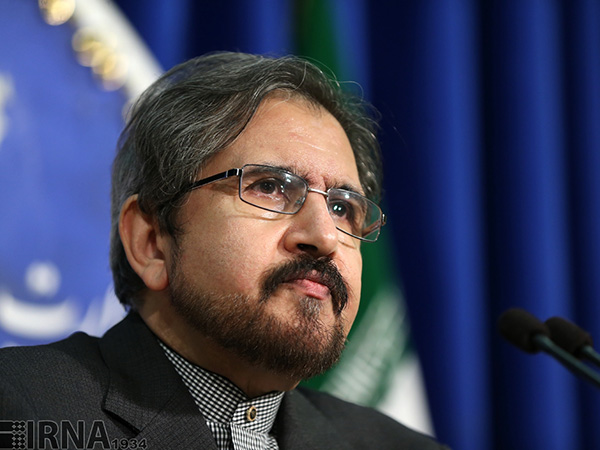
Iranian Foreign Ministry Spokesman Bahram Qassemi made the remarks during a Monday press conference, saying, “The countries of the P5+1 group are not accompanying the US [in its] treacherous measures [against the nuclear deal].”

Iran and the five permanent members of the United Nations Security Council – the United States, Britain, France, China and Russia – plus Germany signed the Joint Comprehensive Plan of Action (JCPOA) on July 14, 2015 and started implementing it on January 16, 2016.

Under the agreement, limits were put on Iran’s nuclear activities in exchange for, among other things, the removal of all nuclear-related bans against the Islamic Republic.

The JCPOA has been hailed as a triumph for diplomacy, which has benefited all the contractual parties.

The US has, however, been toying with the idea of “tearing up” the accord or effecting changes to it, despite various international bodies, including the United Nations and the European Union, warning Washington could not do so as the agreement is a multilateral one.

“The JCPOA is a multilateral agreement,” Qassemi likewise said, adding, “We are aware of European countries’ positions [on it]. They are committed to the JCPOA …. China and Russia’s relevant position is [also] clear and transparent.”

He reminded that a meeting of the Joint Commission of the JCPOA, which gathers representatives of the signatories around the task for monitoring the accord’s implementation, had seen all the attendants pledging their present and future commitments to the pact. “Even the US, itself, announced this that it was committed to it (the JCPOA),” the official said.

Describing the JCPOA as a solid agreement, Qassemi said the US has not been able to undermine it, despite “its lack of commitment and obstruction against it.”

“Therefore, it cannot but take other measures to weaken it so it can deny Iran of [reaping] its benefits as much as it can or to spoil the [current] political atmosphere,” he added.

He was referring to Washington’s sanctions against Iran’s missile program, despite the program’s not constituting a violation of the accord.

Iran, though, is a self-sufficient and powerful country, which could move forward without reliance on others, he said, and noted, “This is a source of concern for the US.”

Qassemi expressed hope that US President Donald Trump would not put his country and people in trouble by seeking to act against the JCPOA.

Kuwait ties

On Iran-Kuwait ties, Qassemi said relations at an ambassadorial level will continue.

He said that on Thursday Iran’s ambassador to Kuwait met with Kuwaiti Foreign Ministry officials, who told him “it would be better” for the staffers at the Iranian diplomatic mission to reduce in number, and that the mission was advised to take action towards downsizing the workforce within a month and a half.

“This is contemptible,” Qassemi said, and reminded that Tehran reserved the right to counteract.

‘US can’t threaten Iran’

Asked about the arrest of a US citizen for espionage, Qassemi said that on July 16, the Iranian Judiciary announced that an individual spying for the United States had been arrested and sentenced to 10 years in prison in Iran.

He was later identified as Xiyue Wang, a US citizen of Chinese descent.

Later, the White House warned Iran of “serious consequences” if it did not release all American citizens imprisoned in the country.

The Iranian spokesman said the US “cannot and should not” speak to Iran using a threatening language. “The era of threats is over,” he said, adding that some comments by US officials on the issue “amounted to interference in Iran’s domestic affairs.” “Such remarks will not have any bearing on Iran’s decisions and judicial system.”

“The Americans should change their language and discourse, and use some other language and diction in regard to the Iranian nation.”

Saudi vessel

On Friday, the Navy of Iran’s Islamic Revolution Guards Corps (IRGC) seized a Saudi vessel after it trespassed on the country’s territorial waters in the Persian Gulf.

Qassemi said it was natural for vessels to stray into foreign waters as a result of meteorological circumstances.

“This is partly natural and can be subjected to interaction and negotiation,” he said. Iran and Saudi Arabia do not have diplomatic relations, but occasionally reciprocate messages through other channels, Qassemi noted.

Riyadh cut its diplomatic ties with Iran in early 2016 after violent protests in front of its Iran-based diplomatic premises against its earlier execution of a leading Shia cleric.

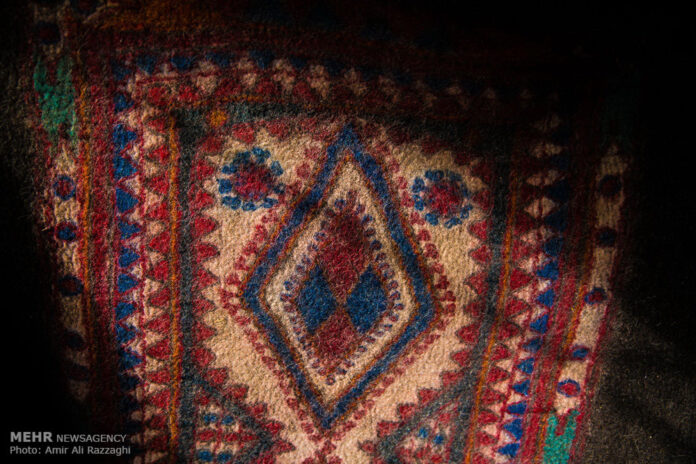
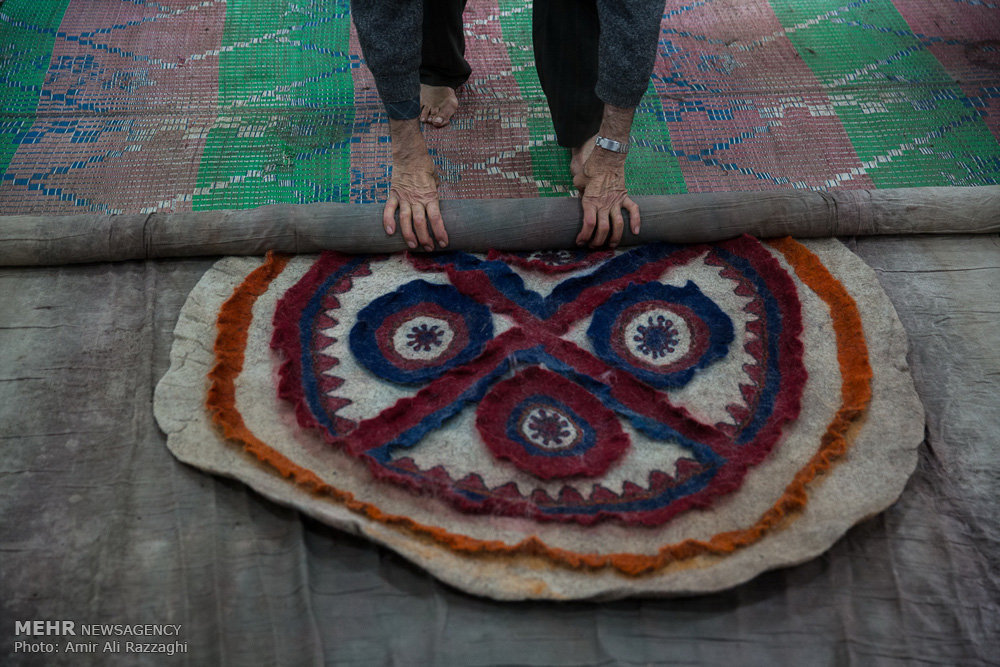
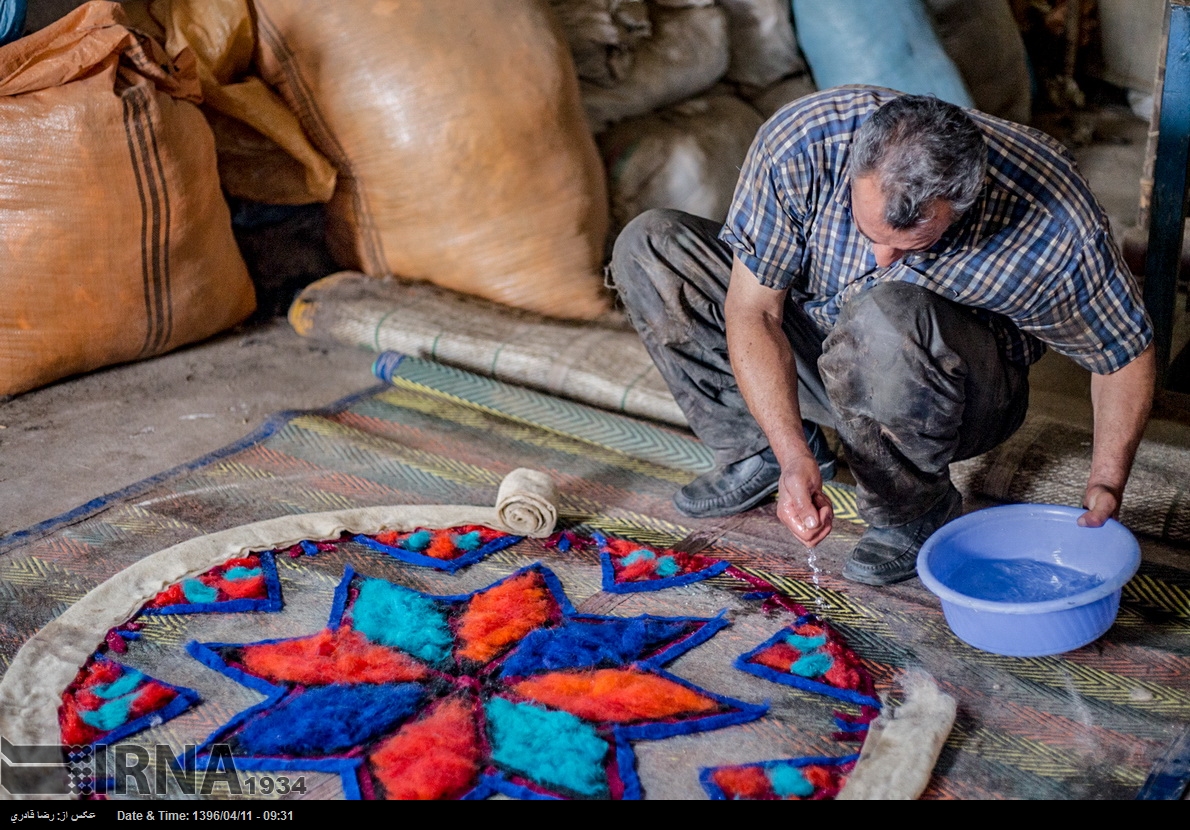
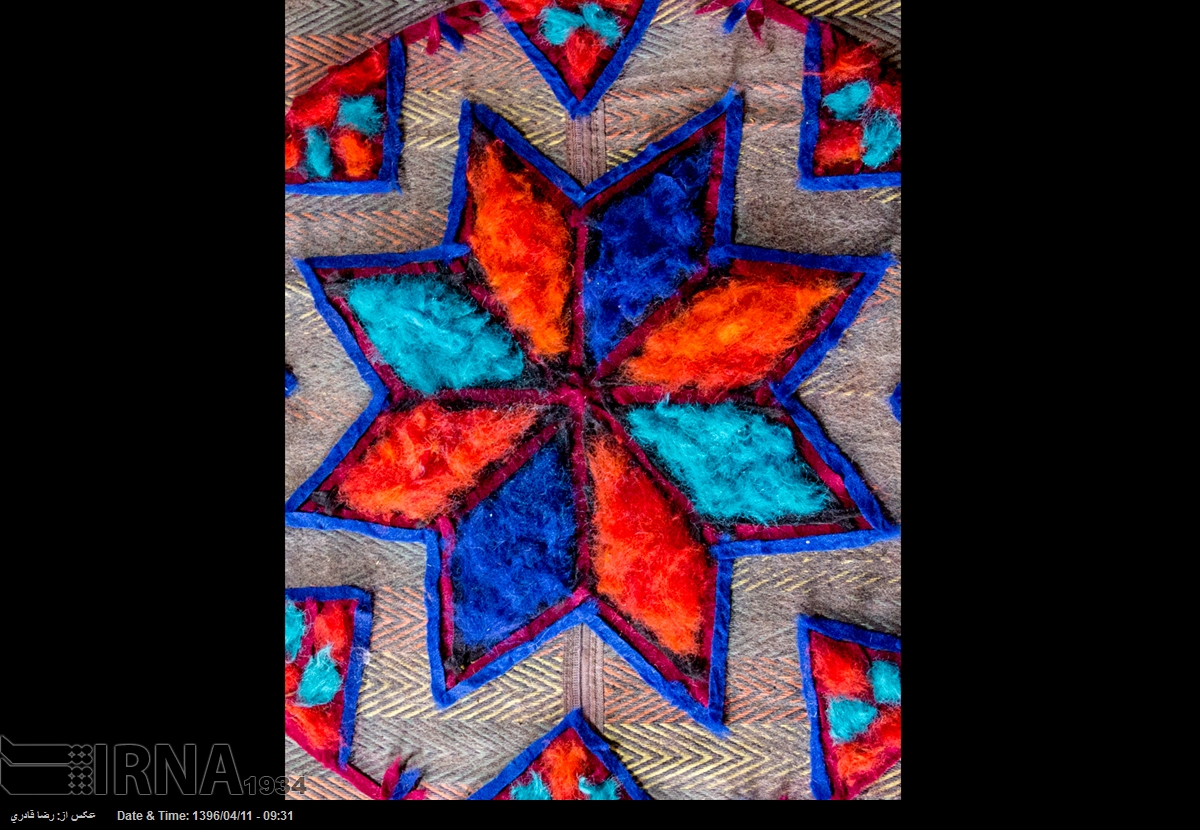
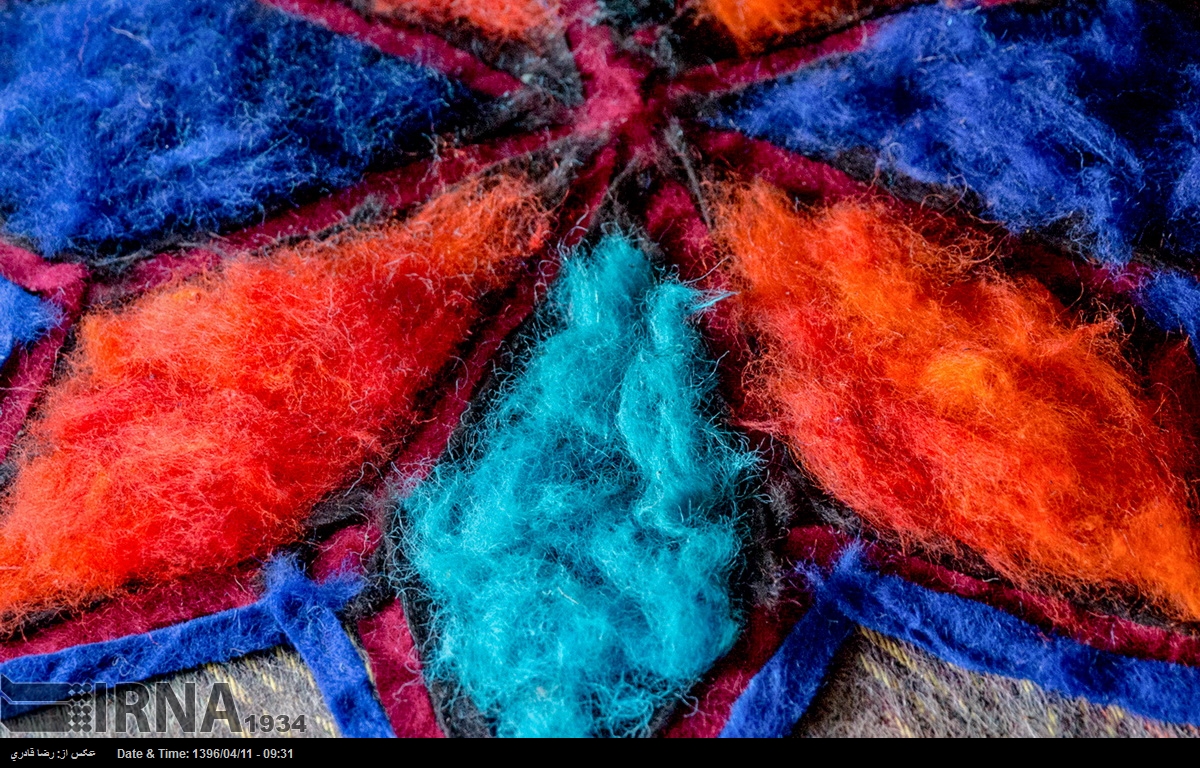
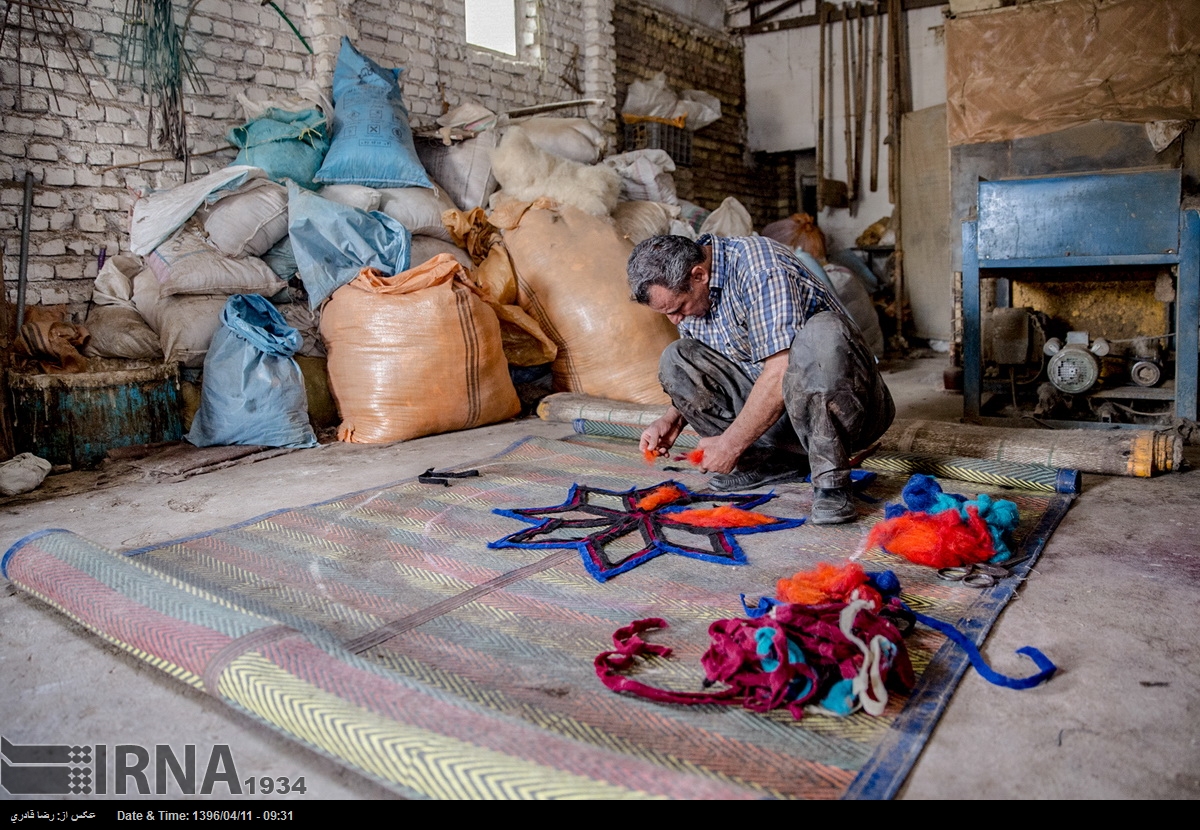
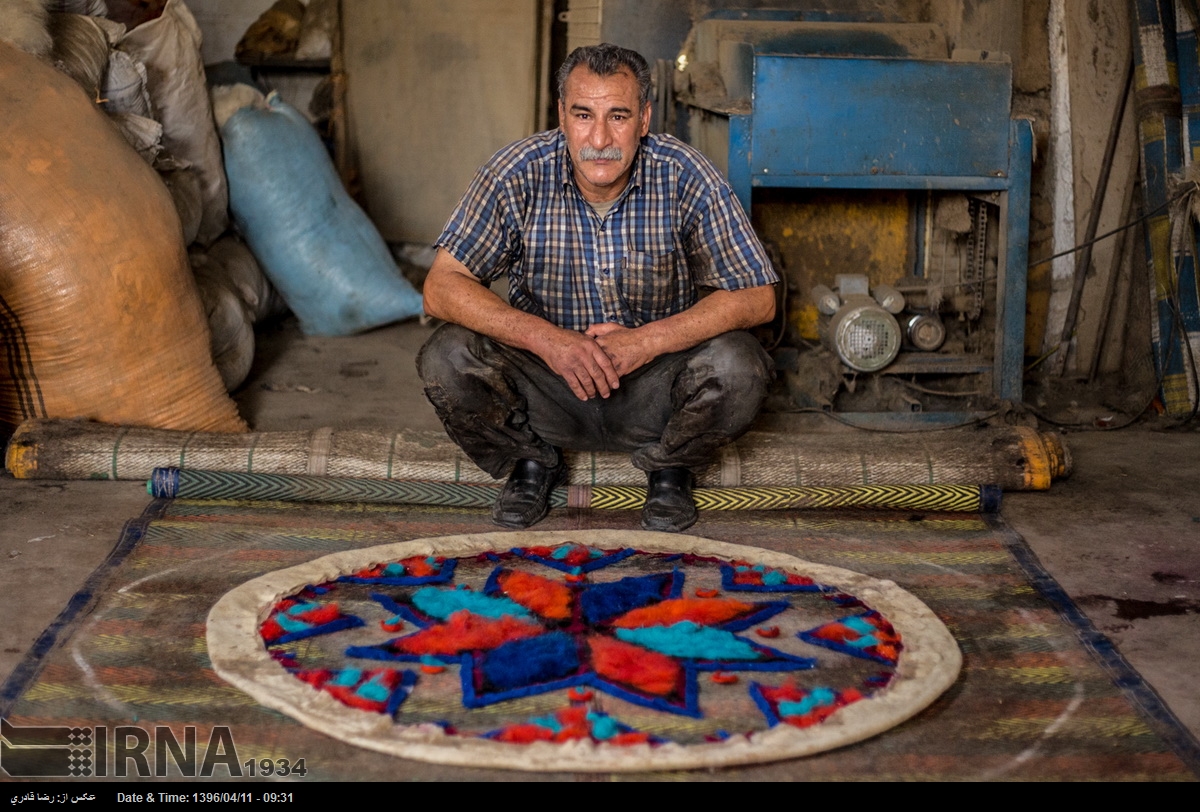
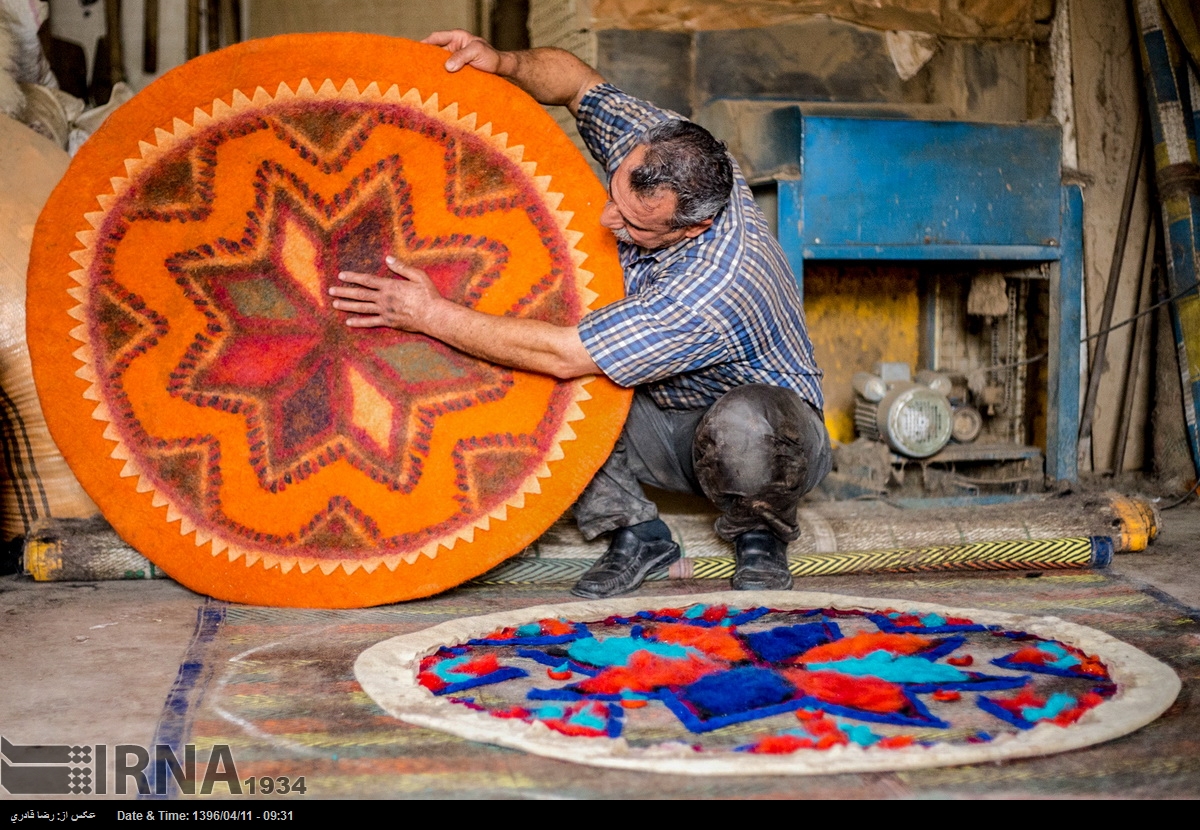
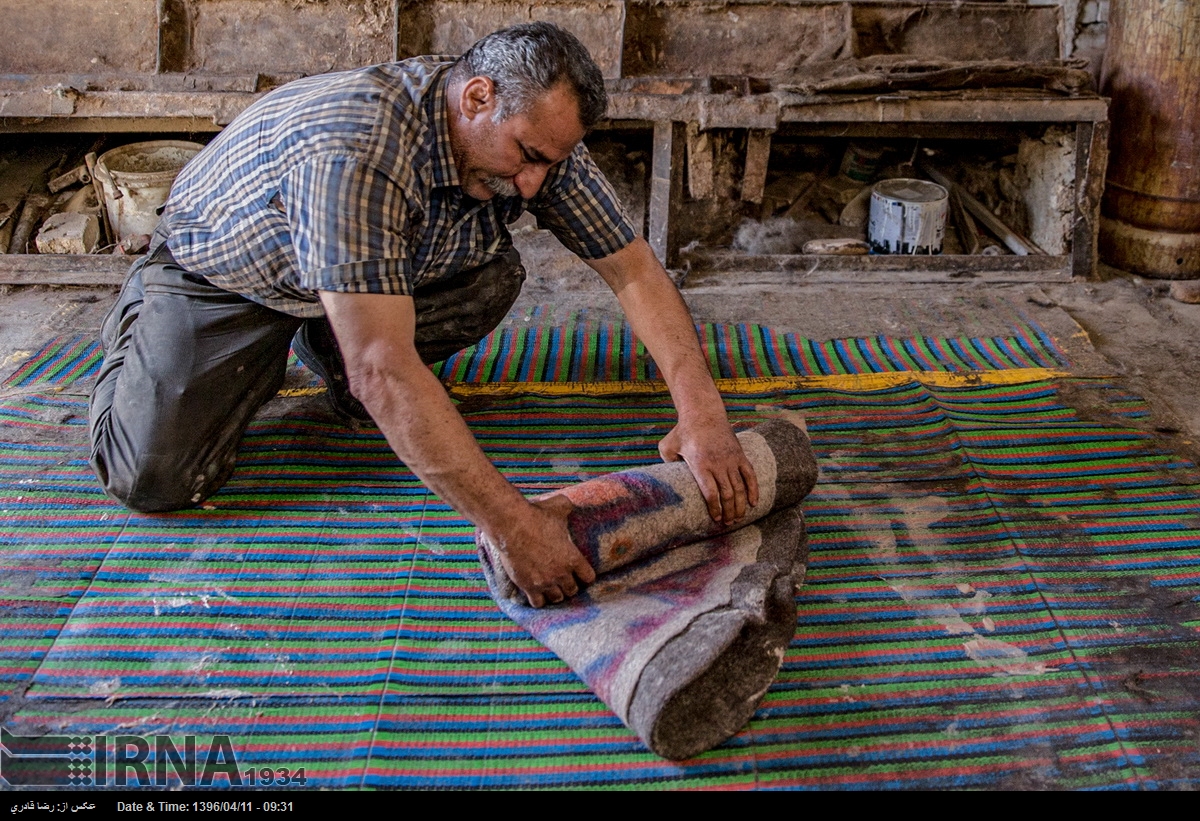
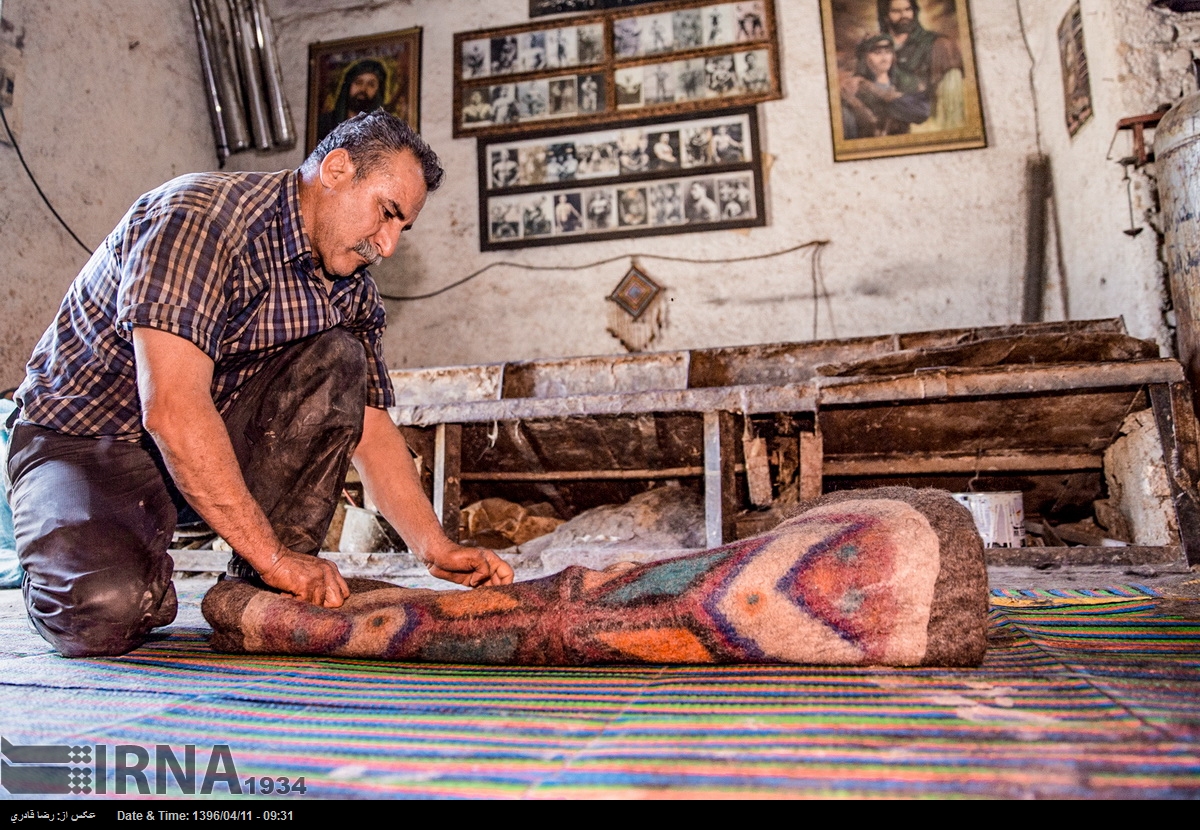
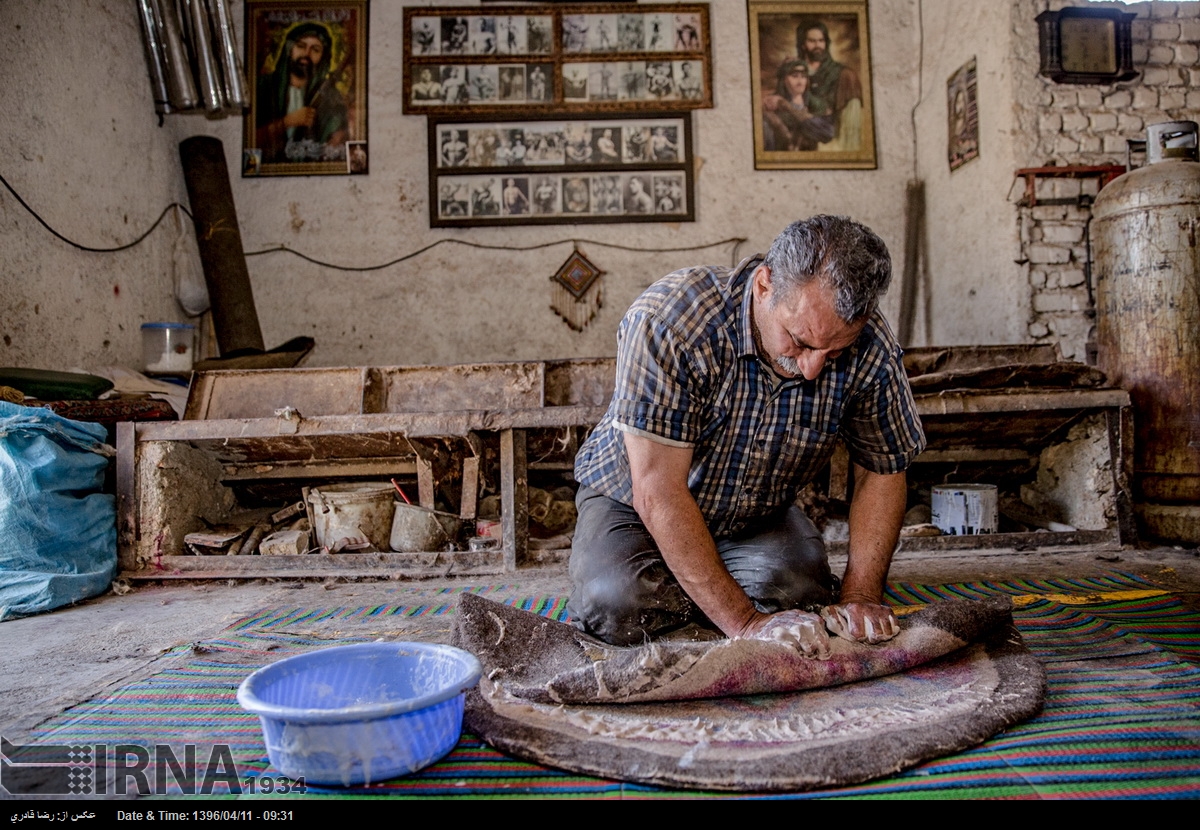
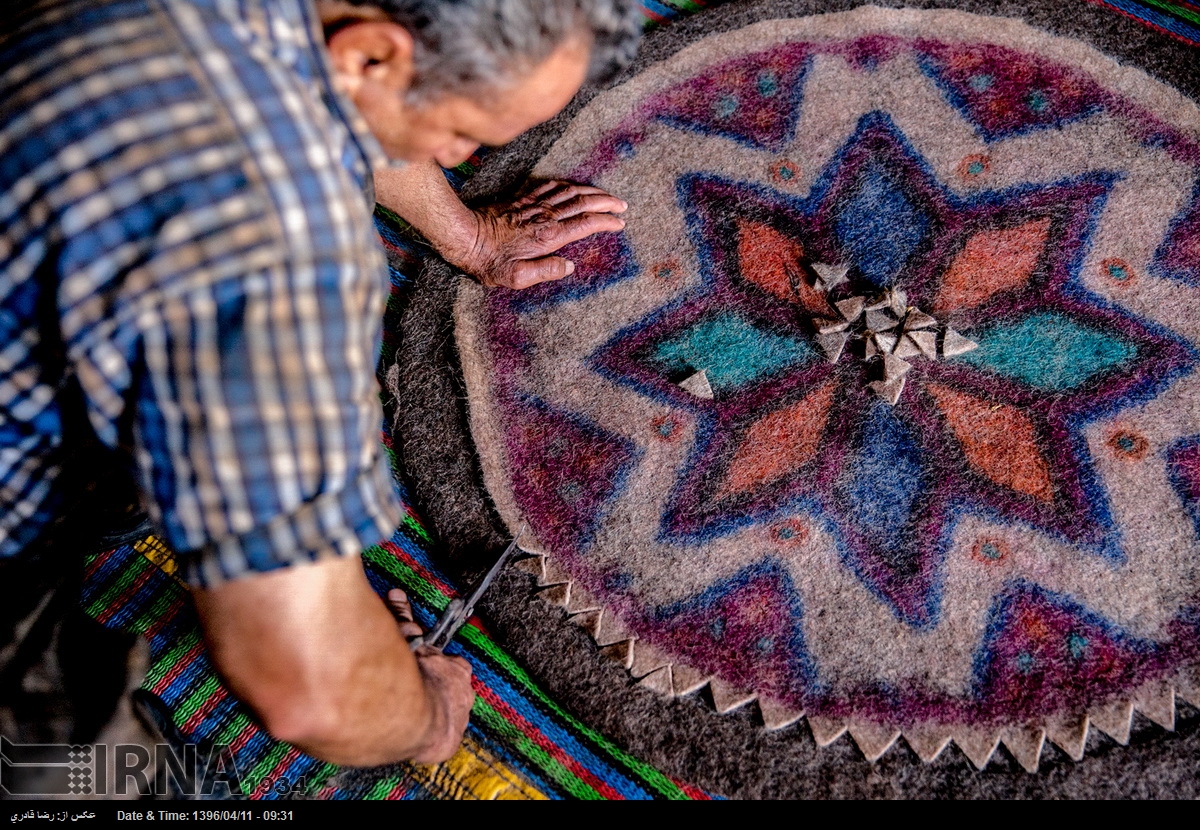
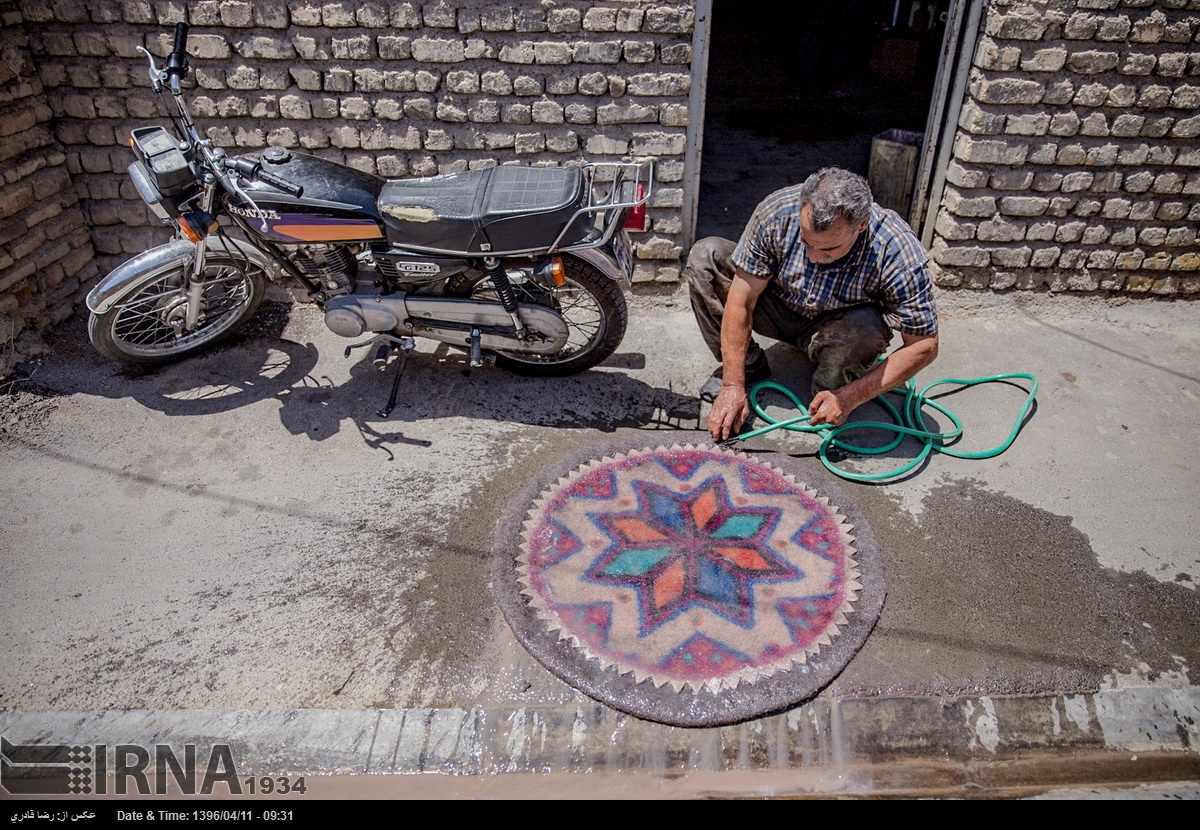
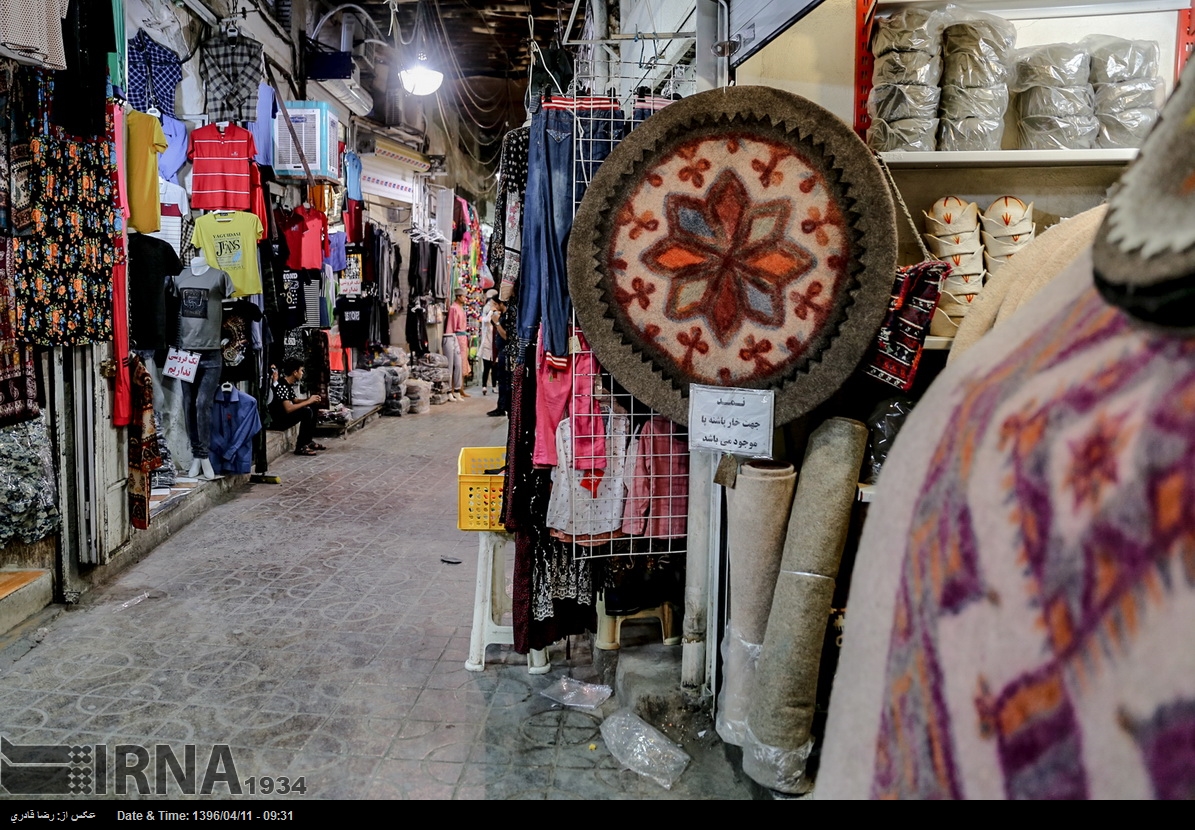
Iranian Felt-Making Art on Road to UNESCO List

An expert at the Cultural Heritage, Handicrafts and Tourism Office of Chaharmahal and Bakhtiari province, where Shahrekord is located, says over 30 tonnes of felt products are made in the province every year.

Mohammad-Reza Taherpour said about $250,000 worth of felt-works were exported from Chaharmahal and Bakhtiari last year.

“Our estimate is that if we use all the capacities in this sector, we can export over $400,000 worth of felt,” he added.

Felt-making is a very old industry that nobody knows about the date and place of its emergence, but the oldest examples found in Pazyryk Valley belong to the Achaemenid period.

Iranian Felt-Making Art on Road to UNESCO ListFelt is the simplest type of flooring and its production does not require any special device.
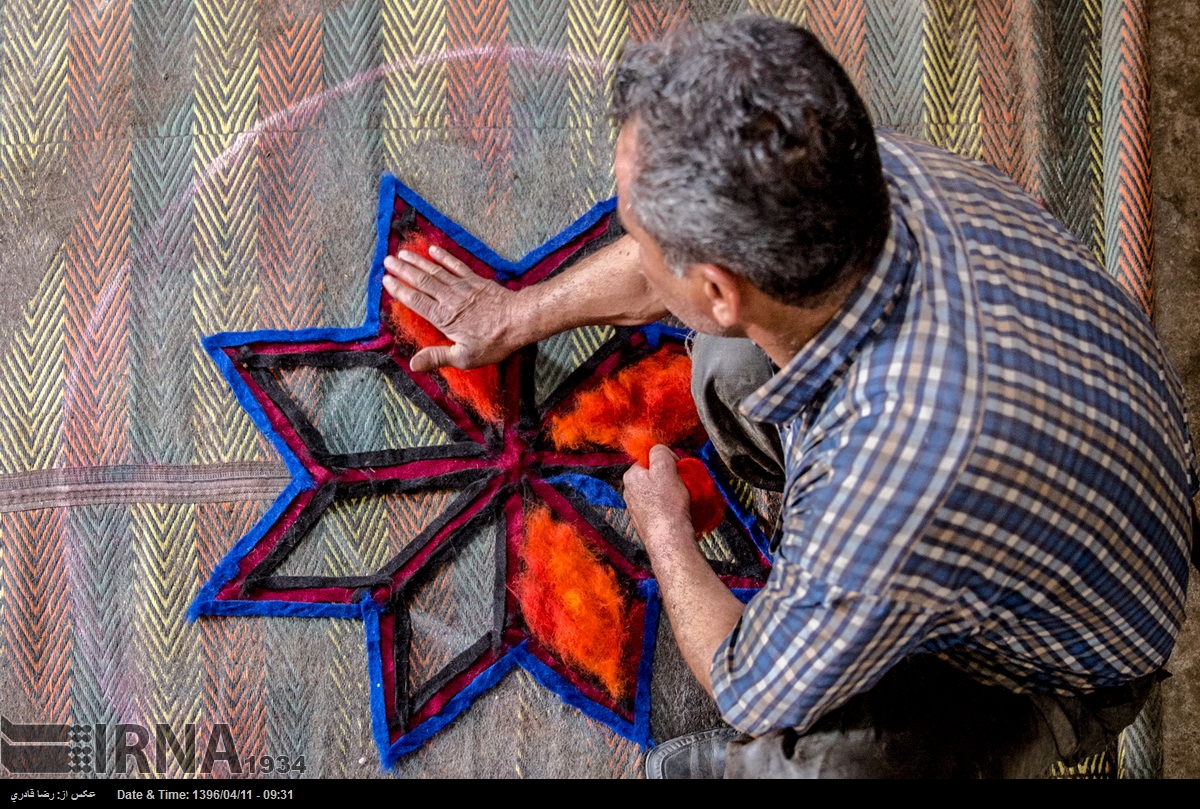
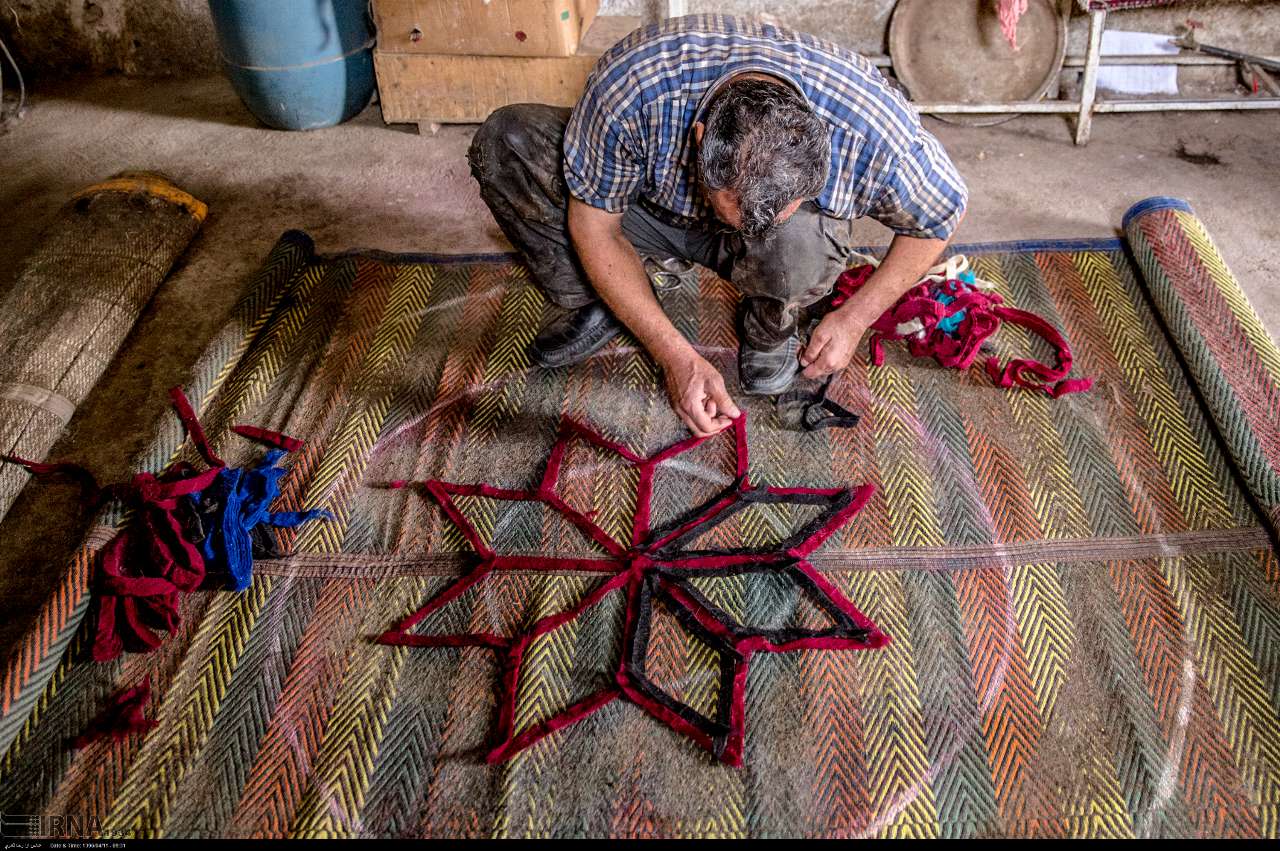
Felt is a textile material that is produced by matting, condensing and pressing animal hairs together.

The main material used in felt is the white, brown, or black sheep wool. However, sometimes a combination of them or some painted wool is used for the background of the textile.

The production of a piece of felt usually takes one day, and the felt-workers often work in double-person teams.

Today, felt is produced in most parts of Iran, and the main centres are Estahban in southern Fars province, different cities of Gilan and Mazandaran provinces, Semnan, Damghan, Quchan, Chaharmahal and Bakhtiari, Kermanshah and others.

One of the experts in this field says this job was known in the past as “Namadmaali” [Farsi equivalent of felt-making], and those who worked in this profession were called “Namadmaal” or felt-maker who mostly had strong hands.

Although felt-making was considered to be a laborious career in the past, it is an industry that has never lost its customers and it is being developed at the moment.

The use of natural raw materials instead of chemicals, as well as the introduction of new ideas and products in accordance with customer’s taste has led to the use of felt-made products in many households.

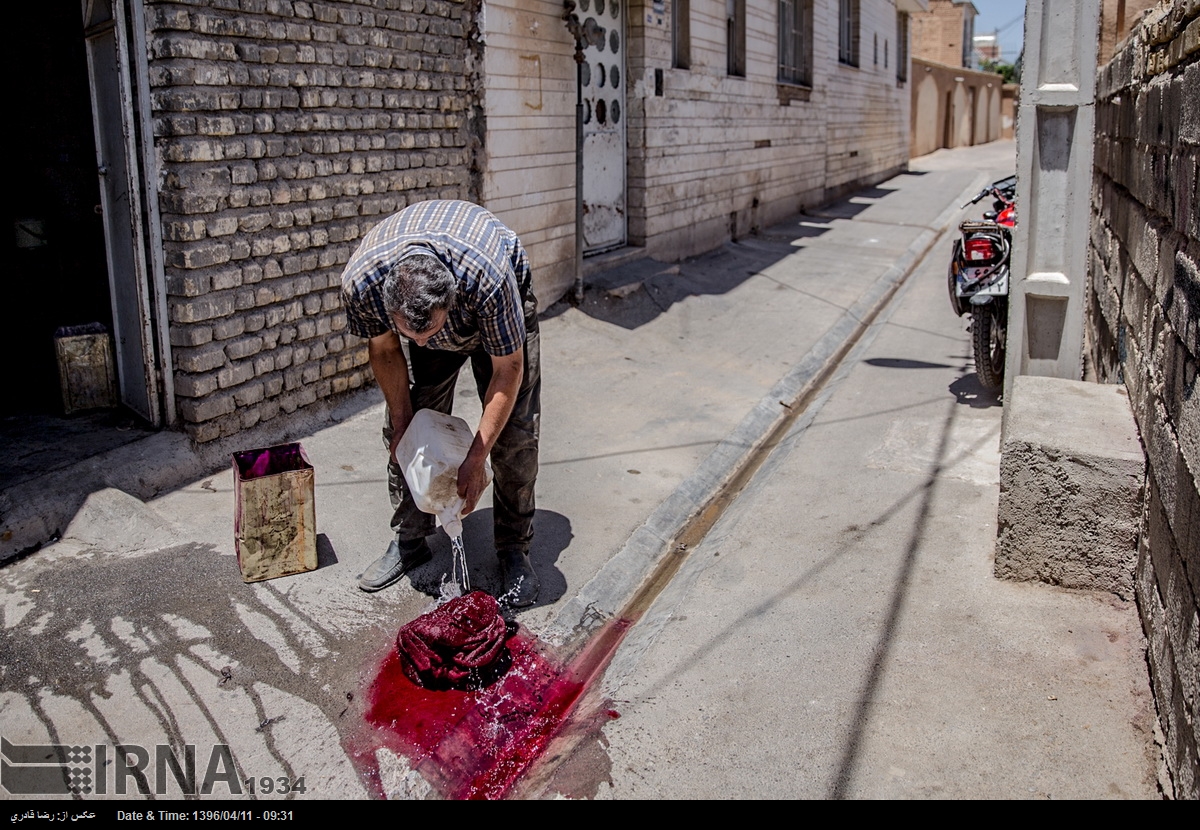
The following photos show one of the oldest felt-making workshops in the city of Shiraz in Fars province:


Iran Strongly Condemns Kabul Terrorist Attack

In a statement on Monday, Foreign Ministry Spokesperson Bahram Qassemi condemned the attack, and offered condolences to the nation and government of Afghanistan.

The Iranian spokesman also expressed sympathy with the bereaved families of the victims.

“Despite such cases of violence and inhumane and aggressive measures by the terrorist and extremist groups, the wounded nation and government of Afghanistan will continue their fight against extremism and violence,” he said.

“As always, they [Afghans] will have the support of the Iranian nation and government,” Qassemi noted.

A Taliban suicide attacker detonated a car bomb in the western part of Kabul on Monday, killing up to 35 people and wounding more than 40, government officials said, in one of the worst attacks in the Afghan capital in recent weeks.

Monday’s suicide bombing, which targeted government personnel, continued the unrelenting violence that has killed more than 1,700 civilians in Afghanistan so far this year.

Iranian Diplomat, Iraq’s Ammar Hakim Meet in Baghdad

Jaberi Ansari and Hakim, the head of the Islamic Supreme Council of Iraq (ISCI), met on Monday in Baghdad.

During their working breakfast, which was also attended by a number of Iraqi officials as well as lawmakers from the ISCI, the two sides discussed a range of regional developments as well as Iraq’s issues.

Jaberi Ansari is on a two-day visit to the neighbouring country aimed at meeting with top Iraqi officials and attending a new round of Iran-Iraq Joint Political Committee.

Earlier, he also held talks with a number of high-ranking Iraqi officials including Fuad Masum, the Iraqi President.

During his meeting with Masum, Jaberi Ansari extended the Iranian president’s warm regards and invited him to take part in President Hassan Rouhani’s swearing-in ceremony, which is planned to be held in Tehran in two weeks.

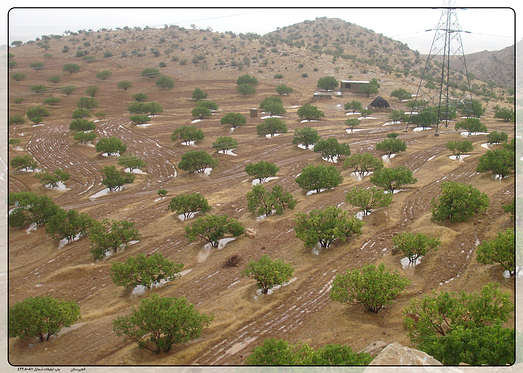
Millions of Hectares in Iran to Be Planted with Saplings

Millions of Hectares in Iran to Be Planted with Saplings

Head of Iran’s Crisis Management Organization Esmaeil Najjar says some 7.5 million hectares of land will be planted with saplings in order to tackle pollution caused by dust particles.

He made the comment at a meeting of the Crisis Commission in southeastern Sistan and Baluchestan province, according to a Farsi report by IRNA.

“3,500ha of the 7.5 million hectares scheduled to be planted with saplings are located at the centres of dust pollution,” he said.

Under the law, he added, the government is authorised to allocate to the project a total of 5 percent (3% for preventing and 2% for tackling the pollution crisis) of the budget appropriated for provinces.

He said billions of rials in funding have also been allotted to agricultural insurance, retrofitting of road construction machinery, and plans to rebuild homes in flood-stricken areas, among other things.

The official said loans have also been set aside for flood-hit victims to help reconstruct their houses.

Najjar arrived in the province on July 22 to see first-hand the extent of the damage inflicted on some provincial areas in recent flooding.

His visit came as relief workers were on the scene to help locals.

‘Colourful Dream of Silk Road’ at Beijing Int’l Book Fair

The 24th Beijing International Book Fair will be held from August 23 to 27 and the Islamic Republic of Iran, with the slogan “Iran: The Colourful Dream of Silk Road”, will participate as a special guest at the exhibition, the Managing Director of Iran’s Cultural Fairs Institute, Amir Massoud Shahramnia, was quoted as saying in a Farsi report by ISNA.

Shahramnia also said that a poster has been designed and prepared for Iran’s pavilion “based on geometric designs in Islamic art.”

He went on saying that Iran’s pavilion covers an area of 500-square metres.

“Six authors and 12 publishers will take part independently while books by 10 publishers would be presented indirectly at the exhibition.”

He continued that the Iranian literary agents will be very active at the Islamic Republic’s pavilion.

“The Iranian books translated into Chinese will be introduced there. Likewise, some selected works by Iranian publishers in areas like Iranistics, child and adolescent, contemporary Iranian literature, and books winning domestic awards next to Iranian books printed abroad would also be put on show,” he mentioned.

According to Shahramnia, a book named ‘Chinese Iranologists’, which focuses on cultural relations between Iran and China, besides a bibliography of Iranian and Chinese books will be introduced at Iran’s corner.

He said supportive projects, such as the project to support Iranian books in the global markets (Grant), and the week of the Iranian films would also be presented to the visitors.

“Live music performance, dramatic story-telling, and experts’ forum are among the other activities to be held at the Iranian pavilion in this fair,” he concluded.

Iran’s Arvand River Key to Iraq’s Integrity

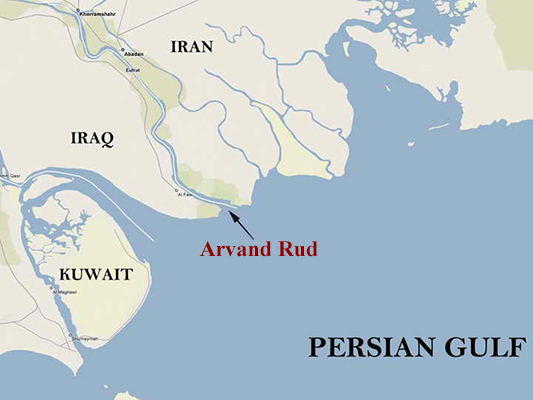
Arvand Rud
Mahmoud Askarieh
Mahmoud Askarieh –
IFP Managing Editor

Iraq’s efforts to hold talks and settle its border disputes with Iran and to facilitate its access to the Persian Gulf not only show Baghdad’s close relationship with Tehran, but are regarded as an initiative to increase the costs of attempts by separatists in Iraq’s Kurdistan Region.

The new round of meetings of the Iran-Iraq Joint Legal-Technical Committee was held in Baghdad on Sunday, July 23, with top officials and relevant experts from both countries in attendance. The meetings are co-chaired by Iranian Deputy Foreign Minister for Arab and African Affairs Hossein Jaberi Ansari and Iraqi Deputy Foreign Minister Nizar Khairallah, and will continue until Monday. Delegations from both countries comprising political, legal, military, surveying, and ports and shipping experts are present at the talks.

The negotiations are held on a rotating basis in Tehran and Baghdad. On the agenda is the latest situation of the Arvad Rud (known as Shatt al-Arab by Arabs), the river which lies on the two countries’ common border. Ways of boosting cooperation in order to utilize the waterway to boost economic growth in both countries is also a topic of discussion.

The fresh round of border talks between Iran and Iraq is being held in the wake of the ISIS terrorist group’s defeat amid reports that there are certain elements seeking to hold a referendum for independence of the Iraqi Kurdistan region. This shows the Iraqi central government is determined to safeguard its territorial integrity and is trying to improve its economic situation by easing access to the Persian Gulf waters.

Iraq is not capable of efficiently utilizing its oil reserves because it is a land-locked country and has very limited access to the Persian Gulf. This has triggered border disputes between Iran and Iraq. After all, before Baghdad launched its eight-year war on Iran in the 1980s, former Iraqi strongman Saddam Hussein tore up the 1975 Algiers Accord between the two countries and tried to occupy Arvand Rud’s bank on Iranian soil.

However, the situation is different now. The Iranian and Iraqi governments have very close and cordial relations and, by the admission of Iraqi officials and people, Iran was the only country to stand by Iraqis (including Arabs, Kurds, Shiites and Sunnis) to help rid the nation of ISIS terrorists. Now after the defeat of terrorists, there are fears that the sweet taste of victory over ISIS might be soured by threats to Iraq’s territorial integrity. Under such circumstances, the Iraqi government seeks to take advantage of its friendly relations with Iran and, through dialogue and diplomacy, draw Iran’s cooperation to help stabilize its territorial integrity. Joint efforts to revive and dredge Arvand Rud will not only give fresh impetus to the transportation of cargo and passengers, but can also facilitate access to the Persian Gulf and to get Iraq connected to the high seas, a great advantage that would make the horizon ahead of Iraq brighter.

In addition to having positive economic effects, and at a time when the hostile policies of the Israeli regime and other enemies of Iraq are targeting the country’s territorial integrity, the beginning of expert talks in order to settle a historic border dispute based on international relations amounts to the consolidation of friendship and strategic alliance between Iran and Iraq. It seems negotiations between Tehran and Baghdad at this juncture in order to revive the geopolitical role of Arvand Rud is a clear and strong message to all by the Iraqi central government. The message is that Baghdad will not succumb to efforts by some elements to separate Kurdistan from Iraq, and that Kurdistan’s separation from Iraq will jeopardize Kurds’ medium-term and long-term interests as well.

If Iraq’s access to the Persian Gulf is facilitated, that will definitely make the situation more difficult for local elements and foreign governments that urge Iraqi Kurds to separate from Iraq. The establishment of a landlocked country under the pretext of seceding from a country with access to the high seas is irrational enough for Iraqi Kurds to rethink their calls for separation.

Iran, Iraq Agree to Boost Military Cooperation

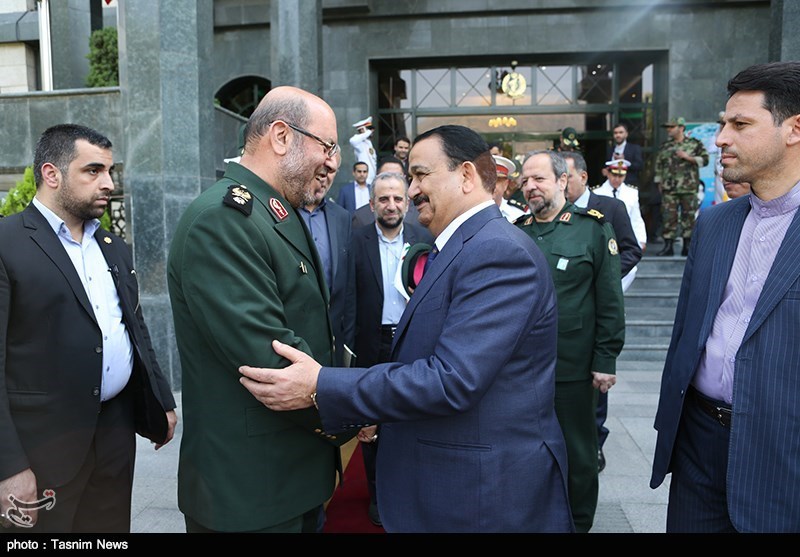
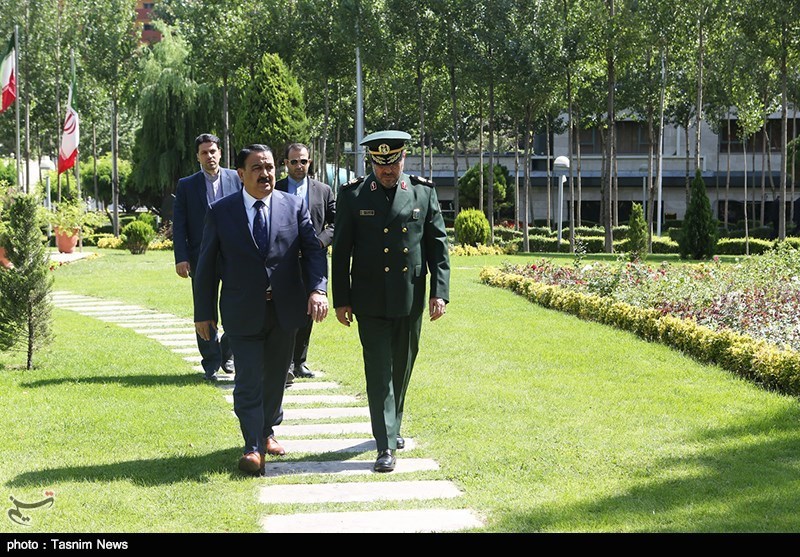
In a ceremony in Tehran on Sunday, Iranian Defense Minister Brigadier General Hossein Dehqan and his visiting Iraqi counterpart Erfan Mahmoud al-Hayali signed a memorandum of understanding on cooperation in a range of military spheres.

Based on the deal, Tehran and Baghdad will promote interaction and share experiences in the fight against terrorism and extremism, work together to ensure border security, and provide each other with training and logistical, technical and military support.

Speaking to reporters after signing the document, the two ministers expressed the hope that it would result in deeper and more serious military cooperation between the two countries.

Heading a military delegation, Hayali arrived in Tehran on Saturday for an official visit.

Iran, Iraq Agree to Boost Military Cooperationmi

Iran, Iraq Agree to Boost Military Cooperation

In December 2014, Iraq’s then defense minister Khalid al-Obeidi paid a visit to Iran and signed a defense cooperation agreement with Iran.

Iraq has been facing the threat of terrorism in recent years, mainly posed by the Daesh (ISIL) terrorist group.

Amid tensions in Iraq, Iran is known as the first country to help the Arab nation and has always voiced support for Iraq’s territorial integrity and prosperity.

Divisive Approaches in Iraq to Increase Insecurity, Instability: Iran

In a meeting with Iraqi Defense Minister Erfan al-Hiyali in Tehran on Sunday, Secretary of Iran’s Supreme National Security Council (SNSC) Ali Shamkhani said national unity and integrity in Iraq would guarantee the country’s stability and security and serve the interests of Iraqis regardless of their ethnic and religious backgrounds.

He hailed the resistance of the Iraqi people, army and popular forces against terrorist groups’ threats and said, “Close cooperation among countries which have been victims of terrorism in the region is an unavoidable necessity for military, security and cultural confrontation with terrorism.”

“It will also prevent the reemergence of terrorism and military intervention of foreigners under the pretext of fighting them,” he added.

Divisive Approaches in Iraq to Increase Insecurity, Instability: Iran

The SNSC secretary emphasized that the Islamic Republic would continue to support Iraq’s armed forces and cooperate with the war-stricken country to establish full security and peace and deter all terrorist threats.

Iran’s support plays leading role in the fight against Daesh

Hiyali, for his part, said relentless support by the Iranian government, people and Armed Forces for Iraq in its campaign against terrorism played a determining role in the Iraqi nation’s victory against the Daesh Takfiris.

The Iraqi defense minister stressed the importance of strengthening bilateral cooperation in various fields given the two sides’ common objectives.

He said the Iraqi army had managed to independently thwart any act of aggression against the country and would never make way for new plots and illegal moves, which are aimed at disintegrating Iraq.

Heading a delegation, Hiyali arrived in Tehran on Saturday at the official invitation of Iranian Defense Minister Brigadier General Hossein Dehqan. Later in the day, the two defense chiefs held talks on different issues.

Hiyali and Dehqan on Sunday signed a memorandum of understanding to boost defense and military cooperation in a variety of fields.

According to the MoU, Tehran and Baghdad will strengthen cooperation, exchange experience in the fight against terrorism and extremism, improve border security, and provide the two countries’ military forces with training, logistical, technical and military support.