Sunday, April 12, 2026
Home Blog Page 3957

Iran Dismisses Saudi Claim about Visit to Diplomatic Sites

bahram

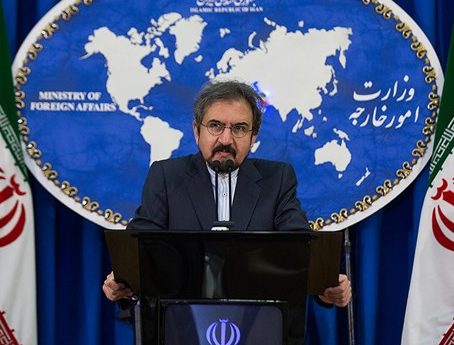
“Visas for a Saudi delegation to visit the diplomatic missions were issued last month,” Iranian Foreign Ministry Spokesman Bahram Qassemi was quoted by IRNA as saying on Tuesday.

An unnamed Saudi Foreign Ministry official claimed on Monday that Iranian authorities had “persistently and consistently” stalled and refused to resume investigations into the incident of storming the kingdom’s embassy in capital Tehran and its consulate in city of Mashhad, Saudi Press Agency (SPA) reported.

Qassemi dismissed the allegations, saying “These are erroneous and untrue comments. It seems that such remarks were made without any coordination with informed and relevant officials at Saudi Foreign Ministry.”

He added that Tehran and Riyadh had reached an agreement over the visit to diplomatic missions, saying that the Iranian side issued visas for the Saudi delegation nearly a month ago after Saudi Foreign Ministry accepted the principle of reciprocity.

“The license for an exclusive flight for the abovementioned delegation was issued in the shortest possible time and this delegation was scheduled to arrive in Tehran on Sunday, but they themselves made a request to postpone the trip in order to make necessary preparation,” the Iranian spokesperson pointed out.

It seems likely that the Saudi side has been taken by surprise as a result of Iran’s goodwill and swift measures and, as usual, has started playing the blame game, he said.

Attackers held violent protests in front of Saudi Arabia’s embassy in the Iranian capital as well as its diplomatic mission in Mashhad on January 2, 2016 against the kingdom’s earlier execution of its leading Shia cleric, Sheikh Nimr al-Nimr. Tehran has condemned the attacks, calling its perpetrators rogue elements.

Riyadh reacted to the violence by rupturing its diplomatic ties with Tehran, which it has not restored to date.

Iran FM Urges Muslim World to Unite against Israel’s Expansionism

Zarif OIC

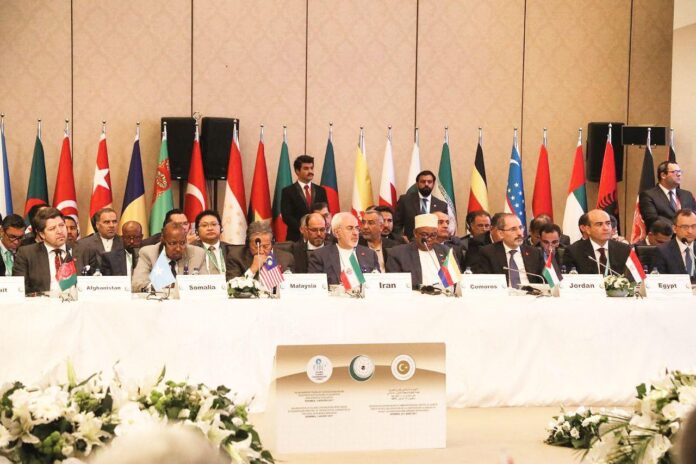
“The Israeli regime has continued to ignore all appeals of the outside world to cease and reverse its racist policies and practices against the Palestinian people,” Foreign Minister Mohammad Javad Zarif said on Tuesday.

He made the remarks in his address to the Extraordinary Meeting of the Executive Committee of the Organisation of Islamic Cooperation (OIC) held in Istanbul to discuss the recent developments in al-Aqsa Mosque.

“We in the Islamic Ummah should, first and foremost, close our ranks in a unified global campaign to thwart the Zionist attempts to conceal their criminal policies and practices,” he added.

Here is the full text of his statement:


In the Name of God

Mr. Chairman,

Dear Colleagues,

Allow me to begin by expressing my appreciation to the people and government of the Republic of Turkey for hosting this important meeting to address the deteriorating situation in al-Quds al-Sharif. We strongly condemn the latest episode of Zionist aggression and provocation, which indicate absolute contempt for international law aiming to alter the historic status of Haram al-Sharif, change the demography and assert control over the Islamic holy sites in the heart of Occupied al-Quds al-Sharif. We take pride in the resolute resistance of the Palestinian People which brought this act of aggression to an end.

The city continues to suffocate because of a prolonged siege characterized by checkpoints, occupying forces, illegal settlements, armed and violent settlers, and humiliation, discrimination and oppression of its Palestinian inhabitants.

We should not also forget the 2 million Palestinians in Gaza, who remain under illegal blockade, in an act of collective punishment, and are deprived from basic necessities even vital medicine, clean water and energy. This deliberate humanitarian nightmare requires urgent remedy through ending the blockade immediately.


Mr. Chairman,

The Israeli regime has continued to ignore all appeals of the outside world to cease and reverse its racist policies and practices against the Palestinian people. We in the Islamic Ummah should, first and foremost, close our ranks in a unified global campaign to thwart the Zionist attempts to conceal their criminal policies and practices. We should all resist any attempt to divert our collective attention from the main goal that brought us together in the OIC. We should not allow any agenda or cause to compromise the main goal of this Organization to enhance the unity of the Ummah against Zionist expansionism and in support of the establishment of a viable independent Palestinian State with Al-Quds Al-Sharif as its capital. We should not allow the Zionist to set our agenda or manufacture new causes to ensure their impunity for the crimes they have perpetrated against all of us. We should not be misled by their empty gestures and the illusive mirage of their promises.

We need to engage with one voice with the international community, particularly the Security Council, to put an end to the culture of impunity for the Israeli regime and compel it to cease and reverse its criminal policies and practices.

Iranian, Russian Deputy FMs Hold Talks in Moscow

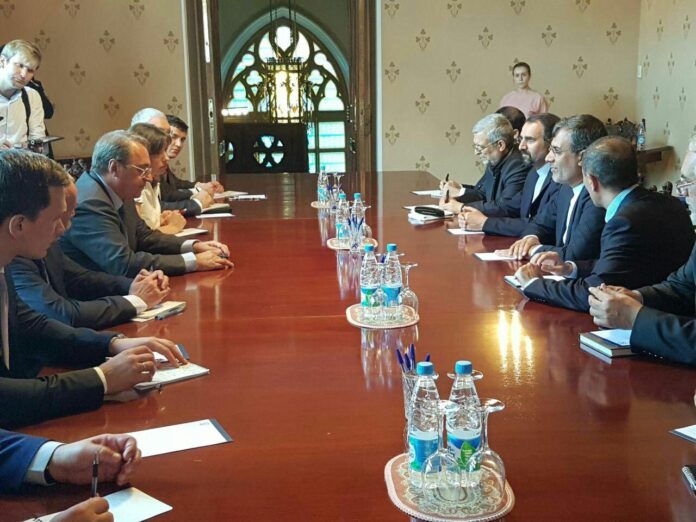
During the meeting, which took several hours, the two sides discussed a range of issues, from the latest developments in West Asia and North Africa regions to the ongoing crises in Syria, Yemen, and Libya, the problems of Iraq, and the Iraqi Kurdistan’s independence referendum.

Jaberi Ansari and Bogdanov also conferred on the issue of Palestine, the crisis in Qatar’s relations with Saudi Arabia, and several other regional and international issues of mutual interest.

The intra-Syrian talks in Astana and Geneva, the humanitarian needs of Syrian people, and the issue of Syria’s reconstruction were among other points raised in the meeting.

The Iranian and Russian diplomats also exchanged views on the next steps in the Astana Process, including the possibility that new parties would join the talks as observer members.

Based on the pre-planned agenda, delegations from the three guarantor states – Iran, Turkey, and Russia – will soon attend a fresh round of Astana expert talks in Tehran, where the parties will discuss defining boundaries of de-escalation zones and the arrangements for governing these zones.

Tehran, Riyadh Send Israel Key Message through Body Language

Zarif Jubeir
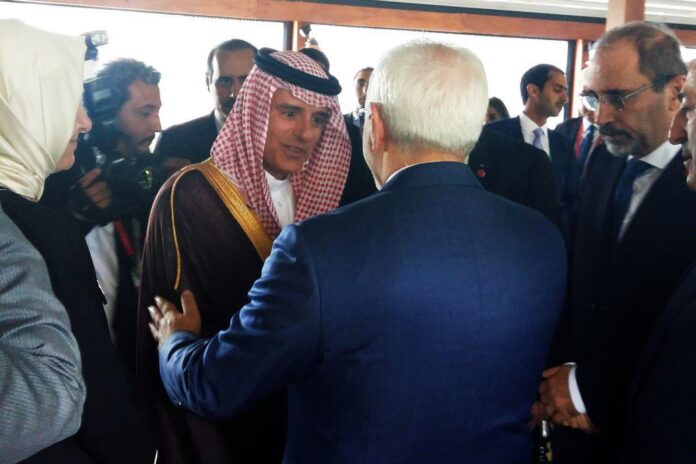
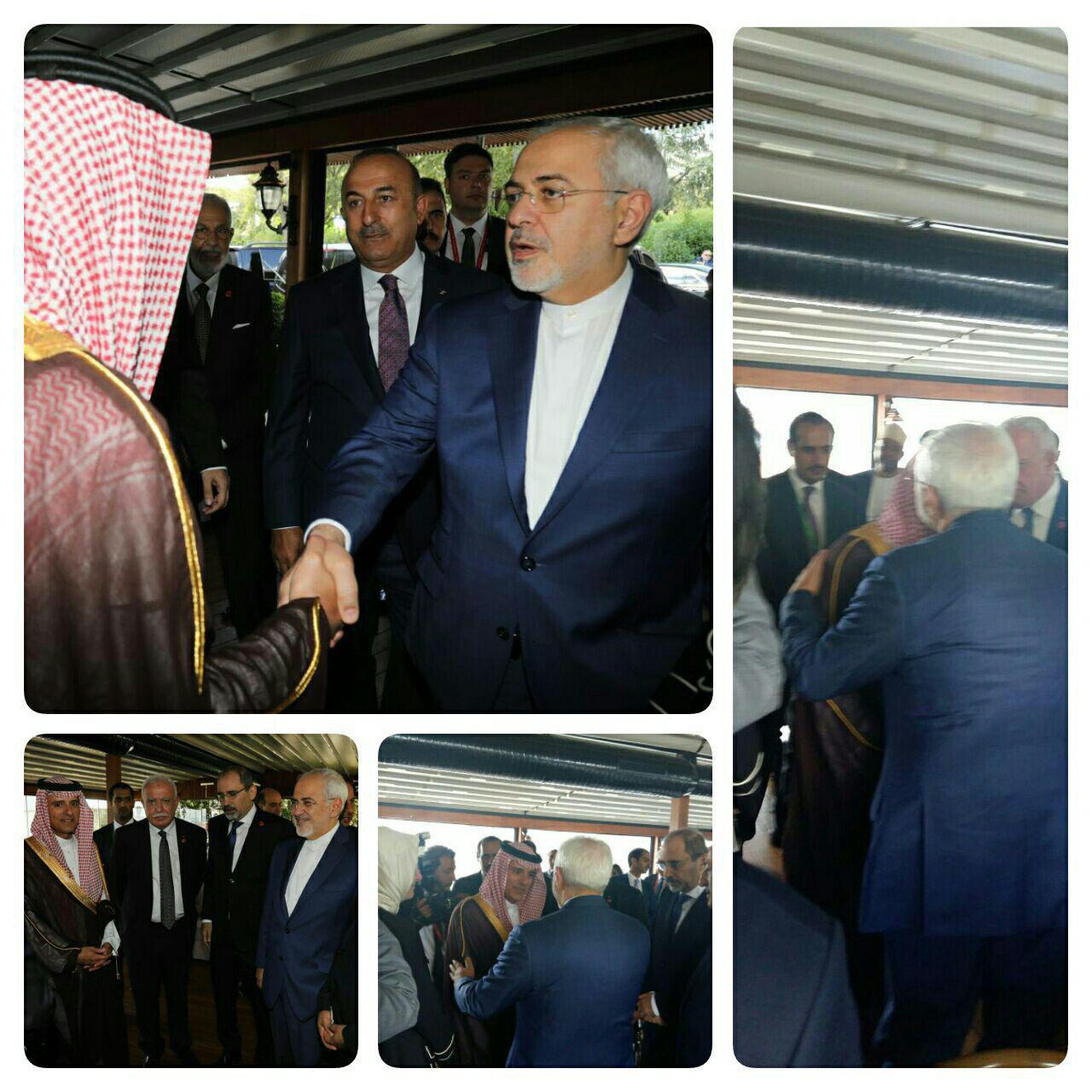
Iranian Foreign Minister Mohammad Javad Zarif is giving a rare handshake to his Saudi counterpart Adel al-Jubeir on the sidelines of a meeting of the Organization of Islamic Cooperation (OIC) in Istanbul, Turkey, on August 1, 2017.

As the first step towards easing tension between Tehran and Riyadh, tens of thousands of Iranian pilgrims are currently travelling to Saudi Arabia for this year’s Hajj pilgrimage.

Hajj officials from both countries held extensive talks on the participation of Iranian pilgrims in the largest international congregation of Muslims in the holy city of Mecca a couple of years after the tragic incidents in Mina and Tehran’s decision to stop sending its pilgrims.

In their discussions, they set the stage to keep the wall of mistrust between the two nations from going any higher.

Tehran, Riyadh Send Israel Key Message through Body LanguageThe recent speech by Leader of the Islamic Revolution Ayatollah Seyyed Ali Khamenei in the run-up to this year’s Hajj rituals (a religious duty whose political dimensions have always been emphasized by Iran since the 1979 Islamic Revolution) clearly highlighted the need for unity among Muslims and Islamic countries. Ayatollah Khamenei suggested the root causes of divisions and rifts between Islamic nations and states should be sought somewhere outside Islamic territories (the US). The Leader also underlined the Hajj event is an opportunity which should be seized to promote rapport and coordination among Muslims to counter the Israeli encroachment upon the al-Aqsa mosque.

The remarks recently made by Iranian Hajj officials also showed a positive atmosphere in relations between the two regional arch-rivals. Iran Leader’s representative in Hajj affairs Seyyed Ali Qazi-Askar hailed Saudi Arabia’s commitment to its obligations and said the Iranian pilgrims were well received by the Saudi side.

A few days ago, Iran also upheld the prison terms of those who had attacked the Saudi embassy in Tehran. The move, which was made ahead of the Hajj pilgrimage, can be described as a goodwill gesture by the Iranian side.

However, Saudis are also sending positive signals to the Islamic Republic. Saudi foreign minister has reportedly come forward to shake hands with his Iranian counterpart on the sidelines of the extraordinary meeting of the Executive Committee of the Organization of Islamic Cooperation.

The meeting was held in Istanbul, Turkey, on Tuesday focusing on the holy Quds and fighting Israel’s blatant violence against worshipers as well as the unprecedented limitations created by Israel for the presence of Palestinians at the al-Aqsa mosque.

The event coincided with the beginning of the Hajj season, paving the way for taking another key step toward détente in the crisis-hit Middle East.

Iranian Foreign Minister Mohammad Javad Zarif shaking hands with his Saudi counterpart Adel al-Jubeir can be as promising for Syrian and Iraqi war-stricken people and refugees as it can be disappointing for Israeli Prime Minister Benjamin Netanyahu!

FM Zarif Holds Meeting with Indonesian Counterpart in Istanbul

The meeting was held on Tuesday on the sidelines of an extraordinary meeting of the Organisation of Islamic Cooperation (OIC) on Al-Quds developments.

Zarif and Marsudi conferred on bilateral ties as well as latest regional issues.

A Look at Iranian Newspaper Front Pages on August 1

Newspapers today continued covering the pressures on President Hassan Rouhani on the line-up of his future cabinet.

The issue of choosing women ministers and cabinet members was particularly highlighted by many news outlets.

The Islamic Republic’s response to the US provocative actions, including the fresh sanctions ratified by the US Congress, also received great coverage.

The above issues, as well as many more, are highlighted in the following headlines and top stories:


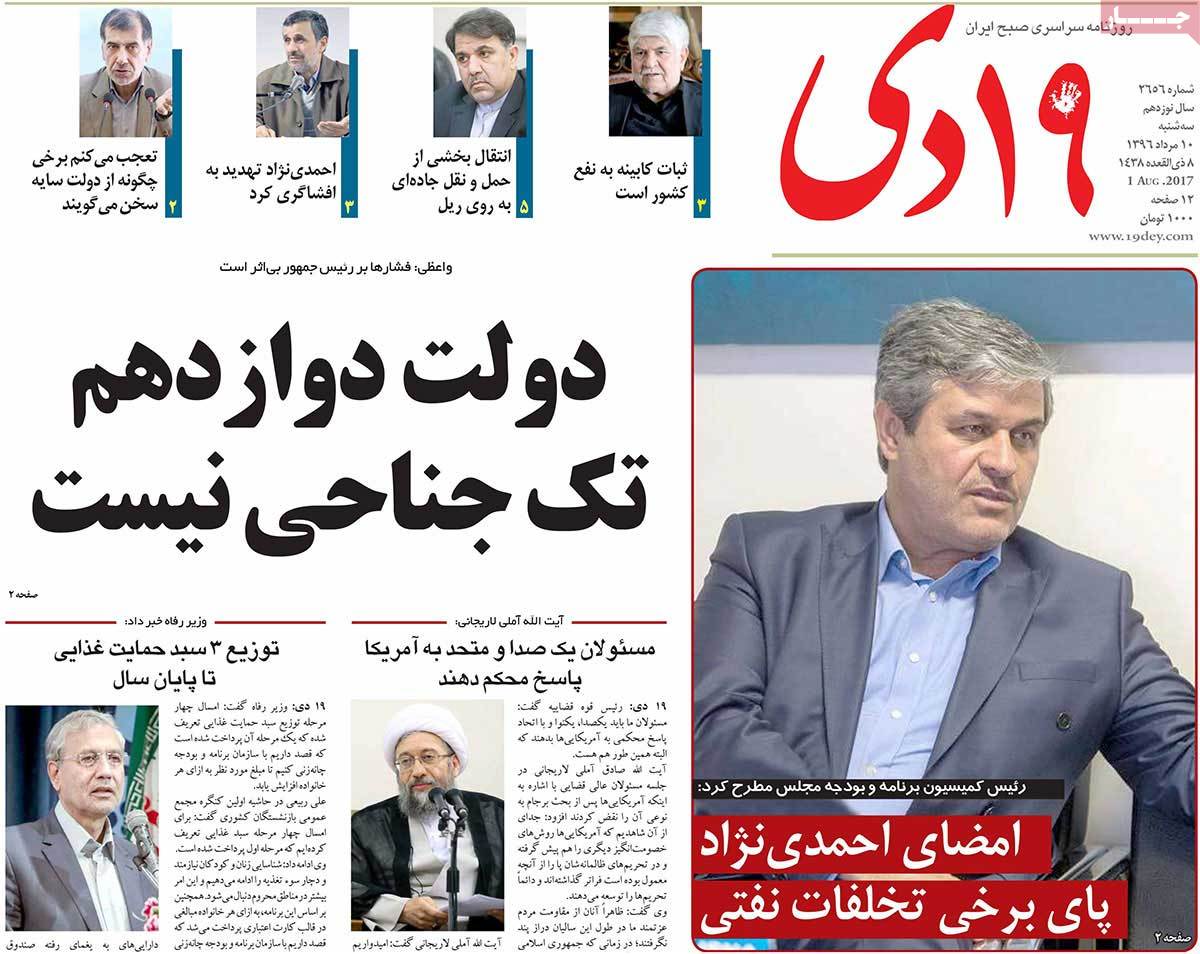
19 Dey:

1- Pressures on Rouhani for Cabinet Line-up Futile: Minister

2- Judiciary Chief: Officials Should Respond to US in United, Unanimous Way

A Look at Iranian Newspaper Front Pages on August 1


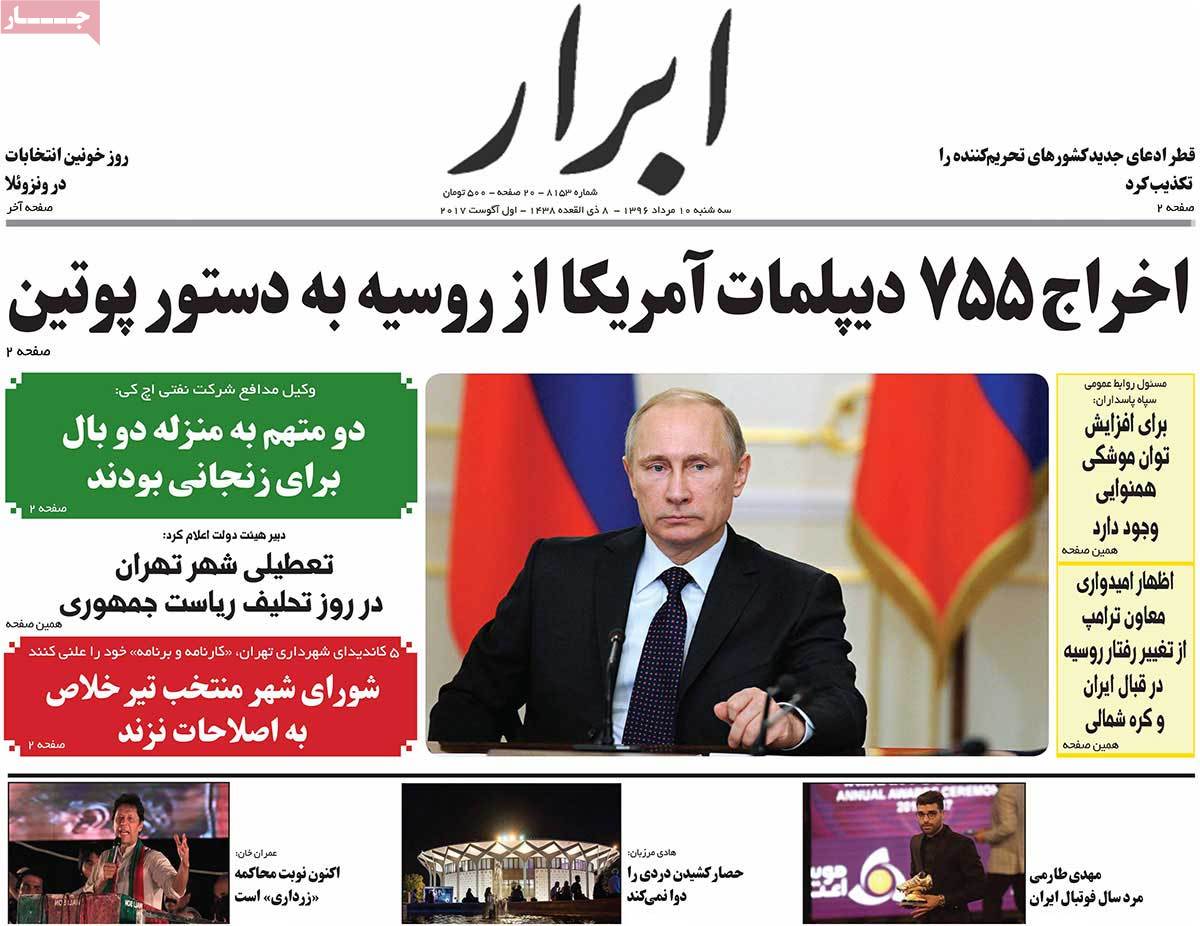
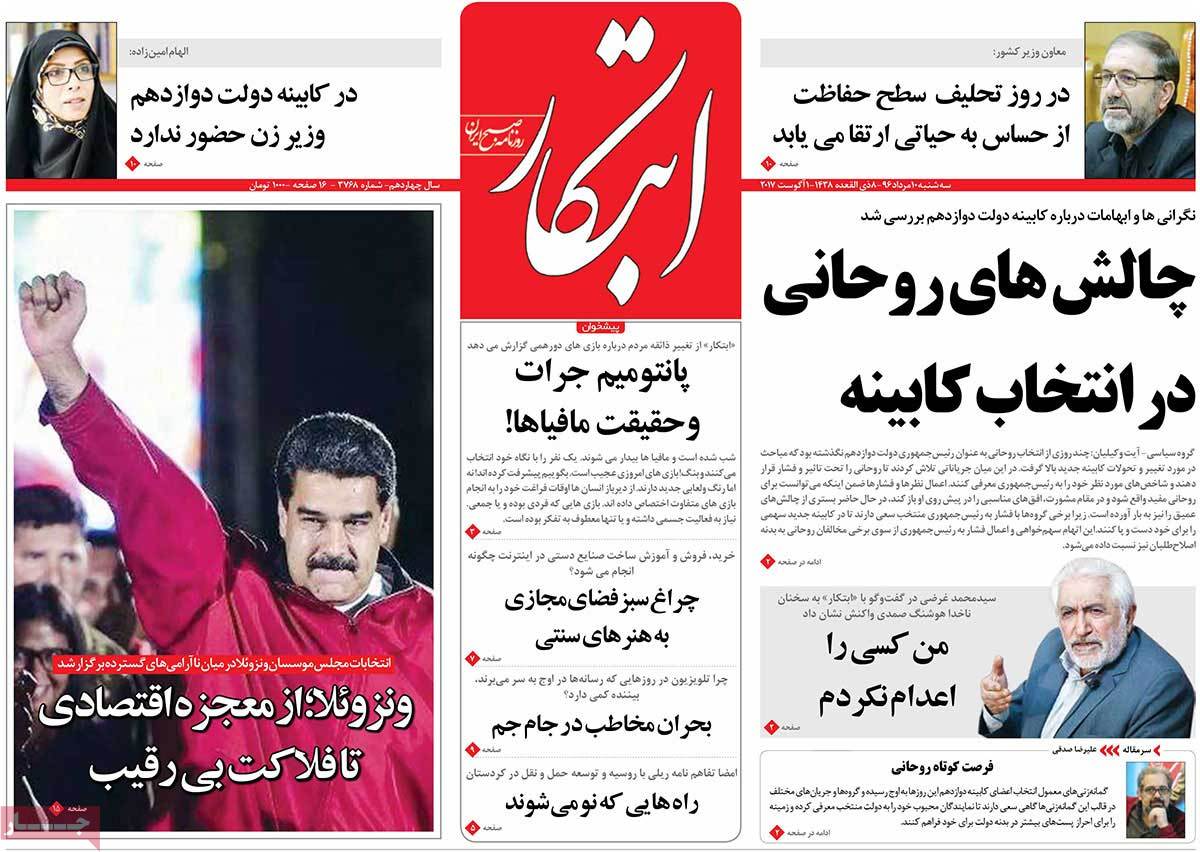
Abrar:

1- 755 US Diplomats Deported from Russia on Putin’s Order

2- Bloody Election Day in Venezuela

3- Trump’s Deputy Hopes Russia Would Change Behaviour towards Iran, North Korea

A Look at Iranian Newspaper Front Pages on August 1


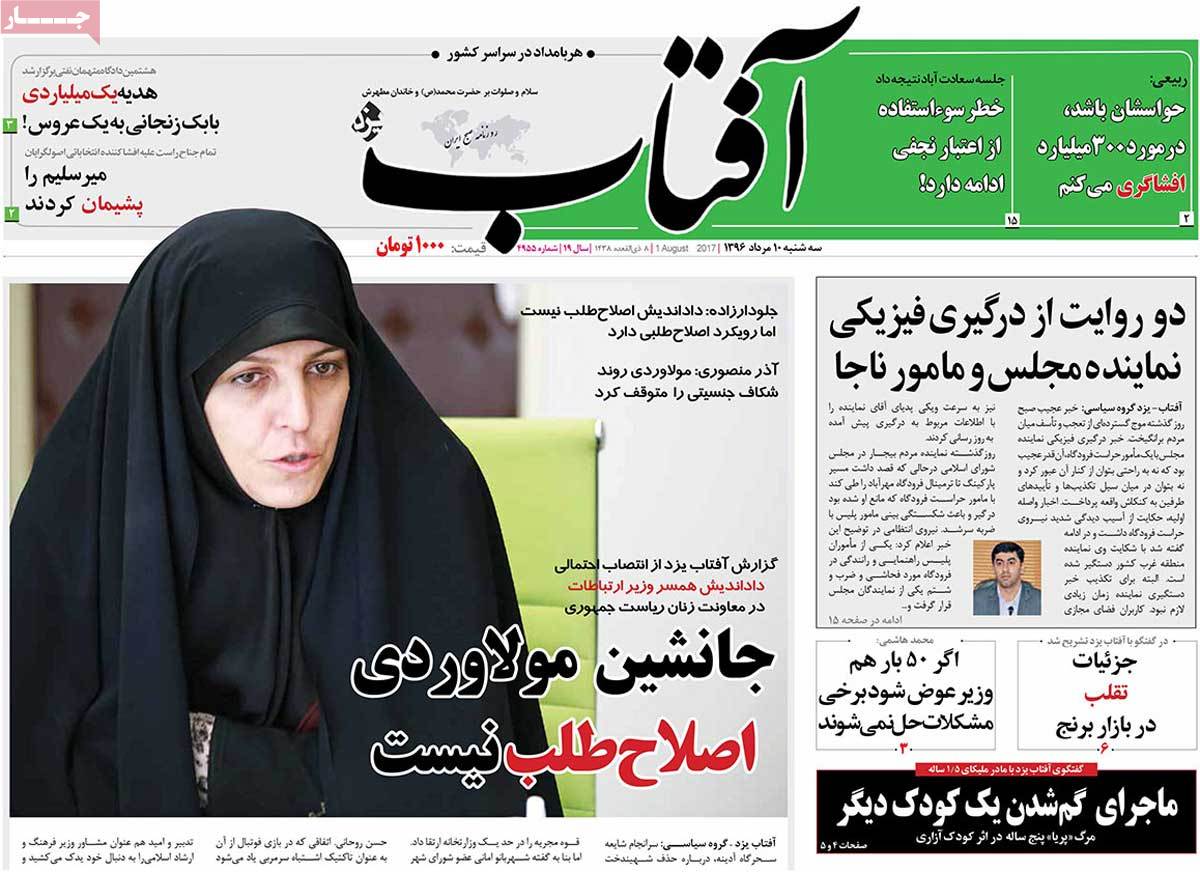
Aftab-e Yazd:

1- VP for Women Affairs Molaverdi to Be Replaced with Non-Reformist Figure

2- Two Accounts of MP’s Physical Clash with Police Officer


A Look at Iranian Newspaper Front Pages on August 1


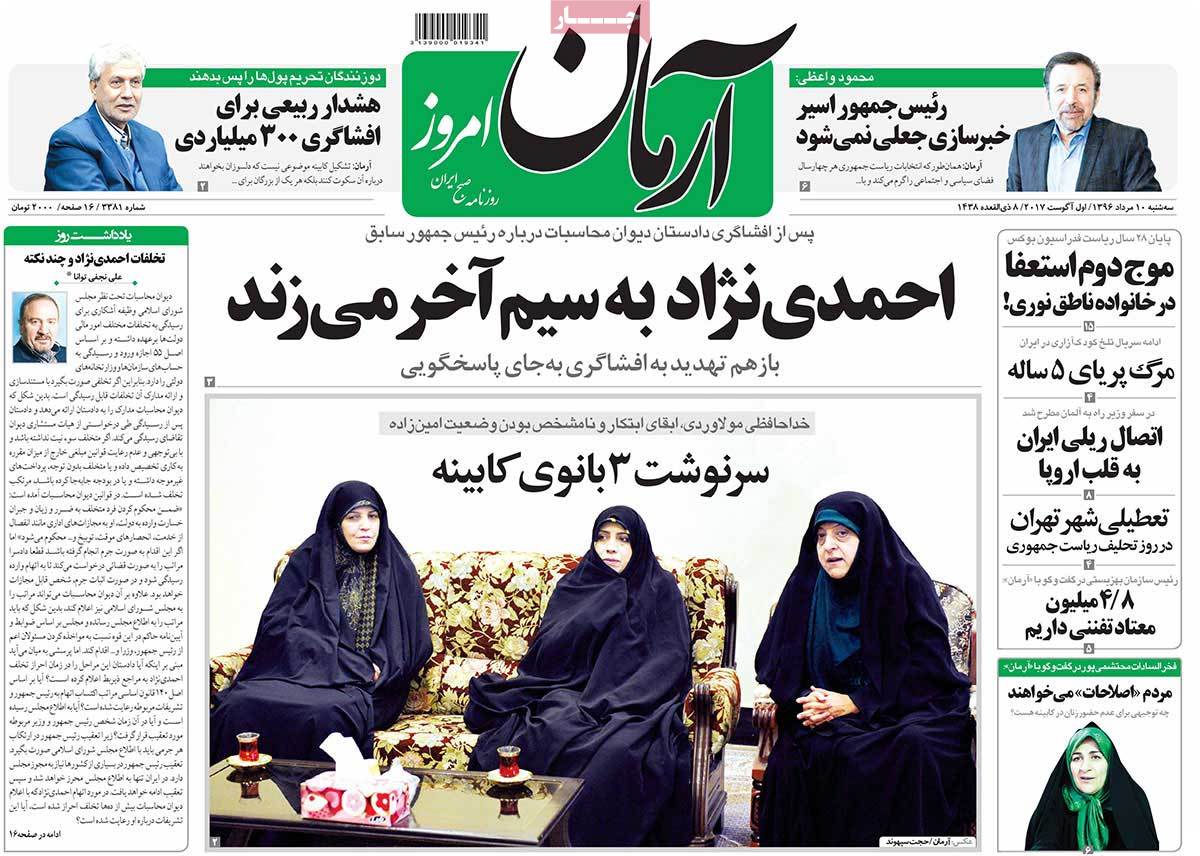
Arman-e Emrooz:

1- Ahmadinejad to Fly Off the Handle after Prosecutor’s Remarks about His Violations

2- Destiny of Three Female Members of Rouhani’s Cabinet

  • Molaverdi to Say Goodbye
  • Ebtekar to Keep Her Post
  • Aminzadeh’s Fate Still Unclear

3- Iran to Be Connected to Europe’s Heart through Railway after German Minister’s Visit

4- Rouhani’s Inauguration Day Declared as Holiday in Tehran


A Look at Iranian Newspaper Front Pages on August 1


Ebtekar:

1- Rouhani’s Challenges in Cabinet Formation

2- Deputy Interior Minister: Security to Be Tightened on Inauguration Day

3- Venezuela: From Economic Miracle to Rival’s Adversity


A Look at Iranian Newspaper Front Pages on August 1


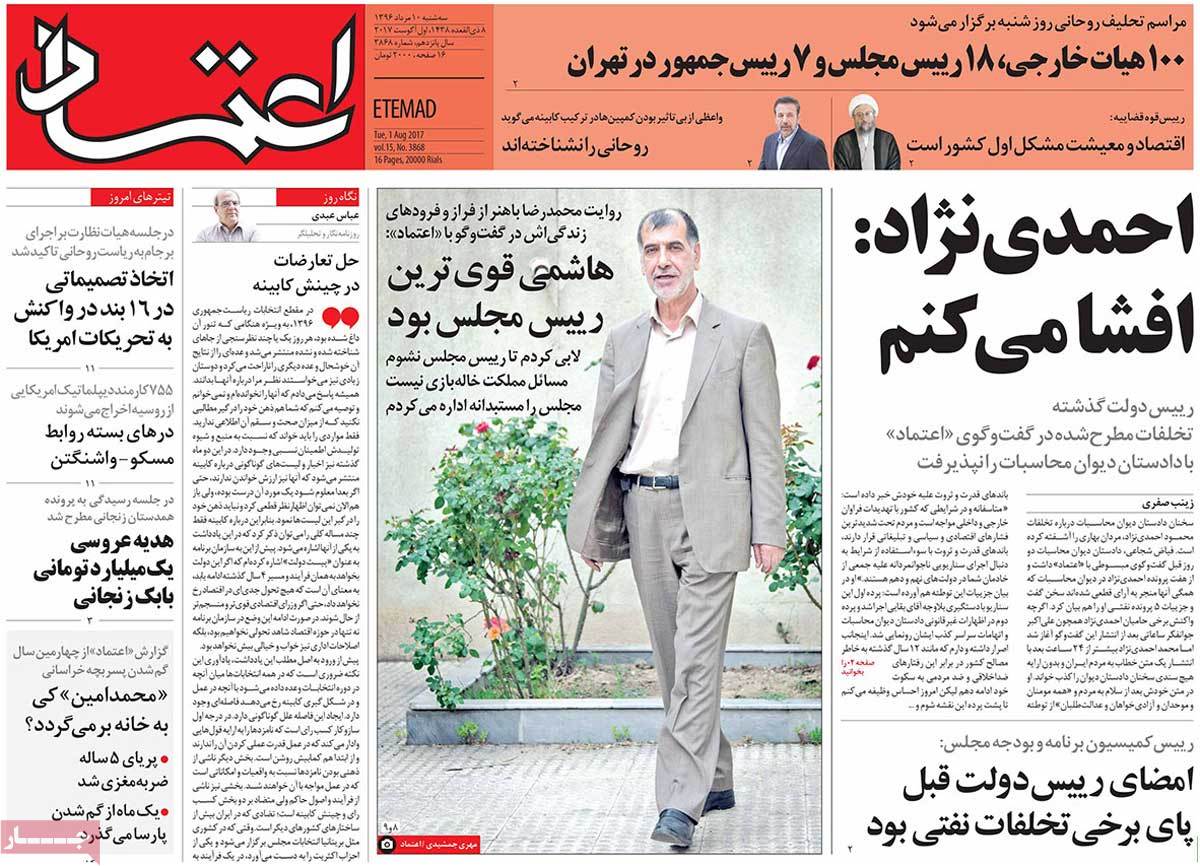
Etemad:

1- Rouhani’s Swearing-in Ceremony to Be Held Saturday

  • 100 Foreign Delegations, 18 Parliament Speakers, 7 Presidents in Tehran

2- Closed Doors of Moscow-Washington Ties

3- Decisions in 16 Articles Made in Iranian JCPOA Committee to Counter US Provocations


A Look at Iranian Newspaper Front Pages on August 1


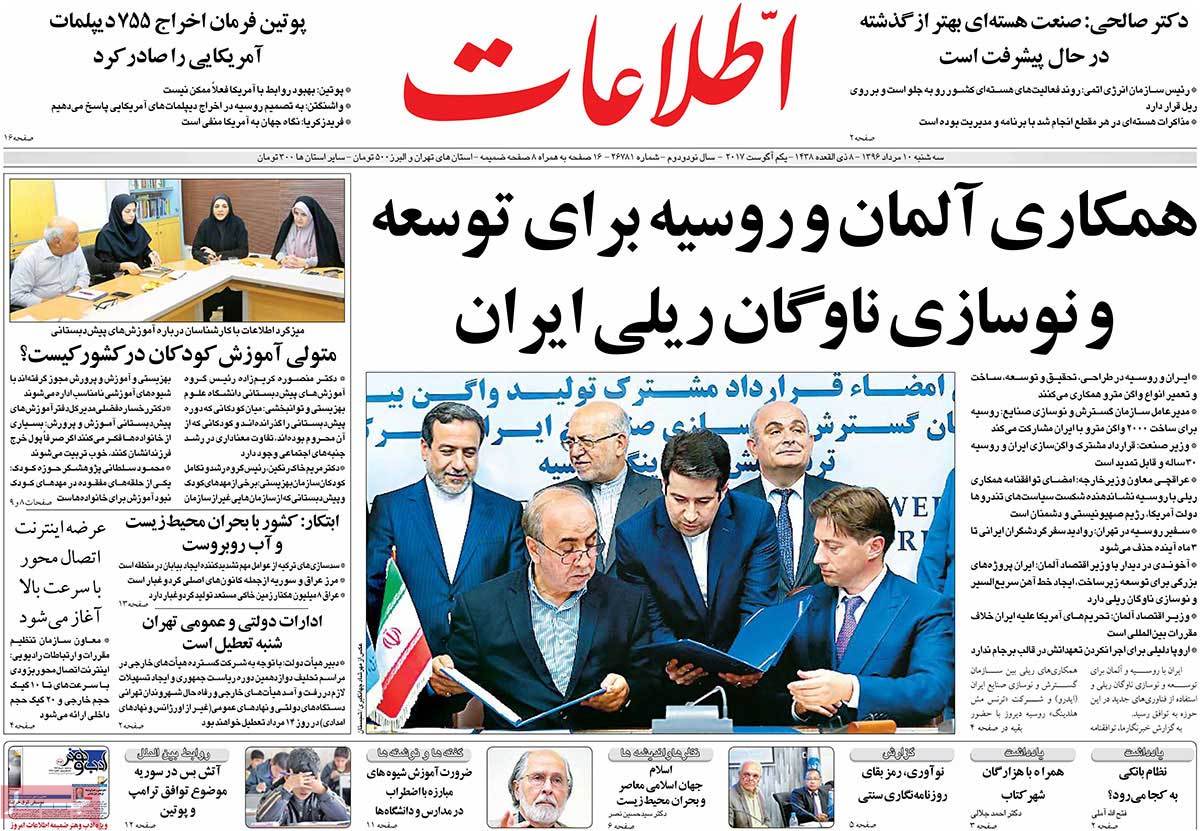
Ettela’at:

1- Germany, Russia to Cooperate in Development, Renovation of Iran’s Railway

2- Nuclear Chief: Iran’s Nuclear Industry Progressing Better than before

A Look at Iranian Newspaper Front Pages on August 1


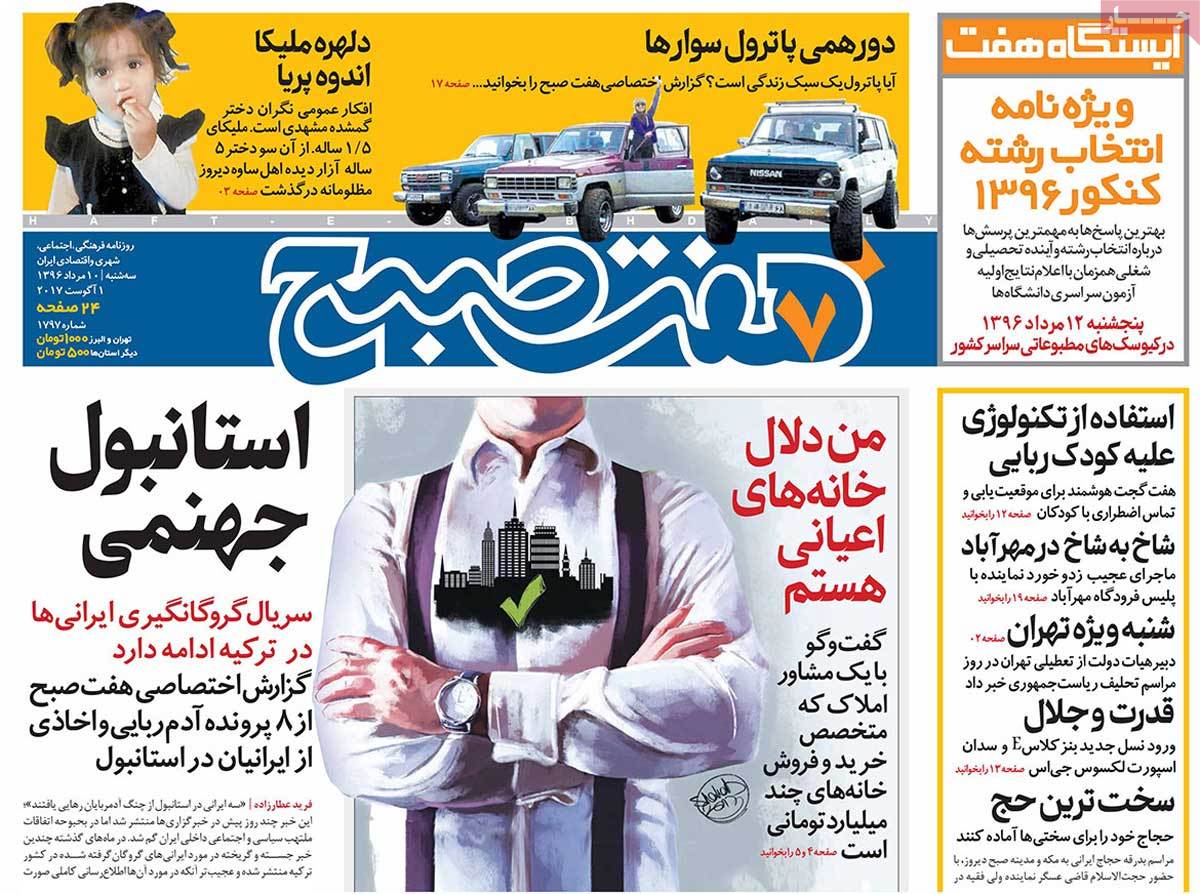
Haft-e Sobh:

1- Hell in Istanbul: Iranians Continue to Be Taken as Hostage in Turkey

  • A Report on 8 Cases of Kidnapping, Extortion of Iranians in Turkey

A Look at Iranian Newspaper Front Pages on August 1


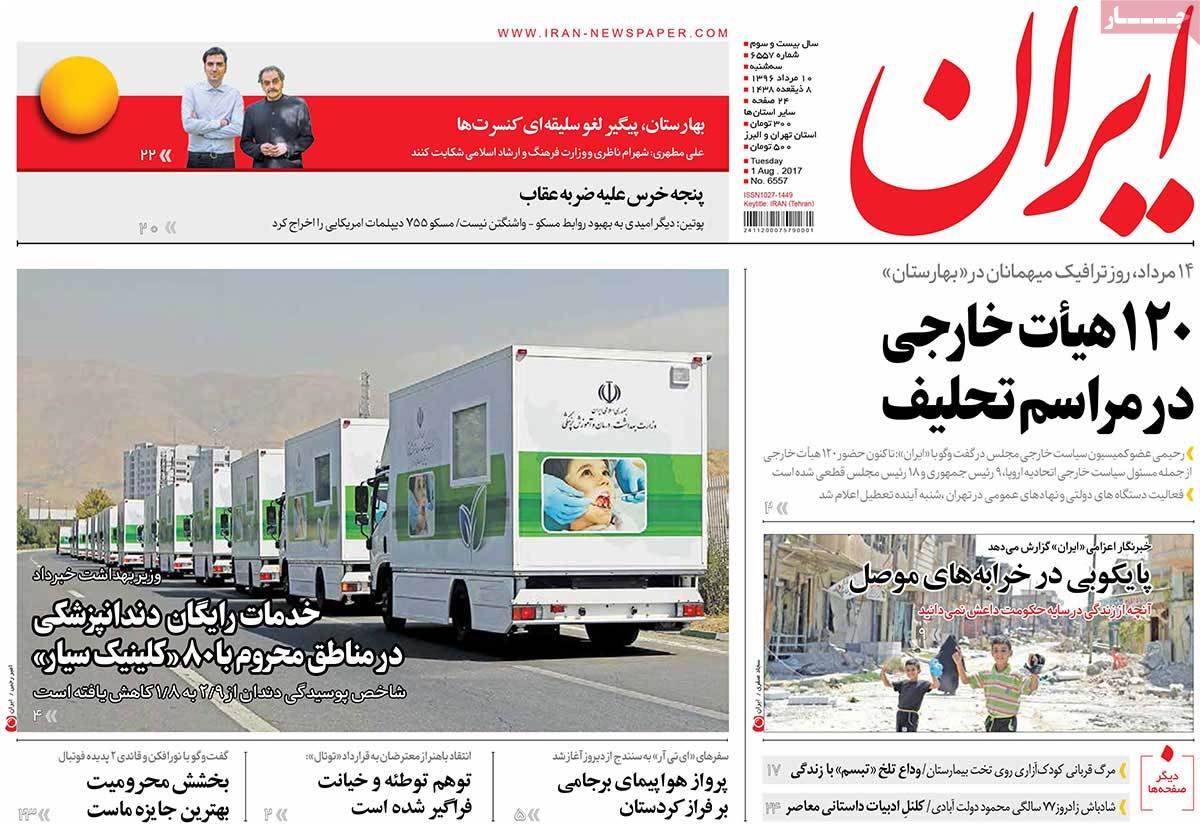
Iran:

1- 80 Mobile Clinics to Provide Free Dentistry Services in Iran’s Deprived Areas

2- Celebration in Ruins of Mosul: Exclusive Report

A Look at Iranian Newspaper Front Pages on August 1


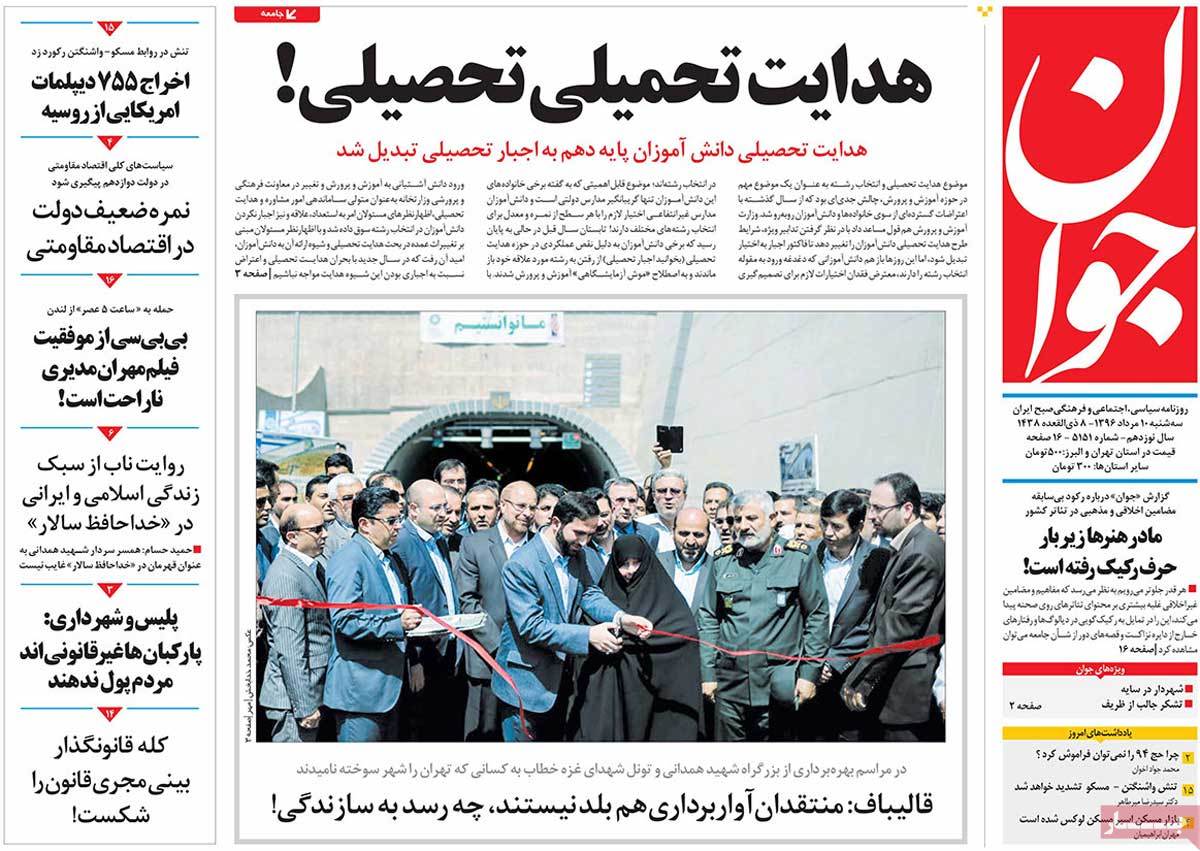
Javan:

1- Government’s Poor Performance in Resistance Economy

A Look at Iranian Newspaper Front Pages on August 1


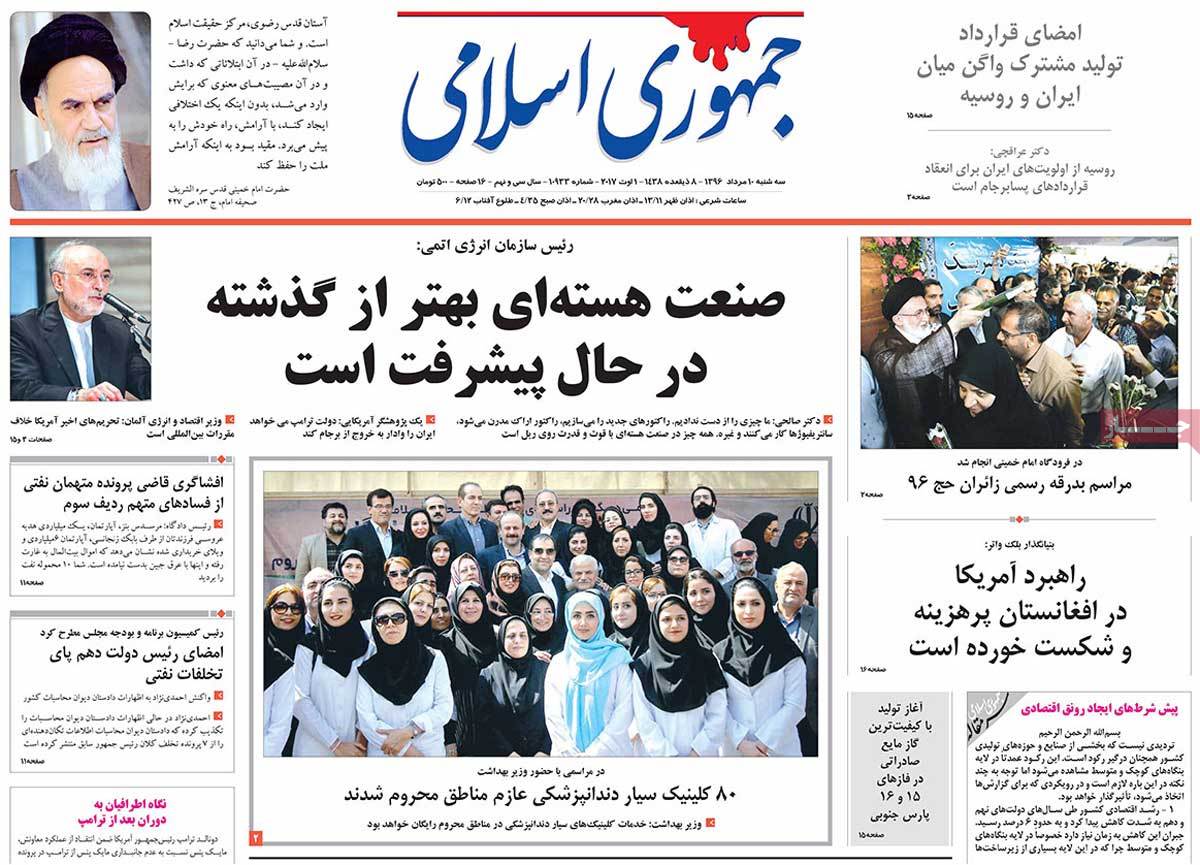
Jomhouri Eslami:

1- Blackwater Founder: US Strategy in Afghanistan Costly, Failed

2- Araqchi: Russia among Iran’s Priorities in Signing Post-JCPOA Deals


A Look at Iranian Newspaper Front Pages on August 1


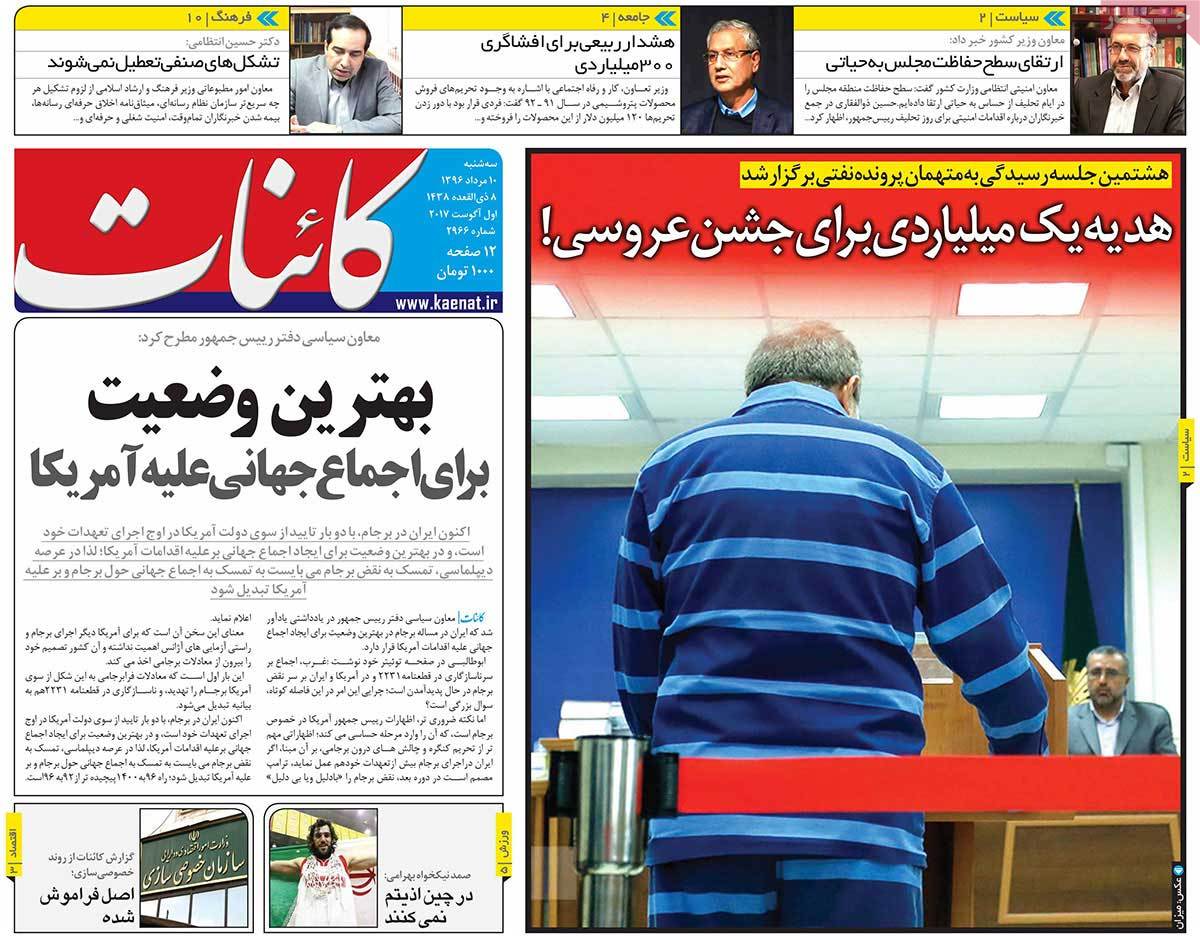
Ka’enat:

1- Grounds Prepared for Global Consensus against US: Rouhani’s Deputy


A Look at Iranian Newspaper Front Pages on August 1


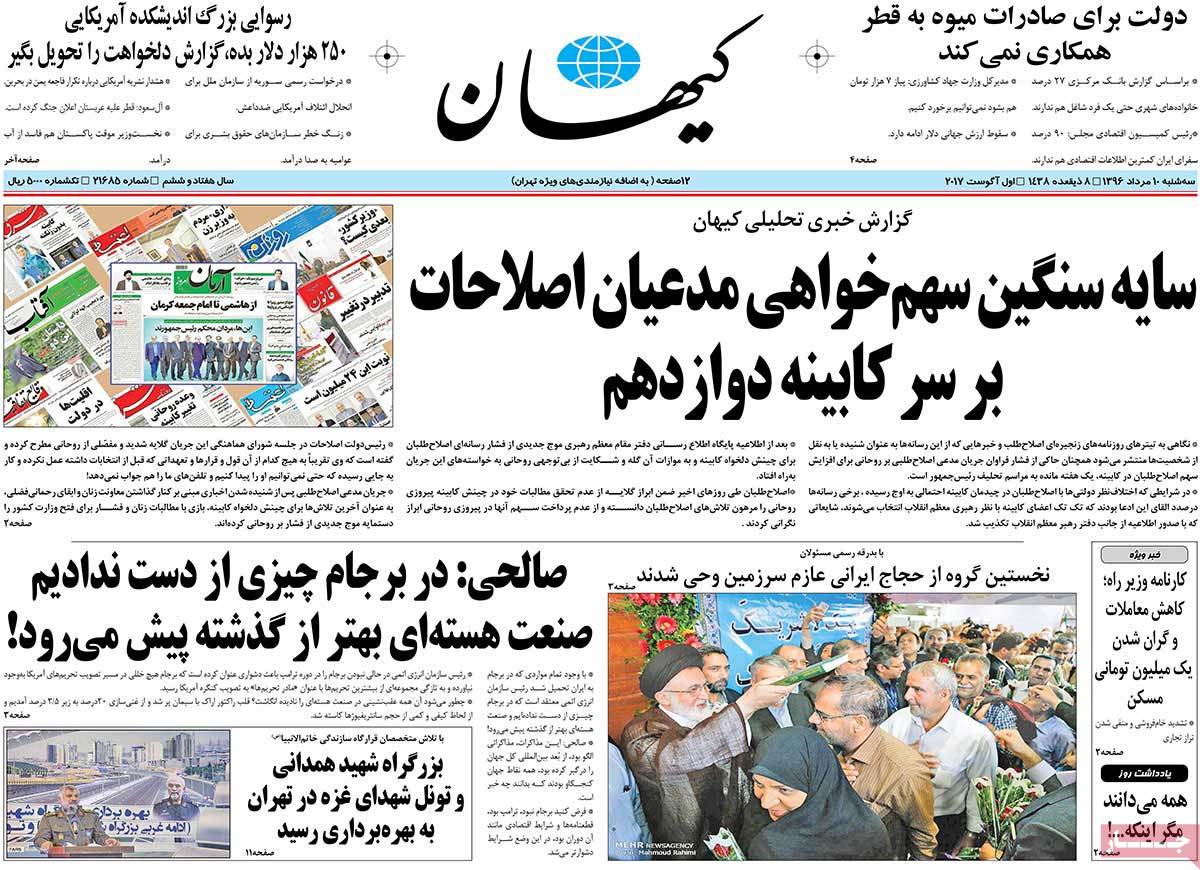
Kayhan:

1- Advocates of Reformism Demanding Shares from Rouhani’s Next Cabinet

2- Big Scandal for American Institute: Pay $250,000, Receive Your Favourite Report

3- Government Not Cooperating in Fruit Exports to Qatar

4- First Group of Iranian Pilgrims Depart for Hajj

A Look at Iranian Newspaper Front Pages on August 1

Iranian, Turkish FMs Meet in Istanbul

During the meeting on Tuesday, Zarif underlined the importance of the extraordinary meeting of the OIC’s Executive Committee at the level of foreign ministers, which will be held to discuss the issue of Palestine.

He also expressed the hope that the meeting would result in further unity among Muslim countries in countering the Zionist regime’s oppression against Palestine.

The two foreign ministers further conferred on Tehran-Ankara bilateral ties. Efforts to increase the value of trade exchanges between the two sides to $30 billion and removing the barriers to promotion of mutual cooperation were among issues discussed in the meeting.

The two sides also agreed that Iran-Turkey High Council for Strategic Cooperation will hold a meeting in Tehran in future.

Zarif and Çavuşoğlu further exchanged views on regional issues, including the Syria crisis, and stressed the need for reinforcing Astana talks on Syria peace.

Saudi Arabia Continues to Deny Syrians’ Right to Hajj

In a statement on Monday, the Syrian Ministry of Awqaf (Religious Endowments) said that the requirement to perform pilgrimage is not ensured because this duty is being “politicized by the Wahhabi Saudi authorities despite the Ministry’s repeated contacts with the Organization of Islamic Cooperation and the Saudi Ministry of Hajj in this regard through the Syrian Foreign and Expatriates Ministry.”

The statement dismissed the “political and financial exploitation” practiced by the Saudi authorities against some individuals through some tourism offices in Lebanon as they are investing “one of the great pillars of Islam” through the so-called “Syrian High Hajj Committee” which is affiliated “to the enemies of the homeland”.

Syria’s statement came after Qatar harshly criticized Saudi Arabia for politicizing the annual pilgrimage and putting restrictions on Qatari citizens flying to Mecca.

Qatar’s National Human Rights Commission (NHRC) lodged a complaint with the UN Special Rapporteur on freedom of belief and religion over what it called a “stark violation of international laws and agreement that guarantee the right to worship.”

In a statement cited by Al Jazeera, the commission said it is “extremely concerned over [Saudi Arabia] politicizing religious rituals and using [Hajj] to achieve political gains” and said it was filing another claim against Riyadh with UNESCO over the maltreatment of Qataris.

Qatar’s human rights commission also protested that Saudi Arabia has made it extremely difficult for many Qataris to reach Mecca by stipulating that they can only land at two Saudi airports – King Abdul Aziz International Airport in Jeddah and Prince Mohammed bin Abdul Aziz Airport in Medina.

However, following a Sunday meeting of the so-called Anti-Terror Quartet (ATQ) of Arab states which are embroiled in a conflict with Qatar, Saudi Foreign Minister Adel al-Jubeir lashed out at Doha, accusing it of politicizing the Hajj – the annual pilgrimage to Mecca that every Muslim has to perform at least once in their lifetime, according to RT.

Speaking following Sunday’s meeting, al-Jubeir dismissed allegations that Saudi Arabia is infringing on religious freedoms, saying it “welcomes all Muslims from around the world who visit the country for their pilgrimage.” He accused Qatar of blowing the issue out of proportion as a pretext to “sway people’s attention from the core issue at the heart of this crisis – its [Doha’s] support and funding of terrorism.”

Why Iran’s Missile Tests Don’t Violate UNSC Resolution 2231

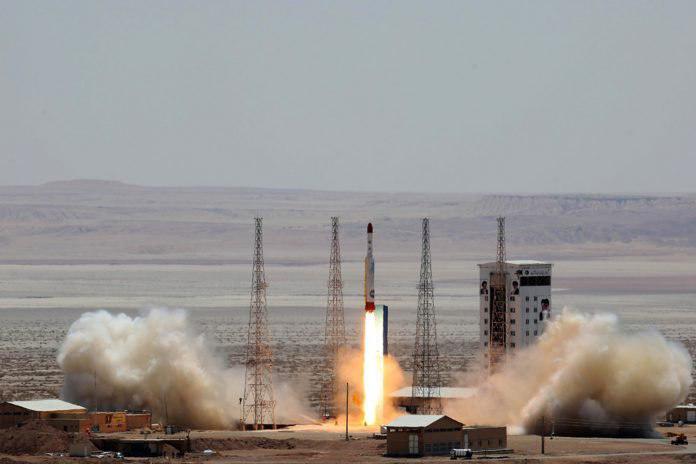
Last Thursday, Iran test-launched its Simorgh satellite carrier from the newly-established Imam Khomeini Space Centre. After the launch, the US, France, Germany, and Britain referred to the move as a violation of the United Nations Security Council Resolution 2231, which had been ratified by the UNSC in 2015 after the signing of the nuclear deal between Iran and the P5+1 group of countries.

However, Iranian officials have repeatedly rejected the claims that the country’s missile tests are illegal.

Yaser Salarian and Mahdi Khalili, two graduates of international law from the Iranian Foreign Ministry’s Faculty of International Relations, have tried to legally prove that the Islamic Republic’s missile tests do not violate the UNSC Resolution 2231.

Here is the full text of their argument:


Interpretation of UNSC resolutions and applicable law

It is fitting to note that the issue of how to properly interpret the UN Security Council resolutions is an important and critical subject of international law today. Applying the general rules of interpretation, as enshrined in the Vienna Convention on the Law of Treaties (VCLT), Articles 31 and 32, on the UNSC resolutions is a simple and ordinary way.

Michael Wood, a member of the International Law Commission, has made it clear that the VCLT Articles 31 and 32 cannot simply be applied mutatis mutandis to the interpretation of UNSC resolutions. The resolutions are not treaties, they are “unilateral pronouncements of an organ of an international organization.”

The International Court of Justice, ICJ, made these points clear in its 1971 Namibia advisory opinion, in Paragraphs 108-114. The ICJ pointed out that:

“The language of a resolution of the Security Council should be carefully analysed before a conclusion can be made as to its binding effect. In view of the nature of the powers under Article 25, the question whether they have been in fact exercised is to be determined in each case, having regard to the terms of the resolution to be interpreted, the discussions leading to it, the Charter provisions invoked and, in general, all circumstances that might assist in determining the legal consequences of the resolution of the Security Council. (Para 113- 114)”

Accordingly, the UNSC resolution should be interpreted “as per the terms of the resolution”. The UNSC uses a number of words for expressing its intention. The leading words – typically verbs occurring at the beginning of each operative paragraph of the resolutions – are critical instruments for interpretation of the resolutions.

The question of which words will indicate the Council’s intent to create a binding legal obligation depends on the leading words of the resolution.

The following table explains the amount of authority in each of the words used by the Security Council to create a legal obligation. In resolutions the gentlest leading word is “decides” and the strongest term is “demands”.

Why Iran’s Missile Tests Don’t Violate UNSC Resolution 2231“Demands”

The strongest leading word commonly used by the Security Council is “demands.” The Council uses “demands” for two purposes:

(I) First, the Council uses ‘demands’ to command an addressee to abide by its obligations existing independently in international law. In the Resolution 687 against Iraq, the UNSC used this term for adhering to “its obligations concerning servicing and repayment of its foreign debt.” In the operative paragraph 17 of Resolution 687, the Council:

“Demands that Iraq adhere scrupulously to all of its obligations concerning servicing and repayment of its foreign debt”

In the operative paragraph 4 of Resolution 403, the Council has used “demand” and referred to the obligation of cessation, which exists independently in international law:

In this resolution the Security Council:

“Demands the immediate and total cessation of all hostile acts committed against Botswana by the illegal régime in Southern Rhodesia”

(II) Secondly, the word “demand” has also been used by the Council to create new legally binding obligations. In the operative paragraph 1 of Resolution 1054, the Security Council created new legal obligation and imposed to the Government of Sudan. The Council:

“Demands that the Government of Sudan comply without further delay with the requests set out in paragraph 4 of resolution 1044 (1996)”

It is interesting to note that, when the Council intends to create legal binding obligation for an addressee or command for adhering to an already existing international legal obligation by the addressee, deploys the word “demands”.


“Calls upon”

The weakest leading word that actually instructs an addressee to perform an action is “calls upon.”

Most of the interpreters and scholars have specified the “calls upon” language as legally non-binding.

In the operative paragraph 7, section (b) of Resolution 2231, the Council says that:

 “(b) All States… are called upon to comply with paragraphs 3 and 7 of Annex B;”

And paragraphs 3 of Annex B in JCPOA stipulates that:

“Iran is called upon not to undertake any activity related to ballistic missiles designed to be capable of delivering nuclear weapons, including launches using such ballistic missile technology, until the date eight years after the JCPOA Adoption Day or until the date on which the IAEA submits a report confirming the Broader Conclusion, whichever is earlier.”

The Council has used two forms of “calls upon” in resolution 2231; (1) first of all, the Council called upon all States to comply with paragraphs 3 and 7 of Annex B, (2) secondly in the paragraphs 3 of Annex B “Iran is called upon not to undertake any activity related to ballistic missiles designed to be capable of delivering nuclear weapons, including launches using such ballistic missile technology”

However, the Council used a non-mandatory language in the operative paragraph 7 of resolution 1929, saying the Council:

“Decides that Iran shall not undertake any activity related to ballistic missiles capable of delivering nuclear weapons, including launches using ballistic missile technology, and that States shall take all necessary measures to prevent the transfer of technology or technical assistance to Iran related to such activities;”

A distinction should be established between operative paragraph 7 of resolution 1929 and the operative paragraph 7, section (b) of Resolution 2231. The Council in resolution 1929 has used a broad scope of implementation; but resolution 2231 has a narrow scope. Accordingly in 2231 States and Iran are called upon to comply with the JCPOA not the resolution. The JCPOA has a certain scope and specific areas of action.

In resolution 2231, in comparison with resolution 1929, obviously a language change has occurred. In other words, the language which has been used in resolution 2231 is hortatory. The language change from “decides that Iran shall not” in resolution 1929 to “Iran is called upon” in resolution 2231 indicates a softening in tone, and it stems from the non-legally-binding language used in resolution 2231. The obligations concerning Iran’s missile tests that were moved from operative paragraphs of resolution 1929 to the annex B of JCPOA, endorsed by resolution 2231, is on the right track. The missile concerns are not mentioned in the operative paragraphs of resolution 2231, and the JCPOA itself does not include any limits and restrictions on the Iran’s missile programs. It is clear that the JCPOA lifts missile-related sanctions without requiring Iran to limit its missile programs.

Another language change in the resolution has occurred in the issue of missiles. The UNSC Resolution 2231 refers to missiles “designed to be capable of delivering nuclear weapons,” while resolution 1929 states “capable” of such delivery. Technically it is impossible to prove that the Iran’s missile are designed for such capability.

Accordingly, if the Council intended to create new legally binding obligation in the resolution concerning Iran’s missile tests, it would use the term “Demands” rather than “Calls upon”. The Council has intentionally changed its language toward Iran’s missile test, and the issue is thus de-securitized in the view of the UN Security Council.  Hence Iran’s Missile Tests did not violate neither resolution 2231 nor the JCPOA.

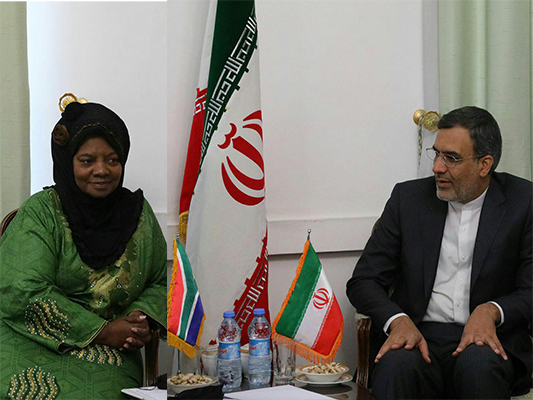
Iran, South Africa Hold Joint Political Commission Meeting in Tehran

Iran, South Africa Hold Joint Political Commission Meeting in Tehran

In this meeting, which was held in the presence of delegations from the two countries, economic and political cooperation between Tehran and Pretoria was discussed.

The two sides also expressed satisfaction with the growing trend of collaborations in different fields including economic and technical ones.

It was further emphasized that the remaining barriers have to be removed to prepare the ground for the forthcoming visit of the president of the Islamic Republic of Iran to Pretoria and further success of the new round of bilateral Joint Economic Commission.

In addition to bilateral issues, cooperation between the two countries in various regional and international areas were discussed.

Supporting the rights of Palestinians, opposition to the instrumental use of human rights, confrontation with terrorism and extremism, diplomatic resolution of the Syrian crisis and other regional and international issues were among other topics discussed during the meeting.