Sunday, December 28, 2025
Home Blog Page 3849

IRGC General Vows to Enhance Iran’s Defensive Power after Trump Speech

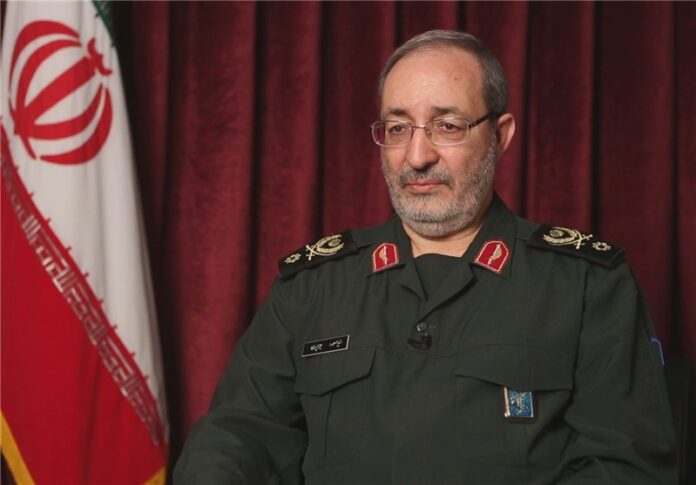
The corrupt and evil US administration should know that the Iranian Armed Forces will keep boosting the country’s defense power more vigorously, Brigadier General Massoud Jazayeri said on Friday night, hours after Trump’s hate speech against Iran.

In his remarks, Trump announced a new strategy for Iran, saying the strategy begins with imposing tough sanctions on the Islamic Revolution Guards Corps (IRGC). He also accused Iran of “proliferation of missiles and weapons that threaten its neighbor’s global trade and freedom of navigation.”

In response, General Jazayeri said the Iranian Armed Force would not hesitate for a moment to defend the oppressed around the world, even inside the United States of America.

The popular and mighty IRGC forces will prevent the US authorities from pursuing their dirty dreams, the general added.

In a televised address to the nation on Friday night, Iranian President Hassan Rouhani blasted the comments by Trump, reiterating that the Iranian nation will not surrender to such “false statements and hate speech.”

Iran Urges UN to Circulate Its Statement on Trump’s Speech

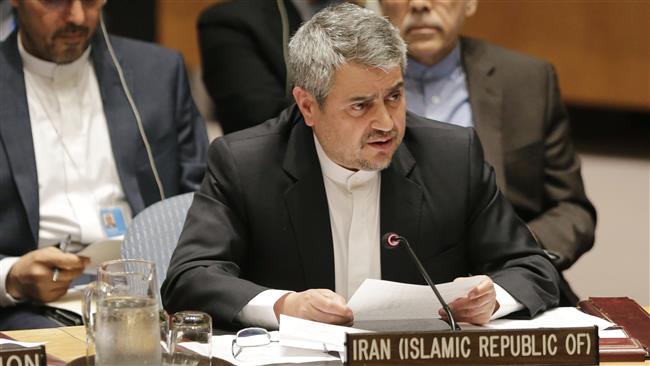
Gholam-Ali Khoshrou

Iran’s Ambassador to the UN Gholam-Ali Khoshroo handed over to Guterres the country’s reaction to Trump’s anti-Iran allegations, and asked him to circulate it as a UNSC document.

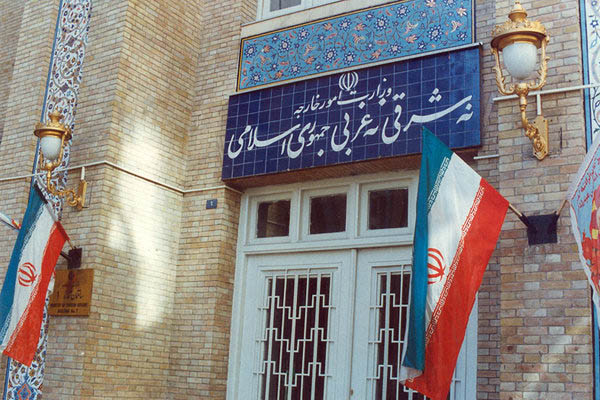
Here is the full text of Iran’s reaction to Trump’s speech, retrieved from the Iranian Foreign Ministry’s official website:

In the name of God, the Compassionate, the Merciful

Statement of the Islamic Republic of Iran
13 October 2017
Since the victory of the Islamic Revolution in 1979, Iranian foreign policy has been developed and implemented based on principles of international law and international rules and conventions; respect for sovereign equality of all states and non-interference in internal affairs of others have formed the cornerstone of relations with other countries. After decades of dictatorship, dependence on foreign powers – especially the United States – and constant interference of those powers in Iran’s internal affairs, the Iranian people, with their newly-established democratic government, had hoped to be able to finally build ties with neighbours based on equality and fraternity, free from political, economic and military rivalries; to form a peace-seeking nation that sought to replace enmity and bloodshed with friendship and cooperation. By contrast, the United States and its allies in the Persian Gulf region have persistently refused to accept realities of Iran and the region, and have vainly attempted to thwart the Iranian peoples’ quest for democracy and self-determination.

From the very first days of the Islamic revolution, the United States adopted a hostile, interventionist and destabilizing approach towards Iran’s newly-established government — with the aim of overthrowing it. The United States’ bleak record — staging several coup attempts, harbouring terrorists, openly supporting Saddam Hussein during the imposed war against Iran — even his use of chemical weapons against Iranians, aiding secessionist plots, downing an Iranian civil airliner, and hundreds of other conspiracies against the Islamic Republic of Iran and its people — is undeniable. Even before the Islamic Revolution, the United States sponsored a coup against the democratically-elected government of Iran in 1953, thereby showing its constant historic enmity with democracy and its support for dictators.

Terrorist groups — that have found safe haven in and plotted against the Iranian people from the United States over the past 38 years– murdered 17000 Iranians in the first few years following the Islamic Revolution. The Islamic Republic of Iran, while successfully establishing the highest standards of stability and security at home, has provided its advisory services to the people and security forces of Iraq and Syria, playing an indispensable role in combating terrorism, thwarting the Takfiri campaign to take over Damascus, Baghdad and Erbil, and helping uproot these groups from Iraq and Syria. The constructive role of our armed forces in combating terrorist groups — which the current US president himself cited during his campaign as having been created by the US — has been instrumental in eradicating this scourge. It is unfortunate that, instead of discarding terrorism as a tool and joining Iran’s genuine counter-terrorism efforts, the United States continues to misportray these constructive efforts as destabilizing.

The role of the Islamic Revolution Guards Corps (IRGC) in the frontlines of combating terrorism in the region is irrefutable. The Corps, a branch of Iran’s armed forces, has an impeccable track record of containing Takfiri terrorism, restoring gradual tranquillity for the people of the region as well as safeguarding national sovereignty and territorial integrity of Iraq and Syria. The Revolution Guards are regarded as national heroes for their role in the defence of Iranian territory against Saddam Hussein’s army. Any action by the US administration or Congress against the IRGC will constitute a strategic mistake and will draw the indignation of the Iranian people and a strong and unified reciprocal reaction. The US President will have to bear full responsibility for all consequences of his rogue behaviour.

The United States has defined its interest in generating and aggravating regional disputes, and exacerbating conflict and insecurity to fuel an arms race and create bigger markets for its weapons. On the other hand, Iran has identified its regional interests with good-neighbourliness, and peace and stability in the highly sensitive Persian Gulf region. This is in clear contrast with the publicly stated position of the current president of the United States, who in his campaign, publicly considered the war between Iran and Iraq as serving US interests, and more recently openly made his visit to the region contingent upon the sale of hundreds of billions of “beautiful weapons” — tools of destruction that are currently being used against defenceless children and the elderly in Yemen.

The crises in our region, including in Afghanistan, Iraq, Syria, Yemen and Bahrain, are rooted in occupation, illegal military interventions, and hegemonic designs of the United States in the region. In contrast, the Islamic Republic of Iran firmly believes that its national security interests can only be secured through dialogue, confidence building and multilateral cooperation within the region, and we are determined to actively contribute to the promotion of effective regional cooperation for peace and security. Iranian proposals for political settlements to end the horrifying wars in Yemen and Syria have been welcomed by the international community, and Iran has played a constructive role in every international initiative aimed at ending regional conflicts. Iran has also cooperated with Russia and Turkey effectively to de-escalate the violence in Syria, and stands ready to contribute actively to joint efforts with the United Nations Secretary General and other responsible countries – including other permanent members of the Security Council – and the European Union, to put an end to conflicts and violence.

The hostile policies of the United States and its regional allies, especially the Zionist regime, as well as the transfer of hundreds of billions of dollars’ worth of arms into the region that have turned the region into a tinderbox require the Islamic Republic of Iran not to be complacent about the country’s defence needs. During the war imposed on us by Saddam Hussein’s regime, not only did the United States and its regional allies provide military, intelligence, logistical, economic and political assistance to Saddam, and offer their support and maintained their silence during his chemical weapons attacks campaign, they also did everything in their power to interdict the acquisition of even the most basic defensive capabilities by Iran. Through that experience we learned that in order to protect our people, safeguard our independence and security and defend our national honour, we must rely on indigenous capacities and not hesitate in developing the capability to meet the country’s legitimate defence needs. It is in this framework that Iran’s missile program has a purely defensive and deterrent character. Our missiles are strictly designed to carry conventional warheads and their range and precision are proportionate to our security environment and threat perception. It will continue with full force in accordance with our national defence program and is not, nor will it ever be, negotiable. When US allies in the region, whose combined population is far less than Iran, each spend exponentially higher sums on their military than Iran, why shouldn’t Iran — that has attacked no one in almost 300 years but has been the victim of aggression supported by the US and its regional partners — acquire necessary tools of deterrence in the face the constant threats by aggressors?

The antagonistic policies of the United States against Iran have also extended to the realm of advanced science and technology in past few decades. The United States has imposed restrictions that bar scientific and technological exchanges while also imposing sanctions in these fields. These actions serve no purpose but trying to hold back our technological development and prolong dependence on advanced powers. The efforts of our young scientists to acquire the knowledge for the development of a peaceful nuclear program has from its outset been met with propaganda, sanctions, cyber-attacks and even the assassination of our scientists. Iran has repeatedly stated that it wishes to utilize nuclear energy peacefully, and that we view weapons of mass destruction — including nuclear weapons — as disruptive to peace and security, and as such they will never have a place in our military doctrine. The International Atomic Energy Agency’s report and conclusion in 2015, rejecting accusations of Possible Military Dimensions (PMD), acknowledged the peaceful nature of Iran’s nuclear activities.

Iran has demonstrated its good will by entering into and its conclusion of nuclear negotiations with the P5+1 to resolve a fabricated crisis, and we have proven our fulfilment of our undertakings by the good-faith implementation of our commitments in accordance with the JCPOA. In contrast, the United States’ fulfilment of its commitments has been lacklustre and deficient from the very beginning, and in several cases — especially during the current administration — it has violated both the spirit and the letter of the JCPOA. The Islamic Republic of Iran has officially registered with the Joint Commission those violations, including failures in lifting of sanctions and policies preventing the establishment of an atmosphere necessary for normalization of trade and economic relations with Iran. The claim by the president of United States regarding Iran’s non-compliance has no international relevance or credibility, since the IAEA, as the sole authority to conduct such monitoring and verification, has repeatedly confirmed Iran’s full compliance with its commitments under the JCPOA. This proves once again that the United States is not a reliable negotiating partner.

The JCPOA is a valid international instrument and an outstanding achievement in contemporary diplomacy. It cannot be renegotiated or altered. The nuclear deal is not a bilateral agreement that can be annulled by unilateral action, but a deal endorsed by the international community and incorporated as a part of Security Council Resolution 2231. Other JCPOA participants, as well as the rest of the international community, should not allow the president of the United States to continue to mock and undermine the deal. The Islamic Republic of Iran will not be the first to withdraw from the deal, but if its rights and interests in the deal are not respected, it will stop implementing all its commitments and will resume its peaceful nuclear program without any restrictions.

Today, the United States is more isolated globally than ever before and the veracity of Iran’s policies and positions have become evident to the international community. The world has witnessed that over the past several weeks, most countries have been unified in supporting the JCPOA and the Islamic republic and rejecting US policies. The international community views Iran as a responsible actor endeavouring to promote peace and will not give any credence to rogue actors further isolating themselves every day by withdrawing from one or another international agreement and organization.

The difference between Iranian and US policies on many international and regional issues are clear and undeniable. Because of their miscalculations, various US administrations have aggravated these differences into open hostility against the people of Iran. In spite of all these animosities, embodied mostly in illegal threats and sanctions, the people of Iran have resiliently persisted in their quest for justice and independence. Iran has reached the pinnacles of influence and strength through relying on its own people and its indigenous capabilities, benefitting from the prudent and wise guidance of Ayatollah Khamenei, who has personified the dignity and integrity of the Iranian people, following the footsteps of the late Imam Khomeini. The new US rulers must not forget the hard lessons of the past four decades; they should not forget that previous administrations — who by uttering similar fallacies put themselves in open rivalry with the Iranian people – were forced to retreat from such imprudent utterances.

 

Iranians Not Intimidated by Trump’s Threats, Profanity: FM

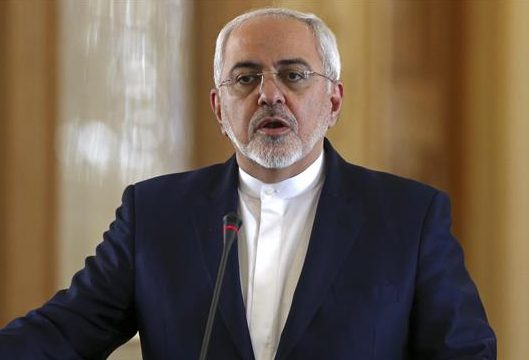
zarif

Foreign Minister Mohammad Javad Zarif, in a post in his Twitter account, referred to US President Donald Trump’s use of the word ‘rogue’ when describing the Iranian government, and said, “For the definition of rogue, compare Trump’s words with President Rouhani’s response.”

“Everyone knew Trump’s friendship was for sale to the highest bidder. We now know that his geography is too,” Zarif further noted, referring to Trump’s use of a fake word for referring to Persian Gulf.

“No wonder supporters of Trump’s inane Iran speech are those bastions of democracy in the Persian Gulf: KSA, UAE & Bahrain,” the Iranian top diplomat added amid certain regional states’ positive reactions to Trump’s anti-Iran allegations.

Zarif finally stressed that “allegations, threats and profanity will never intimidate Iranians. Trump will eventually discover this; as every predecessor did.”

‘JCPOA Violation to Have Little Impact on Iran’s Economy’

Senior parliamentarian Hassan Hosseini Shahroudi has, in an article published in the Persian-language Tejarat daily, explained what effects Washington’s contravention of the Iran nuclear deal with six world powers known as the Joint Comprehensive Plan of Action (JCPOA) will have on Iran’s economy. The highlights of the analytical piece follow.

What is important is to find out whether or not Iran will be as much affected by Washington’s violation of the JCPOA as Trump and US Congress claim Iran will. First, the economic systems of the US and Europe are extremely interdependent. If the JCPOA is scuttled for whatever reason, it will affect Iran-Europe relations. Although European countries have, so far, condemned Trump and Congress’s breach of promises and have underlined the necessity of remaining committed to the Iran nuclear deal, we cannot very much trust Europe’s words if the US questions the JCPOA. The reason is that the Europeans have, on numerous occasions, obeyed the Americans in the past and reneged on their agreements with Iran.

Another point is to see how Iran’s banking relations with the world will be affected by the violation of the JCPOA. Even now, the nuclear deal has played almost no role in improving Iran’s banking relations with other countries, and if we are realistic, the JCPOA’s impact on the amelioration of Iran’s banking relations has been less than 5%. This is a reality that the governor of the central bank of Iran, the country’s economic officials and even the foreign minister have stressed. So, Trump should know that the JCPOA has had no influence on Iran’s banking and monetary ties with other countries, and Washington’s breach of commitments under the nuclear deal will have little bearing on Iran’s baking relations with the world.

Therefore, and as Leader of the Islamic Revolution Ayatollah Seyyed Ali Khamenei has underscored, Iran has been looking for a replacement because it has no trust in the US and its allies. Iran’s policy is to reach self-sufficiency and get rid of dependence in different shapes and forms. That is why Iran opted for alternative policies and strengthened its relations with such countries as Russia and China, which, under the current circumstances, are more committed to their obligations. They are not under US pressure, either. On the other hand, Iran’s trade has been shifting from transactions in dollars and other common European currencies to a barter economy.

We have tried to identify countries which need Iranian products and begun trading goods with them. Of course, there is no denying that Iran needs foreign exchange as well. Therefore, we changed our forex transactions from the greenback to the currencies of the countries with which we have trade. For instance, we have now defined a mutual monetary relationship with Turkey, India, China, Russia and other countries, and we have removed global currencies from our forex transactions with many countries. So, we can see that the removal of the JCPOA will have no bearing on Iran’s economy, and because Iran purchases goods from other countries, the removal of the nuclear deal will be more detrimental to those countries.

‘Consolidating JCPOA to Facilitate Iran-EU Talks on Other Issues’

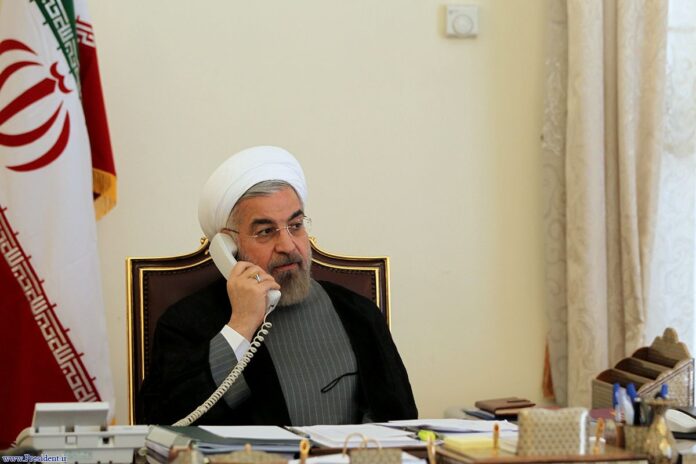
Iranian President Hassan Rouhani has, in a telephone conversation with his French opposite number Emmanuel Macron, touched upon Washington’s possible decisions on the Iran nuclear deal known as the Joint Comprehensive Plan of Action (JCPOA).

President Rouhani highlighted the European Union and France’s unflinching support for the JCPOA and the necessity of fulfilling the provisions of the agreement by all signatories.

“The International Atomic Energy Agency (IAEA) is the only authority to corroborate Iran’s compliance with its commitments under the JCPOA, and linking multilateral and international obligations to the United States’ domestic divisions can pose a serious danger to global trust,” said the Iranian president.

He said any move by US President Donald Trump against the JCPOA constitutes a blow to a multilateral agreement.

“The JCPOA is not renegotiable, whatsoever, and all sides must live up to their commitments under the deal. The US president or the country’s Congress must not be allowed to adopt inappropriate measures against the JCPOA,” Rouhani said.

“Unfortunately, a government is in power in the US that does not want to make good on its obligations under the JCPOA as well as some other international agreements. This tactic would basically deal a serious blow to the negotiating table on the world stage,” President Rouhani noted.

Rouhani reiterated that Iran remains committed to its obligations under the JCPOA and will continue to cooperate with the IAEA.

“The JCPOA is the basis for trust between Iran and member states of the P5+1 group, and consolidating this agreement would lay the groundwork for negotiations with the EU on other issues.”

“The European Union and Iran should, through cooperation, stand up to destructive and inappropriate actions taken vis-à-vis the JCPOA,” they noted.

The French president, for his part, underscored Paris’s determination to enhance its relations with Tehran on all fronts.

Macron also touched upon Washington’s efforts against the nuclear deal, saying, “The European Union and France firmly support the JCPOA and remain committed to implementing it in its entirety. We also want Iran to continue its cooperation with the IAEA despite Washington’s attempts and continue to deliver on its commitments under the JCPOA,” Macron said.

The two sides also stressed the promotion of mutual relations in various areas, namely bilateral, regional and international issues. The French president said he would visit Iran next year heading a high-ranking delegation.

Macron further said Washington’s policies on then JCPOA emanate from the United States’ major local problems and once again called on the White House to remain committed to its obligations.

Zarif, Tillerson Had No Bilateral Meeting in New York

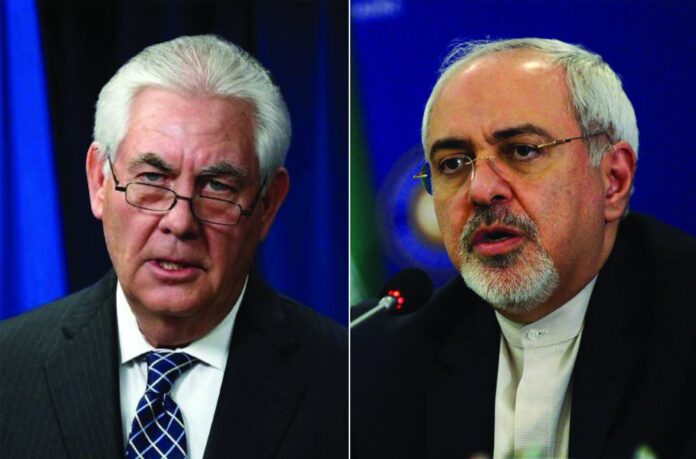
In a Friday statement, Foreign Ministry Spokesman Bahram Qassemi said Zarif and Rex Tillerson only met each other during the P5+1 multilateral talks on the sidelines of the UN General Assembly in New York and had no bilateral meeting.

“What Mr Tillerson says is related to his remarks and stances expressed at the Foreign Ministers’ meeting of the P5+1 on the sidelines of the UN General Assembly,” said Qassemi.

Iran’s foreign ministry spokesman stressed that there was no other meeting or talks between Foreign Minister of Iran and the US Secretary of State.


Iran to Respect Nuclear Deal as Long as Its Interests Secured: President

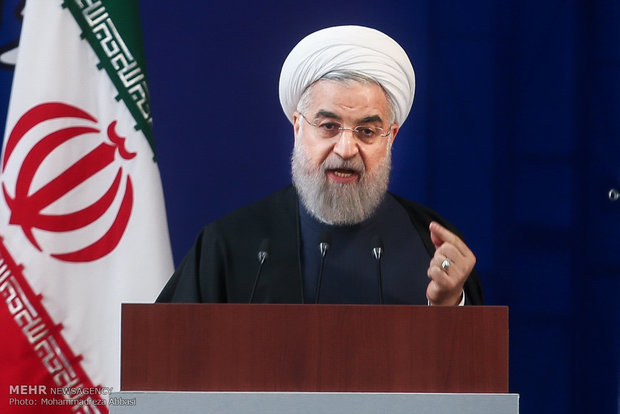
Speaking in a televised address on Friday, shortly after the US president’s declaration of his new hostile strategy towards Tehran, Iranian President Hassan Rouhani lashed out at his US counterpart for ‘a bunch of insults’ he uttered against the Iranian nation.

Rouhani called on US President Donald Trump to study history and geography and learn lessons from the past decades.

Trump has forgotten that the US overthrew Iran’s democratically-elected government in 1953 coup, supported Iraqi dictator Saddam Hussein’s regime in his eight-year bloody war against Iran, particularly his chemical attack on innocent people of Iran’s Sardasht, Rouhani said.

“How does a US president not know Persian Gulf,” Rouhani asked, referring to Trump’s use of a fake name for the body of water located south of Iran.

The Iranian president advised Trump to ask his navy commanders about the name mentioned for this gulf in the maps they hold in overseas operations.

Rouhani further questioned Trump’s knowledge of law, saying that the US president does not know that the Joint Comprehensive Plan of Action is not a bilateral deal between Iran and the US, so he cannot just scrap it.

Referring to the fact that Iran has remained committed to its obligations under international treaties and that it has democratic elections, Rouhani blasted Trump for calling Iran an aggressive state.

“Which one is an aggressor: Iran or the US which is the only state to use nuclear weapons for two times,” he added.

Rouhani said the US is still threatening to use its nuclear weapons against other nations, so it cannot pretend to be seeking nuclear disarmament.

He further noted that Trump’s Friday remarks against Iran only helped the Iranian nation know that they need to be more united against their enemies.

The Iranian nation will not give in to a dictator and submit to any superpower, he added.

“Trump’s remarks showed that the nuclear deal is more robust than what the US president thought during his electoral campaign,” he went on to say, stressing that not a single article will be added to the nuclear deal.

Rouhani said the entire world stood against the US on the nuclear deal, and now America under Trump is more isolated than ever.

He further referred to Trump’s allegations against the Islamic Revolution Guards Corps, and said the IRGC is fighting against terrorist groups like ISIS, which has been created by the US, as Trump mentioned in his campaign speeches.

“The IRGC has positively responded to the calls of regional nations and will do the same in the future,” he noted.

Iran’s missiles serve defensive purposes and Tehran will continue to reinforce its missile power, Rouhani said, asking Trump to be concerned about the arms his country is selling to Middle Eastern states instead of being worried about Iran’s defensive capabilities.

Rouhani also stressed that the Islamic Republic will respect the nuclear deal as long as its interests are secured and it reaps the JCPOA benefits.

Whenever Iran’s interests are not secured or the other parties start violating the nuclear deal, Tehran will not hesitate in giving appropriate response, he added.

He also noted that the US will never succeed in distancing the Iranian nation from their Leader, adding that people respect the Leader based on their Constitution.

Rouhani pointed to the ‘Death to America’ slogan chanted by Iranian people, saying the slogan does not target the US nation, but the US policies.

The US can stop its hostile policies towards Iran and then see how people would react, he added.

The Iranian nation has respected the American people and will do so in the future, Rouhani noted.

He also said that what Trump and his administration is trying to do is disrupting Iran’s economy and preventing other nations from making investment in the country.

Iranian, Russian FMs Hold Talks on JCPOA

Zarif and Lavrov

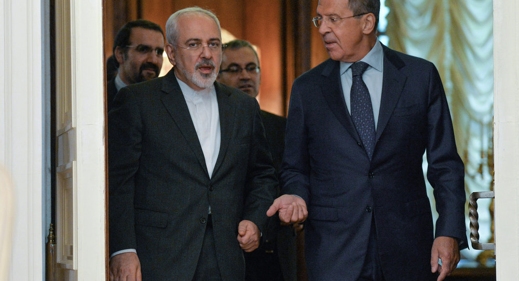
Iran’s Foreign Minister Mohammad Javad Zarif and his Russian counterpart Sergey Lavrov have stressed the need for all parties to comply with the nuclear deal between Tehran and world powers.In a phone conversation on Friday, Russia’s Lavrov reiterated Moscow’s commitment to the deal reminding that Iran must reap the economic benefits of the accord.

Iran Responds to Trump’s New Strategy

Iran Appoints Female Ambassador to Denmark

Here is the full text of Iran’s response to the United States’ new strategy:

1) The principled policy of the Islamic Republic of Iran is supporting regional peace and stability and countering destabilizing and divisive measures aimed at creating tension and conflict in the Middle East. Therefore, decisive fight against ISIS and other terrorist groups in the region has been the Islamic Republic’s major priority. This is while the United States’ policies, particularly its support for terrorist groups and repressive regimes, have been among the root causes of instability in the Middle East. The US cannot evade its responsibilities by raising accusations against others and should be held accountable for its wrong policies.

2) Within the past decades, the US policy of supporting the Zionist regime and other authoritarian and repressive governments in the region has led to constant outbreak of wars and conflicts on the one hand, and emergence of the inauspicious phenomenon of terrorism on the other hand. Washington’s regional friends and allies are the creators and main sponsors of international terrorism, to which even American citizens inside the US territory have not remained immune. The United States’ continuation of this policy is a historic strategic mistake with dire consequences for the region and the world.

3) Iran’s missile power merely serves defensive and deterrent purposes. This capability has indeed played an effective role in the path of [securing] regional peace and stability so far. Without such capability, it was not clear where the region would be led to by the immature thoughts and ambitions of certain pampered regional leaders. The Islamic Republic of Iran is serious in maintaining and developing its defensive and security capabilities, and in this path, it only pays attention to its national security considerations and the Iranian people’s interests.

4) The Armed Forces of the Islamic Republic of Iran, including the Islamic Revolution Guards Corps (IRGC), are manifestations of power and might and protectors of the country’s security. The government and the entire nation of Iran strongly support these forces. Any move against the Islamic Republic’s Armed Forces, including the IRGC, would receive Iran’s appropriate and strong response.

5) The principled and permanent policy of the Islamic Republic of Iran is countering Weapons of Mass Destruction in all parts of the world and moving towards global disarmament. This policy is the basis of the Joint Comprehensive Plan of Action (JCPOA), and Iran’s compliance [with the nuclear deal] has been confirmed for eight times by the only supervisory authority [IAEA]. On the other hand, the US non-compliance with the deal and its repeated violation of the spirit and text of the JCPOA is clear and evident, instances of which have been recorded within the past one and a half years in nine letters sent by the Iranian foreign minister to the EU foreign policy chief as the coordinator of JCPOA. In every single case [of these violations], the Islamic Republic of Iran has taken reciprocal measures based on its interests, and it will do so in the future without any consideration. Iran’s options are quite various, and if necessary, they will include putting an end to all commitments in this regard.

6) Today, the US is more isolated than ever in the international community, and the entire world has come to know that the Islamic Republic of Iran’s policies were right. The world saw within the past few weeks that most countries of the world supported the nuclear deal and the Islamic Republic and voiced their opposition to the US policies. The international community has known the Islamic Republic of Iran as a rational and wise player in the global arena which is striving for peace, and does not pay heed to the policies of players who make themselves more isolated everyday by withdrawing from a treaty or international body.

7) It is totally clear and undeniable that Iran and the US pursue different policies towards many regional and global issues. Since the 1979 Islamic Revolution in Iran, the US administrations have turned these differences into clear hostility towards the Iranian nation through their back-to-back miscalculations. Despite such hostile policies, two of whose main features have been threat and sanction, the Iranian people have proceeded with their quest for independence and justice. By relying on its domestic capabilities and popular support, the Islamic Republic of Iran today has become more powerful than ever under the wise leadership of the Leader of the Islamic Revolution. After Imam Khomeini, the Islamic Republic of Iran owes its robust and dignified progress in the contemporary era to the lofty guidelines of Ayatollah Khamenei whose anti-arrogance stances and strong opposition to the US government’s regional and global policies in different eras have been indeed the main reason for the US leaders’ hostility towards Iran’s Leader. The US policies in the Middle East and other parts of the world have yielded no result but bloodshed and misery for the people of the world. The new US leaders had better remember the lessons of the past four decades and not forget that their predecessors, who put themselves against the Iranian people by repeating similar impudent remarks about the Leader of the Islamic Revolution, were finally embarrassed and forced to take back their comments.

IRGC Blacklisting Tantamount to Declaration of War: Iran

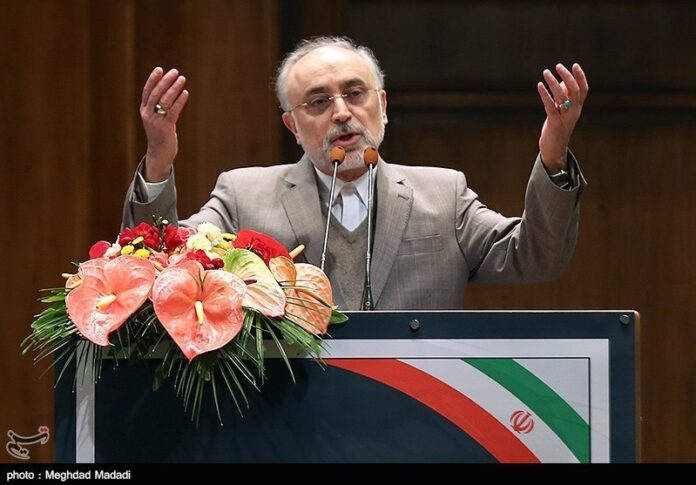
Speaking at a meeting with a group of British analysts and media figures in London on Thursday, Salehi said that the designation of the IRGC as a terror group would be another sign of the US government’s hostile behavior toward the Iranian nation.

“Given that the army and (other) armed forces of a country are guarantors of its security, the (possible) move (by the US to designate IRGC forces as terrorists) is tantamount to a declaration of war,” he noted.

US President Donald Trump is expected on October 15 to “decertify” a landmark 2015 international deal about Iran’s nuclear program, known as the Joint Comprehensive Plan of Action (JCPOA).

Trump is also expected to designate the IRGC as a terrorist organization, as he rolls out a broader, more hawkish US strategy on Iran.

In comments on Sunday, IRGC Commander Major General Mohammad Ali Jafari said if speculations about the US administration’s “stupid decision” to designate the IRGC as a terrorist organization are true, the IRGC will, in turn, treat the US military around the world, particularly in the Middle East, as Daesh (ISIL) forces.