Wednesday, December 31, 2025
Home Blog Page 3786

Iranian Scientists Produce Sweets for Diabetics from Seaweeds

Delaram Nokhbeh Zare and Shahrokh Khani, two faculty members of Islamic Azad University of Bandar Abbas, in collaboration with the University’s Development Centre, succeeded in producing new sweets with a different taste for diabetic patients.

“These sweets are made from the nectar of a (sweetening) plant called Stevia and a seaweed called Spirulina,” IRNA quoted Nokhbeh Zare as saying in a Farsi report.

She also noted that Stevia is a plant native to South America that is being cultivated in various European countries these days, and has been cultivated in Northern Iran for several years.

This Iranian scientist also added that Stevia is a strong sweetening plant that can be a good alternative to refined sugars.

This plant reduces blood pressure and cures diabetes and high blood sugar, according to her.

“Spirulina is also a type of seaweed which is very high in protein,” said Nokhbeh Zare.

Mideast Countries Condemn Trump’s Decision on Jerusalem

Quds

From the Jordanian parliament came a call for people to take to the streets and protest at the US embassy in Amman, as Jordan and the Palestinians on Wednesday called for an emergency meeting of Arab foreign ministers to discuss Trump’s decision. The meeting is likely to take place on Saturday, a diplomatic source said.

Meanwhile, the UAE, Saudi Arabia, Egypt, Jordan and Turkey all warned the US president against such a move.

At a joint press conference in Ankara on Wednesday, both the Turkish president, Recep Tayyip Erdogan, and King Abdullah of Jordan spoke out against the US decision.

“Such a step would only play into the hands of terror groups,” Erdogan said ahead of the announcement, adding that “no one has the right to play with the destiny of billions of people for personal ambitions”.

King Abdullah, meanwhile, said, “Jerusalem is key to stability of the entire Middle East”, adding that Turkey and Jordan would stand “shoulder to shoulder to face challenges”.

During a recent visit to Washington, King Abdullah attempted to dissuade the Trump administration from adopting the controversial decision, saying such a move would derail peace efforts and stoke anger from both Muslims and Christians across the region.

Jordan — a key US ally and partner in the anti-ISIS coalition in Iraq and Syria — has a sizeable Palestinian population and is concerned that the US decision will ignite unrest in the Palestinian territories that could spill over into the country and boost extremism in the region.

“Trump’s decision would lead to a Palestinian uprising, which could spark domestic unrest in Jordan that has influential Palestinian circles,” Zaid Nawaiseh, a political analyst based in Amman, said ahead of Trump’s announcement on Wednesday. “Jordan is in the eye of the storm. It is already struggling with economic woes, and it is aware the peace process has reached a dead-end.”

Jordan, too, has a stake in Jerusalem al-Quds, since it serves as the custodian of Al Aqsa mosque, Islam’s third holiest site — a role stipulated in an unpopular peace treaty Jordan signed with Israel in 1994.

“The issue of Jerusalem is sensitive and controversial for the Palestinians, Arabs and the Muslims,” said Osama Al Sharif, a political columnist. “The timing is completely difficult to understand, provocative and goes right into the heart of the credibility of the US as an honest broker or mediator.”

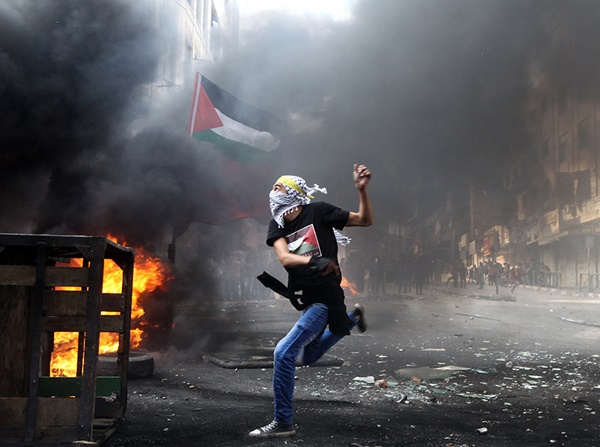
In Israel’s northern neighbour, Lebanon, president Trump’s decision provoked demonstrations by Palestinian communities across the country.

“The decision to move the US embassy to Jerusalem clearly demonstrates the level of Arab dignity and the dignity of Muslims in the head of a superpower that no longer possesses greatness, only insolence and immorality,” said Abed Salameh, who lives in Nahr Al Bared, a Palestinian settlement in northern Lebanon.

There are more than 400,000 Palestinian refugees registered with the United Nations in Lebanon, many living in the country’s 12 official “camps”, which are in reality cities made up largely of concrete apartment blocks.

Lebanese leaders also condemned the decision on Wednesday, and more demonstrations were expected on Friday in the country.

The Hamas representative in Lebanon, Ali Baraka, met Lebanese Prime Minister Saad Hariri on Wednesday “to discuss Palestinian-Lebanese relations”.

Baraka issued a statement saying he had delivered a message to Hariri from Hamas leader Ismail Haniyeh and received assurances of Hariri’s support in rejecting the American announcement.

“We perceived Prime Minister Hariri’s keenness on Jerusalem and its Arabism, and he stressed that Lebanon refuses the Judaisation of Jerusalem and the American decision,” the statement read.

“He said that the Lebanese state will take diplomatic and political measures with the Arab and Islamic states and the international community to support the cause and the Arabism of Jerusalem and in refusal of the biased American decision.”

The US “are telling us in a direct way that they are with Israel,” Baraka told The National after the meeting. “This will create an uprising in Gaza and the West Bank. No Palestinians will accept this.”

Lebanese interior minister Nohad Machnouk meanwhile tweeted “Jerusalem is ours and we will bring back the splendour of Jerusalem”. The tweet included a clip from a song about Jerusalem by the Lebanese singer Fayrouz.

On Wednesday afternoon, ahead of the planned US announcement, there was no visible increase in the presence of Lebanese security forces around the American embassy in Beirut. The embassy itself is in a well-fortified compound on a hill outside of the city, where it was relocated after a bombing in 1983 at its location in downtown Beirut that killed 63 people.

In Egypt, Israel’s neighbour to the south, the only visible sign of protest was a lecture cancelled at the American Research Centre “due to unforeseen circumstances”. But the international security consultancy, Control Risks, released an advisory note saying demonstrations were to be anticipated in the coming days against president Trump’s expected announcement on Jerusalem, particularly near US embassies, in pubic squares and outside mosques after Friday prayers, and warned that “any such demonstrations have the potential to devolve into unrest”.

Persian Gulf Arab States Shirking Responsibility Regarding Palestine: Iran

In a Wednesday statement, Foreign Ministry Spokesman Bahram Qassemi rejected the final statement issued at a summit of the [Persian] Gulf Cooperation Council (GCC) in Kuwait, calling it a clear example of a lack of proper understanding of realities and priorities in the Middle East.
“The recent statement shows the [P]GCC is ignoring the realities in the region and is turning a blind eye to the realities and priorities at this sensitive juncture, and clearly proves the inefficiency and sterility of the Council gripped by internecine divisions and unrealistic policies,” said the spokesman.
“Rather than addressing the key problems facing the Muslim world and supporting oppressed Palestinian people and discussing the provocative plan of relocating the US embassy [from Tel Aviv] to holy al-Quds, the [P]GCC has simply made worthless comments in this regard and clearly dodged its Islamic and human responsibility vis-à-vis Palestine,” the spokesman noted.
“The GCC meeting has not mentioned the crimes committed on a daily basis by Saudi Arabia and its few accomplices against innocent Yemeni people, and by iasuing this statement, the council has turned a blind eye to the killing of innocent children and women and the imposition of hunger and diseases against millions of Yemenis, and is standing by terrorists.”
“The meeting was held at a time when the disunited members of the council were at the height of their differences, and when the council, without turning to the root causes and key supporters of terrorism and the Takfiri ideology, levelled some unfounded and false accusation against the Islamic Republic of Iran, which plays a pivotal role in fighting terrorism in the region. The council is strongly advised to walk towards a profound and precise understanding of the realities in the region, and to urge its members not to opt for aggression and bullying against other members and to recognize the rights of its citizens.”
Qassemi once again stressed Iran’s entitlement, as history shows, to govern the three islands of Abu Musa, the Greater Tunb and the Lesser Tunb, and dismissed the baseless allegations in the statement regarding the three islands as blatant interference in the Islamic Republic of Iran’s sovereignty and a violation of international regulations.
“Making such baseless and false claims cannot change historical and legal realities. Rather than pursuing policies of adventurism and acquisitiveness, the [P]GCC had better adopt wise and honest approaches to settle the problems in the region,” the spokesman said.
“The Islamic Republic of Iran has always expressed its readiness for negotiations and consultations with [P]GCC members in a bid to ease tensions and working out a final solution to the problems in the region and believes that the use of force and the killing of people and turning to aliens will not help solve problems; history is littered with such bitter and unsuccessful experiences,” Qassemi concluded.

FM Zarif: Al-Quds to Remain Arab, Muslim City

In a recent tweet, Zarif noted that if half of the money spent by some regional rulers to support terrorism, extremism, sectarianism and incitement against their neighbours was spent on liberation of Palestine, today we would not witness the US’ nonsense remarks and its efforts to sanctify and consolidate “a fateful promise from those who do not own to those who do not deserve” [the Balfour Declaration].

“Like it or not, al-Quds will remain an Arab and Muslim city,” reads the tweet.


Iran Strongly Condemns US for Recognizing Al-Quds as Israel’s Capital

In a Wednesday statement issued immediately in reaction to US President Donald Trump’s statement on Jerusalem al-Quds as Israel’s capital, the foreign ministry said the decision stands in stark violation of all international resolutions.

The full text of the statements is as follows:

Jerusalem al-Quds which hosts the first Qibla of Muslims is an inseparable part of Palestine. As one of the three most sacred sites in Islam, it enjoys a highly significant status among the Muslims. It is no secret any more that the Zionist regime has put on its agenda a number of measures to impose its hegemony over Jerusalem al-Quds including forcing the main inhabitants of the city to leave the city, occupying their houses and lands, replacing Muslim population with Jewish people with the aim of changing the demography of the city, destroying sacred Islamic sites and symbols, desecrating Al-Aqsa Mosque by paving the way for extremist settlers to enter the Islamic place, imposing restrictions on Muslims for visiting the mosque and saying their Friday prayer, and violating the citizenship rights of the Palestinians living in the city.

The Islamic Republic of Iran has always emphasized that the main causes behind destabilization and insecurity in the Middle East are continued occupation of the Palestinian lands by the Israeli regime, the US’ full and all-out support for the Zionist regime, and depriving the oppressed nation of Palestine of their basic rights to establish an independent state for their own with al-Quds as its capital. With the US and its allies’ desperate efforts to impose a compromised solution, the Palestinians have failed to even fulfill their preliminary wishes stipulated in the resolutions by the United Nations Security Council as well as  the UN General Assembly. Meanwhile, the continued expansion of settlements, occupation of more Palestinian lands and desecration of religious sites by Israeli regime which are carried out with the direct support of the US amid the indifference of international organization, all in all have hampered the Palestinians’ drive to achieve their rightful and legal demands.

The imprudent and provocative decision of the US to recognize Jerusalem al-Quds as the capital of the Zionist regime not only does not at all contribute to peace and stability in the region but also reveals the nasty intentions of the US administration and further discredits the US before those who still have confidence in the neutrality of Washington in the mirage-like trend of peace talks. Meanwhile, the decision will also create outrage among Muslims and fan the flames of a new Intifada, extremist moves, violence and brutality. It goes without saying that the US and the Zionist regime are responsible for the upcoming results.

Given the fact that Jerusalem al-Quds is recognized as an occupied land by the UN resolutions, the US move is in stark violation of the international resolutions. So, the Islamic Republic of Iran strongly condemns the US decision and calls on the international community and leading states particularly the Islamic countries to step into the fray and stop the implementation of the US decision because it only serves the Zionist regime’s interests.

Meanwhile, the Islamic Republic of Iran expresses its full sympathy with the Palestinian people and once again underlines the main responsibility of the international community, particularly the UN, to put an end to the occupation of the Palestinian territories and the holy Quds and contribute to the Palestinians’ efforts to achieve their basic rights.

US Responsible for Consequences of Its Decision on Jerusalem: Iran

shamkhani

“Muslim countries unanimously condemn this conspiracy that violates the rights of the oppressed Palestinians and paves the way for the continuation of the occupation of Palestine by the Zionist regime,” said Shamkhani.

He also stressed that, given the security and political consequences of any decision on the holy city, the United States and the Zionist regime would be held accountable for the instability and insecurity caused by such unwise decisions.

Shamkhani further added that Jerusalem al-Quds is an integral part of Palestine, and any decision on the future of this land must be made by its indigenous, non-immigrant inhabitants.

“No country can decide for this Muslim state by ignoring the indisputable rights of the Palestinian people,” highlighted the Iranian senior official.

Shamkhani underlined that the provocative measures taken by Trump and his administration accelerate the collapse of the Zionist regime saying that “Jerusalem al-Quds is the capital of the Islamic State of Palestine, and the US government cannot distract the general public’s attention from its humiliating defeats in the region, particularly the defeat of the Takfiri terrorists in Syria and Iraq.

Donald Trump declared on Wednesday that the US recognises Jerusalem as the occupying regime’s capital in a move which would risk potentially violent protests.

Despite warnings from Arab, Muslim and Western allies, the US President will instruct the State Department to begin the process of moving the American embassy from Tel Aviv to the holy city.


Tillerson’s Comments Rehash of Baseless Allegations: Iran

Bahram Qassemi

In a statement on Wednesday, Foreign Ministry Spokesman Bahram Qassemi rejected the remarks made by US Secretary of State Rex Tillerson after his meeting with High Representative of the European Union for Foreign Affairs and Security Policy Federica Mogherini.

Qassemi described the comments as unwarranted insistence on, and futile persistence in repeating groundless accusations against the Islamic Republic of Iran.

“The repetition of unfounded allegations and lies will not help make up for the United States’ strategic and major mistake vis-à-vis Iran and the region over the past decades, and pointing the finger at other countries will not be a remedy for the sufferings as well as deep and old wounds which are the result of the US’ policies of aggression and acquisitiveness in this region,” said Qassemi.

“As long as time remains, Mr. Tillerson, before passing any judgment, had better try to get more familiar with the realities an history of the region as well as America’s policies and its repercussions, which have led to severe crises and the killing of hundreds of thousands of innocent women and children and humans,” said the spokesman.

“Iran, itself, is one of the victims of interventionist policies, coups and tyranny emanating from his (Tillerson’s) respective country, and [Iran] is seen today as a country which has been at the forefront of fighting terrorism in the region and across the world,” Qassemi said.

“Indubitably, turning a blind eye to Iran’s great efforts in helping ensure stability and security and fighting terrorism, and levelling false accusations, can only be the result of this country’s anger at the Islamic Republic of Iran’s relentless fight and playing a humanitarian and stabilizing role and combating terrorism and can be a sign and evidence showing the United States’ support for terrorism in the region.”

Qassemi concluded by stressing that Iran will responsibly press ahead with its constructive efforts with full force and in line with all ethical principles and international norms to help establish peace and security and fight terrorism and warmongering while turning a deaf dear to the lies told by those who wish ill for the people in the region.

Recognition of Al-Quds as Capital of Occupied Palestine Shows US Desperation: Iran Leader

“That they [enemies] claim they want to declare al-Quds as the capital of the occupied Palestine [Israel] shows their desperation and failure,” Ayatollah Khamenei said in a Wednesday meeting with top Iranian officials, ambassadors of Muslim countries, and visiting gusts of Islamic Unity Conference in Tehran.

“In [dealing with] the issue of Palestine, their hands are tied and they cannot advance their goals,” he added.

“The Islamic Ummah [society] is the ultimate winner, and the Palestine will be liberated. The Palestinian nation will emerge victorious,” the Leader noted.

Ayatollah Khamenei went on to say that the enemies, including the US, the global arrogance, the Zionist regime of Israel, and the reactionaries in the Muslim society, have all queued up to confront the Islamic Ummah and the path of Prophet Muhammad (PBUH).

“The Pharaoh today is the US, the Zionist regime and all their followers in the region who want to wage war in the Middle East,” the Leader noted, adding that this is the United States’ plot.

“The US statesmen, themselves, have declared that we should wage a war in the region so as to ensure the security of the Zionist regime.”

The Leader further expressed regret that today there are rulers and elites in this region who do whatever the US wants them to, even if it is against Islam.

“We have no conflict with Muslim nations, we support unity,” the Leader noted, adding, however, that certain countries seek war instead of unity.

“The result of what certain regional countries are doing is their own annihilation, as the holy Quran says,” he added.


No Sectarian War to Break Out in Middle East

The Leader went on to say that the enemies of Islam fanned the fuel of tension in the Middle East so as to cause a sectarian war, but it did not and will not happen.

“We stood against those who were bought off by the enemy, and thank God we won. However, their focus was not on a religious war, but a tribal one. The number of Sunnis killed by Daesh [ISIS] was not comparable with those of Shiites.”

Iran President Congratulates Muslim Counterparts on Prophet’s Birth Anniversary

Fighting COVID-19 Needs Global Action, Iran's Rouhani Tells World Leaders

In these messages, President Rouhani expressed the hope that “on the occasion of this auspicious event, and by learning the great teachings of the Holy Quran and Islam, and the efforts of the leaders of the Muslim countries, (all) could witness the deepening of unity and brotherhood among Muslim nations so as to offer a better image of peaceful religion of Islam to the world.”

President Rouhani also stressed that undoubtedly one of the important missions of Muslim countries is to identify and combat extremist and Takfiri thoughts, and increase convergence in the fight against violence and extremism.

According to a Farsi report by the president’s official website, he further called on the Muslim Ummah, in his messages, to promote justice, peace, and stability in Islamic countries and the world by maintaining unity and showing solidarity.

At the end of his messages, Rouhani wished the best for all Muslims.

Iran’s First Vice President Es’haq Jahangiri also congratulated his counterparts in the Muslim world on the birth anniversary of Prophet Muhammad (PBUH) in separate messages.

He has offered congratulations on the auspicious anniversary to the governments and nations of the Muslim states.

He also expressed hope that on the birth anniversary the world could witness more unity among Muslim countries in a way that violence and extremism around the world would be eradicated, and peace and stability would be expanded.

Muslims hold week-long celebrations worldwide – designated as the Islamic Unity Week – to mark the birthday of Prophet Muhammad (PBUH).

The Islamic Unity Week is marked between 12 and 17 of Rabi’ al-awwal, the third month in the Muslim calendar. The occasion in which Muslims ponder on the fundamental call of unity according to the Holy Quran was initiated by the late Imam Khomeini following the establishment of the Islamic Republic of Iran in 1979.

Each year Muslims in Iran and other countries around the world celebrate the Islamic Unity Week, which has played an important role in bringing the various Muslim schools of thought on a single platform.


Caspian Sea Littoral States Agree on Bulk of Its Legal Regime: Iran FM

Zarif

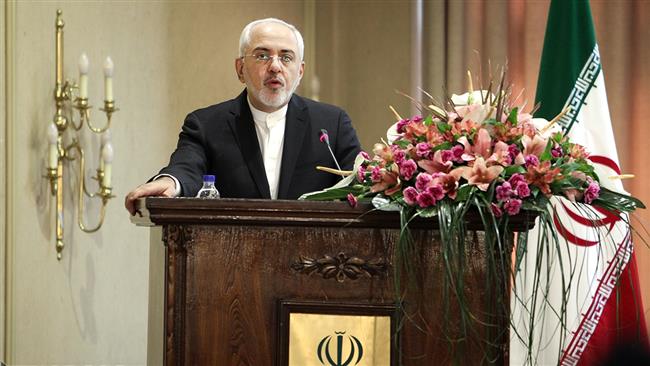
Addressing the seventh ministerial meeting of Caspian states in Moscow on Tuesday, Zarif said he was honored to announce that the five countries share the view that the Caspian Sea’s issues should be addressed only by the littoral states.

The countries have also agreed to ban foreign military forces, he added, saying there is a consensus on the bulk of the Caspian Sea legal regime.

Stressing the need for “fairness” and “mutual respect” in demarcation of maritime boundaries in the Caspian Sea, Zarif said disagreements on demarcation of the zones could be resolved through “closer interaction and mutual flexibility by all parties.”

Iran is ready to let other Caspian states have access to international waters when it comes to the transportation of goods or oil and gas transfer, he added.

Proposing plans for closer cooperation, Zarif said the five littoral states could establish a joint investment fund, coordinate customs affairs and unify the tariffs, found joint transportation companies, and move to remove visa requirements for trips among them.

Heading a delegation of political and legal experts, Zarif is in Moscow for the ministerial meeting, which he said follows 49 sessions at the level of political experts.

The two-day meeting precedes a summit of Caspian leaders, due to be held in Astana.

The ministerial meeting focused on the draft document of the Convention on the Legal Status of the Caspian Sea.

The Caspian Sea Convention will determine the territorial rights of the littoral states as well as other matters related to the world’s largest landlocked body of water.