Wednesday, December 31, 2025
Home Blog Page 3787

Iran Rejects Claims about Macron’s Conditions for Visiting Tehran

French-President

A member of the National Security and Foreign Policy Commission of the Iranian Parliament, Javad Karimi Ghoddousi, claimed that France’s conditions have been announced in a letter to Iran.

In a statement on Tuesday, Qassemi strongly rejected the claim and stressed that the foreign ministry, the foreign minister, or even any of Iranian embassies are not aware of such letter.

He said such claims are definitely against Iran’s national interests, and asked the MP to avoid raising baseless allegations.

Qassemi also noted that the era of setting conditions for other countries is over, and Iran’s principled policies in this regard are totally clear.

In an interview with the Persian-language website Alef, Ghoddousi claimed the letter had been sent by French foreign minister to his Iranian counterpart, Mohammad Javad Zairf.

According to Ghoddousi, one of Macron’s conditions was holding talks with the Islamic Revolution’s Leader.

“Sitting for talks with Iranian officials over the future of the region as well as Iran’s missile programs is another condition set by France,” he claimed.

The Iranian lawmaker also said the French side is seeking to prepare the grounds for trilateral talks among the US and Saudi Arabia on the one hand and the Islamic Republic of Iran on the other hand over the regional and Yemen developments.

Elsewhere in the interview, the Iranian lawmaker stressed as the Leader of Islamic revolution has repeated announced the Europeans are not “in a position to interfere in the internal affairs of the Islamic Republic of Iran.”

Iranian President Hassan Rouhani held phone talks with his French counterpart two months ago.

Following the talks, French presidential office issued a statement saying during the talks, the two sides discussed Rouhani’s invitation of Macron to visit Iran. If the visit is made, Macron will be the first French president visiting Iran since 1971.

Earlier, France announced Macron is set to visit Iran at the top of a high-ranking delegation in 2018.

France sought to normalize relations with Iran after the 2015 nuclear deal. It has, however, been taking a harder stance on matters beyond the deal, including Iran’s missile program and its regional role.

Iran has been counting on Europe’s support to counterbalance Trump’s attacks on the nuclear accord. After Macron’s recent visit to Saudi Arabia, Iran has said it wanted him to take a clearer stance and to “gauge Middle East developments with more awareness.”

“Yemen’s Houthis Must Have Representative at Int’l Level”

Ali Khorram, who is also a senior political analyst, says although Iran is introduced as the Houthis’ supporter at international levels, the fact is that the Islamic Republic’s role in Yemen is very limited.

“The only way for the Houthis is to have a representative who can simultaneously negotiate for them at the international level while they are involved in the war,” he added.

Speaking in a Farsi interview with Jamaran news website, Khorram took a brief look at the history of the contemporary Yemen, and said, “Almost 70 or 80 years ago the country was governed under the rule of Islam with the leadership of a person that people called him Imam. When King Abdulaziz came to power in Saudi Arabia, he attacked Yemen and overthrew its government to take it over.”

“However, as a result of the anti-Saudi developments, whose one division was under the influence of socialists and Marxists, Yemen was divided into two parts, North and South. After this, Ali Nasir Muhammad, became the leader of South Yemen, and Ali Abdullah Saleh, as a person close to Saudi Arabia, became the president of the North.”

He went on to say that this was the situation until Ali Nasir Muhammad left the country and fled to Syria following Saudi interference in Yemen about 20 years ago. Subsequently, Ali Abdullah Saleh called the north and south Yemen one country, and the geographical boundaries of Yemen once again returned to the era before the division.

Khorram noted that since then, Yemen was almost entirely under the control of Saudi Arabia, and was paying the majority of Yemen’s expenses including the salary of the military and the civil servants.

“This situation continued until the Arab Spring. As Saudis were afraid of these movements, they decided to replace Ali Abdullah Saleh with a new figure before the revolution starts and a person from abroad takes power in Yemen. Therefore, Abdullah Saleh was removed from office and Abdrabbuh Mansour Hadi succeeded him,” added Khorram.

“Yemen has a tribal structure and some formulas cannot be used in this country. For this reason, Ali Abdullah Saleh, who somehow considered himself the owner of a united Yemen, felt down by Saudi Arabia’s move.”

“The coincidence of this with the Houthi moves made Saleh unite with the Houthis along with the Yemeni army to take revenge on Saudi Arabia. The army was under the control of Saleh, and this gave the two Yemeni groups greater power.”

“After this, tensions mounted inside Yemen between the supporters of Mansour Hadi, who was backed by Saudi Arabia, and the two other groups. Therefore, Saudi Arabia waged a war against Yemen. This war has lasted for about 3 years, and Saudi Arabia has repeatedly bombarded Yemen during this period. However, while Riyadh considers Yemen as its backyard, it has never been able to find allies for itself inside Yemen and among the tribal groups,” pointed out Khorram.“Yemen’s Houthis Must Have Representative at Int’l Level”

He also noted that “as Saudi Arabia realized the bombardments do not work, it decided to break Ali Abdullah Saleh’s alliance with the Houthis. Finally, in cooperation with the United Arab Emirates, Saudis separated Saleh from Houthis last weekend. This led to a clash between Yemeni forces under the command of Abdullah Saleh and the Houthis. At first, the army attacked the Houthi positions and almost defeated them, but suddenly, the Houthis returned to Sana’a and stopped the army. During these clashes, Ali Abdullah Saleh was killed when he was escaping from the city.”

As Khorram said, this is the story in Yemen, but at the moment Yemen is not just this.

“Along with economic crisis and famine, al-Qaeda and other groups are present in Yemen. In this regard, the more the tensions escalate between the Houthis and Saudi Arabia, the more powerful al-Qaeda becomes. This makes Yemen’s events more sensitive.”

“In my opinion, the Houthis should seek a political solution at the same time as they continue the war. But the problem is that they have no representatives at international organizations. Although Iran is introduced as their supporter at international levels, the fact is that the Islamic Republic’s role in Yemen is very limited.”

“Anyhow, a country or some people should represent the Houthis at international assemblies to pursue their policies. The ground warfare is not enough, and some of the problems must be resolved with political solutions that the Houthis have little to do. There is a danger that the Houthi efforts will be to the interest of al-Qaeda,” Khorram went on to say.

He said, “I think we should look at this issue from this angle. If Iran cannot represent the Houthis directly, it should find a country to represent the Houthis internationally.”

In response to a question about the fate of the Yemeni army after the killing of Ali Abdullah Saleh, he said, “The Yemeni army was previously under the command of Ali Abdullah Saleh, but now that he has been killed, part of the army will be dispersed and most of it will be absorbed by Saudi Arabia. As the military cannot be under the control of the militia, there is a danger that the Houthis’ power will be less than the past.”

“It is possible that the Houthis would gain more independence after the death of Ali Abdullah Saleh, but they will definitely lose part of the army. Nevertheless, the army will not have the power to overcome the Houthis on its own; unless the Arab coalition army deploy ground troops to help the Yemeni army. In this way, the situation for the Houthis will be dangerous. The only way out for the Houthis is to have a representative who can negotiate for them at the same time that the war is going on,” he concluded.


Lebanese PM Hariri Rescinds Resignation after Deal with Rivals

Hariri revoked the resignation at the end of the first Cabinet meeting to be held since Lebanon was thrown into a political crisis following his stunning November 4 move.

Hariri shocked the nation with his bizarre resignation in a televised broadcast from Saudi Arabia last month, citing the Lebanese political party Hezbollah’s meddling in regional affairs as a main reason for stepping down, the Associated Press reported.

Tuesday’s Cabinet meeting, attended by Hariri, endorsed a statement that calls on rival Lebanese groups to distance themselves from regional conflicts and the internal affairs of Arab countries.

Hariri heads a coalition government that includes ministers from Hezbollah.

Saddam Hussein’s Daughter Calls Yemen’s Saleh “Martyr”

Yemen’s Interior Ministry on Monday confirmed that ex-president Saleh had been killed amid ongoing clashes in the war-torn country.

In reaction to his death, Saddam’s daughter called him a ‘martyr’, wished him peace and mercy, and offered condolences over his martyrdom, a Farsi report by Mehr said on Tuesday.

Ali Abdullah Saleh was a long-time ally of Saddam Hussein and supported him both in the war he imposed on Iran during the 1980s and his invasion of Kuwait in 1990.

Turkey to Cut Ties with Israel If Jerusalem Recognized as Capital: Erdogan

erdogan

Speaking on Tuesday, Erdogan threatened that Turkey could go as far as breaking off diplomatic ties with Israel if US President Donald Trump formally recognizes Jerusalem as Israel’s capital.

“That will be a red line for Muslim people,” he added.

Erdogan is the latest in a string of regional leaders, including Palestinian Authority President Mahmoud Abbas and Jordan’s King Hussein to warn of negative implications of the move.

Israel captured East Jerusalem in its 1967 aggression. It later annexed it, declaring the whole of the city as its capital in a move which has not been recognised internationally.

Palestinians want Jerusalem as the capital of their future state. It is home to major Muslim, Christian and Jewish holy sites.

US officials hinted a possible recognition might come this week, prompting mounting criticism among Arabs and Muslims.

The diplomatic adviser of President Abbas said the Palestinian leadership would “stop contacts” with the United States if Trump recognised Jerusalem as the Israeli regime’s capital.

Majdi Khaldi said the US would lose credibility as a mediator in the Middle East if the US President went ahead with the move.


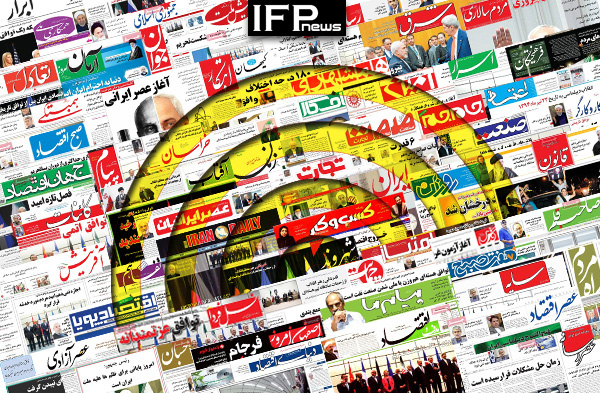
A Look at Iranian Newspaper Front Pages on December 5

The slaying of Ali Abdullah Saleh, the former president of Yemen, was the top story in all Iranian newspapers today. Many of them referred to the death as a result of his sedition and coup attempt against the Houthi Ansarullah movement.

The remarks made by Iranian Parliament Speaker Ali Larijani and Foreign Minister Mohammad Javad Zarif during their visits to the Russian capital of Moscow also received great coverage.

The above issues, as well as many more, are highlighted in the following headlines and top stories:


19 Dey:

1- Imam Khomeini’s Grandson Hassan: Unity among Muslim States Our Only Way

2- Larijani: Iran, Russia Dealt Heavy Blow on Terrorists

A Look at Iranian Newspaper Front Pages on December 5


Abrar:

1- Ansarullah: Ali Abdullah Saleh Killed

2- Trump’s Advisor: We’ve Made Serious Progress in Uniting Mideast against Iran

A Look at Iranian Newspaper Front Pages on December 5


Afkar:

1- Fate of Seditionist: Saleh, the Saudi Mercenary, Burns in Fire of Sana’a Sedition

A Look at Iranian Newspaper Front Pages on December 5


Aftab-e Yazd:

1- MP: On Issue of House Arrest, We’re Witnessing Flexibility

A Look at Iranian Newspaper Front Pages on December 5


Arman-e Emrooz:

1- Saleh Victim of Riyadh’s Plot

2- Imam Khomeini’s Grandson Ali: Status Quo Needs Serious Criticisms

A Look at Iranian Newspaper Front Pages on December 5


Ebtekar:

1- Tragic End of a Dictator

2- Fears and Hopes for Rouhani: A Report on Decreased Popularity of Rouhani

3- Larijani: NATO Ignoring Heroin Labs, Bombing Wedding Ceremonies

A Look at Iranian Newspaper Front Pages on December 5


Etemad:

1- May His Name Be Remembered Forever: On Prophet Muhammad’s Birthday

A Look at Iranian Newspaper Front Pages on December 5


Ettela’at:

1- Ali Abdullah Saleh Killed: Yemen War Enters New Phase

2- Saudi Crown Prince Has Asked Palestinians to Give Up Quds

A Look at Iranian Newspaper Front Pages on December 5


Iran:

1- Imam Khomeini’s Grandson Hassan: Unity Key to Overcoming Crisis

2- Zarif: No Foreign Force Allowed to Be Present in Caspian Sea

A Look at Iranian Newspaper Front Pages on December 5


Jame Jam:

1- Saleh’s Death: Saudis’ Last Winning Card Burns in Yemen

A Look at Iranian Newspaper Front Pages on December 5


Jame’eh Farda:

1- Unclear Fate of Yemen War

2- Environment Chief: Foreign Loans Only Way to Revive Lake Urmia

A Look at Iranian Newspaper Front Pages on December 5


Javan:

1- Fate of Little Saddam’s Treason

2- Iranian Weightlifter Moradi Breaks World Record, Bags Three Golds

A Look at Iranian Newspaper Front Pages on December 5


Jomhouri Eslami:

1- Yemen on Verge of New Developments

2- NATO Secretary-General: Our Focus on Full Implementation of Iran Nuclear Deal

A Look at Iranian Newspaper Front Pages on December 5


Kayhan:

1- UAE, Al Saud’s Pawn Killed: Sana’a Sedition Foiled

2- Transfer of US Embassy to Quds to Increase Palestinians’ Unity, Collapse of Israel

A Look at Iranian Newspaper Front Pages on December 5


Khorasan:

1- Fate of Saleh like Gaddafi

A Look at Iranian Newspaper Front Pages on December 5


Seda-ye Eslahat:

1- Yemen Dictator Killed

A Look at Iranian Newspaper Front Pages on December 5


Shargh:

1- Bloody Destiny of Oath-Breaker

2- Analyst on Yemen Developments: We Should Be Cautious

3- Kayhan Insists on Its Stance: Riyadh Next Target

A Look at Iranian Newspaper Front Pages on December 5


Siasat-e Rooz:

1- Ali Abdullah Saleh Killed While Escaping to Saudi Arabia

  • Fate of Coup against Nation

A Look at Iranian Newspaper Front Pages on December 5


Vatan-e Emrooz:

1- Fate of Sedition

2- Houthi Leader: Yemeni Nation Overcame Great Plot

3- Ansarullah Spokesman: UAE Takes Saleh to This Miserable Fate

4- ICT Minister: US Gov’t Restricts Iranian Apps

A Look at Iranian Newspaper Front Pages on December 5


Iranian Cleric Refereeing Football Matches in Top Division

Iranian Cleric Refereeing Football Matches in Top Division

An Iranian clergyman who is also a football referee in the Iran Professional League (IPL) has, in an interview with the Persian-language Fars News Agency, discussed how he manages both careers without either one interfering with the other.

Mohammad-Ali Pour-Mottaqi says he was a referee before he entered the Islamic Seminary School in the central Iranian city of Qom.

“I started my career as a referee in 2004,” he said.

“Almost three years later, I entered the seminary and continued my career as a referee at the same time,” he further said.

Pour-Mottaqi says he has judged several key matches, including a recent game between SAIPA and Nafte-Tehran teams in the Premier League, as an assistant referee.

He says he would like to continue his career as a referee at higher levels and wants to be an assistant referee in international matches.

The cleric notes that most other referees and players know that he is a cleric as well.

“Maybe it is believed that seminary students mostly care about studying, but it is very interesting to them when they find out a clergyman is a referee at the same time,” he says.

He also practices martial arts.

“I’m a Wushu and full kick-boxing instructor, as well,” he says.

According to Pour-Mottaqi, there is a doctor and an engineer who are referees as well.

“Whoever is working as a referee must abide by the rules and regulations.”

The cleric-cum-referee studies Fiqh (an advanced jurisprudence course) at the Islamic Seminary School in Qom.

Iran President Blasts Certain Muslim States for Close Ties with Israel

Iran President Blasts Certain Muslim States for Close Ties with IsraelIn an address to the opening ceremony of the 31st Islamic Unity Conference in Tehran, Rouhani said a bitter point in the Muslim world today is that certain Muslim states in the region overtly declare their close ties with the Israeli regime.

“This [overt relation] used to be very ominous and unpleasant in the past, and some of these countries did not dare to declare Israel as their friend even if they had close ties with Tel Aviv,” he added.

Rouhani went on to say the arrogant powers along with the Zionists are seeking to drive a wedge among regional nations, ethnicities, and religions through hatching up new plots.

“Shiites and Sunnis have no differences with each other because they are taking step in the same direction,” Rouhani was quoted as saying in a Farsi report by his official website.

He added the Shiite and Sunni groups have fought against their joint enemies in the history and their unity is deeply rooted in the holy Quran.

The Iranian president stressed that fight against terrorism should keep going on in all fronts till the full eradication of terrorist groups in the region.

Iran President Blasts Certain Muslim States for Close Ties with Israel“Those who stood against ISIS delivered a huge service to the region and the world but instead of paying tribute, world powers and some of their regional allies are seeking to hatch new plots against them.”

Elsewhere in his statements, Rouhani said it is no longer any secret which states created and sponsored terrorist groups in the region. “But the very terrorists turned the point of their attacks towards their own sponsors.”

Iran President Blasts Certain Muslim States for Close Ties with IsraelThe Iranian president warned about the upcoming plots by the sponsors of terrorism in the region and said the world powers should be held accountable for preparing the ground for the killing of the regional people and destroying of historical sits as well as infrastructures of the Middle East.

Rouhani also called for unity among the Islamic world saying the unity is not possible through extremism, violence and terrorism. He added the Islamic world should not allow the enemies to push it towards sectarian war.

“If it was not for the unity of the regional nations in fight against terrorism, Iraq and Syria would have collapsed so far.”

The Iranian president then urged the Islamic scholars to promote the true face of Islam across the world and added foreign powers kill innocent people in region, and boast of establishing human civilization.

Over 500 scholars, politicians from Islamic world including about 200 Iranians are taking part in the d 3-day conference in Tehran. During the conference, the scholars and politicians will discuss ways to confront challenges facing Muslim world during Islamic Unity Conference.

Iran Wins Two More Golds at Weightlifting World Championships

In the men’s 105kg event, Hashemi came out on top with 404kg after winning the snatch with 183kg and finishing third in the clean and jerk with 221kg.

Hashemi became the first world champion from his country in the category.

Mohammadreza Barari is Iran’s only other medalist in the men’s 105kg, claiming bronze in the clean and jerk in 2013.

Latvian Arturs Plesnieks won the silver medal with 402kg and bronze medal went to Uzbekistan’s Ivan Efremov with 399kg.

Sohrab Moradi had already won Iran’s first gold medal in the 94kg.

Calls for Dissolution of Iraqi Popular Forces Sign of New Plot: Iran

Calls for Dissolution of Iraqi Popular Forces Sign of New Plot: Iran

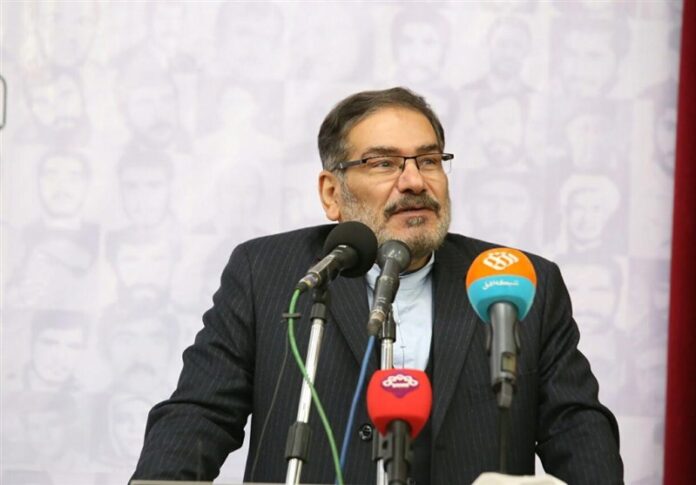
The fact that a Western country’s president echoes calls by the Israeli regime and emphasizes the disbanding of the volunteer pro-government forces, commonly known by their Arabic name as Hashd al-Sha’abi, shows a new plot is being hatched to bring insecurity and terrorism back to the region, Shamkhani said in a meeting with the head of the Islamic Supreme Council of Iraq and the first deputy speaker of the country’s parliament, Sheikh Humam Hamoudi, in Tehran on Monday.

He added that wisdom of the Iraqi officials, particularly the lawmakers, would thwart the enemies’ plots to undermine the country’s solidarity and national security, saying, “Certainly, such plots will be foiled.”

During a visit to Iraq on Saturday, French President Emmanuel Macron called for a “gradual demilitarization” and the “dismantlement” of the PMU fighters and all militias in Iraq. His call was widely received with outrage and anger by many in Iraq.

Ahmad al-Assadi, one of the PMU’s leaders, was quoted by AFP as saying that “any such discussion is rejected and we do not accept interference in Iraqi affairs.”

Reacting to Macron’s call, Iraq’s vice president and former prime minister, Nouri al-Maliki, said in a Facebook post that “Emmanuel Macron interfered unexpectedly in Iraq’s internal affairs by calling for the dismantling of a legal institution, Hashd al-Sha’abi.”

Hashd al-Sha’abi is a group of Shia and Sunni fighters that was formed after the emergence of Daesh in Iraq in 2014. In the early days of the Daesh terror campaign, the then volunteer fighters played a major role in reinforcing the Iraqi army, which had suffered heavy setbacks in the face of lightning advances by the terrorists.

The senior Iranian official also pointed to the collapse of Daesh Takfiri terrorists in Iraq and said resistance of the Iraqi people and acts of great bravery by the country’s army and security forces, particularly the PMU fighters, led to the collapse of the “biggest threat to the region.”

The United States and Israeli regime are creating and spearheading an important part of regional crises with the purpose of protecting the Tel Aviv regime’s security and selling more arms, Shamkhani added.

He emphasized that national unity and solidarity in Iraq would guarantee the country’s stability and security and serve the interests of all ethnic groups.

“Close cooperation among all countries victimized by terrorism in the region in order to counter terrorism on military, security and cultural fronts is an inevitable necessity and a deterrent factor preventing the re-emergence of terrorism,” Shamkhani pointed out.

Hamoudi, for his part, commended Iran’s great role in the fight against terrorist groups in Iraq and across the Middle East.

Iraq has managed to gain major victories despite economic and security problems, he said, adding that the country would continue this path in cooperation with its true allies.