Friday, April 10, 2026
Home Blog Page 3754

Iran Warns Off Coalition Warships to Stay Away from Drill Zone

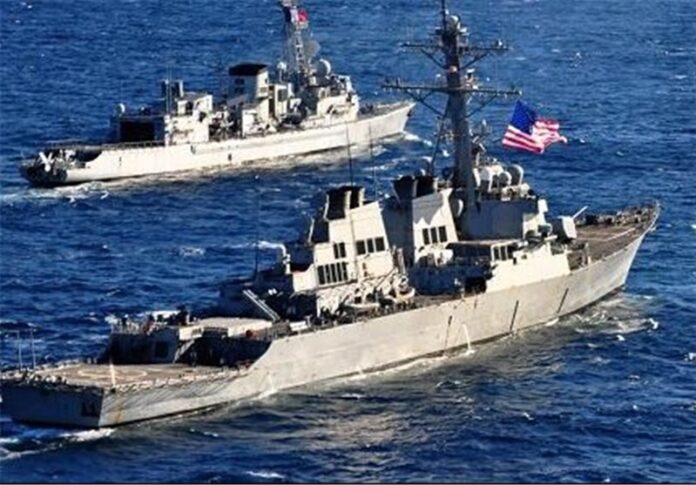
In the early hours of a large-scale exercise that the Iranian Army launched in south and southeast of the country on Monday, two warships belonging to the coalition forces approached the drill zone to monitor the Iranian Navy units, ranking Army commander and spokesperson for the war game, Rear Admiral Lower Half Mahmoud Mousavi said.

According to the spokesperson, assigned to brief reporters on the drill’s developments, after Army drones detected the two intruding vessels during the war game, patrol and reconnaissance aircraft flew over the coalition warships, gave them warnings and forced them to leave the drill zone.

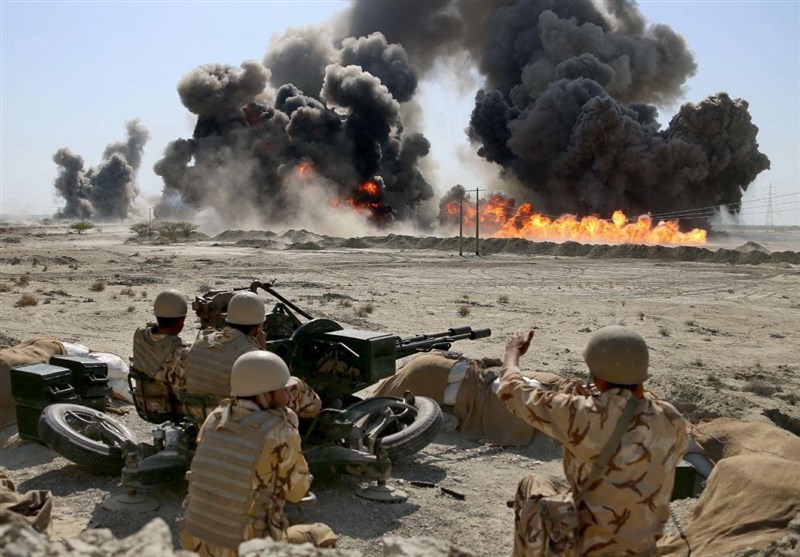
The war game, codenamed Muhammad Rasulullah-5 (Muhammad, the Messenger of God), covers vast areas south of Iran, mainly the coastline stretching to the southeastern Makran region, by the sea of Oman.

Forces from the Army Ground Force, Air Force, Navy, and Air Defense have taken part in the joint military drill.

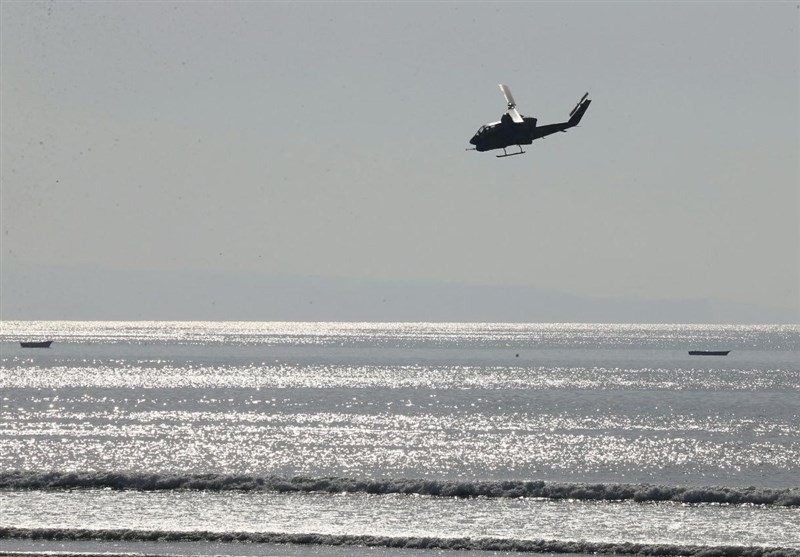
During the first day of the war game, combat choppers of the Army Ground Force Airborne Division opened heavy fire on the hypothetical enemy’s naval vessels approaching the coast.

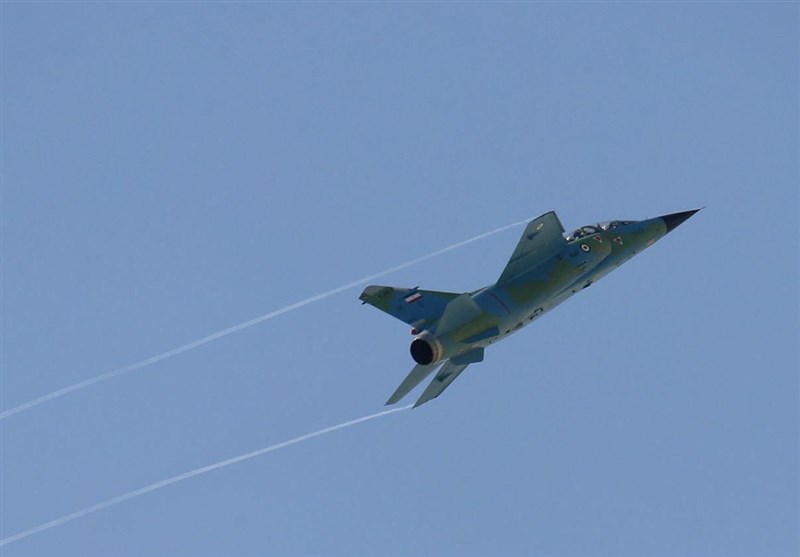
Air Force fighter jets also carried out sorties along the Oman Sea coastal areas to support the troops in ground operations.

Commanders say the exercise is aimed at promoting the capabilities of the Army forces and conveying the message of peace and friendship to regional countries.

The Iranian armed forces hold routine military drills throughout the year.
Iran Warns Off Coalition Warships to Stay Away from Drill Zone

Iran Warns Off Coalition Warships to Stay Away from Drill Zone

Iran Warns Off Coalition Warships to Stay Away from Drill Zone

Forces from the Army Ground Force, Air Force, Navy, and Air Defense have taken part in the joint military drill.

During the first day of the war game, combat choppers of the Army Ground Force Airborne Division opened heavy fire on the hypothetical enemy’s naval vessels approaching the coast.

Air Force fighter jets also carried out sorties along the Oman Sea coastal areas to support the troops in ground operations.

Commanders say the exercise is aimed at promoting the capabilities of the Army forces and conveying the message of peace and friendship to regional countries.

The Iranian armed forces hold routine military drills throughout the year.
Iran President Orders Officials to Tackle Dust Pollution in Southwest

Rouhani on Monday asked Head of the Department of the Environment Issa Kalantari and Agriculture Minister Mahmoud Hojjati to follow up on plans to tackle pollution caused by particulate matter in Khuzestan province.

The two top officials were ordered to immediately take care of the government’s recent short-term programs to deal with the problem, which has plagued the lives of Khuzestan residents during the past years.

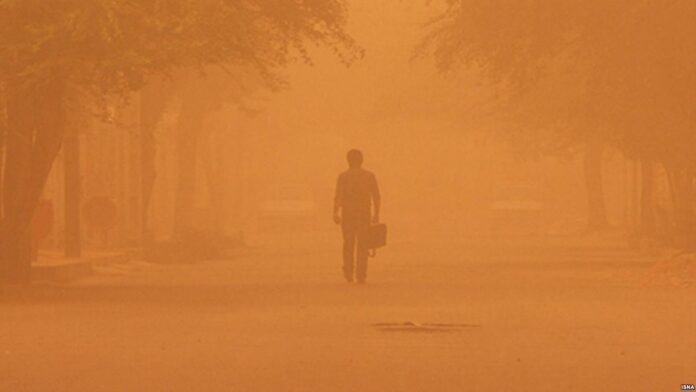
This comes as Khuzestan and Ilam have, in recent days, been seriously gripped by the problem of airborne particulates, and pollution has reached dangerous levels.

Khuzestan has seen dust storms and suffered from particle pollution for quite some time. High concentrations of particulate matter have forced the closure of schools several times, resulted in respiratory diseases for locals and disrupted people’s normal lives.

A major source of dust storms is Iran’s western neighbours, but the sand and dust storms also have domestic origins, which must be dealt with as soon as possible.

A Look at Iranian Newspaper Front Pages on January 22

A Look at Iranian Newspaper Front Pages on November 18

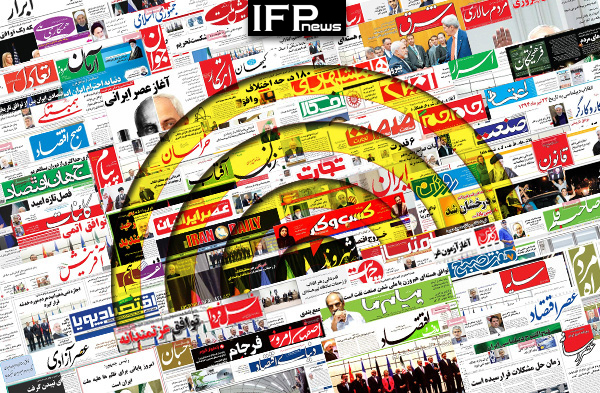
Several newspapers today covered the pieces of advice Ayatollah Seyyed Ali Khamenei, the Leader of Iran’s Islamic Revolution, gave a group of young documentary filmmakers.

The top story, however, was the surging rates of US dollar and other valuable currencies in Iran, and the reasons for such fluctuations.

The massive protest rallies held in over 200 US cities against President Donald Trump also received great coverage.

The above issues, as well as many more, are highlighted in the following headlines and top stories:


Aftab-e Yazd:

1- Intelligence Minister: Crisis in Iran Wasn’t Started by Enemy’s Moves

2- Parliament Removes Budget Allocated for Tackling Dust Pollution in Khuzestan

3- Dollar Rate Still Rising in Iran

A Look at Iranian Newspaper Front Pages on January 22


Arman-e Emrooz:

1- What Will Rouhani Talk about Tonight?

2- Analyst: Rouhani Should Enlighten People, Not Just Deliver a Speech

A Look at Iranian Newspaper Front Pages on January 22


Ebtekar:

1- Hostile Criticism Not Useful

2- Olive Branch to Hunt Wolf: World Concerned about Beginning of Mini World War in Syria

3- Rise of Dollar Rate amid Central Bank’s Silence

4- Iran to Continue Support for United, Integrated Iraq

A Look at Iranian Newspaper Front Pages on January 22


Ettela’at:

1- Biggest Protest Rallies in US in First Anniversary of Trump’s Presidency

2- Ceremony Held in Tehran to Commemorate Sanchi Oil Tanker Victims

3- Rouhani: All Countries Responsible for Defending Stability of Regional Borders

4- Turkish Army Attacks Syria’s Kurds via Air, Ground

5- We’ll Turn Iran into Dry Land by Increased Water Consumption: Environment Chief

A Look at Iranian Newspaper Front Pages on January 22


Iran:

1- MP: Tehran Prosecutor to Allow Lawmakers to Visit Evin Prison

2- Rouhani: Foreign Superpowers Don’t Care about Regional People

3- Sanchi Flaring in Hearts of Survivors

4- Culture Minister: Iranian Music Symbol of Iran’s Nationality

A Look at Iranian Newspaper Front Pages on January 22


Javan:

1- Women in 250 US Cities Hold Protest Rallies against Trump

  • Hundreds of Thousands Pour into Streets for US Government’s Sex Scandals

2- Officials Tell Iraqi Kurdistan’s PM: Security Is Iran’s Red Line

3- Health Minister Threatens to Decrease Medical Services!

4- Taliban Playing with Fire in Kabul amid US-Pakistan Tension

5- Dollar Rate IRR 37000 More than Optimists of JCPOA Celebration

A Look at Iranian Newspaper Front Pages on January 22


Jomhouri Eslami:

1- Iran Leader to Young Documentary Filmmakers: Critical Documentaries Should Provide Solutions

2- Iran Elaborates on Its Redlines for Iraqi Kurdistan’s Officials

A Look at Iranian Newspaper Front Pages on January 22


Kayhan:

1- 13 Key Questions to Be Asked from Rouhani

2- Mr Trump! Shut Your Mouth and Address People’s Problems

  • People in 200 US Cities Hold Protest Rallies against Trump

3- Al Saud Using Latin American Assassins as Last Way to Save Itself from Yemen Quagmire: MBC

4- Government’s Gift to People on JCPOA’s Second Anniversary: Surging Dollar Rates

5- Iran Leader Urges Documentary-Makers to Remain Revolutionary with Great Care

A Look at Iranian Newspaper Front Pages on January 22


Khorasan:

1- Smoking Hookah Allowed in Traditional Cafes

2- Imam Khomeini’s Grandson: We Ourselves, Not Enemies, Create Many of Our Problems

A Look at Iranian Newspaper Front Pages on January 22


Vatan-e Emrooz:

1- 43 Killed in Attack on Kabul’s Intercontinental Hotel

2- Zarif’s Revision of Foreign Ministry’s Structure to Increase His Power to Unprecedented Level

3- Shamkhani: We Won’t Tolerate Anti-Iran Elements’ Use of Kurdish Territories against Iranians

A Look at Iranian Newspaper Front Pages on January 22

Iran Rejects Spiegel’s Report, Says Ties with Germany on Rise

Bahram Qassemi

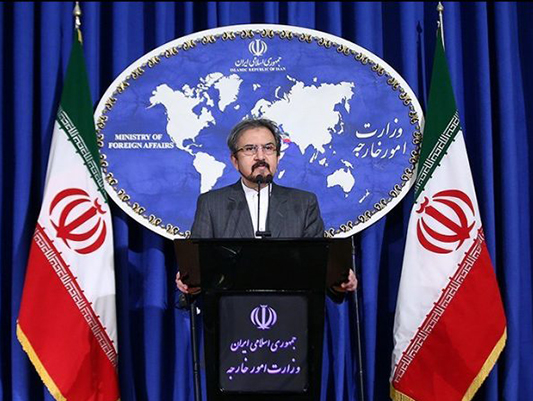
Speaking at his weekly press conference on Monday, Qassemi rejected the German weekly Der Spiegel’s claim about Berlin’s consultation with Europeans for imposing sanctions on Iran, saying that such issues are just in the media and Tehran has not received such signals from the German government.

He also stressed that the mutual ties are growing and such speculations should not be taken seriously.

“For sure, the German government is smart enough to deal with such claims and issues with great care,” underscored Qassemi.

Der Spiegel magazine reported on Saturday that Germany is lobbying among European allies to impose new sanctions against Iran in an attempt to prevent US President Donald Trump from terminating an international deal curbing Tehran’s nuclear program.

The report cited diplomats in Brussels as saying that Germany was pushing for new sanctions together with Britain and France to show the United States that European allies were taking Trump’s criticism against Iran seriously.

A German foreign ministry spokeswoman and another government spokesman both declined to comment on the report.

The report also added that Germany wants to punish Iran for its missile program and its meddling in conflicts in other Middle East countries, such as the war in Yemen and Syria.

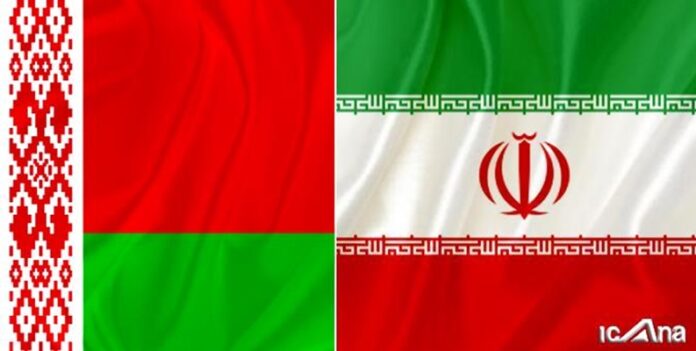
Iran Calls for Expansion of Business Ties with Belarus

Iran, Belarus to Hold 15th Meeting of Joint Commission

Speaking in a Monday meeting with his Belarusian counterpart Vitaly Vovk in Tehran, Shariatmadari said that positive steps have been taken in the past to expand bilateral relations, but they were not enough.

“Undoubtedly, the political relations between the Tehran and Minsk, and the strong will of the leaders of the two countries to develop bilateral ties with the continuous efforts of the two sides’ officials would help expand cooperation in the regional and international political fields,” Shariatmadari told the Persian-language Fars News Agency.

Making the statements at the opening of the 14th meeting of the Joint Commission of economic cooperation with the Republic of Belarus, the Iranian minister said that “I am so pleased that today the joint commission is being held in a friendly atmosphere.”

He stated that Iran’s trade ties with other countries is around $180 billion each year, and according to the information received, the level of cooperation between Iran and Belarus is $160 million.

“I am pleased that the 14th Joint Commission has a roadmap for the development of cooperation between the two countries in the coming years. This roadmap is devised for cooperation from 2018 till 2020. The roadmap includes a variety of issues in politics, investment, trade, industry, transportation, agriculture, health, education, science, technology and energy. It also highlights the annual formation of specialized working groups to follow up bilateral cooperation.”

He further noted that the economic relations of Iran and Belarus have been developed from a simple business partnership to technical and engineering cooperation.

Finally, the Iranian minister expressed hope that the two sides would witness the implementation of projects during the chairmanship of the Belarussian Minister of Industry at the Joint Commissions.

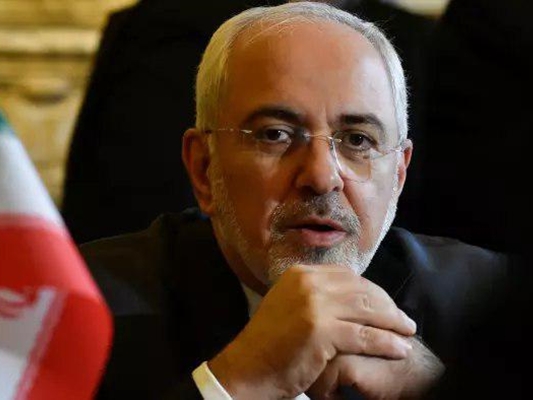
Iran Calls for Establishment of Regional Dialogue Forum

In an opinion piece published by the Financial Times on Sunday, Zarif said at all levels we are facing a dialogue deficit in west Asia, and “to move from turmoil to stability, we must first and foremost turn to dialogue and other confidence-building measures.”

“As a first step, the Islamic Republic proposes establishing a Regional Dialogue Forum in the Persian Gulf. Our longstanding invitation to dialogue remains open, and we look forward to the day our neighbours will accept it, and their allies — in Europe and elsewhere in the west — will encourage it,” he noted.

Here is the full text of Zarif’s article:

The defeat of ISIS has not just heralded the return of stability to large swaths of territory. It is also fanning fresh conflict and tension — including a concerted effort to revive the hysteria which has long obscured the reality of Iran’s foreign policy.

ISIS displayed the darkest depths of human evil. Yet it also provided an opportunity to come together to battle an existential threat. The co-operative relationships forged in this fight can usher in a new era. We need new approaches and new terminology to make sense of a world which is transitioning to a post-western global order. Here are two concepts to shape the emerging paradigm in west Asia: the idea of a strong region, and security networking, whereby small and large countries — even those with historical rivalries — contribute to stability.

The objective of a strong region — as opposed to a quest for hegemony and the exclusion of other actors — is rooted in recognising the need to respect the interest of all stakeholders. Any domineering effort by one country is not only inappropriate but essentially impossible: those who insist on following that path create instability. The arms race in our region is an instance of this kind of destructive rivalry: siphoning vital resources into the coffers of arms manufacturers has contributed nothing to achieving peace and security. Militarism has only served to fuel disastrous adventurism.

Most of the usual modes of forming alliances have also become obsolete. Given our interconnected world, the idea of collective security is now defunct, especially in the Persian Gulf, for one basic reason: it assumes commonality of interests. Security networking is Iran’s innovation to address issues that range from divergence of interests to power and size disparities. Its parameters are simple but effective: rather than trying to ignore conflicts of interests, it accepts differences. Equally, being premised on inclusivity, it acts as a firewall against the emergence of an oligarchy among big states and allows smaller states to participate. The rules of this new order are straightforward: common standards, most significantly the purposes and principles of the UN Charter, such as sovereign equality of states; refraining from the threat or use of force; peaceful resolution of conflicts; respect for the territorial integrity of states; non-intervention in the domestic affairs of states; and respect for self-determination within states.

Security networking is not utopian. It is the only realistic way out of the vicious cycle of relying on extra-regional powers, exclusionary alliances and the illusion that security can be bought with petrodollars or flattery. One would expect other countries — especially our European neighbours — to see it in their own interests to urge allies in our region to adopt this policy.

To move from turmoil to stability, we must first and foremost turn to dialogue and other confidence-building measures. At all levels we are facing a dialogue deficit in west Asia. Aspects of this are visible between the ruling and the ruled, between governments and between peoples. Dialogue should aim to make clear that we all have similar concerns, fears, aspirations and hopes. Such dialogue can and must replace rhetoric and propaganda. Dialogue must be coupled with confidence-building measures: promoting tourism; joint task forces on issues ranging from nuclear safety to pollution to disaster management; joint military visits; pre-notification of military exercises; transparency measures in armament; reducing military expenditures; and all leading eventually to a non-aggression pact.

As a first step, the Islamic Republic proposes establishing a Regional Dialogue Forum in the Persian Gulf. Our longstanding invitation to dialogue remains open, and we look forward to the day our neighbours will accept it, and their allies — in Europe and elsewhere in the west — will encourage it.

Iraqi Kurdistan Will Never Sever Ties with Iran: PM

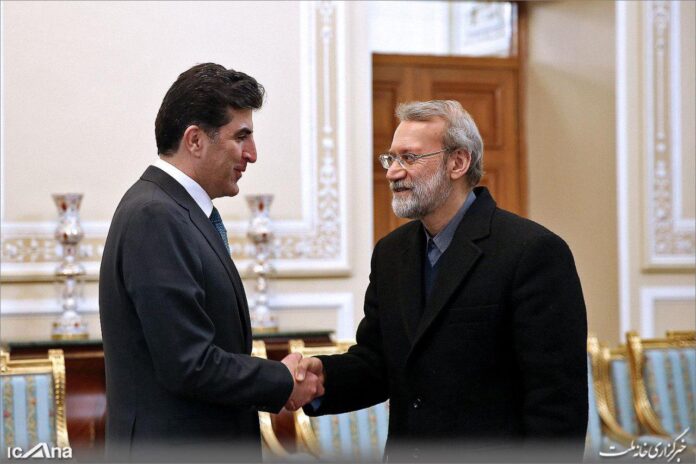
Speaking in a Sunday meeting with Iran’s Parliament Speaker Ali Larijani, Barzani thanked Tehran for its support and added the people of Kurdistan region are delighted with the reopening of borders with Iran.

“Our visit to Iran was made with the aim of sending this message to our own people that the KRG will never cut its ties with the Islamic Republic,” he added.

According to a Farsi report by ICANA, he said the KRG is ready to open a new chapter in its relations with Iran and to use its experiences for creating a bright future.

Barzani further noted that the KRG is seeking to preserve the sovereignty of Iraq.

“In our latest visit to Baghdad, we held meetings with Iraqi officials and explored ways to establish dialogue between the two sides,” he noted.

Barzani underlined that the conflicts between Erbil and the central government should be resolved within the framework of Iraq’s Constitution. He added ’we are after the unity and sovereignty of Iraq.’

He then noted that the KRG does not expect the problems to be resolved overnight. “But as the top Iraqi Shiite cleric Grand Ayatollah Ali Sistani insisted, we are ready to hold regular meetings with the central government to remove the current problems.”

He added KRG wants to remain part of a unified Iraq to keep the enemies at bay so that they cannot take advantage of Iraq’s internal divisions for their own gain.

Larijani, for his part, said Tehran’s strategy towards Iraq’s Kurdistan Region is based on recognition of an active and lively region within the Iraqi Constitution.

He went on to say that Iran has had close and brotherly relations with the Iraqi Kurds, and “will keep the relations in future because the security of Kurdistan Region is of great significant to us.”

The Iranian top lawmaker went on to say that the Islamic Republic has strategic relations with Kurdistan region, warning that the two sides should not allow the relations get severed by making strategic mistakes.

Larijani referred to the secession vote held in Kurdistan region last year and said the vote was not in the interest of “our Kurdish brothers because any problem in the region should be resolved in coordination with the central government in Baghdad.”

He underlined that the Kurdistan region has thriving economic activities and said the grounds are prepared to boost the economic conditions in the region but the KRG needs to press ahead its political agenda in coordination with the central government.

Larijani also called for unity between Shiite and Sunni groups in Iraq and said the country’s unity is deeply rooted in unity between Shiite and Sunni groups of the country.

“Enemies should not be allowed to sow the seeds of division between the two groups for their own gain.”

He also expressed hope that the conflicts between the Kurdistan Regional Government (KRG) and the central government in Baghdad would be resolved in the near future.

“We hope the governments of Erbil and Baghdad would join hands to hold the parliamentary elections with a high turnout across Iraq,” he added.

French FM to Visit Iran in March: Source

The source has told the IRIB New Agency in Paris that Le Drian will hold talks with Iranian officials and also make arrangements for French President Emmanuel Macron’s visit to Iran.

The French minister of foreign affairs was scheduled to travel to Tehran in the first week of January, but his trip was cancelled after a phone conversation between President Hassan Rouhani and Macron amid the recent riots across Iran.

France says during this visit, Le Drian wants to discuss Iran’s defence capabilities and also the presence of Iran in the region. However, Iran’s foreign ministry officials have announced that the talks would revolve around the nuclear deal.

Assad Hails Iran Leader’s Role in Defeating Terrorism

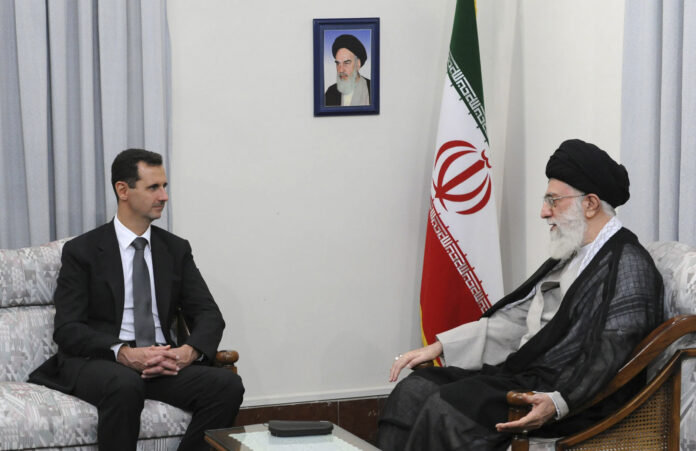
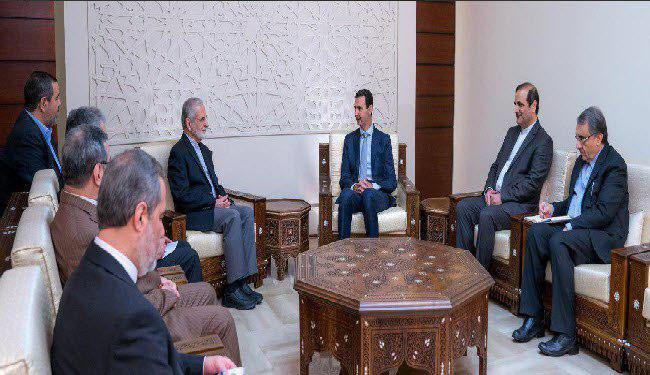
In this Oct. 2, 2010 file photo, released by the official website of the Iranian Leader's office, the Leader Ayatollah Seyyed Ali Khamenei, right, talks with Syrian President Bashar Assad in Tehran, Iran.

Speaking in a Sunday meeting with Kamal Kharrazi, the head of Iran’s Strategic Council on Foreign Relations, Bashar al-Assad said, “The providence of Ayatollah Seyyed Ali Khamenei, as well as the strength and resistance of the Iranian fighters and other forces of the allied front on the battlefields, have played a major role in winning the war against terrorism and defeating the Takfiri groups.”

According to a Farsi report by the IRIB News Agency, the Syrian president also pointed to the Iraqi people’s win over terrorist groups thanks to the support of the Islamic Republic of Iran, and expressed hope that a final victory would also be achieved against the terrorist groups in Syria with Tehran’s support.

Assad also elaborated on the developments in the battlefields and the political arenas of his country, saying that the US has been devising devious plots against the Syrian people and government, while other affiliated parties just play an instrumental role.

The Syrian president further expressed hope that the Kurds in northern parts of the country would agree with the government to block the region against the penetration of Washington and supporters of the terrorists.

Assad Hails Iran Leader’s Role in Defeating TerrorismFor his part, Kharrazi congratulated Syria on the recent victories of the Syrian army and the allied forces against terrorist groups, asserting that the victory over Takfiri groups took place in light of the resistance forces’ unity.

The Iranian diplomat, who is on a three-day visit in Damascus, added that further efforts should be made to eradicate the terrorists in other parts of Syria as well.

He concluded that the enemies of Syria and the resistance movement will not give up on their plots, and that during the reconstruction of Syria, attention must be paid to the enemy’s conspiracies, especially the plots of some regional countries.

Iran Vehemently Condemns Kabul Hotel Attack

In a Sunday statement, Qassemi expressed regret over the brutal hotel attack and offered sympathy to the Afghan nation and government, and the families of the victims.

“It goes without saying that those who use coercion and violence for their own gain in Kabul must learn from the fate of the Takfiri terrorism in the region over the past recent months.”

According to Afghan interior ministry 14 foreigners and 4 Afghans were killed when gunmen attacked the Intercontinental Hotel in Kabul.

The brazen overnight raid at one of Kabul’s main hotels began late Saturday. Four gunmen opened fire at guests inside the five-star hotel.

Pitched gun battles lasted for more than 13 hours into Sunday morning, when officials said all the attackers had been killed.

The Haqqani network, an ally of Taliban, have claimed responsibility for the attack, according to Toloo News. It was the second time the hotel was attacked in the past seven years.