Wednesday, December 24, 2025
Home Blog Page 3687

“Terrorism Crisis in Bab el-Mandeb Imminent If Yemen War Not Stopped”

Hossein Amir-Abdollahian, an international advisor to Iranian Parliament Speaker, says Al-Qaeda and ISIS terrorists have expanded their presence in southern Yemen, which is mostly controlled by Saudi Arabia and the UAE.

“A danger that threatens Yemen and regional waters is that instability and insecurity has been created in southern Yemen today as a result of Saudi Arabia’s three-year war,” he noted on Tuesday, speaking to reporters at the press conference of an anti-Israel festival called “Israel Hourglass” held in Tehran.

Amir-Abdollahian warned that if Saudis would not stop their aggression, a new centre for terrorism will be created in Bab el-Mandeb.

“Saudi Arabia and the UAE, as members of the coalition, and the UK and the US, as their sponsors are responsible for such crisis,” he noted, adding that international community is also to be blame as it has kept silent over the crisis.

Amir-Abdollahian stressed that Iran supports Yemen’s unity and territorial integrity, and that political resolution involving all tribes and parties is the only way to get out of this crisis.

“Iran has spiritual and emotional ties with Houthi Ansarullah movement and politically support them to help Yemen secure its sovereignty,” he added, asked about Tehran’s relations with the Houthis.

The accusations that Iran is supplying Yemen with missiles is totally “baseless”, he noted, adding that the Islamic Republic has repeatedly rejected such claims.


UK’s Double-Standard Policies

He also referred to the UK’s plots for the Middle East, and said London has a “serious” role in Bahrain and Yemen developments.

“Saudis didn’t make the decision on Yemen themselves; they were engaged in a scenario written by the West, and this will in the future lead to the Saudis’ collapse,” he added.

Amir-Abdollahian blasted the British government for drafting the recent anti-Iran resolution at the UN Security Council, which was vetoed by Russia, and said, “Unfortunately the UK has adopted double-standard policies towards the region.”

Asked about the drafting of the anti-Iran resolution shortly after Iranian Deputy Foreign Minister Abbas Araqchi had talks with Britons in London, Amir-Abdollahian said talks have been held with the UK over Yemen peace due to the UK’s role, but drafting the resolution at the same time with Araqchi’s talks shows their double-standard policies.

“After resumption of Tehran-London ties during President Rouhani’s first term in office, in my visit to the UK, I had a meeting with then Foreign Secretary Phillipe Hammond. I told him over 65% of Shiites in Bahrain are being seriously discriminated against, and Hammond said he knows about the Shiite ‘minority’ living in Bahrain,” the Iranian official noted.

“Then I said I don’t talk about Shiites and Sunnis, but I’m sorry if your information about everything is so little,” he added.

Boosting Trade Ties with Iran, Top Priority for Bulgaria: President

Bulgarian President Rumen Radev and Iranian Foriegn Minister Mohammad Javad Zarif met in Sofia on February 28, 2018 / Photo released by the Iranian Foreign Ministry

Speaking in a Wednesday meeting with Iranian Foreign Minister Mohammad Javad Zarif in Sofia, Radev expressed satisfaction over Zarif’s visit to his country, and stressed that Bulgaria attaches high importance to its relations with Iran.

“Boosting economic relations with Iran is a priority for Bulgaria. To reach this end, we need to remove obstacles to closer trade and strengthen transit routes, one of which is the corridor connecting the Black Sea to the Persian Gulf,” he said.

Pointing to Iran’s high status in the region, Radev said his government supports Iran’s efforts to promote peace and stability in the sensitive and conflict-ridden Middle East.

The Bulgarian president also called for closer cultural and people-to-people relations between the two countries.

Zarif, for his part, conveyed the warm greetings of Iranian President Hassan Rouhani to Radev, inviting him to pay an official visit to Tehran.

The top diplomat said Bulgaria is a quite important European country for Iran, partly due to the fact it is the gateway to Europe.

The foreign minister said he is pleased to see the two countries are frequently exchanging visits, expressing the hope that Tehran and Sofia will be able to remove obstacles to closer trade, including banking restrictions, to restore close economic relations they had before the tightening of international sanctions on Iran.

Zarif, who is in Bulgaria at the head of an economic delegation, said he hopes the trip and a joint economic forum expected to be held during the visit would help prepare the ground for further cooperation between the two countries.

“Currently, eight of our provinces have economic collaborations with Bulgaria,” he said.

Pointing to Sofia’s support for the Iran nuclear deal, Zarif said Europe played a big role in conclusion of the July 2015 nuclear deal, a great achievement for diplomacy.

“Ten reports by the International Atomic Energy Agency show Iran has been completely compliant with its obligations, while the US is still obstructing the [proper implementation of] the deal.”

Zarif said Tehran plays a constructive role in fighting terrorism and extremism in the region.

“We always have been confronting terrorist groups in the region, while some of regional countries are still supporting them,” he said.

The two sides also discussed conflicts in Yemen and Syria, as well as Iran’s efforts to put an end to these crises.

Vetoed UN Resolution Another Defeat for US: Iran’s Araqchi

Russia on Monday vetoed a resolution at the UN Security Council, presented by Britain and strongly backed by the United States, that called for “additional measures” against Iran over accusations that it violated the 2015 arms embargo on the war-torn Arabian Peninsula state.

The draft resolution gained 11 favorable votes at the 15-member Security Council but was blocked by Russia’s veto. China and Kazakhstan abstained, while Bolivia also voted against the measure.

A group of so-called independent United Nations experts monitoring the sanctions on Yemen reported to the Security Council in January that it had “identified missile remnants, related military equipment and military unmanned aerial vehicles that are of Iranian origin and were brought into Yemen after the imposition of the targeted arms embargo.”

Speaking to reporters on Tuesday, Iranian Deputy Foreign Minister for Political Affairs Abbas Araqchi rejected the “spiteful” allegations.

“Based on a one-sided report, they intended to pass a resolution that also referred to Iran, but they failed,” Araqchi said.

“This is yet another failure by the US government to drag Iran to the Security Council,” he added.

“Over the past year, the US government has on many occasions tried to one again drag Iran to the Security Council and it has failed every single time and this is another sign of the US isolation on the international scene and the strength of the Islamic Republic of Iran,” the senior Iranian diplomat pointed out.

He emphasized that the “biased accusations” were absolutely clear in the way the report was formulated by the UN panel.

He said the UN experts had “made their own judgment even before travelling to Iran to discuss and hear our comments.”

It was clear how others had influenced the report, Araqchi added.

“We will definitely continue our policies in the region in a way that will meet the country’s interests,” he said.

The Houthi movement has been defending Yemen against a bloody Saudi-led military campaign, which was launched in 2015 with the help of the US and the UK to reinstall the country’s former Riyadh-friendly government.

During a meeting of the Security Council on February 21, Russian Ambassador Vassily Nebenzia voiced his country’s opposition to the Security Council resolution.

“We do not like condemnations at all, no, in general,” Nebenzia said, adding, “It is a resolution about the extension of the working group, not about Iran. So we should concentrate on extending the working group first.”

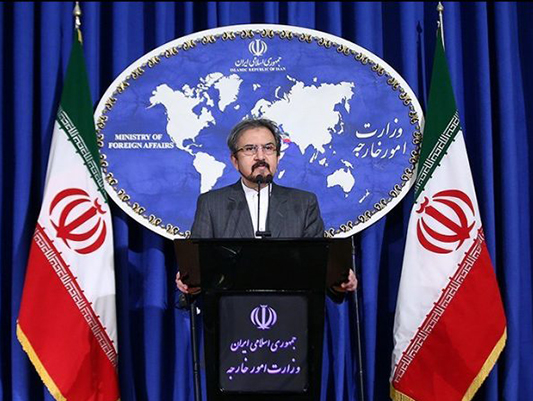
Iranian Foreign Ministry Spokesman Bahram Qassemi earlier this month once again rejected the allegations about the Islamic Republic’s provision of missiles to Yemeni forces, saying such claims are lies and a foolish scenario.

“Iran’s missile program is for defensive and deterrent [purposes] and claims about the dispatch of missiles to Yemen despite the all-out blockade on this country are lies and a foolish scenario designed to exonerate the aggressors,” Qassemi said.

The chief commander of Iran’s Islamic Revolution Guards Corps (IRGC) also in January dismissed the allegations leveled by the US and its allies about the Islamic Republic’s provision of missiles to Yemeni forces.

“Missiles fired at Saudi Arabia belong to Yemen which have been overhauled and their ranges have been increased,” Major General Mohammad Ali Jafari said.

Iran to Modernize Medical Waste Treatment Using Belgian Technology

The agreement on medical waste treatment was made during a visit by Iran’s Health Minister Hassan Qazizadeh Hashemi to the AMB Company in Brussels Tuesday.

The Belgian firm is a manufacturer of equipment and machinery used for recycling, recovery and processing of medical waste.

Iran to Modernize Medical Waste Treatment Using Belgian Technology
Iranian Health Minister Seyyed Hassan Qazizadeh Hashemi visiting AMB Company in Brussels on February 27, 2018 / Photo retrieved from IRIB News Agency

According to a Farsi report by IRIB News Agency, managers of the company have expressed willingness to pay a visit to Iran to discuss closer cooperation.

Earlier on Tuesday, the Iranian minister and his accompanying delegation visited a science and technology park south of Brussels.

Qazizadeh Hashemi entered Belgium Monday to foster greater health cooperation with the European country.

After a two-day trip to Belgium, Qazizadeh Hashemi will head to Hungary on Wednesday.

Iran, Armenia Discuss Enhancing Energy Cooperation

Iranian Minister of Energy Reza Ardakanian and Armenian Minister of Energy Infrastructures and Natural Resources Ashot Manukyan met in Yerevan on February 27, 2018 / Photo retrieved from Armradio.am

Iran and Armenia have held the 15th meeting of their Joint Economic Commission to explore ways for further cooperation between the two sides in energy as well as other fields.

The two-day meeting in Armenia’s capital, Yerevan, was attended by Iranian Minister for Energy Reza Ardakanian and Armenian Minister for Energy Infrastructures and Natural Resources Ashot Manukyan as well as Iranian and Armenian experts from energy and industrial fields.

The main topics of the meeting included expediting the project of the third electricity transmission line from Iran to Armenia as the main energy corridor linking Iran, Armenia, Georgia and Russia together and creating an appropriate ground for further energy exchanges between the two sides, a Farsi report by IRIB News Agency said.

During the meeting the two sides also signed a number of memorandums of understanding on water, power, energy, environment, commerce, mine industry, customs, insurance and banking exchanges.

In an address to the meeting, Ardakanian said Iran and Armenia are willing to deepen their cooperation in fields of mutual interests.

He said the project of third electricity transmission line is expected to be accomplished by September 2018.

He also noted Iran is ready to increase the volume of gas supplied to Armenia.

Asked whether the gas price could be lower than that offered by Russia, he said Iran’s Petroleum Ministry and Armenia’s Ministry of Energy will soon hold talks on the issue.

According to Public Radio of Armenia, the Iranian minister said there are huge perspectives for the development of cooperation between the two countries not only in the energy sector, but also agriculture, tax and road communication, mining, etc.

“We hope the negotiation between Iran and the Eurasian Economic Union (EAEU) will produce good results in the future. I’m confident that Armenia’s role and the friendly ties between our two countries will contribute to the development of relations with EAEU,” Ardakanian stressed.

The Iranian minister added during his upcoming meeting with Armenia’s environment minister, he would raise the issue of the pollution of Aras River’s water due to industrial operations by the Armenian side.

For his part, Manukyan said he sees no obstacle for the development of cooperation between the two countries.

“To eliminate any obstacles, we opened the Meghri free economic zone on the territory of Armenia. There is also the Aras free economic zone operating on the Iranian territory. I’m confident the cooperation between these two zones will help overcome any legislative differences,” the Minister said.

According to him, the free economic zones, construction of the Iran Armenia 3rd third high-voltage power transmission line and the Meghri HPP will come to contribute to the development of trade between the two countries.

During his visit to Armenia, Ardakanian will also hold talks with Armenian Prime Minister Karen Karapetyan as well as his energy minister.

He is accompanied during the visit by a delegation of top managers from foreign ministry, oil ministry, Central Bank of Iran and many others.

“Saudi Blockade Has Pushed Yemenis to Brink of Famine”

Iran’s Minister of Justice Seyyed Alireza Avaei addressing the United Nations Human Rights Council in Geneva on February 27, 2018 / Photo retrieved from Reuters

In an address to the UN Human Rights Council’s 37th session in Geneva, the Iranian official said the massive sanctions imposed on Yemen by Saudi Arabia have cut all imports into the impoverished nation from food to fuels.

“War on Yemen rages on as it is dragging into its third year. There is no end in sight for the war,” he said, as reported by IRIB News Agency.

The Iranian official added the condition in Yemen has deteriorated and turned into a humanitarian crisis with massive ruins and stark violations of human rights.

Saudi Arabia has been leading a deadly war against Yemen from the air, land, and sea since 2015 in an attempt to reinstate former president Abd Rabbuh Mansur Hadi.

The war has killed thousands of innocent civilians and destroyed Yemen’s infrastructure as well as schools and factories.

The UN has described the situation in Yemen as the “world’s worst humanitarian crisis.”

UNSC’s Anti-Iran Resolution ‘Ugly Show’ to Support Saudis: Zarif
Mohammad Javad Zarif says the UN Security Council’s voting session for the UK-drafted anti-Iran resolution was an ugly show aimed at supporting the country which has launched aggression on Yemen.

“The presentation of the anti-Iran resolution to the UN Security Council meeting last night by the US with the help of certain countries shows how brazen they are,” said Zarif on Tuesday upon arrival at the Bulgarian capital of Sofia.

“Such moves are, in fact, an effort to cover up the crimes which they themselves are accomplices to,” added Zarif, who is on a tour of Eastern Europe and the Balkans.

“At the moment, we are unfortunately witnessing the killing of thousands of innocent people as a result of the aggression on Yemen by Saudi Arabia and its allies,” said the foreign minister.

The top diplomat underlined that a humanitarian disaster is unfolding in Yemen.

“Based on some figures, more than one million people are suffering from cholera in this country. In fact, such happenings have been brought about by the US,” Zarif said.

The UN Security Council on Monday drafted a resolution that would have pressured Iran over alleged use of Iranian-made missiles by Yemeni forces. Russia, however, vetoed the resolution.

Iran President Hails Gen. Soleimani for Standing Up to ISIS Terrorists

In a message on Tuesday, President Rouhani praised General Soleimani for his endeavours and services. The text of the president’s message was read out at a conference held in recognition of the top general’s services. What follows is the text of the message as reported by Mizan News Agency:
Iran’s checkered history has seen great heroes who created unique scenes of epic and triumph in battlefronts. Islamic Iran’s contemporary history is marked by the emergence of brave men who create epic while enjoying high moral values. Under the aegis of divine blessings and victory and thanks to the purification of their souls and obeying the Velayat-e Faqih, they are down-to-earth and good-tempered when rubbing shoulders with the faithful and are tough and robust in confronting those seeking domination. It is they who have secured a place in the hearts of freedom-seekers and the oppressed around the world.

The martyrs of the Holy Defence era, who have a lofty status, the honourable defenders of holy sites, high-spirited and indefatigable disabled war veterans, and patient ex-prisoners of war are the flag-bearers of this move. Major General Qassem Soleimani, the top commander who has brought honour upon Islam, and the one who has fought in the path of God, defended the Iraqi and Syrian armies and people at a very sensitive juncture in the history of Iran and the world by making pure struggles as part of efforts to save the lives and honour of Muslims and people’s sanctities. His move was aimed at rooting out the wicked tree of ISIS, and amounted to a great service to the nations in the region and to humanity.

I regard the holding of the conference as the right opportunity in line with safeguarding and promoting the values of devotion, resistance and martyrdom, and hereby appreciate the successful and lasting efforts made by the commander of the Quds Force of the IRGC, and ask Almighty God to bestow prosperity, dignity and victory upon this dear man and all those who fight and struggle in the path of God.

Iran FM’s European Tour Takes Him to Bulgaria

Iranian Foreign Minister Mohammad Javad Zarif arrives in Bulgarian capital Sofia on February 28, 2018 / Photo retrieved from IRIB

Heading a high-ranking political and economic delegation, he arrived at the Sofia International Airport and was welcomed by Iranian chargé d’affaires in Sofia and Bulgarian officials.

During their one-day visit, Zarif and his entourage are scheduled to have separate meetings with President Rosen Plevneliev, Prime Minister Boyko Borisov, and Foreign Minister Ekaterina Zaharieva.

They will also hold talks with Chairperson of the National Assembly of the Republic of Bulgaria Dimitar Glavchev, and Minister of Economy, Energy and Tourism, Asen Vasilev.

The Iranian delegation, which arrived in Sofia after a two-day visit to the Serbian capital Belgrade, will leave Bulgaria for Croatian capital Zagreb on Wednesday February 28.

Iran Rejects Report about ‘Successor Deal’ to JCPOA

Nobakht-Iran

Speaking to reporters on Tuesday, Nobakht rejected a report by the New York Times on the alleged efforts by the Britain, France and Germany to create a “successor deal” to the 2015 nuclear agreement.

“For Iran, the JCPOA is the only viable nuclear deal. The JCPOA was drafted and agreed on word by word after months of hard efforts and negotiations,” he was quoted as saying in a Farsi report by IRIB news agency.

He also added Iran will remain committed to the nuclear deal as long as other sides continue to do so.

In its Monday report, the New York Times said the three European countries seek to appease US President Donald Trump by trying to make permanent the restrictions on Tehran’s ability to produce nuclear fuel.

“The Europeans are demanding a guarantee that Mr. Trump will abide by the add-on deal after it is negotiated and not jettison it on some other pretext,” the report said.