Saturday, December 27, 2025
Home Blog Page 3657

Iran, Turkey, Russia Urge Conflicting Sides to Stick to Syria Truce

Iranian President Hassan Rouhani, Turkish President Recep Tayyip Erdogan, and Russian President Vladimir Putin held trilateral talks in Ankara on the resolution of Syria crisis/ Photo retrieved from the Telegram channel of Iranian FM's top aide Hossein Jaberi Ansari

In the draft joint statement by Iranian President Hassan Rouhani, Turkish President Recep Tayyip Erdogan, and Russian President Vladimir Putin released after a trilateral meeting in Ankara, the three states welcomed the UN Security Council Resolution 2401 in response to the grave humanitarian situation all across Syria, including in Eastern Ghouta, Yarmouk, Foua and Kefraya, Idlib Governorate, Northern Hama Governorate, Rukhban and Raqqa.

They also strongly urged the conflicting parties to comply with the provisions of the said Resolution, including by refraining from ceasefire violations

The three heads of state also called upon the international community, particularly the UN and its humanitarian agencies, to increase its assistance to Syria by sending additional humanitarian aid, facilitating humanitarian mine action, restoring basic infrastructure assets, including social and economic facilities, and preserving historical heritage.

What follows is the full text of the statement released on Wednesday:

Draft Joint Statement by the Presidents of the Islamic Republic of Iran, the Russian Federation and the Republic of Turkey

4 April 2018, Ankara

President of the Islamic Republic of Iran H.E. Hassan Rouhani, President of the Russian Federation H.E. Vladimir Putin and President of the Republic of Turkey H.E. Recep Tayyip Erdoğan gathered in Ankara on 4 April 2018 for a tripartite meeting.

The Presidents

Took note of the developments regarding Syria since their last meeting on 22 November 2017 in Sochi;

Expressed their satisfaction with the outcomes of the first year of the Astana meetings held since January 2017, underlined that the Astana format had been the only effective international initiative that had helped reduce violence across Syria and had contributed to peace and stability in Syria, giving impetus to the Geneva process in order to find a lasting political solution to the Syrian conflict;

Reaffirmed their determination to continue their active cooperation on Syria for the achievement of lasting ceasefire between the conflicting parties and advancement of the political process envisaged by the UN Security Council Resolution 2254;

Emphasized their strong and continued commitment to the sovereignty, independence, unity, territorial integrity and non-sectarian character of Syria. They highlighted that none of the actions, no matter by whom they were undertaken, should undermine these principles, confirmed by relevant UN resolutions and by the will of the representatives of all segments of the Syrian society. They rejected all attempts to create new realities on the ground under the pretext of combating terrorism and expressed their determination to stand against separatist agendas aimed at undermining the sovereignty and territorial integrity of Syria as well as the national security of neighboring countries;

Expressed their conviction that the Syrian National Dialogue Congress, which was convened in Sochi on 30 January 2018, constituted an important milestone in paving the way for the political process, reiterated their commitment to follow up on the results of the Congress, reflecting the will of representatives of all segments of the Syrian society, in particular the agreement to form a Constitutional Committee, supported by the UN Secretary-General and the international community. They reaffirmed their support to facilitate the beginning of the Committee’s work in Geneva as soon as possible with the assistance of the United Nations Secretary-General’s Special Envoy for Syria and in coordination with three guarantor states;

Called upon the representatives of the Government of the Syrian Arab Republic and the opposition committed to the sovereignty, independence, unity, territorial integrity and non-sectarian character of Syria as well as the international community to support the results of the Syrian National Dialogue Congress;

Expressed their conviction that there could be no military solution to the Syrian conflict and that the conflict could be ended only through a negotiated political process;

Reiterated the necessity to assist the Syrians in restoring the unity of their country and in achieving a political solution of the ongoing conflict through an inclusive, free, fair and transparent Syrian-led and Syrian-owned process based on the free will of the Syrian people and leading to a constitution enjoying the support of the Syrian people, and free and fair elections with the participation of all eligible Syrians under appropriate UN supervision;

Reaffirmed their determination to continue their cooperation in order to ultimately eliminate DAESH/ISIL, Nusra Front and all other individuals, groups, undertakings and entities associated with Al-Qaeda or DAESH/ISIL as designated by the UN Security Council in Syria and underscored the success of their collective efforts in the fight against international terrorism;

Underlined that, in the fight against terrorism, separating the above-mentioned terrorist groups from the armed opposition groups that had joined and would join the ceasefire regime bore utmost importance with respect to preventing civilian casualties;

Welcomed the UN Security Council Resolution 2401 in response to the grave humanitarian situation all across Syria, including in Eastern Ghouta, Yarmouk, Foua and Kefraya, Idlib Governorate, Northern Hama Governorate, Rukhban and Raqqa; strongly urged the conflicting parties to comply with the provisions of the said Resolution, including  by refraining from ceasefire violations;

Underscored their joint determination to speed up their efforts to ensure calm on the ground and protect civilians in the de-escalation areas as well as to facilitate rapid, safe and unhindered humanitarian access to these areas and emphasized that the creation of de-escalation areas was temporary as provided for by the Memorandum of 4 May 2017;

Called upon the international community, particularly the UN and its humanitarian agencies, to increase its assistance to Syria by sending additional humanitarian aid, facilitating humanitarian mine action, restoring basic infrastructure assets, including social and economic facilities, and preserving historical heritage;

Welcomed the convening of the first meeting of the Working Group on the release of detainees/abductees and handover of the bodies as well as the identification of missing persons in Astana on 15 March 2018 with the participation of three guarantors as well as the UN and ICRC, and emphasized the importance of the effective functioning of the Working Group which would help build confidence between the conflicting parties;

Decided to hold their next meeting in the Islamic Republic of Iran upon the invitation of the President of the Islamic Republic of Iran H.E. Hassan Rouhani.

The Presidents of the Islamic Republic of Iran and the Russian Federation expressed their sincere gratitude to the President of the Republic of Turkey H.E. Recep Tayyip Erdoğan for hosting this Tripartite Summit in Ankara.

Arab League Calls for Int’l Probe into Israel’s Crimes against Gazans

The pan-Arab body convened at the regional grouping’s headquarters in Cairo on Tuesday on an ad hoc basis to address Israel’s attacks on anti-occupation Palestinian demonstrators on March 30.

Gazans on that day marched to the fence separating the enclave from Israeli-occupied lands at the start of a six-week protest, dubbed “The Great March of Return.”

The mass protest, however, turned violent when Israeli military forces used lethal force to disperse the crowd. Besides the 18 killed, some 1,500 Gazans were injured.

Israel had previously deployed military vehicles and special forces, including 100 snipers, to Gaza’s border. The regime’s forces had also been authorized to shoot at the demonstrators.

“The AL condemns the Israeli obvious, systematic, and large-scale crimes against the defenseless Palestinian civilians that are considered war crimes and crimes against humanity according to the international humanitarian law and the international human rights law,” a final statement said.

The Arab League also backed a request by the Palestinian Hamas resistance movement to sue Israel at the ICC for its crimes against Gazans.

Addressing the meeting, Arab League Secretary General Ahmad Aboul Gheit called on the United Nations Security Council to form an international commission to investigate Israel’s killings.

“Going to the UN General Assembly to provide protection to the Palestinian people and form an investigation commission will be an option if the Security Council continues to fail,” he added.

The Security Council held an emergency meeting over the mass killings by Israeli forces on Saturday, but failed to condemn the regime as the US hindered a final statement against its ally.

Aboul Gheit’s second-in-command Saeed Abu Ali stressed that the deaths had been caused after Israel deployed weapons against unarmed people.

Also addressing the meeting, Palestinian Ambassador to Cairo Diab al-Louh said the US is “encouraging” Israel to continue committing “heinous crimes” against defenseless Palestinians.

Israel “has occupied more than 60 percent of the West Bank, builds illegal settlements, and continues to impose a crippling blockade on Gaza,” he added.

The regime has defended its bloodshed in Gaza and even threatened a more violent response to future protests on Gaza’s border.

The Israeli minister for military affairs, Avigdor Lieberman, has rejected calls for a probe into the killing of Palestinians by the regime forces, saying, “We shall not cooperate with any commission of inquiry.”

The Palestinian protests are to reach their high point on May 15, the anniversary of Israel’s Western-backed war of 1948, during which it expelled Palestinians from their homeland before proclaiming existence.

Iran President Congratulates Senegal on National Day

In a message to his Senegalese counterpart Macky Sall on Wednesday, Rouhani offered his “sincere” congratulations to the Senegalese president and nation, and expressed the hope that friendly ties between Tehran and Dakar would be enhanced in areas of mutual interest.

He also wished health and success for Sall and prosperity for the Muslim nation of Senegal.

On April 4, 1959 Senegal and the French Sudan merged to form the Mali Federation, which became fully independent on 20 June 1960, as a result of the independence and the transfer of power agreement signed with France on 4 April 1960.

Due to internal political difficulties, the Federation broke up on 20 August, when Senegal and French Sudan (renamed the Republic of Mali) each proclaimed independence.

“Arab States Seeking to Bring Syria Back to Arab League”

It seems the policy of soft infiltration into Iraq, which could be extended to Syria, coupled with a hard and tension-provoking policy in countering Iran, is part of the strategy adopted by the White House and its regional Arab allies. Now it is time for the Arab League to show whether or not it will adopt the same soft policy vis-à-vis Syria that it has adopted towards Iraq.


Watershed in Arab League’s History?

The Persian-language Islamic Republic News Agency (IRNA) has quoted the Lebanese Addiyar newspaper as saying that the return of Syria to the Arab League could be a turning point in the history of the Arab body over the past few years and in regional developments.

Concerning Syria’s possible return to the Arab League, wrote the Arab daily, a senior Iraqi official, Egyptian President Abdel Fattah el-Sisi and Jordan’ King Abdullah II are to travel to Damascus and urge Syrian President Bashar al-Assad to attend an Arab League meeting. They will also accompany the Syrian president to the meeting.

The newspaper says nine Arab countries, including Iraq, would like to see Syria take part in an Arab leaders’ summit slated to be held in May in the Saudi capital, Riyadh.

In its report, the Addiyar daily writes that information obtained from diplomatic sources suggest Iraq, Algeria, Kuwait, Oman, Lebanon, Egypt, Mauritania, Palestine and Maghreb are keen to see Syria attend the event.

According to the paper, Arab League Secretary General Ahmed Abul-Gheit is trying to convince Saudi Arabia to annul the suspension of Syria’s membership in the Arab League, so that Syria could be invited to the meeting.

To that end, writes the newspaper, the highest Iraqi official along with Jordan’s King Abdullah II or Abdel Fattah el-Sisi himself will go Damascus to accompany Bashar al-Assad on a plane flying from Damascus to Riyadh to attend the Arab leaders’ summit there.


Saudi Arabia, Money, Rhetoric and Nothing Else

Given the trend of the developments in the Middle East in recent months, especially the realities on the ground in Iraq and Syria, it seems the Saudi regime has no ally left except money as Riyadh is highly frustrated at the failure of its recent policies and adventurism. That money is the windfall cash which can, until further notice, please bellicose White House businessmen and the remnants of terrorists in the Middle East region, so that young bin Salman will feel he has more support to counter the myriad of challenges facing Saudi Arabia both at home and abroad.

The end of the ISIS terror group’s rule in Iraq and Syria means the failure of the American-Saudi-Zionist project aimed at disintegrating Syria and Iraq as a prelude to the disintegration of the whole region. The ISIS’ defeat has also put Saudi Arabia in a bind.

It seems that young bin Salman has been entrusted with the historical task of helping Saudi Arabia shed its skin. Now, with the expensive consultations that bin Salman obtains from his friends in the Trump administration and the Israeli regime, he enters into a new field without caring for historical realities and without knowing his limits. By taking a look at Bahrain and Yemen cases, one can predict the fate of bin Salman’s adventurism in this new arena.

Although bin Salman admits that the policy of “Assad must go” is no longer effective and he needs to get along with the legitimate Syrian government. Nevertheless, it seems that he needs more time to change his hard policy in Syria to a soft one (similar to what he has adopted vis-à-vis Iraq). For this obvious reason, he wants the US not to hurry to leave Syria and maintain its presence on the ground for some more time.

Despite honest efforts by some countries, namely Iraq, Algeria, Oman and the like, and also the ambivalent policy that some other countries, including Egypt, have adopted toward the issue, one thing is certain: If this does not happen, it will become clear that Riyadh, for the moment, has no mission to return Syria to the Arab League.

In fact, Syria’s attendance or non-attendance in the Riyadh meeting will show Saudi Arabia’s stance on Damascus during the very same short period that bin Salman wants the US to remain in Syria, so that the balance of power will not be tipped against supporters of terrorists and secessionists.

As with the Iraq case, Riyadh’s new policy of returning Iraq/Syria to the “bosom of the Arab community (taking the two countries on board with Riyadh’s anti-Iran front) will not necessarily be fruitful due to the young crown prince’s immaturity, his lack of knowledge about regional nations and making efforts to make up for all his shortcomings and shortages with petrodollars and to please neo-conservatives in Washington.

Syria’s likely participation in the upcoming summit of the Arab League will amount to a major triumph for Bashar al-Assad and his allies and another definitive defeat for Saudi Arabia and the Western-Zionist front supporting it even if bin Salman thinks he can sell this “retreat” to Damascus as a concession and use it to pave the way for his new and soft policy to return to Syria.

To put it in a nutshell, one can say that Bashar al-Assad will be the centre of attention in Riyadh’s upcoming summit irrespective of the outcome of attempts by Arab countries to bring Syria back to the Arab League.

Idlib, Key Focus of Talks among Presidents of Iran, Turkey, Russia

Iran’s Hassan Rouhani, Russia’s Vladimir Putin and Turkey’s Recep Tayyip Erdogan will soon meet in Turkish capital Ankara to discuss the ongoing situation in the war-torn Arab country and follow up on agreements made in various rounds of Syria peace talks held in Kazakhstan’s capital of Astana.

The issue of Idlib and the de-escalation of conflict in the city is said to be the key focus of talks between the three heads of state.

The Ankara summit will be the second such meeting among the three countries’ presidents, the first of which was held in Russia’s Black Sea resort city of Sochi on November 22 last year, according to a Farsi report by IRNA.

While Moscow and Tehran support the Syrian government in its anti-terror drive, Turkey has been a major supplier of arms to militants fighting Assad.

The three countries have helped set up de-escalation zones across Syria to reduce fighting on the ground.

The Wednesday event was preceded by a meeting on Tuesday in Ankara between the three countries’ foreign ministers, in which the agenda of the Wednesday talks was discussed.

The collapse of the ISIS terrorist group’s so-called caliphate late 2017, along with a significant drop in violence in the country thanks to a December 2016 ceasefire, has raised hopes that a dialogue-based solution to the conflict will be soon in sight.

The 2016 ceasefire was also brokered by the trio, after the liberation of Aleppo knocked the final nail on the coffin of western countries’ regime change dreams, which have left hundreds of thousands dead and millions homeless in Syria.

The trio later started holding peace talks in Astana, which are aimed at achieving a political settlement to the lingering conflict.

The meeting came shortly after US President Donald Trump said he wanted to “bring American troops back home” from Syria, after indicating last week the US would withdraw from the country “very soon”.

“Iran to Keep Working with Russia until Eradication of Terrorists”

Hatami made the remarks on Tuesday after a meeting with his Russian counterpart, Sergei Shoigu, in Moscow, where he is slated to take part in an international security conference.

The Iranian defense chief hailed his meeting with Shoigu, saying they had discussed bilateral defense ties as well as regional and international cooperation.

The two sides, Hatami said, exchanged views on counter-terrorism fight, the main issue on the agenda of the Moscow Conference on International Security (MCIS), which will be held on Wednesday.

“As promised to the Syrian nation and regional nations, this [counter-terrorism] cooperation will continue until the total annihilation of terrorists and the liberation of regional nations from the scourge of terrorism,” Hatami said.

He further praised the opportunity provided by the 2015 Iran nuclear agreement to expand Tehran-Moscow relations in different areas, including defense, technology and education.

The Russian defense minister, for his part, said that joint Iran-Russia efforts in Syria have led to “appreciable results.”

He further noted that Moscow and Tehran now need to focus on boosting regional security, restoring stability to Syria and helping refugees return home.

Hatami’s talks with Shoigu came ahead of a trilateral meeting of the presidents of Russia, Iran and Turkey in Ankara regarding the Syria crisis.

At the Damascus government’s request, Iran and Russia have been assisting Syria in its fight against terrorists. Tehran gives the Syrian army military advisory assistance, while Moscow provides air cover to its ground operations against terrorists.

Iran and Russia, along with Turkey, have also been mediating a peace process between Syria’s warring sides, which has significantly reduced violence in the Arab country.

Iran Says “Illegal” Foreign Military Presence in Syria Must Be Stopped

“From our viewpoint, the presence of foreign forces in Syria without authorization of the country’s government is illegal and must be stopped,” Rouhani said in Tehran on Tuesday ahead of his flight to the Turkish capital city of Ankara.

Rouhani and his Russian and Turkish counterparts, Vladimir Putin and Recep Tayyip Erdogan, respectively, will discuss the ongoing situation in the war-torn Arab country on Wednesday.

The important point about the trilateral summit is total exclusion of Western countries, especially the United States, despite claims by Washington that it has been playing a leading role in the fight against terrorist groups in Syria.

The Iranian president pointed to the ongoing issues in Syria, including ethnic disputes, foreign support for terrorism and the US presence in the country, adding, “The Americans seek to prevent the Syrian government from taking control of all areas and they even think about partitioning the country.”

He also noted that Israel’s bombardment of the Syrian territories and Tel Avi regime’s support for terrorist groups have exacerbated the ongoing crisis in the country.

Rouhani underlined Iran’s position on Syria, including the need for the settlement of the crisis through dialogue, continuation of anti-terrorism campaign until complete eradication of all terrorist groups, and determination of the future of the country by the Syrian people without any foreign intervention.

The president also pointed to the humanitarian crises across Syria and called on the international community to deliver more aid to the people in the country.

The Ankara summit will be the second such meeting among the presidents of Iran, Russia and Turkey, as guarantors of ceasefire in Syria. Their first meeting on the issue was held in Russia’s resort city of Sochi on November 22 last year.

“The issue of reconstructing Syria as well as drawing up and amending a new Constitution are the key matters, which are important for the future of Syria and they will be discussed during the trilateral meeting,” Rouhani pointed out.

In the process of peace talks for Syria in the Kazakh capital city of Astana, Iran, Russia and Turkey helped set up de-escalation zones across Syria to reduce fighting on the ground.

The talks have featured the Syrian government and representatives of so-called opposition groups. Tehran and Moscow side with Damascus, while Turkey takes part on behalf of the Syrian opposition.

Angry at YouTube’s Unfair Policies, Iranian Vegan Wounds 3, Kills Herself

Aghdam on Tuesday opened fire on the YouTube campus and injured three people before killing herself.

The shooter, who would have turned 39 on Thursday, claimed on her social media accounts that YouTube was discriminating against her videos, many of which focused on animal rights and veganism, mixed in with bizarre musical parodies.

“YouTube filtered my channels to keep them from getting views!” Aghdam wrote on her website.

“There is no free speech in real world & you will be suppressed for telling the truth that is not supported by the system. Videos of targeted users are filtered & merely relegated, so that people can hardly see their videos!”

San Bruno, California, police said they continue to investigate a motive for the shooting.

“At this time there is no evidence that the shooter knew the victims of this shooting or that individuals were specifically targeted,” police said in a statement Tuesday night.

Aghdam’s family told NBC News that she was a long-time YouTube user who felt she had been cheated.Angry at YouTube’s Unfair Policies, Iranian Vegan Wounds 3, Kills Herself

YouTube “stopped everything and now she has no income,” her father, Ismail Aghdam, said in a brief phone interview. He said his daughter was at YouTube on Tuesday but said he did not know how she was involved in the incident.

Nasim, who also used the name Nasime Sabz (Green Breeze) on her Facebook, Instagram and personal website, had many followers and earned a living by posting videos on her YouTube channel. However, she appeared to bear a grudge against YouTube claiming she was not receiving money owed for her video hits.

Last February she posted a picture which appeared to show Aghdam holding a home-made protest sign which read: “YouTube dictatorship. Hidden policy: promote stupidity, discrimination, suppression of truth”.

CBSNews said Aghdam’s father Ismail told them his daughter had been missing for several days and he’d told police she was “angry” at YouTube.

Police said early investigations indicated the shooting was of a domestic nature and not terrorism-related.

Angry at YouTube’s Unfair Policies, Iranian Vegan Wounds 3, Kills Herself

Iran Urges Muslim World to Condemn Israel’s Crimes in Gaza

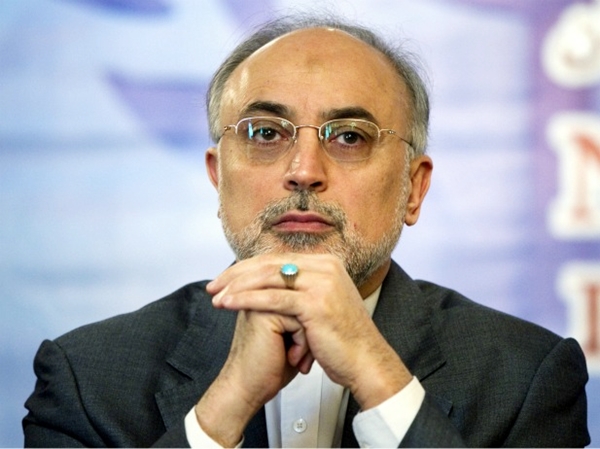
In his conversation with Ismail Haniyeh, Zarif expressed solidarity with Palestinian people, especially the residents of Gaza, over the killing of a number of defenceless Gazans by Israeli forces, and reiterated Iran’s support for Palestinians’ resistance.

Zarif underlined the Muslim world and the UN should adopt comprehensive measures to back the legitimate demands of Palestinian people and condemn the crimes committed by the Zionist regime of Israel.

He also spoke of a plan by Iran to pursue the issue at the UN General Assembly, the Non-Aligned Movement and the Organisation of Islamic Cooperation.

Haniyeh, in turn, appreciated Iran’s principled policies in supporting Palestinian people and their resistance. He also presented a report on Friday’s incident in which 20 innocent Gazans were killed by Israeli forces and hundreds were wounded.

3,000 Women Serving as Local Executives across Iran

A village in Sistan and Baluchestan province in southeastern Iran is completely run by women

According to Deputy Head of Iran’s Rural Councils Department Saeid-Reza Jandaghian, over the past one hundred years, Iran has experienced at least four stages of rural management systems from headman system to rural council.

“A brief review of the systems reveals that we have gotten gradually closer to a public-oriented management system which involves people further in the rural affairs,” he was quoted as saying in a Farsi report by Khabar Online.

He went on to say that the management systems used for handing rural affairs were not appropriate because the plans were imposed from top to bottom. “When the people themselves are involved in drafting the plans, the results would be highly substantiated.”

Jandaghian also said at present there are 38,000 rural heads across the country who are serving honestly with the lowest wages.

“Today, our main standard for appointing a rural government head is not their age but their thought. We need a person who has an active mind and is full of energy to press ahead with new projects,” he noted.

He urged women to take a more active role in rural affairs and said there are currently 3,000 women serving as rural council heads across the country.

The official noted today people have more trust in women at official posts and they have proved their capabilities to accomplish complicated jobs.