Tuesday, December 23, 2025
Home Blog Page 3616

Iran Renews Call for Cooperation among All Persian Gulf States

In a Monday message on the National Persian Gulf Day, annually marked in Iran on April 30, Zarif extended his sincere congratulations to all those who have, for thousands of years, lived peacefully along the coasts of this body of water.

“Persian Gulf is not just a body of water. The historical reality which we have known as the Persian Gulf for thousands of years is a valuable legacy passed to us by our ancestors who lived for years in the littoral areas,” Zarif noted.

“The Persian Gulf is the origin of a set of cultural and local values which have been integrated into our regional identity and life. Drawing on the legacy, this body of water has turned into a symbol of our region’s history and culture,” the Iranian top diplomat added.

“The Persian Gulf, which we have inherited from our ancestors and will pass to the future generations as a lasting legacy, has long been home to the most critical trade and energy transit corridors,” Zarif said.

He further noted that the body of water must be a strong region and a scene of cooperation, security and endogenous peace, and this becomes possible only through dialogue, cooperation and trust-building measures.

“The idea of establishing a Regional Dialogue Forum has been raised as a practical step to this effect,” he added.

Iran Slams Europe’s Efforts to Appease Trump on Nuclear Deal

In a Monday meeting with UK Minister of State for the Middle East at the Foreign and Commonwealth Office Alistair Burt in Tehran, Araqchi lashed out at European countries for their passive approach to the US violation of its commitments under the Iran nuclear deal.

He also strongly denounced the concerted efforts by Britain, Germany and France to appease US President Donald Trump over the JCPOA at the cost of pressurizing Iran into accepting more commitments and described the move as a wrong and defeated policy.

For his part, the British official expressed his country’s full commitment to the nuclear accord and said Britain wants the full implementation of the JCPOA by all parties involved.

He said Britain will also underline the demand during its talks with the US.

The two officials also discussed a wide range of issues from regional to international developments including the crises in Syria and Yemen.

Bilateral issues, particularly the financial problems caused by London’s delay in implementing its commitments towards Iran, were also discussed during the talks.

The British diplomat said his country is seriously seeking to settle these problems.

Iran Capable of Producing Quality Goods despite Sanctions: Leader

Leader

In an address to a group of Iranian workers on Monday, the Leader referred to his Sunday visit to an exhibition of Iranian products in Tehran and voiced his satisfaction with the quality of domestically-made goods displayed in the exhibition.

“I visited a small exhibition of domestically-produced goods. I made a tour of the exhibition for some hours. I saw your products. You deserve high praises for your high-quality products,” he noted.

Ayatollah Khamenei underlined that despite problems created by the arrogant powers which have imposed sanctions on Iran hampering imports of raw material and advanced machinery, the Iranian producers have managed to make goods with high quality.

“When I named this year as the Year of Support for Iranian Products, many took it with deep doubt, many others didn’t confirm it and never took any step to translate it into reality. Support for national products means support for the Iranian producers and workers. This is an all-out support. The government and the nation should offer their support in this regard,” he noted.

The leader visited the exhibition on the occasion of the International Labour Day. The exhibition showcased a wide range of domestically-produced goods from home appliance, stationery, clothes, and textile to foodstuff, medicine, medical equipment, cosmetics, auto-parts, and industrial and construction equipment.
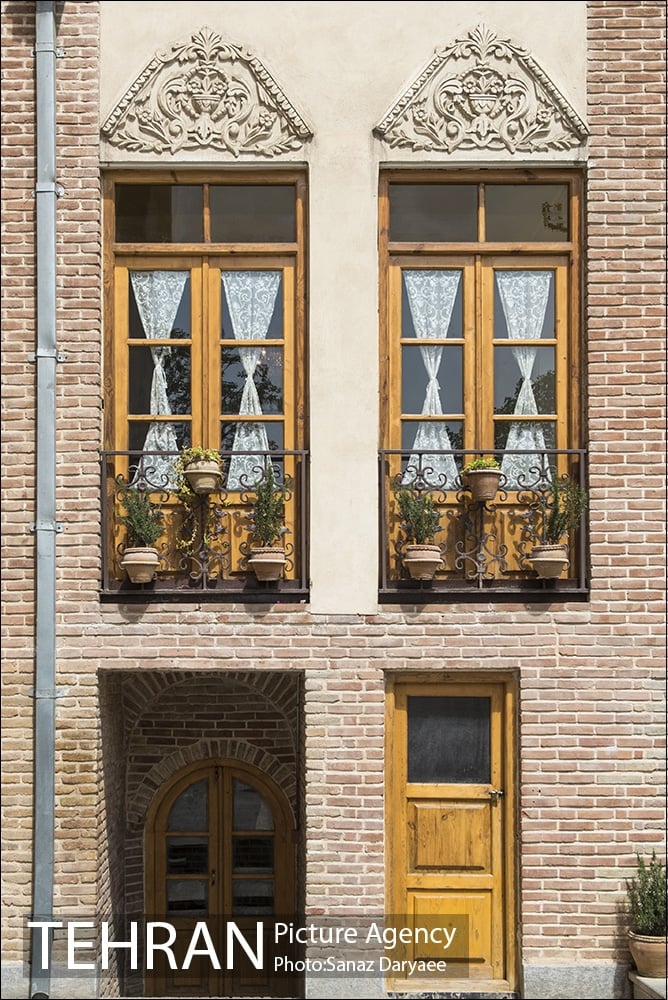
During his tour of the exhibition, the Leader also listened to producers talking about their problems and issued necessary orders to relevant officials to resolve the problems.

In his annual speech at the beginning of the new Persian Year, Ayatollah Khamenei named this year as “The Year of Support for Iranian Products” and expressed hope that the country’s economic issues could be resolved through promotion of “domestic production”.

Riyadh to Fund, Taliban to Protect TAPI Gas Pipeline

Taliban Spokesman Zabiullah Mujahid said the militants are ready to guarantee the security of TAPI Pipeline.

Attending a ceremony to launch the project, he added Taliban is ready to secure the pipeline because it is a good project for Afghanistan’s economy, a report by the Persian-language Fars News Agency said.

This comes as Hamid Reza Araqi, the CEO of Iran’s National Gas Company, says he is not optimistic about the future of the project.

He said Tehran has expressed its preparedness to help Turkmenistan export its gas to Pakistan through Iran, but Ashgabat has yet to provide a response.

He noted that given Iran’s geographical location, the country can take part in any pipeline project in the region.

“Even if the project is accomplished within the next ten years, it’s not clear yet how its finance and security are set to be provided,” he noted.

Similar pessimism was also expressed last year by Bijan Zanganeh, Iran’s Oil Minister.

The TAPI project was launched earlier this year in a ceremony attended by officials from Afghanistan, Turkmenistan and India. It is expected to connect Dowlatabad Gas field in Turkmenistan to Herat and Kandahar in Afghanistan, Quetta in Pakistan and Multan in India.

It seems the project has been launched as a rival to the controversial Peace Pipeline also known as Iran-Pakistan (IP). It is expected to transfer 90 M3 gas.

Now as the Iranian officials are pessimistic about the future of TAPI project, Saudi Arabia as well as its regional allies have expressed their readiness to take part in the project provided that Iran is left out. This will cut Iran’s access to East Asian markets.

Over the past years, Iran has not taken seriously East Asian countries as an export target. This has turned the countries into a good target for other gas exporters.

Experts say if Iran takes advantage of its bargaining power, it can export its gas to the East Asian market at a reasonable price.

In an address to the launching ceremony of TAPI project, Afghanistan President Ashraf Ghani expressed hope that the future generations of Afghanistan would take full advantage of the project to promote their economy and security.

Pakistan and Afghanistan which used to be among the main importers of Iran’s gas are now putting much efforts into TAPI project.

Experts say the ground is now prepared for the countries to import gas in less than four years.

Despite earlier agreement between Iran and Pakistan to establish the Peace Pipeline, the latter announced it does not have money to invest in the project. So, the Iranian side allocated a $500m loan to Pakistan to complete its side of the pipeline. With the taking office of the new government in Iran, the new Oil Minister Zanganeh refused to give the loan to Pakistan. This partly prompted Pakistan to move towards TAPI project.

Meanwhile, in 2010, the US asked Pakistan to abandon the pipeline project. By cancelling the project, Pakistan would receive assistance from the US for the construction of a liquefied natural gas terminal.

Now experts warn that with the new developments, if Iran remains passive, it will be left out of TAPI project forever.

Iran to Produce TV Series in Response to “Argo” Lies

Argo, the 2012 film by Ben Affleck which won the Academy Award for Best Picture in 2013, opens with a sentence saying the film is based on a real story. However, it is indeed an unfaithful adaptation of what happened during the US embassy takeover in Tehran back in 1979.

Since the release of Argo, Iranian filmmakers who believed the ahistorical film was a result of the sheer imagination of a number of American writers, have underlined the need to put together an artistic film with accurate historical account of the event to give an appropriate response to the sheer lies depicted in Argo, a report by the Persian-language Farhikhtegan paper said.

Argo, depicting the escape of American embassy staff from Tehran during the embassy takeover, was roundly criticized by Iranians. Their outrage was intensified after former First Lady Michelle Obama announced the best picture category in a surprise appearance live from the White House at Academy Awards, crowning political drama “Argo” as the best filn.

In a year when many of the nominated films had political themes — from “Lincoln” to “Zero Dark Thirty” — “Argo” came out on top among the crowd, winning three of the seven awards it was nominated for, including best picture.

Iran dismissed the awarding as an “advertisement for the CIA” and a Zionist plot to misrepresent an event arising from the 1979 Islamic Revolution.

On November 4, 1979, and in less than a year after the victory of the Islamic Revolution that toppled a US-backed monarchy, Iranian university students who called themselves “students following the line of (the late) Imam (Khomeini)” seized the US embassy in Tehran, which had become a center of espionage and planning to overthrow the newly established Islamic system in Iran.

The students who seized the embassy later published documents proving that the compound was indeed engaged in plans and measures to overthrow the Islamic Republic.

Iran Not to Forgo Missiles, Deterrence Power: IRGC

Brigadier General Hossein Salami, the lieutenant commander of Iran’s Islamic Revolution Guards Corps, underlined that Tehran can never accept to forswear its deterrence power.

Speaking on the sidelines of an event marking National Persian Gulf Day, the senior commander also touched upon recent anti-Iran claims made by US Secretary of State Mike Pompeo during his trip to Riyadh.

“The Americans pursue a strategy in the West Asia region, and that is to create a conundrum of security and balance of power,” the general said as quoted by the Persian-language Islamic Republic News Agency (IRNA).

He said the reason Washington is creating a conundrum of security is that it wants to make its domination over Arab states last forever and create a permanent need for its presence in the countries on the south coast of the Persian Gulf and West Asia.

He said the US is trying to introduce Iran as a threat and falsely call Iran a sponsor of terrorism while the whole world knows that Iran is at the forefront of fighting terror today.

“The Islamic Republic of Iran is a system which managed to end the ISIS terror group’s domination over Syria and Iraq with prudence, thinking and support,” he noted.

He said Iran has never promoted terrorism, but, on the contrary, has fought it.

“We have never threatened any country and respected the territorial integrity of all countries and recognized their independence,” he said.

Trump Will Not Withdraw from Iran Nuclear Deal: Ex-Diplomat

Are we on the brink of the implementation of the Iranophobia II project, with ballistic missiles as well as human rights and other issues being used as a lever? Will Iran agree to sit down for talks on issues demanded by Washington and Europe while the country has not reaped tangible benefits from the JCPOA in economic, political and security domains? The following memo provides a short answer to these two serious questions.

TajikIran’s ex-ambassador to Jordan Nosratollah Tajik said in an interview with the Persian-language Entekhab news website that Trump will listen to those of his advisors who believe he should stay in the nuclear agreement, also known as the Joint Comprehensive Plan of Action (JCPOA).

“It is us who should decide whether or not to link the JCPOA to Trump’s staying in, or pulling out of the deal. It is us who should decide whether or not to regard the JCPOA as a subject that has benefits, especially economic ones, for us. That means if there is a JCPOA which the US stays in, but which has no economic benefits for us, it is us that should do something about it,” he noted.

He said Iran has different scenarios for the game, but it must see which scenario the country is prepared for.

“We have problems inside [the country], and the state of limbo we are in over political and social issues will have a negative impact as well. It means we should see what resources we have available to us, and make the right decision accordingly,” said the former diplomat.

Elsewhere in his interview, he touched upon the possible impact of the agreement reached by the two Koreas on the issue of the JCPOA.

“Of course, the recent meeting between the two Korean leaders has not entered a serious phase on how things should be done. The two sides have expressed their willingness to establish stability on the Korean Peninsula, but North Korea will definitely not disarm itself and wants guarantees in that regard. In my opinion, a long process lies ahead, and we should not expect to see practical effects in the near future,” he said.

“Still, the development, even to this [limited] extent, will have an impact on the JCPOA, Middle East events, and issues between Iran and the US; whether the impact will be positive or negative depends on the future developments and the game played the other parties and every single player and benefactor,” he said.

He further said the Iran-US issues are quite different from the issues involving North Korea and the US.

“Some are saying in the cyberspace and elsewhere that North Korea has chosen a path where it first got armed and went nuclear, and now is compromising with the US. However, we compromised only halfway through on the path to going nuclear, and achieved no result. The problem and the missing link in this analysis and viewpoint is that our issues with the US are markedly different from the North Korea-US issues,” he said.

“Our issues with the US over Middle East affairs are very serious. So, we shouldn’t settle for a linear relationship between Iran and the US or regarding issues related to the JCPOA. There are more complex issues between Iran and the US each of which should be settled to some extent,” he said.

US Inciting Saudi Arabia to Clash with Iran: Leader

Ayatollah Seyyed Ali Khamenei

Addressing a large num ber of workers in Tehran on Monday, Ayatollah Khamenei said inciting certain inconsiderate and reckless governments in our own region is among the enemy’s plots to counter the Islamic Republic of Iran.

“Americans provoke Saudis to create rift and clash in the region,, Why don’t they incite the Zionists? Because they want to trigger a war between Muslims,” the Leader noted.

Ayatollah Khamenei went on to say that the US plans to provoke regional states into waging war against the Islamic Republic of Iran.

“But if the states have wisdom, they won’t engage in any conflicts with Iran. Any state which decides to confront Iran will definitely suffer a crushing blow and a heavy defeat,” he noted.

The Leader underlined that the US officials are seeking not to pay any price for their confrontation with the Islamic Republic and the great nation of Iran.

“Creating insecurity is the main business of the US. Chaos and misery are the only legacy that the US leaves behind wherever it goes. That’s why, we need to have the US out of the West Asia,” he added.

He described the Persian Gulf and the West Asia as the home of Iran and added the state which should be kicked out of the region is the US, not Iran.

A Look at Iranian Newspaper Front Pages on April 30

A Look at Iranian Newspaper Front Pages on November 19

Almost all papers today covered the remarks made by Iranian President Hassan Rouhani in criticism of certain members of his own cabinet who, according to him, are disappointed about resolving the country’s problems.

Also a top story was the imminent opening of the branches of three Iranian banks in Germany, and the talks between Tehran and Ankara over integration of bank cards.

Several papers also highlighted Europe’s commitment to the Iran nuclear deal, as expressed by a number of European leaders following their meetings with US President Donald Trump.

The above issues, as well as many more, are highlighted in the following headlines and top stories:


Abrar:

  • Iran Army, IRGC Hold Joint Parade, Display Air Defence Equipment
  • Trump: I’m Not John Kerry to Sign Bad Deal with Iran

A Look at Iranian Newspaper Front Pages on April 30


Afkar:

  • Velayati: Colonialists Will Never See Their Dream of Renaming Persian Gulf Realized

A Look at Iranian Newspaper Front Pages on April 30


Aftab-e Yazd:

  • Analyst: China and India to Blame for Iran’s Forex Problems

A Look at Iranian Newspaper Front Pages on April 30


Arman-e Emrooz:

  • Israelis Attacked Oliver Stone’s Email: Fajr Festival’s Secretary

A Look at Iranian Newspaper Front Pages on April 30


Asrar:

  • Rouhani: We Cannot Force Women to Stay Home

A Look at Iranian Newspaper Front Pages on April 30


Ebtekar:

  • President of “Hope” Government Slams “Disappointed” Gov’t!
  • Rouhani: Making People Frustrated with Their Future among Enemy’s Plots

A Look at Iranian Newspaper Front Pages on April 30


Etemad:

  • New Make-up Artists for Saudi Arabia’s New Face
  • Bin Salman to Use New Generations to Revive Saudi Lobby Groups in Washington

A Look at Iranian Newspaper Front Pages on April 30


Ettela’at:

  • Iran First VP: We’ll Give Foreign Currencies to All Students Living Abroad
  • Rouhani: We Won’t Accept Any Commitment beyond Iran Nuclear Deal

A Look at Iranian Newspaper Front Pages on April 30


Haft-e Sobh:

  • Iranian Banks’ Initiative against Trump
  • Iranian Banks to Open Branches in Germany, Integrate Bank Cards with Turkey

A Look at Iranian Newspaper Front Pages on April 30


Hemayat:

  • Washington, Europe Dividing Labour to Achieve New Deal on Iran Missiles

A Look at Iranian Newspaper Front Pages on April 30


Iran:

  • 10 Hours without Telegram

A Look at Iranian Newspaper Front Pages on April 30


Javan:

  • Disappointment of Rouhani’s Ministers
  • Rouhani, for Second Time in Past Few Days, Complains to People about His Cabinet!
  • Kaveh Madani Allowed to Leave Iran Upon Intelligence Ministry’s Request: Judiciary

A Look at Iranian Newspaper Front Pages on April 30


Jomhouri Eslami:

  • French President: EU Will Definitely Stay in Iran Nuclear Deal
  • After JCPOA: Iran’s Exports to Europe Increased Tenfold, Imports Rises by 1.2 Times

A Look at Iranian Newspaper Front Pages on April 30


Kayhan:

  • They Once Claim Transfer US Dollars Using Sacks, Now Say Working with 250 European Banks!
  • Two Electromagnetic Nuclear Bombs Built by N. Korea Can Kill 90% of Americans

A Look at Iranian Newspaper Front Pages on April 30


Mardom Salari:

  • Al Saud’s Circus against Iran
  • WWE Contest in Saudi Arabia Sparks Controversy

A Look at Iranian Newspaper Front Pages on April 30


Sazandegi:

  • Rouhani: Why Disappointed?
  • President Divides His Ministers into Two Categories: Hopeful, Hopeless

A Look at Iranian Newspaper Front Pages on April 30


Sepid:

  • Health Minister: Khuzestan Must Be Turned into Medical Hub of Mideast

A Look at Iranian Newspaper Front Pages on April 30


Setareh Sobh:

  • New Era of Hostility against Iran
  • New US Secretary of State Visits Middle East

A Look at Iranian Newspaper Front Pages on April 30


Shahrvand:

  • Oliver Stone an Opportunist: Iranian Critic

A Look at Iranian Newspaper Front Pages on April 30


Shargh:

  • European Leaders: JCPOA Must Be Preserved

A Look at Iranian Newspaper Front Pages on April 30

“Telegram, Safe Haven for Criminal Groups”

These days, the messaging service has turned into a scene of criminal acts, from fraud, terrorism and rumour spreading to blackmailing and smuggling of drugs and goods.

Two-thirds of cybercrimes are carried out through Telegram. According to a report by the Persian-language Tasnim News Agency, in line with its media advertising to promote its brand, Telegram has ensured its users with complete privacy. This has led many experts to this conclusion that the mechanism of the messaging app is aimed at providing criminal groups with a safe haven in the cyberspace. The groups are as follows:

  • Swindlers

Swindling makes up for most of the crimes committed in the cyberspace. Internet swindling is rare in official websites. But messaging apps like Telegram prepare the ground for criminal acts like illegal sale and purchase. The swindlers pick up their victims out of those who are easily influenced by online advertising. Unfortunately, swindlers cannot be prosecuted by the judiciary officials easily. Imagine you have purchased a product through Telegram and paid the money in advance but when you receive the product, you find out that it is not the one you picked up and paid for. What can be done? Almost nothing!

Remaining anonymous in Telegram on the one hand and people’s trust in the messaging app on the other have paved the way for swindlers to do whatever they like in the messaging service.

Colonel Mortazavi, the head of cyber police department in Iran’s Isfahan province, said in an interview last year that the number of fraud cases in Telegram is much higher compared with similar messaging apps like Viber or WhatsApp.

  • Terrorists

Remaining anonymous in Telegram has made it an appropriate space for terrorist acts. Unlike other messaging apps which have adopted strict measures against acts of terrorism, Telegram takes the issue easily. That’s why Telegram was the last app which restricted the ISIS’ access to itself.

Investigations made into terrorist attacks in Russia and France over the past year revealed that the terrorists made their arrangements for the attacks mainly through Telegram. Therefore, Russia has called on Telegram’s management to relocate some of its servers into the country and provide them with the data of Russian users of Telegram. So far, Telegram has refused to cooperate with the Russian government.
Meanwhile, last year with the growing number of terrorist attacks in South Asia, Indonesia restricted its population’s access to the app. Iran went through a similar experience last year when certain Telegram channels began to fuel unrest in the country. Iranian officials finally decided to temporarily block public access to Telegram to control the chaos.


  • Gossipers

Since Telegram has not established any cooperation with any official entity in the world, there is no supervision on the current of news published on the messaging app. Therefore, there is no way to verify the authenticity of the news coming out of Telegram. This paves the way for spreading of rumours across the world. So, the users can be misinformed easily by the gossipers who usually operate under false identities. On the other hand, Telegram doesn’t contribute to any verifying process.


  • Blackmailers

One of the main crimes in Telegram is blackmailing. Since most people are not aware of the safety measures in the cyberspace, they easily share their personal data and photos with others. This provides the criminals with a good opportunity to press ahead with their projects. This is a common problem with all messaging apps. The only way to cope with it is raising public awareness about the importance of privacy in the cyberspace. They should avoid trusting others in the Internet.
 

  • Smugglers

Telegram is an ideal medium for selling contraband goods, inflicting a heavy blow to any country’s economy. But once again, since in Telegram there is no way to recognize the real identity of a user, the smugglers have managed to establish their own territory in the messaging app. They can sell illegal goods in the country through Telegram.
 

  • Drug Traffickers

In some Telegram channels, drug smugglers are easily conducting their business selling different types of drugs from marijuana to LSD and cocaine. Interestingly enough, these crimes are carried out without any problem. In the pictures below, you can find a number of Telegram channels which are active in selling drugs without being worried about legal crackdown.


Global Call for Coping with Telegram’s Law Aversion

In most developed states, messaging apps active in the cyberspace are held accountable for their activities within the geographical borders of each country. This means that they restrict the access of users who violate the country’s Constitution.

For example in the US, any one making an unlawful use of communication channels is fined $250,000 or given prison terms of up to two years. In Germany, the service providers are held responsible for the contents they provide their users with.

In the UK, former Prime Minister David Cameron pressurised large tech companies like Google and Microsoft into cooperating with the government to delete child pornography material from the Internet.
Meanwhile, Google has restricted its search domain in many countries at the request of their governments. For example, search results in Thailand for “Thailand King”, in Germany for “Nazi” and in Turkey for “YouTube” have been filtered.
This comes as Telegram refuses to cooperate with governments. The app has been blocked in several countries like Saudi Arabia, China and Oman, and restricted in Russia and Indonesia. In her address to the World Economic Forum last year, UK Prime Minister Theresa May called messaging apps a safe haven for criminals and terrorists.

In line with its policy to evade responsibility for its contents, Telegram is now seeking to block any filtering. This will further prompt criminals to resort to the messaging service to press ahead with their dirty projects.