Tuesday, December 23, 2025
Home Blog Page 3608

Iranian Doctor Sentenced to Treating Patients for Free

According to the verdict, the doctor has to spend 1,500 hours seeing patients in hospitals in underprivileged parts of the province, as a replacement for the criminal part of his offence.

Otherwise, the doctor had to spend two years behind bars, the Persian-language IRNA reported.

The doctor must also pay blood money to the family of the patient who had sued him.

Tasnim News Agency reported last year that 240,000 people are currently incarcerated in Iran, with some overcrowded prisons having no more room for new arrivals.

There are still lots of people being sent to prisons annually, many of whom have committed misdemeanours or minor crimes.

The judiciary has recently encouraged its judges to try to avoid giving prison sentences to upend the trend.

Such orders are usually welcomed by the lawbreakers, and also their families, who do not like to see their loved ones to go behind the bars.


23rd Edition of Iran Oil Show Kicks Off in Tehran

23rd Edition of Iran Oil Show Kicks Off in Tehran

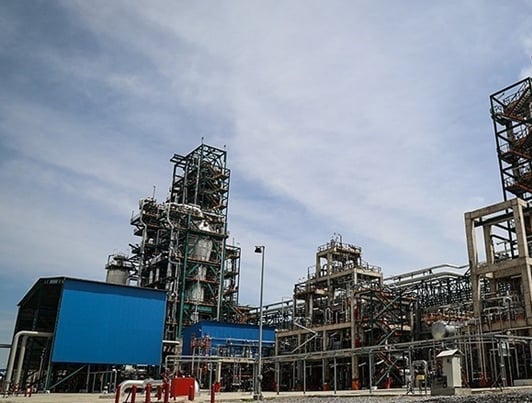
The four-day exhibition opened in a ceremony on Sunday at Tehran International Permanent Fairground.

According to the Persian-language news agency Shana, the opening ceremony was attended by a number of leading Iranian and foreign officials including Iranian Oil Minister Bijan Zanganeh, Secretary General of Gas Exporting Countries Forum (GECF) Yury Sentyurin, Deputy Prime Minister of Croatia and Minister of Economy Martina Dalić as well as number of Iranian lawmakers, foreign ambassadors and international company managers.

Some 1,200 Iranian and over 880 foreign companies have taken part in the exhibition, Iranian Oil Ministry said.

The exhibition’s fields of activity include development and study of reserves, geophysical equipment and technologies, equipment and technologies for drilling, equipment for oil and gas production, heavy engineering, pipes and pipelines, transportation of petroleum products, power generation, petrochemical technologies, maintenance, pipeline fittings, compressors, safety technologies, welding equipment, waste treatment and recycling.

Over 38 foreign countries participating in the exhibition include Azerbaijan Republic, Austria, Spain, Germany, the UAE, the UK, Italy, Belgium, Turkey, Czech Republic, China, Russia, Japan, Sweden, Switzerland, France, Croatia, South Korea, Poland,the Netherlands, India, Finland, Hong Kong, Bahrain, Kazakhstan, Monaco, Canada, Liechtenstein, Oman, Denmark, Taiwan, the US, Norway, Australia, Brazil, Malaysia and Singapore.

The international exhibition which holds the first rank in the Middle East and fifth in the world in terms of the number of participants is organized by the Iranian Oil Ministry.

The exhibition is attended by leading producers and manufacturers of the industry, builders, consulting engineers, general contractors, scientific professionals in the field of oil exploration, production and refining and IT experts.

Furthermore, several memorandums of understanding are expected to be signed on the sidelines of the exhibition.

400 Publishers from 50 States Attending Tehran Book Fair

Mohsen Javadi, the Iranian deputy culture minister, says more than 400 publishers from 50 countries have attended the book fair, which amounts to a new watershed in this international cultural event.

Foreign exhibitors do not include publishers only; rather, representatives of some cultural bodies form different nations are also present at the book fair.

The 31st Tehran International Book Fair has opened in an area measuring 130 square kilometres, bringing together over 2,000 local and foreign publishers.

The following are excerpts from interviews with the representatives of Greece, South Korea, Hungary, Iraq, Lebanon and Serbia conducted by the Persian-language Iran Book News Agency (IBNA) and the Islamic Republic News Agency (IRNA).

400 Publishers from 50 States Attending Tehran Book FairifpThanks to the Greek Embassy in Tehran, the Greek Cultural Institute has attended the event, exhibiting books by renowned Greek writers and literary figures both in Persian and Greek. Nikolaos Doukas, the Greek economic attaché in Tehran and director of the country’s pavilion at the 31st Tehran International Book Fair, told IBNA that writers of Ancient Greece are embraced by Iranian visitors. He said authorities at the Greek pavilion were surprised by the enthusiasm of Iranians.

The diplomat noted that his country decided to attend the book fair at the last moment, and added he is happy to see his country has taken part in the exhibition for the first time. The Greek official said his country will definitely continue its cooperation in that regard.

400 Publishers from 50 States Attending Tehran Book FairSouth Korea is another exhibitor at the international section of the 31st Tehran International Book Fair. This year, the country is only exhibiting children’s books, the most important of which is titled “The Yellow Ones” in which stories are narrated for children in simple language. The writer of the book was present at the pavilion during recent days and explained about his book to visitors and publishers. He also answered visitors’ questions.

The South Korean author described Iran’s culture as diverse and great while praising the Iranian cuisine. He said he was pleased to be in Iran and rubbing shoulders with the smart and kind people of the country.

400 Publishers from 50 States Attending Tehran Book FairTwo books entitled “A Collection of Hafez’s Poems in Hungarian” and “A Comprehensive Persian Language Course in Hungarian” were also unveiled at the book fair. A Hungarian cultural figure said at the unveiling ceremony that he was mesmerized by the book fair. He said new books are displayed at the event and that he was proud to be there.

400 Publishers from 50 States Attending Tehran Book FairAli Abbas Abdulhussein, a university lecturer and the head of the Kufa University Press, said on the sidelines of the event that the book fair organized by Iran is a good opportunity for exchanging views and narrowing the gap between the viewpoints of the scientists and researchers of different countries. He described the Islamic Republic of Iran as a pioneer in the domains of dialogue among civilizations, proximity among religions and further consolidating the ranks of Muslims to stand up to the enemies of Islam, particularly the US and Israel.

400 Publishers from 50 States Attending Tehran Book FairMohammad Sharareh, the director of the Lebanese pavilion at the book fair, said people’s purchasing power has, unfortunately, dropped this year due the rise in the exchange rate for foreign currency. So, he added, people are unable to buy the books they need, and that the government should support people more.

The man in charge of the Lebanese pavilion also described books and book-reading as the driving force behind the enlightenment of the public opinion. He said the Islamic Republic of Iran has taken the lead in that regard by staging the international book fair and contributes to the intellectual development of nations.

Mirko Prlja, the secretary of the Association of Creative Industry of the Serbian Chamber of Commerce, described the international book fair in Tehran as a key international event, calling for further promotion of cultural exchanges between Iran and Serbia. The Serbian cultural activist, whose country is a special guest of the 31st Tehran International Book Fair, said as visitors to Iran and Serbia do not need to get visas, it has become a good opportunity for the people of both countries to get familiar with one another’s culture in such cultural events as well as to boost cooperation in the field of tourism.

The 31st Tehran International Book Fair staged on the grounds of the Imam Khomeini Grand Prayer Site runs from May 2-12, 2018.

Philip Morris to Produce Marlboro Cigarettes in Iran

The MoU was signed after the Iranian government gave the private sector the green light to import the American cigarette after receiving the required licence.

According to a report by the Persian-language Mehr News Agency, Marlboro is among the top 20 foreign products smuggled into Iran.

An Iranian company representing Philip Morris has signed the MoU with the Iranian Tobacco Company.

Nader Qazipour, a member of the Iranian Parliament’s Industry Commission, says the commission discussed the issue last week to make sure signing of the MoU is in the interests of Iran.

“The offer to sign the MoU was discussed during a meeting last week and the participants unanimously called on the Industry Ministry to sign it after conducting in-depth studies to make sure it serves our national interests,” he noted.

He said following the studies, the Industry Minister ordered the Tobacco Company’s director general to sign the MoU within the legal procedures.

Ali-Asghar Ramzi, an official with the Iranian Tobacco Company, said preliminary works have already been done and expressed hope that the final licence of cooperation be issued soon.

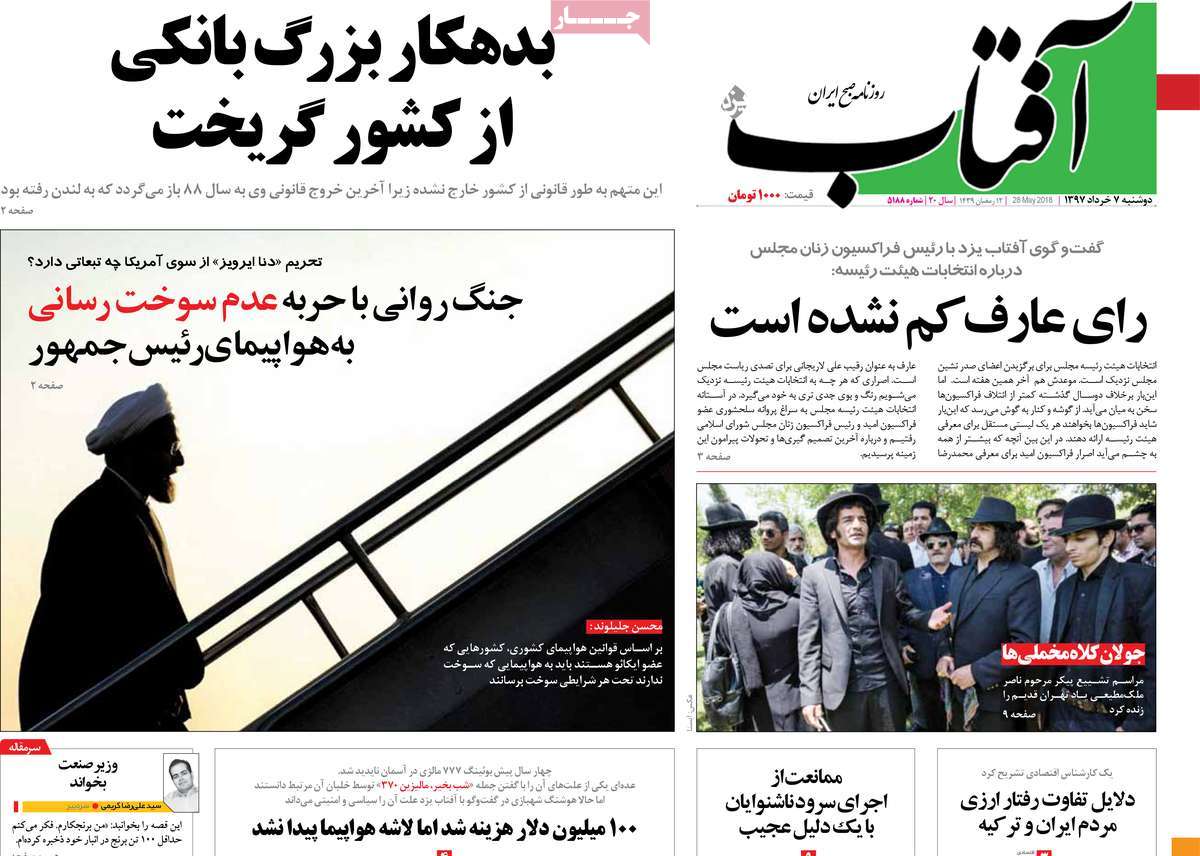
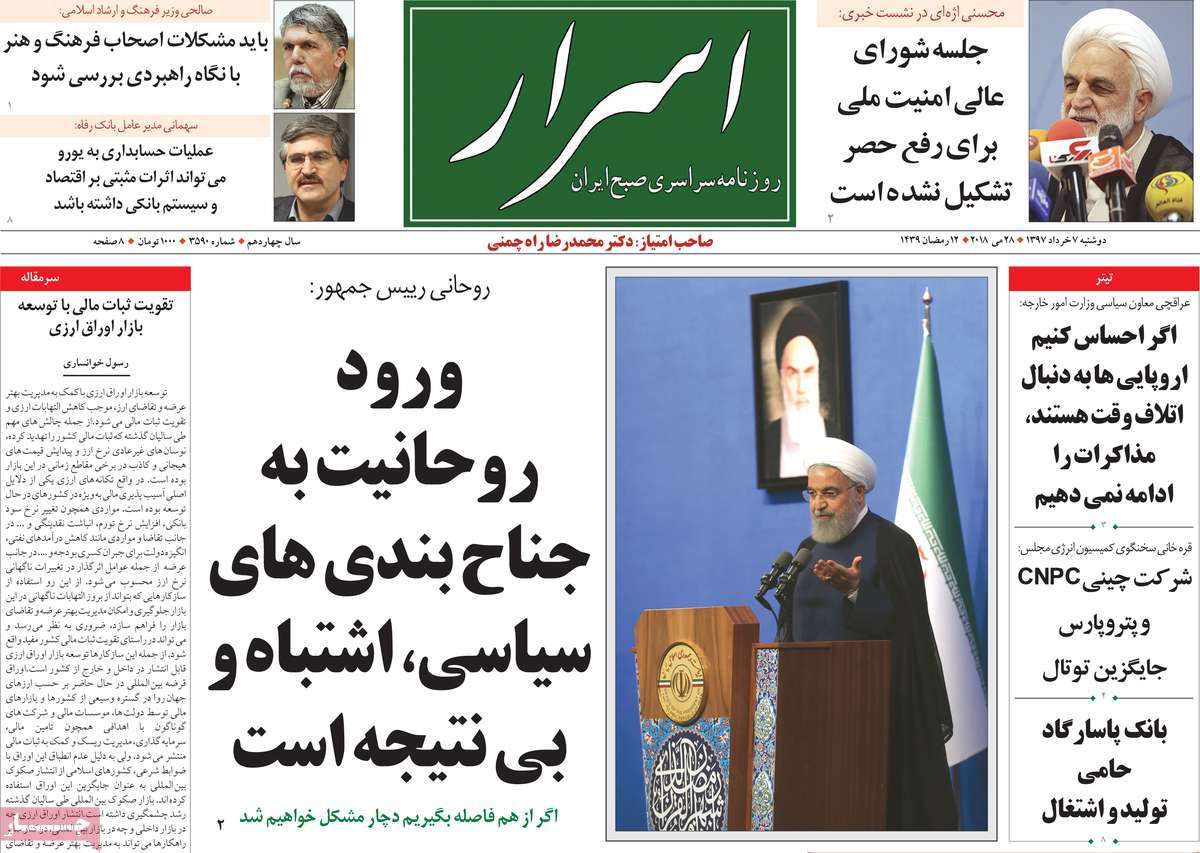
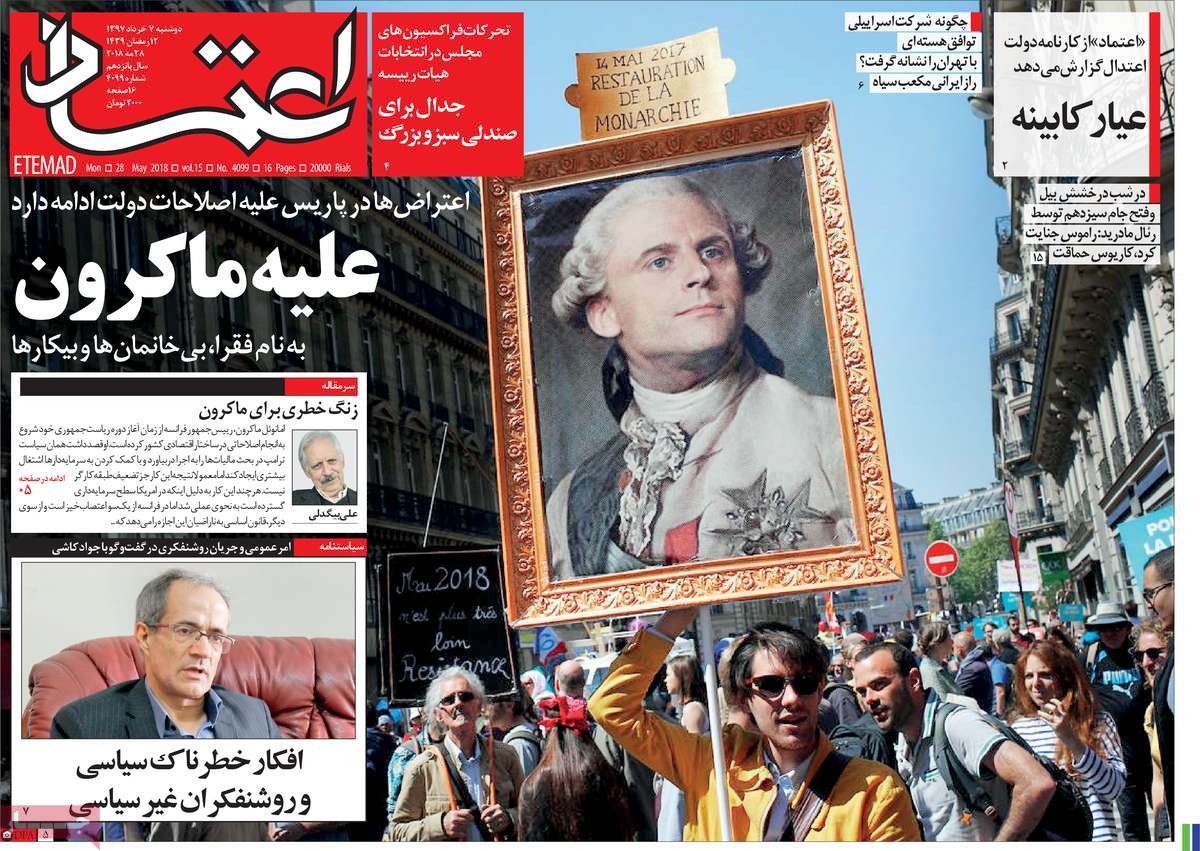
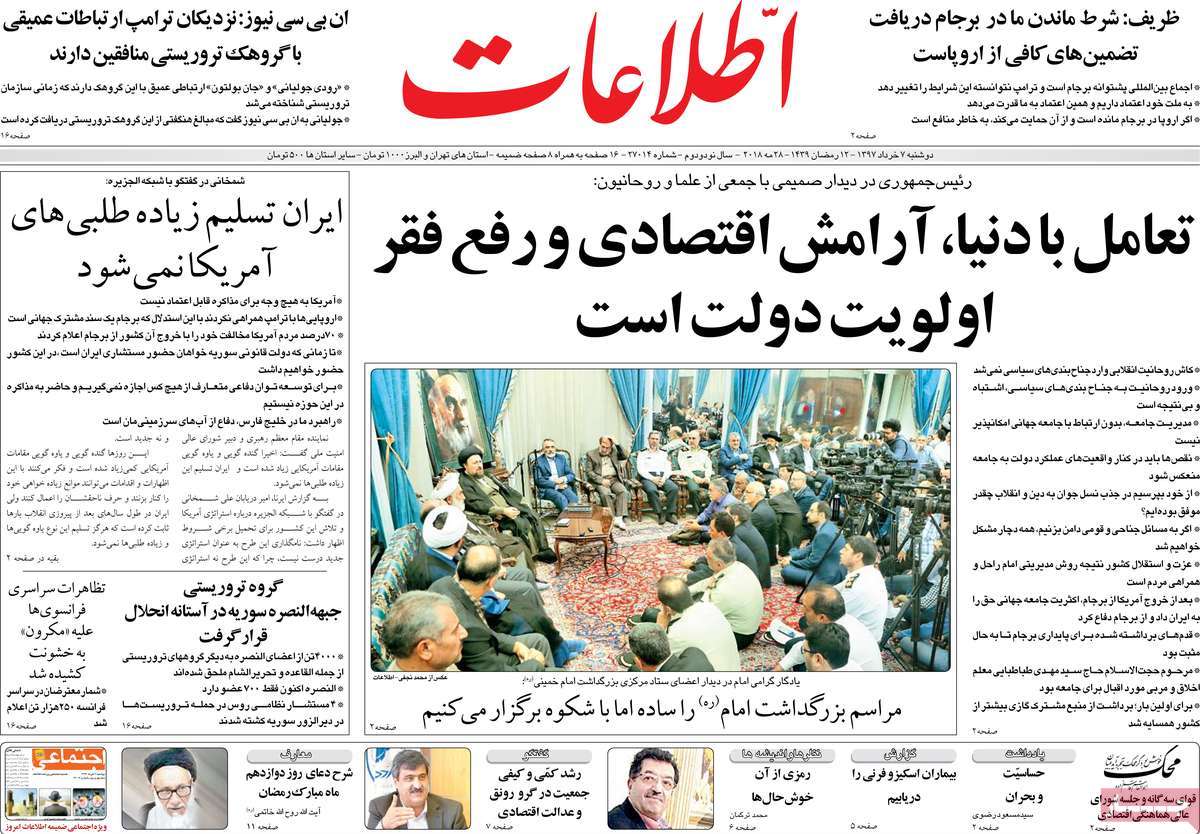
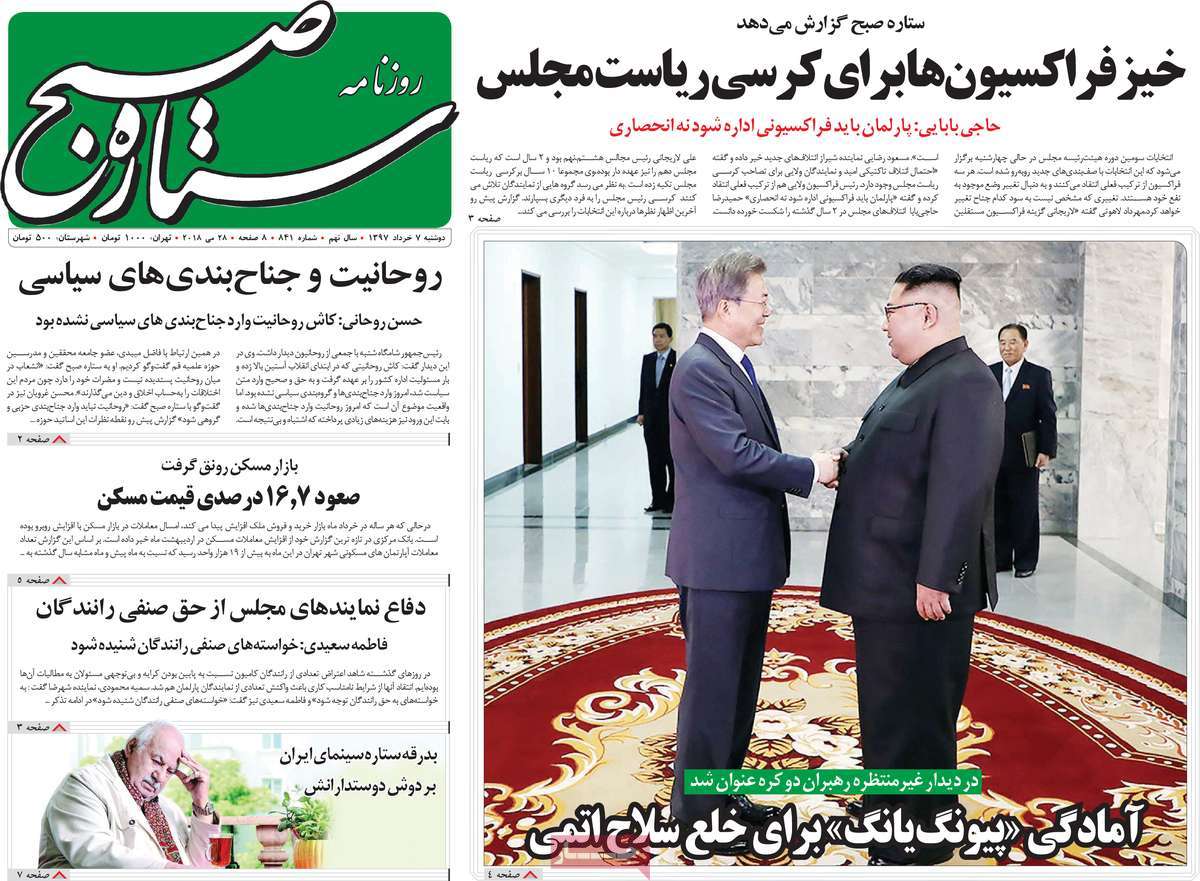
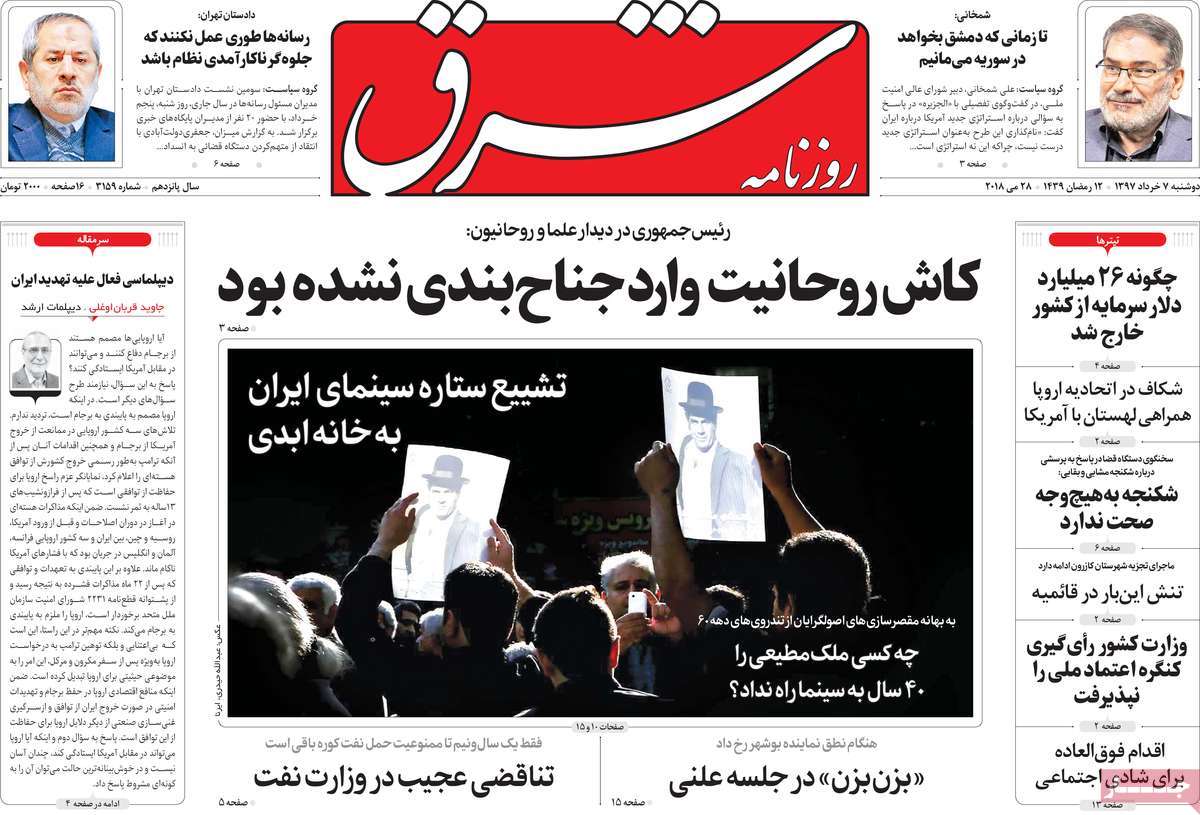
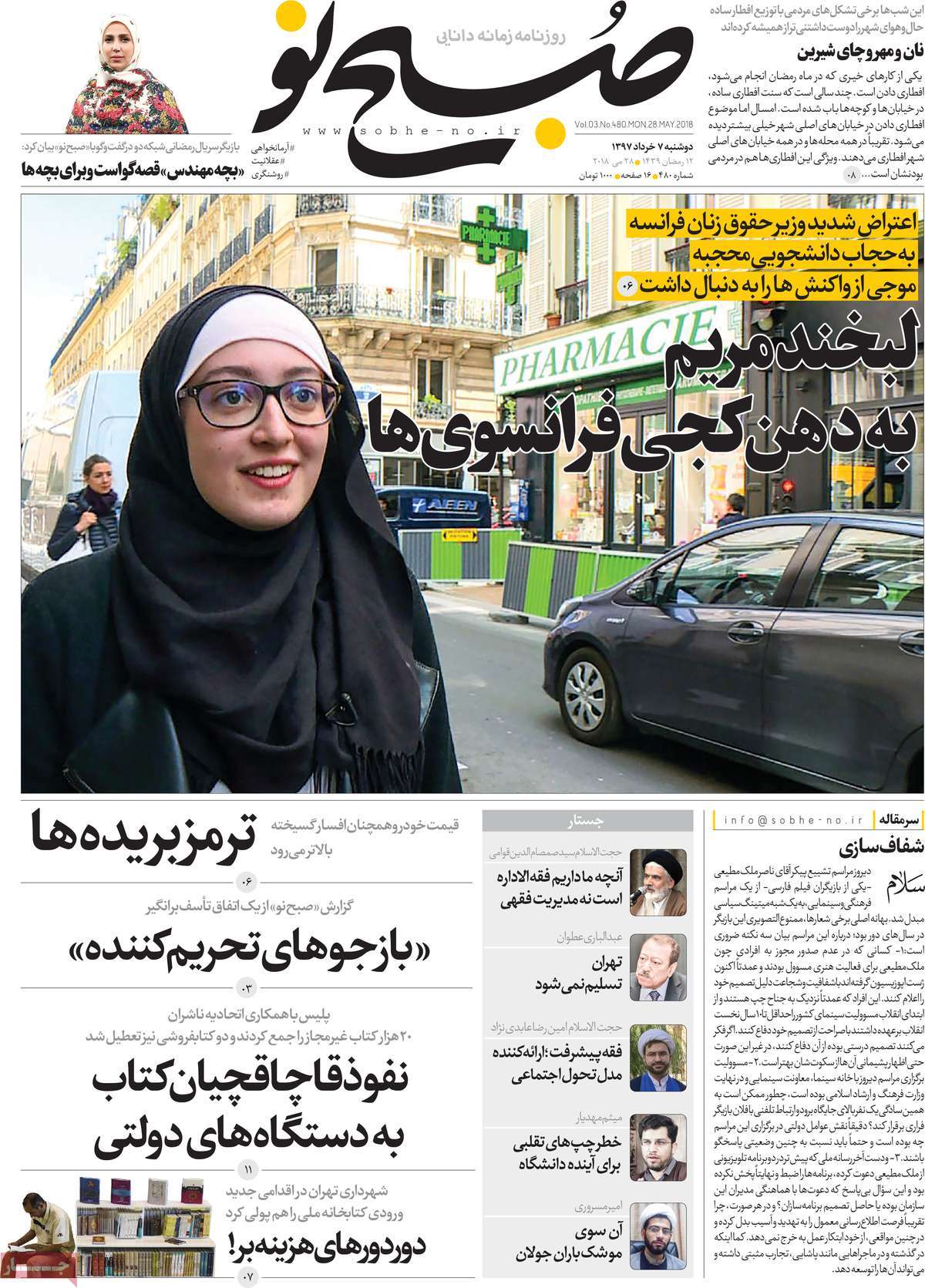
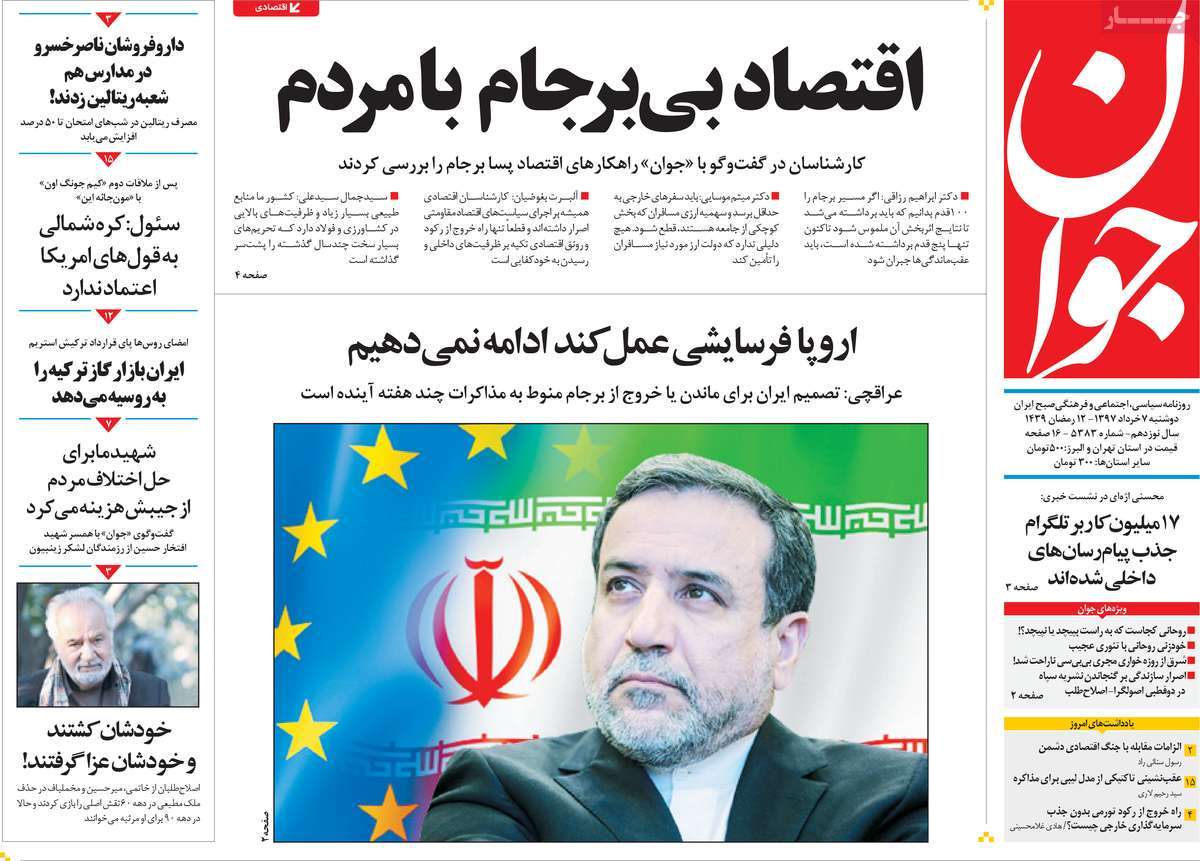
A Look at Iranian Newspaper Front Pages on May 6

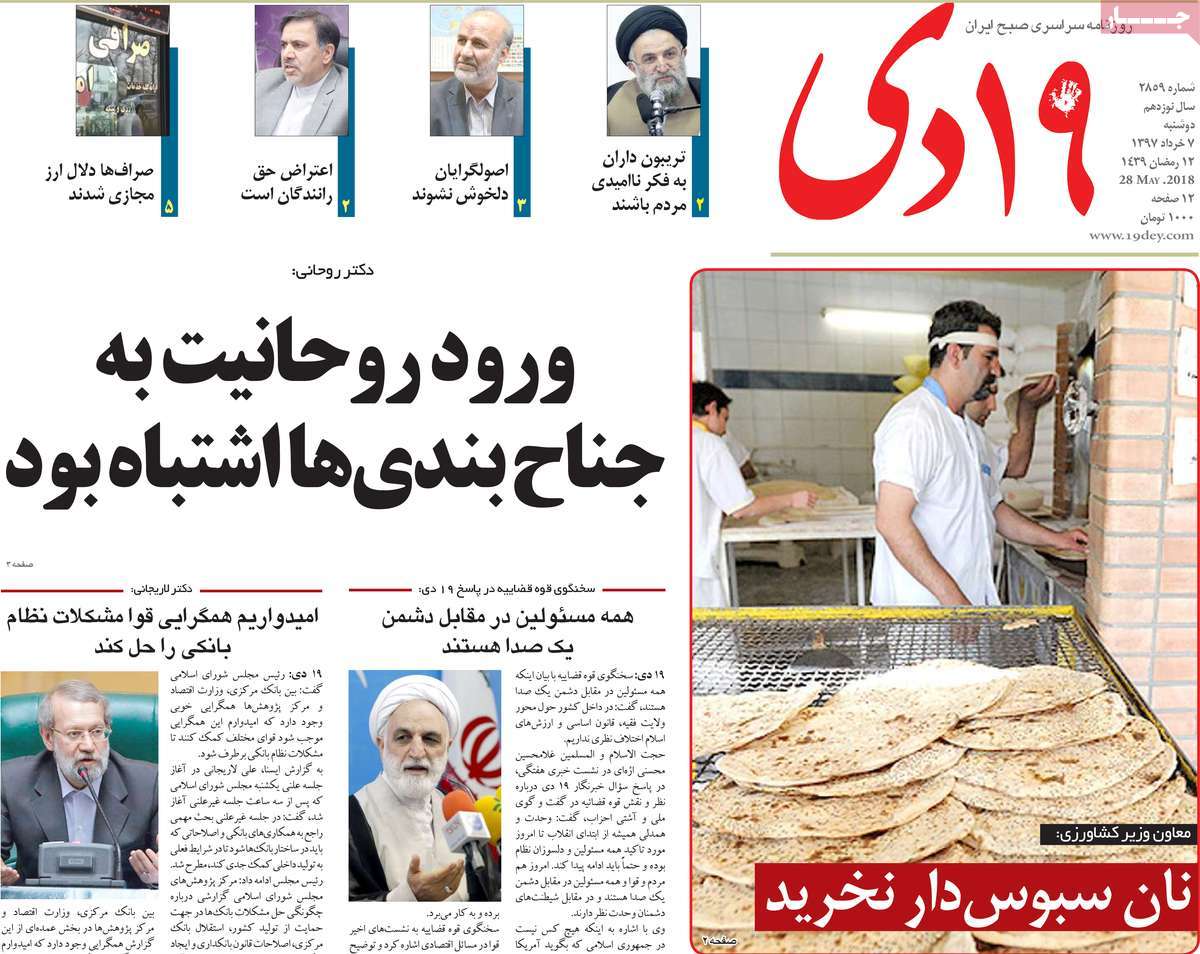
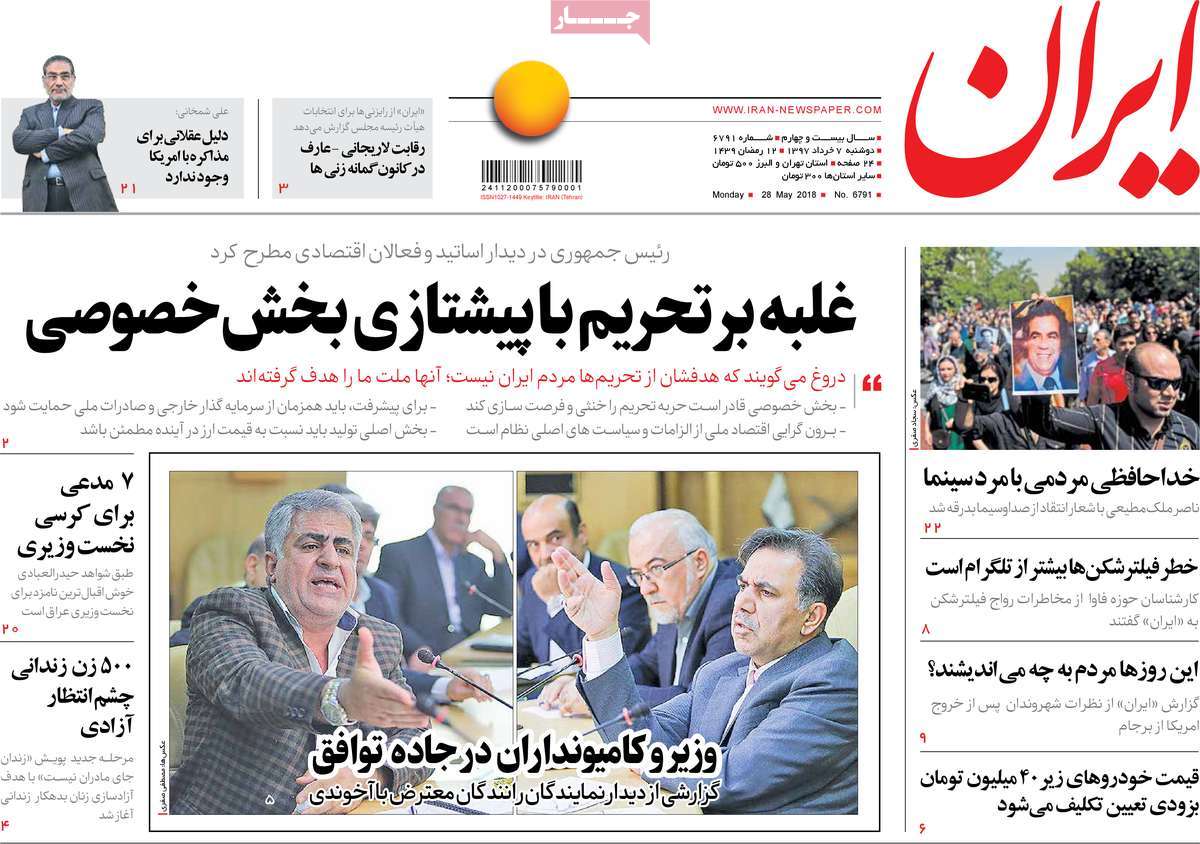
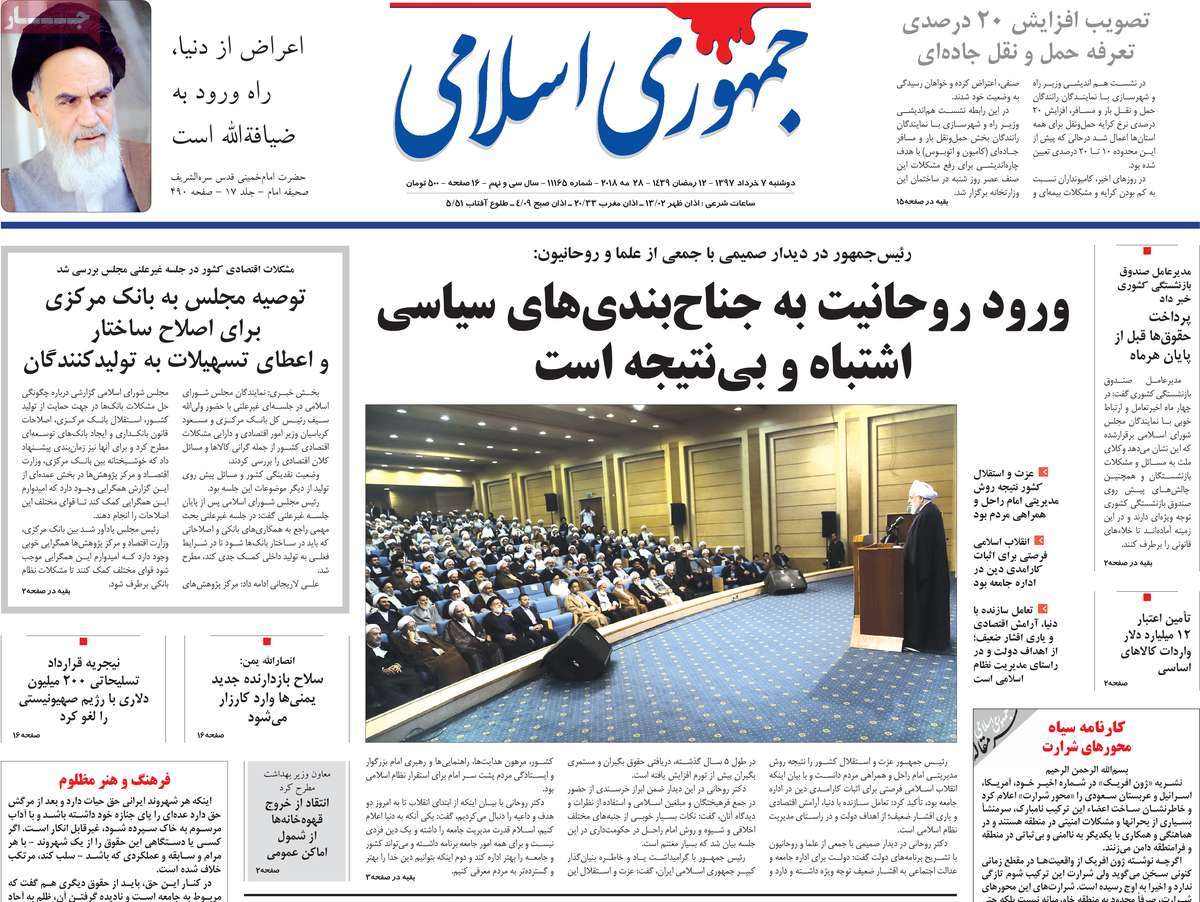
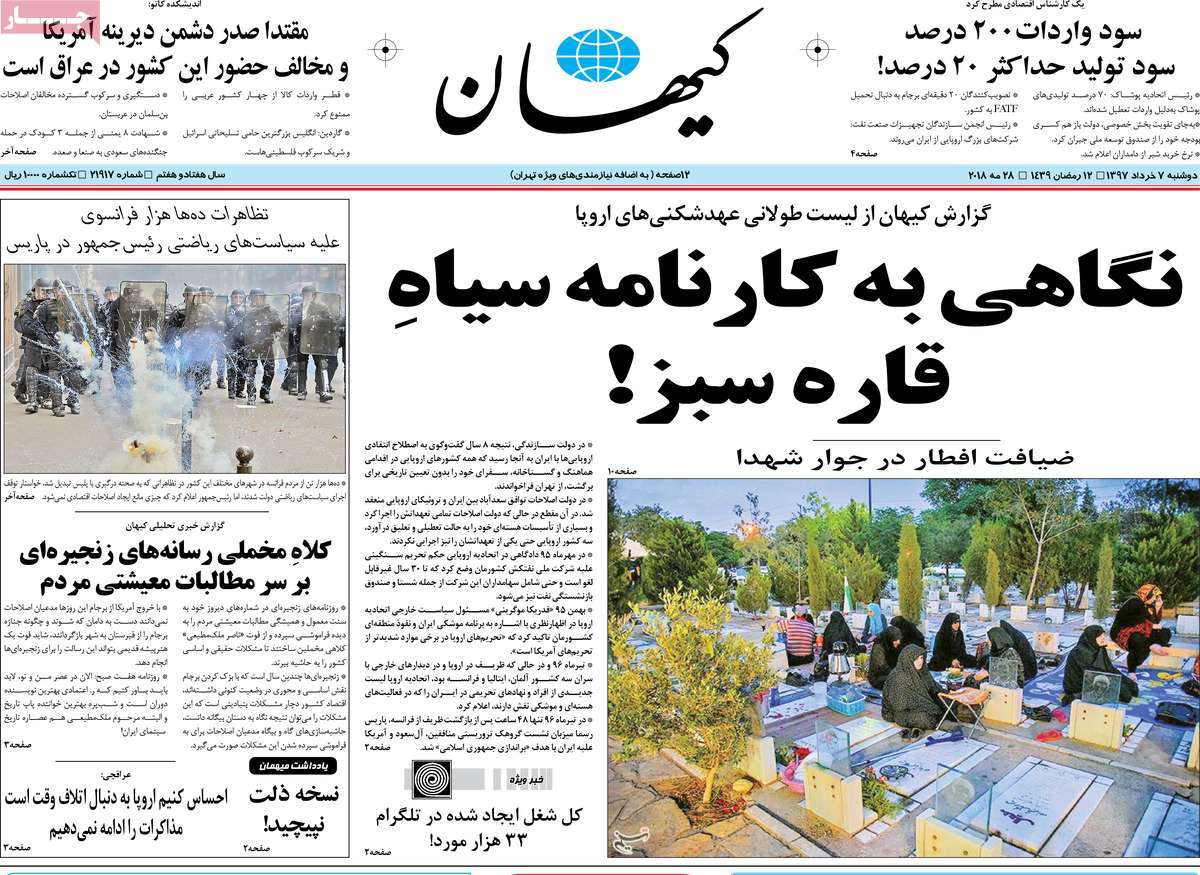
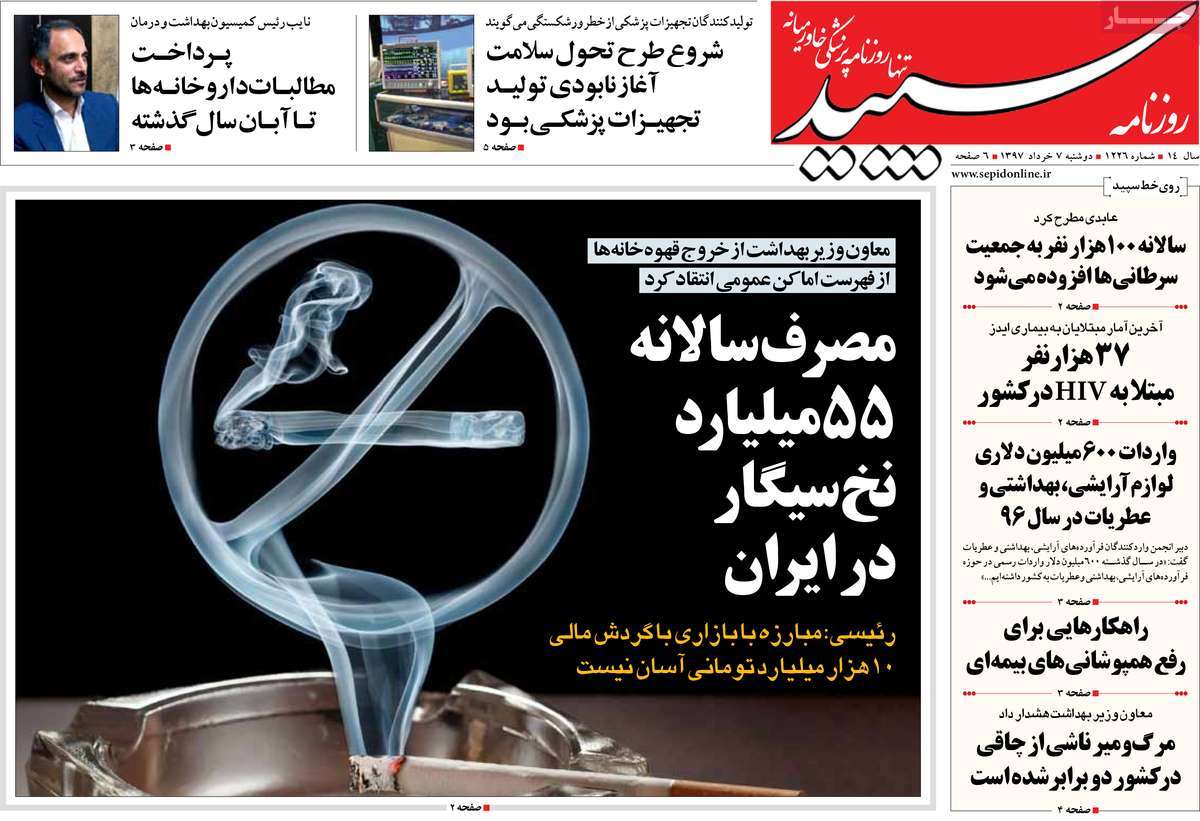
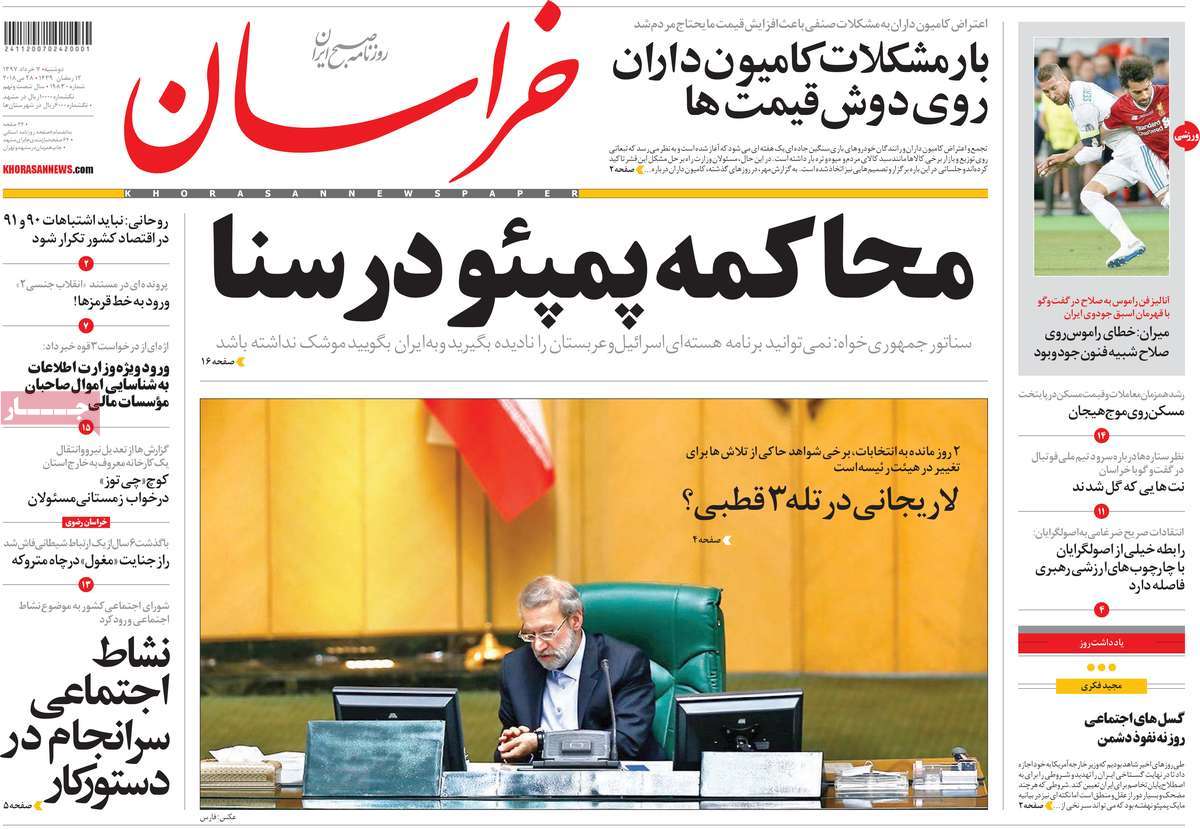
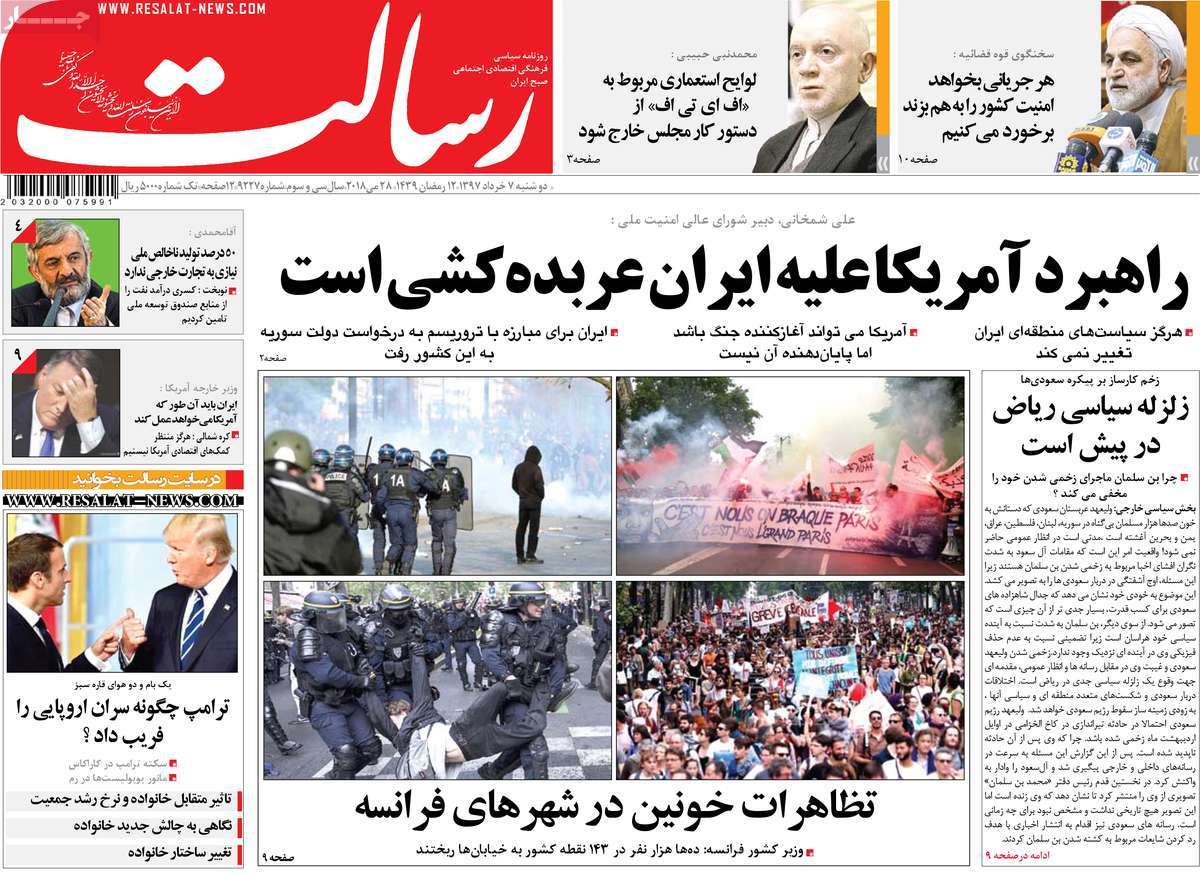
A Look at Iranian Newspaper Front Pages on November 19

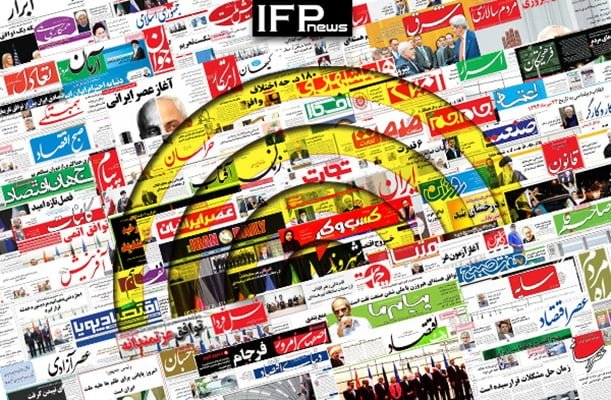
Newspapers today widely covered the controversy over the blocking of Telegram messaging app and the reactions to the issue.

The upcoming elections in Lebanon, Iraq, and Turkey also received great coverage in Iranian papers today.

Also a top story was the result of investigations into the Sanchi oil tanker tragedy, which said a human error by the Chinese ship caused the incident.

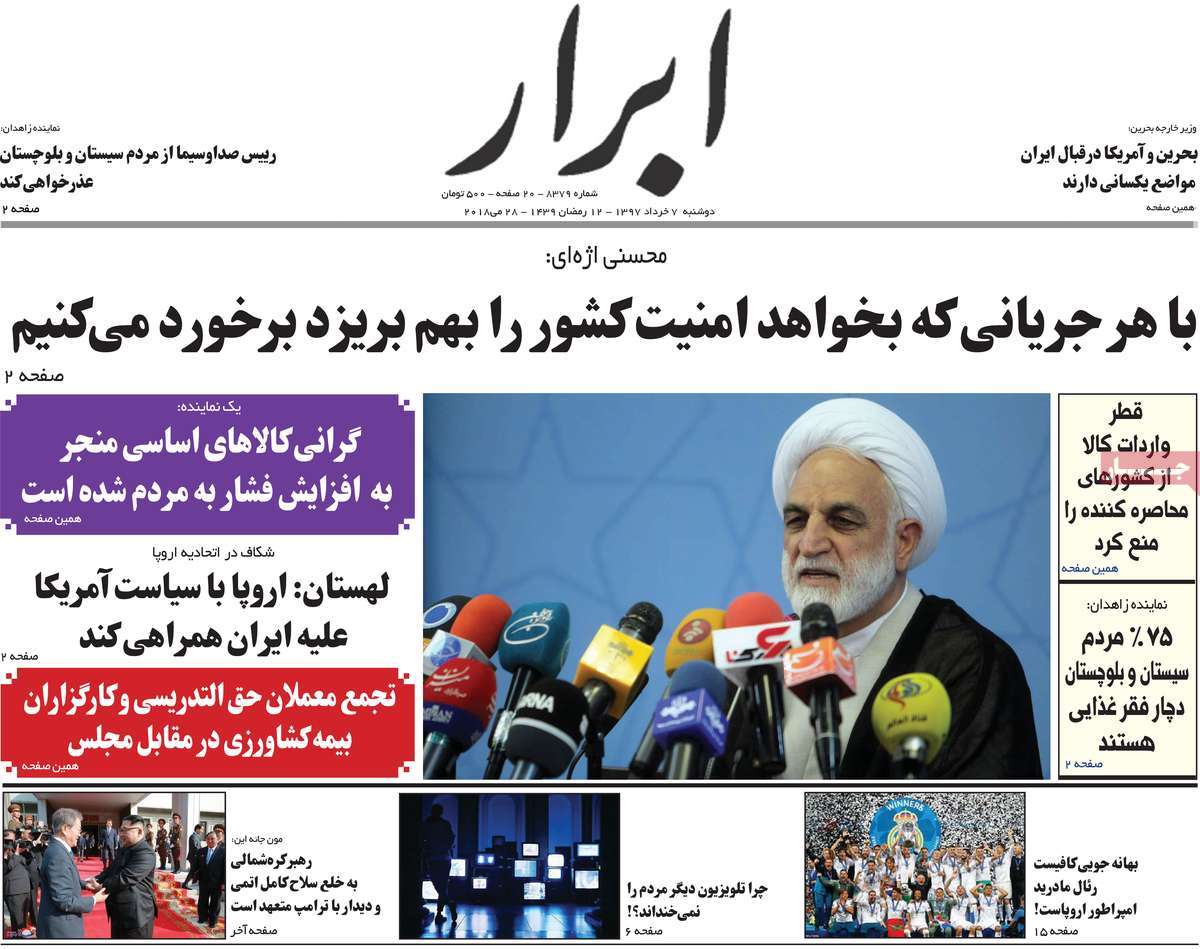
The above issues, as well as many more, are highlighted in the following headlines and top stories:


Abrar:

  • Demirtaş: It’s Not Possible to Hold Fair Elections in Turkey
  • Macron: Trump’s Possible Move to Pull Out of JCPOA Means Beginning of War
  • Iran, Oman to Hold Joint Maritime Drill

A Look at Iranian Newspaper Front Pages on May 6


Abrar-e Eqtesadi:

  • Europe Ready to Continue Cooperation with Iran after JCPOA

A Look at Iranian Newspaper Front Pages on May 6


Afkar:

  • IRGC Spokesman: Israeli Regime in Worst Defensive, Psychological Situation

A Look at Iranian Newspaper Front Pages on May 6


Aftab-e Yazd:

  • A Report on Environmental Problems of Oil-Rich Cities
  • Sardar Azmoun: I’m Going to Russia to Score Goals in FIFA World Cup

A Look at Iranian Newspaper Front Pages on May 6


Arman-e Emrooz:

  • Disagreement over Main Perpetrator of Sanchi Oil Tanker Tragedy

A Look at Iranian Newspaper Front Pages on May 6


Ebtekar:

  • Human Error in Chinese Ship Main Cause of Sanchi Tragedy
  • Several Months of Investigations Over

A Look at Iranian Newspaper Front Pages on May 6


Etemad:

  • MPs Say Parliament against Filtering
  • Beijing-Washington Military Challenge in Africa
  • China, US Once Again against Each Other

A Look at Iranian Newspaper Front Pages on May 6


Ettela’at:

  • Rouhani: Telegram’s Filtering Not Approved by Gov’t
  • US Sends Military Warfare to Syria’s Kurds
  • Harvard Professor: US Withdrawal from JCPOA ‘Strategic Mistake’

A Look at Iranian Newspaper Front Pages on May 6


Hamshahri:

  • Iraq’s Parliamentary Elections in Tehran’s Dowlatabad Neighbourhood
  • A Report on Iraqi Diaspora in Tehran

A Look at Iranian Newspaper Front Pages on May 6


Iran:

  • MP: Parliament to Discuss Issue of Blocking Telegram Messenger
  • Lebanon on Path of Change
  • Lebanese People to Participate in Parliamentary Elections

A Look at Iranian Newspaper Front Pages on May 6


Jahan-e San’at:

  • Government’s New Masterpiece!
  • Unprecedented Hike in Gold Coin, US Dollar Rates

A Look at Iranian Newspaper Front Pages on May 6


Javan:

  • Trump’s Heavy Sarcasm after Disclosure of Zarif-Kerry Secret Meeting
  • Secrets of Those Worried about Futile Nuclear Deal

A Look at Iranian Newspaper Front Pages on May 6


Jomhouri Eslami:

  • Red Cross: Yemen Dying of Hunger
  • Confidential Document Reveals Saudi Arabia’s Interference in Lebanese Elections

A Look at Iranian Newspaper Front Pages on May 6


Kayhan:

  • US National Security Agency Breaks Record of Spying on another Nation!
  • 534 Million Eavesdropping Only in One Year!
  • US Plotting a Forex Coup, Iran Gov’t Busy Playing with Telegram!
  • Three Disastrous Bills on Agenda of MPs Today
  • A Day to Test Parliamentarians

A Look at Iranian Newspaper Front Pages on May 6


Kelid:

  • Medical Tourism Association Chief: Iran’s Capacity in This Field Is $7 Billion

A Look at Iranian Newspaper Front Pages on May 6


Khorasan:

  • MP: $2.5 Billion Taken Out of Iran through Crypto-Currencies

A Look at Iranian Newspaper Front Pages on May 6


Resalat:

  • Ayatollah Javadi Amoli: It’s A Great Jihad to Refuse to Support Corrupt Politicians
  • UNESCO’s 2030 Document Targeting Religious Principles of Future Generation

A Look at Iranian Newspaper Front Pages on May 6


Rooyesh-e Mellat:

  • Shamkhani Rules Out Possibility of Any War on Iran

A Look at Iranian Newspaper Front Pages on May 6


Setareh Sobh:

  • Putin under Fire of Protesters
  • Putin Not Our Caesar: Leader of Opposition

A Look at Iranian Newspaper Front Pages on May 6


Vatan-e Emrooz:

  • Unaccountable Government
  • While Rouhani Denies Having Role in Telegram’s Blocking, MP Says He Was OK with It

A Look at Iranian Newspaper Front Pages on May 6


Afghanistan Has Pledged to Supply Iran’s Water Share: Zarif

The Afghan government has promised to provide Iran with the share of water from the Hirmand River and has also pledged to supply the water for Hamoon wetlands, the top Iranian diplomat said at a parliamentary session on Sunday.

He also unveiled plans for the legal regime of the Hari (Heray) Rud River, saying the two neighbors have for the first time reached agreements on the river.

Although there are various options to receive Iran’s share of water for Hamoon -such as adopting strict policies towards Afghanistan in certain areas- the relations between Tehran and Kabul are always brotherly and friendly, the top diplomat added.

Highlighting the efforts by Iran’s Foreign Ministry to protect the country’s right to the share of water from Hirmand and Hamoon, Zarif said the two neighbors have agreed to set up five committees to handle various bilateral issues, including disputes over the water share.

The Foreign Ministry sent two protest letters to Afghanistan in March and April to remind Kabul of Iran’s rights under a 1973 treaty, Zarif went on to say, noting that the Afghan ambassador to Tehran has been also informed of Iran’s stances.

Iran and Afghanistan have a disagreement over allocation of water from the Hirmand River, as both sides suffer from droughts and climate change.

In a move in violation of a 1973 treaty with Iran, Afghanistan has refused to supply its neighbor with share of water from Hirmand, which rises in Afghanistan and flows through eastern parts of Iran, according to Iran’s Energy Ministry.

According to the treaty, Afghanistan is committed to share waters of the Hirmand River with Iran and supply it with 26 cubic meters of Hirmand water per second or 850 million cubic meters per annum.

The annual 850 million cubic meters of water for Iran has been initially allocated for drinking and irrigation of farmlands, which falls far short of the minimum flow required to feed Hamoon wetlands, which straddle Iran-Afghan common border and are fed by the Hirmand River.

In the last two decades, the fertile wetlands have substantially dried up. The Taliban government closed the sluices to the Kajaki dam on Hirmand until 2002. This compounded the impact of the worst drought the region has experienced in many decades, caused in part by climate change and warming temperatures.

Iranian Researcher Develops Gadget to Print Skin on Wounds

Iranian Researcher Develops Gadget to Print Skin on Wounds

The printer was made by an Iranian PhD student at the University of Toronto in cooperation with a team of researchers he was leading.

The hand-held apparatus can directly print skin on deep wounds, a report by the Persian-language Mehr News Agency said.

The gadget is similar to the device producing glue. But instead of glue, the printer rolls out layers of alginate (a kind of brown algae). Under each layer are rows of natural ink containing bio-materials such as skin cells and collagen. These materials along with fibrin (a protein instrumental in healing wounds) are the most frequently found components in the skin.

The printer weighs less than one kilogram and is very easy to use. This device makes redundant the process of washing and incubation (which are done in ordinary printers) and covers the wound with skin in one or two minutes. The method has been tested on mice and pigs, so far.

The researchers say the printer is able to produce skin tissue for special patients and in accordance with the type of their wounds.

For a brief review of Iran’s achievements in various fields of science and technology, check the book “Science and Technology in Iran: A Brief Review

The same team of researchers had, four years ago, developed a 3-D printer as big as a microwave oven that was able to print layers of skin to heal burns. The new device is seen as an improvement on their previous achievement.

“Trump’s Decision on JCPOA Not to Affect Iranians’ Lives”

In an address to a huge crowd of people in the northeastern city of Sabzevar on Sunday, Rouhani said the great nation of Iran should know that our lives will not undergo any changes regardless of whatever decision Trump makes next week.

“We are ready to counter any decision by Trump,” he noted, as quoted in a report by the president’s official website.

Rouhani said Iranian bodies, including the country’s Atomic Energy Organisation, have prepared their options since months ago.

He further strongly blasted the propaganda campaigns launched by the US and the Zionist regime against the great nation of Iran.

“The US and the Zionist regime should come to the sense that the great nation of Iran is not afraid of any plots and will remain united and continue its own way under the brave leadership of the Islamic Revolution’s Leader,” he said.

President Rouhani also directly addressed the US and its European allies to elaborate two points for them.

“The first point is that, our nation remains faithful to its treaty (the nuclear deal), but explicitly states that our defence and weaponry capabilities are not negotiable.”

“We will produce and store as many weapons as we need for our self-defence and it is not any other country’s business how many weapons we produce and what decision we make for our self-defence. We never negotiate our defence capabilities.”

On the second point, he underlined that the Islamic Republic wants to hold talks with the world to create a safe region.

“Right now, we are involved in talks with Russia and Turkey over Syria. We are holding talks with various countries on Yemen. But we tell the world that we fight the terrorists wherever in the region and will not allow any country to create ISIS in the region and wage war against other regional nations. We are after peace and security in the region.”

The Iranian president also said the Iranian nation is not looking for war or tensions but resolutely defends its national interests against any plot.

US President Donald Trump has set a May 12 deadline for European signatories to the deal to “fix” it. He has threatened to withdraw if the changes he seeks are not made.

“Saudi Arabia Incites Morocco to Sever Ties with Iran”

Saudi Arabia Incites Morocco to Sever Ties with Iran
King Salman of Saudi Arabia meeting King Mohammed VI of Morocco

Sabah Zangneh, who is also a senior political commentator, has, in an interview with the Persian-language Arman-e Emrooz daily, weighed in on the recent decision by Morocco to sever its ties with Iran. Highlights of the interview follow.

sabah zanganehArman: Morocco’s foreign minister recently announced his country has severed its diplomatic ties with Tehran over Iran’s alleged support for the Polisario Front. Given that Morocco also broke its relations with Iran under baseless pretexts in the past, and its ties with Iran remained broken for some time, what is your evaluation of Morocco’s justification for its severance of ties with Tehran?
Zanganeh: The Polisario Front fought in the desert belonging to its rivals, and the disputes between the front and Mauritania were followed by a compromise between the two sides. Morocco annexed part of the desert to its territory, which led to divisions between Morocco and two of its neighbours, namely Mauritania and Algeria. The Polisario Front is not headquartered in Iran, but in Algeria. Unfortunately, Morocco is looking at untrue information which has nothing to do with reality and is unfounded. After the victory of the 1979 Islamic Revolution, Iran had allowed the front to open an office in the country, but the office was closed three decades ago. Iran and Morocco have had very normal and growing relations ever since. Of course, Morocco had severed its relations with Iran once again before under the pretext of promoting Shiism. The mission of Iran’s ambassador to Rabat ended two weeks ago, and the Iranian Foreign Ministry was looking for a new ambassador. So, Iran’s ex-ambassador is not present in Rabat now; he is in Iran.

Arman: With what degree of certainty can we say that Saudi Arabia is behind Morocco’s severance of ties with Iran?

Zanganeh: Both this time and the previous time that Morocco broke its relations with Iran, Saudi Arabia was behind it all. Riyadh led by Washington seeks to create a negative atmosphere against Iran. The Moroccan government, too, was entrapped by the Saudi net in some cases, but got to realize the reality after some time and restored its relations with Iran. King Hassan always said Saudi Arabia has no conflict of interests with Iran because Riyadh has neither harmed Iran, nor does it have differences with Tehran. Therefore, Saudi Arabia does not want negative relations with Iran by any means. This general policy can hold. But the young Saudi crown prince and other Saudi officials are unfortunately seeking to sow discord and promote Iranophobia in the region. They are moving on the path of US and Israeli policies against Iran, so much so that bin Salman travelled to Paris in recent weeks and sat down with Saad Hariri as well as King Mohammad VI. Some experts on regional issues regard the meeting as an effort by bin Salman to mobilise countries in order to affect relations with Iran. So, it is not unlikely that Arab countries, provoked by Saudi Arabia, follow Morocco’s lead and sever their relations with Iran under some pretext.
Arman: Anyway, Saudi Arabia continues to promote the policy of Iranophobia. What is the best measure to be taken in the face of such policies in order to stem the expansion of an anti-Iran atmosphere?
Zanganeh: Iran needs to explain the realities to its friends, the region and the world, especially Morocco. Moreover, most of the people, parties and NGOs of Morocco favour positive relations with Iran. Even royal authorities of Morocco, who are considered to be noblemen, are very interested in Iran’s culture as well as its moral and historical principles. Iran and Morocco should invest in the positive and constructive principles of both countries and not allow tensions to emerge between the two sides. Also, events related to Iran, the Middle East region and other countries should be relayed to respective authorities via the Foreign Ministry. Finally, given the current circumstances in the region and obstructionist moves by Saudi Arabia and the United States, Iran should keep negative sentiments from flaring up and boost its relations with friendly states. In other words, given the current situation in Iran, the country should not allow the atmosphere in the region to become tense and grow against Tehran.

Iran’s Zayanderud River Refreshed by Spring Rainfall

Zayandehrud starts in the Zard-Kuh sub-range of the Zagros Mountains in Chaharmahal and Bakhtiari Province. It flows 400 kilometres eastward before ending in the Gavkhouni swamp, a seasonal salt lake southeast of Isfahan.

Zayandehrud used to have significant flow all year long, unlike many of Iran’s rivers which are seasonal, but today it runs dry due to water extraction before reaching the city of Isfahan. In the early 2010s, the lower reaches of the river dried out completely after several years of seasonal dry-outs.

Here are photos of the river after the recent rainfall retrieved from IRNA: