Friday, December 26, 2025
Home Blog Page 3565

Iran Hails Extension of Ceasefire in Afghanistan

qassemi

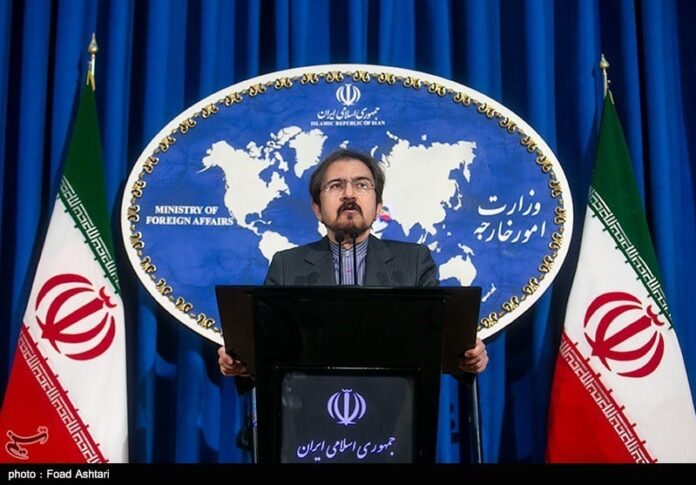
Expressing satisfaction with the commitment of the Afghan government and the Taliban militants to the temporary ceasefire announced on the occasion of Eid al-Fitr, Qassemi called for the adherence of the parties to the truce.

He also expressed hope that the continuation of the ceasefire could pave the way for a new and constructive process for peace talks and restoration of stability in Afghanistan.

The Taliban had announced a ceasefire for the first three days of Eid, which started on Friday, promising not to attack Afghan security forces for the first time since the 2001 US invasion.

That came after Afghan President Ashraf Ghani said security forces would temporarily cease operations against the Taliban for eight days, starting last Tuesday. Ghani then called on the Taliban to extend the truce, which was due to expire on Sunday.

Twin Suicide Blasts in Nigeria Kill at Least 31

The two blasts ripped through the town of Damboa in Borno state on Saturday evening targeting people returning from celebrating the Eid al-Fitr holiday, in an attack bearing all the hallmarks of Boko Haram.

Following the suicide bombings, the terrorists fired rocket-propelled grenades into the crowds that had gathered at the scene of the attacks, driving the number of casualties higher.

“There were two suicide attacks and rocket-propelled grenade explosions in Damboa last night which killed 31 people and left several others injured,” said militia leader Babakura Kolo.

Two suicide bombers detonated their explosives in Shuwari and nearby Abachari neighbourhoods in the town around 10:45 pm (21:45 GMT), killing six residents, said Kolo, speaking from the state capital Maiduguri, which is 88 kilometres from the town.

“No one needs to be told this is the work of Boko Haram,” Kolo told AFP.

A local government official, who spoke on the condition of anonymity, confirmed the death toll.

“The latest death toll is now 31 but it may increase because many among the injured may not survive,” said the official.

“Most of the casualties were from the rocket projectiles fired from outside the town minutes after two suicide bomber attacked,” he said.

The radical group has deployed suicide bombers, many of them young girls, in mosques, markets and camps housing people displaced by the nine-year insurgency which has devastated Nigeria’s northeast.

On May 1 at least 86 people were killed in twin suicide blasts targeting a mosque and a nearby market in the town of Mubi in neighbouring Adamawa state.

Nigerian President Muhammadu Buhari came into power in 2015 vowing to stamp out Boko Haram but the jihadists continue to stage frequent attacks, targeting both civilians and security forces.

The militants stormed the Government Girls Technical College in Dapchi on February 19, seizing over 100 schoolgirls in a carbon copy of the abduction in Chibok in 2014 that caused global outrage.

Iran’s Beauties in Photos: Poppy Flower Plains

Heavy rainfalls in Hamadan Province in the west have caused the plant to grow in many agricultural fields and plains around the city of Hamadan, creating a very beautiful landscape.

What follows are ISNA’s photos of these scenic plains:

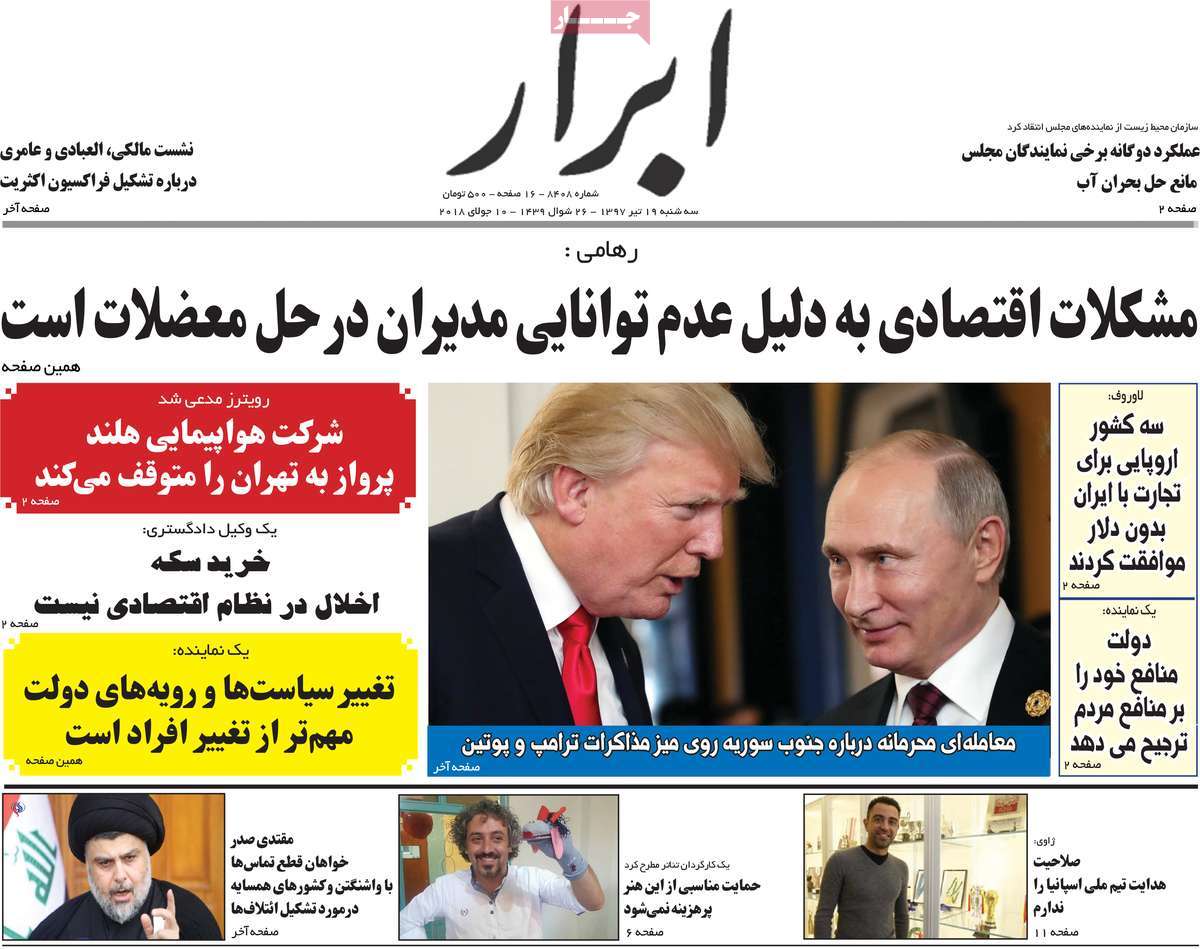
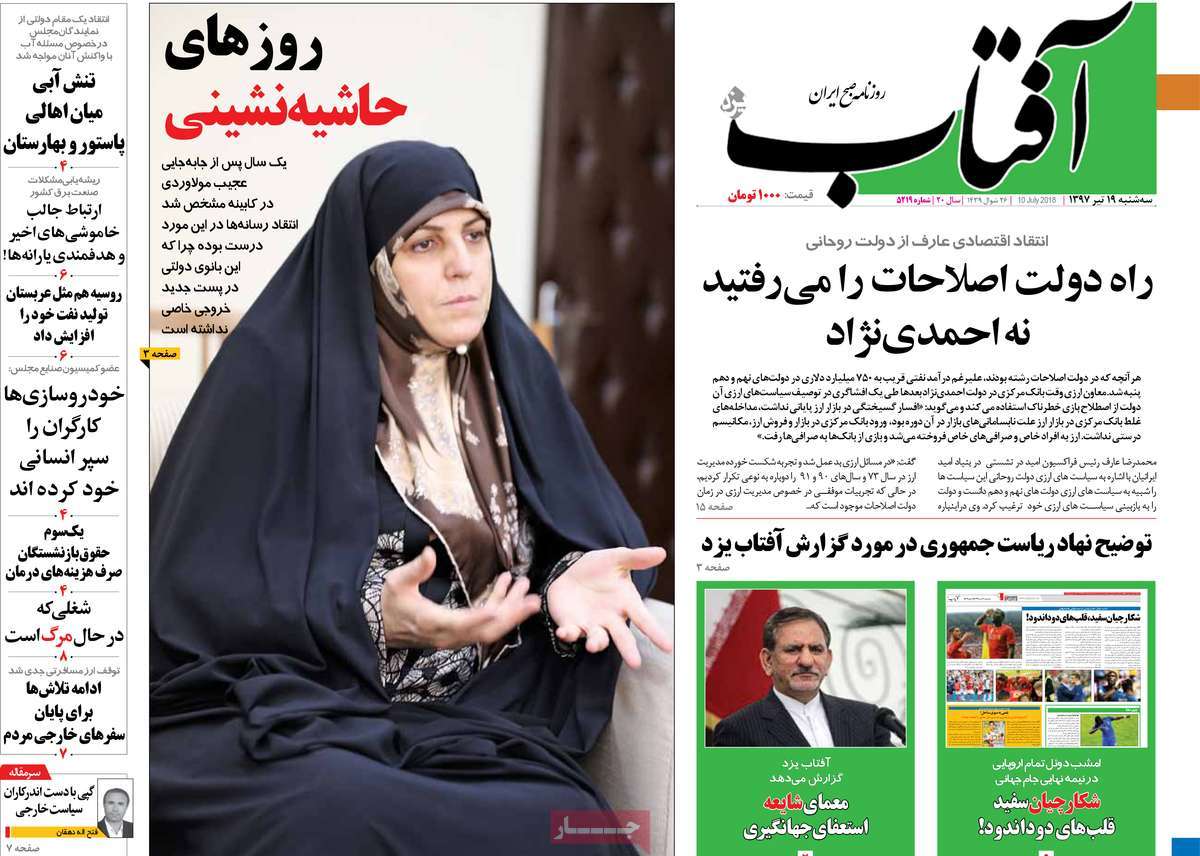
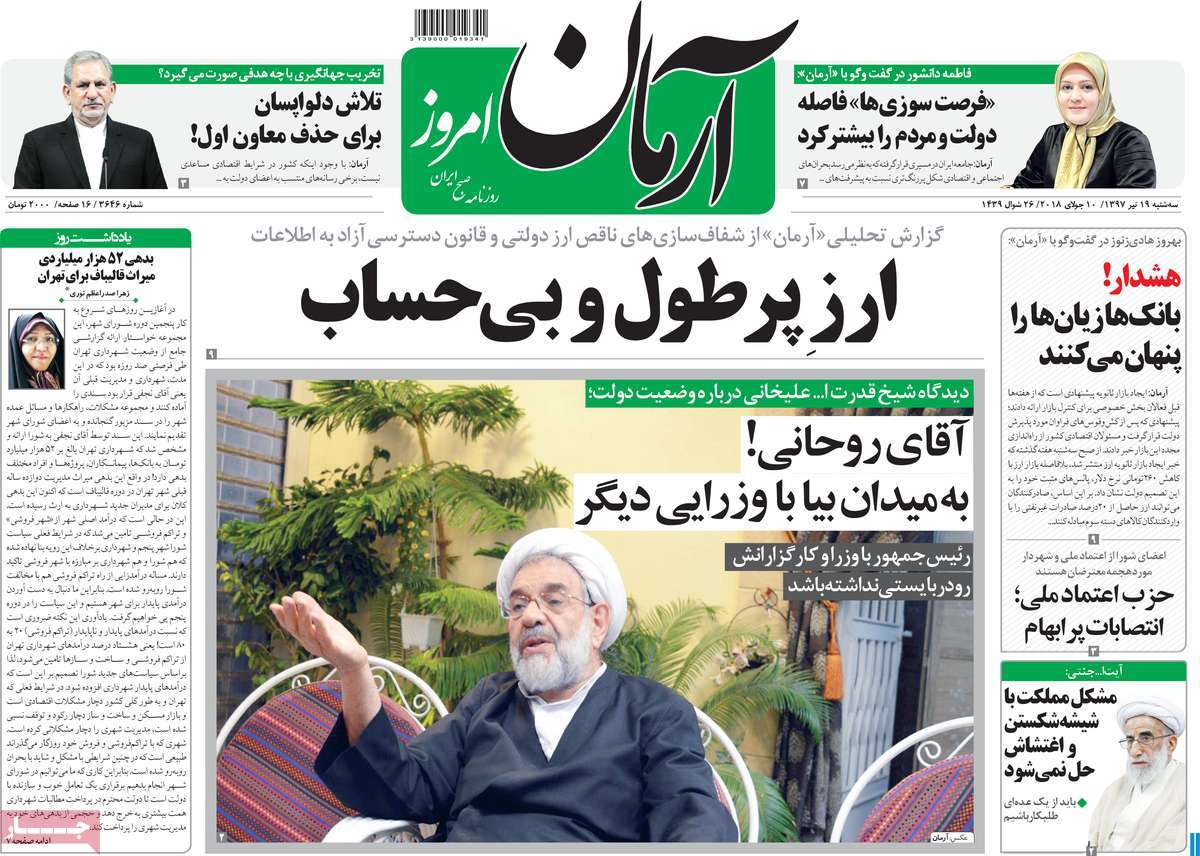
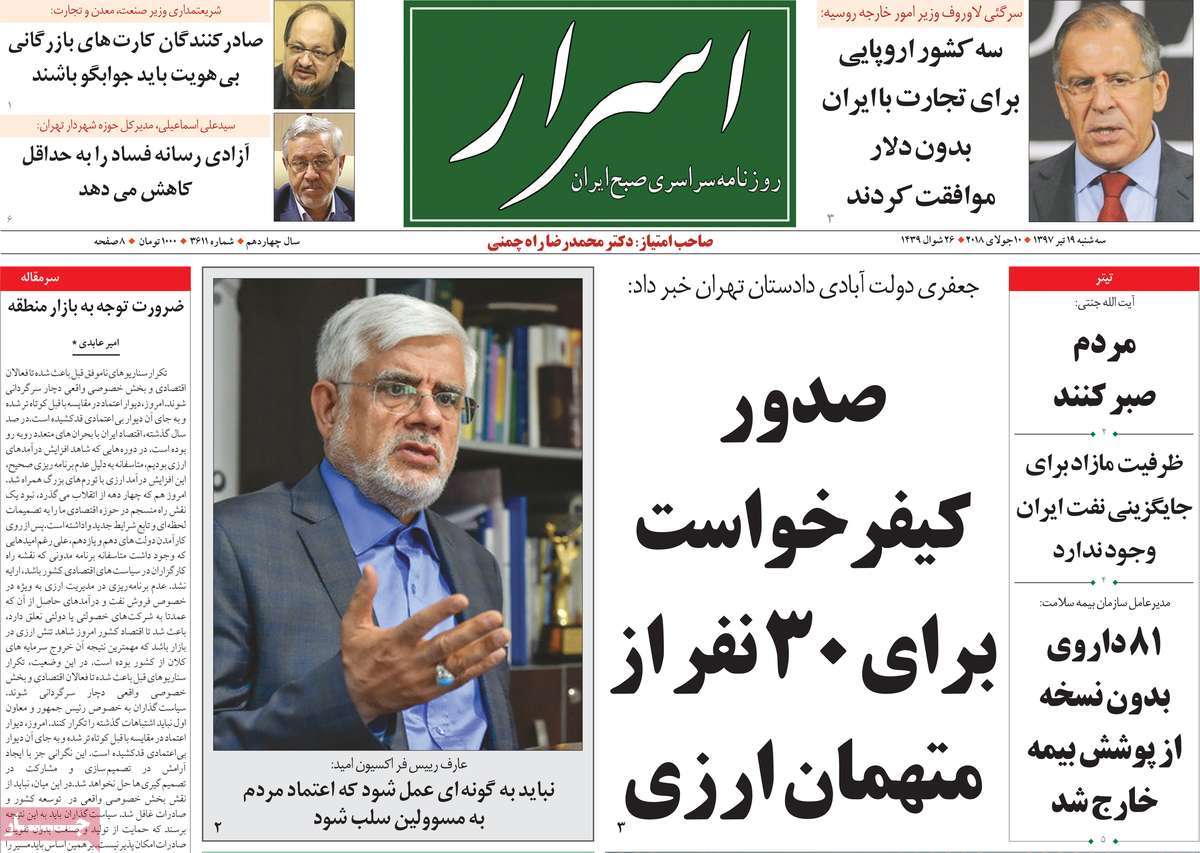
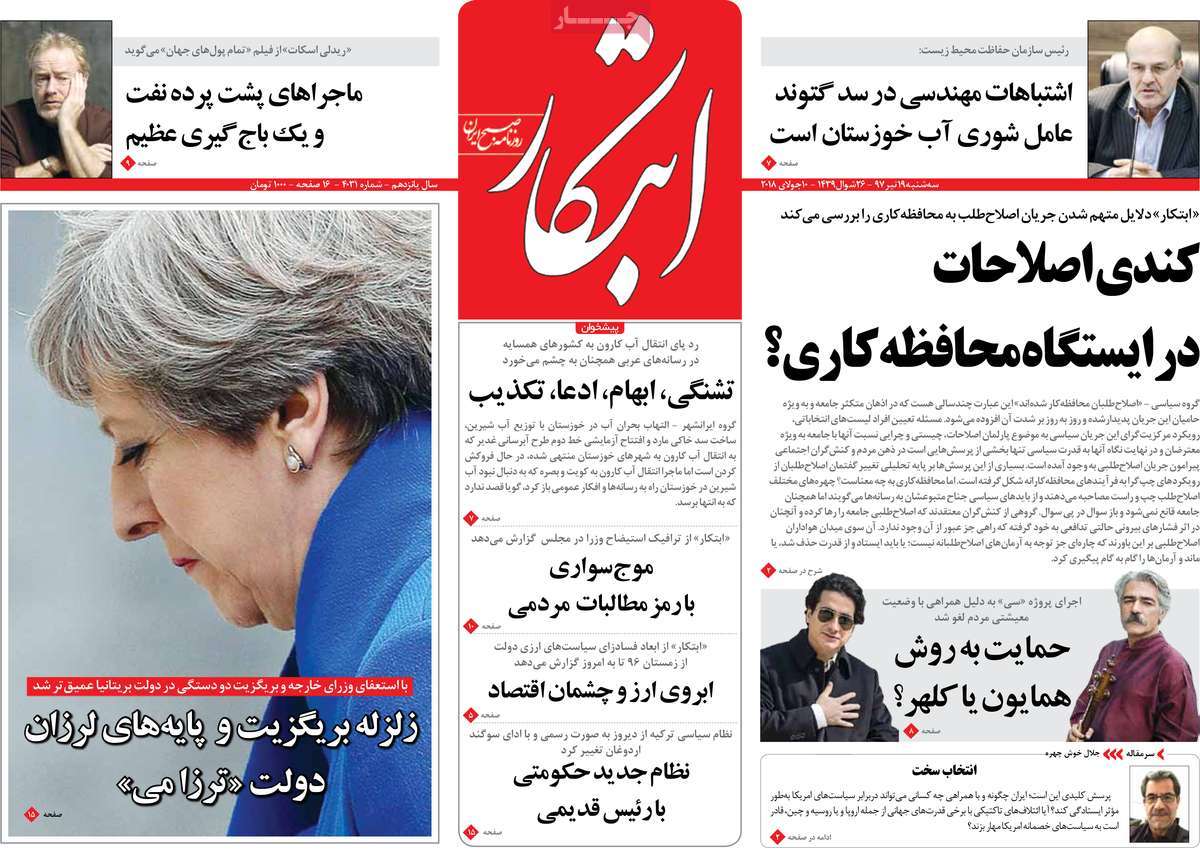
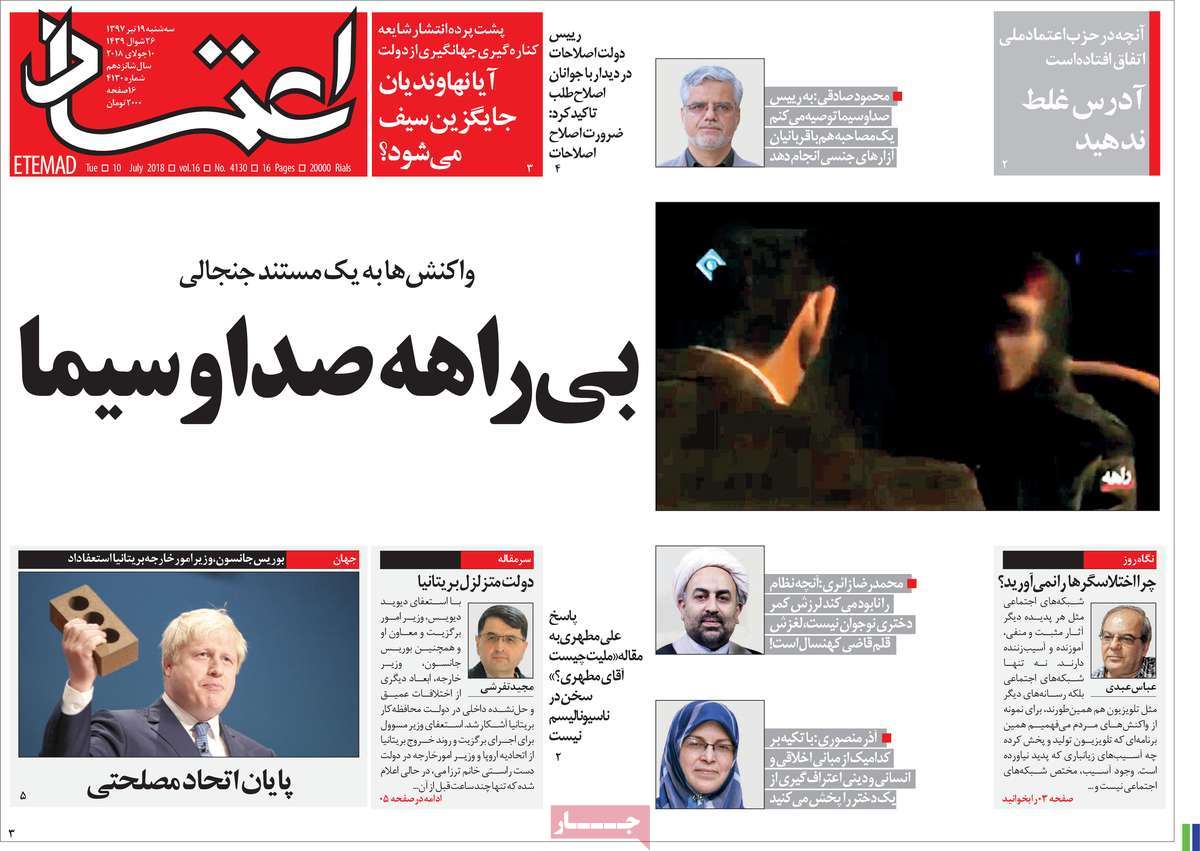
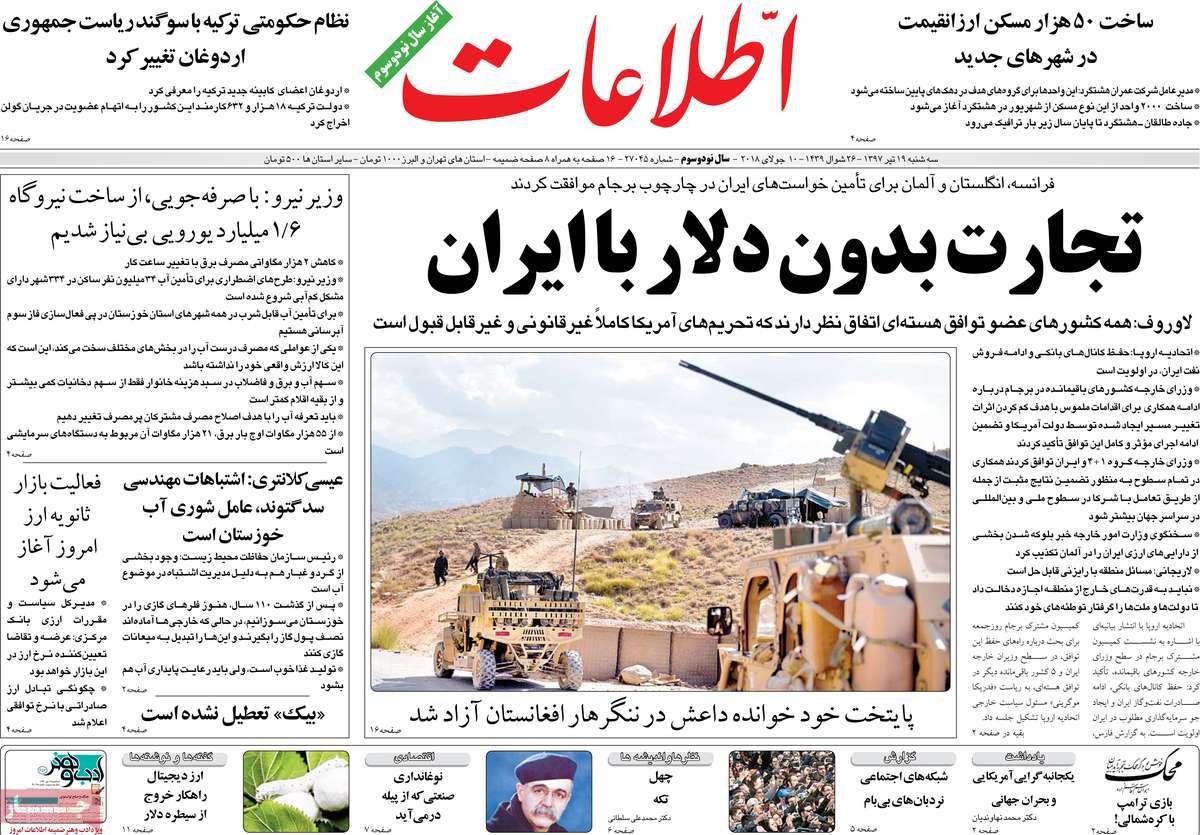
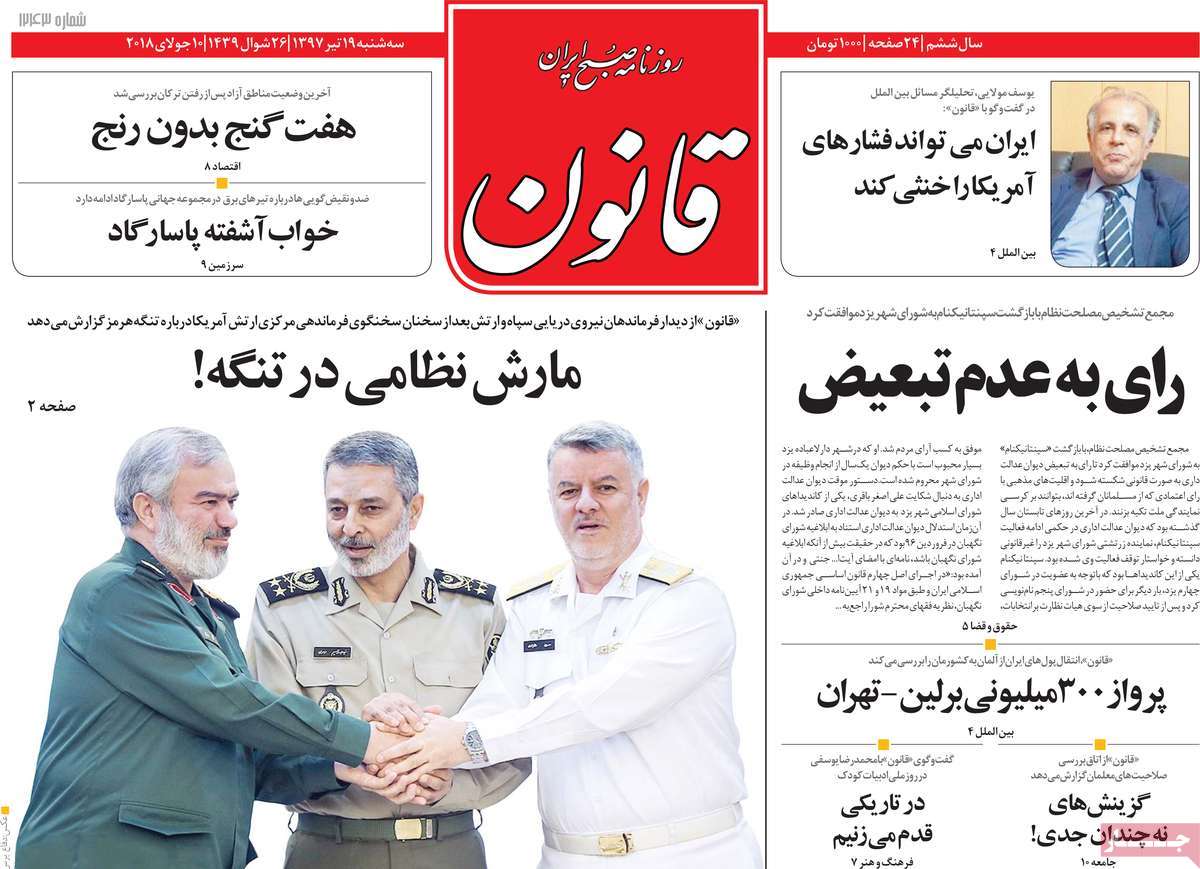
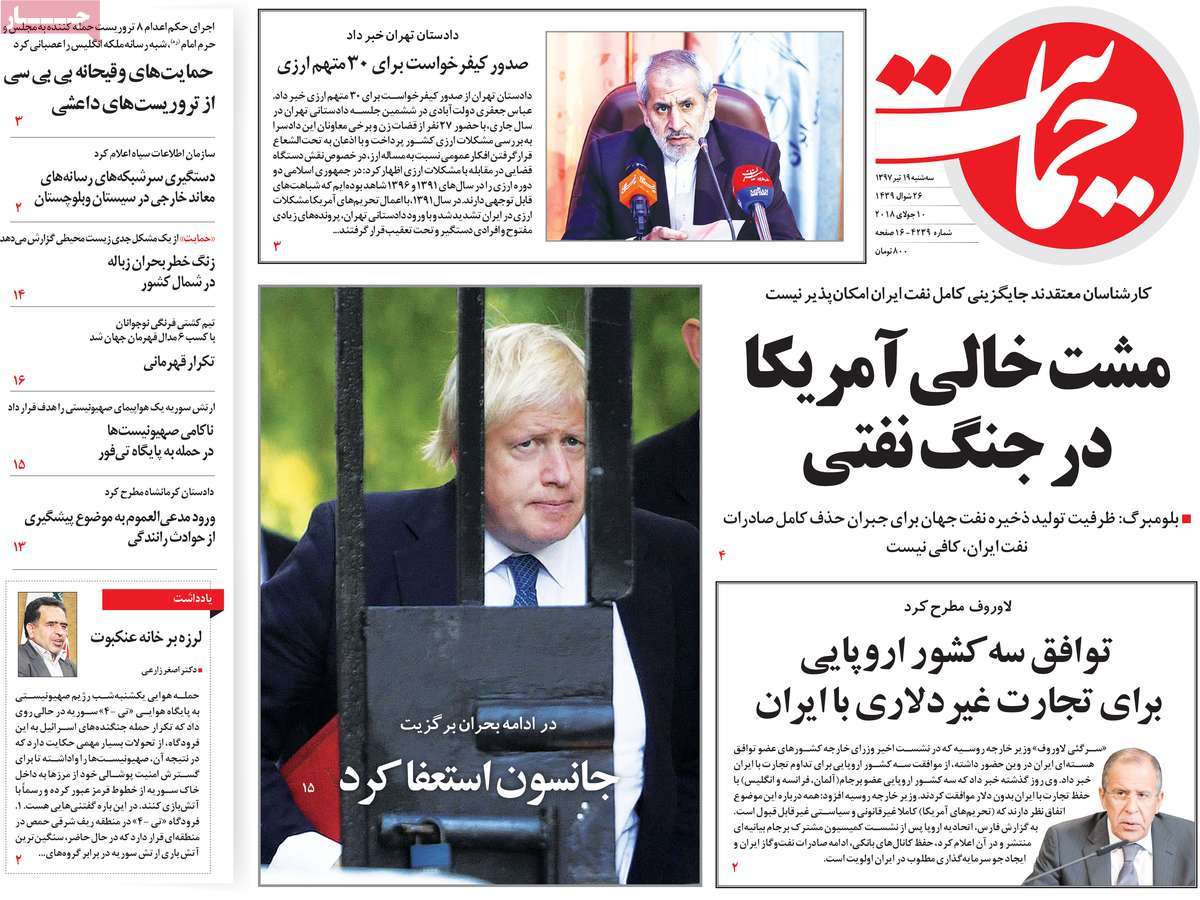
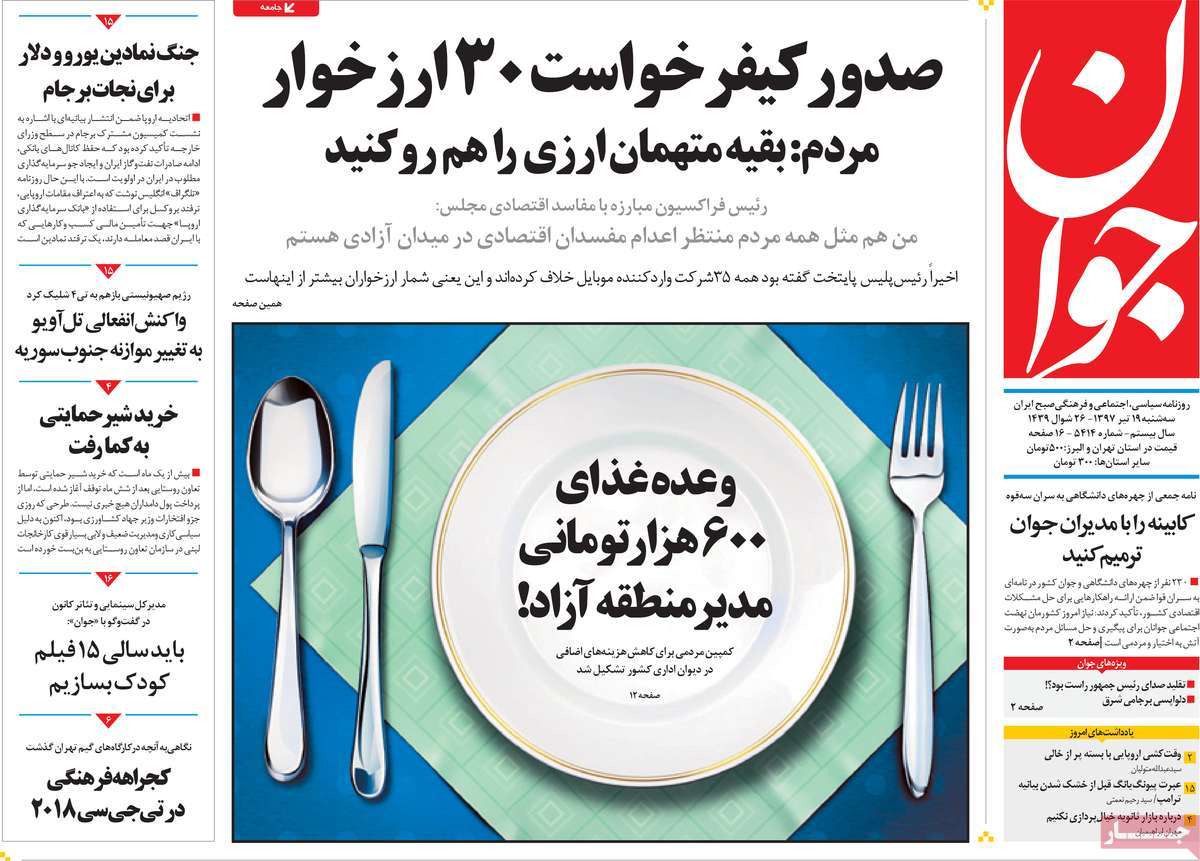
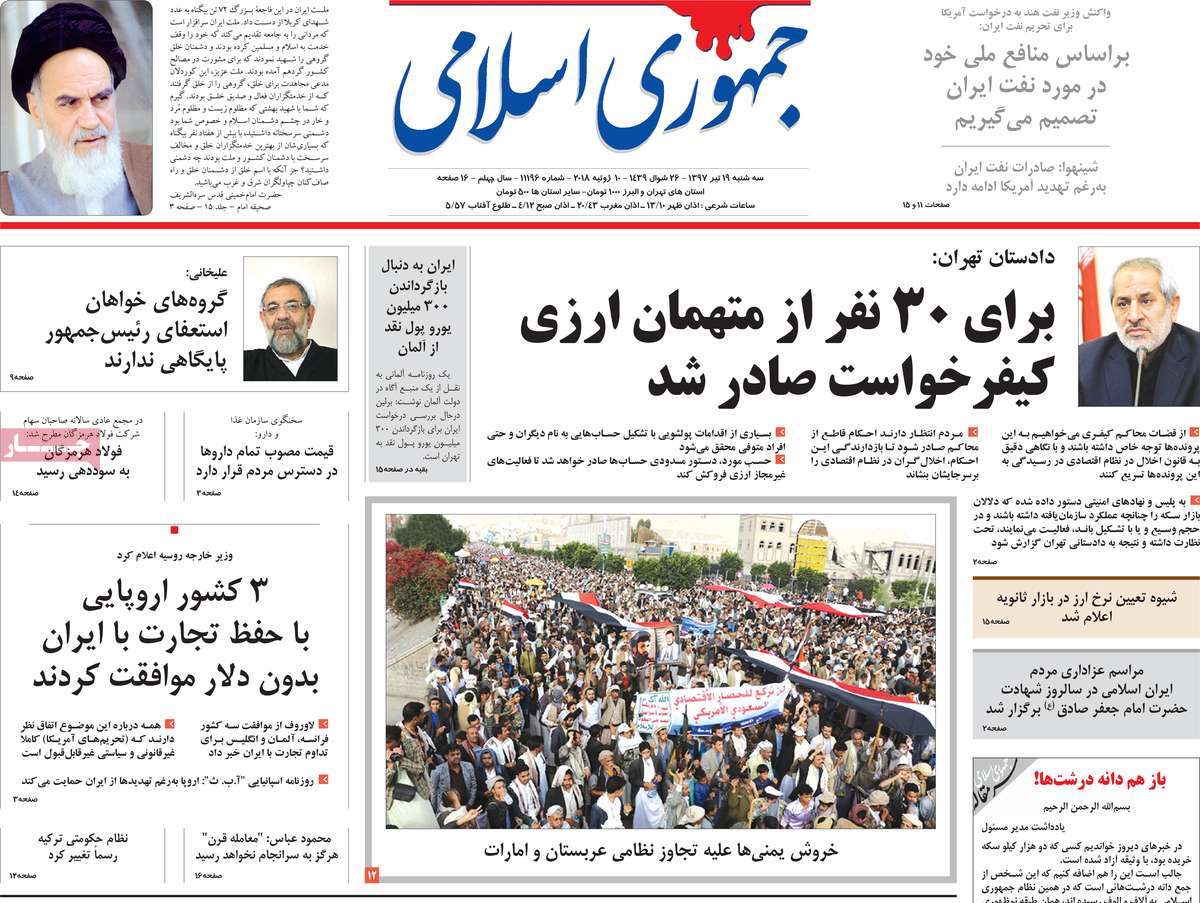
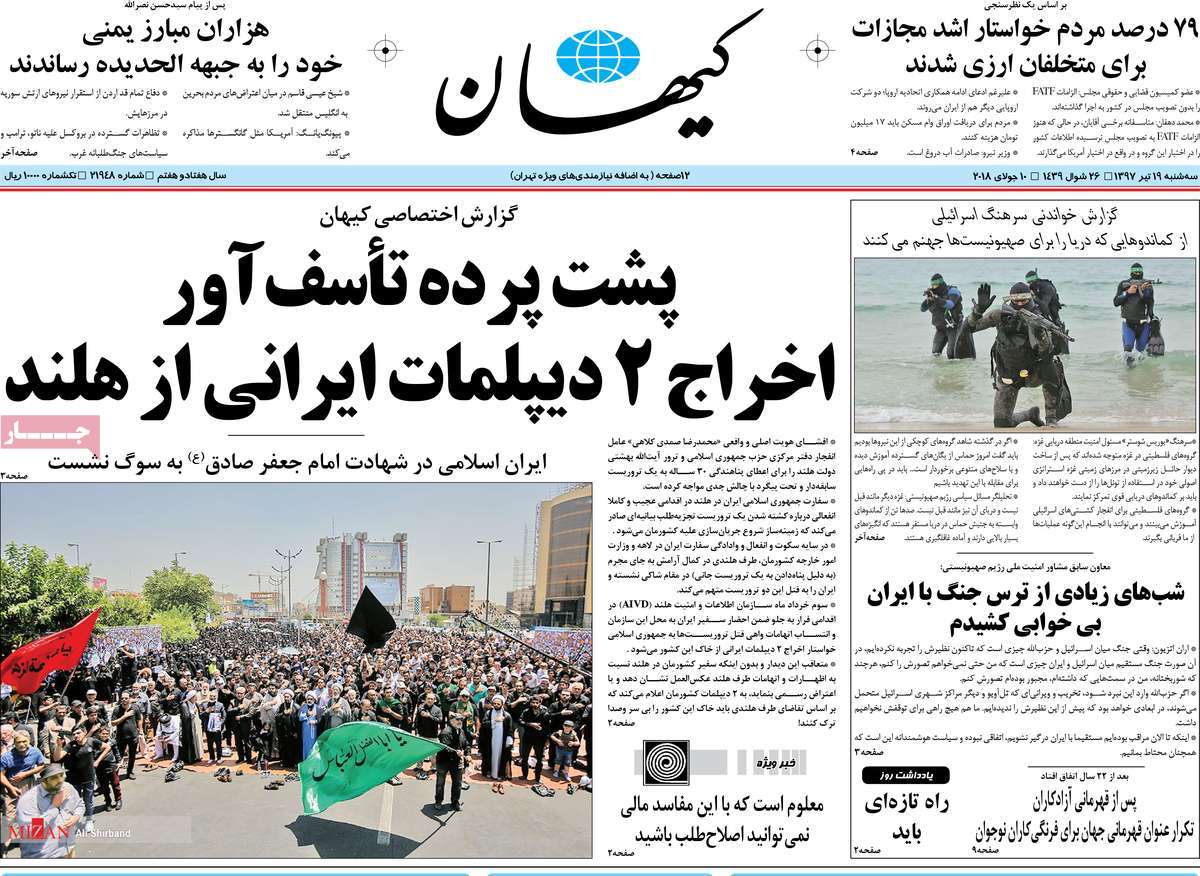
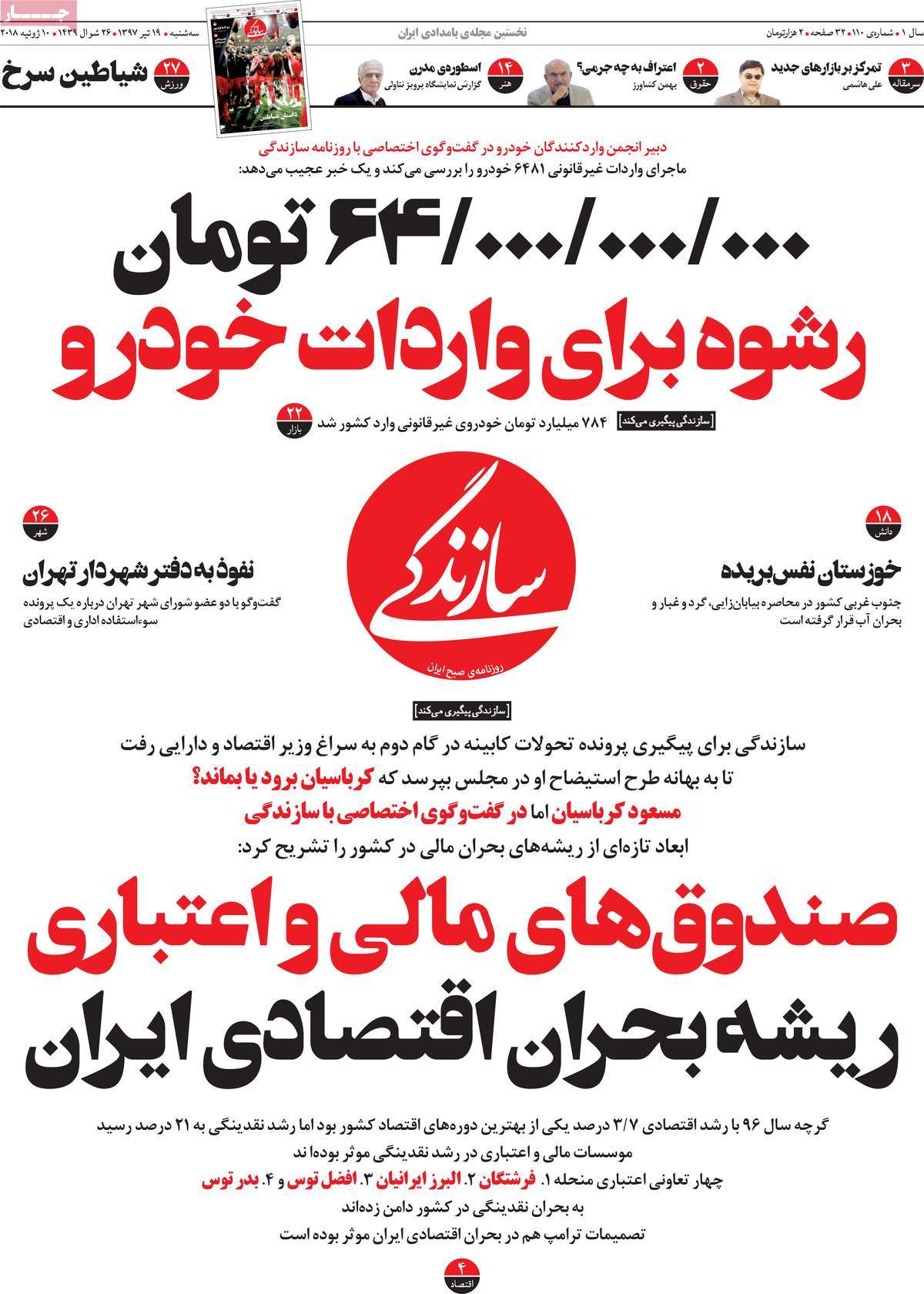
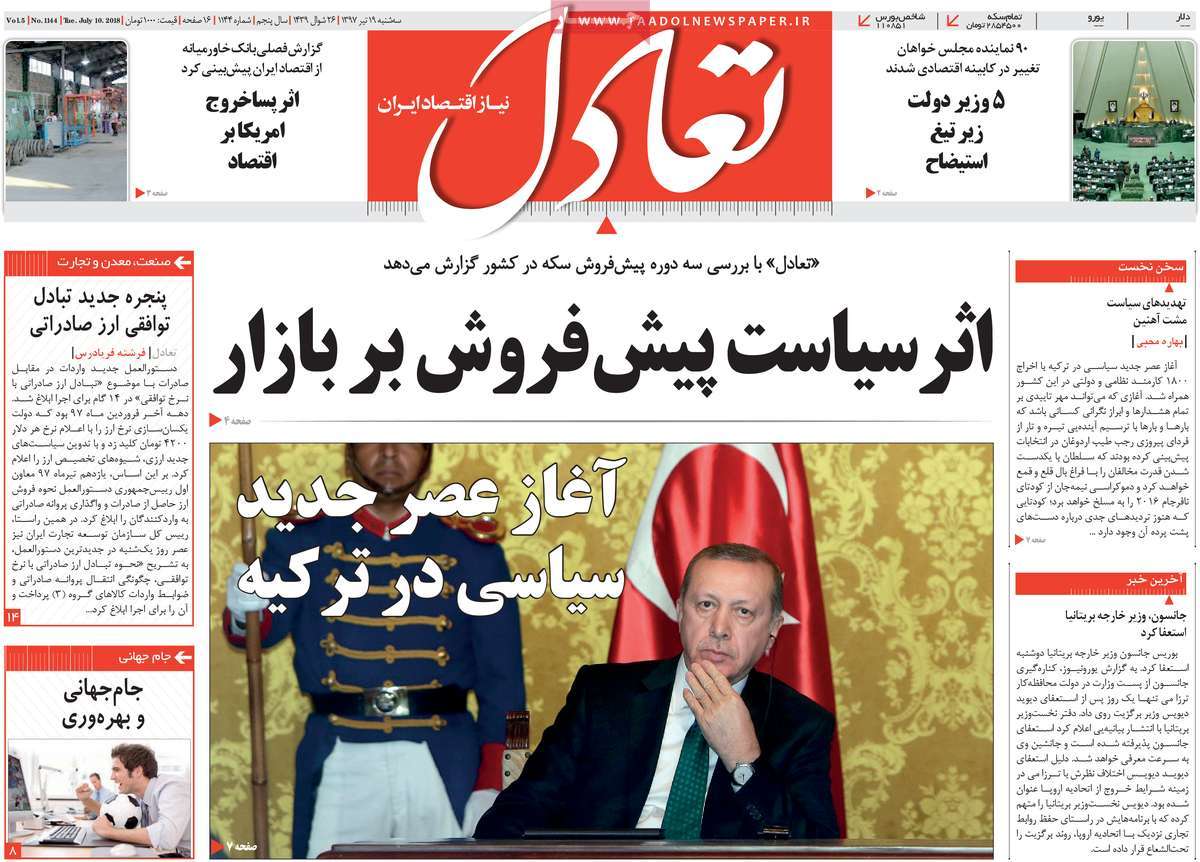
A Look at Iranian Newspaper Front Pages on June 17

A Look at Iranian Newspaper Front Pages on November 19

All newspapers today covered the remarks made by the Leader of Iran’s Islamic Revolution Ayatollah Seyyed Ali Khamenei during the sermons that followed Eid-ul-Fitr prayers in Tehran.

The top story, however, was the historic victory of the Iranian national team against Morocco in its first match in the FIFA World Cup 2018 in Russia. Now the Team Melli is at the top position of the Group B, where the favourites Spain and Portugal are expected to advance to the next stage.

The ongoing operation by the Saudi-led coalition, backed by American, French, and Israeli forces, to capture the Yemeni port city of Hudaydah also received great coverage.

The above issues, as well as many more, are highlighted in the following headlines and top stories:


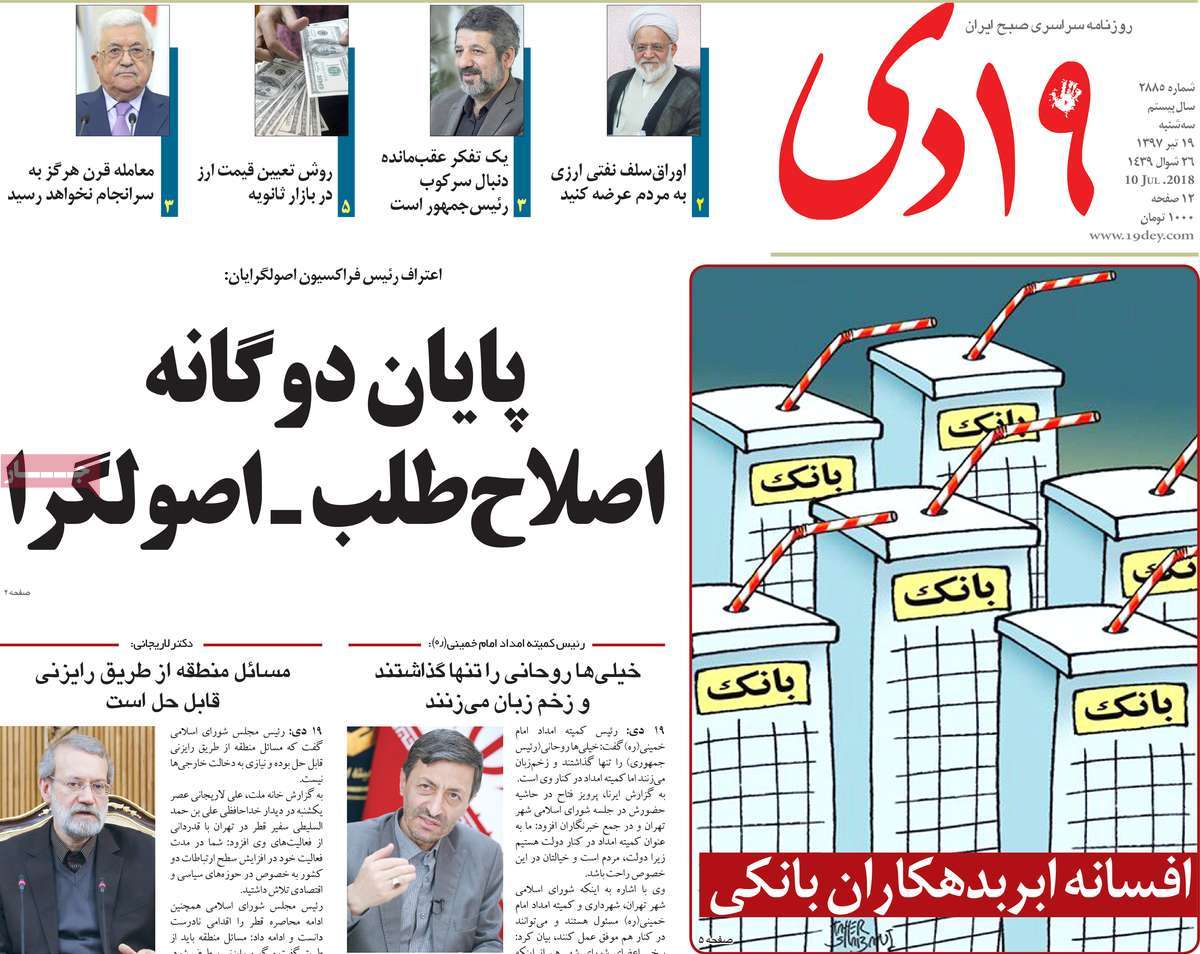
19 Dey:

1- Iran Leader Calls for National, Social Unity

A Look at Iranian Newspaper Front Pages on June 17


Abrar:

1- Iran Leader: Officials Must Take Decisive Decisions to Resolve Economic Woes

2- South Korea Decreases Oil Imports from Iran

A Look at Iranian Newspaper Front Pages on June 17


Afkar:

1- MP: Parliament’s Decision to Postpone Decision on CFT Accession Is Diplomatic Leverage

A Look at Iranian Newspaper Front Pages on June 17


Aftab-e Yazd:

1- Another Opportunity for Opening EU Office in Iran

  • EP Member Calls for Establishment of Office in Tehran to Boost Cooperation

A Look at Iranian Newspaper Front Pages on June 17


Amin:

1- Iran Filled with Happiness: Team Melli Ranks First in World Cup Group B

A Look at Iranian Newspaper Front Pages on June 17


Arman-e Emrooz:

1- Renault to Stay in Iran despite US Sanctions

A Look at Iranian Newspaper Front Pages on June 17


Arman-e Melli:

1- Rouhani: We Need Unity More than Ever

A Look at Iranian Newspaper Front Pages on June 17


Bahar:

1- Rouhani Urges People, Other Bodies to Use Their Capacities to Help Government

A Look at Iranian Newspaper Front Pages on June 17


Ebtekar:

1- Iran on Top of “Death Group”

  • Iran’s Second Win in World Cup History Secured with Late Own Goal

A Look at Iranian Newspaper Front Pages on June 17


Emtiaz:

1- Iran’s Populating Ageing; Over 7 Million Old People Living in Iran

A Look at Iranian Newspaper Front Pages on June 17


Etemad:

1- Siege Getting Tighter: Member of Trump’s Presidential Campaign Arrested

A Look at Iranian Newspaper Front Pages on June 17


Ettela’at:

1- Rouhani: Washington’s Unilateralism against International Law

2- Assad: We Don’t Compromise on Ties with Iran

A Look at Iranian Newspaper Front Pages on June 17


Ghanoon:

1- Iran Leader: Palestine’s Map Cannot Be Removed from Historical Memory of World Geography

A Look at Iranian Newspaper Front Pages on June 17


Iran:

1- Once Again Iran, Once Again Passion

  • Iran’s Victory over Morocco Make Entire Nation Happy

A Look at Iranian Newspaper Front Pages on June 17


Javan:

1- Western Countries Deploy Forces to Capture Yemen’s Hudaydah Port

  • American, French, Israeli Forces Fighting with Sudanese, Emirati, Saudi Mercenaries

A Look at Iranian Newspaper Front Pages on June 17


Jomhouri Eslami:

1- Iran Leader: Unity, Settlement of Problems among Most Important Factors of Islamic Dignity

A Look at Iranian Newspaper Front Pages on June 17


Kayhan:

1- Iran Leader: People Not Tired, Frustrated

  • Some [Officials] Are Feeling So, Trying to Show Everyone Share Their Feelings

2- US Gives Verbal Pledges to North Korea, Asks for Immediate Concessions!

  • Pompeo: First Full Nuclear Disarmament, Then Removal of Sanctions

A Look at Iranian Newspaper Front Pages on June 17


Kelid:

1- FIFA World Cup 2018: Iranian Cheetahs Claim Victory after 20 Years

A Look at Iranian Newspaper Front Pages on June 17


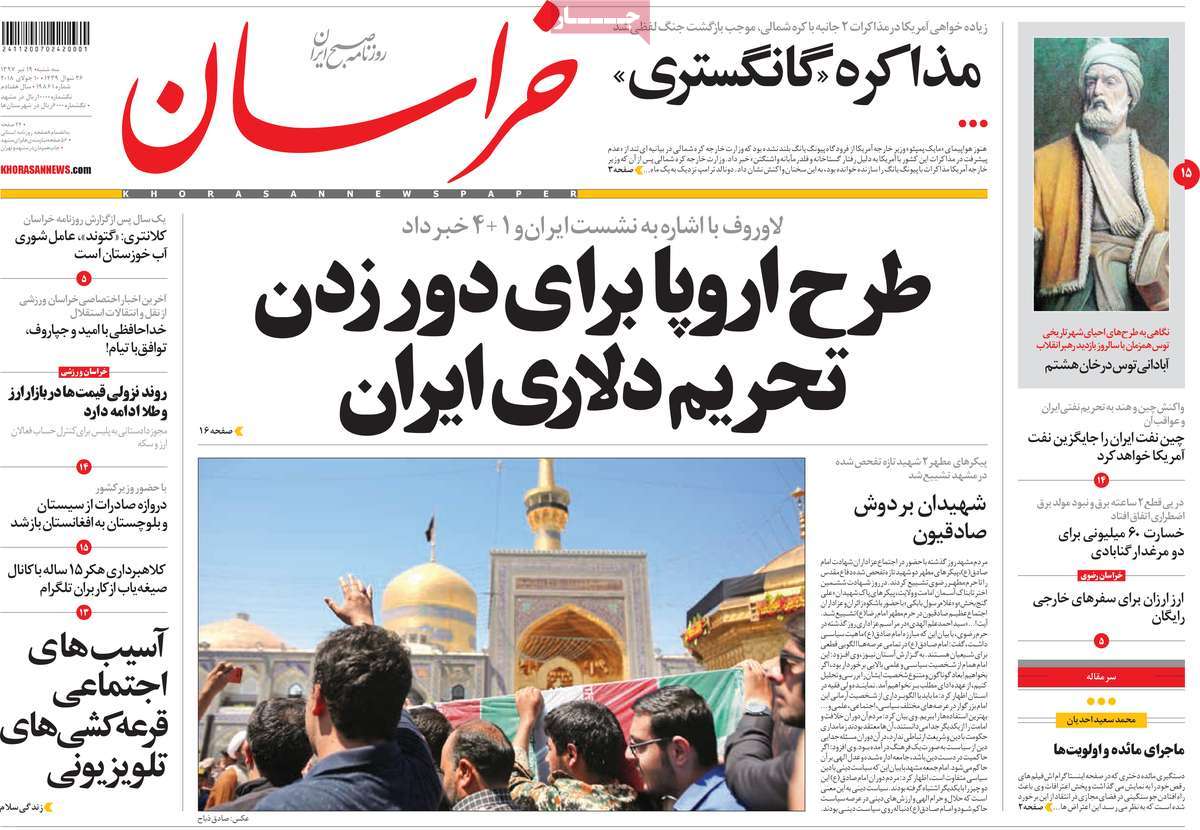
Khorasan:

1- Reforms in Forex Policies, New Plan on Gold Coin

  • Central Bank Officials Make New Promises to Decrease Prices

A Look at Iranian Newspaper Front Pages on June 17


Rah-e Mardom:

1- Iran Leader: Collapse of Zionist Regime Certain

A Look at Iranian Newspaper Front Pages on June 17


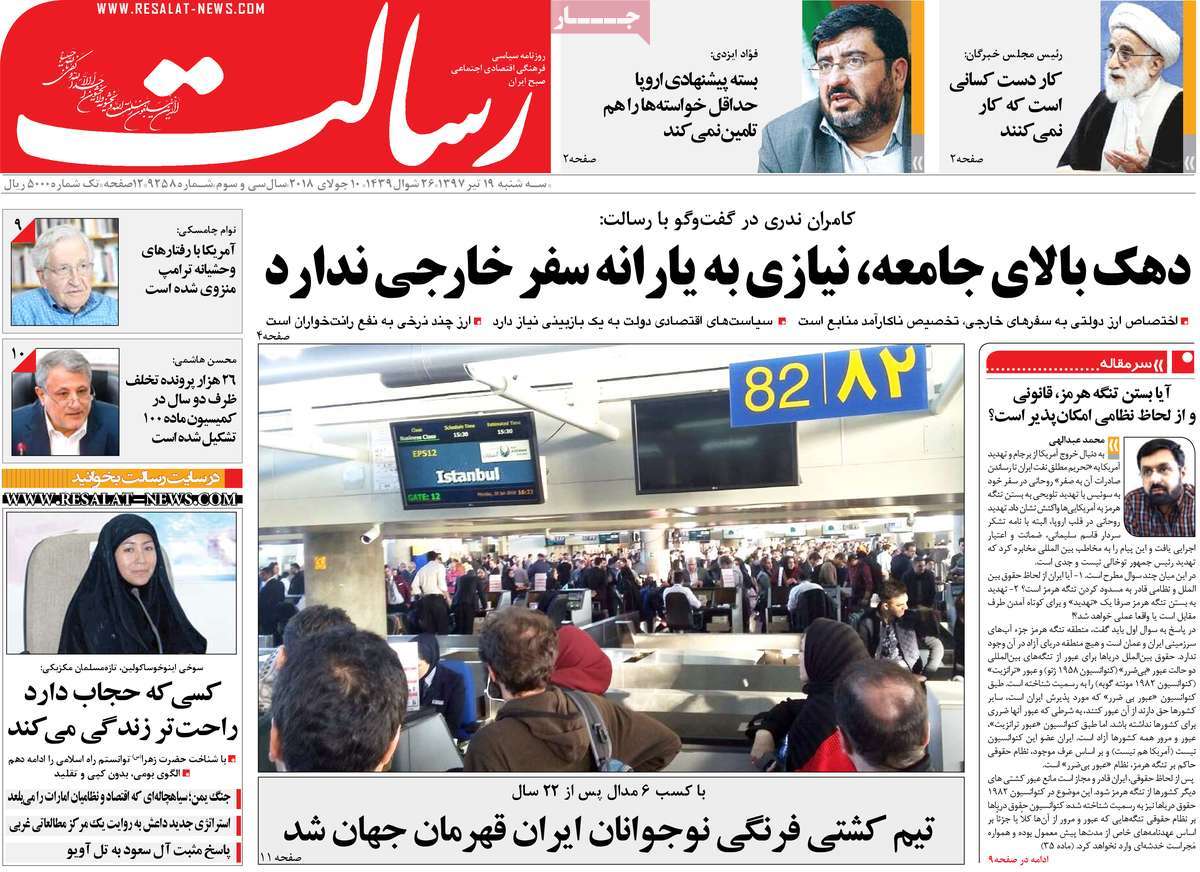
Resalat:

1- Netanyahu’s Consultations with Europeans on JCPOA

  • What Deal Is Tel Aviv Accelerating?

2- Assad: We Won’t Stop Responding to Israeli Attacks

A Look at Iranian Newspaper Front Pages on June 17


Rooyesh-e Mellat:

1- Beginning of US-China Trade War

2- Amir-Abdollahian: Saudis Trying to Force Yemenis to Surrender by Cutting Water, Food Supplies

A Look at Iranian Newspaper Front Pages on June 17


Sayeh:

1- 27% Growth in Iran’s Steel Production

2- Most Canadians Support Boycott of American Products

A Look at Iranian Newspaper Front Pages on June 17


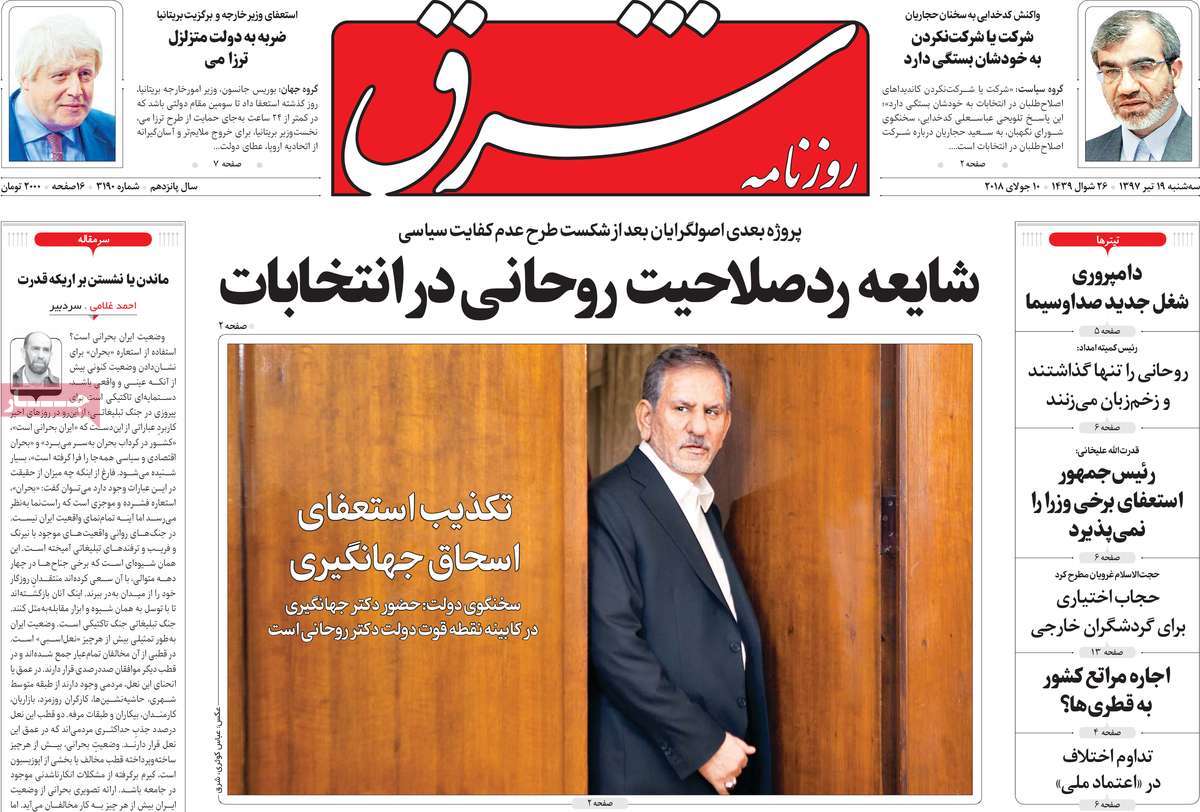
Shargh:

1- Queiroz: We’ll Make Spain Respect Iranian Boys

2- Rouhani, Malaysian PM Hold Phone Conversation

A Look at Iranian Newspaper Front Pages on June 17


Ta’adol:

1- Iran Leader: Enemy Exerting Pressure to Disappoint Iranian People

A Look at Iranian Newspaper Front Pages on June 17


Vatan-e Emrooz:

1- Iran Leader: Iranian People Awake, Full of Motivation

2- US Secretary of State: No Sanction to Be Lifted against N. Korea

3- Assad Urges Iran to Remain in Syria

A Look at Iranian Newspaper Front Pages on June 17

Iran Calls on Turkey to Extradite Fugitive Criminals

prison

In a Sunday phone call, Iranian Deputy Interior Minister Hossein Zolfaghari asked his Turkish counterpart Muhterem İnce to adopt cooperative measures and arrest and extradite Iranian fugitive criminals including the swindlers in Turkey.

During the talks, the two sides also expressed satisfaction with the current level of Iran-Turkey relations and called for further mutual cooperation in fight against terrorism and organized crimes in the region, a report by Tasnim News Agency said.

They also stressed the importance of having full control over the two sides’ joint borders, particularly during special periods of time, to prevent terrorist attacks.

Back in April, Iran and Turkey signed a document on border cooperation during the 27th meeting of the Iran-Turkey High Border Commission.

The document elaborated on the growing atmosphere for mutual cooperation and friendship between the two countries while appreciating the efforts by Iranian and Turkish officials to boost security along the two countries’ common border. The document also highlighted the importance of adopting further measures to help decrease border incidents and fight terrorist, criminal and smuggling gangs.

The two sides also reached agreement on the executive arrangements pertaining to the identification, evaluation and updating of border documents as well as preparing a map of the borderline and new information on its location.

The 27th meeting of the Iran-Turkey High Border Commission was held in Ankara after a 6-year hiatus.

Iran Not Meddling in Iraq’s Internal Affairs: Sadr Movement

Sadr Movement is headed by Iraqi cleric Muqtada al-Sadr who has turned from an alleged rebel and politically adventurous young clergyman to an experienced politician over nearly the past two decades. Leaving behind his young years, he is now a middle-aged politician in a critical period of Iraq’s history. A review of his measures over the past months reveals how serious he has been in his promise to create a strong, independent and safe Iraq to restore the golden age of the ancient country.

Unlike earlier predictions, it seems the Sadr Movement does not see itself above the politics in Iraq after winning the largest number of seats in Iraq’s parliamentary elections. Instead, it is humbly seeking to translate into reality the ideals of its middle-aged leader to create a unified Iraq far from ethnical and political divisions. Sadr Movement says it is seeking to form coalitions with all political factions in Iraq and share the power with them in the war-torn country. In its latest move to create a unified Iraq, the Sadr Movement formed a coalition with Iraq’s Badr Organization headed by Hadi al-Amiri which is believed to be close to Iran.

Sadr’s open arms to other parties including Sunni ones once again reveal the realistic view of the Shiite clergy who is seeking to create a national unity government in Iraq with the aim of salvaging the country from the current crises through establishing balanced relations with its neighbours particularly the two leading countries of Iran and Saudi Arabia. Will the dream come true? It is possible though difficult.

In an interview with Tasnim New Agency, Head of the Political Bureau of Iraq’s Sadr Movement Dhia al-Asadi has elaborated on the movement’s plans to achieve its goals.

Asadi referred to the latest developments in formation of new political alliances in Iraq and said the country is following the principle of establishing strong relations with its neighbouring countries.

Asadi underlined his country’s strong will to establish close cooperation with its neighbours and dismissed the claims that Iran is interfering in Iraq’s internal affairs.

He said all Iraqi political factions have reached consensus on establishing friendly relations with the neighbouring states and putting an end to Iraq’s occupation by the US forces.

Asadi also referred to the latest alliance formed between two major political factions in Iraq and said the coalition was created with the aim of opening a new chapter in Iraq’s history through offering services to Iraqi nation and removing all challenges in the way of restoring peace and security to the region.


Fallouts of Muqtada Sadr’s Visit to Saudi Arabia

Elsewhere in his interview, Asadi elaborated on Muqtada al-Sadr’s visit to Saudi Arabia and the changes he made to his regional and international plans after the visit.

“Muqtada Sadr and the Sadr Movement don’t view regional issues from the tight prism of factional views. They don’t want to be just one of the conflicting sides in the regional or global issues. They seek to create a strong Iraq in the region and the world and establish equal relations with their neighbours and the world. They also attach significant importance to some important regional players like the Islamic Republic of Iran, Turkey as well as Jordan, Syria, Saudi Arabia and Kuwait,” he noted.


Security of Iraq, Its Neighbours Interconnected

Al-Asadi also said Muqtada Sadr believes the security of Iraq and its neighbouring states are interconnected. “If Iraq is not secure, its neighbours won’t be secure either and vice versa.”

“That’s why Muqtada Sadr is seriously seeking to establish equal and balanced relations with the countries based on mutual friendship and trust among the nations. He is fully aware that any ethnical or factional policy by the regional states will negatively impact Iraq’s stability and security.”


Muqtada Sadr’s Message to Saudi Ambassador

Asadi said during his meetings with a number of ambassadors from regional states in the holy city of Najaf, Muqtada Sadr reminded them, particularly the Saudi ambassador, of the fact that the war on Yemen has no benefit neither for Saudi Arabia, nor Yemen or Iraq. “The war will inflict a heavy blow on the relations among the countries and exacerbate the current crises in Bahrain and the Shiite-populated areas in Saudi Arabia.”

According to Asadi, during his meeting with the Saudi ambassador, Sadr called on Riyadh to open a new chapter in its relations with Iraq based on mutual respect, cooperation and friendship with the aim of strengthening economic, cultural, historical and social relations between the two sides.

“Muqtada Sadr was interested in receiving the Iranian ambassador to Iraq as well to express his interest in expansion of bilateral ties with the Islamic Republic,” he noted.


Portraying Chaotic Image of Iran-Iraq Ties against Facts on the Ground

In response to a question on his assessment of the current relations between Iran and Iraq, Asadi said it is no secret that the relations between Sadr Movement and Iran, despite some problems in mutual relations throughout the previous years, have remained strong.

“But some people are trying to portray a chaotic image of the relations which is far from reality on the ground.”

He went on to say that Muqtada Sadr wants to tell those raising claims about Iran’s interference in Iraq’s internal affairs that Baghdad will never allow any foreign power to meddle in its internal affairs.

Asadi underlined that the Islamic Republic of Iran is fully aware of the current sensitive situation in Iraq and realizes the reality that establishing balanced and equal relations with Iraq based on mutual respect is in the interests of not only the two sides but the whole region.


Iran-Iraq Relations Deeply Rooted in History

Elsewhere in his remarks, Asadi said Iran-Iraq relations date back deep into history and will continue in the far future.

“We want to make it clear to the world that Iran has no role in Iraq’s internal affairs and will not play any similar role in the future and this is a significant point both for Iran and Iraq.”


US Military Presence, Threat to Whole Region

He then referred to the US military presence in the region and said, “We feel that Iran is seriously concerned about the fallout of the US military presence for the regional security.”

Asadi said the US presence in the region in any form is a threat to the whole region and added that’s why Iraq calls on Washington to withdraw its forces from the region.

“The US withdrawal will lead to regional stability and security. When security is established, no regional state will be concerned about the military aggressions in the region.”

He concluded that Iraq wants to turn into a source of peace and stability instead of threat and fear in the region.

Saudi-led Coalition Forces Bogged Down Outside Hudaydah: Houthis

Militants and foreign mercenaries armed by Saudi Arabia and the UAE are attempting to capture the well-defended city and push the Houthis out of their sole Red Sea port in the biggest battle of the war.

“A battle of attrition awaits the Saudi alliance which it cannot withstand. The Saudi coalition will not win the battle in Hudaydah,” Houthi spokesman Mohammed Abdulsalam told Lebanon-based al-Mayadeen TV.

Ground troops including Emiratis, Sudanese and Yemenis have surrounded the main airport compound. Mohammed al-Sharif, deputy head of Yemen’s civil aviation, said images circulated online about the airport had been taken in October 2016.

A fence shown as a proof of the airport’s capture was actually situated near the al-Durayhimi district on a piece of land belonging to a Yemeni lawmaker, the official Saba news agency quoted him as saying.

Ahmed Taresh, the head of Hudaydah airport, also denied the alleged capture, but said airstrikes conducted by the Saudi-led coalition have completely destroyed it.

Abdulsalam warned that the Saudi-UAE offensive against the port city would undermine chances for a peaceful settlement of the Yemen crisis.

The rebuttals came after the media office of the Saudi-backed Yemeni forces loyal to ex-president Abd Rabbuh Mansur Hadi said on Twitter that they had “freed Hudaydah international airport from the grip of” the Houthis.

Reports on Sunday said the Saudi-backed forces have been surrounded in the al-Durayhimi Bayt al-Faqih district and at least 40 Saudi mercenaries killed by the Yemeni sniper fire over the past two days.

Al-Mayadeen meanwhile cited informed sources as saying that the invading forces had retreated from all fronts in Hudaydah’s west.

A Yemeni military source said clashes have left 50 Saudi-backed forces dead and destroyed 13 of their armored vehicles in southern Hudaydah.

Yemeni forces have also managed to confiscate a French or American ship off Hudaydah’s coast, president of the Houthi Revolutionary Committee Mohammed Ali al-Houthi tweeted.

The UAE, a key member of the Saudi-led coalition waging the war on Yemen, launched the Hudaydah assault on Wednesday despite warnings that it would compound the impoverished nation’s humanitarian crisis.

Le Figaro newspaper on Saturday reported that French special forces were present on the ground in Yemen supporting the operation.

According to the Houthis, British and French warships were also on standby on Yemen’s western coast to launch missile and aerial attacks on Hudaydah.

Fighting on Saturday closed off the city’s northern exit, blocking a key route east to Sana’a and making it harder to transport goods from Yemen’s biggest port to mountainous regions.

The UN World Food Program and the World Health Organization have both expressed concerns over the situation in the Yemeni port city.

More than 70 percent of Yemeni imports pass through Hudaydah’s docks and the fighting has raised fears of a humanitarian catastrophe in a country already teetering on the brink of famine.

On Saturday, the UN envoy for Yemen Martin Griffiths arrived in Sana’a to hold emergency talks on Hudaydah. He was believed to be pushing a deal for the Houthi fighters to cede control of the Red Sea port to a UN-supervised committee.

Greasy Cookie of Northern Iran: Reshte-Khoshkar

Recipe for Rashteh Khoshkar

The greasy cookie is popular among fasting Muslims in the holy month of Ramadan for the fast-breaking meal. It has been around for about three centuries.

Its main ingredients of Reshte-Khoshkar are rice, sugar, walnut and spices such as cardamom and cinnamon.

Following are IRNA’s photos of a shop in Rasht, the capital of Gilan province, where Reshte-Khoshkar is made:

“Canada’s Bid to Restrict Ties with Iran Just for Show”

Senior parliamentarian Mohammad-Javad Abtahi said all political experts believe that the Zionists are dominant in Canada and the country’s decisions are influenced mainly by these people.

Speaking in an interview with ICANA, he noted that the Canadians are interested in building relations with Iran, but the lobby groups of the occupying regime of Israel do not allow this to happen.

“Considering the presence of a large Iranian population in Canada, the country can have good relations with Iran in the cultural, political, and economic fields, but unfortunately, external factors show this potentiality as a threat.”

Therefore, he added, we are witnessing that the political relations between the two countries are not improving.

Regarding the possibility of Canada’s designation of Iran’s Islamic Revolution Guards Corps (IRGC) as a terrorist group, he stated, “This issue has been set forth at the request of the Americans, because Washington seeks to exert pressure on the IRGC as the pioneer of fight against terrorism in the region.”

“It should not be forgotten that this action would lead to the isolation of Canada, and it does not seem to be feasible,” pointed out Abtahi.

Earlier, Liberals in Canada’s House of Commons passed a strongly-worded Conservative motion condemning the Iranian government.

The move saw Prime Minister Justin Trudeau call on the government to “abandon its current plan and immediately cease any and all negotiations or discussions” to restore diplomatic relations, and to immediately list the IRGC as a terrorist entity under Canada’s Criminal Code.

“Saudi-Led Coalition Depriving Yemenis of Water, Food”

Hossein Amir-Abdollahian, a senior international advisor to Iranian Parliament Speaker, said on Sunday that Yemen’s humanitarian crisis is worsening due to the relentless war waged against the impoverished nation by Saudi Arabia, the United Arab Emirates and the Zionist regime.

“It goes without saying that the aggressive powers have lost the war in Yemen but they are trying to occupy the key port city of Hudaydah to pressurize the Yemenis into surrendering by cutting their food and water supplies,” he was quoted as saying in a report by Mizan Online.

Amir-Abdollahian underlined that the future belongs to the Yemenis and added Yemen will turn into the enemies’ quagmire.

Yemen’s Ansarullah movement and its army allies are engaged in fierce clashes with Saudi-backed former Yemeni president’s loyalists for the control of Hudaydah. The clashes began on Wednesday, after Saudi-led troops attacked the city, despite warnings by the United Nations about humanitarian consequences.

The Director-General of the World Health Organization Tedros Adhanom Ghebreyesus has sounded the alarm about a catastrophic humanitarian situation in the city amid the ongoing Saudi-led assault.

In a statement, Tedros Adhanom expressed concern about the impact of the attack on civilians’ lives in Hudaydah.

Meanwhile, the United Nations’ World Food Program has called on the warring sides in Yemen to maintain a free food flow through the port city.