Friday, December 26, 2025
Home Blog Page 3516

Powerful Antileishmanial Drug to Be Unveiled at Iran Nano 2018

The drug, whose brand name is Sina Ampholeish, has been developed by Exir Nano Sina company.

Studies by Iran’s Centre for Research and Training on Skin Diseases and Leprosy have shown Sina Ampholeish is the most effective drug for fungal and protozoan infections such as leishmaniasis.

Powerful Antileishmanial Drug to Be Unveiled at Iran Nano 2018Sina Ampholeish can also be used for treating recurrent and chronic topical fungal infections including dermatophytes.

The firm has so far produced two other drugs using nanotechnology, including Sina Doxosome, which is used for treating a wide range of cancers including haematological malignancies, and Sina Curcumin, an anti-inflammatory and anti-microbial drug made of turmeric.

The company exports its products to several countries, including Turkey, Oman, Brazil and Senegal.

Nanotechnology Exhibition to Bring World’s Leading Firms to Tehran

The 11th edition of Tehran Nanotechnology Exhibition will be held from October 13 to 16 in Tehran, putting on display the latest nanotechnology achievements of firms from Iran and a number of other countries.

For a brief review of Iran’s achievements in various fields of science and technology, check the book “Science and Technology in Iran: A Brief Review

The exhibition brings together nanotechnology companies from across the world, creating a market for those commercializing nanotechnology.

In previous editions, companies from Japan, Russia, South Korea, China, Malaysia, and Oman, among others, had participated in the exhibition.

Powerful Antileishmanial Drug to Be Unveiled at Iran Nano 2018

Kani Grawan Spring; Amazing Site for Relaxation

It is located 12 kilometres northeast of Sardasht and is one of the important tourist attractions of the city. The spring is situated next to a village called Kani Guyz in the southeast of the Zab basin, where water comes out of the mountains.

The amount of soluble salts in it is about 1 gram per litre. The colourful bedding of the spring distinguishes it from other springs.

The water is cold and not drinkable because of salinity. The limestone structure of the spring is about 20 metres high and has been deformed over time.

If you reach the highest point of this spring, you will hear the sound of sprinkling water clearly. The small Zab River passes by the spring, which is one of the region’s richest rivers in the springtime. The water of this spring floats to the Zab River.

What follows are photos of the spring retrieved from various sources:

Iran, ASEAN Sign Cooperation Treaty in Singapore

Iranian Foreign Minister Mohammad Javad Zarif signed the Instrument of Accession to the Treaty of Amity and Cooperation (TAC) in South East Asia at the annual gathering of ASEAN’s foreign ministers in Singapore on Thursday.

The treaty comes only two months after US President Donald Trump pulled his country out of an international nuclear agreement with Iran and announced that he would re-impose economic sanctions that were largely lifted under that deal.

Nevertheless, experts believe that Asian countries are likely to brush off US sanctions and maintain business ties with Iran despite Washington’s pressure to harm all trade ties with the Islamic Republic.

At Thursday’s meeting, foreign ministers of the ASEAN member states as well as ministers of the observer countries, including Iran, Russia, China, and India, are scheduled to discuss the latest regional and international developments during the 51st session of the 10-nation bloc.

Related meetings involving ASEAN members and their partner countries will run until Saturday.

Zarif’s bilateral meetings

On the sidelines of the event, Zari held separate meetings with Singapore’s Prime Minister Lee Hsien Loong as well as his Philippines, Japanese and Turkish counterparts for talks on bilateral ties as well as regional and international issues, including the Iran nuclear agreement.

The Iranian top diplomat is scheduled to meet his Russian, Malaysian and Indonesian counterparts later today.

ASEAN is a regional intergovernmental organization comprising 10 Southeast Asian countries — Indonesia, Thailand, Malaysia, Singapore, Vietnam, Philippines, Myanmar, Cambodia, Laos and Brunei.

The bloc seeks to enhance intergovernmental cooperation and facilitate economic, political, security, military, educational, and socio-cultural integration amongst its members and other Asian states.

Zarif Holds High-Level Talks with French, Russian Counterparts

Zarif, who is in Singapore to attend a ministerial meeting of the Association of Southeast Asian Nations (ASEAN), had a meeting with Lavrov on the sidelines of the Asian summit.

During the talks, the two sides discussed Tehran-Moscow relations, particularly economic cooperation, and regional and international issues including the Iran nuclear deal, the Caspian Sea and the Syria conflict.

Zarif Holds High-Level Talks with French, Russian Counterparts
Iranian Foreign Minister Mohammad Javad Zarif meeting his Russian counterpart Sergei Lavrov in Singapore on August 2, 2018

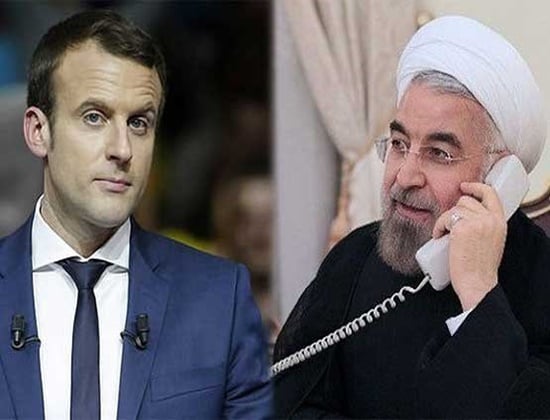
French FM Le Drian also called Zarif earlier in the day and had a phone conversation with him. The two diplomats discussed the latest developments regarding the JCPOA and certain ways through which Iran can exploit the nuclear deal’s economic benefits.

The talks were held as part of Europe’s efforts to express its determination to maintain its business links with Iran. The bloc has already presented Tehran with a package of incentives to help save the JCPOA after the US’ unilateral withdrawal in May.

Iran’s President Hassan Rouhani earlier noted that the ball is now in Europe’s court to make up for Washington’s absence and work to keep the landmark agreement alive.

Rouhani made the remarks on Tuesday during a meeting with Britain’s new Ambassador to Tehran Rob Macaire. “Today, we are at a very important historic moment regarding the JCPOA.”

The president said the European parties need to transparently declare what measures they intend to adopt in order to make up for Washington’s “illegal” pull-out from the Iran deal.

Iran: US’ Sanctions on Turkish Ministers Prove Its ‘Addiction’

“US’ unlawful sanctions against two Turkish ministers – from an allied country – illustrates not just US administration’s policy of pressure and extortion in lieu of statecraft, but that its addiction to sanctions knows no bounds,” Zarif tweeted on Thursday.

The Trump administration placed sanctions on Turkish Justice Minister Abdulhamit Gul and Interior Minister Suleyman Soylu to push Turkey to release the detained American pastor Andrew Brunson, sending relations between the NATO allies to a new low.

Brunson, who has lived in Turkey for nearly two decades, was arrested in 2017 and charged with complicity in the attempt to overthrow the Turkish government.

Turkey’s Foreign Ministry registered a “strong protest” against actions it called inexplicable, vowing Turkey would reciprocate “without delay.”

Iran FM Meets Japanese, Turkish, Filipino Counterparts

Iranian Foreign Minister Mohammad Javad Zarif meeting his Turkish counterpart Mevlut Cavusoglu in Singapore on August 2, 2018
Iran FM Meets Japanese, Turkish, Filipino Counterparts
Iranian Foreign Minister Mohammad Javad Zarif meeting his Japanese counterpart in Singapore on August 2, 2018

Zarif, who arrived in Singapore on Wednesday evening, held a meeting with his Japanese counterpart Taro Kono on Thursday morning. The two top diplomats talked about bilateral relations, the Iran nuclear deal and other issues of mutual interest.

After the meeting, Zarif attended a luncheon hosted by his Japanese counterpart.

Earlier in the day, Zarif had held talks with his Filipino counterpart Alan Peter Cayetano, during which the two sides discussed ways of developing bilateral relations and most important international developments.

Iran FM Meets Japanese, Turkish, Filipino Counterparts
Iranian Foreign Minister Mohammad Javad Zarif meeting his Filipino counterpart in Singapore on August 2, 2018

Zarif also held a separate meeting with his Turkish counterpart Mevlut Cavusoglu. Bilateral relations and regional and international issues were the main topics of discussions between the two sides.

While in Singapore, Zarif also met with the country’s Prime Minister Lee Hsien Loong. During the talks, the two sides discussed bilateral relations, the Iran nuclear deal and the most important regional and international issues.

Iran FM Meets Japanese, Turkish, Filipino Counterparts
Iranian Foreign Minister Mohammad Javad Zarif meeting Singaporean Prime Minister in the Southeast Asian country on August 2, 2018

Before sitting for talks with his Asian counterparts, Zarif attended the 51st ministerial meeting of the ASEAN.

Iran FM Meets Japanese, Turkish, Filipino Counterparts

Iran Summons Tajikistan Ambassador to Protest at False Accusations

Iran Congratulates Tajikistan on National Day

In a Wednesday statement, Iranian Foreign Ministry Spokesman Bahram Qassemi said the ambassador was summoned by the Foreign Ministry’s Director-General for Eurasian Affairs and was told how such wrong statements would further encourage and embolden Takfiri terrorists to carry out their violent acts.

The Tajik Ambassador was told that “efforts to sow the seeds of discord between religious sects and its propagation by certain spheres, individuals and media would only lead to increased tension, insecurity and a rise in terrorist acts in the country, the result of which can be clearly observed in the recent killing of innocent cyclists,” he noted.

“Undoubtedly, showing indifference to and tolerance towards the Salafi-Takfiri ideology would encourage extremists to hatch plots which would then undermine peace, stability and security in the region,” the Tajik Ambassador was told, Qassemi added.

The spokesman said during the meeting, the Iranian Director-General for Eurasian Affairs expressed “the Islamic Republic of Iran’s preparedness to transfer its experience and facilities to its regional friends in order to combat the extremist Takfiri movement with the aim of establishing regional peace and stability, and creating a secure environment for increasing people’s well-being.”

During the meeting, the Tajik Ambassador for his part expressed his deep regret over the incident and said he would relay the Iranian government’s protest to Tajik officials.

Four cyclists from the United States, Switzerland and the Netherlands were killed on Sunday when a car ploughed into them on a rural road. After the crash, the attackers also stabbed their victims, Tajikistan’s interior minister said on Monday.

Tajik security forces killed four suspected attackers on Monday and detained one. In a statement on Tuesday, the interior ministry said it had detained four more suspects and blamed the Islamic Renaissance Party of Tajikistan (IRPT) for the attack.

Citing what it said was the confession of a detained suspect, the interior ministry of Tajikistan claimed the attackers’ leader had been trained in Iran and the group planned to flee to Afghanistan after the attack.

This comes as ISIS has claimed responsibility for the killing of four foreign cyclists.

Iranian Observers Endorse Zimbabwe’s Election Process

Speaking to Pupils Association News Agency (PANA) on Wednesday, Qassemi said at the invitation of the Zimbabwean government, a delegation from the Islamic Republic of Iran was sent to the African country to monitor how well the recent parliamentary, local, and presidential elections were held in Zimbabwe.

The Iranian delegation, he said, visited some polling stations and also monitored the counting of votes on July 30.

“The delegation did not find any irregularities during the holding of elections and the following counting of votes.”

Qassemi added that the Iranian monitoring delegation maintains that the recent elections in Zimbabwe were held in “free, peaceful, fair and valid conditions.”

Millions of people voted peacefully across the county on Monday and the turnout appeared extremely high, with long lines of voters forming outside polling stations across the country.

By early afternoon, polling officials in the capital, Harare, and surrounding towns were reporting that between 75% and 85% of registered voters had cast their ballots.

Full results are not due until much later in the week, and possibly as late as the weekend.

“Iran Should Hold Talks with Trump on Anniversary of 1953 Coup”

Ataollah Mohajerani, a former culture minister and a pro-reform analyst who now lives in London, tweeted on Tuesday that Iran ought to engage in talks with Washington now that Trump says he has put aside preconditions for talks with Iran.

“When Trump … puts aside his own words and the 12 conditions announced by Pompeo and says he is ready for talks with Rouhani anytime anywhere, one cannot set conditions for such a position,” he said.

Mohajerani suggested, however, that the talks should be held on August 19, the anniversary of the ousting of Mohammad Mosaddegh, the democratically-elected prime minister of Iran.

Mosaddegh’s government was toppled in a coup co-orchestrated by the US and UK in 1953, two years after he ordered the nationalization of Iran’s British-run oil industry in 1951.

Trump said Monday that he would be willing to meet with Rouhani with no preconditions to discuss ways of improving ties between the two countries.

This is while Trump pulled the US out of the 2015 nuclear deal in May, and is set to re-impose full sanctions in two stages in August and November.

Iranian Experts Use Stem Cells to Treat Corneal Burn

A specialist at Royan Institute says in eye diseases many people go permanently blind due to corneal burn complications, but we have been able to restore the sight of the patient by using stem cells from the other healthy eye of the patient.

Speaking in an interview with ISNA, Dr Ahmad Vosouq said, “We hope that with the knowledge of stem cells we would be able to prevent the progression of diseases that lead to permanent blindness, and we can even treat the progression.

For a brief review of Iran’s achievements in various fields of science and technology, check the book “Science and Technology in Iran: A Brief Review

Elsewhere in his statements, Dr Vosouq said Royan institute researchers have also achieved considerable success in treatment of various skin diseases, such as freckles.

“Stem cells could also be used in this case to clear up skin of the patient,” he added.

Royan is an Iranian clinical, research and educational institute dedicated to biomedical, translational and clinical research and stem cell.