Thursday, December 25, 2025
Home Blog Page 3514

Iran Keen to Expand Ties with New Zealand, Indonesia, Singapore

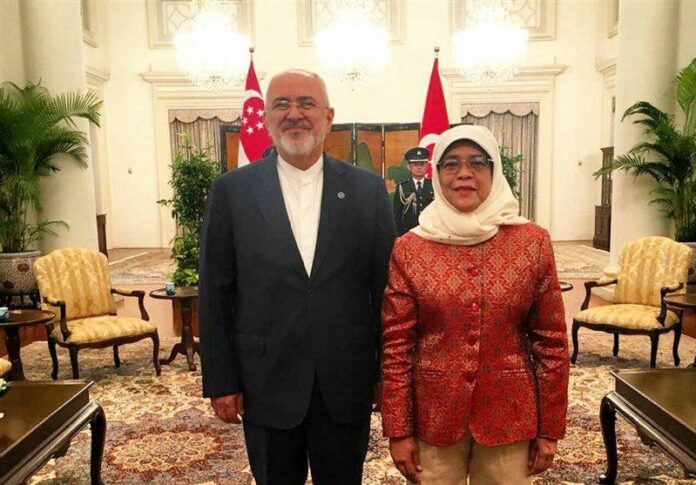
Iranian Foreign Minister Mohammad Javad Zarif meeting Singaporean President Halimah Yacob in Singapore on August 3, 2018

Zarif held the meetings on Friday on the sidelines of the 51st ministerial meeting of the Association of Southeast Asian Nations (ASEAN) in Singapore.

In his meeting with New Zealand Foreign Minister Winston Peters, Zarif conferred on ways to expand bilateral relations, the Iran nuclear deal, international affairs, and other issues of mutual interests.

The Iranian top diplomat also discussed issues of mutual interest with Singaporean Foreign Minister Vivian Balakrishnan and President Halimah Yacob.

During the meeting with President Yacob, Zarif hailed bilateral relations between Tehran and Singapore as “very good and friendly”, and highlighted the existing grounds for cooperation in various fields.

He also extended the warm greetings of Iranian President Hassan Rouhani.

Yacob, for her part, called for maintaining the good relations and further expanding Iran-Singapore cooperation in various fields.

The Iran nuclear deal and the latest regional and international developments were among other issues discussed in the meeting.

Zarif also exchanged views with Balakrishnan on bilateral relations, the ASEAN, regional affairs, and international issues.

Later in the day, the Iranian top diplomat met his Indonesian counterpart Retno Marsudi on the sidelines of the ASEAN summit.

During the Friday talks, the two diplomats discussed a wide range of issues of mutual interest, particularly economic cooperation, the Iran nuclear deal, and the most important regional and international affairs.

Iran Keen to Expand Ties with New Zealand, Indonesia, Singapore
Iranian Foreign Minister Mohammad Javad Zarif meeting his Indonesian counterpart Retno Marsudi in Singapore on August 3, 2018

Also in a meeting with the ASEAN Secretary-General Lim Jock Hoi, Zarif discussed ways to develop relation between Iran and ASEAN after the signing of the Treaty of Amity and Cooperation (TAC).

Zarif, who arrived in Singapore on Wednesday evening, has already held separate meetings with his Japanese, Turkish, Filipino, Norwegian, Vietnamese, Russian, and Malaysian counterparts and Singaporean prime minister on the sidelines of the ASEAN meeting.

“All [these diplomats] stressed expansion of ties, imperative of promoting multilateralism and resilience and innovation to preserve the JCPOA,” Zarif tweeted on Thursday night.

Before arriving in the Southeast Asian state, Zarif also paid a visit to Sri Lanka, where he held separate talks with the country’s top officials.
‘Innovative’ Ways May Help Iran Reap Benefits of JCPOA

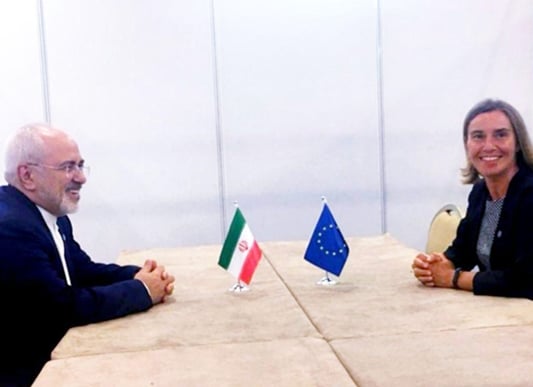
Iranian Foreign Minister Mohammad Javad Zarif meeting EU Foreign Policy Chief Federica Mogherini in Singapore on August 3, 2018

Zarif made the remarks in a Friday meeting with his Chinese counterpart Wang Yi in Singapore. He had earlier in a Thursday tweet referred to ‘innovation’ as an imperative factor in preserving the Joint Comprehensive Plan of Action.

While in Singapore, Zarif discussed the issue of nuclear deal in bilateral talks with his French, Australian, Chinese, and Indonesian counterparts as well as the Singaporean president and the EU foreign policy chief.

During his talks with China’s Yi, Zarif described Beijing as an important country and a strategic partner for Iran, and underlined the need for maintaining the high level of bilateral relations and expanding them while finding innovative ways to help Iran benefit from the JCPOA’s achievements.
The Chinese top diplomat, for his part, described the relations between Tehran and Beijing as “friendly, strategic, and all-out”.
“The two countries will continue their closer cooperation in all bilateral, regional, and international fields, especially on maintaining the Iran nuclear deal as an achievement of diplomacy,” he noted.

He also said that Tehran must be able to reap the benefits of the Joint Comprehensive Plan of Action (JCPOA).

In the meeting with EU Foreign Policy Chief Federica Mogherini, the two sides talked about the latest developments and measures taken at the global and EU level to help Iran reap the full benefits of the JCPOA after the US’ illegal withdrawal from the 2015 agreement.

‘Innovative’ Ways May Help Iran Reap Benefits of JCPOA
Iranian Foreign Minister Mohammad Javad Zarif meeting his Australian counterpart Julie Bishop in Singapore on August 3, 2018

Zarif also conferred with his Australian counterpart Julie Bishop on the most important issues in bilateral relations, including consular affairs, economic relation, the Iran nuclear deal, and regional and international issues.

Earlier on Thursday, Zarif had a phone conversation with his French counterpart Jean-Yves Le Drian on the nuclear deal, and ways to help Tehran benefit from its achievements.

The talks were held as Europe is trying to express its determination to maintain its business links with Iran. The bloc has already presented Tehran with a package of incentives to help save the JCPOA after the US’ unilateral withdrawal in May.

Iran’s President Hassan Rouhani earlier noted that the ball is now in Europe’s court to make up for Washington’s absence and work to keep the landmark agreement alive.

Rouhani made the remarks on Tuesday during a meeting with Britain’s new Ambassador to Tehran Rob Macaire. “Today, we are at a very important historic moment regarding the JCPOA.”

The president said the European parties need to transparently declare what measures they intend to adopt in order to make up for Washington’s “illegal” pull-out from the Iran deal.

“US Doesn’t Know What It’s Doing in Iran’s Backyard”

Zarif took to Twitter on Thursday to slam the US navy for using the fictitious name of “the Arabian Gulf” to refer to the Persian Gulf.

The Iranian foreign minister referred to the historical background of the name Persian Gulf, saying that the waterway has been called as such “2,000 yrs longer than US has existed.”

“US Navy can’t seem to find its way around our waters,” Zarif tweeted. “Perhaps because it hasn’t figured out its name: Persian Gulf, as it’s been called for 2,000 yrs longer than US has existed. Or maybe it doesn’t know what it’s doing in our backyard, 7,000 miles from home.”

Zarif’s remarks came shortly after chief spokesman for US Central Command William Urban used the fabricated “Arabian Gulf” during an interview with the CNN.

Iran has designated April 30 as National Persian Gulf Day to highlight the fact that the waterway has been referred to by historians and ancient texts as “Persian” since the Achaemenid Empire was established in what is now modern day Iran.

While historical documents show that the waterway has always been referred to as the “Persian Gulf,” certain Arab states and their allies have recently mounted efforts to remove “Persian” from the name of the strategic waterway.

"US Doesn't Know What It's Doing in Iran's Backyard"

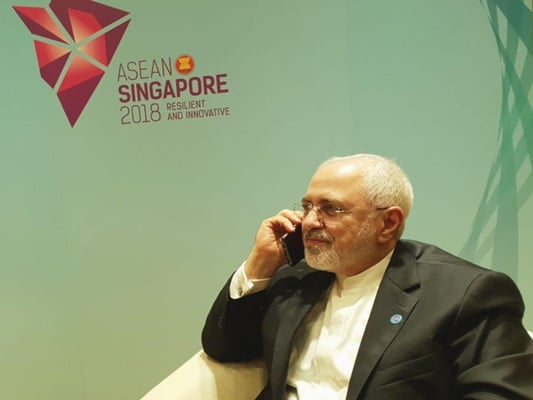
Zarif , who is in Singapore to take part in the 51st Association of Southeast Asian Nations (ASEAN) ministerial meeting, also lambasted the US for withdrawing from the 2015 Iran nuclear deal and re-imposing “unilateral” sanctions against Tehran.

US President Donald Trump announced on May 8 that Washington was walking away from the deal which is officially known as the Joint Comprehensive Plan of Action (JCPOA) and was signed between Iran and the P5+1 group of countries – the US, Britain, France, Russia, China and Germany.

The US president also said that he planned to reinstate a series of economic sanctions against Iran which he said would be implemented “at the highest level”.

Zarif highlighted the international mistrust of the US, saying that Washington has become addicted to sanctions.

He said while the US was preparing to reimpose sanctions against Iran, many countries were already trying to find ways around the sanctions and adopt innovative ways to pursue their own policies.

Pointing to his meetings with foreign officials on the sidelines of the ASEAN meeting, Zarif said that “all countries whose officials I met with stressed maintaining their independence from US policies regarding the JCPOA and preserving it as a diplomatic achievement.”

Zarif had separate meetings with the Southeast Asian nation’s Prime Minister Lee Hsien Loong as well as with the foreign ministers of Russia, Japan, Turkey, the Philippines, Malaysia and Vietnam.

Iran Condemns Saudi Airstrikes on Yemeni Hospital, Market

In a Friday statement, Qassemi called the airstrikes as the last in a series of horrible genocide and crimes by Saudi Arabia and its allies in Yemen, and said by taking revenge from Yemeni people and attacking civilian targets like hospitals, residential buildings and public centres, Saudi Arabia and its allies cannot make up for their failures and defeats in the battlefield.

The spokesman described the airstrikes as war crimes, adding that the continuation of crimes committed by the aggressors on a daily basis and the silence of the international community have worryingly deteriorated the situation of the Yemeni people.

Qassemi also noted that the daily bombardment of civilian targets and massacre of innocent and defenceless people of Yemen by Saudi and Emirati warplanes should not normalize the crimes committed by the aggressors in the eyes of public opinion at regional, global and international levels and make them indifferent to the crisis and the plight of the Yemenis.

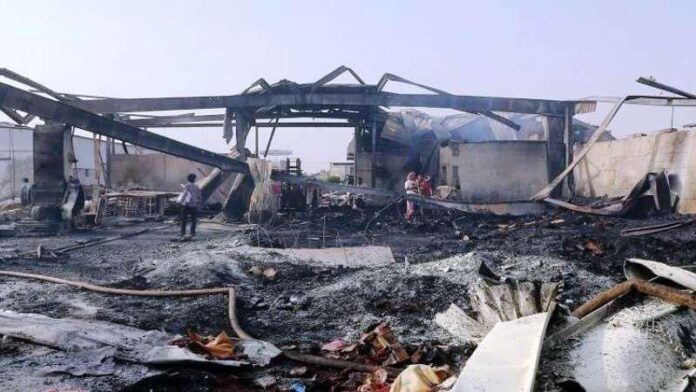
At least 55 people were killed after warplanes of the Saudi-led military coalition hit a hospital and a fishing harbour in Yemen’s western province of Hudaydah on Thursday. At least 130 others were wounded, some in critical condition.

Saudi Arabia and some 20 of its allies, including the UAE, Morocco and Sudan, launched a brutal war, code-named Operation Decisive Storm, against Yemen in March 2015 in an attempt to reinstall former Yemeni President Abd Rabbuh Mansur Hadi, a staunch ally of Riyadh, and crush the popular Ansarullah movement. Nearly 15,000 Yemenis have lost their lives since the beginning of the war.

The war was launched despite warnings that it would compound the impoverished nation’s humanitarian crisis. Several Western countries, the US and Britain in particular are also accused of being complicit in the ongoing aggression as they supply Saudi Arabia with advanced weapons and military equipment as well as logistical and intelligence assistance.

Powerful Antileishmanial Drug to Be Unveiled at Iran Nano 2018

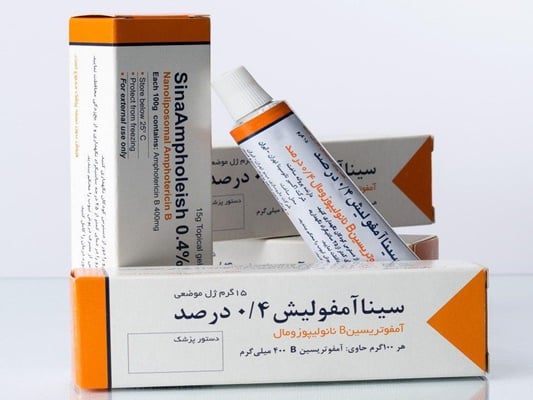
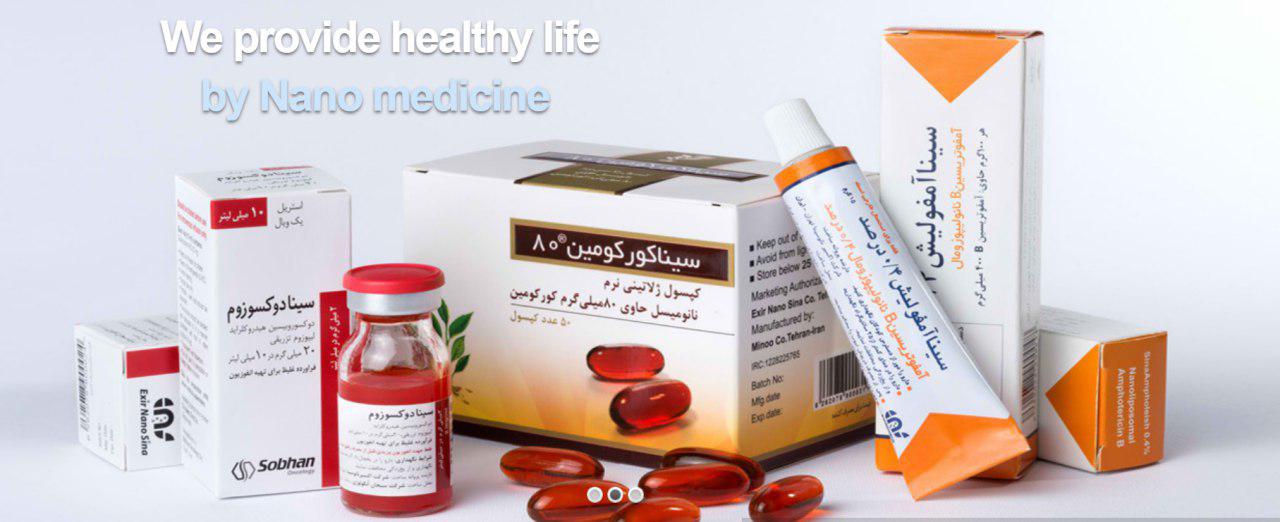
The drug, whose brand name is Sina Ampholeish, has been developed by Exir Nano Sina company.

Studies by Iran’s Centre for Research and Training on Skin Diseases and Leprosy have shown Sina Ampholeish is the most effective drug for fungal and protozoan infections such as leishmaniasis.

Powerful Antileishmanial Drug to Be Unveiled at Iran Nano 2018Sina Ampholeish can also be used for treating recurrent and chronic topical fungal infections including dermatophytes.

The firm has so far produced two other drugs using nanotechnology, including Sina Doxosome, which is used for treating a wide range of cancers including haematological malignancies, and Sina Curcumin, an anti-inflammatory and anti-microbial drug made of turmeric.

The company exports its products to several countries, including Turkey, Oman, Brazil and Senegal.

Nanotechnology Exhibition to Bring World’s Leading Firms to Tehran

The 11th edition of Tehran Nanotechnology Exhibition will be held from October 13 to 16 in Tehran, putting on display the latest nanotechnology achievements of firms from Iran and a number of other countries.

For a brief review of Iran’s achievements in various fields of science and technology, check the book “Science and Technology in Iran: A Brief Review

The exhibition brings together nanotechnology companies from across the world, creating a market for those commercializing nanotechnology.

In previous editions, companies from Japan, Russia, South Korea, China, Malaysia, and Oman, among others, had participated in the exhibition.

Powerful Antileishmanial Drug to Be Unveiled at Iran Nano 2018

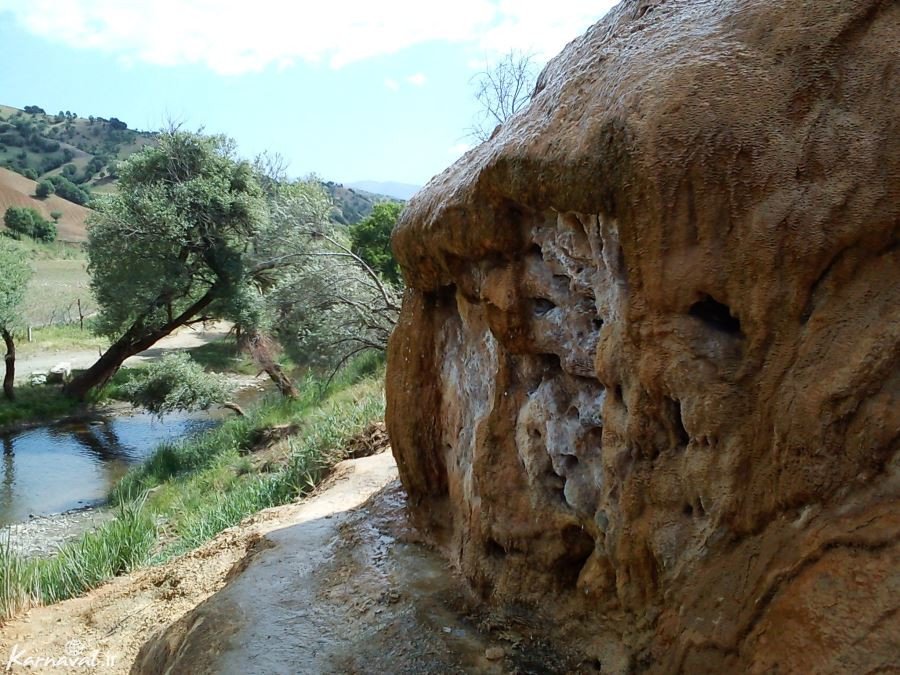
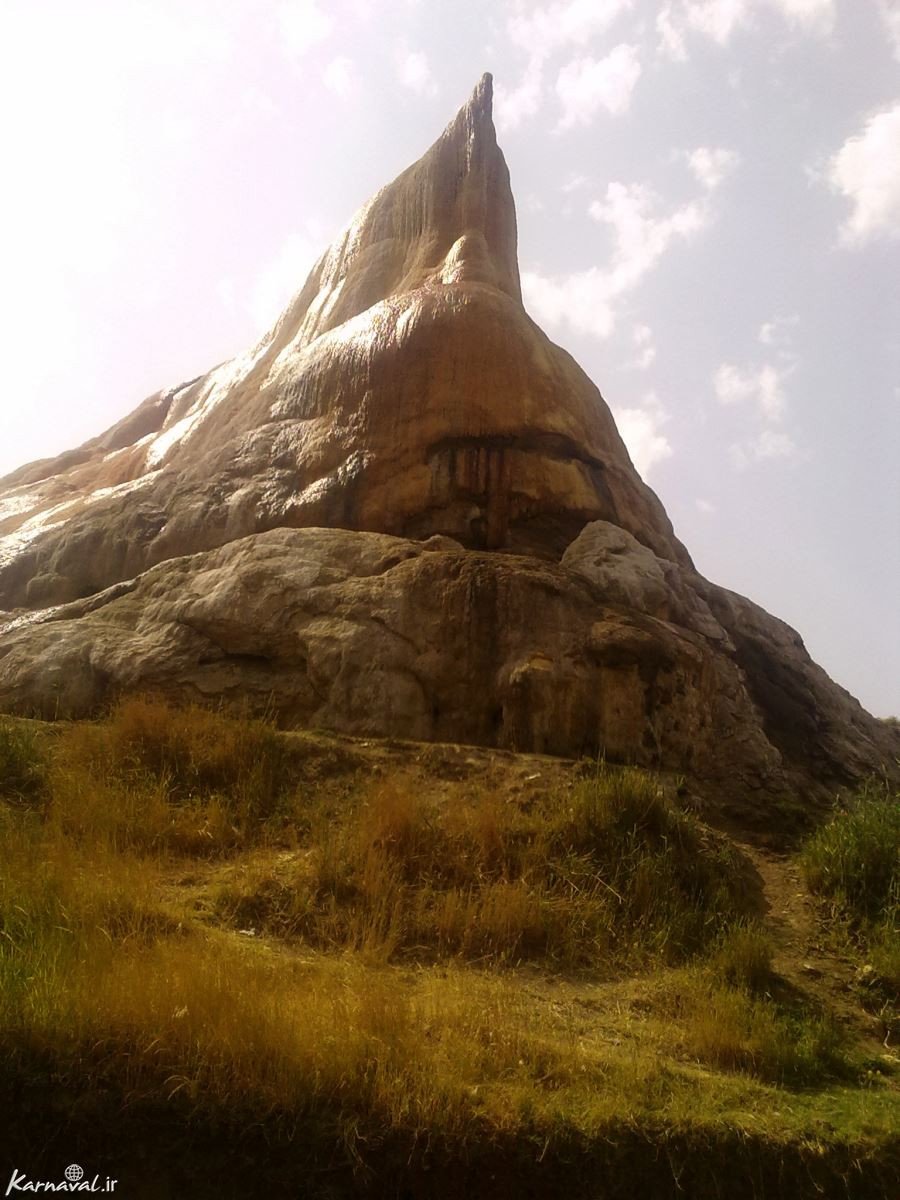
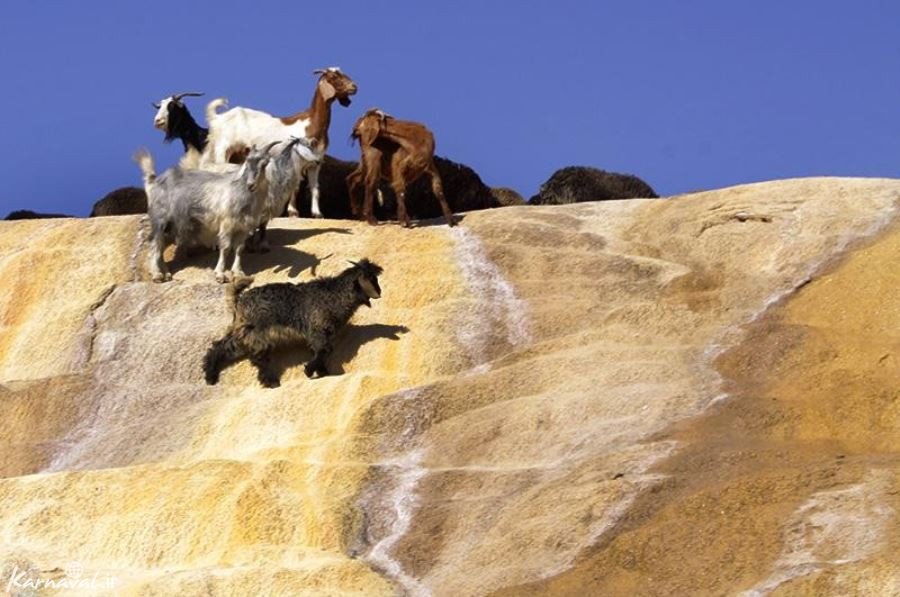
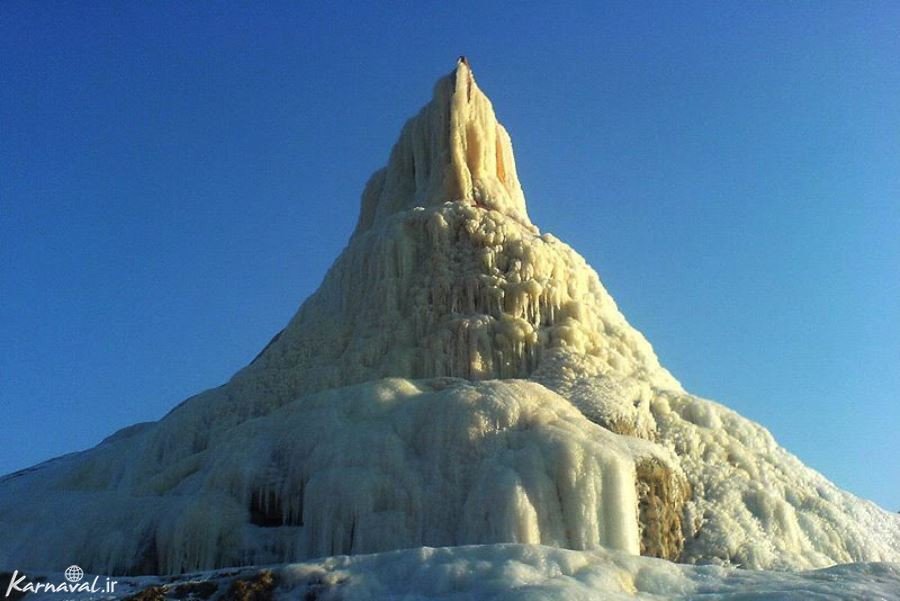
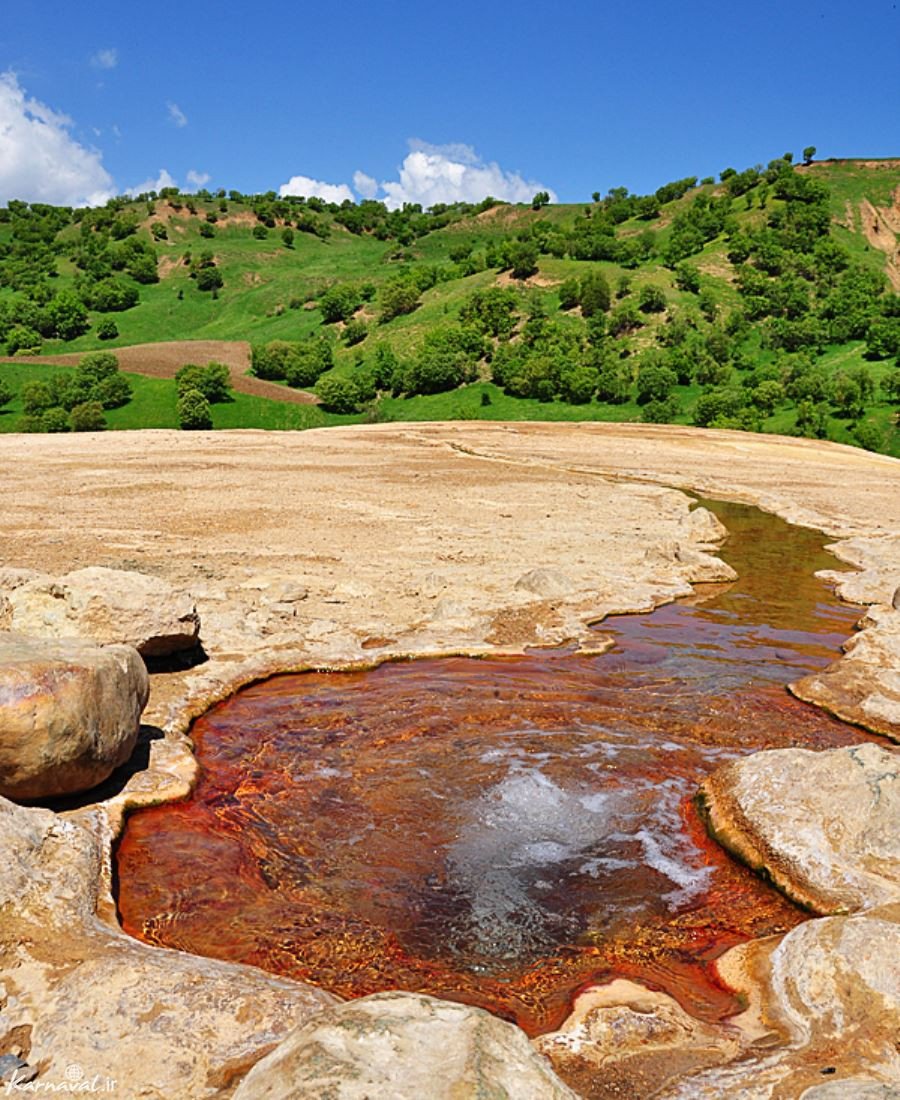
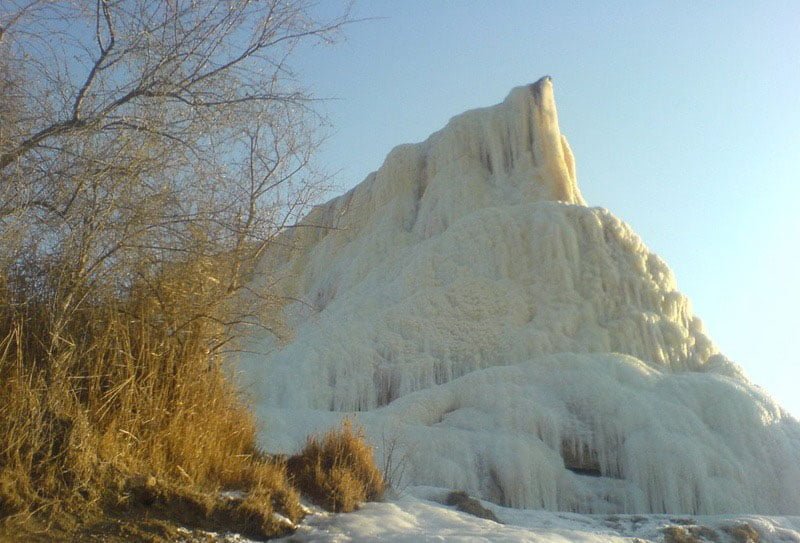
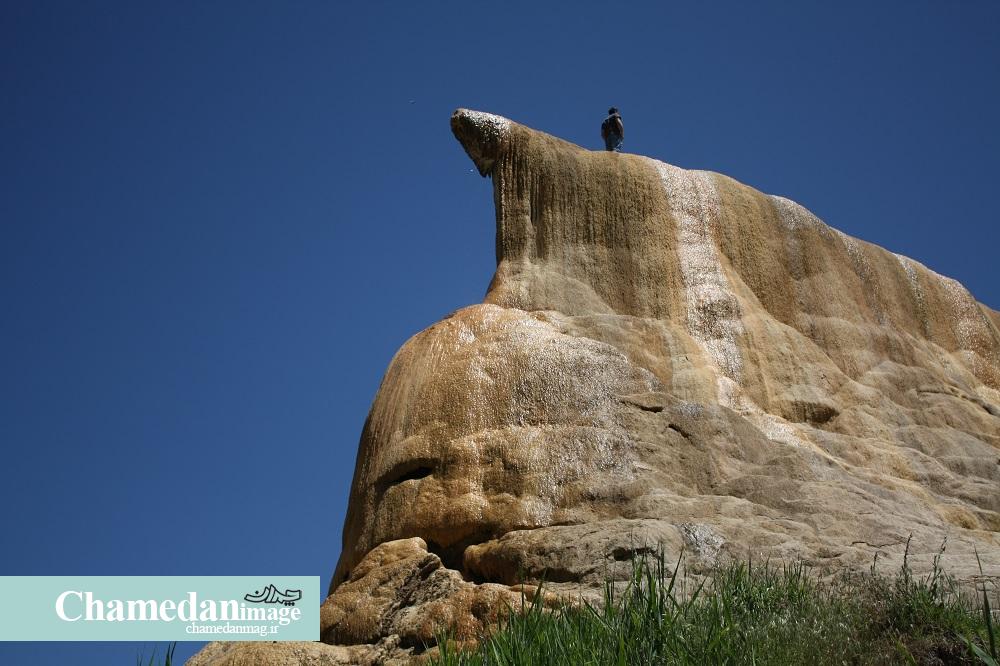
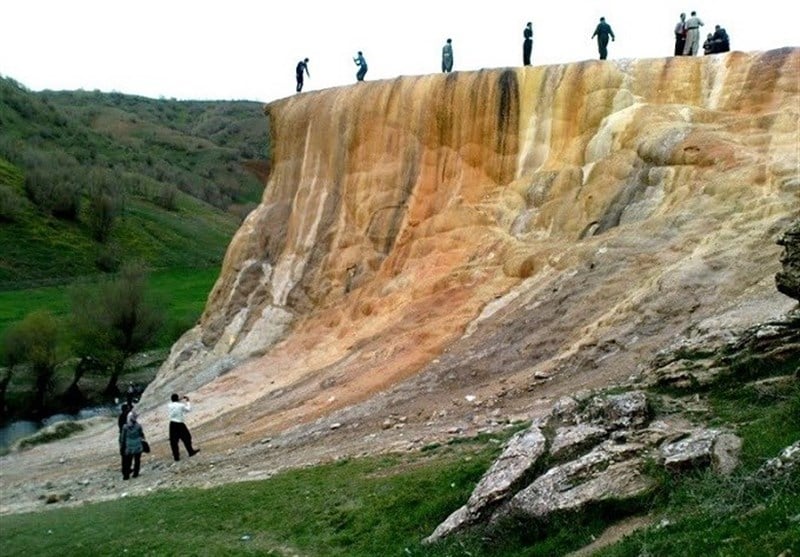
Kani Grawan Spring; Amazing Site for Relaxation

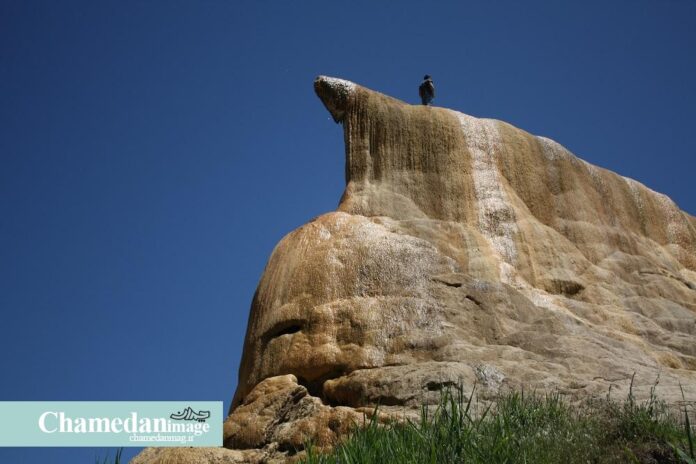
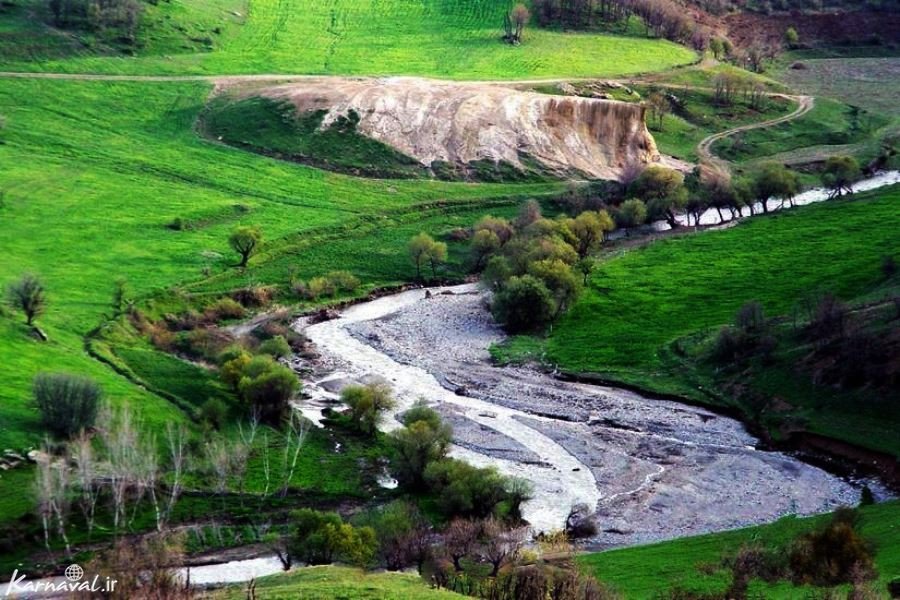
It is located 12 kilometres northeast of Sardasht and is one of the important tourist attractions of the city. The spring is situated next to a village called Kani Guyz in the southeast of the Zab basin, where water comes out of the mountains.

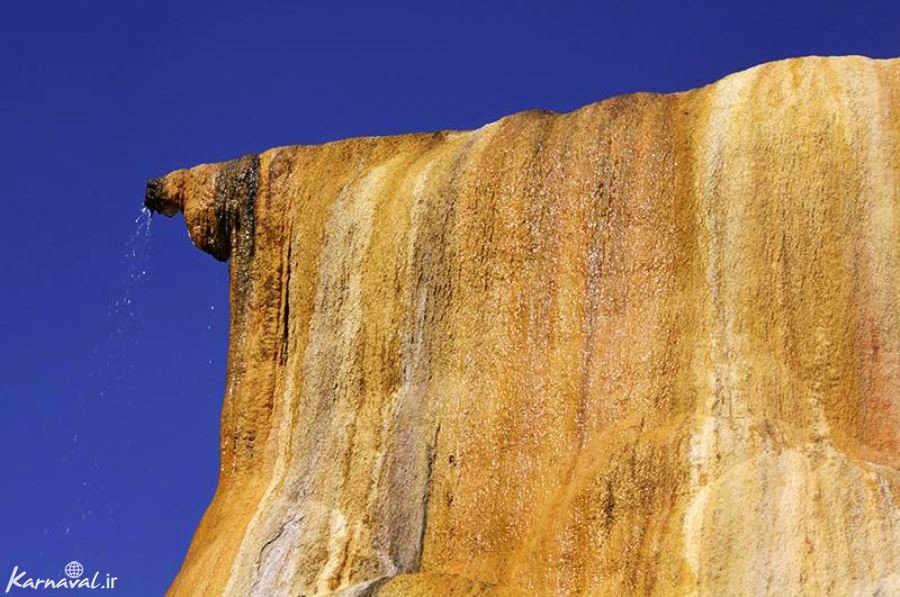
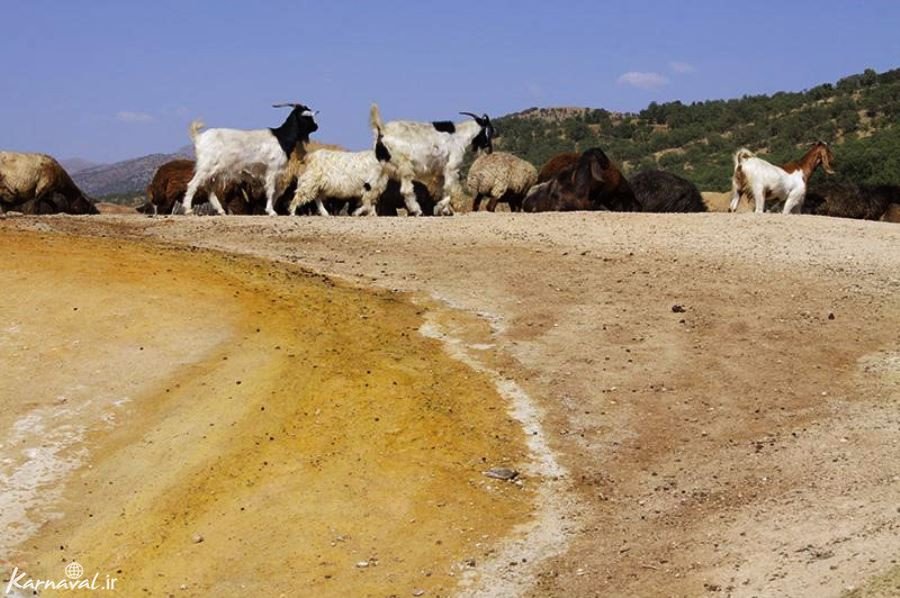
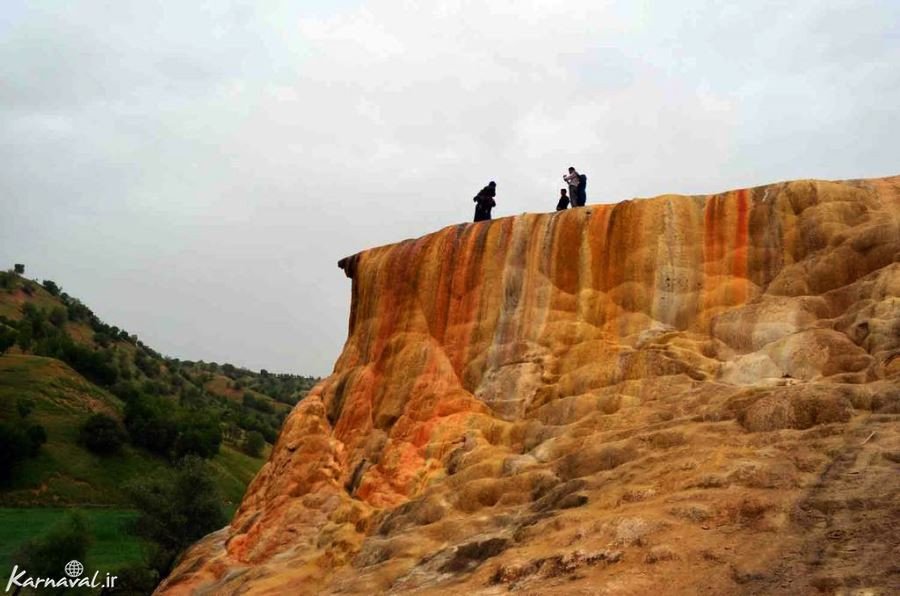
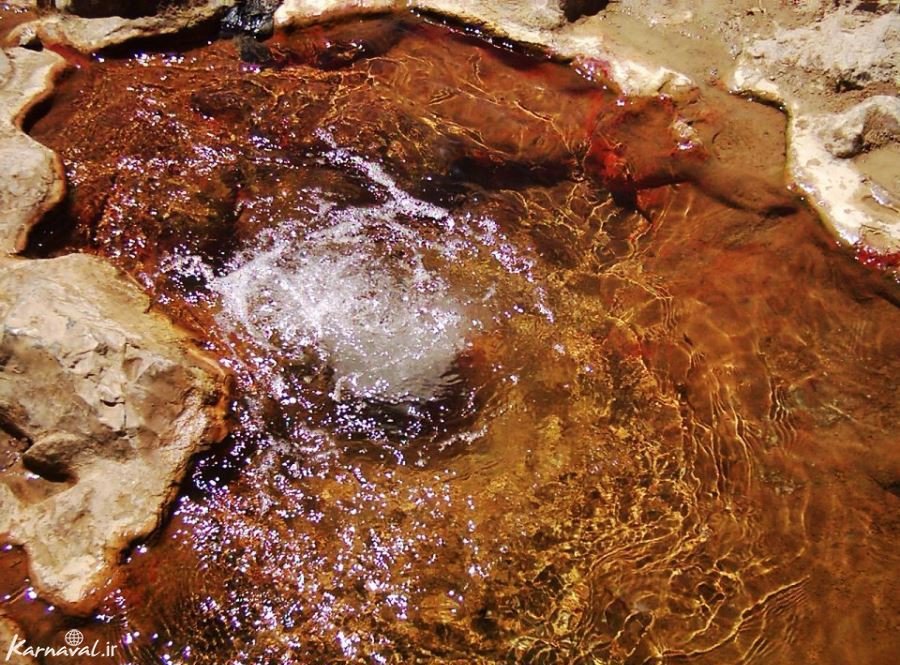
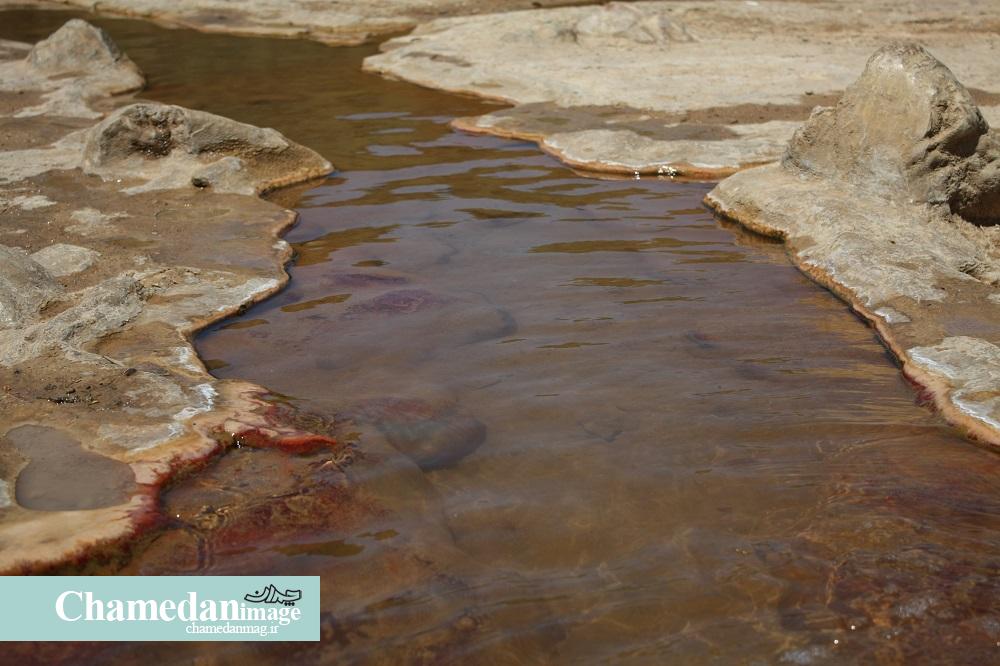
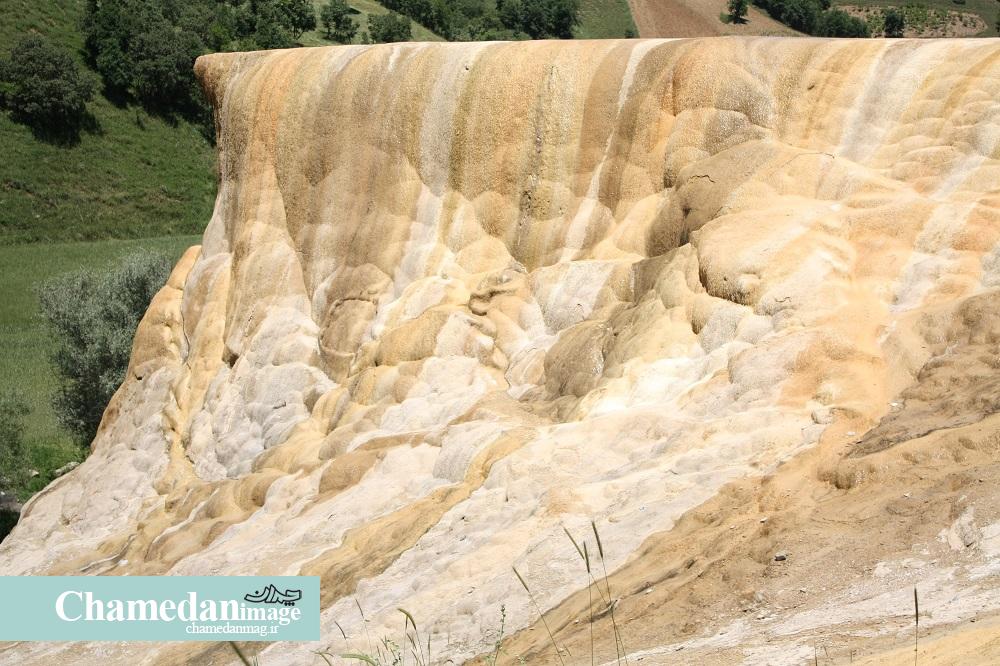
The amount of soluble salts in it is about 1 gram per litre. The colourful bedding of the spring distinguishes it from other springs.

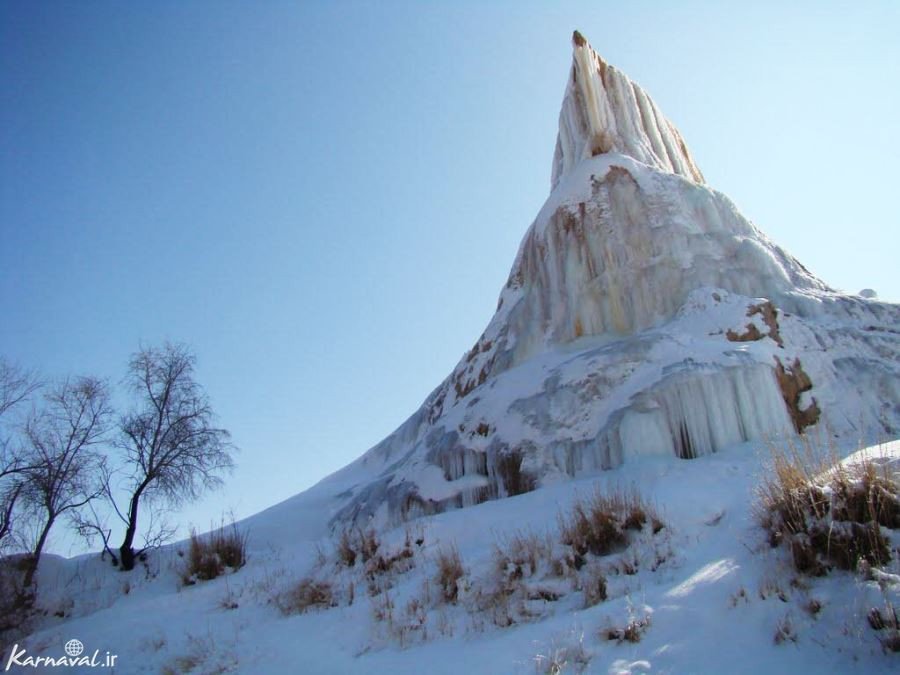
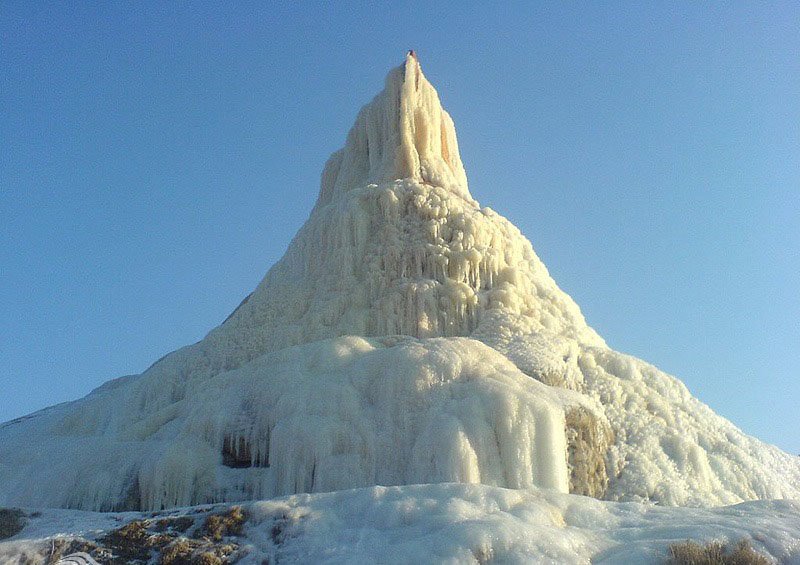
The water is cold and not drinkable because of salinity. The limestone structure of the spring is about 20 metres high and has been deformed over time.

If you reach the highest point of this spring, you will hear the sound of sprinkling water clearly. The small Zab River passes by the spring, which is one of the region’s richest rivers in the springtime. The water of this spring floats to the Zab River.

What follows are photos of the spring retrieved from various sources:

Iran, ASEAN Sign Cooperation Treaty in Singapore

Iranian Foreign Minister Mohammad Javad Zarif signed the Instrument of Accession to the Treaty of Amity and Cooperation (TAC) in South East Asia at the annual gathering of ASEAN’s foreign ministers in Singapore on Thursday.

The treaty comes only two months after US President Donald Trump pulled his country out of an international nuclear agreement with Iran and announced that he would re-impose economic sanctions that were largely lifted under that deal.

Nevertheless, experts believe that Asian countries are likely to brush off US sanctions and maintain business ties with Iran despite Washington’s pressure to harm all trade ties with the Islamic Republic.

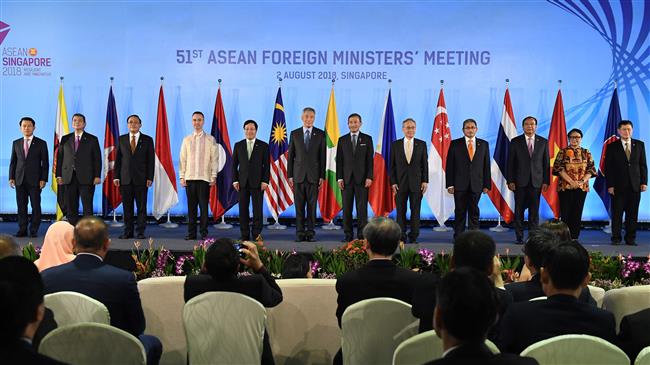
At Thursday’s meeting, foreign ministers of the ASEAN member states as well as ministers of the observer countries, including Iran, Russia, China, and India, are scheduled to discuss the latest regional and international developments during the 51st session of the 10-nation bloc.

Related meetings involving ASEAN members and their partner countries will run until Saturday.

Zarif’s bilateral meetings

On the sidelines of the event, Zari held separate meetings with Singapore’s Prime Minister Lee Hsien Loong as well as his Philippines, Japanese and Turkish counterparts for talks on bilateral ties as well as regional and international issues, including the Iran nuclear agreement.

The Iranian top diplomat is scheduled to meet his Russian, Malaysian and Indonesian counterparts later today.

ASEAN is a regional intergovernmental organization comprising 10 Southeast Asian countries — Indonesia, Thailand, Malaysia, Singapore, Vietnam, Philippines, Myanmar, Cambodia, Laos and Brunei.

The bloc seeks to enhance intergovernmental cooperation and facilitate economic, political, security, military, educational, and socio-cultural integration amongst its members and other Asian states.

Zarif Holds High-Level Talks with French, Russian Counterparts

Zarif, who is in Singapore to attend a ministerial meeting of the Association of Southeast Asian Nations (ASEAN), had a meeting with Lavrov on the sidelines of the Asian summit.

During the talks, the two sides discussed Tehran-Moscow relations, particularly economic cooperation, and regional and international issues including the Iran nuclear deal, the Caspian Sea and the Syria conflict.

Zarif Holds High-Level Talks with French, Russian Counterparts
Iranian Foreign Minister Mohammad Javad Zarif meeting his Russian counterpart Sergei Lavrov in Singapore on August 2, 2018

French FM Le Drian also called Zarif earlier in the day and had a phone conversation with him. The two diplomats discussed the latest developments regarding the JCPOA and certain ways through which Iran can exploit the nuclear deal’s economic benefits.

The talks were held as part of Europe’s efforts to express its determination to maintain its business links with Iran. The bloc has already presented Tehran with a package of incentives to help save the JCPOA after the US’ unilateral withdrawal in May.

Iran’s President Hassan Rouhani earlier noted that the ball is now in Europe’s court to make up for Washington’s absence and work to keep the landmark agreement alive.

Rouhani made the remarks on Tuesday during a meeting with Britain’s new Ambassador to Tehran Rob Macaire. “Today, we are at a very important historic moment regarding the JCPOA.”

The president said the European parties need to transparently declare what measures they intend to adopt in order to make up for Washington’s “illegal” pull-out from the Iran deal.

Iran: US’ Sanctions on Turkish Ministers Prove Its ‘Addiction’

“US’ unlawful sanctions against two Turkish ministers – from an allied country – illustrates not just US administration’s policy of pressure and extortion in lieu of statecraft, but that its addiction to sanctions knows no bounds,” Zarif tweeted on Thursday.

The Trump administration placed sanctions on Turkish Justice Minister Abdulhamit Gul and Interior Minister Suleyman Soylu to push Turkey to release the detained American pastor Andrew Brunson, sending relations between the NATO allies to a new low.

Brunson, who has lived in Turkey for nearly two decades, was arrested in 2017 and charged with complicity in the attempt to overthrow the Turkish government.

Turkey’s Foreign Ministry registered a “strong protest” against actions it called inexplicable, vowing Turkey would reciprocate “without delay.”

Iran FM Meets Japanese, Turkish, Filipino Counterparts

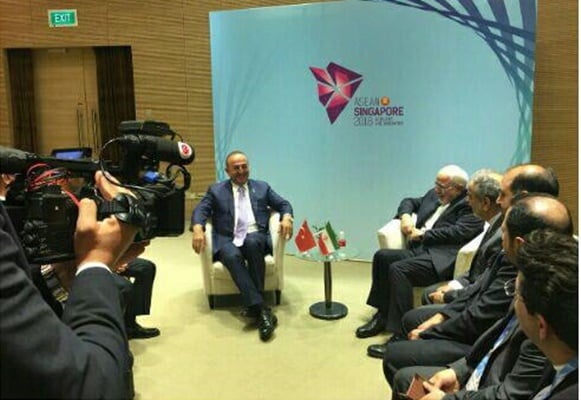
Iranian Foreign Minister Mohammad Javad Zarif meeting his Turkish counterpart Mevlut Cavusoglu in Singapore on August 2, 2018
Iran FM Meets Japanese, Turkish, Filipino Counterparts
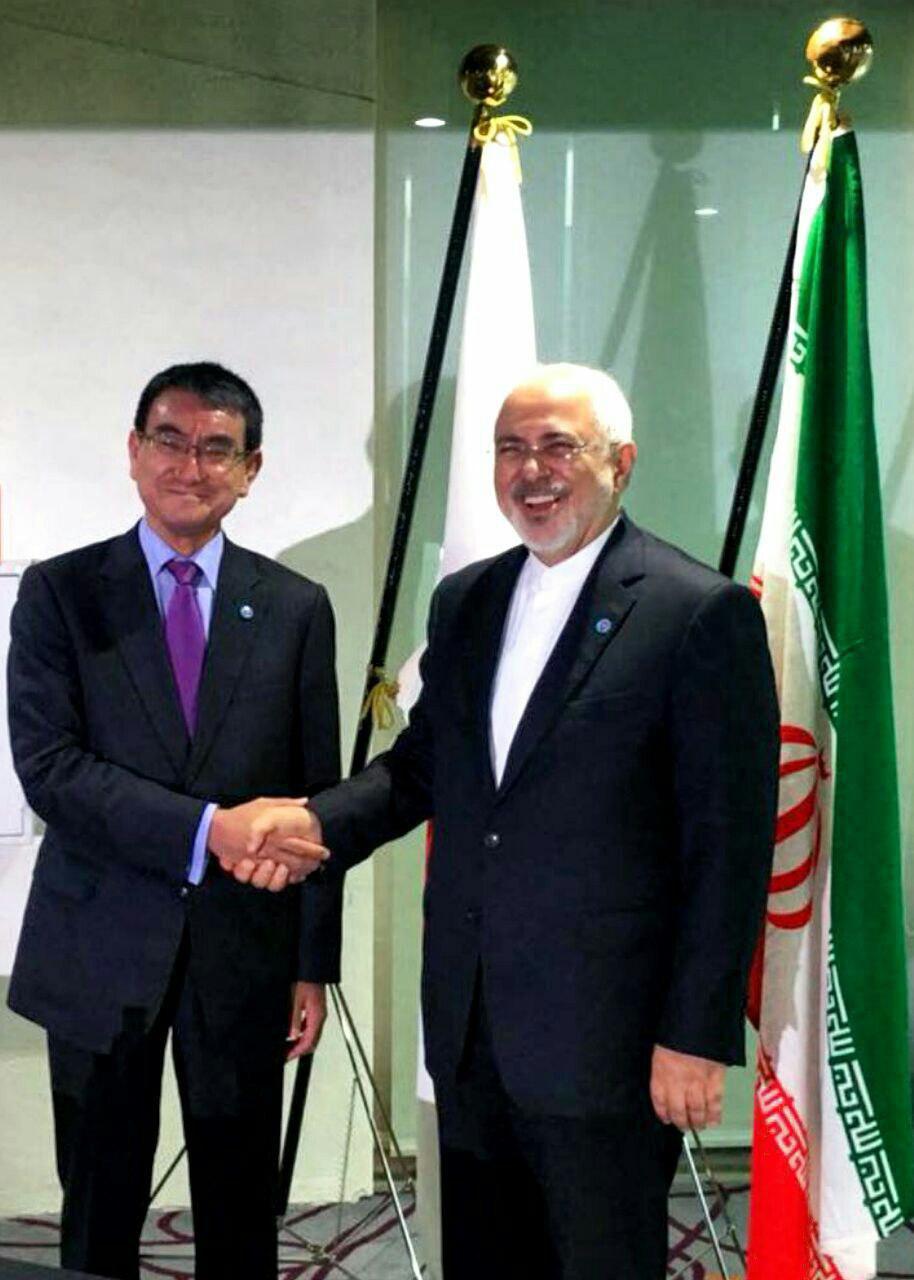
Iranian Foreign Minister Mohammad Javad Zarif meeting his Japanese counterpart in Singapore on August 2, 2018

Zarif, who arrived in Singapore on Wednesday evening, held a meeting with his Japanese counterpart Taro Kono on Thursday morning. The two top diplomats talked about bilateral relations, the Iran nuclear deal and other issues of mutual interest.

After the meeting, Zarif attended a luncheon hosted by his Japanese counterpart.

Earlier in the day, Zarif had held talks with his Filipino counterpart Alan Peter Cayetano, during which the two sides discussed ways of developing bilateral relations and most important international developments.

Iran FM Meets Japanese, Turkish, Filipino Counterparts
Iranian Foreign Minister Mohammad Javad Zarif meeting his Filipino counterpart in Singapore on August 2, 2018

Zarif also held a separate meeting with his Turkish counterpart Mevlut Cavusoglu. Bilateral relations and regional and international issues were the main topics of discussions between the two sides.

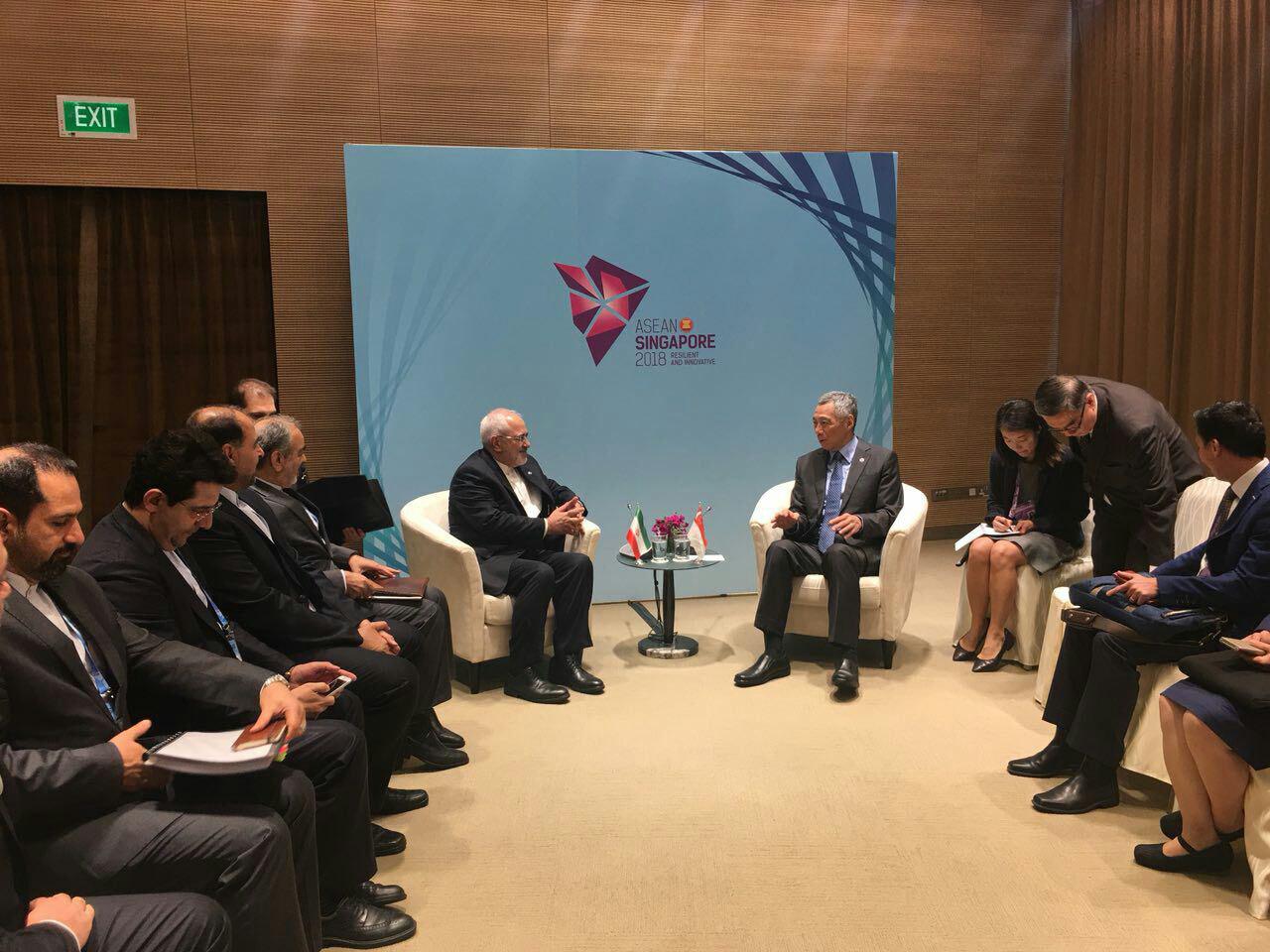
While in Singapore, Zarif also met with the country’s Prime Minister Lee Hsien Loong. During the talks, the two sides discussed bilateral relations, the Iran nuclear deal and the most important regional and international issues.

Iran FM Meets Japanese, Turkish, Filipino Counterparts
Iranian Foreign Minister Mohammad Javad Zarif meeting Singaporean Prime Minister in the Southeast Asian country on August 2, 2018

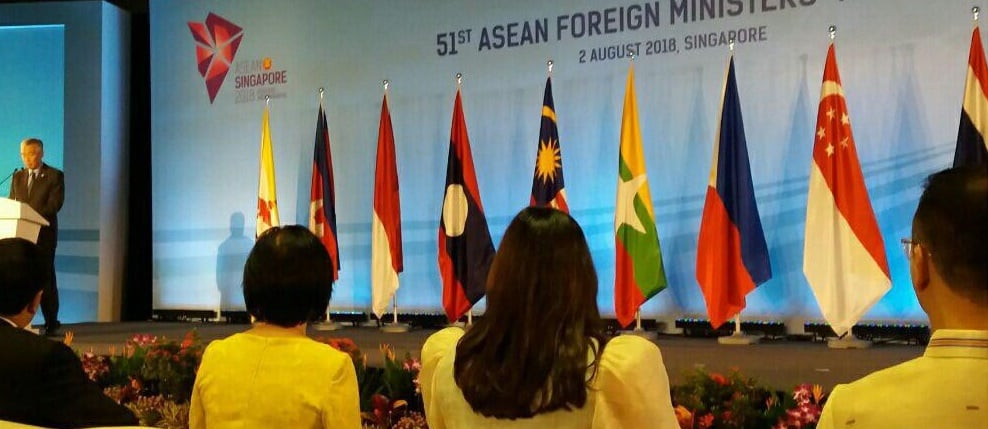
Before sitting for talks with his Asian counterparts, Zarif attended the 51st ministerial meeting of the ASEAN.

Iran FM Meets Japanese, Turkish, Filipino Counterparts