Wednesday, April 8, 2026
Home Blog Page 35

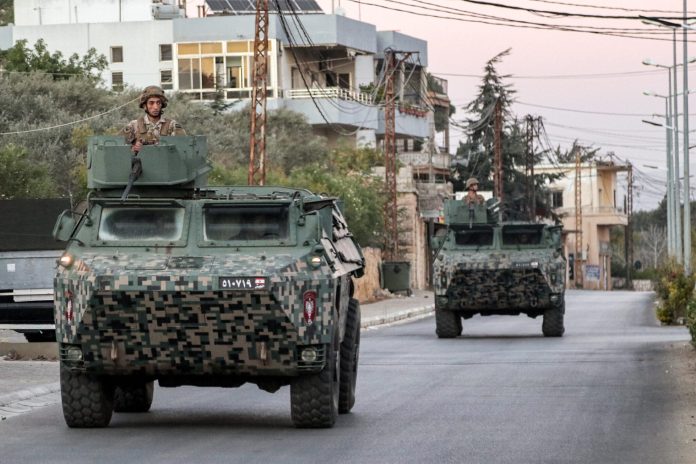
Saudi Arabia, France, US to discuss Lebanese army support in Paris meeting

Lebanon Army

The talks will focus on mechanisms to support the Lebanese army in its security duties, the implementation of the southern deployment plan, the presentation of maps related to border demarcation, and Lebanon’s role in maintaining stability.

The meeting is also seen as a test of the Lebanese state’s seriousness in implementing reforms, curbing illegal weapons, and outlining a roadmap for future international support.

A ceasefire agreement reached in November 2024 ended a war that lasted more than a year between Hezbollah and Israel.

However, Israel has continued to carry out air attacks on various areas in Lebanon, claiming they are aimed at preventing Hezbollah from rebuilding its capabilities after suffering heavy losses during the war.

The ceasefire deal stipulated an end to hostilities, the withdrawal of Hezbollah north of the Litani River, ultimately leading to its disarmament across Lebanon, as well as the withdrawal of Israeli soldiers from positions they advanced to during the latest conflict.

Israel has nevertheless maintained five strategic positions inside Lebanese territory, while Hezbollah has refused to disarm, arguing that the agreement applies only to the area north of the Litani River near the border.

In August, Lebanese authorities approved a plan to disarm Hezbollah as part of the agreement. The army has begun implementing the plan, with the first phase, covering the border area with Israel south of the Litani River, set to be completed by the end of the year.

EU kicks off summit on Russian fund plan for Ukraine

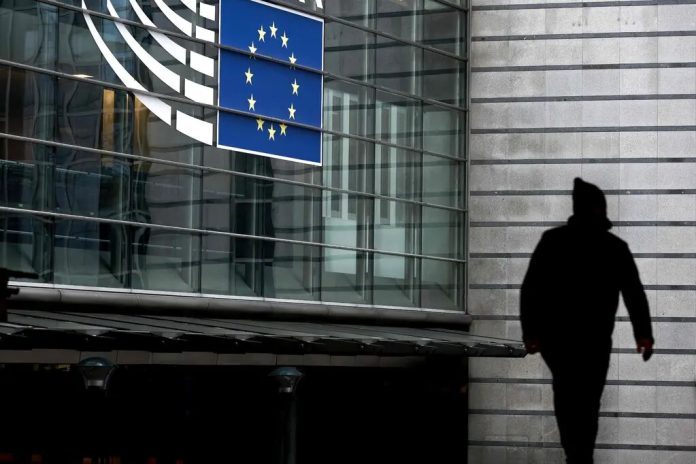
European Parliament

The 27-nation bloc is scrambling to bolster its ally Ukraine, as US President Donald Trump pushes for a deal with President Vladimir Putin to end the fighting.

Officials have insisted the talks will last as long as it takes to hammer out an agreement, saying both Ukraine’s survival — nearly four years into the war — and Europe’s credibility are at stake.

“We will not leave the European summit without a solution for the funding of Ukraine,” European Commission head Ursula von der Leyen stressed.

The EU’s executive wants to fund a loan to Ukraine by using frozen assets from Russia’s central bank, though it is holding on to a back-up plan for the bloc to raise the money itself.

Ukraine President Volodymyr Zelenskyy will join the EU summit to try to press the case for using Russia’s assets — with German Chancellor Friedrich Merz among those insisting there was “no better option.”

Zelensky stated Thursday that any failure by EU leaders to agree on a plan to use frozen Russian assets to support Ukraine would be a serious challenge for his war-torn country.

“I will speak with all the leaders, present our arguments, and I very much hope we can obtain a positive decision. Without it, there will be a big problem for Ukraine,” Zelensky told reporters, ahead of a visit to Brussels for an EU summit.

But Belgium’s Prime Minister Bart De Wever said he had not been convinced so far.

“I have not seen a text that could persuade me to give Belgium’s agreement,” he told Belgian lawmakers, adding that he hoped to see something convincing on Thursday.

The vast bulk of the funds are held by international deposit organization Euroclear in Belgium, and the government fears it could face crippling financial and legal reprisals from Moscow.

EU officials say they have gone out of their way to allay Belgian worries and that multiple layers of protection — including guarantees from other member states — mean the risks are minimal.

“At this stage, the guarantees offered by the Commission remain insufficient,” De Wever added.

The EU estimates Ukraine needs an extra 135 billion euros ($159 billion) to stay afloat over the next two years — with the cash crunch set to start in April.

In a bid to plug Kyiv’s yawning gap, the Commission has proposed tapping 210 billion euros of frozen assets, initially to provide Kyiv 90 billion euros over two years.

The unprecedented scheme would see the funds loaned to the EU, which would then loan them on to Ukraine.

Kyiv would then only pay back the “reparations loan” once the Kremlin compensates it for the damage.

In theory, other EU countries could override Belgium and ram the initiative through with a weighted majority, but that would be a nuclear option that few see as likely for now.

The commission’s back-up plan involves the EU raising the money itself, but it would require unanimous approval from the EU’s 27 leaders and Hungary has ruled it out.

De Wever nonetheless is planning to try to revive that idea, and other countries may be open to his argument.

Bubbling close to the surface of the EU’s discussion are the US efforts to forge a deal to end the war.

Zelensky also confirmed Thursday that Ukrainian and US delegations would hold new talks on Friday and Saturday in the United States aiming to end the Russian invasion.

Ukraine has announced that Washington was “pressuring” the EU not to use the assets as they view them as a vital bargaining chip in winning over Russia.

But EU officials deny that and say that, if anything, the push for peace has spurred the efforts to tap the Russian funds.

Given that Ukraine has only months before the shortfalls bite, diplomats and officials insist leaders will find a way to keep funds flowing — even if this week yields only a loose deal with details to be hammered out later.

“I hope that we get this over the finishing line,” EU top diplomat Kaja Kallas said, adding, “Putin is banking on us to fail, so we shouldn’t give him that.”

 

Red shores of Iran’s Hormuz Island capture global media attention

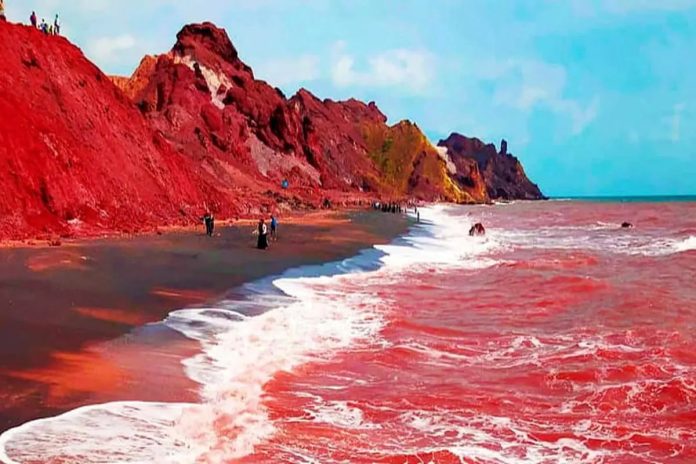
According to reports, recent downpours washed the island’s iron-rich red soil into the sea, creating dramatic scenes along the coastline.

Videos circulating online show rainwater mixed with mineral sediments flowing from the island’s hills toward the shore, transforming the beaches into deep crimson hues.

Fox News described the phenomenon as the result of rainwater blending with mineral-rich deposits and seawater, noting that Hormuz is locally known as the “Rainbow Island” because of its colorful soils and rocks.

The network reported that intense rainfall earlier this week caused the island’s already red shoreline to darken further.

The UK’s Daily Telegraph referred to the event as a “blood rain” spectacle, reporting that nearly 100 millimeters of rain, about five times Iran’s monthly average, washed iron-rich soil into the sea.

French outlets such as 20 Minutes and France Info also highlighted the event, calling it rare and visually stunning.

India’s NDTV described the scene as a “breathtaking natural phenomenon,” explaining that Hormuz is rich in iron oxide, particularly hematite, which gives the soil and water their vivid red color.

Located near the Strait of Hormuz, the island is a major tourist attraction known for its unique geology and natural beauty.

US ‘pressuring’ EU not to use frozen Russian funds for Kyiv: Ukraine official

The European Union has laid out a plan to use the frozen assets to harness 90 billion euros ($105 billion) for a loan to help Ukraine repel Moscow’s forces, with the money to be paid back by any eventual Russian reparations to Ukraine.

“The US administration is pressuring European countries to abandon the idea of using Russian assets to support Ukraine,” a senior Ukrainian official said Wednesday.

The plan has the strong backing of many member states, including Germany, but has drawn opposition from others, including Belgium — home to international deposit organisation Euroclear, which holds most of the assets — whose leaders fear Russian reprisals.

The Ukrainian official said that seven countries so far opposed the plan.

Zelensky “is going to Brussels to motivate European countries to adopt this decision” and tap the frozen assets, the source added.

Belgian Prime Minister Bart De Wever has been in the spotlight over his opposition to using Russian assets for Ukraine, but there had been speculation that US President Donald Trump’s administration was also weighing in on the debate.

Washington appears to view the assets as a key bargaining chip and has looked to tempt Moscow to play ball by dangling the prospect it could get back some of the cash.

A US official, speaking on condition of anonymity, told AFP on Wednesday that the Europeans were “quietly asking us to intervene on this matter as they do not want to be publicly against it”.

“They are afraid of the long-term damage it will do to long-term investments in their system and the credibility of their institutions,” the official added.

A previous version of Trump’s plan to end the war also provided for Washington to use some frozen Russian assets for a US-led reconstruction of the war-torn country.

Around 200 billion euros in Russian central bank assets were frozen over Moscow’s February 2022 invasion of Ukraine.

White House deputy press secretary Anna Kelly stated: “Both the Ukrainians and the Russians have clearly stated positions regarding the frozen assets, and our only role is to facilitate a back-and-forth that can ultimately result in a deal.”


Iran condemns “unlawful actions” of the US against Venezuela as piracy

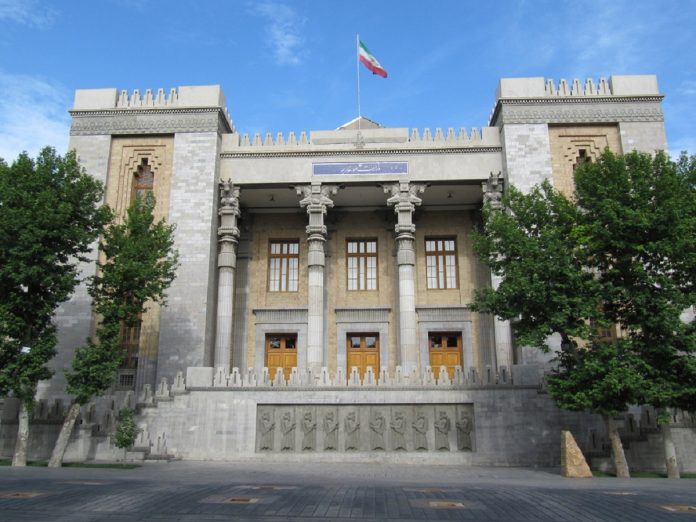
Ministry of Foreign Affairs of the Islamic Republic of Iran

In a statement, Iran’s Foreign Ministry announced that these positions and actions represent blatant manifestations of a policy based on coercion and systematic bullying, in clear violation of well-established principles and rules of international law and the UN Charter, including freedom of navigation, maritime security, and the freedom of international trade.

It said the US interference with as well as its seizure and obstruction of the free passage of commercial vessels to or from Venezuela constitutes a clear case of state piracy and armed robbery at sea.

The statement pointed out that invoking the US domestic laws and unilateral, illegal sanctions to justify these actions cannot, in any way, serve as a basis to legitimize such criminal acts.

It said threats, economic blockades, and the use of force against an independent member state of the UN constitute a direct violation of the fundamental principles of the world body’s Charter.

The Iranian Foreign Ministry added the continuation of the US’s aggressive unilateralism against independent countries, if not responsibly addressed by the international community and the UN, will set a dangerous precedent and normalize violations of international law, which would disrupt global peace and security. Accordingly, the UN, the Non-Aligned Movement, all responsible states, and relevant international bodies are expected to recognize the gravity of the current situation, condemn the unlawful and coercive actions of the US, and hold Washington accountable for its blatant violations of international law and the UN Charter.

German Chancellor warns of direct NATO-Russia conflict

NATO

Moscow has outright rejected the idea of NATO members contributing to peacekeeping forces in a post-conflict Ukraine. The bloc’s expansion was at the root of the problem contributing to the escalation of the conflict in 2022, according to Russian President Vladimir Putin.

The security guarantees allegedly discussed by Vladimir Zelensky and the US delegation on Tuesday would require Western forces to act should a ceasefire be breached.

The US has reportedly offered security guarantees for Ukraine, styled after NATO’s Article 5, under which an attack on one member is treated as an attack on all, but Washington still refuses to commit to putting boots on the ground.

However, Merz claimed that under a potential peace deal, troops from guarantor states would occupy a demilitarized zone separating Russian and Ukrainian forces. If a ceasefire was breached, they would “very specifically” respond to Russian “incursions and attacks.”

The chancellor stated the guarantees under discussion would treat Ukraine “as if it were NATO territory,” describing this as a notable shift in Washington’s position, as the US has ruled out Ukraine formally joining the military bloc.

Previous ceasefire arrangements in Ukraine, like the 2014 Minsk agreements, failed despite EU countries acting as guarantors. Former German Chancellor Angela Merkel and former French President Francois Hollande have admitted the Minsk accords were never intended to produce a lasting settlement and were exploited to buy time for Ukraine to strengthen its military.

Merz’s remarks come as several European leaders, including France’s Emmanuel Macron, have been floating the idea of deploying Western forces in Ukraine for months, while calling for increased militarization in response to what they describe as a Russian threat.

Moscow has consistently dismissed claims that it poses a threat to the EU or NATO, warning any foreign troops deployed during hostilities will be treated as legitimate military targets.


US Congress ends sanctions on Syria

President Donald Trump had already twice suspended the implementation of sanctions, in response to pleas from Saudi Arabia and Turkey, allies of the new government headed by former militant Ahmed al-Sharaa.

But Sharaa had sought a permanent end to the sanctions, fearing that so long as the measures remained on the books they would deter businesses wary of legal risks in the world’s largest economy.

The Senate passed the repeal of the 2019 Caesar Act as part of a sweeping annual defense package. The Senate voted 77 to 20 in favor of the legislation, which was already approved by the House of Representatives and is expected to be signed by Trump.

The repeal, broadly backed by lawmakers of both parties, “is a decisive step toward giving the Syrian people a real chance to rebuild after decades of unimaginable suffering”, stated Senator Jeanne Shaheen, the top Democrat on the Senate Foreign Relations Committee.

The Caesar Act, named after an anonymous photographer who documented atrocities in Assad’s prisons, severely restricted investment and cut off Syria from the international banking system.

The law was intended to prevent the influx of foreign businesses to rebuild Syria at a time when it had seemed that Assad had triumphed following more than a decade of war that triggered a massive flow of refugees toward Europe and helped spawn the birth of the Islamic State terror group.

Sharaa’s fighters seized Damascus a year ago in a lightning offensive.

Sharaa — now dressed in a business suit and seeking better relations with the West — has impressed Trump, including when they first met during the US leader’s May trip to Riyadh.


Russia preparing for new ‘year of war’: Zelensky

Russia Ukraine War
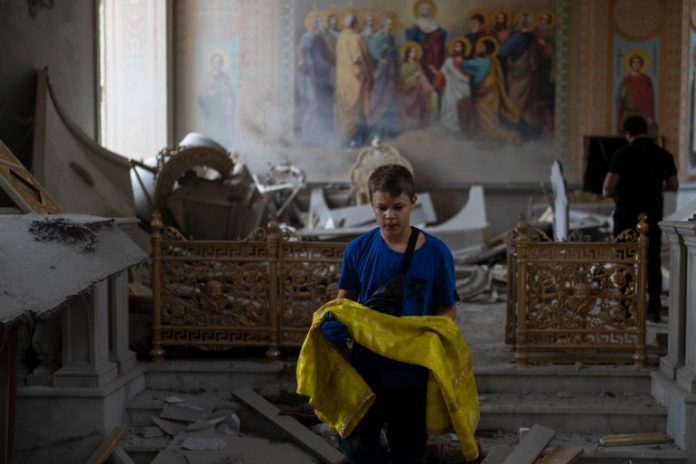
A boy helps salvage items at the Odesa Transfiguration Cathedral after it was heavily damaged in Russian missile attacks in Odesa, Ukraine, Sunday, July 23, 2023.

“Today, we heard yet another signal from Moscow that they are preparing to make next year a year of war,” Zelensky stressed in his regular evening address, after Putin stated Russia would achieve its goals in its Ukraine offensive, including seizing Ukrainian territories it claims as its own.

A White House official told AFP Wednesday that US and Russian officials will meet in Miami this weekend for new talks on President Donald Trump’s plan for ending the Ukraine war.

The talks come after Zelensky hailed progress during two days of meetings in Berlin between Kyiv and Trump’s envoys.

Trump’s roving envoy Steve Witkoff and son-in-law Jared Kushner are expected to take part on the US side, while Putin’s economic envoy Kirill Dmitriev is set to be in the Russian delegation, Politico reported.

The White House official did not give details of the US and Russian teams.

There has been a flurry of international diplomacy in recent weeks to end Russia’s nearly four-year-old invasion, with Witkoff and Kushner having met Putin in the Kremlin in November and the Ukrainians and European leaders in Berlin.

But large differences remain all around.

Ukraine and the United States say there has been progress on the question of future security guarantees for Kyiv, but there are disagreements on what territory Ukraine would have to cede.

Israel’s PM says approved $35bn gas deal with Egypt

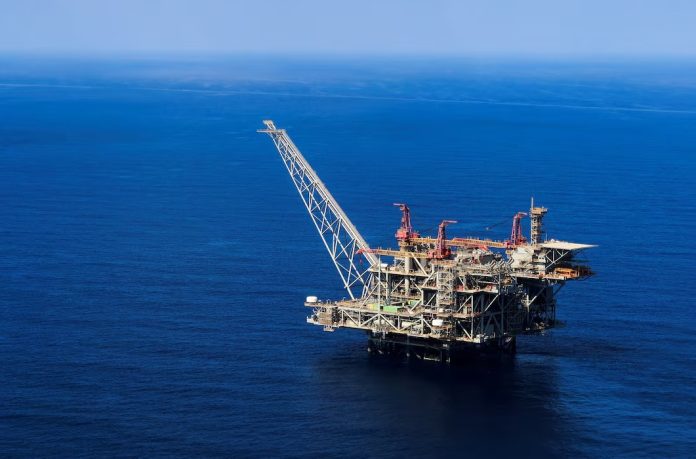
“Today, I approved the largest gas deal in Israel’s history. The deal is worth 112 billion shekels ($34.7 billion). Of this total, 58 billion shekels ($18 billion) will go to the state coffers,” Netanyahu said during a televised address.

“The agreement is with the American company Chevron, with Israeli partners who will supply gas to Egypt,” Netanyahu added.

Energy Minister Eli Cohen, who was present during the address, stated it was the “largest export deal in the state’s history”.

Netanyahu noted that the money would “strengthen education, healthcare, infrastructure, security, and the future of the next generations”, as well as bolster “Israel’s status as a regional energy power”.

Israeli firm NewMed Energy announced in August the signing of a $35 billion deal to provide Egypt with natural gas.

The agreement would increase the total volume of gas supplied to Egypt to 130 billion cubic metres, according to a report published by the firm.

In a statement issued late on Wednesday, NewMed CEO Yossi Abu said it was “a historic day for the natural gas sector, one that guarantees continued investment in Israel and creates regulatory stability for years to come”.

But Israeli NGO Movement for Quality Government announced it was “deeply concerned about how the largest gas deal in the country’s history was approved”.

It called on the government to make the details of the agreement public, and to explain its implications for long-term reserves and consumer prices.

US approves $11bn in weapons sales to Taiwan in deal likely to anger China

The US State Department announced the deal late on Wednesday during a nationally televised address by President Donald Trump.

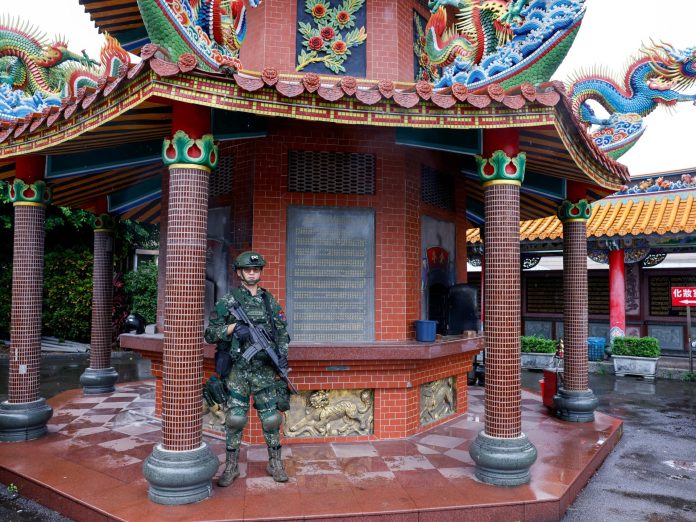
Weapons in the proposed sale include 82 High Mobility Artillery Rocket Systems, or HIMARS, and 420 Army Tactical Missile Systems, or ATACMS – worth more than $4bn – defence systems that are similar to what the US had been providing Ukraine to defend against Russian aerial attacks.

The deal also includes 60 self-propelled howitzer artillery systems and related equipment worth more than $4bn and drones valued at more than $1bn.

Other sales in the package include military software valued at more than $1bn, Javelin and TOW missiles worth more than $700m, helicopter spare parts worth $96m and refurbishment kits for Harpoon missiles worth $91m.

In a series of separate statements announcing details of the weapons deal, the Pentagon said the sales served US national, economic and security interests by supporting Taiwan’s continuing efforts to modernise its armed forces and to maintain a “credible defensive capability”.

Taiwan’s defence ministry and presidential office welcomed the news while China’s foreign ministry did not immediately respond to a request for comment from the Reuters news agency.

Washington’s huge sale of arms to Taiwan will likely infuriate China, which claims Taiwan is part of its territory and has threatened to use force to bring it under its control.

“The United States continues to assist Taiwan in maintaining sufficient self-defence capabilities and in rapidly building strong deterrent power,” Taiwan’s defence ministry announced in a statement.

Taiwan presidential office spokesperson Karen Kuo said Taiwan would continue to reform its defence sector and “strengthen whole-of-society defence resilience” to “demonstrate our determination to defend ourselves, and safeguard peace through strength”.

China’s Taiwan Affairs Office announced on Wednesday that it opposed efforts by the US Congress to pass bills “related to Taiwan and firmly opposes any form of military contact between the US and Taiwan”.

“We urge the US to abide by the one China principle and the provisions of the three Sino-US joint communiques : Stop ‘arming Taiwan’, stop reviewing relevant bills, and stop interfering in China’s internal affairs,” the office’s spokesperson Zhu Fenglian said in a statement.

Zhu added Taiwan’s political leaders were pursuing “independence”, and were “willing to let external forces turn the island into a ‘war porcupine’,” which could result in the population becoming “cannon fodder” and “slaughtered at will, which is despicable”.

Taiwan’s President William Lai Ching-te last month announced a $40bn supplementary defence budget, to run from 2026 to 2033, saying there was “no room for compromise on national security”.