Friday, December 26, 2025
Home Blog Page 3478

A Look at Iranian Newspaper Front Pages on July 7

A Look at Iranian Newspaper Front Pages on November 19

Almost all papers today covered the result of the ministerial meeting of the JCPOA Joint Commission held in the Austrian capital of Vienna on Friday, the first of its kind after the US’ withdrawal from the Iran nuclear deal.

Several newspapers, particularly pro-reform and pro-government ones, described the talks as promising, hailing the EU’s commitment to maintaining its economic relations with Tehran.

Also a top story today was a letter by the Leader of Iran’s Islamic Revolution Ayatollah Seyyed Ali Khamenei to President Hassan Rouhani, in which the former urged the latter to submit a report on the foreign currency and gold coin markets.

The above issues, as well as many more, are highlighted in the following headlines and top stories:


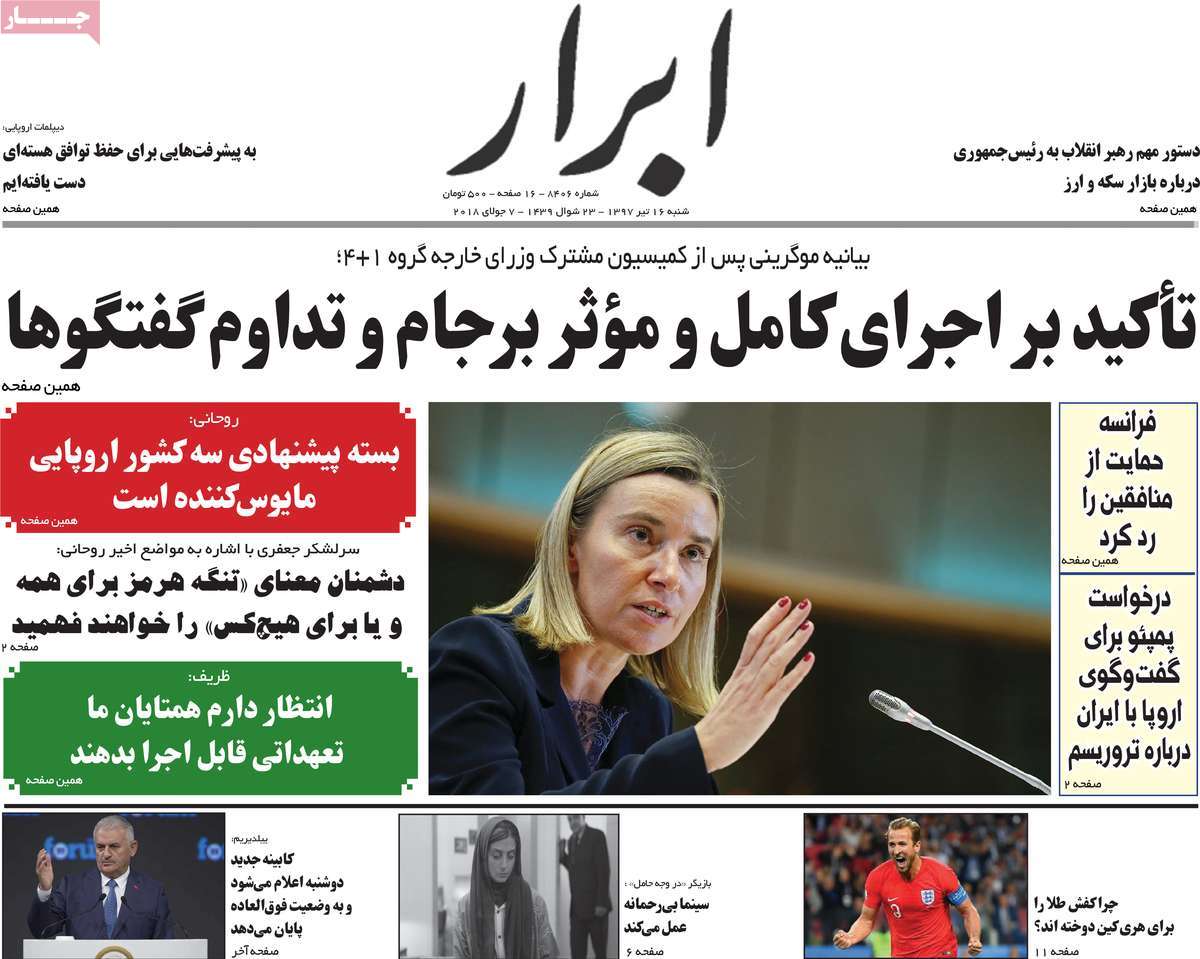
Abrar:

1- France Denies Supporting MKO Terrorist Group

2- European Diplomat: We’ve Achieved Progress to Save JCPOA
A Look at Iranian Newspaper Front Pages on July 7


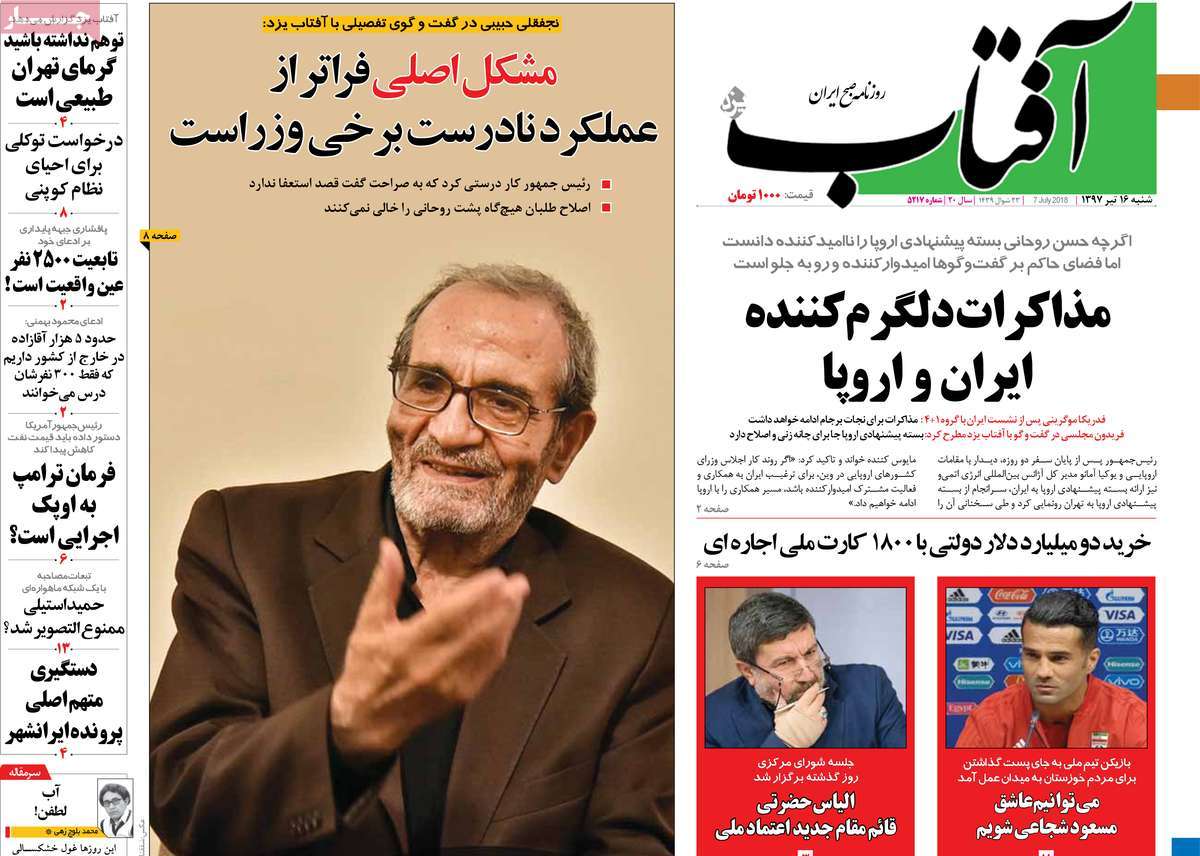
Aftab-e Yazd:

1- Promising Talks between Iran, Europe

  • While Rouhani Called EU’s Package ‘Disappointing’, Friday Talks Seemed Promising

2- Trump Orders OPEC to Decrease Oil Price: Is It Possible?
A Look at Iranian Newspaper Front Pages on July 7


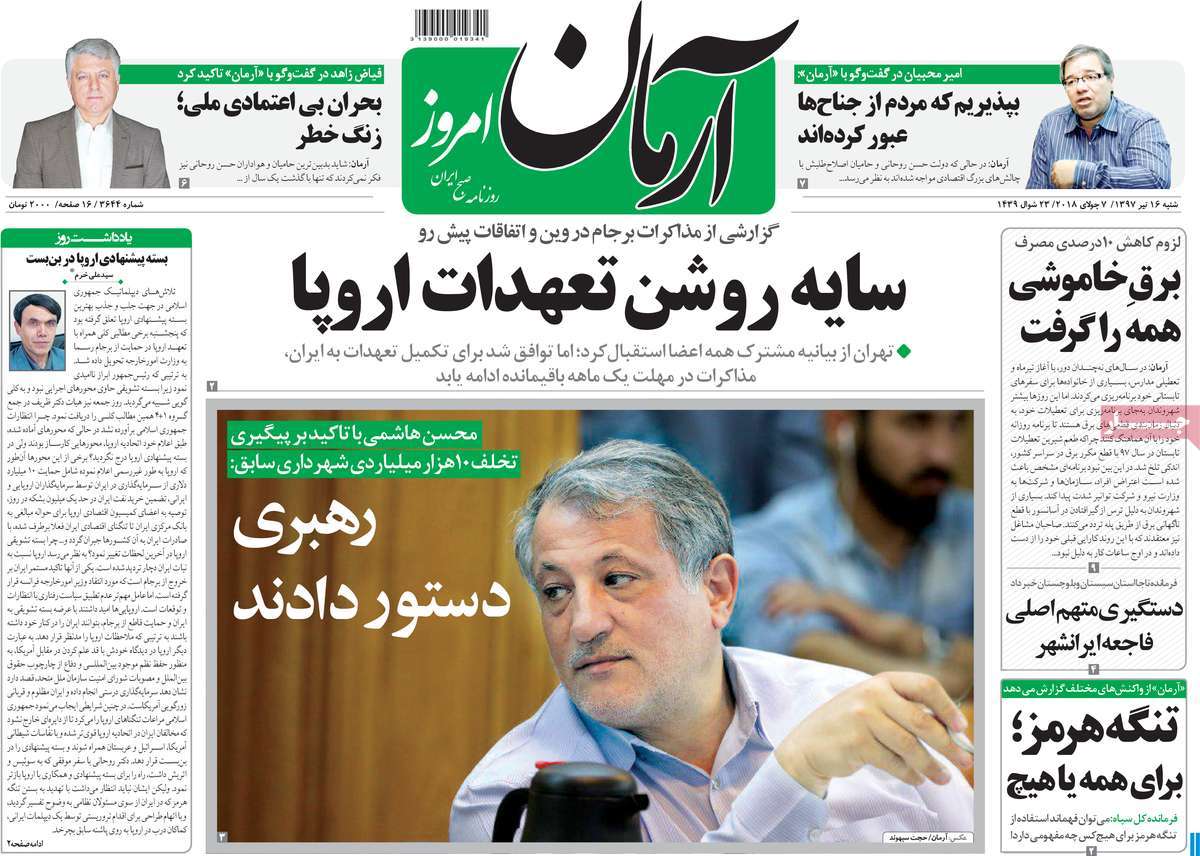
Arman-e Emrooz:

1- Highlights of Europe’s Commitments

  • Tehran Welcomes JCPOA Joint Commission’s Joint Statement
A Look at Iranian Newspaper Front Pages on July 7


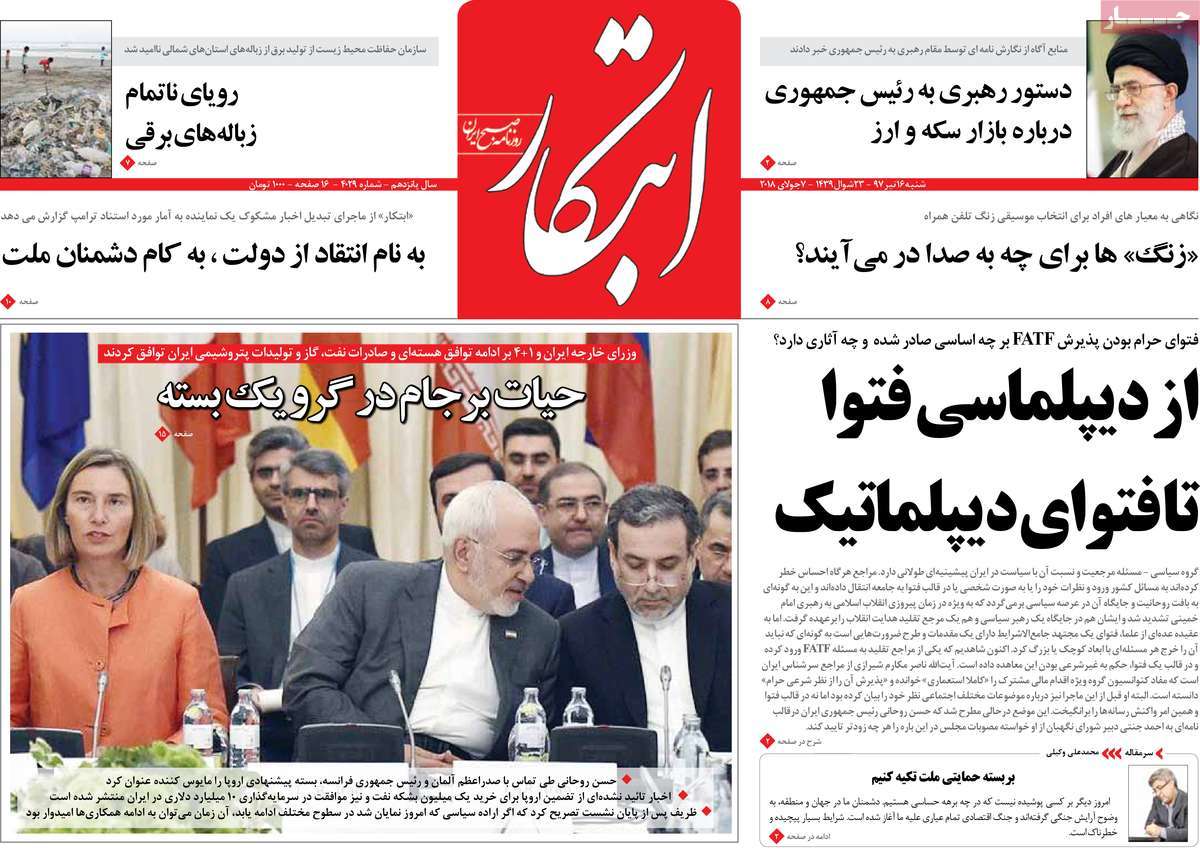
Ebtekar:

1- A Package to Save JCPOA’s Life
A Look at Iranian Newspaper Front Pages on July 7


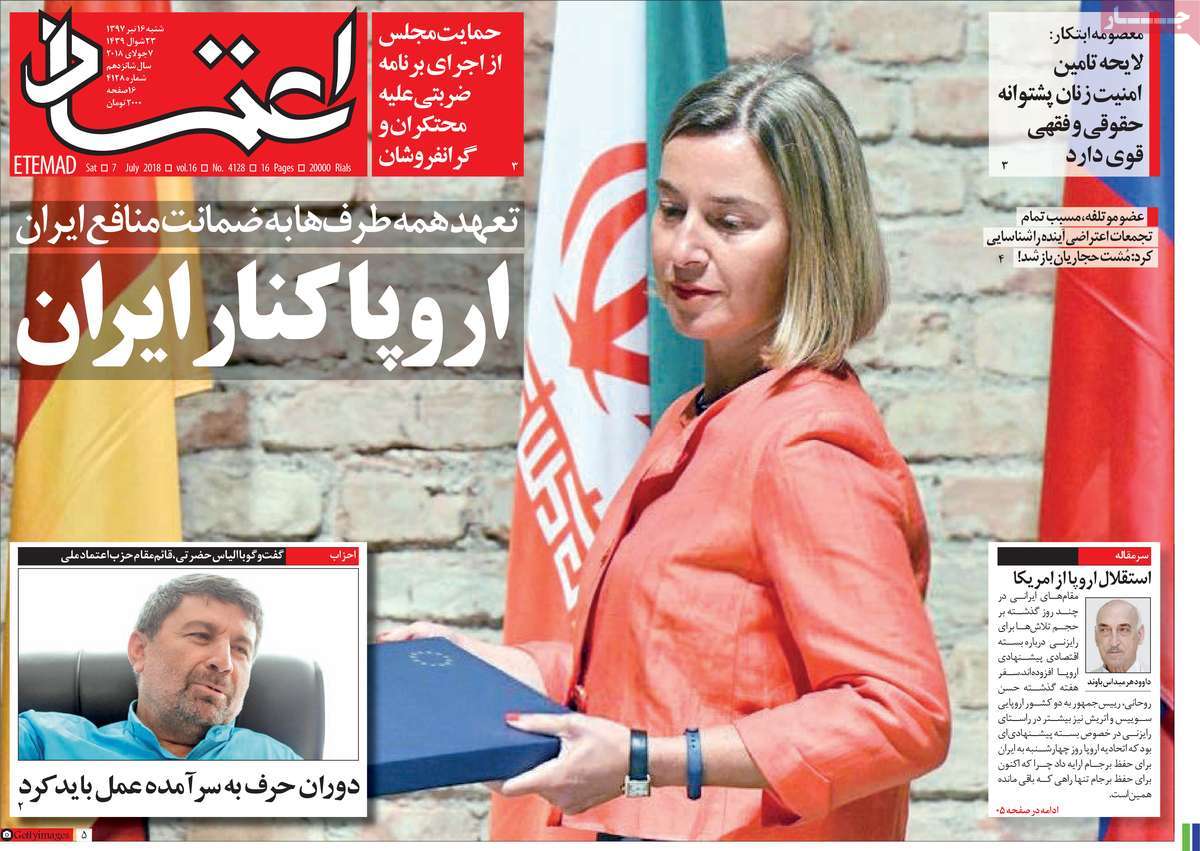
Etemad:

1- Europe Standing by Iran

  • All Parties Committed to Guarantee Iran’s Interests

2- Ebtekar: Bill to Support Women’s Security Has Legal, Jurisprudential Basis

3- Europe’s Independence from US [Editorial]
A Look at Iranian Newspaper Front Pages on July 7


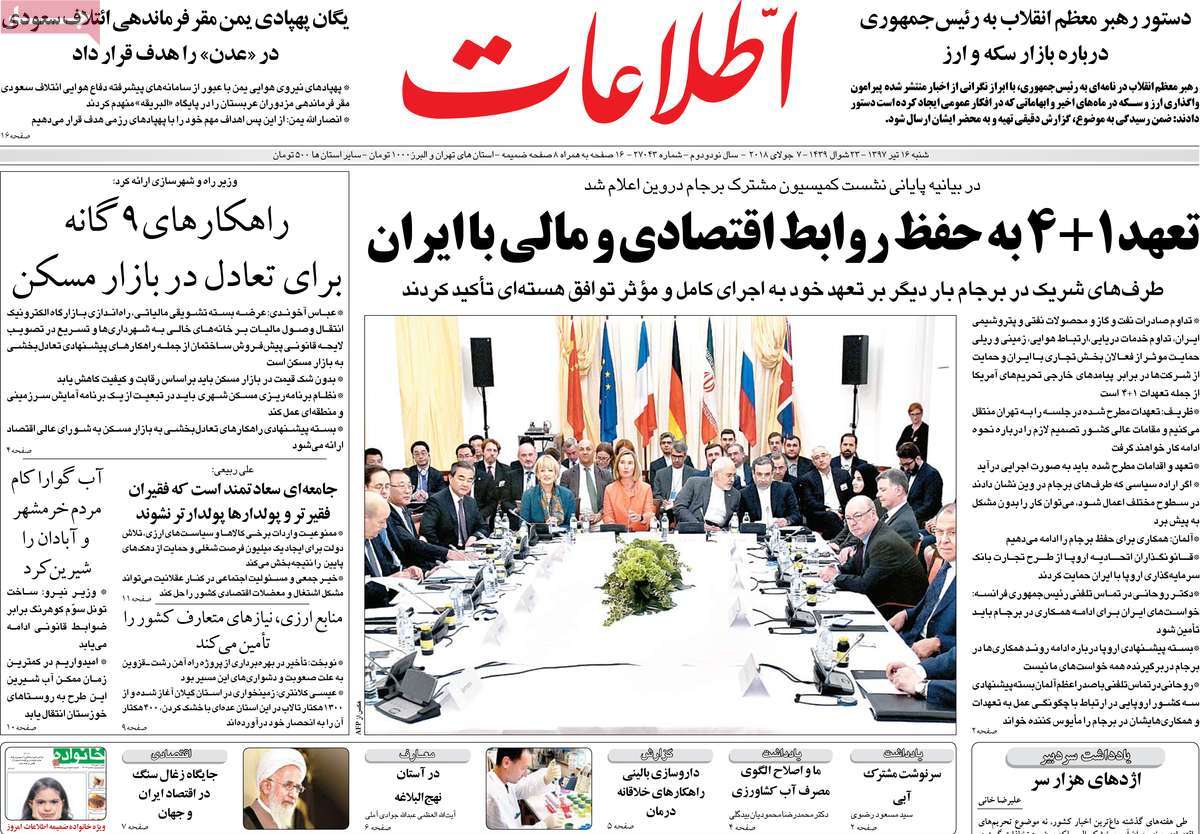
Ettela’at:

1- P4+1 Committed to Maintaining Economic, Financial Ties with Iran

2- Yemeni Drones Target Saudi-led Coalition’s Base in Aden
A Look at Iranian Newspaper Front Pages on July 7


Iran:

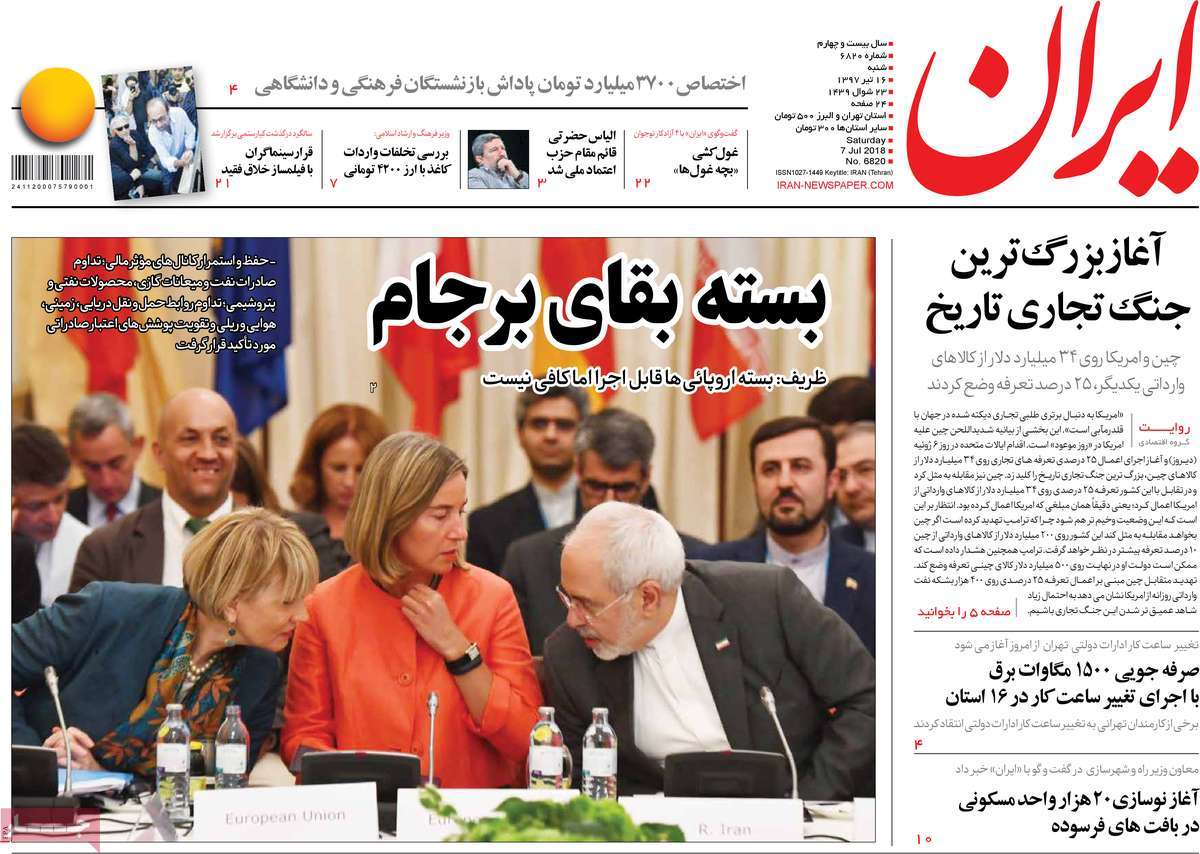
1- Package to Save JCPOAA Look at Iranian Newspaper Front Pages on July 7


Jame Jam:

1- Iran Disappointed with European Package
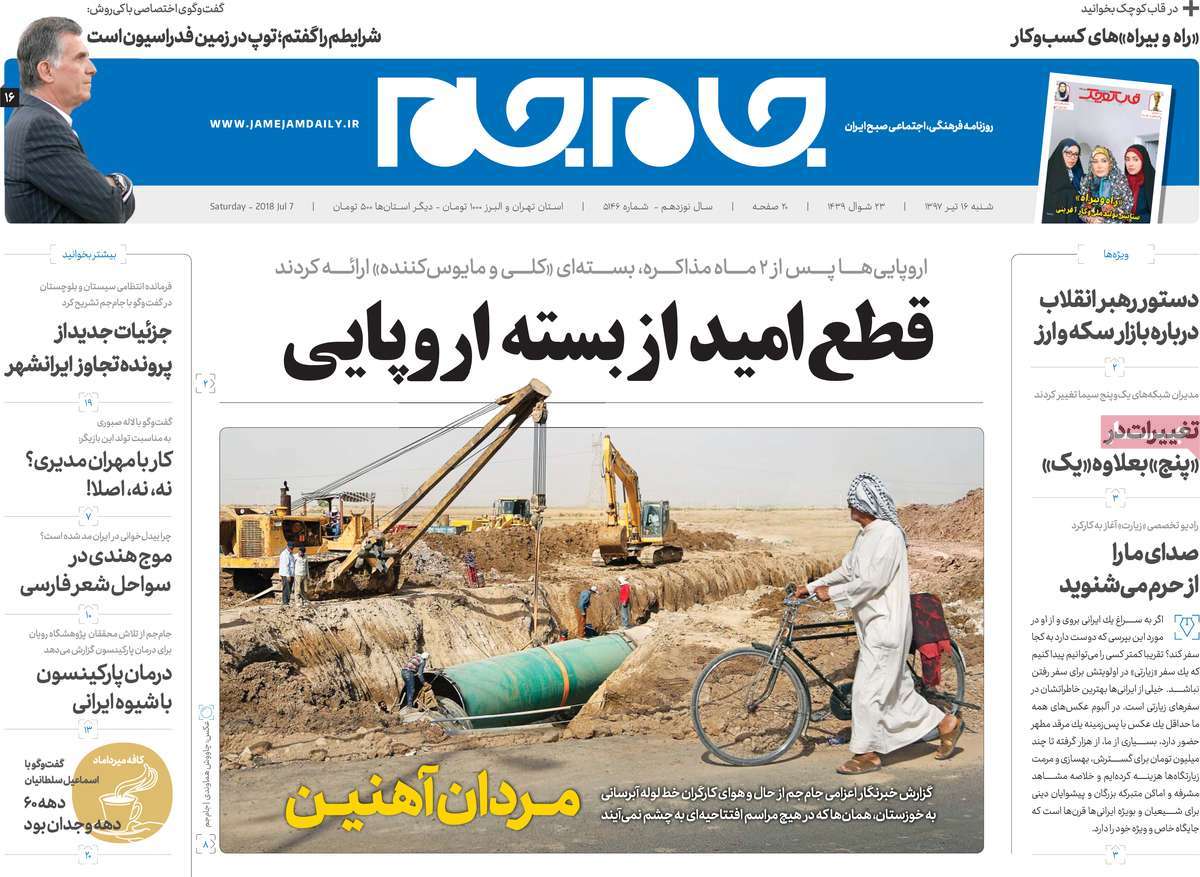
A Look at Iranian Newspaper Front Pages on July 7


Javan:

1- IRGC Chief-Commander: Strait of Hormuz Either for All or No One

2- Major General Jafari Welcomes Rouhani’s Plan for Oil Justice

3- Saudi Arabia, UAE Surprised by Ansarullah’s Naval Power in Hudaydah Port
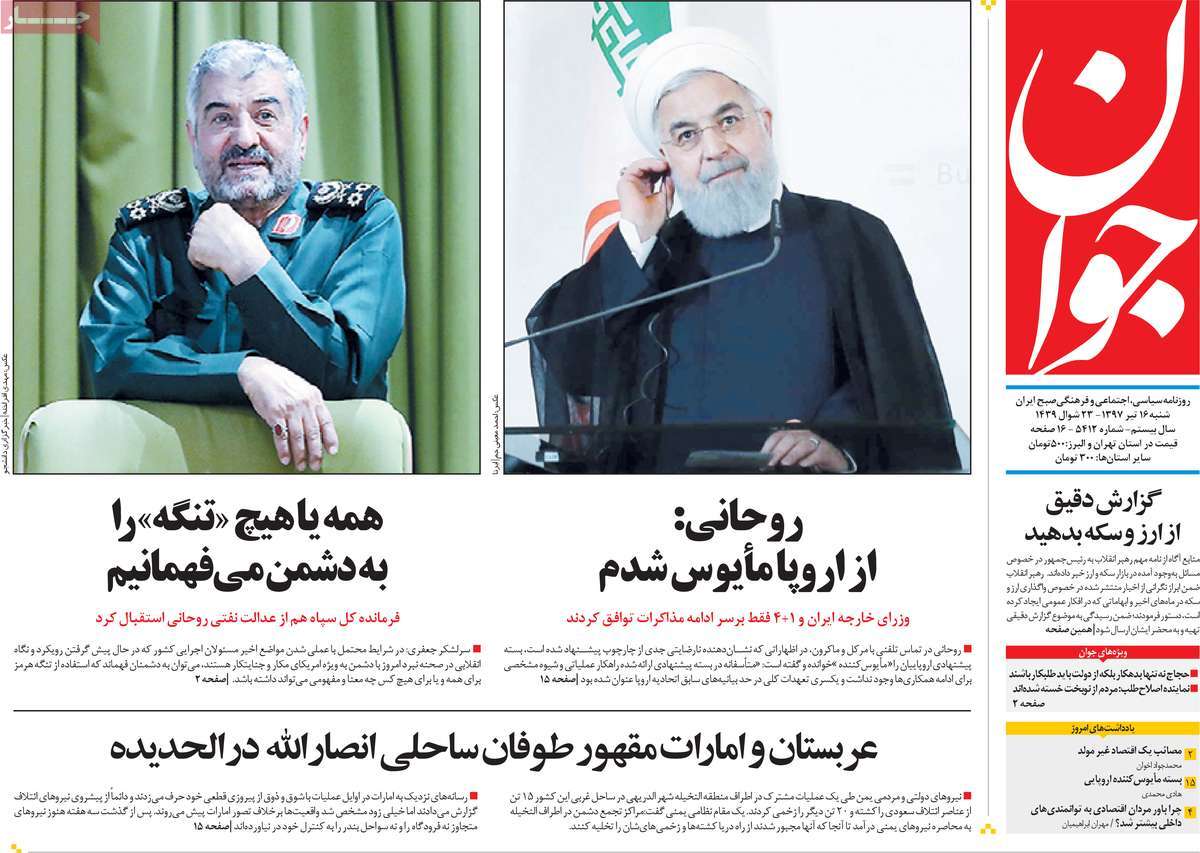
A Look at Iranian Newspaper Front Pages on July 7


Jomhouri Eslami:

1- Zarif: Europe’s Package Practical, but Not Sufficient, Accurate
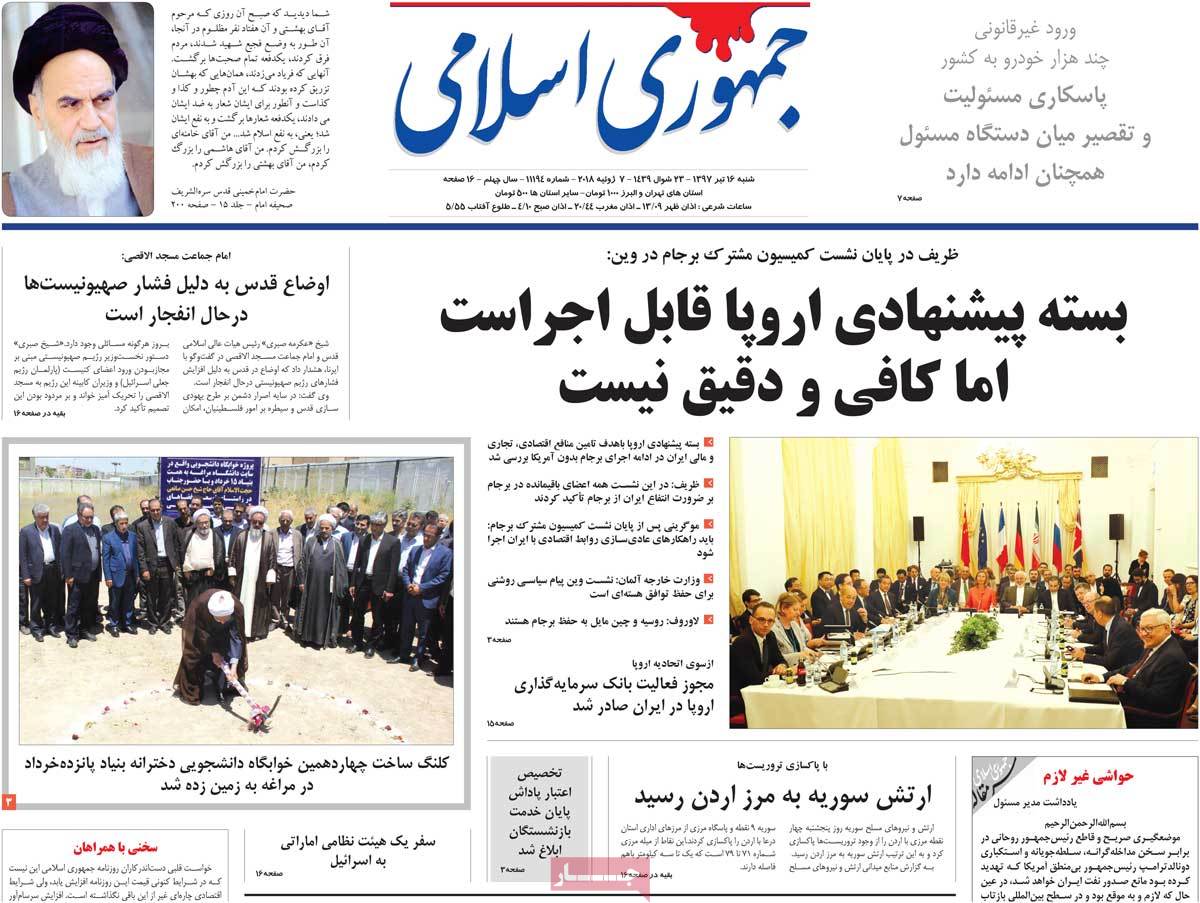
A Look at Iranian Newspaper Front Pages on July 7


Kayhan:

1- Iran Leader Urges Rouhani to Prepare, Submit Report on Forex, Gold Markets

2- Junior Iranian Wrestlers Claim World Title after 22 Years

3- Syrian Army’s Amazing Progress in Southern Fronts: UN, Arab League, Israel Surprised
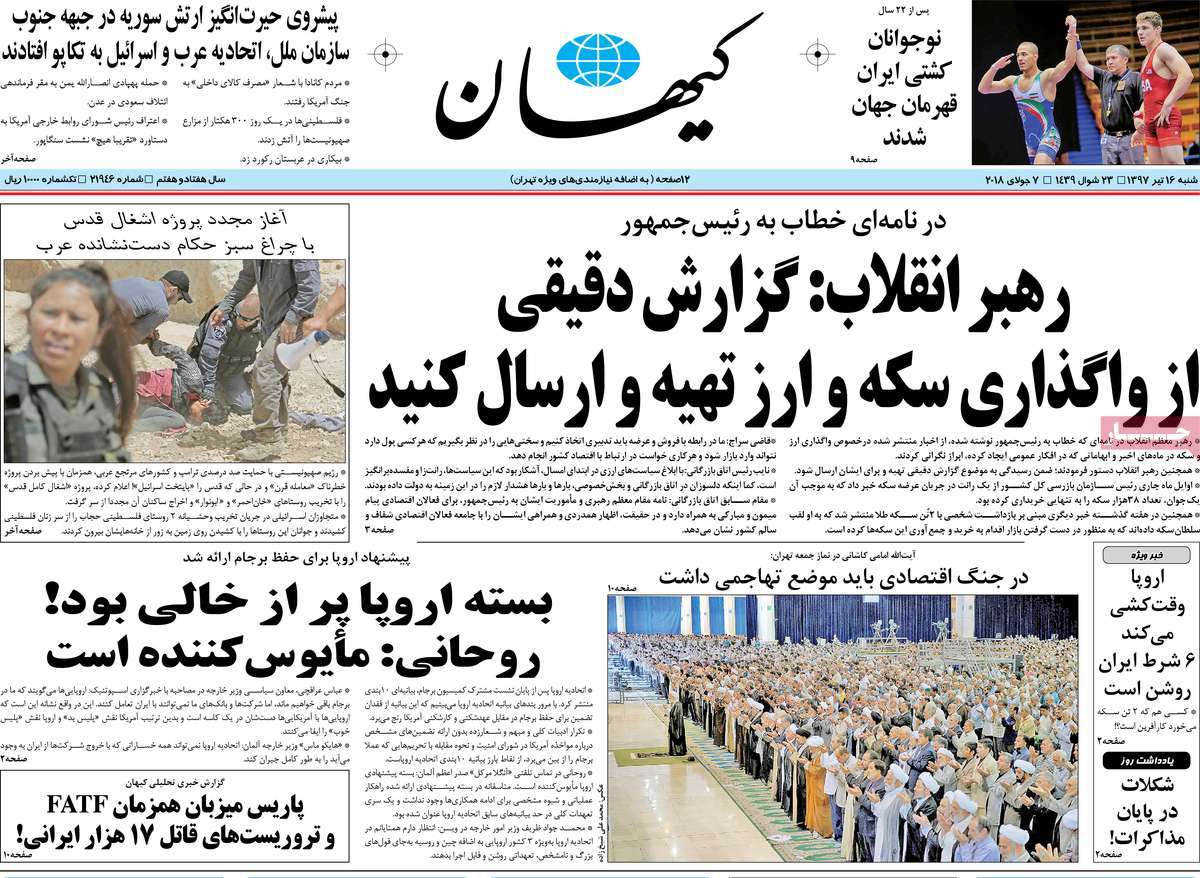
A Look at Iranian Newspaper Front Pages on July 7


Shargh:

1- JCPOA Waiting for Tehran’s Decision

2- Iran’s Oil Countermeasure in Hormuz Strait
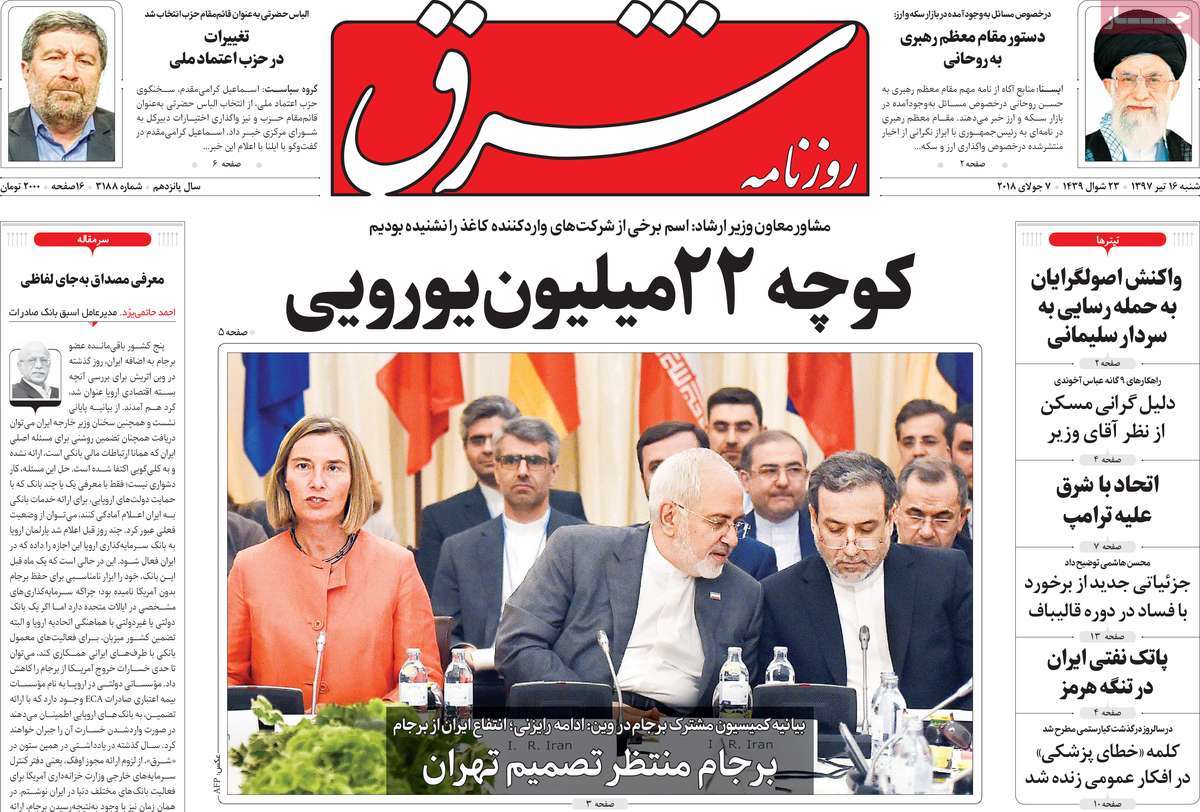
A Look at Iranian Newspaper Front Pages on July 7


Siasat-e Rooz:

1- Vital Strait: Hormuz Helps Iran Claim Nation’s Rights
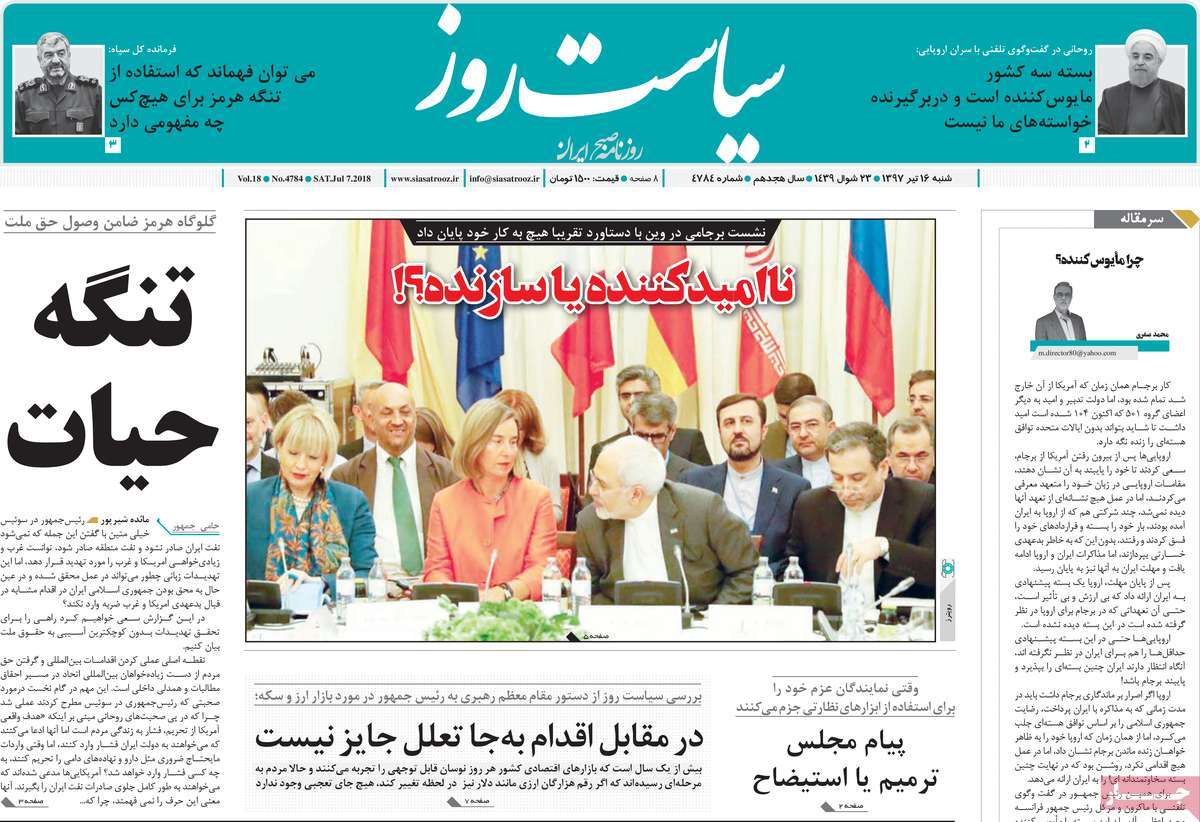
A Look at Iranian Newspaper Front Pages on July 7

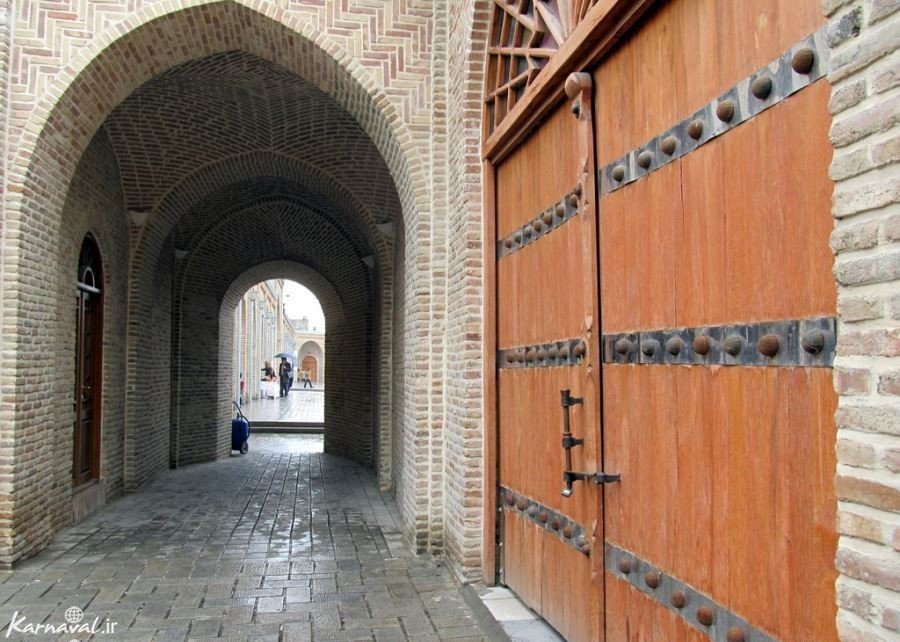
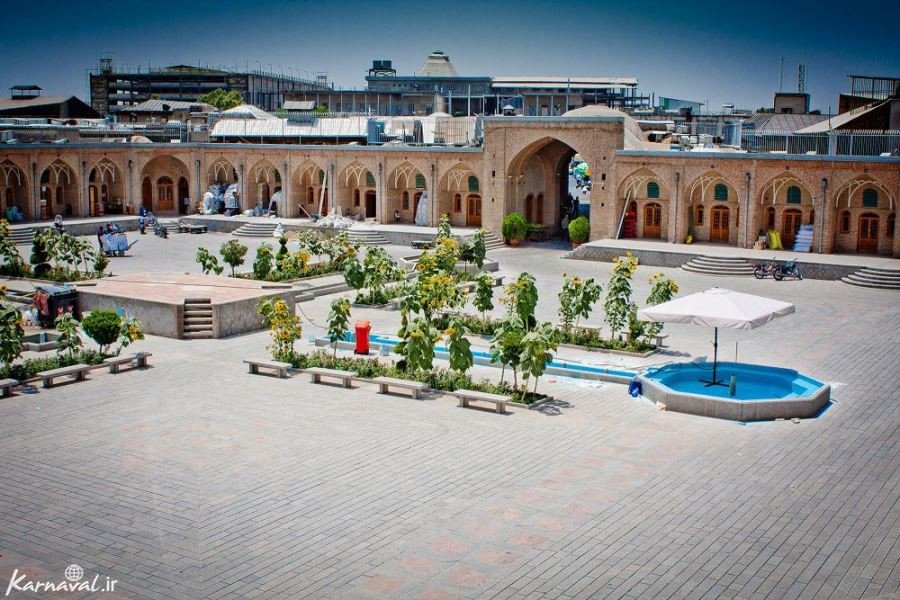
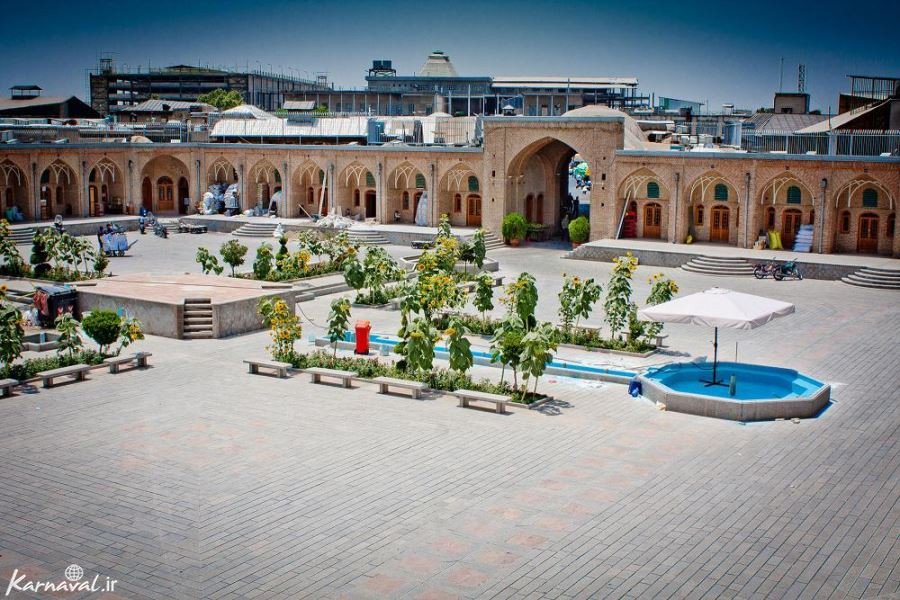
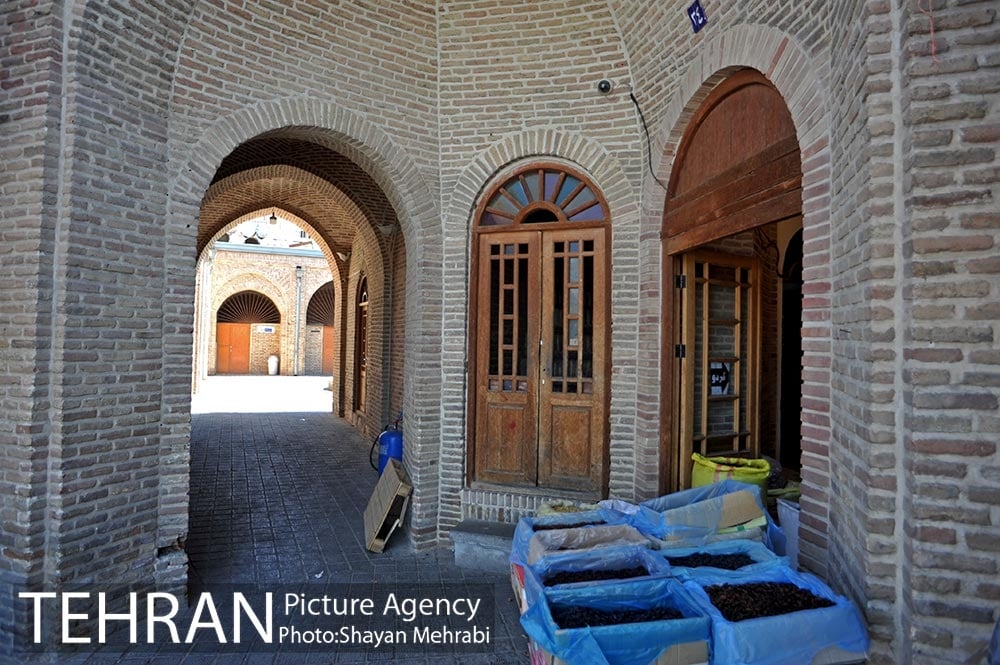
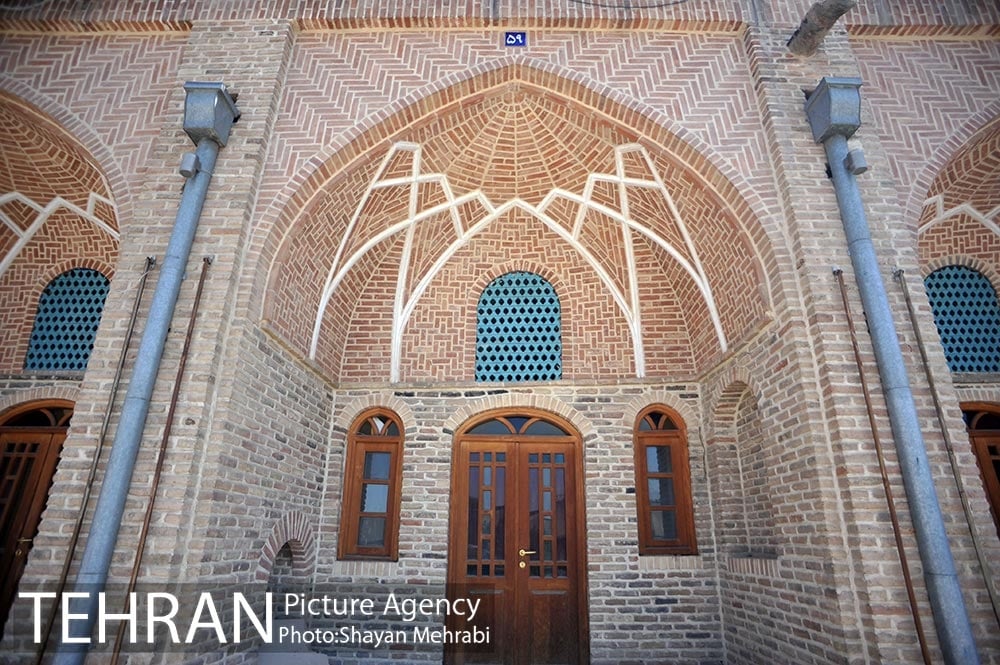
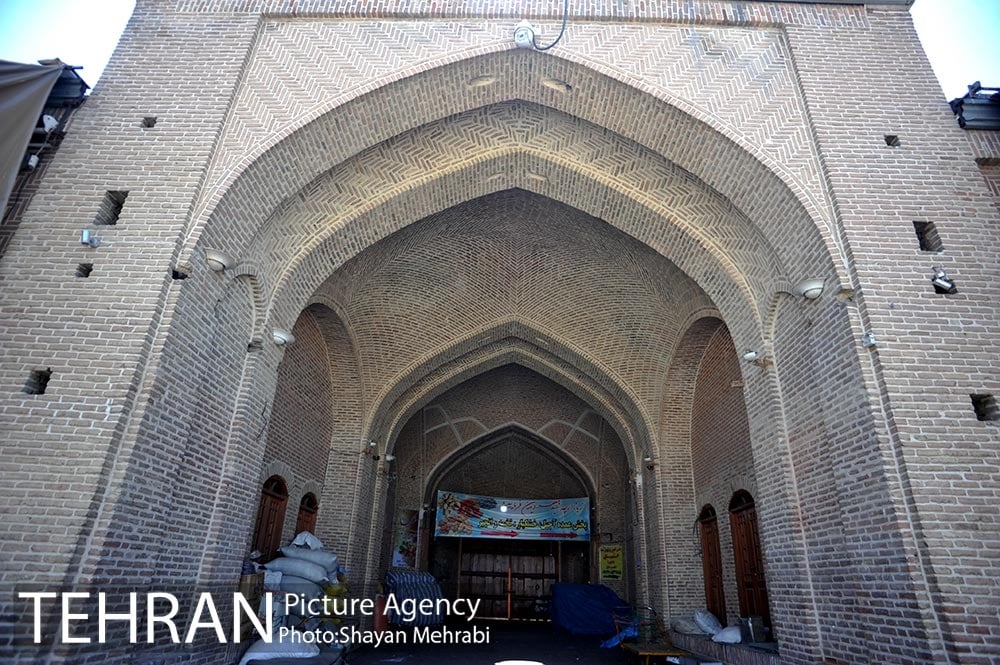
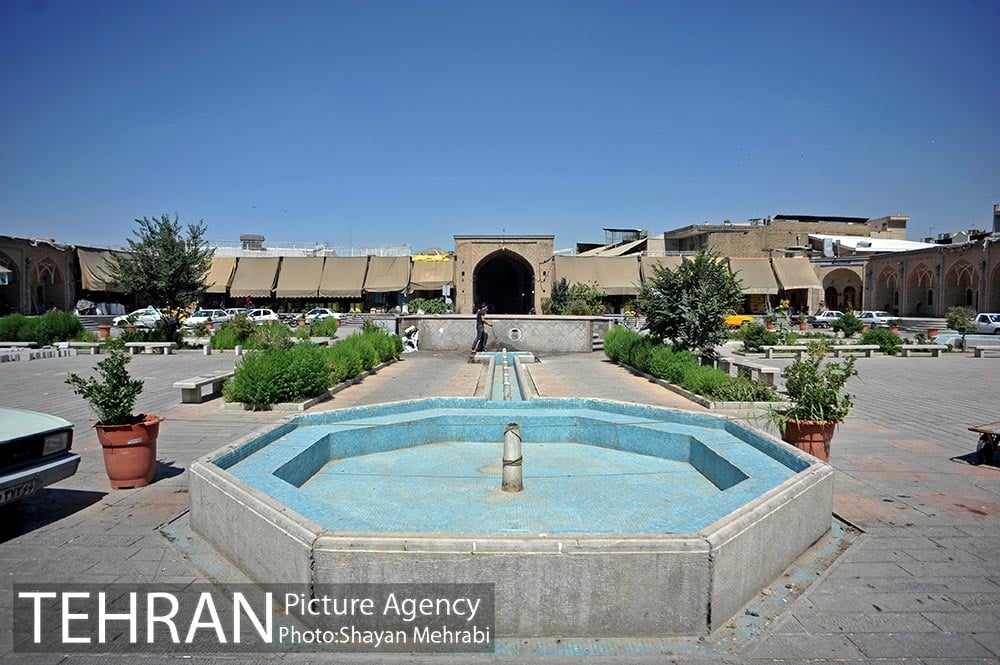
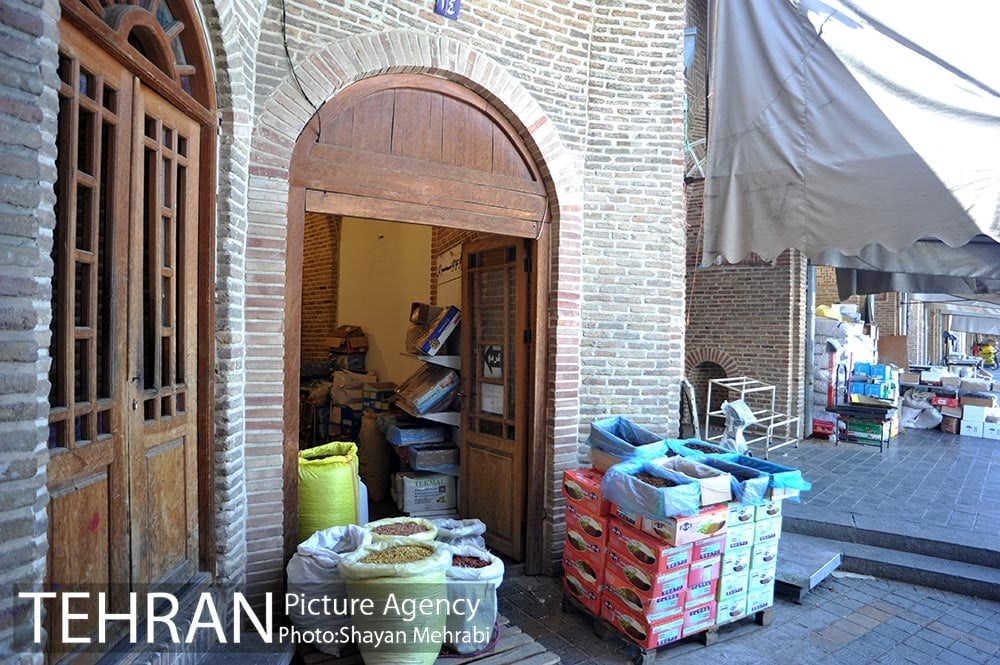
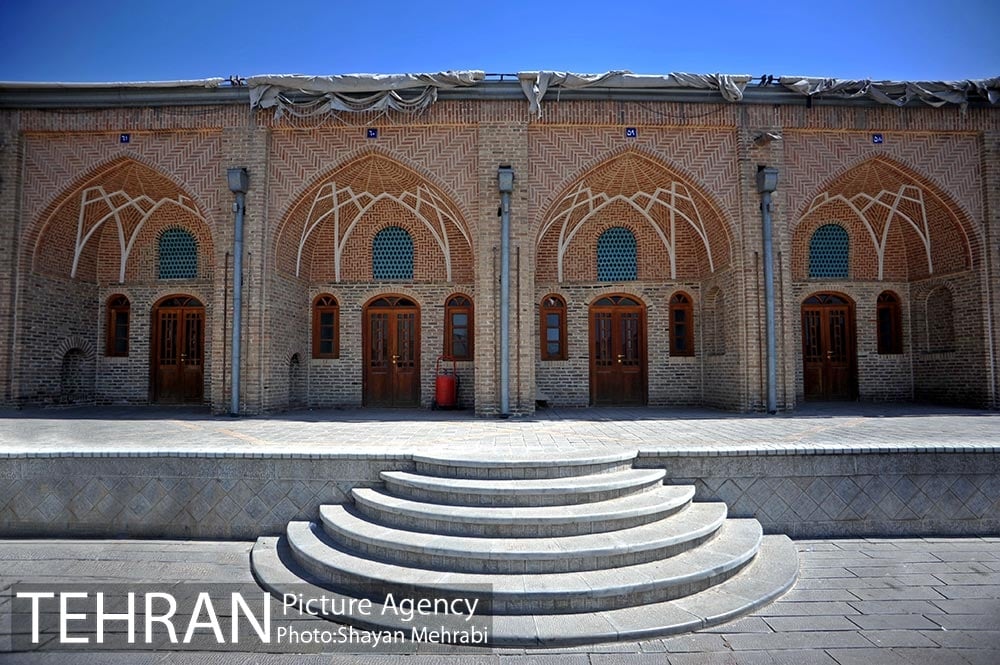
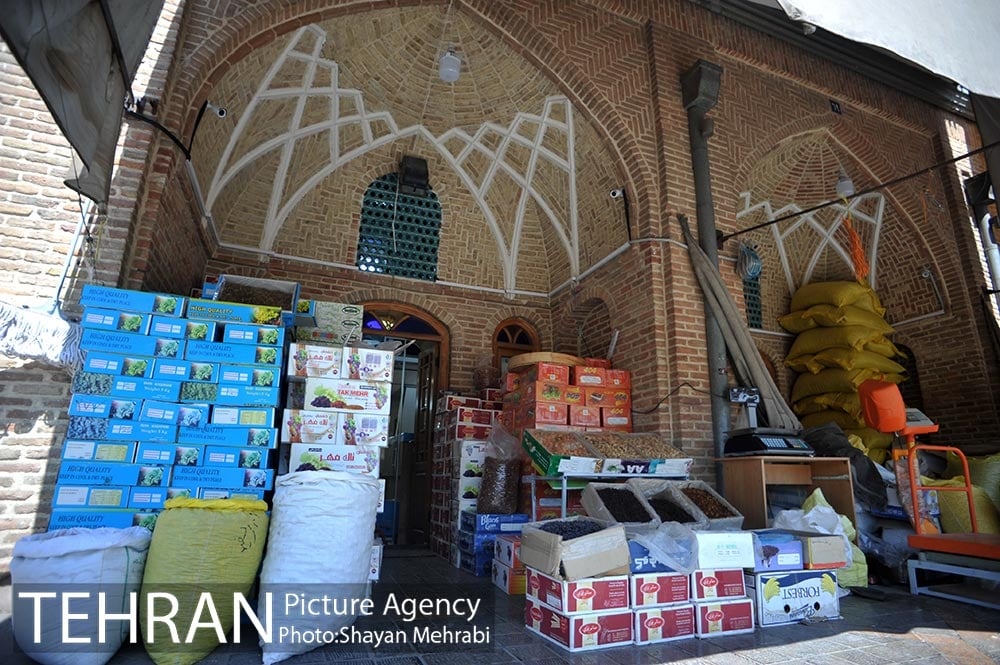
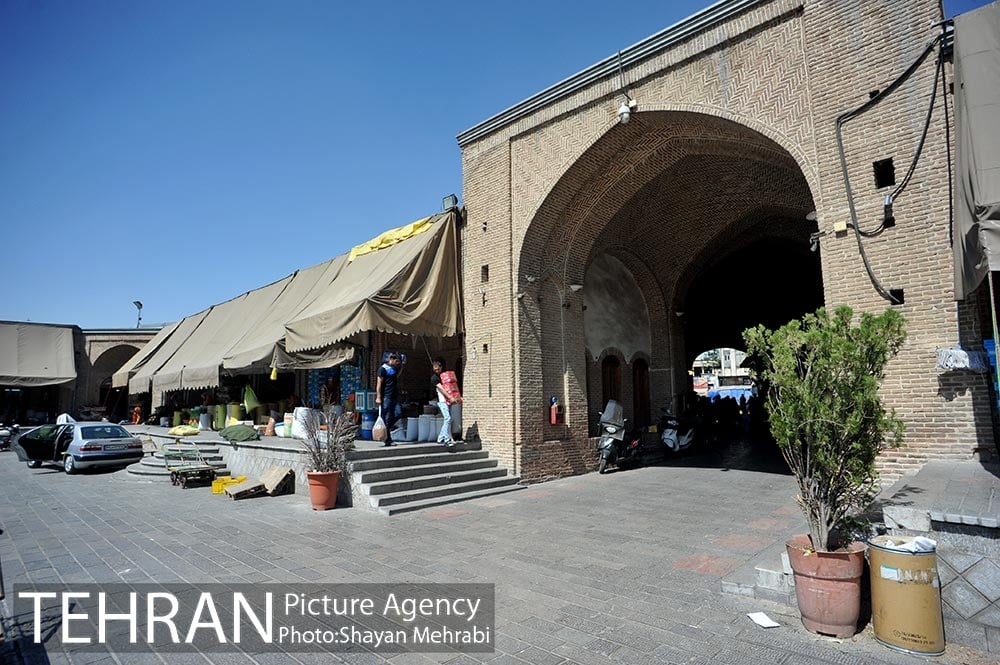
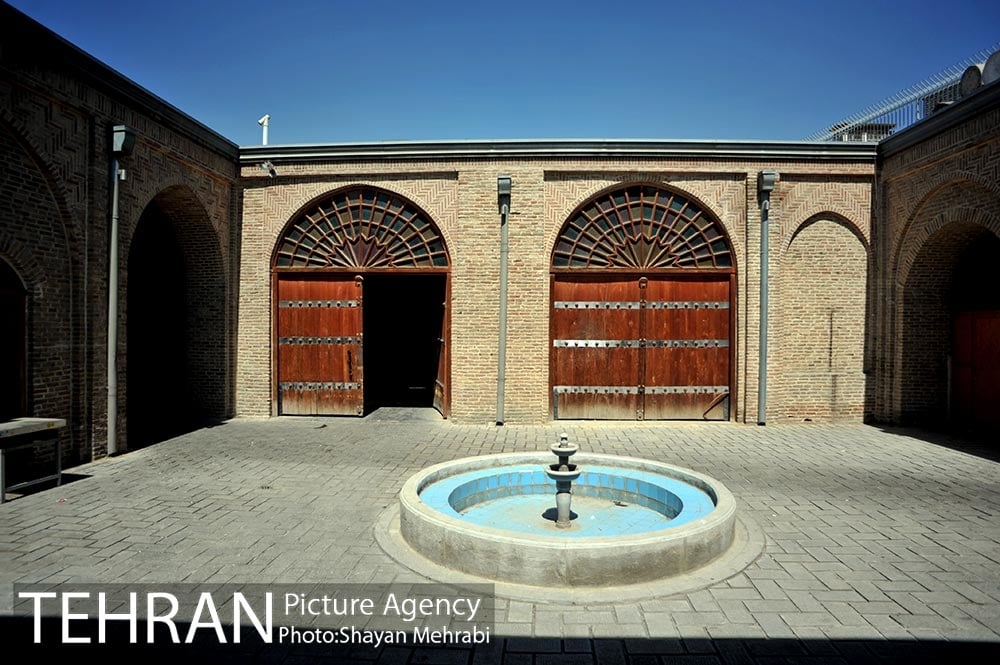
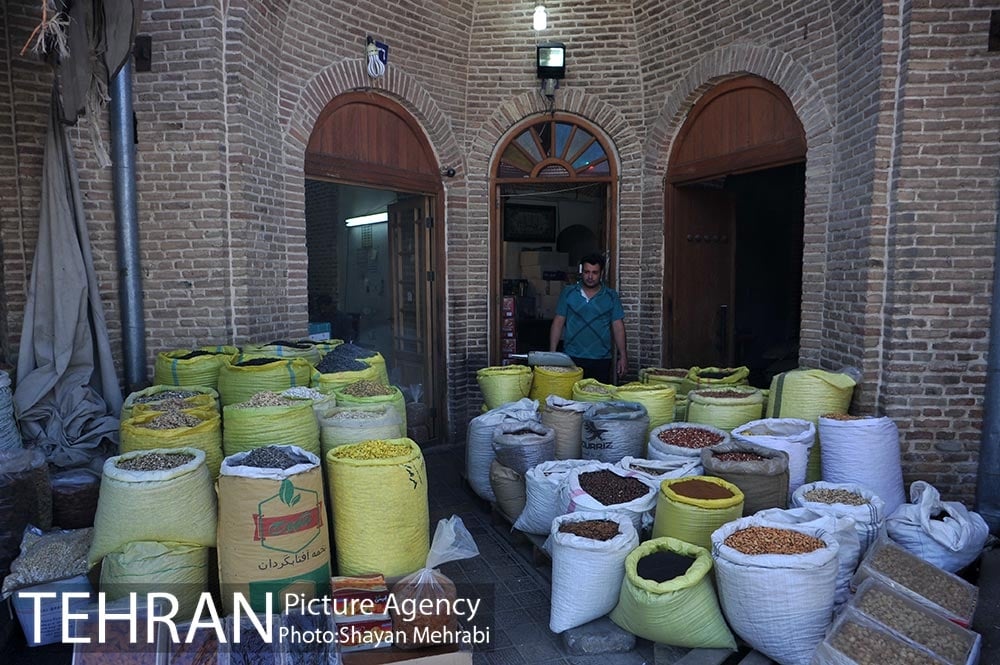
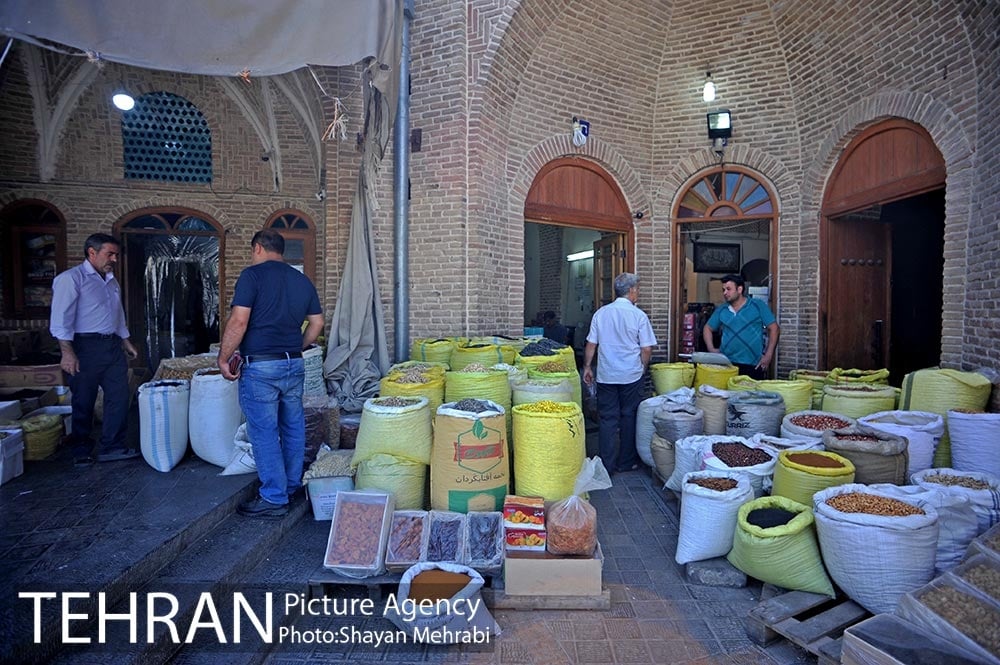
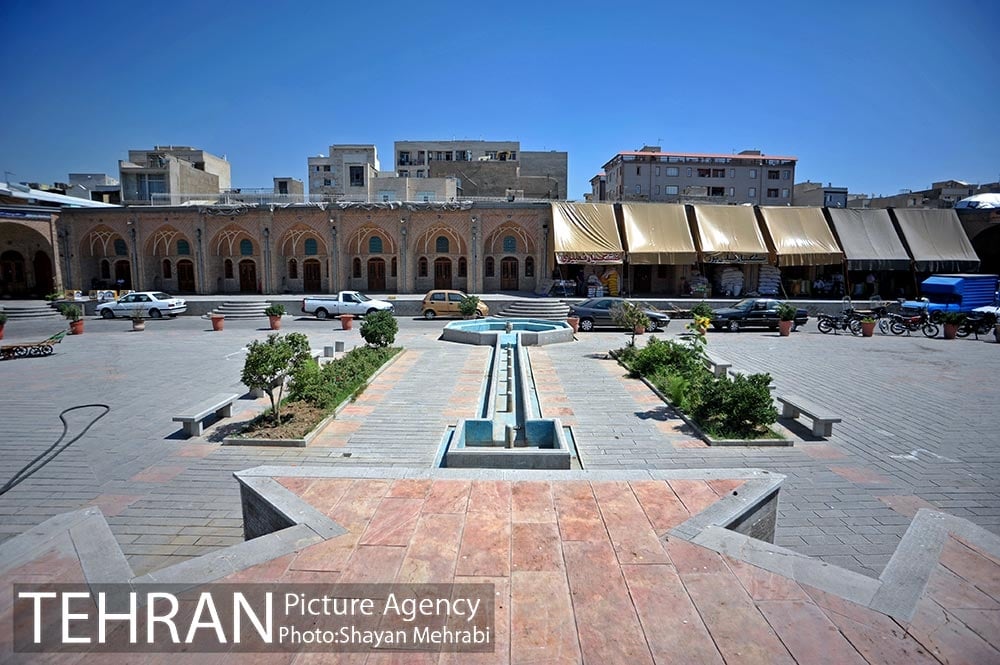
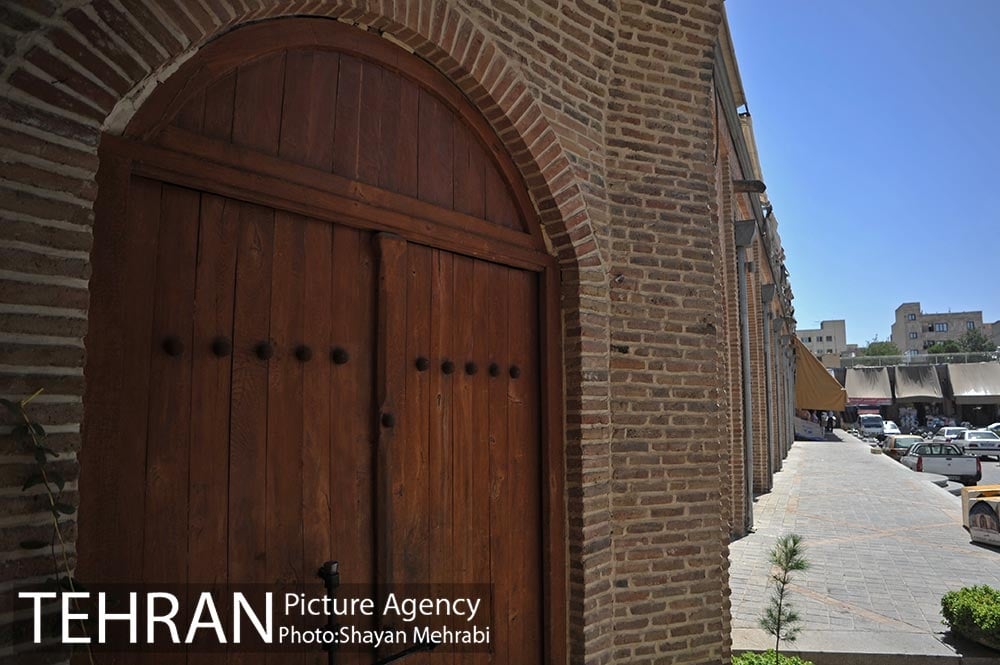
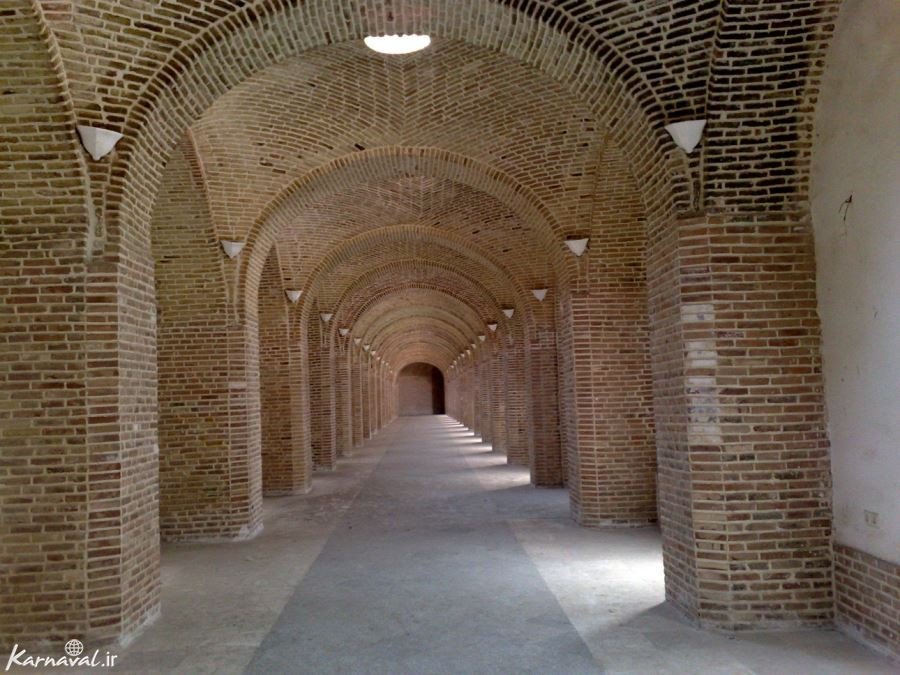
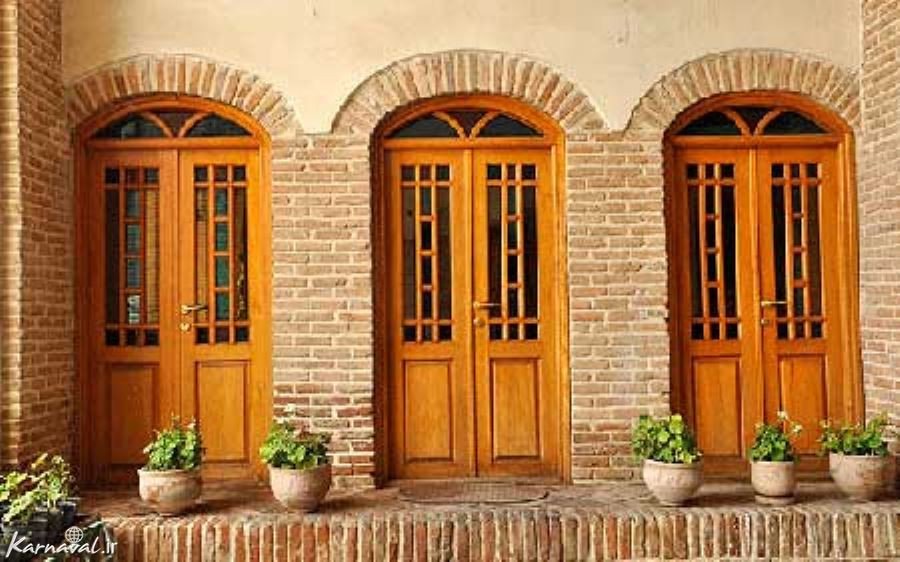
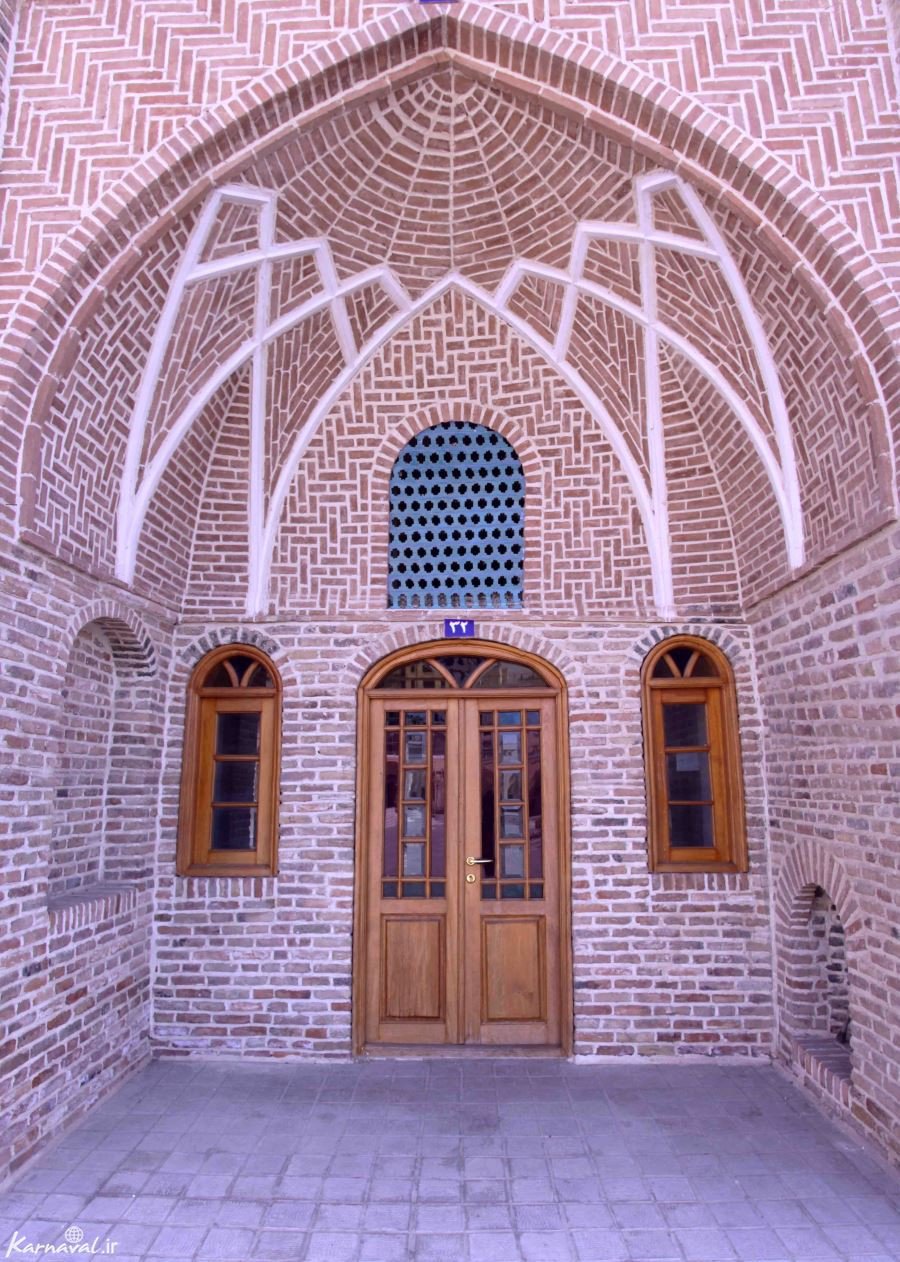
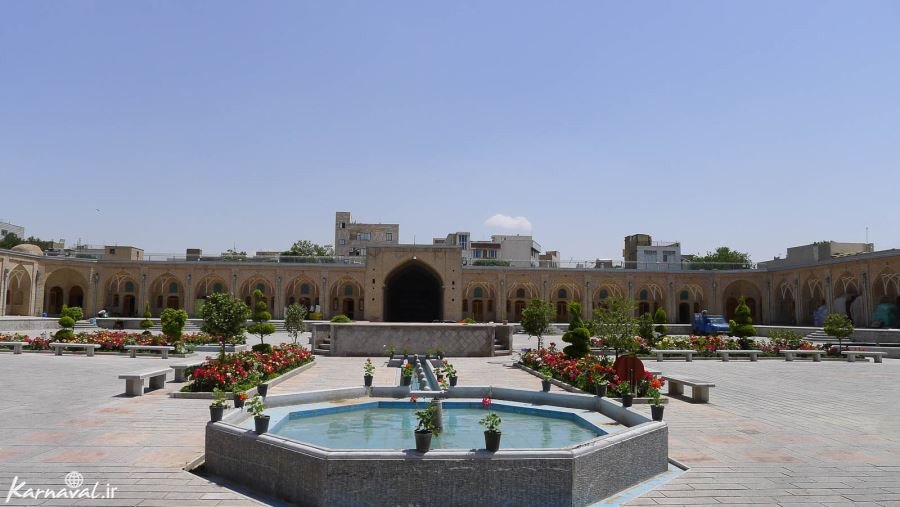
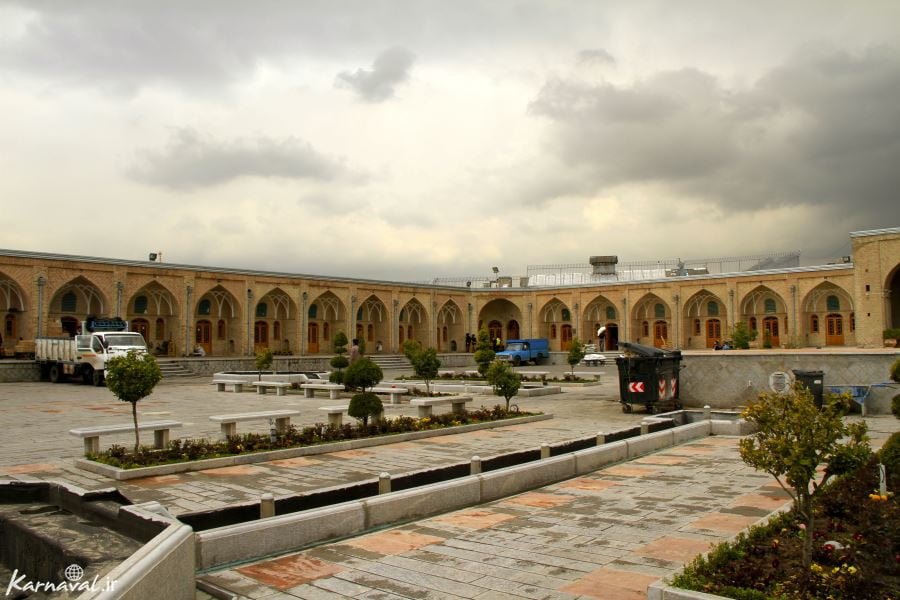
Khanat Caravanserai; Fabulous Historic Site in Tehran

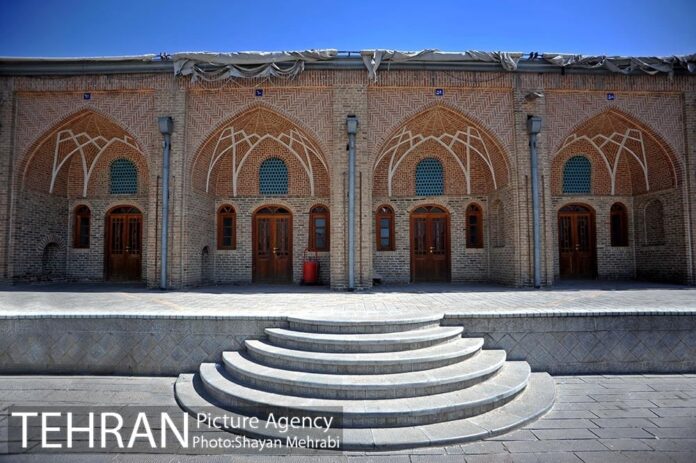
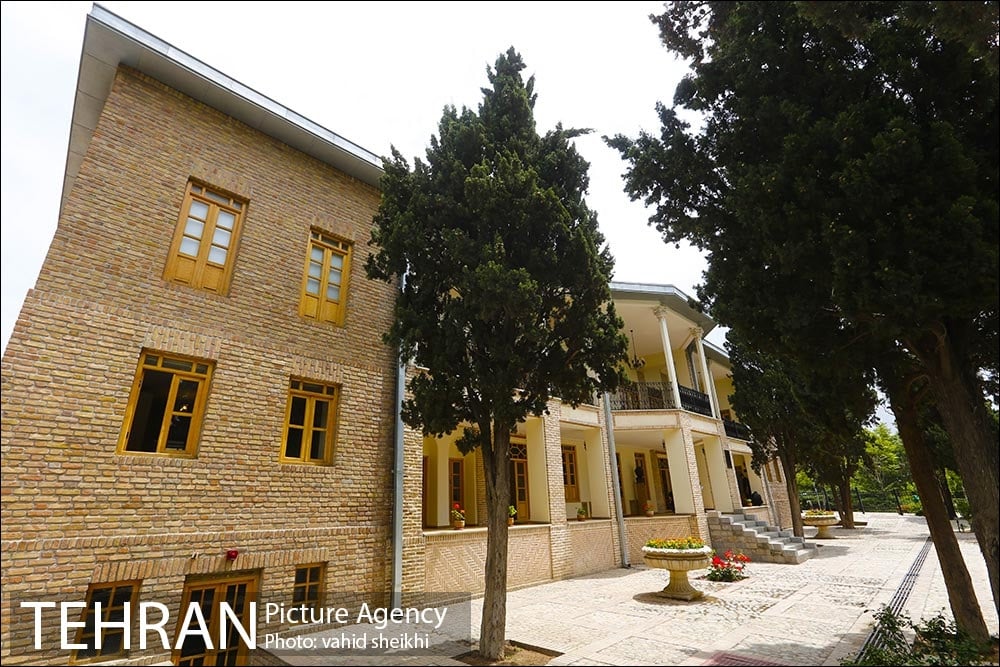
The caravanserai used to host merchants and travelers in the past. The brick structure was constructed towards the end of the rule of the Persian King Naser al-Din Shah Qajar (16 July 1831 – 1 May 1896) by the side of a road on the outskirts of Tehran. It was built on the eastern side of the then Amin al-Soltan Square.
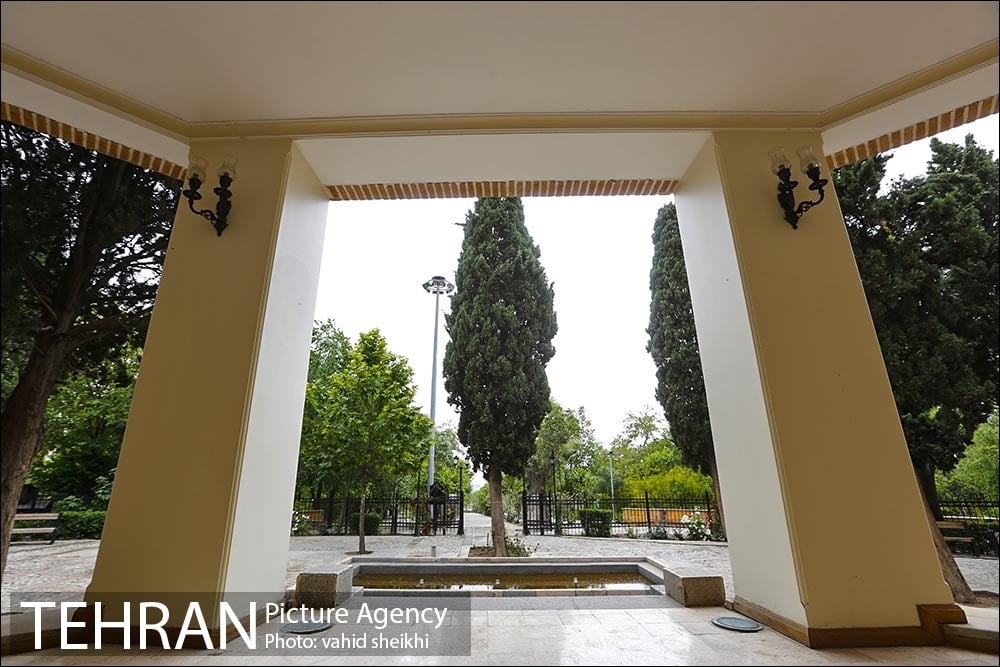
The caravanserai can be seen on a map of Tehran drawn by Najm al-Malek back in 1930.

By the time the rule of Naser al-Din Shah Qajar was half way through, Tehran had been enclosed by a fence constructed by Safavid rulers in 1930. Afterwards, the fence was demolished and replaced with a new one in line with a city development plan, which saw Tehran expanded to bring the caravanserai within city limits.

The Khanat caravanserai was the largest monument located in the old quarter of the city in central Tehran.

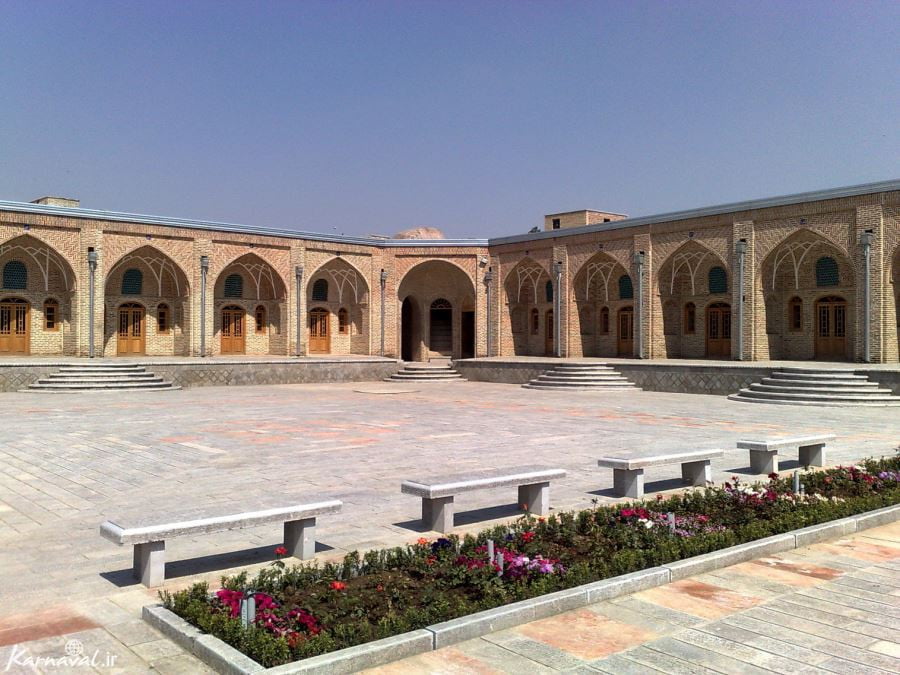
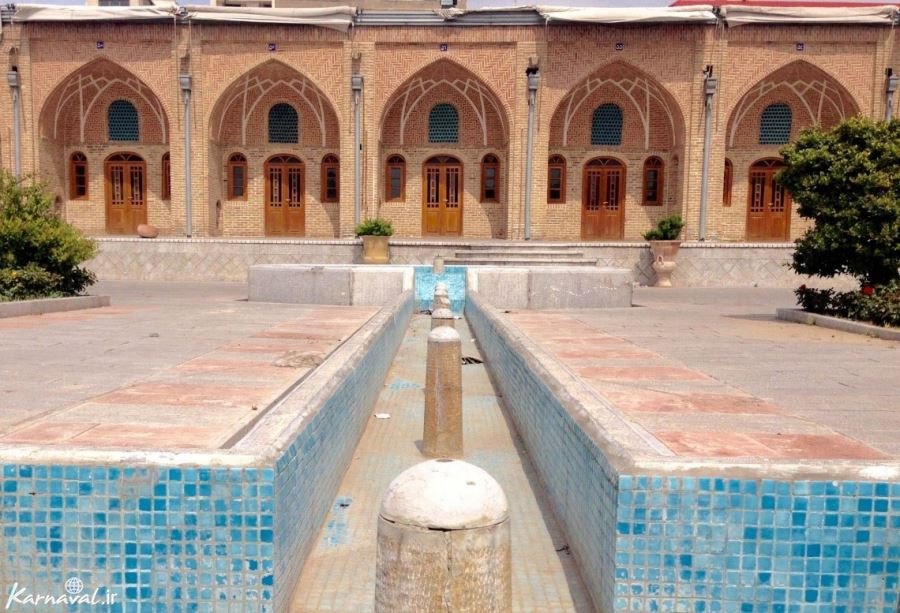
The building’s architecture is inspired by Persian gardens. The caravanserai has a surface area of 10,000 square metres. It has a total of 52 chambers, i.e. 13 chambers on each side.

Khanat literally means “chambers,” and the reason the caravanserai is named “Khanat” is because it had a lot of chambers.

The monument was abandoned because of a blaze in 1978, and was reopened in 2010 to host Nowruz ceremonies.

After the building was reconstructed, it turned into a traditional restaurant featuring performances such as story-telling.

The outside of the caravanserai was converted into small shops selling pulses, medicinal herbs and spices. Later on, they were used as storage rooms.

What follows are photos of the caravanserai retrieved from Tehran Picture Agency and Karnaval.ir:

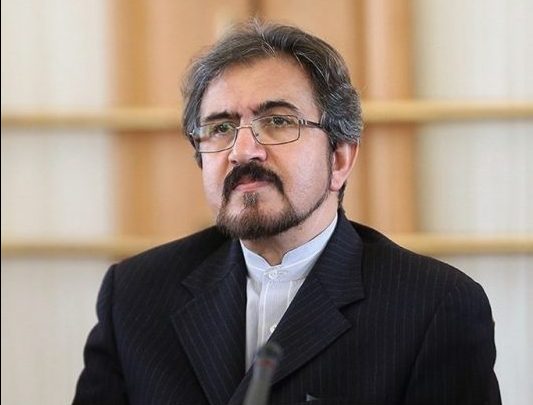
Iran Censures French FM’s Comments on Its Regional Policies

The Iranian spokesman made the remarks in a talk with ISNA on Friday, responding to the latest anti-Iran accusations by French Foreign Minister Jean-Yves Le Drian.

Speaking to RTL radio on Friday, Le Drian said Iran should come to the negotiating table to discuss its missile program, which he said is not “solely aimed at defensive purposes”.

Qassemi said the Islamic Republic’s experiences in recent decades, including the west-sponsored Iraqi aggression against the country in 1980s, has taught Tehran it needs to boost its missile power as an effective deterrence.

“Iran’s missile activities are against no country and it is only for defensive purposes,” he added.


Unfair Allegations

Qassemi said Tehran itself is a big victim of terrorist attacks and it has spared no chance to fight terrorism.

“It is the Islamic Republic’s principled policy to fight terrorism and this policy has so far produced positive results in the region and the world,” he said, referring to Iran’s support for anti-terrorism push in Syria and Iraq that succeeded in neutralizing ISIS.

The spokesman said Iran has worked to promote stability, security and economic development in the region.

“We see our interests in consolidating security and peace in the region and we have been working to cooperate with regional countries to reach this end,” he said.

“Such anti-Iran allegations are wrong and unfair and result from lack of information about the situation in the region,” Qassemi said.

Qassemi’s comments came after the top French diplomat accused Tehran of destabilizing the region and sponsoring terrorism, saying Iran must agree to stop “meddling in others’ affairs” and cease support for the Syrian government and Houthis in Yemen.

Le Drian made the remarks before attending a meeting with other parties to JCPOA on the future of the Iran nuclear deal following the US withdrawal.

The top French diplomat also said Iran “must stop permanently threatening to break their commitments to the nuclear deal”, so that Europe can “find the solutions so that Iran can have the necessary economic compensations.”

Iran has announced it will not be able to continue to fulfill its obligations under the nuclear pact if the return of US sanctions places much pressure on the country.

Tehran has demanded binding assurances from other parties to the deal that its interests will be protected if it remains in the deal.

France has said Europe would likely not be able to create an economic compensation package for Iran prior to November.

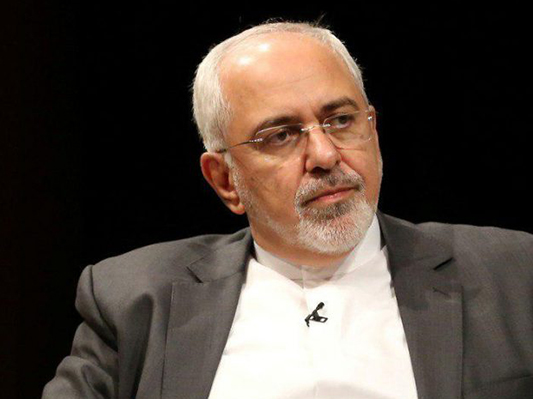
FM Zarif Rejects Claim that Obama Granted Citizenship to 2,500 Iranians

Mohammad Javad Zarif referred to a recent allegation raised by conservative lawmaker Mojtaba Zonnour about the issue, and stressed that the claim is not true, whatsoever.

“I was present at the [nuclear] talks, and I deny the news. It is a lie, altogether,” said Zarif in an interview with Alef news website.

“Such issues were never brought up during or on the sidelines of the negotiations or otherwise,” the top diplomat said.

Zarif said even legitimate demands such as lifting the limitations on the activities of Iranian diplomats at the UN were not discussed, let alone the issue of citizenship for ordinary Iranians.

He dared those who made the claim to publish the names of the individuals allegedly granted citizenship by the US.

Zarif’s remarks came after Zonnour first claimed that the Obama administration granted citizenship to 2,500 Iranians as part of the nuclear agreement.

Later, US President Donald Trump tweeted the legislator’s unsubstantiated claim.

“Just out that the Obama administration granted citizenship, during the terrible Iran Deal negotiation, to 2,500 Iranians, including to [sic] government officials. How big (and bad) is that?”

Neither Zonnour nor Trump cited any evidence for the allegation.

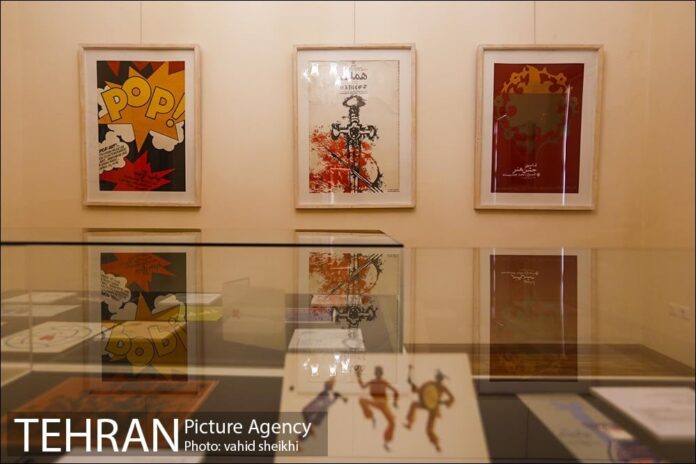
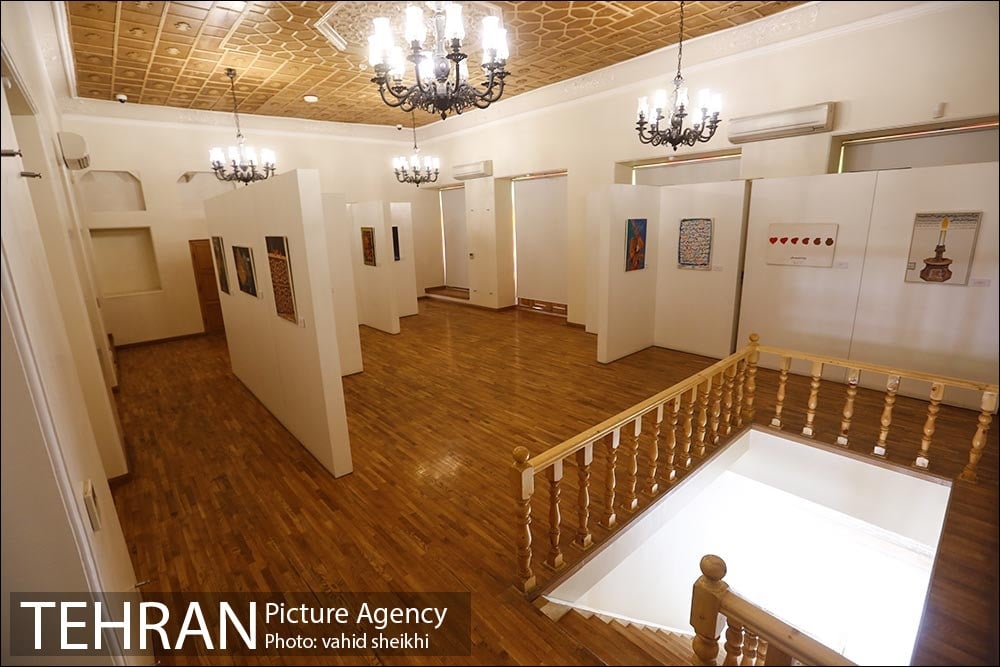
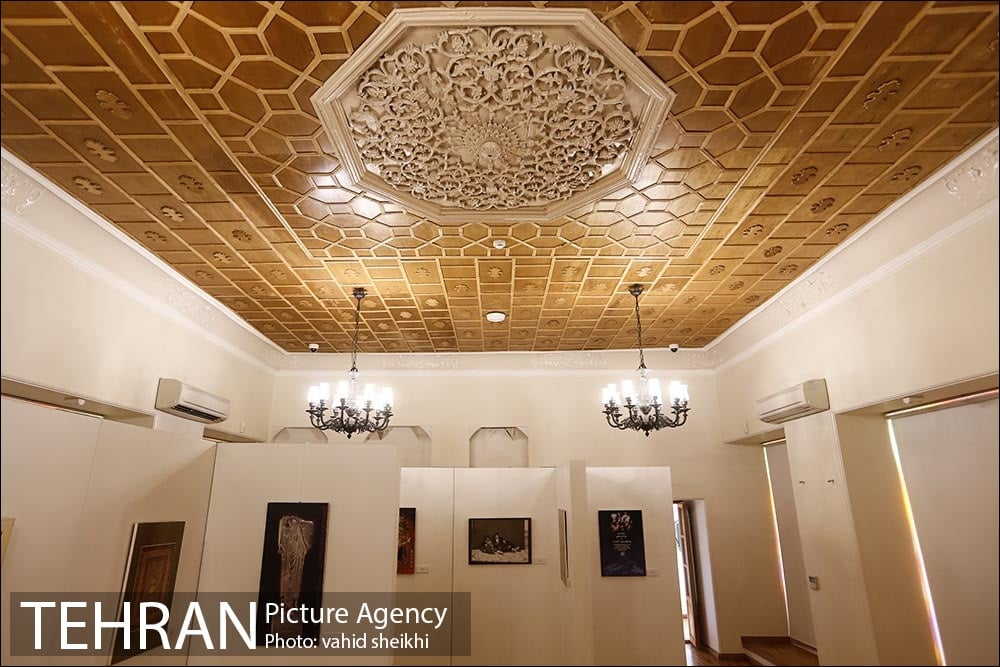
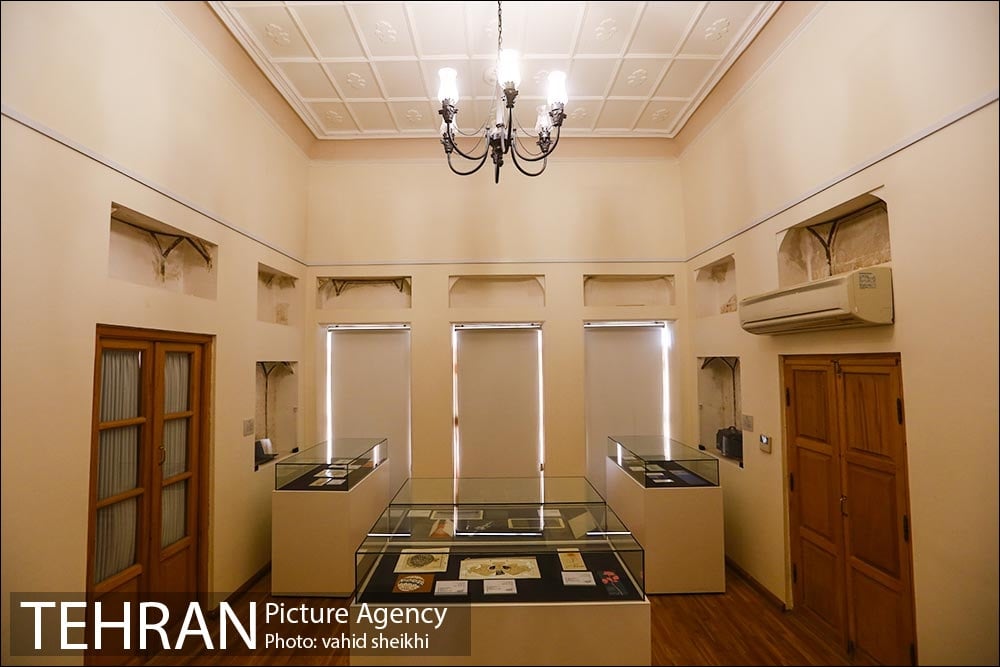
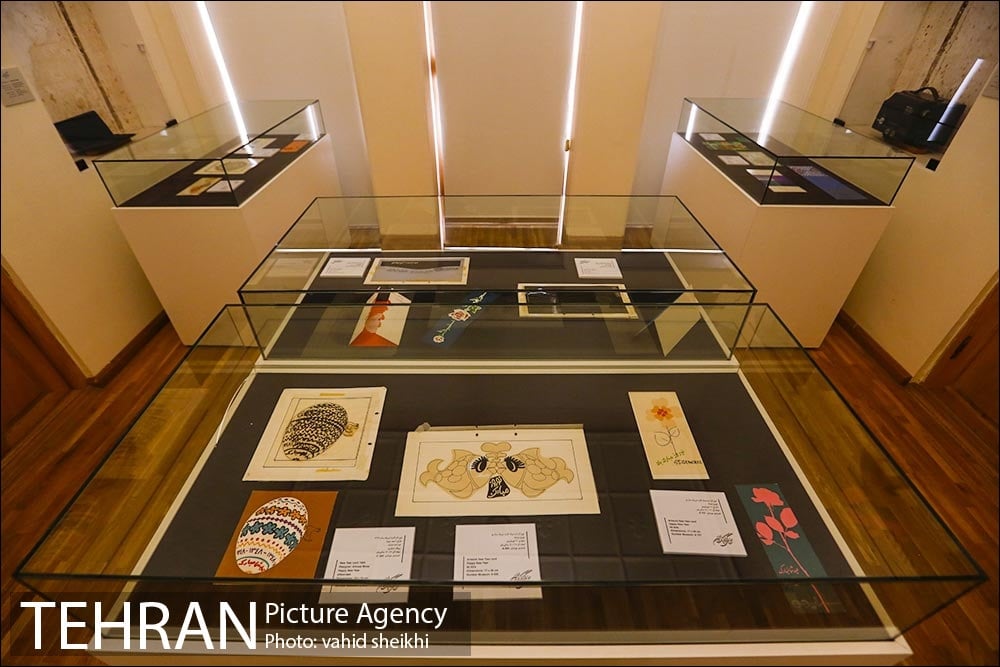
Iran’s National Museum of Graphic Arts; A Timeless Treasure

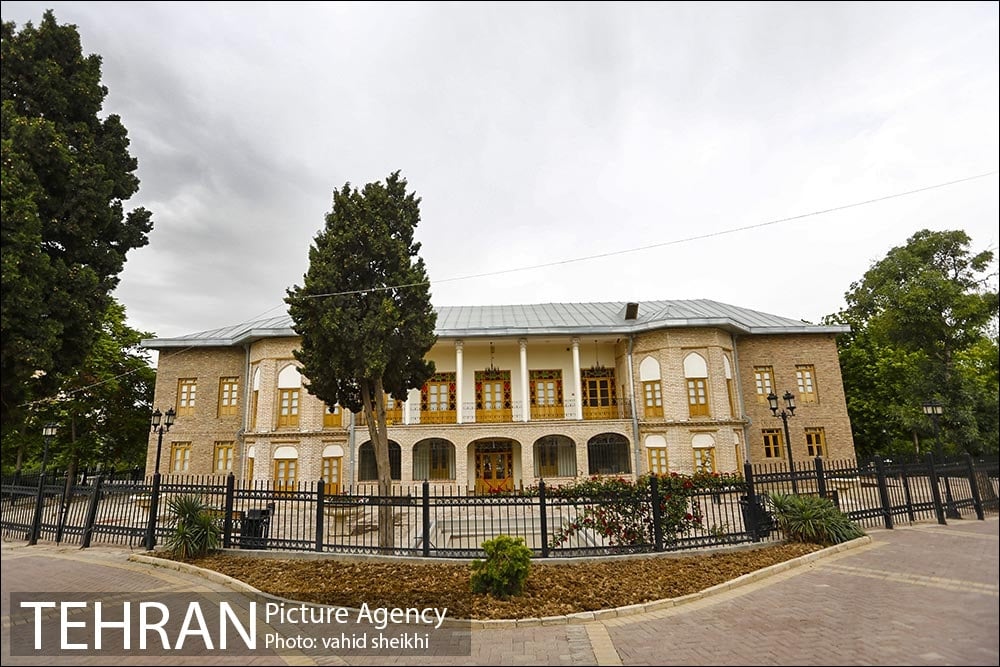
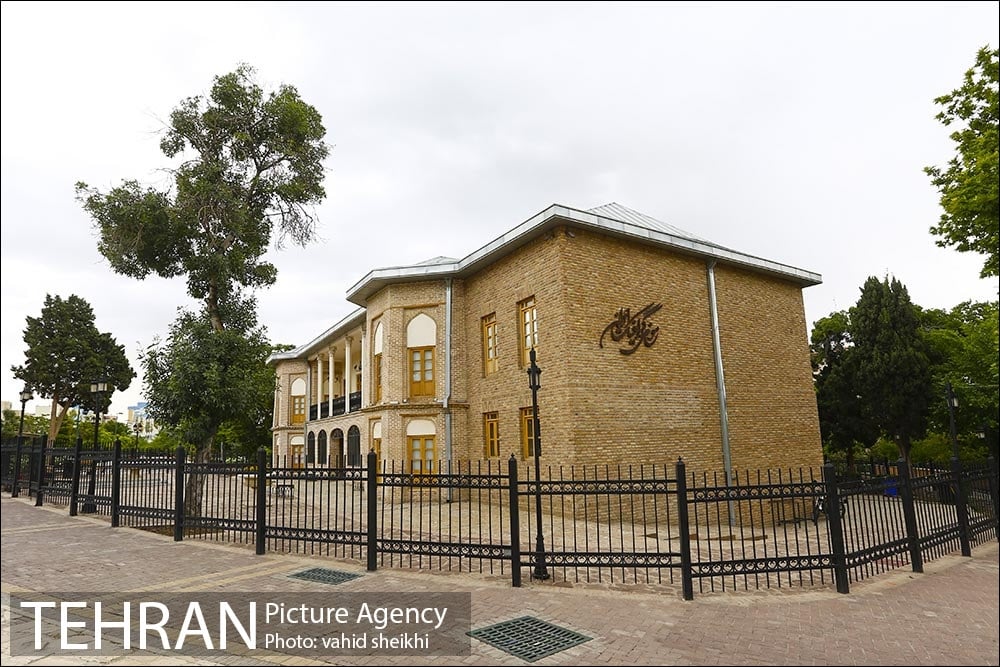
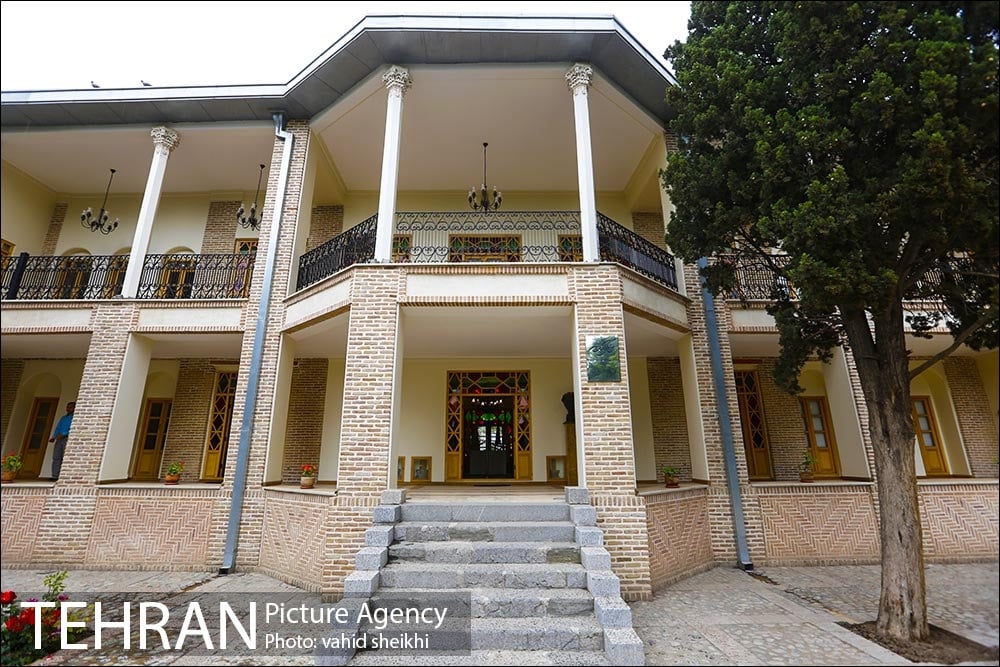
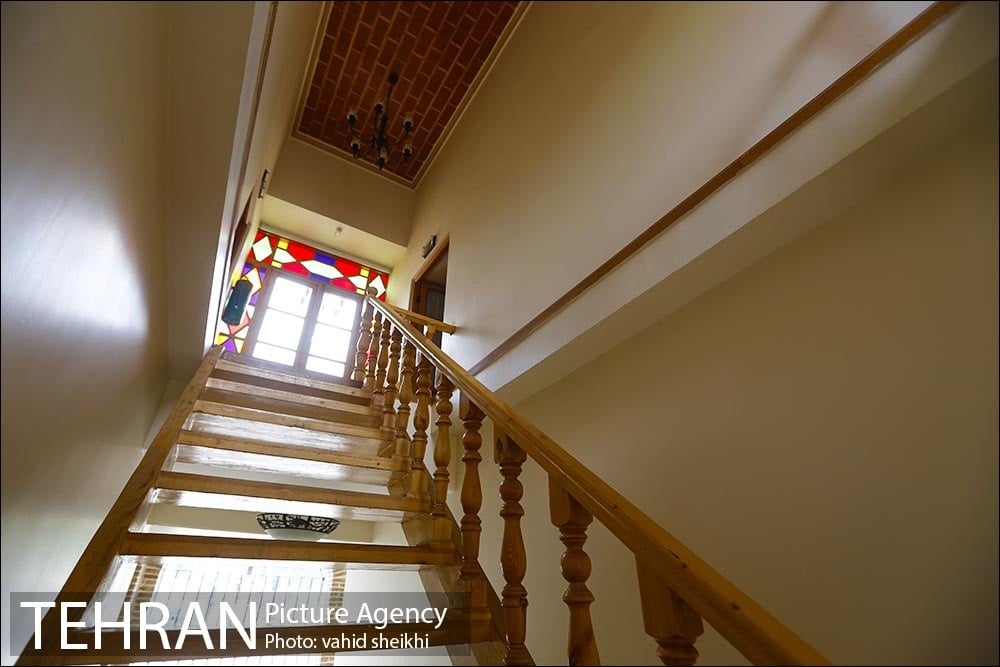
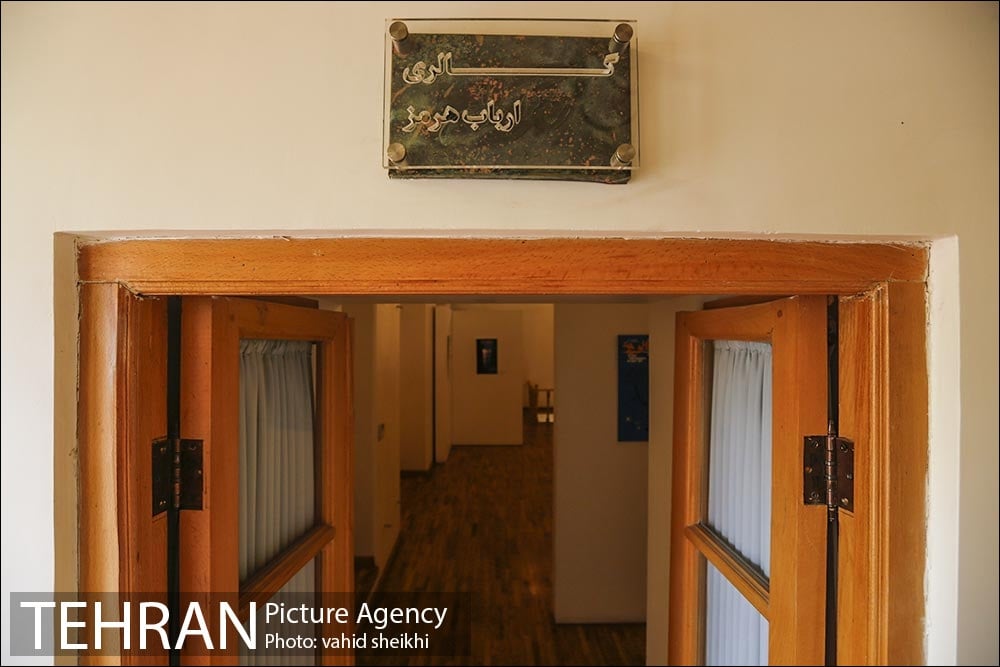
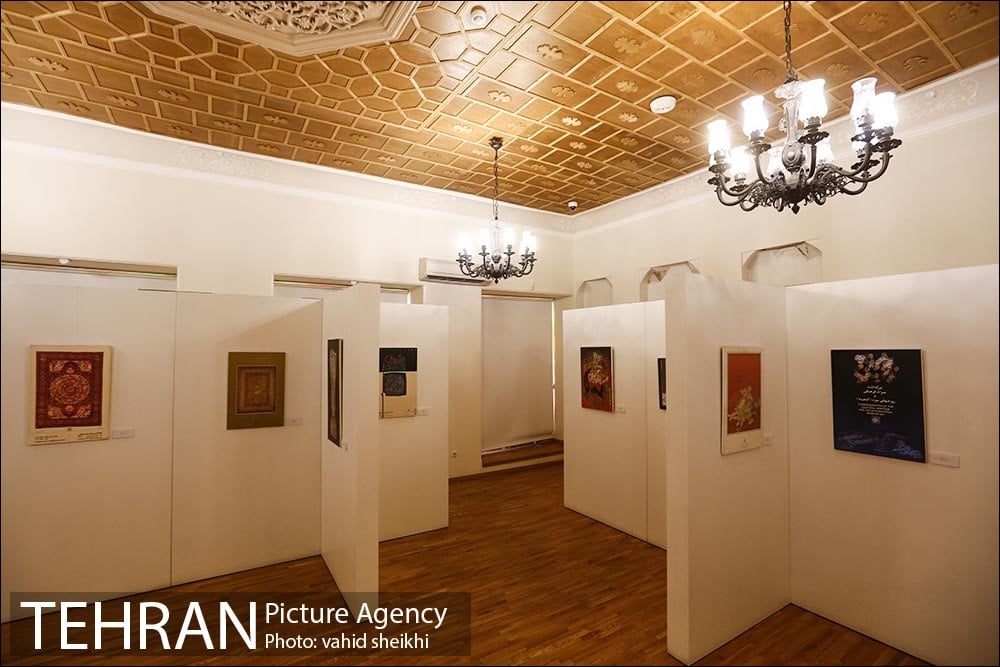
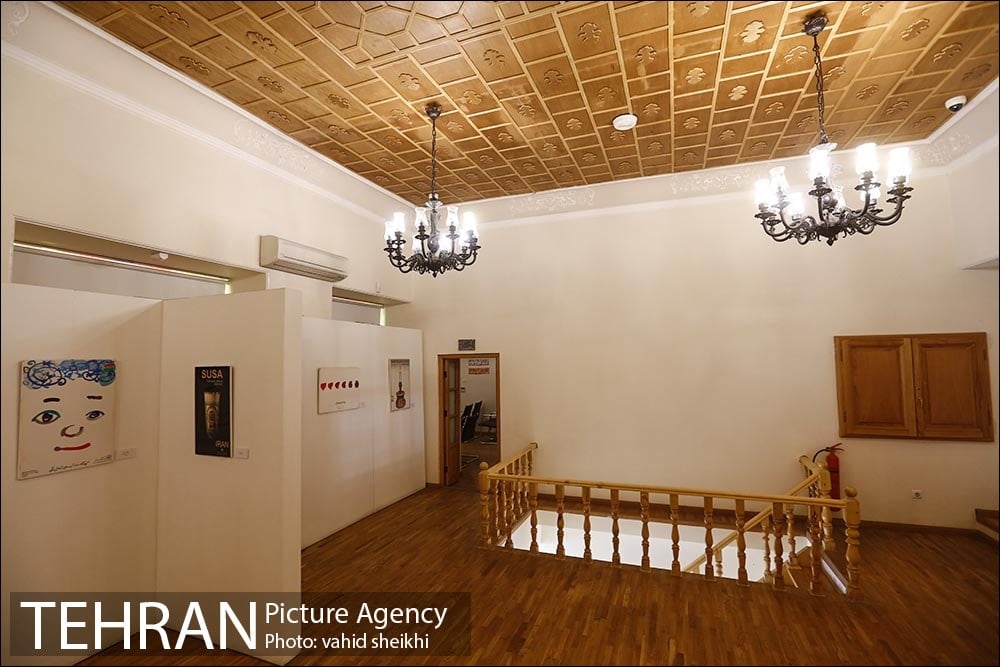
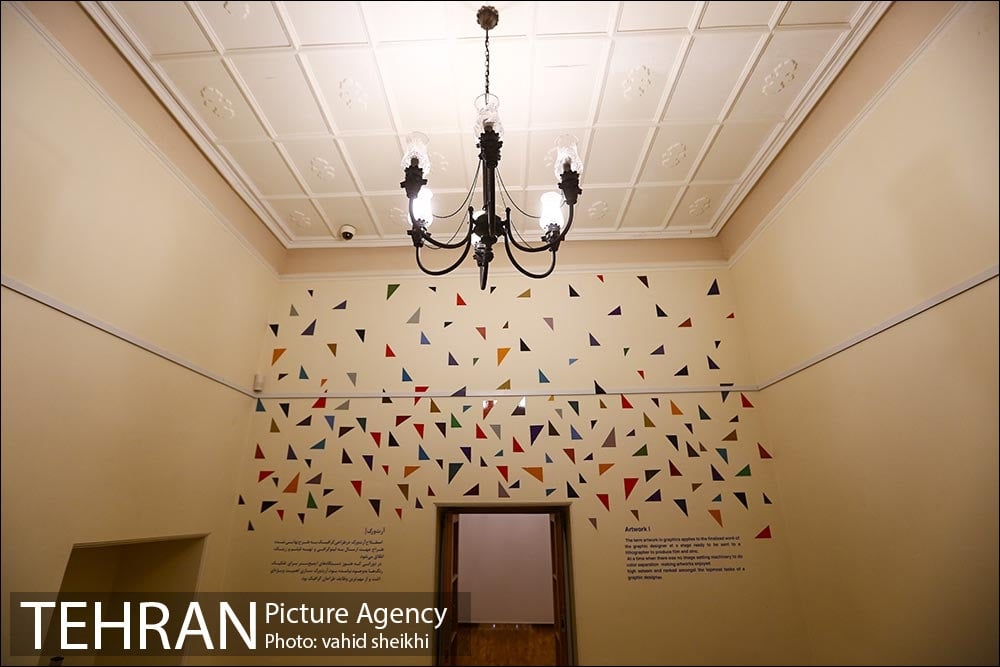
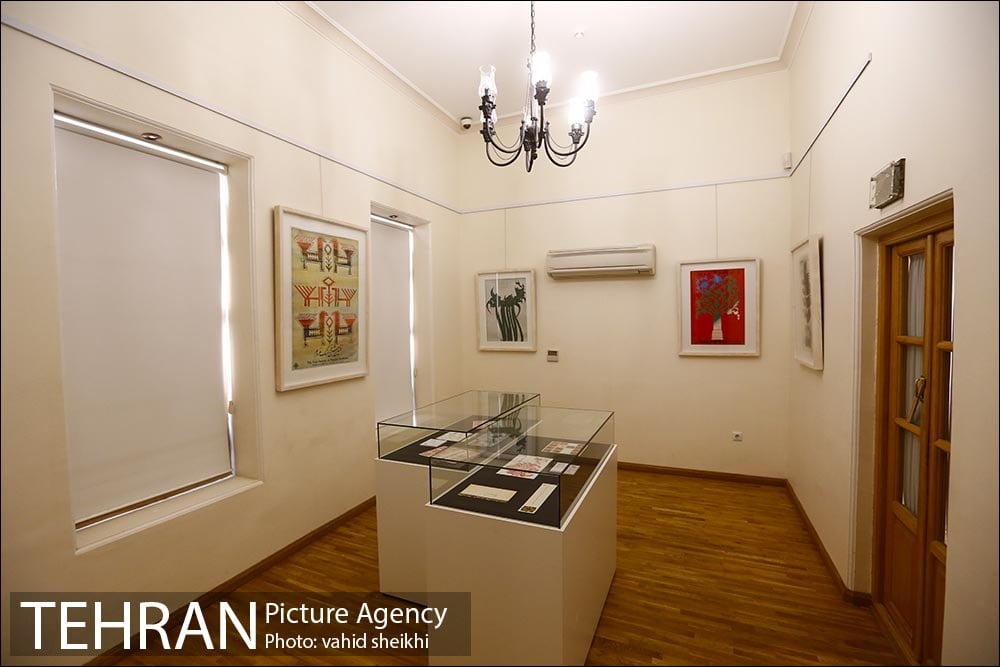
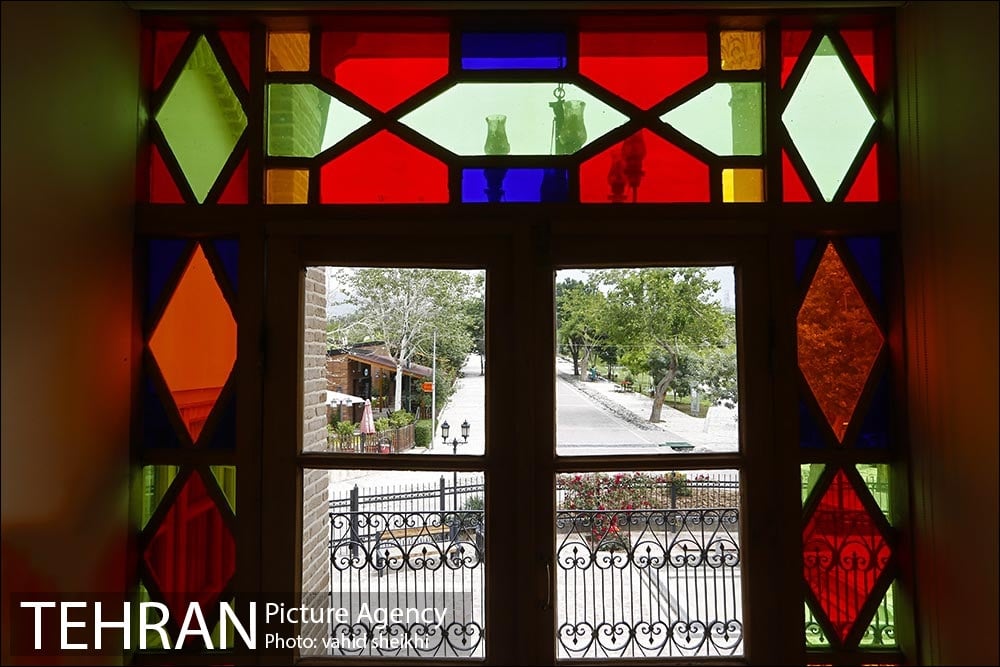
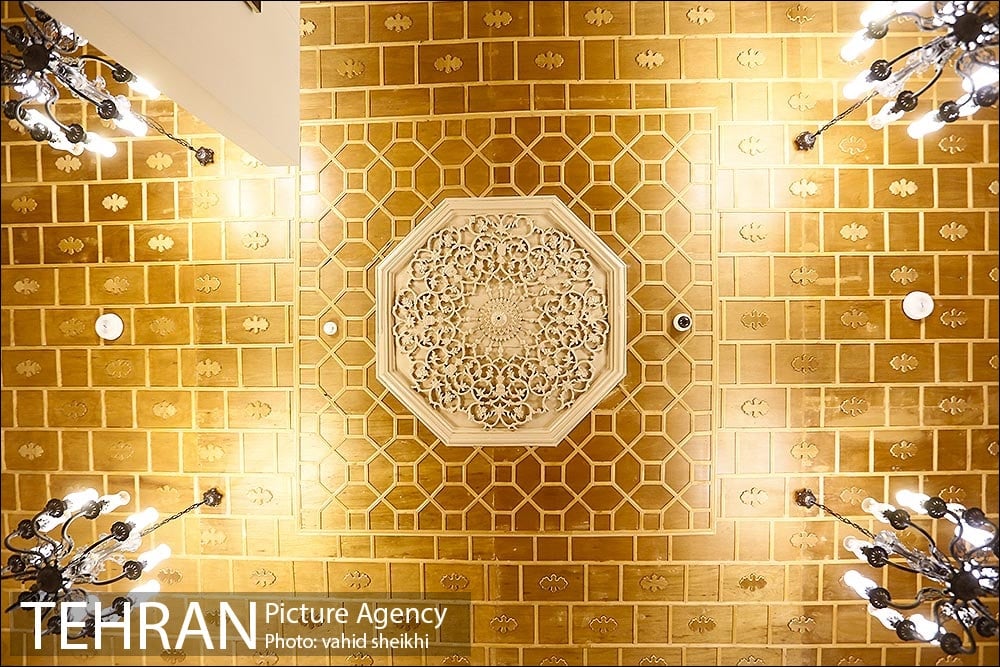
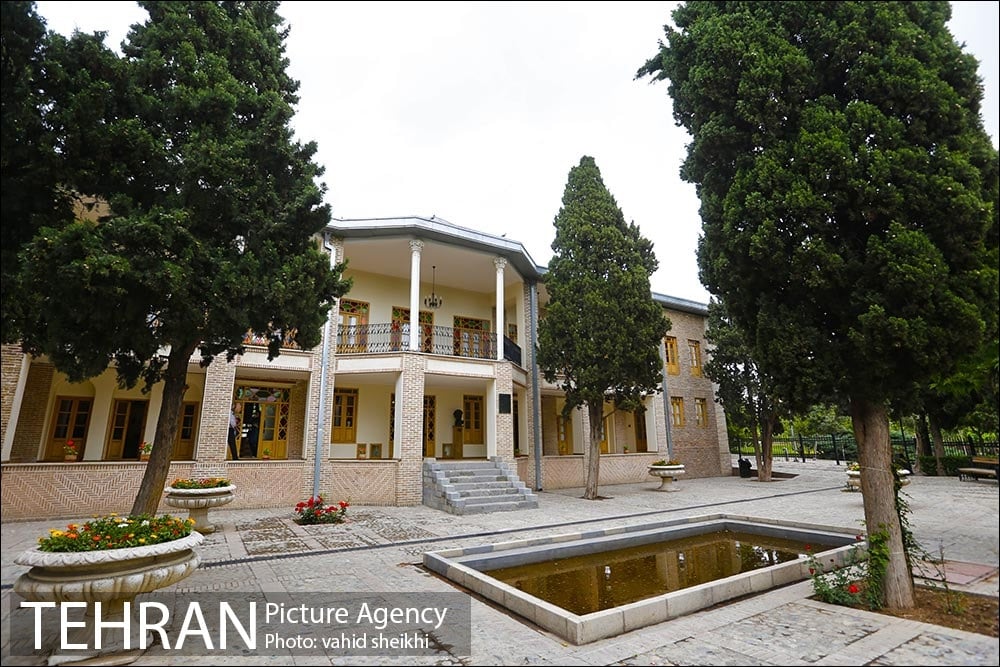
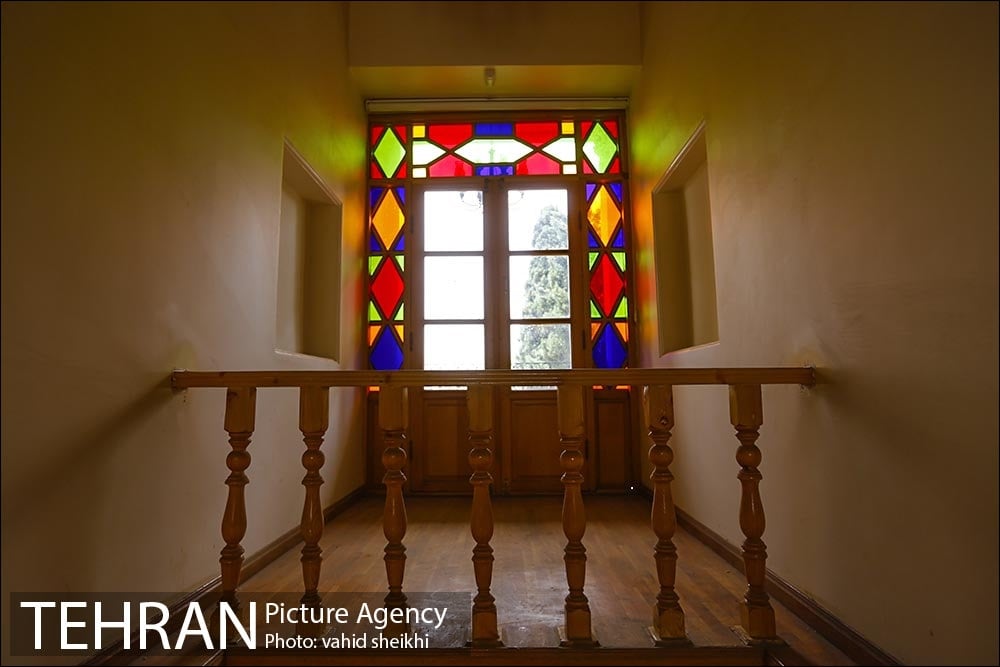
Arbab Hormoz Historical House in Tehran’s Police Park is home to the National Museum of Graphic Arts, a timeless treasure hosting more than 10,000 artworks and historical documents.

Arbab Hormoz, a beautiful old mansion built during the reign of the Qajar dynasty, was converted into the museum by the Tehran Municipality’s Beautification Organization.

The museum was opened by the Association of Graphic Designers in January 2015.

The museum is a testament to 20th and 21st-century graphic designers, including giants like Morteza Momayez, Ghobad Shiva, Farshid Mesghali and Ebrahim Haghighi.

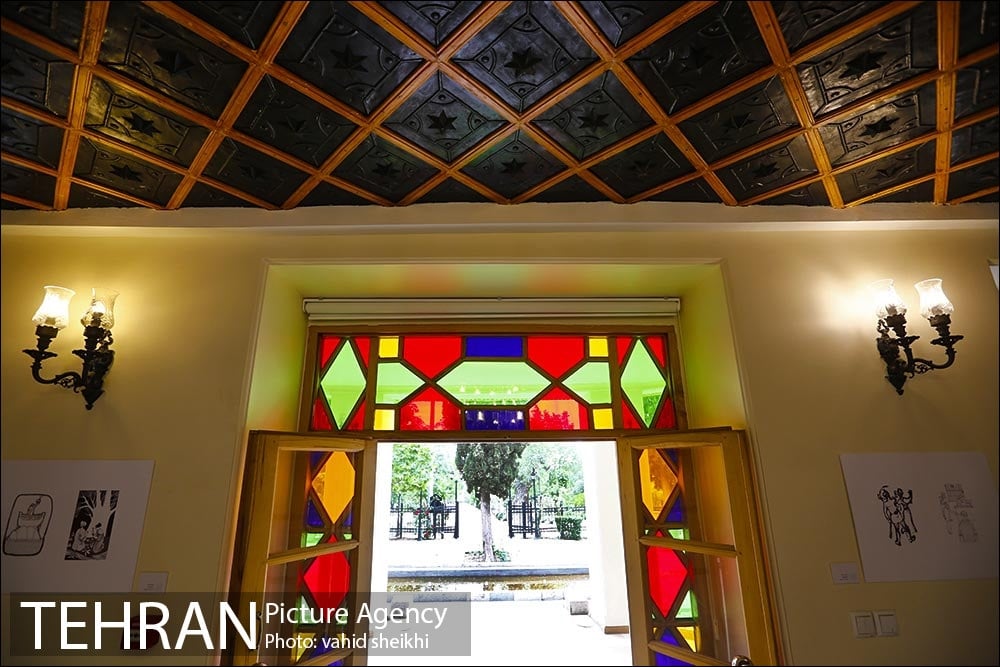
The artworks have been framed and installed on special panels to prevent harming the interiors of the historical building.

Following are photos of the museum retrieved from Tehran Picture Agency:

Eight ISIS Elements behind Tehran Terror Attacks Executed

The office of Tehran’s Prosecutor announced on Saturday morning that the eight terrorists have been executed.

A court had sentenced the terrorists to death in May for their role in last year’s terror attacks in Tehran.

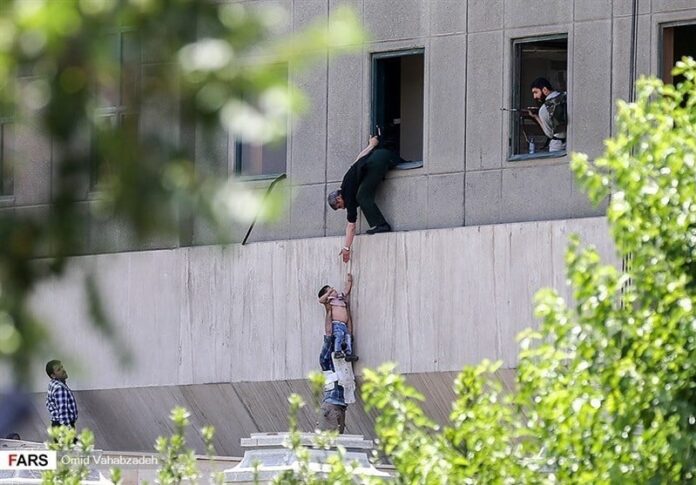
On June 7, 2017, members of Daesh armed with grenades, suicide belts and machine guns launched simultaneous attacks on Iran’s parliament building in downtown Tehran and on the mausoleum of the late founder of the Islamic Republic Imam Khomeini.

The attacks left 17 people dead and more than 40 others wounded.

All of the five gunmen directly involved in the attacks were killed by the security forces.

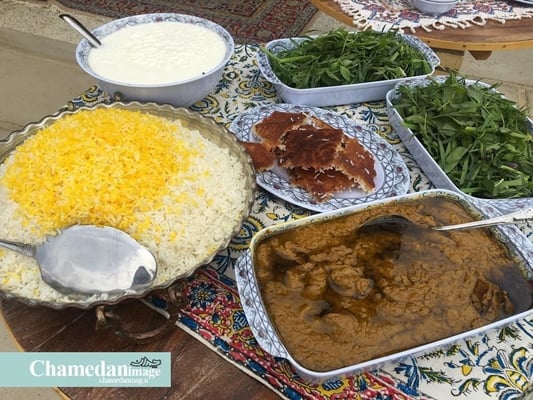
Pistachio Stew; Delicious Dish Popular in Damghan

The pistachio stew is made in pretty much the same way as Fesenjan stew is cooked. The only difference is that ground pistachio is used instead of ground walnut.

In this food, pieces of lamb are added to shredded fried onions. Then ground pistachios are added and sautéd. Then some water is added, and finally salt and spices as well as tomato juice are added.


Ingredients:

Pistachios: Half a kg (removed from their hard outer shells and ground)

Lamb: Half a kg (fatless meat)

Onions: 1 onion

Oil: As much as needed

Verjuice: Half a cupful

Sugar: 2 Spoonfuls

Salt and pepper: As much as needed


Recipe:

First, mix the ground pistachios with 6 cupfuls of lukewarm water. Wash it several times while pouring the mixture from one dish to another repeatedly. Dispose of the little particles which sink to the bottom of the dish.

You may use shredded pistachios, which could make your stew greener. Cut the onion into very tiny pieces and sauté it. Chop the meat and add it. Sauté the meat until its colour changes.

Now, add the pistachios to the meat and onion. Adjust the amount of pepper and gravy. When the meat is half-cooked, add enough salt. After the meat is cooked through, mix verjuice and sugar before adding the mixture to the stew.

After the stew is cooked through, serve it along with rice.

Package Proposed by EU to Salvage JCPOA Seems Practical: Zarif

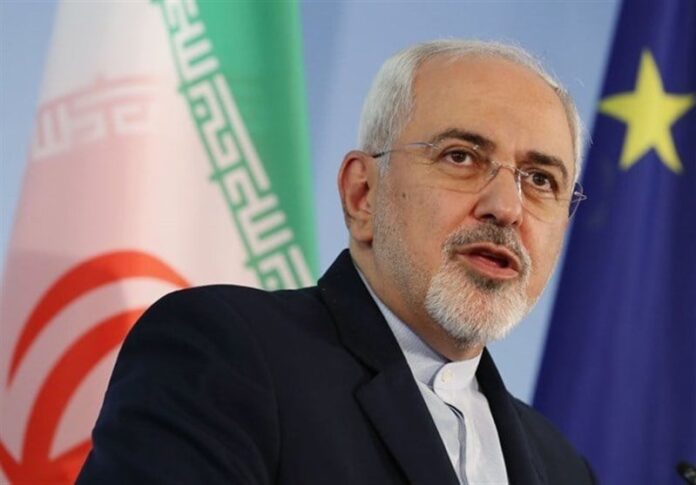
Speaking in Vienna on Friday evening, Zarif briefed reporters on the topics discussed in the ministerial meeting of the joint commission of the Joint Comprehensive Plan of Action.

Hailing the “serious and constructive” negotiations, Zarif said a final statement from the JCPOA joint commission, read out by EU Foreign Policy Chief Federica Mogherini at the conclusion of the talks, should come with “practical measures.”

“What matters now is that what has been mentioned as commitments and actions, which have not been necessarily made public in full, must be put into practice so that we could see its benefits,” Zarif noted.

As regards the EU efforts to update its “Blocking Statute” in order to protect European companies from US sanctions, Zarif said such exemptions must become operational before the implementation of the US sanctions against Iran.

Reiterating Iran’s commitment to the nuclear deal, Zarif added, “Under the JCPOA, we are allowed to take our own measures in response to the US breach if the country’s interests are not met.”

He also noted that the proposed plans for saving the JCPOAS will be relayed to Tehran, so that the senior authorities will make decisions on the issue.

“My conclusion was that all JCPOA parties indicated commitment in the meeting… to the political will to stand against such American move (to withdraw from the deal),” Zarif noted, saying he thinks the operational methods proposed in the Friday meeting seem to be “practical”.

On May 8, the US president pulled his country out of the JCPOA, which was achieved in 2015 after years of negotiations among Iran and the Group 5+1 (Russia, China, the US, Britain, France and Germany).

Following the US exit, Iran and the remaining parties launched talks to save the accord.

Meanwhile, Leader of the Islamic Revolution Ayatollah Seyed Ali Khamenei has underlined that any decision to keep the JCPOA running without the US should be conditional on “practical guarantees” from the Europeans.

World Powers Reaffirm Commitment to Continuation of Iran’s Oil Exports

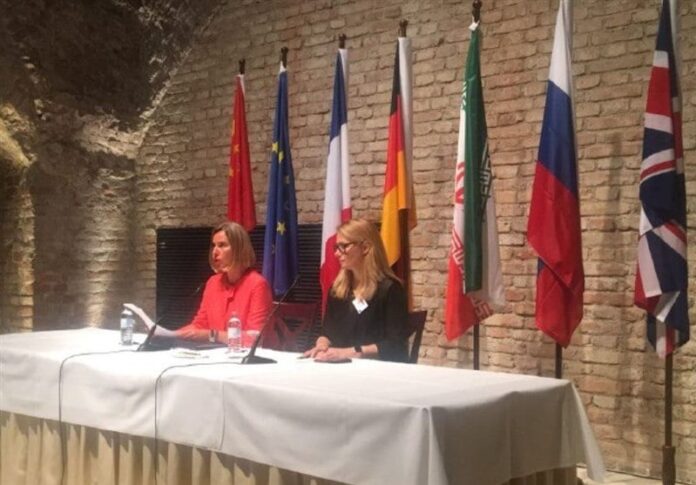
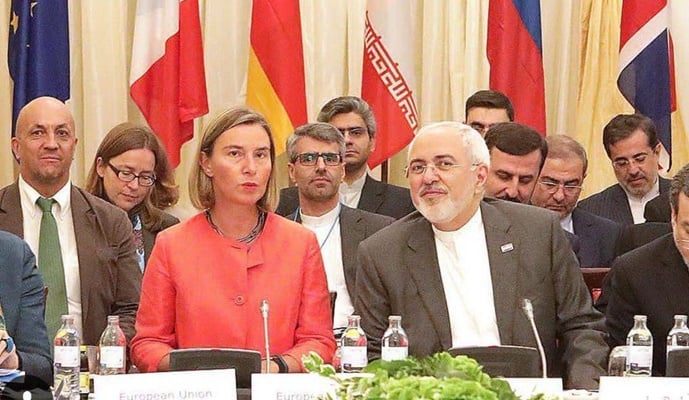
A Friday meeting among senior diplomats from Iran, Russia, China, Britain, France, Germany and the European Union, held in Vienna to discuss the ways to save the Iran nuclear deal, came to an end with a statement from the JCPOA joint commission.

The high-profile meeting in the Austrian capital involved delegations from the remaining parties to the Joint Comprehensive Plan of Action and a team from the European Union, led by EU Foreign Policy Chief Federica Mogherini, who read out a communiqué after conclusion of the talks.

The full text of the statement which was read to the reporters at the end of the meeting by Mogherini is as follows: 

  1. ​Upon the request of the Islamic Republic of Iran, a meeting of the Joint Commission of the Joint Comprehensive Plan of Action (JCPOA) was held on 6 July in Vienna at ministerial level. The Joint Commission met to discuss the way forward to ensure the continued implementation of the nuclear deal in all its aspects and review unresolved issues arising from the unilateral withdrawal of the United States from the agreement and the announced re-imposition of sanctions lifted under the JCPOA and its Annex II, which they deeply regret. 
    2.​ The Joint Commission is responsible for overseeing the implementation of the JCPOA. 
    3.​ The Joint Commission was chaired by EU High Representative Federica Mogherini and was attended by Foreign Minister and State Councillor of the People’s Republic of China Wang Yi, Minister of Europe and Foreign Affairs of the French Republic Jean-Yves Le Drian, Minister of Foreign Affairs of the Federal Republic of Germany Heiko Maas, Minister of Foreign Affairs of the Russian Federation Sergey Lavrov, Minister of State for the Middle East at the Foreign and Commonwealth Office of the United Kingdom Alistair Burt, as well as Minister of Foreign Affairs of the Islamic Republic of Iran Mohammad Javad Zarif.
    4.​The participants in the JCPOA reconfirmed their commitment to the full and effective implementation of the nuclear deal. They recalled that the JCPOA is a key element of the global non-proliferation architecture and a significant achievement of multilateral diplomacy endorsed unanimously by the UN Security Council through Resolution 2231. The participants welcomed the 11th report by the International Atomic Energy Agency of 24 May confirming that Iran is abiding by its nuclear-related commitments.
    5.​ All participants reiterated the need to continue the full and effective implementation of all nuclear related commitments. They welcomed steady progress made on the modernisation of the Arak research reactor and took note with satisfaction that the United Kingdom will take over the function of co-chair of the Arak Working Group. Participants will continue to support the modernisation of the Arak research reactor as part of the JCPOA and the conversion of the Fordow facility in a nuclear, physics and technology centre. Participants also welcomed the significant projects in the area of civil nuclear co-operation carried out on the basis of Annex III of the JCPOA.
    6. ​The participants recognised that, in return for the implementation by Iran of its nuclear-related commitments, the lifting of sanctions, including the economic dividends arising from it, constitutes an essential part of the JCPOA. They also noted that economic operators pursuing legitimate business with Iran have been acting in good faith based on the commitments contained in the JCPOA and endorsed at the highest level by the UN Security Council. 
    7.​ The participants discussed their recent efforts aimed at providing practical solutions in order to maintain the normalisation of trade and economic relations with Iran. They welcomed the extensive work undertaken to-date, the intensification of technical dialogues and the mobilisation of considerable resources by all. 
    8.​ The participants affirmed their commitment regarding the following objectives in good faith and in a constructive atmosphere:
    – the maintenance and promotion of wider economic and sectoral relations with Iran;
    – the preservation and maintenance of effective financial channels with Iran;
    – the continuation of Iran’s export of oil and gas condensate, petroleum products and petrochemicals;
    – the continuation of sea (including shipping and insurance), land, air and rail transportation relations;
    – the promotion of export credit cover;
    – clear and effective support for economic operators trading with Iran, particularly small and medium sized enterprises which are the backbone of many economies;
    – the encouragement of further investments in Iran;
    – the protection of economic operators for their investment and other commercial and financial activities in or in relation to Iran;
    – the bringing together of private and public sector experts, including through the promotion of Business Councils;
    – the practical support for trade with and investment in Iran;
    – the protection of companies from the extraterritorial effects of US sanctions. 
    The participants noted that the EU is in the process of updating the EU “Blocking Statute” in order to protect EU Member States’ companies and of updating the European Investment Bank’s external lending mandate to cover Iran.
    The participants will work on the above issues through direct bilateral efforts and through engagement with international partners in order to encourage them to follow the same policies and to establish similar mechanisms in their economic relations with Iran.
    9. ​The participants recalled that these initiatives are aimed at preserving the nuclear deal which is in the security interest of all. 
    10. ​Participants agreed to keep progress under close review and to reconvene the Joint Commission, including at Ministerial level, as appropriate in order to advance common efforts. The participants stressed their determination to effectively develop and implement practical solutions concerning the above.


Vienna Hosts First Ministerial Meeting of JCPOA Joint Commission

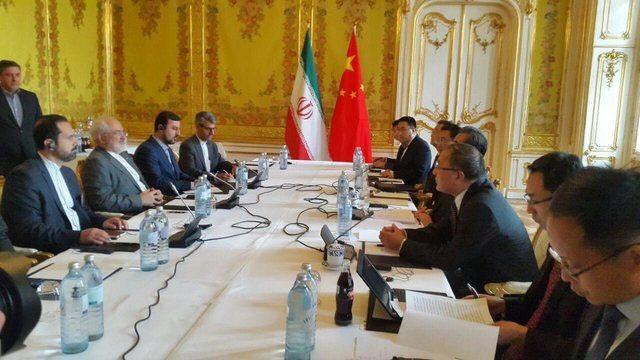
The meeting kicked off on Friday in the Austrian capital as the first round of talks at the level of foreign ministers after the US’ withdrawal from the Iran nuclear deal.

British Foreign Secretary Boris Johnson is absent from the ministerial meeting in Vienna because of tight meetings on Brexit. UK Minister of State for the Middle East and North Africa Alistair Burt is attending the talks.

Before the beginning of the plenary meeting, Iranian Foreign Minister Mohammad Javaf Zarif held bilateral talks with EU’s Mogherini, Chinese Foreign Minister Wang Yi, and Russian top diplomat Sergei Lavrov.

Zarif, who is accompanied by Deputy Foreign Minister for Political Affairs Seyyed Abbas Araqchi and Vice-President for Legal Affairs Laya Joneidi, arrived in Vienna earlier in the day to attend the key talks aimed at exploring the path of future cooperation between Iran and the EU.

Vienna Hosts First Ministerial Meeting of JCPOA Joint CommissionIn comments before leaving Paris to Vienna on Friday, French Foreign Minister Jean-Yves Le Drian said it was unlikely that European powers would be able to put together an economic package for Iran for saving the JCPOA before November.

Earlier on Thursday, Iran’s President Hassan Rouhani said the country has received a package prepared by Europe to salvage the Iran nuclear deal, but described it as a disappointing proposal which only contained a series of general commitments.

“Unfortunately, there was no clear method or operational solution for the continuation of cooperation, and the package only contained a series of general commitments like in the EU’s previous statements,” said Rouhani in a phone conversation with German Chancellor Angela Merkel.

He said Tehran expected the European states to offer a clear and straightforward package.

The president told Merkel that Iran will continue to work with Europe only if the country is hopeful about the future.

“If the trend of work at the ministerial meeting of European countries in Vienna [on Friday] is promising enough to encourage Iran to continue its cooperation and joint work, we will continue to cooperate with Europe,” said President Rouhani.