Monday, April 13, 2026
Home Blog Page 3467

IRGC Navy Has Ballistic Missiles with 700km Range: Commander

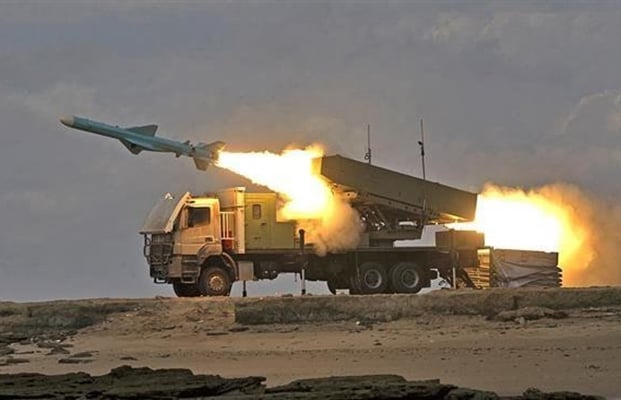
Commander of IRGC Aerospace Force Brigadier General Amir-Ali Hajizadeh told a gathering of military personnel on Tuesday that the coast-to-sea missiles delivered to the IRGC Navy are of ballistic type, not cruise type, and have a range of 700km.

He further noted that Iran’s homegrown missiles are either pinpoint accurate or are being upgraded to have such accuracy, leading Iran to be among top missile powers across the world.

Iran’s armed forces have worked in recent years to boost accuracy of the missiles, based on guidelines by the Leader of Islamic Revolution Ayatollah Seyyed Ali Khamenei to minimize collateral damages, he added.

“Today, our homegrown missiles with ranges from 200 kilometres to 2000 kilometres are all pinpoint-accurate and our previous missiles also enjoy pinpoint-accuracy,” Fars News Agency quoted him as saying.

The general said Iran’s missile program ranks first in the region and seventh or eighth on the global scale.

Hajizadeh also said Iran’s drone program is among the top 15 across the globe, ahead of Russia and China.

The general said Iran’s bomber drones have conducted over 700 military operations against ISIS terrorist group in Syria, targeting the group’s strategic assets including tanks and personnel carriers.

Iran’s Innovative Nano Products Waiting for Foreign Investment

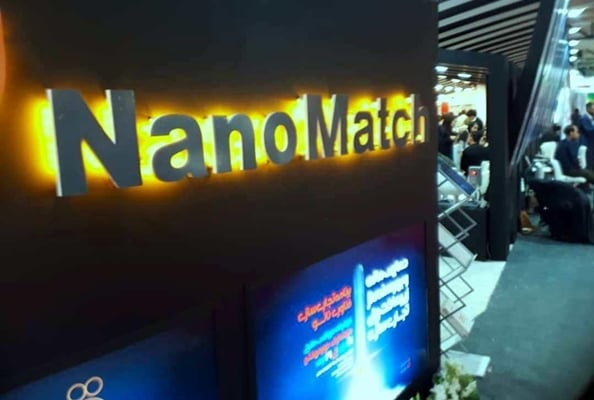
At the 11th edition of the Nanotechnology Exhibition, young Iranian researchers have introduced more than 20 nanotechnology products, in the hope of attracting sponsors.

Some of these products have attracted the attention of more visitors at this year’s exhibition:


Enhancing Memory with Nano Supplements

Pakfan Innovators Company, with the aim of controlling or even preventing the Alzheimer’s disease, has made an herbal supplement called “Reminder” to enhance memory and improve amnesia. In this product, a nylon nano-structure containing the extract of damask rose has been used.

Studies show the properties of the product are effective in improving memory and reducing symptoms of Alzheimer’s disease. Unlike other medications, this herbal supplement has a very low gastrointestinal effect thanks to its nano-scale particles. It passes through the lymph system without passing through the liver, and enters the cerebral blood stream and goes directly to the brain cells. This pathway prevents the liver from disabling the drug.

On the other hand, the nano-scale of these particles helps them cross the blood-brain clogs and facilitate the transfer of medicine to the brain cells.

This medicine is currently under clinical examinations. Researchers at the company believe that producing this drug will be cost-effective for the community, given its preventive and controlling effects.

Antibacterial Tissues

Among other products offered in the Call for Investment section of the exhibition one can refer to the anti-bacterial tissues containing plant nanoparticles.

Theses herbal nanoparticles are extracted from the Shirazi thyme and have a stronger anti-bacterial effect in comparison to silver nanoparticles that are widely used.

Among other advantages of these herbal nanoparticles is their adaptation to nature. Researchers who produce this tissue believe that these particles will not accumulate in nature and will not create toxicity.

For a brief review of Iran’s achievements in various fields of science and technology, check the book “Science and Technology in Iran: A Brief Review

This project is not the same as any foreign and domestic sample. Although the antimicrobial properties of herbal extracts are usually used to make disinfectant emulsions, this herbal extract is used without purifying the desired active ingredient.

This comes as, according to the producers, this tissue contains herbal nanoparticles whose antimicrobial properties are very strong and therefore more effective.

The cost required to use these nanoparticles in tissues is very low, about 2 cents per box of 100 triply sheets.

Lead-free SAC-Bi Nanostructured Solder

A group of researchers at Tarbiat Modares University of Tehran have been able to produce bismuth-based lead-free solder. The lead used in solder in addition to toxicity, which causes a lot of complications for people, also has harmful effects on the environment. At present, the technology of using lead-free solder in various electronic industries has become very popular.

Previously, such a technology was being imported to Iran, which was not cost effective given the high cost of imports.

“The bismuth-based solder has better tensile and physical properties than lead,” said the research team supervisor. In terms of cost, due to the fact that less silver has been used in this product in comparison to foreign samples, its production in the country will be very cost effective due to its vast applications in the field of electronics and dentistry,” added Dr Homam Mousavi.

US Sanctions Violate Basic Human Rights: Iran

khoshrou

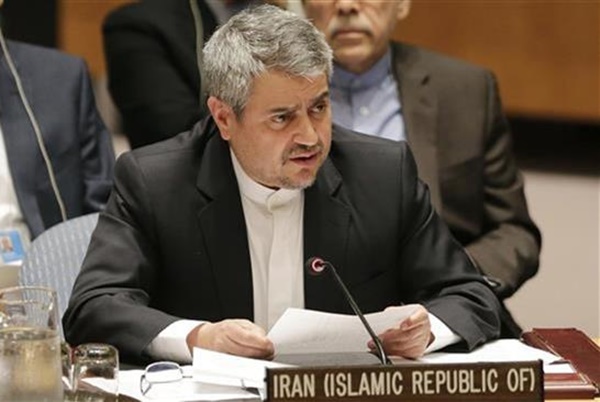
Gholamali Khoshroo on Monday regretted that the US “is addicted to sanctions” and sees it “as a tool in its toolbox in pursuance of its own national interests.”

“The morally wrong and ethically unjustified unilateral measures not only defy the rule of law at the international level but also infringe upon the right to development and lead to the violation of basic human rights,” Khoshroo said.

He made the remarks in an address to the Sixth Committee of the 73rd Session of the United Nations General Assembly on ‘Report of the Special Committee on the Charter of the United Nations and on the Strengthening of the Role of the Organization’.

The Iranian envoy further noted that Tehran welcomes a report by the Special Rapporteur on the negative impact of unilateral coercive measures on the enjoyment of human rights, particularly where it says unilateral sanctions, aggravated by secondary sanctions seeking the “economic isolation” of the target country, amount to discrimination against the innocent population of the country concerned.”

“Coercive measures often lead to collective punishment of innocent civilians and violation of human rights,” he noted, blasting the US’ measures against the Islamic Republic, which have hit innocent civilians on the contrary to what American officials claim.

US President Donald Trump announced in May that Washington was pulling out of the nuclear agreement which lifted nuclear-related sanctions against Iran in exchange for restrictions on Tehran’s nuclear program.

The US administration reintroduced the previous sanctions while imposing new ones on the Islamic Republic. It also introduced punitive measures — known as secondary sanctions — against third countries doing business with Iran.

A first round of American sanctions took effect in August, targeting Iran’s access to the US dollar, metals trading, coal, industrial software, and auto sector. A second round, forthcoming on November 4, will be targeting Iran’s oil sales and its Central Bank.

US policies weakening UN

Khoshroo also took a swipe at Washington’s use of threats against other countries as a tool of foreign policy, saying that the manifestation of the ‘surprising’ trend can even be traced in the UN.

“Threatening to cut financial aid to those countries who voted in favor of a UN resolution or warning them against the possible consequences of their vote in the General Assembly by saying ‘the US taking the names’ is just one example of visible offense to the UN principles,” he said.

“One thing is clear. This trend is weakening the organization, not strengthening it, and runs counter to the very objective of the Charter Committee establishment,” Khoshroo warned.

He also lashed out at the US’ “total disregard to Article 25 of the UN Charter,” saying that “a permanent member of the Security Council is not only violating UNSC Resolution 2231 for the first time in the history of the UN, but also engaging in penalizing nations across the entire world for abiding by that resolution.”

Iran, Russia Agree to Increase Oil Output by 1m bpd

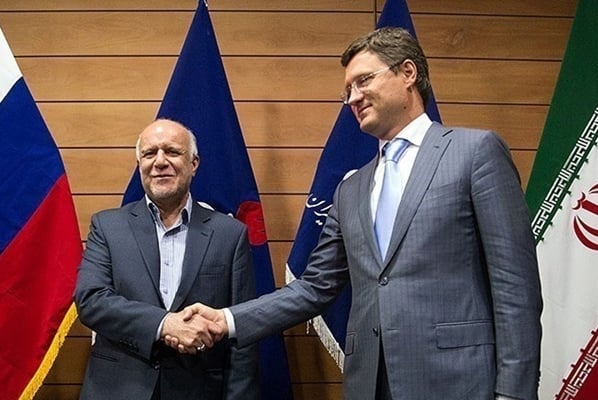
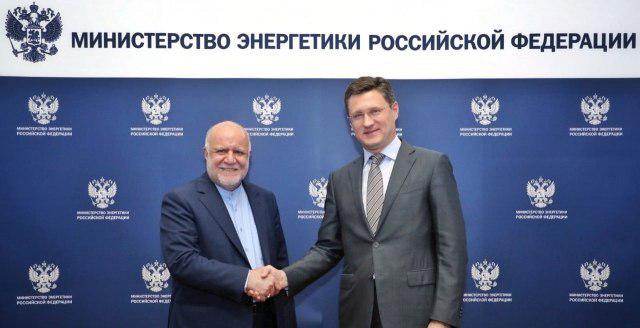
Bijan Namdar Zanganeh arrived in Moscow on Monday night, and sat down with his Russian counterpart Alexander Novak behind closed doors.

Following the meeting, the Russian Energy Ministry stressed the sides are determined to show themselves ‘as responsible participants by boosting production by one million barrels daily through joint efforts.

“The issue of meeting growing demands for energy resources across the globe and prevention of oil market ‘overheating’ is on the agenda. We hope to stabilize the market and show ourselves as responsible participants by boosting production by one million barrels daily through joint efforts,” Novak was quoted as saying by the ministerial press service.

“The countries speak in favour of creating stable and predictable rules of the game in the oil sector,” the Russian minister said.

The two ministers also discussed further regulation of production within OPEC+ agreement framework and cooperation between the two countries in sectors of the fuel and energy complex.

The surprise visit came after media reports claimed Russia and Iran have reached a deal to circumvent the latest round of US sanctions scheduled to go into effect in the beginning of November.

The agreement contemplates Iran supplying its crude oil to Russia through the Caspian Sea to be thereafter exported worldwide, Israeli media reported Sunday.

It is not yet clear what form of compensation Russia will pay to Iran for the oil supply, but it will likely be through trade and service benefits.

US President Donald Trump slapped a first round of sanctions on Iran in August after pulling out in May from the 2015 international deal, to the dismay of his European allies. A second round of its illegal measures is due on November 4 to target Iranian crude oil and banking.

Iran, Russia Agree to Increase Oil Output by 1m bpd

11 Iranian Forces Abducted by Terrorists near Pakistan Border

According to Iranian media reports, the terrorists attacked the Iranian guards in Lulakdan border village at 4 to 5 am (local time), Tuesday morning.

The Iranian forces include one border guard, four conscripts, and six Basij (voluntary) security forces, Fars News reported.

In a statement quoted by the IRIB News Agency, the anti-Iran terrorist group Jaish al-Adl has claimed responsibility for the attack and abduction.

The Quds Base of IRGC Ground Force later released a statement to give more details of the attack. According to the statement, the foreign-backed terrorists have infiltrated certain elements into the Iranian border post.

The IRGC stressed that it will pursue the fate of the abductees and chase the terrorists, but at the same time urged Pakistan to take serious action against such operations inside its territory and find and release the Iranian hostages.

Iran Unveils Its First Homegrown 3D Nano Printer

On the first day of the 2018 Nanotechnology Exhibition, Iranian Vice-President for Science and Technology Sorena Sattari unveiled the first generation of the country’s 3D printers called Arkajet.

This device has been developed and produced by Iran’s Nanotechnology Initiative Council based on the capabilities of Iranian researchers at “Royal Sustainable Development” knowledge-based company.

The way this printer works is quite similar to inkjet printers, so it is very easy to use. An important feature of the printer is its use of conductive liquid inks such as copper, carbon, silver, etc. to print ultra-precision electronic circuits on flexible surfaces such as talcum and cloth. One of the products currently printed with this device is a flexible pressure sensor using silver ink.

This sensor can also be used in the production of smart floorboards, flexible smartphones and interior design of cars.

Another version of this printer that was showcased at this year’s exhibition was digital circuits for the production of heat with carbon and copper ink. Such circuits can be used in the car seat’s heating system and the heating circuit of mountaineers’ clothing.

Garments fitted with such circuits that are printed on the cloth can stay warm for several hours by receiving power from a power bank. In this way, you will not need to wear heavy and thick clothes in the winter.

Royal Sustainable Development is consulting with various domestic garment manufacturers to use this technology ahead of other leading companies in the field of clothing including those from Turkey.

The next challenge facing this technology is the production of conductive inks used by this printer.

“At present, the greatest expense of producing these circuits is spent toimport conductive inks from abroad,” said the director of research at Royal Sustainable Development Company.

For a brief review of Iran’s achievements in various fields of science and technology, check the book “Science and Technology in Iran: A Brief Review

“Our research team, in collaboration with academics, is studying and localising the production of these inks in the country. We have achieved success in the field of ink production, and we hope we can market these modern products at a very good price,” he added.

This new technology, which has just entered the electronics world, has paved the way for the future of electronics and the production of highly accurate and flexible circuits.

This technology has also been welcomed for a variety of uses, such as flexible displays, smart phones, car seat heating systems, mountaineering cloths, and many other applications in the world.

Experts say the future of smart clothing production and advanced clothing technology will go through the development of nanotechnology; something that Iranian experts are immediate forerunner in them.

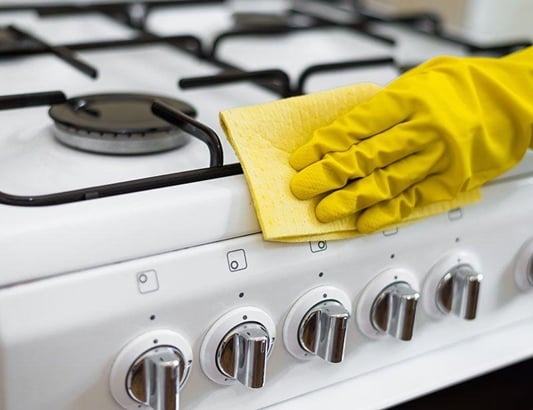
Fat-Repellent Nanolayers Can Make Oven Cleaning Easier

The nano-products were unveiled at the 11th Nanotechnology Exhibition in Tehran which runs from October 13-16. One of the problems facing users is that they struggle while scrubbing fat off the surface of the oven. However, nanotechnology has solved this problem.

These days, many well-known home appliances companies such as Bosch, Siemens, Samsung, etc. use such coatings on the surface of ovens and fingerprint-repellent coatings on other houseware appliances to make it easier to clean them.

Iranian companies which produce home appliances and face the same challenge have decided to use nanotechnology to solve the problem. Accordingly, in 2016 and at the request of the Snowa home appliances company, researchers across the nation were instructed by the Special Nanotechnology Commission to domestically develop the technology to produce fat-repellent layers.

For a brief review of Iran’s achievements in various fields of science and technology, check the book “Science and Technology in Iran: A Brief Review

After passing through the verification stages, the Nanopad Sharif knowledge-based company was commissioned to produce such coatings. Now, the product produced at the company is a liquid capable of creating nano-based coatings with anti-repellent properties.

At the moment, agreements are being concluded with companies which have ordered the liquid called “Sharif Nanopad.” The companies will use the nano-coatings in producing houseware appliances. The technology could be used in producing products with similar problems, hence increasing customers’ satisfaction.

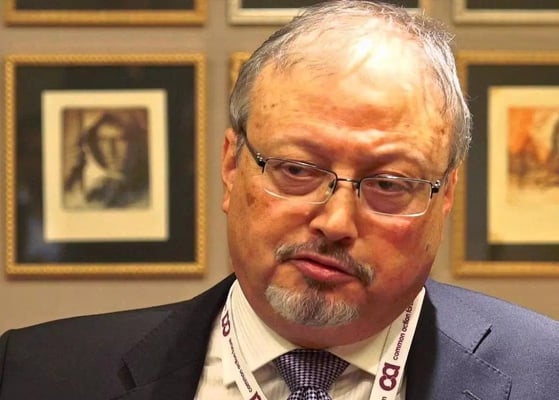
Khashoggi Case to Be Closed by Scapegoating Some Consulate Staff

Saudi journalist Jamal Khashoggi entered Saudi Arabia’s consulate in Istanbul on October 2 to obtain a document certifying he divorced his ex-wife, but he has not been seen since. Turkish security officials claim that there is strong evidence that Khashoggi was killed inside the consulate and his body has been dismembered to be transferred outside. Saudi officials have countered the claim, asking Turkey to provide the necessary evidence to prove the allegations.

Usually when security officials in a country confirm an incident and insist on their views, they should not be ignored. Particularly, with the advancement of intelligence systems, security officials can easily understand what is happening inside foreign embassies, or even they may have the sound record or image of the incident.

Today, in many countries, especially NATO members, there are systems whose main task is to keep track of diplomats’ communications. These systems covertly watch the activities of foreign agencies.

Thanks to the advancement of technology, modern-day supercomputers available to security agencies can tap mobile phones, fax machines, e-mails, and take satellite images; therefore, the Turkish authorities cannot be unaware of what has happened inside the consulate.

Telephone conversations between King Salman and Recep Tayyip Erdogan and the deployment of head of intelligence of the kingdom Khaled al-Hamidan to investigate Khashoggi’s case, exchange of information with security officials in Turkey, and possibly receiving evidence related to the disappearance of Saudi journalist confirm the claims raised by Turkey.

Of course, it is unlikely that the outcome of the talks between the security authorities of Turkey and Saudi Arabia will be publicly announced, and the aspects of the murder or abduction of the Saudi journalist is unlikely to be published, as Ankara and Riyadh may compromise over the case.

Naturally, the Saudi government will try to use its petrodollars to mask the case just like the crisis of abducting Saad Hariri, the massacre of the defenceless Yemeni people, the execution of Sheikh Nimr, the Mina tragedy, the suppression of religious and academic characters, the imprisonment of Saudi princes at the Ritz Carlton hotel and confiscation of their wealth.

Saudi officials will probably use one or two of the consulate General’s staff members as scapegoat and punish them to close the case.

Today, with its extreme actions, Saudi Crown Prince Mohammed bin Salman has moved towards a kind of Trumpism, and in this path he has turned into a modern Arab fascist and racist. This approach is definitely a serious threat to the security of the countries of the region. The countries of the region, the advocates of human rights, the media, and all thinkers and journalists should not be ignorant of the extreme actions of Saudi rulers and take the necessary measures to deal with this danger.

World Must Pressure Israel into Working with IAEA: Analyst

Nosratollah Tajik, a former Iranian ambassador to Jordan, in a recent interview with Jam-e-Jam Online, said that Tel Aviv must first let the IAEA inspectors visit its facilities, and then officially announce the number of its nuclear warheads.

“The Zionist regime expects other countries to comply with non-proliferation treaties while it keeps its nuclear arsenal and does not allow nuclear inspectors to monitor its activities,” Tajik said.

Under such circumstances, he added, one should not expect that other countries do the opposite and restrict themselves.

He also pointed out that one of the important strategies of Iran after the 2015 nuclear accord was to move towards a Middle East free from nuclear weapons.

This region should have maximum safety due to its vulnerabilities, lack of development, and being a strategic point in terms of supplying energy to countries in the Far East.

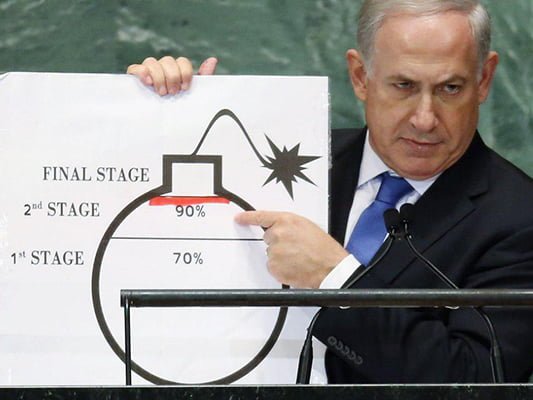
Referring to the recent statements made by Israeli Prime Minister Benjamin Netanyahu at the UN General Assembly, Tajik emphasised that to understand Bibi’s speech, one should study the Zionist regime’s strategy towards Iran.

He underlined that the Zionist regime is one of the parties that benefited the most from the Iranophobia project.

Tajik argued that before the signing of the nuclear deal, the Israeli regime’s activities had created a global consensus against Iran.

With the signing of the JCPOA, he said, all Iranophobic strategies of enemies failed. “However, with the election of Trump, a new American-Hebrew-Arab conspiracy was formed against Iran to start a project called Iranophobia 2.

Referring to a part of Netanyahu’s speech at the UN General Assembly, Tajik noted the Israeli PM was able to keep the Arab bloc away from Iran and encourage it to get closer to Israel.

He also pointed to Netanyahu’s theatrics on a “secret atomic warehouse” in southern Tehran, and said it seems a number of Iranian people or organisations, who are seeking to milk the Zionist regime, have sold the Israeli prime minister some inaccurate information in a way that he made fun of himself by repeating those information at the UNGA.

“As an analyst, when I see the IAEA has verified Iran’s implementation of its nuclear-related commitments for 12 times, there remains no doubt that the allegations raised by Netanyahu are a series of fake news aimed at influencing public opinion to make the Islamic Republic isolated.”

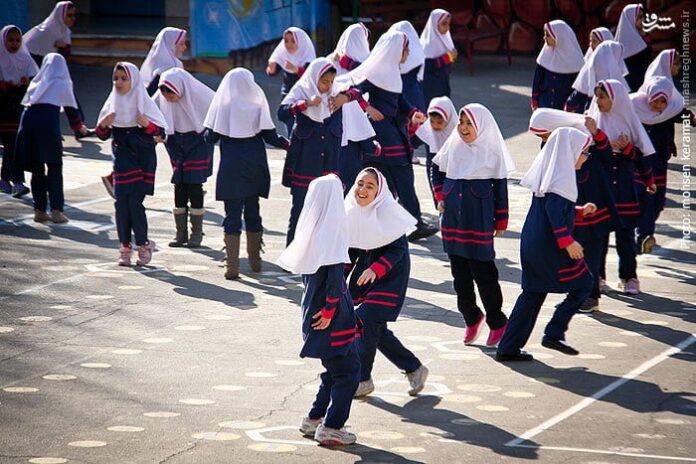
Iranian Schools Exempted from Paying Water, Power, Gas Bills

The dramatic devaluation of Iran’s national currency rial against the US dollar over the past few months has been taking its devastating social and cultural toll on Iranian children, hampering their education.

The devaluation has been mainly caused by the US’ sanctions on the Islamic Republic. Despite what the US officials claim, it is the Iranian people, particularly the vulnerable social classes, who are paying a heavy price for Donald Trump’s reckless policies towards other nations.

The new academic year in Iran started a few weeks ago amid a considerable growth of stationary prices due to the record depreciation of rial against the US dollar. The growing prices of basic commodities along with the soaring education fees in the new academic year have left most of the students’ parents incapable of affording to pay the hefty price of education for their children. This has led many students to leave their education unfinished.

To alleviate the problem and decrease the amount of money schools receive from students, the Iranian government has decided to increase the budget allocated to education. As part of the budget increase, the government has exempted all schools from paying water, power and gas bills.

Officials hope a long step could be taken in this field if other related organizations step into the fray and adopt similar measures for the students. This will also help the students’ families, exempting them from paying extra money to schools.

Head of the Public Relations of Tehran Education Department says schools are not allowed to receive money from parents under the pretext of holding special events for students.

“It’s illegal and the families should report any violation to the Assessment Centre of Education Departments,” he noted.

He went on to say that in the new academic year, the Education Ministry has adopted special measures to stop schools from receiving any money from parents.

“For example, exempting schools from paying power, water and gas bills, as announced by the government, is one of these measures.”

According to the official, the announcement should have been implemented as of the first month of this Persian year but the Power Distribution Company and Water and Wastewater Company continued to charge the schools until last month.

“Today, with the follow-ups made by the government, all schools will be exempted forever from paying gas, water and power bills,” he concluded.