Saturday, December 27, 2025
Home Blog Page 3399

Ahvaz Attack Photographer Talks of Those Breathtaking Moments

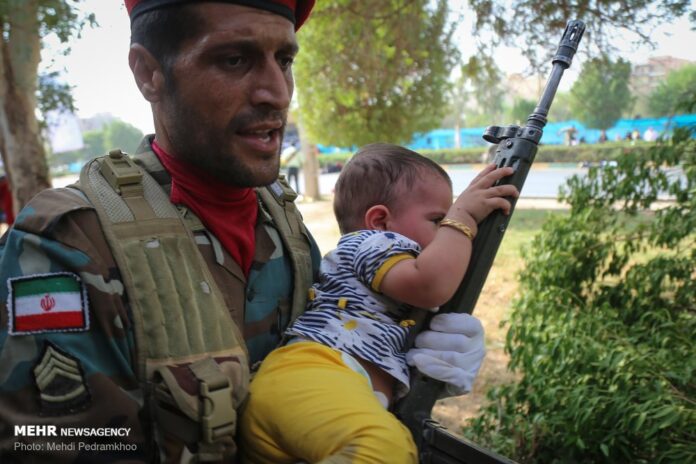
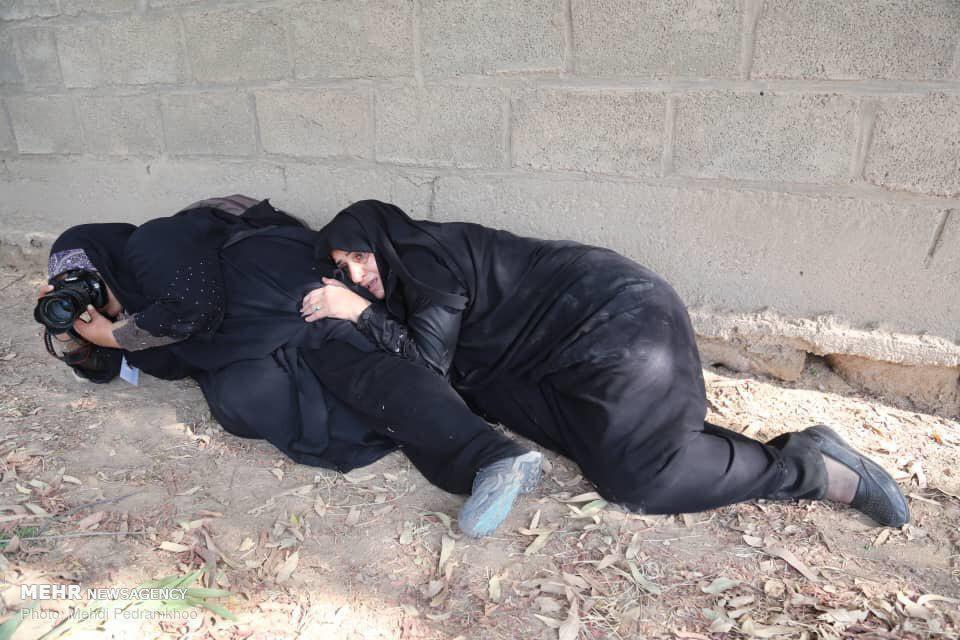
Five terrorists attacked a military parade of the Iranian Armed Forces in the southwestern city of Ahvaz on September 22, 2018, killing 24 people and wounding 68 others. In the very early hours of the tragedy, photos of the incident were posted on social media. A few specific photos went viral. One of the pictures shows a woman photographer lying on the ground and taking photos and another lady taking shelter by her side. Another photo shows an Army commando holding a young baby in his arms and taking him away from the scene of the attack. The kid has clutched the commando’s gun and seems worried.

The Sobh-e Now daily has held an interview with Mehdi Pedramkhoo, the photographer who captured those moments in photos. He has talked about the ambience at the moment of the attack and the tense conditions under which he took the photos.


Mr Pedramkhoo, you were among the first photographers to capture images of the terrorist attack, which were posted on social media. How come you were chosen to take photos of the ceremony?

The Mehr News Agency had made arrangements the day before the parade for me to be present at the ceremony. The next morning, I went to the special place allocated to journalists at the ceremony. The ceremony began at 8:30 local time, and the terrorists struck at 9:00. As in previous years, there were troops on the ground that fired blanks in a ceremonial show as part of the ceremony. First, we thought it was the sound of blanks being fired. But when bodyguards stood by the dignitaries at the ceremony, we found out that something was going on.

How far away were you from the scene of the shooting?

The shooting took place from behind the podium. The terrorists struck from the park. After they opened fire, an order was issued to the people and troops there to take shelter. Then people rushed to take refuge and get away from the scene. Immediately, the gate of the adjacent garrison was opened and the people went in. Unfortunately, some of them were killed or wounded.

I think the most usual reaction was to run, but you didn’t run away and kept taking photos of the incident instead, right?

I think I had an adrenaline rush. I took my camera quickly and took pictures of the people who were running away. A military police soldier standing next to me was shot in the arm. Then I took photos of him.

Were you that close to the scene?

It really happened all of a sudden. It was crowded. The ones holding guns took shelter by the streets because their rifles were not loaded. As a norm, guns are not loaded during parades. First, I thought the soldier next to me had taken shelter there, but later I saw he had been shot.
Ahvaz Attack Photographer Talks of Those Breathtaking Moments

I saw some photos that you had taken of a lady taking pictures while another woman has taken shelter behind her. Right?

She is Ms Fatemeh Rahimavian, the photographer of Fars News Agency. When the shooting began, they opened the gate of one of the garrisons, so that people would be able to take refuge there. I was close to the scene and saw that this lady photographer took shelter by lying down. Then I took a photo of her, and I think it turned out to be a good picture.

You were right there at the scene where you had to protect your life on the one hand and take photos on the other!

When it all began, I had a feeling of fear. But I was taking photos at the same time. On the parade ground, I took shelter next to the forces of the IRGC (Iran’s Islamic Revolution Guards Corps) and kept taking photos. But when I was alone, I lied down to dodge the bullets.
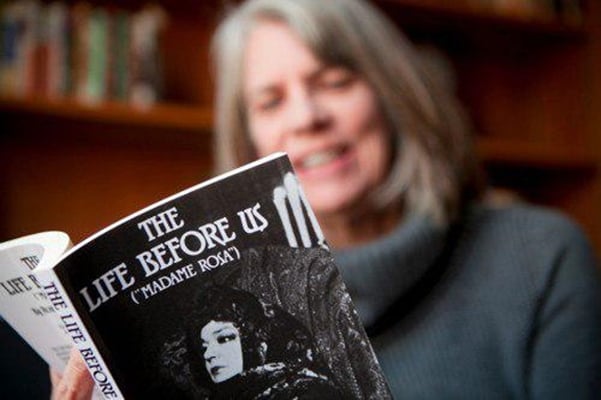
 

Iran Lifts Ban on Romain Gary’s “The Life Before Us”

The news was announced by Leili Golestan, the translator of the book.

“The book ‘La Vie devant soi’ was first published in 1975 before the [1979 Islamic] Revolution [of Iran]. But it was banned for around 10 years after the revolution,” she said.

“Then the ban was removed and it was published several times afterwards. However, it was banned again during the tenure of [Iranian President] Mahmoud Ahmadinejad,” added the translator.

“I had an interview with a newspaper some time ago in which I mentioned that the book ‘La Vie devant soi’ was being printed in offset, and that no one was answerable. Fortunately, the director general of the Books Department contacted me and, in a conversation we had, he helped get the book published. We owe the reprinting of the book to him,” said the translator.

She then touched upon the reason behind the ban on the book.

“It is the story of a boy who grew up in a bad environment and, hence, is not very polite as he has not learned otherwise. I was asked to discipline the child while translating the book! But I did not agree to do that,” said the translator.

“The child remained impolite until the book received permission to be published for a few years. Then it was banned again. Now, the child in the story is not very polite, but it (the translation) was modified much less than I thought and was published,” she said.

Golestan described “The Life Before Us” as the most humane book she had ever read in her life.

“This book is very popular, and it had, and does have many fans,” she said.

“Even during the time it was banned, the book was printed in offset, and the offset edition sold like hot cakes, too,” she added.

She said “La Vie devant soi” has a message of friendship, affection and kindness for all people.

“With the publication of this book, I feel like a loved one has been released from prison and now I have come to visit him,” she said.

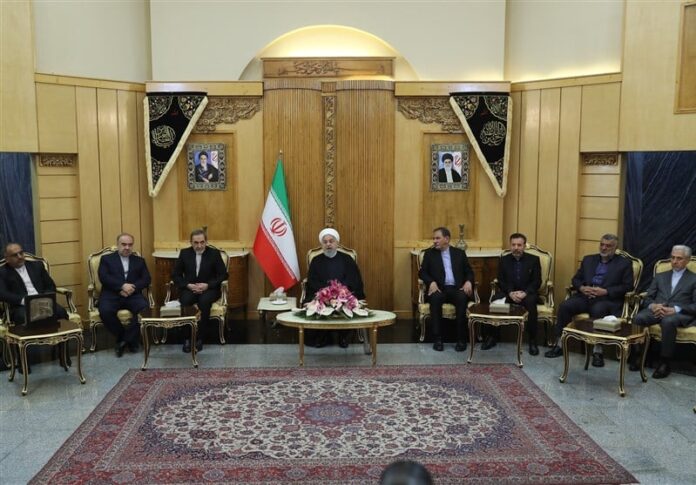
President Rouhani Takes Back Ancient Iranian Artefact from US

Speaking to reporters upon his arrival in Tehran on Thursday, Hassan Rouhani explicated the diplomatic outcomes of his trip to the UN, his meetings with world leaders on the sidelines of the General Assembly, interviews with media and other activities to publicize Iran’s stances.

“We had also another achievement in this trip,” Rouhani said, adding that he has brought a 2,500-year-old archaeological object back to Iran which was being kept in the US.

The ancient artifact belonging to the Iranian nation has been retrieved after hard judicial work that had begun a couple of years ago, the president said.

In a similar development in September 2013, Rouhani brought back an Iranian griffin from the US after his first UN trip. The silver drinking cup, cast in the shape of a winged griffin, had been looted from a cave in Iran and seized by US customs officials more than a decade ago.

Iran Using Plants to Fight Dust Pollution in Lake Urmia

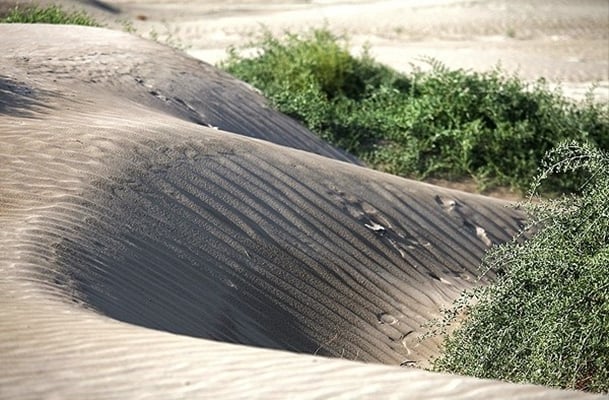
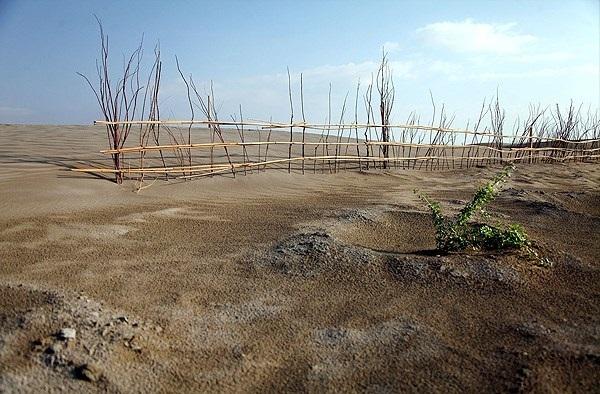
The two plants are “Nitraria” or Karadagh and “Tamarix” or Shoorgaz, which are planted on the land of Jabal Kandi village in Urmia County, to slow down the wind that brings with itself the salt particles.

Shahrvand daily in an article has reported that in Jabal Kandi, winds always blow in all directions. According to the report, during the past few years, several villages were abandoned and many gardens and lands dried up.

The situation in the region was so dire that in saving the lake, paying attention to salt particles was more important than the restoration of water. Therefore, since three years ago a reconstruction team started to plant Nitraria and Tamarix in the region.

Back in April, a storm struck Urmia and removed the roof of the houses, but in Jabal Kandi, which is located in the northern part of the lake, the weather was not dusty thanks to the planting of these species.

Jabal Kandi region was one of the centres of the particles, and sand used to move towards the villages. The dust could affect up to 40 km, and could even go forward for 500 km. The bad news is that the dust contains salt particles and heavy elements.

Iran Using Plants to Fight Dust Pollution in Lake UrmiaThe more the water was decreasing in the lake, the more haze could be seen there. Two to three villages were evacuated around Jebel Kandi that were part of the lake until 20 years ago.The lake was dried up causing the trees to dry and the farms to disappear.Now, when the wind blows in the plain these plants stop it. As a result, the dust could not be seen in the air.
The natural plants of Urmia are at risk of drying.They have grown up when the lake was full of water, but now there is little water.

A director of the project to revive the Lake says “what we do is to reduce photosynthesis in order to reduce the plant’s water consumption. We prune the branches to help it survive with the same amount of water. After that, they will not be susceptible to fire if they are dried up. The next year they will be greener than before.”

Karadagh turns into a 4-metre-high bush that prevents sandstorms. The more the sand is, the more this plant grows and prevents sandstorms.

In this area, there is also a mast that shows which wind and what hotspot is activated. Officials say the station for monitoring and measuring the wind erosion is unique in the world. This station is a combination of three models that exist in the world, and is the result of the cooperation of the universities of Urmia and Yazd.

In addition, a revitalisation project is underway in every corner of West Azarbaijan Province. These projects include the transfer of water and wastewater from other cities, reducing water consumption in the agricultural sector, and drip[ing irrigation as well as revitalising the lake. The dust of the lake is being controlled, and with the implementationof plans,Urmia Lakewould be revived within the next 10 years.

“Israeli PM’s Latest Anti-Iran Accusations False, Farcical”

Qassmei’s reaction came in response to reporters’ questions regarding Netanyahu’s latest anti-Iran theatrics and allegations at the United Nations General Assembly.

“After the United States and Israel’s failure to play out anti-Iran scenarios, these farcical claims and [this] show by the prime minister of the occupying regime [of Israel] were not unexpected,” said the spokesman.

“This is a new show by the authorities of the occupying regime of Israel which we strongly reject, though it is not worth talking about,” said Qassemi.

He said Israel and the US sought to paint an unpleasant picture of Iran at this year’s UN General Assembly, but failed to do that.

“After the failure of all of the Israel regime and the United States’ plans to tarnish Iran’s image at the recent [UN] General Assembly session, and following the US’ show at the [UN] Security Council, which turned into a fiasco for the US and its delusional officials and disgraced them and turned into a meeting to condemn the United States’ breach of commitments, and following this international embarrassment and the mental confusion of the Israeli regime and spiteful American officials some of whom are subservient to some extremist and terrorist groups and, like earthly devils, always wish to make hell and are against peace, security and stability in whatever part of the world, it was expected that they would turn to fabricating new scenarios and telling new lies and somehow make desperate attempts to restore their lost reputation and make up for their great embarrassment,” Qassemi said.

The spokesman reiterated that the only authority to look into nuclear issues is the International Atomic Energy Agency (IAEA), which has constantly maintained its supervision and pursued its verification plan.

“So far, the IAEA has, in 12 reports, corroborated Iran’s compliance with all of its commitments under the JCPOA (the Iran nuclear deal), which is also confirmed by the international community, all relevant authorities and other signatories to the JCPOA,” Qassemi noted.

“The occupying regime [of Israel] should know that in the modern age, the whole world – as he [Netanyahu] himself saw – will just laugh out loud at such untrue, injudicious and hollow remarks and false shows,” Qassemi said.

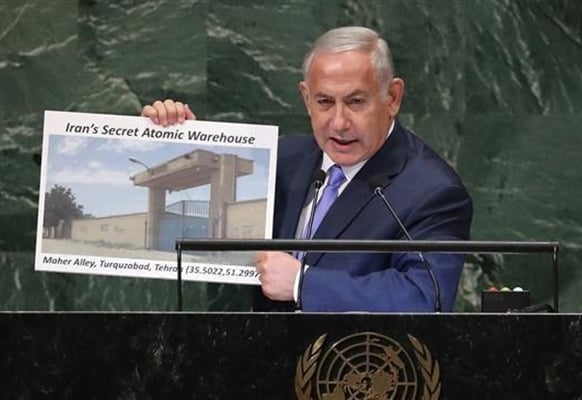
Qassemi’s reaction came after Netanyahu once again took the podium at the United Nations to bring out fresh theatrics against Iran, repeating his threadbare allegation that the country is working to develop nuclear weapons at “secret” sites.

As already expected, Netanyahu used a map and photographs of a building that he claimed was a “secret atomic weapons warehouse” in the Iranian capital, Tehran, to justify his false accusations during his speech on at the 73rd annual session of the UN General Assembly in New York on Thursday, September 28, 2018.

“In May we exposed the site of Iran’s secret atomic archive. Today, I’m revealing the site of a second facility; Iran’s secret atomic warehouse,” claimed the Israeli PM, who added, “Iran has not abandoned its goal to develop nuclear weapons.”

Netanyahu was referring to his earlier dubious show against Iran, during which he went live on television and put on display what he called records from a secret warehouse in Tehran.

Also during his Thursday’s anti-Iran rant, Netanyahu slammed the European Union for firmly supporting the nuclear accord after Washington – influenced by intense Israeli lobbying – scrapped the international document.

“While the United States is confronting Iran with new sanctions, Europe and others are appeasing Iran by trying to help it bypass those new sanctions,” Netanyahu said, referring to EU efforts to compensate for Washington’s absence and keep Iran in the deal.

Netanyahu’s new vaudeville at the UN was nothing new. Observers say the Israeli premier indulges in theatrics as a method to influence public opinion, without providing any proof to support his claims.

Iran FM Holds High-Level Talks in New York

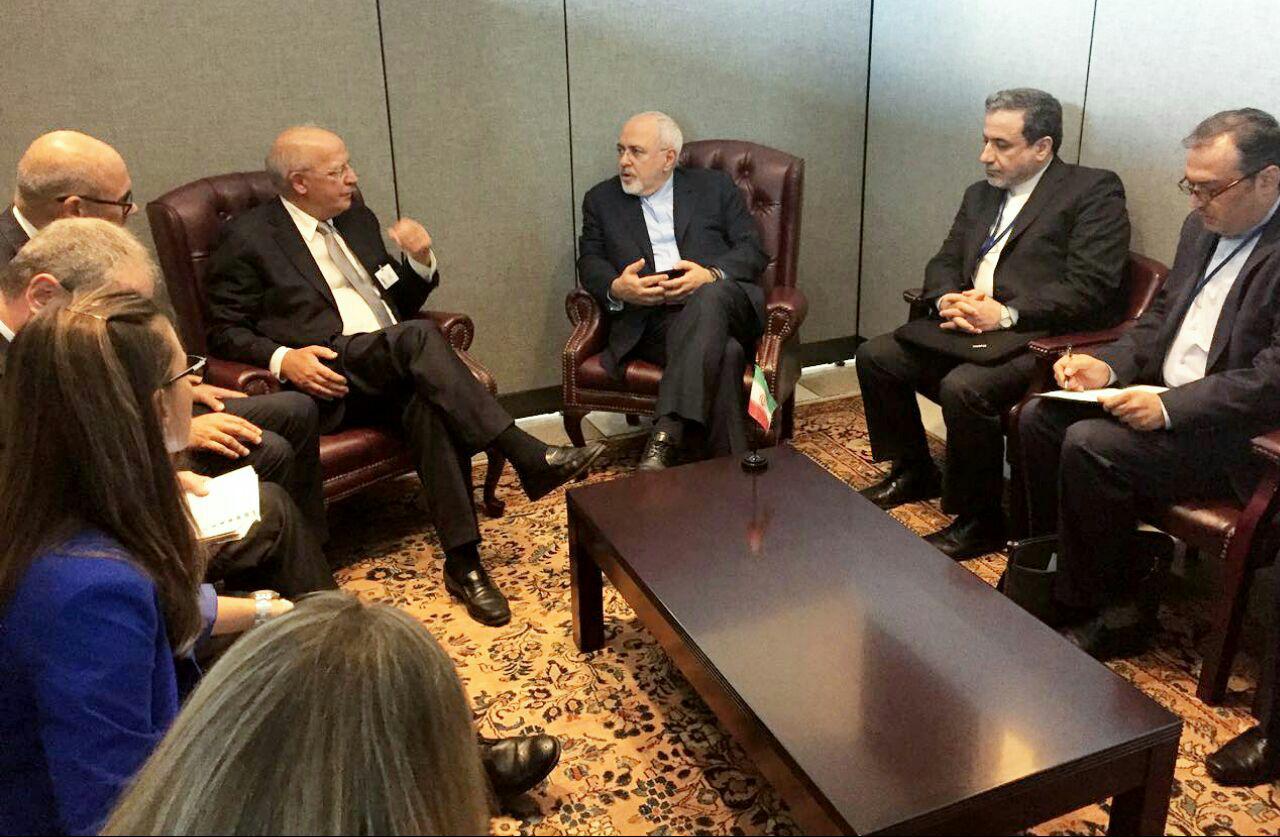
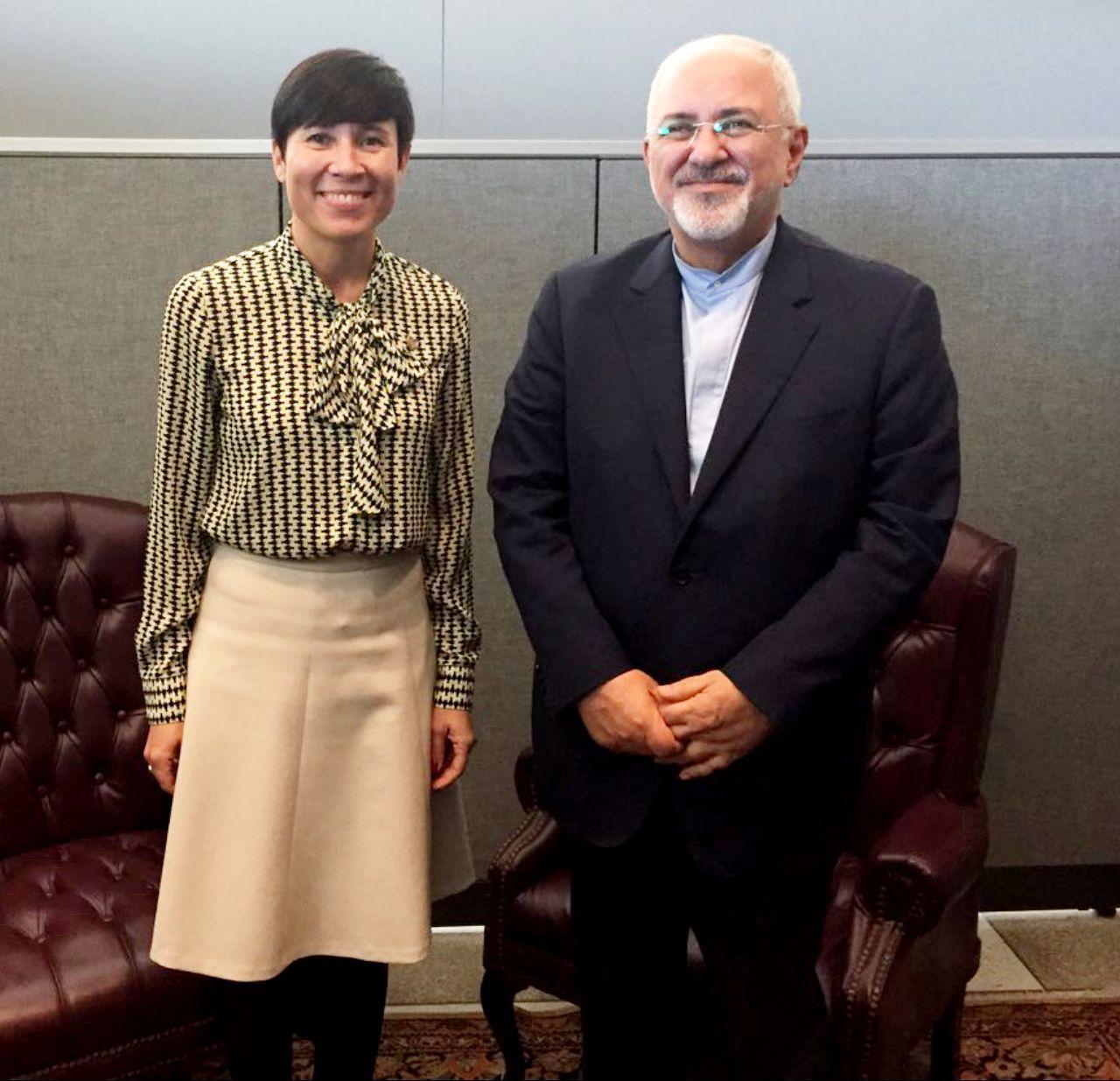
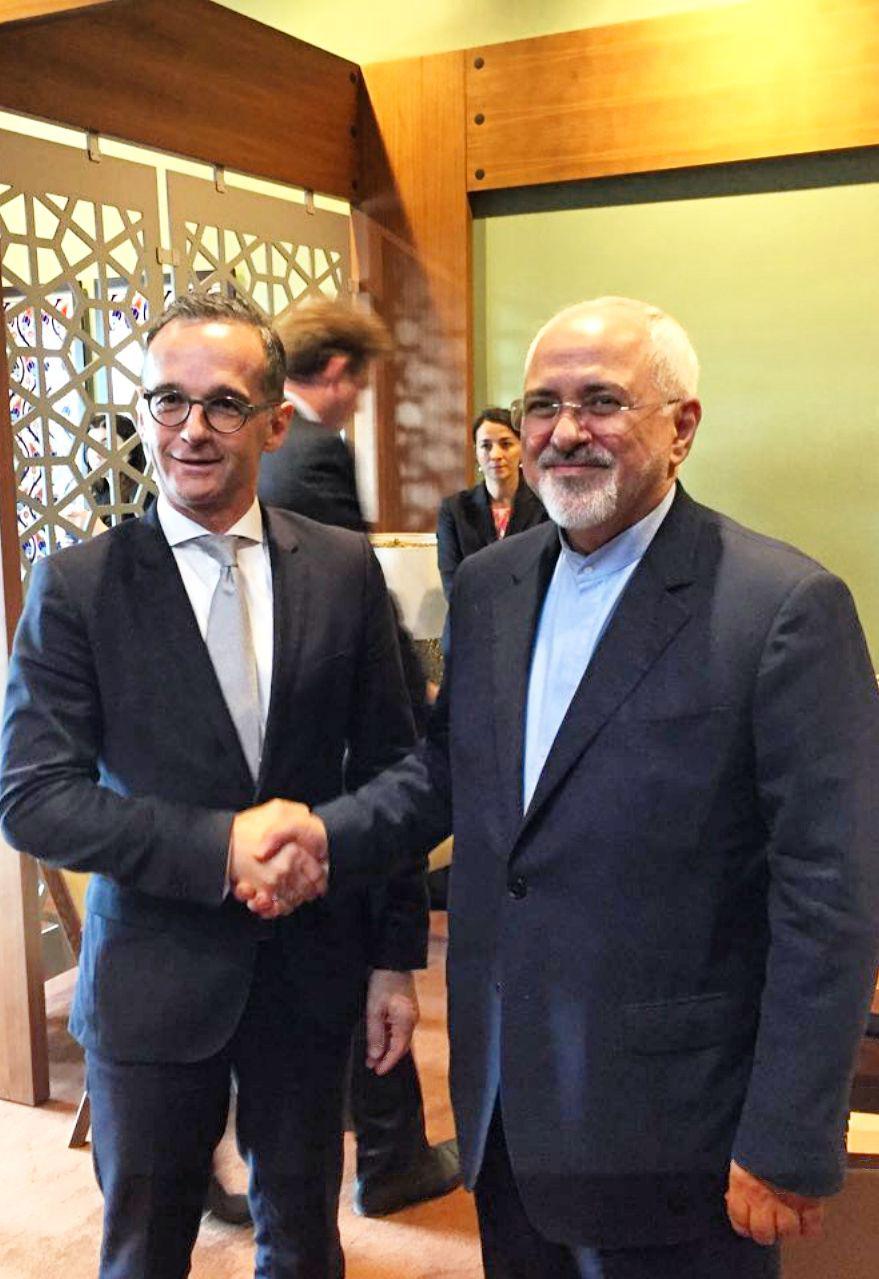
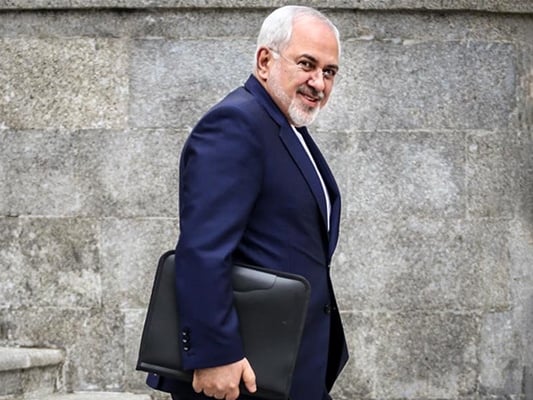
Zarif discussed the Iran nuclear deal and the European Union’s efforts to save it in separate meetings with his German counterpart Heiko Maas, Portuguese Foreign Minister Augusto Santos Silva, and Norwegian top diplomat Ine Marie Eriksen Søreide.

The Iranian and European top diplomats also talked about ways to expand bilateral relations and business cooperation following the re-imposition of US sanctions on the Islamic Republic in November.

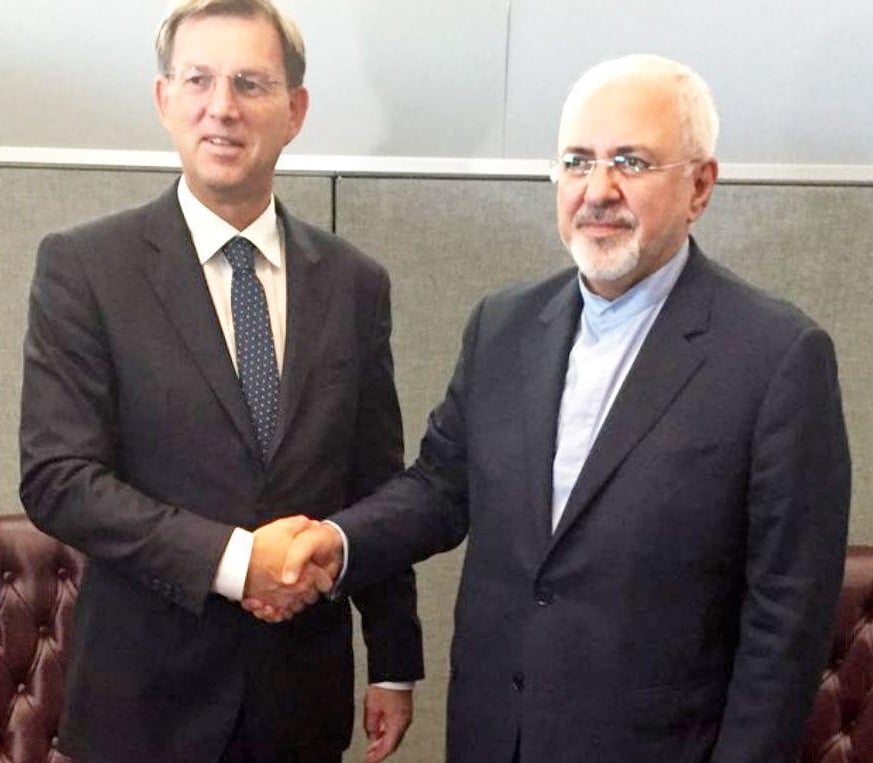
Iran FM Holds High-Level Talks in New YorkThe issue of enhanced business cooperation was particularly a key focus of talks in Zarif’s meetings with Slovenian counterpart Miro Cerar and Romanian Foreign Minister Teodor Melescanu.
Zarif and Melescanu also exchanged views on the most important regional and international issues.

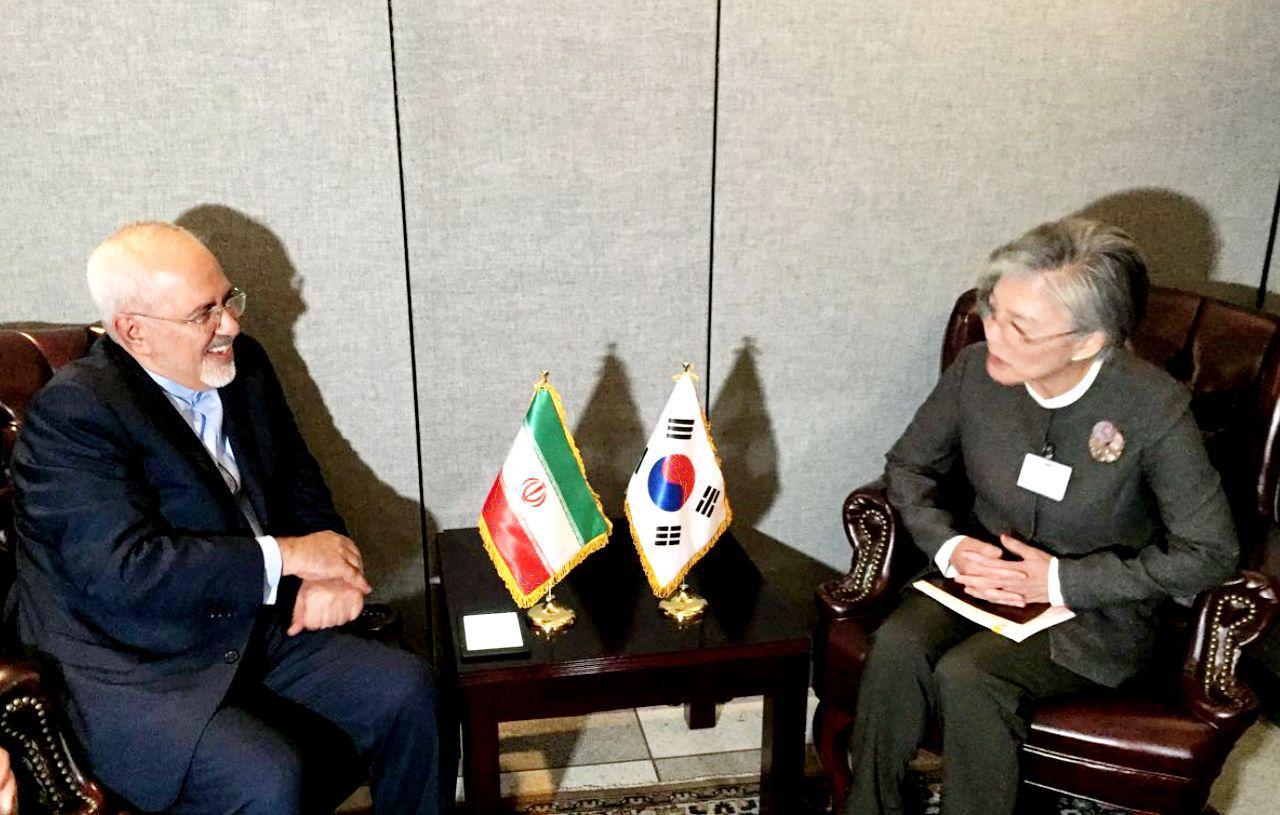
Zarif also held a meeting with his South Korean counterpart Kang Kyung-wha. In the meeting, the two sides exchanged views on bilateral ties and the continuation of economic cooperation between Tehran and Seoul.

They also held talks on the peace process in the Korean Peninsula.

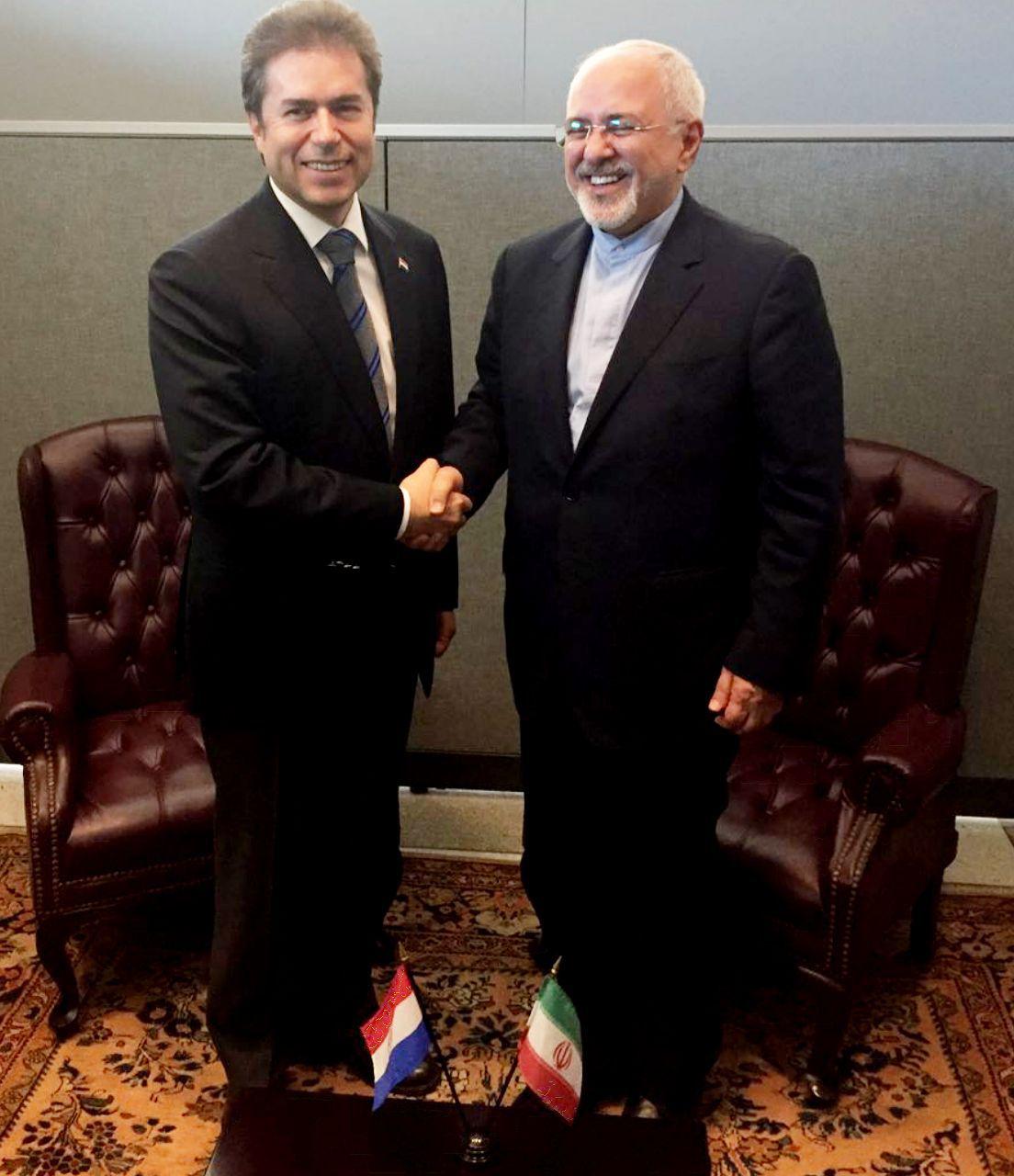
The Iranian foreign minister also held talks with his Paraguayan and Venezuelan counterparts in New York.

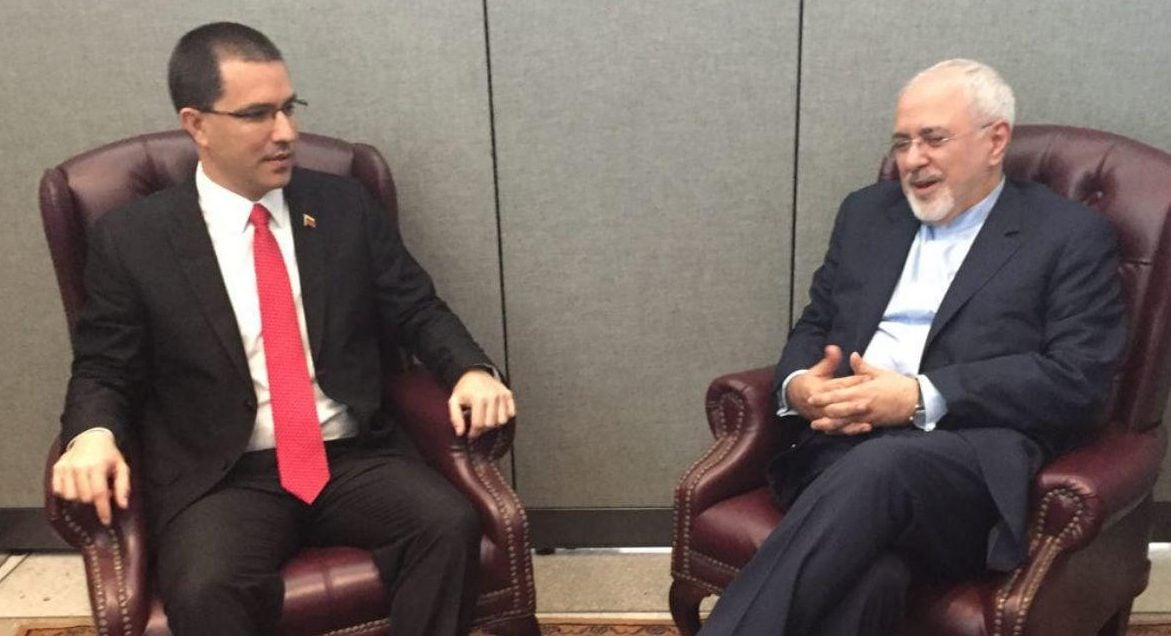
Iran FM Holds High-Level Talks in New YorkIn the meeting with Venezuelan Foreign Minister Jorge Arreaza, the two top diplomats discussed ways to promote bilateral relations in all fields. They also talked about the most important international and regional issues.

Zarif’s meeting with his Paraguayan counterpart Luis Castiglioni also focused on the political resolve of Tehran and Asunción to develop bilateral relations between the two sides.

They also exchanged views on ways to deepen and enhance mutual cooperation between the two countries.

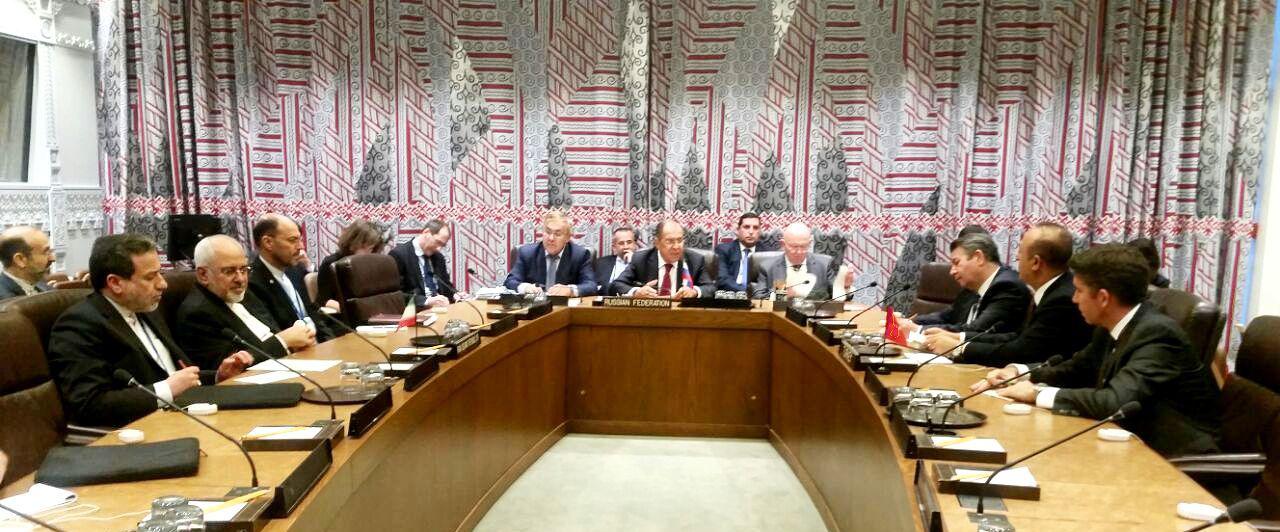
The Iranian top diplomat earlier attended a trilateral meeting with his Russian and Turkish counterparts, Sergei Lavrov and Mevlut Cavusolgu, to discuss the latest developments in Syria’s Idlib.

During the Thursday talks in New York, the three sides conferred on coordination of political solutions to the Syria crisis, especially the Syrian Constitutional Committee.

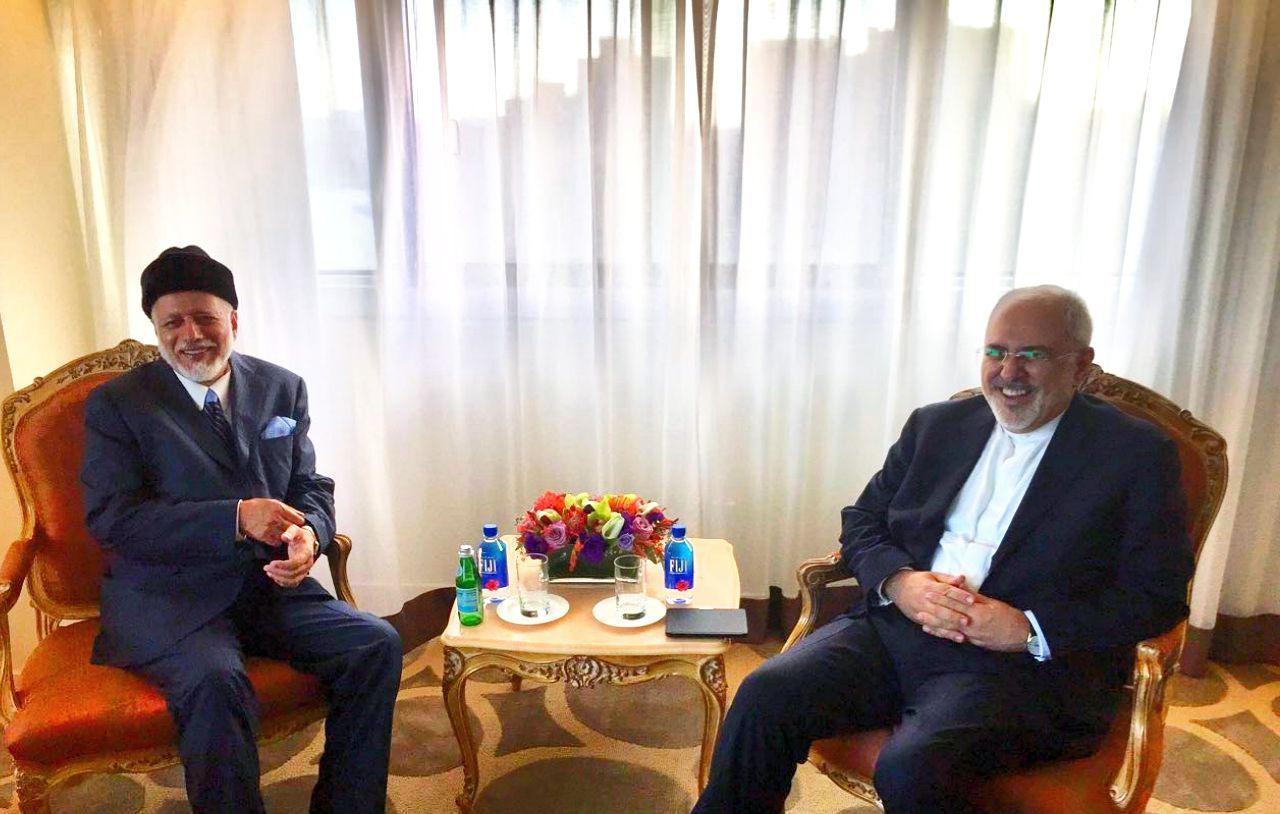
Zarif had earlier on Wednesday discussed the developments in Iraq in separate meetings with his Omani counterpart Yusuf bin Alawi and Ján Kubiš, the Special Representative and Head of the United Nations Assistance Mission in Iraq (UNAMI).

The UN General Assembly provides a great chance for world leaders and officials to hold bilateral talks with a large number of their counterparts in a short period of time.

Iran Warns Israel of Dire Consequences of Attacking Syria Positions

Iran Calls US Ruling Elite 'Inefficient, Source of Threat'

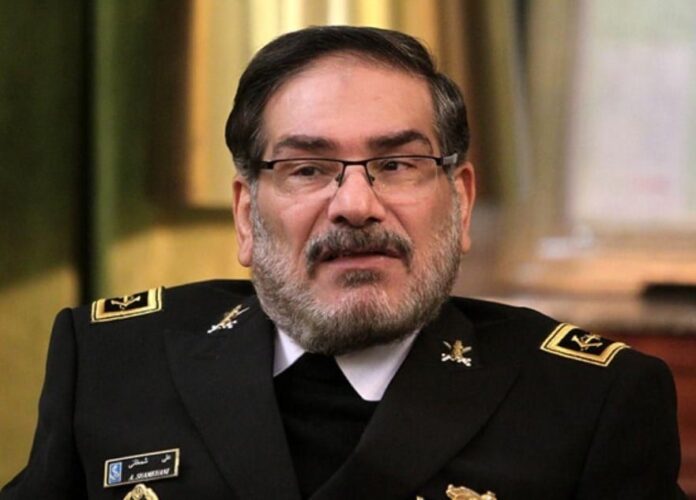
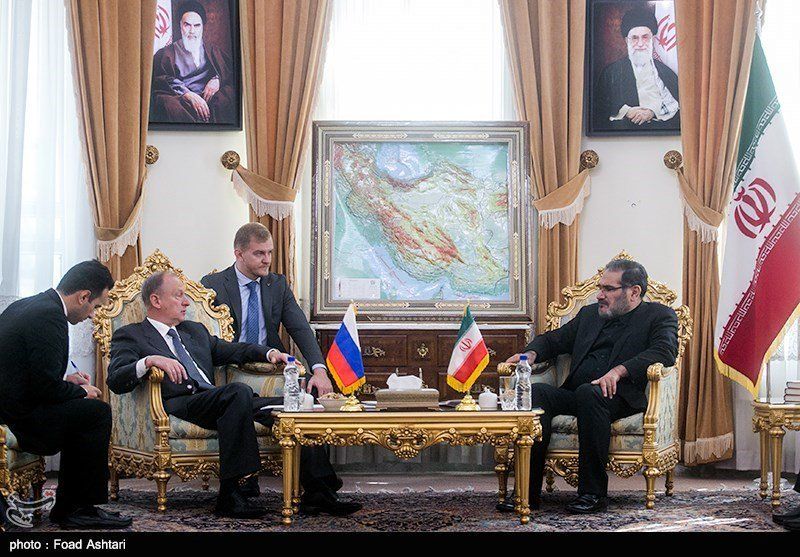
Speaking in a Thursday meeting with visiting Russian Security Council Secretary Nikolai Patrushev, Shamkhani blasted Tel Aviv’s destabilizing role in the region.

“The Zionist regime [of Israel] seeks to make the Syria crisis linger on, and it has adopted measures to directly support terrorist groups and target the Syrian army as well as forces countering terrorism. If this approach continues, it will be met with reactions that make Israel rue the day,” said Shamkhani.

The Iranian official further touched upon the successful experience of both countries with regards to mutual security cooperation.

Shamkhani also underlined the necessity of trading views, closely and effectively, between Tehran and Russia on key regional and international issues.

“The fundamental policies of both countries on the promotion of cooperation and striking a balance between the potentialities which can be exchanged in different political, economic and security areas have had a determining role in the management of security crises in the region,” he said.

The top Iranian security official appreciated the proper stances adopted by the Russian government in supporting the Iran nuclear deal known as the Joint Comprehensive Plan of Action (JCPOA).

“The unilateral and weakening approach adopted by international bodies and pursued by US authorities poses a danger to global security and economy and to the region, and this common threat should be seriously dealt with,” said Shamkhani.

“The reason why the United States is using sanctions as a tool against Iran, Russia and China is that this country (the US) has a feeling of backwardness in the face of those countries’ progress, development and growing power as players, and they can be easily dealt with through boosting economic cooperation and preparing the ground for trade,” said the Iranian official.

The Russian official, in turn, praised Iran’s initiative of successfully holding the Regional Security Dialog in Tehran as part of Tehran’s effective efforts to launch a real fight against terrorism and establish stability and security in the region.

He said the Middle East is facing the threat of defeated terrorists in Iran and Syria being transferred by the US and some of its allies, making it all the more necessary for regional cooperation and synergy to counter this worrisome phenomenon.

He urged the international community to play an active role in countering such anti-security measures by the US.

The Russia official underlined that if the United States’ unilateral and dangerous actions are not seriously dealt with, the world will soon be gripped by a crisis similar to the of Iraq, Syria and Afghanistan.

He expounded on Iran, Russia and Turkey’s effective role in easing tension in Syria as well as the decisions recently adopted in a joint move in order to prevent the innocent people of Idlib from being harmed.

He said the three countries are doing their utmost to restore peace and stability to the region while the US government spares no effort to keep security from returning to the region and is using terrorism as a tool to advance its interests.

Iran Warns Israel of Dire Consequences of Attacking Syria Positions

“Iran’s Enemies Have Replaced Suicide Operations with Bioterrorism”

Brigadier General Ahmadreza Pourdastan, the head of the Army’s Centre for Strategic Research, said the enemy seeks to control the population through transgenic products, and hence, it has replaced suicide attacks with bioterrorism.

“The enemy has put on a friend’s garment and says it is ready to have a group photo and have coffee with us,” said the top official.

“The victory of the Islamic Revolution [of Iran] in February, 1979 was a political shock to the Americans and confused them and disrupted their equations in the region, he said.

“Before the revolution, Iran was one of the important satellites of the Americans, and the country was an open market for American products and all American goods were imported into the country and they took oil instead,” the official added.

“However, with the [victory of] the Islamic Revolution, the US was stripped of all these advantages, and it is natural that they are seeking a way to regain the advantages,” he added.

“From February 12, 1979 onward, the Americans adopted an approach aimed at toppling [the Iranian government] and sought to uproot the Islamic Republic [of Iran]; so, they imposed economic sanctions,” he noted.

The top official said Iran is facing a new form of threats today.

“The threat we are facing today is a mixed war,” he said.

“The Americans gained experience in World War II and found out they cannot take part in a war of attrition; so they defined a strategy that would help them achieve their objective in the shortest possible time, and hence, they used all cultural, media, economic, political and other levers,” he noted.

He said economic resilience is the only way to get out of the current situation, adding, “we expect government officials to pay due regard to this issue, as well.”

Elsewhere in his remarks, the top general touched upon the enemy’s war of nerves.

“The enemy wants to paint a dark picture of the future through psychological warfare,” he said.

“Today, the United States is in the weakest military and economic situation it has ever been, and the UN, Europe, Canada, China, etc are not on board with the US,” he said.

“Furthermore, the US is an indebted country and if this trend continues, it will end up having a destiny like that of the former Soviet Union,” he said.

The top general then called on officials to fully abide by guidelines of Leader of the Islamic Revolution Ayatollah Seyyed Ali Khamenei.

He also urged closer solidarity among Iranians.

“We should have unity and rapport like in Holy Defense years (the eight years of the Iraqi imposed war on Iran in the 1980s),” said the top general.

Pourdastan then said the Iranian Armed Forces have the enemy’s moves and activities on their intelligence radar and that they will not be caught unawares by any military threat.

“If they say our country is a safe country, it is so, indeed,” he said.

He then touched upon the recent deadly terrorist attack on a military parade in the southern Iranian city of Ahvaz, and added such “blind terror attacks” which target women and children have no military value.

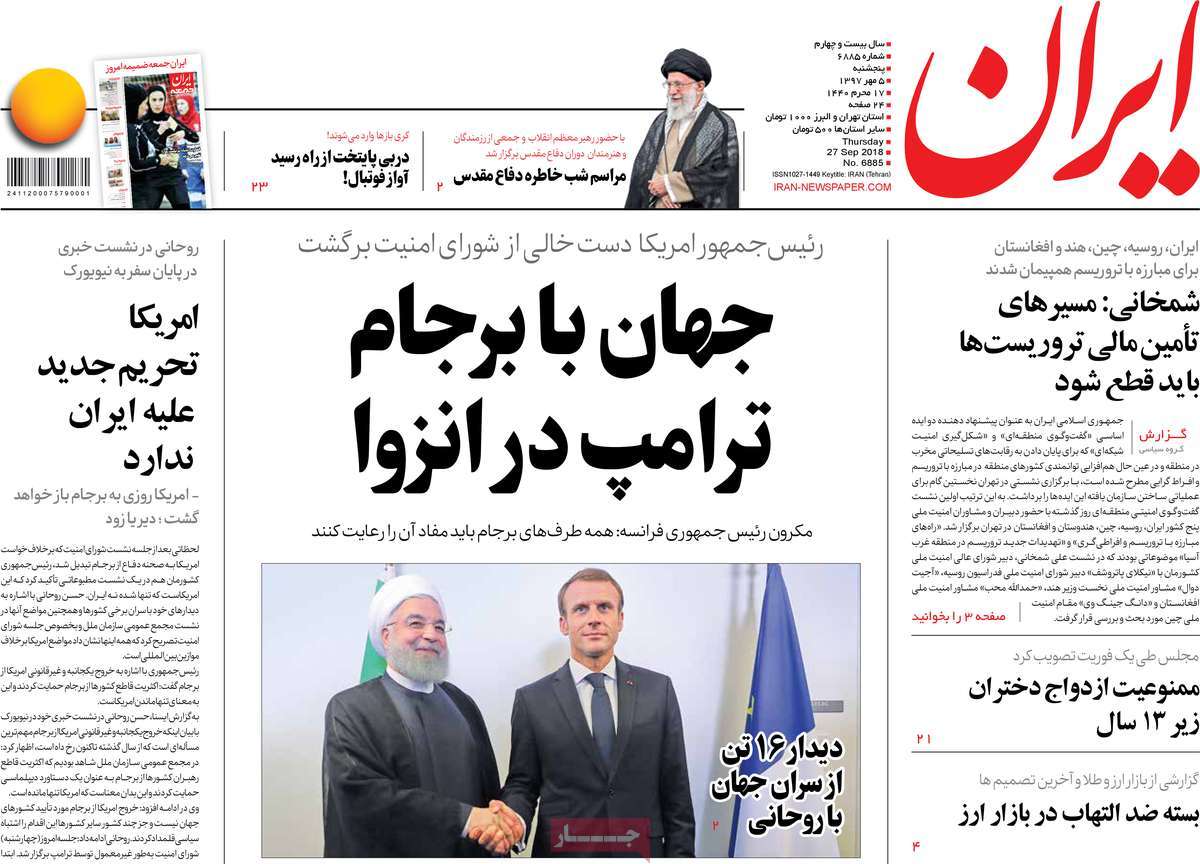
Iranian Papers Joyfully Cover Trump’s Isolation, Humiliation at UN

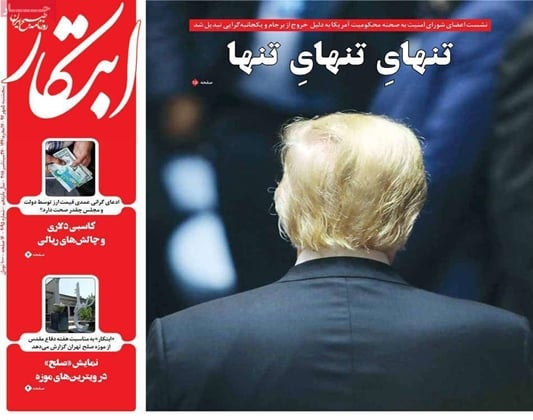
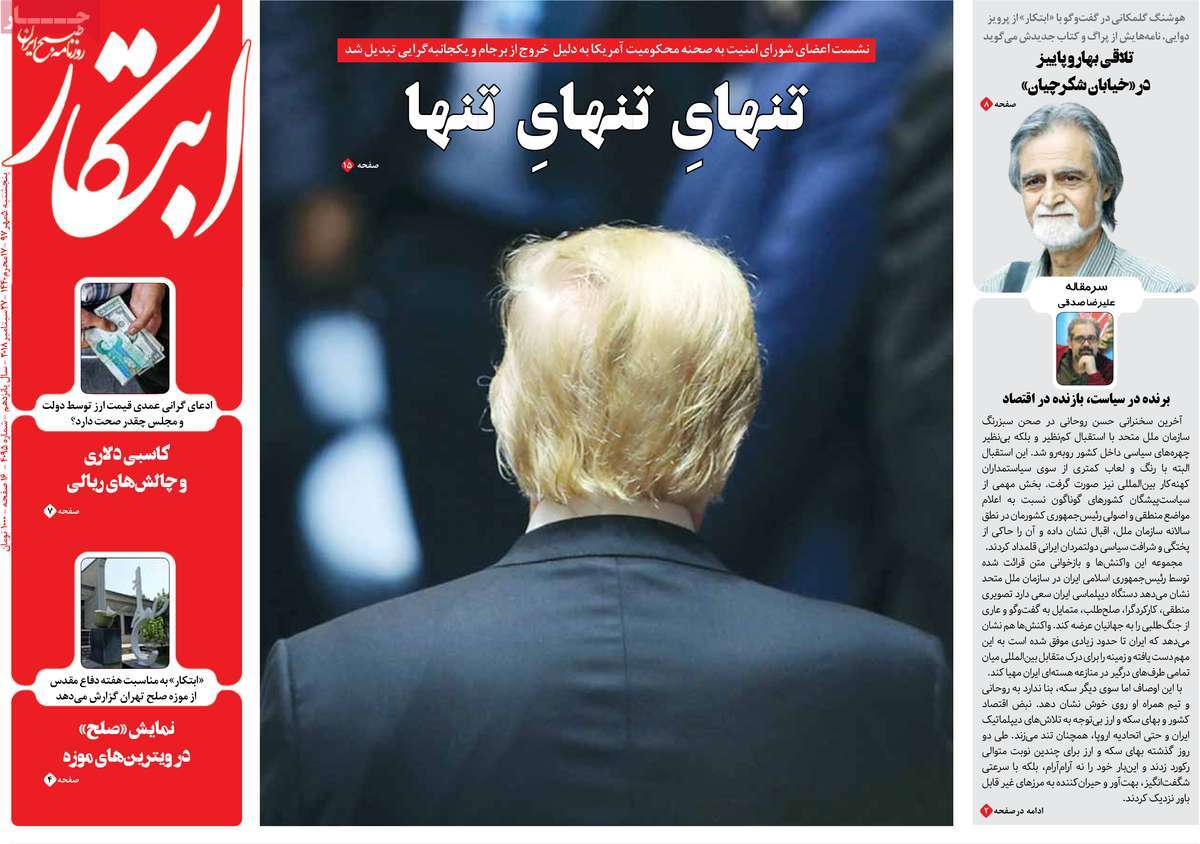
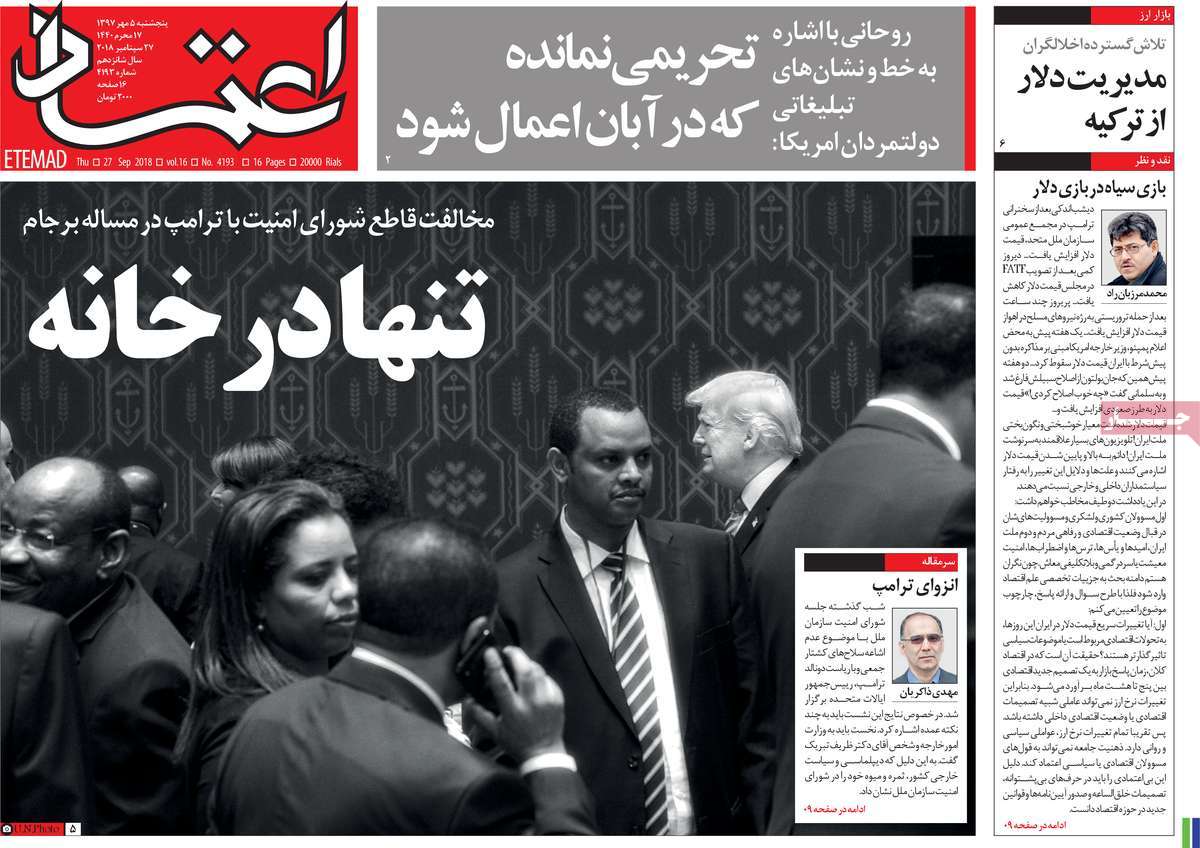
The front page of reformist newspaper Ebtekar on September 27, 2018. It depicts a photo of an isolated Donald Trump, whose caption reads: Totally Alone

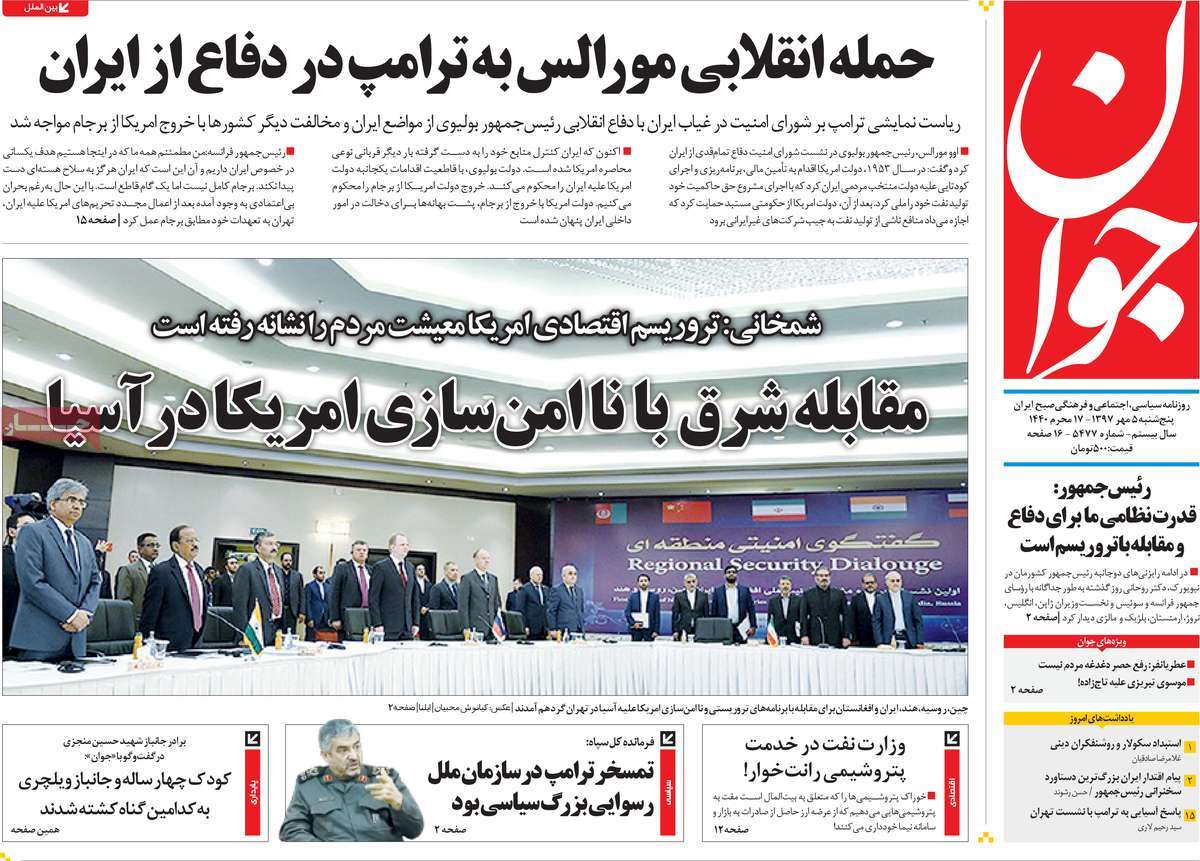
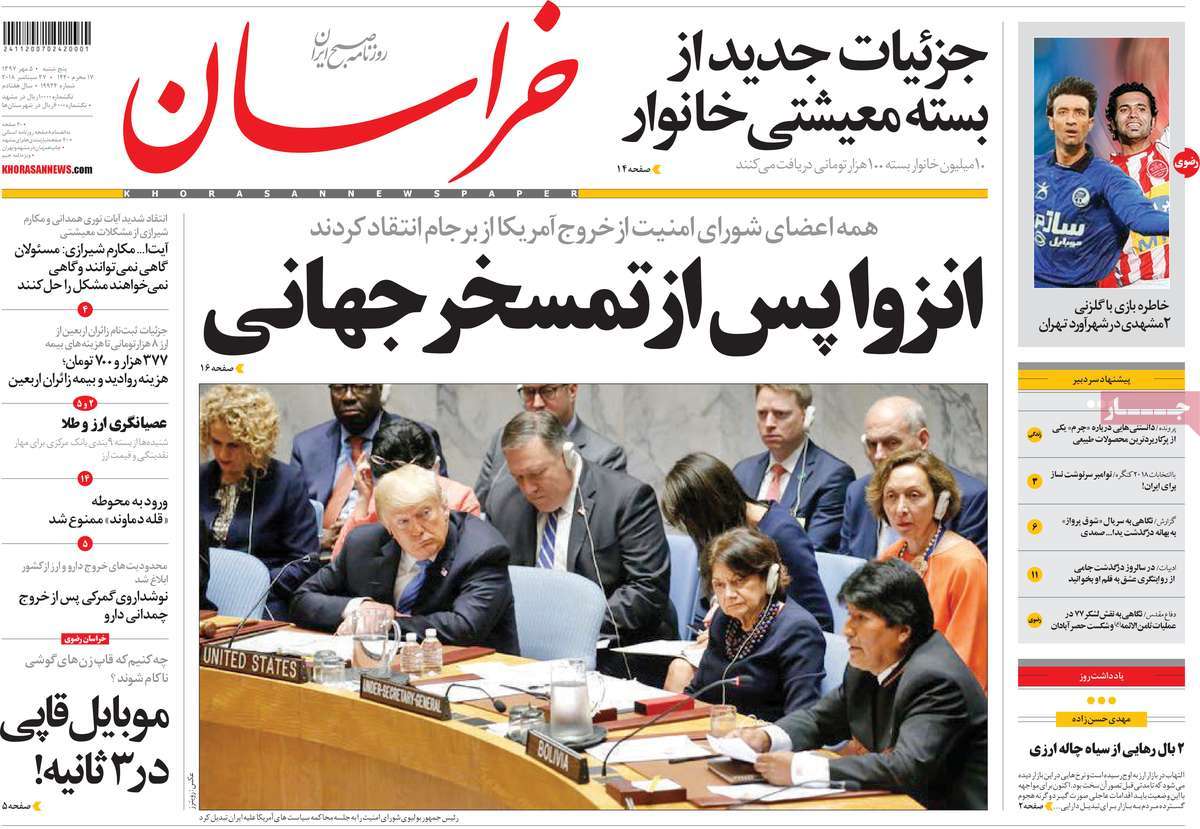
The top story in all papers today was the isolation of US President Donald Trump and the unanimous opposition of UN Security Council member states to his withdrawal from the Iran nuclear deal. They also joyfully reported his humiliation at the UN General Assembly, where all audiences laughed at him.

Also a top story was the gathering of regional national security advisors and senior officials at the Regional Security Dialogue held in Tehran on Wednesday. Remarks by Iran’s top security official Ali Shamkhani at this meeting received great coverage in the papers today.

Several papers also covered the 88th football derby between arch-rivals Persepolis and Esteghlal of Tehran, which is to be held on Thursday afternoon in Azadi Stadium.

The above issues, as well as many more, are highlighted in the following headlines and top stories:


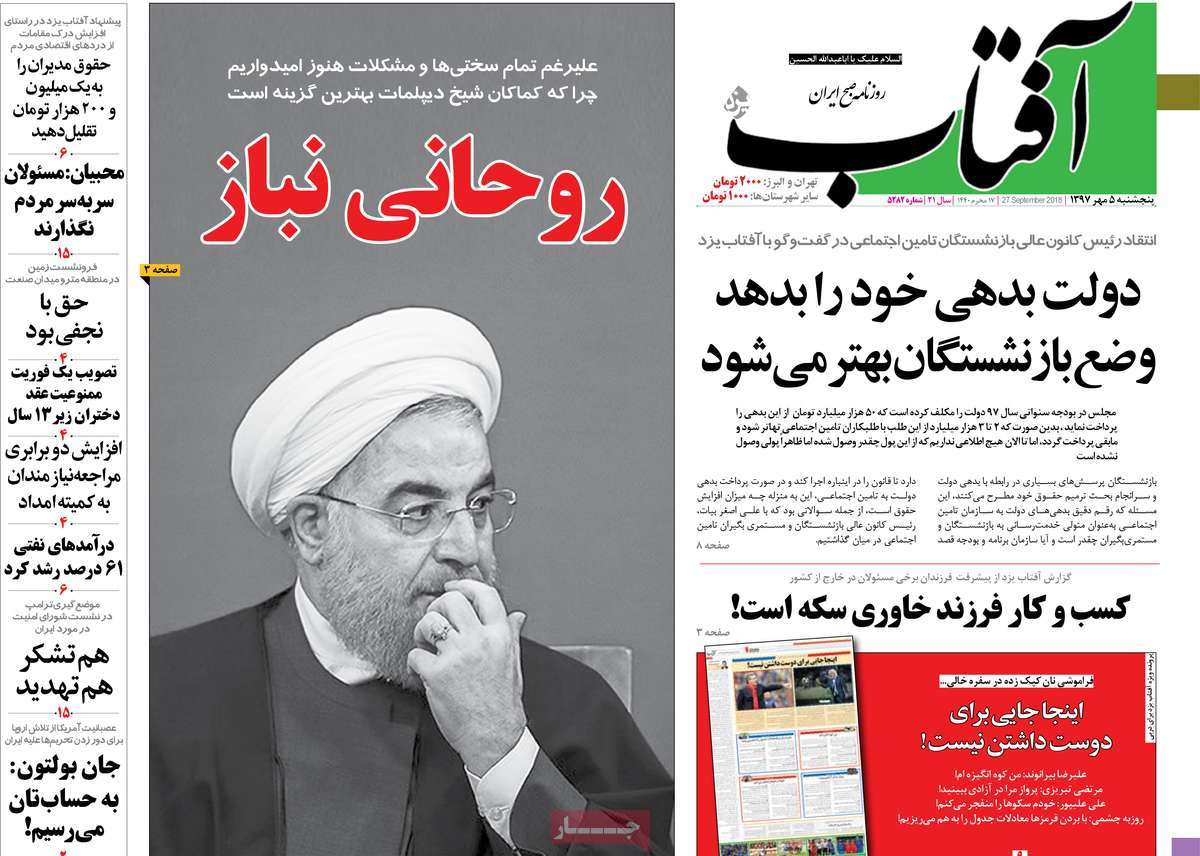
Aftab-e Yazd:

1- Rouhani, Don’t Lose: Despite All Problems, He’s Still Best Choice

2- Parliament Working on Plan to Ban Marriage for U-13 Girls

Iranian Papers Joyfully Cover Trump’s Isolation, Humiliation at UN


Ebtekar:

1- Totally Alone

2- Winner of Politics, Loser of Economy [Editorial]

Iranian Papers Joyfully Cover Trump’s Isolation, Humiliation at UN


Etemad:

1- Home Alone: UNSC Unanimously Disagrees with Trump over JCPOA

2- Trump’s Isolation [Editorial]

3- No Sanction Left for Trump to Re-Impose in November: Rouhani

Iranian Papers Joyfully Cover Trump’s Isolation, Humiliation at UN


Ettela’at:

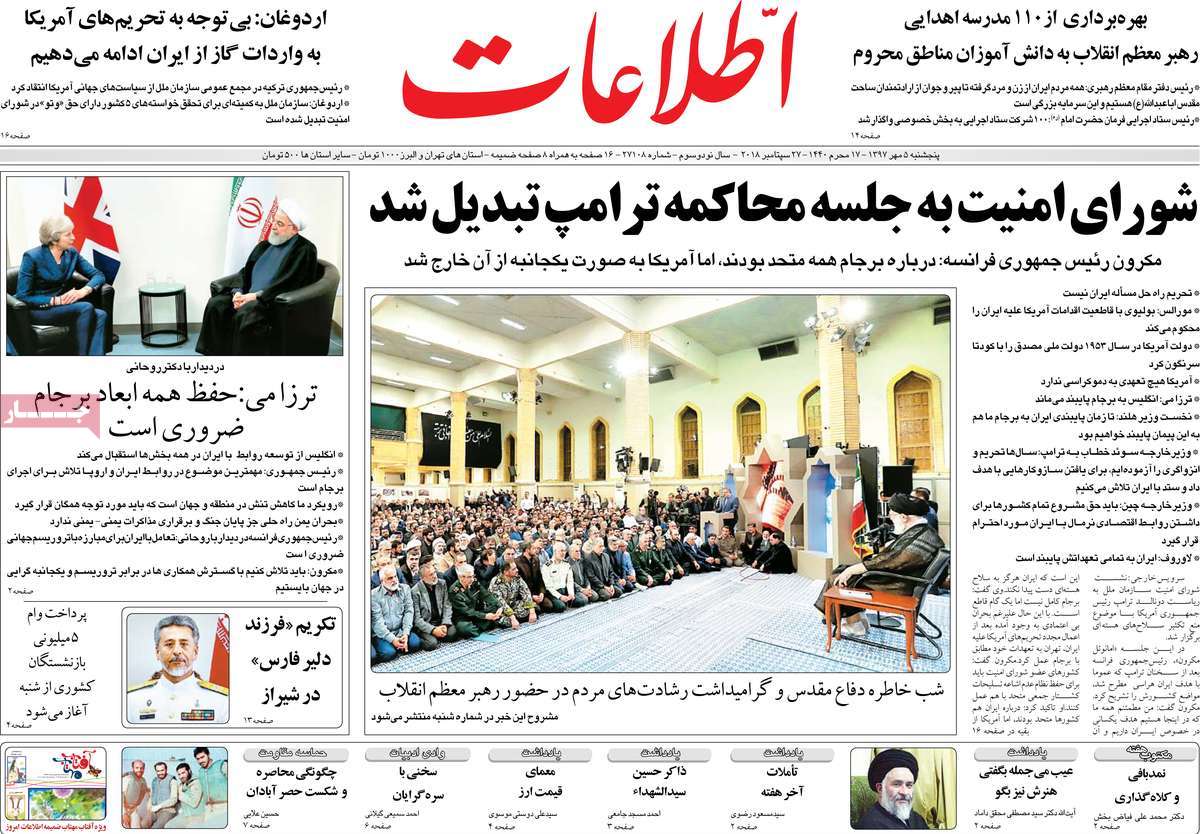
1- UNSC Meeting Turns into Trump’s Trial Session

2- Erdogan: We’ll Continue Importing Gas from Iran despite US Ban

3- It’s Necessary to Maintain All Aspects of JCPOA: May

Iranian Papers Joyfully Cover Trump’s Isolation, Humiliation at UN


Ghanoon:

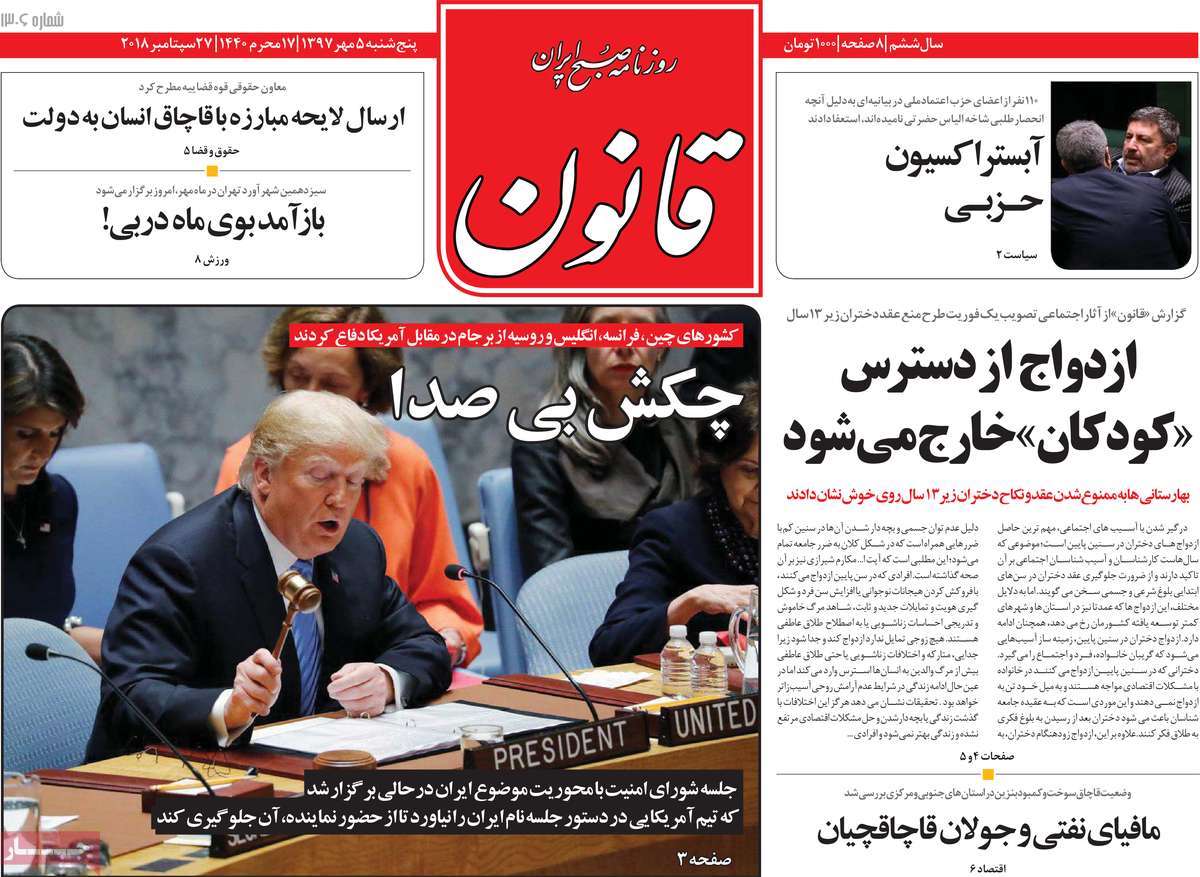
1- Trump’s Gavel Had No Sound

2- Children to Be Barred from Getting Married

Iranian Papers Joyfully Cover Trump’s Isolation, Humiliation at UN


Haft-e Sobh:

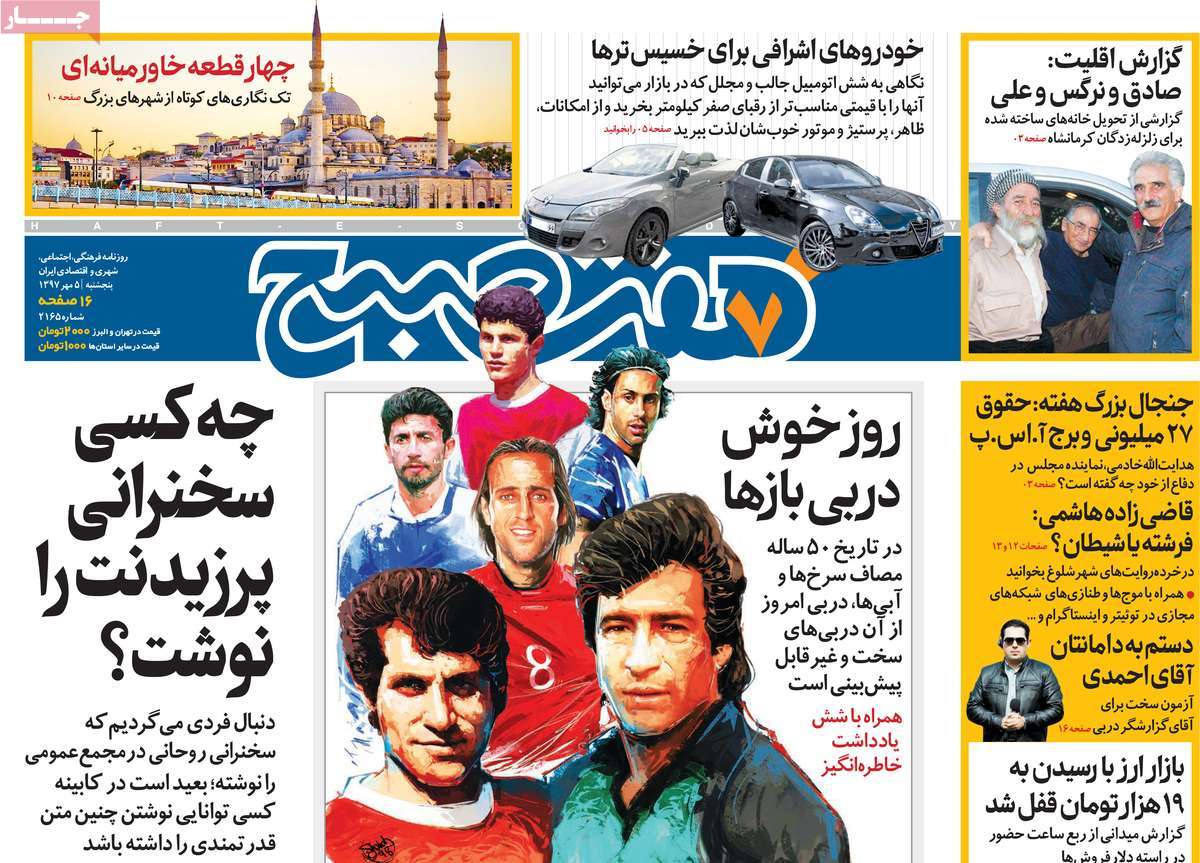
1- Who Wrote Rouhani’s UNGA Speech?

Iranian Papers Joyfully Cover Trump’s Isolation, Humiliation at UN


Iran:

1- World Supports JCPOA; Trump Isolated

2- Tehran Derby Is Here: Song of Football

3- Shamkhani: Ways to Finance Terrorists Must Be Blocked

Iranian Papers Joyfully Cover Trump’s Isolation, Humiliation at UN


Javan:

1- Morales’ Revolutionary Attack on Trump in Defence of Iran

2- Shamkhani: US’ Economic Terrorism Targeting People’s Livelihood

Iranian Papers Joyfully Cover Trump’s Isolation, Humiliation at UN


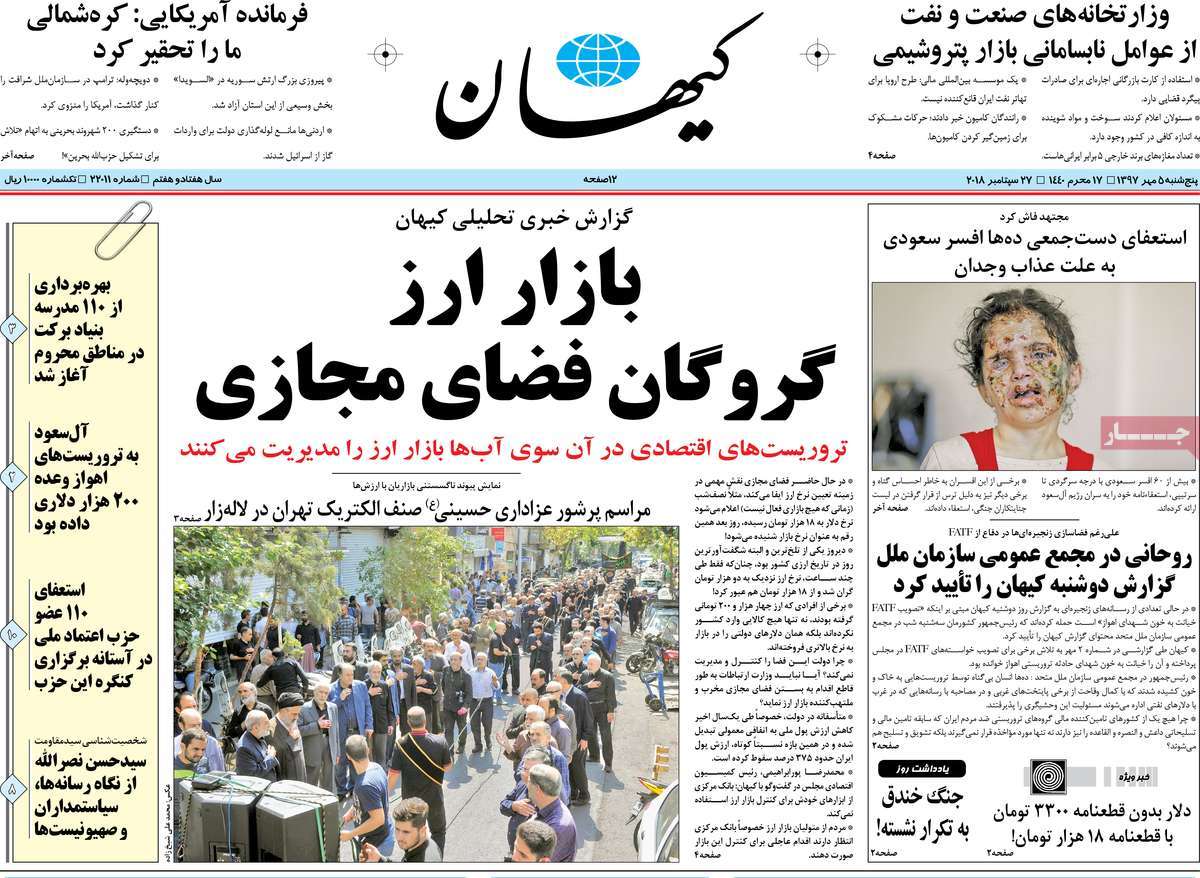
Kayhan:

1- Forex Market, Hostage of Cyberspace

* Economic Terrorists outside Iran Controlling Forex Market

2- American Commander: N Korea Humiliated Us

3- US Dollar Rate IRR 33,000 without UNSC Resolution, IRR 180,000 with the Resolution!

Iranian Papers Joyfully Cover Trump’s Isolation, Humiliation at UN


Khorasan:

1- Isolation after Being Mocked by Entire World

* All UNSC Member States Criticize US Withdrawal from JCPOA

Iranian Papers Joyfully Cover Trump’s Isolation, Humiliation at UN


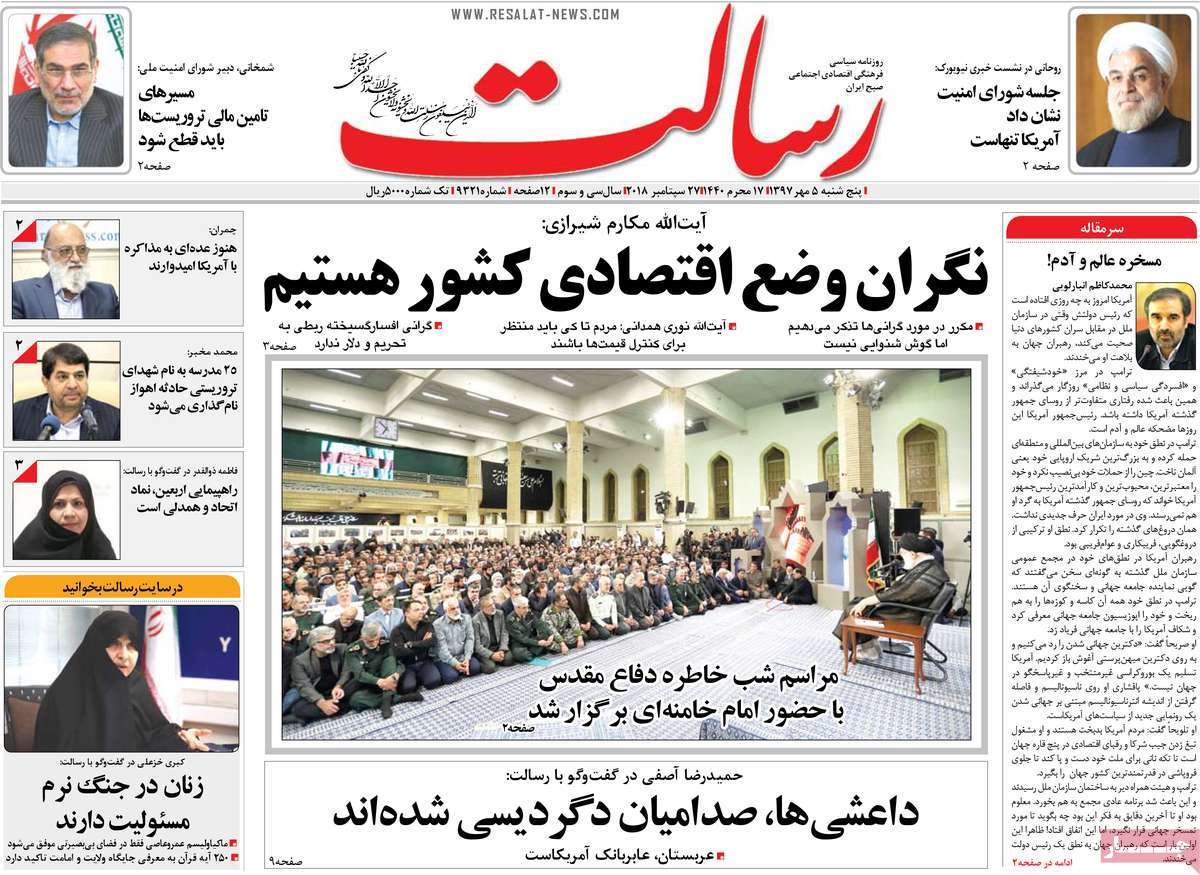
Resalat:

1- We’re Worried about the Country’s Economic Conditions: Ayatollah Makarem Shirazi

2- UNSC Meeting Showed US Alone: Rouhani

3- Mocked by Everyone [Editorial]

Iranian Papers Joyfully Cover Trump’s Isolation, Humiliation at UN


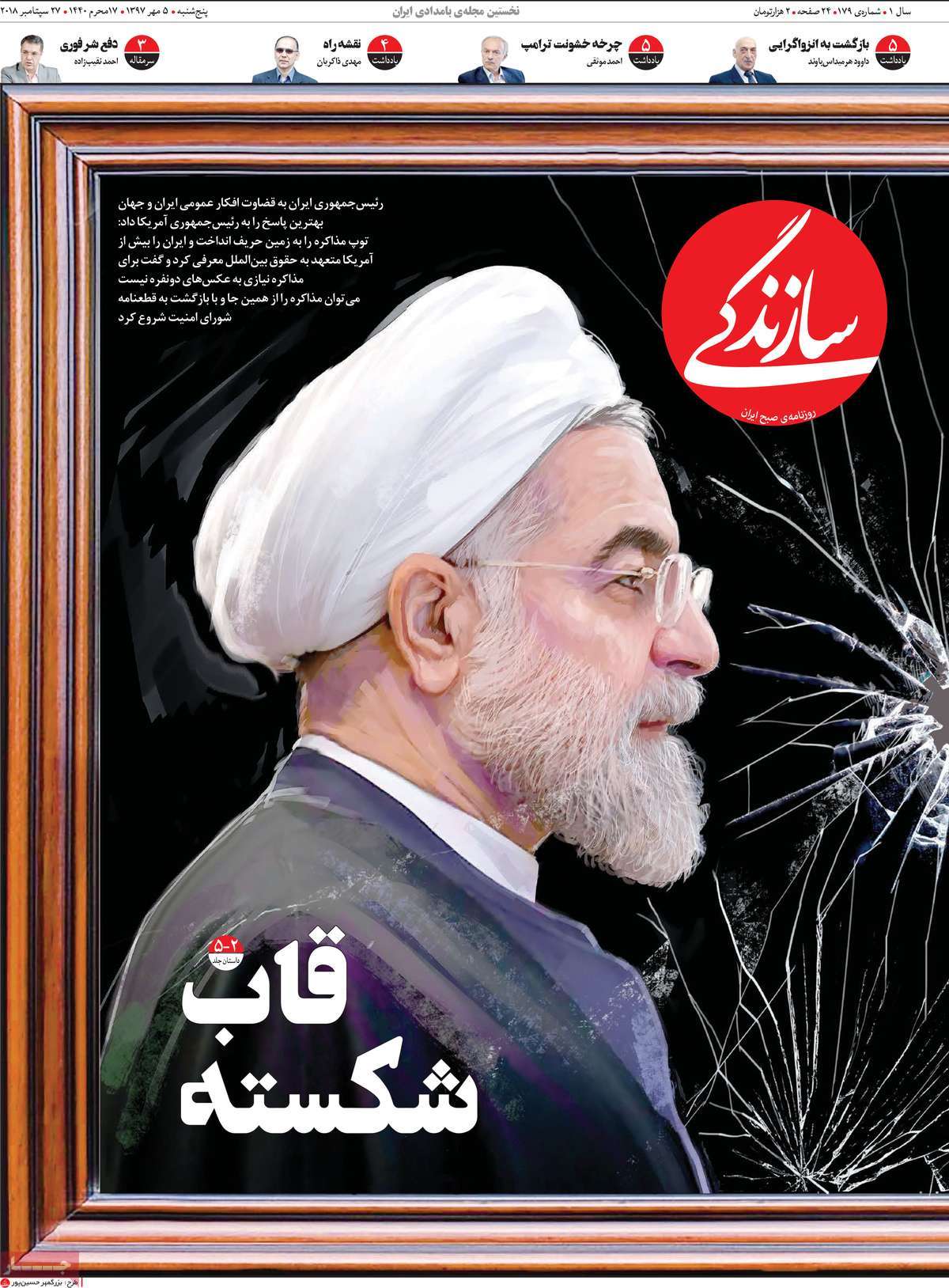
Sazandegi:

1- Broken Frame: Iranians Think Rouhani Gave Best Answer to Trump

Iranian Papers Joyfully Cover Trump’s Isolation, Humiliation at UN


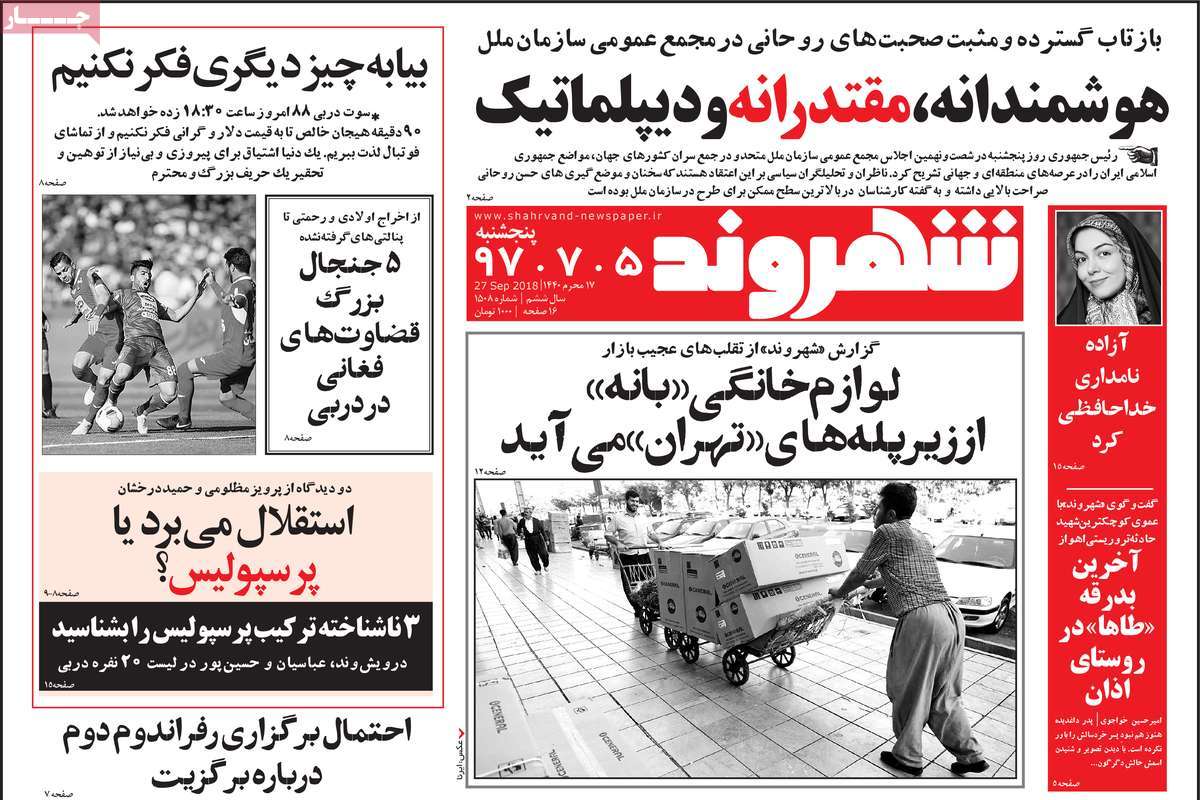
Shahrvand:

1- Let’s Stop Thinking about Anything Else, Focus on Tehran Derby

2- UK May Hold another Referendum on Brexit

Iranian Papers Joyfully Cover Trump’s Isolation, Humiliation at UN


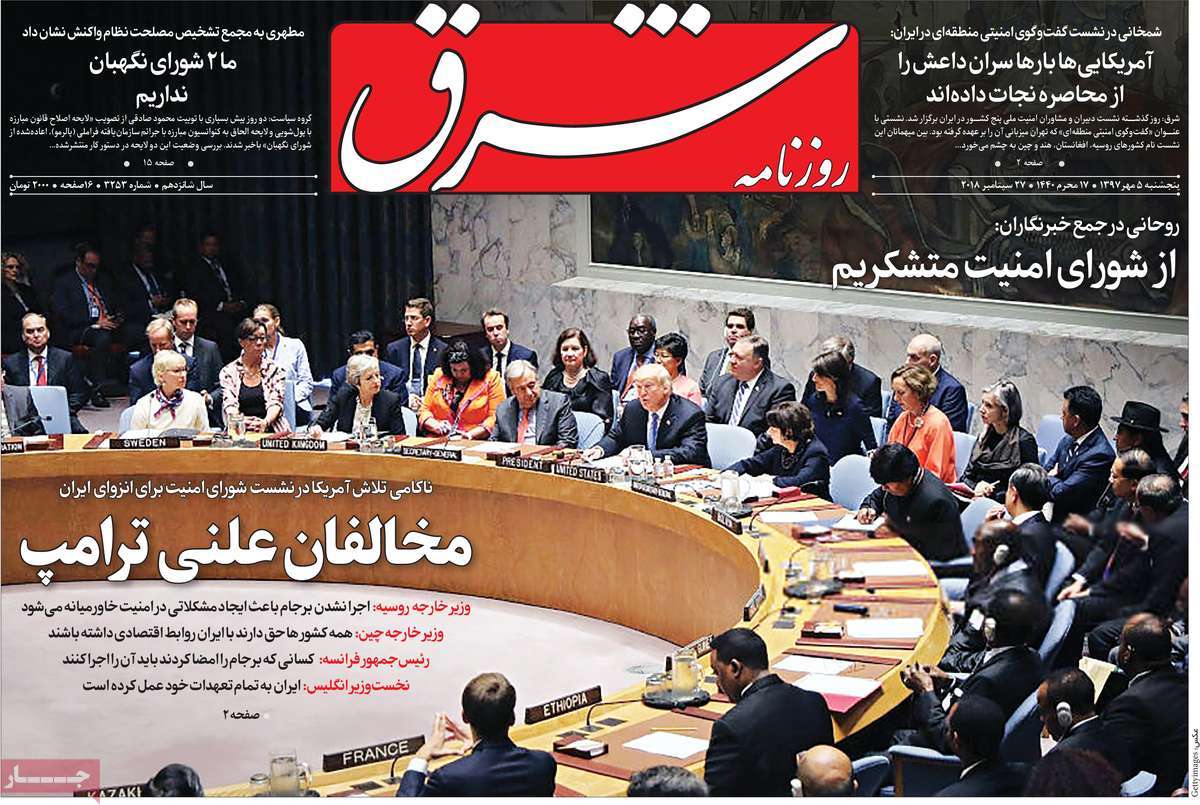
Shargh:

1- Outspoken Critics of Trump

* US Attempt to Isolate Iran at UNSC Fails

2- Rouhani: We’re Grateful to UNSC

3- Americans Repeatedly Saved ISIS Leaders from Siege: Shamkhani

Iranian Papers Joyfully Cover Trump’s Isolation, Humiliation at UN


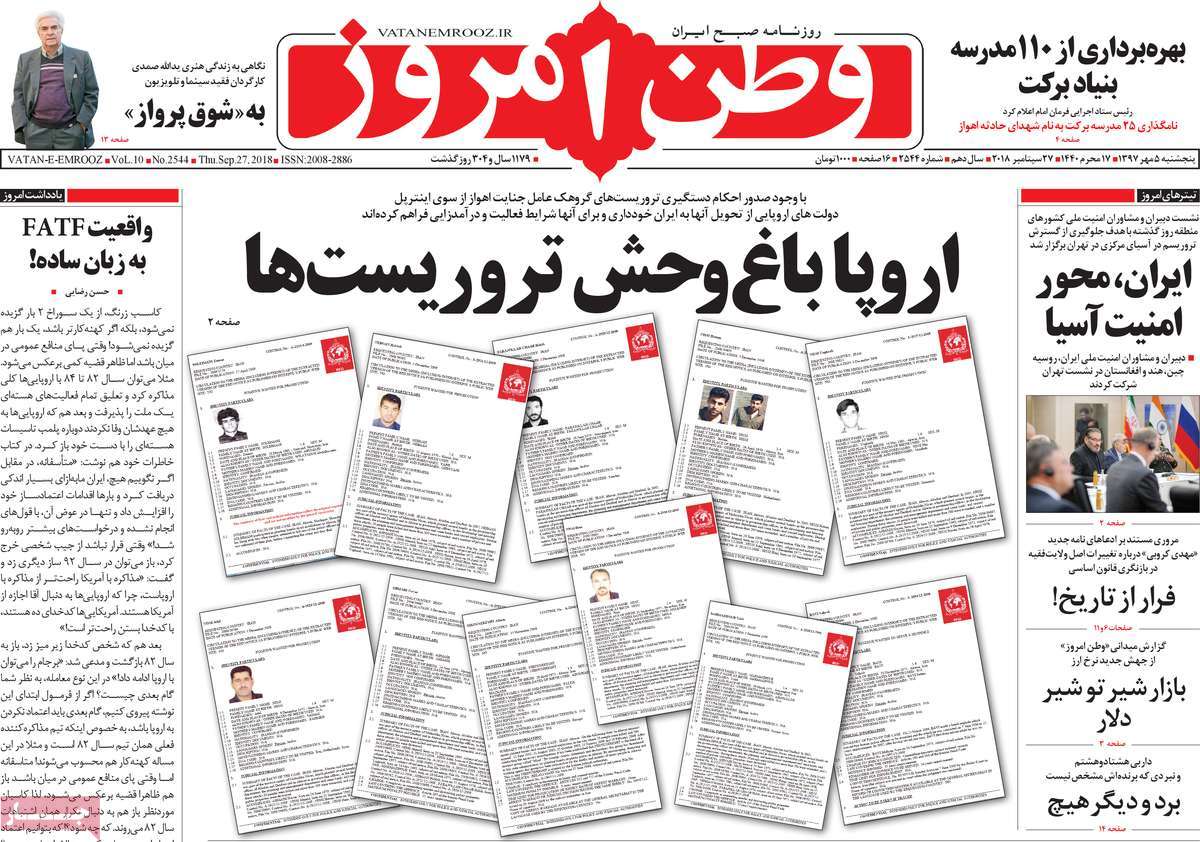
Vatan-e Emrooz:

1- Europe, Zoo of Terrorists

* Despite Interpol’s Order, European Governments Refuse to Extradite Terrorists to Iran

2- Iran Axis of Security in Asia: Tehran Hosts Regional Security Dialogue

Iranian Papers Joyfully Cover Trump’s Isolation, Humiliation at UN

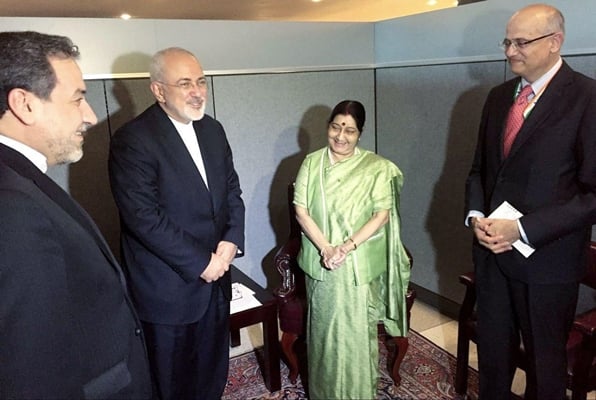
Iran, India Discuss Ways to Expand Economic Ties

During the talks held on the sidelines of the 73th Session of the UN General Assembly, the Indian external affairs minister highlighted the significance of economic ties with Tehran, and said her country views Iran not only as a good neighbour but also a good friend.

She also underlined that India will continue to buy oil from Iran despite US sanctions.

The two top diplomats also discussed ways to promote banking cooperation.

They also exchanged views on the development of Iran’s Chabahar Port as well as the two countries’ mutual and multilateral cooperation based on the port’s trade capacity.

Earlier, Zarif said in an interview that Iran expects Chabahar Port to become even larger with more capacity.

“We hope India and other investors would come to Chabahar and make investment for the expansion of the port facilities,” he told ANI.

The Chabahar port complex is expected to be developed as part of a new transportation corridor for land-locked Afghanistan. India and Iran signed an agreement worth $85 million to develop the port in south-eastern Iran.