Friday, April 10, 2026
Home Blog Page 3387

Iran Ranks First in Nanotechnology in Western Asia

Based on this ranking conducted by Scimago, Iran has ranked first in the field of nanotechnology in West Asia.

In the picture below, you can see Iran’s first rank in nanotechnology:

It shows that Iran ranks first with 735 articles and Saudi Arabia ranks second with 631 papers. Egypt, the Zionist regime, Turkey, Iraq, the United Arab Emirates, Qatar, Jordan, Oman, Lebanon, Kuwait, the occupied territories, Yemen, Bahrain and the United Arab Emirates are respectively positioned after Iran and Saudi Arabia.

The United Arab Emirates, as the last country in Western Asia, has just published one article in 2017 on nanotechnology.

In a more general survey of 155 countries, Chinese scholars are the world’s leading scientists with 13,555 papers on nano, out of which 13,317 are citable.

The United States has the second position with 6,000 articles less than China. American scientists have produced 7,791 papers on nanoscience, of which 7,640 were cited.

The Scimago ranking system is conducted by a research group of the same name at the University of Granada in Spain. Scimago Journal Rank (SJR indicator) is a measure of scientific influence of scholarly journals that accounts for both the number of citations received by a journal and the importance or prestige of the journals where such citations come from.

A journal’s SJR is a numeric value indicating the average number of weighted citations received during a selected year per document published in that journal during the previous three years. Higher SJR values are meant to indicate greater journal prestige.
Why Was Iran’s Rank in WEF Gender Gap Report Surprisingly Low?

The WEF report released last month puts Iran among the 10 countries with the deepest gender gap, with a rank of 142 among 149 countries.

Leila Falahati, the Director General for International Affairs at Vice Presidency for Women and Family Affairs, told IRNA in an interview published this week that prior to this, the UNDP was evaluating “Women Empowerment and Gender Inequality” based on the overall index of human development in countries. However, since 2006, a new index has been offered and the 2018 report is based on that.

All in all, sub-indices of economy, politics, education and health are the domains in which Iran has the greatest gap in economic and political participation. As most countries in the world have the most gender gaps in these areas.

Iran’s Rank in Terms of Women’s Political Involvement

The Islamic Republic of Iran has ranked 141 in terms of political participation among 149 countries of the world. Regarding the political index, the presence of women in the government and senior positions of the Islamic Republic of Iran is 19% while the global average is 34%. The largest gap in Iran is in the parliament. The Islamic Republic of Iran does not use gender rationing for parliament, but this practice is being implemented in many countries of the world. For example, Afghanistan has allocated 25%, Saudi Arabia 20%, and the United Arab Emirates 50% of the seats to women.

Iran’s Rank in Terms of Women’s Economic Participation

Iran ranks 143 in economic involvement. At present, the official participation rate of Iranian women in the labour market is 17.9 percent. Because women working in the informal sector of Iranian economy are not interested in registering and recognising their economic activity. As they have to have a place and property to register their economic activities, and after obtaining a license, they are required to pay taxes and insurance share. Of course, factors such as economic instability and sanctions affect the gender gap.

Iran’s Rank in Terms of Women’s Education

Falahati spoke about the achievements of the Islamic Republic in health and education realms saying that the Islamic Republic has ranked 103 which shows a great advance.

“The Islamic Republic’s biggest challenge in education is literacy rate. Because literacy includes all the groups, and we still have a lot of illiterate elderly women and men who have never been trained.”

Another point is that, despite a significant increase in number of female students at universities, Iranian women are more in number than male undergraduate students. However, since this has not yet happened in the postgraduate and doctoral levels, gender gaps have been reported in these domains.

Iran’s Rank in Terms of Women’s Health

In terms of health, the Islamic Republic, with the rank of 127, is among the well-ranked countries. The 2018 Gender Gap Report predicts that to eliminate these inequalities it takes total of 108 years. According to the report, Western Europe is in the best position, and North America has the worst conditions for gender gaps. Given the fact that Iran is in the Middle East region, the gender gap forecast predicts that 153 years is needed to eliminate inequalities between women and men.

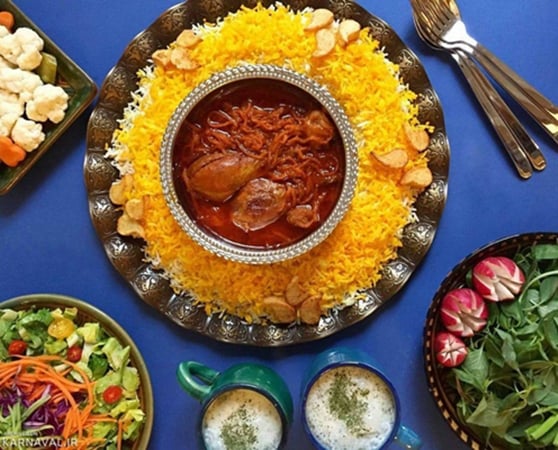
Carrots Stew; Original Dish from Iran’s Azarbaijan Province

Ingredients:

1 kg of grated or chopped carrots

500 grams of beef or chicken meat (optional)

1 medium-size onion

1-2 tbsp. of tomato paste

3 dried lemons or plums

Salt, pepper, turmeric

Saffron

Lemon juice or verjuice


Directions:

First wash the carrots and chop them in a same size and then fry. Chop the onion finely and fry with meat (or chicken). Add salt, turmeric, and pepper to the meat and onions and pour some water on them to cook. When the meat or chicken is cooked well, add a little water. Then, add the dried lemons and plums. Finally, pour some steamed saffron into the stew and then add the carrot, tomato paste and salt to it. Put the lid of the pot and let it cook on a low heat for 10 minutes. If you want, add some lemon juice or verjuice at the end. This is something optional. You can decorate this stew with some barberry and pistachio slices and serve along with rice.


Notes:

Carrot stew is made with chopped carrots. So do not grate them. Do not boil carrots instead of frying, because the taste of the food will be changed and gets slightly sweet. The main seasoning of the stew is saffron, lemon juice or verjuice. If you are a fan of sweet foods, you can add 1 or 2 tablespoons of sugar at the end.

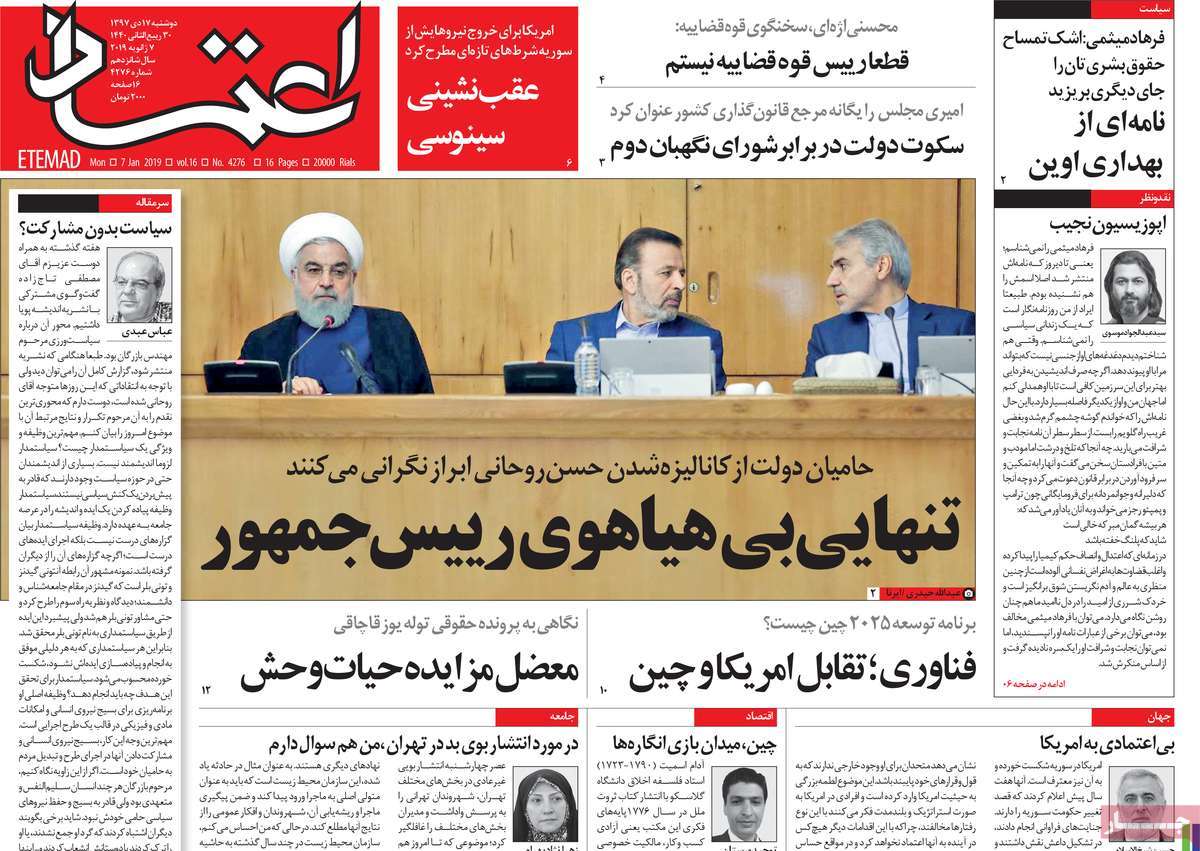
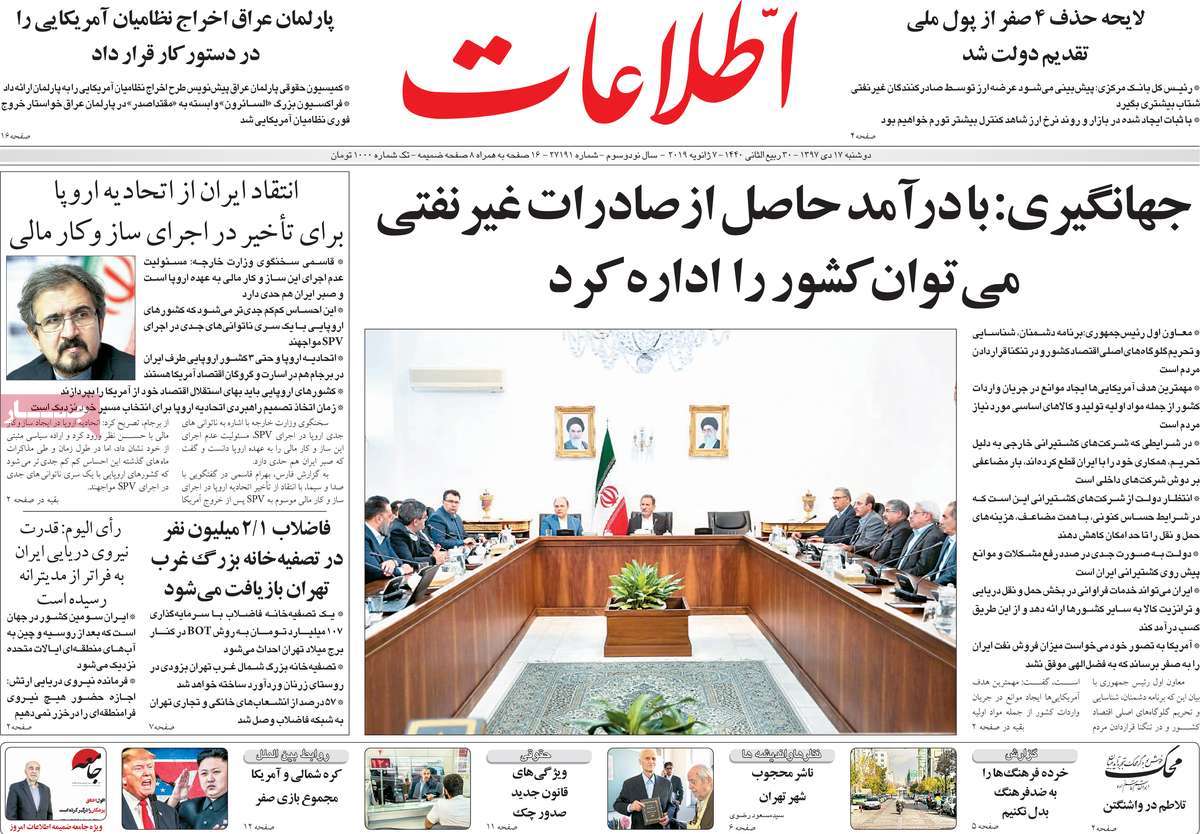
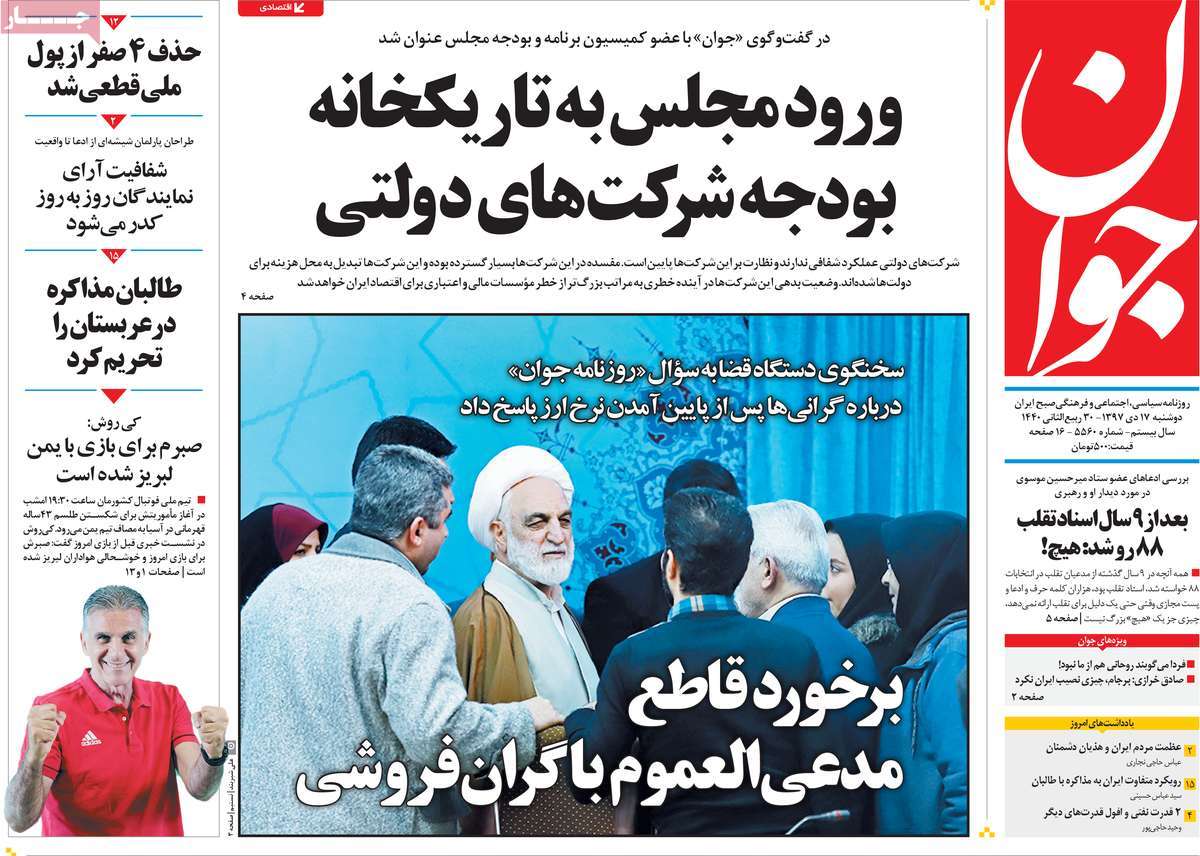
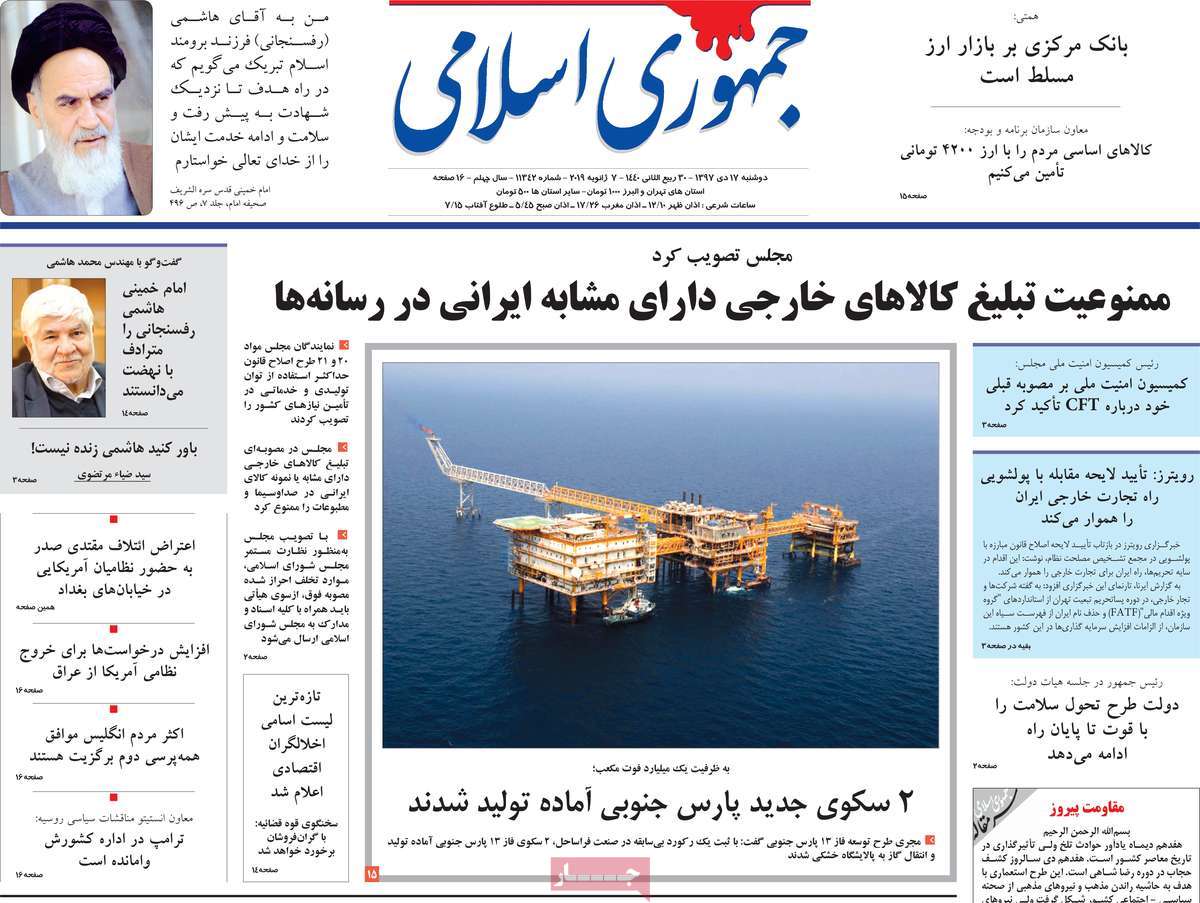
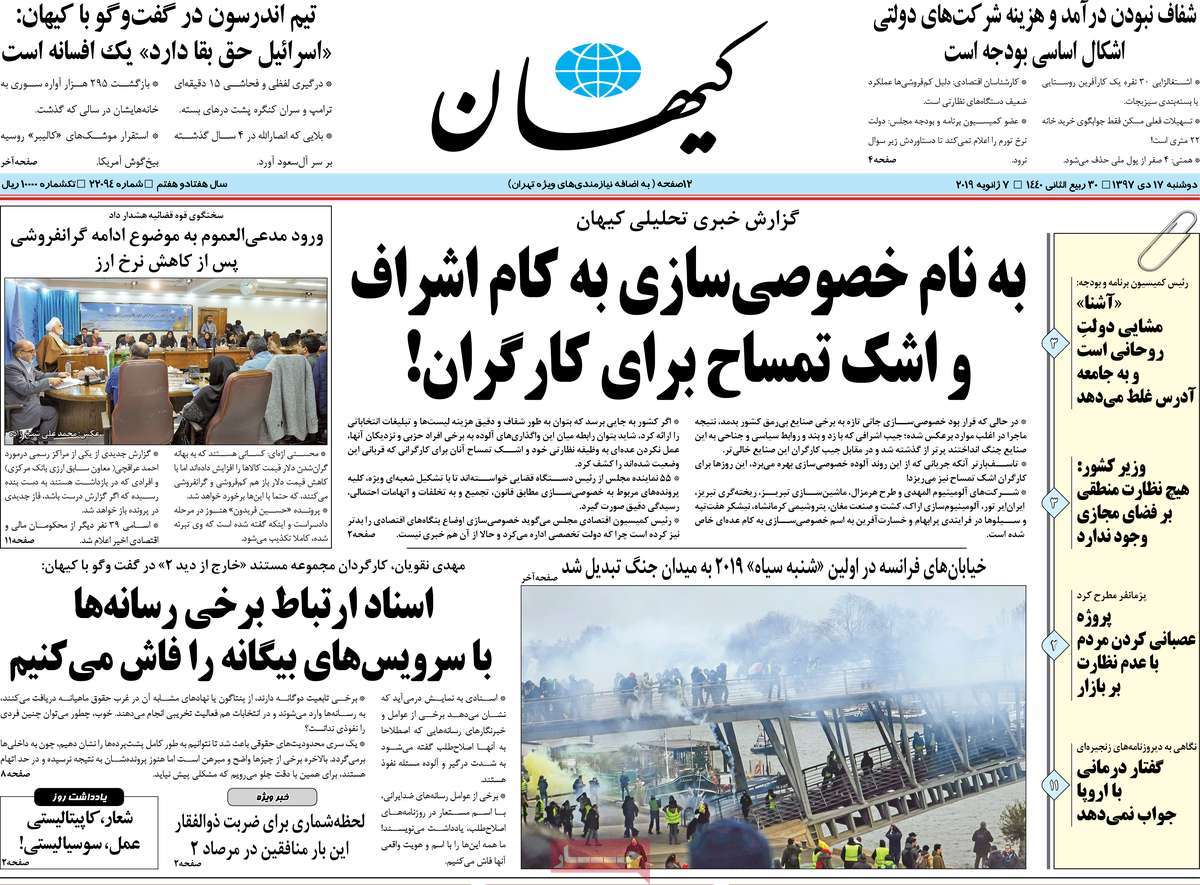
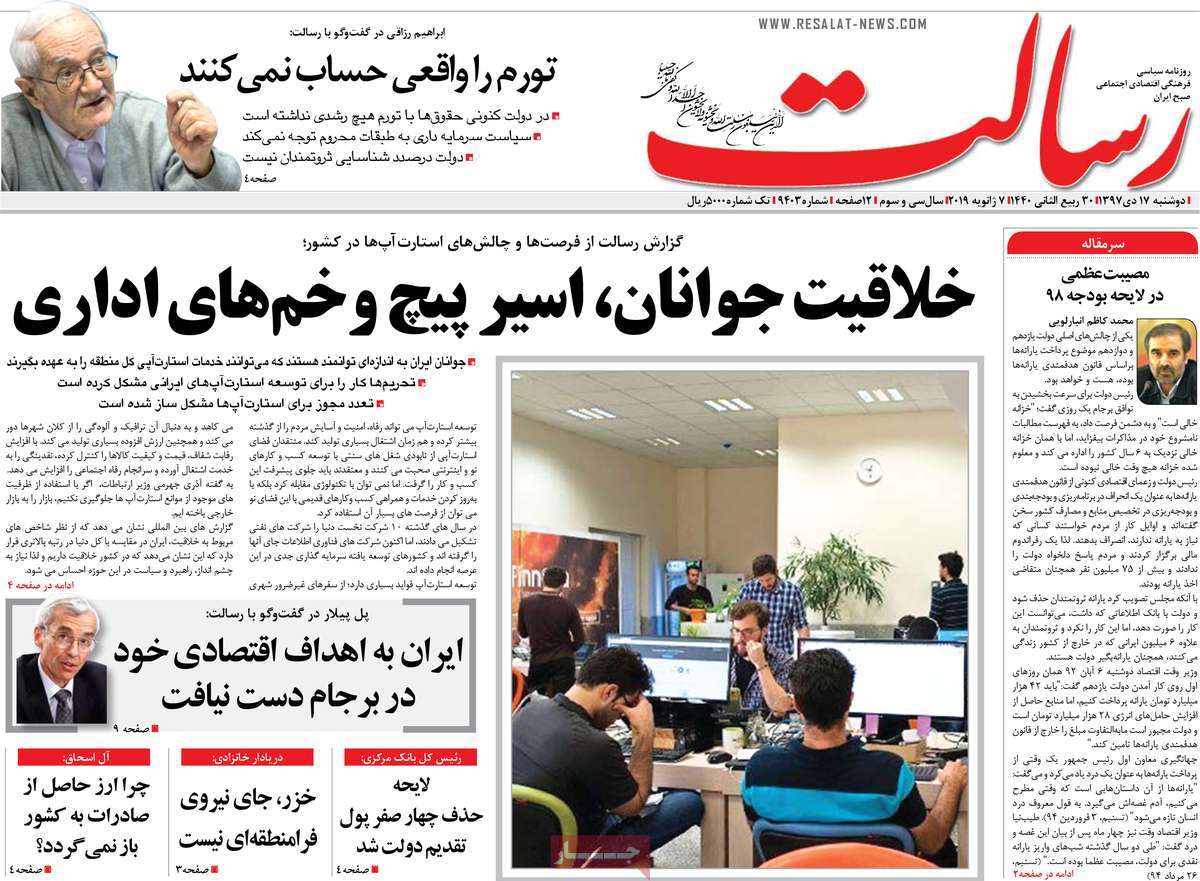
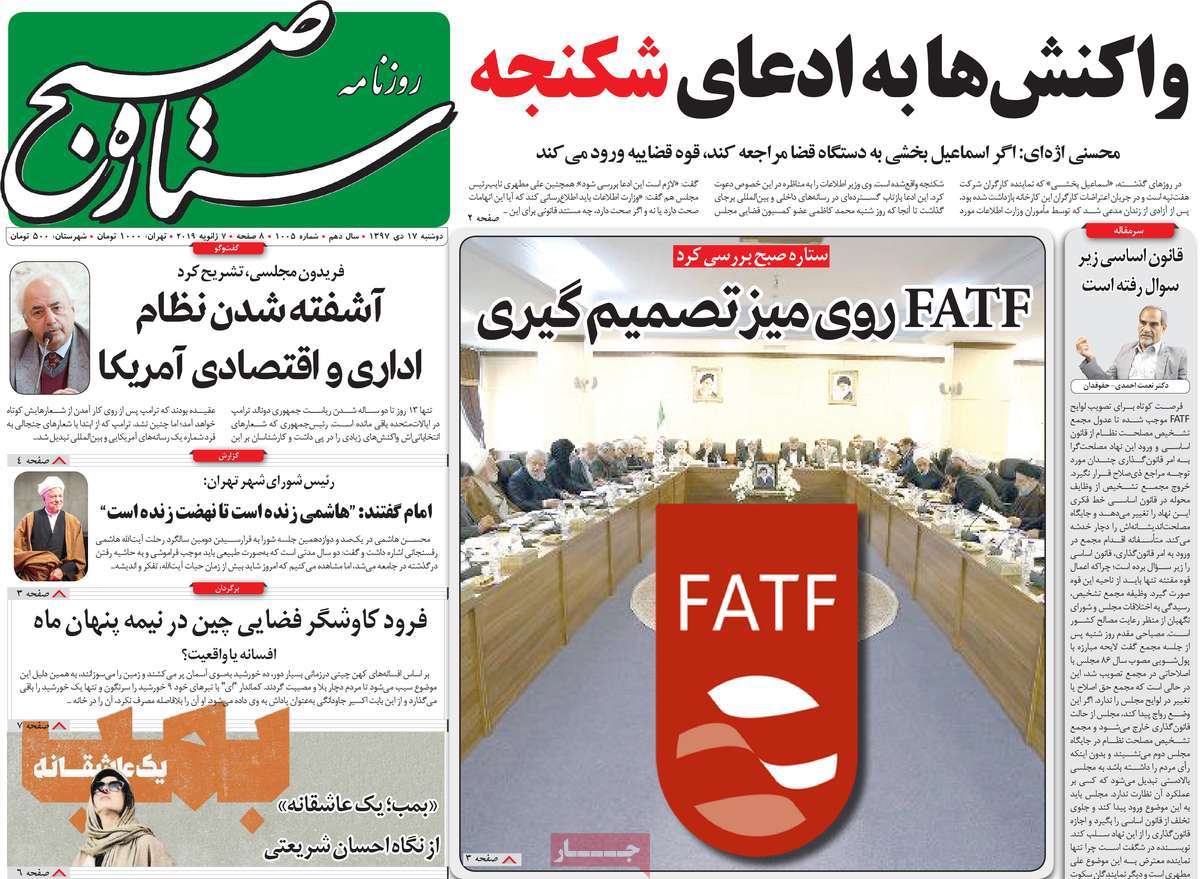
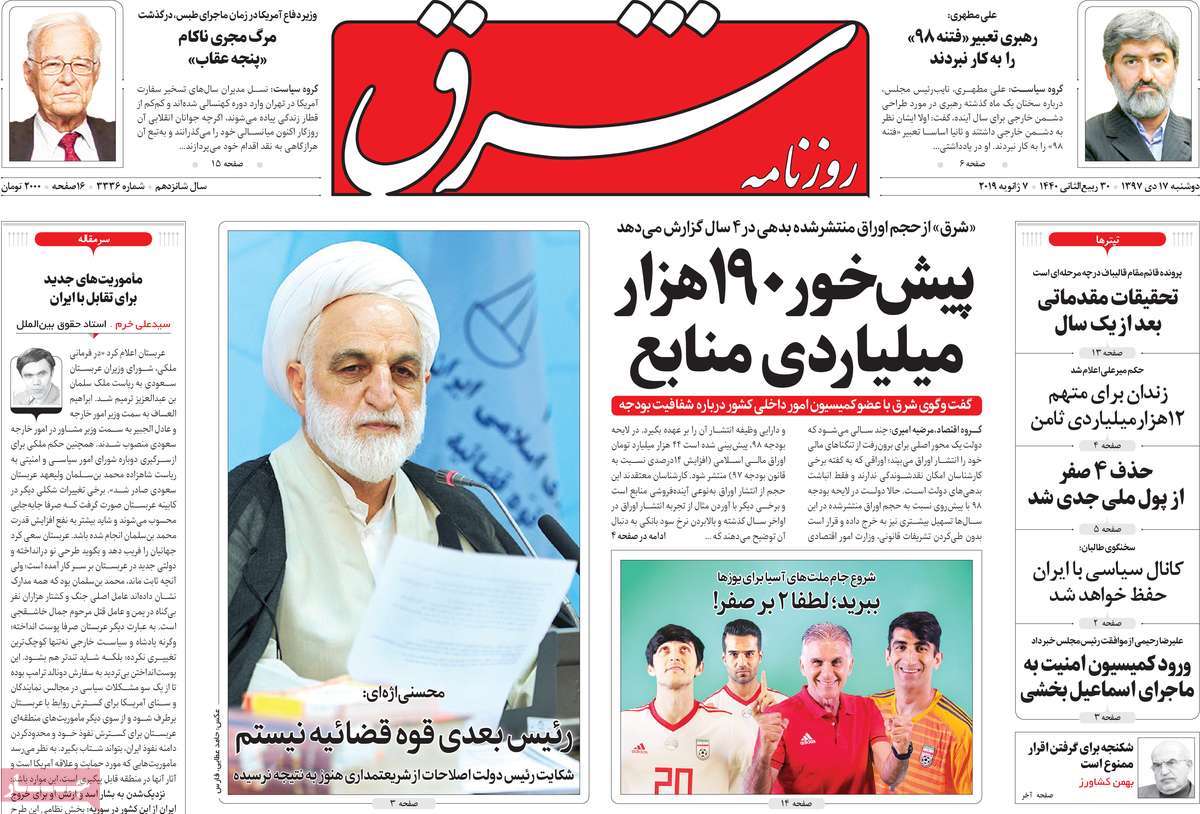
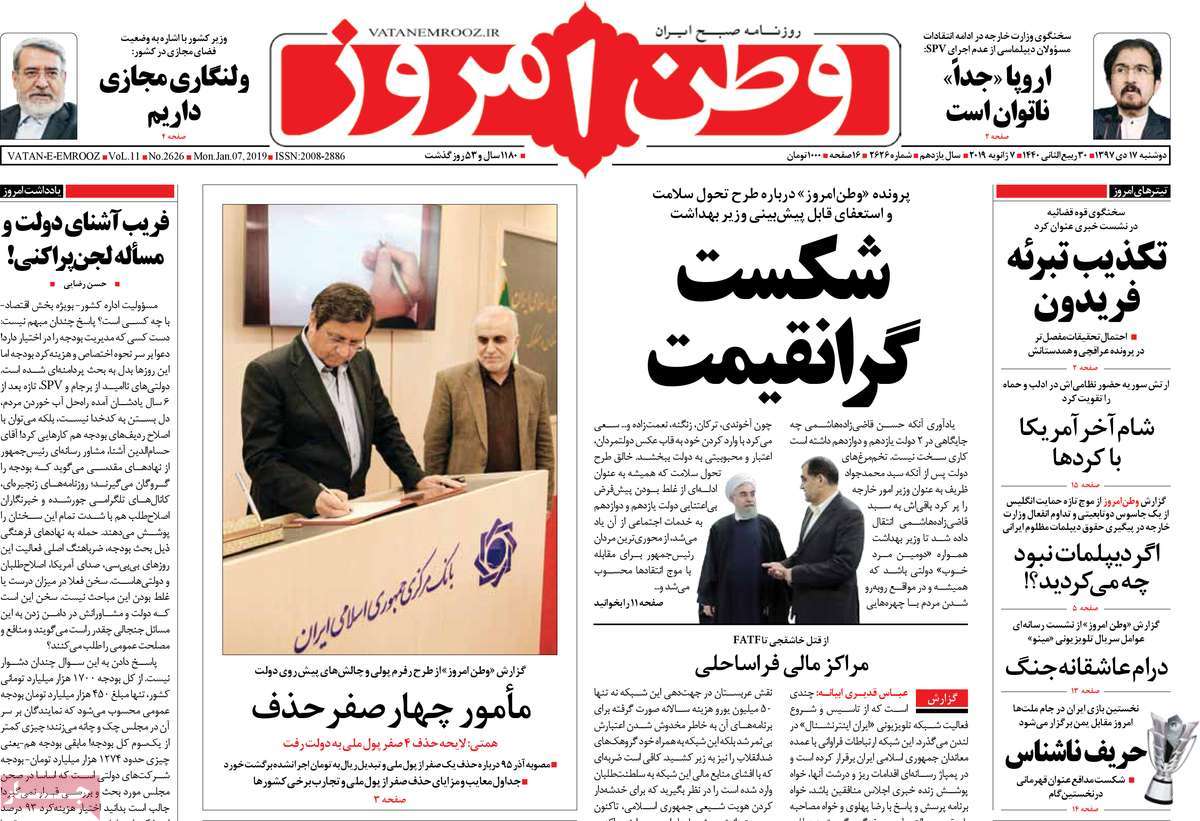
A Look at Iranian Newspaper Front Pages on January 7

A Look at Iranian Newspaper Front Pages on November 19

Several papers today covered the story of Iran’s criticism of EU’s inaction in implementing SPV which is a special mechanism to do business with Iran.

Iran’s Central Bank’s proposal to remove four zeros from Iranian national currency is another important issue highlighted by the Iranian dailies.

Yellow vest protests in France and the demonstrations across the European country is another topic discussed by dailies.

The above issues, as well as many more, are highlighted in the following headlines and top stories:


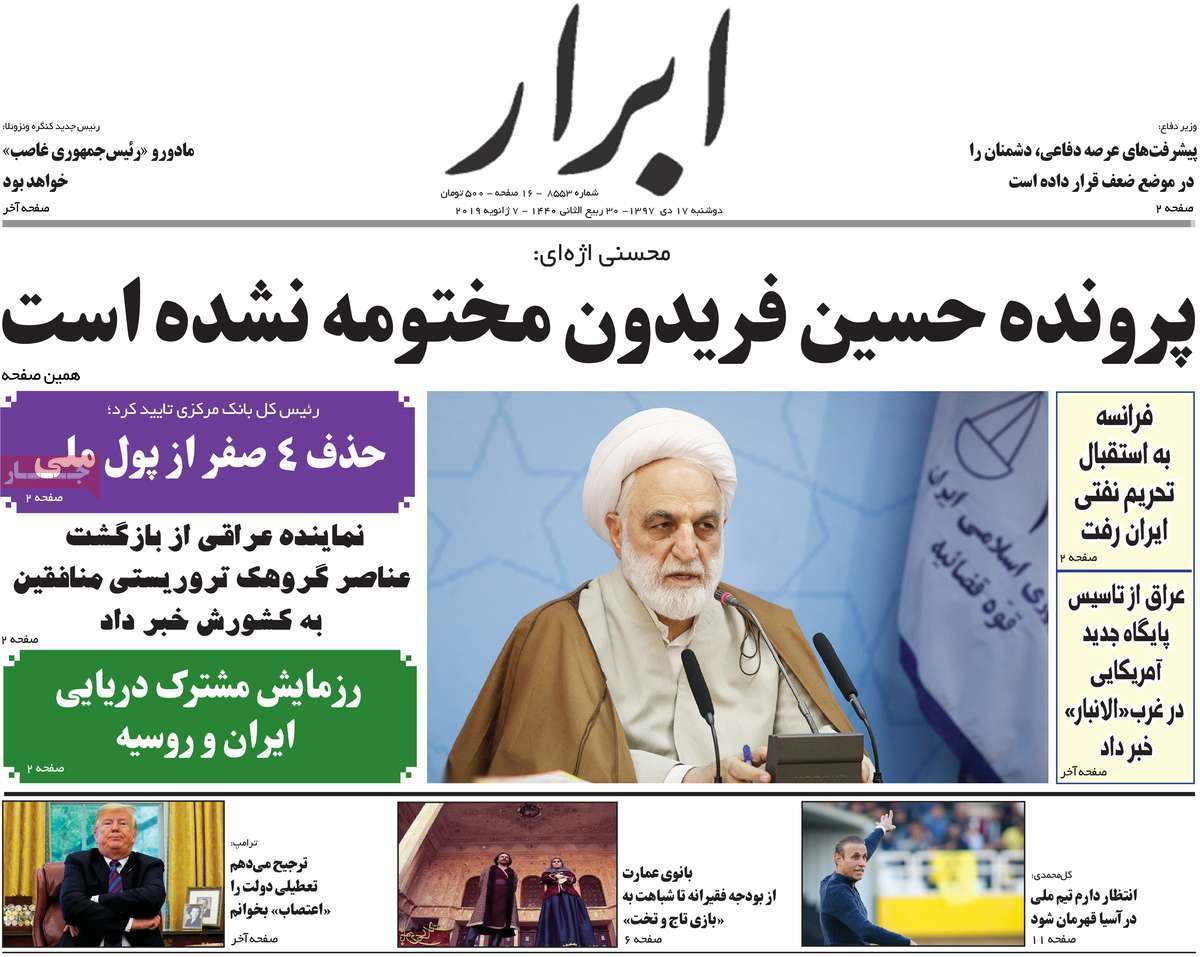
Abrar:

1- France Welcomes Iran Oil Embargo

2- Iran, Russia Hold Joint Naval Maneuver

3- Four Zeroes to Be Lopped Off from Iranian Currency: CBI

A Look at Iranian Newspaper Front Pages on January 7


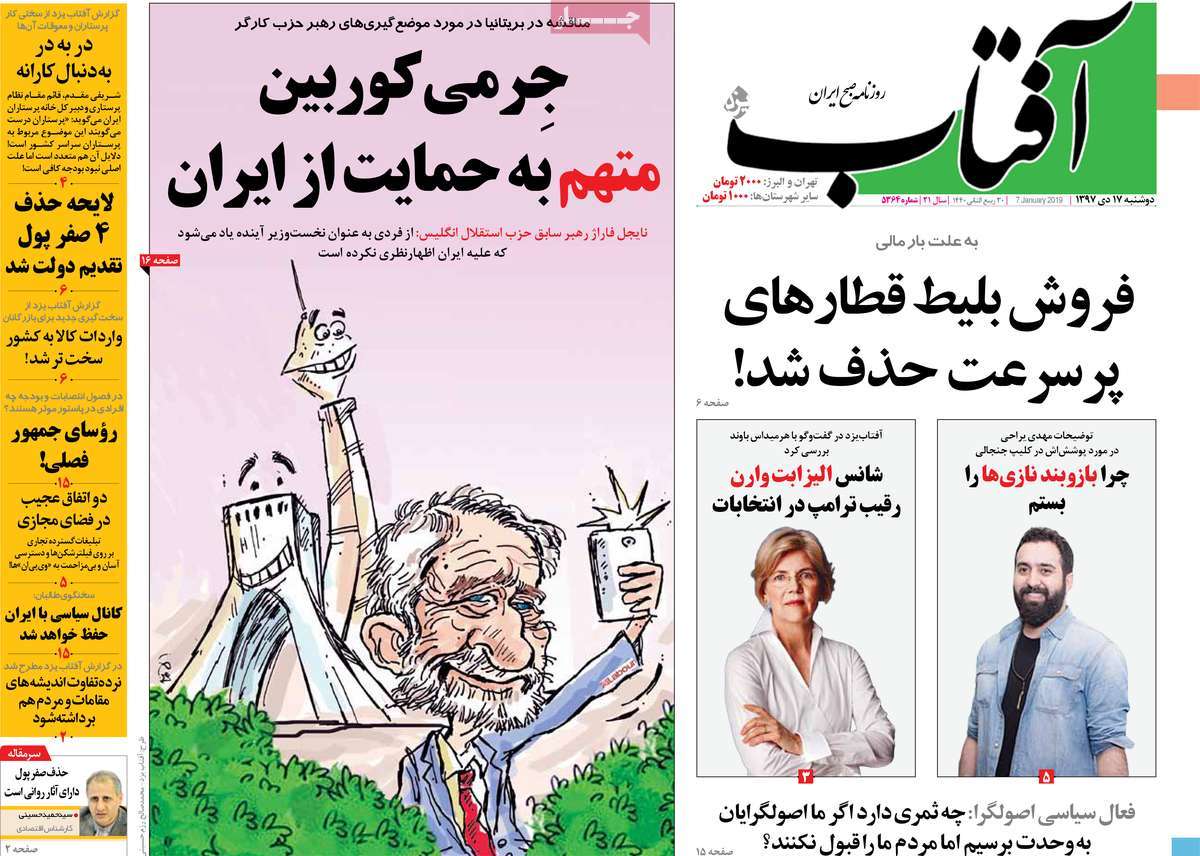
Aftab-e Yazd:

1- Jeremy Corbin Accused of Supporting Iran

2- Looking into Elizabeth Warren’s Chance against Donald Trump in Upcoming Election

A Look at Iranian Newspaper Front Pages on January 7


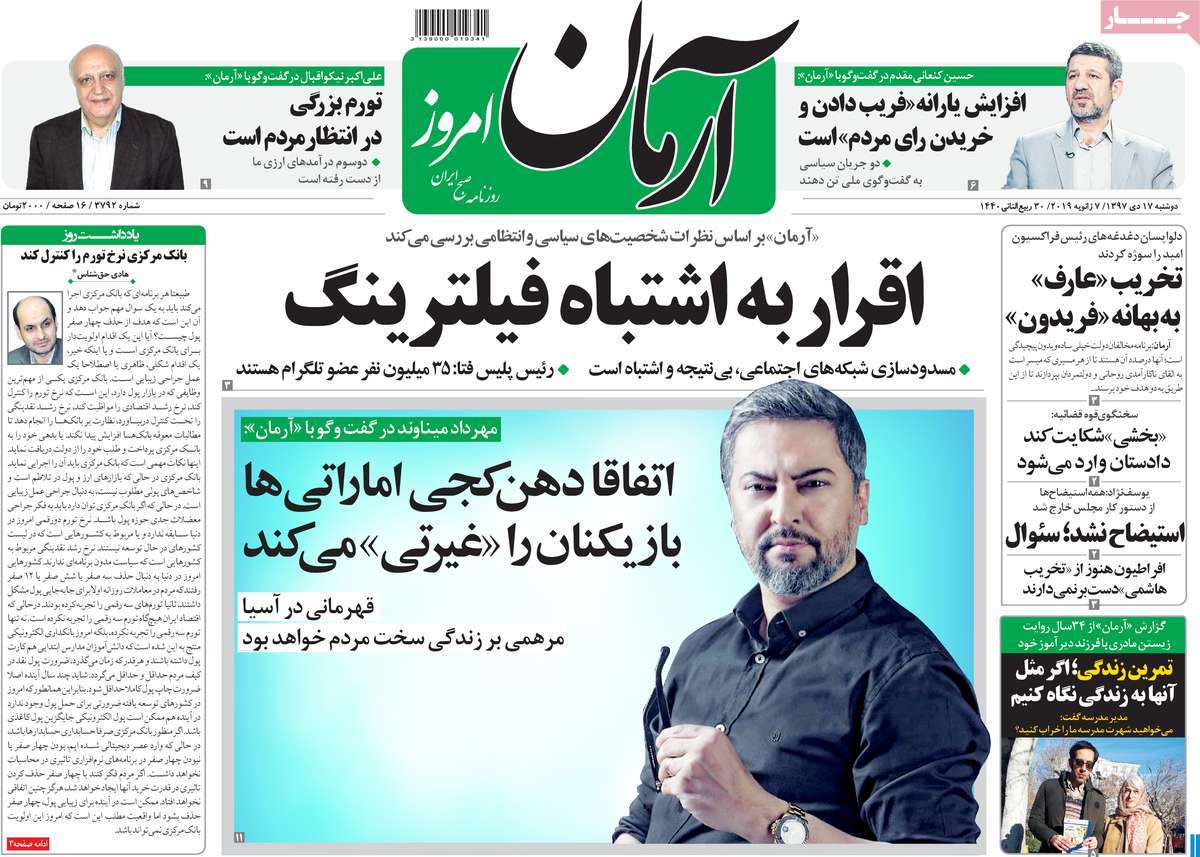
Arman-e Emrouz:

1- Filtering; Wrong Decision

2- ‘Blocking Social Networks Futile, Wrong’

A Look at Iranian Newspaper Front Pages on January 7


E’temad:

1- Loneliness of President

2- Government Supporters Express Concern about Hassan Rouhani’s Canalisation

3- United States Makes New Demands for Pullout of its Troops from Syria

A Look at Iranian Newspaper Front Pages on January 7


Ettela’at:

1- Revenues of Non-oil Exports Can Meet country’s Needs: Iran First VP

2- Iraqi Parliament Puts Expulsion of US Troops on Agenda

3- Iran criticises EU for Delays in Implementation of Financial Mechanism

A Look at Iranian Newspaper Front Pages on January 7


Javan:

1- Taliban Boycotts Negotiations in Saudi Arabia

2- I’m Eagerly Waiting to Play against Yemen: Iran Team Melli Manager

A Look at Iranian Newspaper Front Pages on January 7


Jomhouri Eslami:

1- Foreign Goods Promotion Banned in Iranian Media

2- Two New South Pars Rigs Ready to Use

A Look at Iranian Newspaper Front Pages on January 7


Kayhan:

1- ‘Israel’s Right to Survive a Myth’

2- France Streets Turn into Battlefield in First “Black Saturday” of 2019

A Look at Iranian Newspaper Front Pages on January 7


Resalat:

1- Iran Does Not Achieve Its Economic Goals in JCPOA: Expert

A Look at Iranian Newspaper Front Pages on January 7


Setareh-e Sobh:

1- FATF on Decision Table

2- Turmoil in US Administrative, Economic System

A Look at Iranian Newspaper Front Pages on January 7


Shargh:

1- Political Channel with Iran Will Be Preserved: Taliban

2- Removal of Four Zeros from National Currency

A Look at Iranian Newspaper Front Pages on January 7


Vatan-e Emrouz:

1- Europeans Face Serious Disabilities in Implementing SPV: Iran Spokesman

2- US’s Last Supper with Kurds

3- Syrian Army Strengthens Military Presence in Idlib, Hama

A Look at Iranian Newspaper Front Pages on January 7

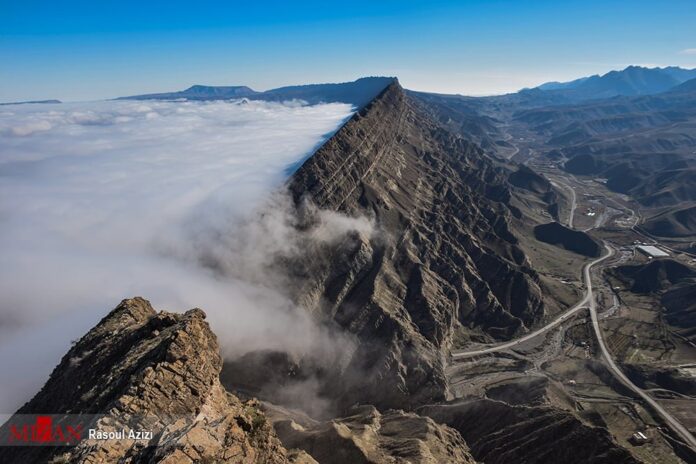
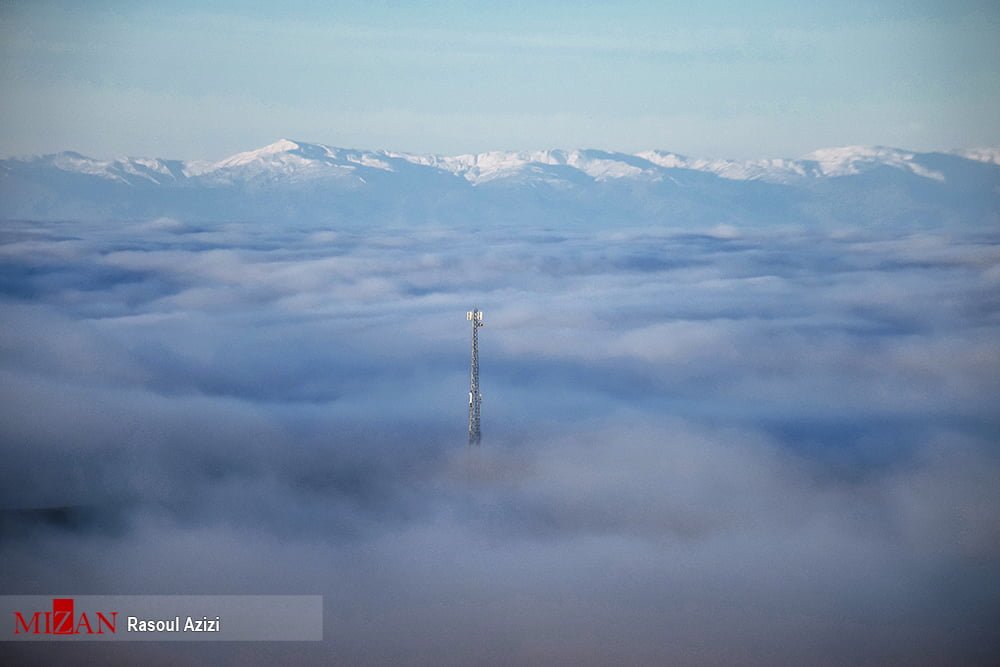
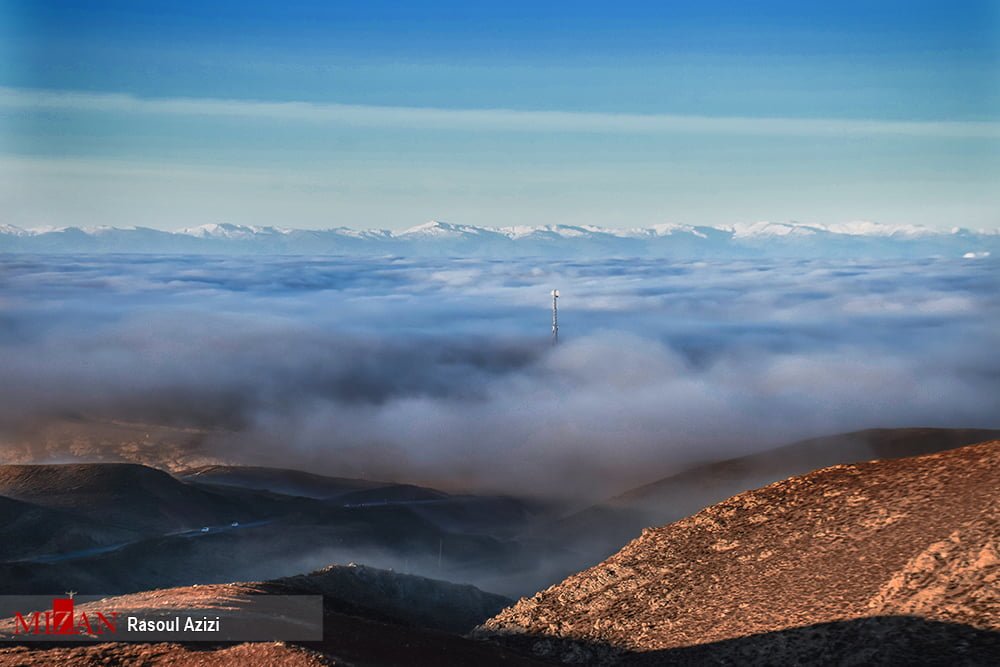
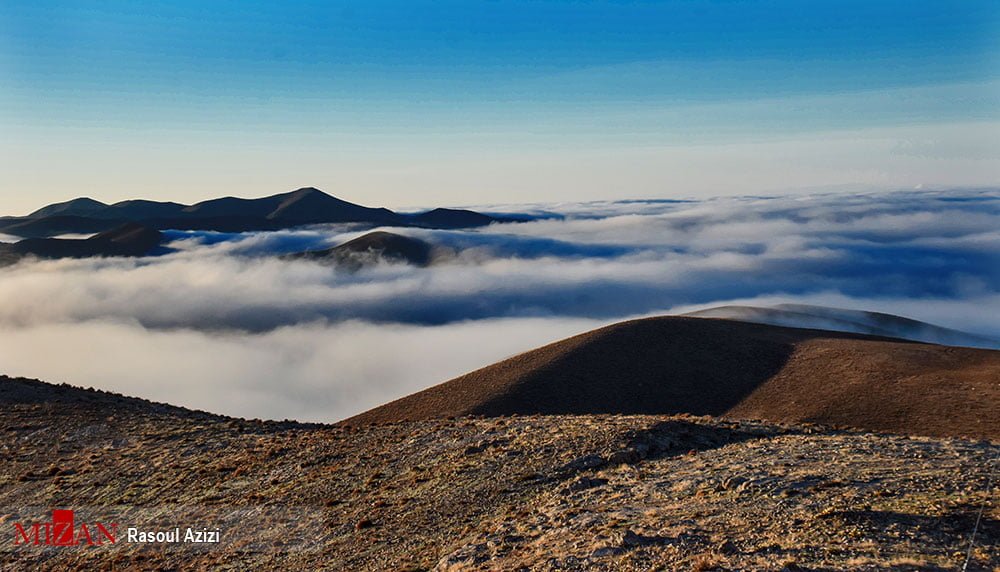
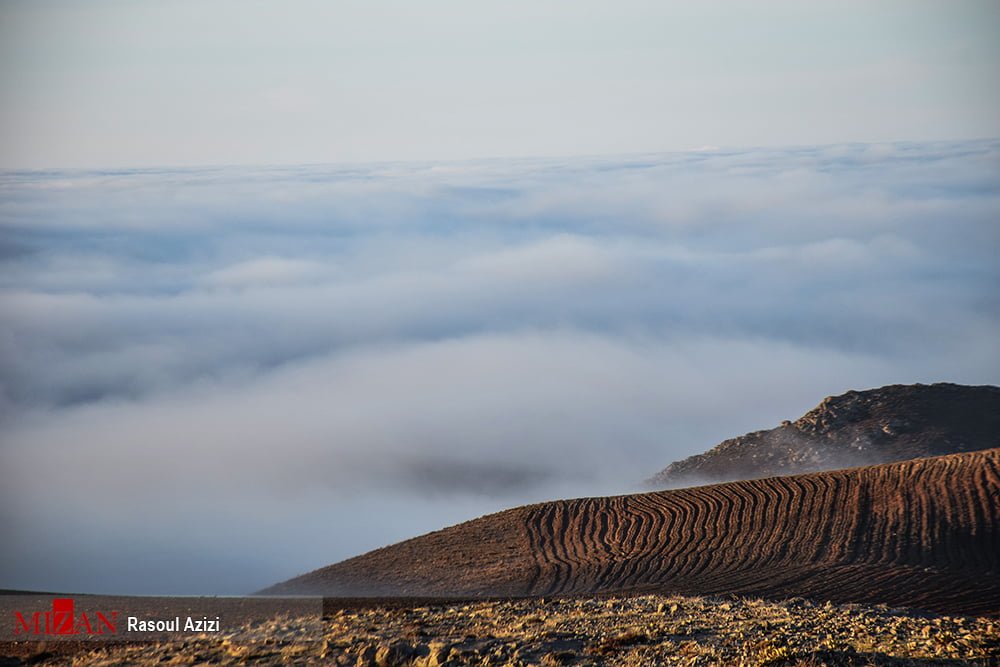
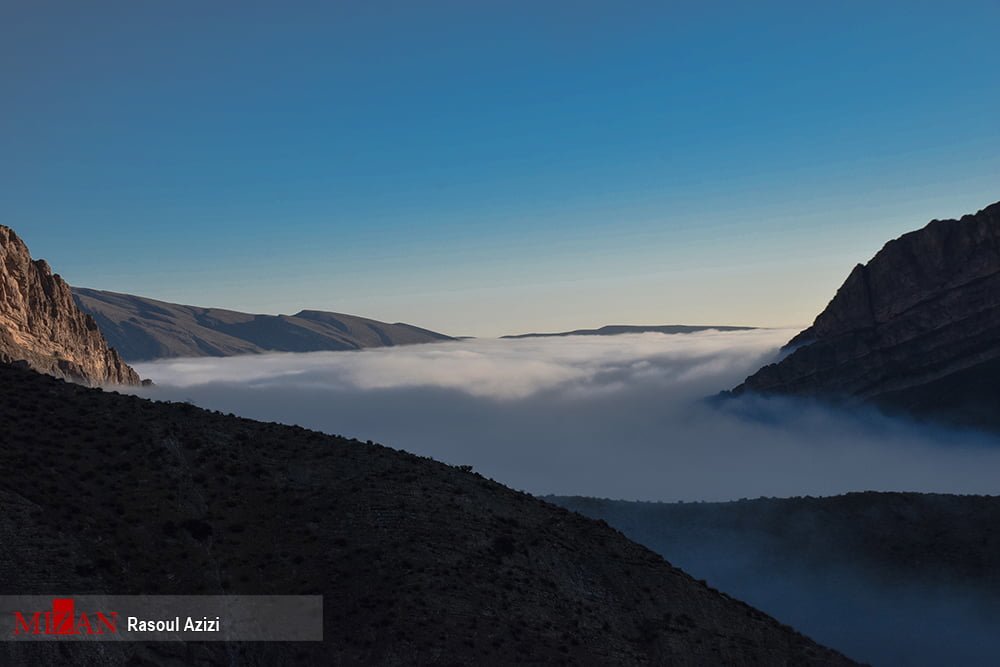
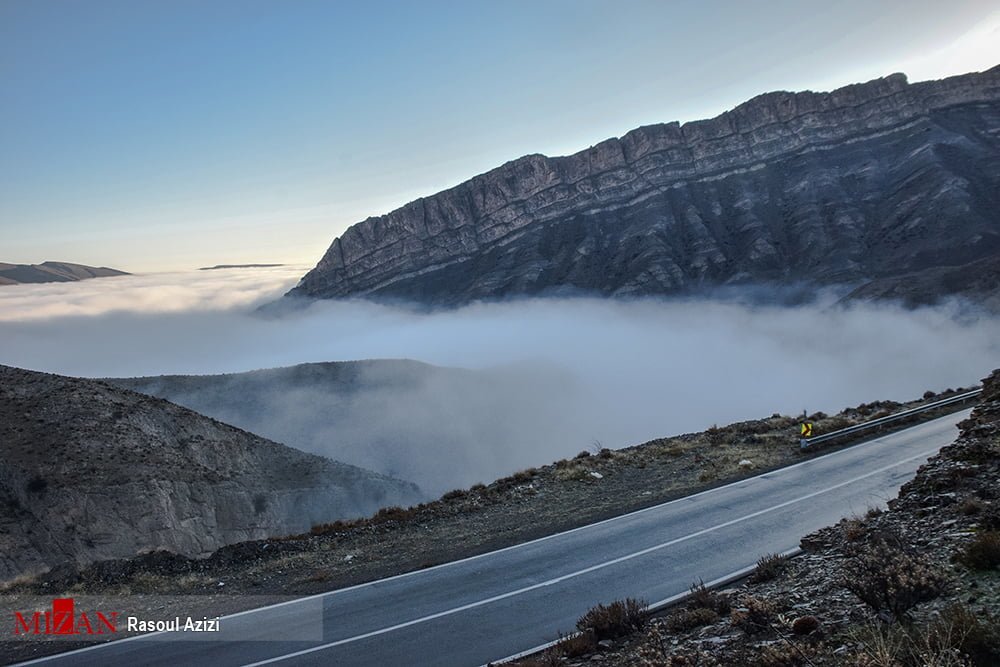
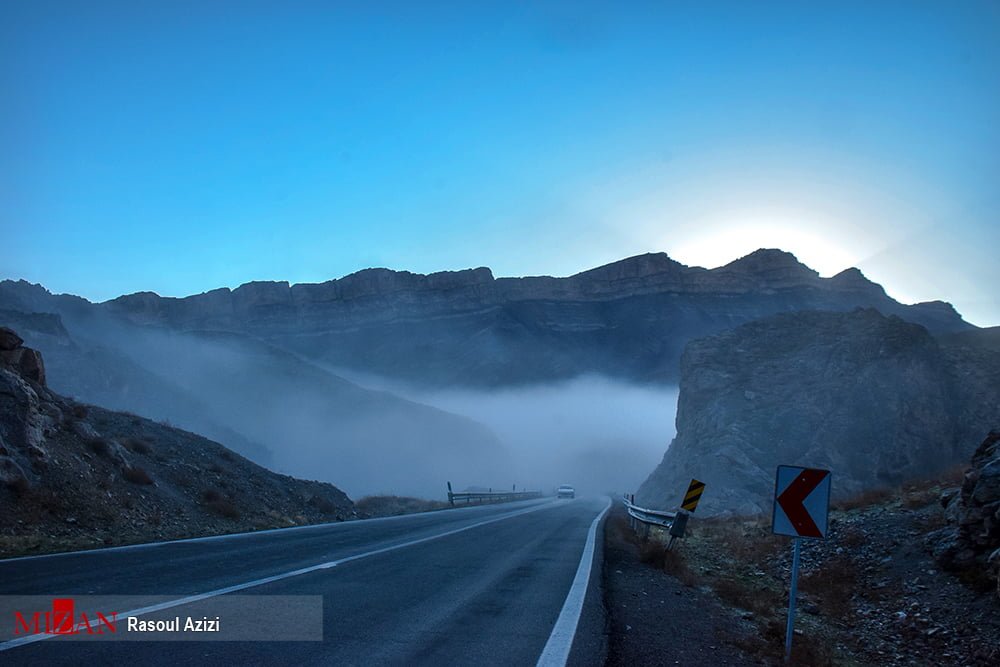
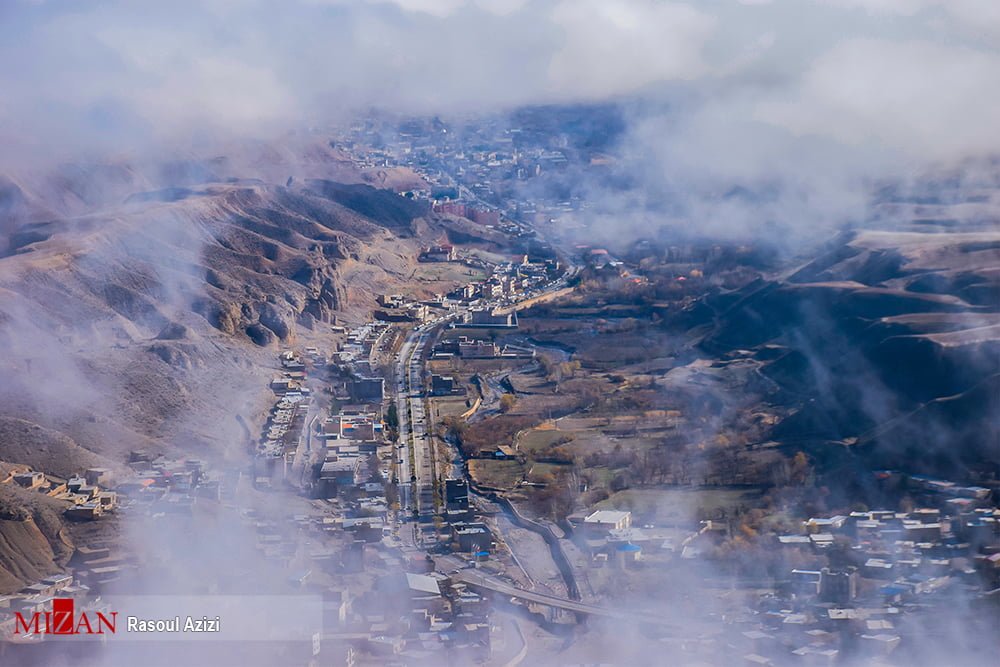
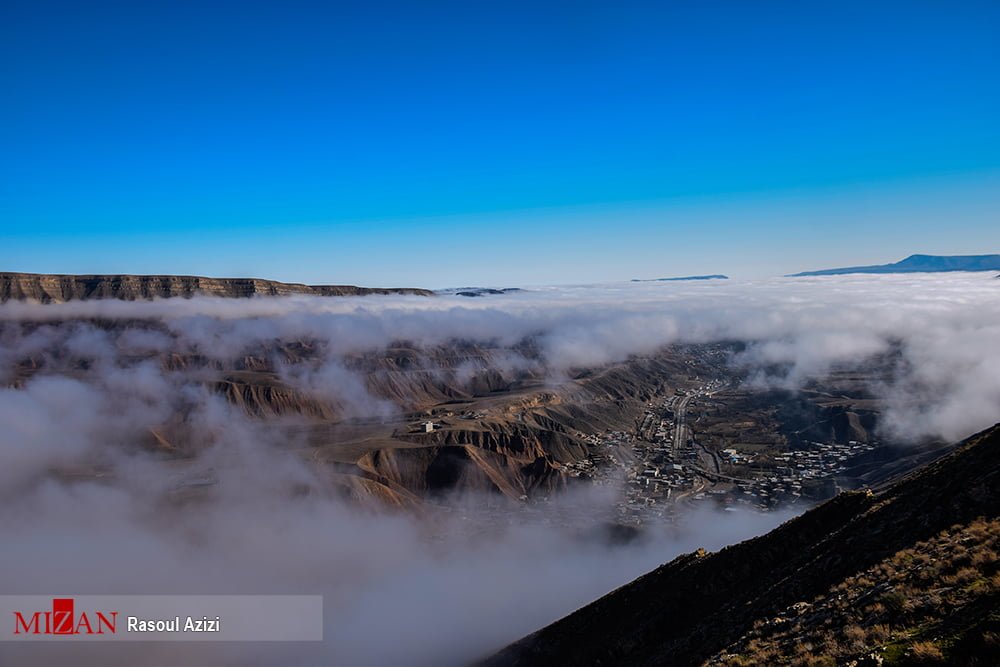
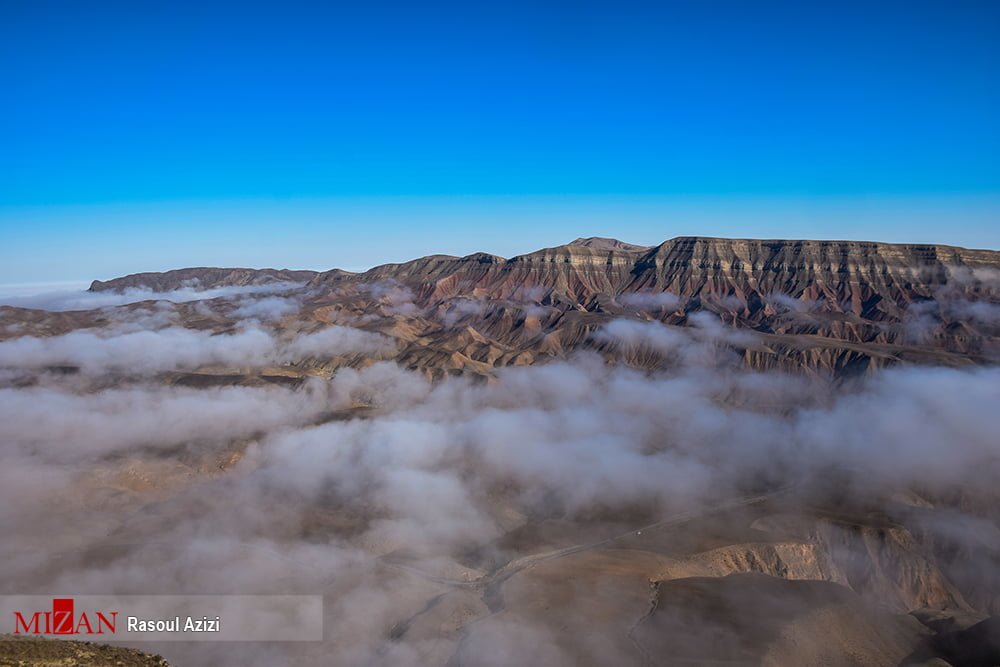
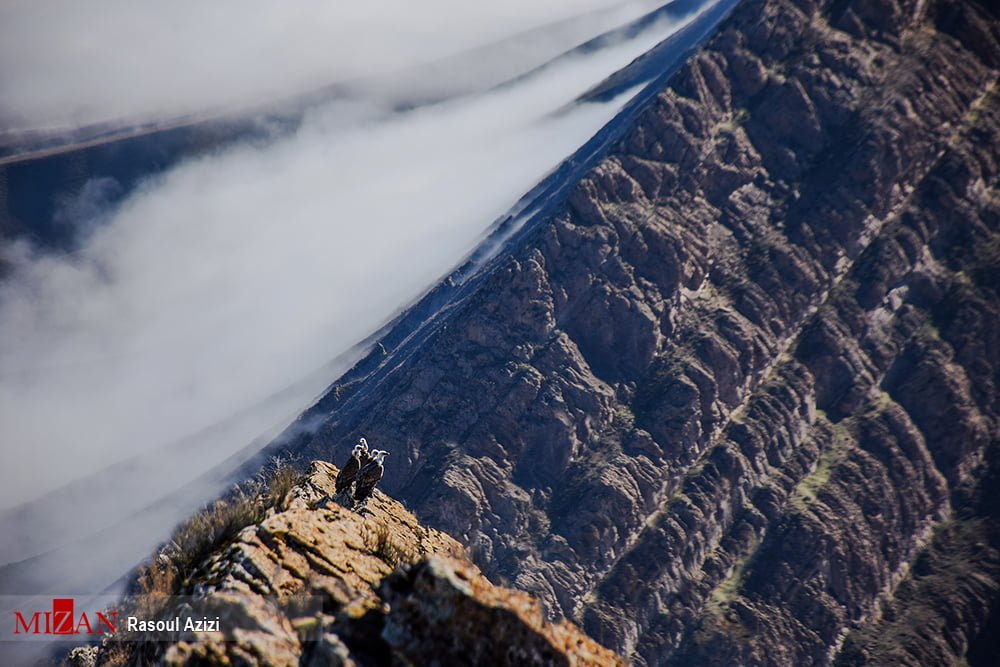
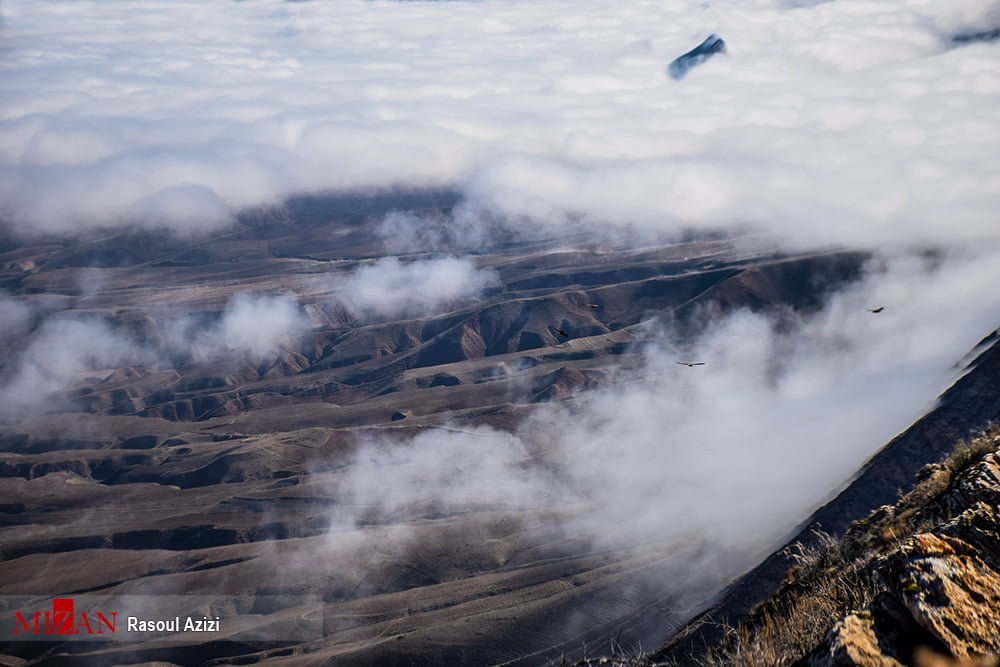
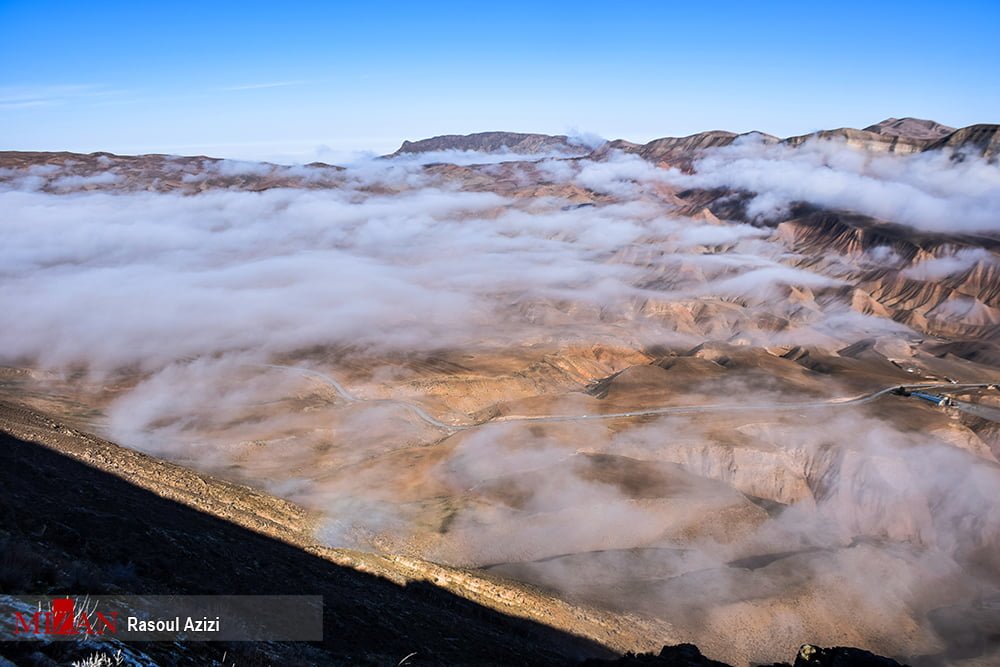
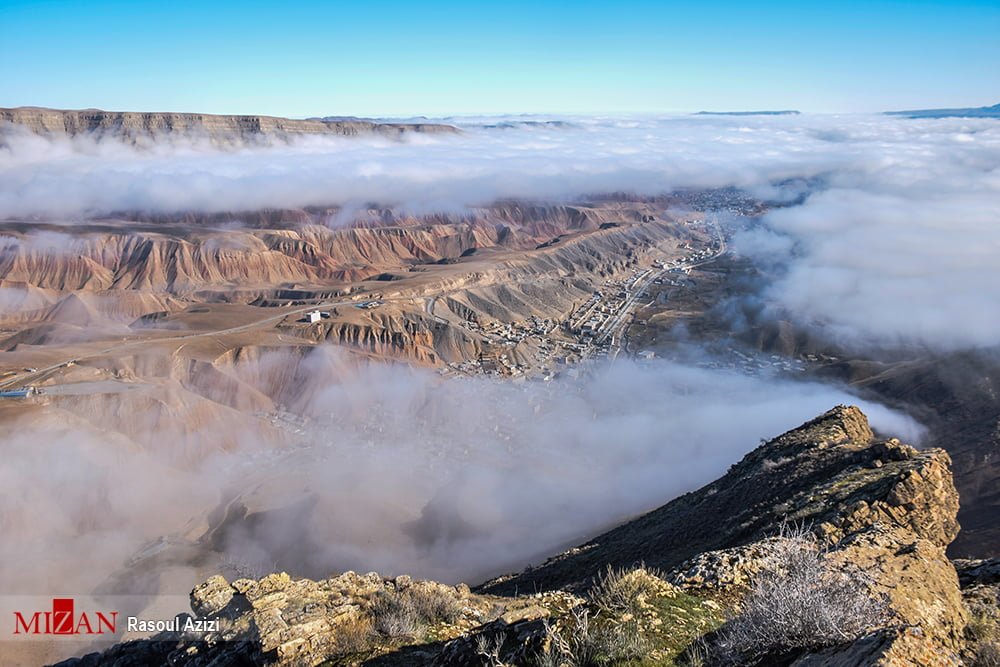
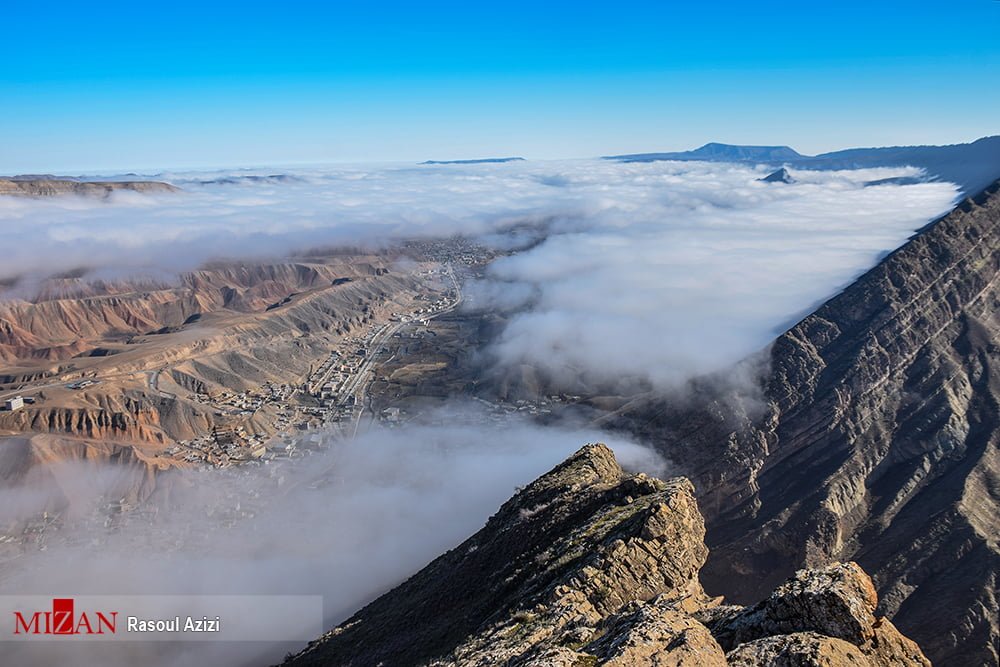
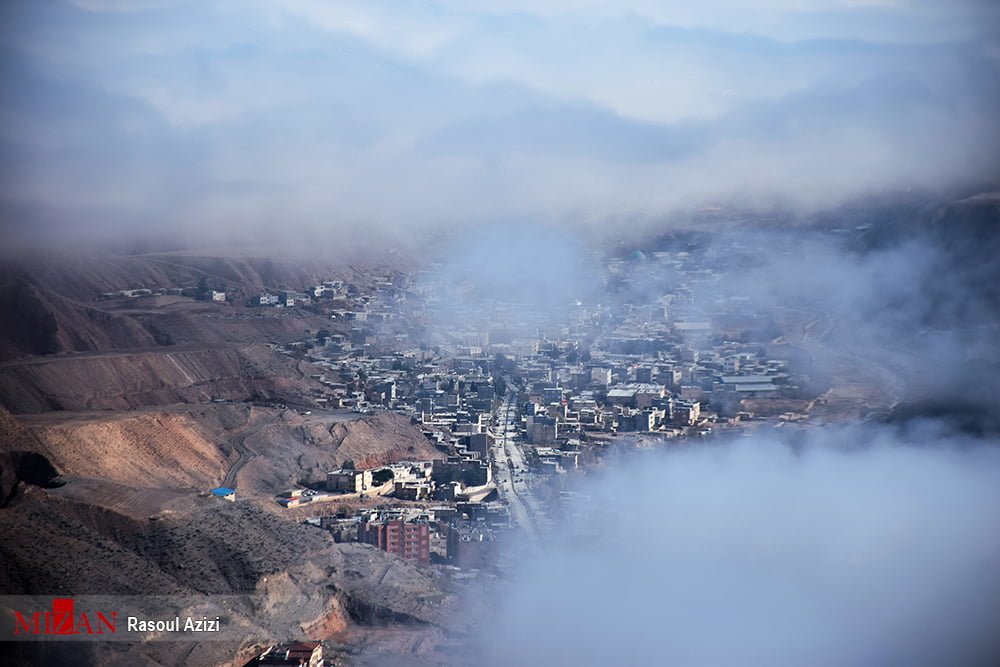
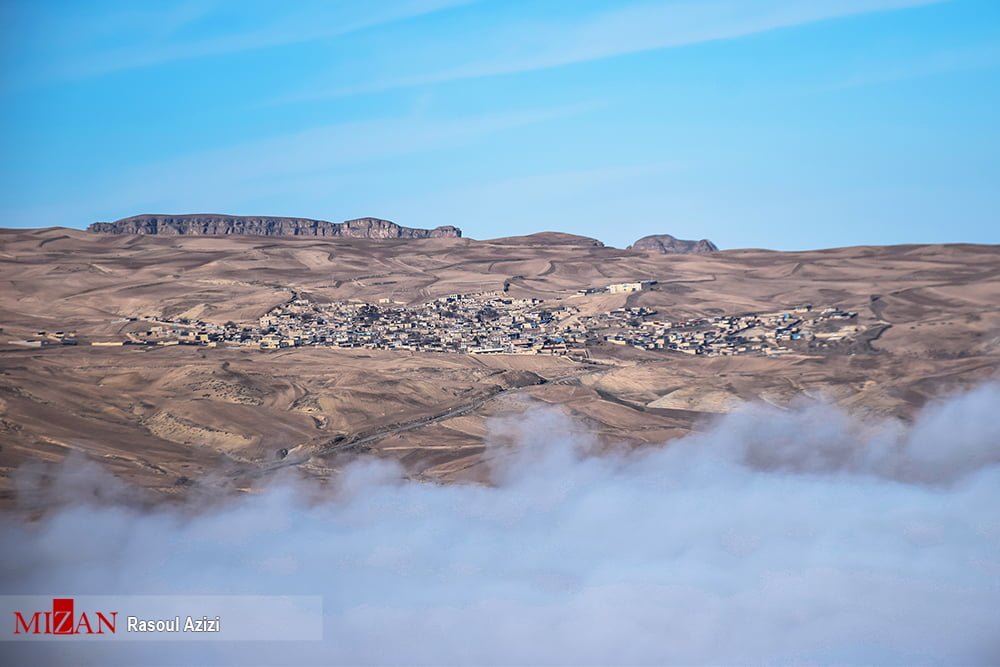
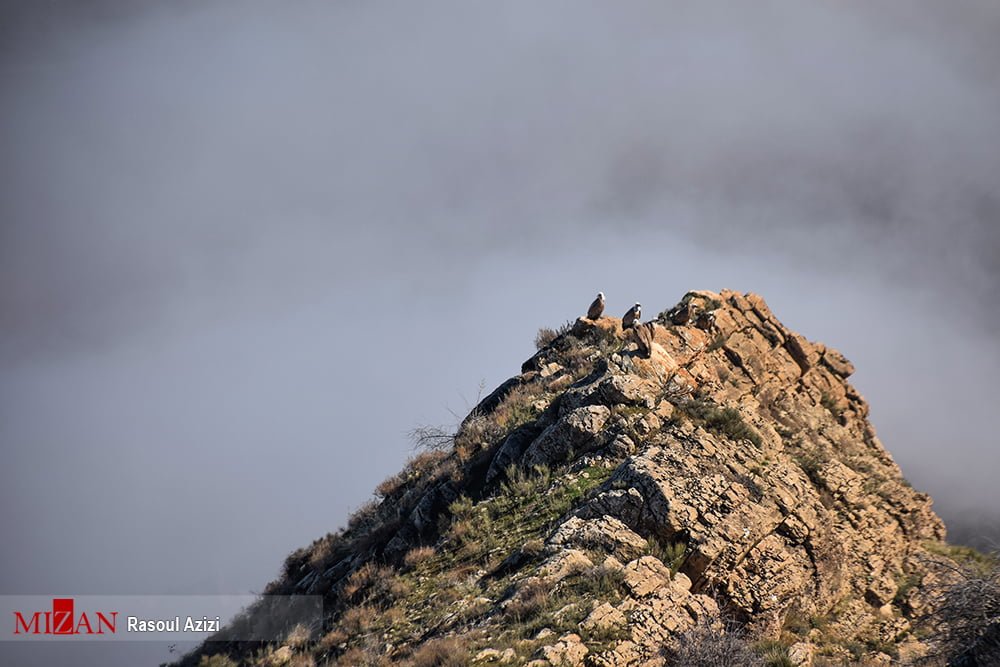
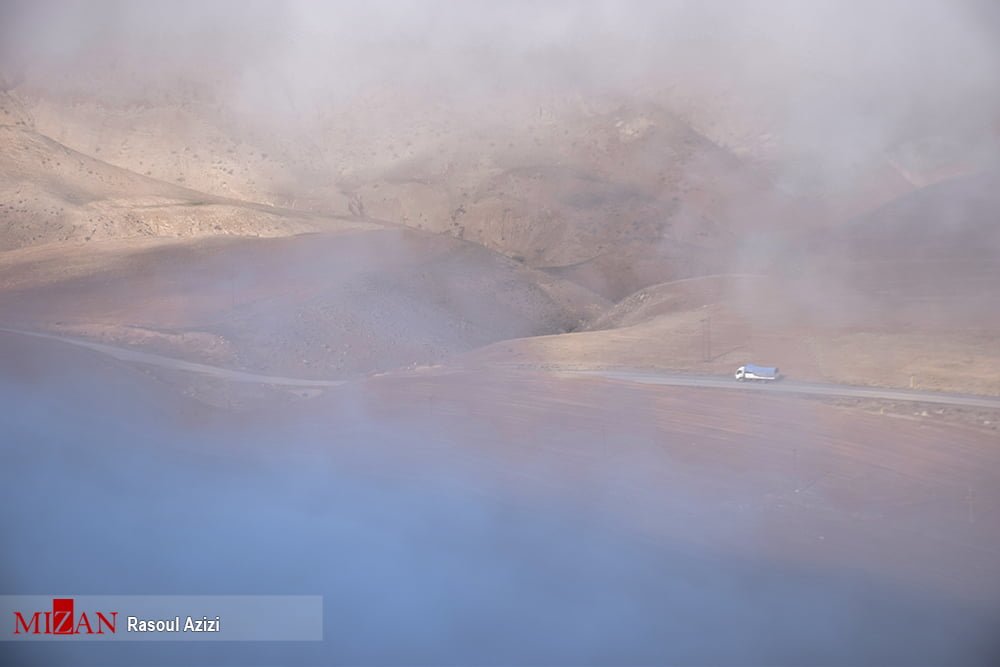
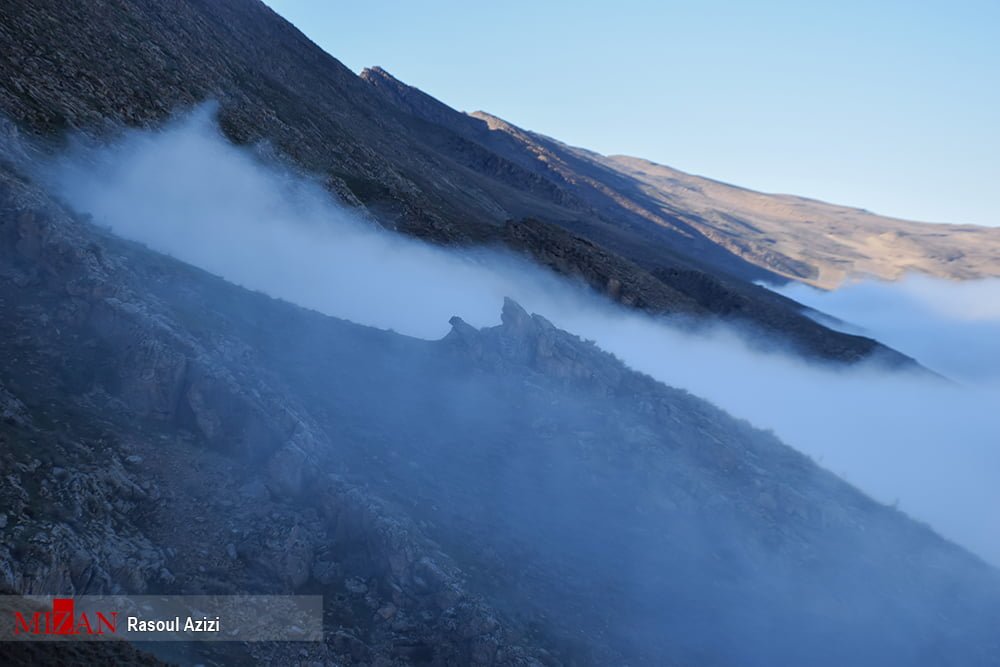
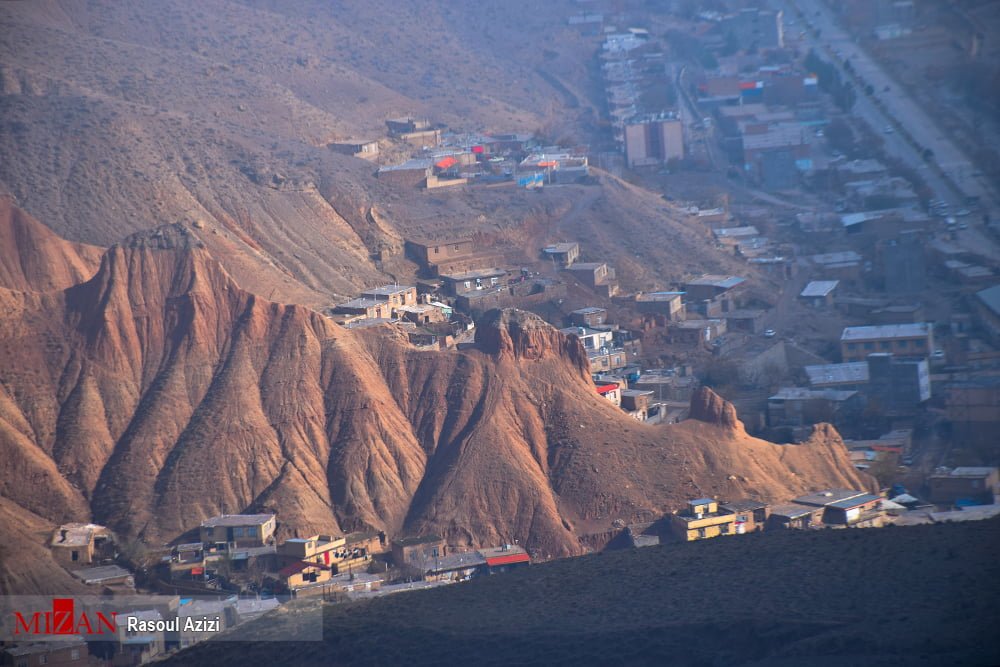
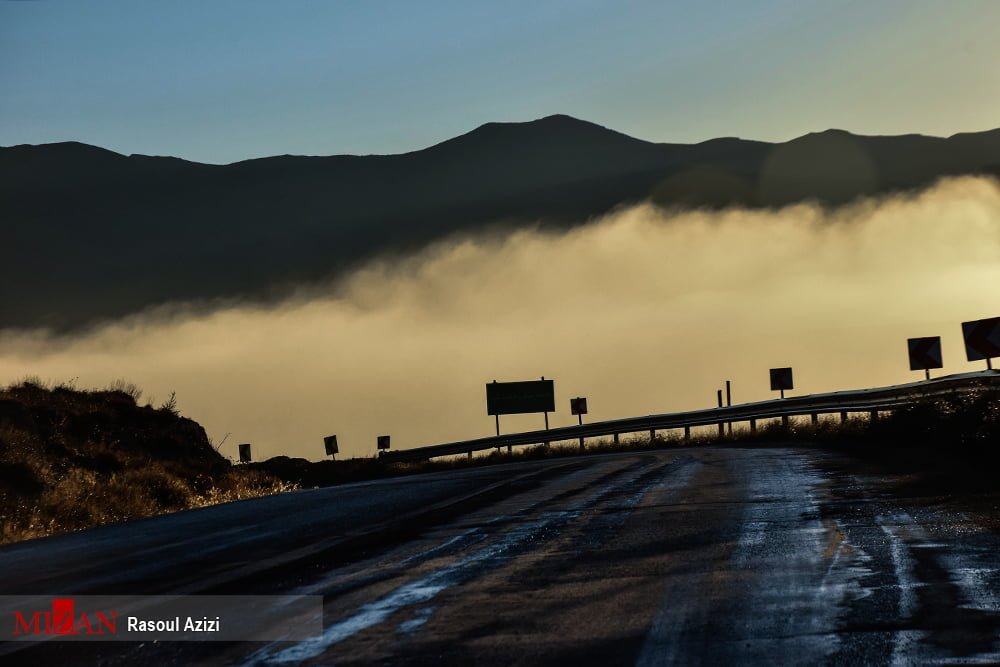
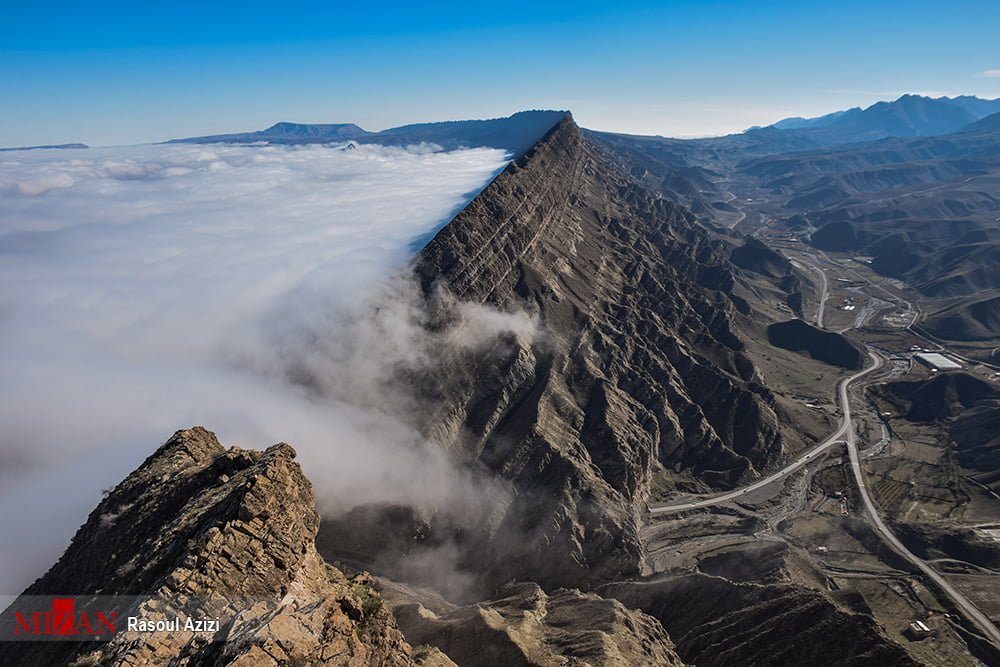
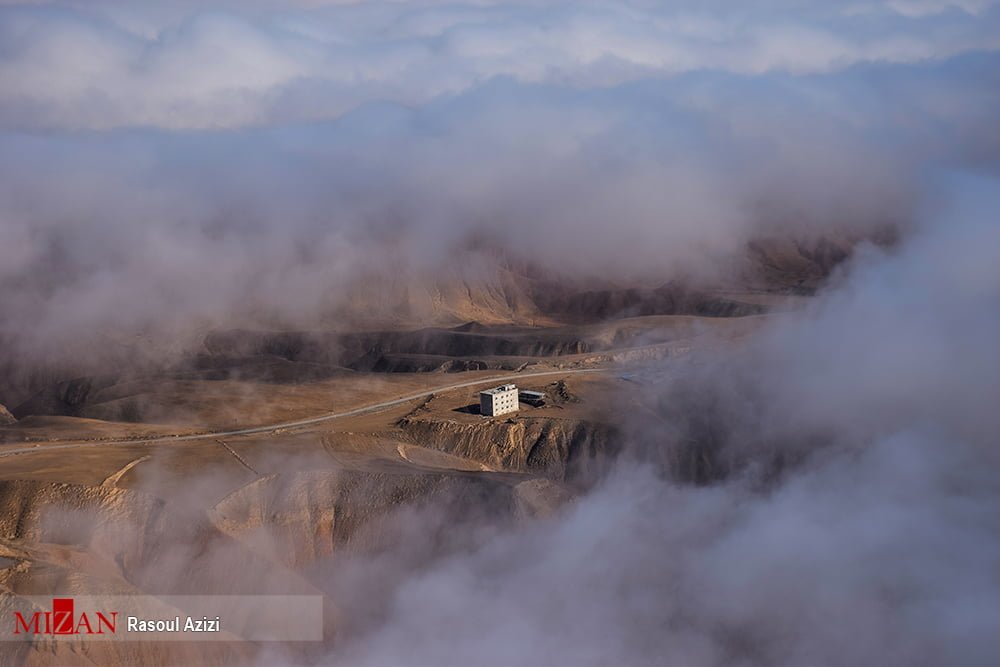
Iran’s Kalat-e Naderi Heights Shrouded in Fog

Hezar Masjed Mountains are a group of mountains located in this area. In the First Days of Winter, the fogging at the heights of these mountains has created a very beautiful perspective.

What follows are the photos of these mountains retrieved from mizanonline:

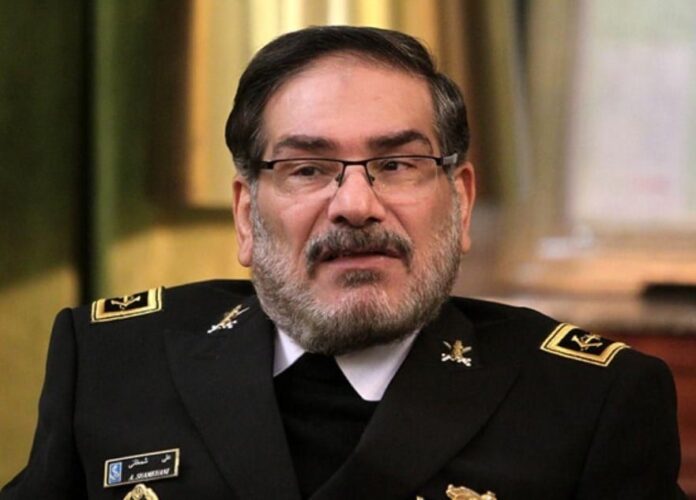
US Officials Say Washington Seeking to Hold Talks with Iran: Shamkhani

Iran Calls US Ruling Elite 'Inefficient, Source of Threat'

Rear Admiral Ali Shamkhani said it is clear that Iran will not negotiate with the United States because the US is unreliable, and negotiations with them do not make sense.

Shamkhani made the remarks at an international conference on defense and security in Tehran.

“Americans spend $ 7 trillion to overthrow the legal government of a country, and on the other hand, they call our help to the countries of the region a waste of national capital and intervention in the internal affairs of the countries,” he highlighted.

Shamkhani underscored that Iran is seriously against the disintegration of countries and supports maintaining the security of the region and the serious struggle against any kind of terrorism through cooperation and interaction.

The Iranian top official further noted that the US decision to withdraw military troops from Syria and Afghanistan is a proof of total failure of Washington’s policies in the region.

Shamkhani stressed the US sudden pullout was out of constraint rather than choice maintaining that 17 years of US intervention in Afghanistan only brought more insecurity and instability. He said a similar situation exists in Syria where Washington is paralysed as to what role it can play considering the bitter realities on the ground.

He underlined that the US is the actual instigator of religious conflicts in the region and the emergence of ISIS terrorist group. He accentuated that all foreign de-stabilisers have no choice but to leave the entire region in near future.

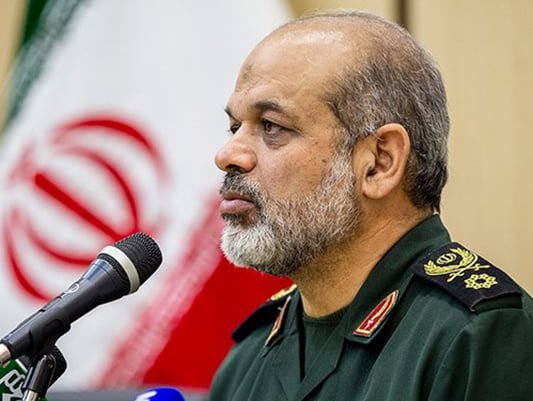
Withdrawal of US from Syria Not Making So Much Difference: Ex-Iranian DM

General Ahmad Vahidi

He added that the US forces’ withdrawal from Syria does not make any difference because they have already been defeated.

Speaking in Tehran on Monday at a defense and security conference in West Asia, the Iranian general noted the world is tired of its prevailing order and its power geometry is very weak.

This is evident in the performance of European countries and recent protests in France, he went on to say.

Vahidi further pointed out the European countries are tired of having to execute US orders stressing that the orders formed in other regions have somewhat stabilised, but in Western Asia, the developments are complex and sensitive.

“This region is wounded and bloody by the crises imposed on it, but nevertheless our region is moving towards a better future,” he maintained.

The former Iranian defense minister added that today security issues in Syria are moving towards political issues. And in Iraq, the post-ISIS government is positioned and working.

“There is at least an agreement on paper in Yemen, and all this indicates the movement of the region towards a better future.”

Underlining that the Zionist regime wants to create tension in the region to survive, he stressed that the flow of Takfiri-based terrorism, which is based on interference in the region, is among the challenges of the West Asia.

“Today, there is a strong tendency towards resistance in the region, and the US has failed to implement any of its policies here,” noted Vahidi.

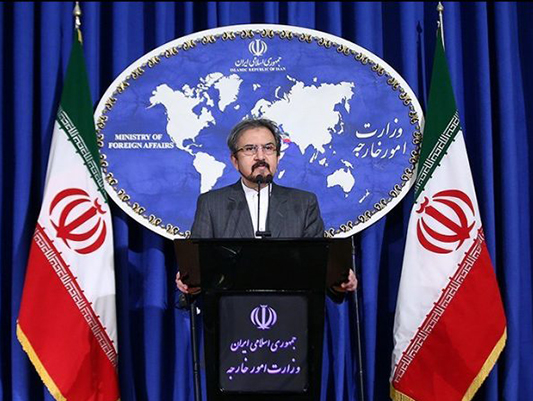
Tehran Slams Trump’s Anti-Iran Remarks

Bahram Qassemi

Iran’s foreign ministry spokesman Bahram Qassemi says US President Donald Trump as always, without learning a lesson from the developments of the recent decades and without revising the policies of his ill-advised predecessors towards this region and Iran has once again made irrational and hate-inspired statements against the people of this ancient land.

Qassemi said these are just the restatement of the same ambitiousness and avariciousness of the medieval and obsolete powers.

He also stressed that the dreams and hostile actions of the United States against the people of Iran have not been effective, and despite all their hate-inspired attempts such moves against Iran will remain futile.

“Donald Trump is just simply stating his false and void wishes which do not correspond any existing facts. He knows that the Islamic Republic of Iran has been familiar with the US sanctions policies and pressures for decades,” added Iran’s spokesperson.

He further mentioned that Trump must know the Iranian nation will never bow to oppressive US pressures, especially to the rulers who choose sanctions instead of respect and pick [building] wall instead of bridge.
Iranians have learned in their dramatic, but gratified history how to resist the overwhelming adversaries and bullies. They know how to defeat anti-Iran enemies and crush them, noted Qassemi.

On Sunday, Trump said Iran is in dire conditions due to US sanctions. He claimed Iran was withdrawing its forces from everywhere. He also stated that the Islamic Republic is not doing well and the country wants to hold talks with America.
The Iranian economy, Trump said, has been badly hit due to these sanctions. “They (Iran) are not doing well. They want to talk (with US),” Trump told reporters at the White House.

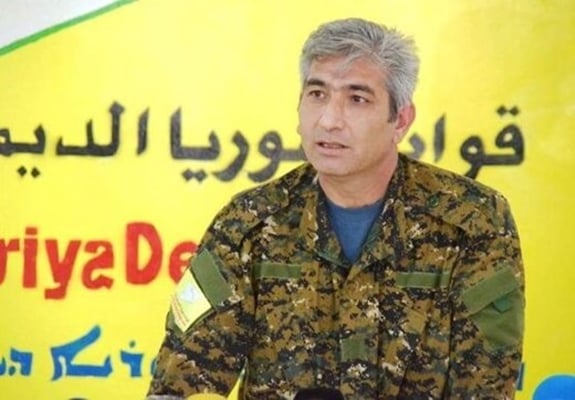
Syrian Kurds Stress Need for Agreement with Damascus

Redur Khalil, a commander in the Kurdish-led Syrian Democratic Forces alliance, told AFP that Kurdish authorities and Damascus were bound to reach a deal.

“Reaching a solution between the autonomous administration and the Syrian government is inevitable because our areas are part of Syria,” said Khalil.

“Talks are ongoing with the government to reach a final formulation for administering the city of Manbij,” Khalil noted, adding that negotiations had shown “positive signs”.

If that leads to a solution that “protects the rights” of Manbij residents, a similar deal could be applied to rest of the areas east of the Euphrates river, he underscored.

The deployment of Syrian army forces along the Turkish border could not be ruled out, but this will require specific arrangements on how to control these areas. he underlined.

“We still have some differences with the central government, which need negotiations with international support,” Khalil said, adding that Russia could play an important role as a guarantor state.

“The tasks of these forces could change, but we will not withdraw from our territory,” Khalil said, stressing that Kurdish fighters should be part of the Syrian army. Or another structure should be created for them that fits their status.

He also urged for a new constitution that would guarantee the rights of all citizens including the Kurds.

“We have common grounds with Damascus, including the unity and sovereignty of Syria over all its borders and the Syrian people’s ownership of the natural resources of this country. We also agree on the fight against extremist political ideas,” concluded Khalil.

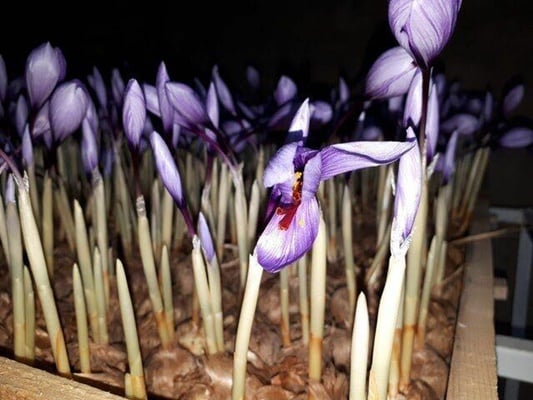
Iranian Youth Cultivates Saffron in Mars-like Conditions

In an interview with ISNA Ali Golabi said he has always been concerned about the creation of a new job for the unemployed.

“Since late last year, I was looking for running a greenhouse with a hydroponic method (soilless), and after doing the research, I decided to use the opportunities available. Therefore, I began to cultivate saffron at a corner of my house.

According to him, he has brought the bulbs of the saffron from the city of Mashhad to grow them in his three-metre handmade containers at the corner of his yard.

The quality of the product is perfect, and the reason is that the plants are away from direct sunlight. In this new method, moisture is collected from the lower and upper parts, and saffron is cultivated in 5 months. It is expected that he would harvest more than 100 grams of saffron at his first attempt.

Soilless culture began centuries ago, when in ancient times, Egyptian, Chinese and Indian farmers used a manure in water to cultivate cucumber, watermelon and other vegetables on the sandy riverbeds. There are now many farms that cultivate different plants through soilless culture. Soilless culture is a type of cultivation in which soil is not used as a bed.