Thursday, December 25, 2025
Home Blog Page 3380

Mehregan, Zoroastrians’ Love, Thanksgiving Festival

Zoroastrians in Iran Mark Mehregan Thanksgiving Festival

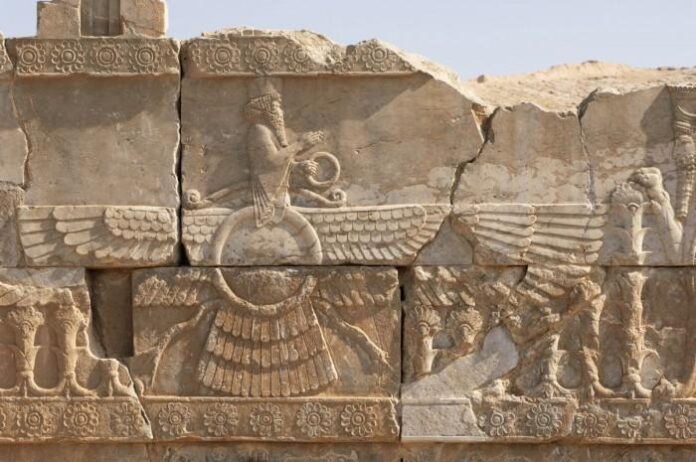
Mehregan festival is named after the first Persian month of autumn, Mehr. In the ancient times, particularly during the Achaemenid dynasty, Iranians celebrated the arrival of autumn as magnificently as the Persian New Year.

Mehregan included a series of special rituals held by ancient Iranians to pay gratitude to God (Ahura Mazda) for his generosity and mercifulness towards his creatures. To most historians, Mehregan reveals Iranians felt duty-bound to express affection to each other.

Esfandyar Ekhtiari, the representative of Zoroastrians in the Iranian Parliament, calls Mehregan one of the greatest Iranian festivals. He says Iranian and Zoroastrian cultures have merged together throughout history; and the Zoroastrians have every reason to be proud for celebrating the festival annually through history even under harsh conditions.

Mehregan Festival carries multiple meanings. It is the festival of friendship, affection and covenant, a series of concepts which take meaning only when viewed together. The most important message of Mehregan is the victory of good over evil.

Mehregan Rituals

The rituals of Mehregan have gone through various changes over the past thousands of years; and been held differently in different regions of Iran.

In ancient era, people came together during Mehregan in purple clothes. Each of them held a felicitation letter (or greeting card, as it is called today) in hand as a gift to present to others.

The felicitation letters had a sweet smell and were wrapped up in a nice way. During the festival, a tablecloth full of autumn foods and drinks was unfolded. People played music and performed group dances after eating and drinking. They sang songs and danced together. They also added some flammable plants like saffron into the fireplace to make the fire more blazing.

At the end of ceremony, the Iranians made a circle by taking each other’s hands as a sign of reaffirming pledges together.

Visiting each other (based on an Iranian culture, it is the younger ones who pay visit to the elders) is another part of Mehregan rituals. They also named the babies born during the month with the word Mehr as a prefix coming before their first name; like Mehryar, Mehrshid, Mehrnoush, Mehrpad, Mehrdad, Mehrban and so on.

Today, Mehregan Festival is not marked in the ancient form described in historical books of fourth, fifth and sixth centuries. Neither is it celebrated by the government or private and unofficial entities.

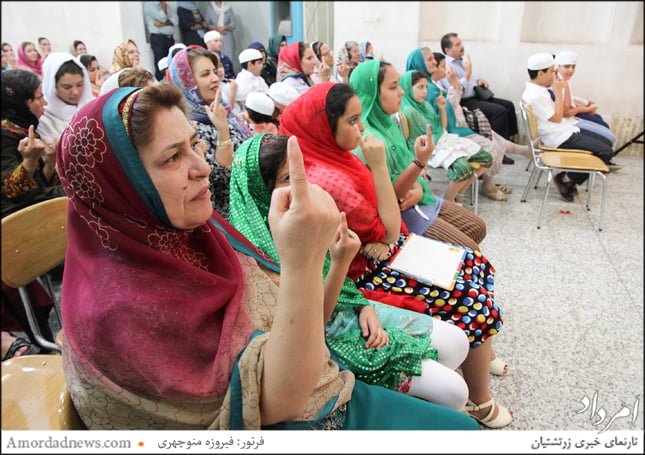
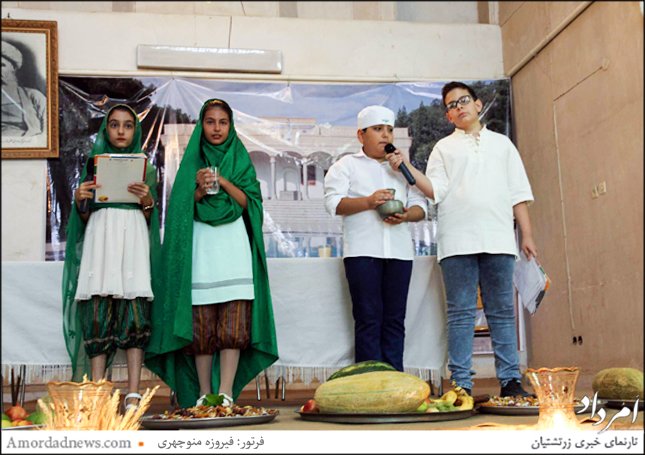
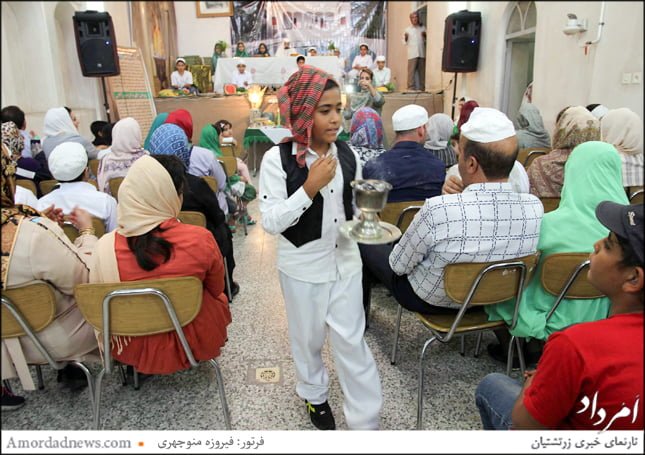
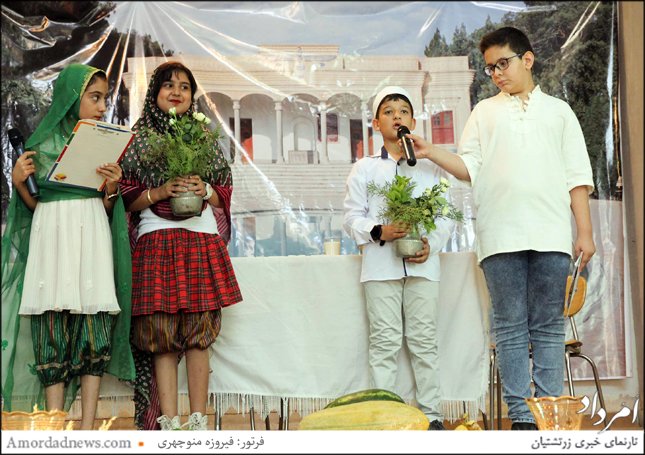
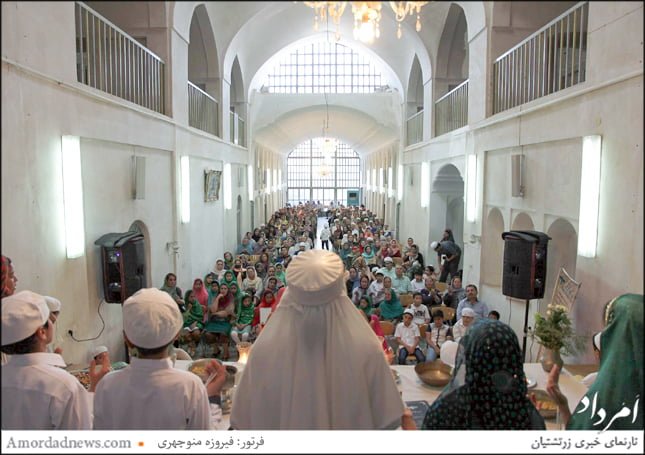
These days, the festive is held only as a family festival among Zoroastrians in the southern provinces of Yazd and Kerman. In some Zoroastrian-populated villages of Yazd, people sacrifice a ship for Mithra. They also hold gatherings in public places singing songs and saying prayers. Mehregan tablecloth is unfolded as in the past; and people reaffirm pledges of friendship to each other at the end of the ceremony.
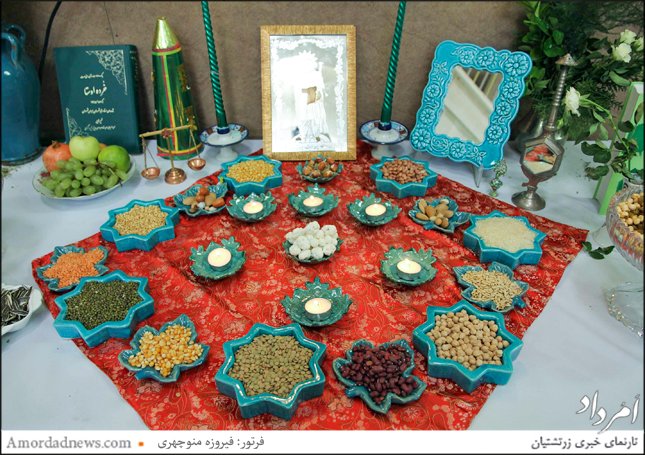
Zoroastrians in Iran Mark Mehregan Thanksgiving FestivalMehregan Tablecloth

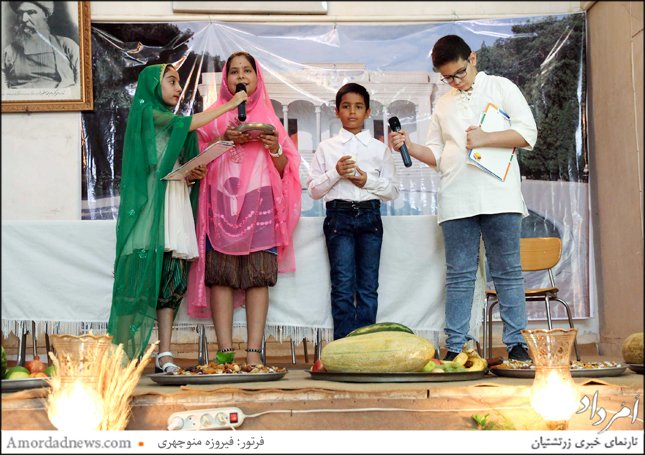
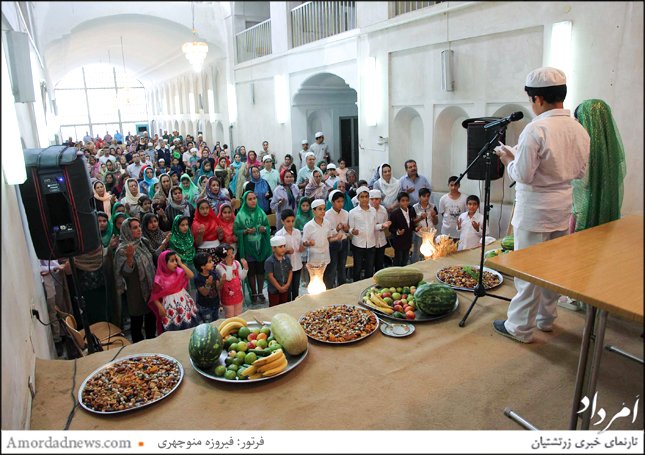
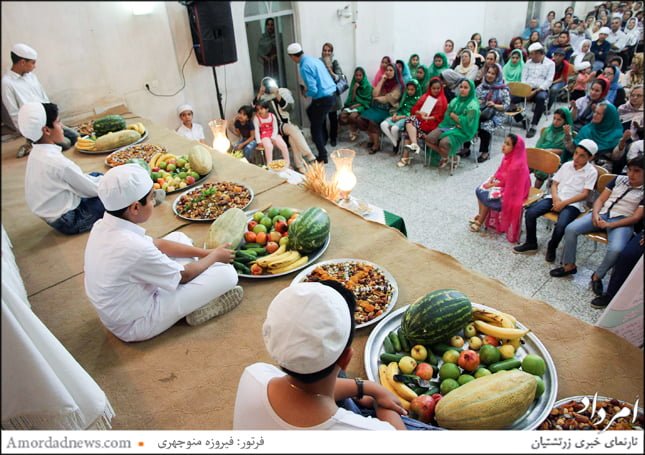
Like Haft-Seen (of Nowruz) and other Iranian tablecloths, Mehregan tablecloth includes a collection of fruits and dishes decorated with various types of flowers. There is also a special drink made of Hom juice (a holy drink used by Zoroastrian believers on special occasions). The juice is diluted with milk and drank with a certain type of bread put on purple cloth around the fireplace.

Apple, pomegranate, bergamot, Russian olive, quince, white grape, fig, jujube, hawthorn, medlar, and persimmon are the main fruits in the Mehregan tablecloth. It also includes a special trail mix of seven main dried nuts like walnut, pistachios, hazelnut, almond, sunflower seed, dried white mulberry, dried fig, chickpea, and so on.

Seven-cereal soap made of wheat, barley, lentil, rice and other cereals is also among the main dishes of the tablecloth. It also has a bowl full of water and rose water, some coins as well as some pieces of violets and basil and a mirror.

Over the past two years, given the coincidence of Mehregan Festival and Muharram month in the lunar calendar year, during which the martyrdom of the third Shiite Imam is mourned, most Zoroastrians have decided to mark the Mehregan Festival only in the schools of Yazd and Kerman as a sign of respect to their Muslim brothers.

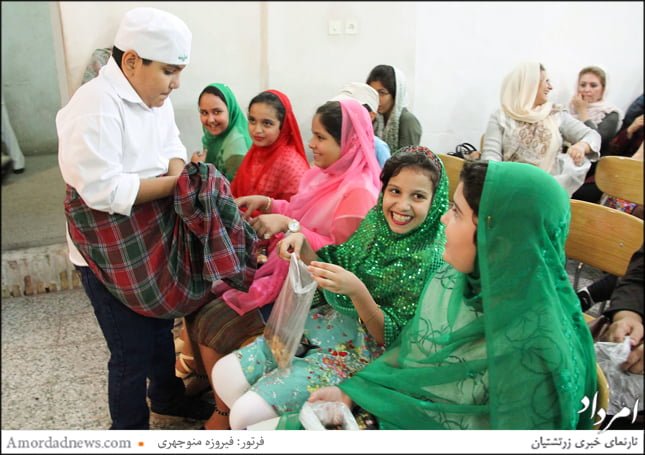
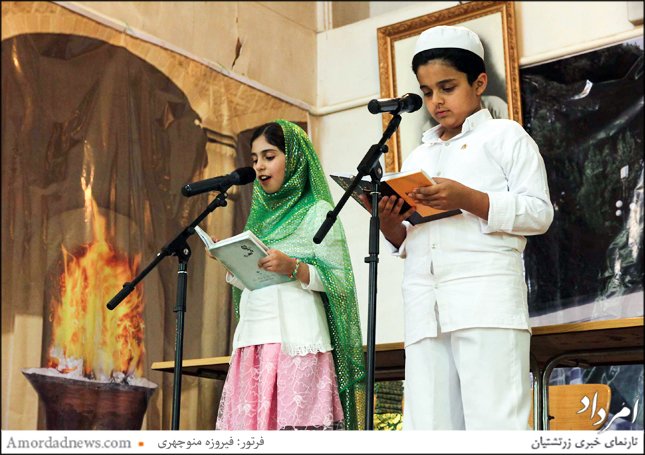
Below, you can see photos of Mehregan Festival, as well as Mehregan tablecloths, from ceremonies held in Yazd. The photos have been retrieved from Amordad News:
Renowned Iranian-Armenian Composer Talks of His Life in Iran

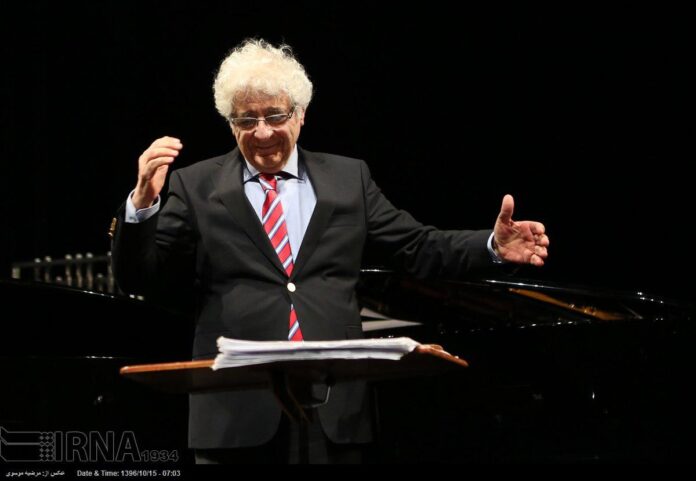
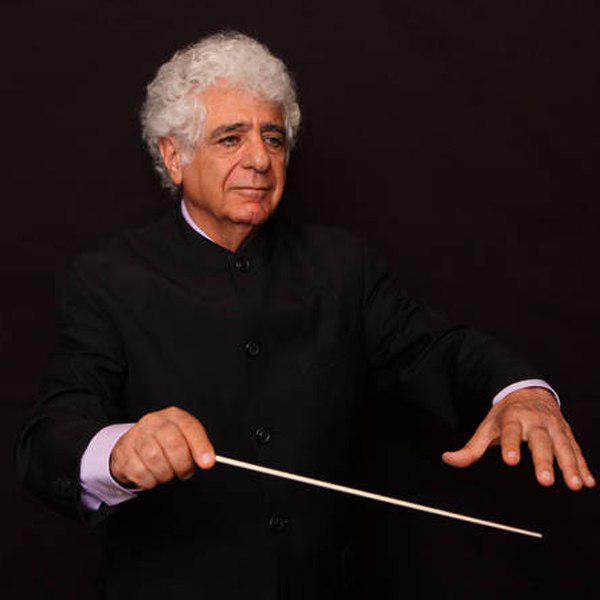
Tjeknavorian is one of the most renowned cultural figures in Iran and Armenia. Born in the western city of Boroujerd to immigrant Armenian parents in 1937, Loris left Iran on his 17th birthday for Austria to take up his academic studies in music.

Having graduated from Mozarteum University of Music and Dramatic Arts in Salzburg, he returned to Iran. Later on, he also managed to graduate from Michigan University as a conductor.

Loris’s record as a musician is honourable in terms of the number as well as quality of his compositions. He has left a considerable orchestral collection so far.

In the following interview with IRNA, he has talked about his 81-year life.

Q: If you could get back in your life, which parts seemed more important to you?

A: I basically try not to think about the past. To me, the past is like a bird which has broken its cage and will never come back. So, thinking about the past is of no use. It goes without saying that our lives are riddled with good deeds, mistakes, moments of happiness and sadness. All these make up our experiences in life. We have to take steps forward one by one. Looking back will only stop our progress.

I’ve had many wishes in my life and did my best to achieve them. Fortunately, I’ve fulfilled most of them and there are many others which if God helps I’m determined to achieve. I have a good feeling after accomplishing a composition. Performing it makes me much happier and when I see the audiences like it, the happiness reaches its climax.

Renowned Iranian-Armenian Composer Talks of His Life in Iran

Q: The collection of compositions that you have written and performed is too big to be neglected. What is your plan for the future?

A: Like many others, I’ve had a lot of plans in my life which as I said most of them have been accomplished. Meanwhile, if God helps, I like to see the world and get familiar with people from various cultures. Looking at my collection, I feel good and thank God. It is not a bad collection. Of course, it could be better but it is not disappointing at all for an 81-year-old man like me.

If God helps, I would create new compositions. I love to see people from different regions. I like to visit the places I’ve not yet travelled to and get in touch with their people and become familiar with their cultures, rituals and customs.

One day, we would come to this conclusion that we all are the sons and daughters of the same parents. I think love is the only need of our world. We should be able to fall in love with each other once again. We should like each other regardless of colour, race and geography to make the world more beautiful. We should keep love alive.


Q: You have never left Iran forever and it seems Iran is your only choice for life. Why?

Renowned Iranian-Armenian Composer Talks of His Life in IranA: Iran is my homeland. My ancestors have lived in this land. I’ve been born in Iran and will be buried here. I’m emotionally and culturally attached to every inch of this country and feel at home in nowhere except for Iran. As I said, I love visiting people from various parts of the world but Iran is the centre of my gravity.
I’ve studied and thought music in America and a number of other countries. I’ve performed in many countries in which I could have a good condition for work and living but Iran remains my first and last choice for life. I’m wholeheartedly happy to be an Iranian and creating my compositions in Iran during my direct and face-to-face touch with my fellow countrymen reflecting their happiness and sadness.

I deeply appreciate it that you remembered my birthday anniversary and give me a chance to talk about my life. I have something here which may not be with me with the same quality in any other part of the world.

Iran, Oman Discuss Yemen Crisis in Muscat

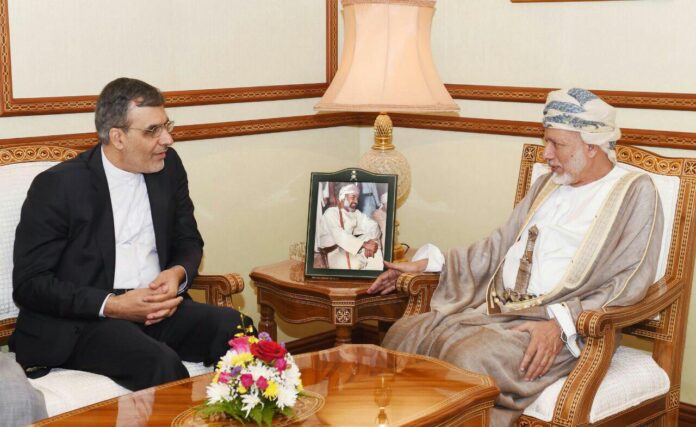
Iranian diplomat Hossein Jaberi Ansari meeting Omani top diplomat Yusuf bin Alawi in Muscat on October 16, 2018. / Photo by Jaberi Ansari's Telegram channel

Jaberi Ansari and his entourage arrived in Muscat on Monday night to discuss regional issues with Omani officials. His meeting with bin Alawi was held on Tuesday.

Later in the day, the Iranian diplomat will also hold separate meetings with representatives of various Yemeni groups to discuss diplomatic efforts to end the war imposed on the impoverished country.

Yemen is facing the biggest humanitarian crisis in the world. Over 22 million people are in need of humanitarian assistance, the country is on the brink of the worst famine in 100 years, and a million people have suffered from the worst cholera outbreak in modern history.

Since 2015, Yemen has been in the grip of a brutal war. A Saudi-led coalition has been attempting to regain control of the Arab country by launching thousands of airstrikes, many of which have hit homes and public areas such as schools, health facilities and markets.

Thousands of civilians have been killed and tens of thousands injured as a result.

Iran World’s Second Largest Producer of Nano-Catalysts

Developing the technical knowledge and the knowhow for production of catalysts eliminates dependence on foreign countries.

It also keeps the hard currency inside the country, and creates more jobs and further capacity for domestic production.

Nano Pars Spadana group started its operation in 2001 with the aim of eliminating the country’s dependence on imported nanoparticles and nano-catalysts.

With a team of researchers including experts of chemistry, polymer, metallurgy, fluid mechanics, etc., the group began extensive research on nanotechnology and achieved excellent results in this field. Finally, the group managed to synthesize nanoparticles through a method called “Shoj”.

In addition to production of oxide nanoparticles, the method can also be used to produce multiphase mixed nanoparticles, which cannot be produced otherwise.

The company has been able to successfully develop from a laboratory group to a semi-industrial and industrial group within 6 years.

For a brief review of Iran’s achievements in various fields of science and technology, check the book “Science and Technology in Iran: A Brief Review

Enjoying the capability of producing nanoparticles and nano-catalysts, Nano Pars Spadana started to design, manufacture and install equipment and production lines on an industrial scale.

The company was also able to set up the first nanoparticles and nano-catalysts manufacturing unit and managed to sign a contract with the National Iranian Oil Refining and Distribution Company for the production of catalysts.

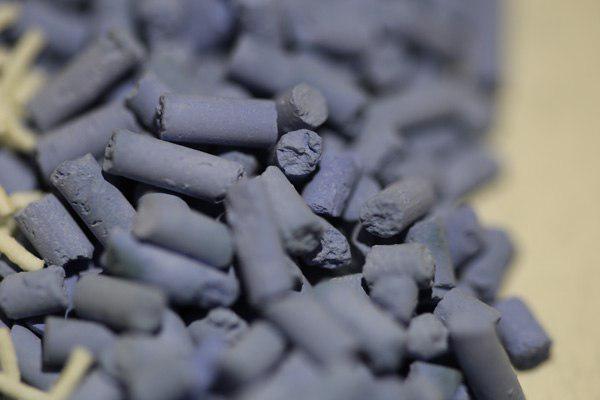
The latest achievement of the company is the production of Benzene chlorination catalyst. This is the eighth chlorination catalyst produced by the company. The catalyst is used by Arvand Petrochemicals Company to remove Benzene from PVC.

Germany was the only manufacturer of this kind of chemical in the world, and now Iran is the second largest country in the world that produces this type of catalyst.

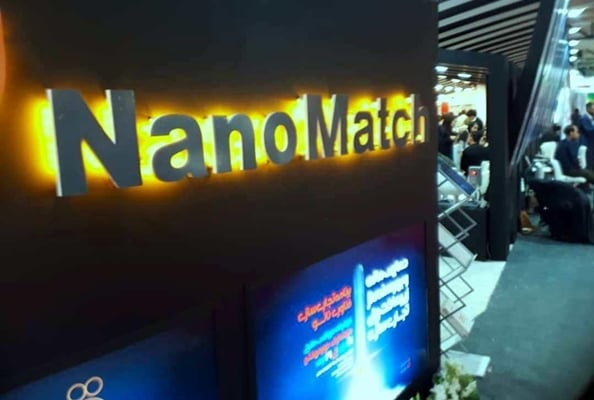
Nano Pars Spadana is one of the leading companies participating in the 2018 International Nanotechnology Exhibition, which is underway in Tehran.

US Can’t Reduce Oil Price by Bullying Others: Iran

In a Tuesday address to the 4th Iranian Petroleum and Energy Club Congress & Exhibition in Tehran, Zanganeh said US President Donald Trump mistakenly thinks he can overcome the current shortage by coercing other states.

“We should closely assess the market’s reactions. Today, the market is very volatile and unpredictable. The concerns are mainly about the future of the market. Oil exporters are being put under [US] sanctions one after another but the situation can’t continue this way forever,” he was quoted as saying in a report by ISNA.

The oil market has its own mechanism, Zanganeh said, adding that today all states are concerned about the future of the oil market.

“Trump has not yet managed to alleviate the oil producers’ concerns. That’s why the market is still in trouble and the Islamic Republic is also part of the same market.”

Today the US expects the oil price to go down while it is exerting pressure on oil producers like Iran, Venezuela and Russia, he added.

“The US imposes a terrible condition on the oil market and puts itself in trouble and then blames others for the trouble. I think they can remove the problem simply by lifting the sanctions on oil producers like Iran. This will create a stable balance in the market,” he said.

According to Zanganeh, at present no oil producer is capable of increasing its output in order to prevent Iran sanctions from impacting the market. “Today, Saudi Arabia is tapping into its reserves and the current political challenge created against the country over the alleged killing of the Saudi journalist in Saudi consulate in Istanbul has put the country in further trouble.”


Iran Has No Problem with OPEC

Elsewhere in his remarks, Zanganeh referred to the current cooperation between OPEC and non-OPEC members in reducing oil output and added Iran has no problem with the reduction.

“We should remove any obstacles in the way of cooperation between OPEC and non-OPEC members,”
he said.

On Iran-Europe oil talks, he said the negotiations are underway and the results will be announced as soon as achieved.

Zanganeh then said that the Islamic Republic will inaugurate at least three phases of South Pars field with a capacity of one billion cubic feet each.

The Iranian minister’s comments about a decrease in oil output came shortly after he made an unannounced visit to Moscow, where he reached a deal with Russian energy minister on a one-million-bpd increase in oil output.

Iran’s Security Forces Seize 500 Tonnes of Illicit Drugs in 9 Months

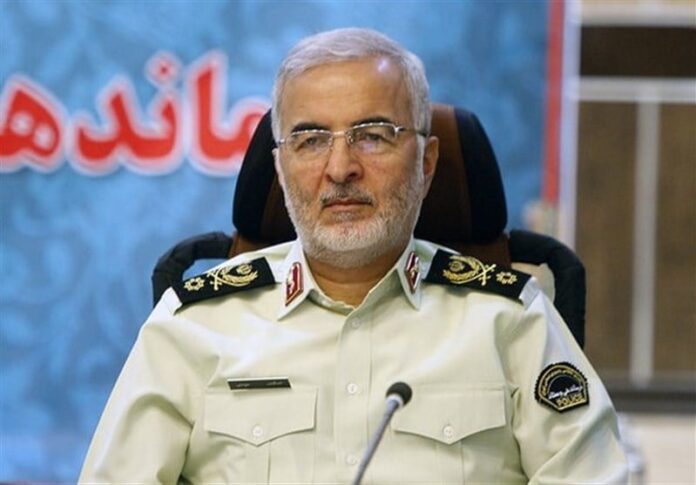
In a speech in Tehran on Monday, Brigadier General Momeni pointed to the police’s measures to control the country’s eastern borders with Afghanistan and prevent the entrance of narcotics and said the measures have expanded to western borders.

The country has also managed to carry out about 1,000 anti-drugs operations over the past nine months, capturing more than 500 tonnes of various kinds of illicit drugs, he said.

The police forces have also disbanded 1,241 drug gangs in the mentioned period, the commander added.

Iran, which has a 900-kilometer common border with Afghanistan, has been used as the main conduit for smuggling Afghan drugs to narcotics kingpins in Europe.

Despite high economic and human costs, the Islamic Republic has been actively fighting drug-trafficking over the past decades.

The country has spent more than $700 million on sealing its borders and preventing the transit of narcotics destined for European, Arab and Central Asian countries.

The war on drug trade originating from Afghanistan has claimed the lives of nearly 4,000 Iranian police officers over the past four decades.

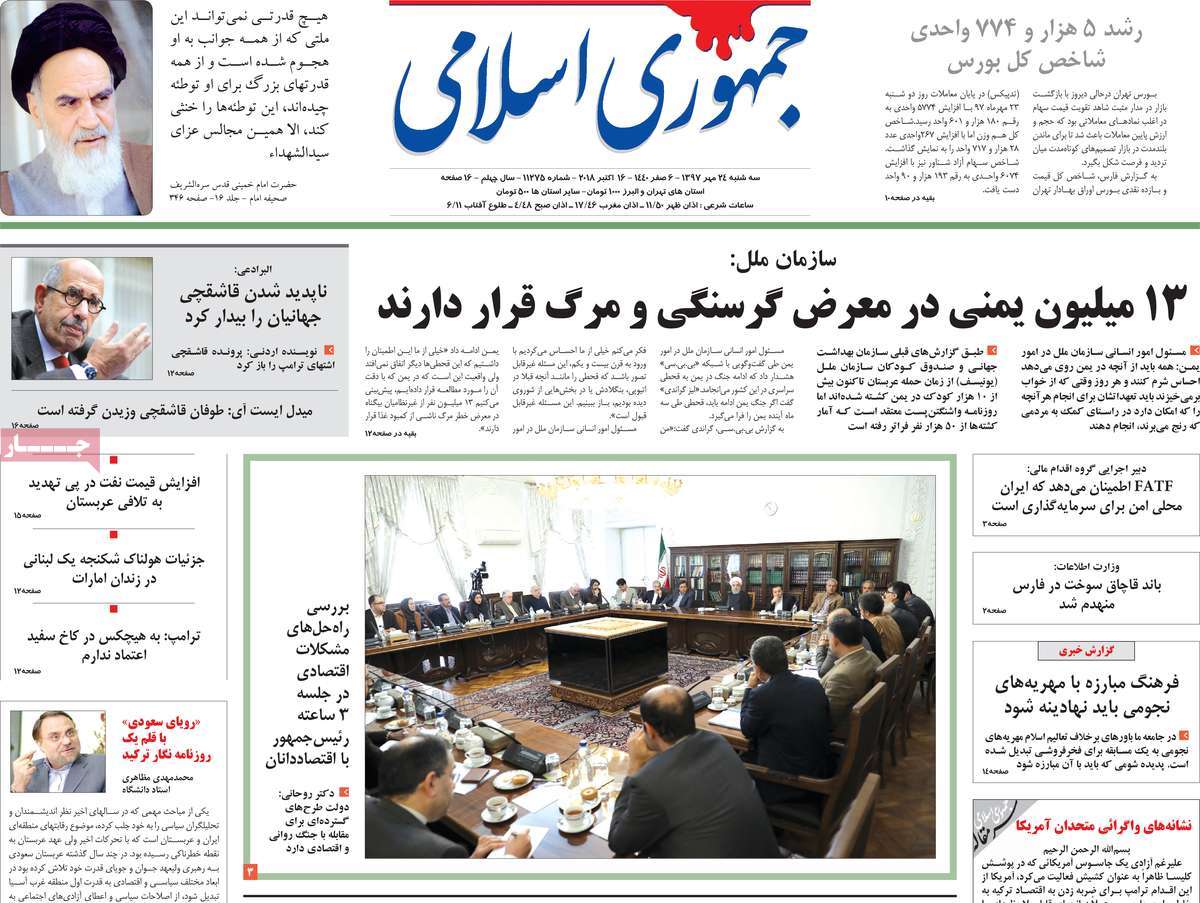
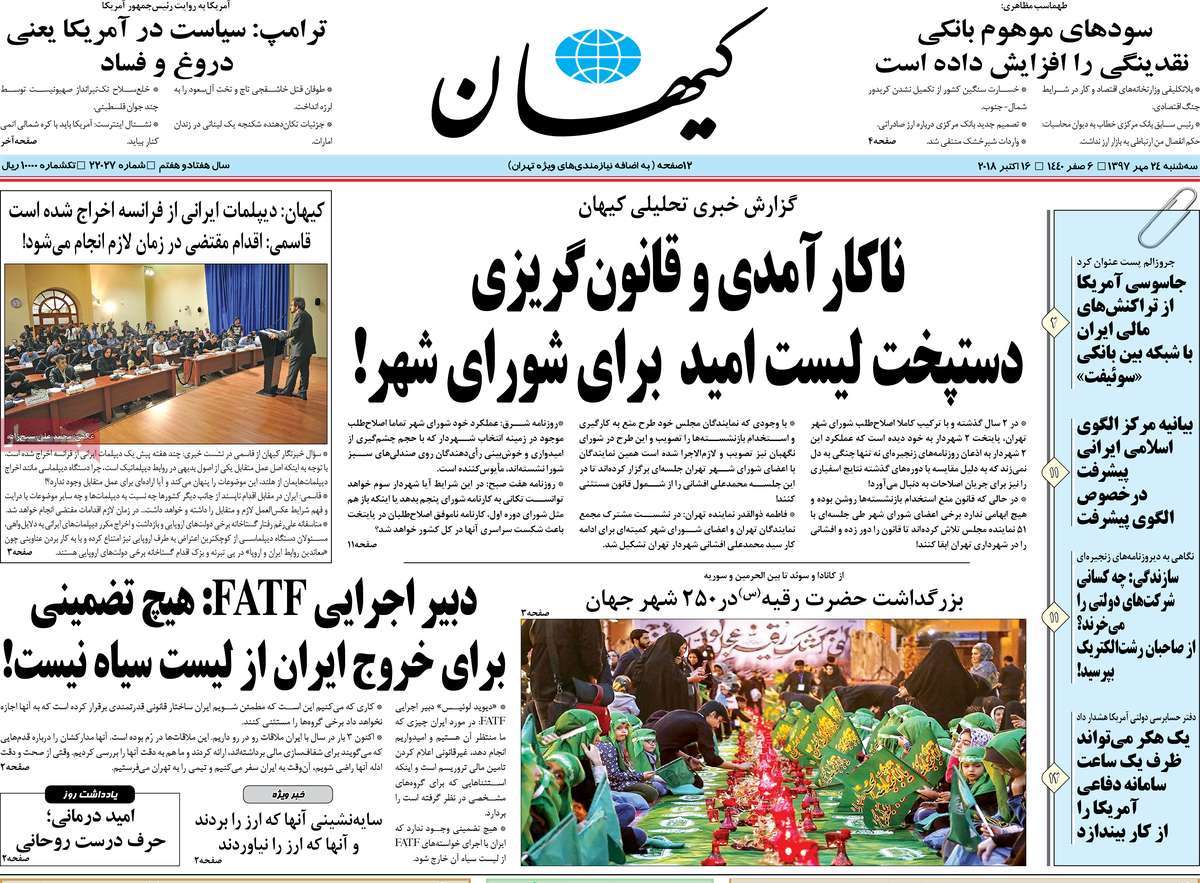
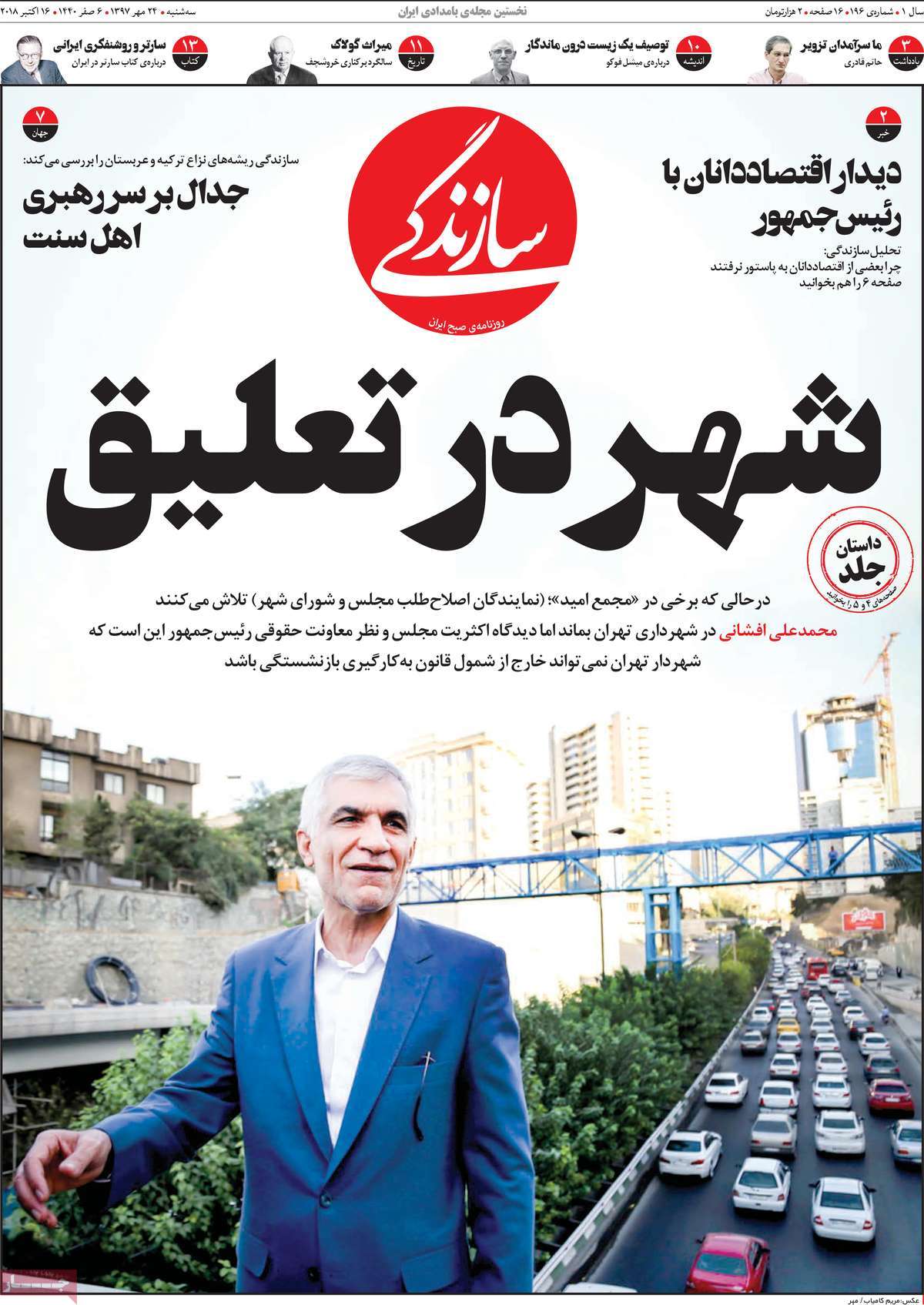
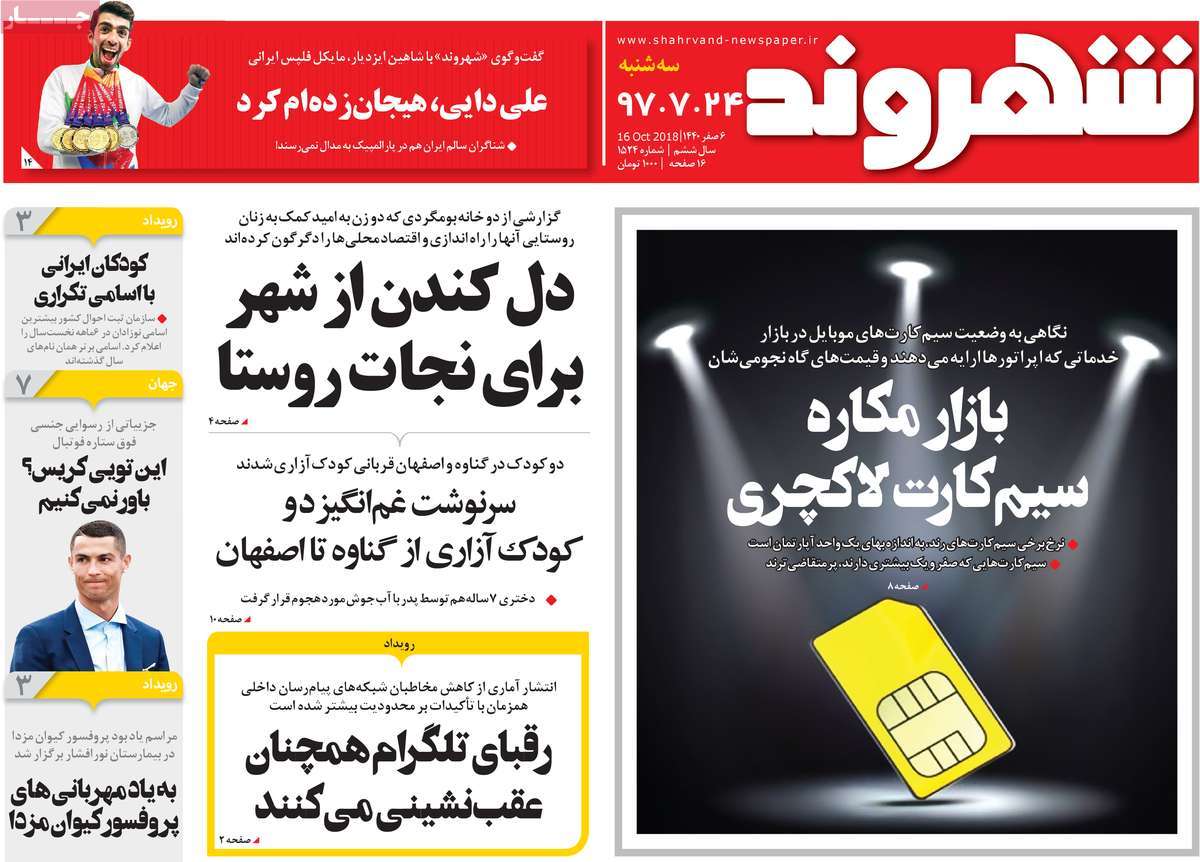
A Look at Iranian Newspaper Front Pages on October 16

A Look at Iranian Newspaper Front Pages on November 19

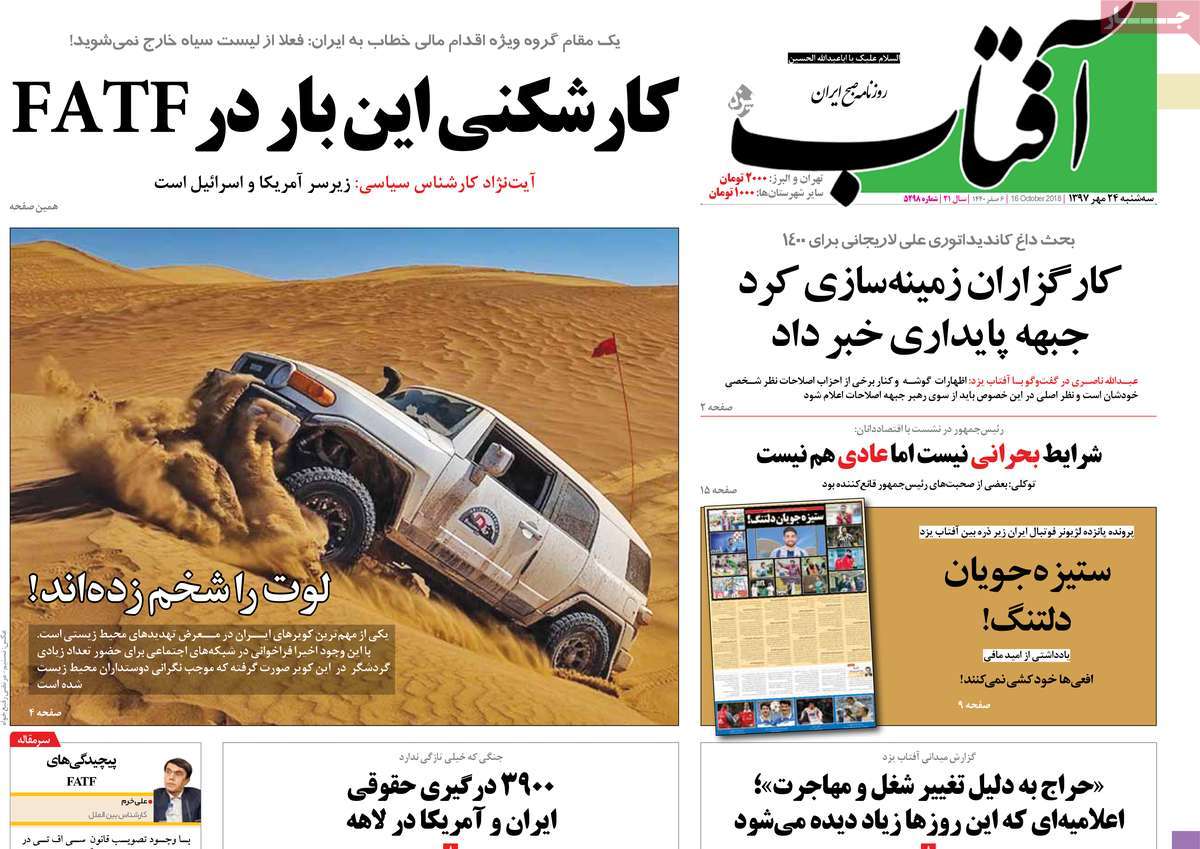
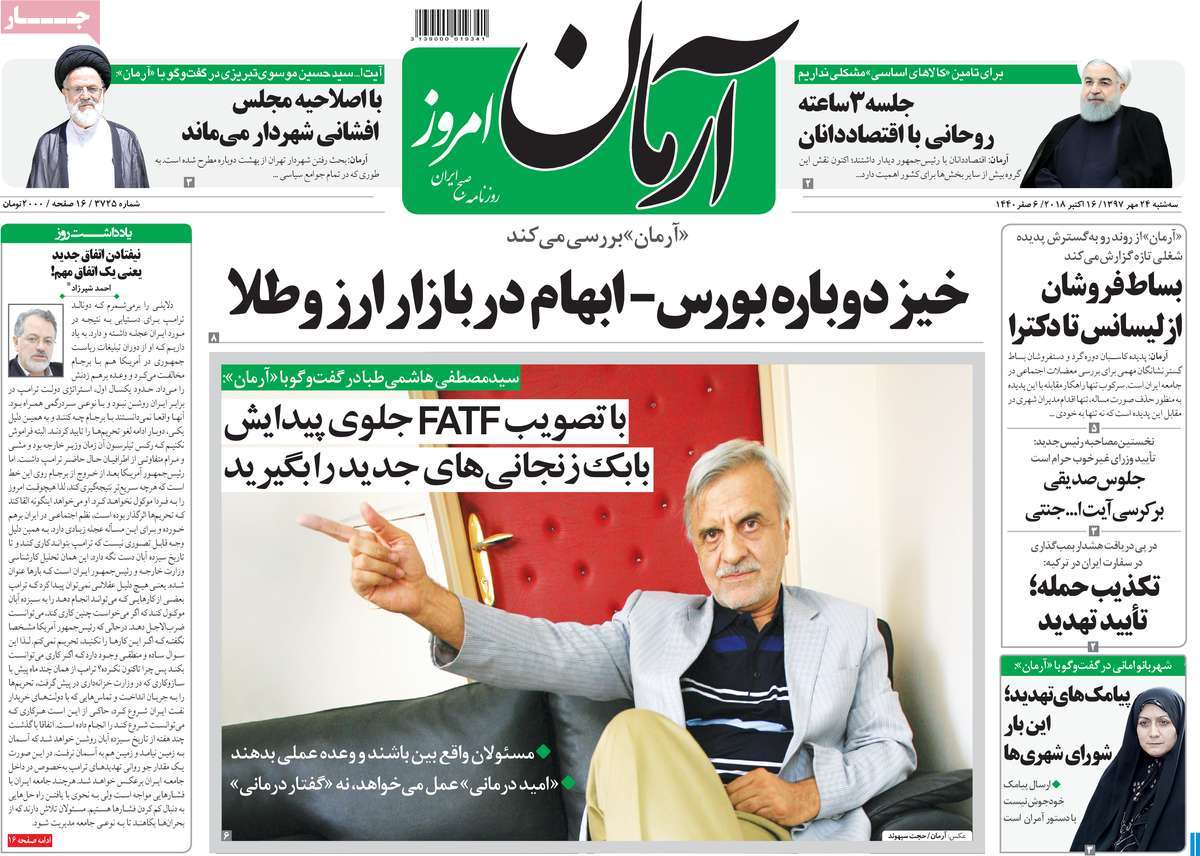
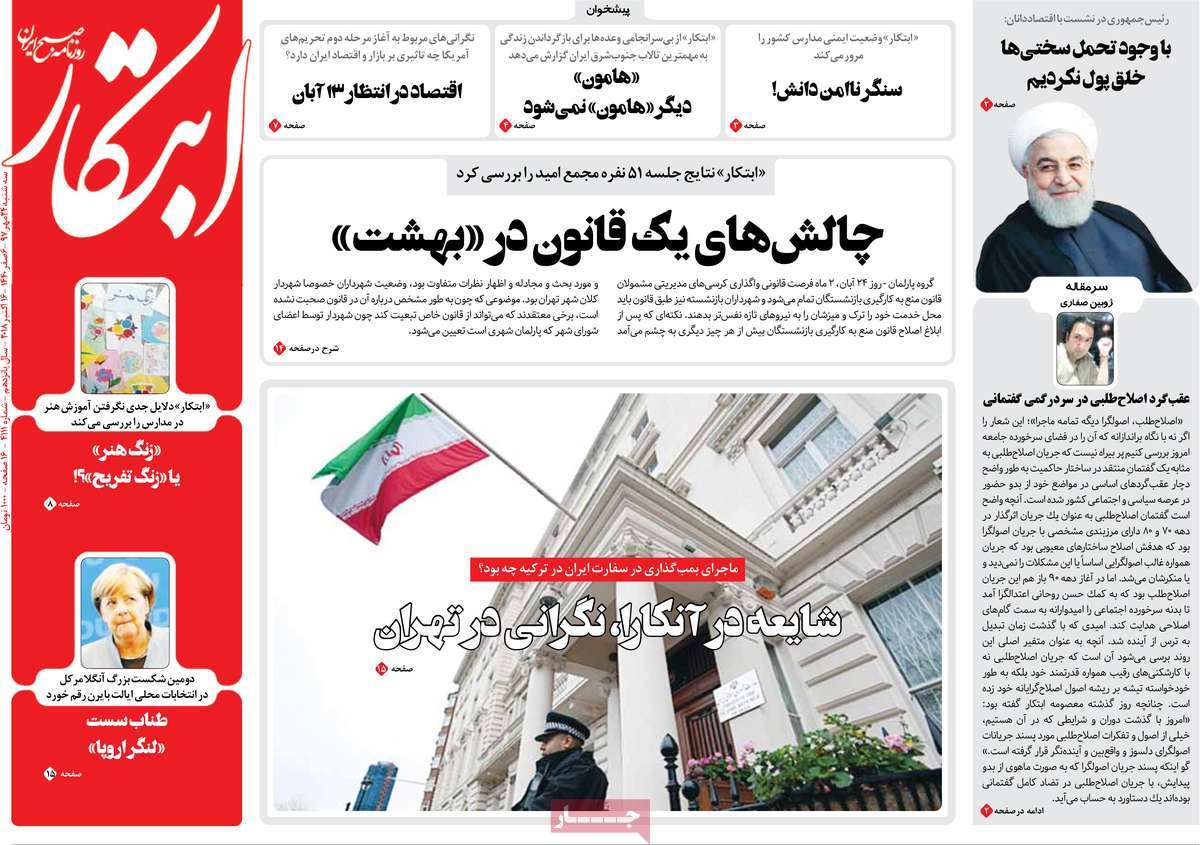
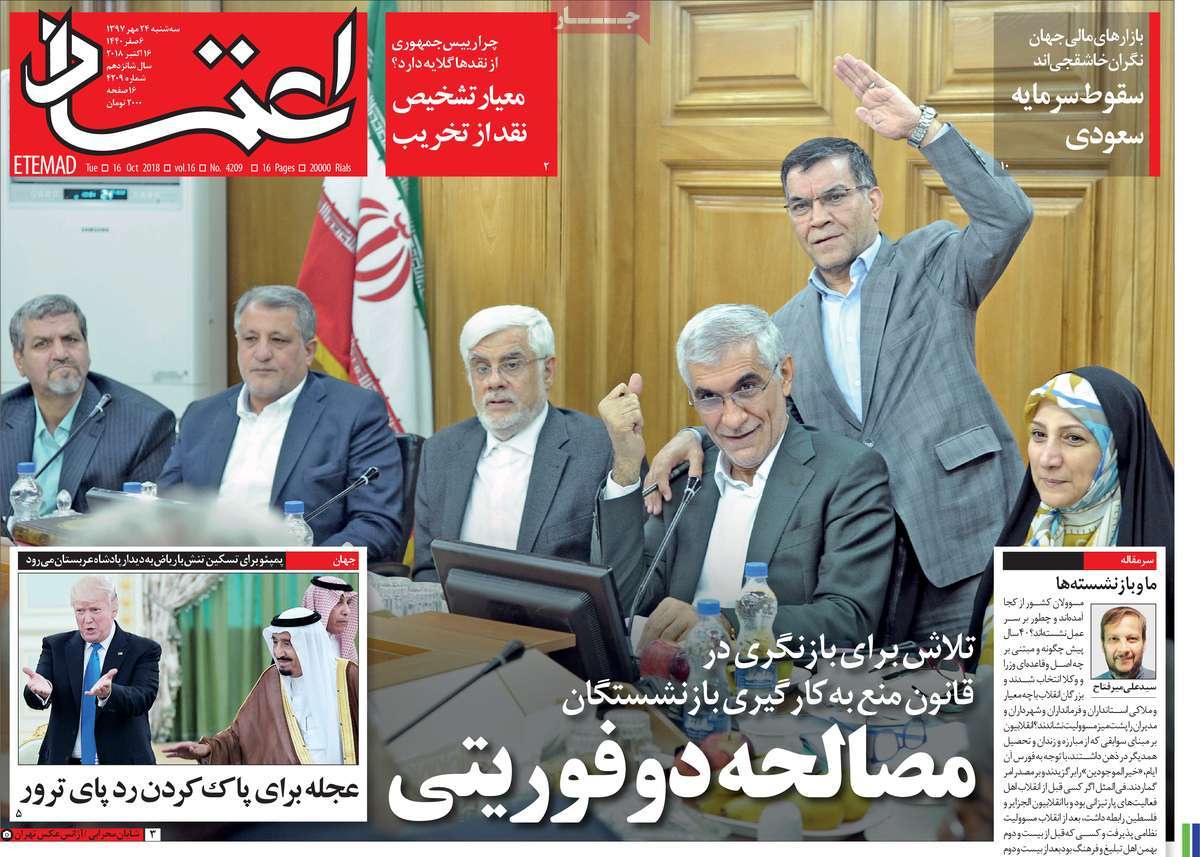
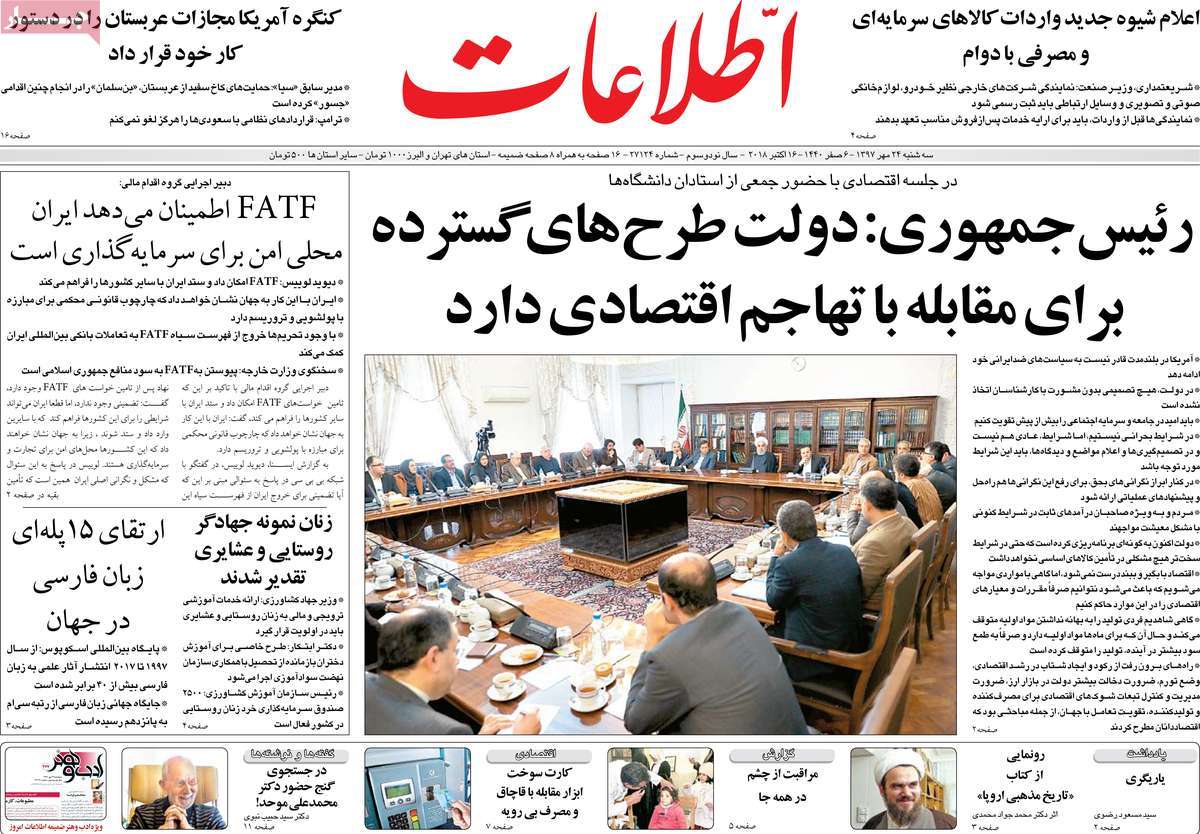
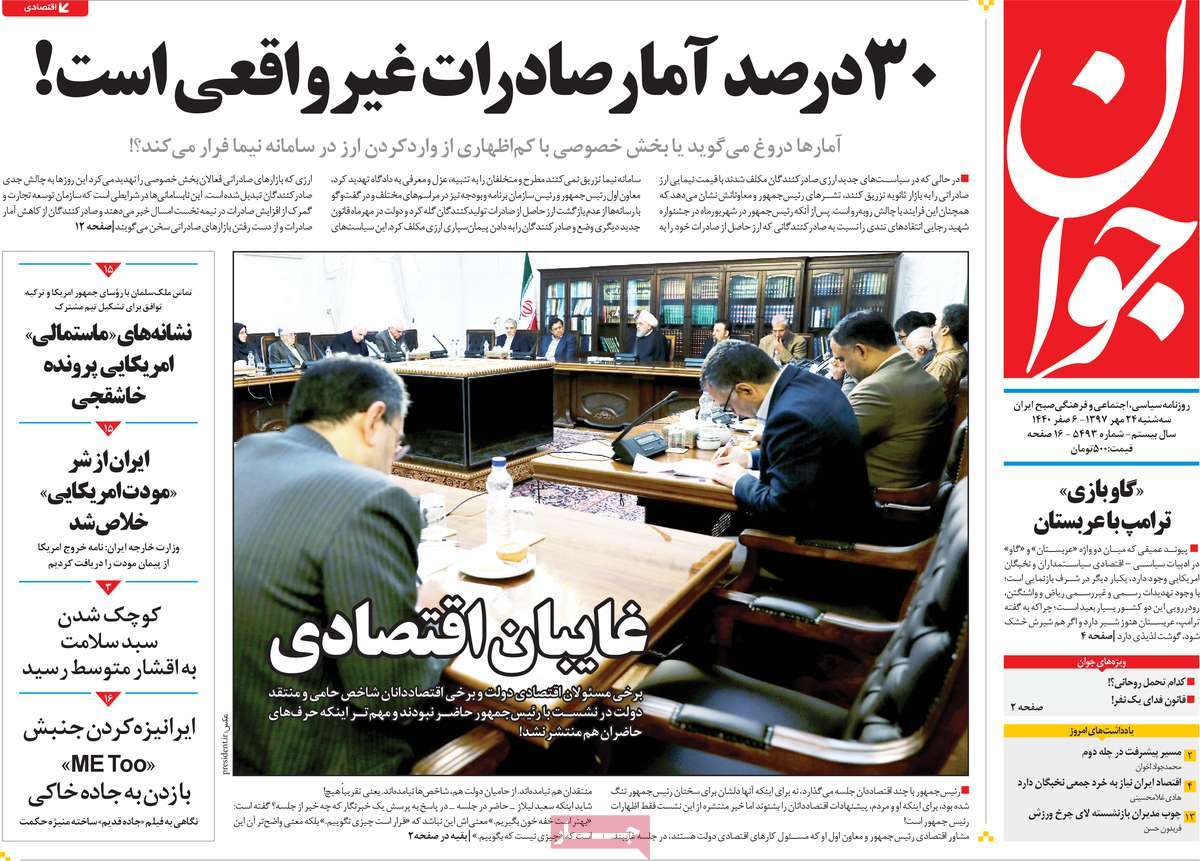
The top story in all papers today was the alleged murder of Jamal Khashoggi, a Saudi journalist who has been reportedly killed in the Arab kingdom’s consulate in Istanbul, Turkey.

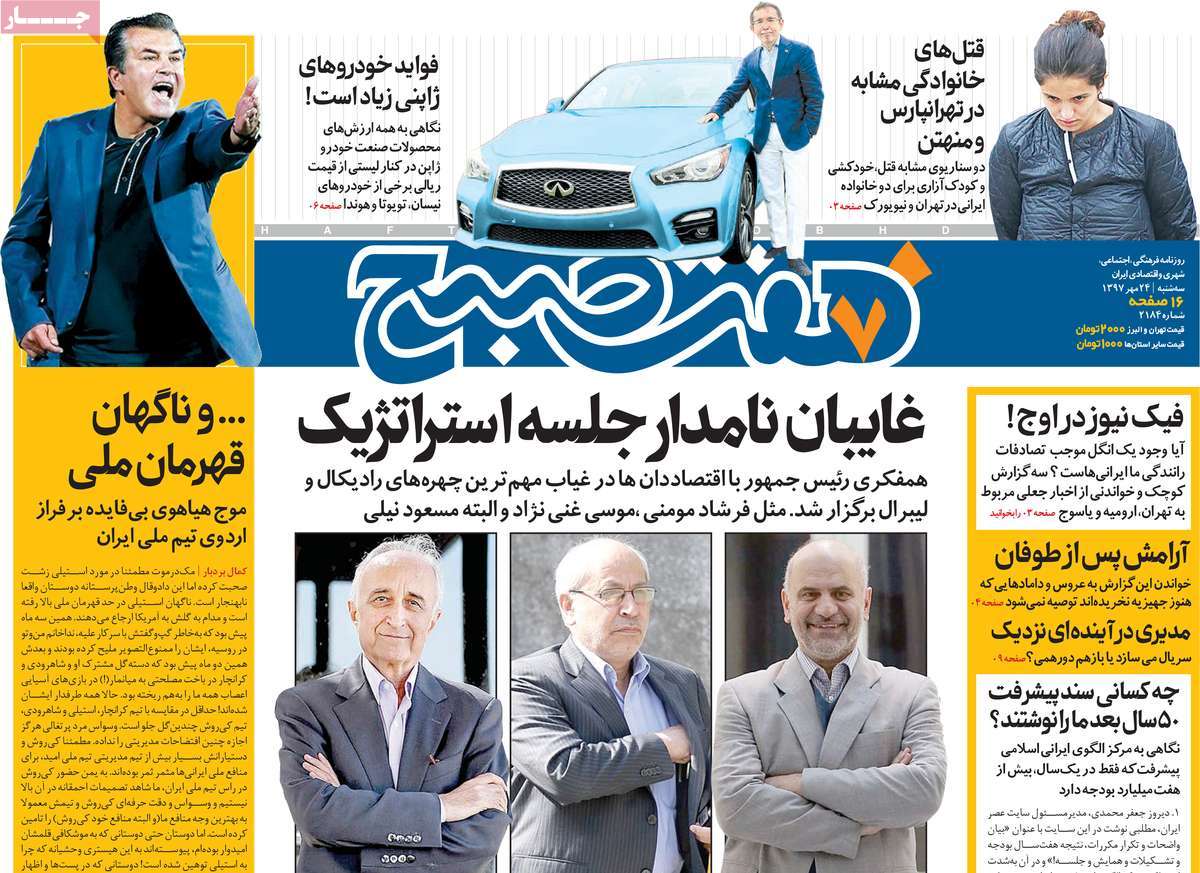
Also a top story was a meeting between Iranian President Hassan Rouhani and a group of economic experts, during which the two sides exchanged views on ways to resolve the country’s economic woes.

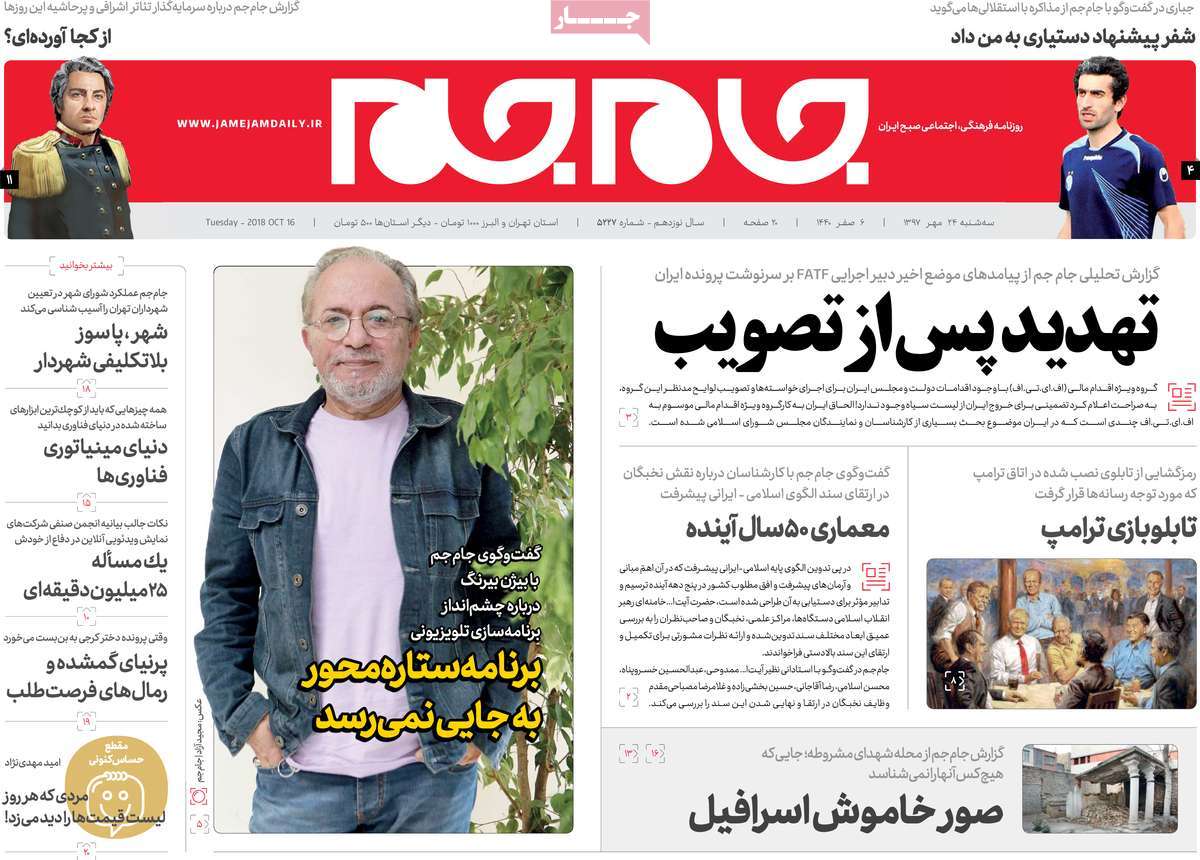
The above issues, as well as many more, are highlighted in the following headlines and top stories:


Aftab-e Yazd:

1- FATF Official: You Won’t Be Removed from Blacklist for Now

2- Rouhani to Economists: Situation Not Critical, but Not Normal Either

A Look at Iranian Newspaper Front Pages on October 16


Arman-e Emrooz:

1- Rouhani’s Three-Hour Meeting with Economic Experts

  • We Have No Problem with Supplying Basic Goods

2- Stock Exchange Market Once Again Thrives; Ambiguity in Gold Market

A Look at Iranian Newspaper Front Pages on October 16


Ebtekar:

1- Rumours in Ankara, Concern in Tehran

2- Economy Waiting for November 4

A Look at Iranian Newspaper Front Pages on October 16


Etemad:

1- Fall of Saudis’ Assets: World’s Financial Markets Worried about Khashoggi

2- US in a Hurry to Clean Traces of Terror: Pompeo to Visit Saudi King to Ease Tension

A Look at Iranian Newspaper Front Pages on October 16


Ettela’at:

1- Rouhani: Government Has Extensive Plans to Counter Economic Invasion

2- FATF to Guarantee Iran Safe Place for Investment: Official

3- US Congress to Punish Saudi Arabia over Khashoggi Case

4- Persian Language’s Global Ranking Improves by 15 Positions

A Look at Iranian Newspaper Front Pages on October 16


Haft-e Sobh:

1- Rouhani Holds Strategic Meeting with Economic Experts

  • Most Important Radical, Liberal Figures Absent from Meeting

A Look at Iranian Newspaper Front Pages on October 16


Jame Jam:

1- Painting Hung in Trump’s Office Makes Headlines

A Look at Iranian Newspaper Front Pages on October 16


Javan:

1- US Whitewashing Saudi Role in Kashoggi Case

  • King Salman Holds Talks with US, Turkish Presidents, Calls for Joint Probe

2- Iran Gets Rid of “American Amity”

  • Tehran Receives Memorandum on US’ Withdrawal from Treaty of Amity

A Look at Iranian Newspaper Front Pages on October 16


Jomhouri Eslami:

1- UN: 13 Million Yemenis on Bring of Hunger, Death

2- Oil Prices Go Up after Saudi Arabia’s Threat to Retaliate

A Look at Iranian Newspaper Front Pages on October 16


Kayhan:

1- Jerusalem Post: US Spies on Iran’s Financial Transactions with SWIFT

2- Trump: Politics in US Means Lie, Corruption: US as Described by US President

A Look at Iranian Newspaper Front Pages on October 16


Sazandegi:

1- Conflict over Leadership of Sunnis: Roots of Turkey-Saudi Row

A Look at Iranian Newspaper Front Pages on October 16


Shahrvand:

1- Hot Market of Luxury SIM Cards: A Review of SIM Card Market

  • Some Round Numbers Priced as Much as an Apartment

A Look at Iranian Newspaper Front Pages on October 16


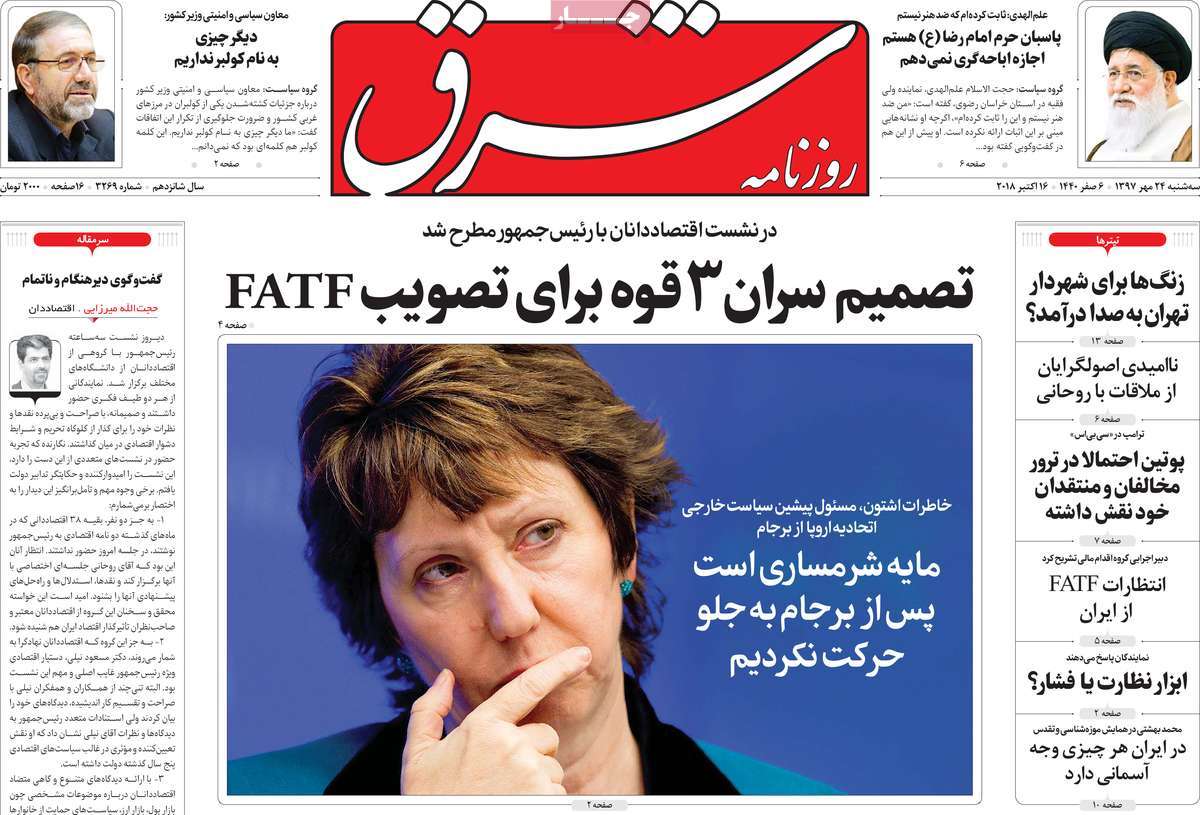
Shargh:

1- It’s a Shame We Didn’t Move Forward after JCPOA: Ashton

2- Judiciary Chief, President, Speaker Make Final Decision on FATF


A Look at Iranian Newspaper Front Pages on October 16


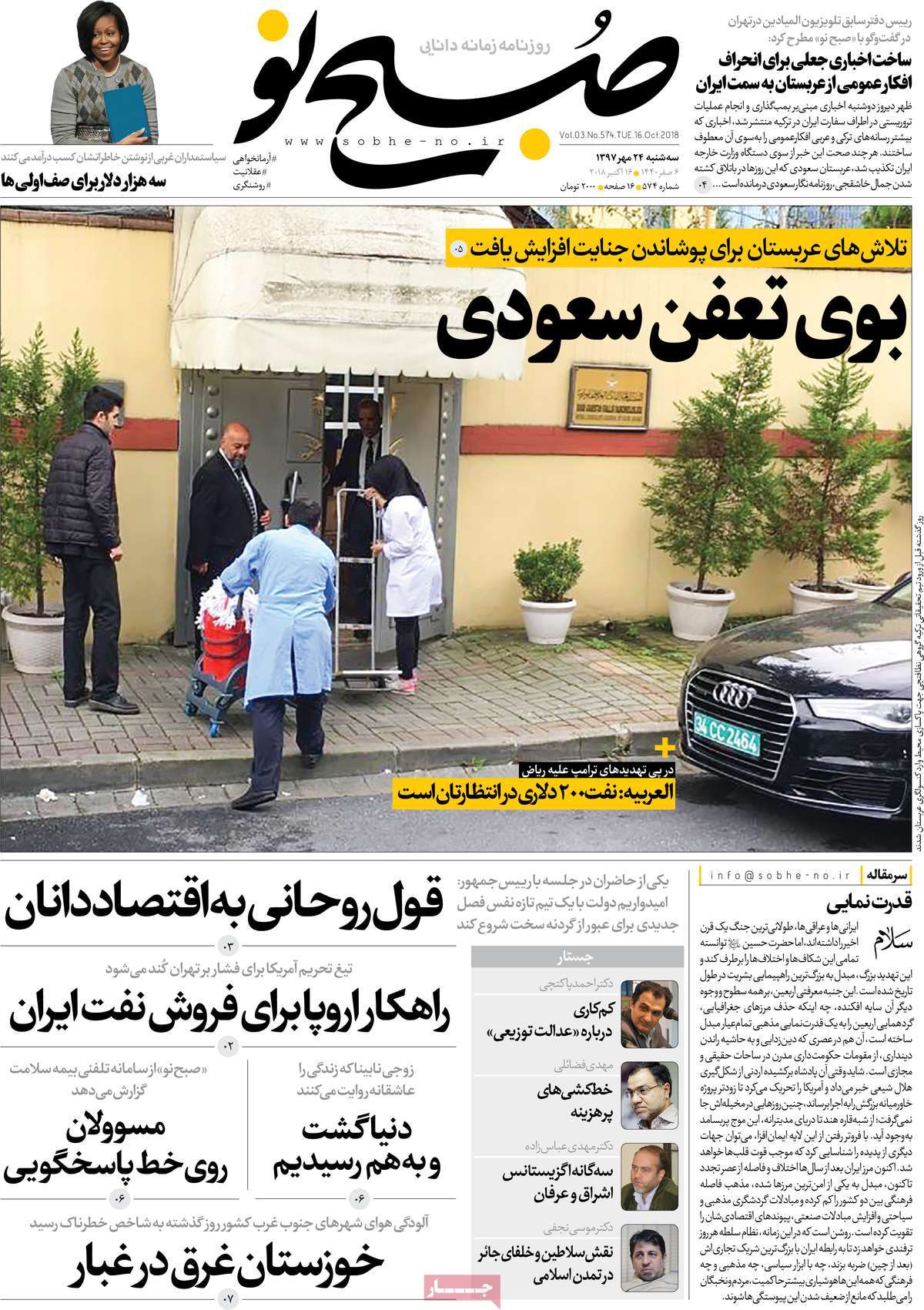
Sobh-e Now:

1- Disgusting Stink of Saudi Arabia: Riyadh Expedites Efforts to Cover Up Its Crime

2- Fake News Created to Distract Attentions from Saudi to Iran: Former Al Mayadeen Bureau Chief

A Look at Iranian Newspaper Front Pages on October 16


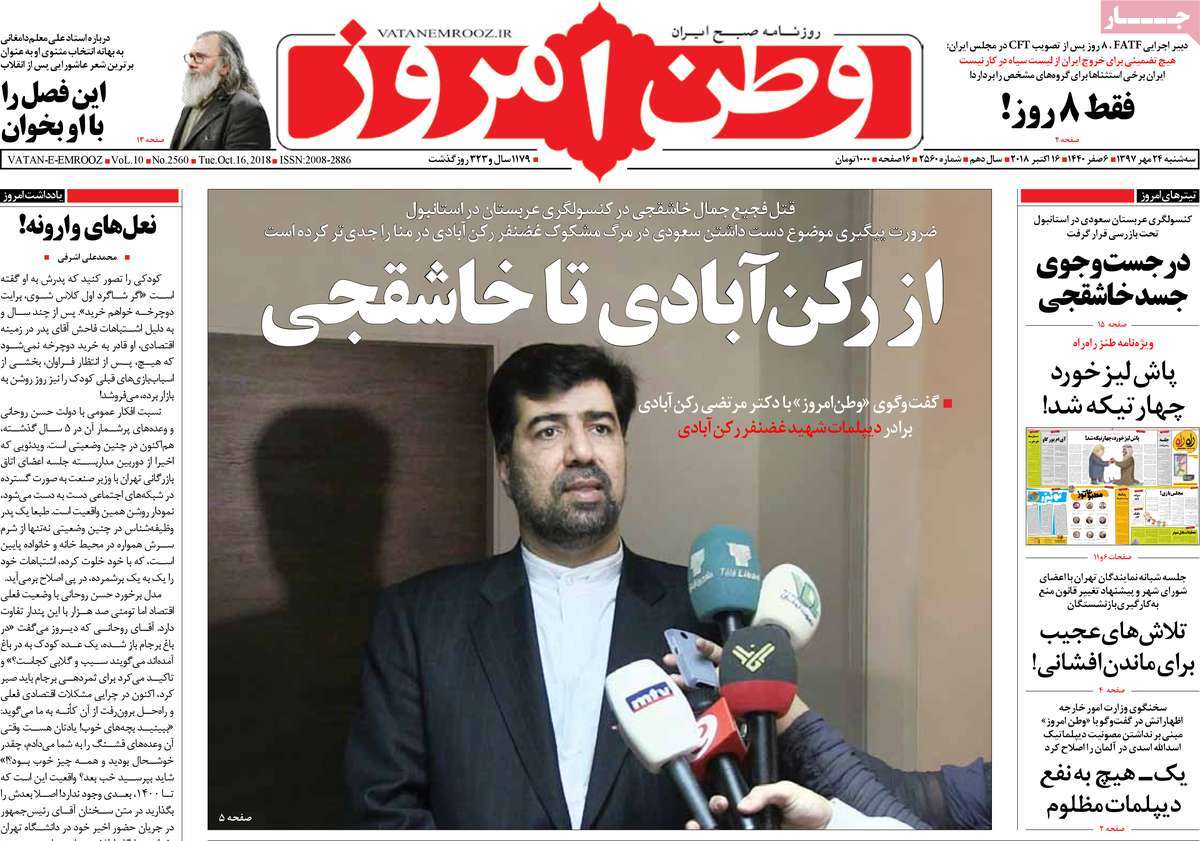
Vatan-e Emrooz:

1- From Roknabadi [Iranian diplomat killed in Mina tragedy] to Khashoggi

  • Roknabadi’s Brother: Khashoggi’s Murder Shows Saudis Killed My Brother

A Look at Iranian Newspaper Front Pages on October 16

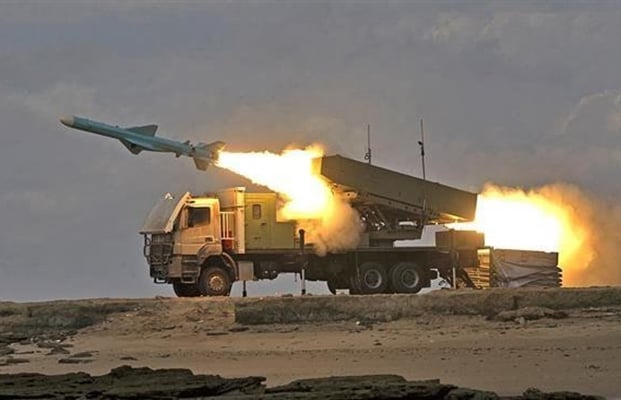
IRGC Navy Has Ballistic Missiles with 700km Range: Commander

Commander of IRGC Aerospace Force Brigadier General Amir-Ali Hajizadeh told a gathering of military personnel on Tuesday that the coast-to-sea missiles delivered to the IRGC Navy are of ballistic type, not cruise type, and have a range of 700km.

He further noted that Iran’s homegrown missiles are either pinpoint accurate or are being upgraded to have such accuracy, leading Iran to be among top missile powers across the world.

Iran’s armed forces have worked in recent years to boost accuracy of the missiles, based on guidelines by the Leader of Islamic Revolution Ayatollah Seyyed Ali Khamenei to minimize collateral damages, he added.

“Today, our homegrown missiles with ranges from 200 kilometres to 2000 kilometres are all pinpoint-accurate and our previous missiles also enjoy pinpoint-accuracy,” Fars News Agency quoted him as saying.

The general said Iran’s missile program ranks first in the region and seventh or eighth on the global scale.

Hajizadeh also said Iran’s drone program is among the top 15 across the globe, ahead of Russia and China.

The general said Iran’s bomber drones have conducted over 700 military operations against ISIS terrorist group in Syria, targeting the group’s strategic assets including tanks and personnel carriers.

Iran’s Innovative Nano Products Waiting for Foreign Investment

At the 11th edition of the Nanotechnology Exhibition, young Iranian researchers have introduced more than 20 nanotechnology products, in the hope of attracting sponsors.

Some of these products have attracted the attention of more visitors at this year’s exhibition:


Enhancing Memory with Nano Supplements

Pakfan Innovators Company, with the aim of controlling or even preventing the Alzheimer’s disease, has made an herbal supplement called “Reminder” to enhance memory and improve amnesia. In this product, a nylon nano-structure containing the extract of damask rose has been used.

Studies show the properties of the product are effective in improving memory and reducing symptoms of Alzheimer’s disease. Unlike other medications, this herbal supplement has a very low gastrointestinal effect thanks to its nano-scale particles. It passes through the lymph system without passing through the liver, and enters the cerebral blood stream and goes directly to the brain cells. This pathway prevents the liver from disabling the drug.

On the other hand, the nano-scale of these particles helps them cross the blood-brain clogs and facilitate the transfer of medicine to the brain cells.

This medicine is currently under clinical examinations. Researchers at the company believe that producing this drug will be cost-effective for the community, given its preventive and controlling effects.

Antibacterial Tissues

Among other products offered in the Call for Investment section of the exhibition one can refer to the anti-bacterial tissues containing plant nanoparticles.

Theses herbal nanoparticles are extracted from the Shirazi thyme and have a stronger anti-bacterial effect in comparison to silver nanoparticles that are widely used.

Among other advantages of these herbal nanoparticles is their adaptation to nature. Researchers who produce this tissue believe that these particles will not accumulate in nature and will not create toxicity.

For a brief review of Iran’s achievements in various fields of science and technology, check the book “Science and Technology in Iran: A Brief Review

This project is not the same as any foreign and domestic sample. Although the antimicrobial properties of herbal extracts are usually used to make disinfectant emulsions, this herbal extract is used without purifying the desired active ingredient.

This comes as, according to the producers, this tissue contains herbal nanoparticles whose antimicrobial properties are very strong and therefore more effective.

The cost required to use these nanoparticles in tissues is very low, about 2 cents per box of 100 triply sheets.

Lead-free SAC-Bi Nanostructured Solder

A group of researchers at Tarbiat Modares University of Tehran have been able to produce bismuth-based lead-free solder. The lead used in solder in addition to toxicity, which causes a lot of complications for people, also has harmful effects on the environment. At present, the technology of using lead-free solder in various electronic industries has become very popular.

Previously, such a technology was being imported to Iran, which was not cost effective given the high cost of imports.

“The bismuth-based solder has better tensile and physical properties than lead,” said the research team supervisor. In terms of cost, due to the fact that less silver has been used in this product in comparison to foreign samples, its production in the country will be very cost effective due to its vast applications in the field of electronics and dentistry,” added Dr Homam Mousavi.

US Sanctions Violate Basic Human Rights: Iran

khoshrou

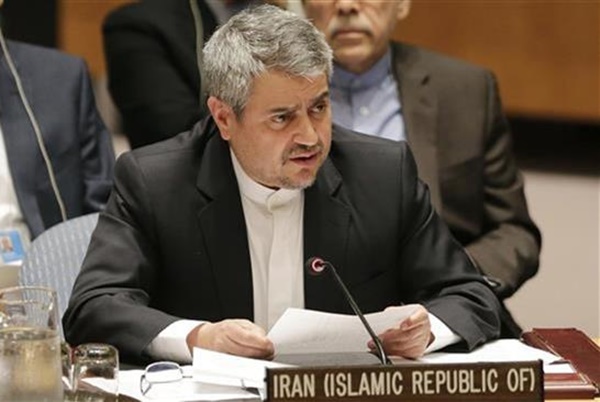
Gholamali Khoshroo on Monday regretted that the US “is addicted to sanctions” and sees it “as a tool in its toolbox in pursuance of its own national interests.”

“The morally wrong and ethically unjustified unilateral measures not only defy the rule of law at the international level but also infringe upon the right to development and lead to the violation of basic human rights,” Khoshroo said.

He made the remarks in an address to the Sixth Committee of the 73rd Session of the United Nations General Assembly on ‘Report of the Special Committee on the Charter of the United Nations and on the Strengthening of the Role of the Organization’.

The Iranian envoy further noted that Tehran welcomes a report by the Special Rapporteur on the negative impact of unilateral coercive measures on the enjoyment of human rights, particularly where it says unilateral sanctions, aggravated by secondary sanctions seeking the “economic isolation” of the target country, amount to discrimination against the innocent population of the country concerned.”

“Coercive measures often lead to collective punishment of innocent civilians and violation of human rights,” he noted, blasting the US’ measures against the Islamic Republic, which have hit innocent civilians on the contrary to what American officials claim.

US President Donald Trump announced in May that Washington was pulling out of the nuclear agreement which lifted nuclear-related sanctions against Iran in exchange for restrictions on Tehran’s nuclear program.

The US administration reintroduced the previous sanctions while imposing new ones on the Islamic Republic. It also introduced punitive measures — known as secondary sanctions — against third countries doing business with Iran.

A first round of American sanctions took effect in August, targeting Iran’s access to the US dollar, metals trading, coal, industrial software, and auto sector. A second round, forthcoming on November 4, will be targeting Iran’s oil sales and its Central Bank.

US policies weakening UN

Khoshroo also took a swipe at Washington’s use of threats against other countries as a tool of foreign policy, saying that the manifestation of the ‘surprising’ trend can even be traced in the UN.

“Threatening to cut financial aid to those countries who voted in favor of a UN resolution or warning them against the possible consequences of their vote in the General Assembly by saying ‘the US taking the names’ is just one example of visible offense to the UN principles,” he said.

“One thing is clear. This trend is weakening the organization, not strengthening it, and runs counter to the very objective of the Charter Committee establishment,” Khoshroo warned.

He also lashed out at the US’ “total disregard to Article 25 of the UN Charter,” saying that “a permanent member of the Security Council is not only violating UNSC Resolution 2231 for the first time in the history of the UN, but also engaging in penalizing nations across the entire world for abiding by that resolution.”