Tuesday, January 13, 2026
Home Blog Page 3380

Iranian Researchers Introduce Method to Reduce Carbon Dioxide Emissions

According to ISNA, one of the carbon-dioxide producing companies, which currently has 30 percent of the country’s CO2 market, is building units for receiving and collecting CO2 from the fuels, and purifies them 100% to be available for industrial sectors.

In addition to being consumed to produce carbonated beverages, it is also used as an industrial raw material. The production capacity of pure dioxide in this method is 800 kilograms per hour.

For each kilogram of pure CO2, this method consumes 3 kilograms of water. The cost of the final product in this method is also slightly less than the chemical method, but it is very important in terms of saving water resources and maintaining it.

In this method, gases are collected from industrial units like large petrochemical units and carbon dioxide gas refiners, and they are purified for future use. It is noteworthy that this technology is subject to sanctions and will never be given to Iran.

It should be noted that according to Kyoto Protocol, Iran has pledged to reduce greenhouse gas emissions by around 4% by 1409. It means that if 100 kilograms of carbon dioxide is generated, Iran needs to reduce it by 4 percent. This project is in line with this commitment.

Iran Not to Wait for Permission to Launch Satellite: Qassemi

In his weekly presser on Monday, the spokesman underlined that none of Iran’s programs in aerospace area violates the United Nations Security Council’s resolutions including 2231 resolution.

“A domestically-made satellite is set to be launched into space. This is a civilian move with a totally scientific nature,” he was quoted as saying in a report by IRNA.

Elsewhere in his remarks, the spokesman underlined that the Islamic Republic is dissatisfied with the EU over its shortcomings in implementing the special financial mechanism to keep economic ties with Iran despite the US sanctions and added based on the received messages, Iran feels that despite pressures, the Europeans are willing to finalise the Special Purpose Vehicle (SPV).

“So, we cannot announce definitely whether or not the SPV will not be finalised,” he said.


Iran Seeking to Expand Ties with Iraq

Iranian Foreign Ministry spokesman then referred to the special situation of Iraq saying that Iran has already established good relations with Iraq.

“Given the mutual visits of two sides’ officials, Iran and Iraq have good ties in various areas,” he noted.

The Iranian diplomat then said the bulk of Iran’s non-oil exports go to Iraq, adding the two states are determined to show the world the principles of good neighbouring.

In response to a question on the possible visit of Iranian president to Iraq in near future, he said there is no special obstacle in the way of such visit.

He expressed hope that Iranian president visits Iraq in an appropriate time.


US Keeping Hostile Policy Towards Iran

Iran’s spokesman also referred to the arrest of at least two Iranian citizens in the US over alleged spying saying the US has a clear hostile policy towards Iran and “unfortunately we see that the US officials level such accusations against Iranian citizens.

Iran Surprised by Afghan Officials Remarks Over Taliban Talks

Elsewhere in the presser, the spokesman referred to the unexpected reactions by some Afghan officials to Iran’s negotiations with the Taliban and said the reactions surprised the Islamic Republic.

“We have heard some conflicting remarks from Afghan officials over the past few days made in reaction to our talks with the Talban. But as said earlier, we had made the required coordination with the Afghan officials before our negotiations. Meanwhile, we have briefed Afghan officials on the results of the talks during several meetings with them. Afghan officials are totally informed of our stances. The Islamic Republic supports peace process in Afghanistan and attaches importance to it,” he said.

The spokesman added it goes without saying that Afghan government should play the key role in the Afghan-Afghan talks and the Islamic Republic will not adopt any measure hampering the role.

“We maintain that the Afghan-Afghan talks serve as an appropriate mechanism to prevent from further regional tensions.”

He underlined that it is not yet clear for the Iranian government whether or not the remarks by some Afghan officials on Iran’s talks with the Taliban were their personal stance or the official stance of the central government in Afghanistan.

“Meanwhile, Iran is not the only country which is involved in talks with the Taliban. Interestingly enough, no Afghan official has yet objected other states’ negotiations with the Taliban. Now, their objections sound highly surprising to us,” he noted.

In response to a question on Iranian foreign minister’s recent remarks saying that the Taliban can have a role in the future government of Afghanistan, he underlined that Iran’s stance towards the Taliban is clear and the Islamic Republic maintains that Afghan-Afghan talks should be led by Afghan government.

“We don’t interfere in the internal affairs of Afghanistan. The country’s future should be decided by the Afghans,” he noted.

Qassemi also underlined that Iran will keep its contacts with the Afghanistan and support any efforts to restore peace and stability to the country.


Iran Fully Aware of Warsaw Conference Aspects

The spokesman then referred to the next month Iran-focused conference organised by the US and Poland saying that the Islamic Republic has already received full information about the conference, its goals, and the measures that certain states are going to adopt during the event.

Iran to Launch Two Satellites into Space: Rouhani

He said Payam satellite will be launched soon by an Iran-made satellite-launcher.

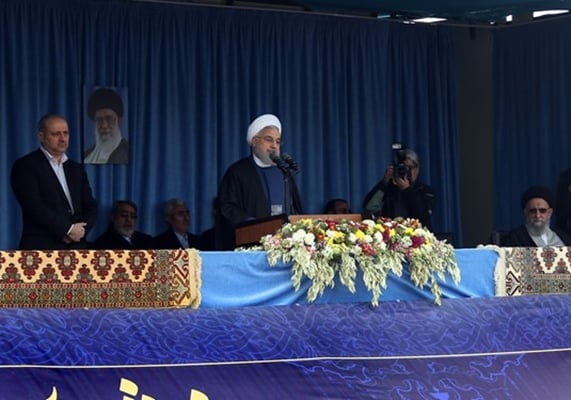
Rouhani made the remarks while addressing a large crowd in Golestan province. He said the Payam satellites, which is made by Amir Kabir University researchers, will go some six-hundred kilometers deep into space.

The Iranian president further mentioned that Payam is the Islamic Republic’s first operational satellite and differs from the previous models that were manufactured for research purposes. He noted that the device will help with activities such as weather forecast, agriculture, and forest protection among others.

Earlier, US Secretary of State Mike Pompeo warned Iran to scuttle its plans for satellite launches that the United States says involve technology that could be used in intercontinental ballistic missiles capable of reaching the US mainland.

“The United States will not stand by and watch the Iranian regime’s destructive policies place international stability and security at risk,” Pompeo said in a statement. “We advise the regime to reconsider these provocative launches and cease all activities related to ballistic missiles in order to avoid deeper economic and diplomatic isolation.”

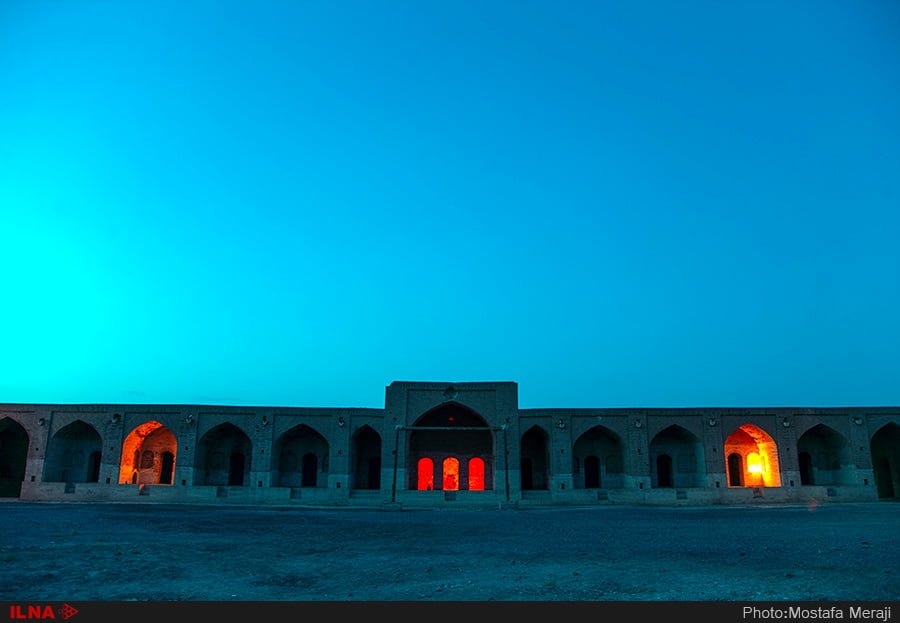
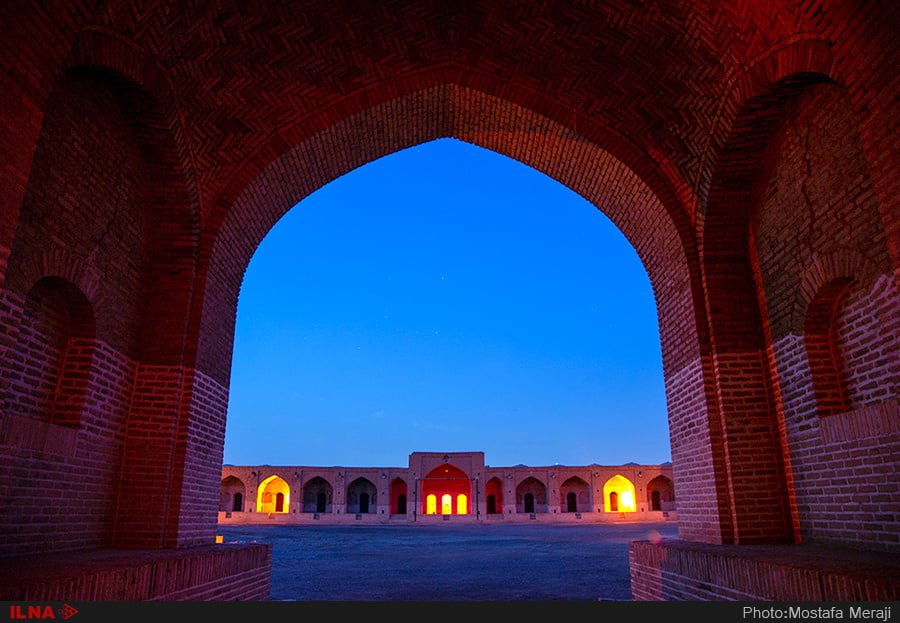
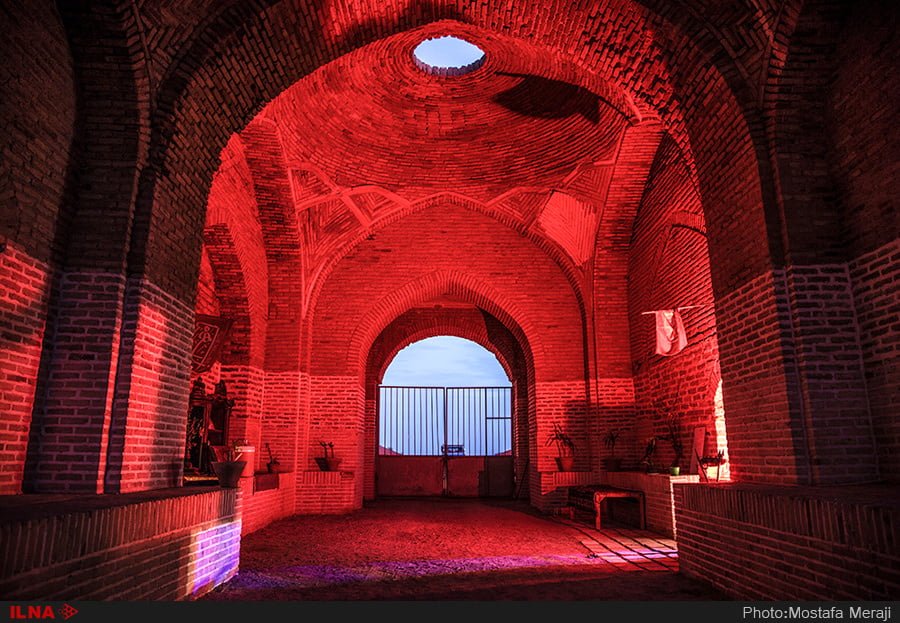
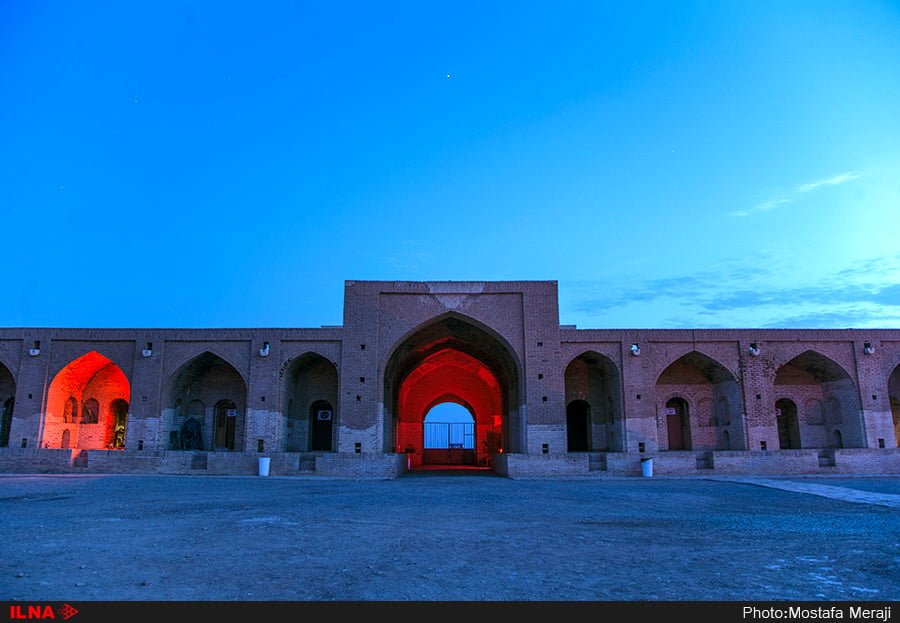
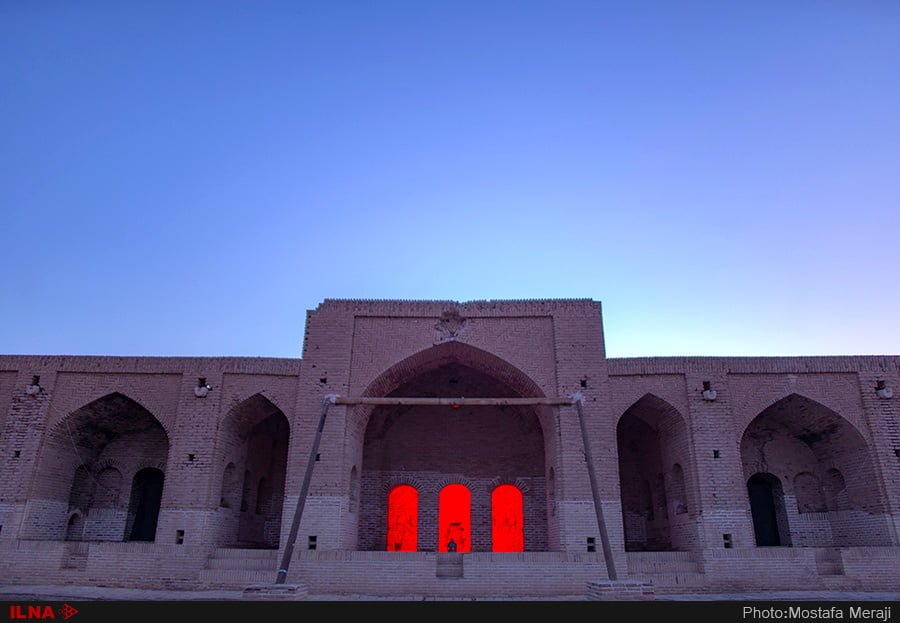
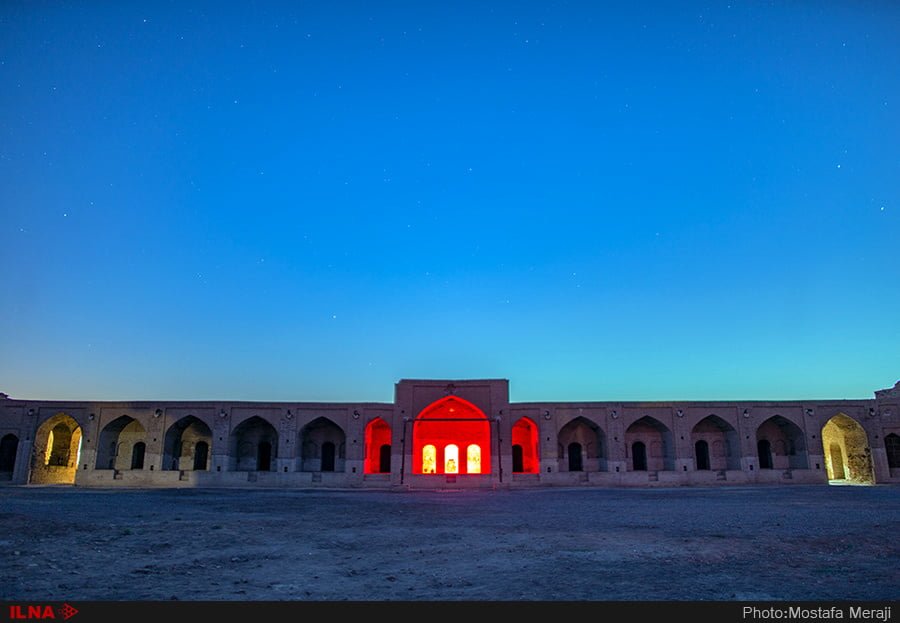
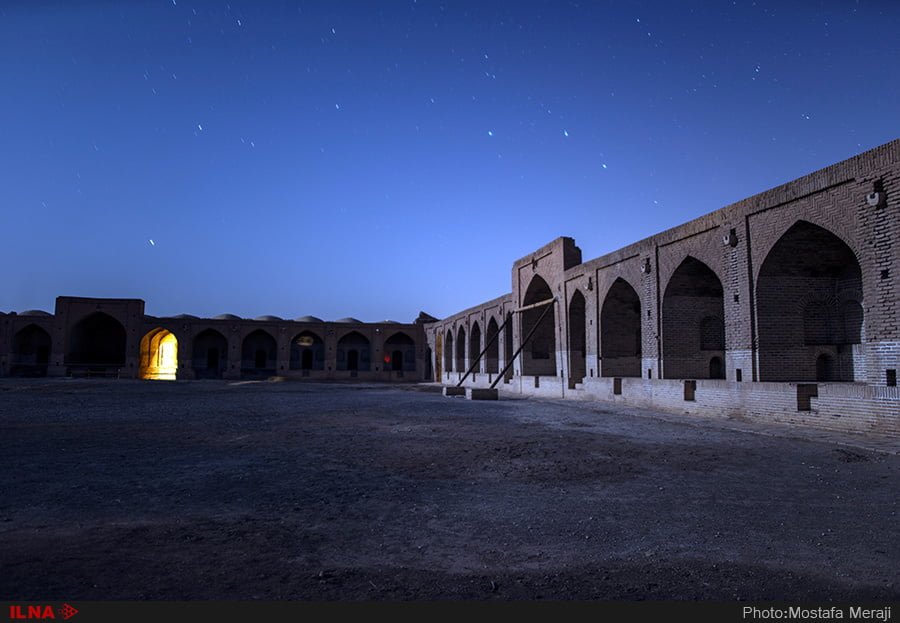
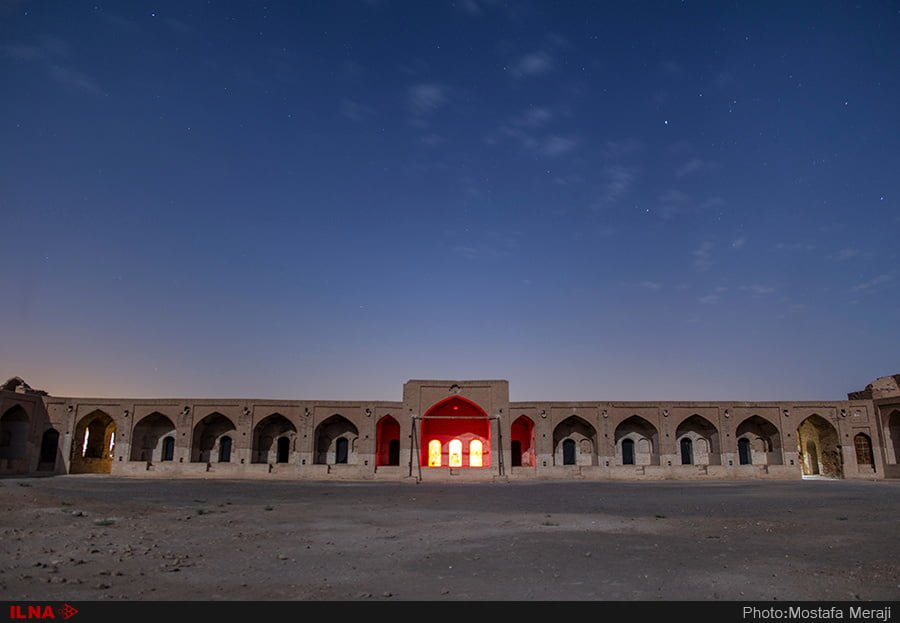
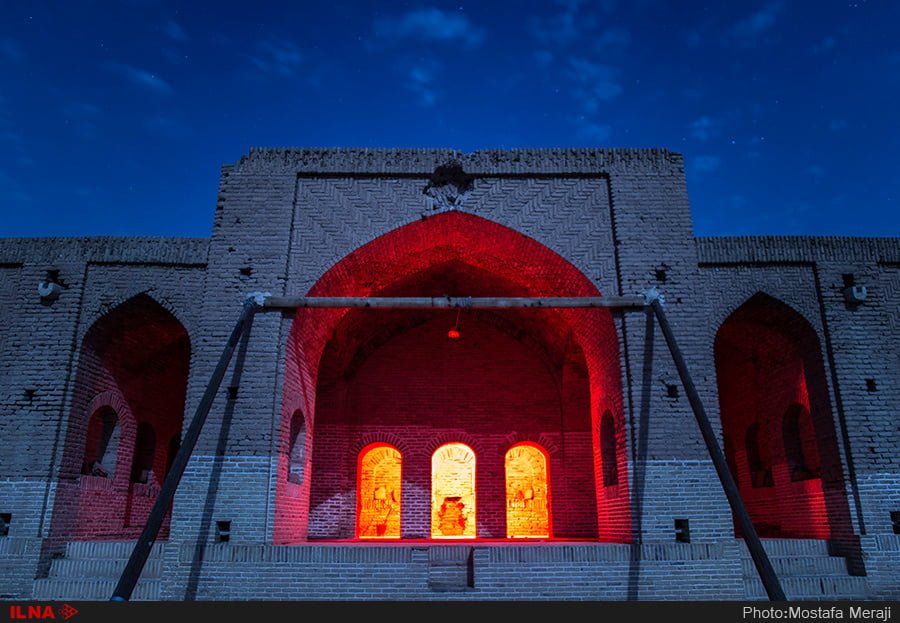
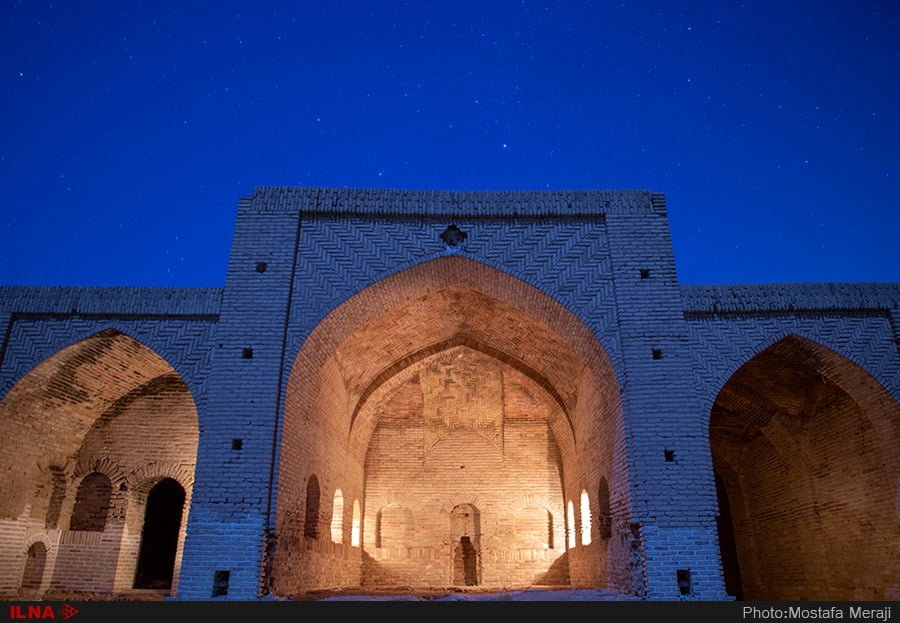
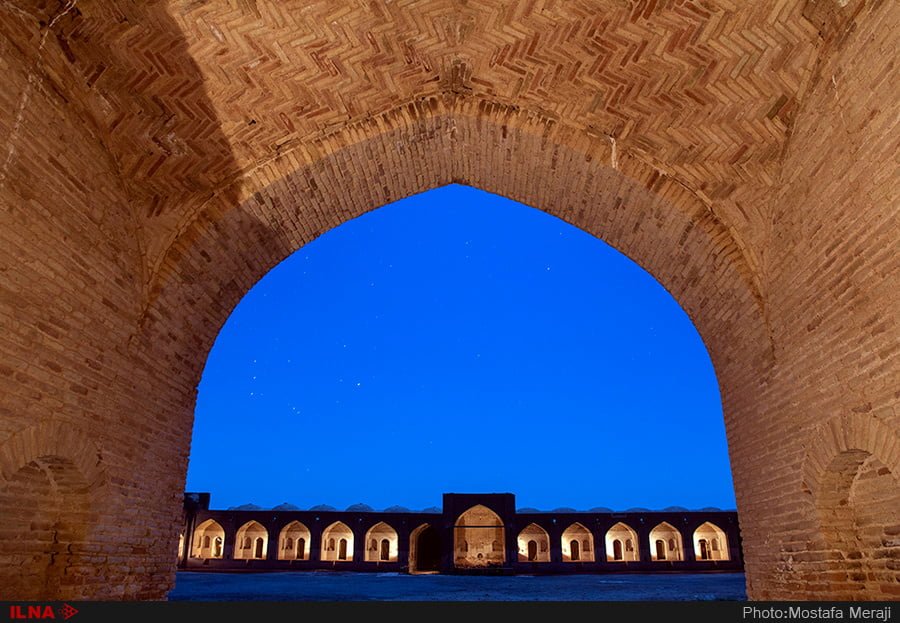
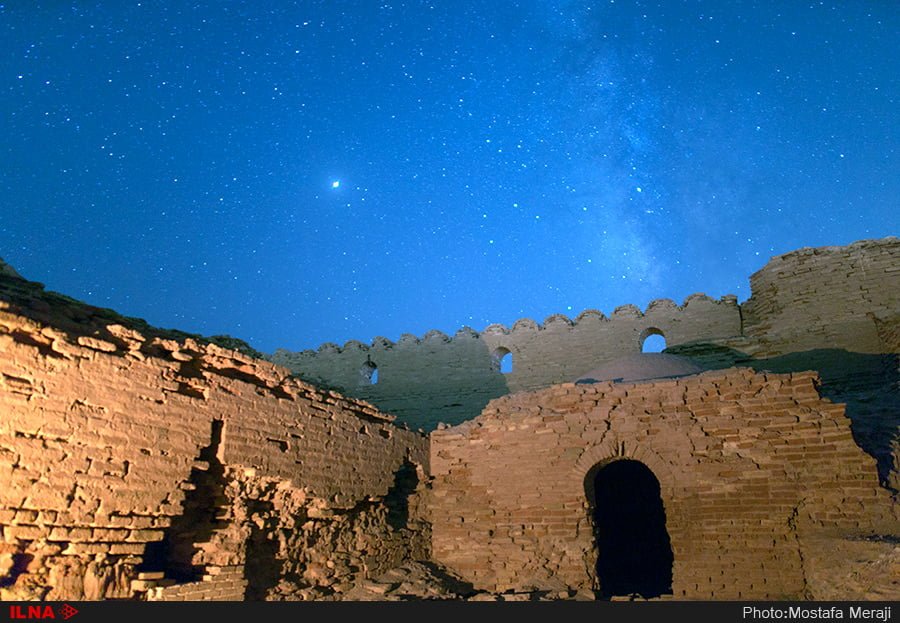
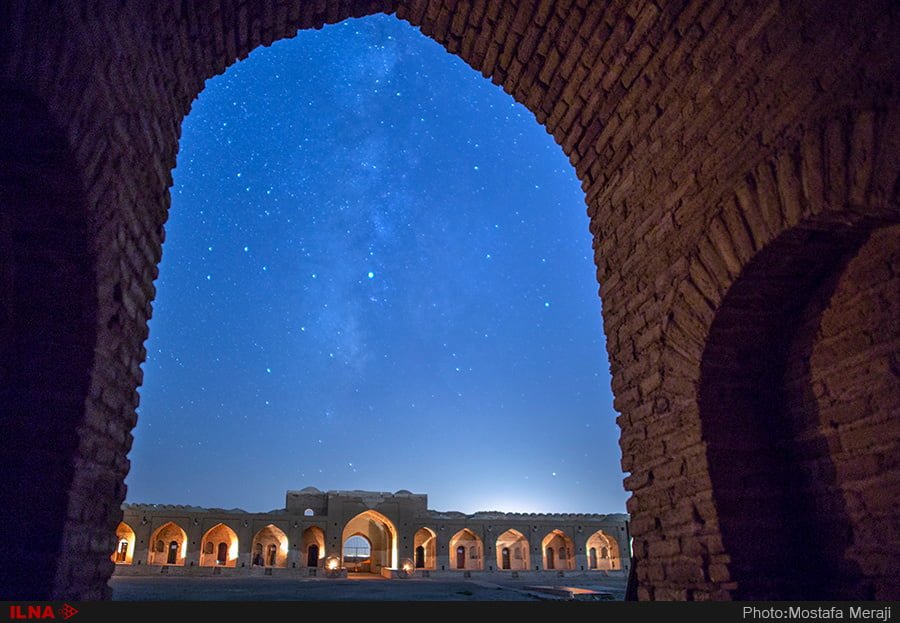
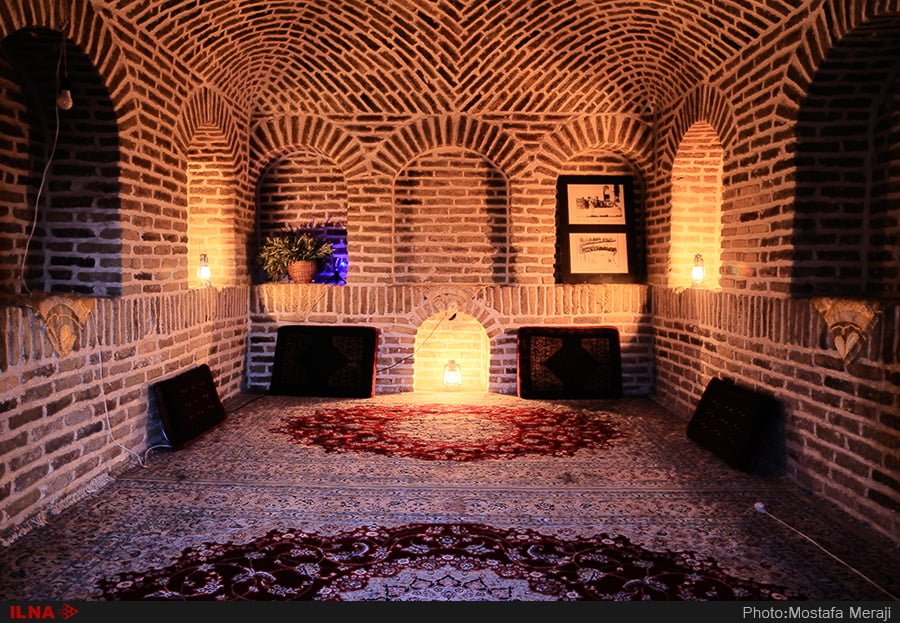
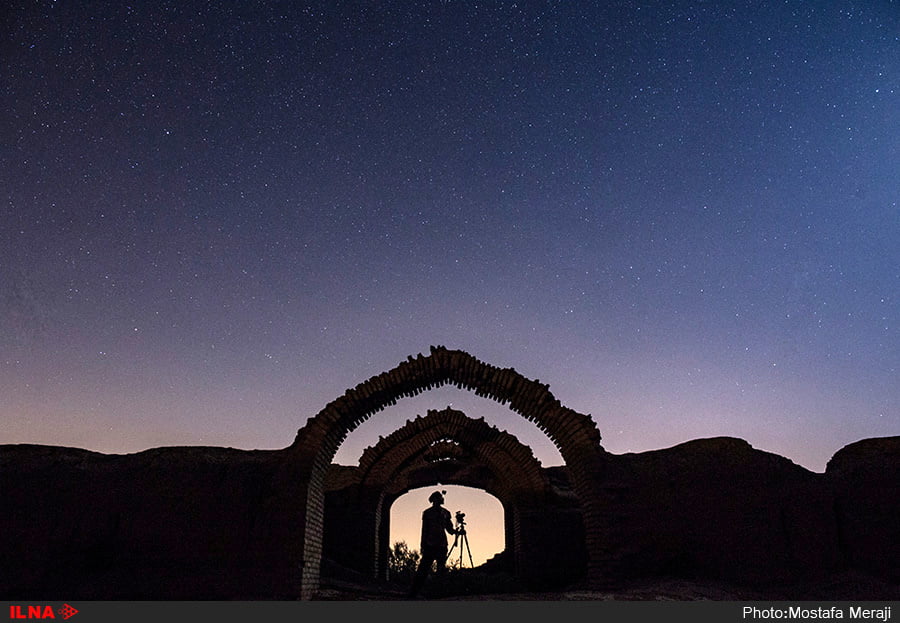
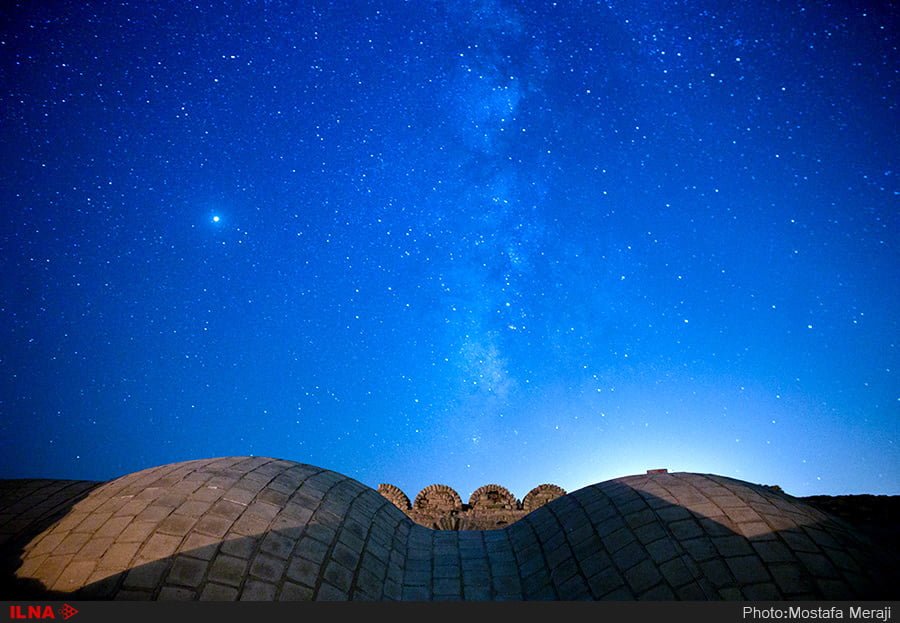
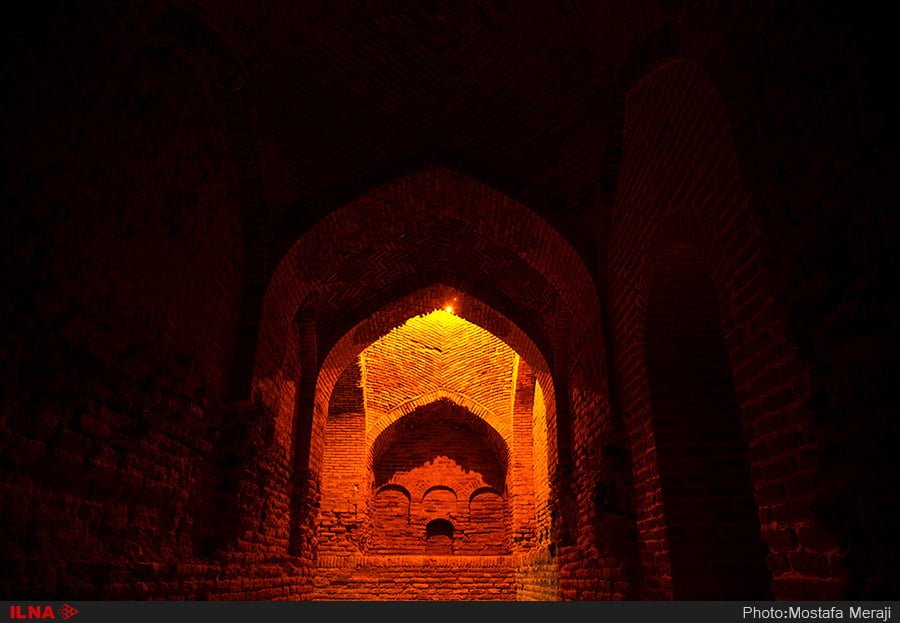
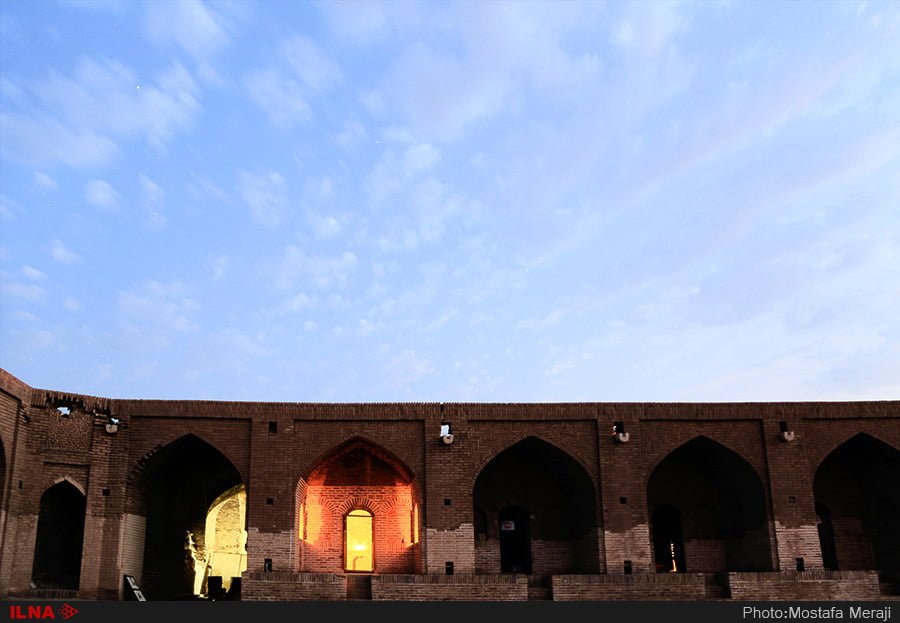
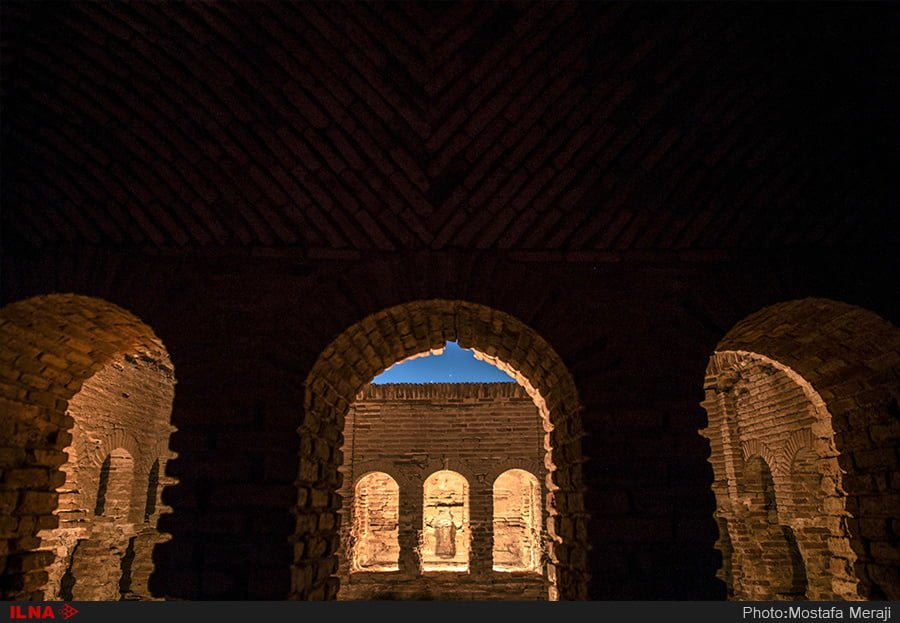
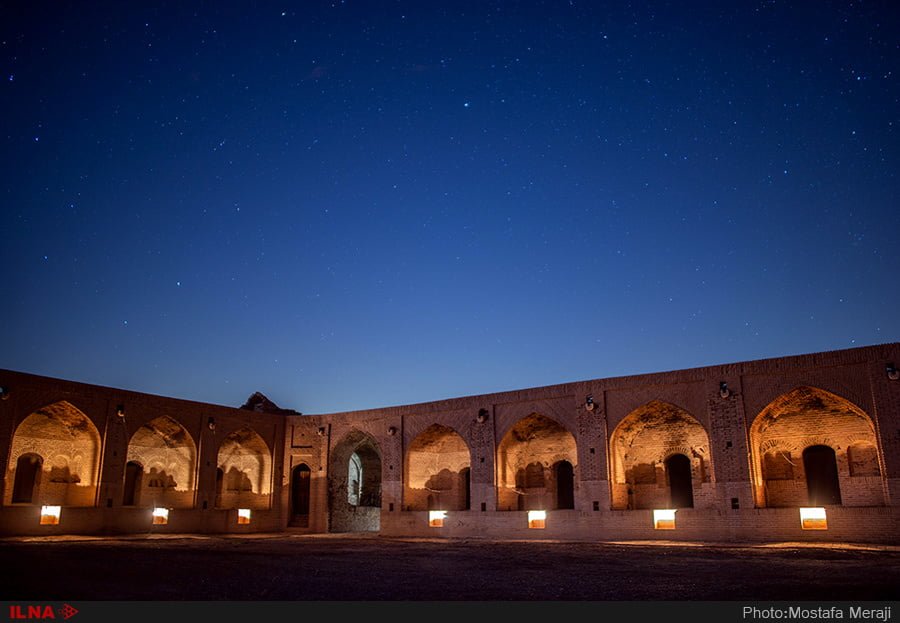
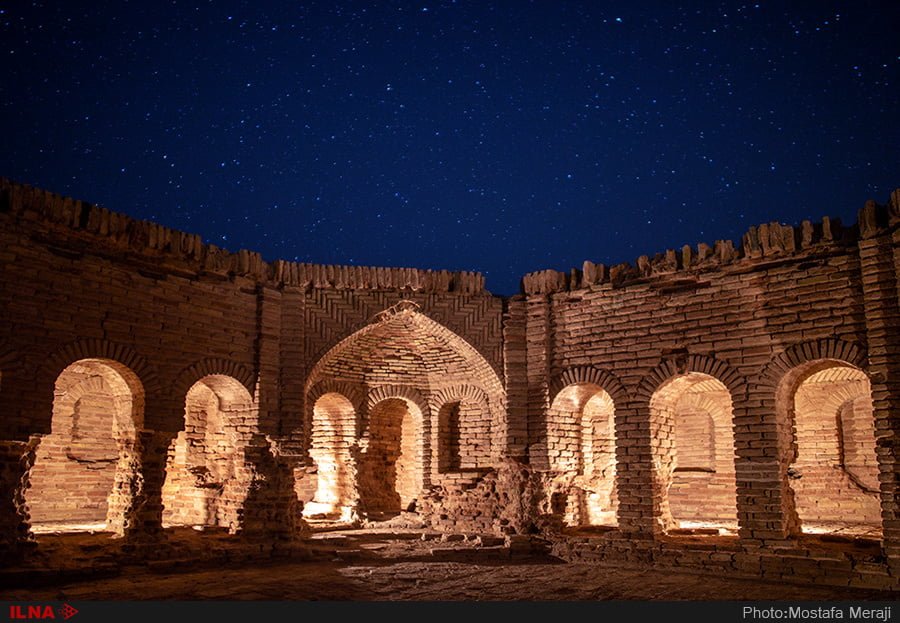
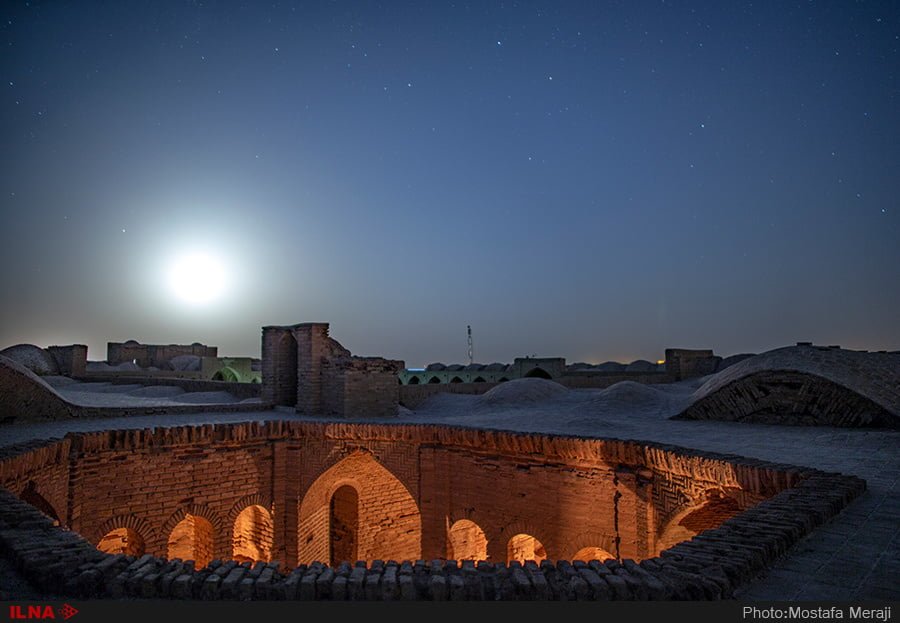
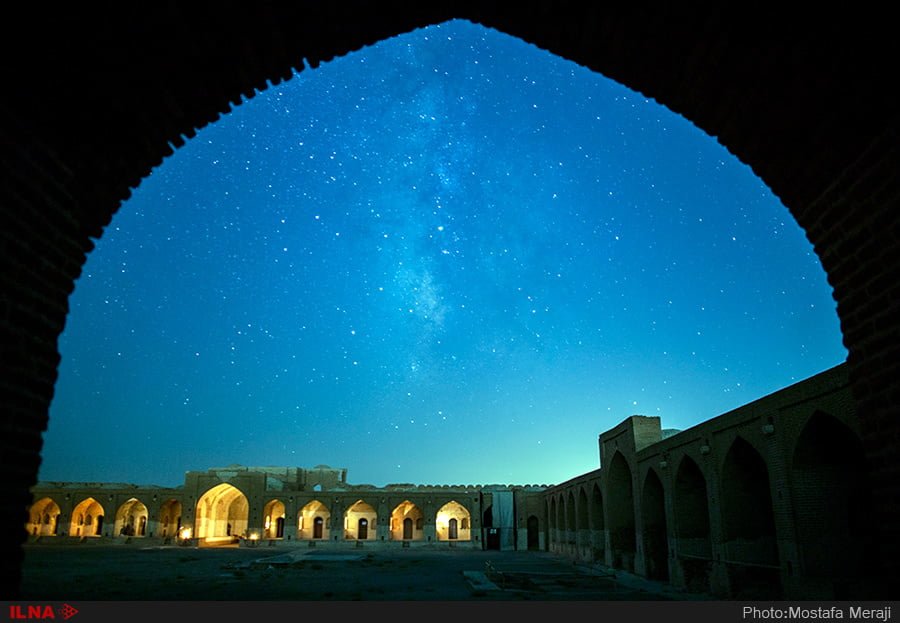
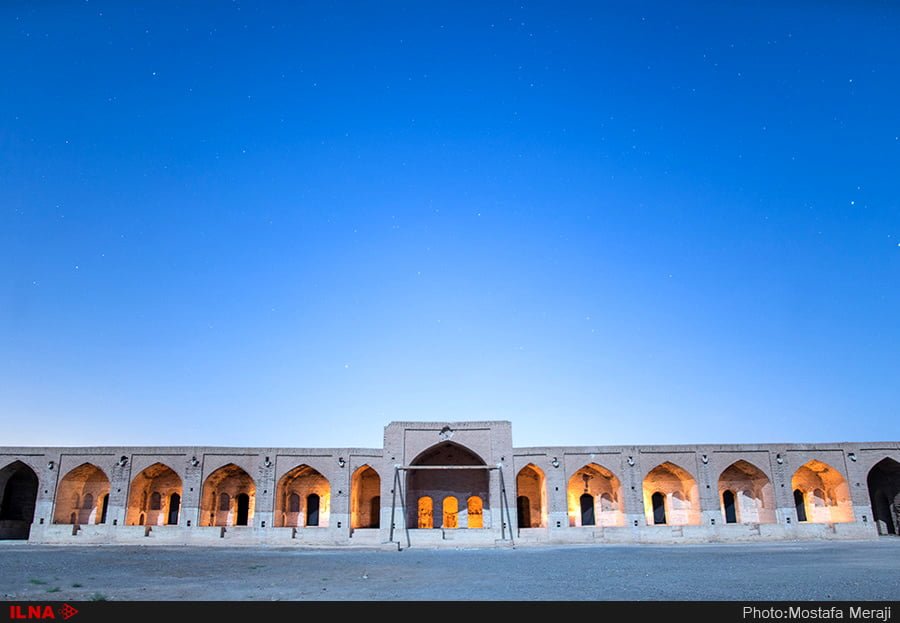
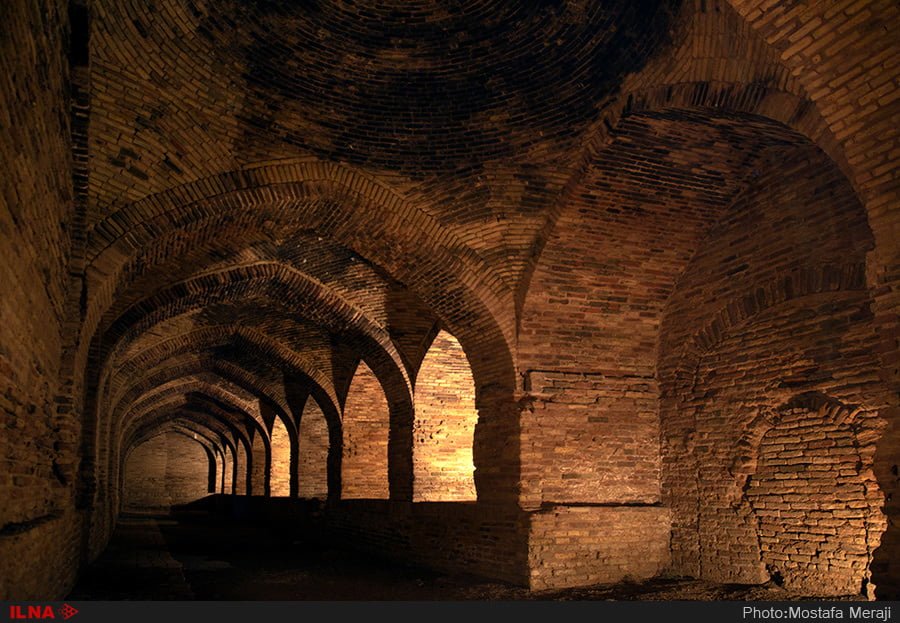
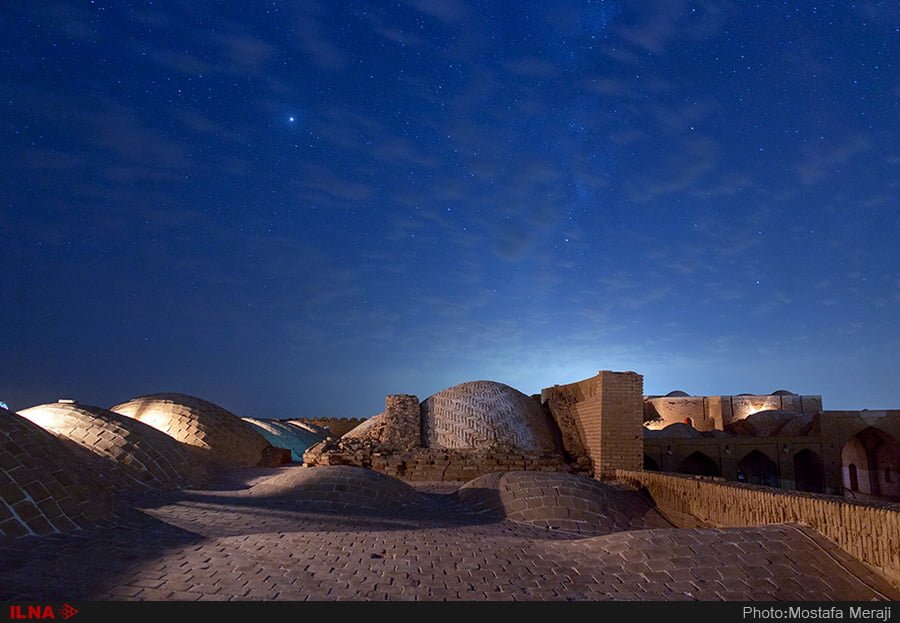
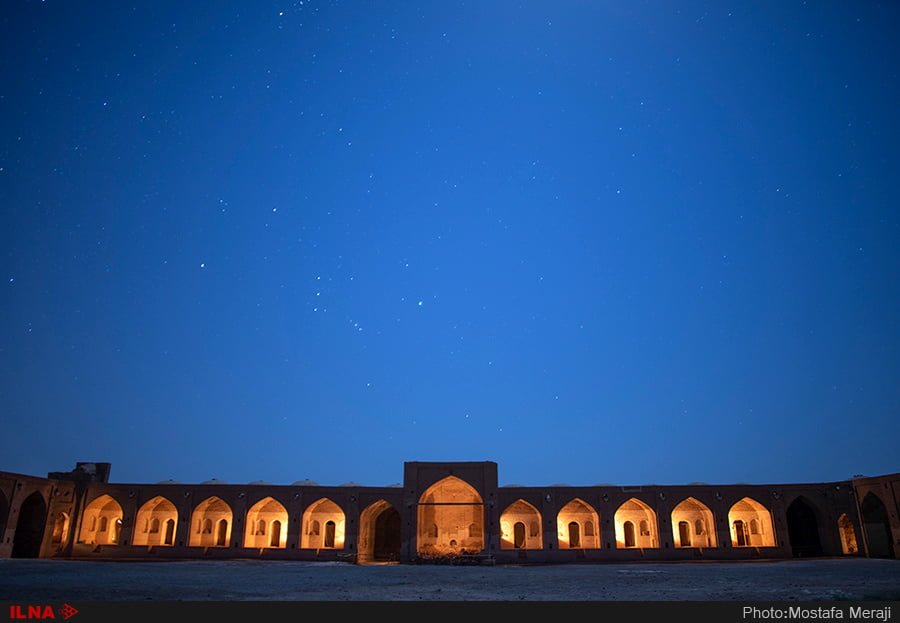
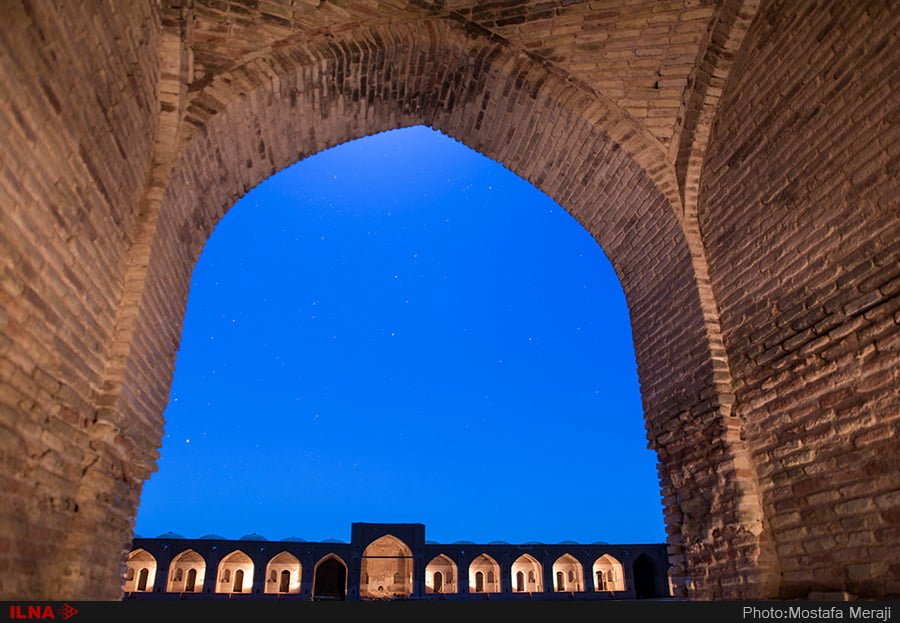
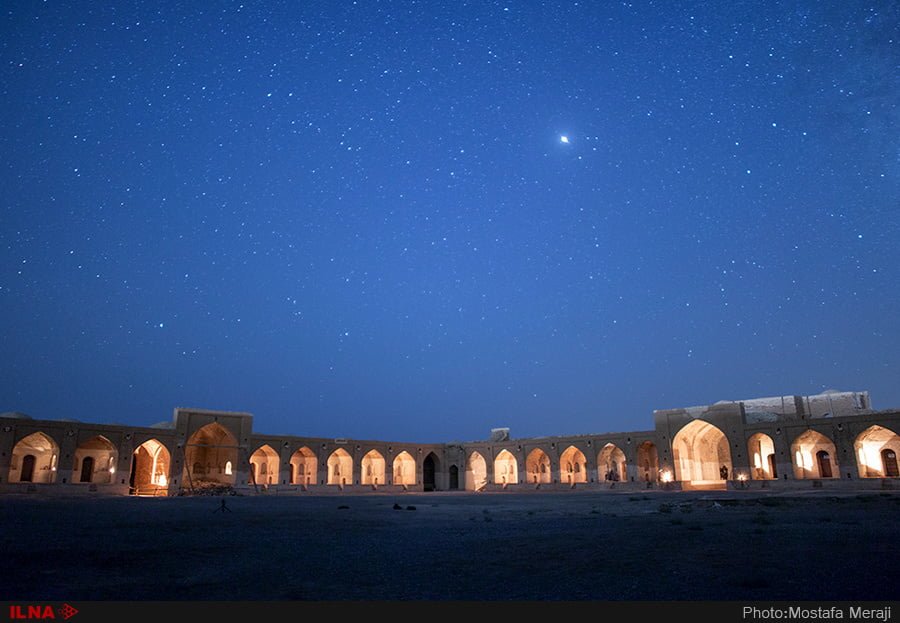
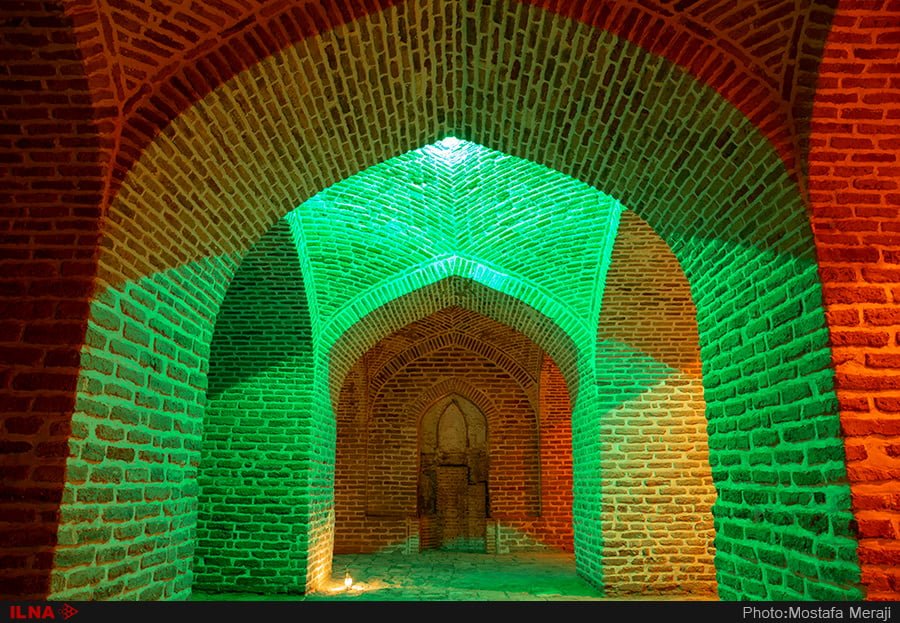
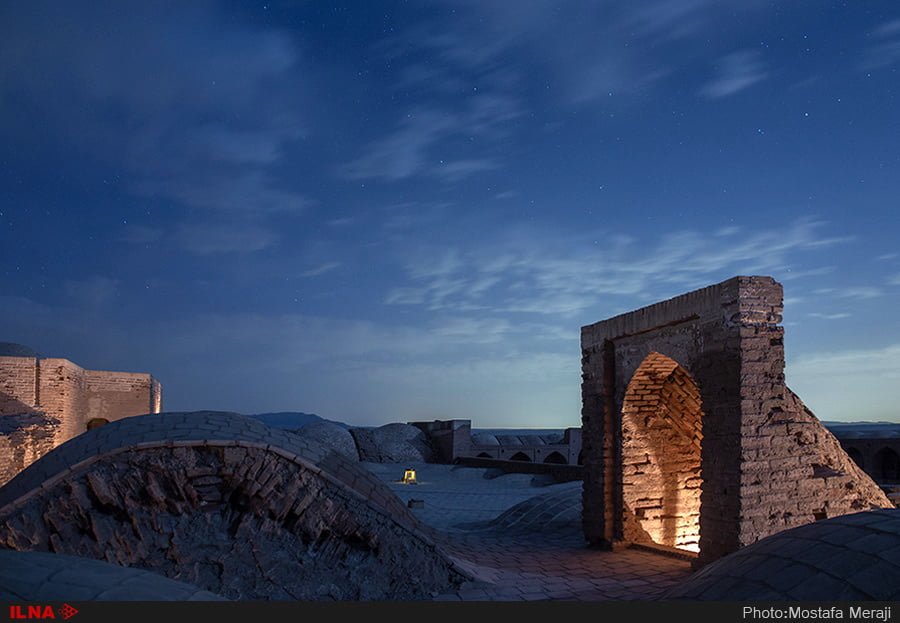
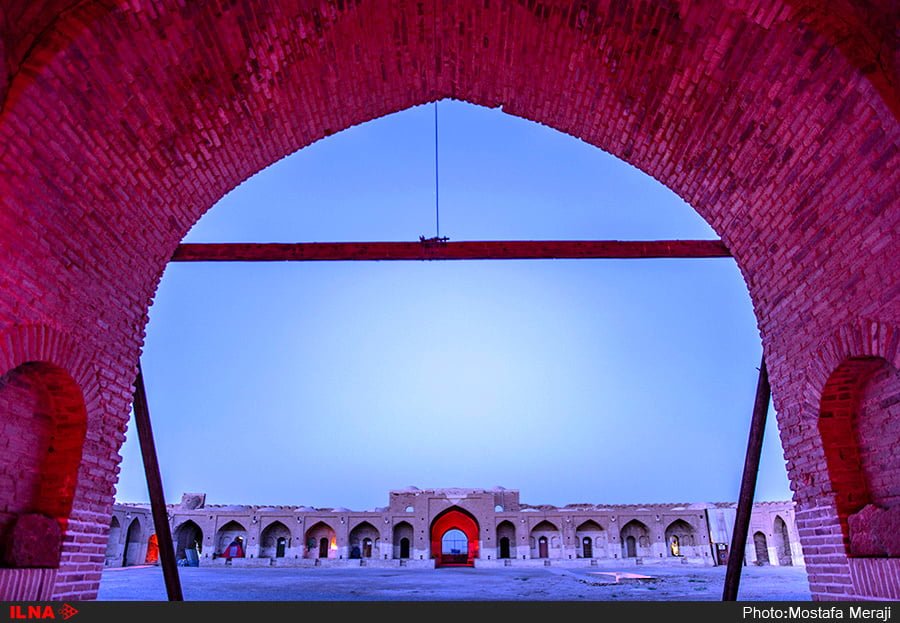
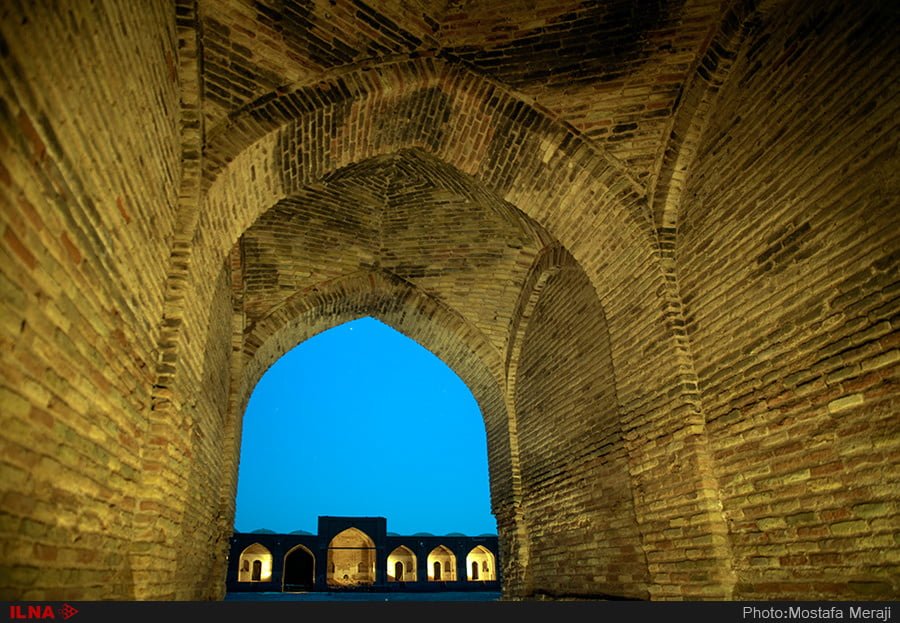
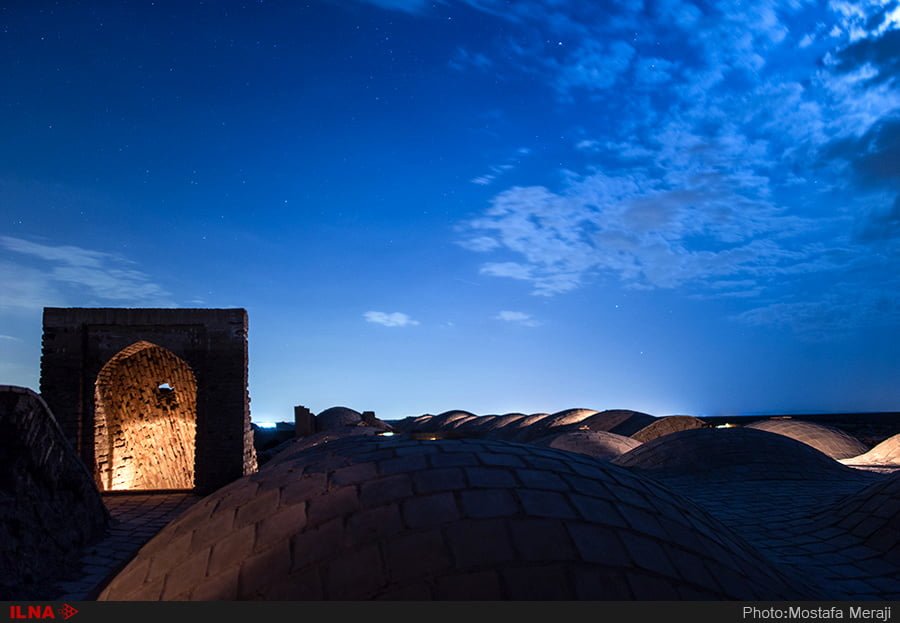
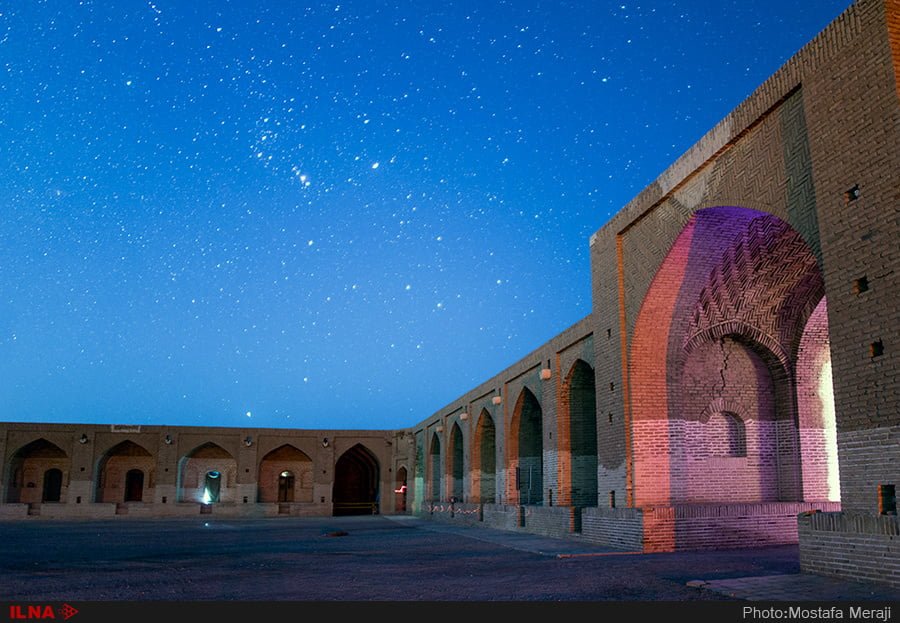
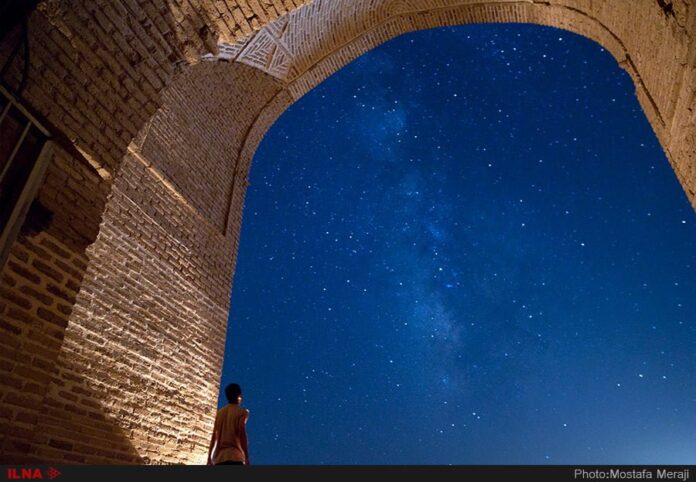
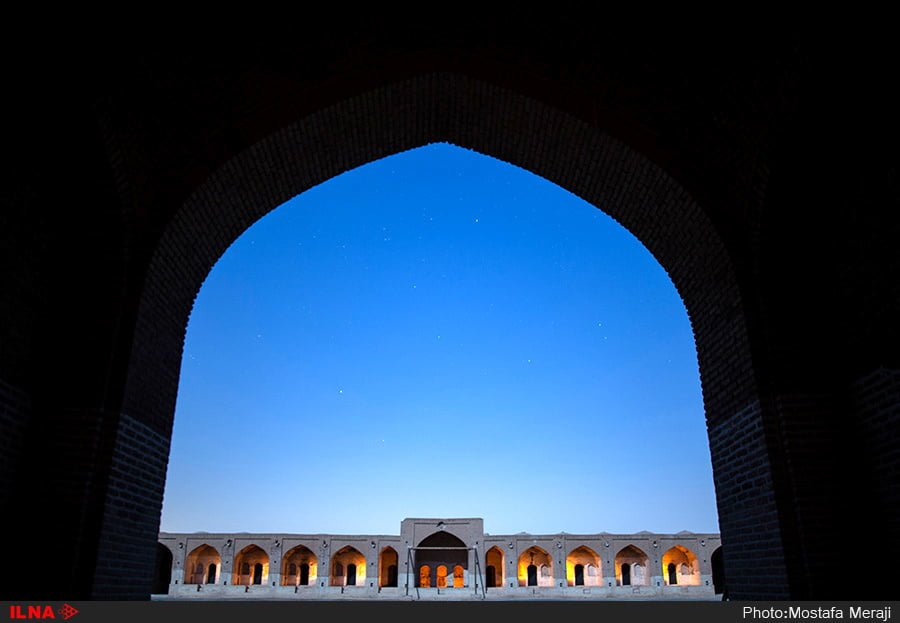
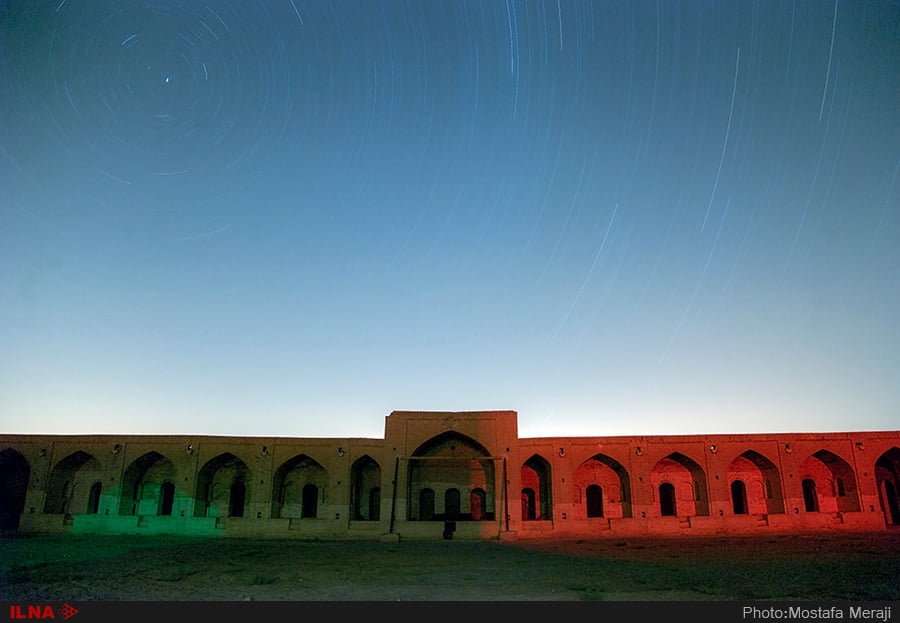
Deir-e Gachin; Mother of Iranian Caravanserais

Deir-e Gachin; Mother of Iranian Caravanserais

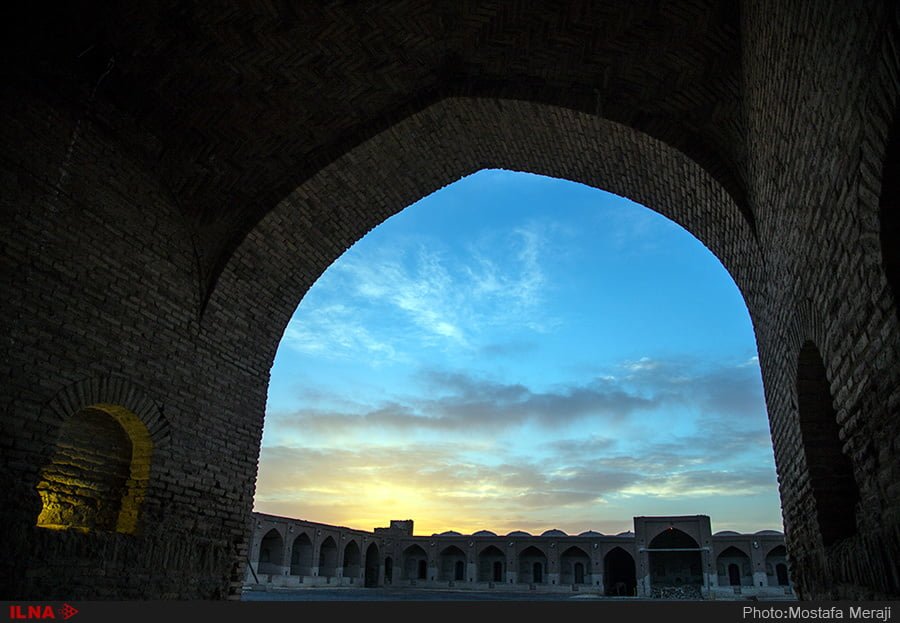
Deir-e Gachin caravanserai is situated on the ancient route from Ray to Qom.

Its distinctive features is the reason it is called “Mother of Iranian Caravanserais”. It is located in the Central District of Qom, 80 kilometres north-east of Qom (60 kilometres into Garmsar Freeway) and 35 kilometres south-west of Varamin County.

This structure is called Deir-e Gachin because it had a dome that was made of plaster (Gach in Farsi). Today, however, there is no such dome in the structure.

The structure of this caravanserai belongs to Sassanid era, and restorations took place in Seljuk, Safavid and Qajar eras. Its current form belongs to Safavid era.

The architecture of this structure includes different sections such as mosque, Qajari bath, private shabestan, fodder barn, harem, porch, roof, main entrance and Sassanid yard.

Following, you can see the photos of Deir-e Gachin- the mother of Iranian caravanserais- retrieved from ILNA:

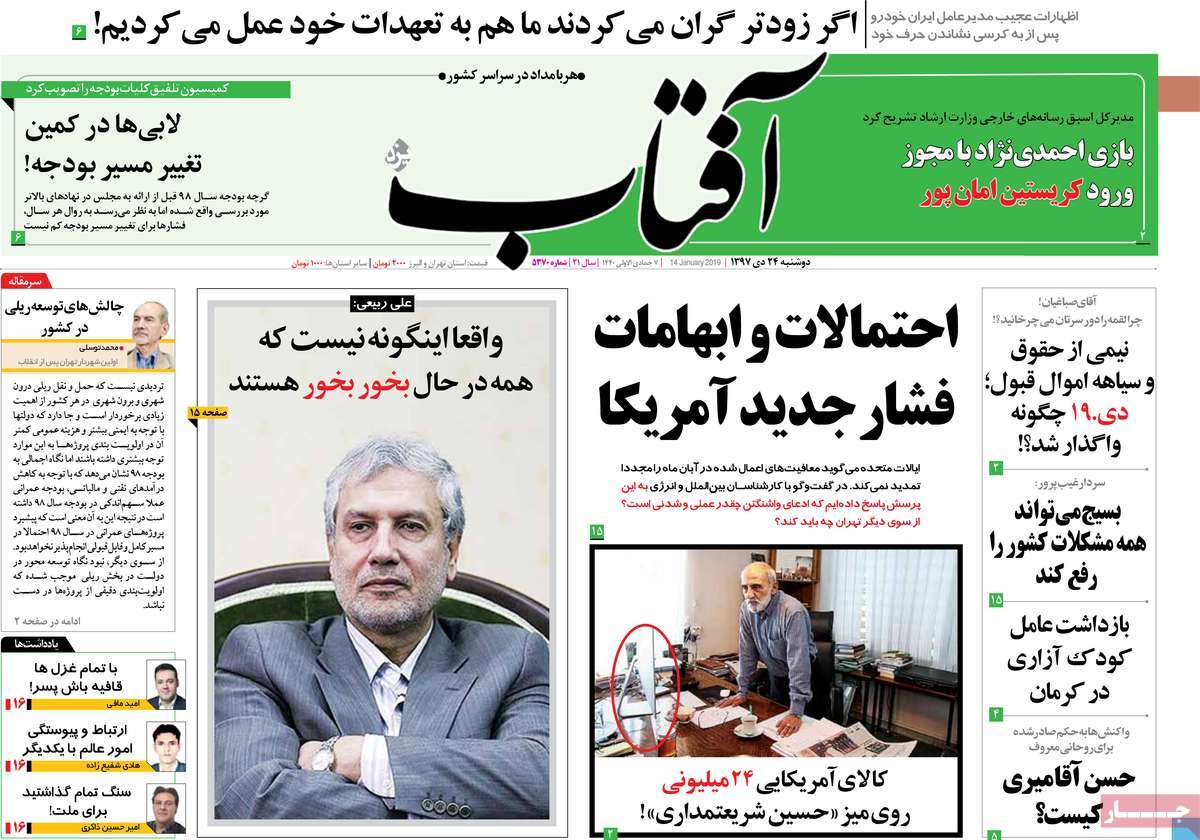
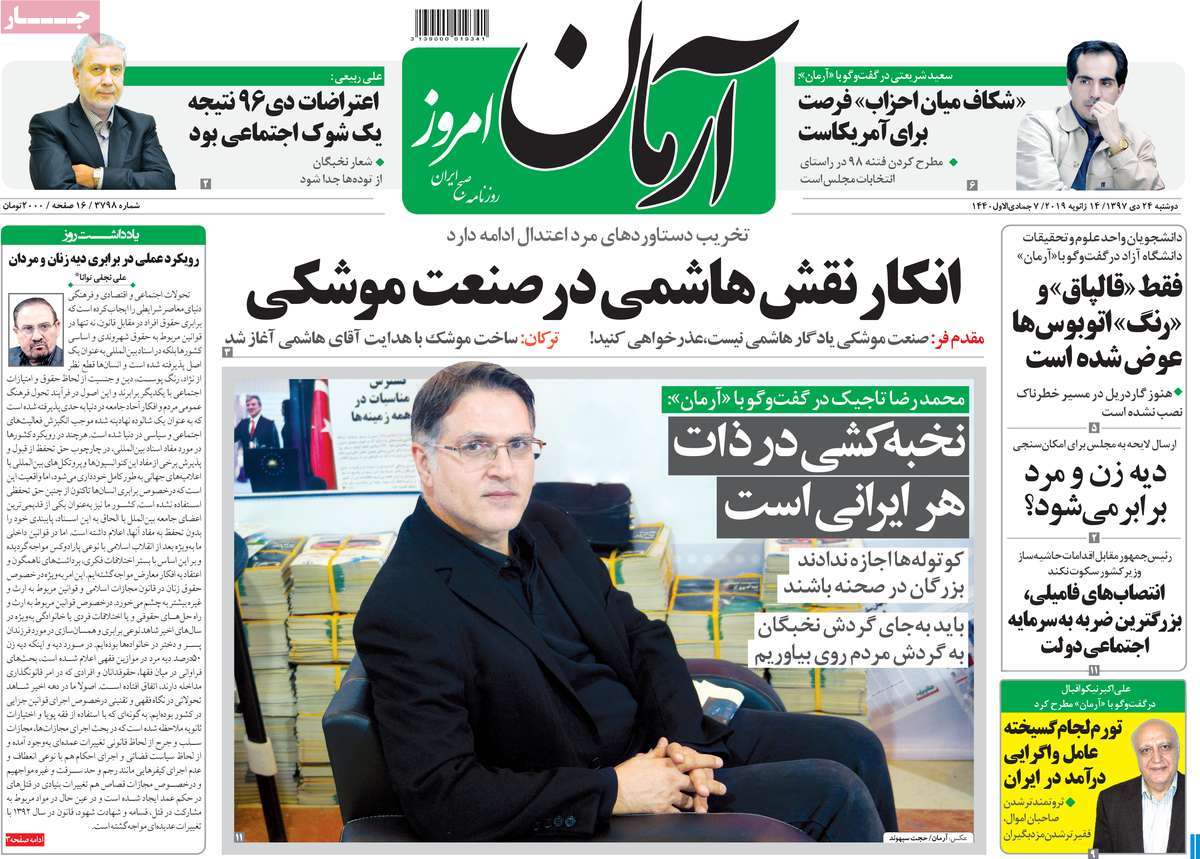
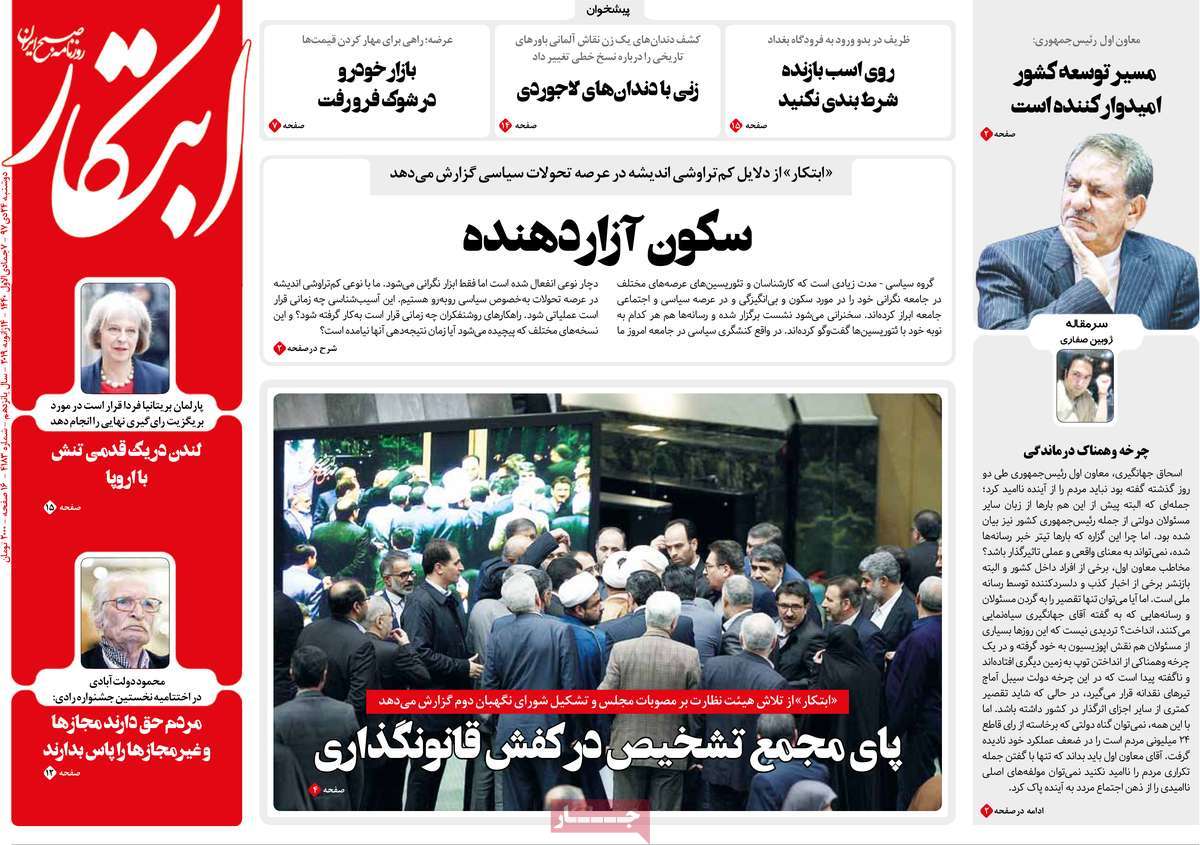
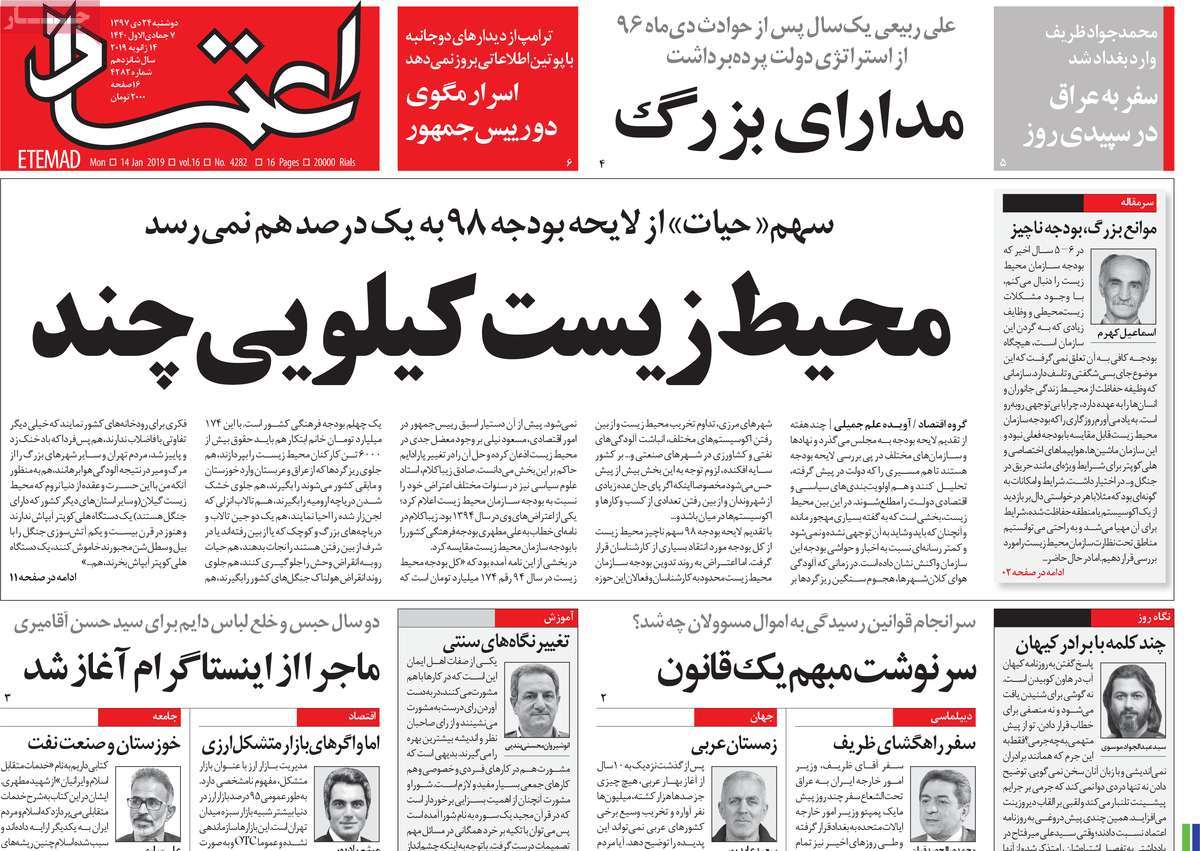
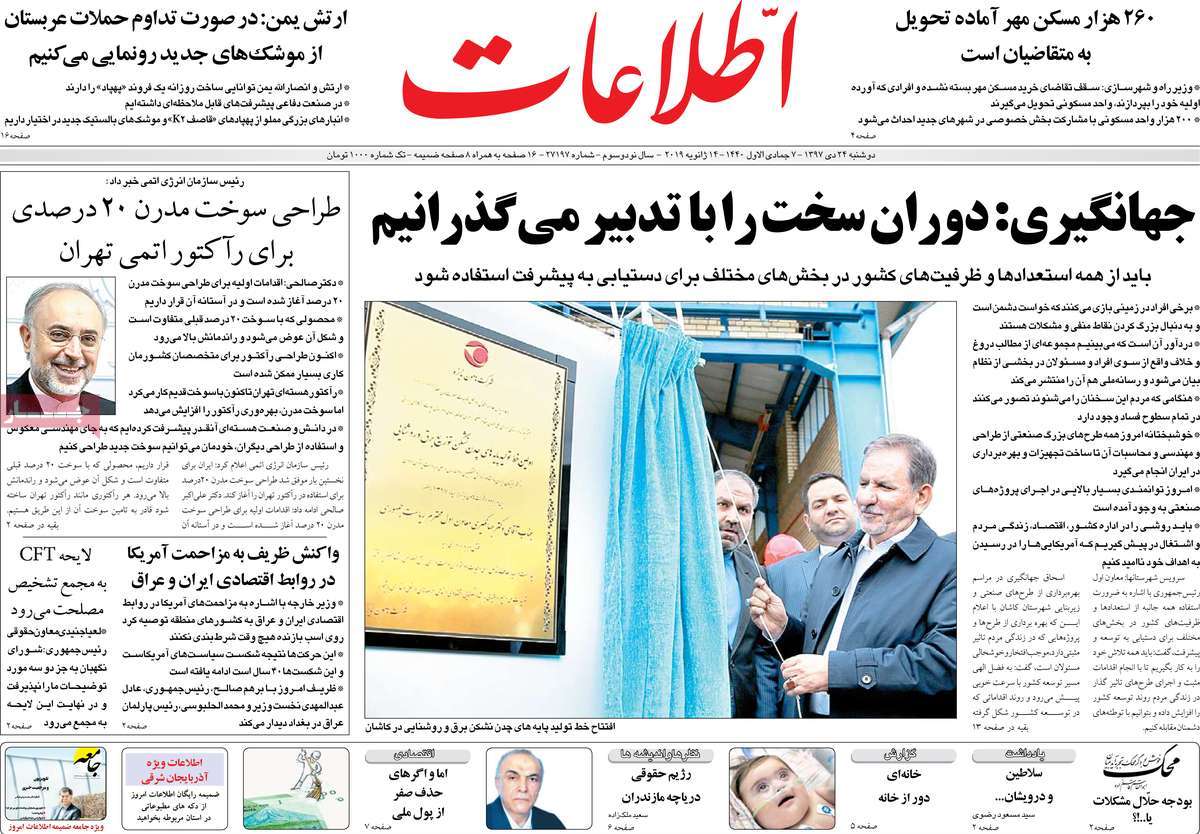
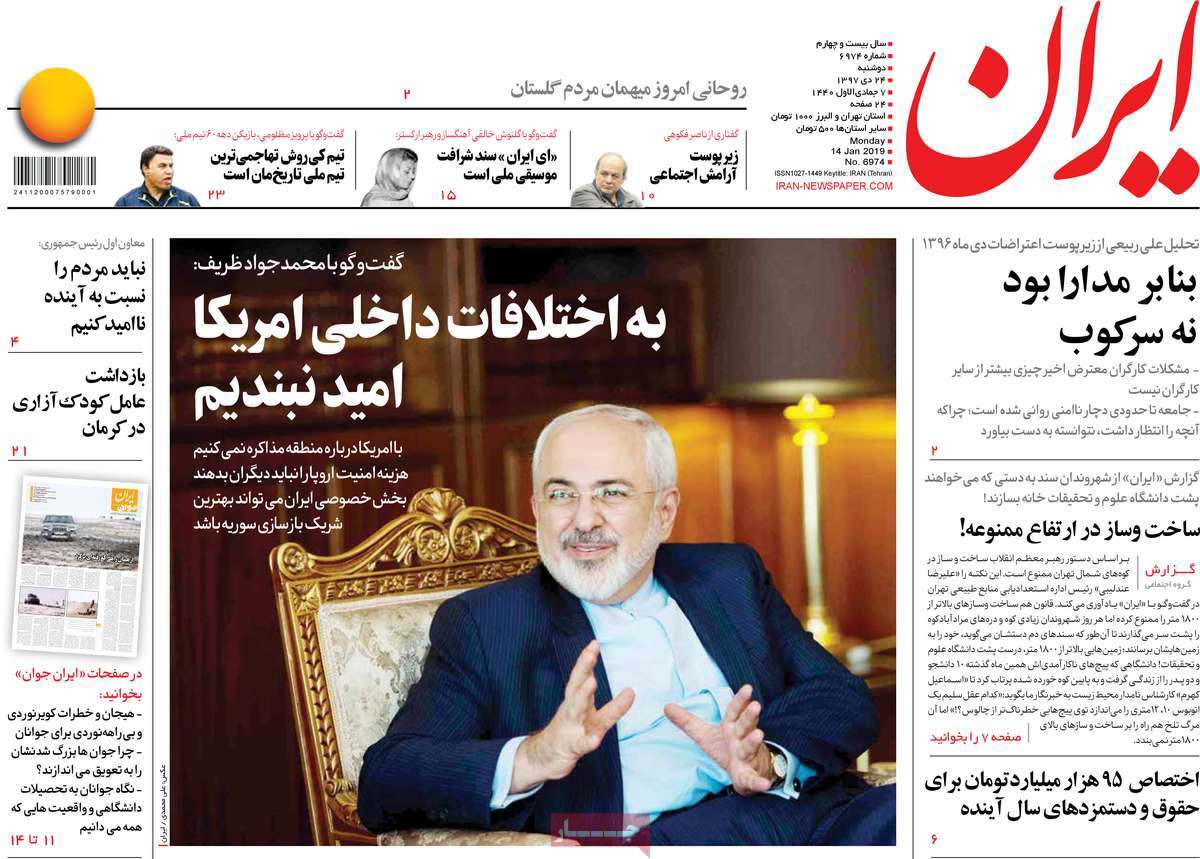
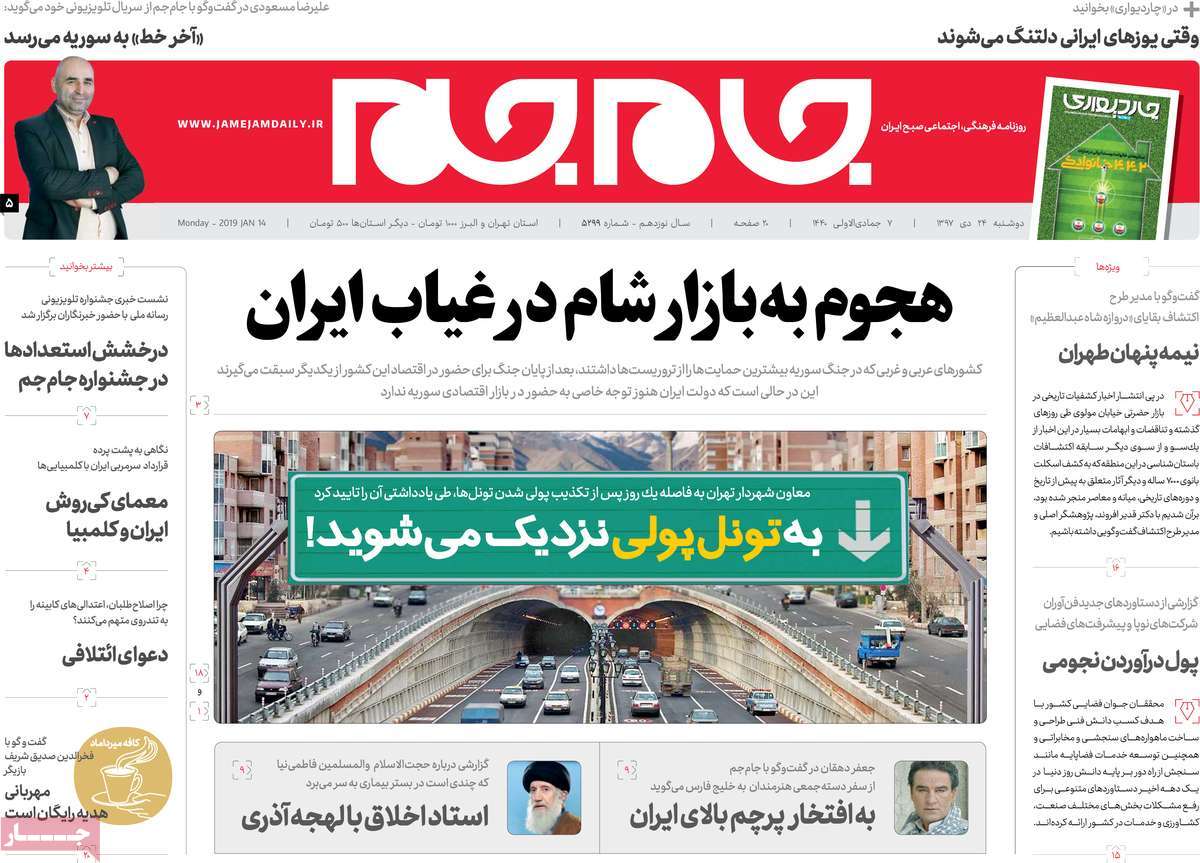
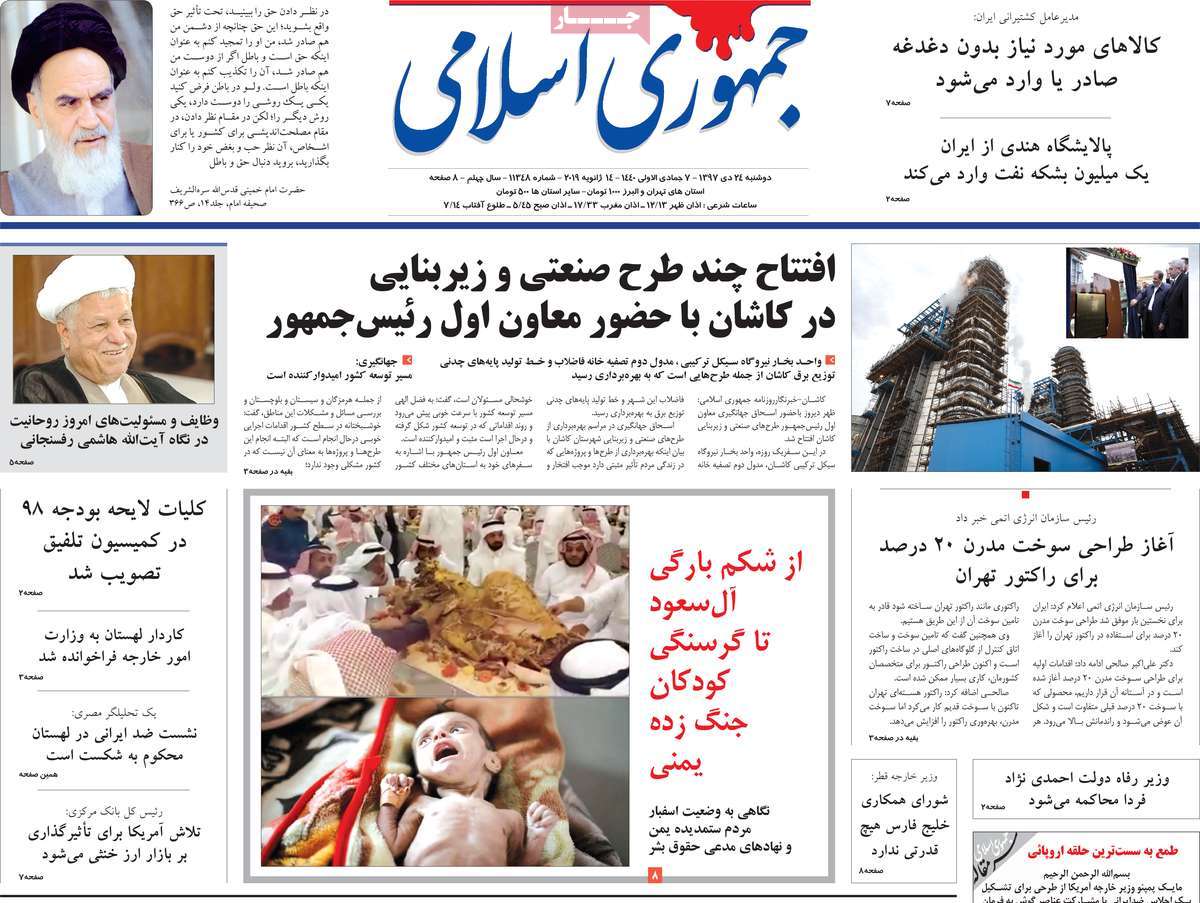
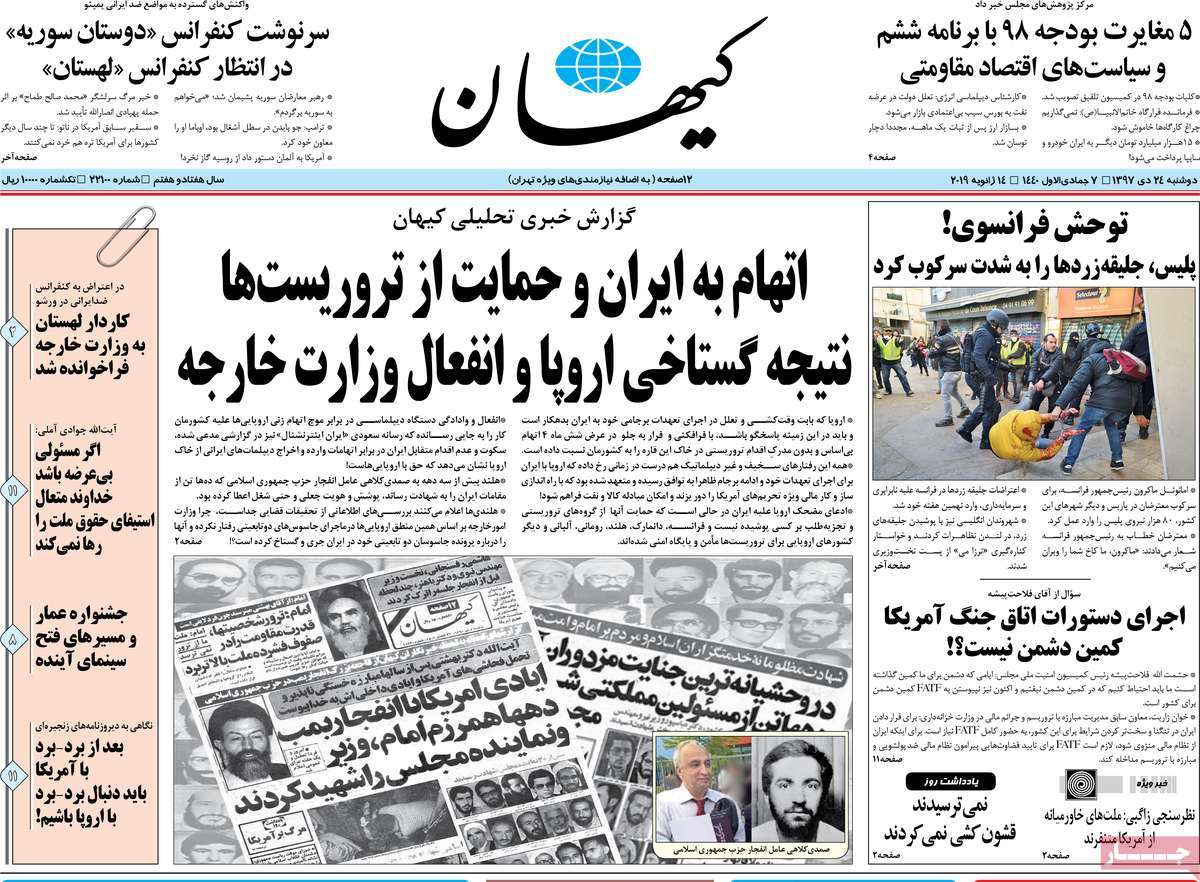
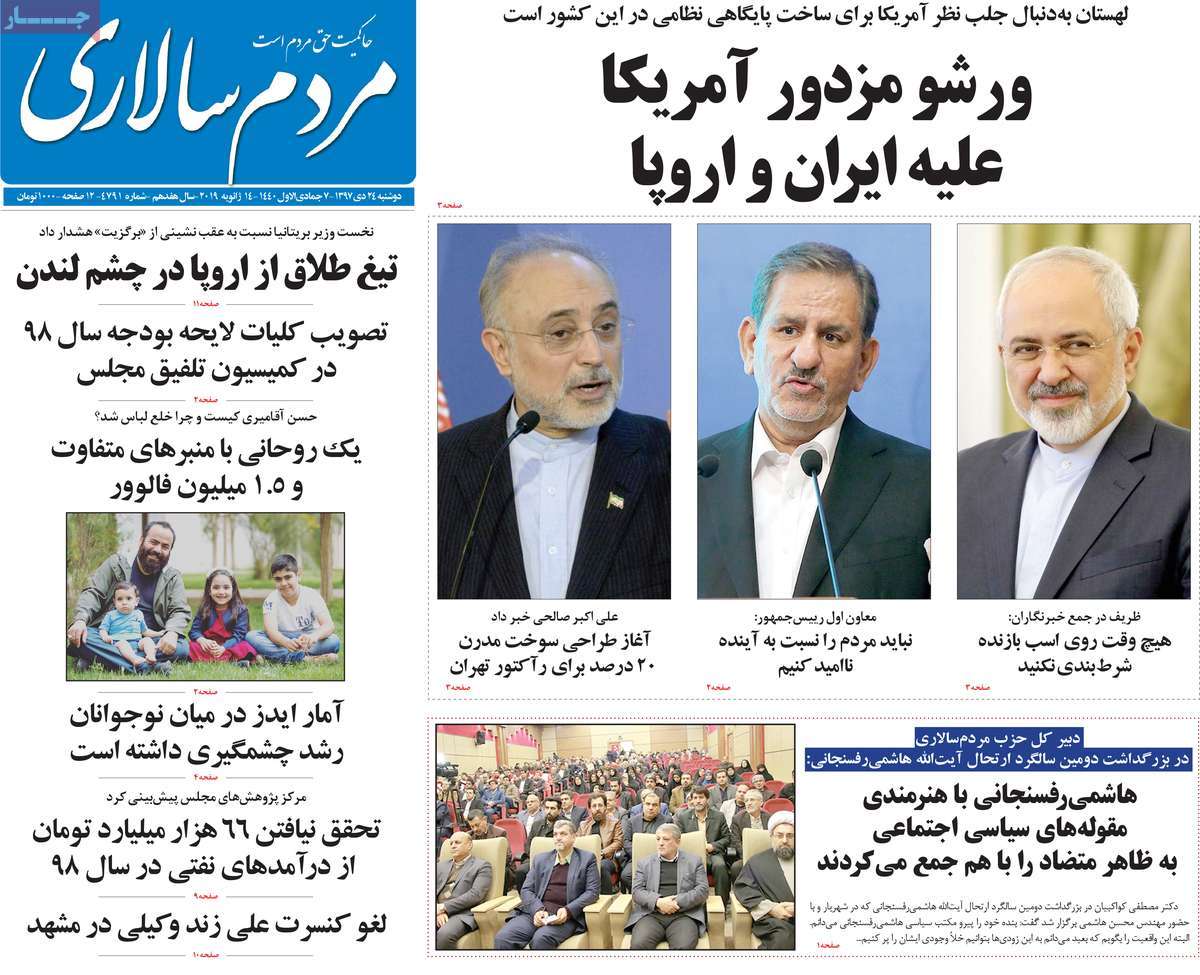
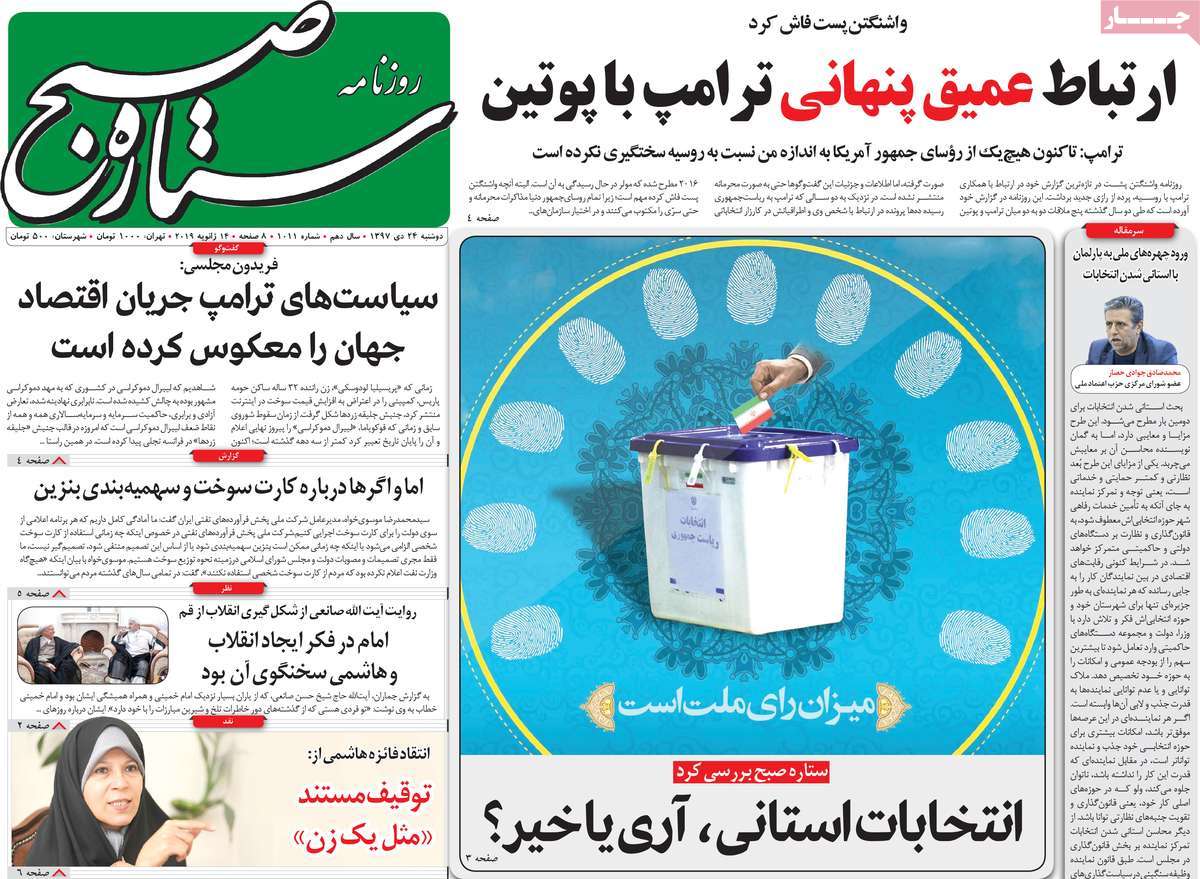
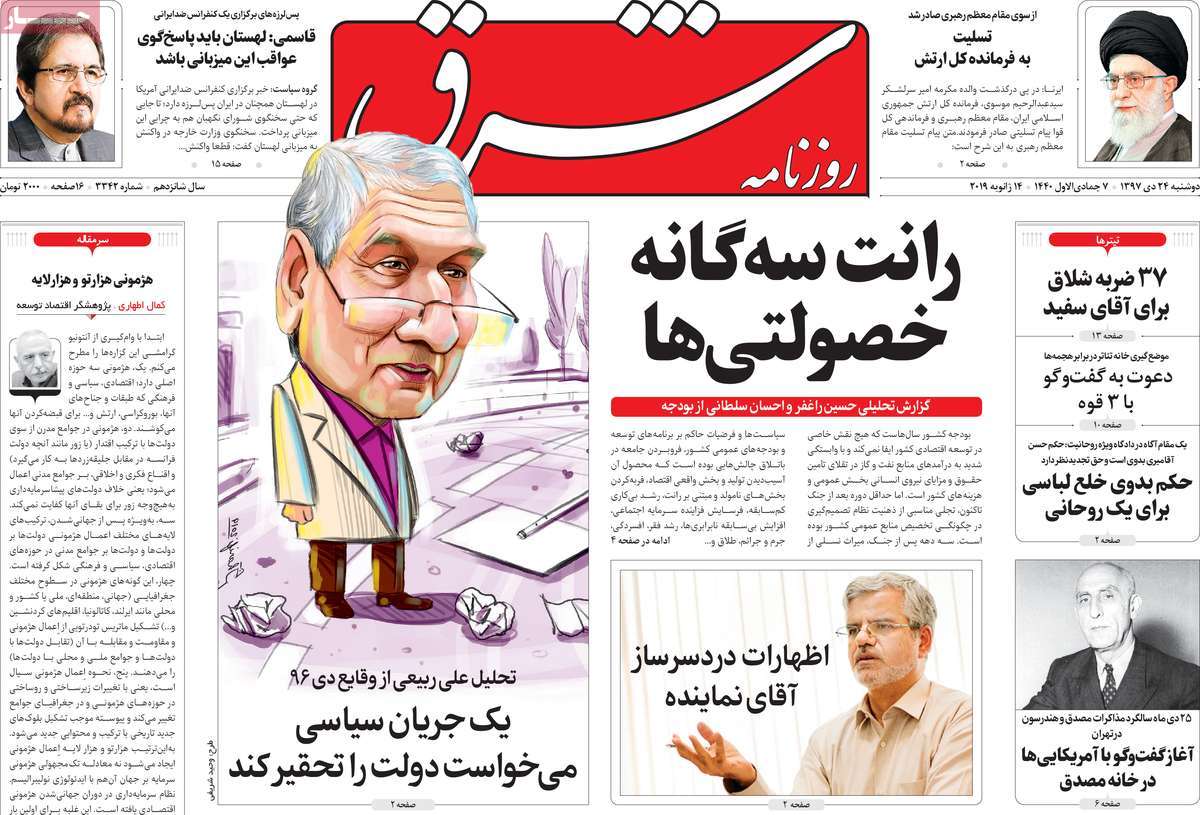
A Look at Iranian Newspaper Front Pages on January 14

A Look at Iranian Newspaper Front Pages on November 19

Almost all papers today covered the statements made by Iranian Foreign Minister Mohammad Javad Zarif in Baghdad on enhancing ties with the Arab country.

Also a top story was Poland’s planned hosting of an Anti-Iranian summit and the Iranian officials’ reactions to the decision.

A controversial revelation regarding close ties between US President Donald Trump and Russian President Vladimir Putin also received great coverage.

The above issues, as well as many more, are highlighted in the following headlines and top stories:


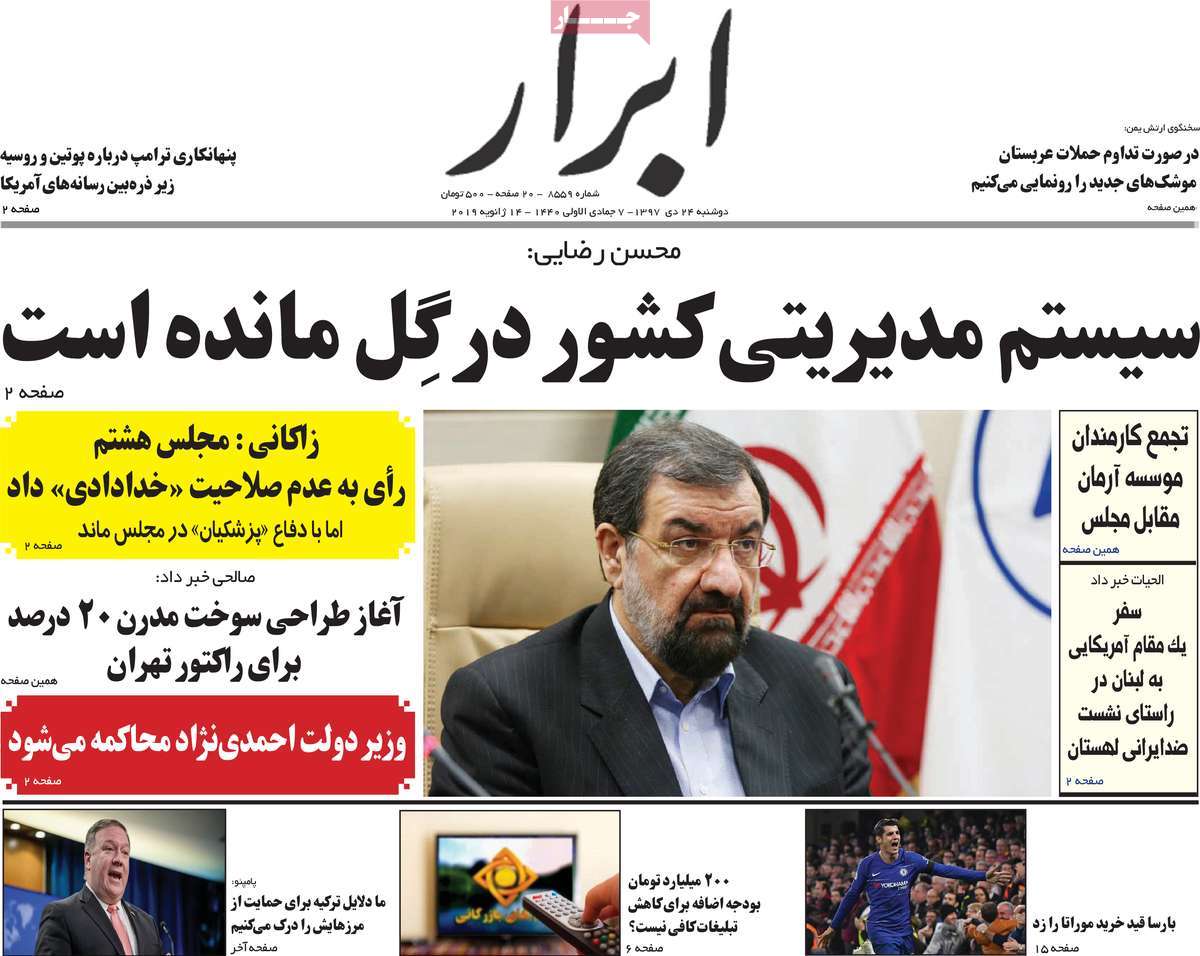
Abrar:

1- US official’s visit to Lebanon before Anti-Iranian Summit in Poland: Al-Hayat

2- We Understand Turkey’s Reasons for Safeguarding its Borders: Pompeo

A Look at Iranian Newspaper Front Pages on January 14


Aftab-e Yazd:

1- US Says It Will Not Renew Iran Waivers

A Look at Iranian Newspaper Front Pages on January 14


Arman-e Emrouz:

1- Gap between Parties Provides Opportunity for US: Expert

A Look at Iranian Newspaper Front Pages on January 14


Ebtekar:

1- Don’t Bet on Wrong Horse: Zarif in Baghdad

2- Country’s Development Path Promising: Iran First VP

3- British Parliament to Vote on Brexit on Tuesday

A Look at Iranian Newspaper Front Pages on January 14


E’temad:

1- Trump Does Not Provide Info on Bilateral Meetings with Putin

2- FM Zarif Arrives in Iraq

A Look at Iranian Newspaper Front Pages on January 14


Ettela’at:

1- If Saudi Attacks Continue, We Will Unveil New Missiles: Yemeni Army

2- We Pass Through Hard Times with Prudence: Jahangiri

3- Zarif Reacts to US Sabotage in Iran-Iraq Relations

A Look at Iranian Newspaper Front Pages on January 14


Iran:

1- Rouhani Visits Golestan Province

2- We Shall Not Pin Hopes on US Internal Conflicts: FM Zarif

3- We Do Not Negotiate with US over Regional Issues

4- Others Must Not Pay Cost of Europe’s Security

5- Iran’s Private Sector Can Be Best Option to Reconstruct Syria

A Look at Iranian Newspaper Front Pages on January 14


Jam-e Jam:

1- West’s Rush to Control Syria’s Market in Absence of Iran

A Look at Iranian Newspaper Front Pages on January 14


Jomhouri Eslami:

1- ‘Goods Exported, Imported Without Any Problem’

2- Indian Refinery Imports One Million Barrels of Oil from Iran

3- Polish Chargé d’affaires Summoned to Iran Foreign Ministry

4- Poland Anti-Iran Summit Doomed to Failure: Analyst

5- Efforts to Influence Forex Market Being Neutralised: CBI Governor

A Look at Iranian Newspaper Front Pages on January 14


Kayhan:

1- Fate of Friends of Syria Conference Depending on Poland Summit

2- Reactions to Pompeo’s Anti-Iranian Stances

3- Accusing Iran, Supporting Terrorists Result of EU’s Rudeness, Passivity of Iranian Foreign Ministry

4- Middle Eastern Nations Hate US: Zogby Poll

A Look at Iranian Newspaper Front Pages on January 14


Mardomsalari:

1- Warsaw; US Mercenary on Iran, Europe

2- Poland Seeking to Persuade US to Build Military Base in Country

3- British Prime Minister Warns of Withdrawal from Brexit

A Look at Iranian Newspaper Front Pages on January 14


Setareh Sobh:

1- Washington Post Reveals Close Ties between Trump, Putin

A Look at Iranian Newspaper Front Pages on January 14


Sharq:

1- Poland Should Respond to Consequences of Anti-Iran Summit: Iran Spokesman

2- Aftershocks of Holding Anti-Iranian Conference

A Look at Iranian Newspaper Front Pages on January 14

Iran Ranks 21st in Nanotechnology Patent Registrations in 2018

Since 2010, Statnano.com has used scientific methods and an appropriate search to extract nanotechnology statistics and information from reputable sources to publish them. It is the reference of researchers and policy makers in the world.

According to the ISO standard (ISO / TS 18110), the inventions that contain at least one claim related to nanotechnology or, according to IPC classification codes, have a code related to the field of nanotechnology, are categorized in the field of nanotechnology.

According to ISNA, in 2018, a total of 13050 nanoscale patents were filed at the US Patent Office (USPTO) and Europe (EPO), of which the USPTO contributed 11280 patent registrations.

Among the first 25 countries in nanoscience production, India ranked 17th with 66 patents and Iran with 42 registrations ranked 21st.

Iran patents for nanotechnology grew 68 percent last year to improve its ranking. This number includes approximately 27 percent of the total Iranian patent registrations in the USPTO in 2018.

From this perspective, i.e. “the share of nano-patents of all patents of a country” the Islamic Republic ranks first, followed by Saudi Arabia with 18 percent. It indicates that these countries are paying more attention to this area of technology.

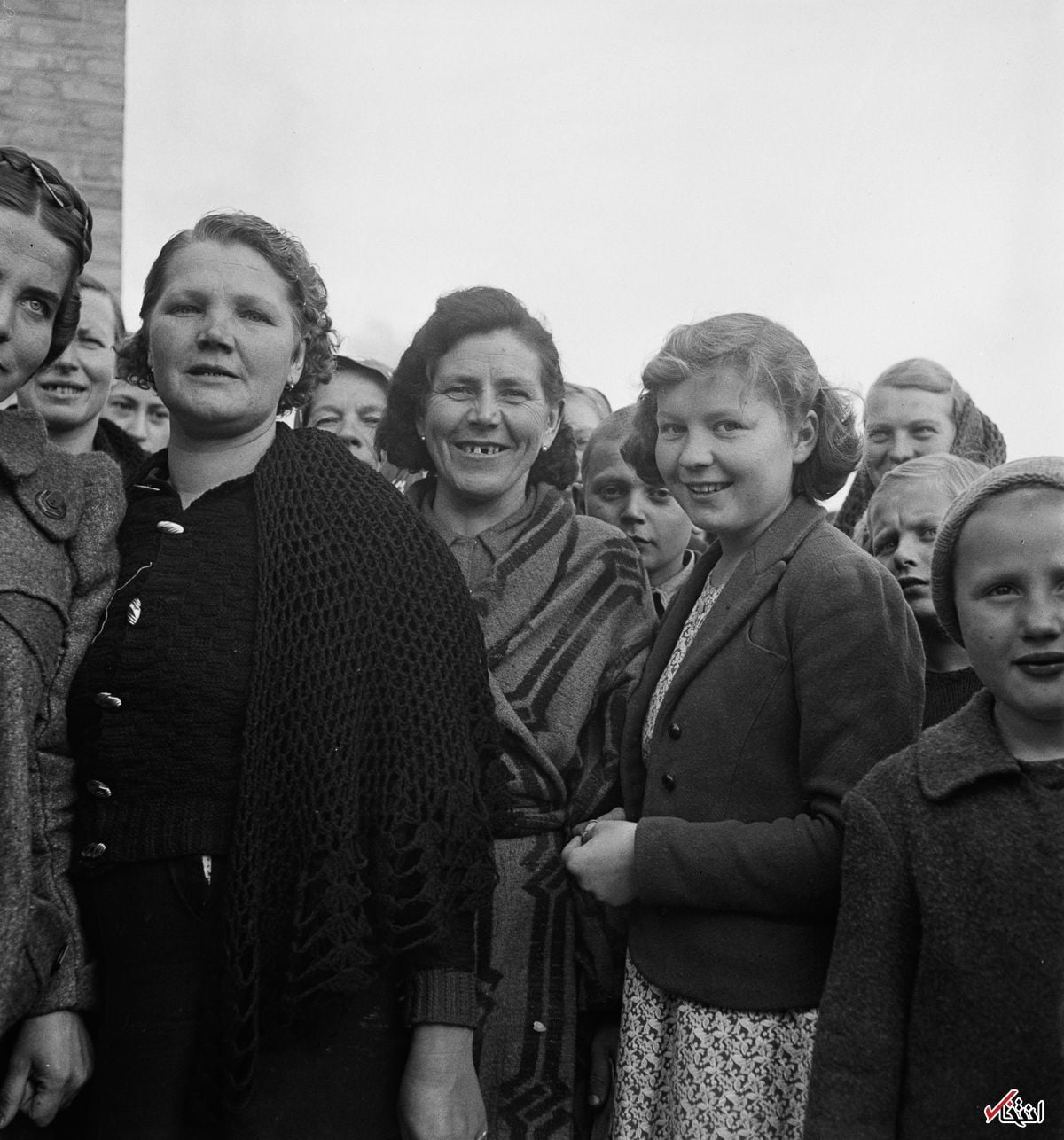
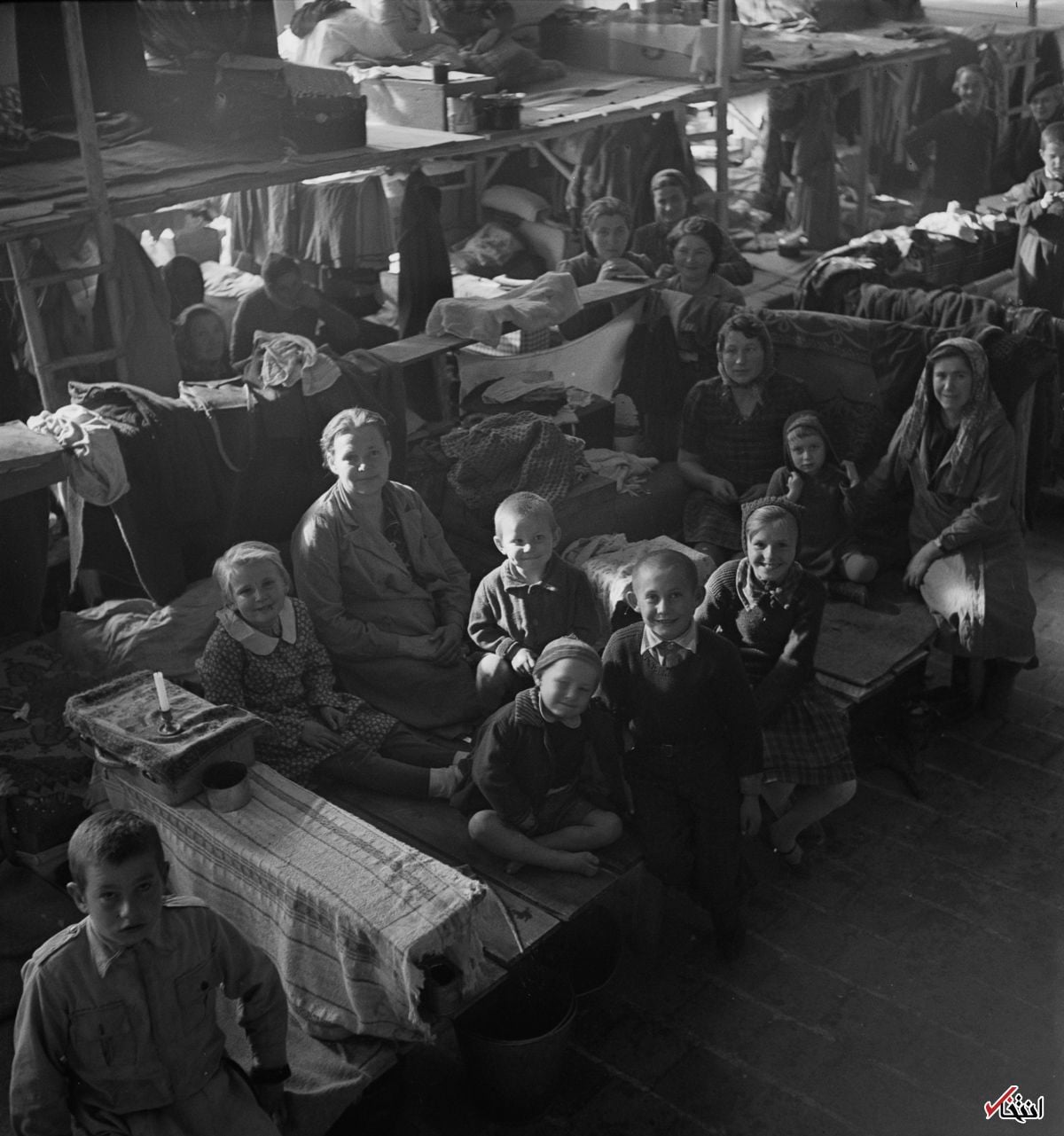
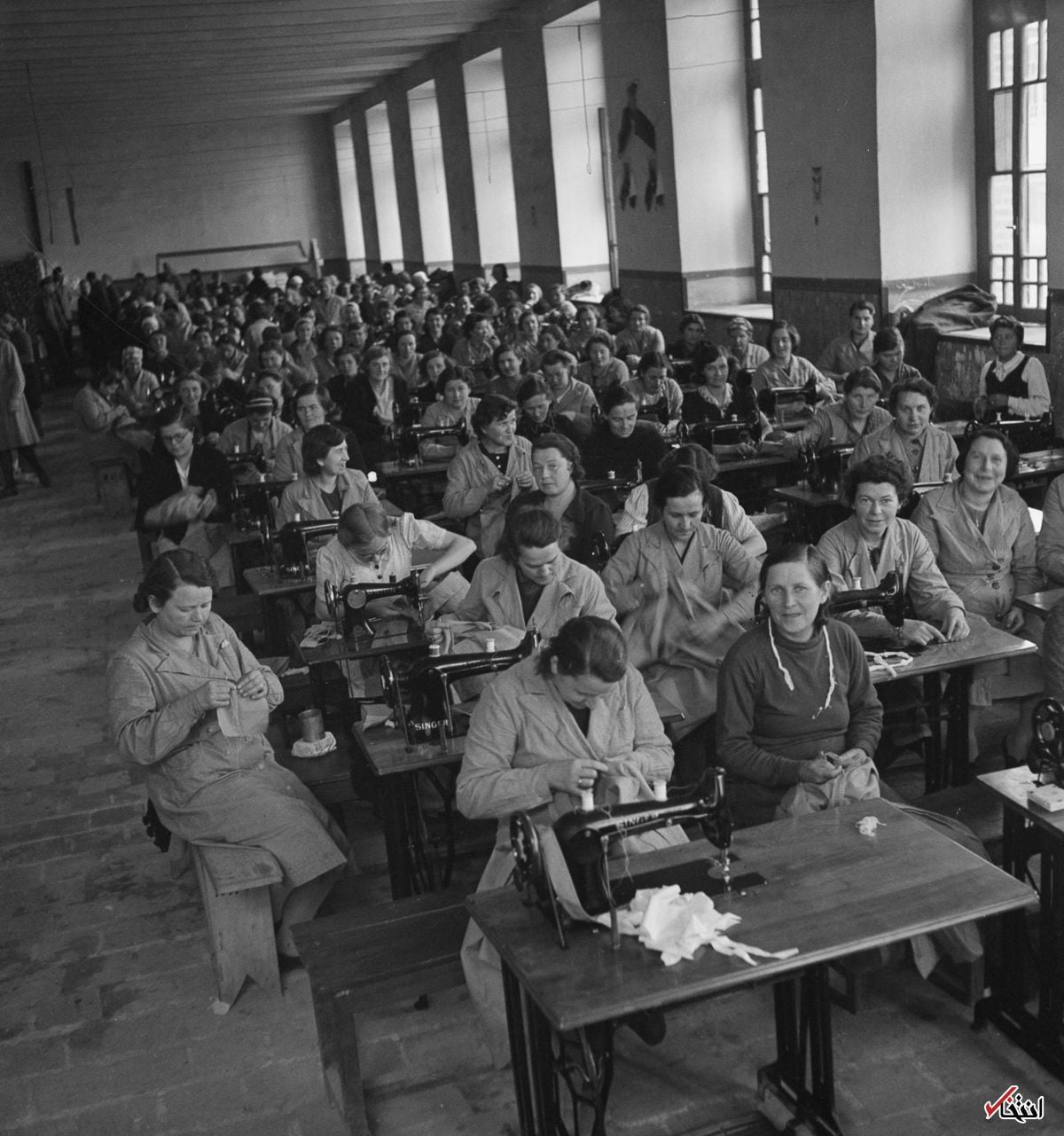
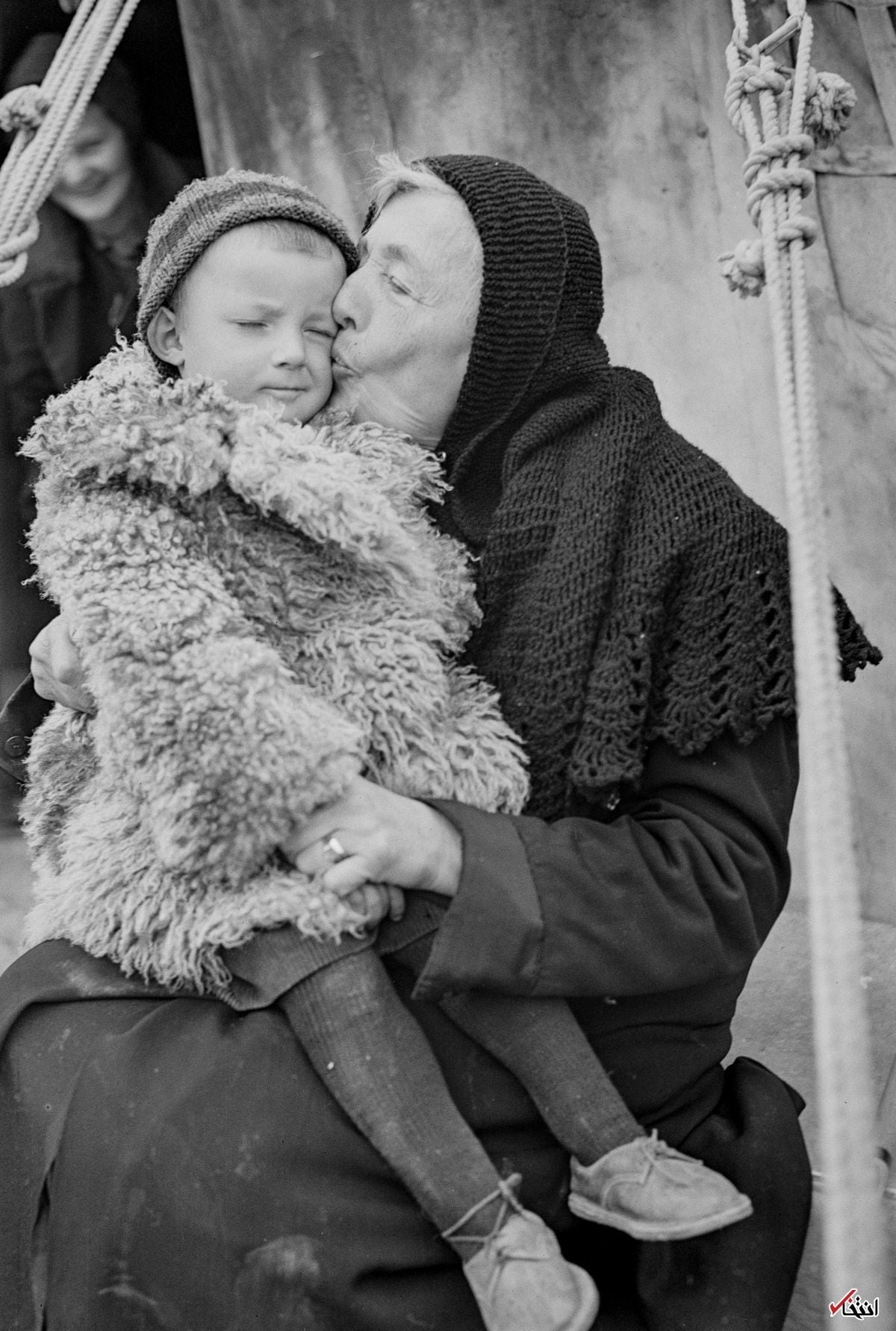
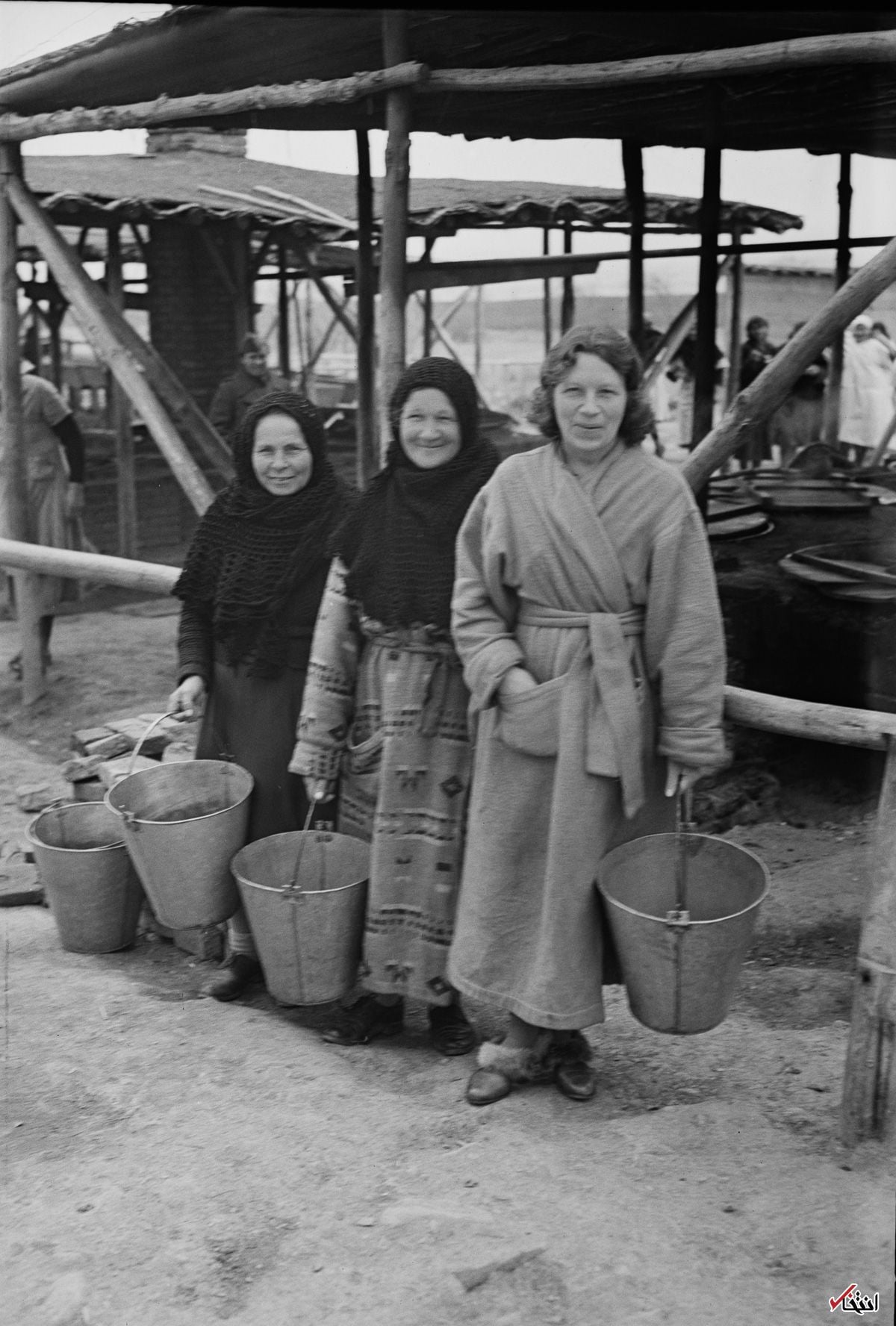
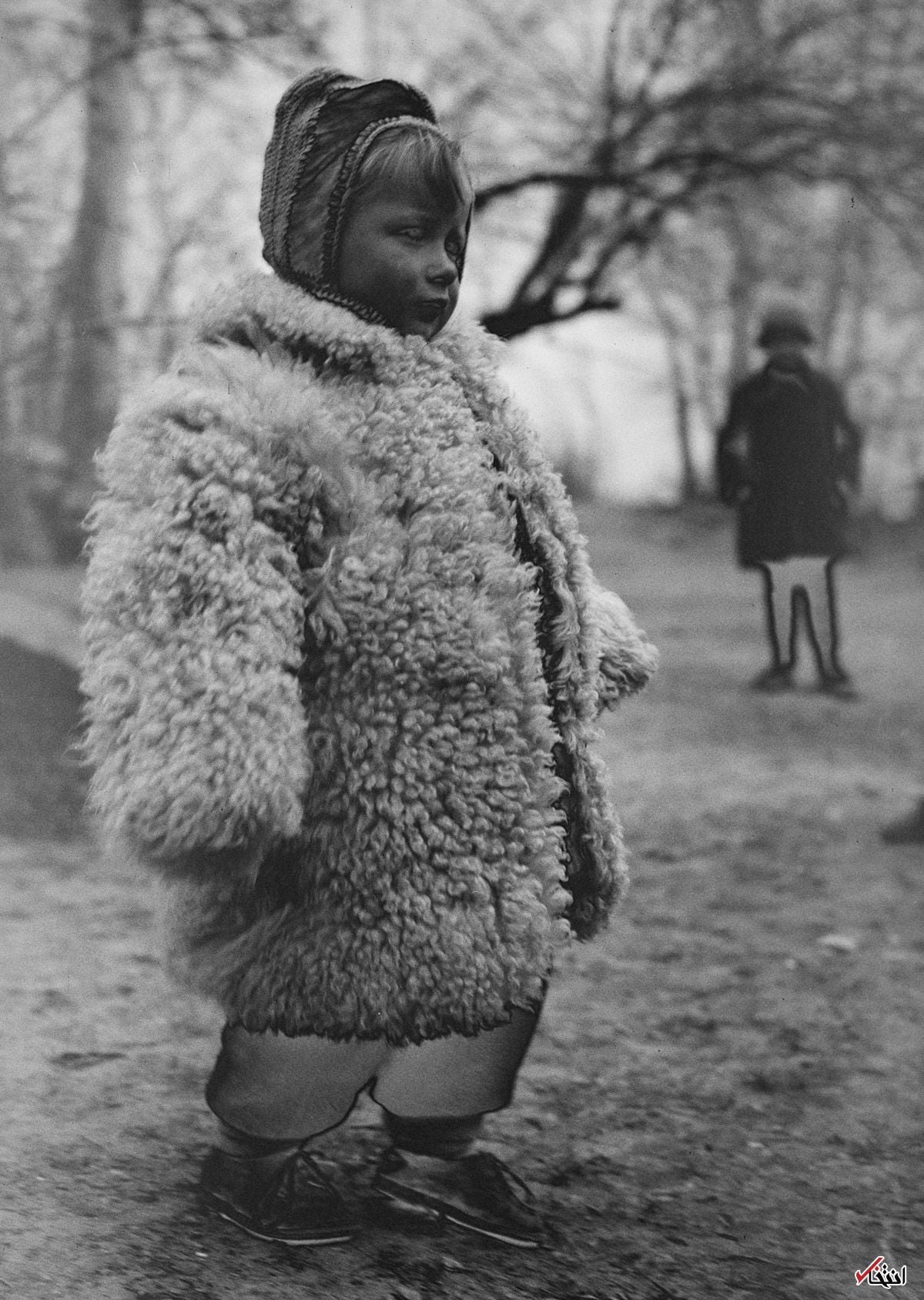
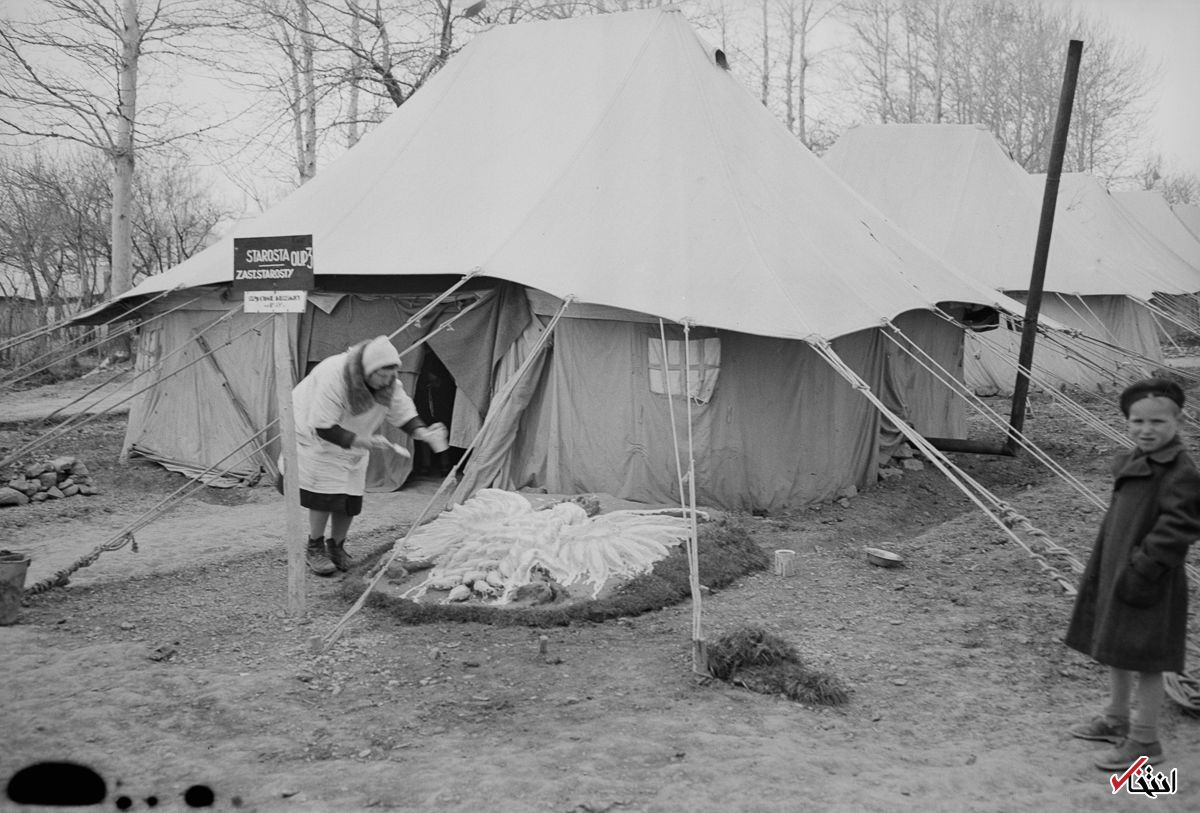
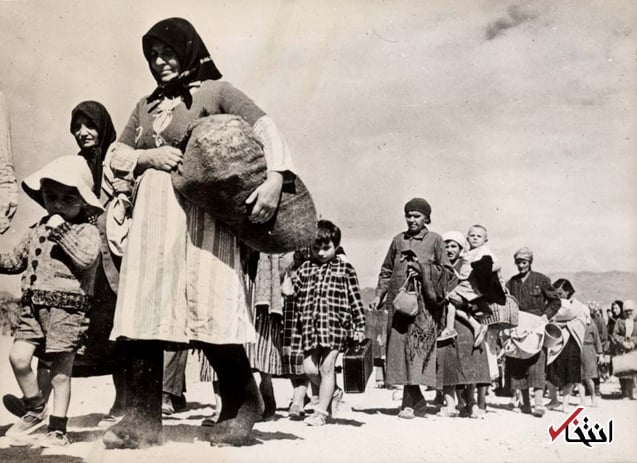
Good Old Days of Polish Immigrants in Iran

Iranians are lamenting why the country is aiding Iran’s enemies instead of returning the favours made decades ago.

On Friday, Iranian Foreign Minister Mohammad Javad Zarif criticised Poland for hosting the conference, tweeting that “while Iran saved Poles in WWII, it now hosts desperate anti-Iran circus.”

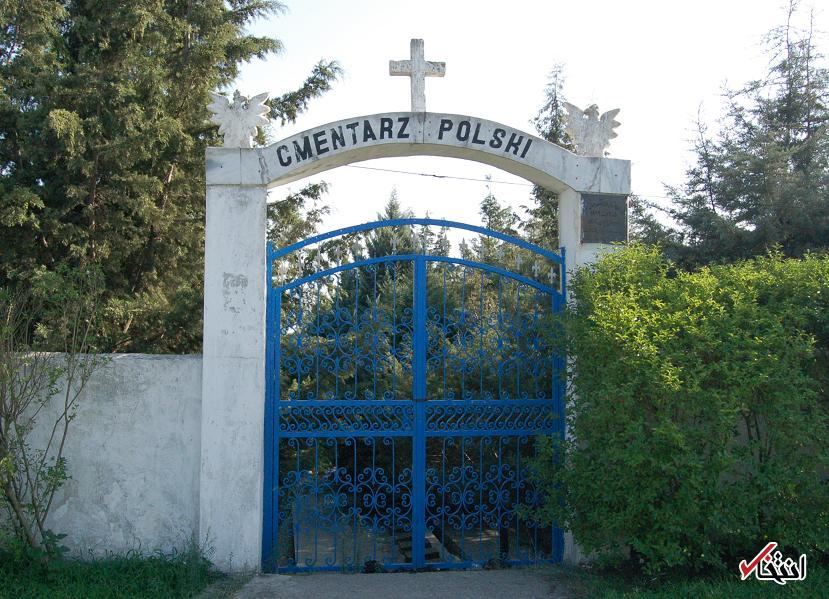
Deputy Foreign Minister Abbas Araqchi also said that, “In Iran, cemeteries could be subject of land use change after 30 years, but Tehrani people have been respecting their guests for 77 years.

Araqchi was referring to Doulab Cemetery in southern Tehran, which hosts 1892 graves belonging to Polish refugees who died in 1942.

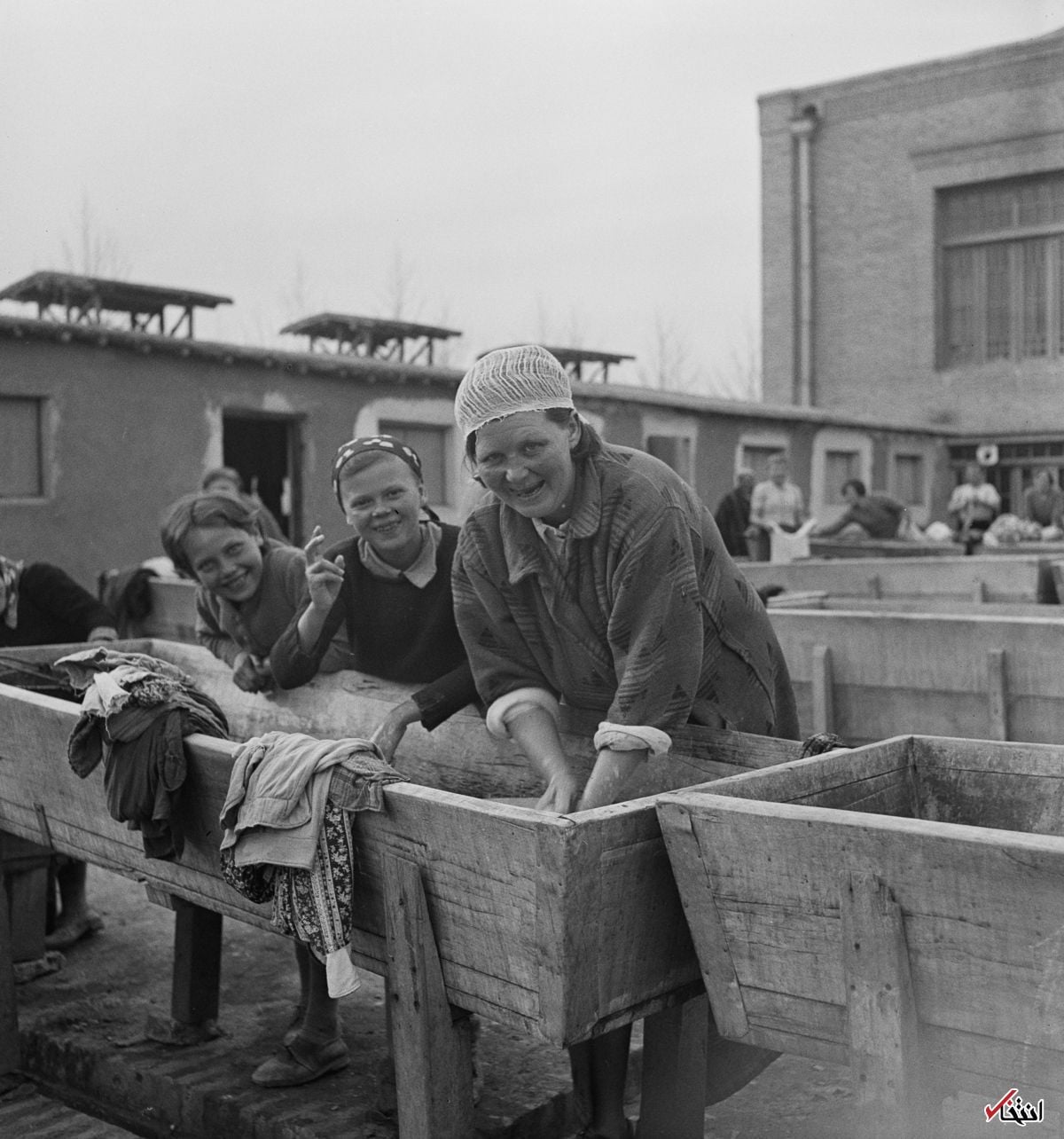
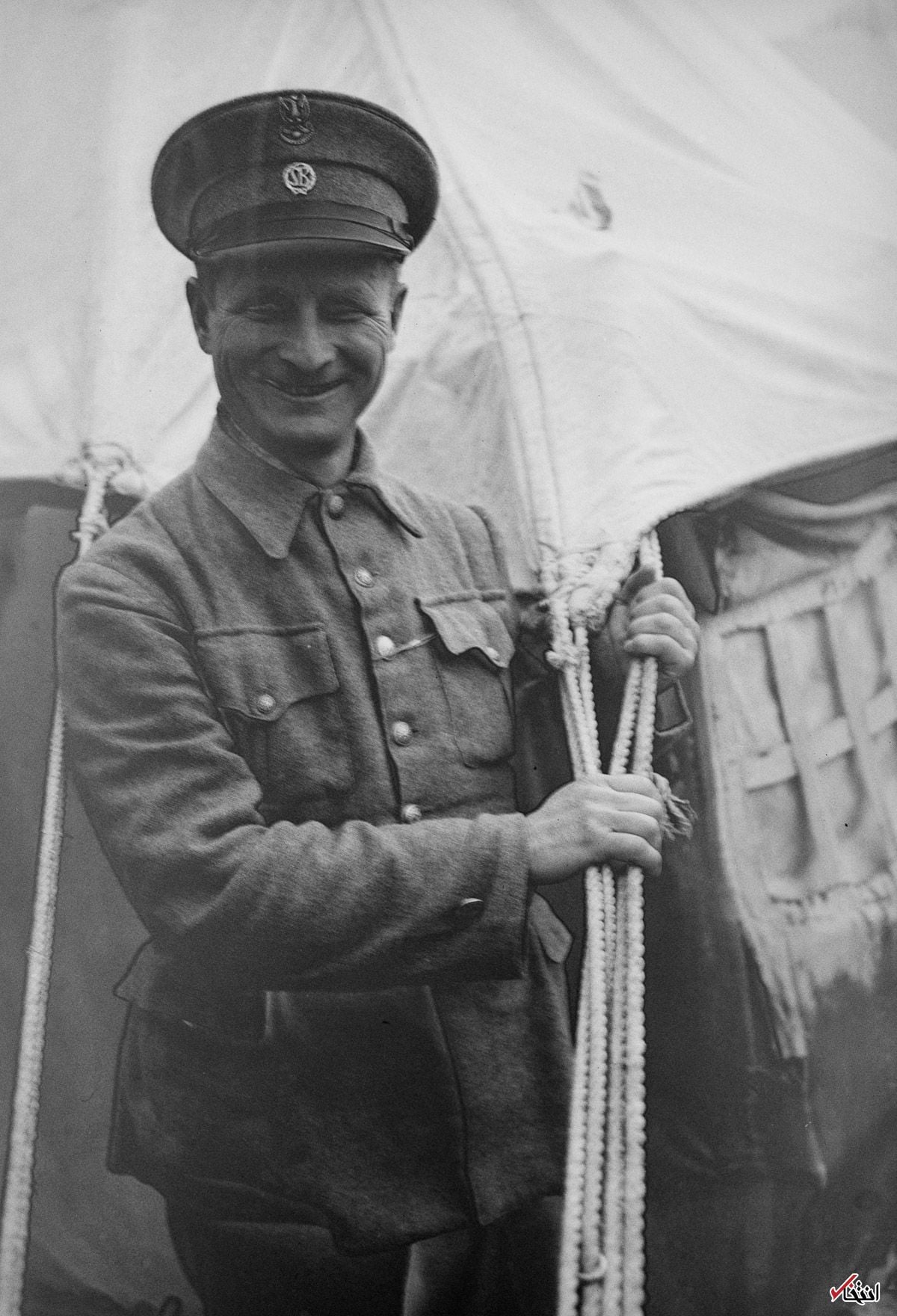
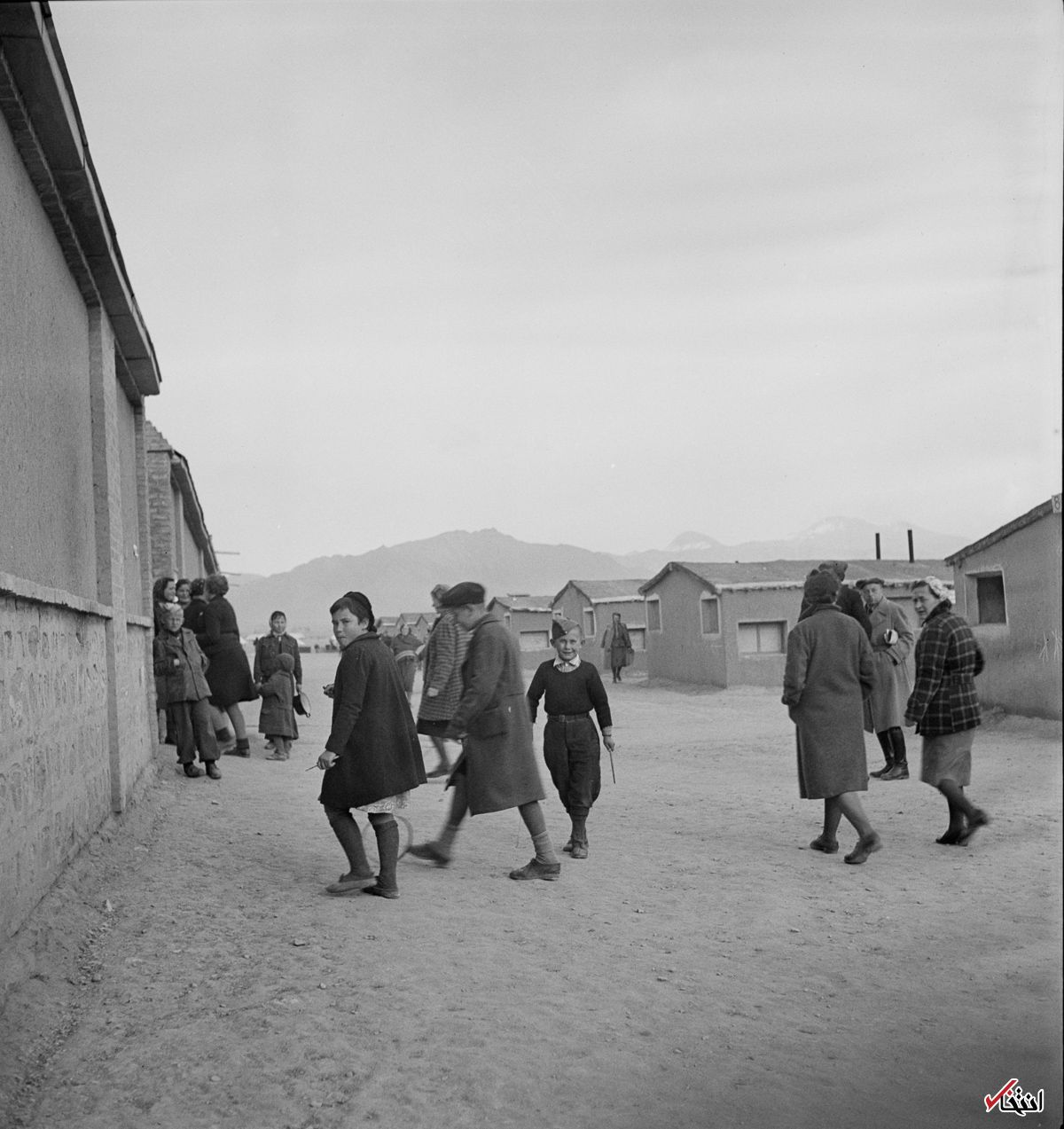
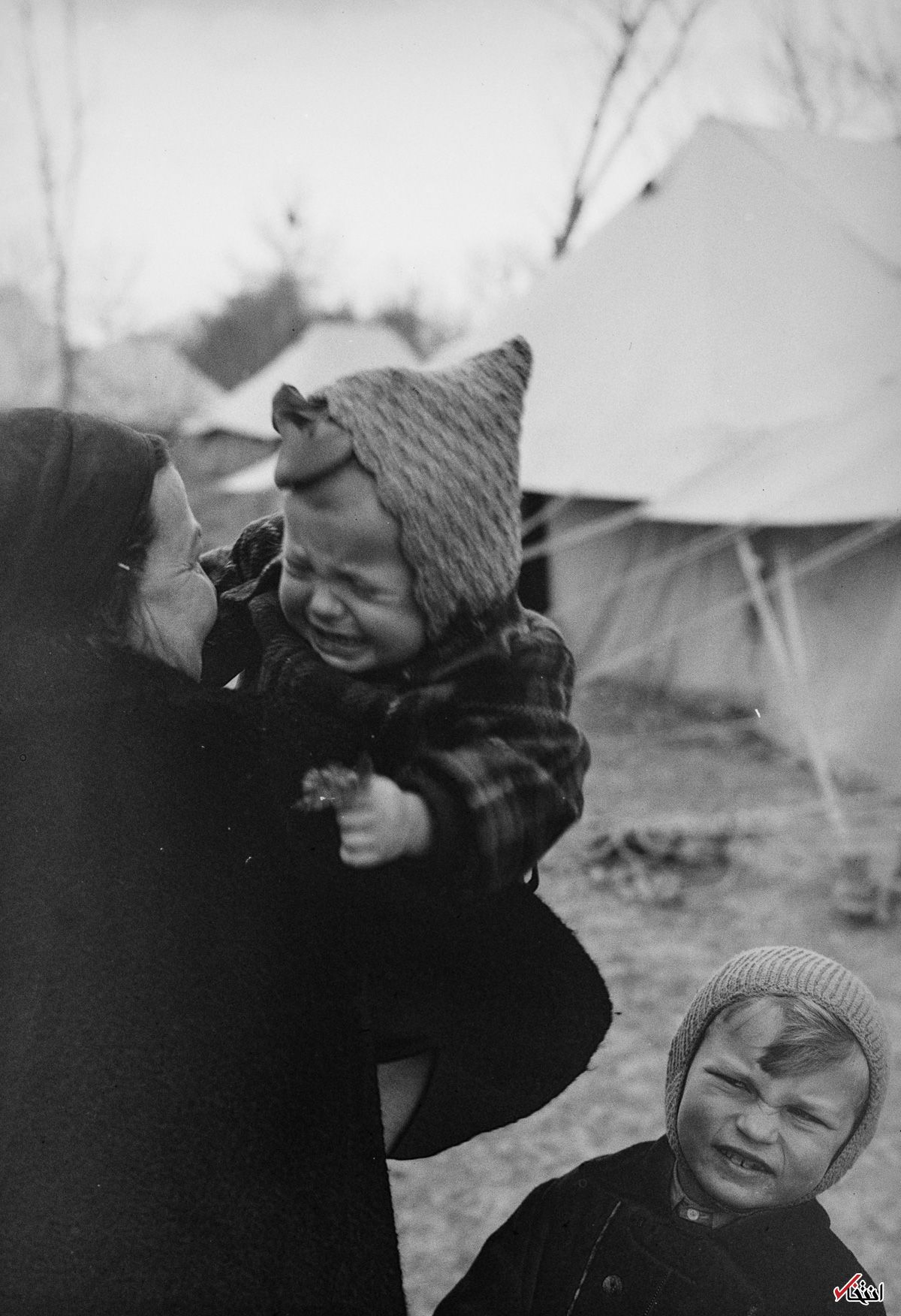
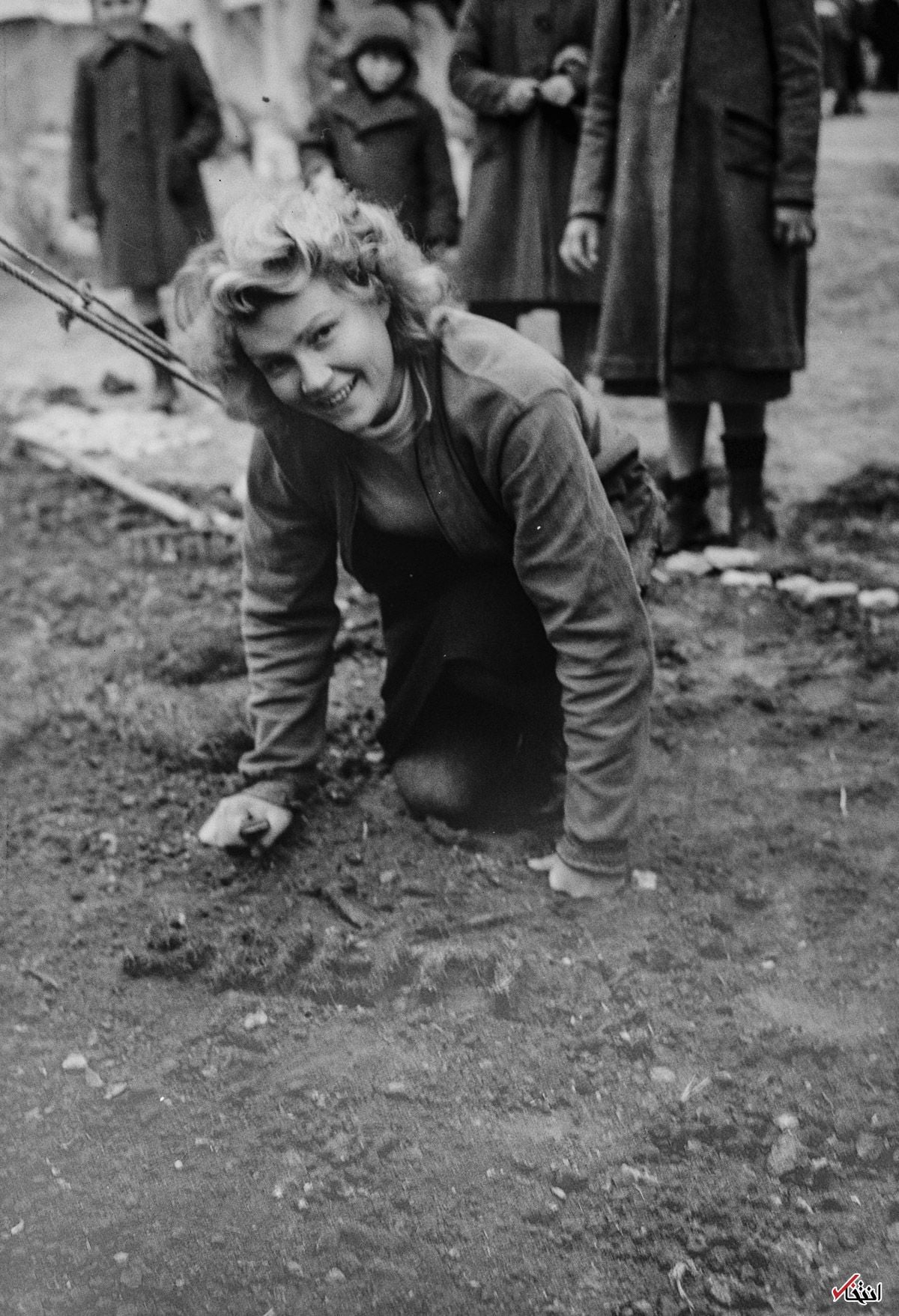
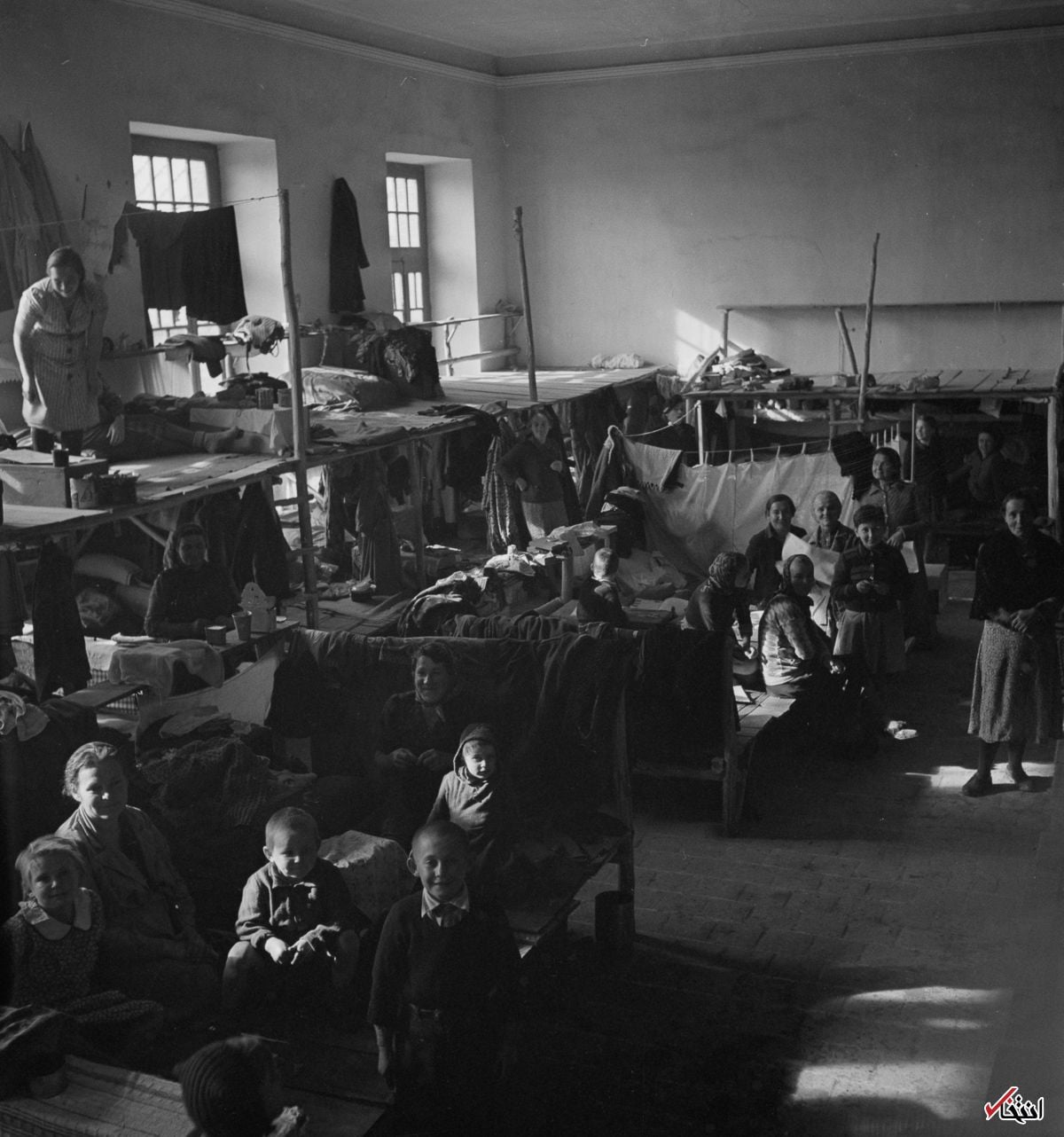
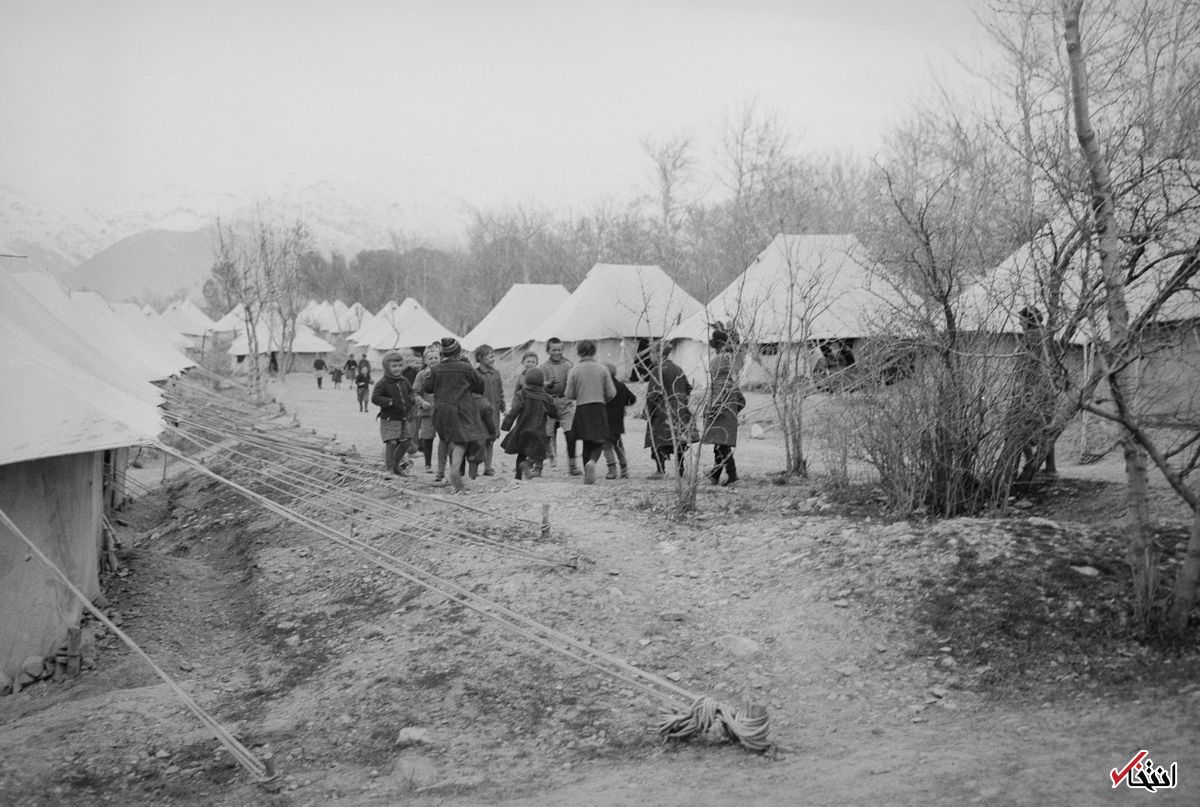
That year, about 120,000 refugees from Poland began their exodus to Iran from remote parts of the Soviet Union.

The following are photos published by Entekhab news website showing their life in Tehran:

“Iran, Cradle of Civilisation” Exhibition to Move to Spain

In June 2018, “Iran, Cradle of Civilisation” exhibition opened with the presence of Iranian and Dutch officials at the Dutch Drents Museum.

According to Mehr New Agency, 196 ancient works from over 60 ancient Iranian sites are displayed in this event.
This show included seven galleries including “Iran during the Palaeolithic Era”, “Settlement in Villages”, “Urbanization”, “Golden Age; Achaemenid Period”, “Iran’s Renaissance”, “Sassanid Era” and “Iran and Islamic Era”.

Following this, a museum of Dutch historic items was also held in Iran. The exhibition was supposed to be held in the Netherlands for five months, but until now, it has been extended.

On the other hand, in the agreements between the National Museum of Iran and the Spanish museums, the two sides agreed to run an exhibition of historical works in both countries, and it is now expected that these works go to Spain after the end of the Dutch exhibition.

A few days ago, the government approved and authorised the holding of the exhibition in Spain. The exhibition will open in Spain late March.

In this regard, Mohammad-Reza Kargar, Director General of the Museums and Mobile Historical Assets told Mehr News Agency that these works will be displayed for four months in Spain unless the duration would be extended.

At the moment, the historical works are being packed to be transferred to the Archaeological Museum of Alicante in eastern Spain.

Cargo Plane Crash-lands at Iran’s Karaj Airport

The plane crashed after the pilot lost control at the Fat’h airport. Reports say the plane was flying from Bishkek Kirgizstan, but mistakenly landed at Fat’h airport instead of Payam airport and the pilot could not control the plane on the runway.

Cargo Plane Crash-lands at Iran’s Karaj AirportAccording to Fars News Agency, officials say the cargo plane hit the airport wall and then smashed at a residential town near the airport.

The plane was reportedly carrying meat from Kyrgyzstan.

Rescue operations are underway at the site of the incident.

Emergency officials say rescue teams have recovered bodies of several victims from the site of cargo plane crash.

Kyrgyzstan’s Manas airport says the cargo plane that crashed in Iran on Monday had flown from this airport, but it belonged to Iran’s Payam Air.

Africans Cooperate with Iranian Knowledge-based Companies in 3 New Fields

Recently, efforts have been made by the international affairs department of the vice presidency for science and technology to expand the export of knowledge-based companies to Africa.

47 knowledge-based companies accompanied the Iranian Vice President for Science and Technology Sorena Sattari during his visit to Africa.

South Africa is the most advanced country in the African continent in terms of economics, and Sattari’s second trip was made at the request of the minister of science and technology department of South Africa.

In these meetings, 100 African companies were also present.
Likewise, investors and managers from large African companies attended the ceremony and held talks with Iranian knowledge-based companies. The goal of these meetings was not only attraction of capital, but also commercialisation, and sales of products and technology.

For a brief review of Iran’s achievements in various fields of science and technology, check the book “Science and Technology in Iran: A Brief Review

Companies in the field of oil and gas, information technology and polymer were the ones that traveled to Africa for the second time.

In the first visit, knowledge-based companies in the field of agriculture and health traveled to Africa to work with African companies. Of course, this process is being completed and companies from other areas will also make such visits.

Based on the announcement of companies in Africa, there have been 10 MoUs signed officially, but there are some that have not been officially announced.