Friday, January 2, 2026
Home Blog Page 334

Israel kills 10 desperate aid seekers in Gaza in 2 days

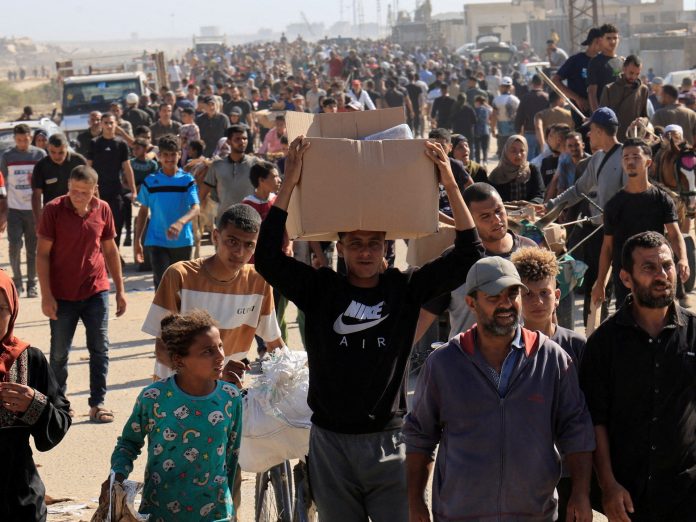
The updated toll on Wednesday comes a day after a harrowing video showed thousands of starving Palestinians rushing to get aid, with many of them herded into cage-like lines, from the Gaza Humanitarian Foundation (GHF) distribution point in Rafah in southern Gaza.

In a statement, the Government Media Office said Israeli forces “opened direct fire on hungry Palestinian civilians who had gathered to receive aid” at the distribution site, wounding at least 62 people.

It was not immediately clear exactly how many incidents of gunfire occurred or on which days the 10 Palestinians were fatally shot, but there were deaths on both days.

“These locations were transformed into death traps under the occupation’s gunfire,” the media office added, decrying the killings as a “heinous crime”.

For its part, the GHF announced it had opened a second of a planned four aid distribution sites in Gaza on Wednesday.

The centres are part of an aid delivery scheme that has been roundly condemned by United Nations officials and the humanitarian community, who have repeatedly said that life-saving aid could be adequately and safely scaled up in Gaza if Israel would allow access to aid and let those organisations that have decades of experience handle the flow.

Speaking earlier in the day, the head of the UN agency for Palestinian refugees, UNRWA, decried the US-backed delivery model as a “distraction from atrocities” and called on Israel to allow the UN-backed humanitarian system to “do its life-saving work now”.

The message was echoed by several members of the UN Security Council during a meeting in New York discussing the conflict, with Algeria, France and the United Kingdom among those appealing for Israel to allow unfettered aid deliveries.

Riyad Mansour, the Palestinian ambassador to the UN, said Israel was using “aid as a weapon of war”.

As the debate over aid access raged, Israel’s punishing attacks continued across Gaza, with rights observers warning of an even worsening humanitarian situation.

At least 63 people were killed in Israeli attacks since the early hours of Wednesday, according to medical sources speaking to Al Jazeera Arabic, bringing the death toll since October 7, 2023, to at least 54,084 Palestinians, with more than 123,308 wounded.

The ministry added that only 17 hospitals in Gaza remained partially functioning, with critical shortages of essential medicines and oxygen supplies.
80% of weapons in south under state control: Lebanon PM

Hezbollah

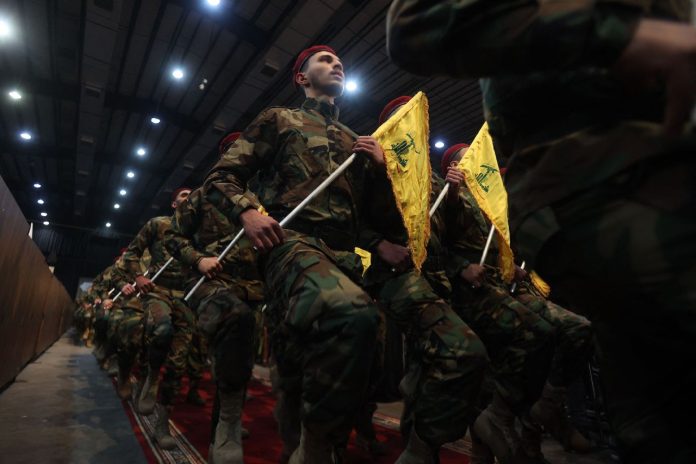
“All over the Lebanese territory, the state should have a monopoly on arms,” Salam said in an interview with the Wall Street Journal on Wednesday.

He added his government has achieved 80% of its disarmament goal in the country’s south.

Lebanese President Joseph Aoun has earlier vowed to place all weapons under state control in 2025.

International pressure has been increasing on Lebanon to disarm the Hezbollah group since the November ceasefire agreement that ended more than a year of cross-border clashes with Israel.

Aoun stated on Monday that joint Lebanese-Palestinian committees have been formed to address the issue of Palestinian weapons in Lebanon’s refugee camps.

Despite the ceasefire, Lebanese authorities have reported nearly 3,000 Israeli violations of the agreement, including the deaths of over 200 victims and injuries to at least 500 others since last November.

Under the ceasefire deal, Israel was supposed to fully withdraw from southern Lebanon by Jan. 26, but the deadline was extended to Feb. 18 after Israel refused to comply. Israel still maintains a military presence at five border outposts.

Saudi interior minister hails positive ties with Iran in Hajj talks

Hajj

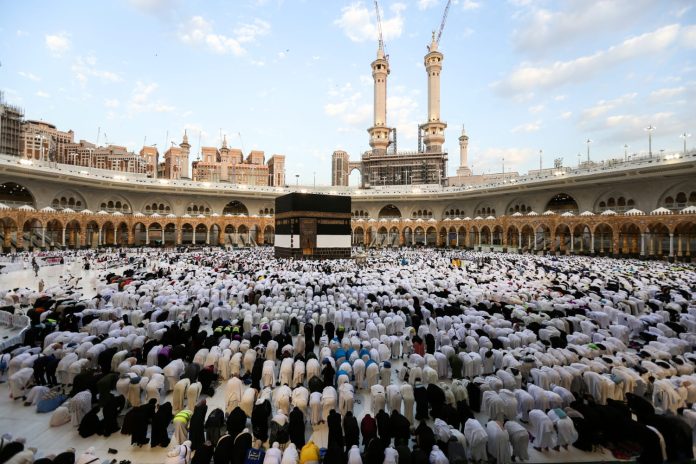
The remarks came during a meeting with Alireza Bayat, head of Iran’s Hajj and Pilgrimage Organization, in Jeddah. The two officials discussed the latest arrangements for Iranian pilgrims and ways to ensure a smooth and secure Hajj experience.

Bayat expressed appreciation for Saudi Arabia’s efforts in providing infrastructure and services for pilgrims, noting Iran’s readiness to enhance bilateral coordination and resolve outstanding logistical issues.

In response, the Saudi minister assured full cooperation regarding Iran’s requests related to Hajj rituals and the sacred sites, emphasizing that the warm ties reflect the will of both nations’ leadership.

He reiterated Saudi Arabia’s commitment to serving all pilgrims, known as “Guests of the Merciful,” with dignity and respect, calling it a source of national pride.

The minister stressed the importance of adhering to Saudi regulations for the safety of all pilgrims and thanked Iranian officials and pilgrims for their continued cooperation.

‘We’ll know in weeks’ if Putin serious about ending Ukraine war: Trump

Russia Ukraine War
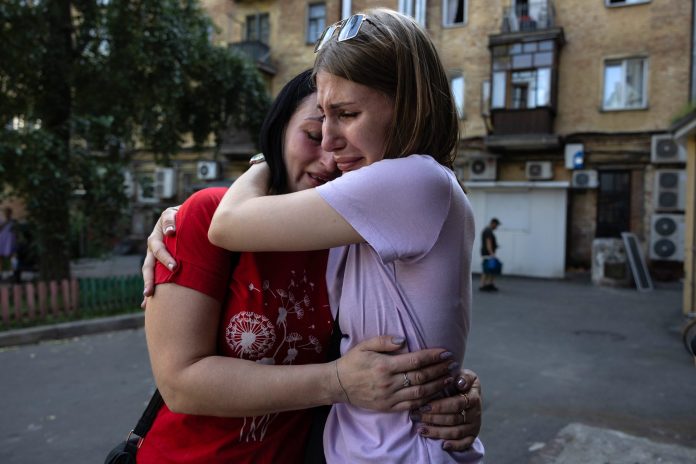
People react to the Russian missile strike in Chernihiv, Ukraine.

Trump said his Special Envoy Steve Witkoff is currently negotiating with Russian side, claiming he “is doing a phenomenal job.”

“We’re going to find out very soon. It’ll take about two weeks, or week and a half,” Trump told reporters during a briefing, responding to a question on whether Putin wants to end the war.

“They seem to want to do something. But until the document is signed, I can’t tell you… I’m very disappointed at what happened. A couple of nights now where people were killed in the middle of what you would call a negotiation.”

Trump did not clarify which document he was referring to.

The president stated he disapproved of Russia’s recent missile attacks on Ukrainian cities during ongoing diplomatic efforts.

“That’s no good. We’re not going to allow it,” he added.

For three consecutive days over May 24-26, Russia launched a series of mass drone and missile attacks at Ukrainian cities.

Trump also suggested he would be open to personally meeting both Ukrainian President Volodymyr Zelensky and Putin “if necessary.”

Earlier on May 28, Russian Foreign Minister Sergey Lavrov announced that Moscow proposed a new round of peace talks with Ukraine take place in Istanbul on June 2.

Lavrov claimed Russia is prepared to present a memorandum detailing what he called “the root causes of the crisis” — widely understood to refer to the Kremlin’s longstanding demands and propaganda used to justify its 2022 invasion.

During the first round of Istanbul talks on May 16, Ukraine offered a 30-day ceasefire, a full prisoner swap, and a summit between the two presidents. Russia rejected the proposal and sent a low-level delegation instead. The only agreement reached was a 1,000-for-1,000 prisoner exchange that was concluded on May 25.

Israeli PM says Hamas Gaza chief Mohammad Sinwar has been killed

Mohammad Sinwar had been the target of an Israeli strike on a hospital in southern Gaza earlier this month and Netanyahu stated on May 21 that it was likely he was dead.

The Israeli leader announced that Sinwar had been “eliminated” in an address to the Israeli parliament as he listed off names of other Hamas officials that Israel had killed over the past 20 months, including Sinwar’s brother Yahya.

“In the last two days we have been in a dramatic turn towards a complete defeat of Hamas,” he said, adding that Israel was also “taking control of food distribution”, a reference to a new aid distribution system in Gaza managed by a U.S.-backed group.

Hamas has yet to confirm Sinwar’s death.

Netanyahu’s announcement comes as the Israeli military has intensified its war campaign in Gaza after breaking a fragile ceasefire with Hamas in March. Israel has announced it aims to dismantle Hamas’ governing and military capabilities and secure the release of hostages that are still held in Gaza.

The war erupted on October 7, 2023 when Hamas-led fighters stormed out of Gaza, rampaging through southern Israeli communities and killing around 1,200 people, mostly civilians.

More than 250 were captured and taken as hostages into Gaza.

Israel’s onslaught on Gaza has decimated the coastal territory, killing more than 53,000, according to health officials in Gaza, and displaced over 2 million Palestinians.

Gazan health officials have said most of those killed have been civilians but have not said how many fighters have died. Israel believes it has killed tens of thousands of fighters but has not provided any evidence to support those claims.

Israeli military chief Eyal Zamir on May 26 stated Hamas had lost many assets, including its command and control centre.

Sinwar was elevated to the top ranks of the Palestinian group last year after Israel killed his brother Yahya in combat.

Yahya Sinwar masterminded the October 2023 attack on Israel that triggered the war, now in its 20th month, and was later named the overall leader of the group after Israel killed his predecessor Ismail Haniyeh in Iran.

Iran ready for broader cooperation if nuclear rights recognized, says President Pezeshkian

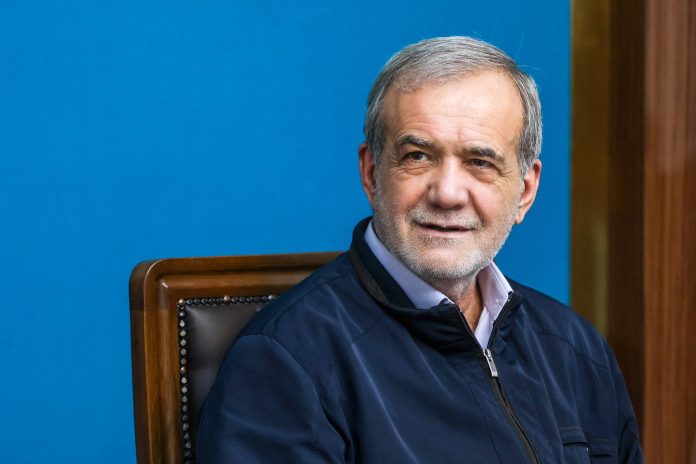
Masoud Pezeshkian

In an interview with Oman TV on Wednesday during his official visit to Muscat, President Pezeshkian emphasized that Iran does not seek nuclear weapons and remains committed to peaceful nuclear energy.

The president underscored Iran’s position, stating that no nation can be deprived of its legitimate right to science and technology.

He also praised Oman’s mediation efforts in the Iran-US nuclear talks, acknowledging the pivotal role of Sultan Haitham and Omani diplomacy.

Touching on regional ties, Pezeshkian said Iran and Oman enjoy strong political relations and share common views on key issues, including the Palestinian cause.

On economic cooperation, he noted challenges due to sanctions but affirmed both sides aim to boost bilateral trade beyond $10-20 billion.

President Pezeshkian reiterated Iran’s commitment to peace and cooperation with Islamic and neighboring states, while calling on regional youth to pursue knowledge to shape a stronger future.

Denouncing the Israeli genocidal campaign in Gaza, he called on Islamic nations to unite in defense of the Palestinian people.

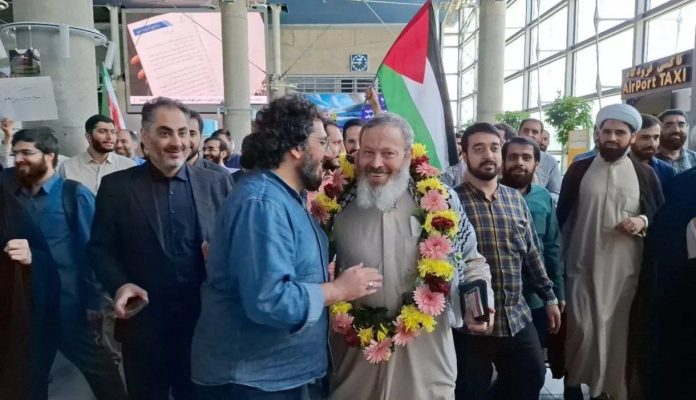
Iranian cleric Ghasemian released from Saudi custody

Ghasemian confirmed in a social media post on Thursday that he is returning to Iran via Dubai.

The announcement was also made by the official page of “Mahfel,” a religious TV program associated with Ghasemian, which stated he was freed after sustained follow-up by the Iranian consulate in Jeddah.

Ghasemian was arrested on Monday, while performing Hajj rituals in Saudi Arabia, for accusing Saudi Arabia of turning Mecca and Medina into “centers of immorality.” His detention sparked widespread debate on social media and among Iranian political circles.

Iranian authorities described his remarks as personal opinions and stressed that the matter was being pursued by the Committee for the Protection of Pilgrims’ Rights in coordination with the Foreign Ministry and Iranian diplomatic missions in Saudi Arabia.

Reacting to the case, Iranian Foreign Minister Seyed Abbas Araghchi emphasized Iran’s strong stance against any actions undermining Muslim unity, particularly during Hajj, and reiterated the government’s commitment to preserving improving ties with Saudi Arabia and its regional neighbors.

Trump warns Netanyahu off Iran attack as negotiations continue

Trump Netanyahu

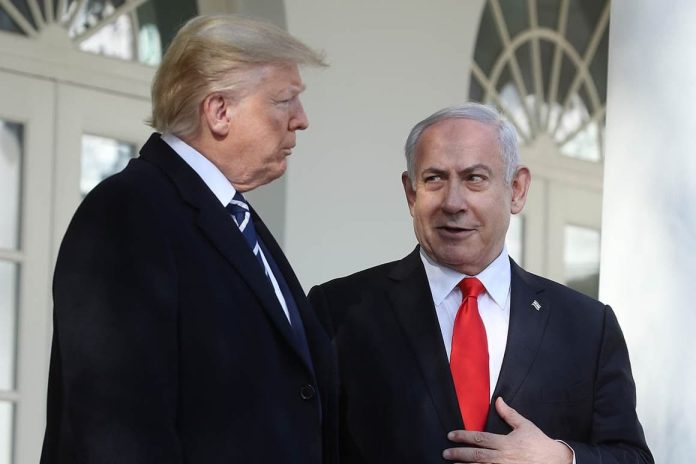
Trump told reporters on Wednesday at the White House that he relayed to Netanyahu a strike “would be inappropriate to do right now because we’re very close to a solution”.

The Israeli leader has been threatening a bombardment of Iranian nuclear facilities. Iran has stressed it would respond with severity if any such attack were launched.

In the meantime, Iran may pause uranium enrichment if the US releases frozen Iranian funds and recognises its right to refine uranium for civilian use under a “political deal” that could lead to a broader nuclear accord, two Iranian official sources told the Reuters news agency.

The sources, close to the negotiating team, said on Wednesday that a “political understanding with the United States could be reached soon” if Washington accepted Tehran’s conditions. The sources told Reuters that under this arrangement, Tehran would halt uranium enrichment for a year.

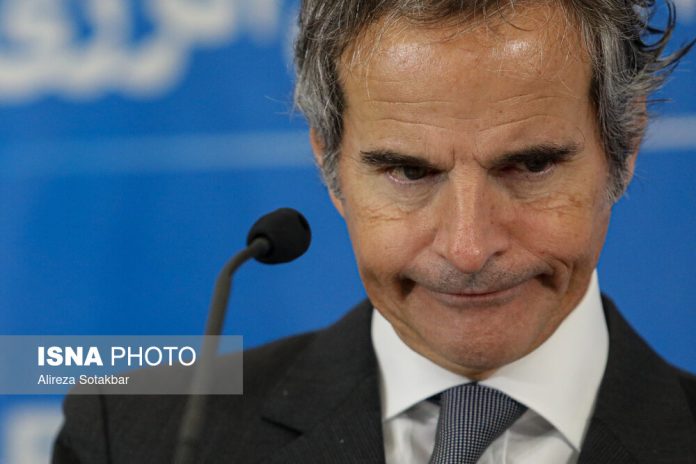
The latest developments came as the head of the UN’s atomic watchdog group said that “the jury is still out” on negotiations between Iran and the US over Tehran’s rapidly advancing nuclear programme. But Rafael Mariano Grossi described the ongoing negotiations as a good sign.

“I think that is an indication of a willingness to come to an agreement. And I think that… is something possible.”

The 2015 nuclear deal, formally known as the Joint Comprehensive Plan of Action (JCPOA), placed limits on Iran’s nuclear programme in exchange for sanctions relief.

It collapsed after Trump unilaterally withdrew the US from the agreement in 2018, leading to a sharp escalation in tensions and a breakdown in diplomatic relations.

US officials have repeatedly said that any new deal must include a firm commitment from Iran to halt uranium enrichment, which they view as a potential pathway to building nuclear weapons.

However, Iran has consistently denied seeking nuclear arms, insisting its programme is solely for civilian purposes. It has rejected Washington’s demand to eliminate enrichment capabilities, calling it an infringement on national sovereignty.

It remains the critical sticking point after negotiators for Tehran and Washington met for a fifth round of Oman-mediated talks in Rome.

Instead, Iran has reportedly proposed that the US publicly recognise Tehran’s right to enrich uranium under the Nuclear Non-Proliferation Treaty (NPT), and approve the release of Iranian oil revenues frozen under US sanctions.

Sources familiar with the discussions echoed Trump’s optimism and told CNN that they are closing in on a broad agreement that could be clinched when the US and Iran meet next, most likely in the Middle East.

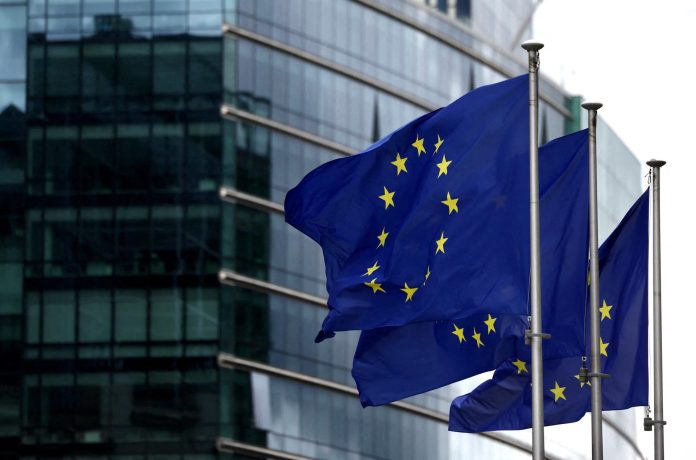
EU announces new Black Sea strategy to counter “Russian threats”

The European Union

Speaking at a press briefing in Brussels, Kallas outlined the bloc’s “Strategic Approach to the Black Sea Region,” calling it essential for European security, trade, and energy resilience.

“The Black Sea region is of great strategic importance to the European Union,” Kallas said.

“But the region’s potential is marred by Russia’s war. Reoccurring airspace violations, and attacks on ports and shipping lanes highlight this reality.”

Kallas proposed creating a Black Sea Maritime Security Hub, envisioned as an early warning and monitoring system that would enhance situational awareness and protect key infrastructure such as offshore energy platforms and subsea cables.

She added the hub could also support future peace monitoring efforts in the event of a ceasefire between Russia and Ukraine. While the EU has not disclosed where the hub would be located or which countries would take part, a document seen by Radio Free Europe/Radio Liberty describes its focus on real-time monitoring from space to seabed, mine clearance, and the protection of commercial sea routes.

The strategy also calls for major upgrades to regional transport networks, including ports, roads, railways, and airports, to allow faster movement of heavy military equipment.

“These updates will help to ensure troops can be where they are needed, when they are needed,” Kallas said, adding that the changes will also reinforce NATO deterrence. The EU plans to tighten screening of foreign ownership in strategic facilities, particularly in the region’s ports.

The third major priority of the plan targets hybrid threats, including cyberattacks and disinformation.

“The Black Sea region is a prime target for hybrid actions,” Kallas continued.

She announced that the EU would invest in artificial intelligence to counter disinformation, promote media literacy, and support fact-checking networks.

The strategy was presented amid growing concern over Russia’s destabilizing activities in the Black Sea and a broader effort to strengthen EU partnerships with Armenia, Azerbaijan, Georgia, Moldova, Turkey, and Ukraine.

The plan notes that Turkey is a “vital partner and candidate country” and highlights its potential role in countering Russia’s shadow fleet and ensuring maritime security.

According to RFE/RL sources, Turkey suggested it would assure safe passage in the Black Sea and potentially clear up mines in case of a ceasefire between Ukraine and Russia.

Turkey has emerged as a potential mediator in Russia’s full-scale invasion of Ukraine, balancing relations with both sides through ongoing diplomatic and economic engagement. So far, Ankara has supported peace talks, helped enable grain shipments, and signaled readiness to assist in monitoring any future ceasefire.

The EU will reportedly convene a ministerial meeting with Black Sea partner countries to coordinate the next steps. The strategy does not include new funding commitments or legislative proposals.

Any US-Iran agreement should include ‘robust’ IAEA inspections: Atomic agency chief

IAEA Grossi

The two countries are holding talks meant to rein in Iranian nuclear activities that have rapidly accelerated since President Donald Trump pulled Washington out of a 2015 deal between Iran and major powers that strictly limited those activities.

As that agreement has unravelled, Iran has increased the purity to which it is enriching uranium to up to 60%, close to the roughly 90% of nuclear arms-grade, from 3.67% under the accord. It has also scrapped extra IAEA oversight imposed by the 2015 pact.

“My impression is that if you have that type of agreement, a solid, very robust inspection by the IAEA … should be a prerequisite, and I’m sure it will be, because it would imply a very, very serious commitment on the part of Iran, which must be verified,” Grossi told reporters.

He stopped short, however, of saying Iran should resume implementation of the Additional Protocol, an agreement between the IAEA and member states that broadens the range of IAEA oversight to include snap inspections of undeclared sites. Iran implemented it under the 2015 deal, until the U.S. exit in 2018.

Asked if he meant the protocol should be applied, Grossi stated “I’m very practical,” adding that this was not a subject in the talks. While the IAEA is not part of the talks, he said he was in touch with both sides, including U.S. special envoy Steve Witkoff.

“I don’t think they are discussing it in these terms. I don’t see the discussion as being a discussion on legal norms to be applied or not. I tend to see this as more of an ad hoc approach,” added Grossi.

While the talks have appeared to be at an impasse, with the U.S. repeatedly saying Iran should not be allowed to refine uranium at all and Tehran saying that is a red line since enrichment is its inalienable right, Grossi stated that gap was not impossible to bridge.

“I think there’s always a way,” he continued, adding, “It’s not impossible to reconcile the two points of view.”