Monday, December 29, 2025
Home Blog Page 324

Turkey backing Syria’s military and has no immediate withdrawal plans: Ankara

Turkish Troops in Syria

Turkey has emerged as a key foreign ally of Syria’s new government since rebels – some of them backed for years by Ankara – ousted former Syrian President Bashar al-Assad in December to end his family’s five-decade rule.

It has promised to help rebuild neighbouring Syria and facilitate the return of millions of Syrian war refugees, and played a key role last month getting U.S. and European sanctions on Syria lifted.

The newfound Turkish influence in Damascus has raised Israeli concerns and risked a standoff or worse in Syria between the two sides.

In written answers to questions from Reuters, Guler said Turkey and Israel – which carried out its latest airstrikes on southern Syria late on Tuesday – are continuing de-confliction talks to avoid military accidents in the country.

Turkey’s overall priority in Syria is preserving its territorial integrity and unity, and ridding it of terrorism, he continued, adding Ankara was supporting Damascus in these efforts.

“We have started providing military training and consultancy services, while taking steps to increase Syria’s defence capacity,” Guler stated, without elaborating on those steps.

Named to the post by President Tayyip Erdogan two years ago, Guler said it was too early to discuss possible withdrawal or relocation of the more than 20,000 Turkish troops in Syria.

Ankara controlled swathes of northern Syria and established dozens of bases there after several cross-border operations in recent years against Kurdish militants it deems terrorists.

This can “only be re-evaluated when Syria achieves peace and stability, when the threat of terrorism in the region is fully removed, when our border security is fully ensured, and when the honourable return of people who had to flee is done,” he added.

NATO member Turkey has accused Israel of undermining Syrian peace and rebuilding with its military operations there in recent months and, since late 2023, has also fiercely criticised Israel’s onslaught on Gaza.

But the two sides have been quietly working to establish a de-confliction mechanism in Syria.

Guler described the talks as “technical level meetings to establish a de-confliction mechanism to prevent unwanted events” or direct conflict, as well as “a communication and coordination structure”.

“Our efforts to form this line and make it fully operational continue. Yet it should not be forgotten that the de-confliction mechanism is not a normalisation,” he told Reuters.

Israel bans Palestinians from approaching aid distribution centers in Gaza

Gaza War

Army spokesman Avichay Adraee said in a post on X that the centers will remain closed for “renovation, reorganization and efficiency improvement work.”

Adraee urged residents of Gaza to pay attention to an announcement made by the Gaza Humanitarian Foundation (GHF), which launched the high-profile food distribution initiative in the Gaza Strip, that the centers will be closed Wednesday.

He stressed that movement on roads leading to the distribution centers, which are considered “conflict zones,” as well as entering the distribution center areas is strictly forbidden.

On Tuesday morning, the Israeli army targeted Palestinians waiting for aid at a designated site in the Al-Alam roundabout in the southern city of Rafah, killing 27 people.

The Gaza Government Media Office announced that since May 27, Israeli army attacks on Palestinians in aid distribution zones established by the Israeli-US-backed Gaza Humanitarian Foundation have killed 102 people and injured 490.

Israel has pursued a devastating offensive in the Gaza Strip since October 2023, killing nearly 54,500 Palestinians, most of them women and children, following a Hamas-led cross-border raid that killed around 1,200 people.

Amid the offensive, aid agencies have warned about the risk of famine among the enclave’s more than 2 million people.

Last November, the International Criminal Court issued arrest warrants for Israeli Prime Minister Benjamin Netanyahu and his former Defense Minister Yoav Gallant for war crimes and crimes against humanity in Gaza.

Israel also faces a genocide case at the International Court of Justice for its war crimes against civilians in the enclave.

Iran atomic chief reaffirms commitment to nuclear progress

Mohammad Eslami

In the statement, Eslami praised the Wednesday speech delivered by Iran’s Leader Ayatollah Seyyed Ali Khamenei at the mausoleum of the late Imam Khomeini.

Eslami called the speech “decisive, enlightening, and inspiring” and a source of “hope, pride, and conviction” for the Iranian people and freedom-seekers around the world.

The head of the AEOI underlined that Iran’s significant achievements in nuclear technology, especially in the development of the full nuclear fuel cycle, are the result of divine guidance, Ayatollah Khamenei’s wise leadership, and steadfast national support.

Eslami noted that Iran’s committed and skilled youth have elevated the nuclear industry to a globally competitive level despite intense political pressure, harsh sanctions, and ongoing military and security threats.

Eslami pledged to press ahead with the advancement of the nuclear program with strength and determination.

The head of the AEOI reaffirmed Iran’s resolve to stand firm against the excessive demands of the US and other global powers, and to ensure that the nuclear industry continues to contribute positively to the lives of the Iranian people.

Ayatollah Khamenei firmly rejected a recent US proposal in the Oman-mediated nuclear talks, describing it as “100 percent against the principle of ‘We Can’,” a phrase symbolizing Iran’s self-reliance and resistance.

Iranian security forces foil major Daesh terror plot

Daesh

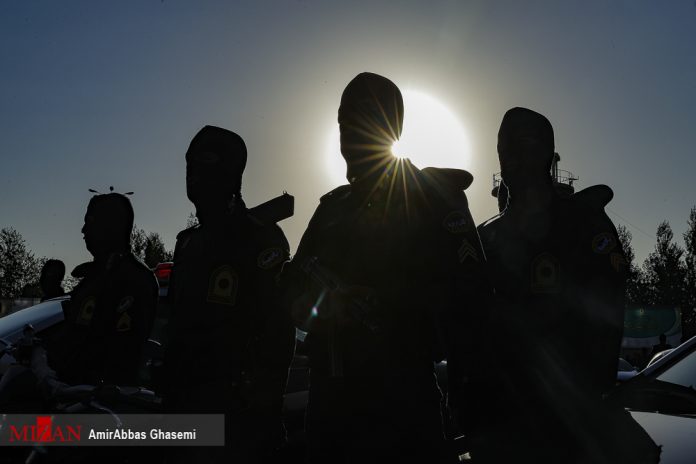
The police spokesperson said the terrorist cell had planned to carry out sabotage and bombings during recent public ceremonies.

He added that the operation, led by the Counter-Terrorism Unit of the police, was executed over the past few days across Tehran and the provinces of Isfahan, Qom, and Alborz.
“All 13 members of the cell were arrested, including their leader, coordination and support teams’ members, and suicide bombers,” said Montazer-al-Mahdi.

Authorities also seized a cache of equipment, including suicide vests and explosive-laden backpacks.
Daesh has carried out terror attacks inside Iran in the past, killing a number of people.

Britain to provide Ukraine with 100,000 drones by April 2026

Russia Ukraine War

The drone package – valued at £350 million ($473 million) – is part of a broader £4.5 billion military support initiative for Ukraine and marks a tenfold increase from a target of 10,000 in 2024 to 100,000 in 2025, the U.K. government said.

“The UK is stepping up its support for Ukraine by delivering hundreds of thousands more drones this year and completing a major milestone in the delivery of critical artillery ammunition,” Defense Secretary John Healey said in a statement.

In addition to drone deliveries, the U.K. government confirmed the delivery of 140,000 artillery shells to Ukraine since January and will spend an additional £247 million ($334 million) this year to train Ukrainian troops.

“We are learning lessons every day from the battlefield in Ukraine, which British companies are using to develop advanced new drones to help protect Ukraine’s civilians and also strengthen our own national security,” Healey added.

On June 2, the U.K. government endorsed an independent Strategic Defense Review that called for a more technologically advanced military to counter emerging threats, including potential Russian aggression. Citing the war in Ukraine, the review emphasized the importance of drones and digital warfare.

To that end, the U.K. will devote more than £4 billion ($5.4 billion) to the development of autonomous systems and drones for the UK Armed Forces to help learn the lessons from Ukraine.

This follows a recent commitment from the government to increase military spending to 2.5% of total gross domestic product (GDP) by April 2027.

Later today, the U.K. and Germany will co-host the Ukraine Defense Contact Group meeting in Brussels, where the group will coordinate further military aid to Ukraine.

During the meeting, Healey will officially announce Britain’s latest military support initiative for Ukraine.

US warns Britain and France not to recognise Palestinian state

Pro-Palestine Rally

France and Saudi Arabia are set to co-host a major UN conference on the two-state solution beginning on 17 June in New York.

France is reportedly gearing up to unilaterally recognise a Palestinian state at the conference. MEE understands that France has been lobbying Britain to do so as well.

French officials believe the British government is onboard with the plan, according to French media.

But Washington privately begun to warn Britain and France against unilaterally recognising Palestine, sources with knowledge of the matter in the British Foreign Office told MEE.

At the same time Arab states are urging them to proceed with the move, sources said.

In late May, UN member states held consultations in preparation for the conference during which the Arab Group urged states to recognise Palestinian statehood.

The Arab Group said they would measure the success of the conference by whether significant states recognise Palestine, Foreign Office sources added.

Approached for comment, the Foreign Office pointed MEE to Foreign Secretary David Lammy’s statement on 20 May in which he reaffirmed UK support for a two-state solution.

Lammy has publicly opposed unilateral recognition, insisting earlier this year that the UK would only recognise a Palestinian state “when we know it’s going to happen and it’s in sight”.

But in late April, Lammy acknowledged for the first time that Britain was in discussion with France and Saudi Arabia on the topic.

Chris Doyle, director of the Council for Arab-British Understanding, told MEE: “There are no legitimate grounds for the US to interfere in a sovereign decision by Britain and France to recognise another state.

“A Franco-British recognition would be to acknowledge the Palestinian right to nationhood and to be equal partners in any future negotiations with Israel.”

Doyle added: “Based on precedent with this British government, US objection to recognition would be more likely to have an impact on Britain than on France.”

But the American president is unpredictable.

“What really counts is what President Trump himself thinks,” Doyle stated, adding, “Opposing unilateral recognition is an existing American position. But if I was in Downing Street, I would be asking what does the president himself believe – and how will he react?”

If France and Britain go ahead with the move, they will become the first G7 nations to recognise a Palestinian state.

Alon Pinkas, who advised four Israeli foreign ministers, told MEE on Monday that French President Emmanuel Macron’s push to recognise Palestinian statehood “is serious and has the backing of most of the European Union and Saudi Arabia”.

The move would cause a political earthquake, since both France and Britain are among Israel’s most important historic allies.

And Israel has signalled it would not take the move lying down.

Last week Ron Dermer, Israel’s strategic affairs minister, threatened Britain and France that Israel may annex parts of the West Bank if they recognise a Palestinian state, according to Israeli newspaper Haaretz.

MEE revealed earlier this month that Britain privately decided in 2014 it would consider recognising a Palestinian state if Israel advanced with the contentious E1 settlement project.

Israel is currently poised to move forward with the settlement plan, which would effectively split the occupied West Bank in two.

Meanwhile, domestic pressure is ramping up in Britain.

“Starmer is facing significant levels of anger throughout the entirety of the Labour party and the British public,” Doyle said, “even in circles that would ordinarily support the Israeli government.”

Several MPs told MEE last month they believe the UK must recognise a Palestinian state immediately.

Labour MP Uma Kumaran, a member of Britain’s Foreign Affairs Select Committee, stated: “This government was elected on a manifesto that promised to recognise Palestine as a step towards a just and lasting peace.

“I strongly support the recognition of a Palestinian state, and I have raised this repeatedly in parliament, on the Foreign Affairs Committee and with ministers,” Kumaran added.

Pentagon chief to skip Ukraine meeting at NATO headquarters

Pete Hegseth

The regular meetings of NATO defense ministers and others have coordinated funding for the Ukraine war, and have emerged as a key component for Western aid for Kyiv as it has battled Russian forces. But the Donald Trump administration has distanced itself from the group, handing over leadership to the U.K. and Germany.

Hegseth’s absence appears to signal further softening of the Trump administration’s relationship with Europe, and Ukraine.

The Defense secretary will be in Brussels for Thursday’s meeting of NATO defense ministers but his place at Wednesday’s Ukraine Defense Contact Group will be taken by U.S. ambassador to NATO Matthew Whitaker, according to a defense official and two people familiar with their plans, all of whom were granted anonymity to discuss internal matters.

The Defense Department cited scheduling issues.

“Secretary Hegseth’s travel schedule precluded attendance at tomorrow’s UDCG meeting,” Pentagon Press Secretary Kingsley Wilson said in a statement.

“The United States is focused on ending the war in Ukraine as quickly as possible, on terms that establish an enduring peace.”

The U.K. and Germany took over leadership of the group in February after Hegseth said the U.S. would no longer play a role in the monthly meetings established by then-Defense Secretary Lloyd Austin in April 2022 after the full-scale Russian invasion of Ukraine.

Since that February meeting, U.K. Defense Minister John Healey, and Germany’s defense chief, Boris Pistorius, have run the show, with Hegseth only attending virtually last month. The pair will chair Wednesday’s meeting as well.

The Trump administration is continuing to ship weapons and equipment to Ukraine under a $61 billion aid package established by former President Joe Biden.

The Ukraine gathering of defense ministers comes three weeks before many of them will come together once again for NATO’s annual summit in The Netherlands on June 24-25. Leaders from across the alliance will attend that two-day event, including President DonaldTrump, who will likely command an outsize presence as European leaders wait for the administration’s Europe and Russia policies to come into focus.

Ambassador Whitaker stated last month that the U.S. will begin talks with allies later this year about potential troop withdrawals from Europe, but that nothing has been decided. Hegseth, during his first visit to NATO in February, warned that the American military presence in Europe was “not forever,” a comment that sent ripples of concern throughout the alliance.

During that meeting, Hegseth also admonished European leaders for not spending enough on defense and controversially laid down a series of preconditions for Ukraine to meet before entering into peace talks with Russia, including forgoing an invitation to join NATO and not asking for a return to its pre-invasion borders.

NATO urging European states to ramp up air defenses fivefold in face of Russian threat: Bloomberg

NATO

The reported request is NATO’s latest bid to shore up European security amid heightened tensions with Russia and an increasingly uncertain U.S. commitment to Europe’s defense.

NATO defense ministers will discuss the air defense boost at a gathering in Brussels on June 5, sources told Bloomberg on the condition of anonymity. A number of proposed defense increases are on the agenda for the meeting, which will set the stage for the NATO summit in The Hague on June 24-25.

The air defense target is a collective goal for NATO’s European members, with varying levels from individual states, sources said. The timeframe for the fivefold increase is not yet clear.

According to one senior European military official, NATO members face a shortage of ground-based air-defense systems to protect against drones, missiles, and fighter jets, having shifted away from these systems after the end of the Cold War.

“We are not at war, but we’re not at peace either,” NATO Secretary General Mark Rutte said during the Vilnius summit of the Bucharest Nine (B9) and the Nordic countries on June 2.

“We must continue to strengthen our deterrence and defense and that means pivoting toward a full war-fighting readiness,” he added.

Russia’s full-scale invasion of Ukraine in 2022 prompted European countries to hike defense spending in order to revive their military capabilities following decades of disarmament.

Ukrainian and Western officials have sounded the alarm on Russia’s threat to both NATO and Europe, warning that an open clash between Moscow and NATO could break out two to four years after the full-scale war against Ukraine ends.

New anti-Russia sanctions ready, need to be approved by Congress, US President: Envoy

Oil

When asked by Fox News whether a new round of anti-Russian sanctions has already been drafted and ready, he replied: “I talked to [Senator] Lindsey Graham this last weekend, and I believe they are ready to go. They are called the Russian Sanctions Act 2025, and I think he’s got them set and ready to drop. And they’re pretty onerous.”

He emphasized that the restrictions are aimed primarily at Russian oil exports.

The above-mentioned draft was unveiled in mid-April by a bipartisan group of US Congress members. The bill, initiated by US Senators Lindsey Graham (Republican of South Carolina) and Richard Blumenthal (Democrat of Connecticut), provides for secondary sanctions on Russia’s trading partners. The document proposes import tariffs of up to 500% on goods from countries that purchase Russian oil, gas, uranium and other goods.

Axios reported on May 20, citing sources, that after a telephone conversation with Russian President Vladimir Putin, Trump told European leaders and Vladimir Zelensky that he did not intend to impose sanctions against Russia because, in his opinion, Moscow was serious about the Ukrainian settlement.

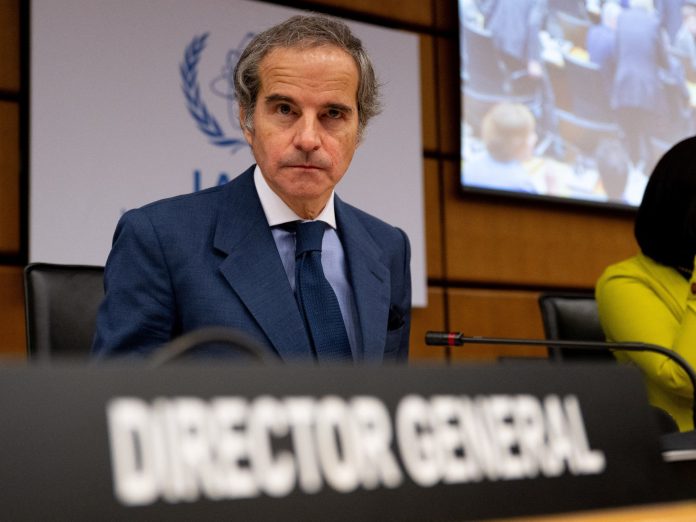
Iran’s deputy FM warns IAEA Board of Governors against any politically motivated act

Kazem Gharib Abadi

Gharibabadi made the remarks in a post on his X account on Tuesday, following a politically-motivated report by the IAEA about the nation’s peaceful nuclear program.

“Any politically motivated action by some governments in the Board of Governors regarding two unproven alleged issues related to more than two decades ago could, despite Iran’s principled policy, pose serious problems for the full continuation of the path of cooperation between Iran and the Agency regarding Iran’s current activities,” Gharibabadi said.

“So far, Iran has not made any changes in the agency’s access based on safeguards obligations following the suspension of commitments of other parties under the Iran nuclear deal, known as the Joint Comprehensive Plan of Action (JCPOA),” he said, adding, “but this situation cannot continue.”

Gharibabadi further noted that he has held separate meetings with the ambassadors of the 17 member states of IAEA’s Board of Governors, and then with the ambassadors of Russia and China, and subsequently with the ambassadors of Germany, the United Kingdom, and France, and has answered the questions raised by them.

“In these meetings, I emphasized that Iran is a committed member of the Non-Proliferation Treaty (NPT), implements the Comprehensive Safeguards Agreement, and has extensive cooperation with the agency in order to fulfill its obligations under this agreement,” he said.

Gharibabadi further expressed hope that members of the IAEA’s Board of Governors adopt a constructive approach and oppose any political action that could disrupt the maintenance and expansion of cooperation between Iran and the agency.

On Sunday, the IAEA claimed in a confidential report to member states that Iran has failed to report its nuclear activities at three undeclared locations and raised concerns about the country’s stockpile of uranium enriched up to 60% purity.

Gharibabadi rejected the report, saying it is based on “a series of fabricated data provided by the Zionist regime” dating back more than two decades.

All accusations about Iran’s past nuclear activities were terminated under United Nations Security Council Resolution 2231, which formally endorsed the 2015 Iran nuclear deal, formally known as the Joint Comprehensive Plan of Action (JCPOA), he added.

Gharibabadi also noted that the report by the UN’s nuclear watchdog is once again raising old “unsubstantiated issues” intended for “new political exploitation against Iran.”

He further emphasized that the IAEA, under political pressure from certain states, has turned into a tool of pressure against the Islamic Republic.