Thursday, January 1, 2026
Home Blog Page 3184

UAE Hatching Evil Plots against Neighbouring Countries, Arab World

This country which appeared on the map of the world on December second 1971, now has taken up a destabilizing role in Middle East and is trying to interfere in the affairs of other Arab countries in the region, both openly and in secret.

UAE’s destructive role, especially in suppressing public protests became more evident after the events of September 2011; as UAE and its allies did their best to stop the progress of Arab countries and prevent the public uprisings that were rooted in Islamic reawakening.
On the other hand, Al Nahyan, one of the six ruling families of the UAE, did its best to destroy all resistant groups that were against Zionists such as Hamas and Hezbollah to prepare the ground for normalizing relations between Israel and Arab nations; something that led to creation of the Deal of the Century.

To give an example, Mahmoud al-Mabhouh, who was among top Hamas leaders and was the chief of the Izz ad-Din al-Qassam Brigades was assassinated in Dubai. Later, Yedioth Ahronoth, Israeli daily newspaper said the assassination was planned by Mossad and was carried out in cooperation with UAE’s intelligence service.

There are many similar examples, in another one, we see that UAE’s secret service agent enters the Gaza Strip through Egypt, under the cover of a Red Crescent volunteer to spy on Hamas and Palestinian resistant groups in order to give information to the Zionist regime.
Apart from activities against Palestinians, UAE has also tried to sabotage Muslim Brotherhood (Ikhwan Al-Muslimin) in Egypt through its media channels such as Al-Hayat, Al Youm Al Sabee, and Al-Masry Al-Youm. Furthermore, UAE gave full financial support and security help to certain groups in order to topple Muslim Brotherhood.

UAE is a big supporter of Egypt’s current government. The country keep spending billions of dollars to carry out Zionists’ plans in Middle East and suppress any democratic movement in the region that is based on public votes and people’s determination.

An example of UAE’s interference in Libya is the story of Yusef Mobarak. He was arrested in Al-Aqiq Airport in Tripoli after the intelligence service of Libya’s Government of National Accord accused him of taking pictures from high-security centers and foreign embassies in Tripoli. After investigations, it was revealed that Yusef was a main link to Khalifa Haftar, the renegade military commander of Libya, and was particularly supported by UAE and Abdel Fattah el-Sisi, Egypt’s president.

Everyone knows that UAE’s army has given modern weapons and high-tech tanks to Khalifa Haftar and has supported the renegade commander against Tripoli. UAE’s interference in Libya is aimed at keeping the country entangled in wars and chaos, so that Libya can become a heaven for the intelligence services of the United States, Israel and UAE.

UAE has also been seriously interfering in Tunisia. The country is putting enormous political and economic pressure on Tunisia to expand its control over it and crush all the public movements. They have forced Tunisia to choose between surrendering to UAE and suffering under a security crisis.

Yemen is another country that is crushed by UAE’s interference. UAE has done a dirty job in Yemen by destroying Yemen’s infrastructures and killing thousands of innocent Yemeni citizens.

The octopus of UAE has extended its claws to Oman as well. Oman intelligence service discovered an Emirati spy network that was supposed to predict and influence what happens in Oman after Sultan Qaboos. The network was trying to make strong bonds with anti-government tribes such as Al Shuluh tribe which has close relationships with UAE, especially with Ras al Khaimah emirate.

Another UAE spy network was discovered in Turkey and brought shame to Emirati leaders. According to Turkish media, UAE was trying to support some of the government dissidents and army commanders including Fethullah Gülen. Turkish intelligence service also discovered that Mohammed Dahlan entered Turkey under a fake identity and by using an Emirati passport. In this secret trip, he had meetings with the opponents of Turkish government.

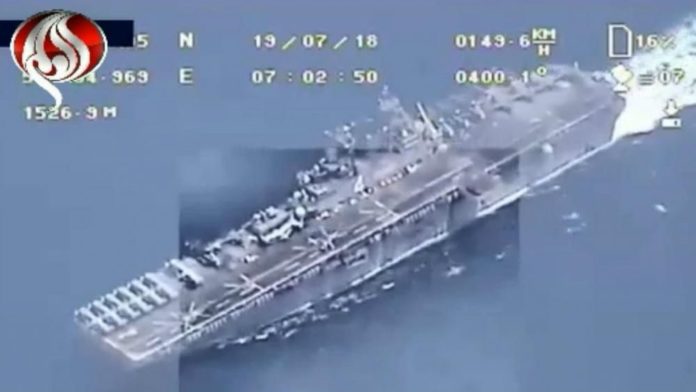
UAE is also trying to expand its reach to the Islamic Republic of Iran as well. The country has already given financial support and intelligence to some terrorist cells that worked against Iran. Once again, UAE’s efforts to interfere in Iran was proved when it was revealed that Global Hawk drone was sent to Iran from an Emirati base.

Apart from having a destructive role in Middle Eastern countries, UAE is quickly expanding its relationship with the Zionist regime. Now, Zionists have representative offices in Abu Dhabi and can freely travel to UAE.

All these facts show that Al Nahyan family and specially Mohammed bin Zayed, the Crown Prince of the Emirate of Abu Dhabi, are the main causes of war in Arab World and division among Muslims. They are completely abiding by the goals of the Zionist regime; therefore, the Muslim community and Arab world should free itself from the influence of this evil element.

France’s ‘Freeze for Freeze’ Plan Can’t Work for Long: Expert

President Emmanuel Macron’s top diplomatic adviser, Emmanuel Bonne, recently made a trip to Tehran for two days of high-level talks, as European officials discuss ways to keep the nuclear pact alive.

ccording to European diplomats, options considered include a so-called freeze-for-freeze plan based on which Iran would stop ramping up its nuclear activities and the US would restore sanctions to the previous levels to allow dialogue to resume.

Rahman Qahremanpour believes this plan is like a temporary break in a volleyball match, after which the players have to return to play again.

In an interview with Entekhab news website, he said “What Iran says is slightly different from what the French authorities say.”

In the French plan, it is said that the United States would extend the exemption for Iran’s oil sales in order to allow Tehran to sell its oil to the three major buyers i.e. Japan, China and India. In return for that, Iran should stop its nuclear steps as they are and not develop them anymore.

This is a “Freeze-for-Freeze” rather than calling for lifting sanctions. Because the scope of the sanctions is very wide and includes sanctions by the Security Council and the initial and secondary sanctions of the United States, said Qahremanpour.

“If the reports are true, Macron had consulted with Donald Trump at the G20 summit before making this offer to Iran, and he also talked to President Hassan Rouhani after his talks with the President of the United States. It seems there is some kind of harmony between France and the United States, and perhaps the American side has expressed its satisfaction. In such a case, it is likely that the United States will also attend the EU Ministerial Meetings, which will be held on July 15, or will attend the meeting of the Joint Commission of the JCPOA and hold some meetings on its sidelines.”

Asked whether this could be a good solution in the current situation, the Iranian analyst noted such a project is like a break in a volleyball match, after which players have to return to play again. “We should wait and see how this comeback will be? Will this temporary break lead to direct negotiations between Iran and the United States, or would it lead to negotiations in the framework of the JCPOA? So far, there is ambiguity about this.”

“What is certain is that the freeze-for-freeze plan, if successful, cannot lead to negotiations between Iran and the United States in the short run. Although the Americans may attend the P5+1 talks, it should be borne in mind that this negotiation formula does not have any achievements for Trump. He cannot take advantage of such talks for his electoral goals, or claim that he has brought Iran to the negotiating table. This is a solution that satisfies both sides, but the point is that negotiations within the framework of the P5+1 will not necessarily lead to the abolition of primary and secondary US sanctions against Iran. Therefore, the least benefit of such negotiations is to preserve the status quo. This comes as Iran, in its macro policies, is looking to put an end to the current situation,” added Qahremanpour.

According to the analyst, the current impasse has simple solutions. One of these solutions is the return of the United States to the JCPOA. However, the US does not agree with this, saying that it wants to negotiate issues beyond the JCPOA. Meanwhile, Europe needs to take a serious decision and put pressure on Washington to force Trump to move back from its positions. Unfortunately, Trump wants to move unilaterally. But, naturally, Iran does not like to give concessions to such a person. Therefore, it is needed to come up with a solution which can keep Trump satisfied in his electoral campaign, and make Iran able to defend its positions inside the country.

Therefore, perhaps a dialogue within the framework of the P5+1 will be useful, if the United States is willing to give concessions.

Iran Unveils Laser-Guided Cannon Shells in Attack on Terrorists

The IRGC unleashed a barrage of rockets and laser-guided cannon shells on terrorists’ positions, bases and training camps along the borders of the Iraqi Kurdistan region as of Wednesday, July 10, 2019.

A major feature of the combat operation was the use of laser-guided cannon rounds.

Krasnopol shells are a kind of projectile fired at targets using laser technology. It seems this kind of ammunition was used for the first time in the IRGC’s recent assault on terrorists.

The IRGC released footage showing cannon shells hitting terrorist targets with pinpoint accuracy.

Earlier, IRGC commanders as well as other military top brass of the Iranian Armed Forces had spoken of precision-guided cannon shells as well as other types of guided munitions being used in different military exercises.

“Our strategy is to use each bomb or missile to hit a single target, and today we are seeing our cannon systems using laser-guided Krasnopol shells can hit targets with pinpoint accuracy, and we are moving toward this doctrine, i.e., every shell, bomb or missile for a single target,” IRGC’s Ground Force Commander Brigadier General Mohammad Pakpour had said before.

Guided cannon rounds called Basir had earlier been unveiled. Basir is controlled with canards installed on the body of the shell. Canards open after rounds are fired and guide the shell until it hits the target.

Using guided munitions one can not only save time and cost and prevent the waste of so many shells, but also increase the Armed Forces’ combat and tactical capabilities.

Iran, Russia Determined to Expand Technology Ties

In an address to a trade meeting in Moscow, Sattari called for further ties between Tehran and Moscow in this area and added the two sides’ cooperation in the field of technology has been developing through a special mechanism over the past years.

“We hope that new areas like nanotechnology, biotechnology, airspace, cognitive sciences and energies could provide Iran and Russia with good chance to make further progress in the region,” he said.

Sattari also referred to the presence of at least 4400 knowledge-based firms in Iran and said the firms can provide Iranian and foreign investors with an ample opportunity to make investment and enter the international markets.

For a brief review of Iran’s achievements in various fields of science and technology, check the book “Science and Technology in Iran: A Brief Review – 2019

Iranian firms have already made huge progress in the medical field, he said, adding that today people from Russia, Turkey and other regional states are treated by medicines produced by Iranian biotechnology firms.

An Iranian knowledge-based firm, for instance, has managed to produce medicines to treat at least 4 incurable diseases, Sattari noted, describing the achievement as a unique one in Western Asia.

Iran, Russia Need to Expand Economic Ties amid US Sanctions

Meanwhile, Iran’s ambassador to Moscow took the podium in the meeting and said Iran and Russia have been developing their ties in various areas over the past months, but the two sides should further expand their mutual ties amid the current US sanctions.

Mehdi Sanaee went on to say that Iran and Russia should tap into the current economic capacities to increase their mutual relations.

He then referred to the recent Eurasia agreements signed between Iran and the Eurasia Economic Union and said the agreements can pave the way for expansion of economic ties between the Islamic Republic and its northern neighbouring states like Belarus, Armenia, Kyrgyzstan and Kazakhstan.

Iran Ready to Launch Joint Line of Credit with Russia

Meanwhile, Head of Iran National Innovation Fund, Ali Vahdat, expressed Iran’s readiness for launching a joint line of credit with Russia for technological cooperation.

Addressing the meeting, he also said Iran’s technology and innovation ecosystem has already made huge progress over the recent years in biotechnology, information, communication and nanotechnology.

Following the meeting, B2B talks were also held between Iranian and Russian businesspeople.

Iran Never Ceases to Amaze Foreign Visitors 

Below, you can read some pieces of these experiences gathered by Khorasan Daily which stand in stark contradiction with the clichés spread about Iran by the western media.

Iran, Safe and Secure

Mark Wilmots who was named the head coach of the Iran national football team recently said he was taken aback as he arrived in Iran. In comments on his experiences about Iran which went viral in the social media, Wilmots said, “I got taken aback as set foot in the capital Tehran. The city was clean and covered with flowers. I think the city is as beautiful as a European city and is really interesting.”

Wilmots then referred to Iran’s security and said “I don’t know why it is said that Iran is not safe. I think the country is even more secure than some European cities due to various controlling systems. Iran is neither dangerous, nor at war. Although the sanctions have put the country in trouble and reduced the real value of its national currency, it is not unsafe at all.”

Iran Never Ceases to Amaze Foreign Visitors 

Iran Home to Hospitable, Kind People

Wilmots is not the first foreign celebrity amazed by visiting Iran. The other one is American actor and filmmaker, Sean Penn who visited Iran back in 2005 as a journalist to conduct interviews with some Iranian officials including former Iranian president Akbar Hashemi Rafsanjani. Elaborating on his visit to Iran, he said later that Iran’s culture is impregnated with a love for cinema. He added Iran is the land of hospitable and kind people. According to Sean Penn, Iranians take to the streets when their national football team is set to play against other teams. He then talked about his earlier expectations of Iran and said he thought he would face an Islamic country with a dark situation and bearded men with black eyes before arriving in Iran. But the reality on the ground was totally different for him. He, however, complained about the jam traffic in Tehran’s streets.

Tehran Looks Like Madrid or Athens

Jack Straw, the former British Foreign Secretary was another foreign visitor who talked about his amazing experiences in Iran. He visited Iran in 2013 as the head of Iran-UK Parliamentary Friendship Group. It was not however his first visit to Iran. He had arrived in Iran first in 2001. He made his third visit to Iran as a member of a tourist group recently. In a piece on his experiences in Iran during his second visit to the country, he said he felt surprised to see how much progress the country has made in a span of about 10 years. He talked about the newly constructed highways and subway stations across the capital Tehran. Straw added despite sanctions, Tehran looks like some European cities like Madrid and Athens instead of Mumbai or Cairo.

Iran Never Ceases to Amaze Foreign Visitors Iran, Safe and Civilized

Julio Velasco, Argentine professional volleyball coach who led Iranian men’s national team for about three years, talked about his stay in Iran and expressed satisfaction with the years. Even, other foreign coaches who decided to come to Iran to lead Iranian football clubs consulted with him before making up their mind. Velasco say he encouraged them to go to Iran. “When I decided to come to Iran, some of my friends tried to dissuade me, saying Iran is not a leading country in volleyball… But I came to realize that Iranians enjoy a lively and secure life. Iran is a secure country. I lived well there and felt secure. Iran has an ancient civilization with cultured people.”

Always Amazed by Iran

Oliver Stone, leading American filmmaker, pointed to the Iranian warm hospitality during his stay in Iran and said all Iranians from the hotel staff to ordinary people welcomed him with bright smile. He said Iran has always left him amazed.

Iranians Are Hospitable

Thomas Hessler, a former footballer of the German national team who led Padideh Mashhad’s football club in Iran for a while, says he felt quiet in Iran. “Iranians are highly hospitable.” He then recalled the warm hospitality of his landlord who surprised him once by inviting him to a delicious dish.

Amazed, Happy Tourists

Over the past years, a growing number of tourists have been visiting Iran. Back in 2017, about 5.5 million foreign tourists arrived in Iran. It is expected that the figure hit 20 million. The common part in most experiences shared by the foreign tourists is that they didn’t expect to face a hospitable and nice country before arriving in Iran.

The Basics on Choosing Which Stocks to Watch

Although everyone approaches trading differently, you can make your life a lot easier by deciding which stocks to watch early on. To do this, all you need to do is follow a few simple rules, such as:

  • You should only ever pick one stock at a time, to begin with, then analyze your results
  • Make sure access trading charts to understand the movements of the market
  • Understand your risk level and choose stocks based on that

Keeping it Simple: Start with Just One Stock

A lot of people assume that they need a complex strategy in place to determine which stocks they should be placing their money into. However, the truth is, keeping it simple is usually the best way to go. Whatever stock picking strategy you decide to go with in the long-term, it’s always a good idea to start by just trading a single stock.

This way, you can watch and learn from the fluctuations in the market. Remember, every asset comes with its own characteristics and personality to analyze. The more time you spend learning from your decisions, the more comfortable you’ll begin to feel learning from the habits of the stock market. Once you have learned more about your trading style, you can begin to trade additional stocks alongside your primary security.

Before you start investing in any new stocks, however, spend some time watching the assets that you’re interested in. This way, you’ll make sure that you fully understand the behavior of that stock before you get involved.

Always Keep your Risk Levels in Mind

As you watch the trading charts to get a feel for the behavior of each available stock, there may be several options that catch your eye. The easiest way to make sure that you set yourself up for success, is to determine how much risk reasonably live with while you’re trading. Focus on creating a strategy for choosing new stocks that preserves your capital as much as possible.

Usually, if you’re just getting started with the investment market for the first time, your best option will be to play it safe. You can begin by choosing stocks that don’t change behavior too quickly and wait until you’re a little more experienced to play in the more volatile end of the pool.

Keep in mind that one of the worst mistakes you can make is just to start trading. While this will give you experience, it’s not likely to be the kind of experience you want. If you can dedicate time to watching the market and analyzing your opportunities before you invest, you’ll end up with much better results.

Iran Condemns US, UK Interference in China’s Internal Affairs

Iran Says What IAEA Wants to Access “Not A Site”

In a statement on Friday, he also expressed the Islamic Republic’s full support for the One China policy.

His comments came after Chinese Foreign Minister Wang Yi warned the United States “not to play with fire” regarding Taiwan, as a possible US arms sale to the self-ruled island looms.

The Pentagon said on Monday that the US State Department had approved the sale of 2.2 billion dollars in arms to Taiwan, including 108 M1A2T Abrams tanks, Stinger missiles, and related equipment.

“We urge the US to fully recognize the gravity of the Taiwan question… (and) not to play with fire on the question of Taiwan,” Wang said at a press conference in Hungary on Friday.

He stressed that no foreign force could stop the reunification of mainland China and Taiwan and that there had to be no foreign interference in Chinese internal affairs.

China considers the possible arms sale to Taiwan a breach of its sovereignty over the island, which is self-ruled but is part of Chinese territory. Beijing has also said it would impose sanctions on the US companies that would sell the weapons to Taiwan.

IAEA’s Meeting on Iran Proved US Isolation: FM Zarif

The emergency meeting of the 35-member board was held on Wednesday at the United States request to address Iran’s exceeding the limit set by a 2015 nuclear deal on its uranium enrichment level, notwithstanding the fact that Washington itself committed the biggest breach against the agreement last May by leaving it.

Iran surpassed the 3.67-percent level in reaction to the US withdrawal from the nuclear accord and also in order to prompt other deal partners to ensure Tehran’s business interests under the accord.

According to Iran’s Ambassador to the IAEA, Kazem Gharib-Abadi, the US had approached various delegations to have them join the request for the board meeting, but eventually had to make the request itself. The meeting ended without any conclusion on Washington’s alleged grievances.

On Thursday, Zarif spoke to the Lebanon-based Arabic-language al-Mayadeen television news network on the failure experienced by Washington, saying, “The US political isolation will soon lead to an economic one.”

Explaining about possible economic isolation of the US, Zarif said, “The Americans abuse the dollar’s power too much, and will gradually lose this advantage.”

Iran’s top diplomat then added, “We are prepared to confront whatever threat [posed] by the US on whatever scale.”

After leaving the nuclear agreement, which is officially known as the Joint Comprehensive Plan of Action (JCPOA), the US re-imposed the sanctions that had been lifted under the deal. It has also threatened the countries keeping their trade with Iran with “secondary sanctions.”

This has prompted Iran’s various trade partners across the globe to try going around the sanctions by proposing non-dollar trade.

Britain, France, and Germany, the European signatories to the JCPOA, announced one such trade system in January. The system, officially known as the Instrument in Support of Trade Exchanges (INSTEX), began its first transactions late last month.

Seven more European states have committed to join the INSTEX, with Helga Schmid, secretary general of the European Union’s External Action Service (EEAS), saying on Thursday that beyond the 10-strong European states, “more, also non-EU member states, will join” the trade instrument.

‘Iran region’s strongest state’

Elsewhere in his interview, Zarif reminded how the country successfully withstood a heavily Western-backed war by Iraq in 1980s.

“Today, we are the region’s most powerful country, while our military expenditure is small in comparison with that of Saudi Arabia and the United Arab Emirates,” he stated, referring to two of the US biggest regional allies, which are generously armed by Washington under huge military agreements.

Iran is not after tension and war, but “they would be met with a decisive response if they rose in confrontation,” Zarif, however, stated.

He also reiterated that Iran’s countermeasures were “reversible” if the US sanctions were lifted and the Europeans honored their trade commitments to the Islamic Republic, welcoming whatever effort that would help the deal implementation.

Efforts Initiated by Other Parties to Save Nuclear Deal: Iran

Iran Says What IAEA Wants to Access “Not A Site”

“Following the steps that the Islamic Republic of Iran has taken to balance its rights against its obligations (under the deal), some measures and efforts have started by countries that are members of the JCPOA or outside of the deal,” Mousavi told the Islamic Republic of Iran Broadcasting (IRIB) on Thursday.

Their diplomatic visits and negotiations are underway in a bid to preserve this agreement and keep it alive, he added.

The spokesman further pointed to the recent visit to Iran by Emmanuel Bonne, the diplomatic adviser to French President Emmanuel Macron, and said the visit was part of the efforts, which Iran welcomes provided that they are accompanied by “practical steps (by the other parties) to fulfill their obligations”.

The IAEA held a special meeting on Wednesday at Washington’s request to win the Board of Governors’ support for its anti-Iran claims about the JCPOA.

The emergency meeting of the 35-member Board of Governors of the IAEA was held in Vienna to discuss Iran’s nuclear program, which wrapped up with no conclusion.

The meeting came a few days after Iran increased the level of its uranium enrichment to 4.5%, which is beyond the limit set by the JCPOA. The move was part of the second phase of the country’s May 8 decision to reduce its commitments under the multilateral 2015 nuclear deal in reaction to the US violations and Europe’s inaction.

In May 2018, US President Donald Trump pulled his country out of the JCPOA.

Iran and the remaining parties launched talks to save the JCPOA after the US withdrawal, but the three EU parties to the deal (France, Britain, and Germany) have failed to ensure Iran’s economic interests.

The EU’s inaction forced Tehran to stop honoring certain commitments to the nuclear deal, including a rise in the stockpile of enriched uranium.

Iran maintains that the new measures are not designed to harm the JCPOA but to save the accord by creating a balance in the commitments.

IRGC Launches Retaliatory Attacks on Terrorists’ Positions

According to a statement released on Friday, the retaliatory attacks against “counter-revolutionary” groups sponsored by the “global arrogance” started on Wednesday, and included missile, artillery, and drone strikes.

The statement said many terrorist elements were killed and wounded in the IRGC attacks, which were carried out by the IRGC Ground Force against the terrorists’ active bases and training centres.

The IRGC says the attacks were in response to the terrorist groups’ earlier attempts to disrupt the security of Iran’s Kurdish-majority provinces of West Azarbaijan and Kurdistan, especially their Tuesday crime against IRGC forces in Iran’s northwestern city of Piranshahr, in which three servicemen were killed.

The Tuesday attack was launched by terrorists affiliated with the “global arrogance” on a vehicle carrying the forces of Hamzeh Sayyid al-Shohada Headquarters.

The troops were taking part in a mission when the terrorists attacked their vehicle at the entrance of Piranshahr, the IRGC said, naming the martyrs as Hasel Ahmadi, Sattar Pirooti, and Omid Mollazadeh.

Last week, two local forces of the IRGC were killed in an exchange of fire with a team of terrorists in the same province.

In that clash, which took place in Chaldoran region, the security forces dismantled the terrorist cell and confiscated a remarkable amount of weapons, equipment, ammunition, and communication systems from terrorists.

Back in September 2018, the IRGC fired seven short-range missiles at a gathering of terrorist commanders in Iraq’s Kurdistan region.

The IRGC said at the time that it decided to counter and punish the aggressors following wicked actions taken by terrorist groups affiliated with the global arrogance from the Kurdistan region against Iran’s border areas.

IRGC Launches Retaliatory Attacks on Terrorists’ Positions
Attack on Terrorists in Iraqi Kurdistan Sends Message to Iran’s Enemies: IRGC

Chairman of the Chiefs of Staff of the Iranian Armed Forces Major General Mohammad Baqeri said last year the US had been provoking Iraq-terrorists to launch assaults on Iranian soil despite an earlier promise not to do so.

The Iranian general said Baghdad and the Kurdistan Regional Government (KRG) should not allow the establishment of such anti-Iran bases and rather extradite the remnants of “criminal” elements to Iran or deport them.

The IRGC is in charge of border security in Iran’s northwestern and southeastern regions.