Friday, April 24, 2026
Home Blog Page 3177

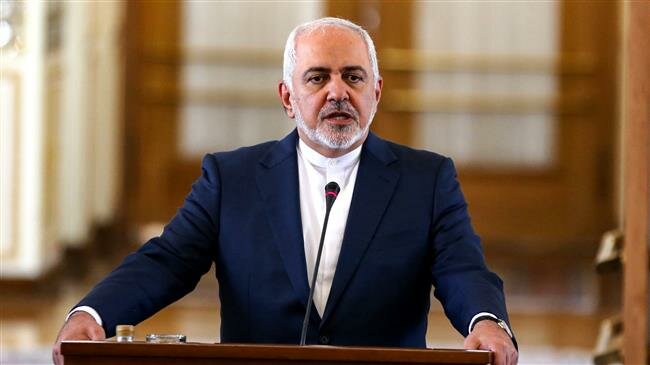
Iran Not to Compromise with Anyone on Territorial Waters: FM

Zarif

Zarif made the remarks while addressing an open session of the Iranian parliament (Majlis) on Monday with regard to the Caspian Sea legal regime and Iran’s share of the seabed and its resources.

“When it comes to Iran’s territorial integrity and waters, we will stand on ceremony with nobody and will not negotiate with any party about honors Iran has gained during the past 40 years …. The administration is committed to this issue and the Majlis has the final say on it,” Iran’s top diplomat told lawmakers.

Iran’s foreign minister added that following the collapse of the former Soviet Union, Iran’s diplomatic apparatus did its best to safeguard Iran’s interests in the Caspian Sea, adding, “Although these negotiations have been very difficult, all our efforts were focused on protecting Iran’s interests.”

“A glance at the history [of Iran] will show that parts of Iran were separated [from the country] under previous [monarchial] dynasties and it was only under the Islamic Republic that despite the imposed war [with Iraq] and tremendous pressures, not a handspan of the country’s soil has been lost and this is a great honor for Iran’s leadership and people,” Zarif noted.

Iran’s foreign minister also told lawmakers that necessary guarantees have been taken from other littoral states of the Caspian Sea not to make any decision on the sea’s legal regime in the absence of Iran, because “the issue of the Caspian Sea, unlike the issue of Arvand River between Iran and Iraq, is not a bilateral issue … and is covered by the agreement signed in 1975.”

Elsewhere in his remarks, Zarif noted that the convention on the legal status of the Caspian Sea was signed “with open eyes” by leaders of the five littoral states on August 12, 2018, adding that Iran will never compromise on its interests on the basis of mere trust in other countries.

The Caspian Sea convention was signed by Iranian President Hassan Rouhani and his counterparts from Russia, Azerbaijan, Kazakhstan, and Turkmenistan, Vladimir Putin, Ilham Aliyev, Nursultan Nazarbayev and Gurbanguly Berdymukhamedov, respectively, after the 5th Caspian Summit in the Kazakh port city of Aktau.

The Caspian Sea convention is drawn up in 24 articles with the most important highlights being a ban on military presence of all foreign countries in the sea and transit of military consignments belonging to foreign countries.

The convention emphasizes that the Caspian Sea belongs to all littoral states, prohibiting establishment and handing over of any kind of military bases to foreign countries.

The Caspian Sea Legal Regime Convention also puts emphasis on sovereignty and sovereign rights of the littoral states while recognizing their right to decide on the sea.

On August 14, Secretary General of the United Nations Antonio Guterres welcomed the signing of the deal on the legal status of the Caspian Sea by its five littoral states, saying it shows the importance of regional cooperation.

“The Secretary-General welcomes the signing of the Convention on the Legal Status of the Caspian Sea by Azerbaijan, Iran, Kazakhstan, Russia and Turkmenistan,” the spokesman for the UN chief said in a statement.

How Do I Get Out of Debt If I Don’t Make Enough Money?

For instance, most people do not earn enough money to provide for all their needs and still save funds. In fact, many people live from paycheck to paycheck. A time always comes when the only place to turn to for help is borrowing either from banks or family members and friends. Borrowing is not a bad thing and no one should even demonize it.

I have repeatedly discussed some of the basic circumstances that makes borrowing really necessary. The problem is borrowing more than you can afford. Make sure to compare and check the interests by visiting this site Loan Advisor.

Are you overwhelmed with debt? If yes, what can you do to salvage your condition? Well, today we are going to simplify things by giving you some practical suggestions you can use to get out of debt even if you don’t make money. Let us start right away.

  • Understand your financial status. Can you solve a problem you don’t know? For you to fix your financial problems, the first and most important steps are to understand your financial condition. In fact, one of the most effective debt repayment strategies is to start with high-interest debt. So, sit down and list all the debts you have and the payments you are supposed to make every month. What is more, analyze all your money sources. All other repayment plans can only be built on this requirement.
  • Budget using 50/30/20 rule. We have talked about budgeting for so long and it is worth it. To be honest, no one likes the idea of making a budget. Why? For a simple reason, you are restricting yourself. But friend this is the only way you can control your debt. In fact, you cannot get out of debt if you cannot budget. One of the best budgeting strategies is the 50/30/20 rule. How does it work? It is very simple. You first need to calculate the income you carry home every month. To get this value, use an effective tax rate to calculate your monthly tax obligation and subtract it from your gross income. If you are not employed, your net income is the sum of all your earnings less all the taxes.

Once you have determined this figure, you will again split your expenses into fixed or essential and nonessential costs. The essential costs are those ones that you cannot do without. Basically, these are basic needs like housing and payments have to be made every month. In the category of needs, we also include any payment or a bill which when not settled can significantly affect your welfare. Spend a maximum of 50% of your net earnings on them. The nonessential costs include wants. While these are also important, they can be postponed without suffering significantly. Spend a maximum of 30% on these wants. The remaining 20% should go to savings accounts. Once you have created your budget, stick to it and let it direct your spending.

  • Analyze your largest expenses and determine if it is possible to slash or trim the fat. You already know where you stand financially and you already have a budget in place. It is impossible to get out of debt if your debt is growing. So, look at your budget and see where you are spending just a lot. It could be on transportation or buying food. Then come up with a good plan of reducing the costs. For instance, if you spend too much on eating out, consider preparing your food at home. In fact, one of the best financial habits is avoiding unnecessary expenses such as buying food. What if the problem is transport costs? Consider using public transportation. The funds saved from trimming the fat should be devoted to settling the debt.
  • Look for ways of supplementing your income. To accelerate debt payment, you have to look for ways of earning more. Can you work overtime? This a very good idea if there is a consideration for this in your workplace. Besides, there is always something else that we can do apart from the services we offer to employers. For example, you may have some additional skills, such as shoe polishing, article writing, or selling products. If you have such skills, convert them into a money earning activities and use the extra income to pay off your debt. More importantly, selling an item you do not use can earn you a lot of money and that is exactly what you need here. Do you have unused furniture or appliances? Consider selling them and use the proceeds to pay off the debt. Still, consider the kind of purchases you make. You don’t have to go for brand new products when you can get a similar second hand at lower costs. Whenever you want to purchase something, be humble enough to visit thrift stores or similar sites and you will save a lot of money.
  • Make extra payments. It will be easier to get out of debt if you make payments that are more than the minimum requirement. If you keep making just the minimum required payment, you will remain in debt for so long. This is not what you want. We have talked about budgeting and regulating your spending. There are possibilities that you will always remain with unallocated cash. Use such amounts to make extra payments. Additionally, if you are using a debt avalanche approach, do not neglect other debts completely. As you attack that one debt with the highest interest, make some small payments on other debts to show commitments and to avoid penalties.
  • Keep in touch with your lenders. Some lenders understand when things are tough for borrowers. In case you anticipate an inability to afford a payment, talk to the respective lender early lender. Your payment schedule can be rescheduled at some costs. Moreover, you can let the lenders that you would wish to settle debts faster and there are some helpful provisions.

Getting out of debt requires concerted efforts. You can manage if remain determined. Make it a goal to be free from debt in a certain period and use the tips we have discussed in this blog. I want you to always keep one Biblical say – bad association ruins useful habits. Surround yourself with friends with good financial behaviors and those who can respect your budget and not individuals who carelessly spend. We wish you the best. Thank you!

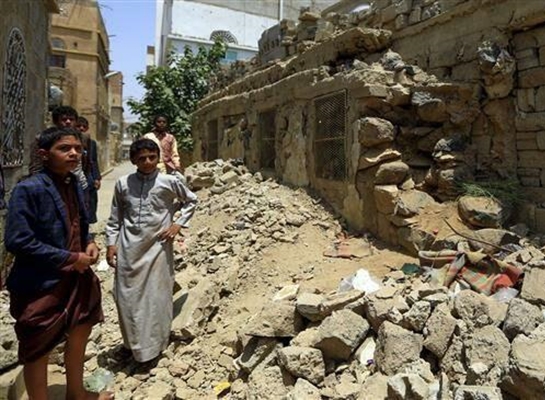
Iran Condemns Deadly Saudi Air Raid on Yemen

In a Tuesday statement, Mousavi expressed his hatred of such savage and inhumane acts, and offered condolences to the families of the victims.

“More than four years on since the devastating war on Yemen began, the aggressors have had no achievement but the destruction of Yemen, and they want to make up for their defeats both in the political arena and on the ground by killing women and children and civilians,” said Mousavi.

He criticized the international community for remaining tight-lipped in the face of crimes committed by aggressors against Yemen.

“The US and some European countries are accessories to these crimes by selling weapons to the aggressors and should be answerable for their actions,” the spokesman added.

At least 14 civilians were killed and 25 wounded when Saudi-led warplanes conducted an airstrike on a crowded market in Yemen’s northern province of Sa’ada.

Yemen’s health ministry also said at least 10 of the wounded were in critical condition, warning that the death toll was likely to rise.

Saudi Arabia and a number of its regional allies launched a devastating campaign against Yemen in March 2015, with the goal of bringing the country’s former regime back to power and crushing the popular Houthi Ansarullah movement. Over 15,000 Yemenis have been killed in the attacks ever since.
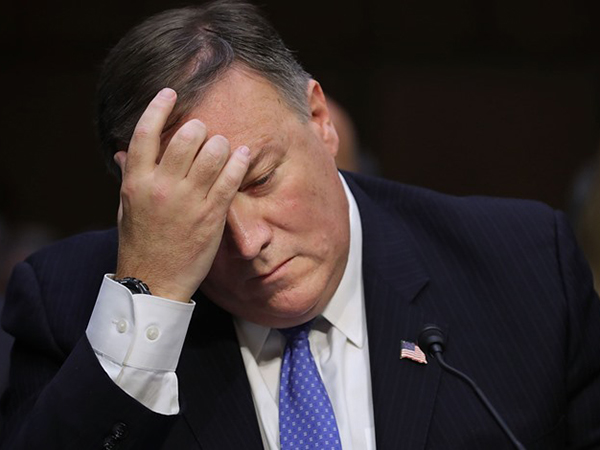
Iran Advises Pompeo to Get Popular among Media Like Zarif

Chip Somodevilla/Getty Images

In a post on his Twitter account on Monday, Iranian President Hassan Rouhani’s senior advisor Hessamoddin Ashena responded to US State Secretary Pompeo’s call for an interview with the Iranian media.

“The US government does not force the media outlets to do an interview with (Iranian Foreign Minister Mohammad Javad) Zarif. The Iranian government cannot force the media to have an interview with Pompeo either,” he tweeted.

“Zarif has never made any request for an interview; indeed, he is an attractive figure for the American media. Pompeo should also try to become more attractive to the Iranian media,” Ashena noted.

His comments came after Pompeo said in a July 25 interview with Bloomberg that he would “happily” go to Tehran and willingly appear on Iranian television to explain US reasoning behind its sanctions against the Islamic Republic.

A few days later, the Iranian administration’s spokesman invited Pompeo to be interviewed by Marzieh Hashemi, an American-Iranian journalist and anchor at Iran’s Press TV who was once detained in the US.

Ali Rabiei said Sunday that Pompeo had been “forced” into saying he was ready to appear on Iranian TV because of Zarif’s recent round of interviews with the US media during his UN trip in New York.

In the meantime, the Iran Front Page news website sent an e-mail to Pompeo’s office voicing readiness to have an interview with the US secretary of state, but the offer was declined.

Mike Pompeo’s request for an interview with Iran may have provided some fodder for advocates of Iran-US talks, but he does not appear to have any new or surprising message for Iranians.

Pompeo has all the hallmarks of an anti-Iranian politician, either as a member of the US House of Representatives, a director of the Central Intelligence Agency (CIA), or as the US secretary of state at present.
Pompeo has expressed his hostility to Iran so explicitly in the past that the name or nationality of the interviewers would not change anything about his policies or result in any attractive offer from the hawkish secretary.

Iranian officials have made it clear for Washington that Tehran judges the other states by their measures and deeds, not mere words.

In a Twitter post reflecting his unease about Iranian Foreign Minister Zarif’s interviews with the American press in the US, Pompeo decried what he called Iran’s “bad regime” for refusing to let him do the same thing in Tehran.

Weirdly ignorant of the fact that new communication technologies have facilitated the exchange of messages, Pompeo has insisted that people of Iran should hear “the unfiltered and unabridged truth”.

Canadian philosopher and media theorist Marshall McLuhan has called the contemporary era the age of communication, and has explained how the global village has minimized relations by compressing them in terms of time and location.

It is no more necessary for a person living in the age of telecommunication to cross the geographical border and travel to Iran to talk to people.

The US secretary of state has bemoaned the fact that Foreign Minister Zarif has the change to have interviews with the American media in the US, but has also ignored the fact that such enthusiasm for talking to Zarif is not because of his physical presence in the US, as a host of other foreign officials had taken part in the UN conference in New York as well, but hardly any of them received such attention in the American press.

The US secretary of state had better listen to the Iranian presidential advisor’s advice and judge whether he will enjoy the same amount of attention, like Zarif in the US, if he ever travels to Iran.

NoOps: What You Need to Know

There are those who claim that the evolution of DevOps culture will lead to the widespread adoption of a software development strategy where developers do not rely on IT operations. Interest in this strategy, known as “NoOps”, has attracted a lot of attention lately, but it is still far from becoming a reality. While some organizations have begun implementing NoOps, widespread adoption will not happen overnight.
Still, it is good to keep an open mind about new approaches that claim revolutionary potential. And it’s certainly worth noting how NoOps can benefit your software factory. Want to know more? Keep reading!
Changes in the area of ​​operations
In 2017, cyberattack WannaCry hit organizations around the world. If there is one thing that is guaranteed to draw the public’s attention to IT operations, it is news about the main attacks, which may occur with the failure to update or fix software known to have security vulnerabilities.
Undoubtedly, some IT professionals were feeling a little discouraged when the news broke. Others may be feeling a little defensive, seeing IT operations portrayed in such a negative way. This is expected in the context of the DevOps culture, which seems to reduce the need for operations personnel to such an extent that some people have begun to talk about the end of IT operations as we know it – NoOps being the catchword to describe this situation.
The term NoOps is not as new as you might think. Already in 2013, there was talk about this being the logical evolution of DevOps. From this perspective, it seems that NoOps has always been intended to be the logical result of DevOps. But are things so clear? Does DevOps inevitably lead to operator minimization or is it a buzzword and nothing more?

DevOps versus NoOps
DevOps is now a well-established method for continually deploying applications and software, which is a requirement to remain competitive in the face of digital transformation. The operational part of DevOps deals with configuration management and version management, but is rarely concerned with running datacenters or deploying virtual machines.
These tasks are primarily left to a cloud service provider. If there is still an internal IT staff in charge of such tasks, it can be difficult to provide a serverless environment. Basically, while in DevOps development and operations work together at each stage of creating applications and software, in NoOps these two areas do not need to interact.
This is the only way developers can use DevOps methodologies to deploy applications at home as easily as they would find in a cloud-based service if they have little knowledge of traditional operations.

Making NoOps a Reality
So aren’t the next application developers having to deal with operations professionals? You can automate the infrastructure creation and management tasks required to build and deploy application versions, and while challenging, would allow developers to manage and maintain active code in addition to their development code.
Questions remain as to which technology would be needed to make this scenario a reality (monitoring, feedback and root cause analysis come to mind). What about the continuing role of internal operations? Is this scenario only possible with cloud infrastructure or could it be realized with on-premises infrastructure?
Although the concept of NoOps has been around for some time, its widespread adoption seems a bit distant – and not necessarily inevitable. Perhaps the real question is, if so, how effectively will it allow companies to maximize the productivity of their software factories? It will be interesting to see how early users benefit from this new reality and whether it will enable their much-needed digital transformation.
Enjoy and see if your company is ready for digital transformation with the tips in our article on the subject!

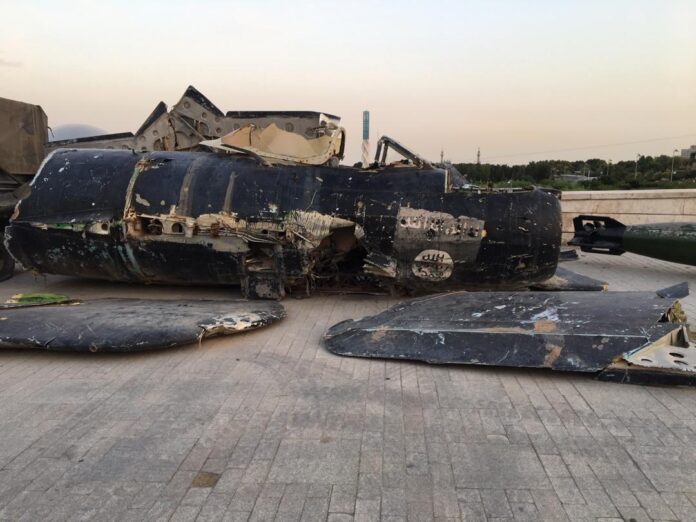
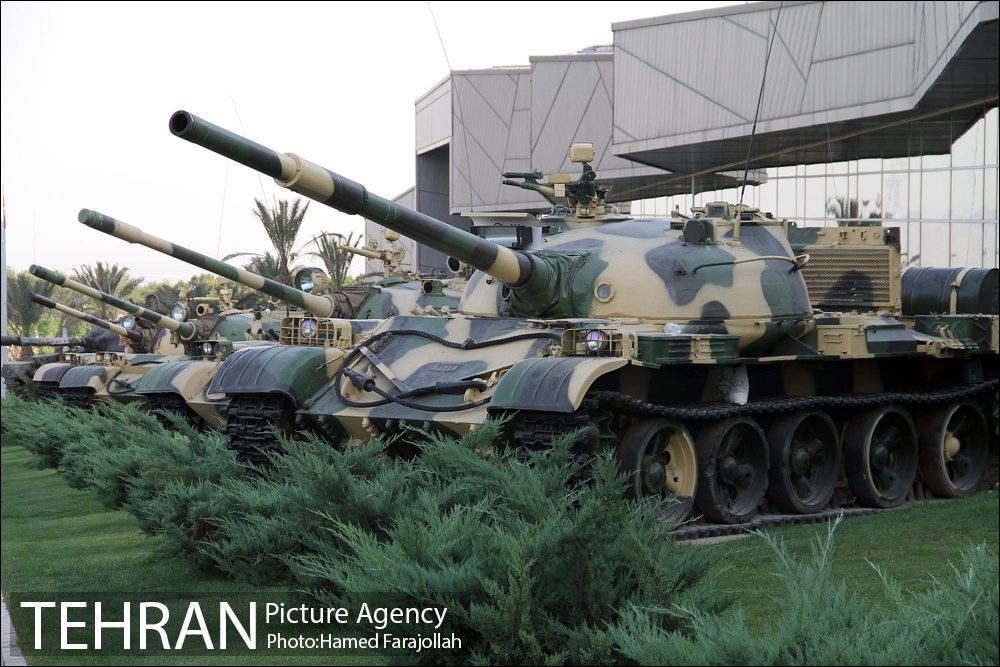
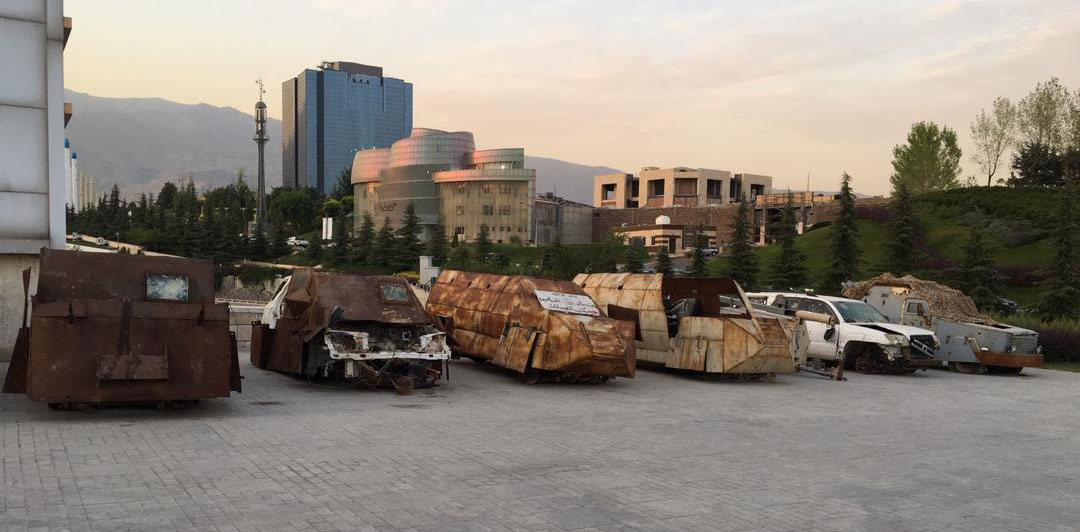
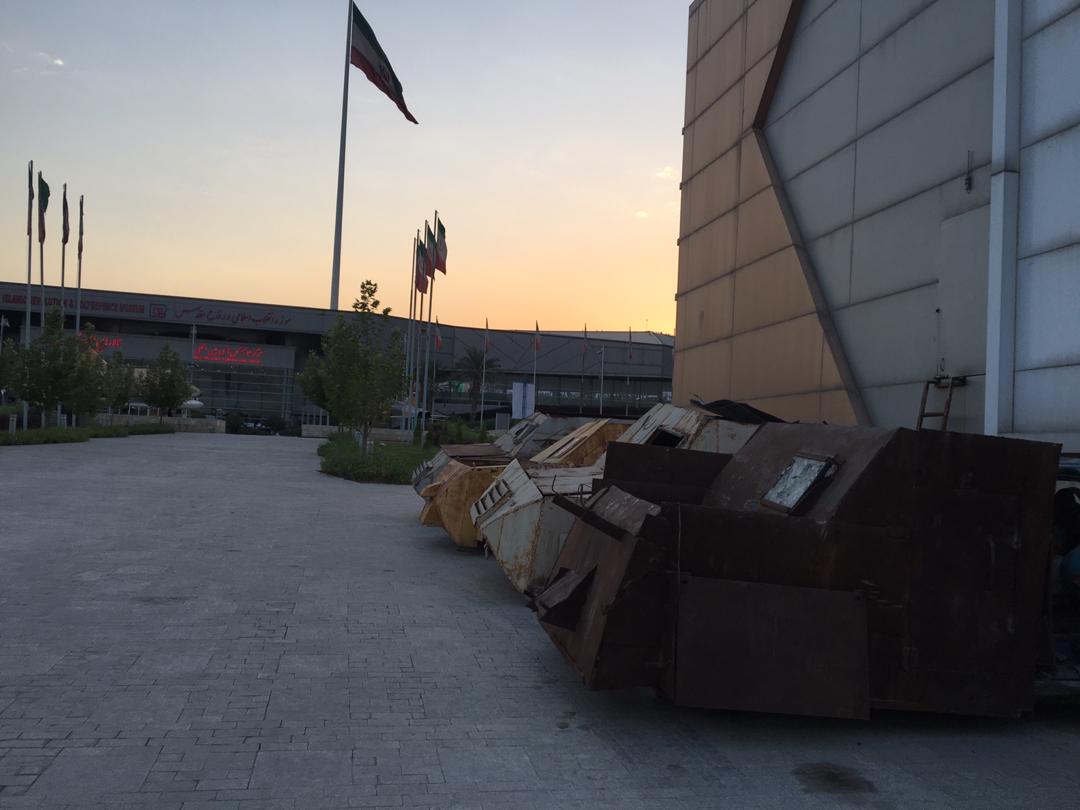
ISIS Weapons, Equipment on Show in Tehran

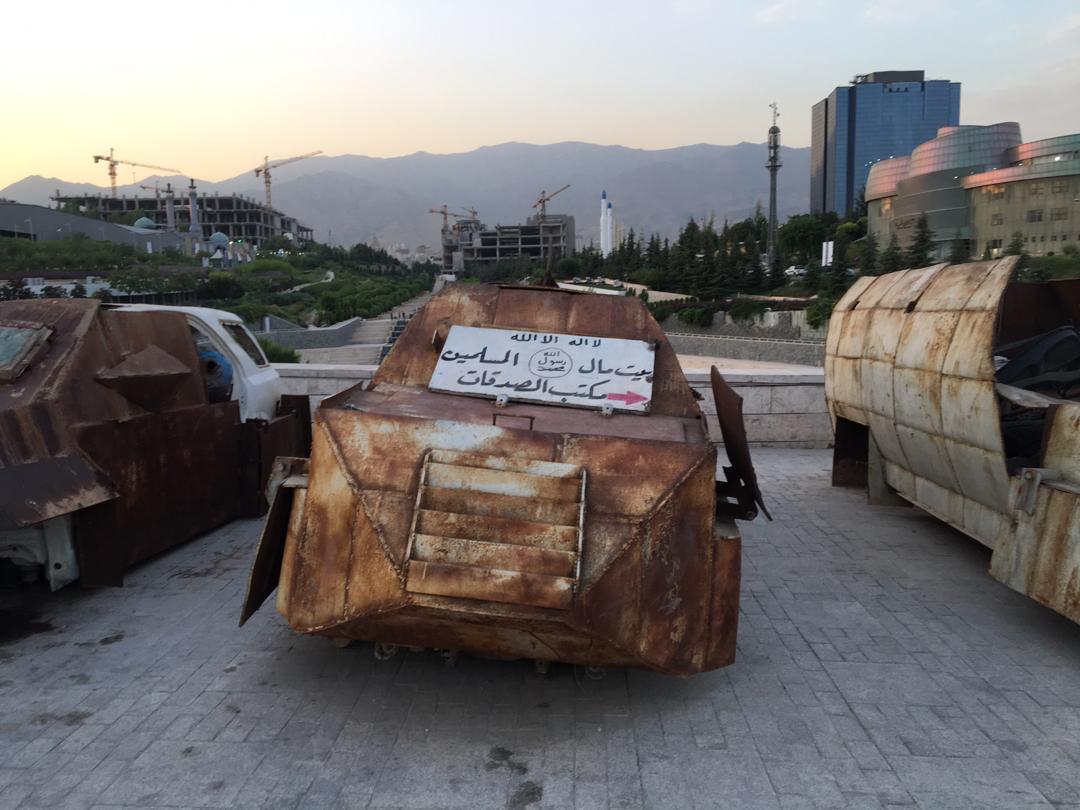
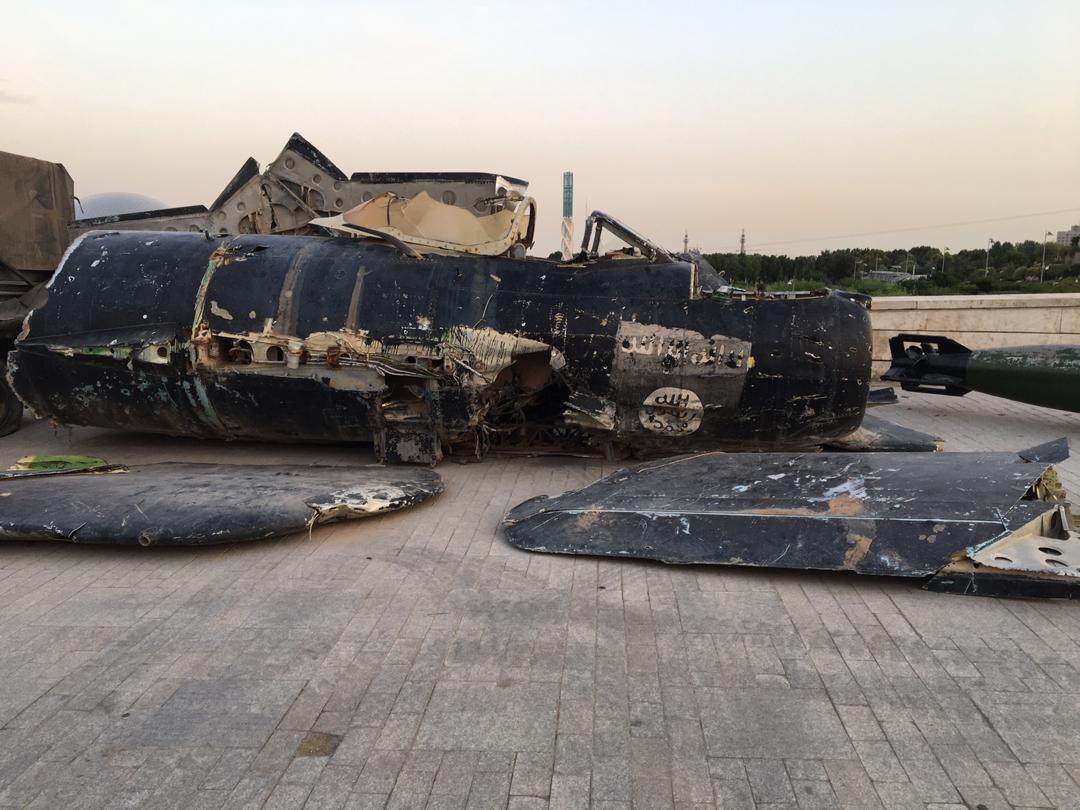
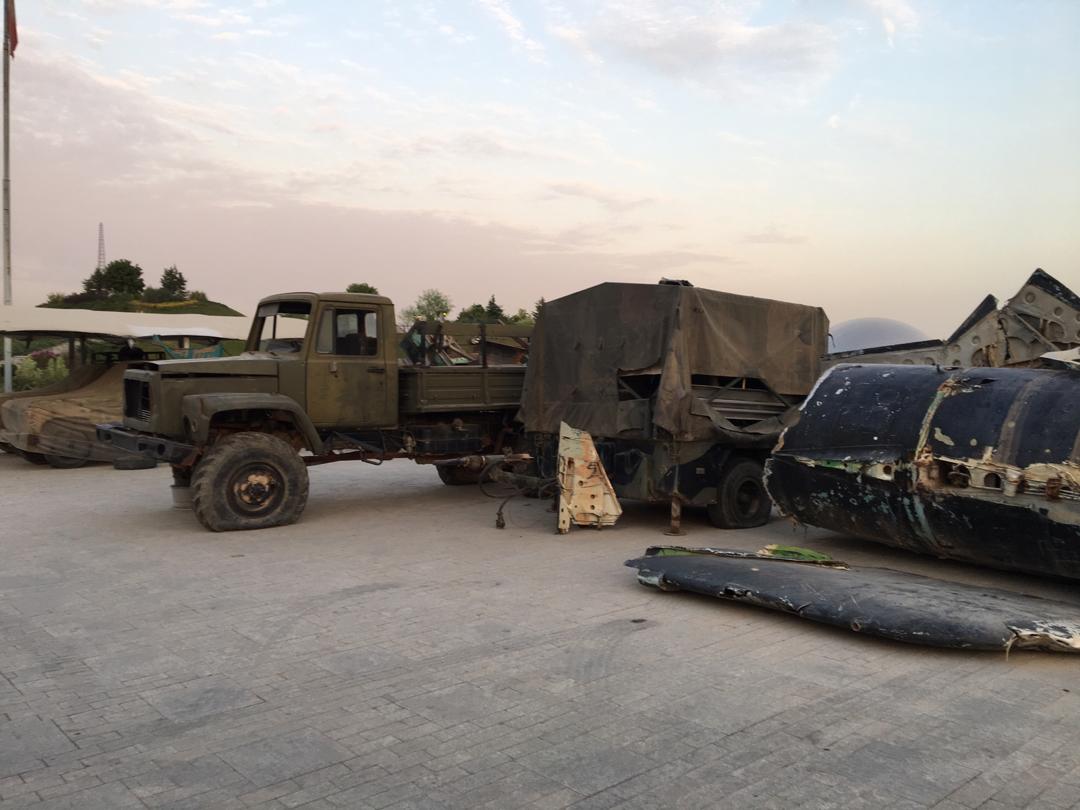
These weapons and vehicles were captured during the fight against this terrorist group throughout the Middle East.

Some of these weapons bear the ISIS logo on them.

ISIS Weapons, Equipment on Show in Tehran
‘Sacred Defence’ Museum in Tehran Displays Sacrifices Made to Save Iran

These weapons are the signs of fight against the terrorists who committed crimes against humanity in countries like Syria and Iraq.

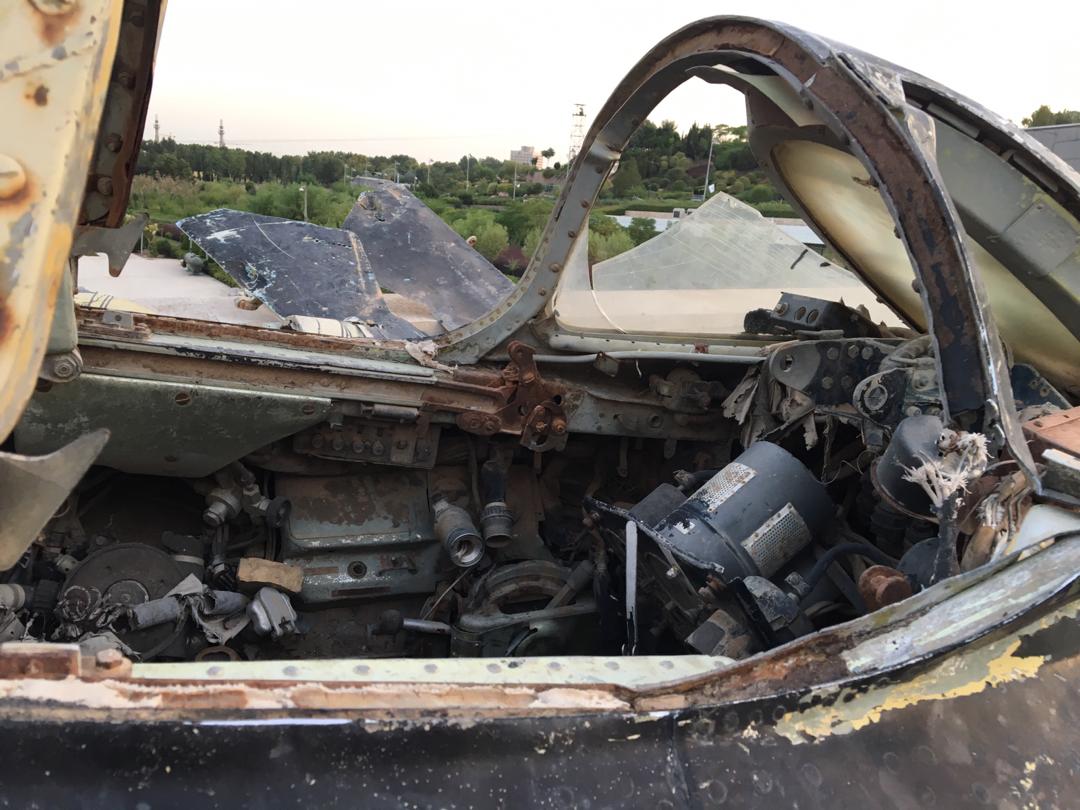
Along with the ISIS equipment, fighter jets remaining from the eight-year war imposed by Iraq on Iran in the 1980s as well as the cars damaged during terror attacks on Iranian nuclear martyrs are also displayed in this museum.

The Islamic Revolution and Holy Defence Museum is located in Tehran’s Haqqani Highway.

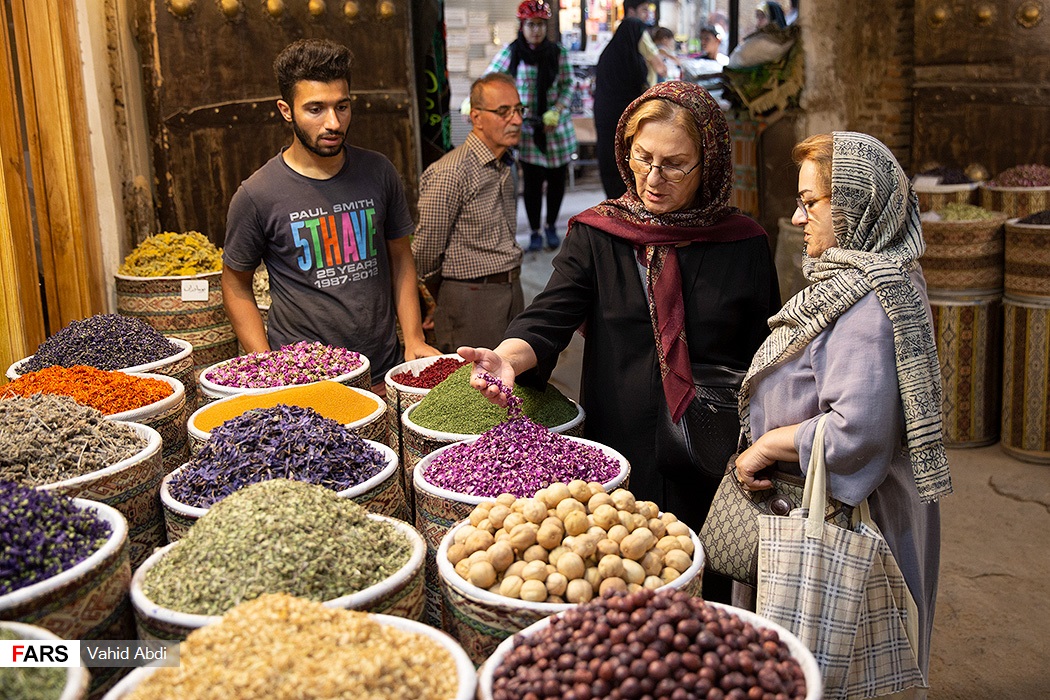
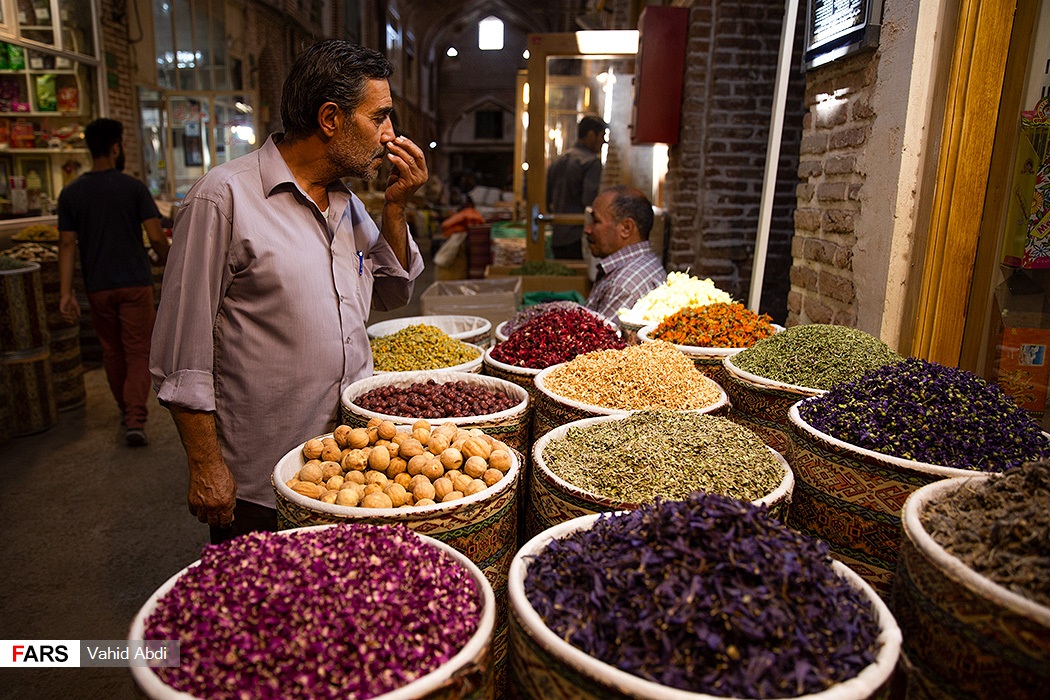
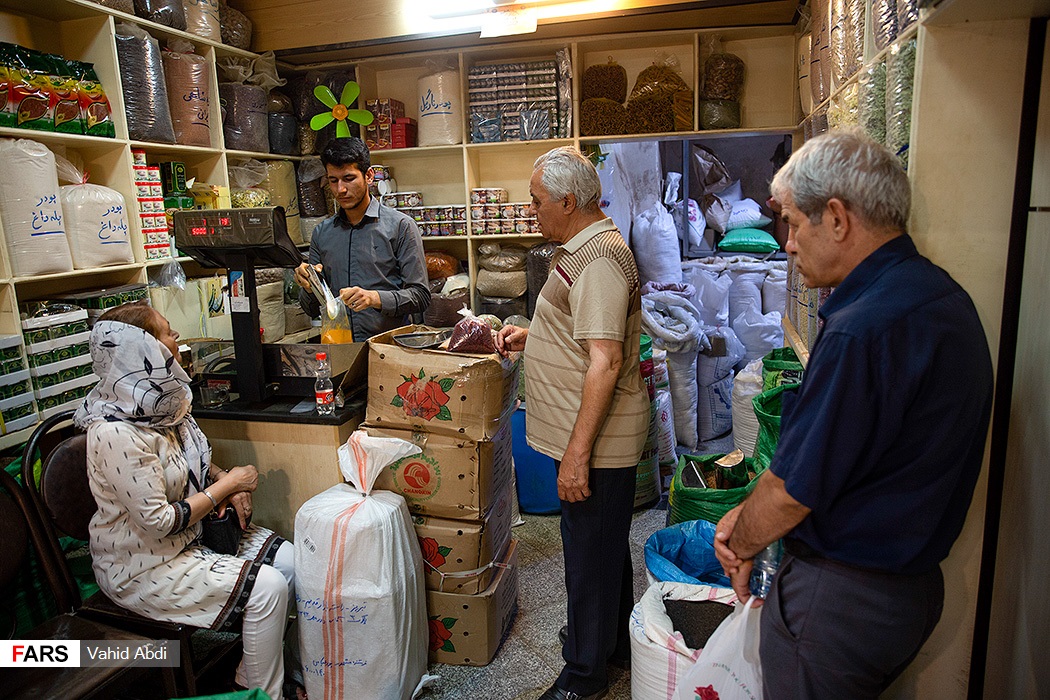
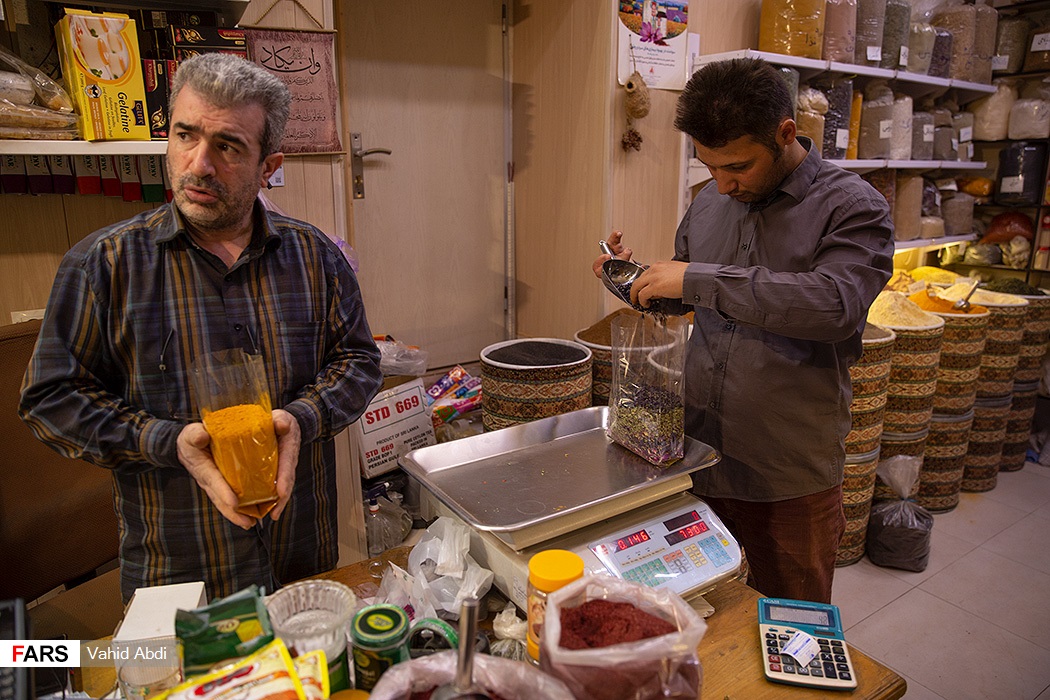
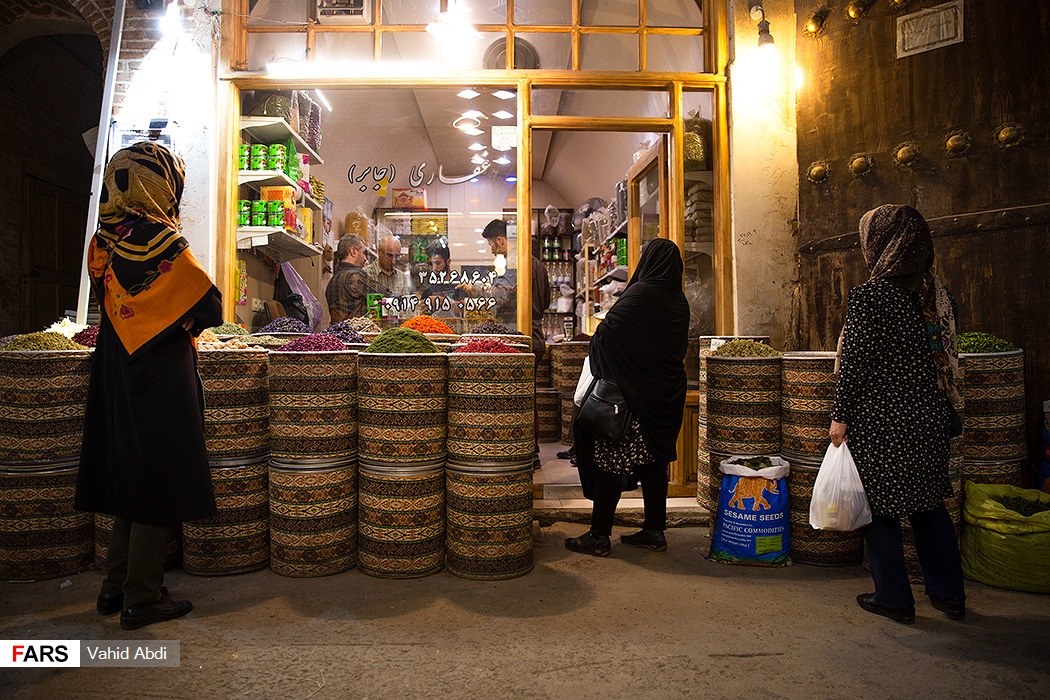
Iran’s Beauties in Photos: Tabriz Traditional Market

Tabriz Traditional Market

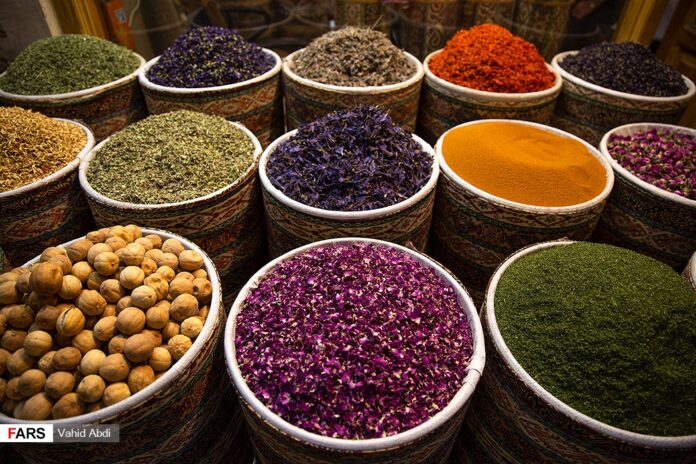
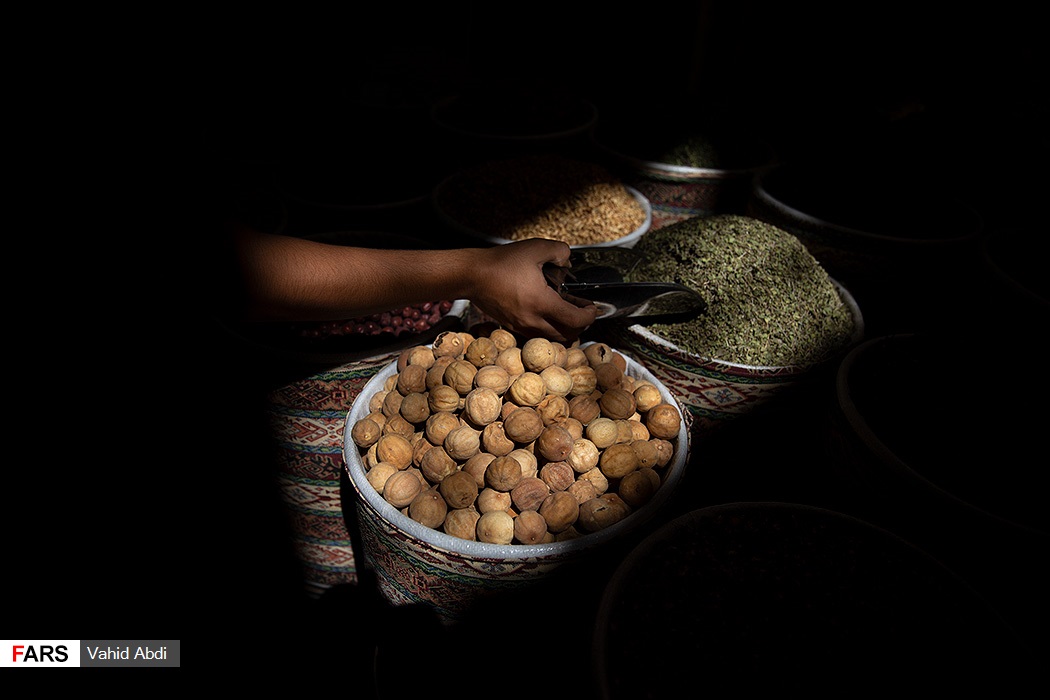
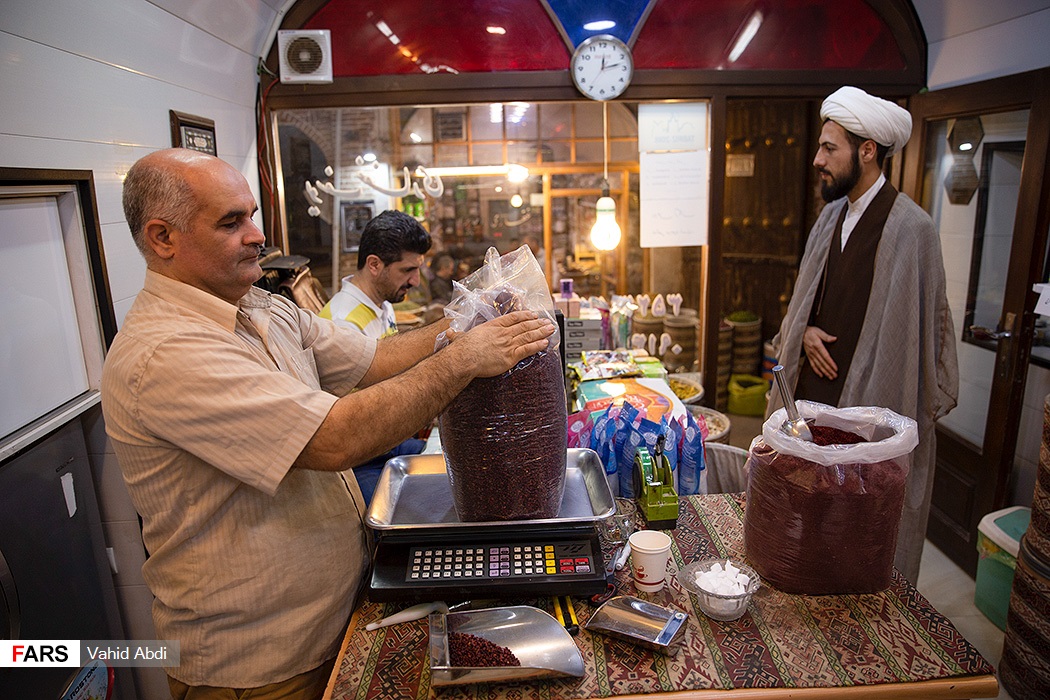
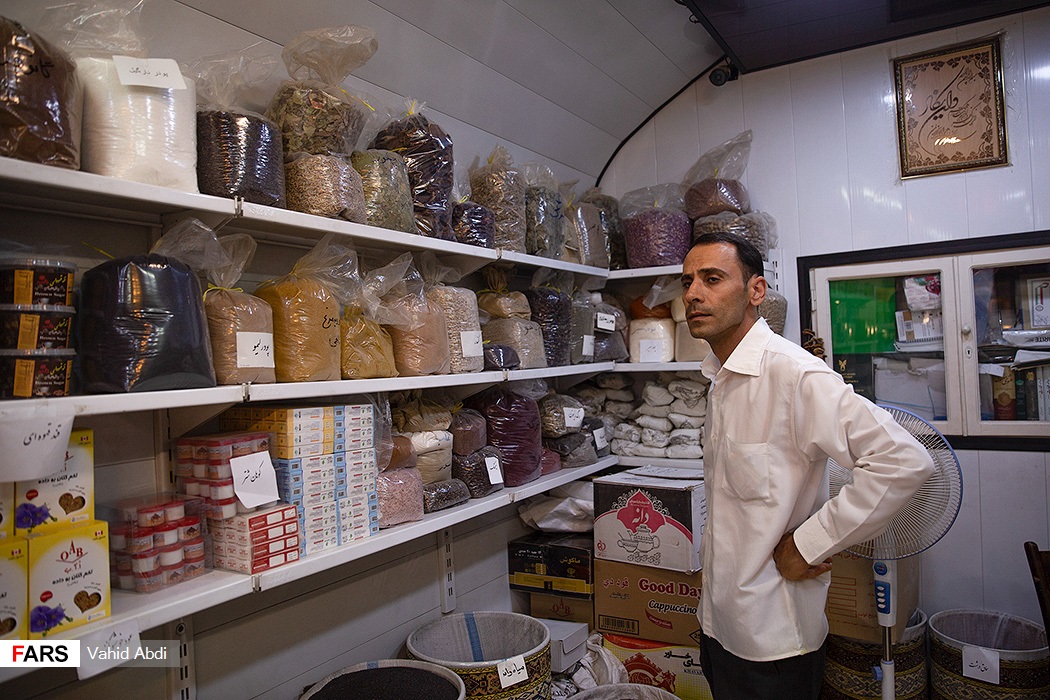
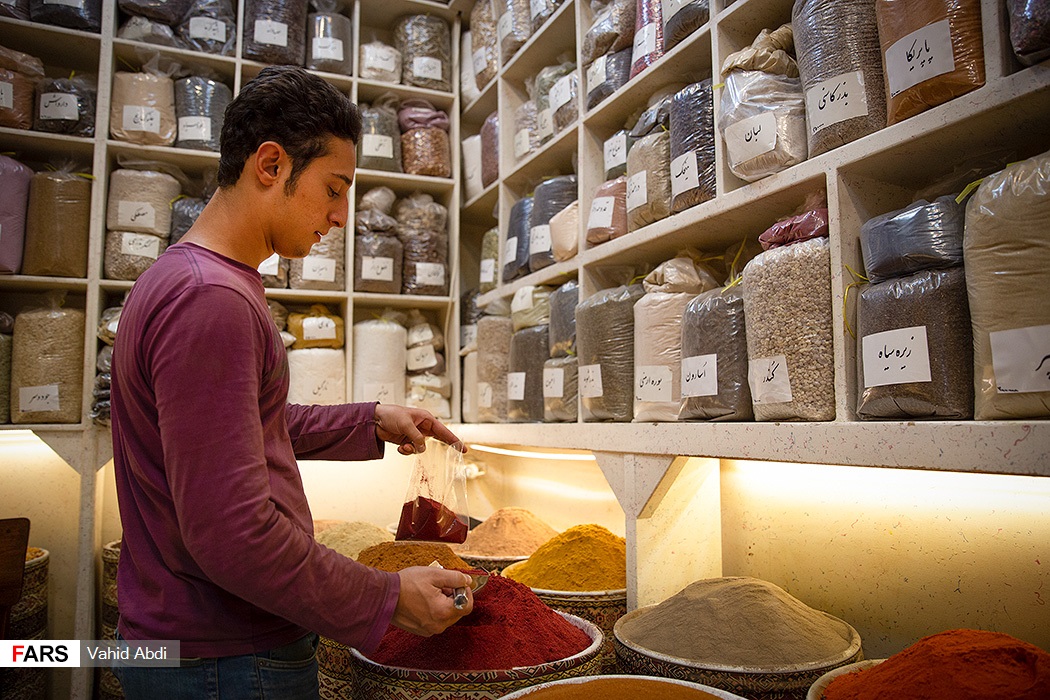
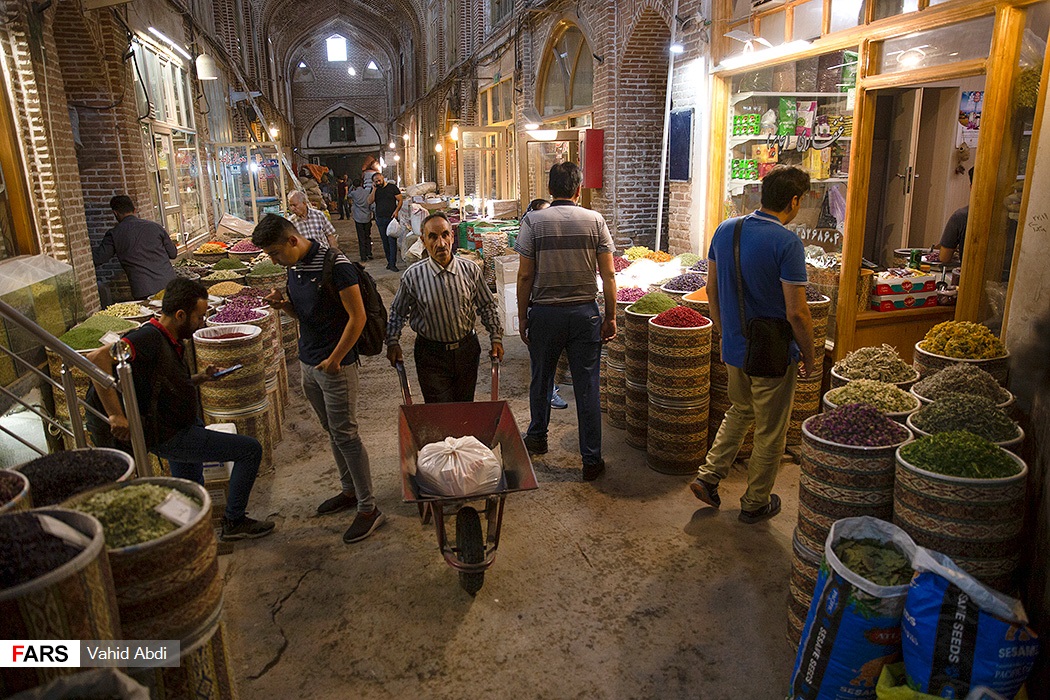
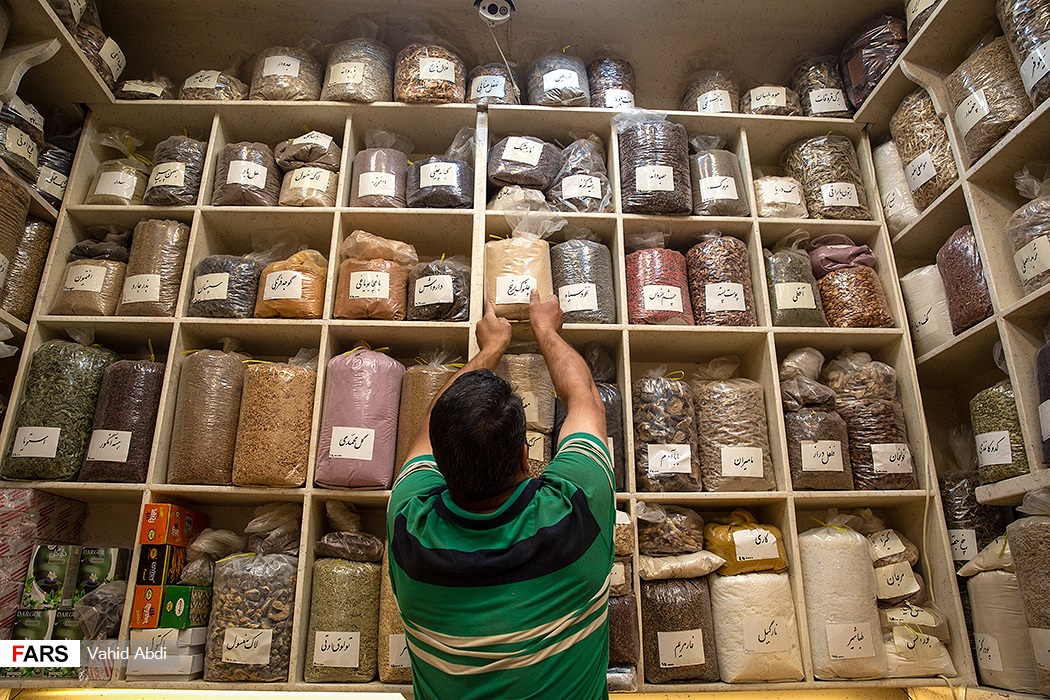
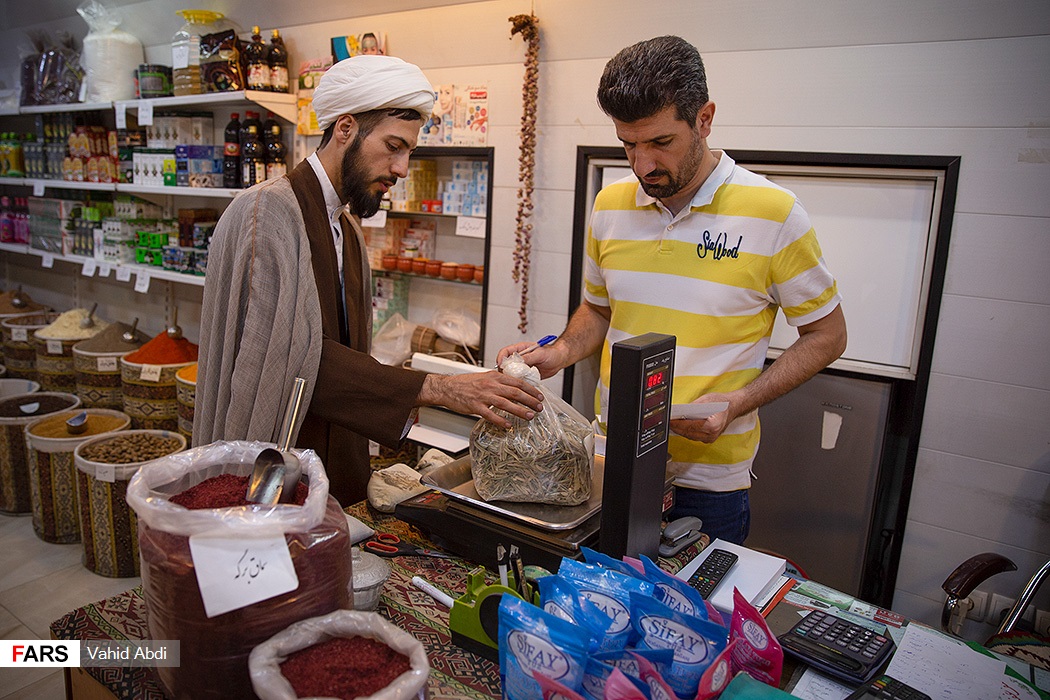
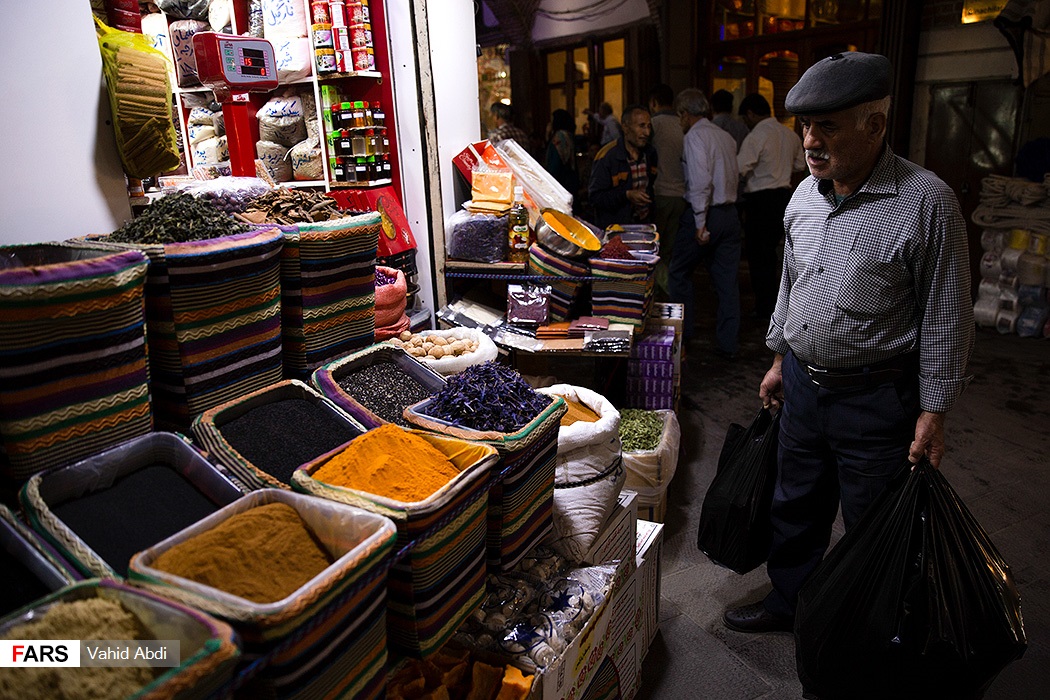
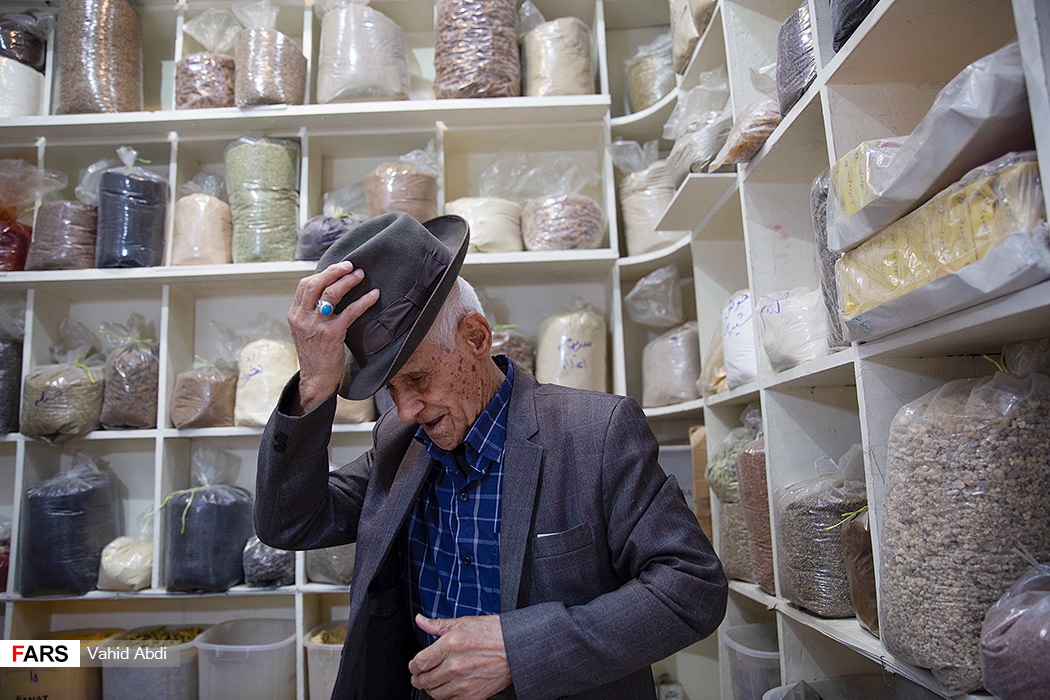
Various medicinal herbs are sold in Tabriz traditional market with its colourful grocery stores.

The use of medical herbs as a treatment for diseases is as old as the human existence.

People in ancient times had indeed no choice but to resort to medical herbs. The use of chemical and synthetic drugs intensified during past century; however the harmful effect of modern medicines made people resume taking medical herbs.

The traditional medicine in Iran dates back to the Aryan era: Avesta– the holy book of Zoroastrians- is the first Iranian book to speak about medical herbs.

According to Avesta, the first Persian physician was “Triteh”- the father of Garshasb, Iranian mythic hero- who knew about the use of medical herbs and extracts.

What follows are Fars News Agency’s photos of groceries  in Tabriz traditional market:

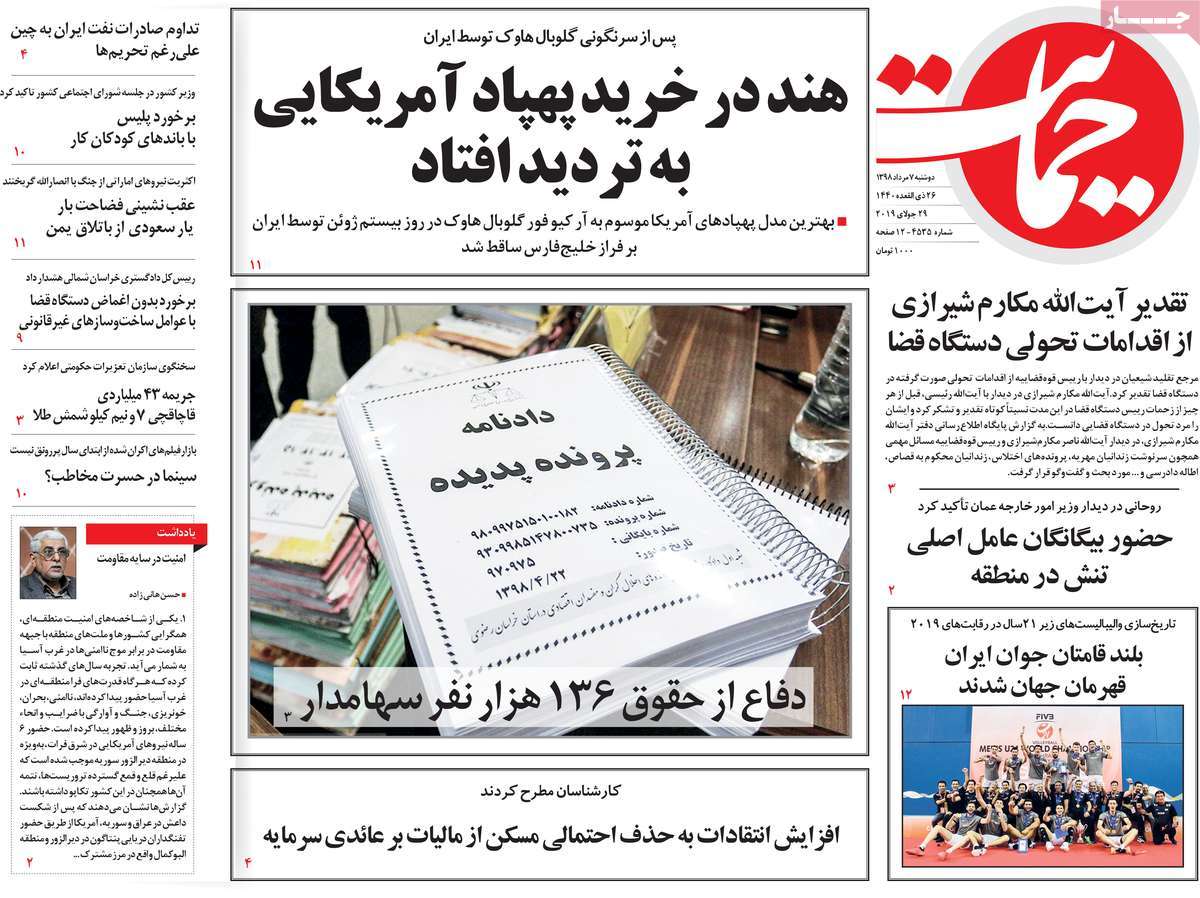
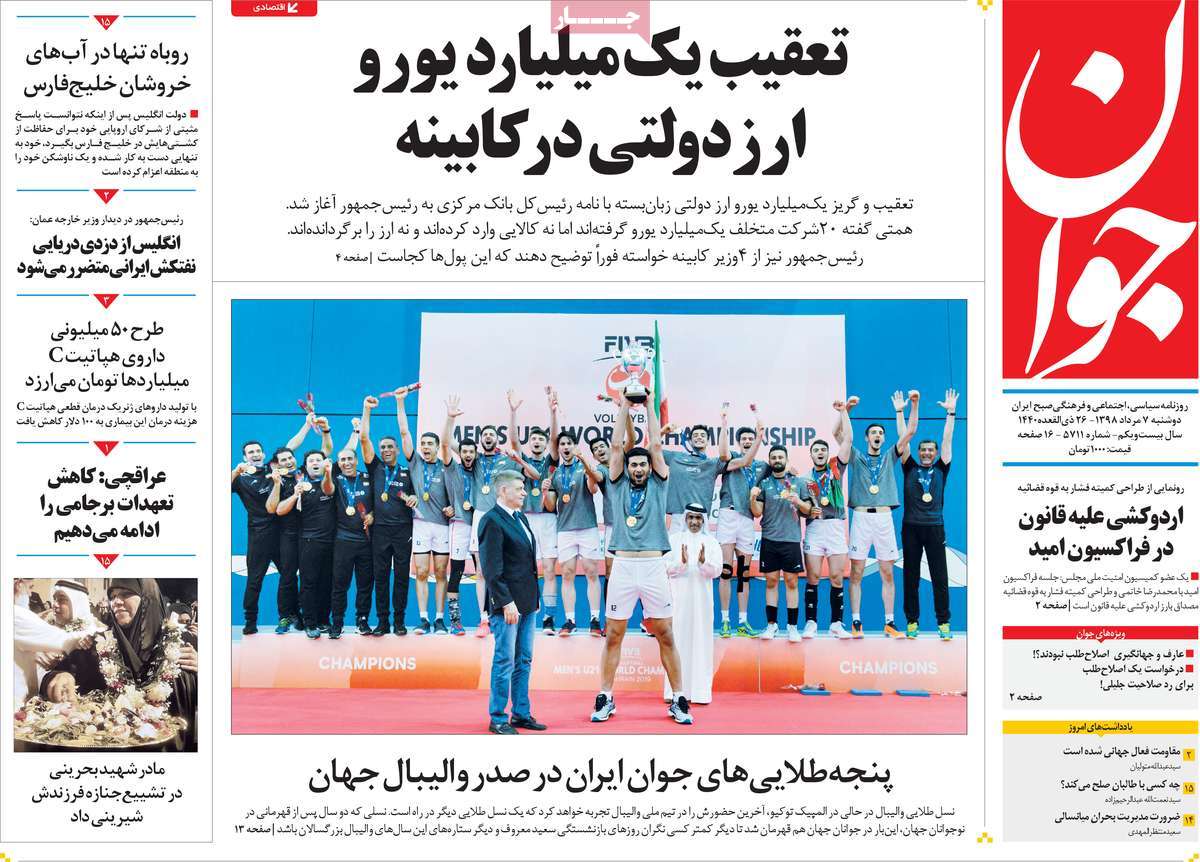
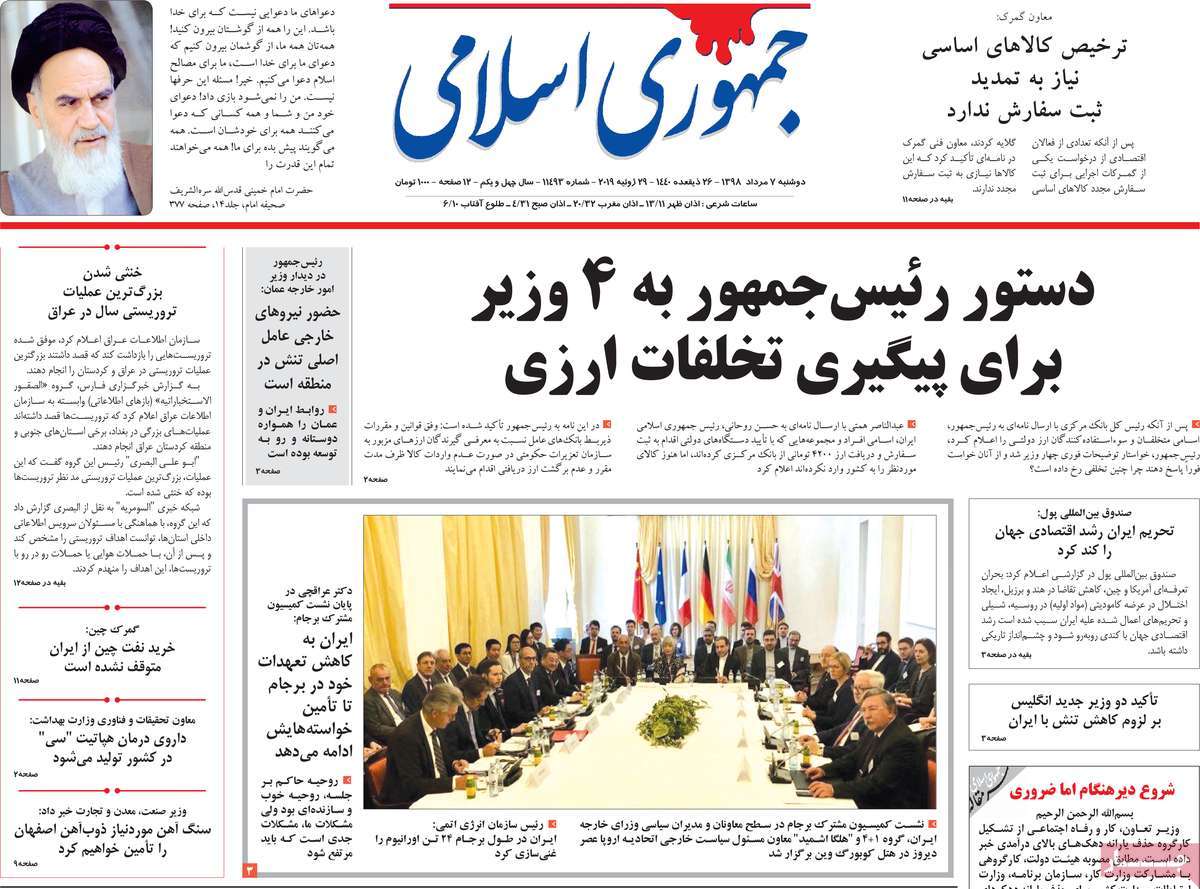
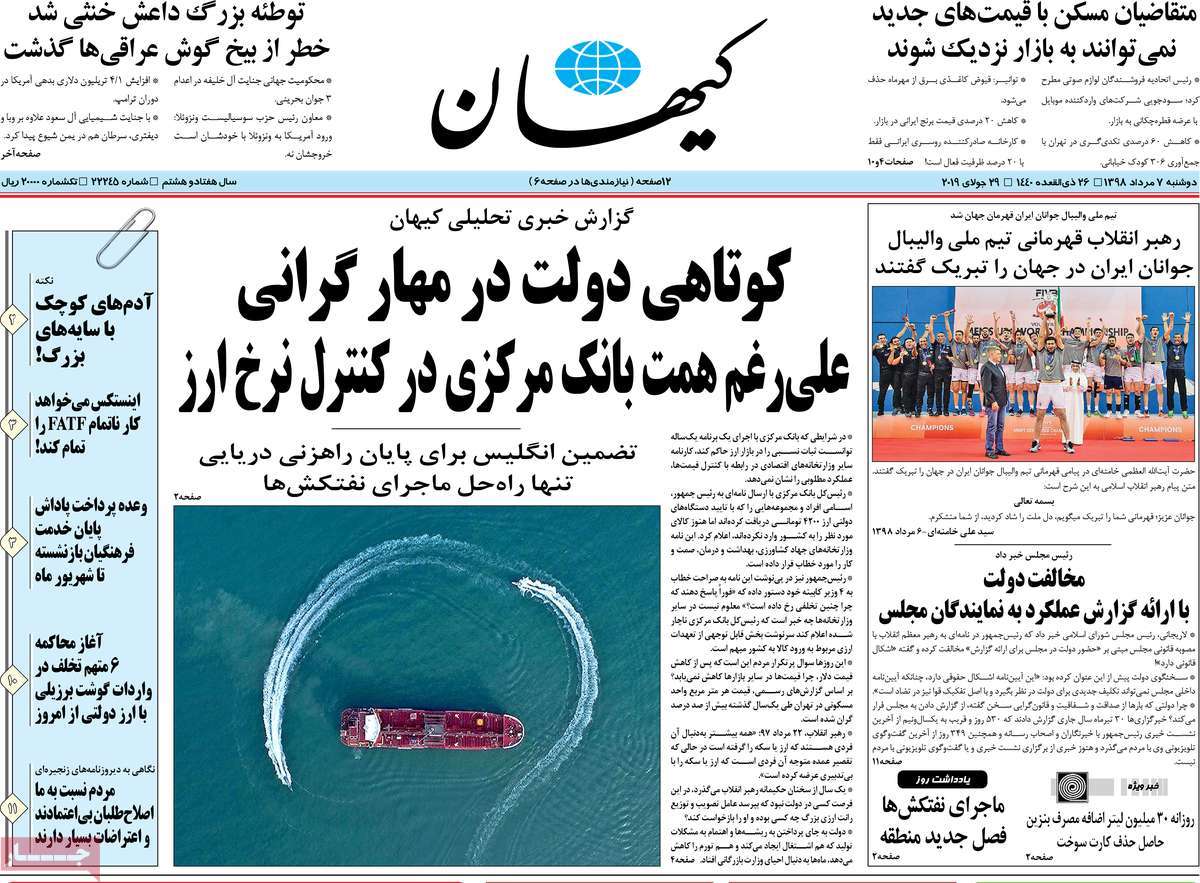
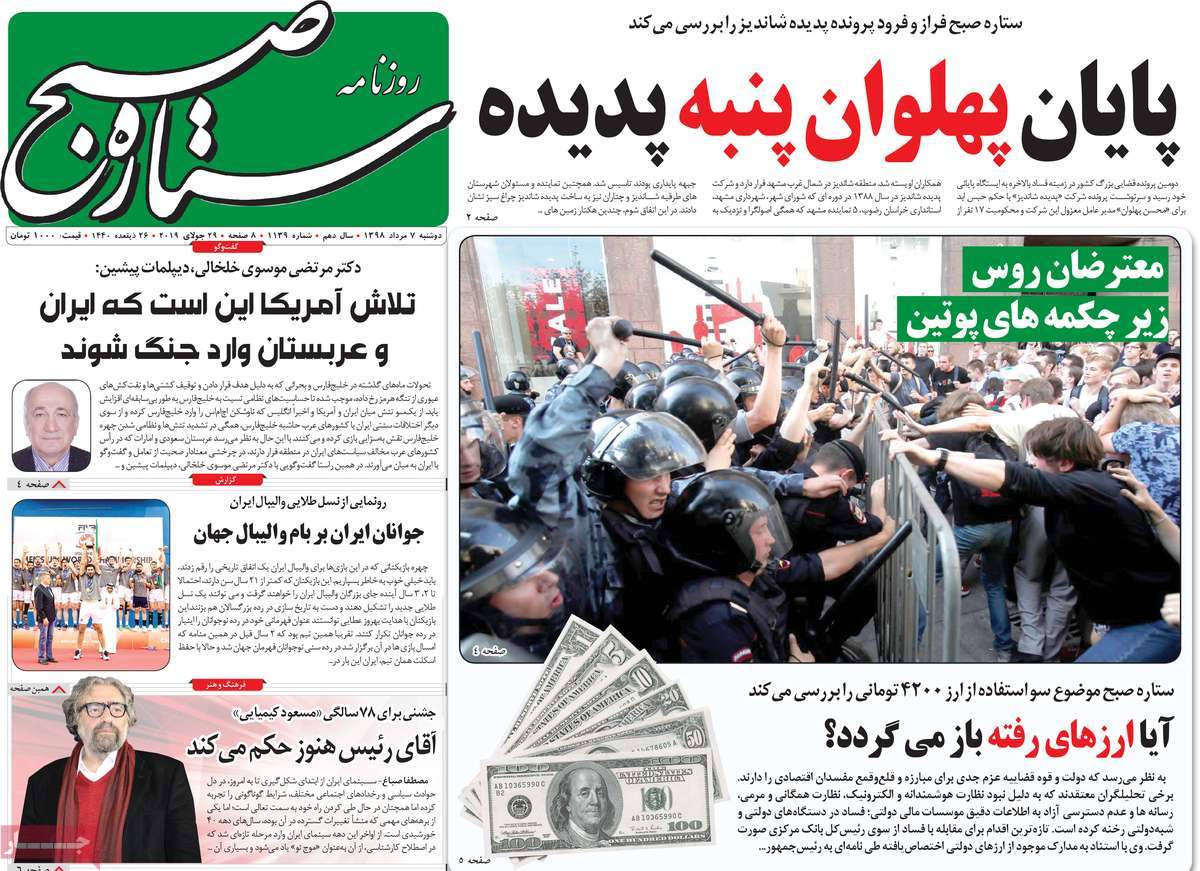
A Look at Iranian Newspaper Front Pages on July 29

A Look at Iranian Newspaper Front Pages on November 19

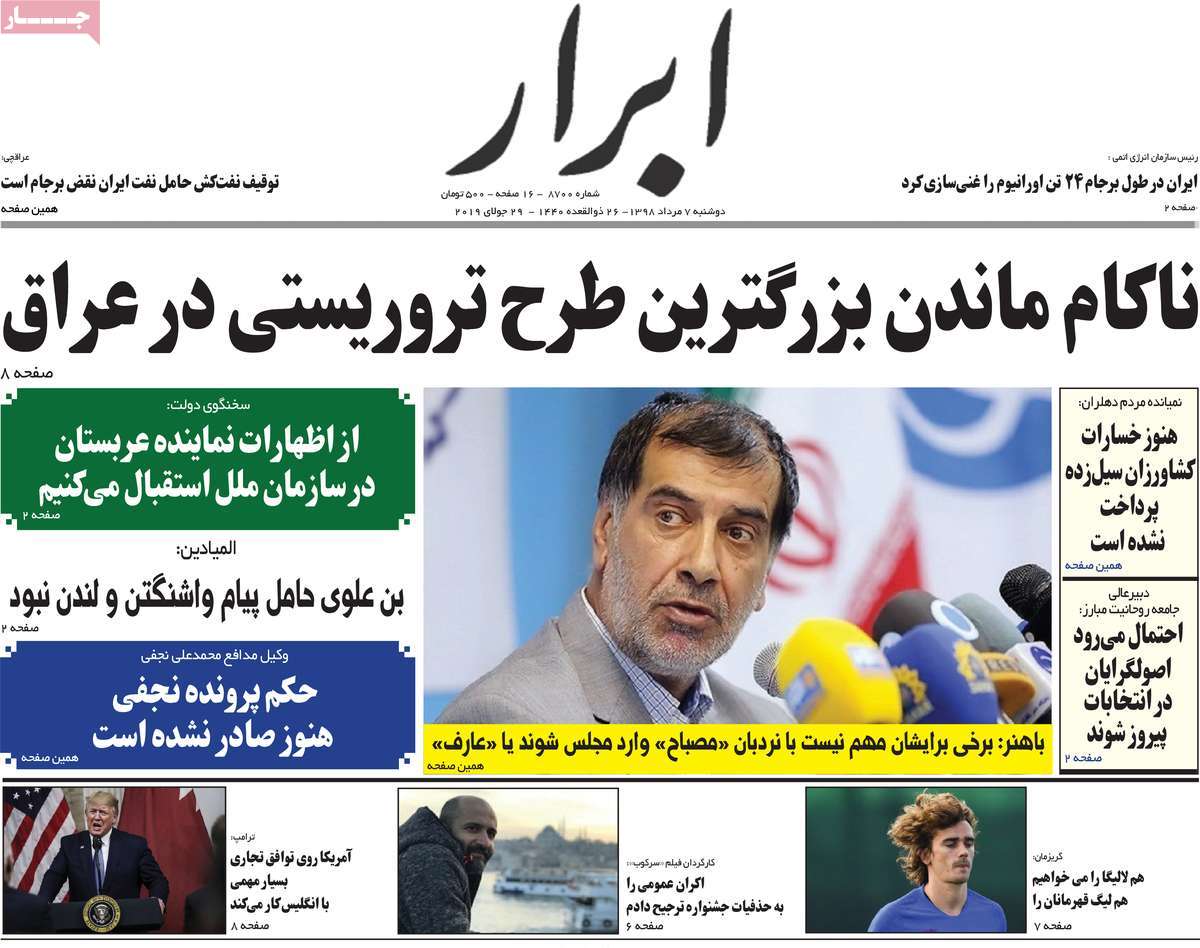
Abrar:

1- Biggest Terrorist Attack Foiled in Iraq

2- Nuclear Chief: Iran Has Enriched 24 Tonnes of Uranium during JCPOA Implementation

A Look at Iranian Newspaper Front Pages on July 29


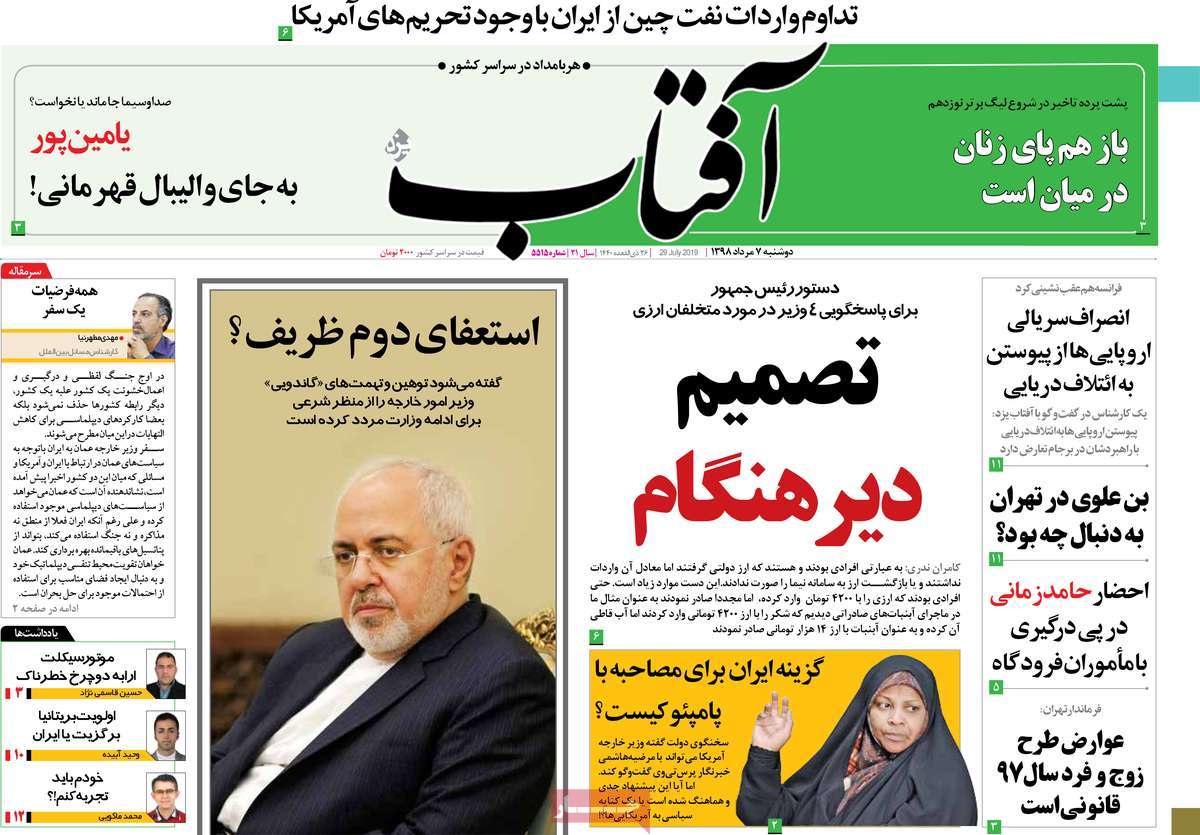
Aftab-e Yazd:

1- Europeans One by One Withdrawing from Joining Naval Coalition

2- Late Decision: Rouhani Urges Four Ministers to Be Accountable for Forex Offenders

A Look at Iranian Newspaper Front Pages on July 29


Asrar:

1- Araqchi: We’ll Continue Reduction of JCPOA Commitments as Long as Our Demands Are Not Met

A Look at Iranian Newspaper Front Pages on July 29


Donya-ye Eqtesad:

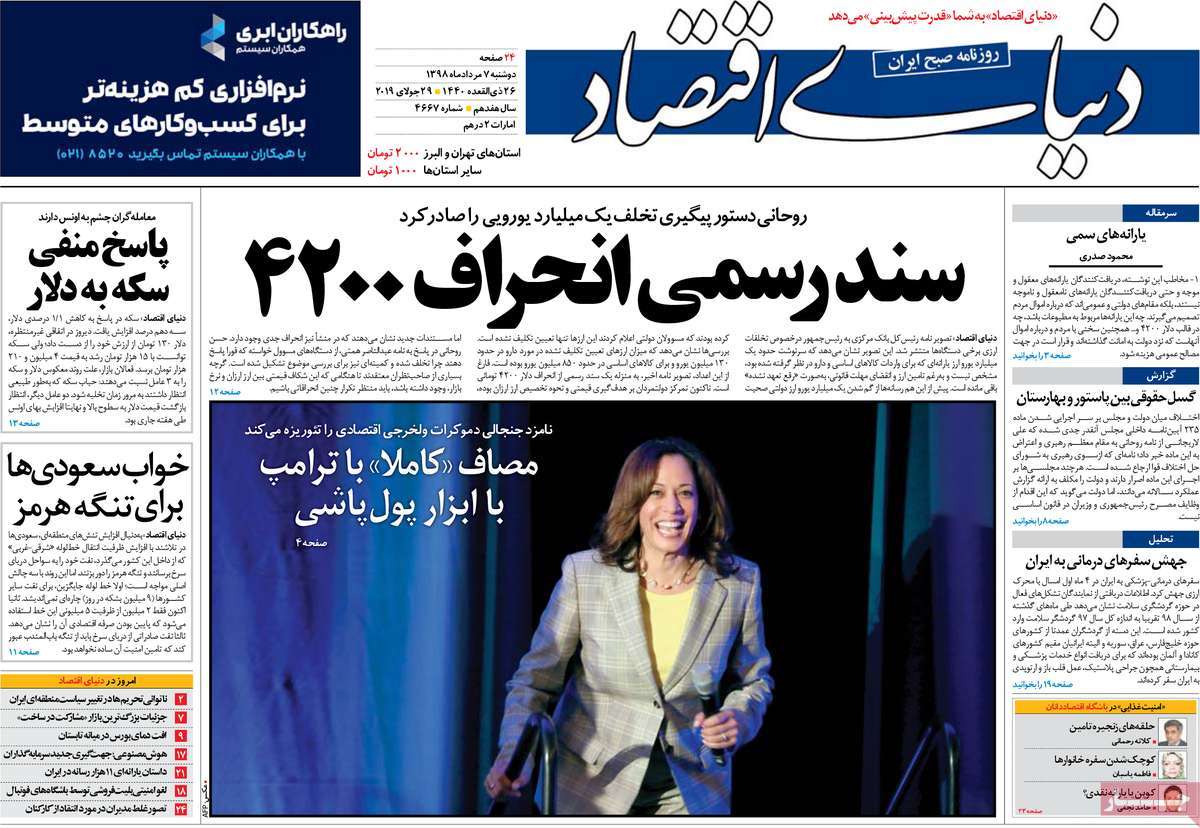
1- Kamala’s Clash with Trump: Theorization of Economic Extravaganza

A Look at Iranian Newspaper Front Pages on July 29


Ebtekar:

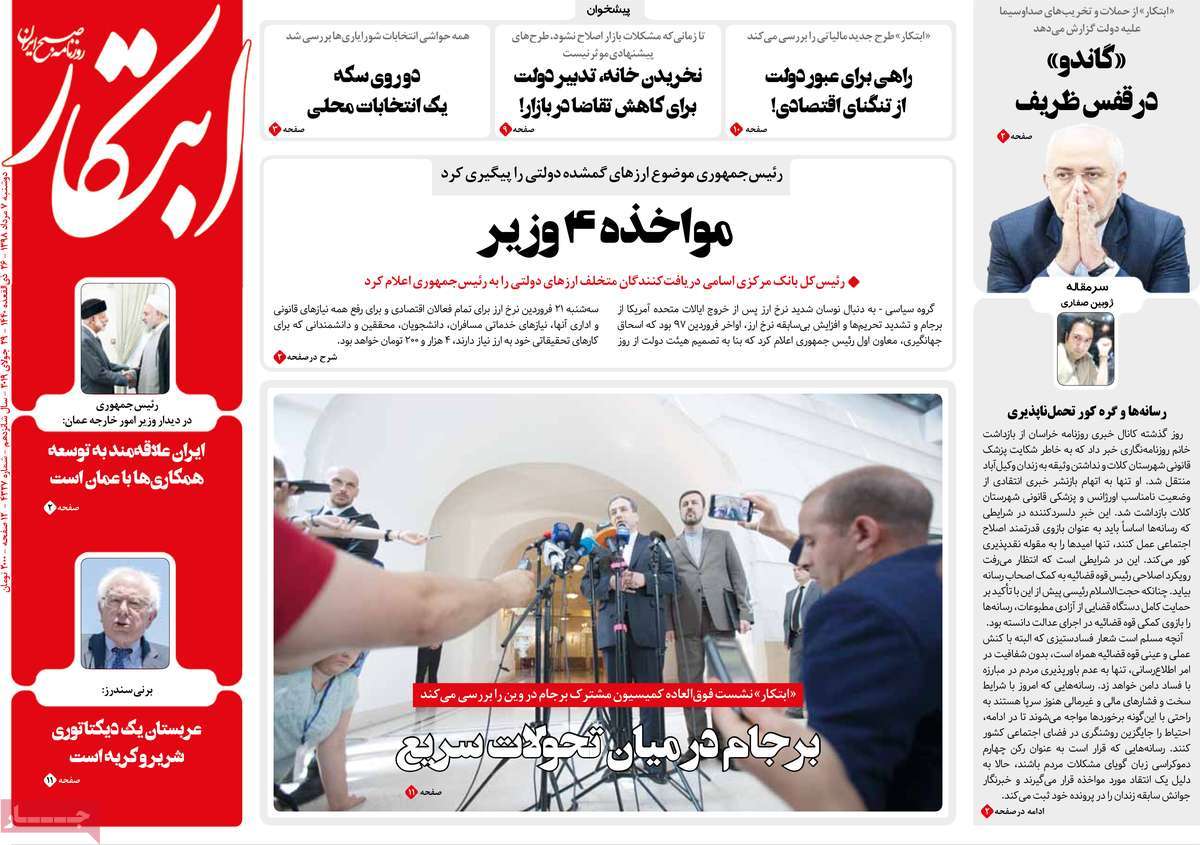
1- JCPOA amid Rapid Developments

* Extraordinary Meeting of JCPOA Joint Commission in Vienna

2- Sanders: Saudi Arabia Is Vicious Ugly Dictatorship

A Look at Iranian Newspaper Front Pages on July 29


Etemad:

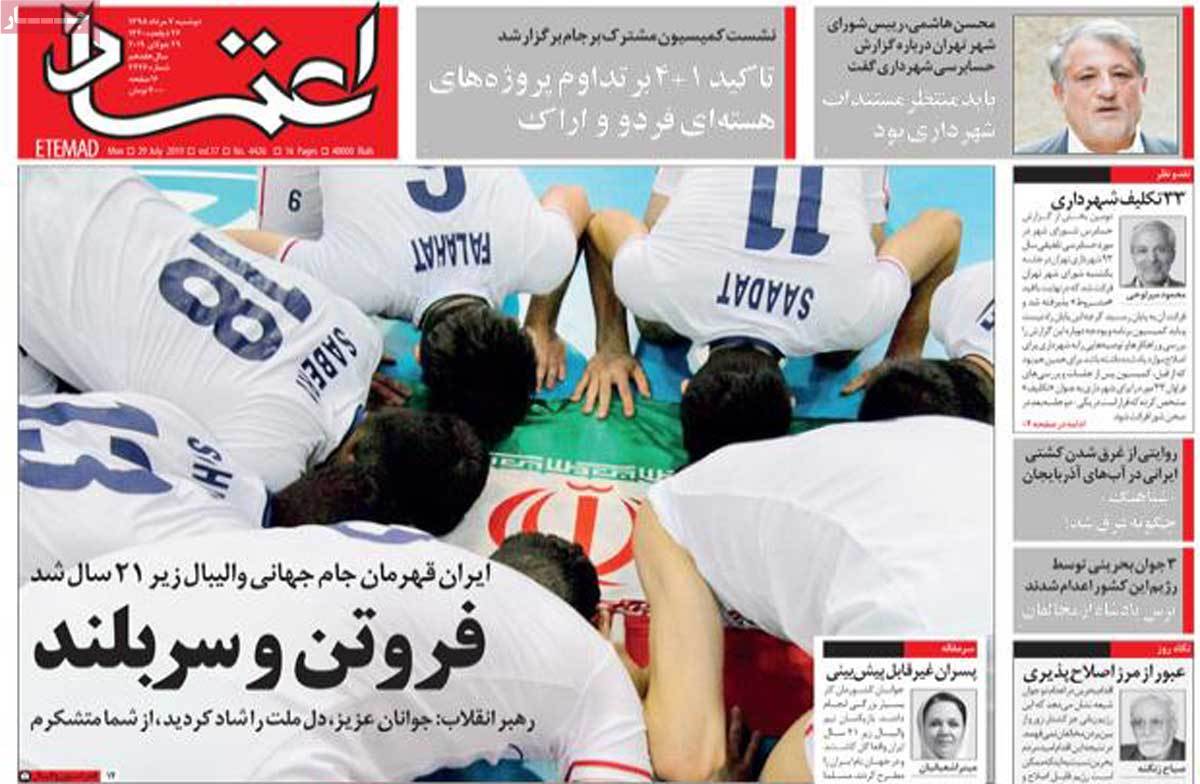
1- P4+1 Stresses Continuation of Fordow, Arak Nuclear Projects

2- Iran Claims World Title in U-21 Volleyball Championship

* Iran Leader Offers Congratulations

A Look at Iranian Newspaper Front Pages on July 29


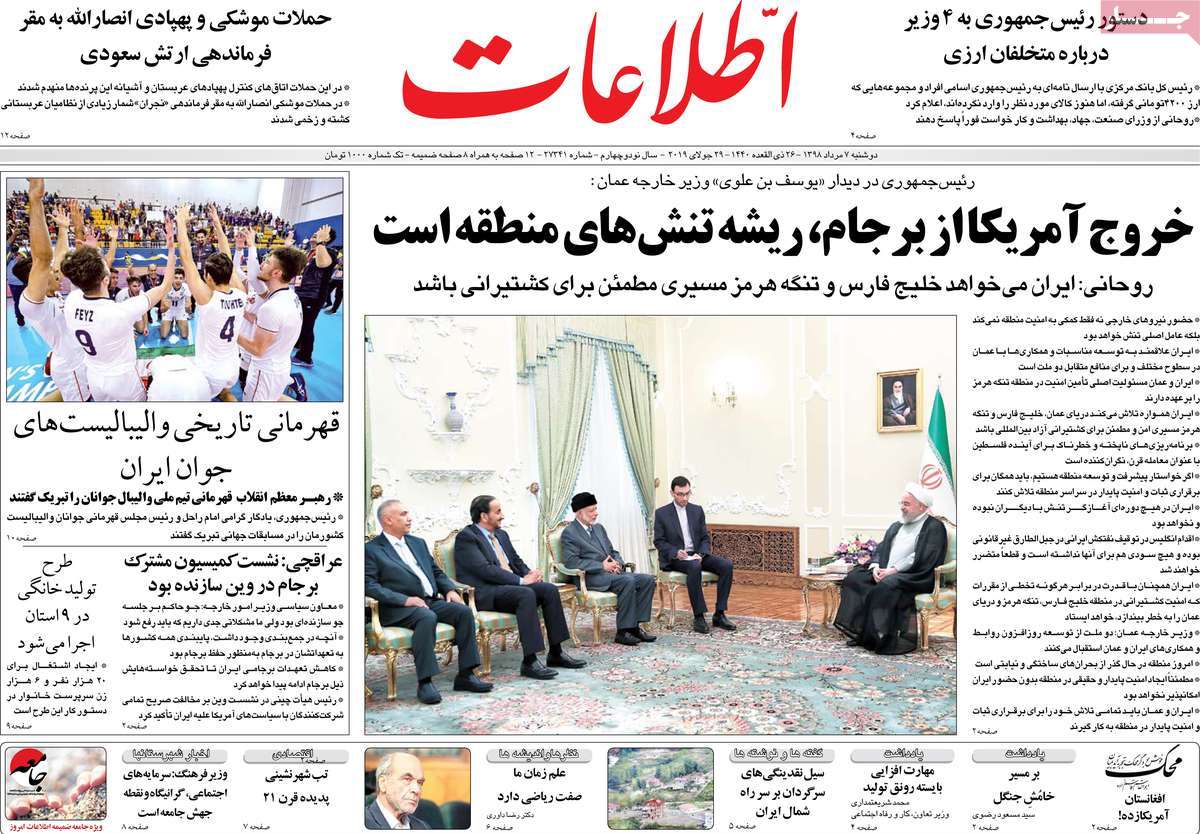
Ettela’at:

1- Rouhani to Bin Alawi: US Withdrawal from JCPOA Root Cause of Regional Tensions

2- Young Volleyball Players of Iran Make History

3- Araqchi: Constructive Talks Held in Meeting on JCPOA

A Look at Iranian Newspaper Front Pages on July 29


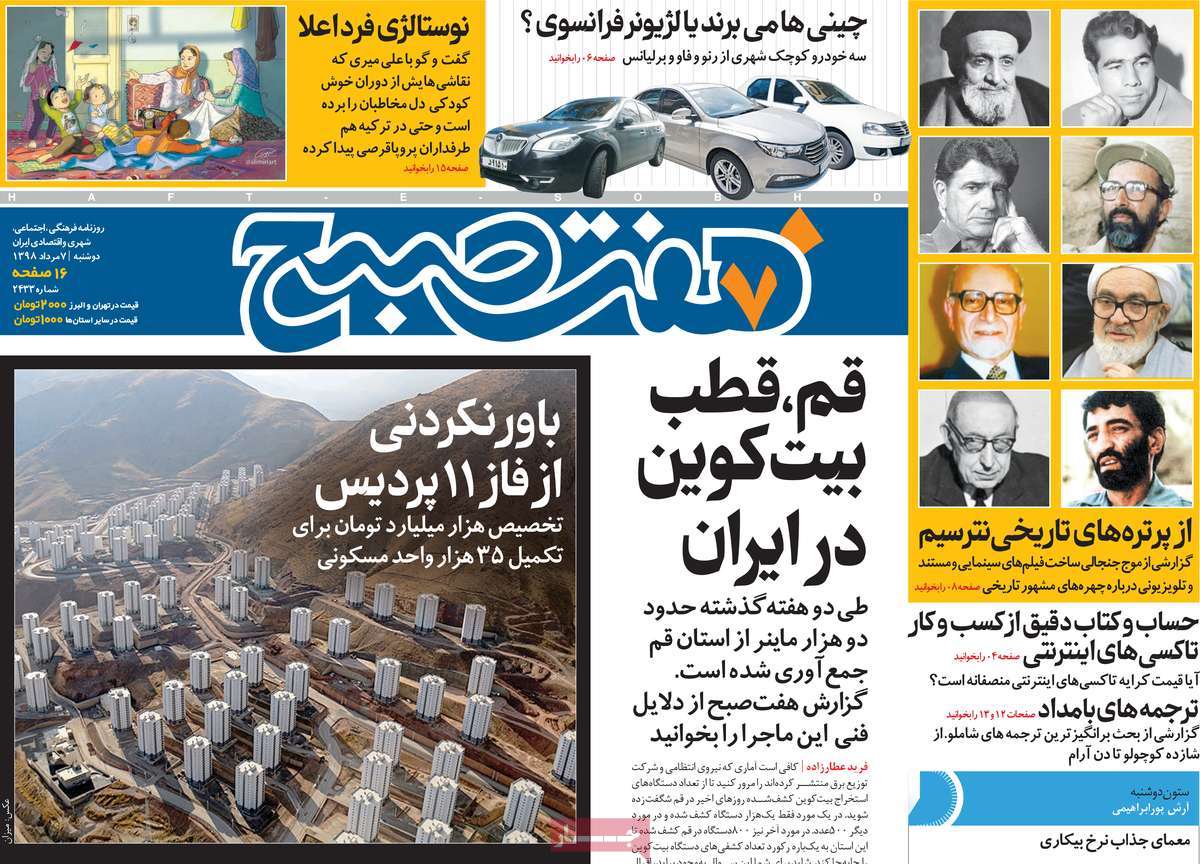
Haft-e Sobh:

1- Qom, Hub of Bitcoin in Iran

* Over 2,000 Cryptocurrency Miners Confiscated in Qom Province in 2 Weeks

A Look at Iranian Newspaper Front Pages on July 29


Hemayat:

1- India Uncertain about Purchase of US Drone after IRGC’s Shoot-Down of Global Hawk

2- Iran’s Continued Oil Exports to China Despite US Sanctions

A Look at Iranian Newspaper Front Pages on July 29


Javan:

1- Iranian Volleyball Players at Peak of the World

2- Rouhani to Oman: UK to Get Harmed by Stealing Iranian Tanker

A Look at Iranian Newspaper Front Pages on July 29


Jomhouri Eslami:

1- IMF: Iran Sanctions Slowed Down World Economic Growth Rate

2- Two New UK Ministers Stress Need for De-Escalation with Iran

3- Health Ministry: Medicine to Be Produced in Iran to Treat Hepatitis C

A Look at Iranian Newspaper Front Pages on July 29


Kayhan:

1- Iran Leader Congratulates U-21 Volleyball Team on World Championship

2- Gov’t Fails to Control Price Hikes Despite Central Bank’s Efforts to Control Forex Rates

3- Big ISIS Plot Neutralized in Iraq

A Look at Iranian Newspaper Front Pages on July 29


Setareh Sobh:

1- Russian Protesters under Putin’s Boots

2- Ex-Diplomat: US Trying to Engage Iran, Saudi into War

A Look at Iranian Newspaper Front Pages on July 29


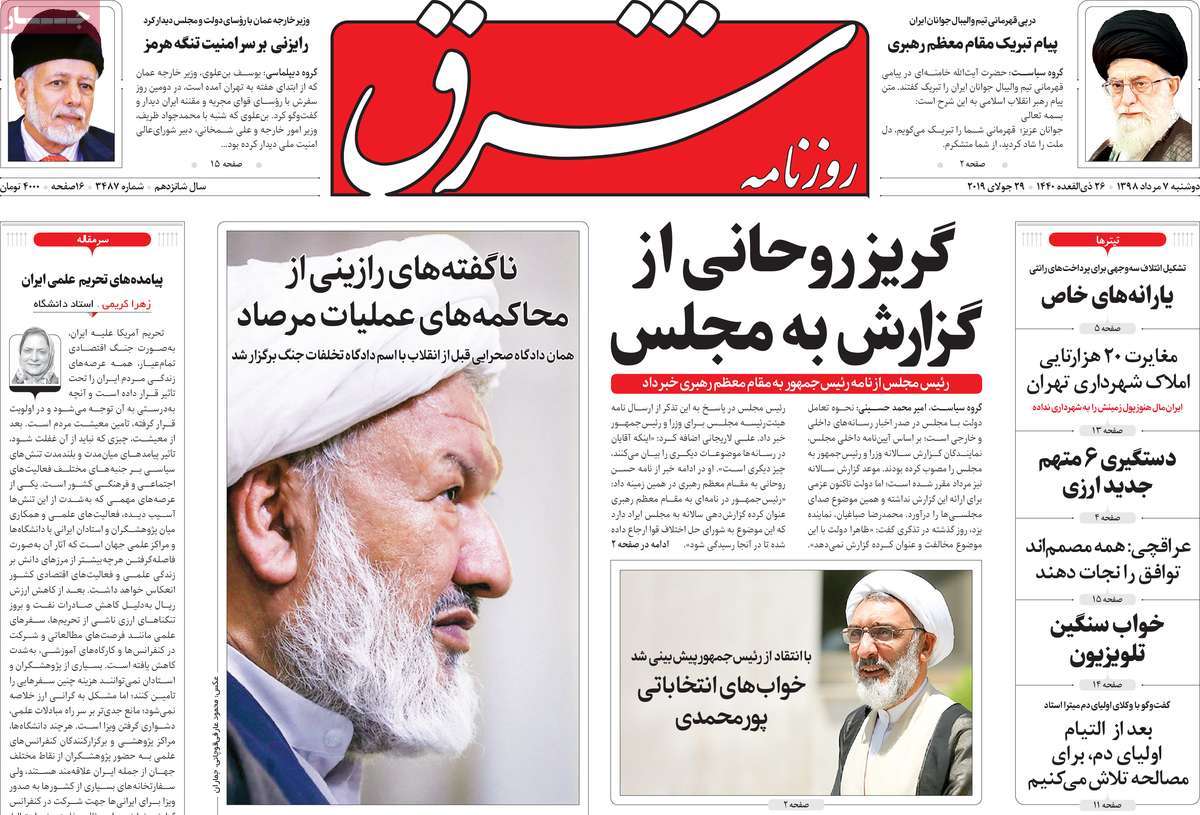
Shargh:

1- Consultation over Security of Strait of Hormuz

* Omani FM Meets Iran President, Speaker

2- Araqchi: Everyone Determined to Save JCPOA

A Look at Iranian Newspaper Front Pages on July 29

Iranian Documentary Shines in Foreign Festivals

The acclaimed documentary has already grabbed headlines in various international film festivals in the world with the latest award coming from Sole Luna Doc Film Festival held in the city of Palermo in Sicily, Italy.

Yasser Talebi is a young Iranian director who has managed to win the attentions in film circles in the world with his latest documentary film.

Iranian Documentary Shines in Foreign FestivalsThe film earlier received the best feature documentary award and a diploma of honour at the 15th Kazan International Muslim Film Festival in the Republic of Tatarstan, as well as a special mention from 25th edition of Shanghai Television Festival in China.

It was nominated for Estonian People’s Award at the 33rd Pärnu Film Festival in Estonia. The movie also received the best movie award from students’ point of view.

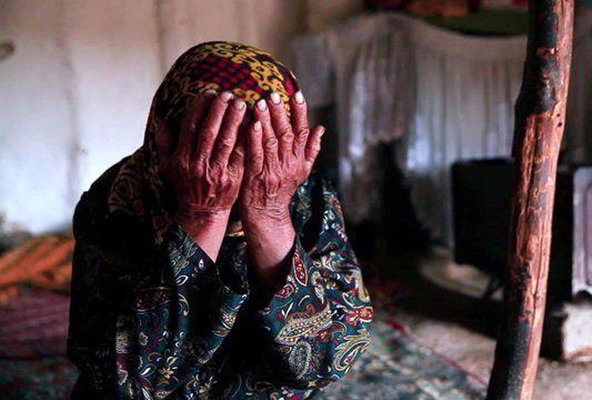
‘Beloved’ revolves around the life of an 80-year-old mother named Firouzeh who is fond of her isolated lifestyle in nature with her cows. The film depicts her kind and loving character and demonstrates her bravery and strength tackling the hardships of life in the Alborz Mountains without the modern comforts of technology. She believes happiness lies in the simplicity of life.

But the main question is why Beloved has won so much attention from international film festivals?

Nima Abbaspour, a film critic, elaborates on the features of the documentary, saying the main issue in the film industry is attraction. “International festivals usually focus on new themes which are part of a society which had remained unknown for them over the past years.”

He went on to say that the same principle applies to the Beloved documentary. “Here, we face an old mother living alone in the mountains. The film also depicts the encounter between humans and the nature which is attractive by itself. We should not ignore the cinematic attractions of the film.”

‘Elegant and Poetic’

The critic also said the Beloved enjoys some special features which make it distinguished from similar documentaries. He believes the film has managed to achieve some poetical aspects which are rare among other films.

“The documentary depicts the life of Firouzeh with an elegant and poetical view. This is the main feature of the film. It wins our attentions from the beginning. I think Talebi has been successful in his project,” he noted.

US Deploys Forces in KSA to Keep Al Saud in Power: Analyst

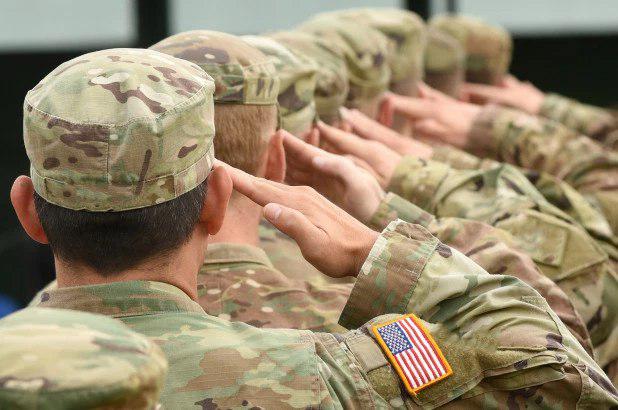
The US military began to deploy hundreds of troops, jet fighters and missile systems at a military base near Riyadh after the Saudi king gave the green light for the deployment and welcomed American troops on Saudi soil. This comes as tensions in the Persian Gulf have peaked and there is much speculation in that regard. The Saudis regard the US deployment as “boosting mutual cooperation in order to ensure regional security and stability.” The US Central Command also already announced that the deployment comes at the request of Saudi Arabia. The CENTCOM further said the move would give them further deterrence capability and redouble their ability to protect their interests and troops. Meanwhile, reports suggest that a full Patriot system has recently been deployed at the military base as part of the US Air Force movements in Saudi Arabia.

To discuss the issue further, Khabar Online news website has held an interview with Sabah Zanganeh, an expert on Middle East issues and a former Iranian ambassador to the Organization of Islamic Cooperation (OIC). Excerpts from the interview follow.

There is much speculation about the United States’ deployment of troops to Saudi Arabia. What do you think the main objective of this move is?

Most American survey centres have suggested that the reason for this move is a disruption of the political system in Saudi Arabia and the emergence of possible chaos as a result. All this comes amid pressure and the repercussions of the Yemen war as well as differences within the Saudi royal dynasty plus the possible demise of the country’s king, i.e., Kind Salman. Accordingly, US authorities, too, are seeking to monitor developments closely and keep control of the situation. In the meantime, the base that Washington has chosen is located near Riyadh, the political hub of Saudi Arabia.

What is it that has made the Americans worried about Saudi Arabia’s domestic issues?

As we know, several religious figures and princes were imprisoned during the course of domestic political developments in Saudi Arabia. This has triggered protests that could flare up on the future. Accordingly, these developments can touch off dissatisfaction among religious people in Saudi Arabia, which, in turn, can further escalate the situation.

What goal is the US pursuing in Saudi Arabia’s internal issues?

What is important is that uncertainty hangs over the future of Washington-Riyadh relations if the current Saudi rulers do not remain at the helm of affairs. Therefore, Washington seeks to keep the current ruling elite in power, and immediately replace those members of the Saudi dynasty who have died, so that close Saudi-US relations will not be harmed.

So, you don’t believe that the deployment of US troops to Saudi Arabia is somehow aimed at confronting Iran?

The US does not need so many forces in order to confront Iran. The US already has around 100,000 other troops on the ground in regional countries such as Qatar, the United Arab Emirates (UAE), Oman, Kuwait, Iraq, Pakistan, Turkey, etc. Moreover, given that the US also has bases in the region in addition to its troops, it seems the deployment of American forces to Saudi Arabia is due to Riyadh’s internal concerns. The Saudis, too, would like to preserve their dynasty and their rule at any cost.

Saudi Arabia has announced that the deployment of American troops on its soil is aimed at striking a balance in the region as Iran, Russia and Turkey have gained considerable influence in the region, and Turkey has recently taken delivery of S-400 missile systems. To what extent is this proposition justifiable?

The Saudis have always resorted to such justifications, and they have repeated the same justifications this time again in order to somehow justify the presence of foreign forces on their soil. As we know, the Saudi society is generally a religious one, and such a society has been and will remain opposed to the presence of foreign troops in the country. So, bringing up such issues is aimed at deceiving the public opinion.

Given the recent developments in the region such the deployment of US troops to Saudi Arabia and tensions in the Persian Gulf, what do you think the future holds? Will tensions begin to ease, or are we going to witness conflict in the near future?

War in the region will be meaningless without the presence of the United States. This country is on the verge of entering the election season, and any involvement in tensions and conflicts would amount to a setback for US election plans. Furthermore, without the presence of the US, no regional country will have the power or the courage to get involved in a fresh war. On the other hand, it seems political and economic pressure as well psychological warfare will increase.

However, whether or not these things can fill the void caused by a lack of US presence is another thing. We even see that the issue of escorting ships gradually begins to get out of the “coalition” mode and take on an “individual” form. We should look into the reasons behind the United States’ reluctance. Is it due to inability or domestic pressure, or are other considerations involved? At the end of the day, such a situation will make decision-making for other countries more difficult.