Wednesday, April 8, 2026
Home Blog Page 3126

Yemen Warns Foreigners to Leave Saudi Aramco Oil Facilities

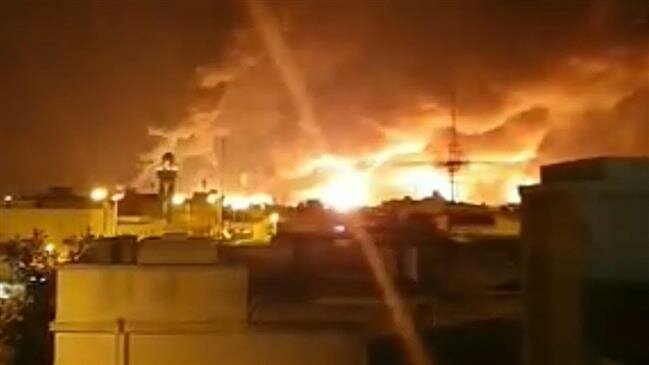
The warning came after Houthis and their allies in the Yemeni army deployed as many as 10 drones to bomb Abqaiq and Khurais oil facilities run by the Saudi state-owned oil company before dawn Saturday.

Spokesman for the Yemeni armed forces, General Yahya Sare’a, said in a tweet Monday that the attacks in the kingdom’s eastern region had been carried out by drones with normal and jet engines.

He said Saudi Arabia should stop its “aggression and blockade on Yemen,” or see the Yemeni army hit the kingdom “anywhere and anytime” it chooses.

Other Yemeni officials dismissed claims that the country is incapable of carrying out on its own the kind of attacks that targeted two plants at the heart of Saudi Arabia’s oil industry.

Mohammed al-Bukhaiti, a member of Yemen’s Supreme Political Council, pledged that Yemeni forces will continue to pound the Saudi oil industry until the kingdom ends its deadly war.

The unprecedented attack knocked out more than half of Saudi crude output, or 5% of global supply, prompting Saudi and US officials to claim without any evidence that it probably originated from Iraq or Iran.

Bukhaiti told Iran’s Tasnim news agency that blaming the attacks on other countries shows “cowardice” in facing up to the reality of Yemen’s military power.

“Saudi Arabia declared war against Yemen on the grounds that our missile inventory posed a threat to its security,” he said. “Today, we are surprised to see that when we hit Saudi oil wells, they exonerate Yemen from conducting these strikes and accuse others of doing them.”

“This is viewed as an own criminal decree of conviction. It also shows their cowardice,” Bukhaiti added.

US Secretary of State Michael Pompeo was quick to blame Iran for the brazen attacks, claiming there was no evidence the drones had originated from Yemen.

Bukhaiti mocked the proposition, saying Washington resorted to such rhetoric to hide the fact that their radars were simply incapable of tracking Yemeni drones.

“America and Saudi Arabia’s radars cannot intercept Yemeni aircraft. If they could intercept them, they would have shot them down,” he argued.

Bukhiati said the fact that Pompeo did not produce evidence to substantiate his claim showed they were “bankrupt” both politically and militarily.

Iranian Foreign Ministry spokesman Abbas Mousavi dismissed Pompeo’s allegations as “blind and fruitless remarks” that were “meaningless” in a diplomatic context.

Iranian Foreign Minister Mohammad Javad Zarif also responded to Pompeo, saying the United States had failed in its campaign of “maximum pressure” and was now “turning to ‘max deceit’.”

Bukhiati made it clear that the Houthis would only stop attacking Saudi Arabia once it abandons “serving US interests” and starts respecting the interests of its own people.

“Ending the war now is no longer a shared interest of Yemen and Saudi Arabia. Rather, it benefits Saudis more than it does Yemen because Yemen doesn’t have much to lose,” he said. “Yet we are witnessing Saudi Arabia’s stubbornness because it is the United States that decides for them.”

“These attacks will automatically stop when Saudi Arabia ends its aggression and lifts its blockade against Yemen,” he said. “These operations will only expand and target facilities that are more vital and more sensitive than oil facilities.”

Iran, Iraq not involved in Aramco attacks: Yemen air force

Yemen’s air force also issued a statement on Sunday, denying reports that Iran and even Iraq might have played a role in the attack.

“We confirm that these operations were carried out from Yemeni territories and by the Yemeni Army and Popular Committees,” said Brigadier General Abdullah al-Jefri, head of the Yemeni air forces.

“Therefore, whatever is being said about Iran’s support for us or allegations that these attacks were carried out from inside Iraq or through Lebanon’s Hezbollah are absolutely wrong,” he said.

“Such statements and blind and fruitless accusations are unfathomable and meaningless,” he added.

Iraq denies allegations on Aramco attacks

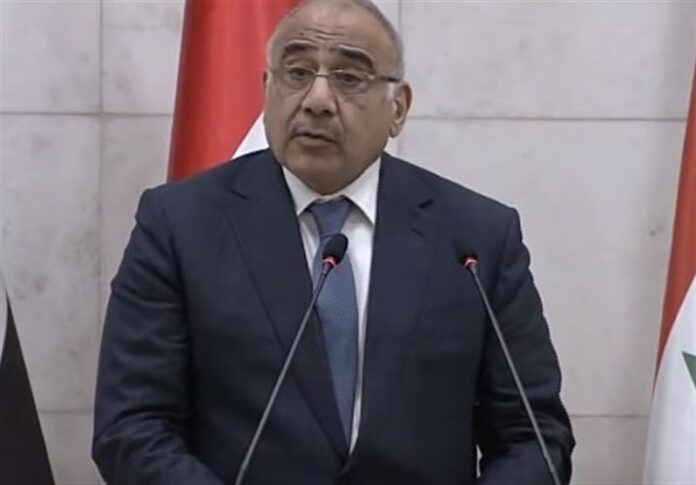
The Iraqi cabinet said Sunday that claims about its territory being used as a base for the attacks held no value, stressing that the country would never become a platform to attack other countries.

“Iraq denies what has been circulated by some media outlets and social media about the use of its territories to attack Saudi oil installations by drones, and affirms its constitutional commitment to preventing the use of its territories for aggression on its neighbors, brothers, and friends,” the Cabinet Office said in a press statement.

“The Iraqi government will deal firmly against anyone who tries to violate the Constitution. It has formed a committee of the relevant Iraqi parties to follow up information and developments,” explained the Cabinet Office.

The statement also called on warring parties to stop hostilities, expressing concern that “escalation and military solutions would complicate the humanitarian and political situation, and threaten our common security as well as regional and international security.”
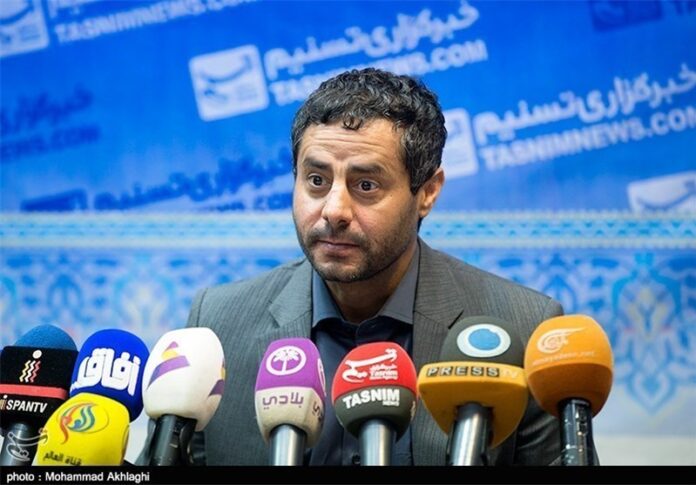
Yemeni Drone Attacks Aimed at Forcing Saudis to End War: Ansarullah

Mohammed al-Bukhaiti said when Saudi Arabia stops its aggression and ends its siege against Yemen such attacks will automatically come to an end.

Regarding Saudi Arabia’s claims and charges against Iran, he told Tasnim News Agency that “Saudi Arabia has declared war on Yemen on the pretext that our stored missiles are a threat to its security, and today, when we target Saudi oil wells, it is a surprise that they accuse other countries. It proves that they are defeated and also shows their cowardice.”

Al-Bukhaiti said US and Saudi radars are unable to intercept Yemeni aircraft adding that if they could intercept these aircraft, they would shoot them down.

In addition, he added, US Secretary of State Mike Pompeo said that the planes come from Iran because there is no proof showing they come from Yemen. “Essentially, he had to provide proof for his claim. This is a military and political defeat for Saudi Arabia and the United States.”

In response to a question about Iran’s initiative to stop the war on Yemen and Saudi Arabia’s opposition to it, Bukhaiti said “Riyadh is not moving towards its own interests and its people. It just pursues the interests of the Americans.”

“Now the cessation of war has not only become a benefit for Yemen and Saudi Arabia, but beyond that it has become a more important benefit for Saudi Arabia. Because Yemen doesn’t have much to lose, yet we see the obstinacy of Saudi Arabia as the US decides for them,” underlined Bukhaiti.

Ansarullah movement used 10 drones on Saturday to target two oil facilities of Saudi Arabia’s Aramco Company, sparking a huge fire at a plant crucial to global energy supplies.

The facilities in of Aramco in Buqayq and al-Khurais were hit by the drones. The attack led to the disruption in Saudi oil production and exports.

Reports suggest that the Yemeni forces’ attacks have disrupted 5 million barrels per day of oil production. The amount is almost half of the kingdom’s current output.

Yemen’s senior military officials say attacks like this are just the tip of the iceberg in case Riyadh is to continue its war on the country.

Saudi Aramco operates the world’s largest oil processing facility and crude oil stabilisation plant, with a crude oil processing capacity of more than 7 million barrels per day.

Collision with Pickup Truck Grounds Tehran-Yazd Plane

Officials say the incident led to breakage of the turboprop of Tehran-Yazd plane, but all the passengers are safe and sound.

Director General of Yazd Airports says the passengers of the damaged aircraft were sent to Tehran with alternative flights.

The aircraft is one of the new ones purchased after the nuclear deal.

Yazd International Airport is currently the 10th largest airport in the country in terms of air traffic and passengers, with approximately 6,000 passengers annually using approximately 6,000 flights.

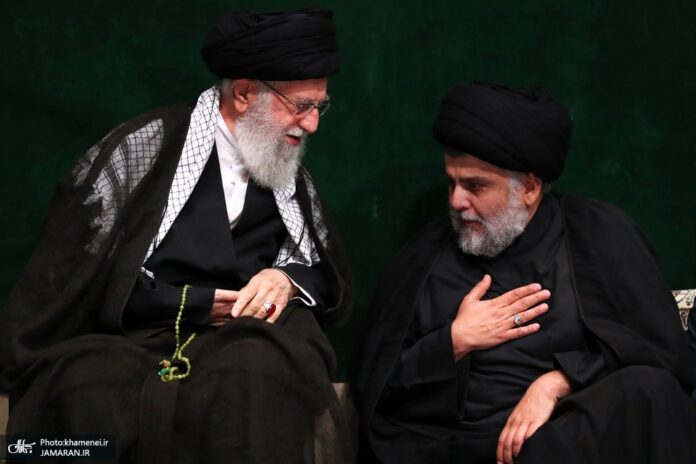
Iran Says Muqtada Sadr Wasn’t Carrying Any Message

Seyyed Abbas Mousavi said on Monday that Muqtada Sadr has long been making regular visits to Iran like other Iraqi friends of Iran, who have either been in Iran or commuting to the country.

“Sadr’s presence in Iran is nothing special and new,” Mousavi said in a press briefing in Tehran.

“He has been a friend of Iran and his presence is a blessing,” he noted, adding, however, that the influential cleric was not carrying any special message when he attended a recent mourning ceremony hosted by the Leader of Iran’s Islamic Revolution Ayatollah Seyyed Ali Khamenei.

In comments in April 2018, Muqtada al-Sadr expressed readiness to resolve some disputes between Iran and Saudi Arabia.

In July 2017, Sadr made a rare visit to Saudi Arabia and met the crown prince and other officials in the Red Sea port city of Jeddah.

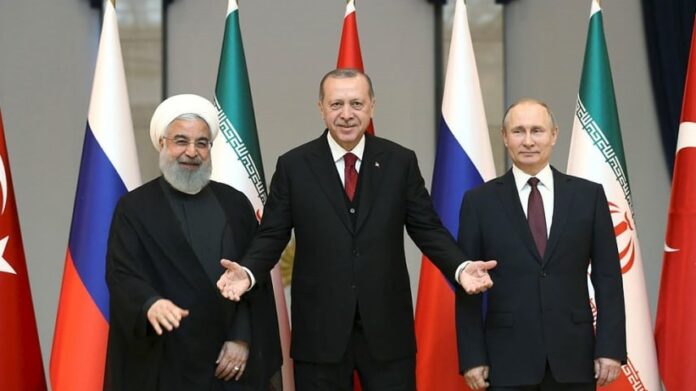
‘Iran, Russia, Turkey on Verge of Reaching Final Deal on Syria’

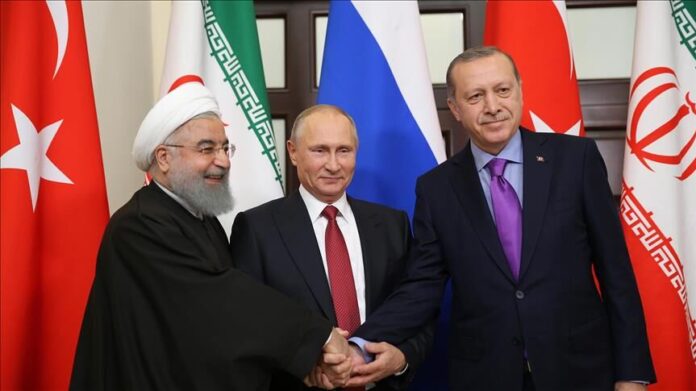
Speaking in a press briefing in Tehran on Monday, Mousavi expressed the hope that the Monday talks between President Hassan Rouhani of Iran, Vladimir Putin of Russia, and Recep Tayyip Erdogan of Turkey would yield a result that serves the Syrian people’s interests.

“We are on the verge of reaching a good deal on restoration of peace to Syria,” he said, adding that the fight against terrorism will continue until full eradication of the phenomenon.

While moving towards de-escalation and easing of tensions in the region, Iran, Russia, and Turkey will respect the sovereignty of Syria, Mousavi noted.

“All sides must respect Syria’s territorial integrity and sovereignty if we want to settle the conflict there,” he added.

Rouhani has travelled to Ankara at the official invitation of Erdogan to take part in the fifth trilateral summit of Iran, Turkey and Russia – the three guarantors of the Astana peace process for the resolution of Syria crisis.

In addition to the tripartite summit, the presidents of Iran, Russia and Turkey are going to hold negotiations on the promotion of mutual cooperation on various economic issues and the regional communications.

President Rouhani is also planned to hold separate meetings with Erdogan and Putin for talks on the major bilateral, regional and international issues.

Iran, Russia and Turkey are guarantor countries that brokered a ceasefire in Syria in December 2016, leading to the Astana talks, which are running parallel to the Geneva peace talks.

The leaders of the three countries regularly meet for an assessment of the process which focused on Idlib and adjacent areas – the last stronghold of the rebels – and a political process which awaits the formation of a constitutional committee.

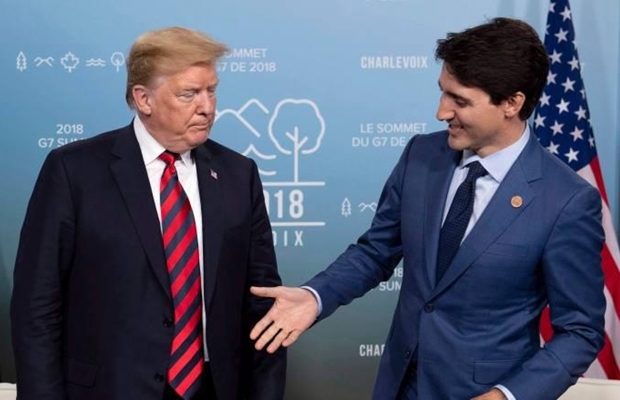
Canada’s Sale of Iran Assets Aimed at Appeasing Trump: Analyst

Canada's Prime Minister Justin Trudeau shakes hands with US President Donald Trump during a meeting at the G7 leaders summit in La Malbaie, Que.. / Photo by Canadian Press

“Recently, US-Canada relations have been hit by tensions and it seems Canada’s move is more of a green light to Trump to improve ties between the two countries,” Sabah Zanganeh, a former Iranian diplomat, said in an interview with ISNA.

“This move can be a green light by Canada to the US to improve mutual relations at a time when the United States is exerting pressure on the Islamic Republic of Iran,” the expert said.

“A bone of contention between Canada and the US was the revocation of an agreement between the US, Canada and Mexico. Reciprocal measures by Canada and Mexico prompted Trump to make some changes to trade policies as well as trade agreements between the three countries,” he noted.

However, Zanganeh added, Canada and Mexico did not achieve what they had in mind completely, which sustained pressure on trade and economic transactions between the two countries.

“As a result, Canada has been seeking to pursue Trump’s approach, which includes economic sanctions, seizure of Iranian assets, the imposition of bans on authorities and other methods,” he said.

“The policy that Canada is pursuing somehow plays into Trump’s hands. In fact, Canada has adopted a policy similar to that of Trump toward Iran,” he added.

He underscored the move by the Canadian Prime Minister Justin Trudeau administration to seize Iranian property has no legal basis and seems more like theft on own soil.

“Canada regards itself as being among the countries which advocate human rights and the countries which, politically speaking, are against Iran. So, due to these reasons, and, in fact in order to get political mileage from the situation, Canada has opted to confiscate Iran’s assets, property and facilities,” said the expert.

“This is in violation of rules and regulations pertaining to ownership of landed property and security of deposits at banks,” he noted, urging that Iran should follow up on Ottawa’s action through Canadian courts.

The expert said other issues are also at play when it comes to Tehran-Ottawa relations.

“Apart from these issues, there are also other issues involved in Iran-Canada transactions, issues which have not been followed up,” he said.

“These issues are related to embezzlers who transferred huge amounts of Iranian money and property to this country. In such cases, cooperation by Canadian financial, political and economic systems has paved the way for such actions; otherwise, these individuals would not have been able to take Iranian public assets to Canada so easily,” he said.

“Such issues have not been fully followed up by Iranian authorities, who were simply seeking the extradition of those people through Interpol,” he said.

“The actions by these individuals (embezzlers) amount to an international crime, and Canada’s receiving them is an international crime, too,” he said.

He urged Iranian authorities to file a complaint over Canada’s move and pursue the matter as needed.

“Iran can follow up on this issue through both Canadian courts and international courts at The Hague and in France,” he said.

Saudi Says Damaged Oil Facilities Cannot Be Fixed Overnight

Attacks by 10 Yemeni drones on Saudi Arabia’s key oil facilities in Abqaiq and Khurais have shut down about 50 percent of the kingdom’s crude and gas production, cutting the state oil giant’s crude oil supply by around 5.7 million barrels per day.

An oil industry source briefed on the developments said on Sunday it is unclear how long the oil production shutdown will continue, as it is impossible to fix the “big” damages overnight.

Aramco has given no timeline for output resumption. However, a source close to the matter told Reuters the return to full oil capacity could take “weeks, not days”.

Another source briefed on the developments said the kingdom’s oil exports would continue to run as normal this week thanks to large storage in the country.

High-resolution satellite photos of the damaged facilities “declassified” by the US administration on Sunday show the drone attacks have hit at least 19 points with great precision.

A senior US official, asked not to be named, has claimed that evidence shows the launch area was west-northwest of the targets – the direction of Iran and Iraq – not south from Yemen.

The official has also quoted Saudi officials as saying that there are signs that cruise missiles were used in the attack.

This comes as Yemen has clearly stated it used 10 drones for Saturday’s operation, which was one of their largest retaliatory attacks ever inside the kingdom.

Earlier in the day, Tehran dismissed the US’ claim of Iranian involvement in the drone attacks, saying “futile allegations and blind statements as such are incomprehensible and meaningless within the framework of diplomacy.”

Foreign Ministry spokesman Abbas Mousavi said such remarks “seem more like a plot being hatched by secret and intelligence organizations aimed at tarnishing a country’s image and setting the stage for future actions.”

He also criticized Saudi Arabia for fueling the flames of war in the region by committing various war crimes in Yemen for about five years, and hailed Yemen for putting up resistance in the face of the aggression.

Iraq has also denied reports alleging that the country was the site from where Yemeni drones were launched to attack Saudi oil installations.

The statement came from Iraqi Prime Minister Adil Abdul-Mahdi’s office on Sunday. It said Iraq would act “decisively” if anyone tried to use its territory to attack other countries, AP reported.

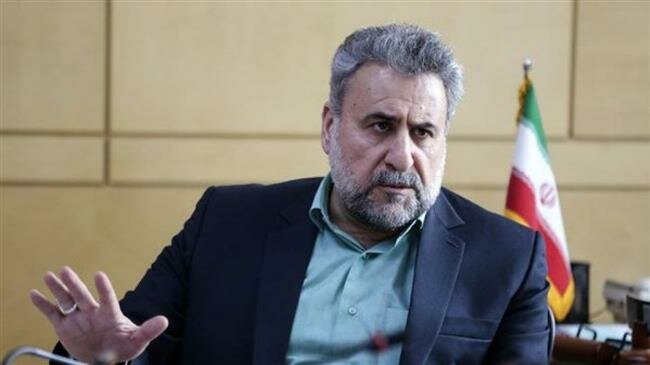
Iran Must Seize Canadian Shipments in Retaliation: MP

“An order should be issued to confiscate ships and goods that set off from the Hormuz region to the destination of Canada,” said Heshmatollah Falahatpisheh on Sunday, adding, “This measure should be adopted as soon as possible.”

The comments came two days after Iranian Foreign Ministry warned Canada that the country should await consequences if it does not revoke a decision to sell Iranian properties worth tens of millions of dollars in an alleged bid to compensate so-called victims of terror.

In a Friday statement, the ministry strongly condemned the move as “a clear breach of the international law,” and urged the Canadian government to immediately return the properties.

Foreign Ministry Spokesman Abbas Mousavi said Tehran will take action by itself to restore its rights based on international regulations if Ottawa fails to immediately revoke the unlawful decision and compensate the damages.

Falahatpisheh, a senior member of Iranian parliament’s Committee on National Security and Foreign Policy, said that courts in Iran should be authorized to seize Canadian government properties in Iran.

He said, however, that responding in kind to the ruling issued in August by the Ontario Superior Court of Justice to sell the two Iranian-owned buildings would not suffice as Canada has not enough assets in Iran that could be subject to a similar court verdict.

The lawmaker, who made the remarks in an interview with the parliament news service, said Iran had a duty to “decisively counter” the sale of the properties in Canada, a move which he said was clearly influenced by political lobbies who seek to “plunder” Iran’s wealth.

Iraqi Airspace Not Used for Drone Attacks on Saudi Oil Facilities: PM

The statement came from Iraqi Prime Minister Adel Abdul-Mahdi’s office on Sunday.

It said Iraq would act “decisively” if anyone tried to use its territory to attack other countries, AP reported.

The Saudi major Aramco facility in the eastern city of Abqaiq came under attack early on Saturday.

Later in the day, the spokesman for Yemeni Armed Forces said the country’s military sent a squad of drones hundreds of kilometers into the heart of Saudi Arabia to carry out coordinated attacks on two of the country’s vital energy sites. The attacks marked the most effective and far-reaching drone strikes carried out by Yemeni forces.

The statement by Iraq came after a report by the Wall Street Journal claimed that the strike may have come from Iraq.

Diplomats Finalize Draft Communiqué of Rouhani-Erdogan-Putin Summit

The meeting was attended by Ali-Asghar Khaji, a senior assistant to Iranian Foreign Minister on special political affairs; Alexander Lavrentiev, the Russian president’s special envoy for Syria; and Sedat Onal, a deputy Foreign Minister of Turkey, and the delegations accompanying them.

In the meeting, the Iranian, Turkish, and Russian negotiators reviewed and finalized the draft version of the final statement of a meeting of the leaders of the three guarantor states, which is to be held in Ankara on Monday.

Iranian President Hassan Rouhani, Turkish President Recep Tayyip Erdogan, and Russian President Vladimir Putin will hold a trilateral summit on Syria in the Turkish capital of Ankara on Monday.

Iran, Russia and Turkey are guarantor countries that brokered a ceasefire in Syria in December 2016, leading to the Astana talks, which are running parallel to the Geneva peace talks.

The leaders of the three countries regularly meet for an assessment of the process which focused on Idlib and adjacent areas – the last stronghold of the rebels – and a political process which awaits the formation of a constitutional committee.